8 Best AI Support Platforms with Linear Integration in 2026
For B2B SaaS teams, manually bridging customer support tickets and engineering bug trackers wastes hours and lets critical issues slip through. This guide ranks the 8 best AI support platforms with Linear integration — covering native issue creation, status syncing, and AI-powered triage — so you can find the right tool to automate your support-to-engineering workflow in 2026.
 Grant CooperFounder12 min read
For product and engineering teams, the gap between a customer support ticket and a tracked bug in Linear can mean hours of manual copy-paste work. Worse, issues fall through the cracks entirely when the handoff between support and engineering relies on someone remembering to do it. The best AI support platforms close that gap automatically, connecting directly to Linear so bugs, feature requests, and technical issues are logged, prioritized, and tracked without anyone lifting a finger.
This list covers the top AI support platforms with meaningful Linear integration, whether that's auto-creating issues from tickets, syncing status updates, or using AI to triage and route issues to the right team. Selection criteria includes native or robust Linear integration, AI-driven ticket resolution capabilities, fit for B2B SaaS teams, and overall platform maturity. If you're evaluating tools for your support-to-engineering workflow, this is your starting point.
1. Halo AI
Best for: B2B SaaS teams wanting AI-first automation with automatic Linear bug ticket creation
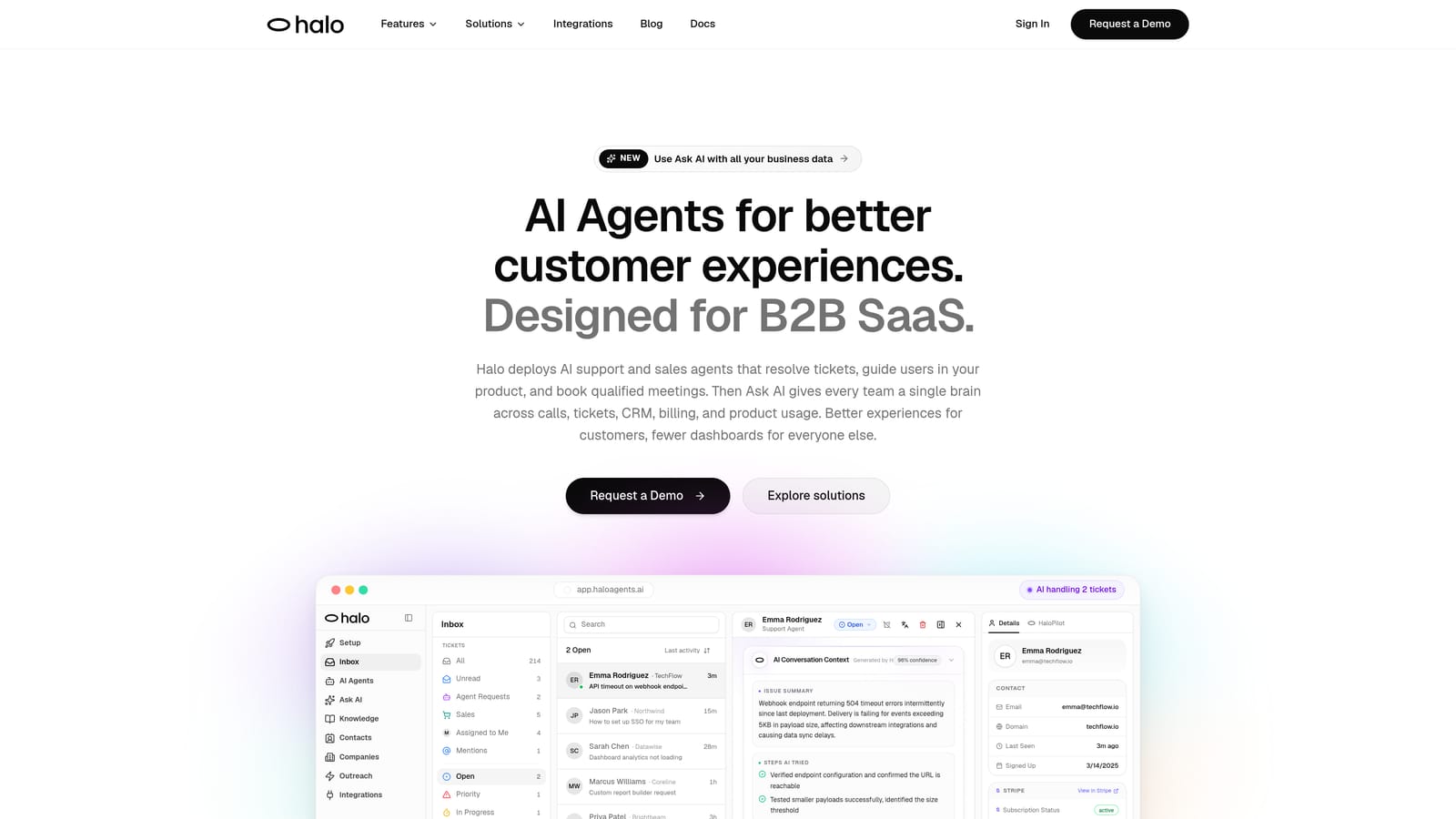
Halo AI is an AI-first customer support platform that automatically creates Linear bug tickets from support conversations, complete with full context from the interaction.
Where This Tool Shines
What separates Halo from most platforms on this list is its architecture. Rather than bolting AI onto an existing helpdesk, Halo is built AI-first, meaning every interaction is designed to be handled intelligently from the start. When a customer reports a bug, the AI agent doesn't just log a ticket and move on. It captures what the user was doing, what page they were on, and what the conversation revealed, then creates a Linear issue with that full context attached.
The page-aware capability is particularly valuable for engineering teams. Halo's AI sees what the user sees, so when a Linear issue is created, it includes the kind of detail that engineers actually need to reproduce and fix the problem. No more vague bug reports.
Key Features
Auto Bug Ticket Creation: Automatically creates Linear issues from support conversations with full conversation context, eliminating manual copy-paste between tools.
Page-Aware AI Agent: The AI sees what the user sees in real time, enabling richer issue reporting and more accurate context when creating Linear tickets.
Smart Inbox with Business Intelligence: Goes beyond ticketing to surface customer health signals, anomaly detection, and revenue intelligence from support interactions.
Live Agent Handoff: Seamlessly escalates complex issues to human agents when needed, with full conversation history preserved.
Broad Integration Stack: Connects to Slack, HubSpot, Intercom, Stripe, Zoom, PandaDoc, Fathom, and Linear, making it a central hub for your support-to-engineering workflow.
Continuous Learning: Improves resolution accuracy over time by learning from every interaction, so the AI gets smarter with your specific product and customer base.
Best For
B2B SaaS teams that want an AI-native support platform, not an AI add-on. Particularly well-suited for product-led companies where the support-to-engineering feedback loop is critical, and where teams need more than ticket deflection. They need actionable intelligence flowing into Linear automatically.
Pricing
Contact for pricing or book a demo at haloagents.ai. The platform is positioned for teams that want to see the workflow in action before committing.
2. Intercom
Best for: Teams wanting established omnichannel messaging with AI-powered Tier-1 deflection
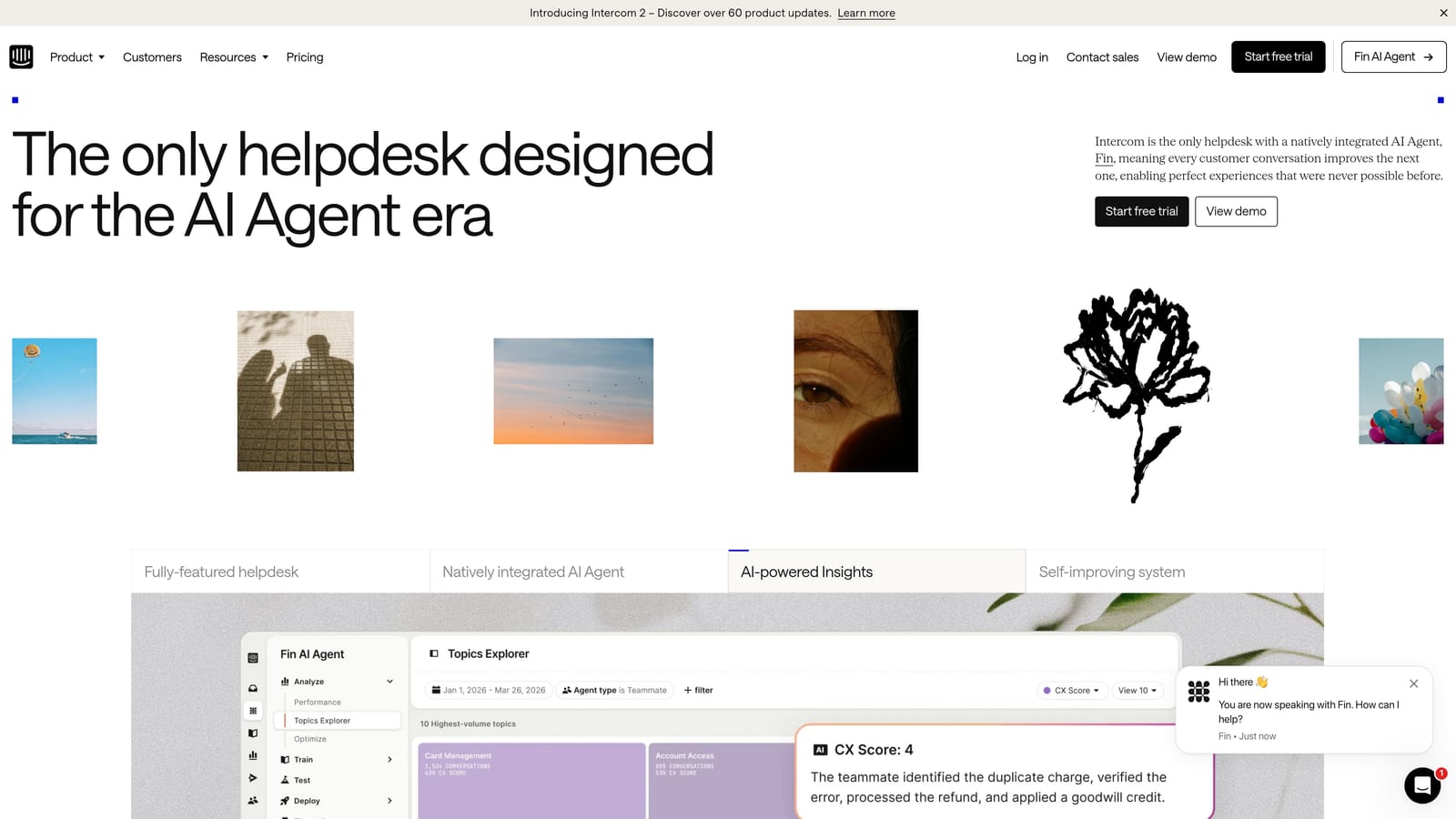
Intercom is a customer messaging and support platform with its Fin AI agent handling automated Tier-1 resolution across chat, email, and in-app channels.
Where This Tool Shines
Intercom's strength is its mature omnichannel foundation. Fin, its AI agent, is capable of resolving a meaningful portion of incoming tickets without human involvement, drawing on your help center content and product documentation. For teams already embedded in the Intercom ecosystem, this is a natural starting point.
The Linear integration, however, is not native. It requires configuration through Intercom's workflow builder or a third-party connector like Zapier. For teams that need a tight, automatic support-to-Linear loop, this adds overhead and maintenance responsibility.
Key Features
Fin AI Agent: Handles automated ticket deflection and resolution using your existing documentation and knowledge base.
Workflow Builder: Visual automation builder for routing, escalation, and integration logic, including Linear connections.
Linear Integration: Available via workflow automation and third-party connectors; not a native out-of-the-box connection.
Omnichannel Support: Covers chat, email, and in-app messaging with unified conversation history.
Rich Customer Data: Surfaces customer attributes and conversation history to support agents for context-aware responses.
Best For
Teams already invested in the Intercom platform who want to add Linear connectivity via workflow automation. Best for companies with a dedicated ops resource to configure and maintain the integration. Not the best fit for teams wanting auto Linear bug creation out of the box.
Pricing
Starts at $39 per seat per month; AI features and advanced automation are available on higher tiers. Verify current pricing at intercom.com.
3. Zendesk
Best for: Enterprise teams needing a mature helpdesk with broad integration options
Zendesk is an enterprise-grade helpdesk platform with AI-powered triage and one of the largest integration marketplaces in the support industry.

Where This Tool Shines
Zendesk's scale and maturity are genuine advantages for larger organizations. Its AI capabilities handle intelligent triage, auto-tagging, and routing, reducing the manual workload on support teams. The platform's reporting and SLA management tools are among the most comprehensive available, making it a reliable choice for teams with complex operational requirements.
Linear integration is available, but like Intercom, it's not native. Teams typically connect Zendesk to Linear via Zapier, Make, or a custom API integration. This works, but it requires setup and ongoing maintenance, and the automation is only as reliable as the middleware connecting the two systems.
Key Features
Zendesk AI: Intelligent triage, auto-tagging, and routing to reduce manual ticket handling and improve first-response times.
Integration Marketplace: Hundreds of apps and connectors, including paths to Linear via Zapier, Make, or custom API.
Advanced Reporting: Detailed analytics, SLA tracking, and custom dashboards for operations-heavy support teams.
Omnichannel Support: Handles email, chat, voice, and social channels from a unified agent workspace.
Enterprise Scalability: Built for large teams with complex workflows, permissions, and compliance requirements.
Best For
Larger enterprises with established support operations that need a proven, scalable helpdesk. Teams comfortable managing middleware integrations to connect Zendesk to Linear. Less ideal for lean B2B SaaS teams wanting a lightweight, AI-native setup.
Pricing
Suite plans start at approximately $55 per agent per month; enterprise pricing is available. Confirm current rates at zendesk.com.
4. Plain
Best for: Developer-tool companies wanting a modern, lightweight support platform with native Linear integration
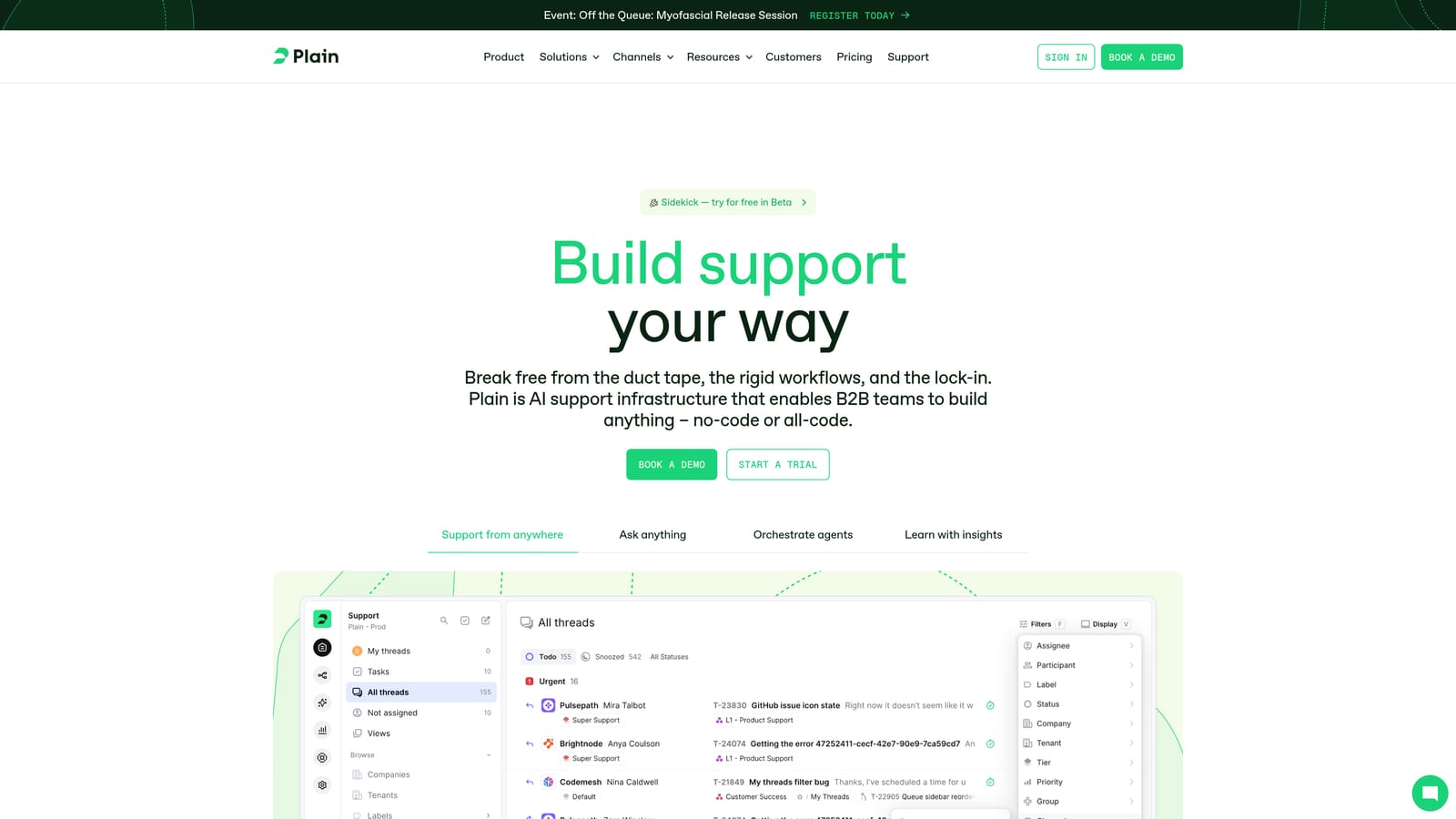
Plain is a developer-focused support platform built specifically for technical teams, with a native Linear integration designed into its core workflow.
Where This Tool Shines
Plain's native Linear integration is one of its most compelling differentiators. Rather than routing through a third-party connector, Plain allows support threads to be directly linked to or used to create Linear issues from within the platform. For developer-tool companies where support and engineering need to stay tightly connected, this is a meaningful advantage.
The platform's API-first architecture also appeals to technical teams that want to customize their support workflows rather than adapt to an opinionated system. The UI is intentionally minimal, designed to reduce noise rather than add features for the sake of completeness.
Key Features
Native Linear Integration: Link support threads to existing Linear issues or create new ones directly, without middleware or third-party connectors.
API-First Architecture: Deep customization options for technical teams that need to build support workflows into their existing tooling.
Clean, Minimal UI: Designed for technical support workflows without the complexity of enterprise helpdesk platforms.
Customer Timeline View: Full interaction history for each customer, giving support agents complete context for every conversation.
Slack Integration: Team notifications and escalation routing via Slack for fast internal collaboration.
Best For
Developer-tool companies and API-first SaaS teams that want a lightweight, modern support platform with a genuine native Linear connection. Not the best fit for teams needing advanced AI ticket deflection or enterprise-scale reporting.
Pricing
Team-based pricing; check plain.com for current tiers and plan details.
5. Freshdesk
Best for: Cost-conscious teams wanting a full-featured helpdesk with AI automation at accessible price points
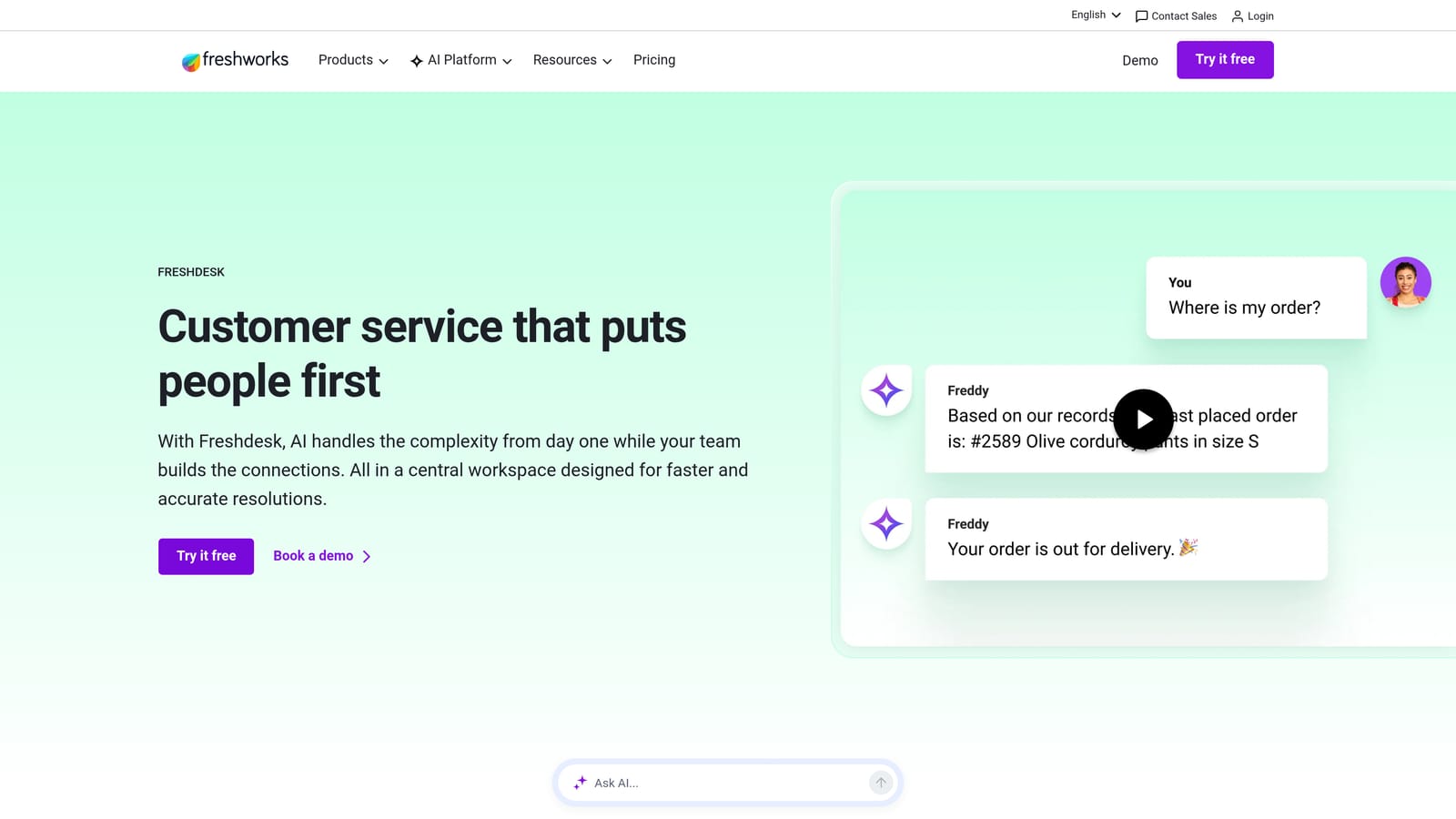
Freshdesk is a helpdesk platform by Freshworks with Freddy AI for automation, ticket management, and deflection, connecting to Linear via integration platforms.
Where This Tool Shines
Freshdesk's value proposition is accessibility. It offers a genuinely capable helpdesk, including AI-powered automation through Freddy, at price points that make sense for growing teams that aren't yet ready for enterprise-tier pricing. The free plan is a real option for small teams, not a stripped-down trial.
The Linear integration requires Zapier or webhook automation rather than a native connector, which adds some configuration overhead. For teams with straightforward workflows, this is manageable. For teams that need complex, bidirectional Linear sync, it may become a limitation.
Key Features
Freddy AI: Auto-triage, suggested responses, and ticket deflection using AI trained on your support history and documentation.
Robust Ticketing System: Full SLA management, ticket routing, and escalation workflows for structured support operations.
Linear Integration: Available via Zapier or webhook automation; requires configuration but functional for standard use cases.
Free Tier: A genuine free plan for small teams, with paid plans scaling by agent count and feature requirements.
Multichannel Support: Handles email, chat, phone, and social from a unified inbox.
Best For
Growing B2B SaaS teams that need a capable helpdesk without enterprise pricing, and are comfortable configuring Zapier or webhooks to connect support workflows to Linear. A strong option for teams prioritizing cost efficiency over deep AI-native automation.
Pricing
Free plan available; paid plans start at approximately $15 per agent per month. Verify current pricing at freshdesk.com.
6. Linear Asks (Linear Native)
Best for: Engineering-led teams wanting zero-overhead customer request tracking inside Linear itself
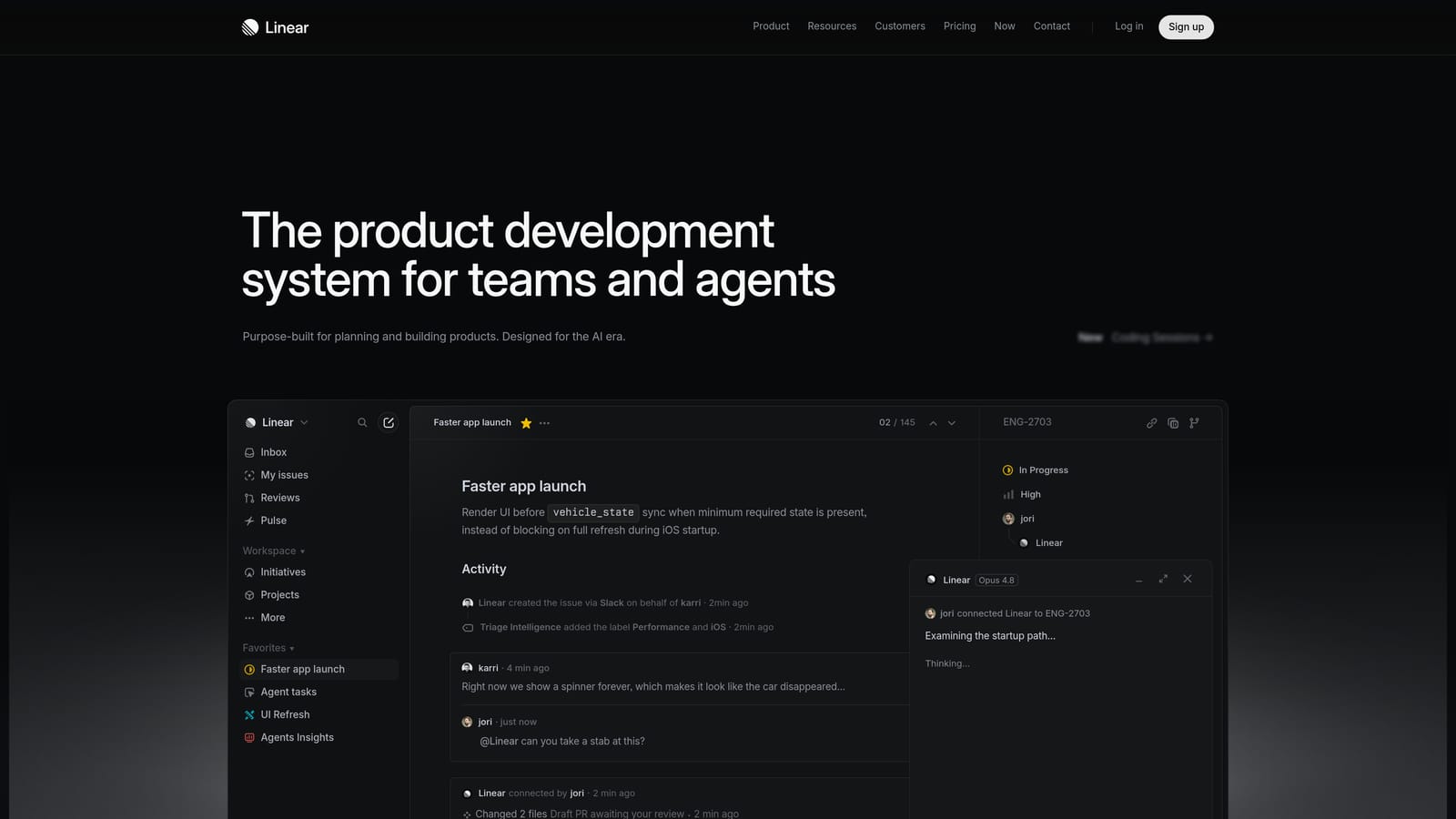
Linear includes built-in customer request and feedback tracking, offering a no-integration option for teams that live entirely inside Linear and handle low-volume support.
Where This Tool Shines
The appeal here is simplicity. If your team already uses Linear as its primary workspace, adding a separate support platform introduces integration complexity, data silos, and maintenance overhead. Linear's native customer request tracking eliminates that entirely by keeping everything in one place.
This isn't a replacement for a real support platform. There's no AI agent for ticket deflection, no omnichannel inbox, and no SLA management. But for early-stage companies or engineering-led teams handling a manageable volume of customer feedback, it's a practical starting point that avoids tool sprawl.
Key Features
Native Customer Request Tracking: Log and manage customer feedback directly inside Linear without any external integration.
Issue Linking: Connect customer feedback to specific Linear issues and projects for direct traceability.
Zero Integration Overhead: Everything lives in your existing Linear workspace, with no middleware or connector to maintain.
Roadmap Visibility: Customer requests are tied directly to roadmap items, making it easy to prioritize based on customer impact.
Low-Volume Suitability: Works well for teams handling a small, manageable number of customer interactions.
Best For
Early-stage companies and engineering-led teams that aren't ready for a dedicated support platform. Ideal for low-volume scenarios where simplicity outweighs the need for AI automation, advanced reporting, or omnichannel support.
Pricing
Included with Linear plans; Linear starts at $8 per user per month. Check linear.app for current plan details.
7. Unthread
Best for: B2B SaaS teams running customer support through Slack Connect channels
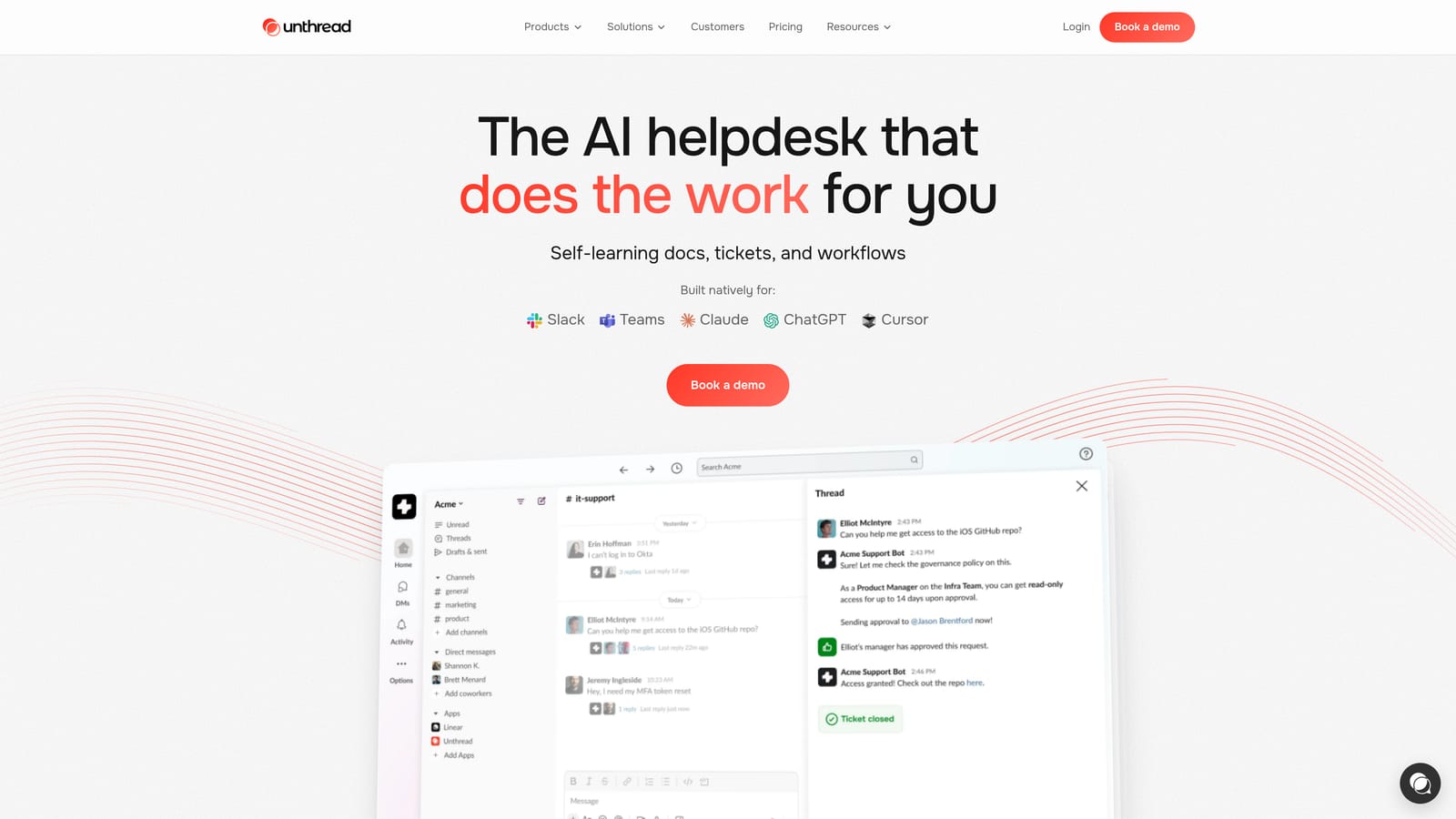
Unthread is a Slack-native support platform that converts Slack channels into a structured ticketing inbox, with built-in Linear issue creation from support threads.
Where This Tool Shines
Unthread solves a specific and common problem for B2B SaaS companies: customers often prefer to communicate via Slack Connect, but Slack itself has no support structure. Unthread adds that structure, turning Slack channels into a proper ticketing system with SLA tracking, reporting, and routing, without forcing customers out of Slack.
The Linear integration is built in, allowing support threads to become Linear issues directly from the Unthread interface. For teams where Slack is already the primary communication layer with enterprise customers, this is a natural fit that avoids adding another channel to manage.
Key Features
Slack-Native Ticketing: Turns Slack Connect channels into a structured support inbox with full ticketing functionality.
Built-In Linear Integration: Create Linear issues directly from Slack support threads without leaving the Unthread interface.
AI Summarization: AI-powered summarization and response suggestions to speed up agent workflows within Slack.
B2B Slack Connect Focus: Designed specifically for companies managing enterprise customer relationships through Slack Connect.
SLA Tracking: SLA monitoring and reporting built into the Slack-based workflow, giving operations teams visibility without leaving the channel.
Best For
B2B SaaS companies that manage customer support primarily through Slack Connect and want Linear issue creation built into that workflow. Less suited for teams that need omnichannel support across email, in-app, and chat alongside Slack.
Pricing
Per-seat or per-channel pricing; check unthread.io for current rates and plan structures.
8. Pylon
Best for: B2B SaaS teams managing enterprise accounts across Slack Connect, Teams, email, and in-app channels
Pylon is a B2B customer support platform built specifically for enterprise account relationships, with native Linear integration and support across multiple channels including Slack Connect and Microsoft Teams.
Where This Tool Shines
Pylon's differentiation is its explicit focus on B2B enterprise support. Where many support platforms are built for high-volume consumer-style ticketing, Pylon is designed for the reality of B2B SaaS: a smaller number of high-value accounts, complex relationships, and support happening across multiple channels simultaneously.
The native Linear integration means engineering issues surfaced through customer support are tracked properly without middleware. The platform also includes customer health and account visibility features that give CS teams a clearer picture of account status alongside support activity.
Key Features
Native Linear Integration: Sync support issues to Linear engineering teams natively, without third-party connectors or middleware.
Multi-Channel Support: Handles Slack Connect, Microsoft Teams, email, and in-app channels from a unified platform.
AI Triage and Response Drafting: AI-powered features to speed up agent response times and route issues to the right team.
Customer Health Visibility: Account-level health signals and visibility for CS teams managing enterprise relationships.
B2B SaaS Focus: Built specifically for the workflows and relationship dynamics of B2B enterprise account support, not adapted from a consumer support model.
Best For
B2B SaaS companies managing a portfolio of enterprise accounts across multiple communication channels, where account health visibility and native Linear integration are both priorities. A strong fit for CS teams that need more than a ticketing system.
Pricing
Contact sales for pricing; Pylon is positioned as a demo-first platform. Reach out at usepylon.com for current rates.
Which Tool Is Right for Your Team?
The right choice depends heavily on where your team currently lives and how tight you need the Linear integration to be.
If your priority is AI-first automation with automatic Linear bug ticket creation and full conversation context, Halo AI is the strongest option on this list. Its page-aware AI and continuous learning architecture mean Linear issues are created with the kind of detail engineers actually need, not just a copied ticket title. It's the only platform here where the Linear integration is a core feature rather than a configured add-on.
If you're already invested in an enterprise helpdesk, Zendesk or Freshdesk are the natural choices. Both connect to Linear via middleware, and both offer mature AI capabilities for triage and deflection. Zendesk suits larger organizations with complex workflows; Freshdesk is the better fit for cost-conscious growing teams.
For developer-tool companies that want a modern, lightweight platform with a genuine native Linear connection, Plain is worth a close look. Its API-first design and clean interface are purpose-built for technical teams.
If your customer support happens primarily in Slack, Unthread or Pylon are the specialists. Unthread is ideal for Slack Connect-focused workflows; Pylon adds multi-channel coverage and account health visibility for teams managing complex enterprise relationships.
And if you're not ready to add a separate support platform at all, Linear Asks gives you zero-overhead customer request tracking inside your existing Linear workspace. It's not a full support solution, but it's a practical starting point.
Your support team shouldn't scale linearly with your customer base. See Halo in action and discover how continuous learning transforms every interaction into smarter, faster support, with Linear bug tickets created automatically so your engineering team always has the context they need.