9 Best AI Support Software for Startups: Pricing Breakdown for 2026
This comprehensive guide evaluates ai support software for startups pricing across nine platforms, helping early-stage companies find cost-effective solutions that scale from 100 to 10,000 customers. The breakdown compares transparent pricing models—including per-resolution and seat-based options—so startups can match their budget to actual needs without overpaying for unnecessary features or getting locked into inflexible platforms that can't grow with their business.
 Grant CooperFounder13 min read
Startups face a unique challenge: delivering enterprise-quality customer support without enterprise-sized budgets or teams. AI support software has emerged as the solution, but navigating pricing models—from per-resolution fees to seat-based subscriptions—can feel overwhelming.
The stakes are real. Choose wrong, and you're either overpaying for features you don't need or locked into a platform that can't scale with your growth trajectory.
This guide breaks down AI support tools built for startup budgets, comparing what you'll actually pay as you scale from your first 100 customers to your first 10,000. We've prioritized tools with transparent pricing, startup-friendly tiers, and the flexibility to grow with your business.
1. Halo AI
Best for: Startups wanting AI-first support that learns continuously and integrates across their tech stack
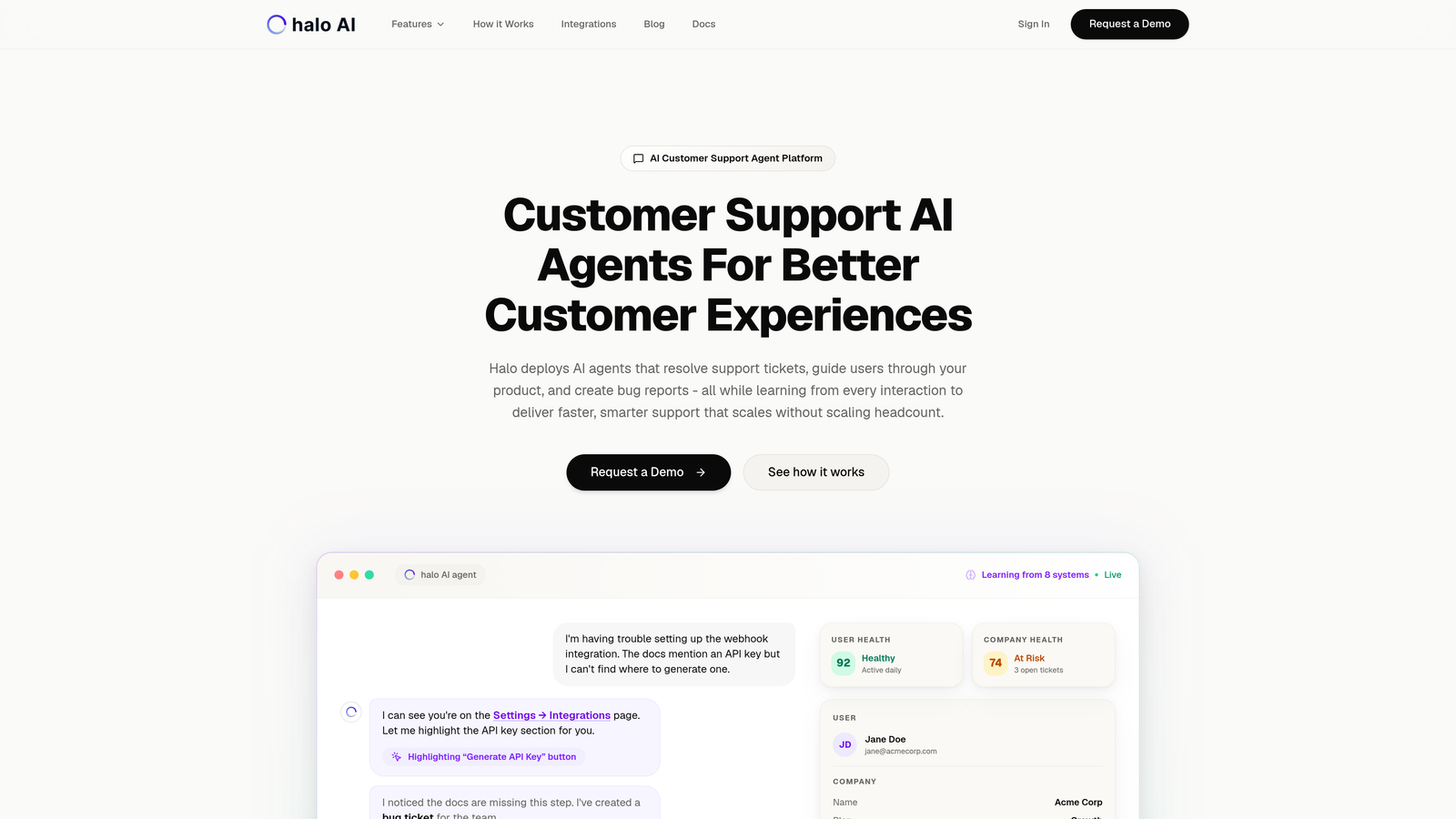
Halo AI is an AI-first customer support platform where intelligent agents resolve tickets, guide users through your product, and learn from every interaction.
Where This Tool Shines
Halo's page-aware technology sets it apart. The AI agents can see what your users see on their screens, enabling them to provide contextual guidance that feels genuinely helpful rather than generic. When a user struggles with a specific feature, Halo doesn't just reference help docs—it walks them through the exact UI elements they're looking at.
The continuous learning architecture means your support gets smarter over time without manual training. Every resolved ticket, every escalation, every user interaction feeds back into the system. For startups, this matters because you're not building static automation—you're deploying intelligence that evolves with your product.
Key Features
Page-Aware Chat Widget: Sees what users see on screen to provide visual guidance through your product interface.
Auto Bug Ticket Creation: Automatically creates detailed bug reports in Linear when issues are detected, complete with context and reproduction steps.
Smart Inbox with Business Intelligence: Surfaces customer health signals, revenue intelligence, and anomaly detection beyond basic ticket metrics.
Live Agent Handoff: Seamlessly escalates complex issues to human agents with full conversation context and history.
Multi-System Integration: Connects to Slack, HubSpot, Intercom, Stripe, Linear, and other tools in your stack without custom development.
Best For
Startups that want AI support to be a strategic asset, not just a cost center. Particularly valuable for product-led growth companies where user onboarding and in-app guidance directly impact conversion rates. If you're already using tools like Linear for development and HubSpot for customer data, Halo's integration depth creates a unified intelligence layer across your operations.
Pricing
Contact for startup pricing that scales with resolution volume. The model aligns costs with value delivered rather than charging per seat, which makes sense for early-stage companies where support volume fluctuates significantly.
2. Intercom Fin
Best for: Companies already using Intercom who want GPT-4 powered resolution with transparent per-ticket pricing
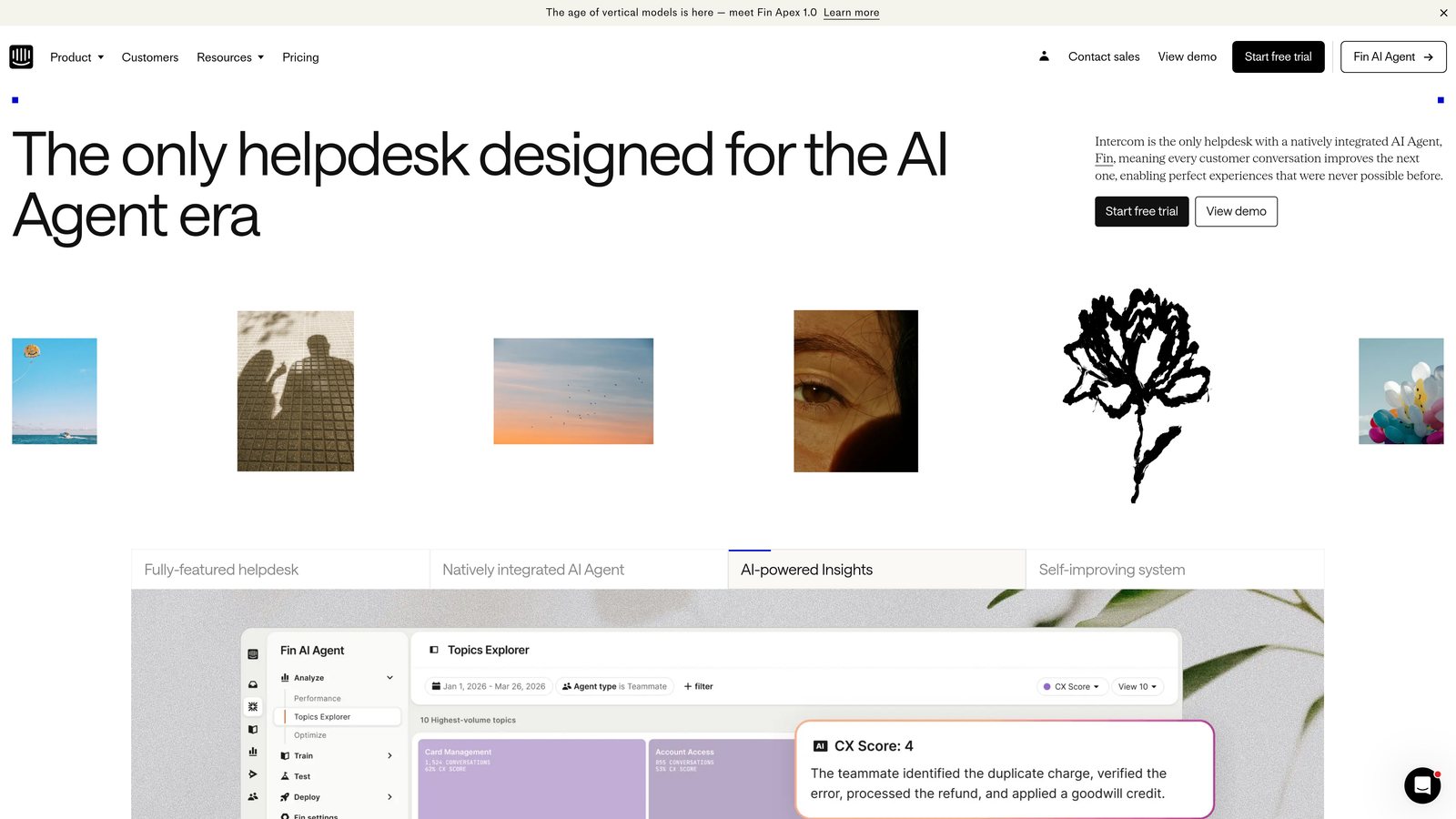
Intercom Fin is an AI-powered bot built on GPT-4 that resolves customer questions using your help center content.
Where This Tool Shines
Fin's per-resolution pricing model at $0.99 per successful resolution creates clear cost predictability. You pay for outcomes, not potential. For startups testing AI support, this removes the risk of paying monthly fees for underutilized seats.
The GPT-4 foundation gives Fin strong natural language understanding out of the box. It can handle nuanced questions and adapt its tone to match your brand voice. The seamless integration with Intercom's existing platform means no learning curve for teams already using their messenger.
Key Features
Per-Resolution Pricing: Pay $0.99 only when Fin successfully resolves a conversation without human intervention.
Help Center Learning: Automatically learns from your existing help documentation and past conversation history.
Seamless Human Handoff: Transfers to human agents with full context when questions exceed AI capabilities.
Multi-Language Support: Handles customer inquiries in over 40 languages without additional configuration.
Performance Analytics: Tracks resolution rates, customer satisfaction scores, and cost per conversation in real-time.
Best For
Startups already invested in the Intercom ecosystem who want to add AI capabilities without switching platforms. The per-resolution model works particularly well for companies with variable support volume or those in testing phases who want to prove ROI before committing to larger monthly fees.
Pricing
$0.99 per resolution, but requires an existing Intercom subscription starting at $39 per seat per month. Total cost depends on your base Intercom plan plus resolution volume. A startup handling 500 AI resolutions monthly would pay approximately $534 total (base plan plus resolutions).
3. Zendesk AI
Best for: Startups planning enterprise-scale support operations who need established infrastructure and compliance
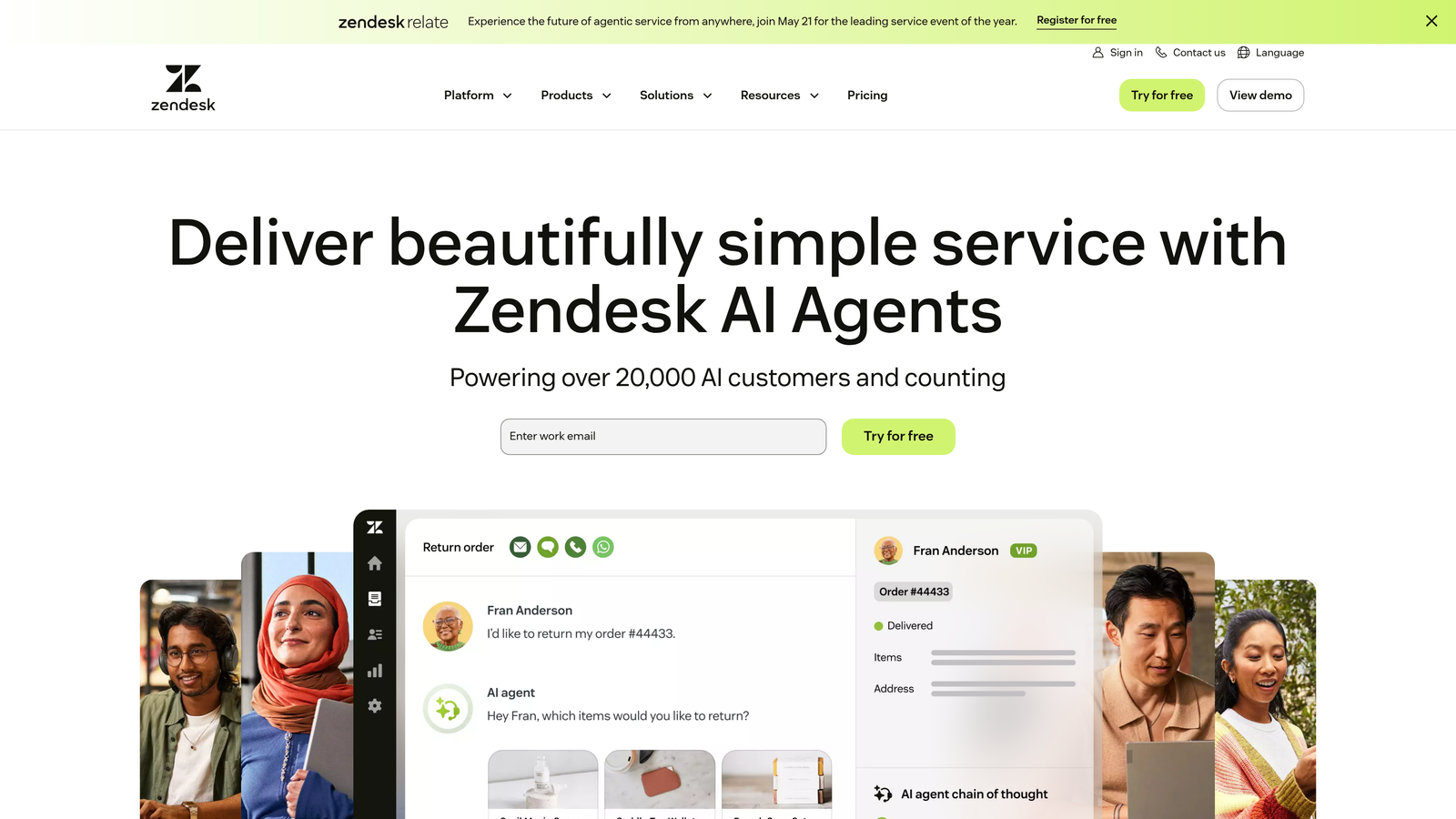
Zendesk AI adds enterprise-grade AI capabilities to the established Zendesk helpdesk platform.
Where This Tool Shines
Zendesk's decades of support data create a foundation that newer platforms can't match. Their AI benefits from patterns learned across thousands of companies and billions of tickets. For startups in regulated industries or those with compliance requirements, Zendesk's security certifications and data handling practices provide immediate credibility.
The intelligent triage and routing capabilities excel at directing tickets to the right team members based on content, urgency, and historical resolution patterns. This matters when your support team grows beyond three people and specialization becomes necessary.
Key Features
AI Agents for Automated Responses: Deploy bots that handle common inquiries across email, chat, and social channels.
Intelligent Triage and Routing: Automatically categorizes and assigns tickets based on content analysis and team capacity.
Agent Assist Suggestions: Provides human agents with recommended responses and relevant knowledge base articles during conversations.
Advanced Analytics: Tracks AI performance, identifies knowledge gaps, and forecasts support volume trends.
Enterprise Integrations: Connects to Salesforce, Jira, Slack, and hundreds of business tools through their marketplace.
Best For
Venture-backed startups with clear paths to enterprise customers who need a platform that won't require migration as they scale. Companies in healthcare, finance, or other regulated industries benefit from Zendesk's compliance infrastructure. If you're hiring a support team of 10+ people within 18 months, the investment in Zendesk's structure pays dividends.
Pricing
AI add-on starts at $50 per agent per month on top of Suite plans beginning at $55 per agent per month. A three-person support team would pay $315 monthly minimum. The cost structure favors larger teams where per-agent pricing becomes more efficient than per-resolution models.
4. Freshdesk Freddy AI
Best for: Budget-conscious startups wanting AI features without premium pricing tiers
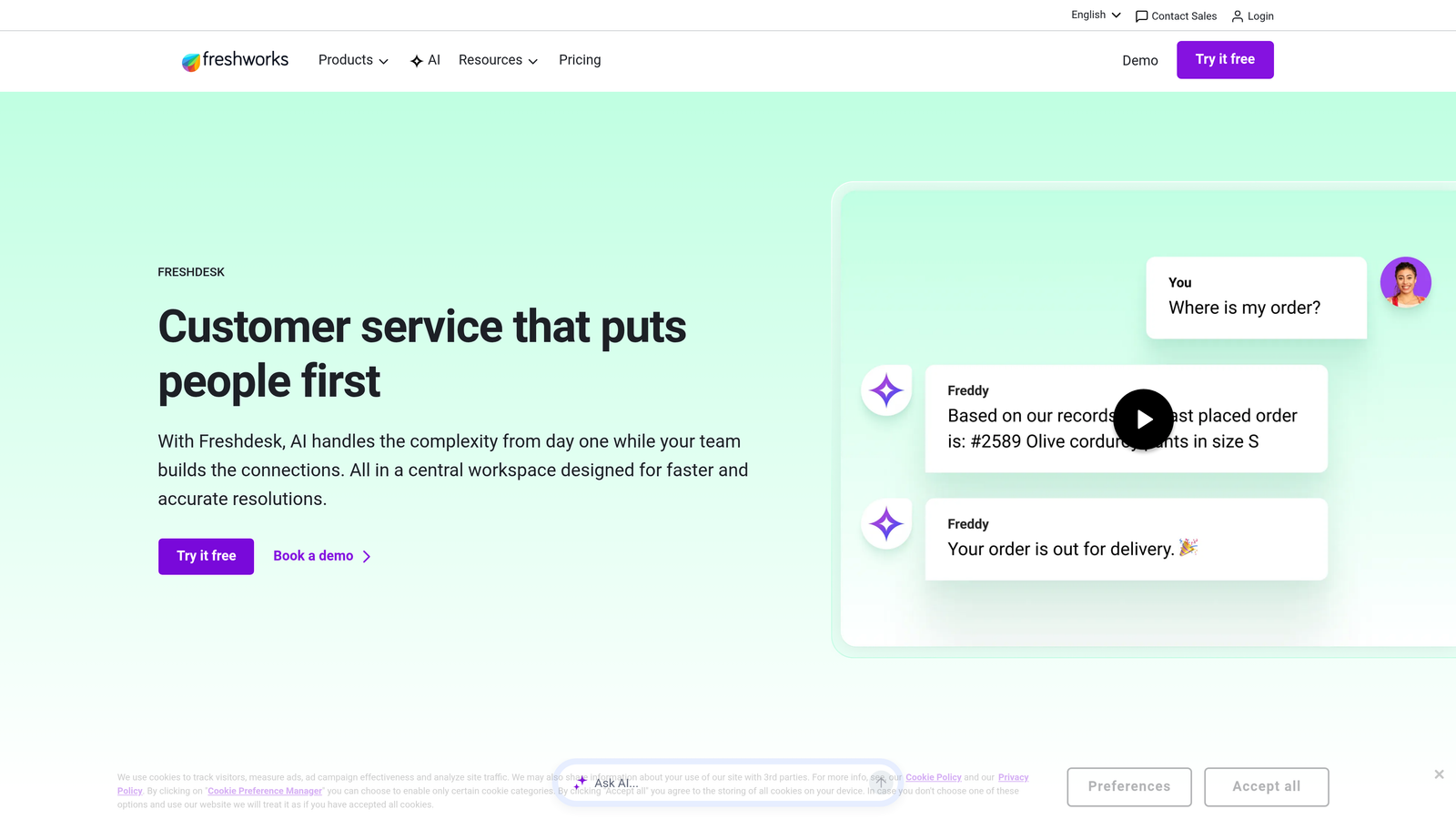
Freshdesk Freddy AI is an AI assistant integrated into Freshdesk's helpdesk suite for automated ticket handling.
Where This Tool Shines
Freshdesk's pricing structure makes AI accessible to bootstrapped startups. While competitors charge separate AI fees, Freddy AI comes included in their Pro plan at $49 per agent monthly. For a three-person team, that's $147 total versus $315+ with Zendesk.
The auto-triage capabilities handle the busywork that drains early-stage support teams. Freddy categorizes incoming tickets, suggests priority levels, and even drafts responses based on similar past conversations. This automation lets small teams punch above their weight in response times.
Key Features
AI-Powered Chatbots: Deploy conversational bots across web, mobile, and messaging channels with visual workflow builders.
Auto-Triage and Categorization: Automatically tags, categorizes, and prioritizes tickets based on content and historical patterns.
Canned Response Suggestions: Recommends pre-written responses and knowledge base articles to agents during conversations.
Self-Service Portal: AI-enhanced help center that suggests relevant articles before customers submit tickets.
Sentiment Analysis: Detects frustrated customers and escalates tickets requiring immediate attention.
Best For
Startups in their first year of scaling support operations who need solid fundamentals without enterprise complexity. Companies with 2-5 support team members benefit most from the pricing sweet spot. If you're currently handling support through shared email inboxes and ready to professionalize, Freshdesk provides structure without overwhelming your team.
Pricing
Pro plan at $49 per agent per month includes Freddy AI features. Enterprise plan at $79 per agent per month adds advanced AI capabilities and custom workflows. No separate AI fees means predictable monthly costs as you add team members.
5. Help Scout
Best for: Startups prioritizing human-centered support with AI as an assistant, not replacement
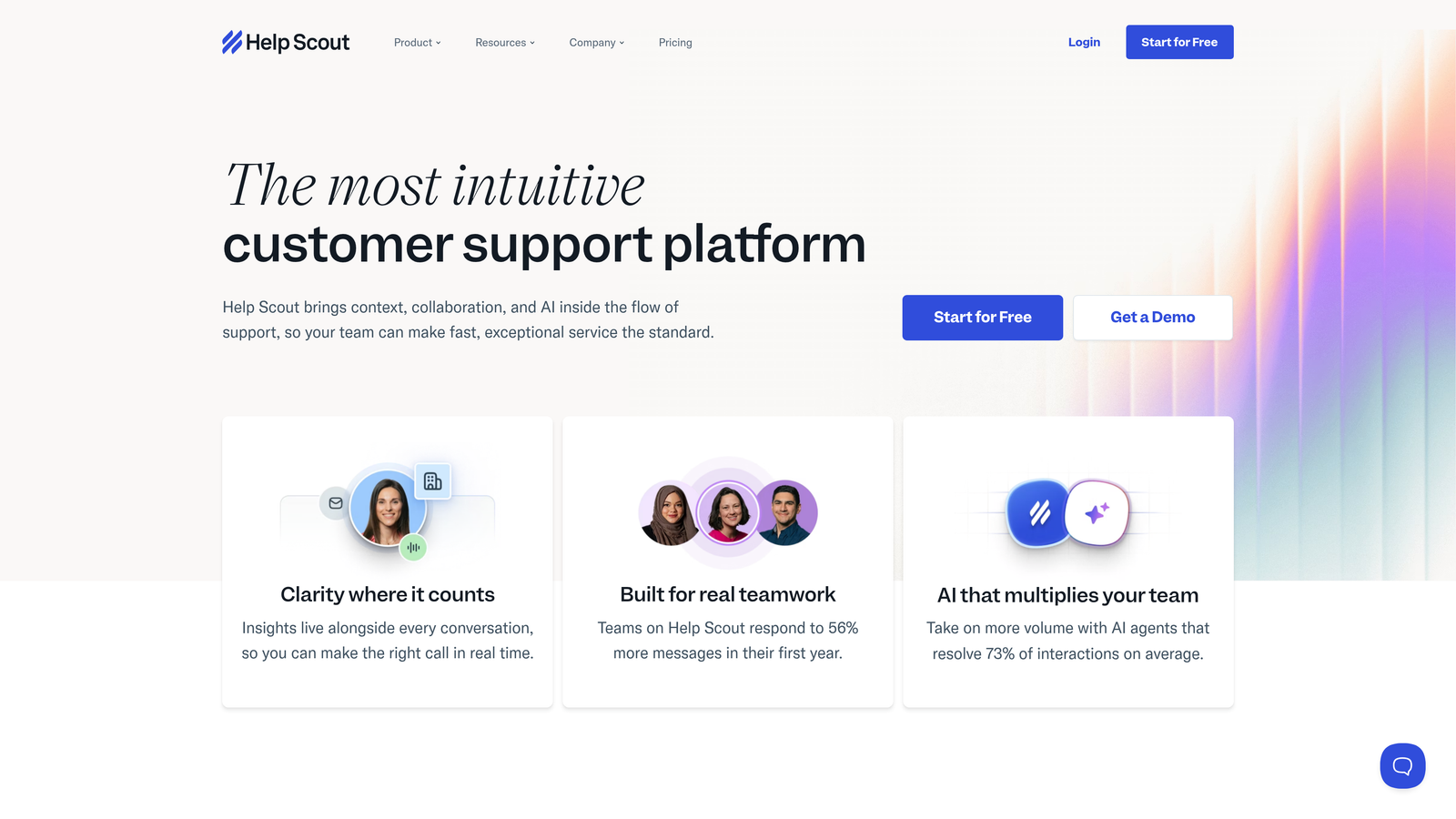
Help Scout is a customer support platform focused on human-centered service with AI assistance features.
Where This Tool Shines
Help Scout's philosophy treats AI as an enhancement to human support rather than a replacement. Their AI Drafts feature generates response suggestions that agents can edit and personalize, maintaining the authentic voice that builds customer relationships. For startups where support is a differentiator, this balance matters.
The Standard plan at $20 per user monthly represents one of the most affordable entry points for quality AI-assisted support. You're not sacrificing core functionality for the lower price—shared inbox, collision detection, and basic reporting come standard.
Key Features
AI Drafts: Generates contextual email response drafts that agents can customize before sending.
AI Summarize: Creates conversation summaries for quick context when agents jump into ongoing threads.
AI Assist: Provides writing suggestions to improve tone, clarity, and grammar in customer responses.
Beacon Embedded Help: In-app widget that surfaces help articles and contact options within your product.
Customer Profiles: Aggregates conversation history and customer data in unified views.
Best For
Startups where support quality directly impacts retention and word-of-mouth growth. Companies with 2-8 support team members who want to maintain personal touch while handling growing volume. If your customers frequently mention support quality in reviews or testimonials, Help Scout's human-first approach protects that competitive advantage.
Pricing
Standard at $20 per user per month covers basic AI features and core helpdesk functionality. Plus at $40 per user per month adds advanced AI features, custom fields, and API access. Month-to-month contracts provide flexibility for startups testing product-market fit.
6. Tidio
Best for: E-commerce startups and small businesses needing live chat with affordable AI automation
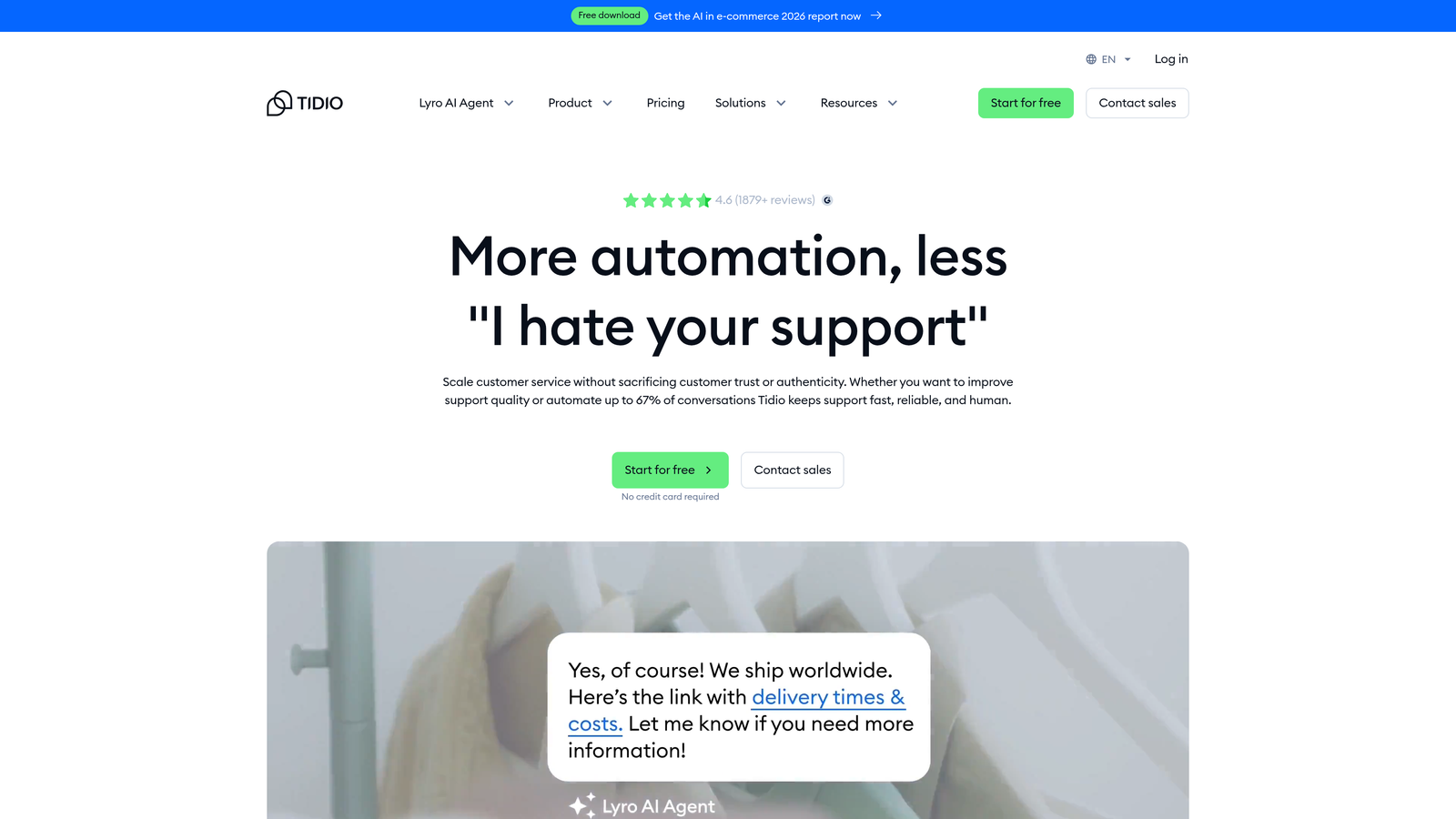
Tidio is a live chat and chatbot platform designed for small businesses and startups.
Where This Tool Shines
Tidio's free tier removes the barrier to entry completely. You can deploy live chat and basic chatbots without any monthly cost, making it ideal for pre-revenue startups testing customer communication channels. When you're ready for AI, Lyro chatbot starts at $29 monthly for 50 conversations.
The visual chatbot builder requires no coding knowledge. You can create conversation flows, set triggers based on user behavior, and customize responses in minutes. For non-technical founders handling support themselves, this accessibility is crucial.
Key Features
Lyro AI Chatbot: Conversational AI that handles common questions using natural language processing.
Visual Chatbot Builder: Drag-and-drop interface for creating custom conversation flows without coding.
E-commerce Integrations: Native connections to Shopify, WooCommerce, and other platforms for order tracking and product recommendations.
Multi-Channel Inbox: Manage conversations from live chat, Messenger, Instagram, and email in one dashboard.
Mobile Apps: iOS and Android apps let you respond to customers from anywhere.
Best For
E-commerce startups and direct-to-consumer brands where real-time chat impacts conversion rates. Companies with simple support needs who don't require complex ticketing systems. If you're a solo founder or small team handling support alongside product development, Tidio's simplicity prevents support tools from becoming a time sink.
Pricing
Free tier available with basic live chat and chatbots. Lyro AI starts at $29 monthly for 50 AI conversations, scaling to $329 monthly for 2,000 conversations. The conversation-based pricing aligns costs with actual usage rather than team size.
7. Crisp
Best for: Startups wanting unlimited team seats and flat-rate pricing as they grow
Crisp is an all-in-one business messaging platform with built-in CRM and AI chatbot capabilities.
Where This Tool Shines
Crisp's unlimited seats on all paid plans create a rare pricing structure in the support software market. Most competitors charge per agent, creating costs that scale linearly with team growth. Crisp's flat-rate model at $95 monthly for unlimited users removes that constraint entirely.
The built-in CRM eliminates the need for separate customer data tools. You can track deals, segment contacts, and view conversation history without integrating external systems. For early-stage startups, this consolidation reduces both costs and complexity.
Key Features
MagicReply AI Responses: AI-generated reply suggestions based on conversation context and customer history.
Unlimited Seats: Add entire team to platform without per-user charges on Pro and Unlimited plans.
Built-in CRM: Customer relationship management features integrated directly into the messaging platform.
Knowledge Base: Self-service help center that integrates with chat widget for automated article suggestions.
Co-browsing Support: See customer screens in real-time to provide visual guidance through complex issues.
Best For
Startups with distributed teams where multiple people handle customer conversations. Companies planning rapid team growth who want predictable costs regardless of headcount. If you're in a phase where sales, support, and success teams all need access to customer conversations, Crisp's unlimited seats provide significant value.
Pricing
Free for 2 seats with basic features. Pro at $25 monthly adds MagicReply and removes branding. Unlimited at $95 monthly (flat rate, not per seat) includes advanced AI features, custom domains, and priority support. The flat-rate structure creates substantial savings for teams of 5+ people.
8. Drift
Best for: B2B startups where support conversations directly connect to sales pipeline and revenue
Drift is a conversational AI platform focused on B2B sales and support with revenue intelligence.
Where This Tool Shines
Drift treats every support conversation as a potential revenue opportunity. Their AI doesn't just resolve issues—it identifies upsell signals, qualifies leads, and routes high-value prospects to sales teams. For B2B startups where support interactions often surface expansion opportunities, this intelligence creates measurable ROI.
The account-based targeting capabilities let you customize chat experiences based on company size, industry, or engagement level. When a target account visits your site, Drift can trigger personalized playbooks that combine support with strategic messaging.
Key Features
AI-Powered Chatbots: Conversational bots that qualify leads, answer questions, and route conversations based on intent.
Meeting Scheduling Automation: Books meetings directly from chat conversations by checking team calendars and sending invites.
Revenue Acceleration Tools: Identifies expansion opportunities and upsell signals within support conversations.
Account-Based Targeting: Customizes chat experiences based on visitor company data and engagement history.
Sales Handoff: Seamlessly transfers qualified conversations from bots to sales reps with full context.
Best For
Well-funded B2B startups with average contract values above $10,000 where support and sales overlap significantly. Companies with dedicated sales development teams who can leverage qualified leads from support conversations. If your product requires demos or consultative selling, Drift's revenue focus justifies the premium pricing.
Pricing
Premium tier starts at $2,500 monthly with custom enterprise pricing for larger deployments. The investment makes sense for startups where a single closed deal covers multiple months of platform costs. Not suitable for bootstrapped companies or those with consumer-focused products.
9. Ada
Best for: High-growth startups anticipating enterprise support volume within 12-18 months
Ada is an AI-first customer service automation platform for high-volume support operations.
Where This Tool Shines
Ada's no-code automation builder empowers non-technical teams to create sophisticated conversation flows. You can build decision trees, integrate external APIs, and customize responses without engineering resources. For startups where engineering time is scarce, this independence accelerates support automation.
The reasoning engine handles multi-step queries that trip up simpler chatbots. When customers ask compound questions or change topics mid-conversation, Ada maintains context and adapts responses accordingly. This sophistication reduces frustration and improves resolution rates.
Key Features
No-Code Automation Builder: Visual interface for creating complex conversation flows without programming knowledge.
Multi-Channel Deployment: Deploy identical AI experiences across web, mobile, messaging apps, and voice channels.
Reasoning Engine: Handles complex, multi-turn conversations with context retention across topics.
Enterprise Integrations: Connects to Salesforce, Zendesk, Shopify, and custom systems through APIs.
Analytics Dashboard: Tracks automation rates, containment metrics, and identifies conversation patterns requiring attention.
Best For
Venture-backed startups with clear paths to processing thousands of support conversations monthly. Companies in industries with repetitive, high-volume inquiries like e-commerce, SaaS, or financial services. If you're currently drowning in support volume and hiring isn't fast enough, Ada's automation capacity provides immediate relief.
Pricing
Custom pricing based on resolution volume and deployment scope. Ada typically targets enterprise customers, with implementations starting in the five-figure annual range. The investment makes sense for companies already processing 10,000+ monthly conversations or those with clear growth trajectories to that volume.
Making the Right Choice for Your Startup
The right AI support software depends less on features and more on your specific growth stage and business model.
If you're pre-revenue or bootstrapped, start with Tidio's free tier or Crisp's affordable flat-rate pricing. These platforms remove financial risk while you validate your support strategy. You can always migrate to more sophisticated tools as revenue grows.
For product-led growth startups where in-app guidance impacts conversion, Halo AI's page-aware technology creates competitive advantages that justify the investment. When users can get contextual help without leaving your product, activation rates improve measurably.
B2B companies with complex sales cycles benefit from Drift's revenue intelligence, while e-commerce brands handling high conversation volumes should evaluate Ada's automation capacity. The key is matching the tool's strengths to your specific support challenges.
Pricing model matters as much as features. Per-resolution pricing (Intercom Fin, Halo AI) aligns costs with outcomes, making it easier to calculate ROI. Per-seat models (Zendesk, Freshdesk) create predictable expenses but scale linearly with team growth. Flat-rate pricing (Crisp) provides the most flexibility for rapidly growing teams.
Don't overlook integration requirements. If you're already using Linear for development, Slack for communication, and HubSpot for customer data, choose a platform that connects natively to your existing stack. Custom integrations consume engineering time that early-stage startups can't spare.
Your support team shouldn't scale linearly with your customer base. Let AI agents handle routine tickets, guide users through your product, and surface business intelligence while your team focuses on complex issues that need a human touch. See Halo in action and discover how continuous learning transforms every interaction into smarter, faster support.
The tools in this guide represent different philosophies about AI's role in customer support. Some treat AI as an assistant to human agents, others position it as the primary support layer with human escalation. Your choice should reflect not just your current budget, but your vision for how support operations scale as you grow from 100 customers to 100,000.