9 Best AI Support Software Pricing Plans Compared for 2026
This comprehensive guide compares ai support software pricing plans across the nine leading platforms for 2026, helping businesses choose the right solution based on their ticket volume and budget. You'll discover how different pricing models—from per-resolution to per-agent to hybrid structures—impact your costs as you scale, with detailed breakdowns of what each tier includes and which pricing approach works best for startups versus enterprises.
 Matt PattoliFounder12 min read
Choosing AI support software isn't just about features—it's about finding pricing that scales with your business without surprise costs eating into your support budget. Whether you're a startup handling 500 tickets monthly or an enterprise managing 50,000, the right pricing structure can mean the difference between sustainable growth and budget chaos.
The AI support landscape has shifted dramatically in how vendors charge for their platforms. Some bill per successful resolution, others stick with traditional per-agent pricing, and many now use hybrid models that combine base fees with usage components. Understanding these structures helps you predict costs as you scale.
This guide breaks down the top AI support platforms, examining their pricing models, what you actually get at each tier, and which businesses benefit most from each approach. We've focused on transparency, value-to-cost ratio, and scalability to help you make an informed decision.
1. Halo AI
Best for: B2B companies seeking transparent AI-first pricing with continuous learning capabilities
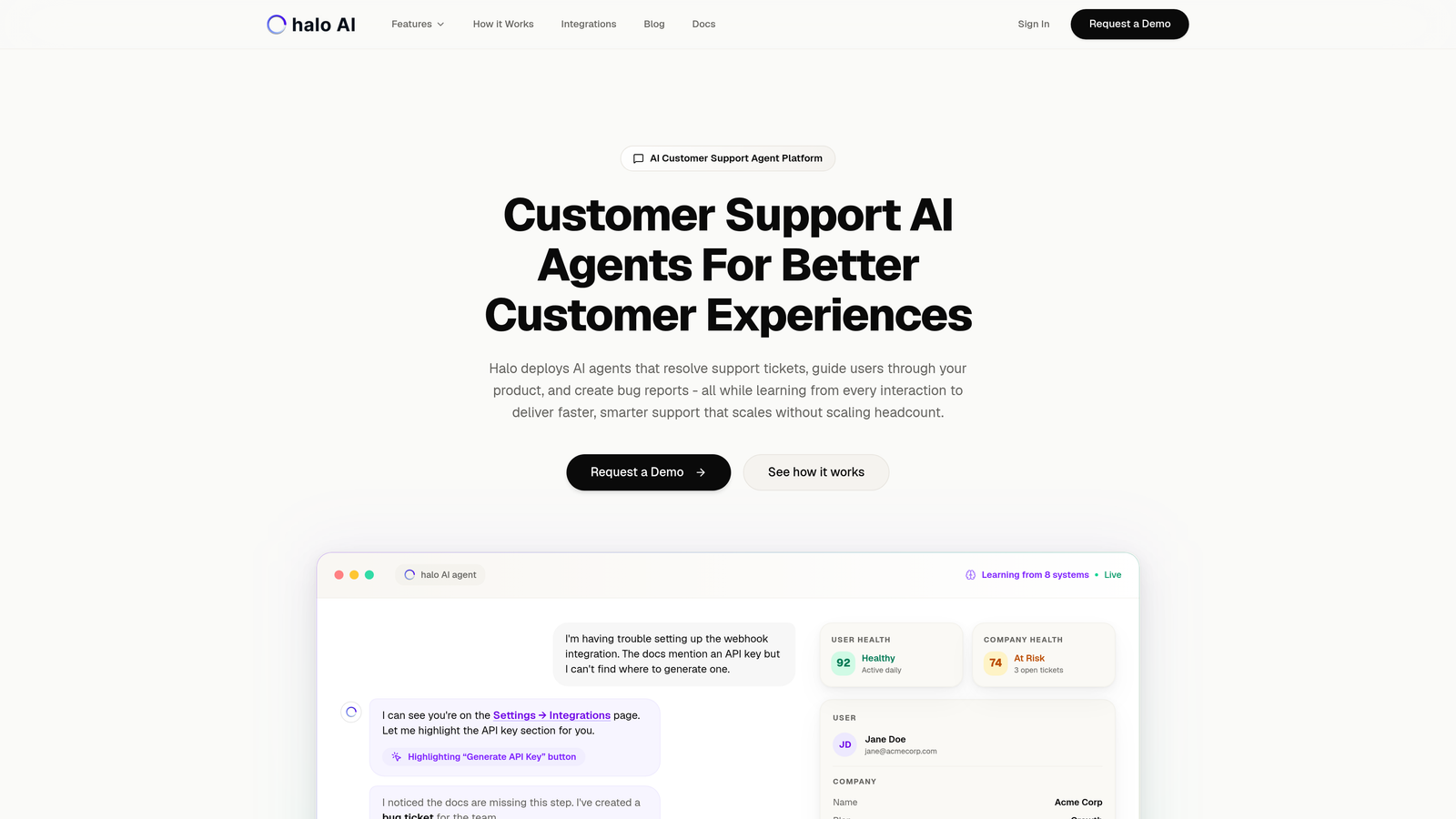
Halo AI takes a fundamentally different approach by building AI capabilities as the core architecture rather than bolting them onto existing helpdesk systems.
Where This Tool Shines
The platform's continuous learning model means your AI agents actually get smarter with every interaction, unlike static rule-based systems that require constant manual updates. This learning happens automatically across ticket resolution, user guidance, and business intelligence surfacing.
What sets Halo apart is its page-aware chat widget that sees what users see on your platform. When someone asks for help, the AI understands their current context, making guidance far more relevant than traditional chatbots guessing from conversation history alone.
Key Features
Continuous Learning Architecture: AI agents improve autonomously from every resolved ticket and user interaction without manual retraining.
Page-Aware Context: Chat widget sees user's current screen state to provide precise visual guidance and contextual support.
Smart Inbox with Business Intelligence: Surface customer health signals, revenue intelligence, and anomaly detection beyond basic support metrics.
Multi-System Integration Hub: Connects across Linear, Slack, HubSpot, Intercom, Stripe, Zoom, PandaDoc, and Fathom for unified business context.
Autonomous Bug Ticket Creation: Automatically generates detailed bug reports with reproduction steps when users encounter technical issues.
Best For
Growing B2B product teams who want AI-first support that scales without scaling headcount. Particularly valuable for SaaS companies using multiple business tools who need unified customer intelligence rather than siloed support data.
Pricing
Tiered pricing structure with transparent per-seat and usage components. Custom enterprise quotes available for high-volume operations. The pricing model emphasizes predictability as you scale rather than surprise overage charges.
2. Intercom Fin
Best for: Companies already using Intercom who want native AI resolution capabilities
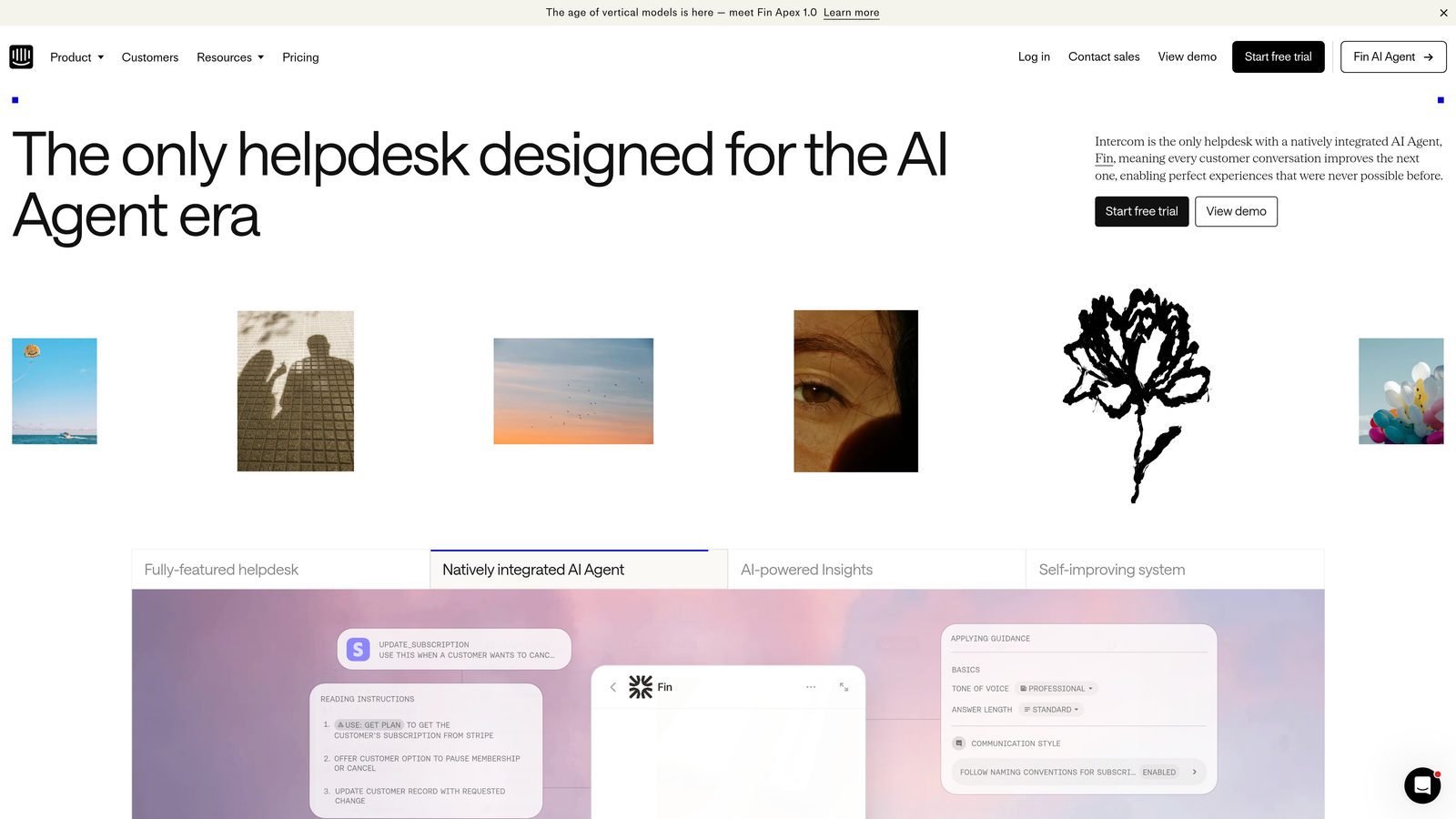
Intercom Fin is an AI-powered resolution bot built directly into Intercom's customer messaging platform, designed to resolve conversations without requiring human intervention.
Where This Tool Shines
Fin's resolution-based pricing model means you only pay when the AI successfully resolves a customer conversation. This aligns costs directly with value delivered, though it requires careful monitoring to understand total monthly expenses.
The native integration with Intercom's ecosystem provides seamless access to your existing conversation history, customer data, and help center content. For teams already invested in Intercom, adding Fin feels like flipping a switch rather than implementing a new platform.
Key Features
Resolution-Based Billing: Pay per successful AI resolution rather than flat monthly fees, with costs scaling to actual usage.
Native Ecosystem Integration: Deep access to Intercom conversation history, customer profiles, and knowledge base without third-party connections.
Customizable AI Personality: Adjust tone, style, and response patterns to match your brand voice and support philosophy.
Intelligent Human Handoff: Automatically escalates complex conversations to human agents when AI confidence drops below threshold.
Multi-Channel Support: Handles conversations across chat, email, and social channels within unified Intercom interface.
Best For
Mid-market to enterprise companies already using Intercom for customer messaging who want to add AI resolution without platform migration. Works best when you have a robust help center for Fin to reference.
Pricing
Starts at $0.99 per resolution with volume discounts available. Requires Intercom base subscription starting around $74/month. Total cost depends heavily on resolution volume, making budgeting less predictable for high-volume operations.
3. Zendesk AI
Best for: Enterprise teams with existing Zendesk infrastructure seeking advanced AI capabilities
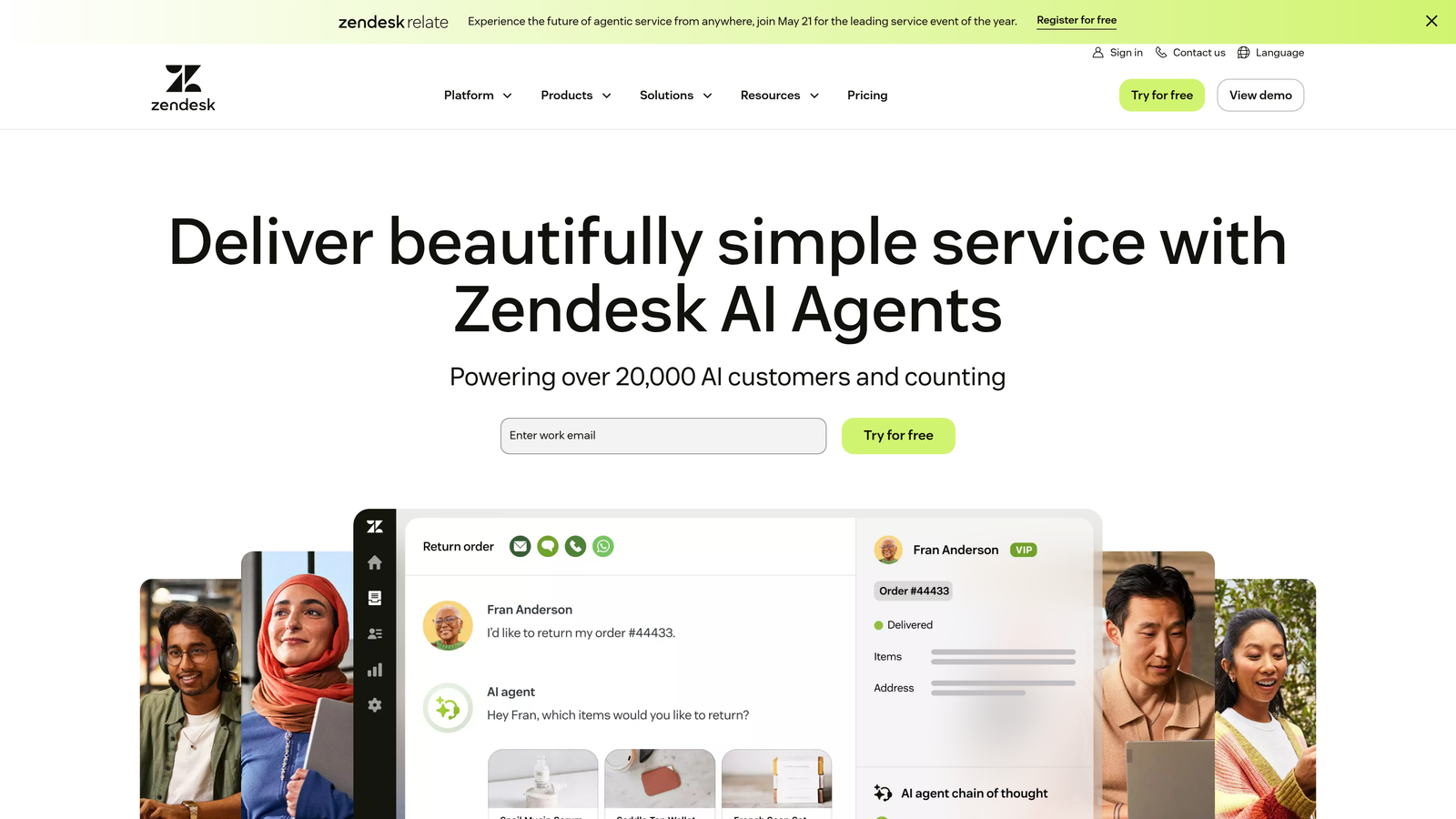
Zendesk AI layers enterprise-grade AI capabilities onto Zendesk's established helpdesk platform, offering intelligent triage, agent assistance, and automated responses.
Where This Tool Shines
The platform leverages Zendesk's massive dataset from millions of support interactions to train its AI models, providing sophisticated understanding of support patterns across industries. This breadth of training data helps with edge cases and unusual requests.
Zendesk's AI excels at intelligent routing and prioritization, analyzing incoming tickets to predict urgency, sentiment, and required expertise. This ensures critical issues reach the right specialists quickly rather than sitting in general queues.
Key Features
Advanced AI Add-On Architecture: Layers sophisticated AI capabilities onto existing Zendesk plans without requiring platform migration.
Intelligent Ticket Routing: Analyzes ticket content, customer history, and agent expertise to route conversations optimally.
Agent Copilot Assistance: Provides real-time response suggestions and knowledge base articles to agents during conversations.
Comprehensive Analytics Dashboard: Tracks AI performance, resolution rates, and agent efficiency metrics with detailed reporting.
Intent Classification: Automatically categorizes incoming requests to trigger appropriate workflows and macros.
Best For
Large enterprises with established Zendesk implementations who need enterprise-grade AI without disrupting existing workflows. Best suited for teams handling 10,000+ tickets monthly with complex routing requirements.
Pricing
AI add-on pricing varies by feature set and volume. Base Suite plans start at $55/agent/month, with Advanced AI features requiring Professional tier or higher. Enterprise contracts typically negotiate custom pricing based on agent count and AI usage volume.
4. Freshdesk Freddy AI
Best for: Mid-market support teams seeking affordable AI automation with strong value-to-cost ratio
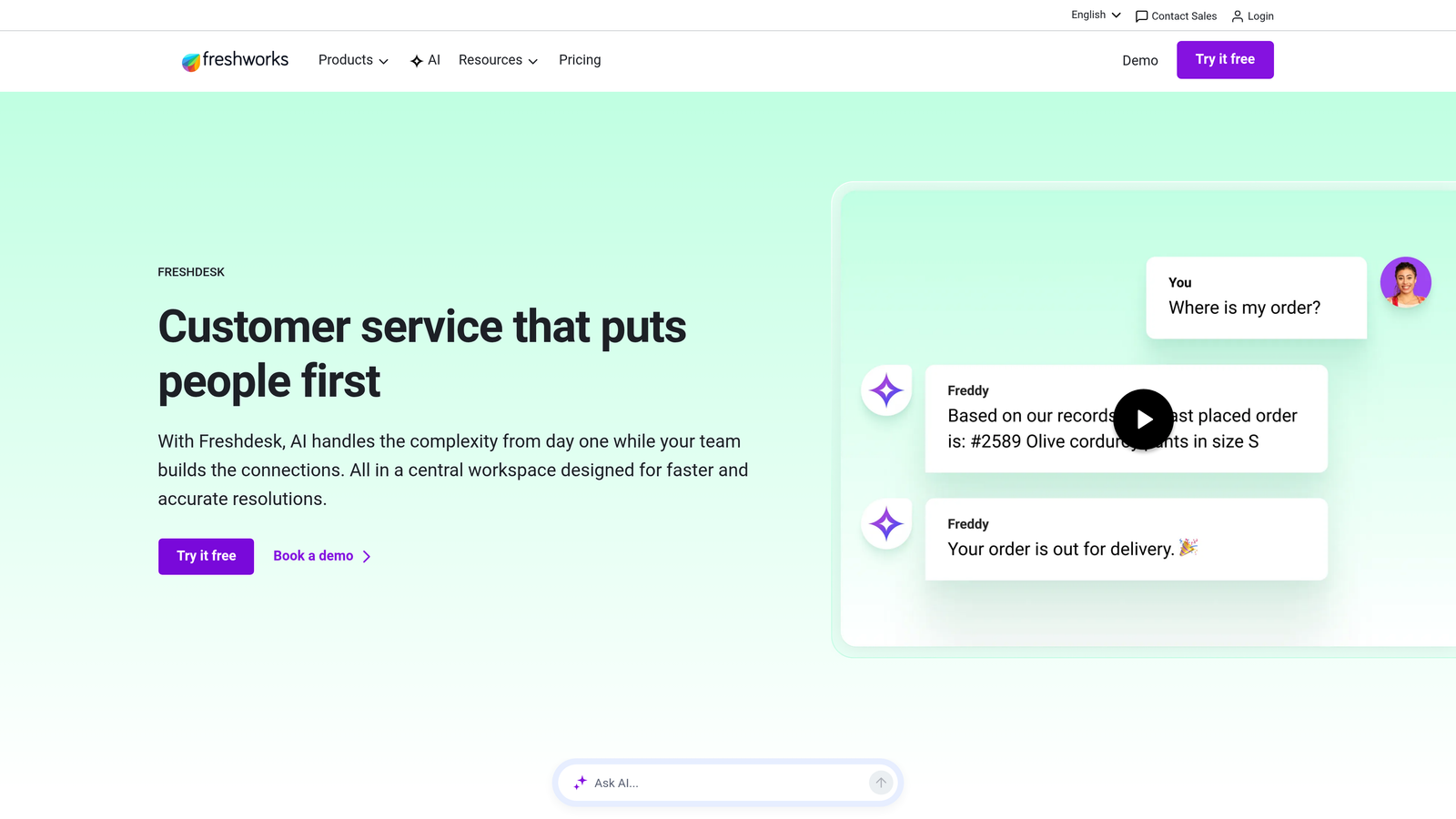
Freshdesk Freddy AI is Freshworks' AI assistant integrated into Freshdesk, providing self-service automation, agent assist, and intelligent insights for mid-market support teams.
Where This Tool Shines
Freddy AI delivers impressive capabilities at price points that make AI accessible to smaller teams. The free tier includes basic automation, while the Pro plan at $49/agent/month provides meaningful AI features that competitors reserve for enterprise tiers.
The platform's agent assist functionality helps human agents work faster by suggesting responses, auto-filling ticket fields, and recommending relevant canned responses. This hybrid approach augments rather than replaces human agents, making it less disruptive to implement.
Key Features
Freddy Self Service: Automated resolution capabilities that handle common queries without agent involvement.
Agent Assist Suggestions: Real-time response recommendations and knowledge base article suggestions during active conversations.
AI-Powered Field Suggestions: Automatically populates ticket fields like category, priority, and tags based on content analysis.
Canned Response Recommendations: Suggests pre-written responses based on ticket content and historical resolution patterns.
Sentiment Analysis: Detects customer emotion in tickets to flag urgent or escalating situations for priority handling.
Best For
Small to mid-market companies with 5-50 support agents who want AI capabilities without enterprise-level investment. Particularly valuable for teams transitioning from manual processes to AI-augmented support.
Pricing
Free tier available with basic features. Pro plan at $49/agent/month includes basic AI capabilities. Enterprise tier at $79/agent/month unlocks advanced Freddy features including predictive support and custom bot workflows.
5. Ada
Best for: Enterprise operations handling high conversation volumes across multiple languages
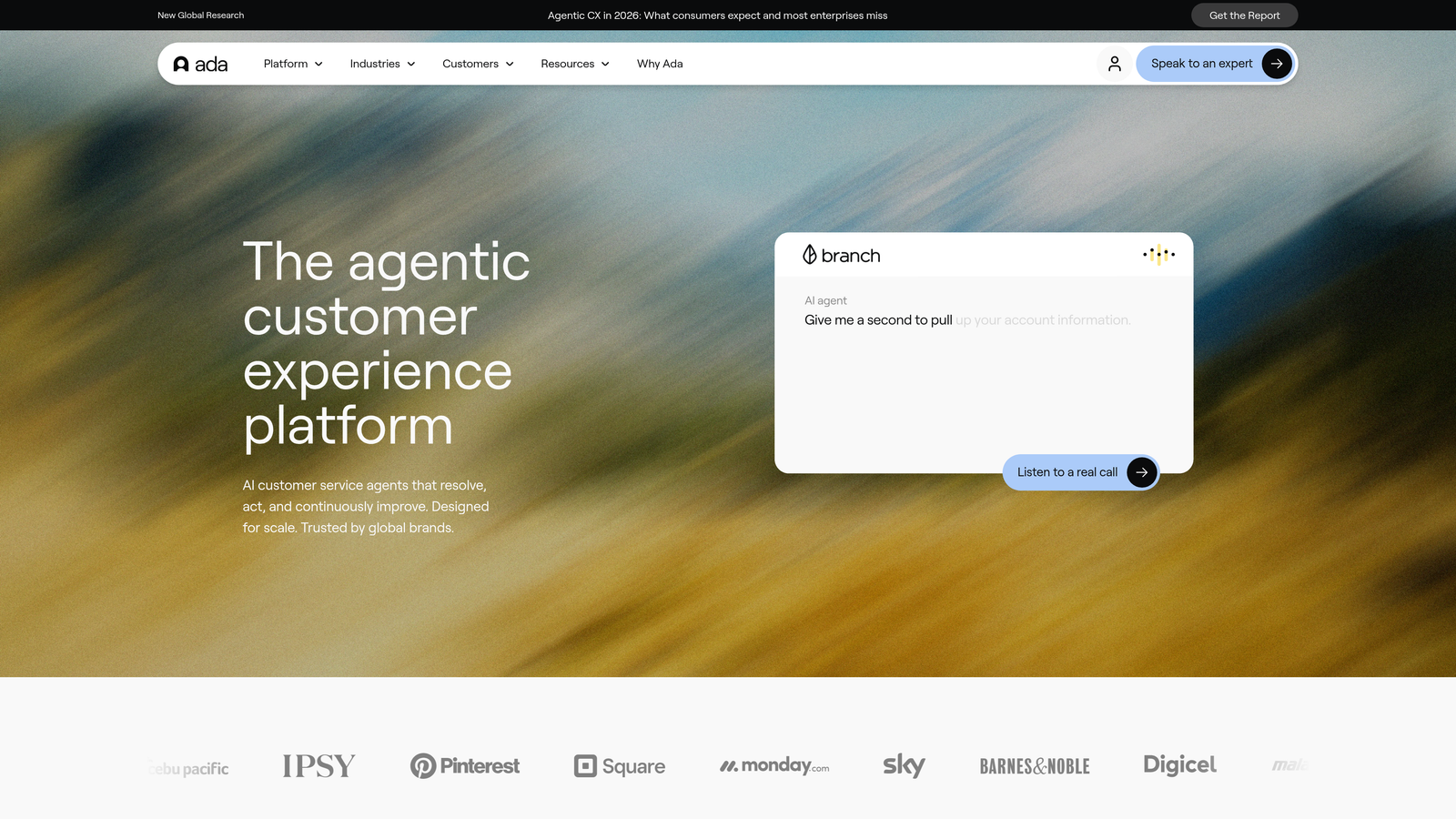
Ada is an enterprise-focused AI automation platform specializing in high-volume customer service with no-code bot building and strong multilingual support.
Where This Tool Shines
Ada's no-code conversation builder lets non-technical teams design sophisticated bot workflows without developer resources. The visual interface makes it possible to create, test, and deploy conversation paths quickly, reducing time-to-value significantly.
The platform's multilingual capabilities span 50+ languages with native understanding rather than simple translation. This makes Ada particularly valuable for global enterprises serving diverse customer bases across regions.
Key Features
No-Code Conversation Builder: Visual workflow designer that enables business users to create complex bot logic without programming.
50+ Language Support: Native language understanding across major global languages rather than translation-based approaches.
Proactive Campaign Capabilities: Trigger automated outreach based on customer behavior, lifecycle stage, or product usage patterns.
Enterprise Security and Compliance: SOC 2 Type II, GDPR, and HIPAA compliance with enterprise-grade security controls.
Advanced Analytics Suite: Detailed conversation analytics, containment rates, and customer satisfaction tracking with custom reporting.
Best For
Large enterprises handling 100,000+ monthly conversations across multiple regions and languages. Works best for companies with dedicated conversation design teams who can leverage the no-code builder effectively.
Pricing
Custom enterprise pricing only, with contracts typically starting in mid-five figures annually for meaningful conversation volume. Pricing scales based on conversation volume, language requirements, and integration complexity.
6. Tidio
Best for: Small businesses and e-commerce stores seeking affordable automation on tight budgets
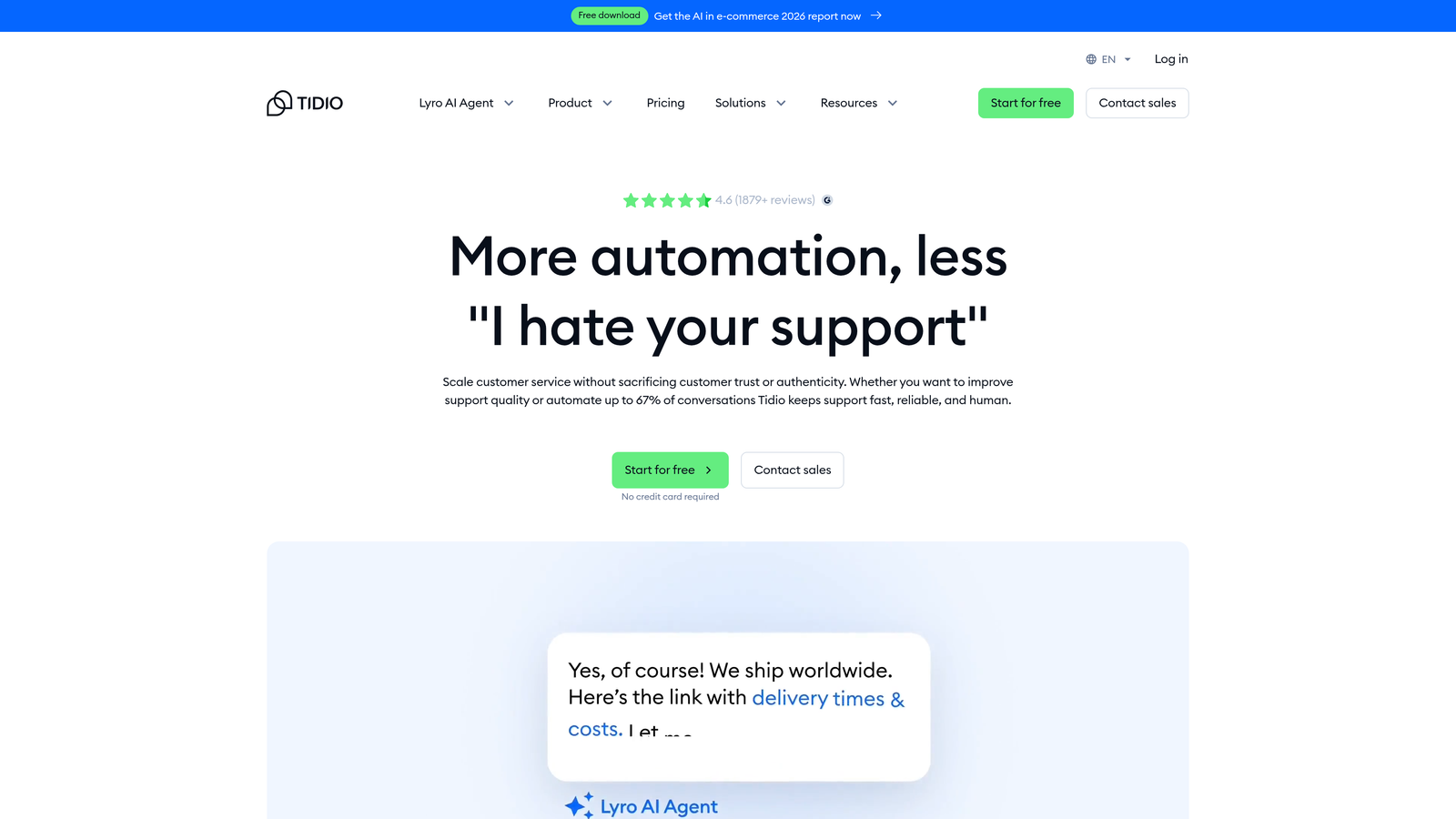
Tidio is an affordable live chat and AI chatbot platform designed for small businesses and e-commerce stores seeking accessible automation.
Where This Tool Shines
Tidio's pricing makes AI accessible to businesses that can't justify enterprise-level investments. The free plan includes basic chatbot functionality, while the Lyro AI add-on at $39/month provides conversational AI capabilities at a fraction of competitor costs.
The platform's e-commerce integrations with Shopify, WooCommerce, and other platforms make it particularly valuable for online retailers. Tidio can answer product questions, track orders, and handle returns directly within chat conversations.
Key Features
Visual Chatbot Builder: Drag-and-drop interface for creating automated conversation flows without technical expertise.
Lyro AI Conversational Bot: Natural language understanding bot that handles customer questions with AI-generated responses.
E-Commerce Platform Integrations: Native connections to Shopify, WooCommerce, BigCommerce, and other e-commerce platforms.
Live Chat and Bot Hybrid: Seamless handoff between automated bot responses and human agents when needed.
Mobile App Management: Full-featured mobile apps for iOS and Android to manage conversations on the go.
Best For
Small e-commerce businesses with limited support budgets who need basic AI automation. Ideal for stores handling under 1,000 monthly conversations where personal service matters but resources are constrained.
Pricing
Free plan available with basic chatbot features. Starter plan at $29/month adds live chat. Lyro AI add-on starts at $39/month for 50 AI conversations, with additional conversation packs available at tiered pricing.
7. Drift
Best for: B2B companies unifying sales and support conversations with revenue focus
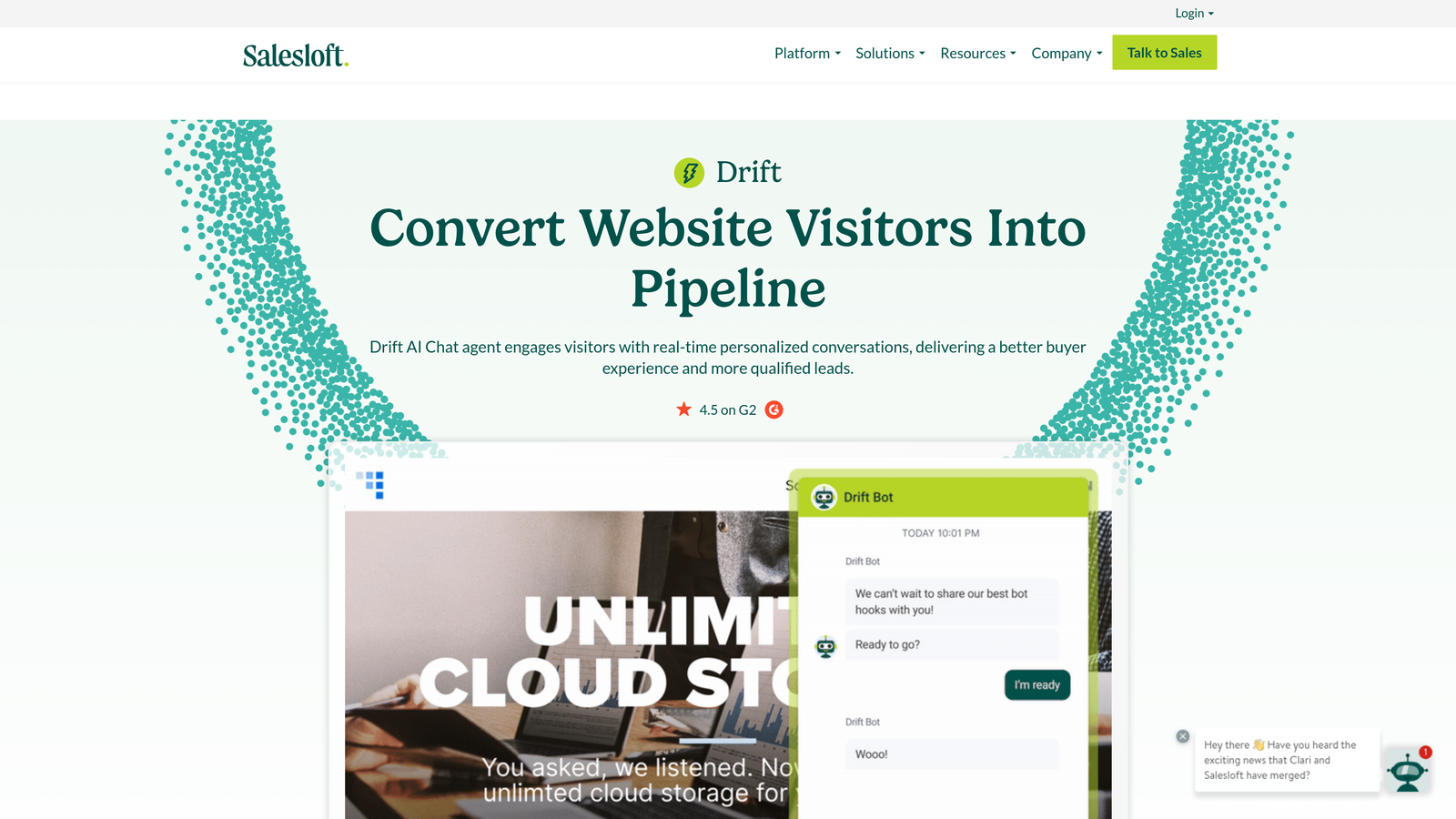
Drift is a conversational AI platform focused on B2B sales and support, combining chatbots with revenue intelligence and meeting scheduling.
Where This Tool Shines
Drift's revenue-focused conversation routing intelligently determines whether incoming conversations should go to sales or support, maximizing both conversion opportunities and customer satisfaction. This unified approach prevents the common problem of sales and support operating in silos.
The platform's meeting scheduler integration automatically books qualified prospects with the right sales representatives based on territory, product expertise, or account ownership. This eliminates scheduling friction that often kills momentum in B2B sales cycles.
Key Features
Revenue-Focused Routing: Intelligent conversation classification that routes to sales or support based on intent, account value, and lifecycle stage.
Integrated Meeting Scheduler: Automatic calendar booking for qualified conversations with appropriate team members.
Account-Based Targeting: Personalized conversation experiences based on company, industry, and account tier.
Sales and Support Unification: Single platform handling both pre-sale and post-sale conversations with shared context.
Conversational Marketing Campaigns: Proactive chat campaigns triggered by page visits, time on site, or behavioral signals.
Best For
B2B companies with complex sales cycles where the line between sales and support conversations blurs. Most valuable for organizations with 10+ sales representatives and dedicated support teams needing unified conversation management.
Pricing
Premium tier starts around $2,500/month for core features. Advanced and Enterprise tiers available with custom pricing based on conversation volume, user count, and integration requirements. Represents significant investment targeting mid-market to enterprise buyers.
8. HubSpot Service Hub
Best for: Companies using HubSpot CRM seeking unified customer context across marketing, sales, and support
HubSpot Service Hub is an AI-enhanced service platform within HubSpot's ecosystem, leveraging unified CRM data for contextual support automation.
Where This Tool Shines
The unified CRM customer context gives support agents complete visibility into every customer interaction across marketing, sales, and previous support conversations. This eliminates the frustrating experience of customers repeating information to different departments.
HubSpot's knowledge base with AI suggestions automatically recommends relevant articles to agents during conversations and surfaces help content to customers before they contact support. This dual approach reduces ticket volume while improving agent efficiency.
Key Features
Unified CRM Customer Context: Complete customer history across marketing, sales, and support interactions in single interface.
AI-Powered Ticket Routing: Intelligent assignment based on agent expertise, workload, and customer account characteristics.
Knowledge Base with AI Suggestions: Automated article recommendations to both customers and agents based on conversation content.
Customer Portal Capabilities: Self-service portal where customers can track tickets, access knowledge base, and manage account details.
Conversation Intelligence: Automated conversation summarization and sentiment tracking with performance analytics.
Best For
Mid-market to enterprise companies already using HubSpot for marketing or sales who want to extend the platform to support. Most valuable when customer journey spans multiple departments requiring shared context.
Pricing
Free tools available with basic ticketing and knowledge base. Professional tier at $90/month/seat includes AI features and automation. Enterprise tier at $150/month/seat adds advanced AI, custom objects, and predictive lead scoring.
9. Kustomer
Best for: Retail and direct-to-consumer brands managing complex omnichannel customer journeys
Kustomer is an omnichannel customer service CRM with AI capabilities, particularly strong for retail and direct-to-consumer brands managing complex customer journeys.
Where This Tool Shines
Kustomer's unified customer timeline view displays every interaction, purchase, return, and support conversation in chronological order. This makes it easy for agents to understand the complete customer relationship rather than viewing isolated tickets.
The platform's AI-powered conversation classification automatically tags and categorizes incoming messages across channels, making it easier to track trends, measure performance, and route conversations appropriately without manual agent effort.
Key Features
Unified Customer Timeline: Chronological view of all customer interactions, purchases, and support history in single interface.
AI-Powered Classification: Automatic conversation tagging and categorization across all communication channels.
Proactive Support Triggers: Automated outreach based on purchase behavior, shipping delays, or product issues.
E-Commerce Platform Integrations: Deep connections to Shopify, Magento, BigCommerce with order management capabilities.
Omnichannel Conversation Management: Unified inbox handling email, chat, social media, SMS, and phone in single workflow.
Best For
Direct-to-consumer brands and retailers handling high volumes of order-related inquiries across multiple channels. Most effective for companies with complex product catalogs where agents need quick access to order history and customer purchase patterns.
Pricing
Enterprise pricing starting around $89/user/month for base platform. Custom quotes required for AI add-ons and higher conversation volumes. Implementation and integration costs can add significantly to total cost of ownership.
Finding Your Pricing Sweet Spot
The right AI support pricing depends heavily on your specific situation. If you're a growing B2B team wanting transparent AI-first pricing with continuous learning capabilities, Halo AI offers predictable costs that scale intelligently without surprise charges. The platform's learning architecture means your investment compounds over time as AI agents get smarter.
For small businesses on tight budgets, Freshdesk Freddy delivers solid AI features at $49/agent/month, while Tidio serves micro-businesses and e-commerce stores with plans starting at $29/month. These options provide meaningful automation without enterprise-level investment.
Enterprises with existing infrastructure face a different calculation. Zendesk AI makes sense when you've already invested heavily in Zendesk and need advanced capabilities without migration. Intercom Fin works similarly for teams already using Intercom's messaging platform.
The pricing model matters as much as the price point. Resolution-based pricing like Intercom's $0.99 per resolution aligns costs with value but makes budgeting unpredictable. Per-seat pricing provides cost certainty but doesn't reward efficiency. Hybrid models combining base fees with usage components offer middle ground.
Consider your conversation volume trajectory. If you're handling 500 tickets monthly today but expect 5,000 within a year, pricing that seems reasonable now might become prohibitive at scale. Look for transparent tier structures that show exactly how costs increase with volume.
Your support team shouldn't scale linearly with your customer base. Let AI agents handle routine tickets, guide users through your product, and surface business intelligence while your team focuses on complex issues that need a human touch. See Halo in action and discover how continuous learning transforms every interaction into smarter, faster support.