9 Best AI Support Software Solutions Reviewed for 2026
This comprehensive review evaluates nine leading ai support software solutions for 2026, examining their autonomous ticket resolution capabilities, integration options, and learning abilities. The analysis helps businesses of all sizes—from startups to enterprises—identify the right platform based on real performance metrics rather than marketing claims, focusing on workflow compatibility and budget considerations.
 Matt PattoliFounder12 min read
Finding the right AI support software can transform how your team handles customer inquiries—but with dozens of options claiming to revolutionize your helpdesk, separating genuine innovation from marketing hype takes work. This review examines nine leading AI support platforms based on real capabilities: how well they actually resolve tickets autonomously, integration depth with existing tools, learning capabilities over time, and value for different team sizes. Whether you're scaling a startup support team or modernizing enterprise operations, these reviews will help you identify which solution fits your specific workflow and budget.
1. Halo AI
Best for: Teams wanting autonomous AI agents that learn continuously from every support interaction
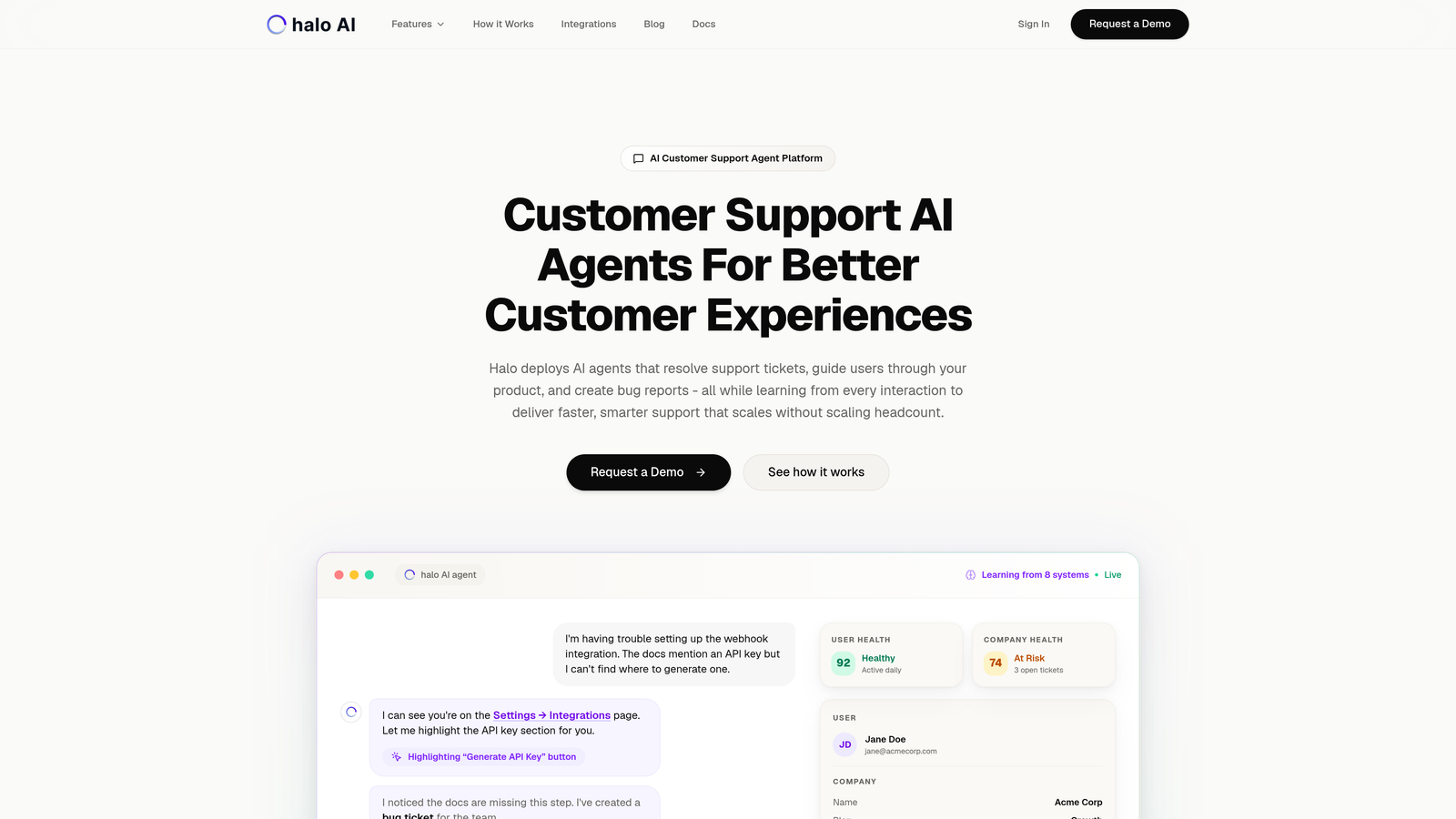
Halo AI is an AI-first customer support platform that deploys intelligent agents to resolve tickets, guide users through your product, and surface business intelligence—all while learning from every interaction.
Where This Tool Shines
Unlike platforms that bolt AI onto existing helpdesk systems, Halo is built from the ground up for autonomous operation. The platform's page-aware capabilities mean its AI agents can see what users see in your product, enabling contextual guidance that goes far beyond traditional chatbot responses.
The continuous learning architecture stands out: every resolved ticket, every escalation, and every interaction trains the system to handle similar issues better next time. This creates a support experience that genuinely improves over time rather than remaining static.
Key Features
Autonomous Ticket Resolution: AI agents handle routine inquiries end-to-end with intelligent escalation to human agents when complexity requires it.
Page-Aware Chat Widget: Context-aware assistance that understands what users are looking at in your product, enabling visual UI guidance.
Smart Inbox with Business Intelligence: Goes beyond support metrics to surface customer health signals, revenue intelligence, and anomaly detection across your business.
Auto Bug Ticket Creation: Automatically generates detailed bug reports from support conversations and routes them to your development tools.
Deep Tech Stack Integration: Connects with Linear, Slack, HubSpot, Intercom, Stripe, Zoom, PandaDoc, and Fathom for unified visibility.
Best For
B2B SaaS companies and product teams who want support that scales without scaling headcount. Particularly valuable for teams using modern helpdesk systems like Zendesk, Freshdesk, or Intercom who need more intelligent automation than traditional chatbots provide.
Pricing
Contact for pricing; scales with usage. The investment focuses on reducing support team size requirements rather than per-seat costs.
2. Intercom Fin
Best for: Existing Intercom customers wanting GPT-4 powered conversational support within their messenger
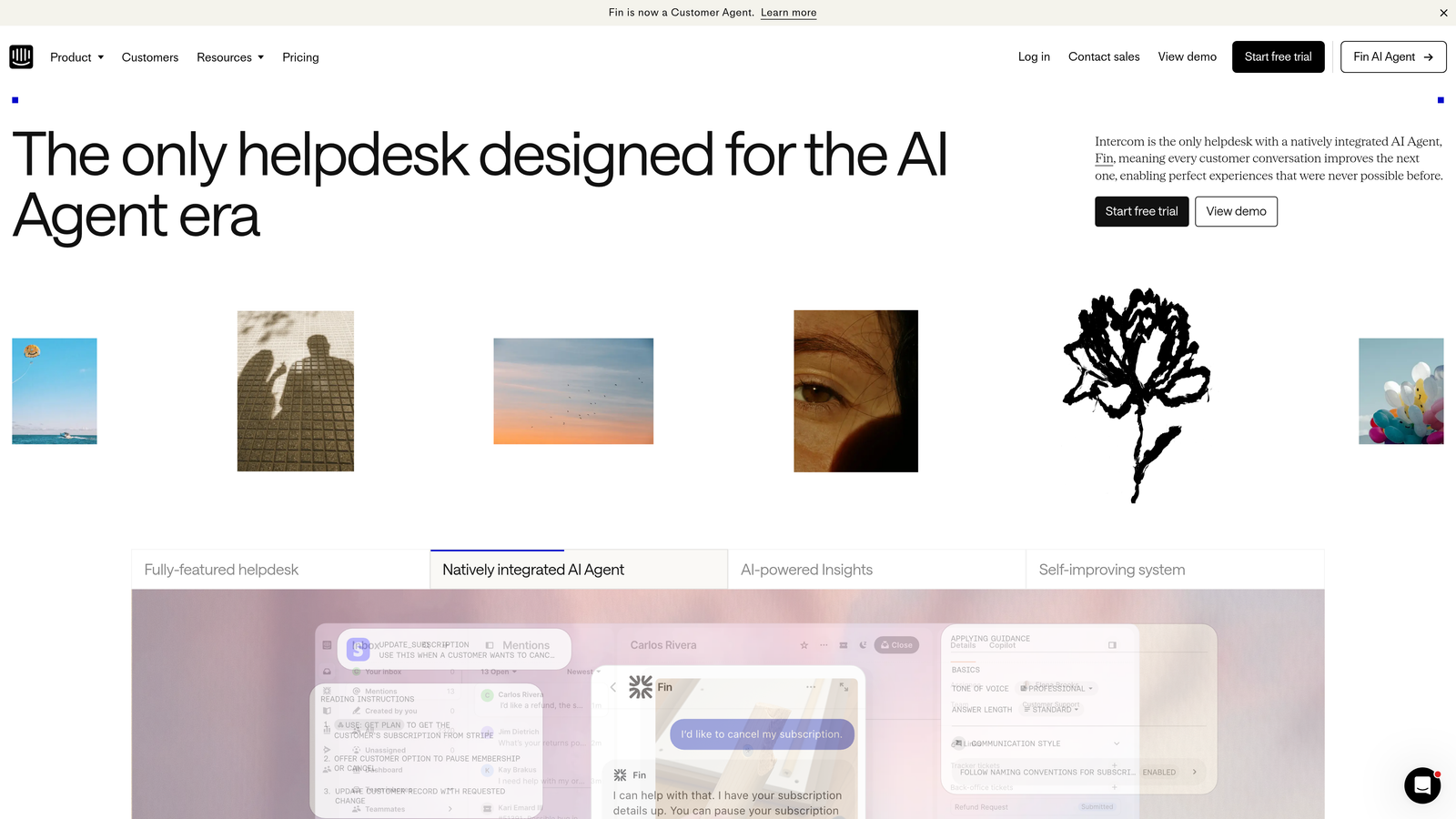
Intercom Fin is an AI chatbot built on GPT-4 that integrates natively with Intercom's messenger and knowledge base for conversational customer support.
Where This Tool Shines
If you're already invested in the Intercom ecosystem, Fin offers the smoothest implementation path. The GPT-4 foundation provides surprisingly natural conversational responses that feel less robotic than earlier chatbot generations.
The knowledge base learning is straightforward: Fin pulls from your existing help articles to answer questions, which means less manual training compared to building conversation flows from scratch. The human handoff is seamless since everything lives within the same Intercom interface your team already uses.
Key Features
GPT-4 Conversational Engine: Natural language processing that handles complex queries with context awareness across the conversation.
Native Messenger Integration: Works directly in Intercom's messenger without requiring separate chat widgets or platforms.
Knowledge Base Sync: Automatically learns from your help center articles to provide accurate, on-brand responses.
Multilingual Support: Handles customer inquiries in over 40 languages without separate language-specific configurations.
Resolution Analytics: Tracks which queries Fin resolves autonomously versus which require human intervention.
Best For
Companies already using Intercom who want to add AI capabilities without switching platforms or managing multiple tools. Works well for teams with comprehensive knowledge bases that can feed the AI.
Pricing
Starts at $0.99 per resolution, which requires an existing Intercom subscription. Costs can scale quickly with high ticket volumes.
3. Zendesk AI
Best for: Enterprise teams with existing Zendesk infrastructure wanting AI-enhanced agent productivity
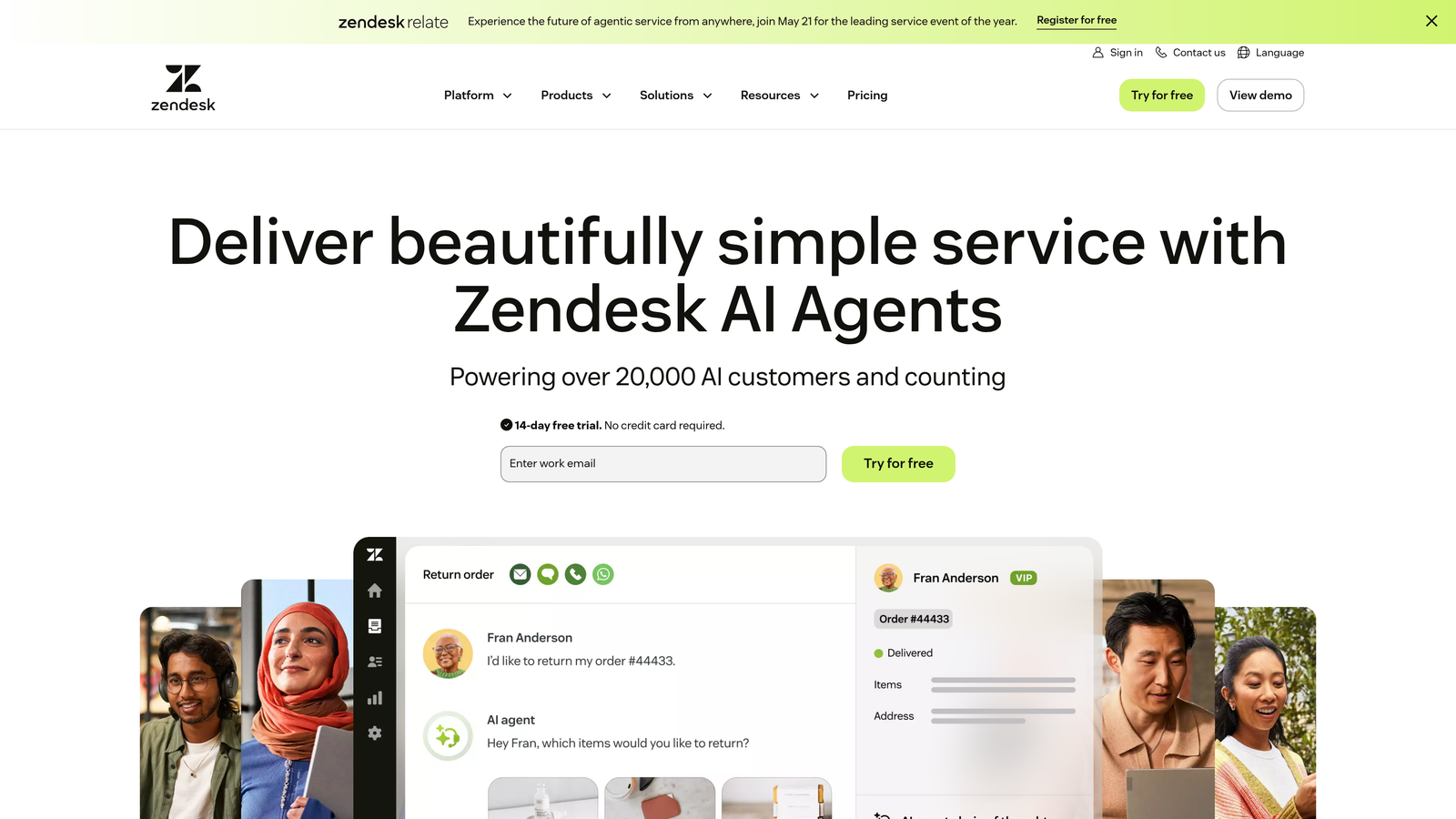
Zendesk AI layers enterprise AI capabilities into the Zendesk ecosystem, including Answer Bot for customers and AI assist features for support agents.
Where This Tool Shines
The strength here is depth of integration with Zendesk's mature ticketing system. AI features feel native rather than bolted on, which matters for agent adoption and workflow consistency.
The intelligent triage and routing capabilities handle one of support's biggest bottlenecks: getting tickets to the right specialist quickly. Sentiment analysis helps prioritize urgent or frustrated customers, while macro suggestions speed up agent responses for common scenarios.
Key Features
Answer Bot: Automated responses to customer inquiries based on knowledge base content and historical ticket patterns.
Agent Workspace AI Assist: Real-time suggestions and context as agents work tickets, including similar past resolutions.
Intelligent Routing: Automatically assigns tickets to the best-qualified agent based on skills, workload, and ticket content.
Sentiment Analysis: Detects customer emotion in messages to prioritize high-frustration tickets and flag escalation risks.
Macro Recommendations: Suggests pre-written response templates based on ticket content to accelerate agent workflows.
Best For
Large support organizations already standardized on Zendesk who want to enhance agent productivity rather than replace agents with full automation. Best value for teams with 20+ support staff.
Pricing
AI features require Zendesk Suite Professional plan or higher. Full AI capabilities available on Enterprise tier, with AI add-on costs varying by feature set.
4. Freshdesk Freddy AI
Best for: Mid-market teams using Freshdesk who want accessible AI without enterprise-level complexity
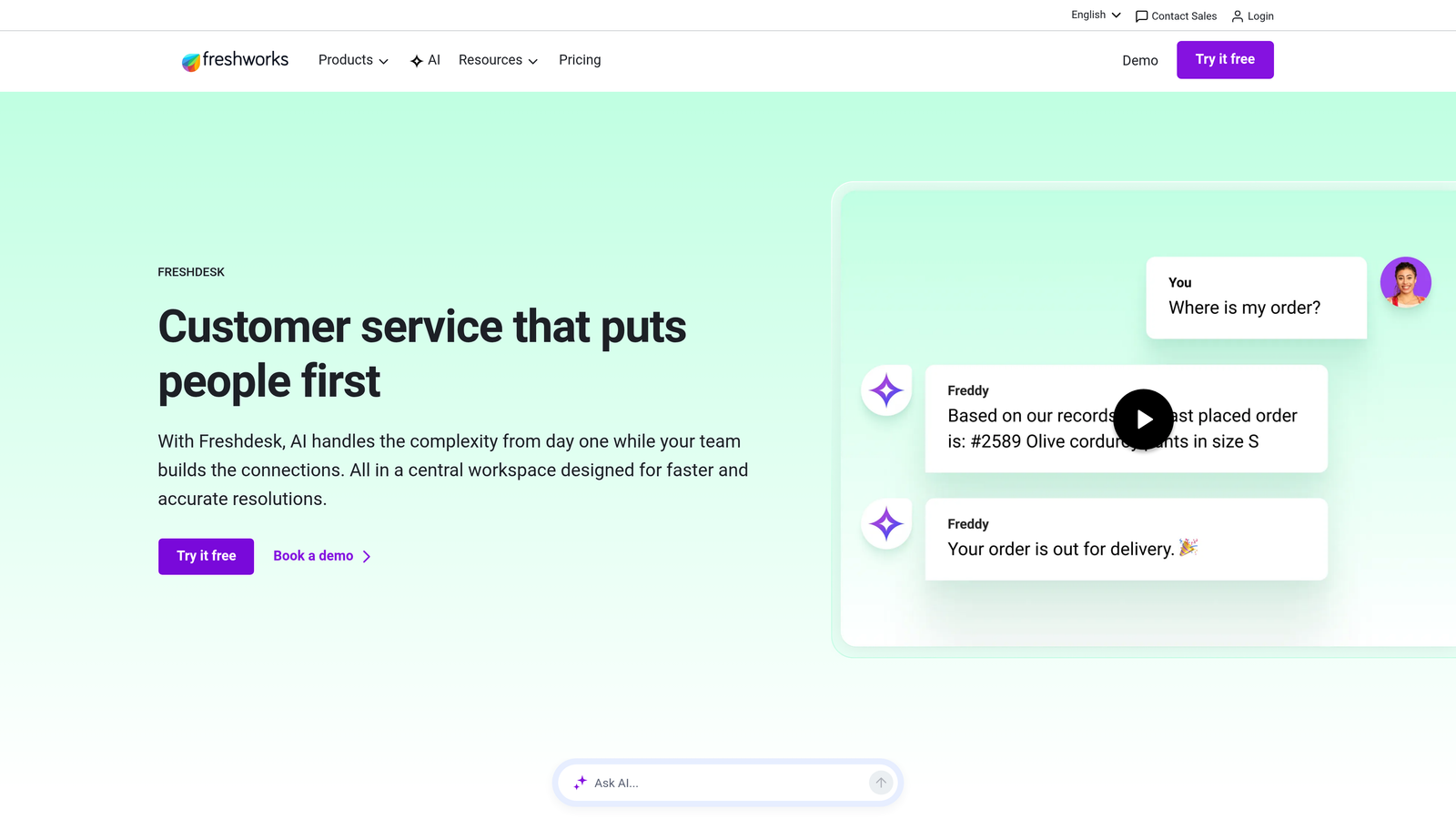
Freshdesk Freddy AI provides an AI assistant suite within Freshdesk offering auto-triage, response suggestions, and predictive support capabilities.
Where This Tool Shines
Freddy makes AI approachable for teams that don't have dedicated support operations specialists. The auto-triage and field suggestion features handle tedious categorization work that normally requires manual agent effort.
The thank you detector is a small but meaningful feature: it prevents tickets from reopening when customers simply reply with "thanks," reducing false positives in your queue. Agent assist with response drafts helps newer team members maintain quality without extensive training.
Key Features
Freddy Self Service: Automated responses to common questions using knowledge base content and machine learning from past tickets.
Auto-Triage and Field Population: Automatically categorizes tickets, suggests priority levels, and fills custom fields based on content analysis.
Canned Response Recommendations: Suggests relevant pre-written responses as agents type, speeding up reply times.
Thank You Detector: Recognizes gratitude messages and prevents unnecessary ticket reopening from courtesy replies.
Agent Response Drafts: Generates suggested replies based on ticket content that agents can edit before sending.
Best For
Growing companies with 5-50 support agents who want AI assistance without the complexity or cost of enterprise platforms. Particularly good for teams with high ticket volumes of repetitive questions.
Pricing
Included in Pro plan at $49 per agent per month. Advanced AI features require Enterprise tier with custom pricing.
5. Ada
Best for: Enterprise organizations needing sophisticated conversational AI with strict compliance requirements
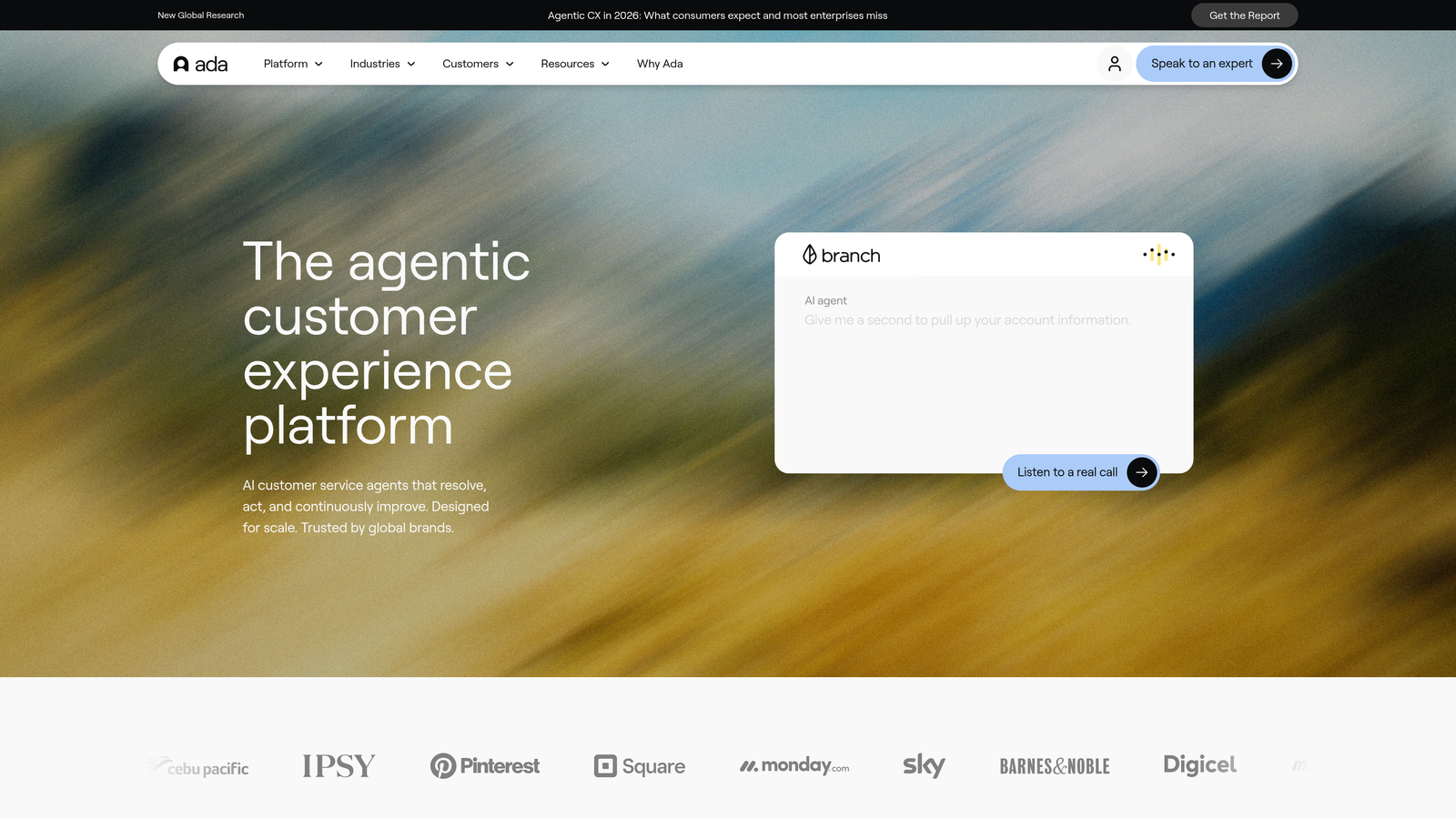
Ada is an enterprise conversational AI platform with a no-code bot builder and AI reasoning engine designed for complex support automation.
Where This Tool Shines
Ada's AI Reasoning Engine handles multi-turn conversations with genuine context retention, enabling it to work through complex troubleshooting scenarios that would stump simpler chatbots. The no-code conversation builder means business teams can create and modify flows without engineering resources.
The enterprise security and compliance features matter for regulated industries: Ada meets requirements for healthcare, financial services, and other sectors where data handling is heavily scrutinized. Proactive messaging capabilities let you reach customers before they encounter issues.
Key Features
No-Code Conversation Builder: Visual interface for creating complex conversation flows without programming knowledge.
AI Reasoning Engine: Handles context-aware conversations that can navigate multi-step troubleshooting and complex queries.
Proactive Messaging: Initiates conversations based on user behavior, page visits, or system triggers to prevent issues.
Multi-Channel Deployment: Deploy the same bot across web, mobile, social media, and messaging platforms with unified management.
Enterprise Compliance: Meets HIPAA, SOC 2, GDPR, and other regulatory requirements with advanced security controls.
Best For
Large enterprises in regulated industries that need sophisticated automation with strict security and compliance requirements. Companies with complex product catalogs or multi-step support processes.
Pricing
Enterprise pricing model; contact for quote. Typically positioned for organizations with significant support volumes and budget for premium solutions.
6. Tidio
Best for: Small businesses and e-commerce stores wanting affordable AI chat without technical complexity
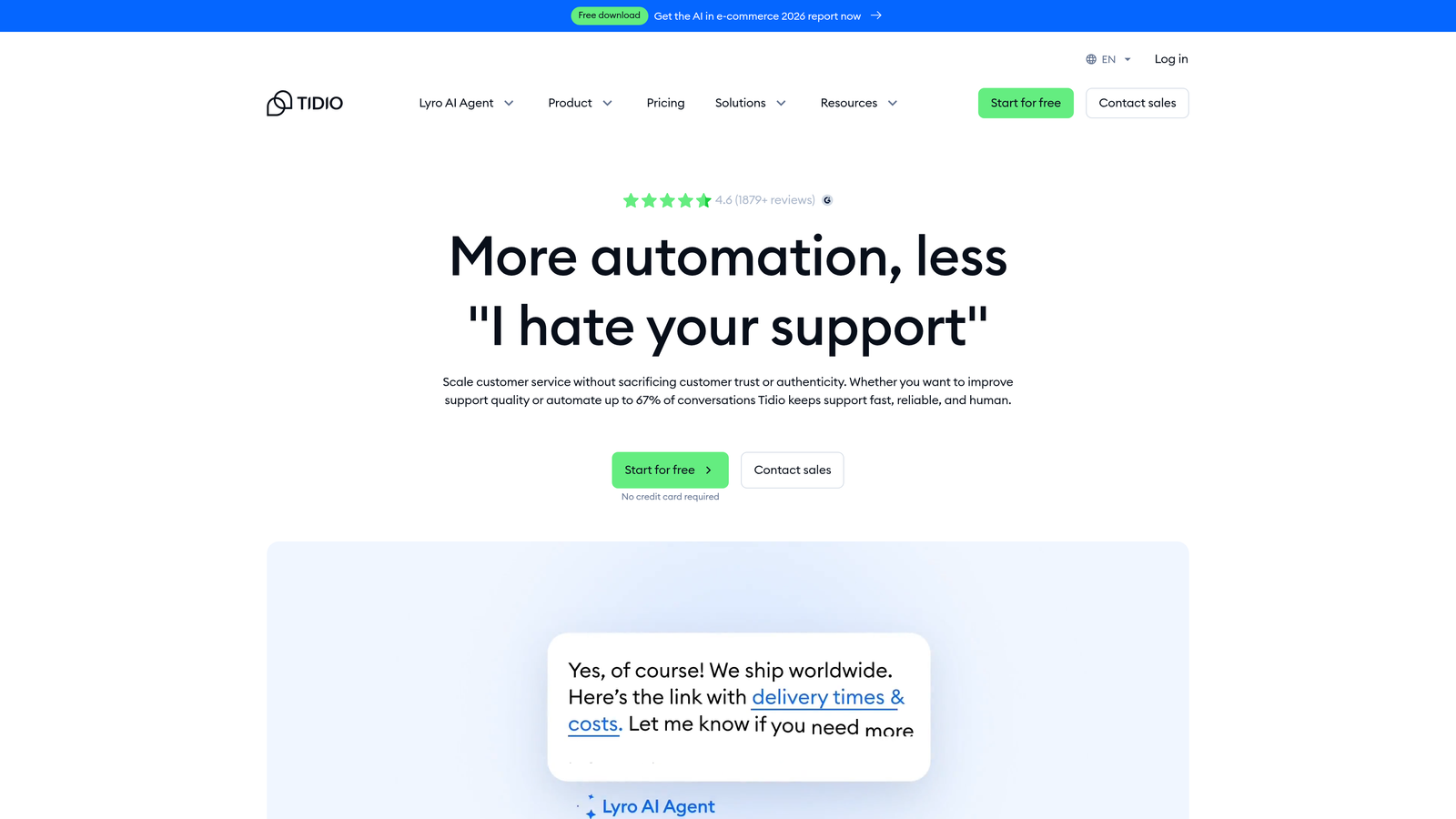
Tidio provides an accessible AI chatbot platform with Lyro AI assistant, designed specifically for small business and e-commerce support needs.
Where This Tool Shines
Tidio removes barriers to entry for smaller teams. The Lyro AI chatbot learns from your FAQ content and starts providing value within hours rather than weeks of implementation. The visual chatbot builder is genuinely intuitive—you don't need technical skills to create basic flows.
E-commerce integrations with Shopify and WooCommerce are particularly smooth, letting the bot access order information, shipping status, and product details to answer customer questions without agent involvement. The free tier provides real functionality, making it viable for bootstrapped startups.
Key Features
Lyro AI Chatbot: Conversational AI that learns from your FAQ content and handles common customer questions automatically.
Live Chat with AI Fallback: Human agents can take over seamlessly when Lyro encounters questions beyond its capabilities.
E-Commerce Integrations: Native connections to Shopify, WooCommerce, and other platforms for order tracking and product information.
Visual Bot Builder: Drag-and-drop interface for creating custom conversation flows without coding.
Visitor Tracking: See who's on your site, what pages they're viewing, and initiate proactive conversations.
Best For
E-commerce businesses, small SaaS companies, and service providers with limited support budgets who need quick implementation and straightforward AI capabilities.
Pricing
Free tier available with basic features. Lyro AI starts at $29 per month, with higher tiers adding advanced automation and integrations.
7. Kustomer IQ
Best for: Omnichannel support teams needing unified customer context across email, chat, social, and SMS
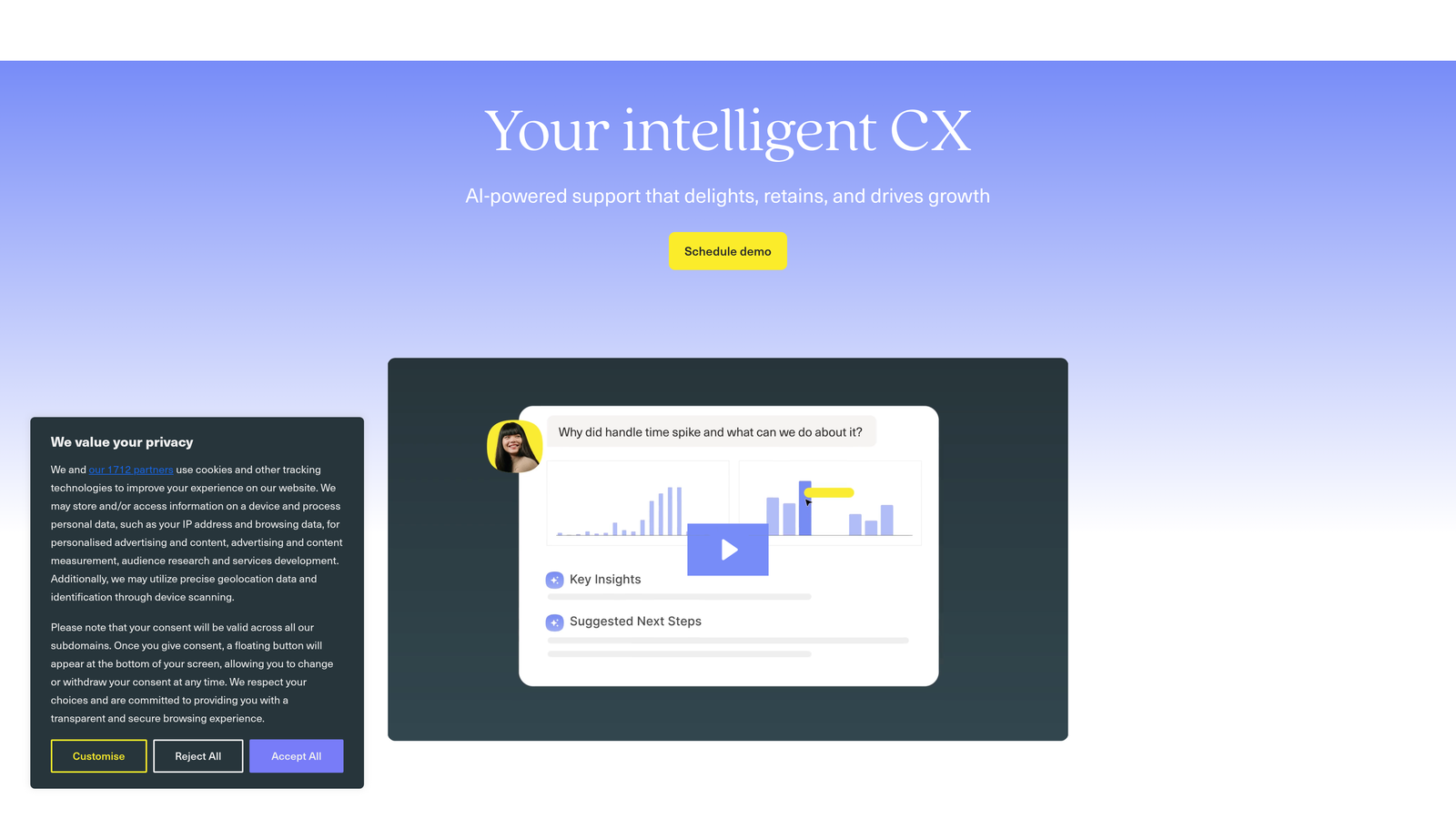
Kustomer IQ combines omnichannel CRM capabilities with AI features including customer timeline intelligence and automated conversation handling.
Where This Tool Shines
The unified customer timeline view is Kustomer's differentiator: agents see every interaction across all channels in chronological order, eliminating the context-switching that slows down multi-channel support. AI-powered conversation classification automatically tags and routes messages based on content and intent.
Customer sentiment tracking provides ongoing visibility into relationship health, not just individual ticket satisfaction. The workflow automation with AI triggers lets you create sophisticated routing and response rules that adapt based on conversation patterns.
Key Features
Unified Customer Timeline: Chronological view of all customer interactions across channels with AI-surfaced insights.
AI Conversation Classification: Automatically categorizes and tags conversations based on content, intent, and customer history.
Omnichannel Support: Handle email, chat, social media, SMS, and voice in a single interface with consistent workflows.
Workflow Automation with AI: Create rules that trigger based on AI analysis of conversation content and customer behavior.
Sentiment Tracking: Ongoing analysis of customer emotion across interactions to identify at-risk relationships.
Best For
Mid-market to enterprise companies managing high-volume support across multiple channels who need complete customer context. Particularly valuable for retail, financial services, and subscription businesses.
Pricing
Enterprise plan starts at $89 per user per month. IQ AI features require additional cost on top of base platform pricing.
8. Forethought
Best for: Enterprise teams wanting specialized AI for ticket triage and agent assistance without platform replacement
Forethought focuses on intelligent ticket routing, triage automation, and SupportGPT for agent assistance, integrating with major helpdesk platforms.
Where This Tool Shines
Forethought's Solve product handles autonomous ticket resolution for common issues, while Triage ensures complex tickets reach the right specialist immediately. The platform works as an intelligence layer on top of your existing helpdesk rather than requiring migration.
SupportGPT assists agents by drafting responses based on your knowledge base and past successful resolutions. The Discover feature identifies gaps in your knowledge base by analyzing which questions the AI struggles to answer, creating a feedback loop for continuous improvement.
Key Features
Solve for Automation: Autonomous resolution of common tickets with natural language understanding and knowledge base integration.
Triage Intelligence: Automatically routes tickets to appropriate teams based on content analysis and historical patterns.
SupportGPT Agent Assist: Provides AI-generated response drafts and relevant knowledge articles as agents work tickets.
Discover for Knowledge Gaps: Identifies frequently asked questions that aren't well-covered in existing documentation.
Helpdesk Integrations: Works with Zendesk, Salesforce Service Cloud, Freshdesk, and other major platforms.
Best For
Large support organizations with established helpdesk systems who want to add AI capabilities without platform migration. Teams with significant ticket backlogs and triage bottlenecks.
Pricing
Contact for pricing; typically positioned for enterprise customers with substantial support volumes and existing helpdesk investments.
9. Help Scout
Best for: Teams prioritizing human-AI collaboration with clean interfaces and straightforward workflows
Help Scout provides a customer support platform with AI features designed for human-AI collaboration, including AI drafts with human review.
Where This Tool Shines
Help Scout's approach to AI is deliberately measured: rather than pushing for full automation, the platform focuses on making human agents more effective. AI Drafts generate suggested responses that agents review and personalize, maintaining the human touch while accelerating workflows.
The interface remains refreshingly clean and distraction-free, even with AI features enabled. AI Summarize provides quick context when agents pick up long conversation threads, while AI Assist helps improve writing tone and clarity before sending responses.
Key Features
AI Drafts: Generates suggested responses based on conversation context and knowledge base content for agent review and editing.
AI Summarize: Provides concise summaries of long conversation threads so agents can quickly understand context.
AI Assist for Writing: Suggests improvements to response tone, clarity, and grammar before agents send messages.
Beacon Help Widget: Embeddable help widget that surfaces relevant articles and enables in-context messaging.
Clean Interface: Distraction-free design that keeps focus on customer conversations without overwhelming agents.
Best For
Small to mid-sized teams who want to maintain personal customer relationships while gaining efficiency from AI assistance. Companies that prioritize agent experience and thoughtful automation.
Pricing
Standard plan from $20 per user per month. AI features available on Plus plan at $40 per user per month.
Making the Right Choice
The best AI support software for your team depends on three key factors: your existing infrastructure, autonomy requirements, and team size.
If you're already committed to a major helpdesk platform, enhancement options like Intercom Fin, Zendesk AI, or Freshdesk Freddy AI offer the smoothest path forward. These integrate natively with your existing workflows, though they may limit how far you can push automation. Forethought provides a middle ground—adding sophisticated AI to your current helpdesk without platform lock-in.
For teams wanting genuinely autonomous support that learns over time, Halo AI and Ada represent the more transformative end of the spectrum. Halo's page-aware capabilities and continuous learning architecture make it particularly compelling for product-led companies where context matters. Ada excels in enterprise environments with complex compliance requirements.
Budget-conscious teams should consider Tidio for straightforward e-commerce support or Help Scout for human-AI collaboration without enterprise pricing. Both provide real value at accessible price points, though with less sophisticated automation than premium platforms.
When evaluating options, prioritize actual resolution rates over marketing claims. Ask vendors for specifics: What percentage of tickets do they resolve without human intervention? How long does implementation typically take? What integrations work out of the box versus requiring custom development? The answers reveal whether a platform will deliver value quickly or become a prolonged integration project.
Your support team shouldn't scale linearly with your customer base. Let AI agents handle routine tickets, guide users through your product, and surface business intelligence while your team focuses on complex issues that need a human touch. See Halo in action and discover how continuous learning transforms every interaction into smarter, faster support.