9 Best AI Support Software with Analytics in 2026
This guide ranks the 9 best AI support software with analytics platforms available in 2026, evaluating each on AI capability, analytics depth, integration ecosystem, and scalability for growing B2B teams. Whether you're replacing a legacy helpdesk or augmenting an existing stack, it provides the actionable intelligence you need to choose the right tool.
 Grant CooperFounder13 min read
If your support team is resolving tickets without knowing why those tickets keep coming back, which issues are costing you the most, or which customers are quietly heading toward churn, you're leaving serious value on the table. AI support software with built-in analytics doesn't just automate responses; it turns every interaction into actionable intelligence.
The best platforms in this space combine autonomous ticket resolution with insights that help product, success, and support teams make smarter decisions. This guide covers the top tools available in 2026, evaluated on AI capability, depth of analytics, integration ecosystem, and how well they scale with growing B2B teams. Whether you're replacing a legacy helpdesk or layering AI on top of an existing stack, there's an option here that fits. For context on how AI-native platforms compare to traditional tools, see our breakdown of Zendesk vs. AI support platforms.
1. Halo AI
Best for: B2B SaaS teams that need AI-native support with business intelligence beyond ticket metrics.
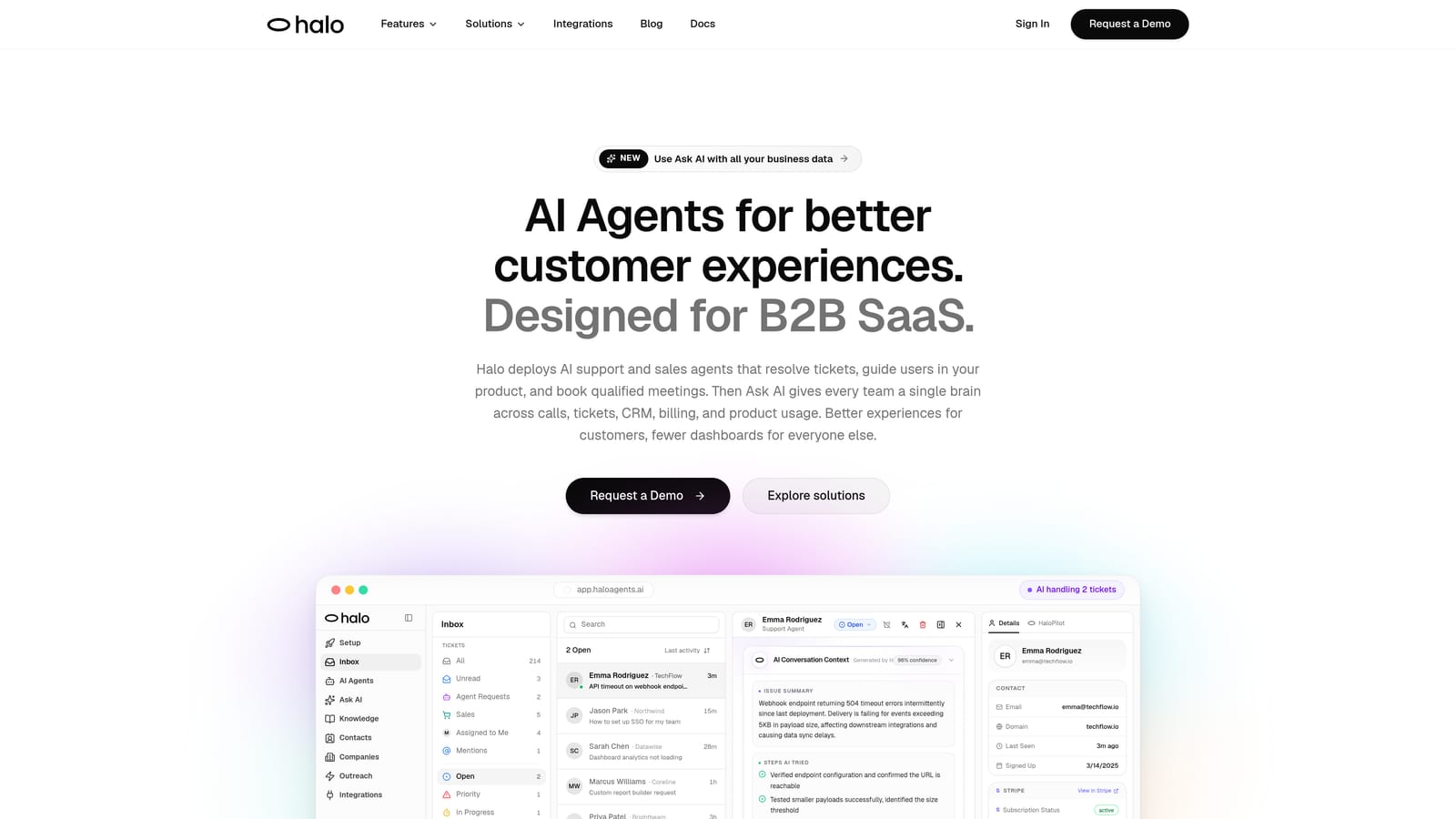
Halo AI is an AI-native customer support platform with intelligent agents, page-aware chat, and a smart inbox that surfaces business intelligence rather than just operational data.
Where This Tool Shines
Most support platforms report on what already happened: ticket volume, resolution time, CSAT. Halo AI is built differently. Its smart inbox surfaces customer health signals, revenue anomalies, and product usage patterns alongside your ticket queue, giving support, success, and product teams a shared view of what's actually happening across the customer base.
The page-aware chat widget is a genuinely distinctive feature. The AI sees exactly what the user is looking at inside your product, which means it can provide contextual, step-by-step guidance rather than generic responses. Combined with continuous learning from every resolved interaction, the system gets measurably smarter over time without requiring manual retraining.
Key Features
Autonomous AI Agents: Resolve tickets end-to-end and learn from every interaction to improve future responses without manual intervention.
Page-Aware Chat Widget: The AI sees what users see in-product, enabling contextual guidance that generic chatbots can't replicate.
Smart Inbox with Business Intelligence: Surfaces customer health signals, anomaly detection, and revenue intelligence alongside standard ticket data.
Auto Bug Ticket Creation: Automatically generates and routes bug reports to Linear or Jira when support interactions reveal product issues.
Live Agent Handoff: Seamlessly escalates complex issues to human agents with full conversation context preserved.
Deep Integration Ecosystem: Connects with HubSpot, Slack, Intercom, Stripe, Zoom, PandaDoc, Fathom, and more for a unified view of the customer.
Best For
B2B SaaS companies and product teams that want support operations to feed directly into product, revenue, and customer success decisions. Particularly valuable for teams that have outgrown basic helpdesk reporting and need forward-looking intelligence rather than backward-looking dashboards.
Pricing
Contact Halo AI directly for pricing. Given the AI-native architecture and business intelligence layer, pricing is typically scoped to team size and integration requirements.
2. Intercom
Best for: Teams already invested in Intercom's platform seeking AI-powered resolution with solid conversation analytics.
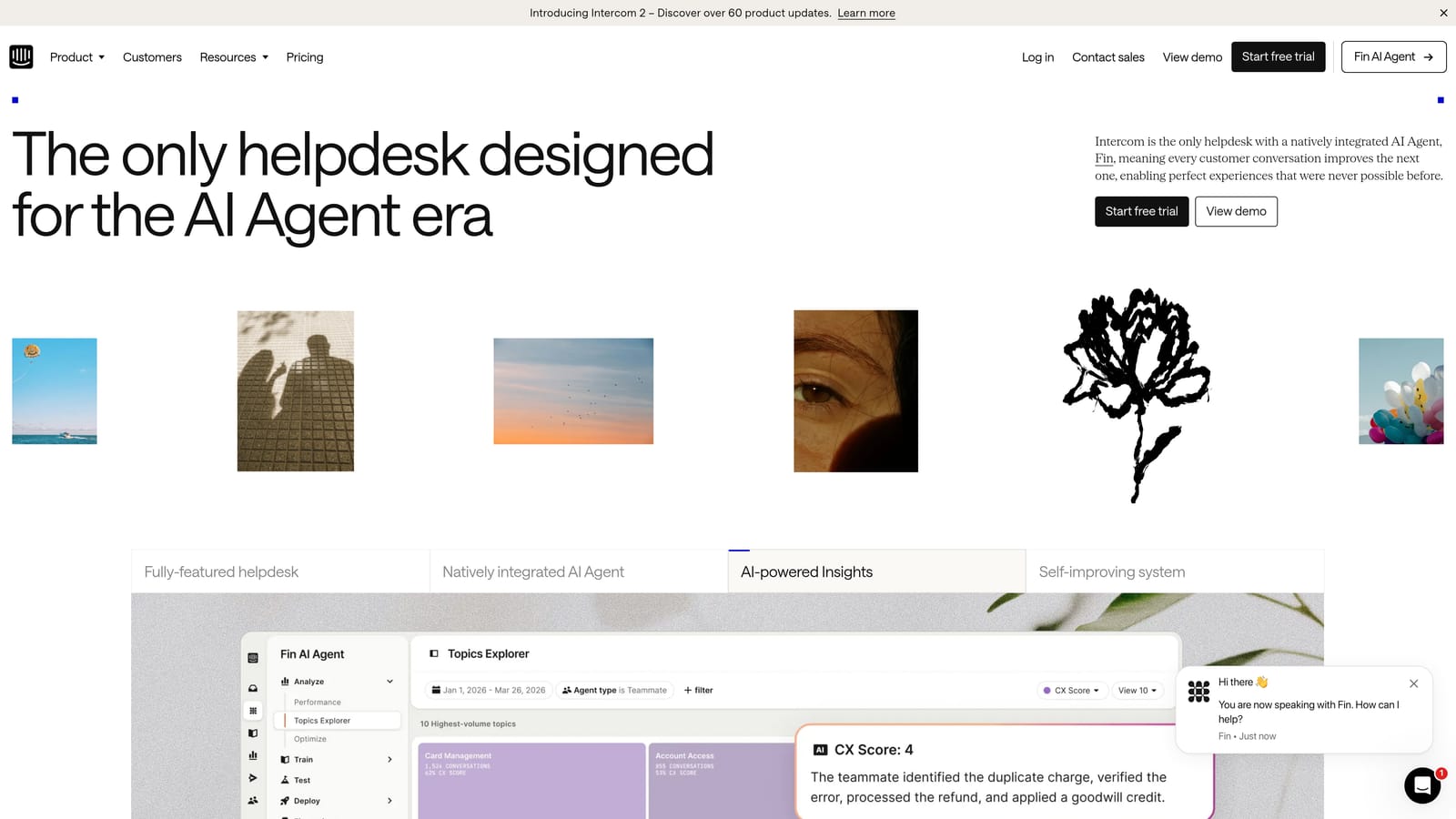
Intercom is an established customer messaging platform featuring the Fin AI agent for automated ticket resolution alongside conversation analytics and team performance dashboards.
Where This Tool Shines
Intercom's Fin AI agent handles a meaningful portion of incoming queries autonomously, drawing on your existing help content to generate accurate responses. For teams already using Intercom for proactive messaging and in-app support, adding Fin is a natural extension rather than a platform switch.
The analytics layer covers resolution rates, CSAT tracking, and team performance in a clean, accessible format. It's well-suited to teams that want visibility into conversation quality and agent efficiency without needing deep BI customization.
Key Features
Fin AI Agent: Automates resolution of common customer queries using your existing knowledge base and help content.
Conversation Analytics: Tracks resolution rates, response times, and conversation volume trends over time.
CSAT and Team Performance Dashboards: Monitors customer satisfaction scores and individual agent metrics in one view.
Proactive Messaging: Triggers in-app messages based on user behavior to get ahead of support requests.
Broad Integration Ecosystem: Connects with CRMs, data tools, and third-party platforms through a well-developed marketplace.
Best For
Product-led growth companies and SaaS teams that use Intercom as their primary customer communication layer. Less compelling as a standalone support tool if you're not already in the Intercom ecosystem.
Pricing
Starts at approximately $39 per seat per month; AI features including Fin are available on higher-tier plans, which can increase costs significantly depending on usage volume.
3. Zendesk
Best for: Enterprise teams requiring mature, customizable reporting and established AI triage capabilities.
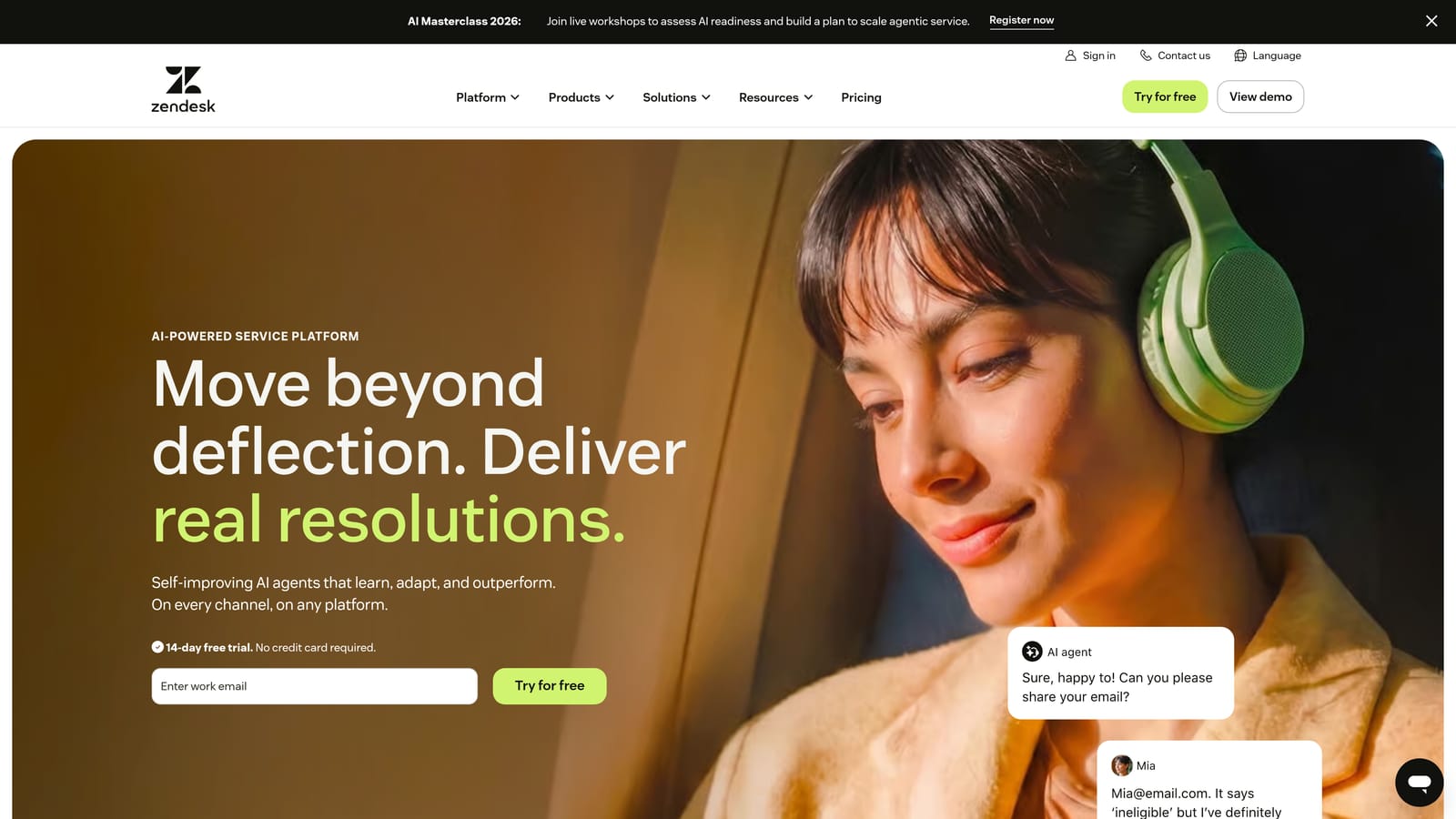
Zendesk is an enterprise-grade helpdesk with AI-powered ticket triage and one of the most comprehensive reporting suites in the category through Zendesk Explore.
Where This Tool Shines
Zendesk's reporting infrastructure is genuinely mature. Zendesk Explore allows teams to build custom dashboards covering SLA compliance, ticket trends, agent performance, and channel-specific metrics. For enterprises with complex reporting requirements and multiple support tiers, this depth is hard to match.
The AI capabilities, including intelligent routing, macro suggestions, and automated triage, are solid additions. The important caveat is that they're layered on top of a ticket-centric architecture, which means the underlying workflow logic remains traditional even when AI features are enabled.
Key Features
AI-Powered Ticket Triage: Automatically categorizes and routes incoming tickets based on content, priority, and team availability.
Zendesk Explore: Custom analytics dashboards with deep reporting on SLAs, ticket trends, and channel performance.
SLA Tracking and Compliance Reporting: Monitors response and resolution commitments across teams and tiers.
Agent Performance Analysis: Detailed metrics on individual and team-level productivity and quality.
Extensive App Marketplace: Hundreds of integrations covering CRMs, communication tools, and productivity platforms.
Best For
Enterprise support organizations with large agent teams, complex SLA requirements, and existing investment in the Zendesk ecosystem. Smaller teams often find the platform's complexity and cost hard to justify.
Pricing
Suite plans start at approximately $55 per agent per month; advanced AI features are available on higher-tier plans, with enterprise pricing available on request.
4. Freshdesk
Best for: SMBs and growing teams that need affordable AI-assisted support with solid foundational analytics.
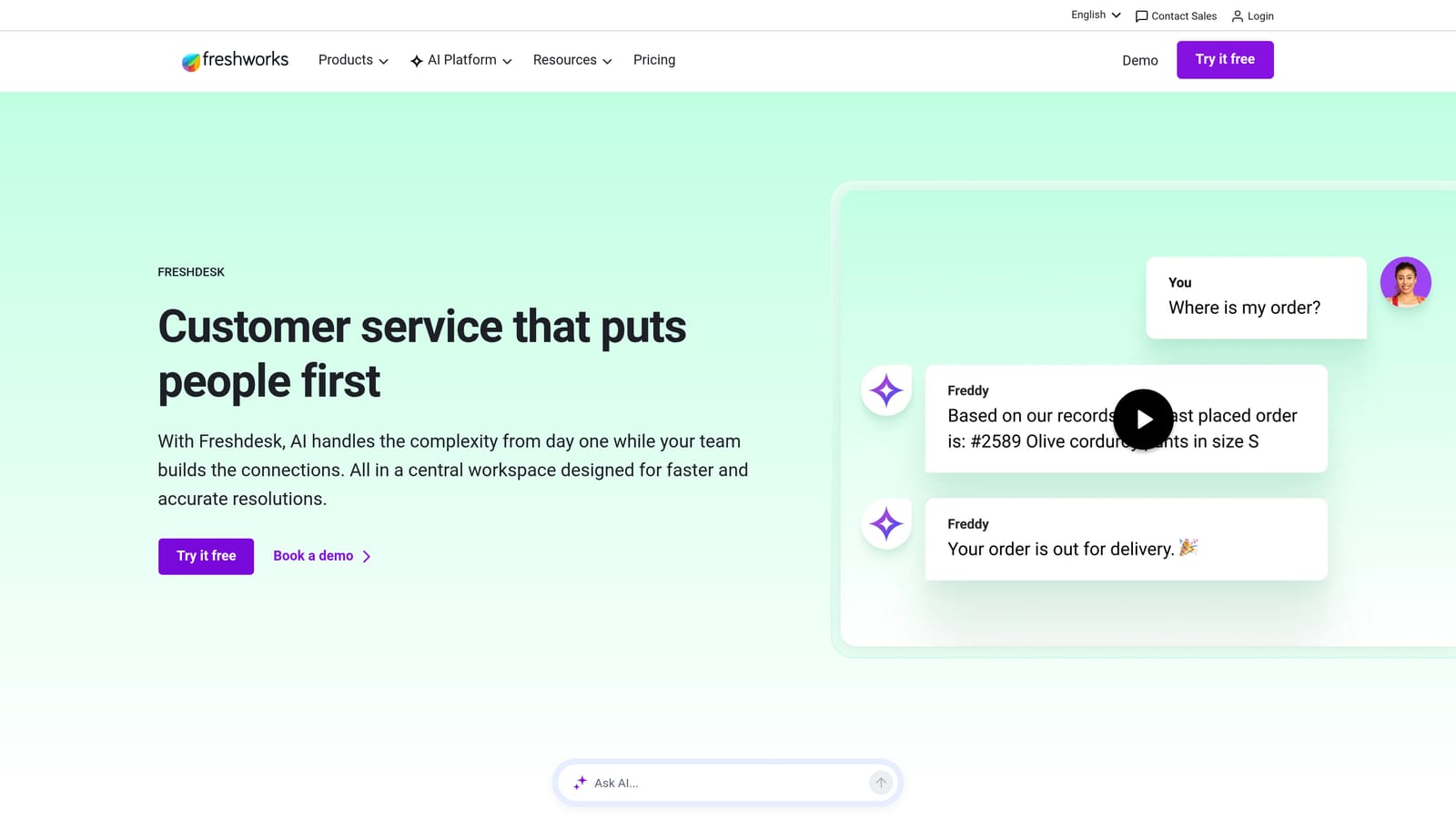
Freshdesk is an SMB-friendly helpdesk powered by Freddy AI, offering automated responses, predictive routing, and analytics covering CSAT, agent productivity, and ticket trends.
Where This Tool Shines
Freshdesk hits a sweet spot between affordability and capability. Freddy AI handles suggested replies, ticket categorization, and predictive routing without requiring significant configuration, making it accessible for teams without dedicated operations staff.
The analytics suite covers the fundamentals well: CSAT scores, first response time, ticket volume trends, and agent productivity dashboards. Depth increases on higher tiers, which is worth factoring in if your reporting needs are likely to grow.
Key Features
Freddy AI: Suggests replies, categorizes tickets automatically, and routes them based on predicted resolution paths.
CSAT and Response Time Analytics: Tracks customer satisfaction and first response time across channels and agents.
Agent Productivity Dashboards: Monitors workload distribution, resolution rates, and individual performance metrics.
Ticket Volume Trend Reporting: Identifies patterns in incoming request volume to help with staffing and planning.
Scalable Pricing Tiers: Entry-level plans are genuinely affordable, with more advanced features unlocked at higher tiers.
Best For
Small to mid-sized businesses that need a capable, cost-effective helpdesk with AI assistance. Teams expecting rapid growth may find themselves needing to migrate as analytics requirements become more sophisticated.
Pricing
Free plan available for small teams; paid plans start at approximately $15 per agent per month, with Freddy AI features on mid-to-upper tiers.
5. Tidio
Best for: Small teams and e-commerce businesses that need fast deployment and AI chat without heavy configuration.
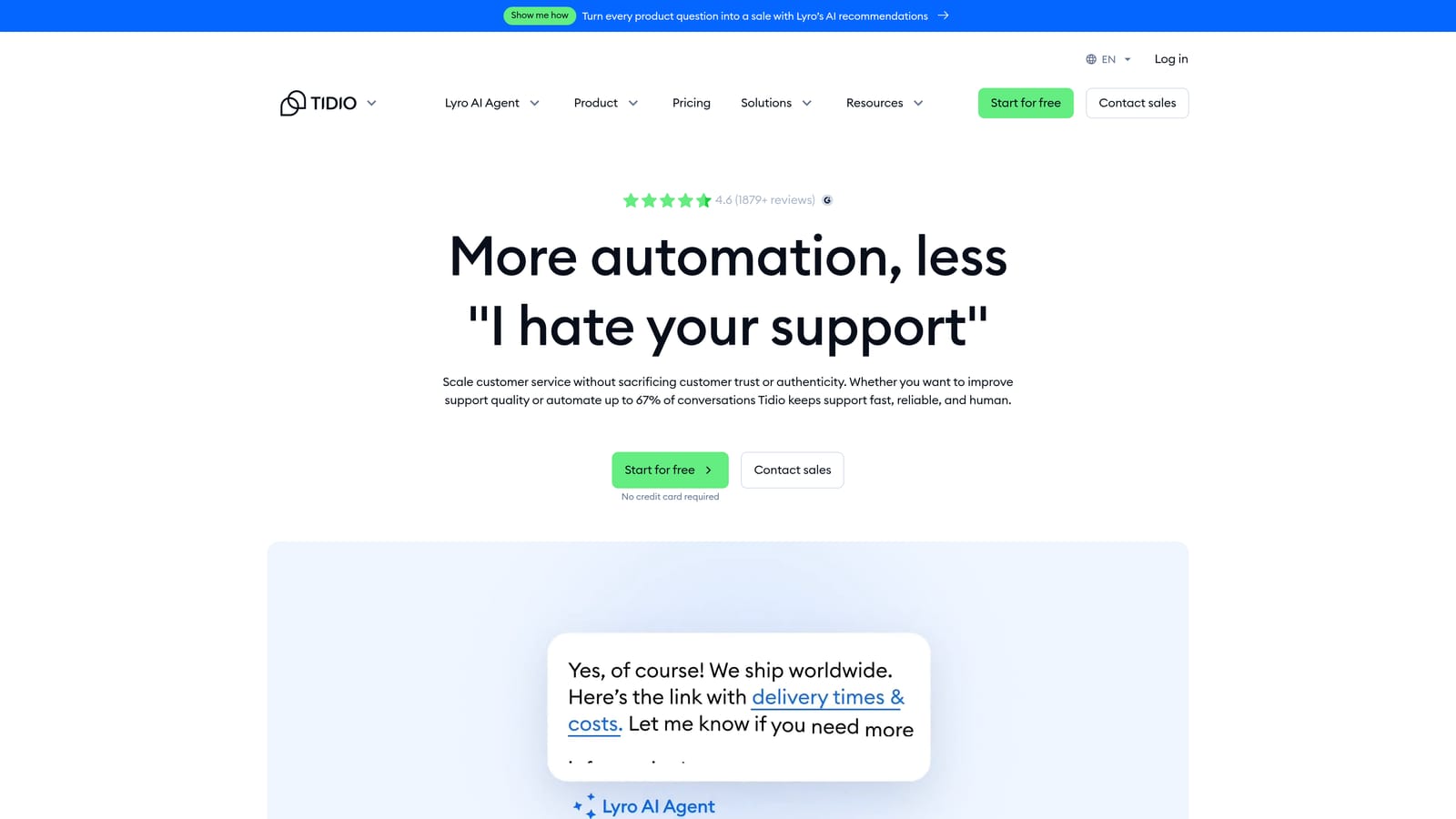
Tidio is a fast-to-deploy AI chat platform featuring the Lyro AI chatbot, visitor analytics, and conversation flow reporting designed for smaller operations.
Where This Tool Shines
Tidio's strongest selling point is speed to value. The platform can be live within hours, with Lyro AI handling common customer questions automatically using your existing content. For small teams without dedicated technical resources, this low-friction setup is genuinely valuable.
The analytics focus on chat volume, conversation resolution rates, and visitor behavior, which is appropriate for the target use case. Teams with complex B2B support workflows or deep reporting requirements will likely outgrow these capabilities fairly quickly.
Key Features
Lyro AI Chatbot: Handles automated customer conversations using your existing FAQ and help content with minimal setup.
Visitor Behavior Analytics: Tracks chat volume, visitor activity, and engagement patterns across your site.
Conversation Resolution Tracking: Monitors how many conversations are resolved by AI versus escalated to human agents.
Quick Deployment: Minimal technical setup required, making it accessible for non-technical teams.
Live Chat Fallback: Seamless agent takeover when conversations exceed the AI's resolution capability.
Best For
Small e-commerce businesses and early-stage teams that prioritize quick deployment over deep analytics. Not well-suited for B2B SaaS teams with complex support workflows or enterprise reporting needs.
Pricing
Free plan available; Lyro AI starts at approximately $29 per month, with higher tiers for increased conversation volume.
6. Gorgias
Best for: E-commerce brands that want support analytics tied directly to revenue and order data.
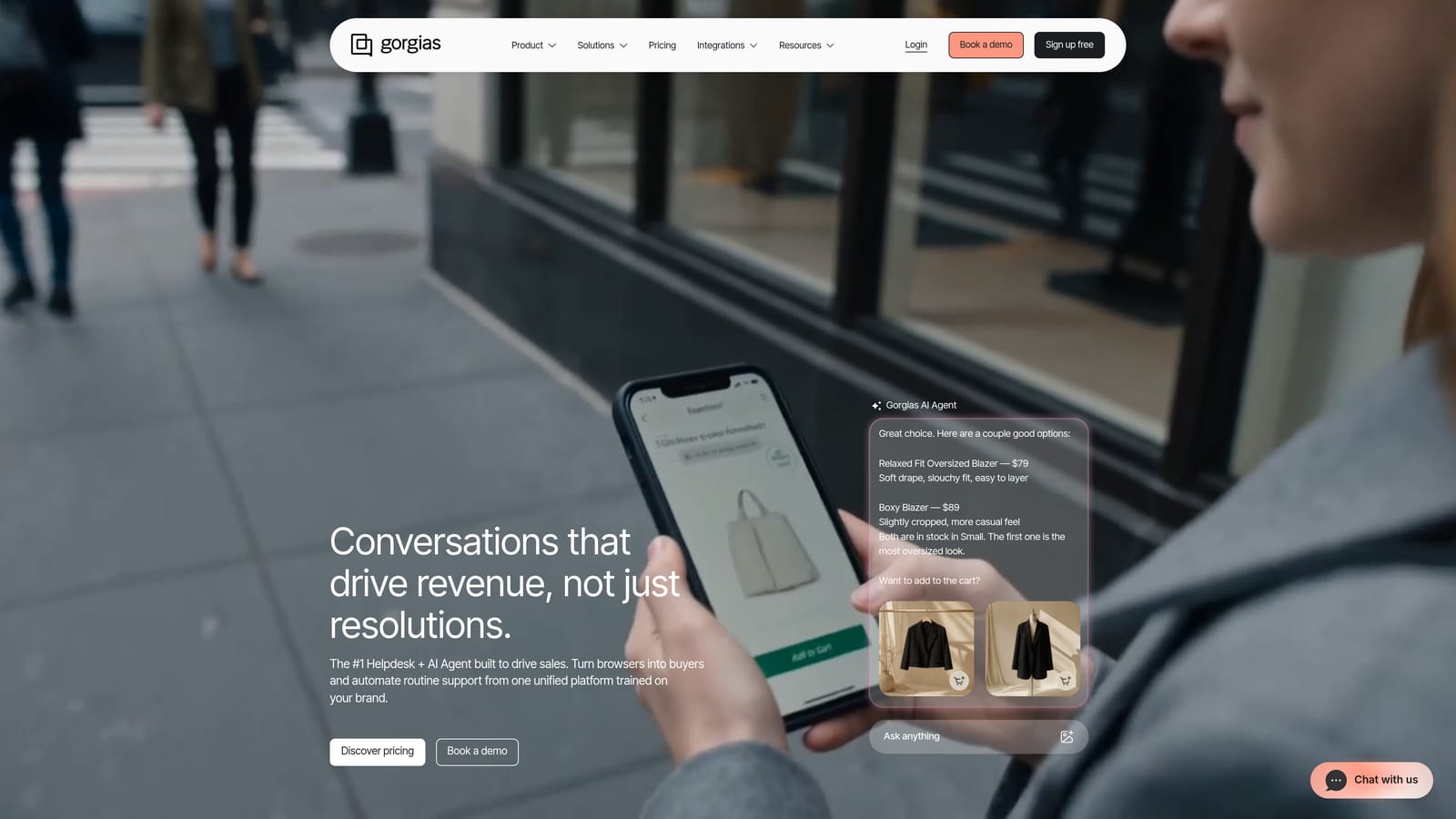
Gorgias is an e-commerce-focused support platform that uniquely connects support analytics to revenue data, tracking which tickets correlate with conversions, returns, and order value.
Where This Tool Shines
Gorgias does something most support platforms don't: it attributes revenue outcomes to support interactions. You can see which ticket types correlate with higher conversion rates, which complaint patterns precede returns, and how support response time affects average order value. For DTC brands, this is genuinely useful intelligence.
The AI automation layer handles common e-commerce queries, including order status, shipping updates, and return requests, with rules and macros that reduce repetitive manual work. The Shopify integration is particularly deep, pulling order context directly into the support view.
Key Features
Revenue-Attributed Analytics: Links support interactions to order data, tracking conversion and return correlations by ticket type.
AI Automation: Handles common e-commerce queries automatically using order and customer data as context.
Deep E-Commerce Integrations: Native connections to Shopify, WooCommerce, and Magento with order data surfaced in the ticket view.
Macros and Automation Rules: High-volume ticket handling through templated responses and conditional routing logic.
CSAT and Response Time Dashboards: Standard support performance metrics alongside the revenue analytics layer.
Best For
Direct-to-consumer e-commerce brands, particularly those on Shopify, that want to understand the revenue impact of their support operations. Less relevant for B2B SaaS teams where order-level data doesn't apply.
Pricing
Starts at approximately $10 per month for small ticket volumes; pricing scales with ticket count rather than seat count, which suits high-volume e-commerce operations.
7. Help Scout
Best for: Customer-centric teams that prioritize simplicity, clean UX, and human-first support workflows.
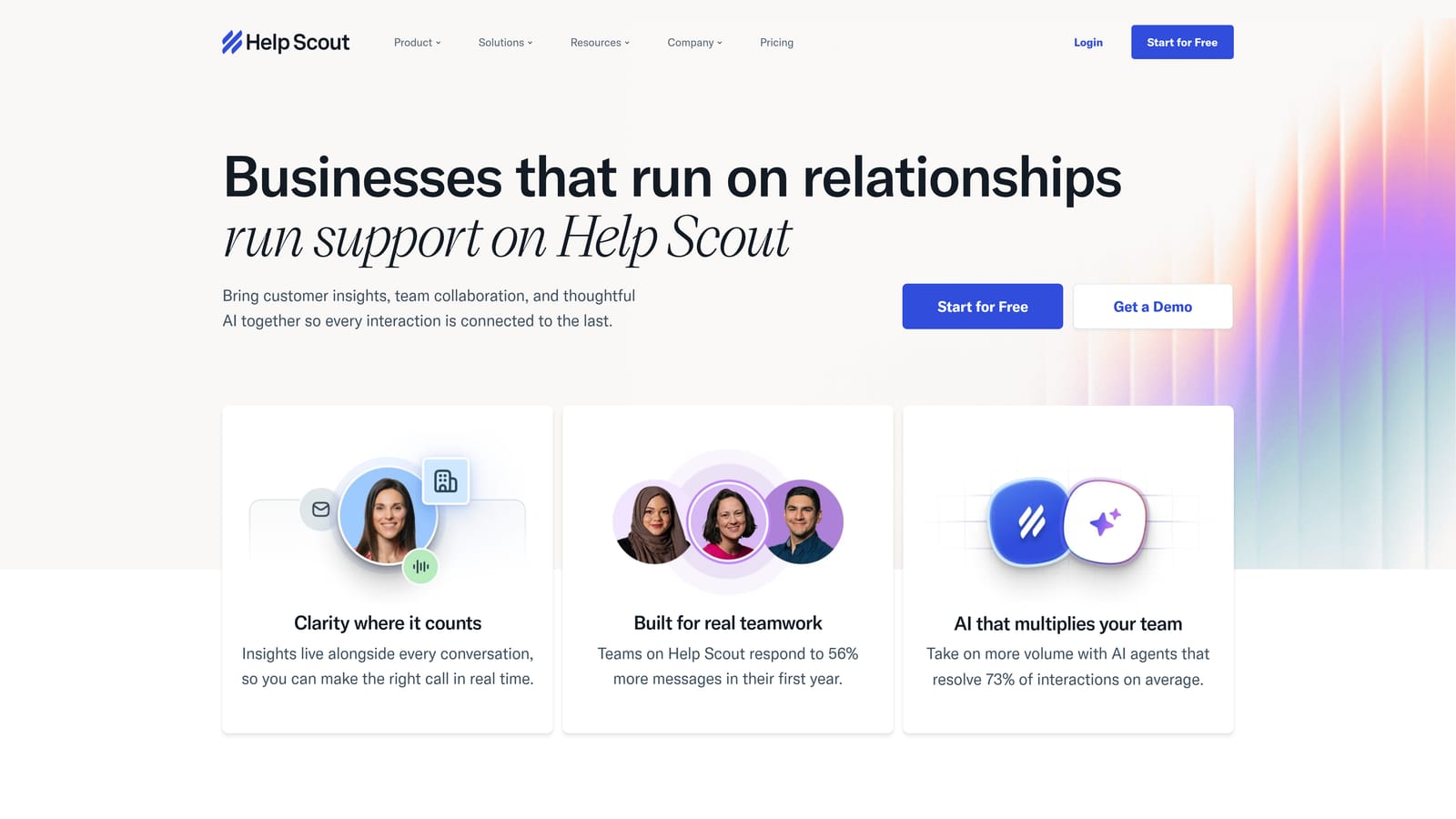
Help Scout is a human-first support platform with AI-assisted reply drafting through Beacon AI, solid team performance reporting, and a deliberately simple interface built for quality-focused teams.
Where This Tool Shines
Help Scout's design philosophy is intentionally different from enterprise helpdesks. The interface is clean, the learning curve is minimal, and the focus is on helping agents write better, faster responses rather than automating them away entirely. Beacon AI generates draft replies that agents review and send, keeping a human in the loop.
The reporting covers team performance, conversation trends, and happiness scores (Help Scout's version of CSAT) in a clear, accessible format. It's not the deepest analytics suite in this list, but it's well-matched to the platform's overall approach.
Key Features
Beacon AI: Drafts reply suggestions for agents to review, edit, and send, accelerating response time without removing human judgment.
Team Performance Analytics: Tracks conversation volume, response times, and resolution rates by agent and team.
Happiness Score Tracking: Measures customer satisfaction with a lightweight, unobtrusive rating system.
Shared Inbox with Collision Detection: Prevents two agents from responding to the same conversation simultaneously.
Knowledge Base with Article Analytics: Tracks which help articles are most viewed and which searches return no results.
Best For
Small to mid-sized teams that value simplicity and clean UX over advanced automation. Particularly well-suited to companies where support quality and brand voice matter more than ticket throughput.
Pricing
Starts at approximately $22 per user per month, with higher tiers for larger teams and additional features.
8. Kustomer
Best for: High-volume B2C operations that need a unified customer timeline with cross-channel analytics and AI-powered sentiment insights.
Kustomer is a CRM-native support platform with a unified customer timeline view, multi-channel analytics, and AI-powered insights on sentiment and agent efficiency.
Where This Tool Shines
Kustomer's core differentiator is the unified customer timeline, which aggregates every interaction across email, chat, social, and SMS into a single chronological view. For high-volume B2C teams managing customers across multiple channels, this eliminates the fragmented context that makes support frustrating for both agents and customers.
The AI layer adds sentiment analysis and conversation insights on top of that unified data, giving managers a clearer picture of customer health and agent efficiency. The CRM-native architecture means customer data is a first-class citizen rather than an afterthought.
Key Features
Unified Customer Timeline: Aggregates all channel interactions into a single chronological view for complete customer context.
AI-Powered Sentiment Analysis: Identifies emotional tone and escalation risk across conversations automatically.
Cross-Channel Analytics: Tracks performance and volume across email, chat, social, and SMS in unified dashboards.
Agent Efficiency Dashboards: Monitors workload, handle time, and resolution quality at the individual and team level.
CRM Data Integration: Surfaces purchase history, account status, and behavioral data directly in the support view.
Best For
High-volume B2C companies with complex, multi-channel support operations. The pricing and feature depth make it less practical for smaller teams or B2B SaaS companies with lower ticket volumes.
Pricing
Starts at approximately $89 per user per month, positioning it firmly in the enterprise segment of the market.
9. Zoho Desk
Best for: Budget-conscious teams already using the Zoho ecosystem that need AI-assisted analytics and anomaly detection.
Zoho Desk is a budget-friendly helpdesk featuring Zia AI for sentiment analysis, ticket prediction, and anomaly alerts, alongside customizable BI dashboards and deep Zoho ecosystem integration.
Where This Tool Shines
Zia, Zoho's AI layer, brings a few capabilities that are genuinely useful at this price point: sentiment analysis on incoming tickets, predictive ticket tagging, and anomaly detection that alerts managers when ticket patterns deviate from normal. For teams that want some forward-looking intelligence without enterprise pricing, this is a meaningful differentiator.
The strongest case for Zoho Desk is teams already using Zoho CRM or Zoho One. The native integration between these products creates a connected view of customers, deals, and support history that would require significant configuration to replicate in other platforms.
Key Features
Zia AI: Handles sentiment analysis, ticket tag prediction, and surfaces anomaly alerts when support patterns shift unexpectedly.
Anomaly Detection: Proactively alerts managers to unusual spikes or drops in ticket volume and resolution metrics.
Customizable BI Dashboards: Flexible reporting with scheduled report delivery and custom metric configuration.
Zoho Ecosystem Integration: Deep native connections to Zoho CRM, Zoho One, and other Zoho products for a unified business view.
Multi-Channel Support: Handles email, chat, phone, and social with agent performance tracking across all channels.
Best For
SMBs and mid-market teams already invested in the Zoho ecosystem, or teams that need solid AI-assisted analytics at a price point that won't strain a limited budget.
Pricing
Free plan available for small teams; paid plans start at approximately $14 per agent per month, making it one of the most affordable options in this list with meaningful AI capabilities.
Which Tool Is Right for Your Team?
The right choice depends heavily on where you are, what you're optimizing for, and how you think about the relationship between support and the rest of your business.
For B2B SaaS teams that want support to inform product and revenue decisions: Halo AI is the clearest fit. The combination of AI-native architecture, page-aware context, and business intelligence that goes beyond ticket metrics makes it the strongest option for teams that want support operations to feed directly into strategic decisions.
For enterprise teams with complex SLA requirements and large agent organizations: Zendesk's reporting depth and mature infrastructure are hard to argue against, particularly if you're already embedded in that ecosystem.
For SMBs looking for affordable AI assistance with solid fundamentals: Freshdesk and Zoho Desk both deliver meaningful capability at accessible price points, with Zoho Desk offering the edge for teams already in that ecosystem.
For e-commerce brands that want revenue-attributed support analytics: Gorgias is purpose-built for this use case in a way no general-purpose helpdesk can match.
For high-volume B2C operations with multi-channel complexity: Kustomer's unified timeline and cross-channel analytics address a real operational challenge, though the pricing reflects that specialization.
The broader pattern worth noting: platforms built with AI at the core tend to surface more actionable intelligence than those that have added AI features on top of traditional helpdesk architecture. If your team's goal is to move from reactive support to proactive customer intelligence, that distinction matters more than any individual feature comparison.
Your support team shouldn't scale linearly with your customer base. Let AI agents handle routine tickets, guide users through your product, and surface business intelligence while your team focuses on complex issues that need a human touch. See Halo in action and discover how continuous learning transforms every interaction into smarter, faster support.