9 Best AI Support Tool Subscription Plans in 2026
This guide reviews nine of the best AI Support Tool Subscription Plans available in 2026, evaluating each platform on pricing transparency, scalability, and depth of automation across tiers. Whether you're a growing SaaS startup or a B2B enterprise, it cuts through the noise to help you find a plan that scales with your team without hidden costs.
 Matt PattoliFounder14 min read
Choosing an AI support tool isn't just about features. It's about finding a subscription plan that scales with your team without surprise costs lurking in the fine print. Whether you're a startup automating your first support tickets or an enterprise managing thousands of conversations daily, the pricing model matters as much as the technology itself.
This guide breaks down nine of the best AI customer support tools available in 2026, with a close look at what each plan actually includes, where each tool shines, and who it's built for. We've focused on platforms that offer genuine AI-first capabilities, not legacy helpdesks with a chatbot bolted on, and evaluated them on pricing transparency, scalability, and the depth of automation at each tier.
If you're comparing options for your B2B team, product-led company, or growing SaaS business, this list will help you cut through the noise.
1. Halo AI
Best for: B2B SaaS teams wanting AI-first support with business intelligence built in
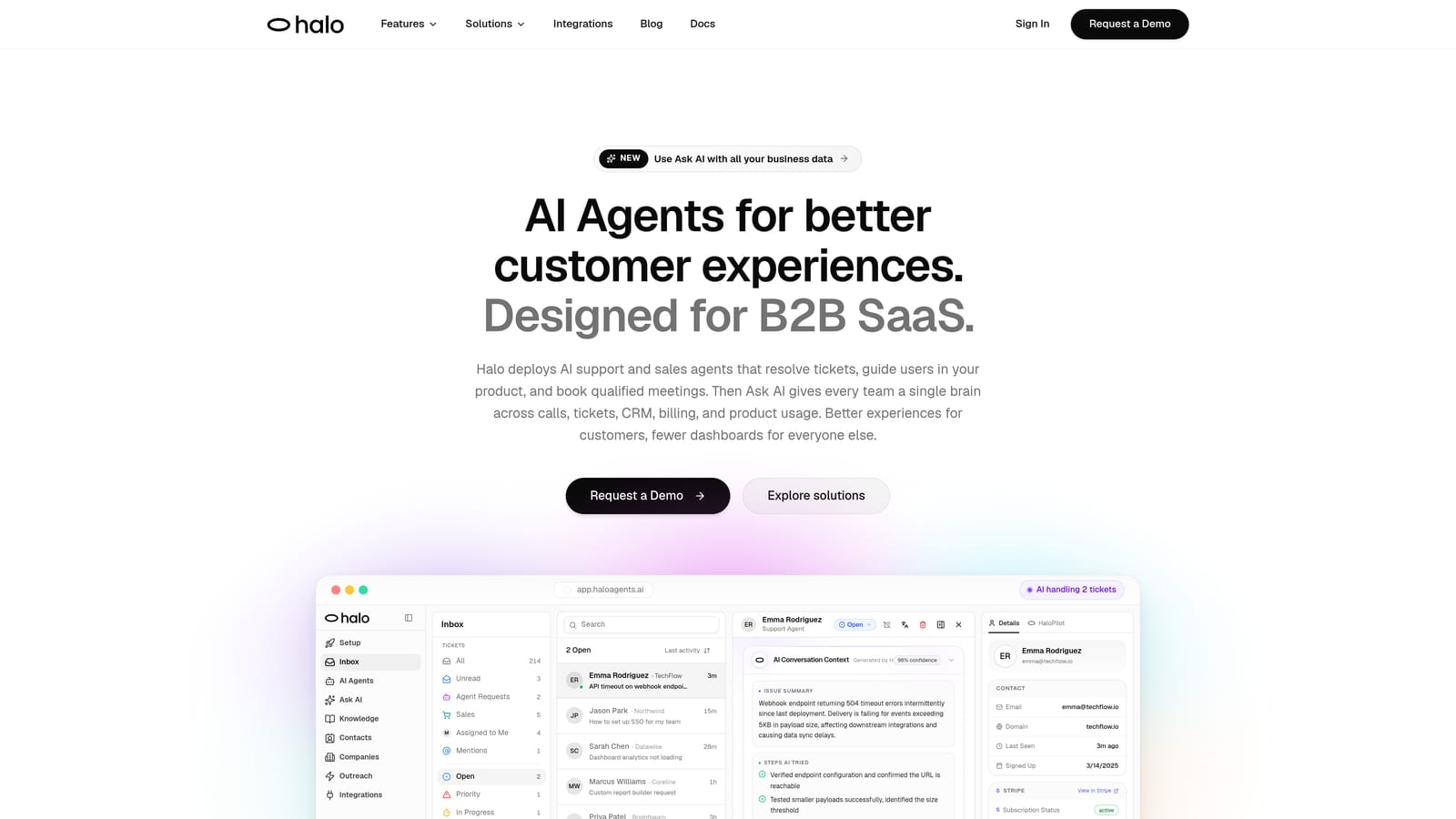
Halo AI is an AI-first customer support platform purpose-built for B2B SaaS teams that need more than ticket deflection.
Where This Tool Shines
What separates Halo from most tools on this list is its page-aware context. The AI agent doesn't just respond to what a user types; it sees what the user is looking at, enabling in-context visual guidance that's genuinely useful rather than generic. That's a meaningful difference when your product is complex and your users need step-by-step help navigating it.
Beyond support, Halo surfaces business intelligence signals from every conversation: customer health indicators, churn risk, revenue anomalies. Your support inbox becomes a source of strategic insight, not just a queue to clear. And because the system learns continuously from every resolved ticket, its accuracy compounds over time rather than stagnating after initial setup.
Key Features
Page-Aware AI Agents: Agents see exactly what users see and provide in-context visual guidance tailored to their current screen.
Continuous Learning: Every resolved ticket improves future responses, so the system gets smarter the longer it runs.
Auto Bug Ticket Creation: Automatically identifies and routes bug reports to Linear or your preferred project management tool without manual triage.
Smart Inbox with Business Intelligence: Surfaces customer health signals, churn indicators, and revenue anomalies directly from support conversations.
Live Agent Handoff: Escalates complex issues to human agents with full conversation context preserved, so customers never have to repeat themselves.
Deep Integrations: Connects natively with HubSpot, Slack, Intercom, Stripe, Zoom, PandaDoc, Fathom, and more.
Best For
Halo is built for B2B SaaS companies and product teams that want AI support to do more than deflect tickets. If you need your support layer to feed into product, engineering, and revenue workflows, and if you want a system that grows smarter with every interaction, Halo is worth a close look.
Pricing
Pricing is available on request at haloagents.ai. Subscription plans are designed to scale with ticket volume and team size rather than charging a flat per-seat rate.
2. Intercom
Best for: Teams that want AI support alongside in-product messaging and lifecycle communication
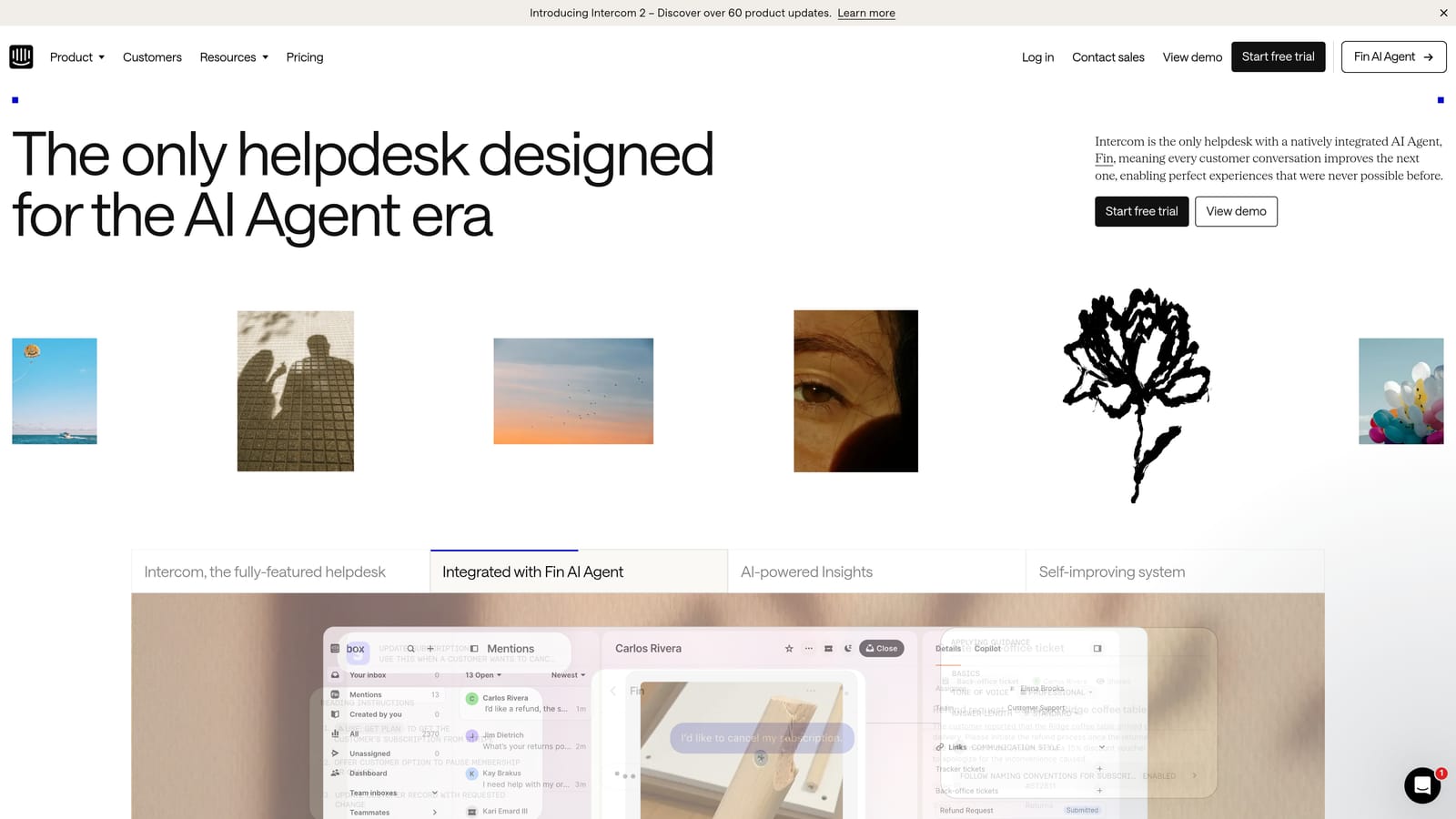
Intercom is a mature customer communications platform with Fin, its AI agent, built on top of a robust inbox and messaging system.
Where This Tool Shines
Intercom's strength is breadth. It's not just a support tool; it's a full customer communications platform that handles onboarding messages, product announcements, and proactive outreach alongside reactive support. Fin, its AI agent, draws on your existing help content to resolve tickets automatically, and it integrates naturally into the same workspace your team already uses for live conversations.
The AI Copilot feature is particularly useful for teams that aren't ready to go fully automated. Agents get suggested responses surfaced in real time, which speeds up resolution without removing the human from the loop entirely.
Key Features
Fin AI Agent: Handles automated ticket resolution by drawing on your help center content and trained knowledge base.
Unified Inbox: Combines support, chat, and email conversations in a single workspace for cleaner agent workflows.
AI Copilot: Surfaces suggested responses for live agents in real time, reducing handle time on complex tickets.
Conversation Routing: Automatically assigns conversations based on team, topic, or customer attributes.
In-Product Messaging: Supports onboarding flows, product tours, and proactive messaging alongside support conversations.
Best For
Intercom suits teams that want a single platform for support and customer engagement. It's particularly well-matched for SaaS companies that use in-product messaging heavily and want their support and lifecycle communication tools to share the same data layer.
Pricing
Intercom uses seat-based pricing with additional fees tied to Fin AI resolution volume. Multiple plan tiers are available; check intercom.com for current rates, as pricing has historically evolved alongside feature releases.
3. Zendesk
Best for: Enterprise teams with complex workflows, SLA requirements, and large agent headcounts
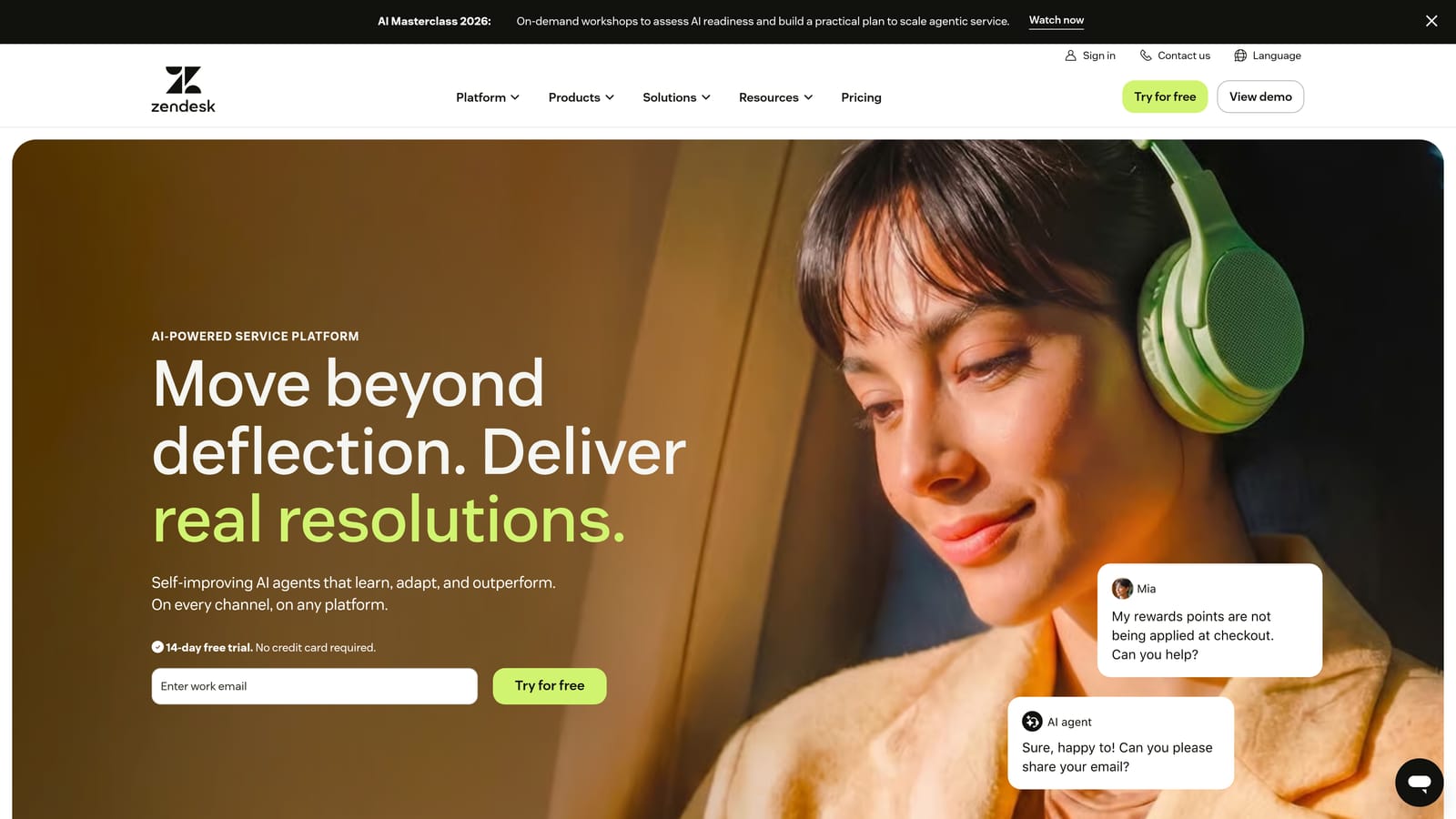
Zendesk is an enterprise-grade helpdesk platform with AI automation capabilities available across its Suite plans and as add-ons.
Where This Tool Shines
Zendesk's depth is its defining characteristic. For large support organizations managing multiple channels, complex SLAs, and hundreds of agents, it offers a level of configurability that few platforms match. Its integration marketplace spans over a thousand apps, meaning it can slot into almost any existing tech stack without major disruption.
The AI capabilities have expanded meaningfully in recent years. Ticket triage, intelligent routing, and AI-powered suggested replies are all available, though buyers should note that the most capable AI features tend to live at higher plan tiers rather than being included across the board.
Key Features
AI Ticket Triage and Routing: Automatically categorizes and routes incoming tickets based on intent, priority, and content.
Zendesk AI Agents: Enables automated self-service resolution for common queries without agent involvement.
Integration Marketplace: Access to over 1,000 pre-built integrations covering CRM, billing, project management, and more.
Advanced SLA Management: Configurable SLA policies with escalation rules and detailed compliance reporting.
No-Code Workflow Builder: Build and modify automation rules without engineering support.
Best For
Zendesk is best suited for established enterprises and mid-market companies with large support teams, complex routing needs, and existing infrastructure they need to connect. It's less ideal for lean SaaS teams looking for fast deployment or AI-first architecture out of the box.
Pricing
Suite plans start at a per-agent monthly rate across Team, Growth, Professional, and Enterprise tiers. AI features are available at higher tiers and as add-ons. Visit zendesk.com for current pricing.
4. Freshdesk
Best for: Small to mid-sized teams wanting a freemium entry point with AI capabilities at higher tiers
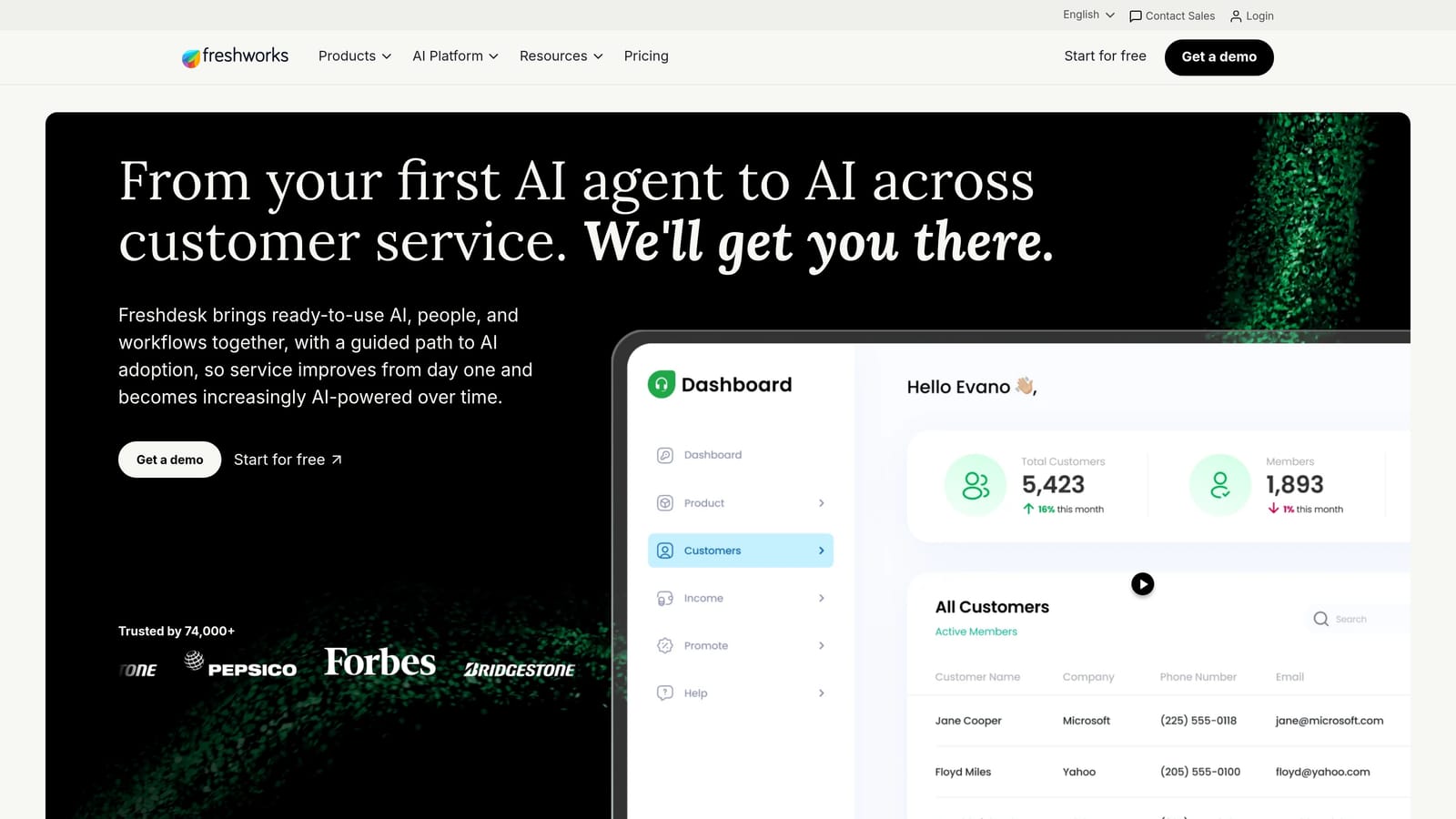
Freshdesk is a helpdesk platform from Freshworks with a freemium entry point and Freddy AI capabilities layered into paid plans.
Where This Tool Shines
Freshdesk's free plan is genuinely functional for small teams just getting started with structured support. It's one of the few platforms where you can run basic email and chat support without a credit card, which makes it a natural starting point for early-stage companies. As teams grow, the upgrade path to Freddy AI is relatively straightforward.
Freddy AI splits into two distinct products: Freddy Copilot, which assists agents with suggested responses and summaries, and Freddy Self Service, which powers customer-facing automated resolution. That separation gives teams flexibility to adopt AI assistance incrementally rather than all at once.
Key Features
Freddy AI Copilot: Assists agents with suggested replies, ticket summaries, and next-step recommendations.
Freddy Self Service: Handles customer-facing automated resolution for common queries without agent involvement.
Free Plan: Functional entry-level plan for small teams with core email and ticket management features.
Omnichannel Support: Covers email, chat, phone, and social channels within a unified inbox.
Marketplace Integrations: Connects with popular CRM, billing, and project management tools.
Best For
Freshdesk works well for growing SMBs and early-stage SaaS teams that want a low-risk entry point with a clear path to AI-assisted support. Teams with heavy e-commerce or phone support needs will also find the omnichannel coverage useful.
Pricing
A free plan is available with limited features. Paid tiers (Growth, Pro, Enterprise) are priced per agent per month. Freddy AI is available as an add-on or included in higher tiers. See freshworks.com/freshdesk for current rates.
5. Tidio
Best for: SMBs and e-commerce teams wanting fast AI chatbot deployment with transparent conversation-based pricing
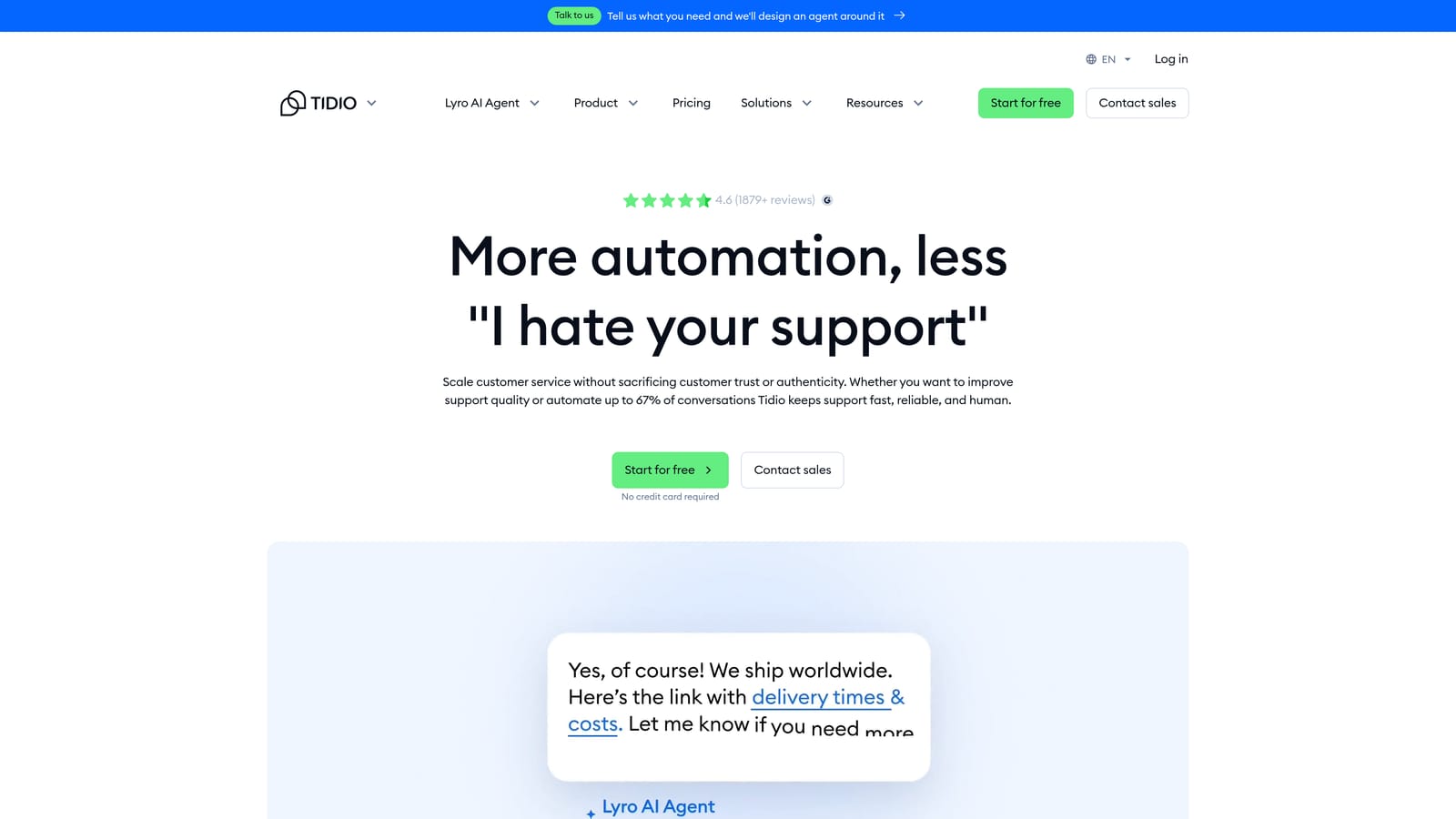
Tidio is a live chat and AI chatbot platform with its Lyro AI agent designed for fast deployment and high accessibility.
Where This Tool Shines
Tidio's primary appeal is speed to value. The platform is designed to be set up quickly, and Lyro, its AI agent, can start handling conversations with minimal configuration. For SMBs that don't have a dedicated support ops team, that low friction matters a lot. The live chat layer means agents can step in and take over from Lyro whenever needed, which keeps the experience from feeling fully automated when a human touch is warranted.
The conversation-based pricing model for Lyro is worth understanding before committing. Rather than paying per seat, you pay based on the number of AI-handled conversations, which can be cost-effective for teams with moderate volume but requires careful monitoring as volume scales.
Key Features
Lyro AI Chatbot: Handles automated conversations using your support content, with conversation-based pricing for AI interactions.
Live Chat with Agent Takeover: Agents can seamlessly take over any AI conversation in real time.
Pre-Built Automation Flows: Ready-made flows for common support scenarios reduce setup time significantly.
E-Commerce Integrations: Native integrations with Shopify and other e-commerce platforms for order-aware conversations.
Multi-Channel Support: Covers email and Messenger alongside live chat within a single interface.
Best For
Tidio is a strong fit for e-commerce brands and SMBs that want AI chat capabilities without complex implementation. Teams with predictable, moderate conversation volumes will find the pricing model straightforward; high-volume teams should model costs carefully before scaling.
Pricing
A free plan is available. Lyro AI conversations are priced per interaction, with paid plans scaling by conversation volume. Visit tidio.com for current plan details and Lyro pricing.
6. Drift (Salesloft)
Best for: Revenue-focused teams where support and sales conversations share the same pipeline
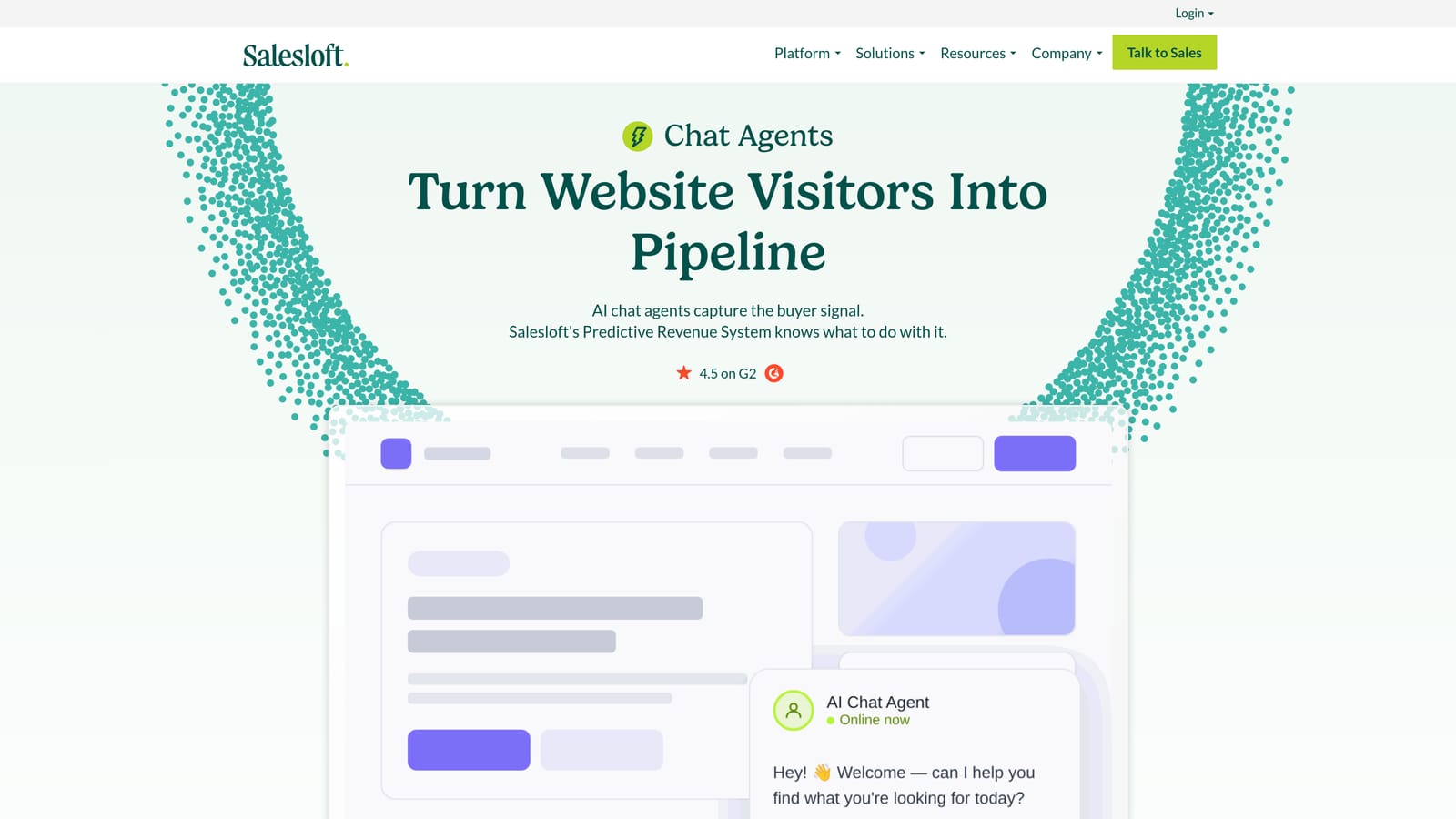
Drift, now part of Salesloft, is a conversational AI platform designed for teams where support and revenue conversations overlap significantly.
Where This Tool Shines
Drift's positioning is distinct from most tools on this list: it's built for teams where the line between support and sales is intentionally blurry. If your support conversations regularly involve pricing questions, renewal discussions, or upsell opportunities, Drift's routing and qualification logic is designed to handle that complexity. High-value visitors can be flagged for immediate live engagement, and meeting scheduling can be embedded directly into chat flows.
The account-based targeting capability is particularly useful for B2B teams. You can personalize conversations based on the company a visitor belongs to, which means enterprise prospects get a different experience than trial users without manual intervention.
Key Features
AI-Powered Chatbot: Qualifies and routes both support and sales conversations based on intent and account data.
Real-Time Engagement Alerts: Notifies sales or support reps when high-value visitors are active on the site.
Meeting Scheduling Automation: Embeds calendar booking directly into chat flows to reduce friction for high-intent conversations.
Account-Based Targeting: Personalizes chat experiences based on the visitor's company, industry, or account status.
CRM Integration: Connects with Salesforce and other major CRM platforms to sync conversation data.
Best For
Drift suits B2B companies with revenue-oriented support teams and a strong focus on pipeline acceleration. It's less suited to pure support use cases where the goal is ticket deflection at scale rather than conversation qualification.
Pricing
Pricing is enterprise-oriented and typically requires a sales conversation for current rates. Visit salesloft.com for details.
7. Kustomer
Best for: Teams that want a CRM-native support platform with a unified customer timeline across all channels
Kustomer is a CRM-native customer service platform, now owned by Meta, that unifies the full customer history with AI automation across every support interaction.
Where This Tool Shines
Kustomer's defining feature is its unified customer timeline. Rather than treating each support ticket as an isolated event, Kustomer builds a complete picture of every customer interaction across channels and surfaces it in a single view. For teams that handle complex, multi-touch customer relationships, this eliminates a significant amount of context-switching and manual lookup.
The built-in CRM layer is also a meaningful differentiator. Many support platforms require a separate CRM integration to access customer data; Kustomer includes it natively, which simplifies the tech stack for teams that don't already have a dedicated CRM investment.
Key Features
Unified Customer Timeline: Aggregates all interactions across channels into a single chronological view per customer.
AI Routing and Intent Detection: Automatically routes conversations and identifies customer intent to prioritize responses.
Workflow Automation: Automates actions across the full customer record, not just individual tickets.
Omnichannel Coverage: Supports email, chat, voice, social, and SMS within a single platform.
Built-In CRM: Eliminates the need for a separate customer database by storing customer data natively.
Best For
Kustomer is well-suited for mid-market and enterprise teams with high interaction volume across multiple channels, particularly those in retail, e-commerce, or subscription businesses where customer lifetime context is critical to good support.
Pricing
Pricing is per user per month across Enterprise and Ultimate plans. Visit kustomer.com for current rates.
8. Help Scout
Best for: Teams that want AI-assisted support without losing the human feel of email-based communication
Help Scout is an email-first support platform with AI assistance features designed to help agents work faster without removing the human element from customer interactions.
Where This Tool Shines
Help Scout has built a strong reputation for simplicity and transparency. The interface is clean, the pricing is straightforward, and the AI features are included in paid plans rather than locked behind expensive add-ons. For teams that have been burned by surprise costs on other platforms, that clarity is genuinely refreshing.
The AI features themselves are practical rather than flashy. AI Summarize condenses long conversation threads so agents don't have to read through pages of back-and-forth. AI Assist helps draft and refine replies. These are tools that reduce cognitive load for agents, which compounds over time into meaningfully faster resolution without requiring a full AI-first architecture overhaul.
Key Features
AI Summarize: Instantly condenses long conversation threads so agents can get up to speed without reading the full history.
AI Assist: Helps agents draft, refine, and improve replies before sending.
Beacon Widget: Provides customers with self-service access to your knowledge base directly within your product.
Shared Inbox with Collision Detection: Prevents two agents from accidentally responding to the same conversation simultaneously.
Transparent Pricing: Per-user pricing with AI features included in paid plans, no hidden add-on fees.
Best For
Help Scout is an excellent fit for teams that prioritize a human-feeling support experience and want AI to assist agents rather than replace them. It's particularly popular with SaaS companies and professional services teams that handle nuanced, relationship-driven support conversations.
Pricing
Per-user per-month pricing across Standard, Plus, and Pro plans. AI features are included in paid plans. Visit helpscout.com for current rates.
9. Gorgias
Best for: E-commerce brands that want support automation tied directly to live order and customer data
Gorgias is a support platform purpose-built for e-commerce brands, with AI auto-responders that connect directly to order and customer data.
Where This Tool Shines
Gorgias's integration with Shopify, BigCommerce, and Magento goes deeper than most platforms. Its AI auto-responders can pull live order data to answer questions like "Where is my package?" without any agent involvement, which is the single most common query for most e-commerce support teams. That level of data-aware automation is genuinely difficult to replicate with a general-purpose support tool.
The ticket-volume pricing model is also worth noting. Rather than charging per agent, Gorgias charges based on the number of billable tickets processed per month. For e-commerce brands with small teams but high inquiry volume, this can be a more cost-effective structure than per-seat pricing.
Key Features
Order-Aware AI Auto-Responders: Automatically resolves common e-commerce queries using live order data from Shopify, BigCommerce, and Magento.
Ticket Volume Pricing: Charges based on monthly billable ticket volume rather than per agent, which suits lean teams with high inquiry volume.
Macros and Automation Rules: Pre-built and custom automation for repetitive queries like returns, exchanges, and shipping updates.
Revenue Statistics: Tracks support's direct impact on conversions and revenue, not just resolution metrics.
Omnichannel Inbox: Manages email, chat, social media, and SMS in a single workspace.
Best For
Gorgias is the clear choice for direct-to-consumer and e-commerce brands running on Shopify or similar platforms. It's less suited for B2B SaaS teams where order data isn't central to support conversations.
Pricing
Plans scale from Starter to Enterprise based on monthly billable ticket volume. Visit gorgias.com for current plan details and volume thresholds.
Which Tool Is Right for Your Team?
The right AI support tool depends on your business model, your team's size, and what you actually need AI to do. Here's a quick way to think through the decision.
For B2B SaaS teams that want AI-first architecture with business intelligence: Halo AI is built specifically for this use case. Its page-aware agents, continuous learning, and smart inbox signals make it more than a support tool; it becomes part of your product and revenue intelligence layer.
For teams that want a single platform for support and customer engagement: Intercom's combination of Fin AI and in-product messaging is hard to beat, particularly if lifecycle communication is already part of your workflow.
For enterprise teams with complex workflows and large agent headcounts: Zendesk's configurability and integration depth make it the natural choice, though buyers should evaluate which AI features are available at their target tier before committing.
For e-commerce brands with high ticket volume and Shopify integration needs: Gorgias's order-aware automation and volume-based pricing make it the most purpose-fit option on this list.
For small teams looking for a low-risk starting point: Freshdesk's free plan and Help Scout's transparent pricing both offer accessible entry points without locking you into expensive commitments before you're ready.
One thing every team should check before signing: whether the AI features that actually matter to you are included at your target plan tier, or whether they're gated behind a higher tier or charged as add-ons. That single question will save you from a lot of post-purchase frustration.
Your support team shouldn't have to scale linearly with your customer base. See Halo in action and discover how continuous learning transforms every interaction into smarter, faster support, while your team stays focused on the complex issues that genuinely need a human touch.