9 Best AI Support Tools for Product Companies in 2026
Discover the 9 best AI support tools for product companies in 2026, evaluated for their ability to autonomously resolve tickets, surface actionable product insights, and scale support operations without growing headcount. Whether you're an early-stage startup or a scaling SaaS business, this guide helps you find the right platform to handle complex user guidance, onboarding challenges, and bug detection across your entire product stack.
 Grant CooperFounder13 min read
Product companies face a unique support challenge: customers don't just need answers, they need guidance through complex interfaces, workflows, and feature sets. Generic FAQ bots won't cut it when a user is stuck mid-onboarding or hitting a bug in your latest release.
AI support tools built for product companies understand this difference. They can resolve tickets autonomously, surface product insights from support data, and even detect bugs before your engineering team hears about them. We evaluated dozens of platforms to find the ones that genuinely move the needle for product-led teams.
Our selection criteria: depth of AI autonomy, product-awareness capabilities, integration with modern dev and product stacks, scalability without proportional headcount growth, and value-to-cost ratio. Whether you're a 20-person startup drowning in Intercom tickets or a scaling SaaS company optimizing support operations, here are the top tools worth your attention.
1. Halo AI
Best for: Product companies wanting an AI-first support platform with page-aware context and dev tool integration.
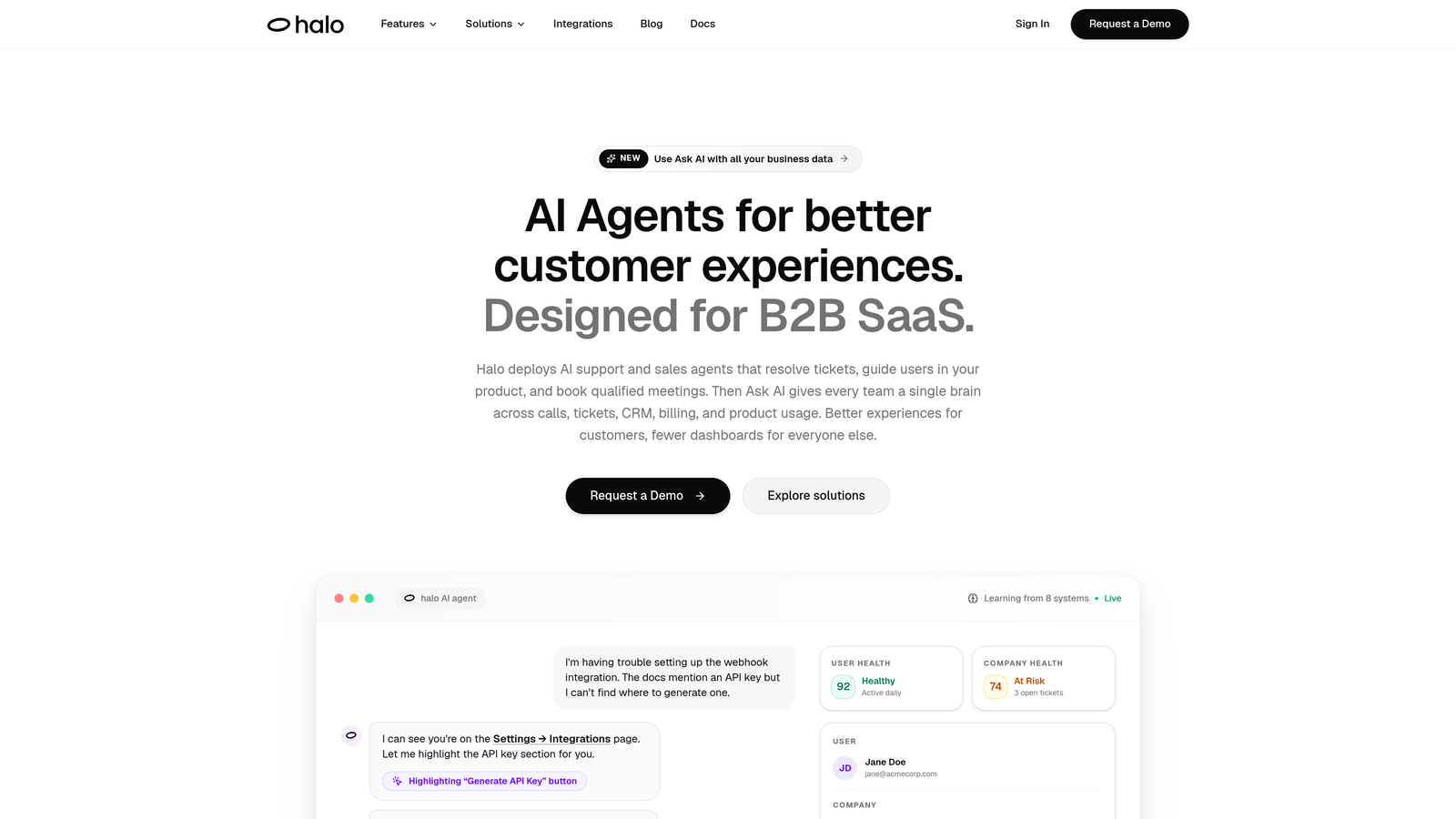
Halo AI is an AI-first customer support platform that deploys autonomous agents with page-aware context, auto bug detection, and deep integrations across product and business tools.
Where This Tool Shines
What separates Halo from most support tools is its architecture. Rather than bolting AI onto an existing helpdesk, Halo was built from the ground up around autonomous AI agents. That means the intelligence isn't a layer on top, it's the foundation.
The standout capability is page-awareness: Halo's chat widget actually sees what a user sees on-screen, giving the AI real context about where someone is in your product when they reach out. That's a meaningful difference when your users are mid-onboarding or stuck in a complex workflow. Combine that with automatic bug ticket creation routed directly to Linear, and you have a support tool that actively feeds your engineering and product teams.
Key Features
Page-Aware Chat Widget: The AI agent understands the specific page and UI state a user is on, enabling contextually relevant guidance rather than generic answers.
Auto Bug Ticket Creation: Detected issues are automatically converted into structured bug tickets and routed to engineering tools like Linear, closing the loop between support and development.
Smart Inbox with Business Intelligence: Goes beyond ticket management to surface customer health signals, revenue intelligence, and anomaly detection from support interactions.
Live Agent Handoff: Complex issues escalate to human agents with full conversation context preserved, so customers never have to repeat themselves.
Broad Native Integrations: Connects natively with Slack, HubSpot, Intercom, Stripe, Zoom, PandaDoc, and more, reducing friction across your existing stack.
Best For
Product-led SaaS companies that want AI support to do more than deflect tickets. Ideal for teams that also want support data feeding product decisions, bug tracking, and customer health monitoring. Particularly strong for companies already running Linear, Slack, and modern CRM tools.
Pricing
Contact for pricing; plans scale based on resolution volume, making it adaptable for both growing startups and larger SaaS operations.
2. Intercom Fin
Best for: Teams already on Intercom who want native AI resolution without switching platforms.
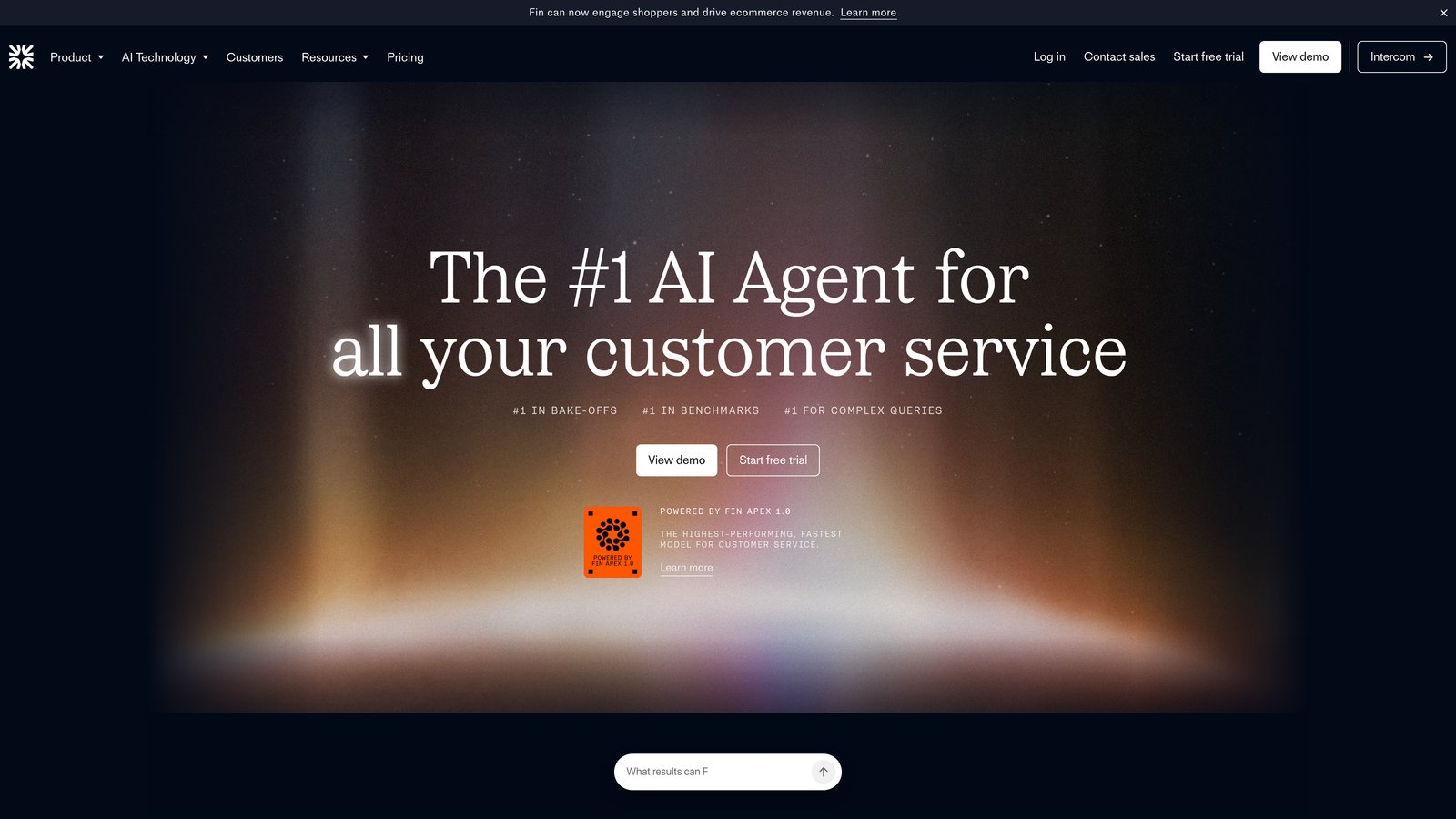
Intercom Fin is Intercom's native AI agent that resolves support conversations using your help center content and conversation history within the Intercom ecosystem.
Where This Tool Shines
Fin's biggest advantage is its seamless integration within Intercom's existing messenger experience. If your team is already running Intercom for customer communication, Fin drops in without workflow disruption. It's trained on your help center articles and historical conversations, which means it can get reasonably accurate from day one.
The handoff experience is genuinely smooth. When Fin can't resolve something, the conversation transitions to a human agent in the same interface, with full context intact. For teams that want to add AI resolution without rebuilding their support stack, Fin is a low-friction path.
Key Features
Help Center and Conversation Training: Fin learns from your existing help content and past support conversations for relevant, on-brand responses.
Seamless Human Handoff: Escalates to live agents within the same Intercom messenger with no context loss.
Multi-Channel Support: Operates across chat, email, and SMS, covering the channels most product companies already use.
Custom Answer Workflows: Build specific resolution paths for complex or product-specific query types.
Resolution Reporting: Built-in analytics track AI resolution rate and customer satisfaction scores.
Best For
Companies already invested in the Intercom ecosystem who want to add AI resolution without introducing a new platform. Less suited for teams needing deep dev tool integration or product-usage context beyond what Intercom captures.
Pricing
Starts at $0.99 per resolution; requires an active Intercom plan. Costs can scale quickly at high conversation volumes, so model your usage before committing.
3. Zendesk AI
Best for: Enterprise teams needing AI layered across a mature, full-featured helpdesk suite.
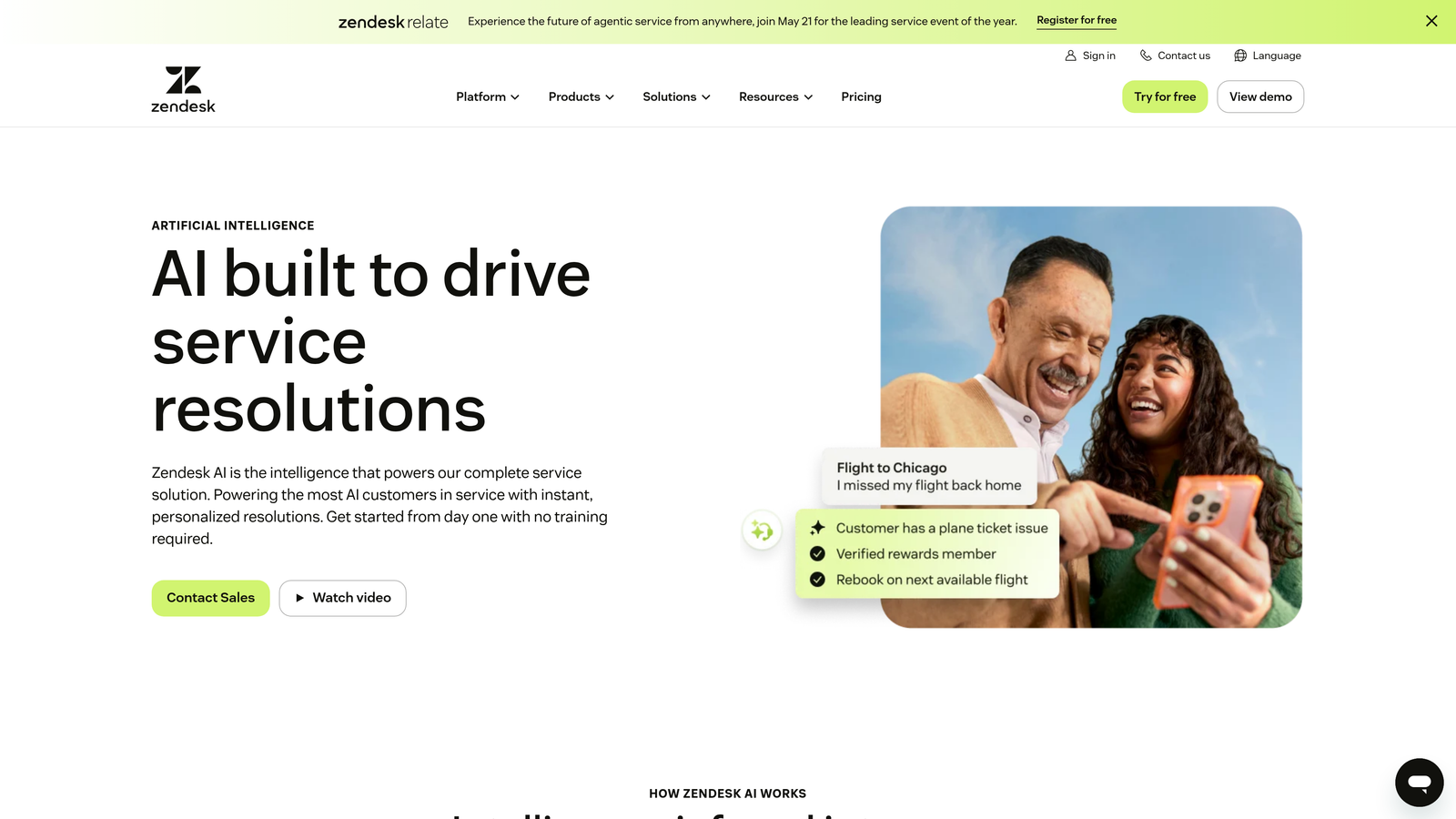
Zendesk AI is an enterprise-grade AI layer built into the Zendesk Suite, offering AI agents, intelligent triage, and agent-assist capabilities trained on extensive support interaction data.
Where This Tool Shines
Zendesk's AI benefits from the platform's scale. It's pre-trained on a vast volume of support interactions, which gives it a head start on intent recognition and classification that newer AI tools have to build from scratch. For enterprise product companies with high ticket volumes and complex routing needs, that out-of-the-box accuracy matters.
The agent-assist capabilities are particularly strong. Suggested replies, real-time knowledge surfacing, and generative tools for maintaining your help center all reduce the cognitive load on human agents handling escalations.
Key Features
Autonomous AI Agents: Handles ticket resolution across email, chat, and messaging channels without human intervention for common request types.
Intelligent Triage: Auto-classifies tickets by intent, language, and sentiment for accurate routing and prioritization.
Agent-Assist Tools: Surfaces suggested replies and relevant knowledge articles to human agents in real time.
Generative Help Center Tools: Creates and maintains help center content using AI, reducing documentation overhead.
Pre-Trained on Billions of Interactions: Delivers usable accuracy from initial deployment without extensive custom training.
Best For
Mid-to-large product companies already using or evaluating Zendesk as their helpdesk of record. The AI value compounds when you're using the full Zendesk Suite rather than just the AI features in isolation.
Pricing
AI features are included in Suite plans starting around $55 per agent per month; an advanced AI add-on is available for teams needing deeper automation capabilities.
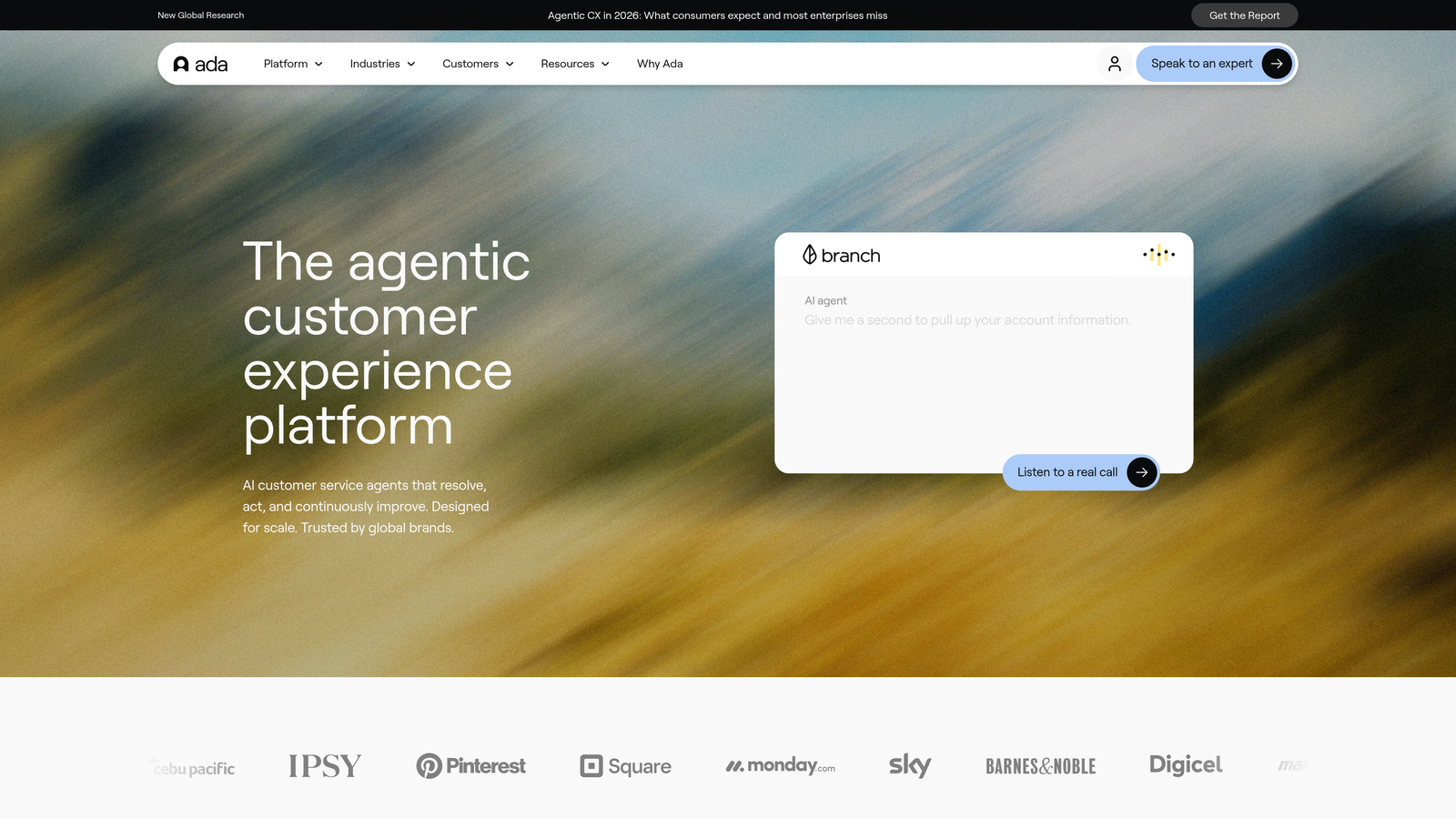
4. Ada
Best for: Product companies wanting a no-code AI agent builder deployable across web, mobile, and messaging channels.
Ada is an AI-powered customer service automation platform that enables product companies to build and deploy AI agents without code across web, mobile, social, and messaging channels.
Where This Tool Shines
Ada's reasoning engine is designed to handle the kind of multi-step, contextual queries that product users generate. Rather than matching keywords to static answers, Ada's AI reasons through the problem, which makes it more capable when users describe issues in non-standard ways.
The no-code builder is genuinely accessible for product or support teams without engineering resources. You can connect Ada to your help center, internal documentation, and APIs, then deploy it across channels without writing a line of code. For companies that want AI automation without depending on developer bandwidth, that flexibility is valuable.
Key Features
No-Code AI Agent Builder: Build and configure AI agents through a visual interface without engineering involvement.
Multi-Channel Deployment: Deploy across web, mobile, WhatsApp, SMS, and other channels from a single configuration.
Knowledge Integration: Connects to help centers, websites, and internal documentation for comprehensive answer coverage.
API-Based Actions: The AI agent can perform tasks like checking account status or updating user information, not just answer questions.
Resolution Analytics: Automated measurement of resolution rates and performance trends over time.
Best For
Product companies with multi-channel support needs and limited engineering bandwidth for AI configuration. Strong choice for teams that want actionable AI (not just conversational AI) without a heavy technical lift.
Pricing
Custom pricing; contact Ada's sales team for a quote based on your conversation volume and channel requirements.
5. Freshdesk Freddy AI
Best for: Budget-conscious product teams wanting AI support capabilities within an affordable helpdesk suite.
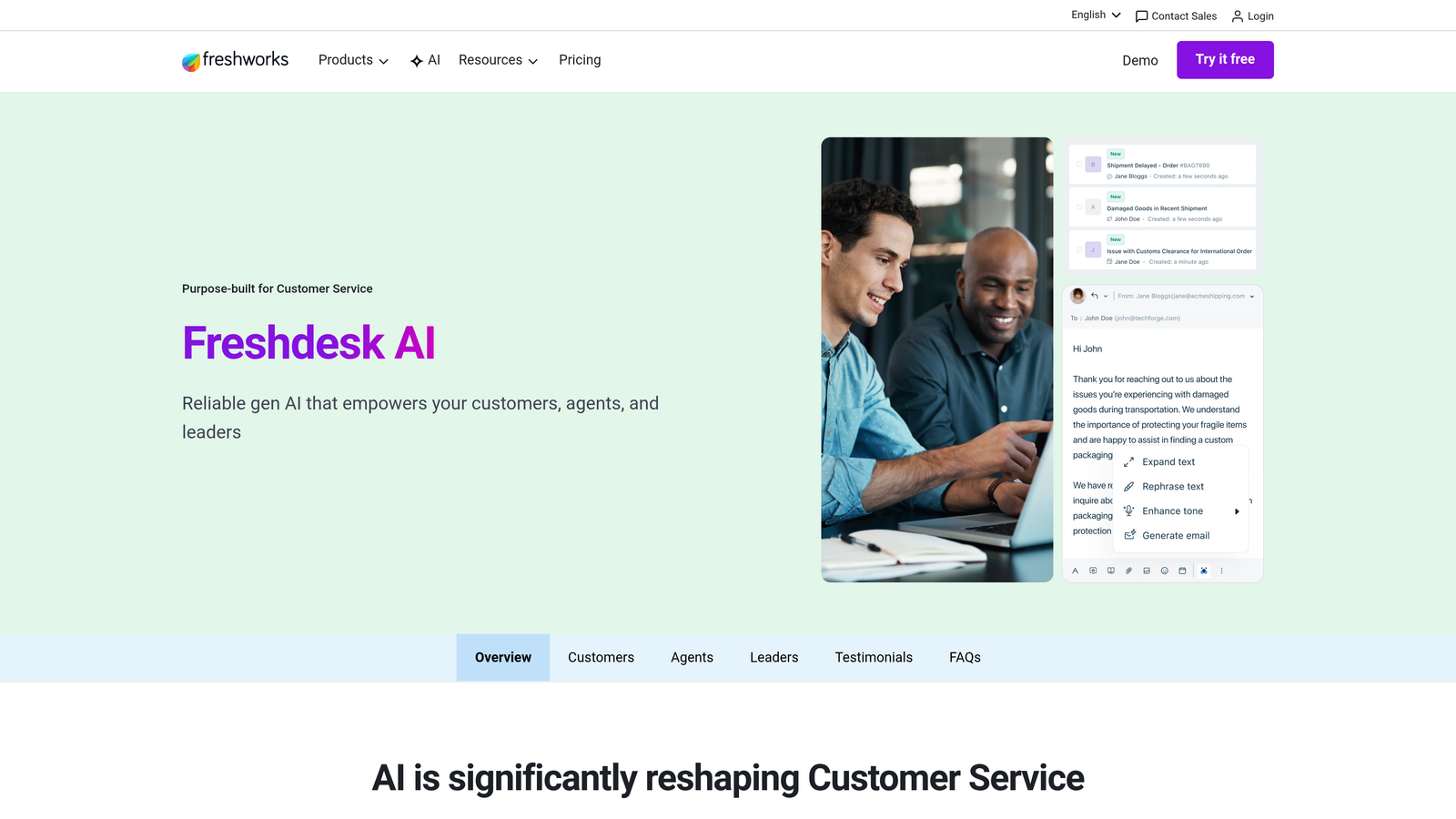
Freshdesk Freddy AI is Freshworks' AI assistant embedded across Freshdesk, offering AI-powered ticket resolution, agent assistance, and analytics within a cost-effective helpdesk suite.
Where This Tool Shines
Freddy AI's strongest selling point is value density. You get a capable AI layer, including customer-facing resolution and agent-side assistance, bundled within Freshdesk plans that are priced well below enterprise alternatives. For early-stage or cost-sensitive product teams, that makes AI support accessible without a major budget commitment.
The dual-mode approach, with Freddy AI Agent handling customer-facing interactions and Freddy Copilot assisting human agents, covers both sides of the support equation. Knowledge base gap detection is a particularly useful feature for product companies building out their documentation.
Key Features
Freddy AI Agent: Autonomous customer-facing resolution via chat and email for common support request types.
Freddy Copilot: Agent-side suggestions, conversation summarization, and tone adjustment tools for human agents.
Auto-Triage: Automatic ticket categorization based on detected intent and priority signals.
Knowledge Base Gap Detection: Identifies where your help content is missing coverage based on incoming ticket patterns.
Bundled Pricing: AI capabilities included in existing Freshdesk plans, reducing the cost of AI adoption.
Best For
Startups and growing product companies that want AI support without enterprise pricing. Also well-suited for teams already using the Freshworks ecosystem across sales, marketing, and support.
Pricing
Freddy AI is available on the Pro plan at around $49 per agent per month and above; some AI features are accessible on lower-tier plans.
6. Forethought
Best for: Teams wanting AI middleware that enhances an existing helpdesk without replacing it.
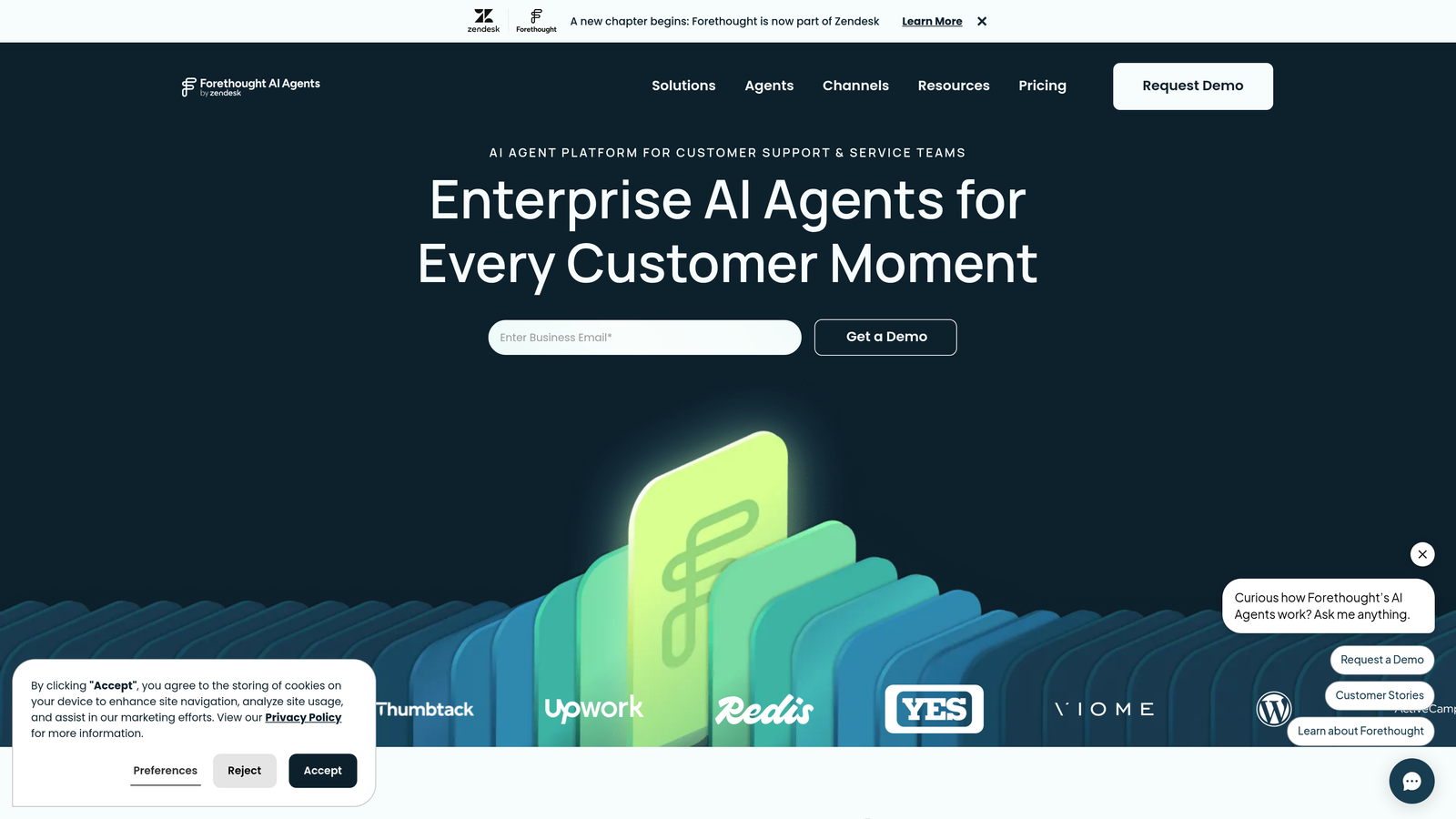
Forethought is an AI-native support platform specializing in intelligent triage, autonomous ticket resolution, and predictive analytics that layers onto existing helpdesk systems.
Where This Tool Shines
Forethought's architecture is designed for companies that are locked into a helpdesk like Zendesk or Salesforce but want to add a more sophisticated AI layer on top. Rather than replacing your existing system, it enhances it, which reduces migration risk and preserves your historical data and workflows.
The Discover AI component is particularly interesting for product teams. It identifies trends and automation opportunities within your support data, effectively turning your ticket backlog into a product intelligence source. That kind of insight is typically buried in manual analysis work.
Key Features
Solve AI: Autonomous resolution of common support requests directly within your existing helpdesk environment.
Triage AI: Predictive ticket classification and intelligent routing based on intent and priority signals.
Assist AI: Real-time suggestions and context surfacing for human agents during live interactions.
Discover AI: Identifies support trends and surfaces automation opportunities from historical ticket data.
Helpdesk Integrations: Native connections to Zendesk, Salesforce, Freshdesk, and other major helpdesk platforms.
Best For
Enterprise product companies with established helpdesk investments who want to upgrade AI capabilities without platform migration. The multi-module approach suits teams with complex triage and routing requirements.
Pricing
Custom enterprise pricing; contact Forethought for a demo and quote tailored to your ticket volume and integration requirements.
7. Tidio
Best for: Early-stage product companies and startups needing affordable AI chat with a low setup barrier.
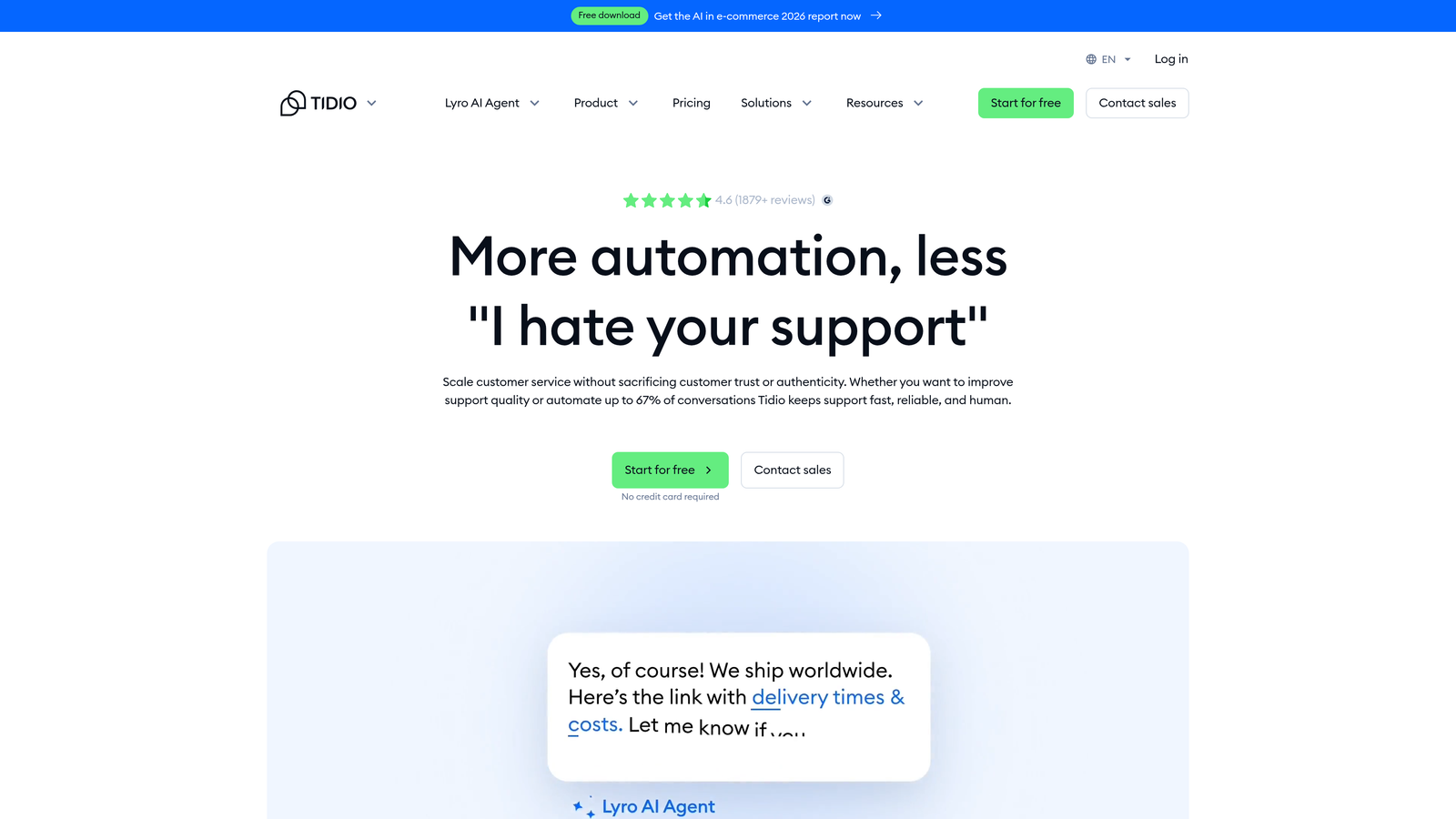
Tidio is an affordable live chat and AI chatbot platform featuring Lyro, an AI conversational agent that handles support queries with minimal setup and a generous free tier.
Where This Tool Shines
Tidio's Lyro AI is designed to be operational quickly. It learns from your FAQ and help content without complex configuration, which makes it accessible for small product teams that don't have a dedicated support operations function. The combined live chat and AI in a single widget keeps the experience consistent for customers regardless of whether they're talking to AI or a human.
The free tier with up to 50 Lyro AI conversations per month gives early-stage companies a real way to test AI support before committing budget. That's a meaningful differentiator in a market where most AI support tools require enterprise conversations to even get pricing.
Key Features
Lyro AI Chatbot: Learns from your FAQ and help content to handle common customer queries conversationally.
Combined Live Chat and AI: Single widget handles both AI-automated and human-assisted conversations seamlessly.
Visual Flow Builder: Build custom automation paths using a no-code visual interface.
Platform Integrations: Connects with Shopify, WordPress, and other common platforms used by product companies.
Free Tier: Up to 50 Lyro AI conversations per month at no cost, enabling genuine testing before purchase.
Best For
Early-stage product companies, indie developers, and small SaaS teams that need functional AI support without enterprise pricing. Less suited for companies with complex product workflows requiring deep contextual AI.
Pricing
Free plan available; Lyro AI add-on starts at around $39 per month; paid base plans from around $29 per month.
8. Kustomer
Best for: Product companies needing AI automation with full CRM and customer timeline context.
Kustomer is a CRM-powered customer service platform that provides AI automation with full customer timeline context, enabling both agents and AI to resolve issues with complete history visibility.
Where This Tool Shines
Kustomer's unified customer timeline is its defining feature. Every interaction, purchase, and product usage event is aggregated into a single view, which means when AI or a human agent responds to a ticket, they have the full picture. For product companies where customer context spans onboarding, billing, and feature usage, that completeness changes the quality of support possible.
The workflow automation engine handles multi-step processes that simpler chatbots can't manage. Sentiment analysis and proactive support triggers add a layer of anticipatory capability that's particularly useful for SaaS companies managing customer health and churn risk.
Key Features
Unified Customer Timeline: Aggregates support history, purchase data, and product usage into a single contextual view.
CRM-Contextual AI Chatbots: AI responses are informed by full customer history, enabling personalized rather than generic resolutions.
Omnichannel Support: Covers email, chat, social media, and voice from a unified platform.
Workflow Automation Engine: Handles complex multi-step processes beyond simple ticket routing.
Sentiment Analysis and Proactive Triggers: Detects customer sentiment and initiates support proactively based on behavioral signals.
Best For
Mid-market and enterprise product companies where customer lifetime value is high and support quality directly impacts retention. Strongest fit when you need both CRM functionality and AI automation in a single platform.
Pricing
Enterprise plan starts at around $89 per user per month; contact Kustomer for AI add-on pricing details.
9. DevRev
Best for: Engineering-heavy product companies that want support and product development natively unified.
DevRev is a platform that natively unifies customer support and product development, using AI to connect user feedback and support tickets directly to engineering workflows and roadmap decisions.
Where This Tool Shines
DevRev solves a problem that most support tools ignore: the gap between what customers report and what engineering actually builds. By natively connecting support tickets to product work items, issues, and enhancements, DevRev creates a direct feedback loop that typically requires significant manual effort or integrations to replicate elsewhere.
The customer insights engine is genuinely useful for product teams. It clusters incoming feedback into product themes automatically, which turns support volume into structured product intelligence without someone manually tagging and categorizing tickets. For product-led organizations where the support team and product team need to speak the same language, DevRev's architecture is a natural fit.
Key Features
Turing AI: Autonomous support resolution and developer assistance built on DevRev's native AI layer.
Native Support-to-Product Connection: Links support tickets directly to product work items, issues, and enhancement requests without third-party integration.
Customer Insights Engine: Clusters feedback into product themes automatically, turning support data into structured roadmap input.
Built-In Product Management: Includes product management features alongside support tools, reducing the number of platforms needed.
Engineering-First Design: Purpose-built for product-led and engineering-heavy organizations rather than adapted from a general helpdesk.
Best For
Product-led companies, developer tools businesses, and engineering-heavy SaaS teams where the distance between customer feedback and product action needs to be as short as possible. Particularly compelling for teams frustrated by the disconnect between their helpdesk and their project management tools.
Pricing
Free tier available for small teams; Pro plans with custom pricing for growing and enterprise organizations.
Picking the Right AI Support Stack for Your Product Team
The right choice depends on where your biggest friction lives today. These tools broadly fall into three categories: AI-native platforms built from scratch around autonomous agents, legacy helpdesks that have added capable AI layers, and specialized AI middleware that enhances existing systems.
If you want a platform built specifically for product companies, with page-aware AI, automatic bug detection, and business intelligence baked in, Halo AI is the strongest fit. It's designed for teams that want support to actively feed product and engineering, not just deflect tickets.
If you're committed to a specific helpdesk ecosystem, the native AI options are compelling. Intercom Fin works well if you're already running Intercom. Zendesk AI makes sense for enterprise teams on the full Zendesk Suite. Freshdesk Freddy AI offers strong value if budget is a primary constraint.
For teams that need support and product development to speak the same language natively, DevRev's unified architecture is worth serious consideration. And for early-stage companies not yet ready for enterprise pricing, Tidio's free tier provides a genuine on-ramp to AI support without financial commitment.
A few selection principles worth keeping in mind: integration depth matters more than feature lists, because a tool that doesn't connect to your existing stack creates more work than it saves. Resolution rate is a more meaningful metric than deflection rate. And the best AI support tools don't just handle tickets, they make your product and engineering teams smarter over time.
Your support team shouldn't scale linearly with your customer base. Let AI agents handle routine tickets, guide users through your product, and surface business intelligence while your team focuses on complex issues that need a human touch. See Halo in action and discover how continuous learning transforms every interaction into smarter, faster support.