8 Best AI Support Tools with Analytics Dashboards in 2026
Discover the 8 best AI support tools with analytics dashboards in 2026, selected for their ability to go beyond ticket resolution and reveal why issues happen—identifying friction points, at-risk revenue, and struggling customer segments. These platforms combine autonomous AI resolution with deep, actionable analytics designed for B2B SaaS teams ready to turn support data into a genuine competitive advantage.
 Grant CooperFounder12 min read
Resolving support tickets is table stakes. The real competitive advantage comes from understanding why those tickets happen in the first place. Which product flows are creating friction? Which customer segments are struggling? Which issues are quietly putting revenue at risk?
Most support platforms answer the first question reasonably well. Far fewer answer the second. The tools on this list were selected because they combine genuine AI resolution capability with analytics that go beyond operational metrics. Selection criteria included autonomous AI resolution quality, depth and actionability of the analytics layer, integration ecosystem for B2B SaaS stacks, and scalability for growing teams.
Whether you're looking to move beyond basic customer support intelligence analytics or evaluating the full spectrum of AI support platform features, this breakdown covers the tools worth your attention in 2026.
1. Halo AI
Best for: B2B SaaS teams that need business intelligence, not just ticket metrics.
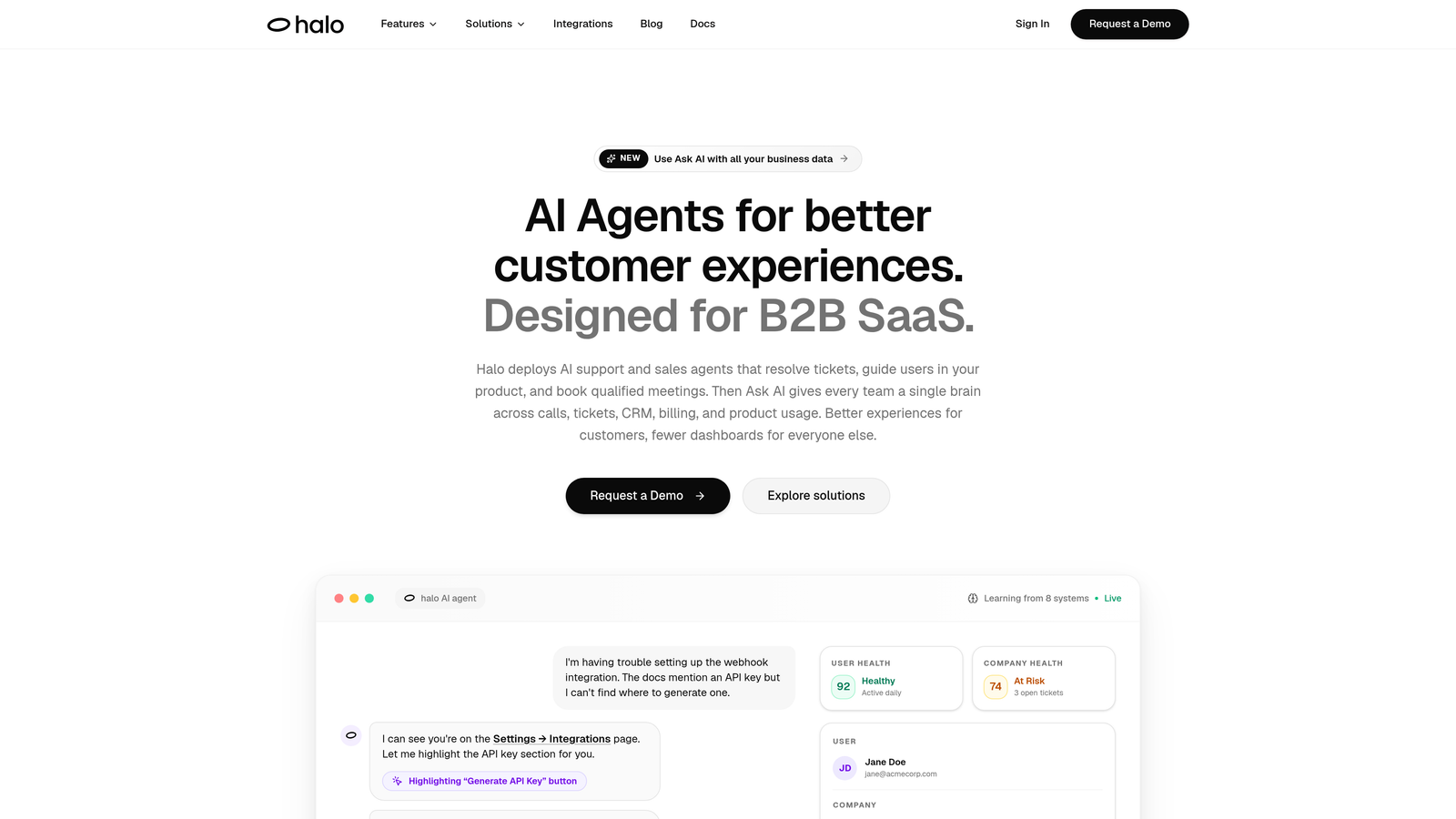
Halo AI is an AI-first customer support platform with smart inbox analytics, customer health scoring, and revenue intelligence built for product-led B2B teams.
Where This Tool Shines
Most support tools are built on top of existing helpdesk infrastructure, with AI layered on afterward. Halo is architected differently: AI is the foundation, not a feature. That distinction matters when it comes to analytics. Rather than surfacing ticket counts and response times, Halo's smart inbox surfaces signals that matter to product, sales, and customer success teams, not just support managers.
The page-aware context is particularly notable. Halo's AI agents can see what users are actually looking at when they reach out, which means resolutions are contextual rather than generic. Pair that with anomaly detection that flags unusual support patterns before they become churn risks, and you have a platform that functions as business intelligence infrastructure as much as a support tool.
Key Features
Smart Inbox with Business Intelligence: Goes beyond ticket volume to surface customer health signals, friction patterns, and revenue risk indicators from support interactions.
Customer Health Scoring and Anomaly Detection: Automatically identifies at-risk accounts and unusual support patterns that may indicate product issues or churn signals.
Page-Aware AI Agents: The AI sees what users see in real time, enabling contextual guidance and resolution rather than generic scripted responses.
Auto Bug Ticket Creation: Integrates with Linear to automatically generate bug reports when support interactions surface reproducible product issues.
Deep Integration Ecosystem: Connects with HubSpot, Slack, Stripe, Intercom, Zoom, PandaDoc, and Fathom, linking support data to the full B2B customer lifecycle.
Best For
B2B SaaS companies and product teams that want support data to inform decisions beyond the support queue. Especially valuable for teams that need to connect customer friction to product roadmap, revenue health, or customer success workflows without building custom data pipelines.
Pricing
Contact for pricing at haloagents.ai. Given the platform's business intelligence depth and integration scope, pricing is tailored to team size and use case.
2. Intercom
Best for: Teams already on Intercom who want AI-assisted resolution with lifecycle-tied analytics.
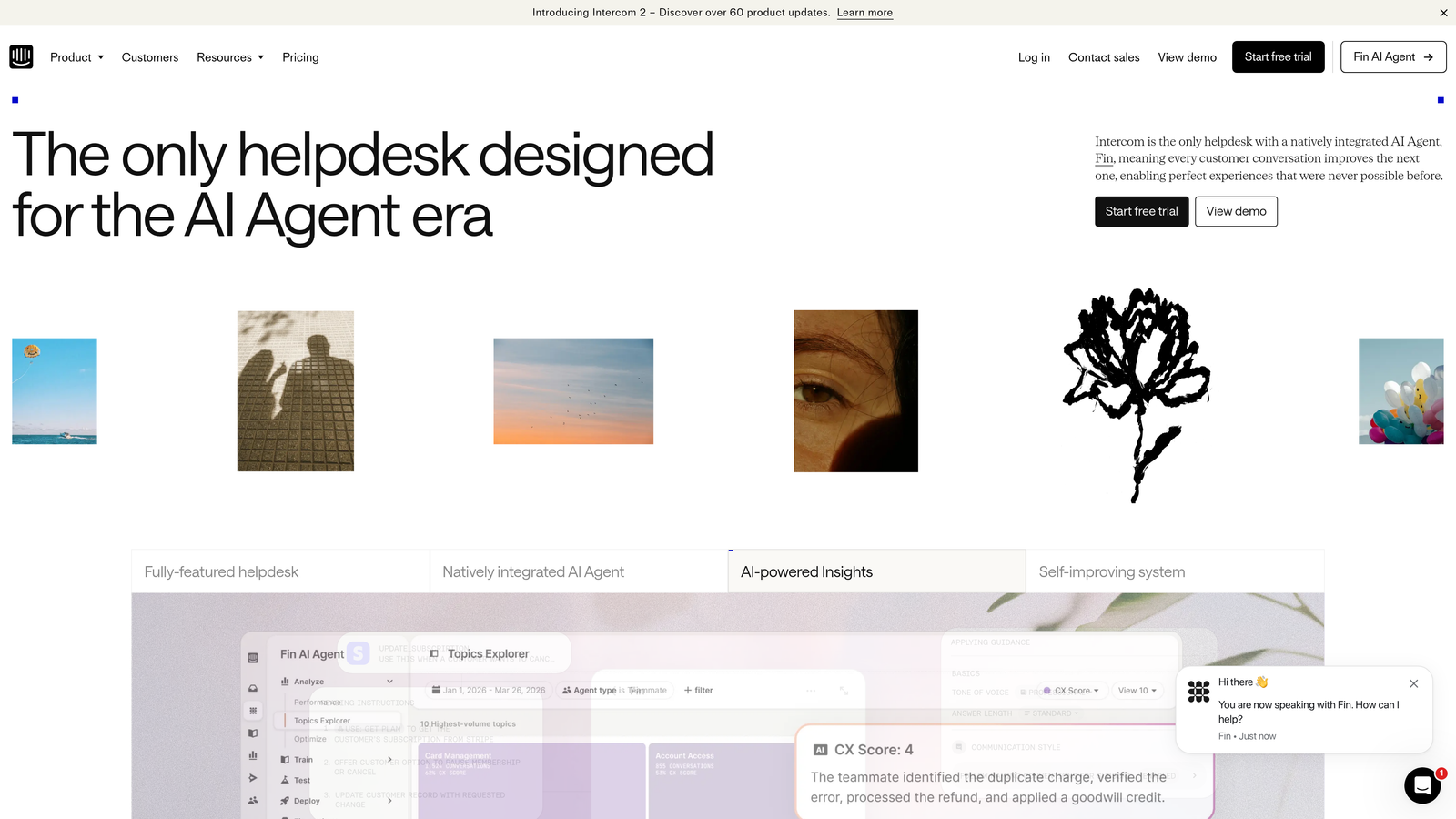
Intercom is an established customer messaging platform with Fin AI for automated resolution and conversation analytics connected to customer lifecycle data.
Where This Tool Shines
Intercom's strength is the combination of outbound messaging, in-app support, and analytics in a single platform. Fin AI handles autonomous ticket resolution with reasonable accuracy on common queries, and the analytics layer ties conversation data to lifecycle stages, making it easier to understand how support activity correlates with onboarding, activation, or churn.
For teams already running Intercom for product messaging and onboarding, adding AI-assisted support is a natural extension rather than a platform switch. The tradeoff is pricing, which has increased meaningfully in recent years, particularly for Fin AI resolution which is billed per resolved conversation.
Key Features
Fin AI Resolution: Autonomous AI agent that handles common support queries without human intervention, trained on your help content.
Lifecycle-Segmented Analytics: Conversation analytics tied to customer lifecycle stages, so you can see support patterns by onboarding cohort or subscription tier.
Custom Reports and Dashboards: Build tailored views within the Intercom Inbox to track the metrics that matter to your team.
Proactive Support Analytics: Tracks outbound messaging performance alongside inbound support volume to measure deflection effectiveness.
Integration Ecosystem: Connects with Salesforce, HubSpot, Stripe, and a broad range of SaaS tools.
Best For
Teams already invested in the Intercom platform who want a unified view of messaging and support analytics without adopting a separate tool. Also strong for product-led growth companies tracking support in the context of user activation.
Pricing
Starts at approximately $39 per seat per month; Fin AI resolution is priced per resolved conversation. Verify current pricing at intercom.com as plans have changed frequently.
3. Zendesk
Best for: Enterprise support organizations with complex reporting needs and dedicated operations resources.
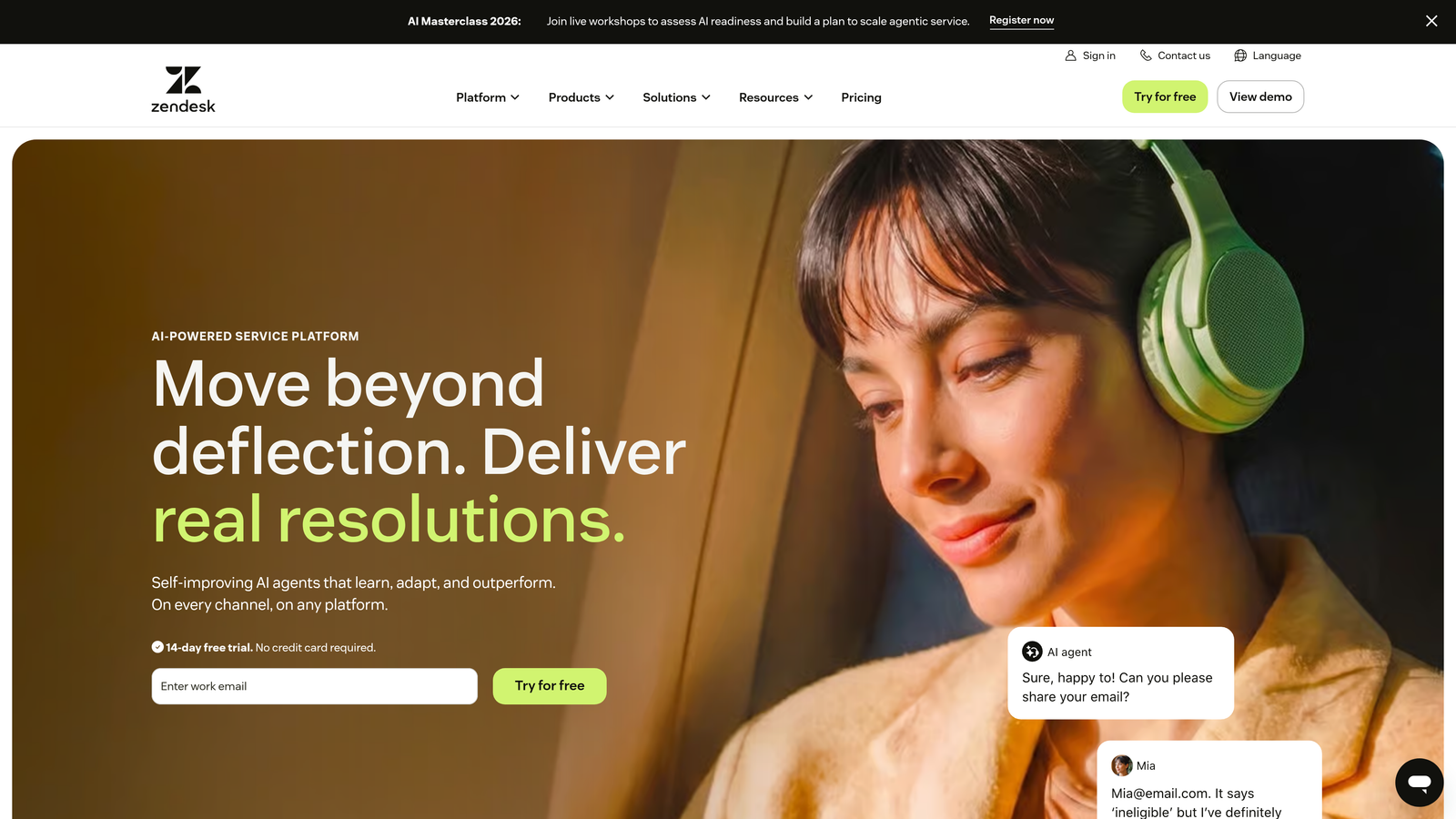
Zendesk is the enterprise-grade helpdesk standard, featuring the Explore analytics suite and AI-assisted triage for large support organizations.
Where This Tool Shines
Zendesk Explore is genuinely powerful for operational reporting. Pre-built dashboards cover SLA compliance, agent performance, ticket volume by channel, and CSAT trends, and the custom query builder lets operations teams build highly specific reports. For enterprise teams with a dedicated support ops function, this depth is hard to match.
The AI features, including Intelligent Triage and suggested replies, are competent additions to the core helpdesk. They're not AI-first in architecture, but for teams whose primary need is operational visibility at scale, Zendesk remains the default choice for a reason.
Key Features
Explore Analytics Suite: Customizable dashboards with pre-built and custom reports covering every dimension of support operations.
Intelligent Triage and Suggested Replies: AI-assisted routing and response suggestions to reduce manual handling time.
SLA Tracking and Compliance Reporting: Detailed SLA performance monitoring with alerts and historical compliance data.
Omnichannel Analytics: Unified reporting across email, chat, voice, and social channels in a single dashboard.
Workforce Management Metrics: Agent performance tracking, staffing analytics, and workload distribution reporting.
Best For
Large support teams with dedicated operations staff who need deep, customizable operational reporting. Organizations with complex SLA requirements, multiple support channels, or compliance reporting obligations will find Explore particularly valuable.
Pricing
Suite plans start at approximately $55 per agent per month; advanced analytics features are available on higher tiers. Confirm current pricing at zendesk.com.
4. Freshdesk
Best for: Growing teams that need solid AI automation and reporting without enterprise-level pricing.
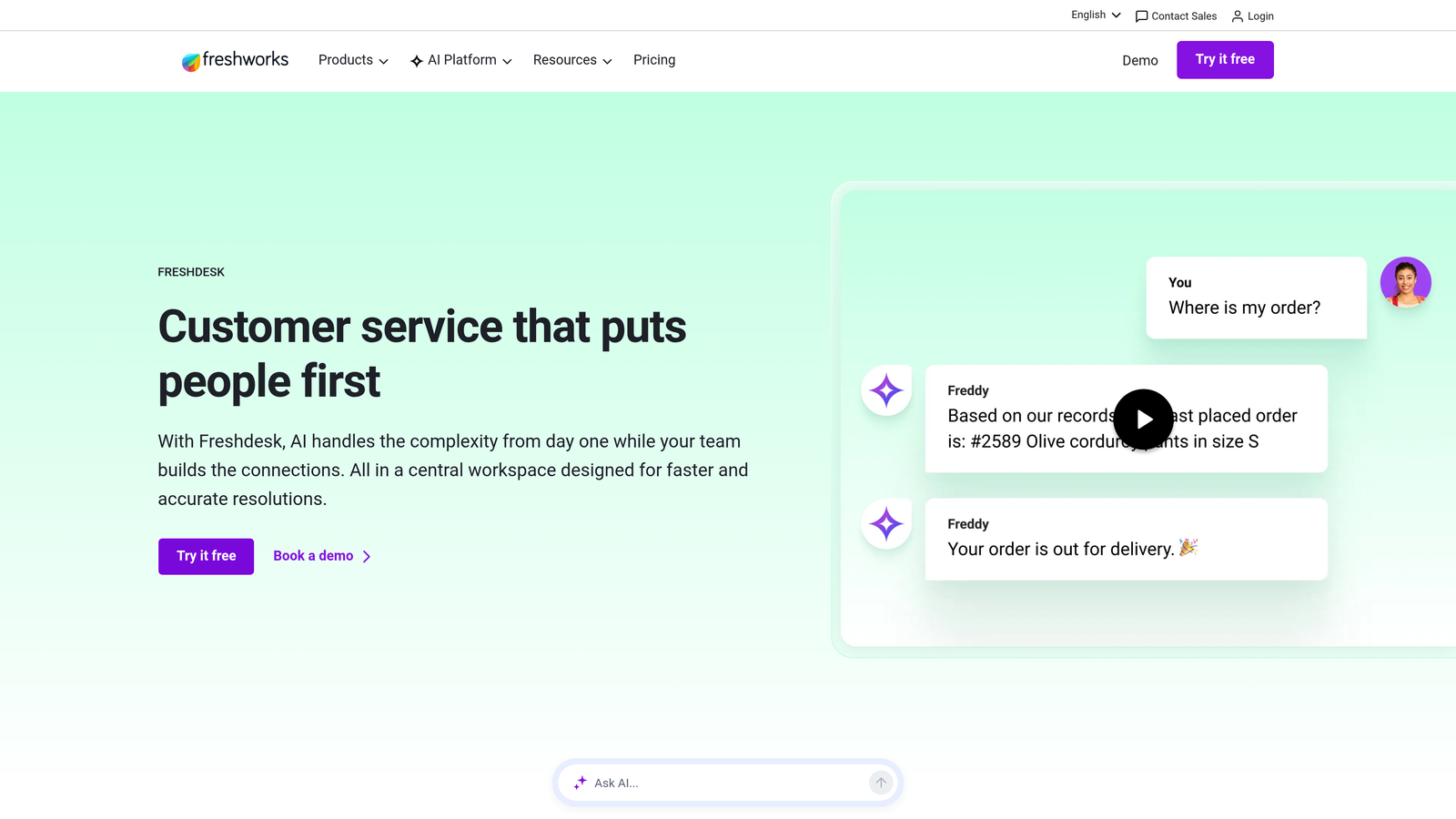
Freshdesk is an accessible helpdesk platform with Freddy AI automation and built-in dashboards for CSAT, ticket trends, and agent performance.
Where This Tool Shines
Freshdesk occupies a practical middle ground: more capable than lightweight chat tools, more affordable than Zendesk at scale. Freddy AI handles ticket suggestions, auto-triage, and chatbot deflection with reasonable effectiveness, and the built-in reporting covers the metrics most support managers actually need day to day.
The free tier makes it genuinely accessible for small teams, while the paid tiers add reporting depth without the complexity overhead that comes with enterprise platforms. For teams outgrowing spreadsheets but not yet ready for Zendesk-level investment, Freshdesk is a natural fit.
Key Features
Freddy AI Automation: Covers ticket suggestions, auto-triage, and chatbot deflection for common query types.
CSAT Surveys and Reporting: Built-in customer satisfaction surveys with a dedicated reporting dashboard.
Ticket Volume and SLA Tracking: Trend analysis for ticket volume alongside SLA performance monitoring.
Agent and Team Performance Analytics: Individual and team-level performance dashboards for support managers.
Free Tier Available: A functional free plan makes it accessible for small teams before committing to paid features.
Best For
Growing SaaS teams and SMBs that need reliable AI automation and standard support reporting without the cost or complexity of enterprise helpdesks. Also a strong option for teams migrating off email-based support for the first time.
Pricing
Free plan available; paid plans start from approximately $15 per agent per month. Verify current tier details at freshworks.com.
5. Tidio
Best for: SMBs wanting fast AI chat deployment with real-time visitor and chatbot performance analytics.
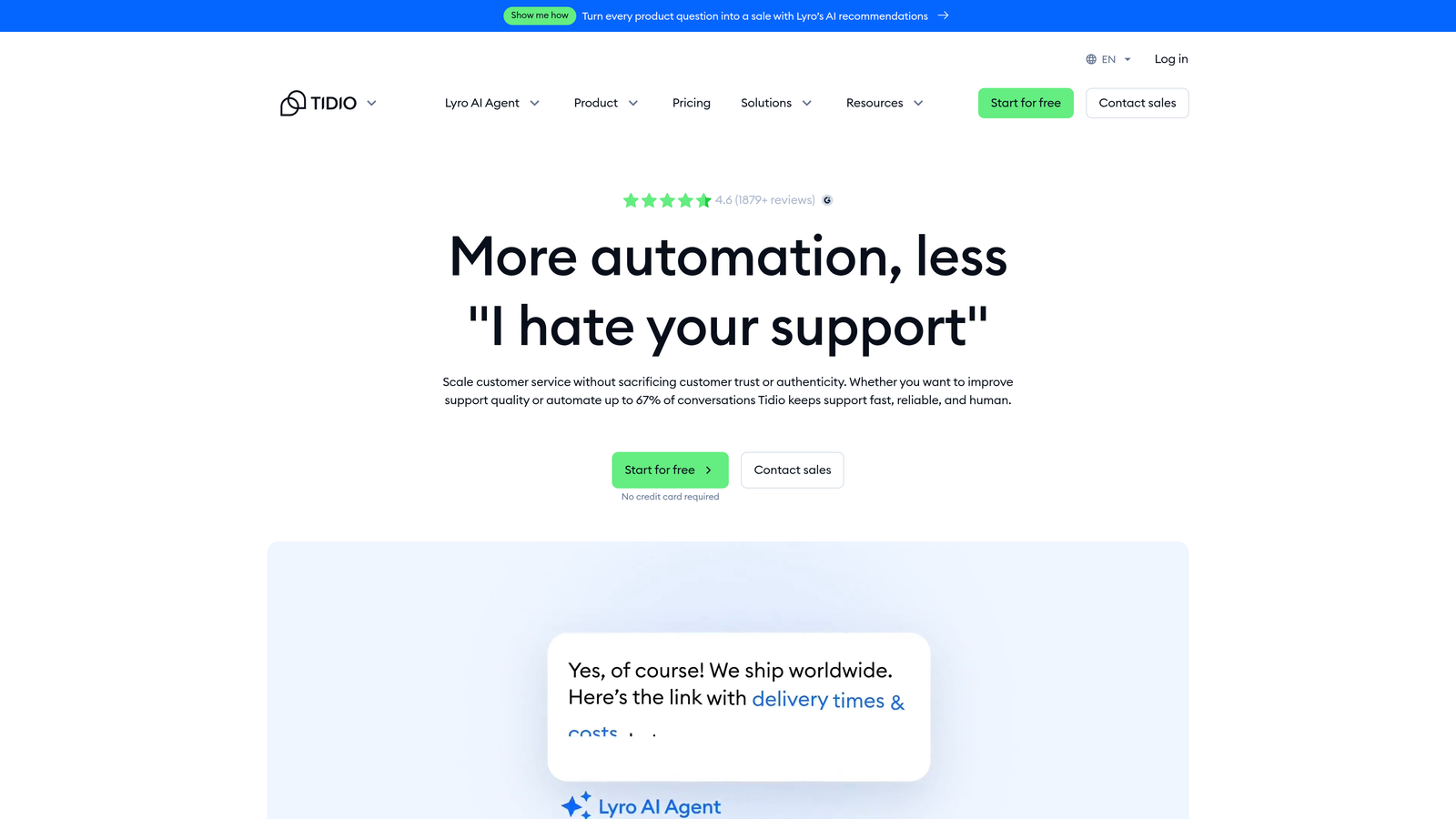
Tidio is an SMB-friendly AI chat platform featuring Lyro AI for automated resolution and real-time analytics for visitor behavior and chatbot performance.
Where This Tool Shines
Tidio's primary advantage is speed to value. The no-code setup means teams can deploy Lyro AI and start capturing analytics within hours rather than weeks. For smaller teams without dedicated implementation resources, that matters. The real-time visitor analytics are particularly useful for understanding where users get stuck before they even open a chat.
Lyro AI handles conversational resolution of common queries with a natural tone, and the chatbot performance dashboard gives clear visibility into engagement rates, resolution rates, and handoff frequency. It's not built for enterprise complexity, but for SMBs that need functional AI support with actionable analytics, Tidio delivers without the overhead.
Key Features
Lyro AI Resolution: Conversational AI that handles common support queries autonomously, trained on your existing content.
Real-Time Visitor Analytics: Tracks visitor behavior and page activity so you can see where users engage before reaching out.
Chatbot Performance Dashboard: Monitors engagement rates, resolution rates, and escalation frequency for AI interactions.
Live Chat Operator Analytics: Tracks response times and performance metrics for human agents handling escalated conversations.
No-Code Deployment: Quick setup without technical resources, making it accessible for lean teams.
Best For
SMBs, e-commerce teams, and early-stage SaaS companies that want AI chat with meaningful analytics but don't have the headcount or budget for enterprise platforms. Particularly strong for teams prioritizing speed of deployment.
Pricing
Free plan available; Lyro AI starts from approximately $29 per month. Check current plan details at tidio.com.
6. Drift (Salesloft)
Best for: B2B revenue teams where support and sales conversations overlap and pipeline attribution matters.
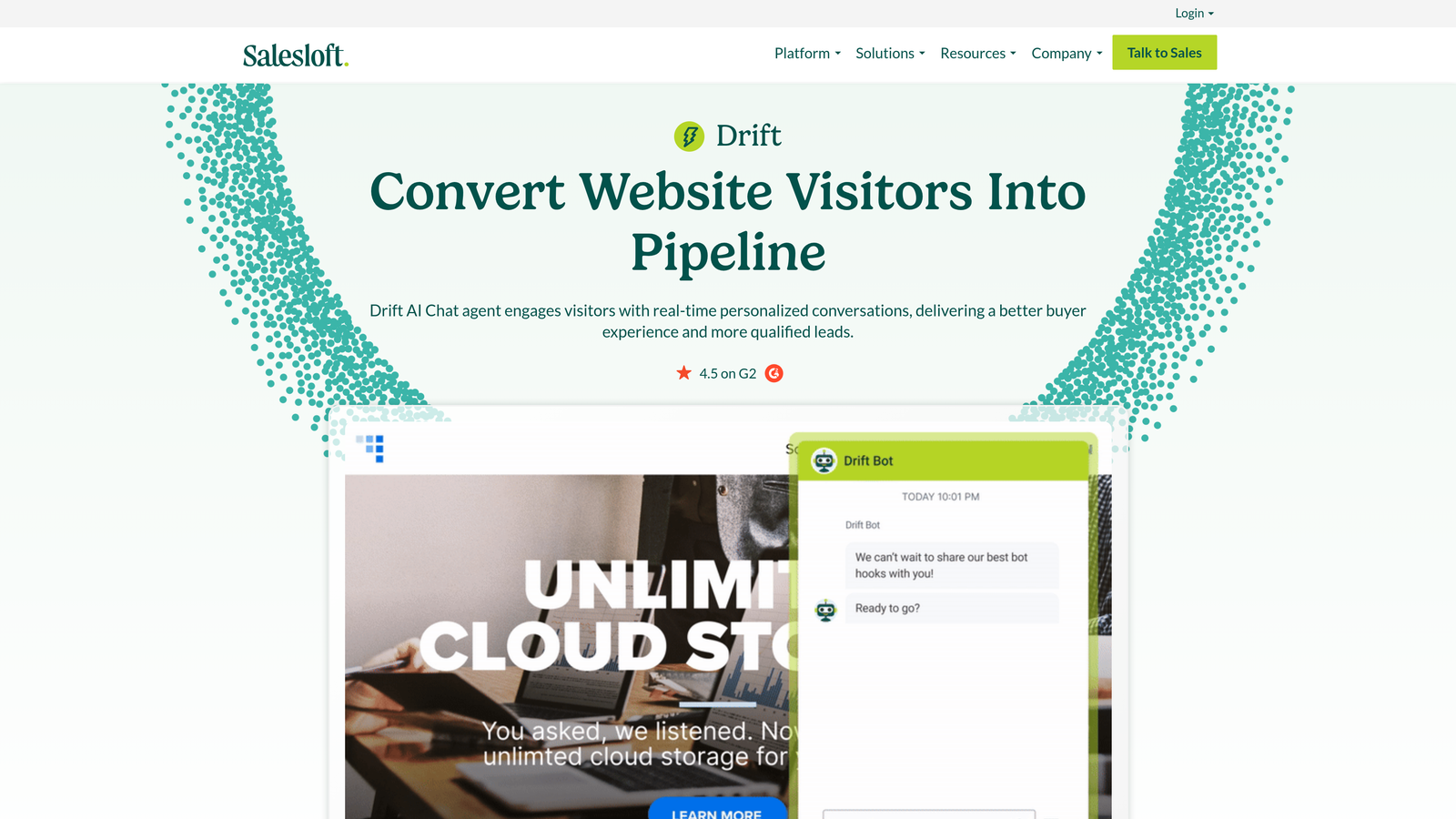
Drift, now part of Salesloft, is a conversational AI platform with analytics that connect support and sales interactions to pipeline outcomes.
Where This Tool Shines
Drift sits at an interesting intersection: it's not purely a support tool, but for B2B teams where support conversations often surface expansion opportunities or churn signals, the pipeline attribution analytics are genuinely useful. The conversation intelligence dashboard connects engagement data to account-level outcomes in a way that standard support platforms don't attempt.
Account-based targeting means analytics can be segmented by company size, industry, or deal stage, which is valuable for enterprise sales-assist motions. The tradeoff is that Drift is optimized for revenue teams, so pure support analytics depth is secondary to conversation intelligence and qualification workflows.
Key Features
AI-Powered Conversation Routing: Intelligent routing and qualification for inbound conversations based on account data.
Conversation Intelligence Dashboard: Engagement analytics that connect support and chat activity to pipeline and account outcomes.
Pipeline Attribution: Tracks how support and chat interactions contribute to revenue pipeline and deal progression.
Account-Based Analytics: Segments conversation data by company attributes for account-level visibility.
CRM Integration: Deep integration with Salesforce and major CRMs to connect support data to customer records.
Best For
B2B SaaS and enterprise teams where the line between support and sales is blurry, and where understanding the revenue impact of support interactions is as important as resolution metrics.
Pricing
Custom pricing through Salesloft. Contact Drift directly for current plan structures, as pricing has evolved since the Salesloft acquisition.
7. Kustomer
Best for: Teams that want CRM-native support analytics connecting ticket history to customer lifetime value.
Kustomer is a CRM-native support platform with unified customer timelines, AI-assisted resolution, and analytics that combine support history with full customer context.
Where This Tool Shines
Kustomer's defining feature is the unified customer timeline: every interaction across every channel, combined with CRM data, in a single view. For support teams that need to understand a customer's full history before resolving an issue, this context reduces back-and-forth significantly. The analytics layer extends this by linking support metrics directly to customer lifetime value data.
AI-powered deflection and suggested responses reduce handling time, while the reporting dashboard covers CSAT, resolution time, and volume trends in a clean interface. One consideration worth noting: Kustomer was acquired by Meta, and some buyers evaluate the long-term roadmap implications of that ownership when making platform decisions.
Key Features
Unified Customer Timeline: Aggregates all interactions across channels with CRM context into a single customer view.
AI Deflection and Suggested Responses: Reduces agent handling time with AI-generated response suggestions and self-service deflection.
Analytics Dashboard: Covers CSAT, resolution time, and ticket volume trends with clear visualization.
CRM-Native Reporting: Links support performance data to customer lifetime value and account health metrics.
Omnichannel Support: Handles email, chat, SMS, social, and voice within a unified interface.
Best For
Teams in high-volume B2C or B2B environments where customer context is critical to resolution quality, and where support analytics need to connect directly to customer value metrics rather than operating in isolation.
Pricing
Starts at approximately $89 per agent per month. Confirm current pricing at kustomer.com.
8. Help Scout
Best for: Teams that prioritize simplicity, clean UX, and straightforward performance reporting over analytics depth.
Help Scout is a human-first support platform with Beacon AI for deflection and clean dashboards for team performance and CSAT reporting.
Where This Tool Shines
Help Scout is the antidote to platform complexity. Where Zendesk requires dedicated ops resources to get the most from Explore, Help Scout's dashboards are immediately readable by any support manager without training. Beacon AI handles self-service deflection and suggests relevant articles before a conversation starts, reducing ticket volume without aggressive automation.
The Docs analytics feature is a practical addition: tracking which help articles get the most traffic helps teams understand where users struggle most, informing both content strategy and product decisions. For teams that want reliable, honest reporting without spending weeks on dashboard configuration, Help Scout delivers exactly what it promises.
Key Features
Beacon AI Self-Service: Surfaces relevant help articles and suggested responses before users submit a ticket, reducing inbound volume.
Team Performance Dashboards: Clean, readable reporting on response times, volume, and team-level metrics without configuration overhead.
CSAT Reporting: Customer satisfaction surveys with feedback collection and trend reporting built in.
Docs Analytics: Tracks help article traffic to surface which topics generate the most user confusion.
Minimal Learning Curve: Clean UI designed for teams that want to spend time on customers, not on platform administration.
Best For
Small to mid-sized SaaS teams, startups, and organizations that value simplicity and fast onboarding over deep analytics customization. Strong choice for teams moving off email-based support who want a polished experience without enterprise overhead.
Pricing
Starts at approximately $22 per user per month. Check current plans at helpscout.com.
Which Tool Is the Right Fit for Your Team?
The most important question to answer before choosing isn't "which tool has the best AI?" It's "what kind of analytics do we actually need?" That distinction separates two fundamentally different categories on this list.
Operational analytics platforms like Zendesk, Freshdesk, and Help Scout are excellent at answering how your support team is performing: ticket volume, resolution time, CSAT, agent productivity. These are the right choice if your primary goal is managing support operations efficiently.
Business intelligence platforms go further. They surface why customers are struggling, which issues carry revenue risk, and which friction patterns should inform your product roadmap. That's the category where Halo AI operates, and it's the more valuable layer for B2B SaaS teams where support data has implications beyond the support queue.
Here's a quick orientation by use case: choose Halo AI if you want support intelligence that informs product, sales, and customer success decisions. Choose Zendesk for enterprise-scale operational reporting with maximum customization. Choose Freshdesk if budget efficiency and solid fundamentals matter more than analytics depth. Choose Intercom if you're already on the platform and want lifecycle-aware conversation analytics. Choose Help Scout if simplicity and fast onboarding are the priority.
Your support team shouldn't scale linearly with your customer base. Let AI agents handle routine tickets, guide users through your product, and surface business intelligence while your team focuses on complex issues that need a human touch. See Halo in action and discover how continuous learning transforms every interaction into smarter, faster support.