9 Best AI Ticket Categorization Software Tools in 2026
This guide evaluates the 9 best AI ticket categorization software tools available in 2026, helping support teams automatically classify incoming tickets by type, priority, and sentiment to eliminate manual routing delays. Each solution is assessed on classification accuracy, integration depth, and automation capabilities to help B2B support teams—from lean startups to scaling SaaS operations—find the right fit.
 Matt PattoliFounder13 min read
Every support team knows the pain: tickets pile up, agents spend precious minutes reading and routing each one manually, and misrouted issues create delays that frustrate customers. AI ticket categorization software solves this by automatically classifying incoming tickets by type, priority, product area, or sentiment, so the right agent gets the right ticket instantly.
But not all categorization tools are built the same. Some bolt AI onto legacy helpdesks as an afterthought. Others offer deep classification logic but no resolution capability. And a few go further, combining intelligent categorization with autonomous ticket resolution, business intelligence, and continuous learning.
This guide covers the best AI ticket categorization tools available in 2026, evaluated on classification accuracy, integration depth, automation breadth, and overall value for B2B support teams. Whether you're running a lean startup or scaling a mid-market SaaS operation, there's a fit here for your team.
1. Halo AI
Best for: B2B SaaS teams that want autonomous ticket resolution, not just categorization
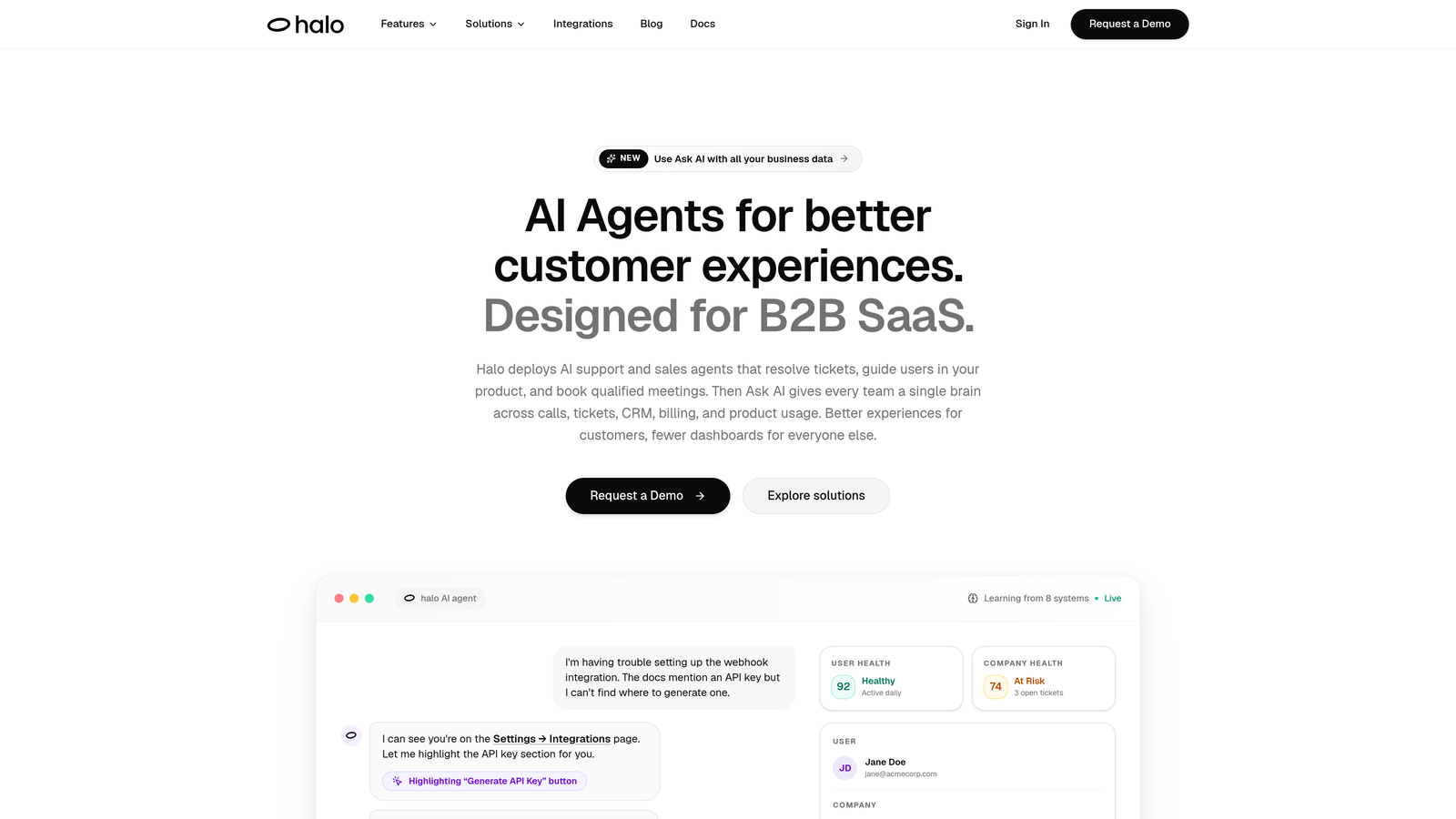
Halo AI is an AI-first customer support platform that categorizes, routes, and autonomously resolves tickets while continuously learning from every interaction.
Where This Tool Shines
Most categorization tools stop at the label. Halo goes further. Once a ticket is classified, Halo's AI agents can resolve it outright, guide the user through your product with page-aware context, or escalate it to a human agent with full context intact. That progression from classification to resolution is what separates it from tools that simply tag and hand off.
The smart inbox adds another dimension entirely. Beyond routing, it surfaces customer health signals, revenue intelligence, and anomaly detection, turning your support queue into a source of business intelligence. For product and CS teams, that's genuinely useful signal that most helpdesks never surface.
Key Features
Intelligent Ticket Categorization: Continuously learns from historical data and agent feedback to improve classification accuracy over time.
Page-Aware Context: The AI sees what the user sees in-product, enabling more accurate classification and relevant guidance without the user needing to describe their screen.
Smart Inbox with Business Intelligence: Surfaces customer health signals, anomaly detection, and revenue intelligence directly from support data.
Auto Bug Ticket Creation: Technical issues are automatically classified and routed to engineering via a native Linear integration, removing manual handoffs.
Live Agent Handoff: Complex escalations transfer to human agents with full conversation context preserved.
Broad Integration Stack: Connects natively with Slack, HubSpot, Intercom, Stripe, Zoom, PandaDoc, and Fathom.
Best For
B2B SaaS companies and product teams that want to move beyond basic triage into autonomous resolution. Particularly strong for teams managing technical products where bug routing, customer health monitoring, and CRM integration all matter alongside ticket classification.
Pricing
Contact for pricing at haloagents.ai. Custom pricing reflects the platform's enterprise-grade capabilities and integration depth.
2. Zendesk AI
Best for: Enterprise teams already running on the Zendesk Suite
Zendesk AI is a native AI layer built into the Zendesk Suite, offering intelligent triage, ticket summarization, macro suggestions, and agent assist features.
Where This Tool Shines
If your team is already deep in the Zendesk ecosystem, the native AI integration removes a lot of friction. Intent detection, sentiment analysis, and language identification happen automatically on incoming tickets without any additional setup or middleware. That seamlessness is a real advantage for teams that don't want to manage a separate AI layer.
The Agent Copilot feature is a practical time-saver, surfacing real-time response suggestions and macros as agents work through tickets. Ticket summarization also helps agents get up to speed on complex threads without reading every message in a chain.
Key Features
Intelligent Triage: Detects intent, sentiment, and language on incoming tickets automatically within the Zendesk workflow.
Ticket Summarization: Condenses long ticket threads so agents can quickly understand context without reading everything.
Macro Suggestions: Recommends relevant response macros based on ticket content to speed up resolution.
Agent Copilot: Provides real-time response suggestions and guidance as agents handle tickets.
Native Integration: No separate tool or integration required for existing Zendesk Suite customers.
Best For
Enterprise support teams already invested in Zendesk who want to add AI capabilities without changing their core platform. Less compelling as a standalone choice if you're not already in the Zendesk ecosystem, since the AI features are tightly coupled to the suite.
Pricing
Available as an Advanced AI add-on on top of existing Zendesk Suite plans. Contact Zendesk sales for current pricing.
3. Freshdesk Freddy AI
Best for: Mid-market teams running on Freshdesk who want native AI triage
Freshdesk Freddy AI is Freshworks' AI layer for Freshdesk, providing auto-triage, sentiment analysis, ticket summarization, and suggested responses natively within the platform.
Where This Tool Shines
Freddy AI's strongest selling point is how cleanly it integrates with Freshdesk. Auto-triage kicks in the moment a ticket arrives, detecting intent and category without any manual configuration for teams already using the platform. For mid-market support teams that want AI benefits without a complex implementation, that plug-and-play quality matters.
Freddy Self Service adds a deflection layer before tickets even reach agents, using AI to answer common questions at the front door. Combined with Freddy Copilot's response drafting assistance, it covers the full ticket lifecycle from deflection to resolution support.
Key Features
Auto-Triage: Detects intent and category on new tickets automatically, routing them without manual intervention.
Freddy Copilot: AI-assisted response drafting and real-time suggestions to help agents resolve tickets faster.
Freddy Self Service: AI-powered deflection layer that answers common queries before a ticket is created.
Sentiment Analysis: Flags urgent or frustrated customers so high-priority tickets surface quickly.
Native Freshdesk Integration: No additional setup required for existing Freshdesk customers.
Best For
Mid-market teams already on Freshdesk who want AI triage and agent assistance without switching platforms. Like Zendesk AI, the value is closely tied to being an existing Freshworks customer.
Pricing
Freddy AI features are available on Growth and higher plans. Freddy Copilot is available as an add-on. Check Freshworks' current pricing page for plan details.
4. Intercom Fin AI
Best for: Chat-first SaaS teams wanting conversational AI that resolves before routing
Intercom Fin AI is Intercom's LLM-powered AI agent that combines ticket categorization with conversational resolution, using your knowledge base to answer queries before routing to human agents.
Where This Tool Shines
Fin's approach is conversational-first. Rather than categorizing a ticket and handing it off, Fin attempts to resolve the query using your existing knowledge base before routing ever happens. For teams with well-maintained documentation, this can meaningfully reduce the volume of tickets that reach agents in the first place.
When Fin does route a conversation, it passes full context to the human agent, so there's no frustrating "please explain your issue again" moment. The ability to configure custom instructions and topic handling also gives teams meaningful control over what Fin handles autonomously versus what it escalates immediately.
Key Features
Conversational Resolution: Attempts to resolve queries autonomously using your knowledge base before routing to a human agent.
Intent Detection and Topic Classification: Classifies unresolved conversations for accurate routing when human handoff is needed.
Customizable AI Instructions: Configure which topics Fin handles, escalates, or responds to in specific ways.
Seamless Human Handoff: Transfers conversations to agents with full conversation context preserved.
Resolution-Based Pricing: Pay per resolved conversation rather than per seat or per ticket.
Best For
SaaS teams using Intercom as their primary support channel who want AI that deflects and resolves, not just categorizes. The resolution-based pricing model can be cost-effective for teams with high deflection rates.
Pricing
Resolution-based pricing per resolved conversation, plus the base Intercom platform subscription. Costs scale with resolution volume.
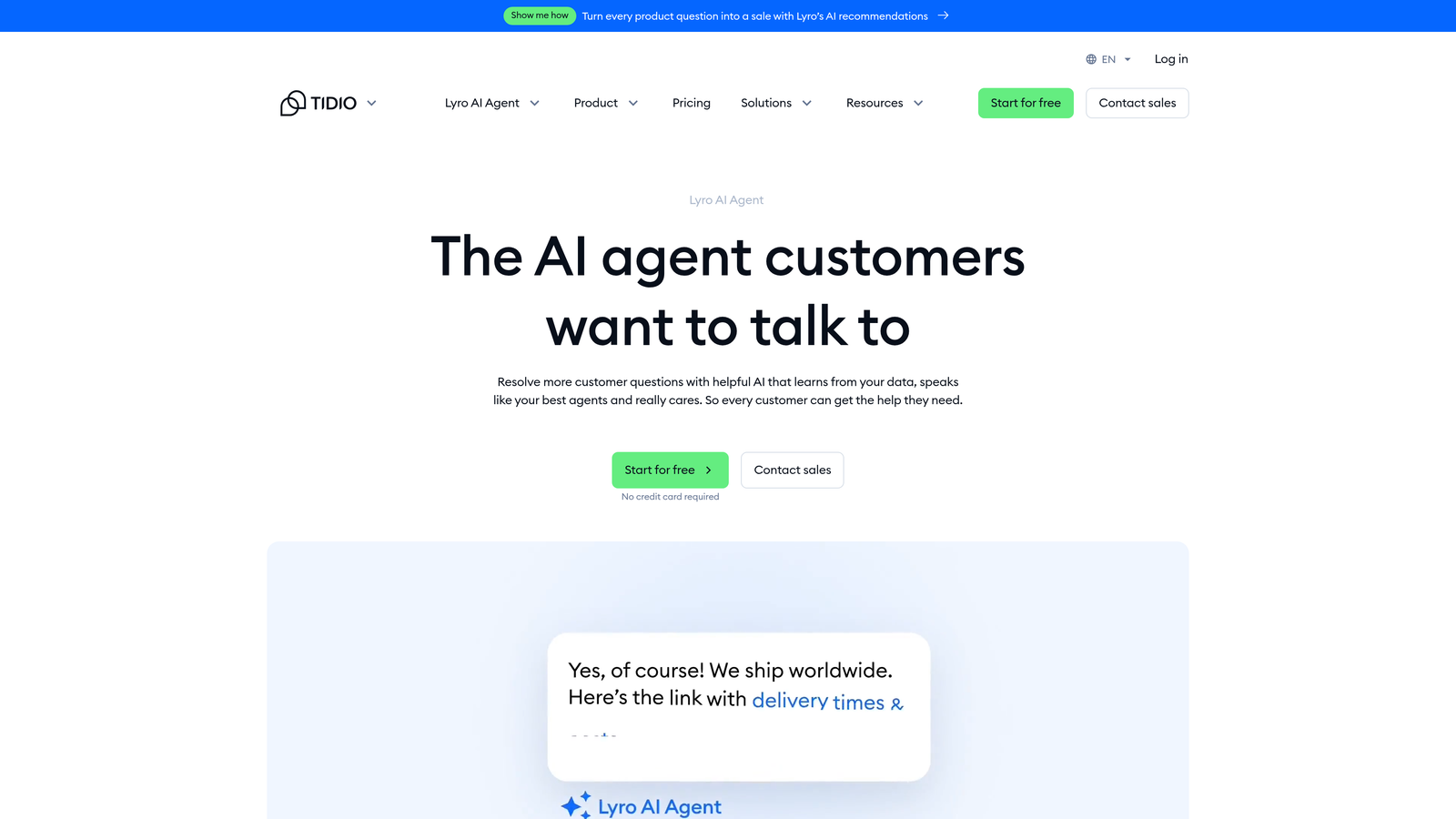
5. Tidio Lyro
Best for: SMBs and e-commerce teams needing affordable AI triage without complexity
Tidio Lyro is Tidio's conversational AI product offering intent detection, basic ticket routing, and chat deflection designed for small and mid-sized businesses.
Where This Tool Shines
Lyro's biggest advantage is accessibility. Setup requires no technical expertise, and the tool integrates cleanly with Shopify, WordPress, and other SMB platforms that smaller teams commonly use. For a business that's never used AI triage before, Lyro provides a low-friction entry point with meaningful deflection capability out of the box.
Conversation analytics give teams visibility into deflection rates and common query types, which is useful for understanding where your support volume is coming from. That said, Lyro is built for breadth rather than depth, making it better suited to straightforward query handling than complex enterprise classification requirements.
Key Features
AI Intent Detection: Classifies and routes incoming chat queries based on detected intent.
Automated Responses: Handles common questions automatically before passing to a human agent.
Simple Setup: No technical expertise required; designed for teams without dedicated IT resources.
SMB Platform Integrations: Connects with Shopify, WordPress, and other small business tools.
Conversation Analytics: Tracks deflection rates and common query categories.
Best For
Small businesses, e-commerce brands, and startups that need basic AI triage and chat deflection at an accessible price point. Not the right fit for enterprise teams needing deep classification logic or complex routing rules.
Pricing
Lyro starts at approximately $39/month, scaling with conversation volume. One of the more affordable options on this list.
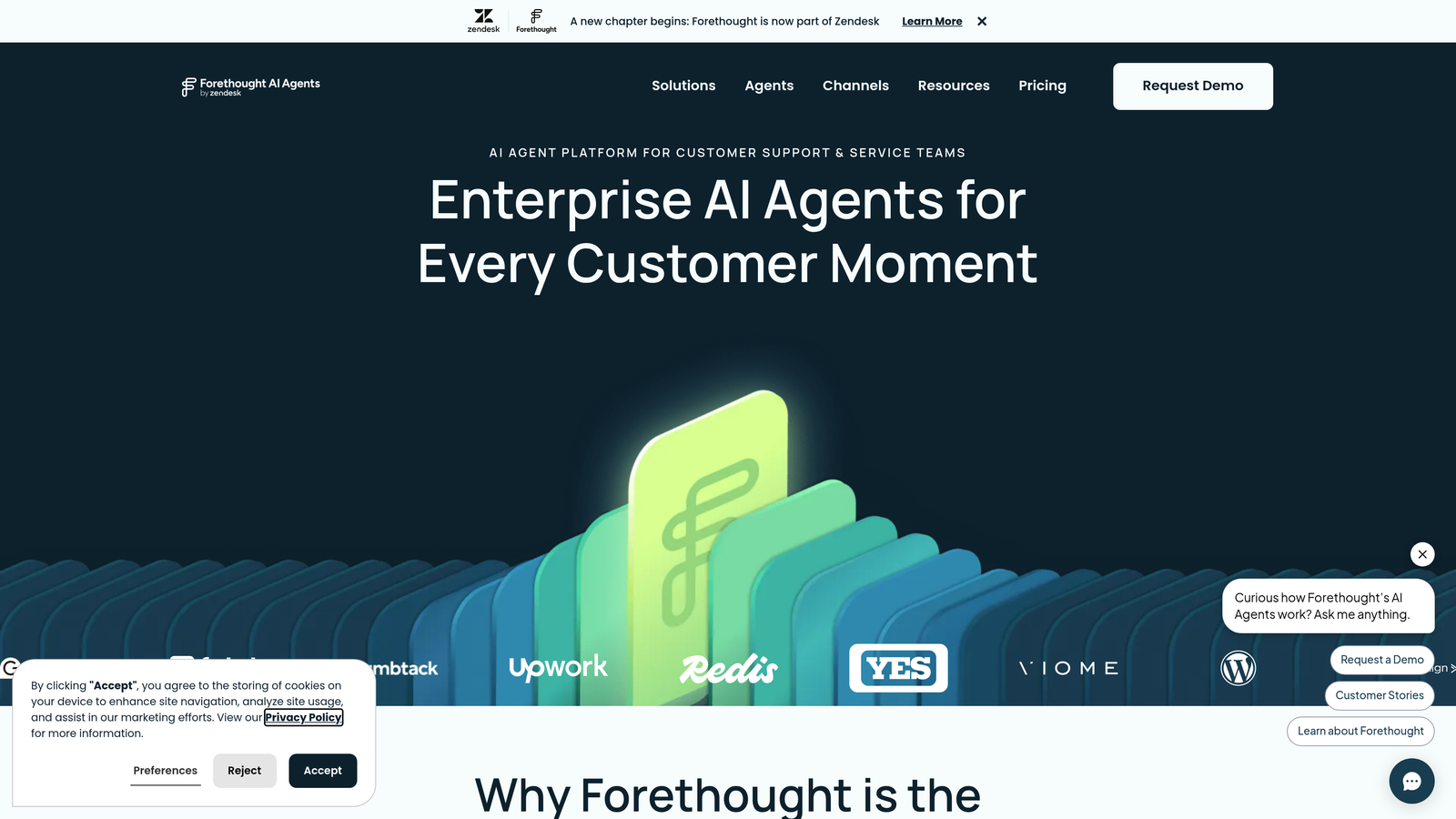
6. Forethought AI
Best for: Enterprise teams needing a helpdesk-agnostic AI triage layer
Forethought AI is a standalone AI platform purpose-built for ticket triage, routing, and deflection that works as an intelligent layer on top of existing helpdesks like Zendesk and Salesforce Service Cloud.
Where This Tool Shines
Forethought's key differentiator is that it's not tied to any single helpdesk. If your organization runs Zendesk today but might migrate to Salesforce tomorrow, Forethought sits above that infrastructure and continues working. That helpdesk-agnostic positioning is genuinely valuable for enterprise teams that don't want their AI investment locked to one vendor.
The three-product structure (Triage, Solve, Assist) maps cleanly onto different stages of the ticket lifecycle. You can deploy one or all three, depending on where your team needs the most leverage. Enterprise-grade classification models trained on support data give it strong accuracy for complex, high-volume environments.
Key Features
Triage Product: AI-powered ticket categorization, tagging, and routing that works across helpdesks.
Solve Product: Automated deflection layer that answers queries before they reach agents.
Assist Product: AI suggestions and knowledge retrieval to help agents resolve tickets faster.
Helpdesk-Agnostic Architecture: Works on top of Zendesk, Salesforce Service Cloud, and other platforms without requiring a migration.
Enterprise Classification Models: Trained on support data for high-accuracy categorization at scale.
Best For
Enterprise support teams that want powerful AI triage without switching their existing helpdesk. Particularly strong for organizations running Salesforce Service Cloud or multi-helpdesk environments where a single-vendor AI solution wouldn't cover the full stack.
Pricing
Enterprise pricing; contact Forethought directly for a quote. Custom pricing reflects the platform's enterprise positioning.
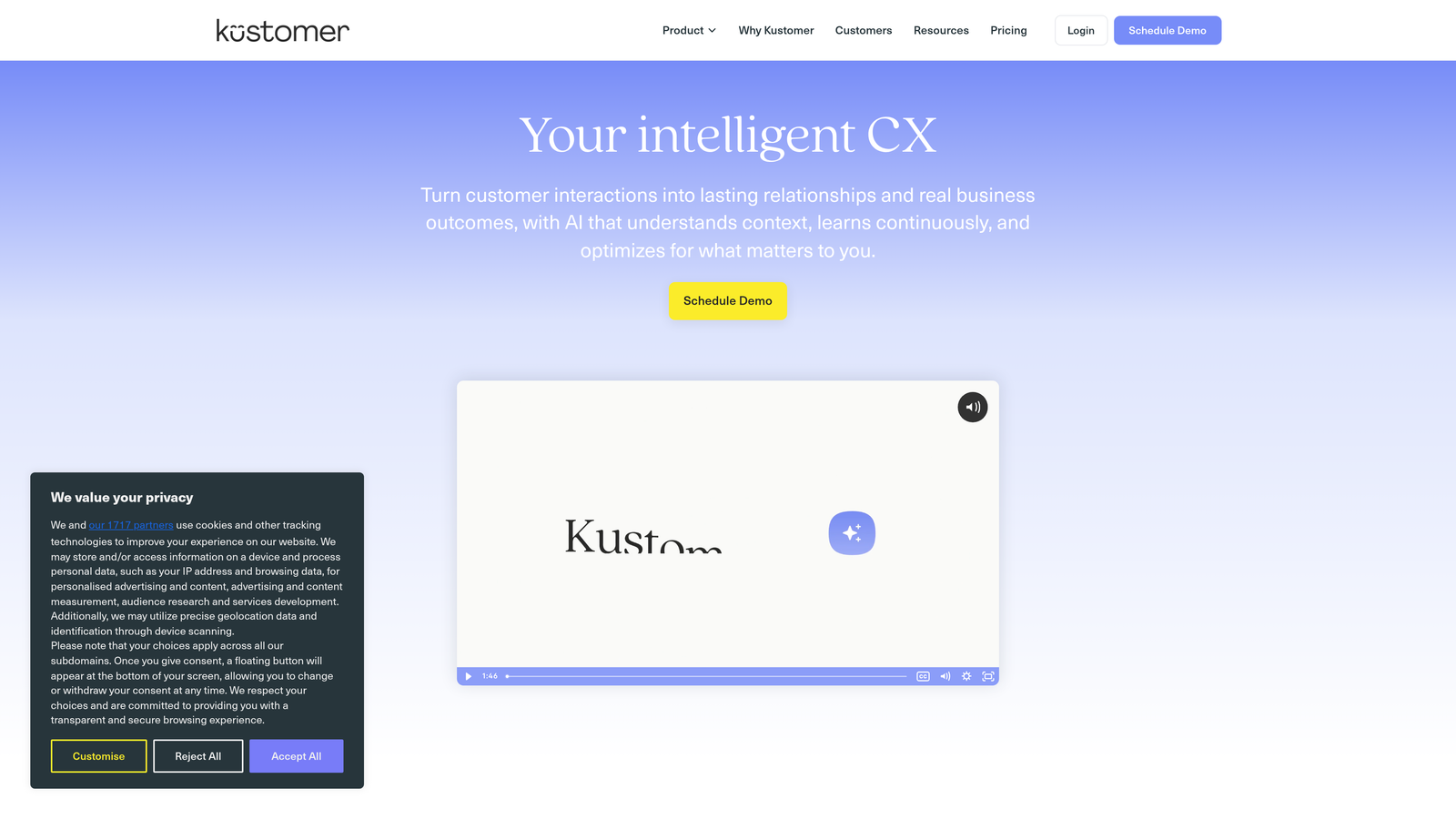
7. Kustomer IQ
Best for: High-volume DTC and e-commerce brands with rich customer history data
Kustomer IQ is the AI layer within the Kustomer CRM-first support platform, enriching ticket categorization with full customer history and timeline context for high-volume support operations.
Where This Tool Shines
Kustomer's CRM-first architecture means categorization decisions are informed by the full customer relationship, not just the current ticket. An incoming message from a high-value customer with a history of escalations gets treated differently than a first-contact query, because the AI has access to that context. That's a meaningful advantage for brands where customer lifetime value should influence support prioritization.
Automated workflows triggered by AI classification add operational efficiency at scale. For high-volume DTC operations where thousands of tickets arrive daily, having classification directly trigger downstream actions (routing, tagging, escalation) without human intervention is a real throughput multiplier.
Key Features
Intent-Based Routing with CRM Context: Routing decisions enriched by full customer timeline and history, not just current ticket content.
Sentiment Analysis and Urgency Detection: Flags high-priority tickets based on tone and urgency signals.
Automated Workflows: Classification triggers downstream actions automatically without manual steps.
Conversation Summarization: Condenses long interaction histories for faster agent onboarding.
CRM-First Architecture: Support data lives alongside full customer relationship data in one platform.
Best For
High-volume DTC brands and e-commerce companies where customer history and lifetime value should influence support prioritization. Less suited to B2B SaaS teams or organizations without a strong customer data foundation.
Pricing
Enterprise pricing; contact Kustomer directly for a quote.
8. Supportlogic
Best for: Enterprise B2B teams monitoring escalation risk and churn signals across accounts
Supportlogic is a B2B enterprise support intelligence platform that layers AI-driven escalation prediction, churn risk signals, and sentiment trend analysis on top of existing ticketing systems.
Where This Tool Shines
Supportlogic occupies a distinct niche: it's less about routing individual tickets and more about understanding what your support patterns reveal about account health. Escalation prediction surfaces tickets likely to blow up before they do, giving CS and support leaders time to intervene proactively. That's a different kind of value than triage speed.
The account health dashboards are particularly useful for enterprise CS teams managing complex multi-stakeholder accounts. Seeing sentiment trends across an account over time, rather than just on individual tickets, gives leadership a much clearer picture of relationship health than any individual ticket classification could provide.
Key Features
Escalation Prediction: Identifies tickets likely to escalate before they do, enabling proactive intervention.
Churn Risk Signals: Surfaces churn risk indicators from support ticket sentiment and behavioral patterns.
Sentiment Trend Analysis: Tracks sentiment across accounts and ticket categories over time.
Multi-Helpdesk Compatibility: Works on top of Salesforce Service Cloud, Zendesk, and Jira.
Account Health Dashboards: Gives CS and support leadership a consolidated view of account relationship health.
Best For
Enterprise B2B support and customer success teams that need to monitor churn risk and escalation patterns across complex accounts. This is a specialized intelligence layer, not a general-purpose categorization tool, so it works best alongside a primary helpdesk rather than as a replacement for one.
Pricing
Enterprise pricing; contact Supportlogic directly for a quote.
9. Capacity
Best for: Mid-market teams wanting an all-in-one automation hub with built-in knowledge management
Capacity is an AI-powered support automation platform combining helpdesk, knowledge base, and workflow automation, connecting ticket categorization to internal knowledge management and automated resolution flows.
Where This Tool Shines
Capacity's appeal is consolidation. Rather than layering an AI triage tool on top of a separate helpdesk and a separate knowledge base, Capacity brings all three into one platform. Ticket classification connects directly to the knowledge base, so when a ticket is categorized, the system can immediately pull relevant content to fuel an automated response or agent suggestion.
Workflow automation triggered by classification adds meaningful efficiency for teams handling repetitive ticket types. If a ticket is classified as a billing inquiry, for instance, a workflow can automatically pull account data and pre-populate a response template, reducing the manual work on the agent's side.
Key Features
AI-Powered Ticket Categorization: Classifies tickets and connects classification directly to the internal knowledge base for automated responses.
Unified Platform: Chatbot, helpdesk, and workflows in a single interface rather than separate tools.
Workflow Automation: Triggers automated actions based on ticket classification without manual configuration per ticket.
Knowledge Management Tools: Keeps AI responses accurate with structured internal content management.
Broad Integrations: Connects with Slack, Salesforce, Zendesk, and other common business tools.
Best For
Mid-market teams that want to consolidate their helpdesk, knowledge base, and automation into one platform rather than managing multiple point solutions. A strong fit for internal IT support and HR helpdesk use cases alongside external customer support.
Pricing
Plans start around $49/month, with enterprise pricing available for larger teams. One of the more accessible options for mid-market buyers on this list.
Which Tool Is Right for Your Team?
The right AI ticket categorization tool depends heavily on where you are today and where you want to go. Here's a quick breakdown to help you narrow it down.
Halo AI is the strongest choice for B2B SaaS teams that want to go beyond categorization into autonomous resolution. The combination of continuous learning, page-aware context, smart inbox intelligence, and deep integrations makes it the most complete option for teams building a modern, AI-first support operation.
Zendesk AI and Freshdesk Freddy AI are the natural choices if you're already invested in those platforms and want AI capabilities without changing your core infrastructure. Both are strong within their ecosystems but offer limited value outside them.
Intercom Fin is ideal for chat-first SaaS teams where conversational resolution before routing is the primary goal. The resolution-based pricing model can work well if your deflection rates are high.
Tidio Lyro is the right starting point for SMBs and e-commerce brands that need accessible AI triage without enterprise complexity or cost.
Forethought AI is the best option for enterprise teams that need a helpdesk-agnostic AI layer and don't want to migrate their existing infrastructure to unlock AI benefits.
Kustomer IQ fits high-volume DTC and e-commerce brands where customer history and relationship data should inform support prioritization.
Supportlogic is purpose-built for enterprise B2B teams that need to monitor escalation risk and churn signals across complex accounts, not just route individual tickets.
Capacity works well for mid-market teams looking to consolidate helpdesk, knowledge management, and workflow automation into a single platform.
Your support team shouldn't scale linearly with your customer base. Let AI agents handle routine tickets, guide users through your product, and surface business intelligence while your team focuses on complex issues that need a human touch. See Halo in action and discover how continuous learning transforms every interaction into smarter, faster support.