9 Best AI Ticket Deflection Tools in 2026
AI ticket deflection tools intercept repetitive support requests before they reach your agents, using intelligent chat, self-service portals, and automated resolution to reduce ticket volume and free teams for complex work. This guide reviews the nine best options in 2026, evaluated on deflection quality, integration depth, ease of setup, and scalability for teams of every size.
 Grant CooperFounder13 min read
Every support ticket your team resolves manually is time and money that could go elsewhere. AI ticket deflection tools intercept common questions before they become tickets, using intelligent chat, self-service portals, and automated resolution to handle the repetitive load so your agents can focus on complex, high-value issues.
But not all deflection tools are built the same. Some bolt AI onto legacy helpdesks. Others offer shallow FAQ bots that frustrate users more than they help. The best tools in 2026 combine contextual awareness, continuous learning, and genuine resolution capability — not just redirection.
This list covers nine tools worth considering, evaluated on deflection quality, integration depth, ease of setup, and how well they scale with growing support volume. Whether you're running a lean support team at a SaaS startup or managing thousands of tickets at an enterprise level, there's a fit here for you.
For a deeper primer on how deflection works, see our guide on what ticket deflection is and what support ticket deflection means in practice.
1. Halo AI
Best for: B2B SaaS teams that want AI-first deflection with deep product and business context.
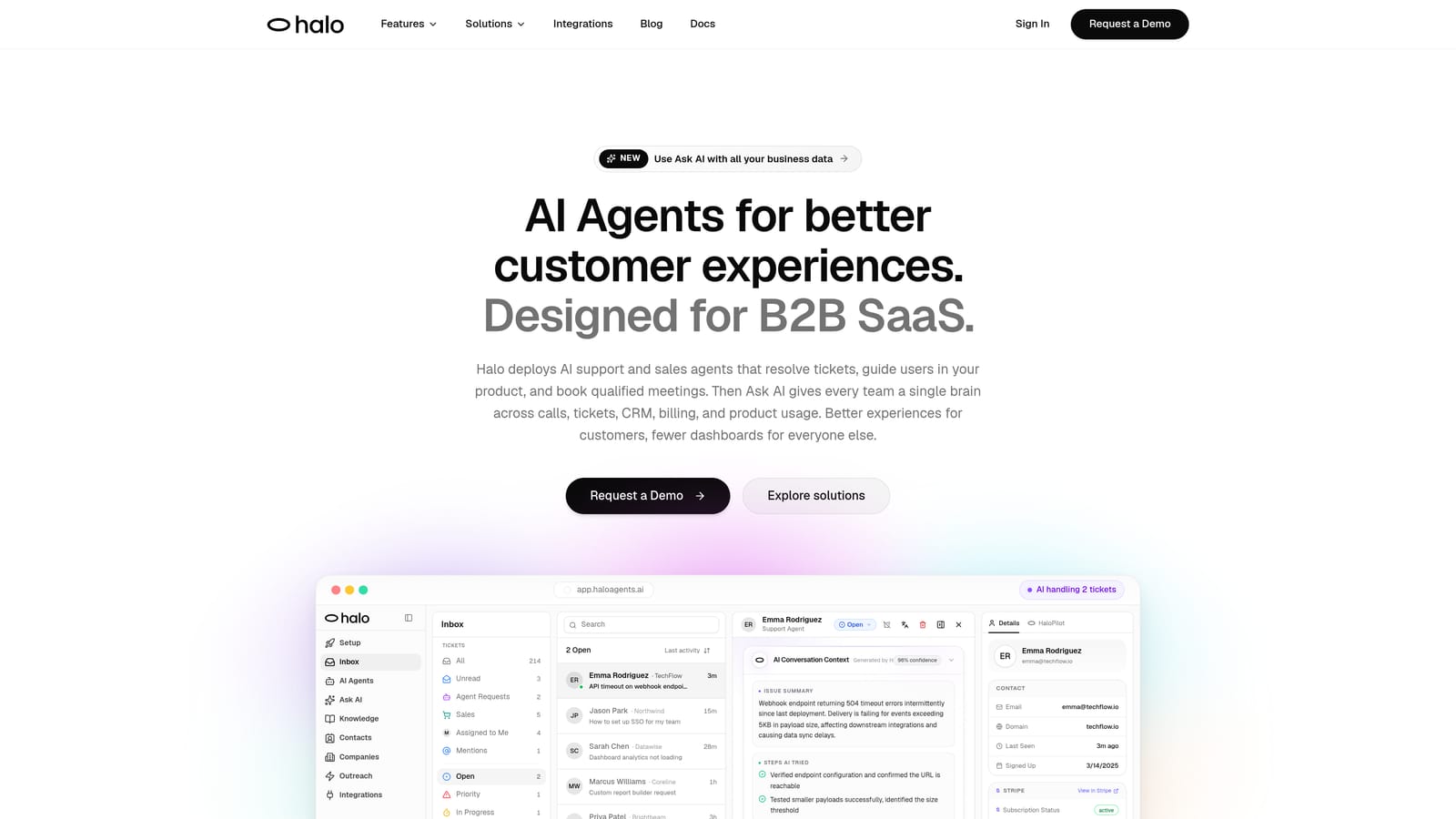
Halo AI is an AI-first customer support platform built from the ground up for autonomous ticket resolution, not a bolt-on layer added to an existing helpdesk.
Where This Tool Shines
What sets Halo apart from most deflection tools is its page-aware architecture. The chat widget understands where a user is inside your product when they ask for help, which means answers are precise and contextual rather than generic. A user struggling on your billing settings page gets a different response than one stuck on onboarding — automatically, without any manual configuration per page.
The platform also learns continuously. Every resolved interaction feeds back into the system, improving deflection quality over time without requiring manual retraining. This compounds in value: the longer you run Halo, the smarter it gets at handling your specific support patterns.
Key Features
Page-Aware Chat Widget: Sees what the user sees in real time, enabling context-precise answers tied to their current location in your product.
Continuous Learning: Deflection quality improves automatically from every resolved interaction, reducing the manual upkeep common with static bots.
Autonomous Ticket Resolution with Live Agent Handoff: Handles tickets end-to-end and escalates intelligently when a human touch is genuinely needed.
Auto Bug Ticket Creation: Detects product issues in support conversations and routes bug reports directly to Linear or your engineering stack.
Smart Inbox with Business Intelligence: Goes beyond support metrics to surface customer health signals, anomaly detection, and revenue intelligence from your ticket data.
Deep Integration Stack: Connects natively with Linear, Slack, HubSpot, Intercom, Stripe, Zoom, PandaDoc, and Fathom.
Best For
B2B SaaS companies and product teams that want deflection to do more than reduce ticket volume. Halo is particularly strong for teams that need their support layer to integrate with engineering workflows, CRM data, and business analytics — not just a knowledge base.
Pricing
Contact Halo AI for pricing. Given the platform's depth and integration stack, pricing is tailored to team size and use case.
2. Intercom Fin
Best for: Teams already on Intercom who want native AI deflection without adding a new vendor.
Intercom Fin is a GPT-4 powered AI agent built natively into the Intercom platform, designed to resolve support conversations using your help center content and custom answer flows.
Where This Tool Shines
Fin's biggest strength is how seamlessly it fits into the Intercom ecosystem. If your team already lives in Intercom Inbox, the transition to AI-assisted deflection is minimal. Fin reads your existing help center articles and uses them to resolve conversations, which means setup is fast for teams with a solid knowledge base already in place.
The per-resolution pricing model is worth noting. It aligns vendor incentives with actual outcomes rather than seat counts, though at high volume this can become a significant cost driver worth monitoring.
Key Features
Help Center-Driven Resolution: Resolves conversations using existing articles and custom answer flows without requiring bot-building from scratch.
Seamless Human Handoff: Transfers to live agents within Intercom Inbox when deflection isn't sufficient, with full conversation context preserved.
Multi-Channel Coverage: Works across chat, email, and in-app messaging channels within the Intercom environment.
Per-Resolution Pricing: You pay only for conversations Fin actually resolves, which is a transparent model for teams watching unit economics.
Best For
Companies already invested in the Intercom platform who want to add AI deflection without integrating a separate tool. Less compelling if you're not already on Intercom, as the value is tightly coupled to that ecosystem.
Pricing
Per-resolution pricing that varies by volume; requires an active Intercom subscription. Costs can scale quickly at high ticket volumes, so model this carefully before committing.
3. Zendesk AI
Best for: Enterprise teams on the Zendesk Suite looking to add AI deflection without leaving their existing platform.
Zendesk AI brings AI capabilities natively into the Zendesk Suite, including Intelligent Triage for intent detection and Answer Bot for self-service article surfacing.
Where This Tool Shines
For organizations already running Zendesk at scale, the zero-integration advantage is real. Intelligent Triage auto-classifies incoming tickets by intent, sentiment, and language before they ever reach an agent, which helps with routing efficiency as much as deflection. Answer Bot surfaces relevant help articles at the point of ticket submission, giving users a chance to self-serve before the ticket is created.
Zendesk's generative AI features, available on higher-tier plans, extend into agent assist territory, offering macro suggestions and draft responses that speed up resolution for tickets that do get through.
Key Features
Intelligent Triage: Automatically classifies tickets by intent, sentiment, and language to improve routing and prioritization.
Answer Bot: Surfaces relevant knowledge base articles before a ticket is submitted, enabling self-service deflection at the submission point.
Generative AI for Agent Assist: Provides AI-drafted responses and macro suggestions for agents handling escalated tickets.
Native Suite Integration: No additional integration required for existing Zendesk users — AI features activate within the existing environment.
Best For
Enterprises already running Zendesk Suite who want to activate AI deflection without a platform change. If you're evaluating Zendesk from scratch, see our Zendesk alternative comparison for context on how it stacks up.
Pricing
Included in Zendesk Suite plans, with advanced AI features available on higher tiers. Suite plans start at approximately $55 per agent per month.
4. Freshdesk Freddy AI
Best for: SMB and mid-market teams on Freshdesk looking for affordable AI deflection within their existing stack.
Freshdesk Freddy AI is Freshworks' AI layer for Freshdesk, offering self-service bot deflection and agent assist capabilities within the Freshdesk ecosystem.
Where This Tool Shines
Freddy AI splits into two distinct modes that cover both sides of the deflection equation. Freddy Self Service handles the customer-facing chatbot layer, deflecting common queries using your existing knowledge base. Freddy Copilot supports agents on the back end with AI-generated suggestions and draft responses for tickets that do escalate.
For teams already on Freshdesk, the setup friction is minimal. The pricing model is also more accessible than some enterprise alternatives, making it a practical starting point for teams new to AI deflection.
Key Features
Freddy Self Service: AI chatbot that deflects common queries by surfacing knowledge base content in conversational form.
Freddy Copilot: Provides AI suggestions and draft responses for human agents handling escalated tickets.
Pre-Submission Article Recommendations: Surfaces relevant articles before a ticket is submitted, similar to Zendesk's Answer Bot approach.
Low Setup Overhead for Freshdesk Users: Activates within the existing Freshdesk environment with minimal configuration for teams already on the platform.
Best For
SMB and mid-market teams running Freshdesk who want to add AI deflection without switching platforms or significantly increasing their tooling budget. Complex B2B workflows may require additional configuration to get the most from Freddy's deflection logic.
Pricing
Freddy AI is available as an add-on; pricing varies by plan tier. Freshdesk itself starts free, with paid plans from approximately $15 per agent per month.
5. Forethought
Best for: Enterprises that want AI deflection and triage across multiple helpdesks without vendor lock-in.
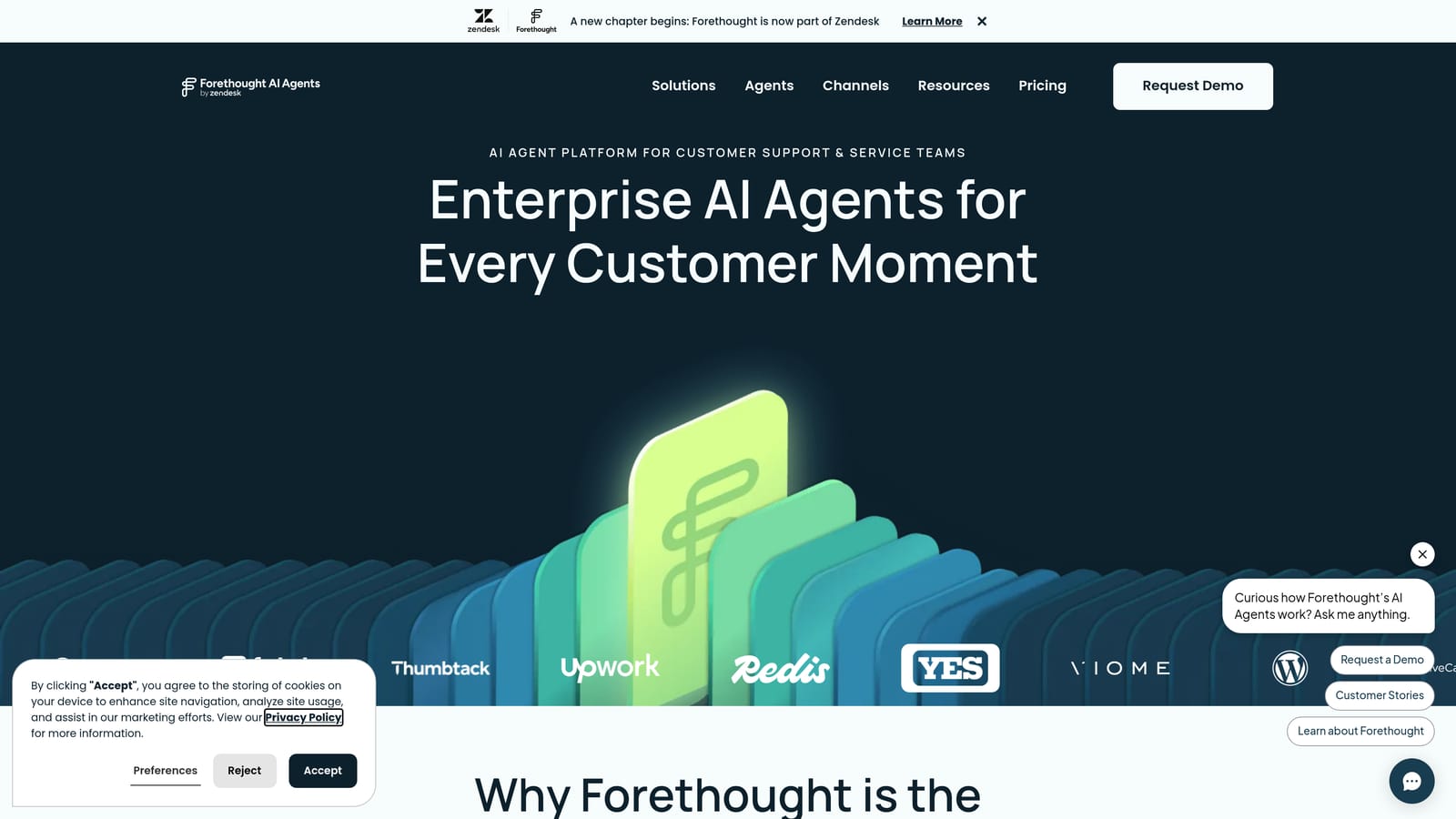
Forethought is an AI support platform that layers across multiple helpdesks, including Zendesk, Salesforce Service Cloud, Freshdesk, and ServiceNow, offering deflection, triage, agent assist, and analytics in a single stack.
Where This Tool Shines
Forethought's platform-agnostic approach is its defining characteristic. Rather than being tied to one helpdesk ecosystem, it sits on top of whichever platform you're using and adds an AI layer across the entire workflow. This is particularly valuable for enterprises that have multiple helpdesk systems across teams or regions, or those actively considering a platform migration.
The Discover module is a standout for teams that want to understand why tickets are coming in, not just deflect them. It identifies gaps in your knowledge base and surfaces the top drivers of support volume, which feeds directly back into deflection strategy.
Key Features
Solve: AI deflection via chat and email before tickets enter the human queue.
Triage: Intelligent ticket routing based on detected intent, sentiment, and priority signals.
Assist: Real-time AI suggestions for agents handling escalated issues, reducing handle time.
Discover: Analytics module that identifies deflection gaps and surfaces top ticket drivers to inform knowledge base improvements.
Best For
Enterprise support teams that operate across multiple helpdesk platforms, or those that want AI deflection without committing to a single vendor's ecosystem. Overkill for small teams with straightforward support needs.
Pricing
Custom enterprise pricing; contact Forethought sales for a quote based on volume and use case.
6. Ada
Best for: Large consumer-facing brands needing no-code AI deflection at global scale with multilingual support.
Ada is a no-code AI chatbot platform focused on automated customer service and ticket deflection at enterprise scale, with strong multilingual and compliance capabilities.
Where This Tool Shines
Ada's no-code builder is genuinely accessible for non-technical teams. Support managers and operations leads can configure deflection flows, update content, and adjust conversation logic without involving engineering. This reduces the time-to-value significantly for teams that don't have developer resources to spare on bot configuration.
The multilingual support is a meaningful differentiator for global brands. Ada handles customer interactions across multiple languages natively, which removes the need to maintain separate bot configurations per region.
Key Features
No-Code Bot Builder: Lets non-technical teams configure and update deflection flows without engineering involvement.
Multilingual Support: Handles customer interactions across multiple languages for global customer bases.
Proactive Messaging: Initiates personalized deflection conversations based on user data and behavioral signals.
Enterprise Compliance: Built-in security and compliance features for regulated industries and large organizations.
Best For
Large consumer-facing brands with global customer bases and non-technical support operations teams. Ada is less focused on deep product integration or B2B SaaS workflows, so it's a better fit for high-volume consumer support than complex technical environments.
Pricing
Custom pricing at the enterprise level; contact Ada directly for a quote. Not designed for small teams or early-stage companies.
7. Tidio
Best for: SMBs and e-commerce businesses that want affordable, easy-to-deploy AI deflection with live chat in one tool.
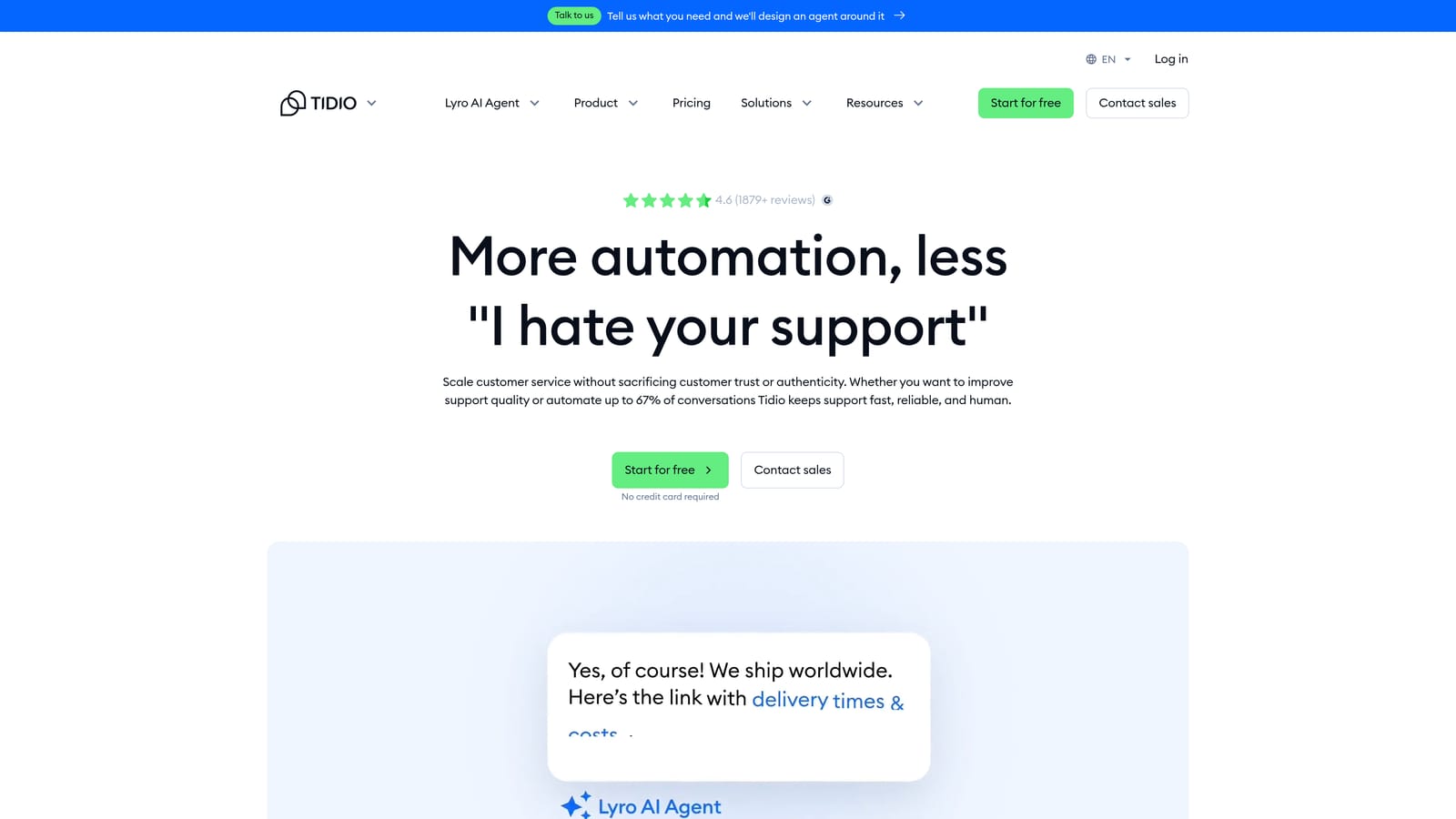
Tidio is an all-in-one customer communication platform combining live chat, the Lyro AI chatbot for deflection, and email ticketing, built primarily for SMBs and e-commerce use cases.
Where This Tool Shines
Tidio's setup experience is genuinely fast. Non-technical users can get a functional AI deflection chatbot running in a short time, which matters for small teams that don't have dedicated IT or operations resources. The combination of live chat, AI deflection, and email ticketing in one affordable package removes the need to stitch together multiple tools at the SMB level.
Lyro AI, Tidio's conversational AI layer, handles common questions using your existing content and hands off to a live agent when it can't resolve the issue. The handoff experience is smooth within the Tidio environment.
Key Features
Lyro AI: Conversational AI that deflects common questions using your existing content, with a natural conversational interface.
AI-to-Human Handoff: Transfers conversations to live agents seamlessly when Lyro reaches the limits of its deflection capability.
Multi-Channel Messaging: Integrates email, Messenger, and chat in a single interface alongside AI deflection.
Fast, Non-Technical Setup: Designed so that non-developers can deploy and manage the platform without engineering support.
Best For
SMBs, e-commerce stores, and early-stage companies that need affordable AI deflection without enterprise complexity. Less suited to B2B SaaS teams with complex product workflows or high-volume technical support needs.
Pricing
Free plan available. Lyro AI starts from approximately $29 per month, with paid plans scaling based on conversation volume.
8. Capacity
Best for: Companies that need AI deflection for both customer-facing support and internal HR or IT helpdesks.
Capacity is an AI-powered support automation platform with a knowledge base at its core, serving both external customer support and internal employee-facing deflection use cases.
Where This Tool Shines
Capacity's dual-use design is what distinguishes it from most tools on this list. Most deflection tools are built exclusively for customer-facing support. Capacity handles both: external customer queries and internal employee questions around HR policies, IT requests, and operational procedures. For organizations looking to consolidate support automation across departments, this is a meaningful efficiency gain.
The knowledge base architecture is central to everything. Answers are surfaced across chat, email, and web channels from a single managed knowledge layer, which reduces the maintenance overhead of keeping multiple content sources in sync.
Key Features
Unified Knowledge Base: A single content layer that surfaces answers across chat, email, and web simultaneously.
Dual-Use Deflection: Handles both customer support and internal HR and IT helpdesk deflection from one platform.
Workflow Automation: Routes and escalates tickets based on configurable logic when deflection isn't sufficient.
Enterprise Integrations: Connects with Salesforce, Zendesk, Slack, and other enterprise tools for broader workflow coverage.
Best For
Mid-market and enterprise organizations that want to consolidate customer-facing and internal support automation under one platform. Also a strong fit for companies where IT and HR teams are actively looking to reduce repetitive internal ticket volume.
Pricing
Custom pricing based on use case and team size; contact Capacity directly for a quote.
9. Helpshift
Best for: Gaming studios, mobile apps, and consumer tech companies needing in-app AI deflection at high volume.
Helpshift is a mobile-first customer support platform with AI-powered in-app deflection, purpose-built for gaming studios, mobile apps, and consumer tech products.
Where This Tool Shines
Helpshift is the category leader for mobile and in-app support. Rather than redirecting users to a web-based help center, it surfaces AI-powered deflection natively inside the app experience. For gaming and consumer app companies where support volume can spike dramatically around releases or updates, this in-app native approach keeps users in context rather than bouncing them out to external channels.
The Smart FAQ feature surfaces contextually relevant answers based on where a user is within the app, which mirrors the page-aware logic of tools like Halo AI but optimized for mobile environments specifically.
Key Features
In-App Messaging with AI Deflection: Delivers AI-powered support natively within the mobile app experience, without redirecting users externally.
Smart FAQs: Surfaces contextually relevant answers based on the user's current location within the app.
AI Intent Detection: Identifies what a user needs from their message to route or deflect accurately within mobile support flows.
High-Volume Scalability: Built to handle the support volume spikes common in consumer apps and gaming, particularly around major releases.
Best For
Gaming studios, consumer mobile apps, and consumer tech companies with large mobile user bases. Less relevant for web-first B2B SaaS teams, where other tools on this list will be a better fit.
Pricing
Custom pricing based on monthly active users; contact Helpshift directly for details.
Which Tool Is Right for Your Team?
The right AI ticket deflection tool depends heavily on where you're starting from and what you're trying to solve. Here's a quick way to think through the decision.
If you're a B2B SaaS team that wants AI-first deflection with deep product context: Halo AI is built for this. The page-aware architecture, continuous learning, and business intelligence layer make it the strongest fit for teams that want deflection to do more than surface articles.
If you're already on Intercom, Zendesk, or Freshdesk: Fin, Zendesk AI, and Freddy AI are the natural starting points. They activate quickly within your existing environment, though they're constrained by their respective ecosystems. For teams evaluating whether to stay on Zendesk, our Zendesk automation tools guide is worth a read.
If you need helpdesk-agnostic AI across multiple platforms: Forethought is the most flexible enterprise option, particularly for organizations that don't want to be locked into a single vendor's AI roadmap.
If you're an SMB or e-commerce business: Tidio offers the fastest path to functional AI deflection at an accessible price point. Freshdesk Freddy AI is also a strong option if you're already on that platform.
If you're in gaming or mobile consumer apps: Helpshift is the purpose-built choice. No other tool on this list matches its in-app native experience for mobile environments.
Your support team shouldn't scale linearly with your customer base. Let AI agents handle routine tickets, guide users through your product, and surface business intelligence while your team focuses on complex issues that need a human touch. See Halo in action and discover how continuous learning transforms every interaction into smarter, faster support.