9 Best AI Ticket Routing Software Tools in 2026
Discover the 9 best AI ticket routing software tools in 2026, evaluated on routing intelligence, integrations, and scalability to help support teams automatically classify, prioritize, and assign incoming tickets without manual triage. Whether you manage a lean SaaS support team or a high-volume enterprise helpdesk, this guide identifies the right platform to reduce response times and improve customer satisfaction.
 Grant CooperFounder14 min read
Manual ticket routing is a bottleneck that quietly kills support team efficiency. When agents spend time triaging instead of solving, response times suffer and customers notice. AI ticket routing software changes that equation by automatically classifying, prioritizing, and assigning incoming tickets based on content, context, and agent expertise, without human intervention.
This list covers the best AI ticket routing tools available in 2026, evaluated on routing intelligence, integration depth, scalability, and how well each platform goes beyond simple assignment to actually resolve tickets. Whether you're running a lean support team at a growing SaaS company or managing a high-volume enterprise helpdesk, there's a fit here for you.
1. Halo AI
Best for: SaaS teams that want AI to resolve tickets, not just route them
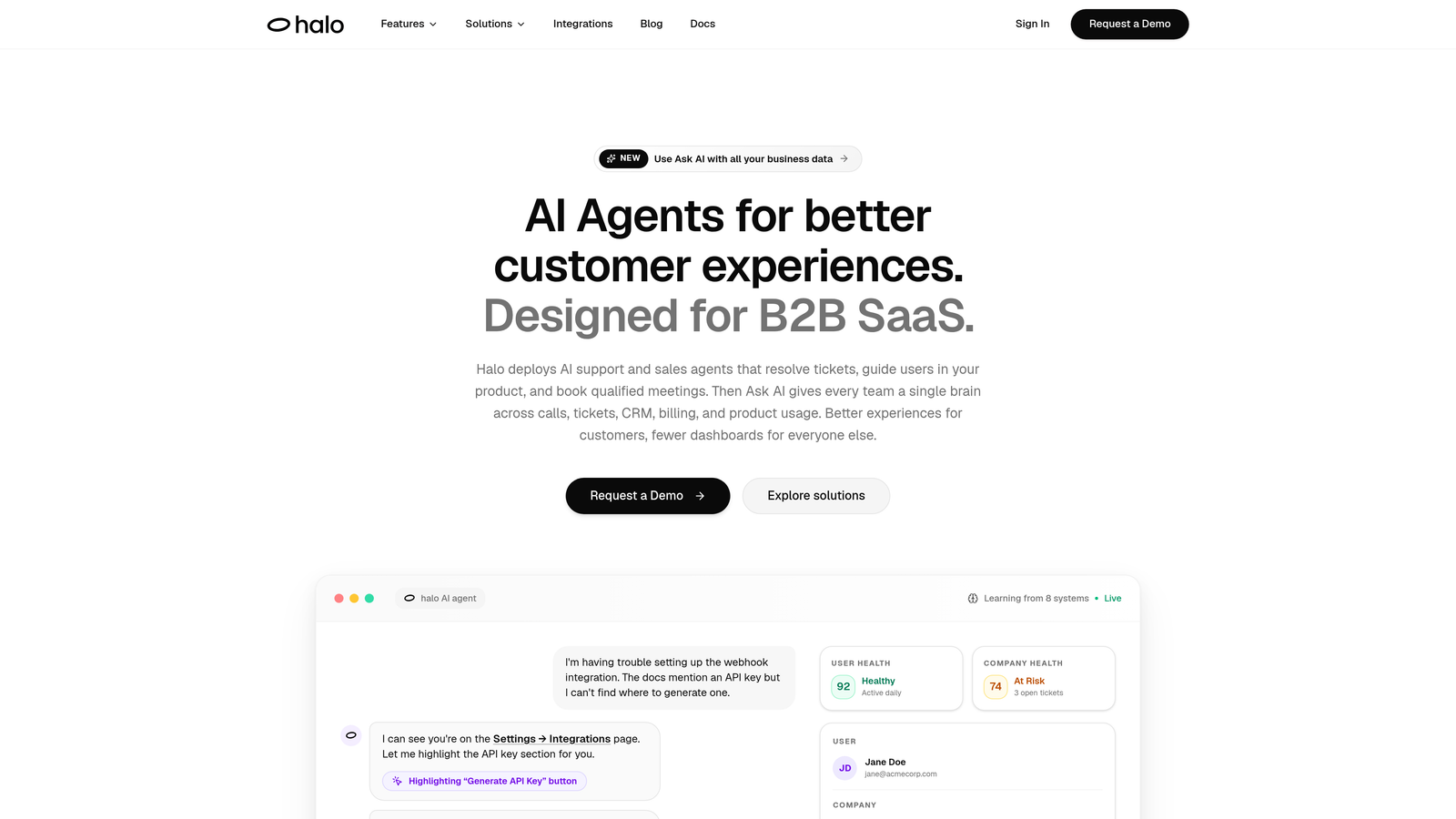
Halo AI is an AI-first customer support platform built to autonomously resolve tickets, guide users through your product, and surface business intelligence, all from a single system.
Where This Tool Shines
Most tools on this list are helpdesk platforms with AI routing bolted on. Halo AI flips that model: routing is a baseline capability, not the headline feature. The platform is designed to close tickets, not just assign them, using intelligent agents that learn from every interaction to improve resolution accuracy over time.
What makes it genuinely different is the page-aware context layer. The chat widget understands what a user is currently looking at inside your product, so when a ticket comes in, the AI already has visual context before the conversation even starts. Combine that with a smart inbox that surfaces customer health signals and revenue anomalies, and you get a support platform that doubles as a business intelligence layer.
Key Features
Autonomous Ticket Resolution: AI agents resolve tickets end-to-end, escalating to human agents only when complexity requires it.
Page-Aware Chat Widget: The widget understands what users are viewing in your product, giving the AI contextual awareness before a conversation begins.
Smart Inbox with Business Intelligence: Surfaces customer health signals, revenue anomalies, and trend detection beyond standard support metrics.
Auto Bug Ticket Creation: Technical issues are automatically identified and routed directly to engineering via Linear integration, without manual triage.
Live Agent Handoff: When issues exceed AI scope, full conversation context transfers seamlessly to a human agent, no repeat explanations needed.
Deep Integration Stack: Connects natively with Linear, Slack, HubSpot, Intercom, Stripe, Zoom, PandaDoc, and Fathom.
Best For
SaaS product teams and B2B companies that want AI to handle the full resolution loop, not just the first step. Particularly strong for teams already using tools like Linear, HubSpot, or Intercom who want their support system to connect into their existing stack rather than sit beside it.
Pricing
Pricing is not publicly listed. Contact the team for a demo and custom pricing at haloagents.ai.
2. Zendesk
Best for: Large enterprise support teams needing omnichannel routing at scale
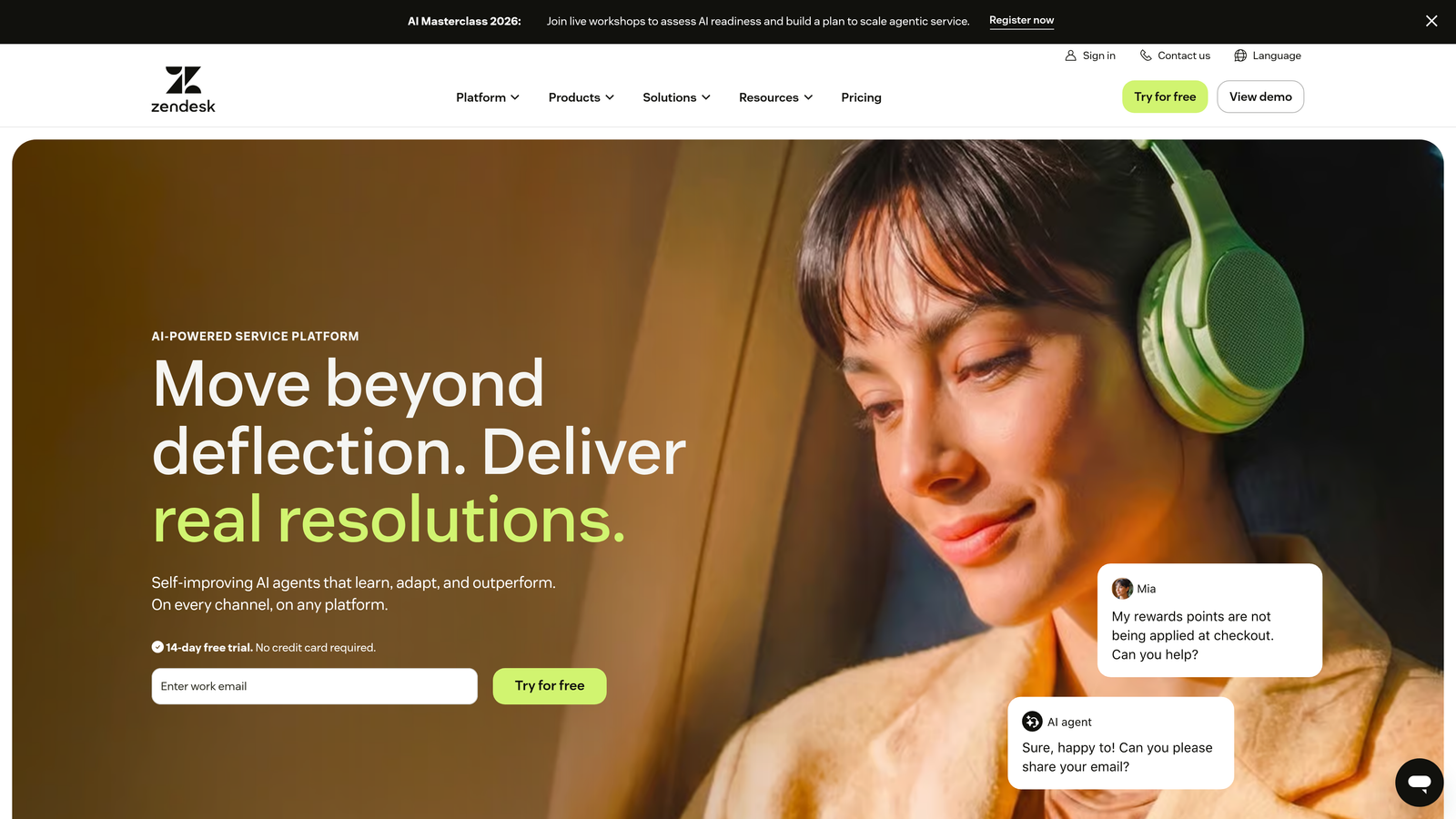
Zendesk is a mature enterprise helpdesk platform with AI-powered intelligent triage built directly into its core ticketing workflow.
Where This Tool Shines
Zendesk's intelligent triage feature predicts ticket intent, sentiment, and language automatically, then applies routing rules to direct tickets to the right team or agent. For large organizations managing thousands of tickets across multiple channels, this level of classification depth is genuinely valuable.
The platform's breadth is hard to match. Omnichannel routing across email, chat, voice, and social combined with an extensive marketplace of third-party integrations means Zendesk can slot into almost any enterprise tech stack. The tradeoff is complexity: configuring routing rules and AI features to work exactly as intended takes time and often requires dedicated admin resources.
Key Features
Intelligent Triage: Predicts ticket intent, sentiment, and language to automate routing decisions at intake.
Omnichannel Routing: Handles ticket assignment across email, chat, voice, and social from a unified queue.
Skill-Based Routing: Matches incoming tickets to agents based on defined expertise and availability.
Third-Party Marketplace: Hundreds of integrations extend routing logic and connect to external systems.
Routing Analytics: Detailed reporting on routing performance, queue health, and agent workload distribution.
Best For
Enterprise support organizations that need sophisticated routing logic across multiple channels and teams. Best suited for companies with dedicated Zendesk admins who can configure and maintain complex automation rules.
Pricing
Suite Team starts at approximately $55 per agent per month. AI features are available on higher-tier plans. Verify current pricing at zendesk.com.
3. Freshdesk
Best for: Mid-market teams wanting AI routing without enterprise complexity or pricing
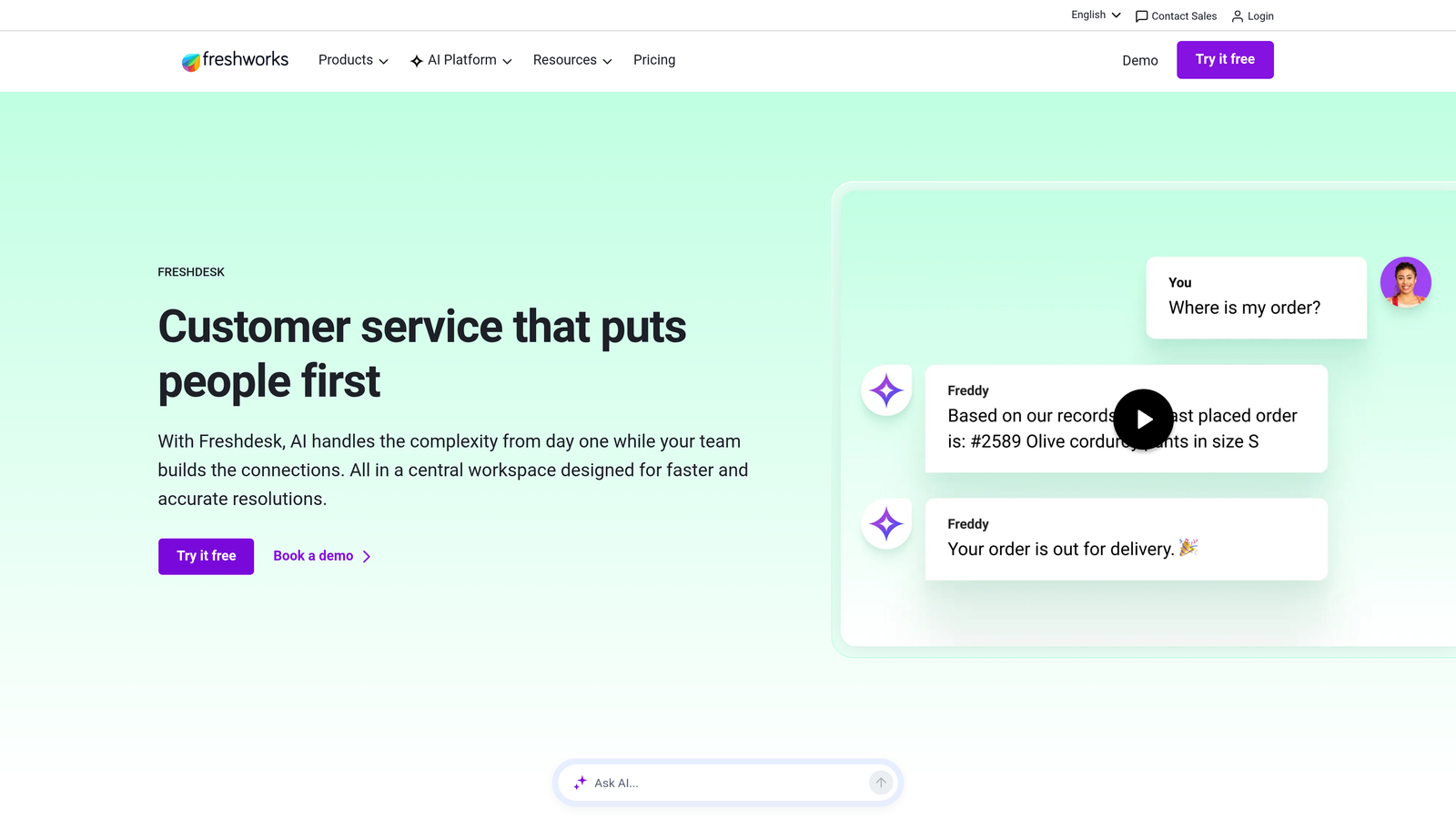
Freshdesk is a mid-market helpdesk where Freddy AI handles ticket categorization, priority scoring, and intelligent agent assignment across a clean, accessible interface.
Where This Tool Shines
Freddy AI is Freshdesk's answer to intelligent routing, and it covers the core use cases well. Incoming tickets are automatically categorized and prioritized, and Freddy's agent assignment logic considers both workload and skill, helping to prevent ticket pile-ups on individual agents while routing to the most qualified person available.
Where Freshdesk stands out for growing teams is the combination of accessible pricing and a lower learning curve than Zendesk. The Freddy Copilot feature also assists agents with suggested replies, which speeds up resolution even when a human is handling the ticket. It's a well-rounded mid-market option that doesn't require significant configuration overhead to get value from.
Key Features
Freddy AI Auto-Categorization: Automatically categorizes and prioritizes incoming tickets based on content analysis.
Agent Assist: Suggests the best agent for each ticket based on current workload and skill set.
Freddy Copilot: Drafts suggested replies to help agents resolve tickets faster once assigned.
Scenario Automations: Supports complex multi-step routing logic for teams with more advanced workflow needs.
Free Plan: Available for small teams getting started with structured ticket management.
Best For
Growing SaaS companies and mid-market businesses that need reliable AI-assisted routing without the cost or complexity of enterprise platforms. Also a strong choice for teams migrating off spreadsheets or email-only support.
Pricing
Free plan available. Paid plans start at approximately $15 per agent per month. Freddy AI features are available on Growth plan and above. Verify current pricing at freshdesk.com.
4. Intercom
Best for: Chat-first SaaS companies wanting AI resolution before human routing kicks in
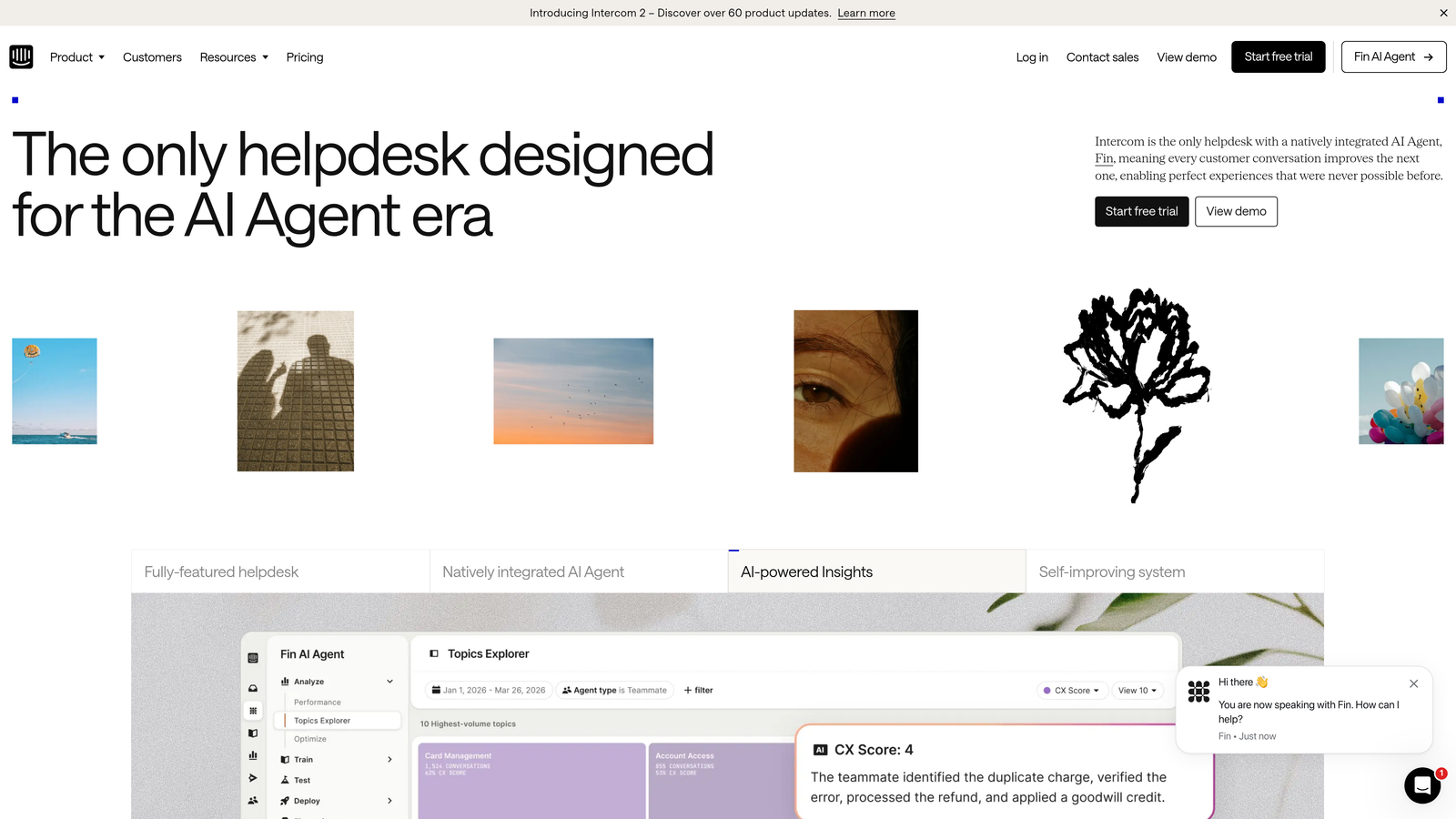
Intercom is a conversational support platform where Fin AI handles both autonomous resolution and intelligent routing in a unified chat-first workflow.
Where This Tool Shines
Intercom's approach is notably different from traditional helpdesk routing: Fin AI attempts to resolve the ticket first, and only routes to a human agent when it can't. This means your routing logic is actually a fallback, not the primary workflow. For SaaS companies with a high volume of repetitive product questions, this can meaningfully reduce the tickets that ever reach a human queue.
The inbox routing rules layer AI classification with manual logic, giving teams fine-grained control over how conversations escalate. Handoffs from Fin to human agents include full conversation context, so customers don't have to repeat themselves. Intercom's in-app messaging capabilities also make it a natural fit for product-led growth companies that want proactive support baked into the product experience.
Key Features
Fin AI Agent: Resolves a portion of incoming tickets autonomously before routing to human agents.
Conversation Routing: Routes based on topic, customer segment, and team availability.
Inbox Rules: Layers AI classification with manual routing logic for precise control.
Context-Preserving Handoff: Full conversation context transfers when Fin escalates to a human agent.
In-App Messaging: Proactive support capabilities that can deflect tickets before they're created.
Best For
SaaS companies with chat-first support workflows and a high proportion of repetitive product questions. Particularly effective for teams that want AI resolution to happen before routing, rather than after.
Pricing
Base plans start at approximately $29 per seat per month. Fin AI is billed per resolution. Verify current pricing at intercom.com.
5. Salesforce Service Cloud
Best for: Enterprise teams where support and CRM data need to inform every routing decision
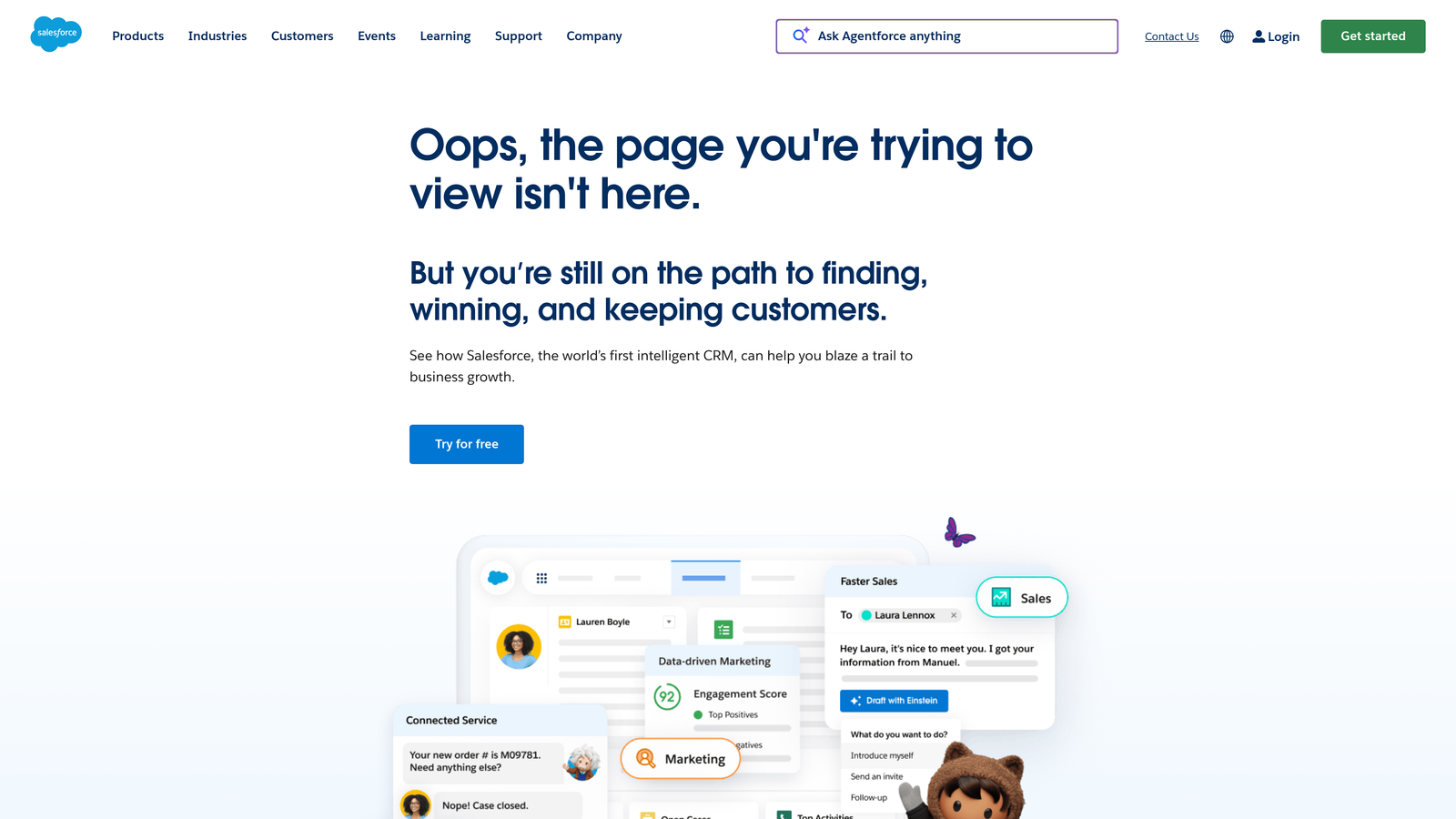
Salesforce Service Cloud is an enterprise-grade service platform where Einstein AI routes cases using full CRM context, customer history, and real-time agent capacity data.
Where This Tool Shines
The core advantage here is CRM-aware routing. Einstein Case Classification doesn't just look at ticket content; it incorporates account tier, purchase history, relationship data, and customer lifetime value when deciding where to send a case. For organizations where a VIP customer's issue should always jump the queue, that kind of context-driven routing is genuinely hard to replicate elsewhere.
Omni-Channel routing assigns work based on real-time agent capacity and skill sets, preventing queue imbalances automatically. Einstein Next Best Action surfaces recommendations for agents during resolution, which shortens handle time even on complex cases. The tradeoff is implementation complexity and cost: getting full value from Service Cloud typically requires Salesforce expertise and significant configuration.
Key Features
Einstein Case Classification: Automatically categorizes and routes incoming cases using AI trained on historical data.
Omni-Channel Routing: Assigns work based on real-time agent capacity and defined skill sets.
Full CRM Integration: Routing decisions incorporate purchase history, account tier, and relationship data from the Salesforce CRM.
Einstein Next Best Action: Surfaces agent recommendations during ticket resolution to improve outcomes.
Flow Automation: Extensive customization of routing logic through Salesforce's visual automation builder.
Best For
Large enterprises already running Salesforce CRM where tightly integrated support and sales data is a priority. Less suitable for teams without existing Salesforce infrastructure given the implementation investment required.
Pricing
Starter Suite begins at approximately $25 per user per month. Full Einstein features require higher-tier plans. Verify current pricing at salesforce.com.
6. Zoho Desk
Best for: SMBs and Zoho ecosystem users wanting affordable AI routing with sentiment awareness
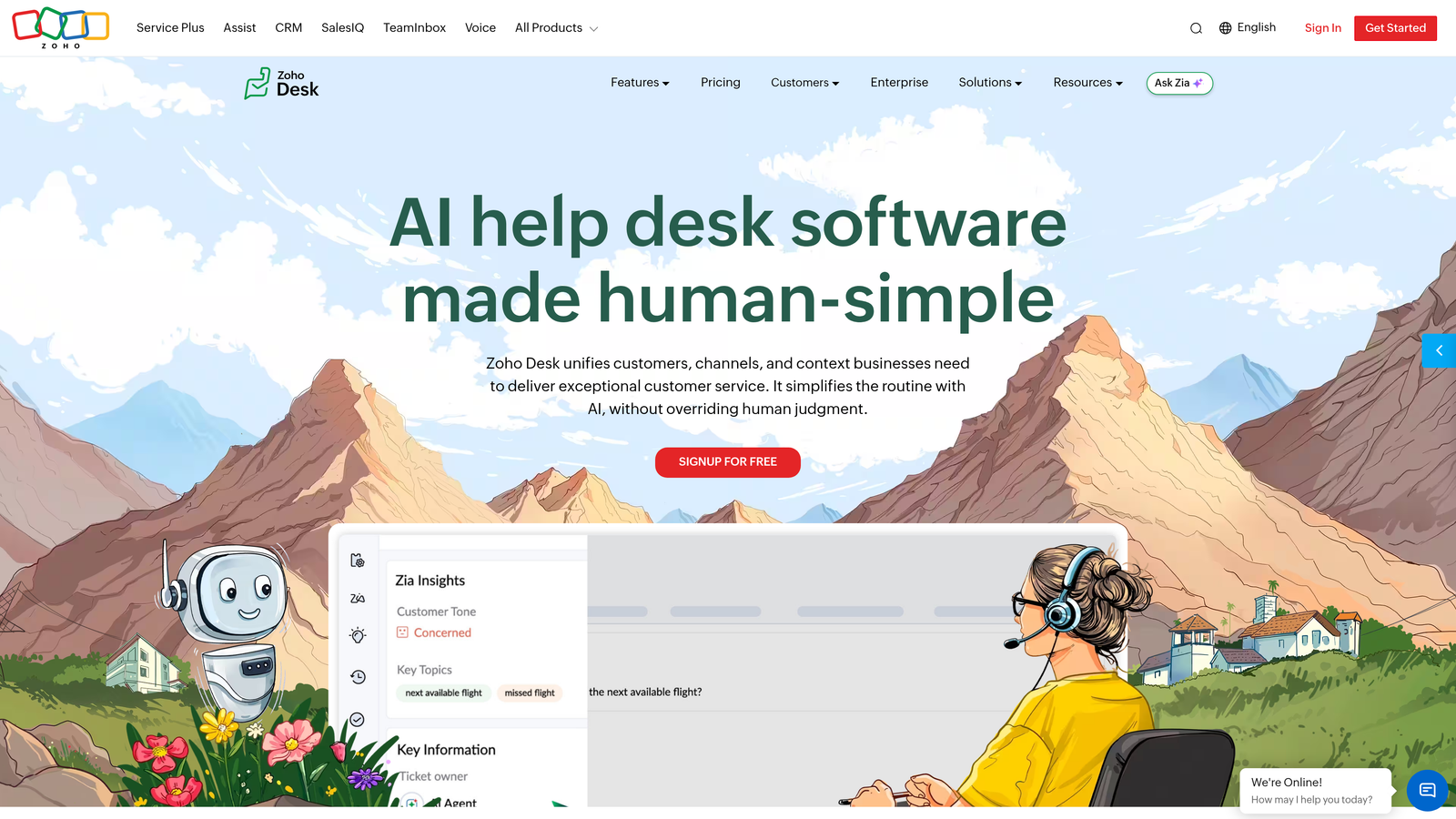
Zoho Desk is a budget-friendly helpdesk where Zia AI provides sentiment-aware ticket routing and tagging, with deep integration into the broader Zoho suite.
Where This Tool Shines
Zia's sentiment analysis is a practical differentiator at this price point. Rather than routing purely on topic or keyword, Zia factors in the emotional tone of a ticket, flagging frustrated customers for priority handling before a human even reads the message. For teams managing a mix of routine and escalation-prone tickets, that layer of urgency detection adds real value.
For teams already using Zoho CRM or Zoho Analytics, the integration depth is a significant advantage. Routing decisions can draw on CRM data without complex configuration, and Blueprint workflow automation handles multi-step routing processes that go beyond simple assignment rules. At its price point, Zoho Desk offers a level of AI sophistication that outpaces most competitors in the same tier.
Key Features
Zia Sentiment Analysis: Analyzes ticket sentiment and urgency to inform routing priority before agent review.
Auto-Tagging and Categorization: Automatically tags and categorizes tickets based on content analysis.
Skill-Based Assignment: Routes tickets to the most qualified available agent based on defined expertise.
Zoho Suite Integration: Deep connectivity with Zoho CRM, Zoho Analytics, and other Zoho products.
Blueprint Automation: Visual workflow builder for multi-step routing and escalation logic.
Best For
SMBs looking for capable AI routing at an accessible price, particularly those already invested in the Zoho ecosystem. Also a strong option for teams that want sentiment-aware prioritization without enterprise-level spend.
Pricing
Free plan available. Paid plans start at approximately $14 per agent per month. Verify current pricing at zoho.com/desk.
7. Help Scout
Best for: Lean support teams wanting smart routing with minimal setup and no steep learning curve
Help Scout is a lightweight, email-style helpdesk with AI-assisted workflows designed for small and growing teams that want effective routing without operational complexity.
Where This Tool Shines
Help Scout's design philosophy is deliberate simplicity, and that extends to its routing logic. Automated workflows route conversations based on keywords, customer properties, and tags, covering the majority of routing use cases without requiring advanced configuration skills. Round-robin and load-balanced assignment keeps workloads evenly distributed across the team automatically.
The AI features lean toward agent productivity rather than autonomous resolution: conversation summarization and reply drafting help agents work faster once a ticket lands in their queue. The built-in Docs knowledge base also provides deflection before routing becomes necessary. For teams that don't need enterprise routing complexity, Help Scout's clean UX and fast onboarding make it genuinely pleasant to use.
Key Features
AI Summarization and Reply Drafting: Helps agents quickly understand context and compose responses faster.
Workflow Automation: Routes conversations based on keywords, customer properties, and tags.
Load-Balanced Assignment: Round-robin and load-balanced routing distributes tickets evenly across available agents.
Email-Style UX: Familiar inbox interface minimizes agent training time and adoption friction.
Built-In Knowledge Base: Docs integration deflects common questions before they become routed tickets.
Best For
Small to mid-sized teams that prioritize simplicity and fast setup over advanced AI capabilities. Particularly well-suited for companies transitioning from shared email inboxes to structured support workflows.
Pricing
Plans start at approximately $22 per user per month. Verify current pricing at helpscout.com.
8. Kustomer
Best for: High-volume omnichannel support teams that need routing informed by full customer history
Kustomer is a CRM-native omnichannel support platform that routes tickets across email, chat, social, and SMS using complete customer timeline context as the foundation for every routing decision.
Where This Tool Shines
Kustomer's defining characteristic is the unified customer timeline. Every interaction a customer has ever had, across every channel, is visible in a single view when a new ticket comes in. AI-powered routing uses that history to make smarter assignment decisions: a customer who has had three unresolved issues in the past month might be routed directly to a senior agent rather than entering the general queue.
The built-in CRM eliminates the need for a separate customer data system, which simplifies the tech stack for teams that would otherwise be juggling a helpdesk and a CRM in parallel. Workflow automation handles repetitive routing and escalation logic, and the omnichannel inbox keeps all channels unified rather than siloed. Kustomer's pricing reflects its enterprise positioning, but teams managing high volumes across multiple channels will find the capability justifies the investment.
Key Features
Full Timeline Routing: AI routing considers complete customer conversation history across all channels when assigning tickets.
Omnichannel Unified Inbox: Email, chat, social, SMS, and voice consolidated into a single customer timeline view.
Intelligent Routing Rules: Routes based on customer segment, issue type, and agent skill sets.
Workflow Automation: Handles repetitive routing decisions and escalation logic without manual intervention.
Built-In CRM: Native customer data system eliminates the need for a separate CRM integration.
Best For
High-volume support teams managing customers across multiple channels who need routing logic that reflects the full customer relationship, not just the current ticket. Strong fit for e-commerce and consumer brands with complex omnichannel journeys.
9. Tidio
Best for: Startups and small businesses needing accessible AI routing at an entry-level price point
Tidio is an accessible AI support tool where Lyro AI provides basic routing and resolution capabilities designed for early-stage companies and small businesses with lean support operations.
Where This Tool Shines
Tidio's strength is accessibility. Lyro AI handles common queries autonomously and routes more complex issues to human agents, giving small teams an AI-assisted workflow without the enterprise price tag. The visual chatbot builder lets non-technical users create custom routing flows without writing a line of code, which matters when there's no dedicated ops person to manage configuration.
For e-commerce and Shopify-based businesses in particular, Tidio's product-aware integrations mean routing logic can incorporate order status, product queries, and customer purchase data. It's not the most sophisticated routing engine on this list, but for a startup handling a manageable ticket volume, Lyro AI provides a meaningful step up from purely manual triage at a price that makes sense for the stage.
Key Features
Lyro AI Agent: Handles common queries autonomously and routes complex issues to human agents.
Visual Chatbot Builder: Create custom routing flows without coding using a drag-and-drop interface.
Unified Dashboard: Live chat and email ticket management in a single interface.
E-Commerce Integrations: Shopify and e-commerce integrations enable product-aware routing decisions.
Free Plan: Available with a paid Lyro AI add-on for teams needing higher resolution volumes.
Best For
Startups, small businesses, and e-commerce brands that want to introduce AI-assisted routing without significant upfront investment. Best suited to lower ticket volumes where Lyro's resolution capabilities can handle a meaningful share of incoming queries.
Pricing
Free plan available. Lyro AI add-on pricing varies by resolution volume. Verify current pricing at tidio.com.
Which Tool Is Right for Your Team?
The right choice here comes down to one fundamental question: do you need AI that routes tickets, or AI that closes them?
Most tools on this list, including Zendesk, Freshdesk, and Zoho Desk, are excellent helpdesk platforms that have added AI routing as a feature layer. They'll classify, prioritize, and assign tickets intelligently. What happens after assignment still depends largely on your agents.
Halo AI occupies a different category. Routing is the baseline; autonomous resolution, page-aware context, and business intelligence signals are the actual value proposition. For SaaS teams that want to stop scaling headcount linearly with ticket volume, that distinction matters.
Here's a quick use-case guide to help narrow it down:
SaaS teams wanting full AI resolution: Halo AI is the natural fit, particularly for teams using Linear, HubSpot, or Intercom who want their support system connected to the broader stack.
Enterprise teams on Salesforce: Service Cloud's CRM-native routing is hard to replicate elsewhere when account data needs to drive every routing decision.
Chat-first SaaS companies: Intercom's Fin AI resolves before routing, which is the right model for product-led growth teams with high volumes of repetitive product questions.
Mid-market teams on a budget: Freshdesk and Zoho Desk both deliver capable AI routing at a price point that makes sense for growing teams not yet ready for enterprise spend.
Lean teams wanting simplicity: Help Scout's clean UX and straightforward routing logic are genuinely well-suited to small teams that don't need enterprise complexity.
High-volume omnichannel operations: Kustomer's full customer timeline routing is the right tool when every channel needs to be unified and history-aware.
Early-stage startups: Tidio makes AI-assisted routing accessible at a price that fits a pre-scale budget.
Your support team shouldn't scale linearly with your customer base. Let AI agents handle routine tickets, guide users through your product, and surface business intelligence while your team focuses on complex issues that need a human touch. See Halo in action and discover how continuous learning transforms every interaction into smarter, faster support.