9 Best AI Ticket Systems for Remote Teams in 2026
Remote support teams need more than a basic helpdesk — they need an AI ticket system built for distributed agents, time-zone gaps, and 24/7 customer demand. This guide evaluates nine top AI ticket systems for remote teams across autonomous resolution, collaboration features, integrations, and analytics to help you find the right fit for your team's size and goals.
 Grant CooperFounder13 min read
Remote support teams face a unique challenge: tickets arrive around the clock, agents work across time zones, and there's no hallway conversation to triage a tricky issue. A customer submits a billing question at 2am your time, and without an AI system that can resolve it autonomously, they're waiting until someone's morning coffee kicks in.
AI ticket systems close that gap by resolving common requests without human intervention, routing complex ones intelligently, and surfacing the business context remote managers need to keep quality high. But not every platform is built with distributed teams in mind. Some are glorified chatbots. Others are legacy helpdesks with a thin AI layer bolted on after the fact.
This guide cuts through the noise. We evaluated nine platforms on autonomous resolution capability, remote-team collaboration features, integration depth, and analytics quality. Whether you're running a five-person startup support function or scaling a 50-agent global team, here are the top AI ticket systems worth your attention.
1. Halo AI
Best for: B2B SaaS teams that want AI-first architecture with business intelligence built in
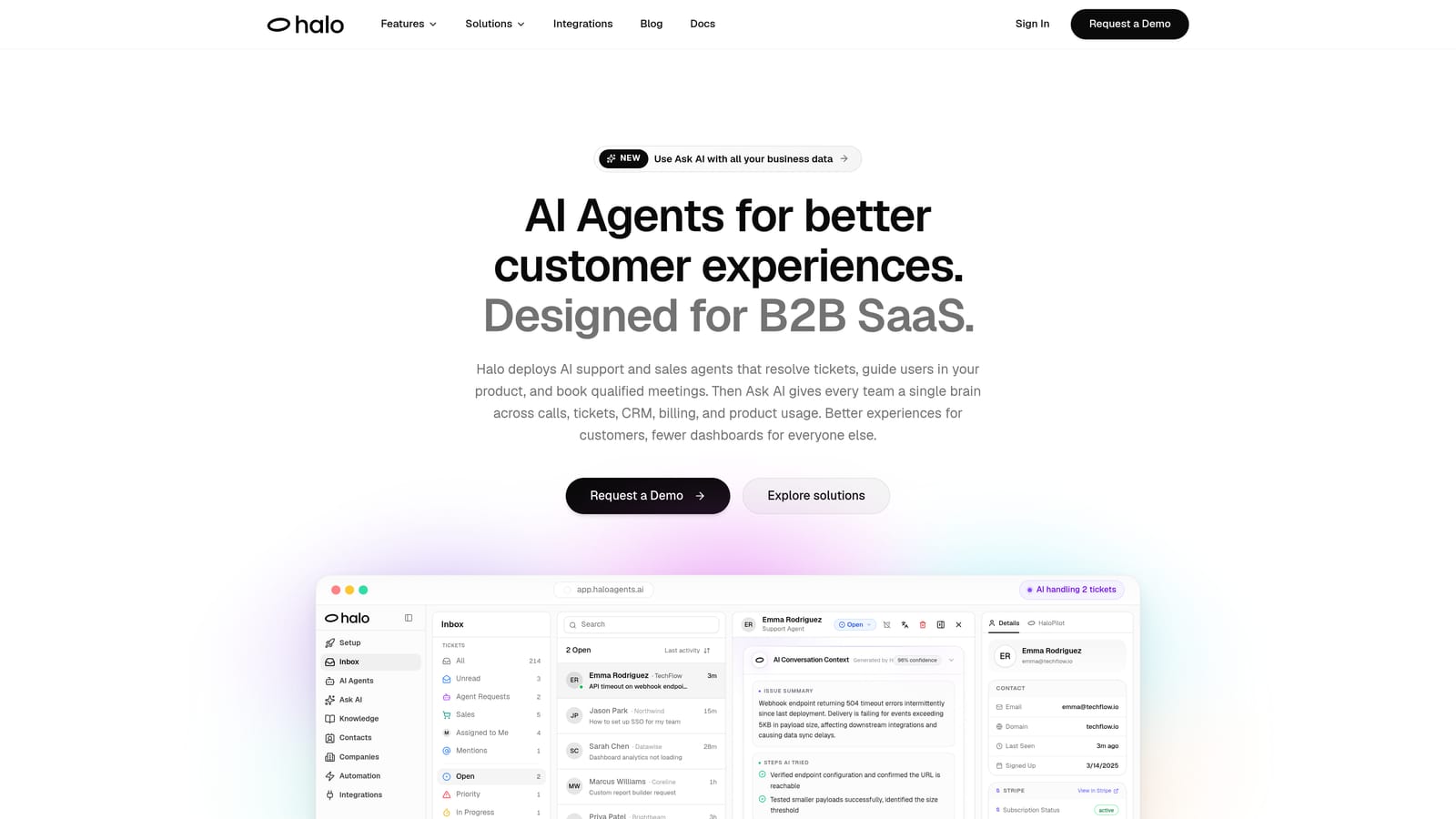
Halo AI is an AI-first customer support platform purpose-built for B2B SaaS teams that need more than basic ticket deflection.
Where This Tool Shines
Most AI ticket systems treat support as an isolated function. Halo treats it as a business intelligence layer. The smart inbox doesn't just organize tickets: it surfaces customer health signals, revenue anomalies, and churn risk, giving remote managers visibility they'd otherwise miss without being physically present with their team.
The standout capability for remote teams is the page-aware chat widget. Rather than sending generic text responses, Halo's AI agent sees exactly what the user sees on screen and provides visual UI guidance in context. That's a meaningful difference when your agents aren't available to hop on a screen share at 11pm.
Key Features
Page-Aware Chat Widget: The AI sees the user's current screen context and delivers visual guidance rather than generic instructions, reducing back-and-forth significantly.
Autonomous Ticket Resolution: The AI agent resolves tickets independently and continuously learns from every interaction, improving without manual retraining.
Smart Inbox with Business Intelligence: Surfaces customer health signals, churn risk indicators, and revenue anomalies alongside standard support metrics.
Auto Bug Ticket Creation: Automatically creates bug reports in Linear when issues are detected, removing a manual step that often falls through the cracks on distributed teams.
Live Agent Handoff: Escalates to human agents with full conversation context preserved, so customers don't have to repeat themselves after waiting hours for coverage.
Deep Integrations: Connects with Slack, HubSpot, Intercom, Stripe, Zoom, PandaDoc, and Fathom for a unified view across your entire business stack.
Best For
B2B SaaS companies that want an AI-first architecture rather than a helpdesk with AI bolted on. Particularly strong for product teams that need support intelligence to inform roadmap decisions, and for remote-first organizations where async resolution quality directly affects customer retention.
Pricing
Pricing is not publicly listed. Contact the team directly or request a demo at haloagents.ai to get a quote tailored to your team size and use case.
2. Zendesk AI
Best for: Enterprise teams that need mature routing, compliance, and a large integration ecosystem
Zendesk AI is the enterprise-grade incumbent with a well-developed AI layer built on top of its industry-leading helpdesk platform.
Where This Tool Shines
Zendesk's depth is its biggest asset. The routing engine is genuinely sophisticated, with time-zone-aware and skill-based logic that matters enormously for distributed teams. When you have agents in three continents, intelligent routing isn't a nice-to-have: it's what keeps SLAs intact overnight.
The marketplace of 1,000+ integrations means Zendesk will connect to almost anything in your stack. For enterprise teams with complex compliance requirements, the security posture here is also hard to beat.
Key Features
Zendesk AI Agent: Handles autonomous ticket deflection and resolution using your existing help content.
Intelligent Triage and Macro Suggestions: Recommends routing and response templates to speed up human agents on complex tickets.
Advanced Routing Rules: Time-zone and skill-based routing logic designed for global, distributed support teams.
1,000+ Marketplace Integrations: Connects to virtually any tool in your stack, from CRMs to project management platforms.
Enterprise-Grade Compliance: SOC 2, GDPR, HIPAA-ready configurations for teams in regulated industries.
Best For
Enterprise and mid-market teams that need proven infrastructure, strong compliance, and the flexibility of a large integration ecosystem. Teams moving from a fragmented support setup will appreciate how much Zendesk can consolidate.
Pricing
Suite plans start at approximately $55 per agent per month. AI features are available as add-ons, which can increase total cost meaningfully at scale.
3. Freshdesk Freddy AI
Best for: Mid-market teams seeking multichannel AI support at accessible price points
Freshdesk Freddy AI is Freshworks' AI assistant spanning triage, agent assistance, and self-service across its multichannel helpdesk.
Where This Tool Shines
Freshdesk offers strong value at its price point. Freddy operates across three distinct modes: Answer Bot handles self-service deflection before a ticket is even created, Freddy Copilot assists agents with reply suggestions and thread summarization, and Freddy Insights surfaces trends across your support volume. That's a fairly complete AI story for teams that don't want to stitch together multiple tools.
The multichannel coverage is also genuinely broad out of the box, spanning email, chat, social, and phone without requiring separate integrations for each channel.
Key Features
Freddy Answer Bot: Deflects repetitive queries through self-service before they reach an agent queue.
Freddy Copilot: Suggests replies and summarizes long threads to speed up agent response times.
Freddy Insights: Analytics layer that identifies support trends and flags emerging issues for remote managers.
Multichannel Coverage: Email, chat, social, and phone support managed from a single platform.
Free Tier: A functional free plan makes it accessible for early-stage teams testing the waters with AI support.
Best For
Mid-market teams looking for a cost-effective, multichannel AI helpdesk. Also a smart choice for teams already in the Freshworks ecosystem who want to activate AI without switching platforms.
Pricing
A free tier is available for small teams. Paid plans start at approximately $15 per agent per month, with Freddy AI features unlocking on higher tiers.
4. Intercom Fin
Best for: Product-led SaaS companies with strong help documentation and chat-first support models
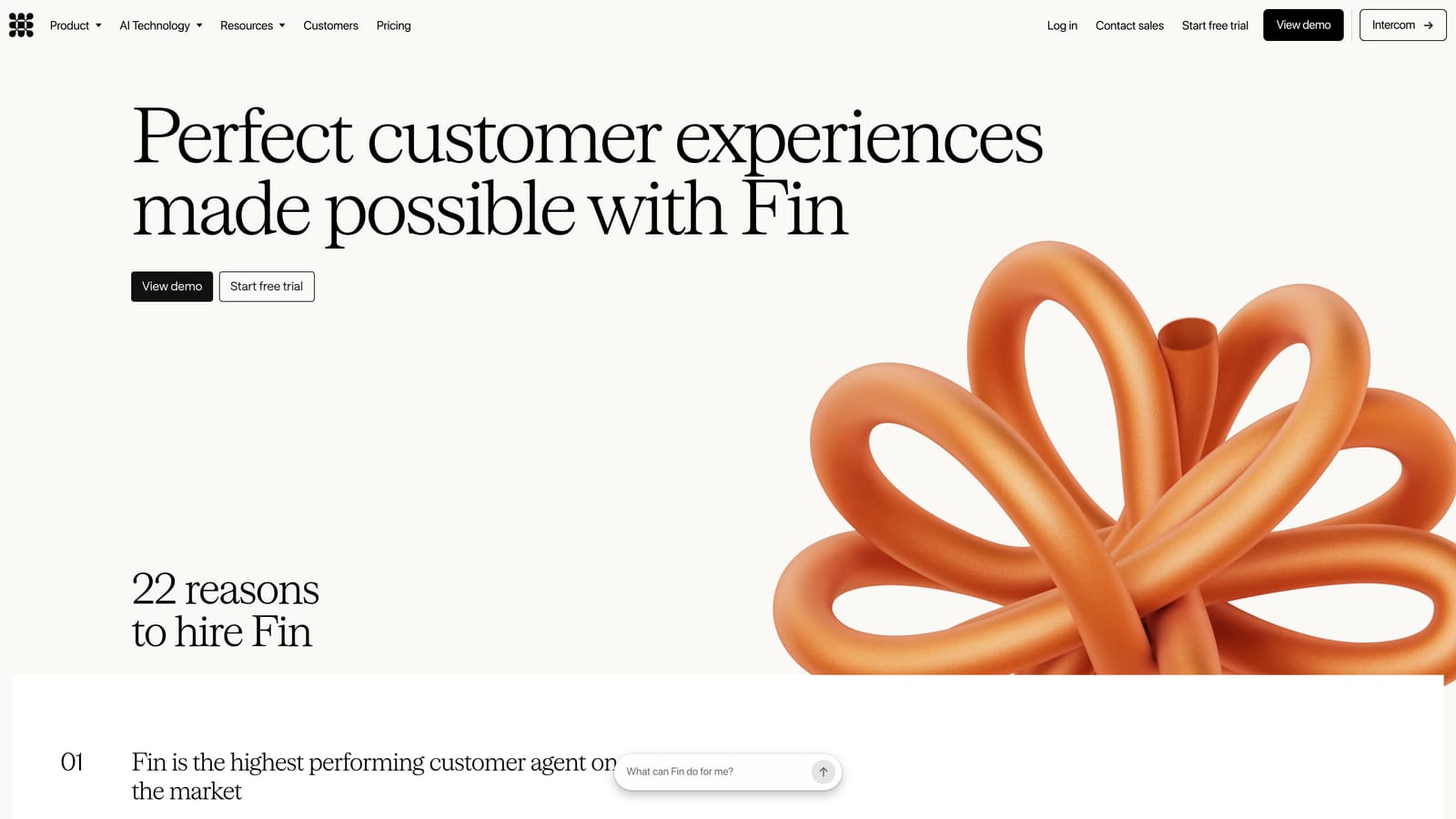
Intercom Fin is Intercom's LLM-powered AI agent that resolves customer queries conversationally using your existing help center content.
Where This Tool Shines
Fin is genuinely impressive at conversational resolution. It reads your help content and answers questions the way a knowledgeable human would: in natural language, with appropriate context. For product-led SaaS companies that have invested in solid documentation, Fin can deflect a significant portion of inbound volume without any additional configuration.
The handoff to human agents is also clean, preserving full conversation context so agents don't walk into a conversation blind. That matters especially for remote teams where a bad handoff means a customer waits hours rather than minutes.
Key Features
LLM-Powered Conversational Resolution: Answers customer questions naturally using your existing help center content, not just keyword matching.
Context-Preserving Handoff: Passes full conversation history to human agents during escalation, eliminating customer repetition.
Multi-Language Support: Handles queries in multiple languages out of the box, useful for global remote teams.
Usage-Based Pricing: Costs scale with resolved conversations rather than seat count, which can be economical for lower-volume teams.
Best For
Product-led SaaS companies with well-maintained help documentation and a chat-first support model. Less suited to teams that rely heavily on email ticketing workflows or need traditional queue management.
Pricing
Fin is priced on a usage basis per resolved conversation, layered on top of Intercom's base platform subscription. Total cost depends heavily on resolution volume.
5. Help Scout
Best for: Small to mid-sized teams where brand voice and human-feeling support are non-negotiable
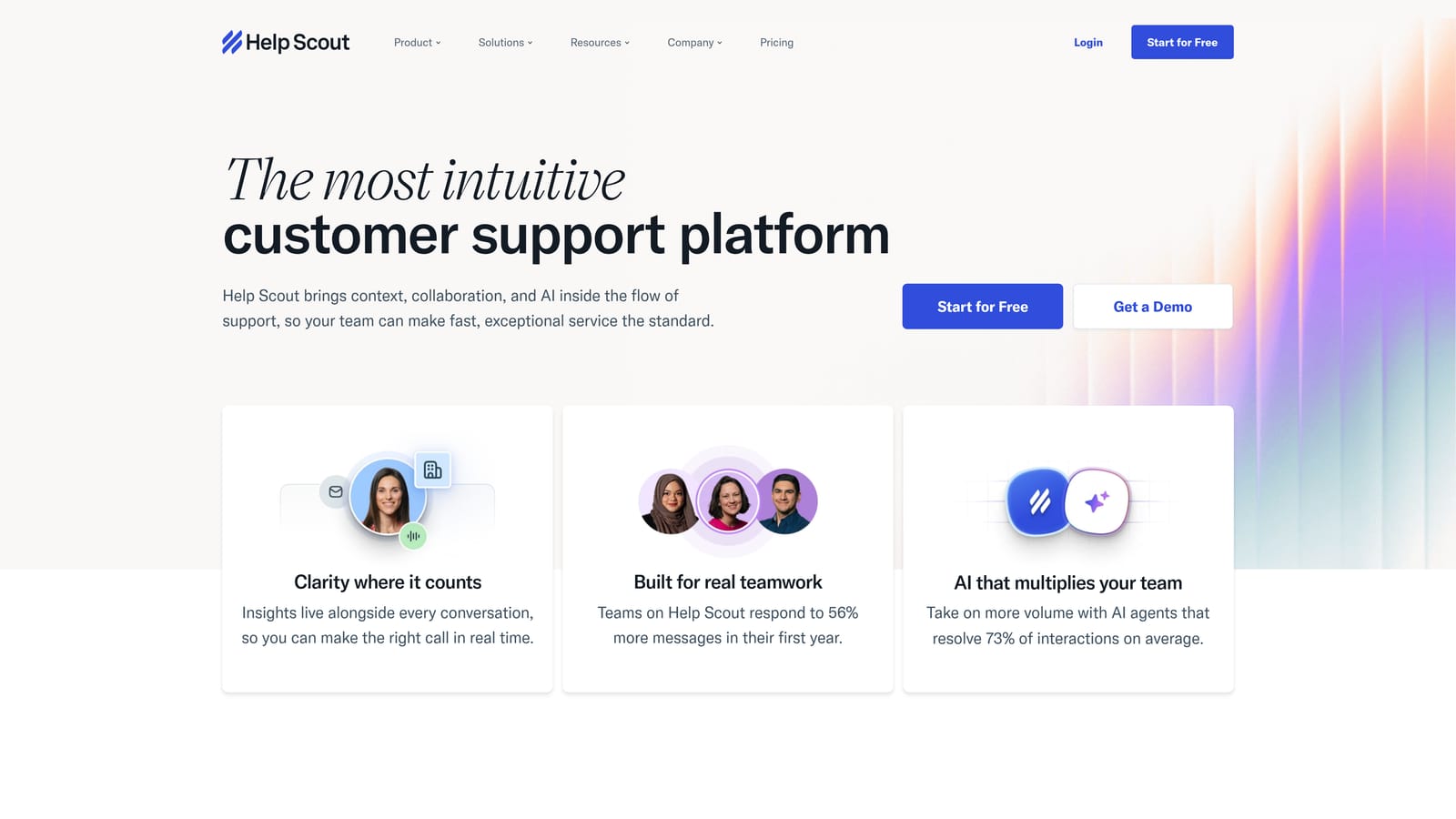
Help Scout is a human-centered shared inbox platform with AI features designed to make agents faster without replacing the human touch.
Where This Tool Shines
Help Scout's AI additions are deliberately agent-augmenting rather than agent-replacing. AI Summarize condenses long email threads so agents can get up to speed instantly, and AI Assist drafts replies and adjusts tone to match your brand voice. For remote teams where brand consistency is hard to maintain across distributed agents, that tone-adjustment capability is surprisingly useful.
The collaboration features are also standout for remote work. Collision detection prevents two agents from drafting responses to the same ticket simultaneously, and the shared inbox interface is clean enough that new team members get productive quickly without extensive onboarding.
Key Features
AI Summarize: Condenses long email threads into concise summaries so agents can respond without reading every message.
AI Assist: Drafts replies and adjusts tone to match your brand voice, helping distributed agents stay consistent.
Collision Detection: Prevents duplicate responses by alerting agents when someone else is already working on a ticket.
Beacon Widget: In-app self-service widget that surfaces relevant help content before a ticket is submitted.
Intuitive Interface: Minimal learning curve makes it easy to onboard remote agents without extensive training.
Best For
Small to mid-sized teams where the human quality of support matters as much as speed. Particularly well-suited to companies where brand voice is a differentiator and fully autonomous AI responses feel off-brand.
Pricing
Plans start at approximately $20 per user per month, making it accessible for growing teams without enterprise budgets.
6. Tidio Lyro
Best for: SMB and e-commerce teams that need fast deployment and predictable AI costs
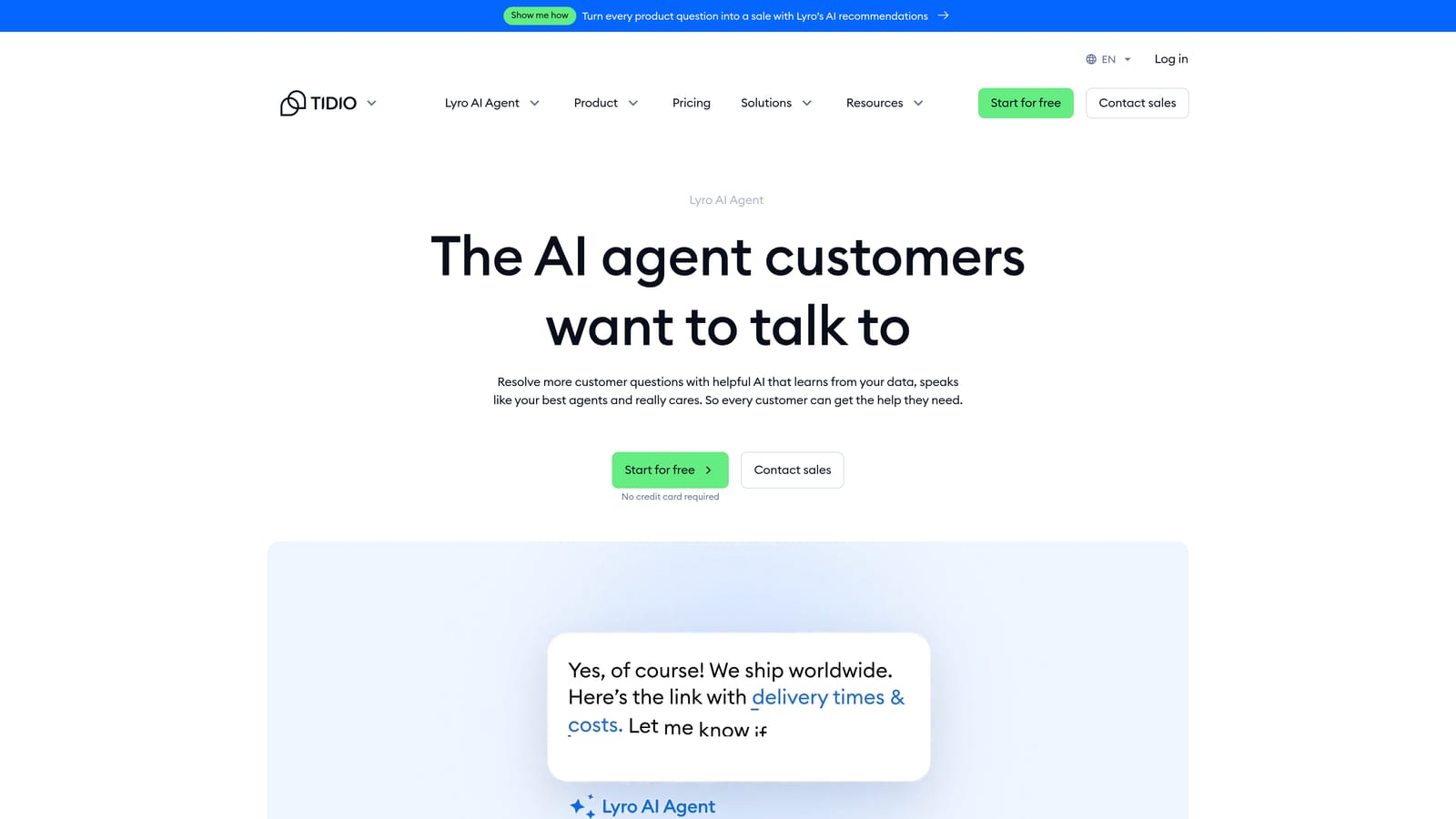
Tidio Lyro is Tidio's conversational AI agent built for fast deployment, focused on autonomous resolution for smaller teams.
Where This Tool Shines
Lyro's defining characteristic is how quickly you can go from signup to autonomous resolution. It learns from your existing FAQ and support content with minimal technical setup, making it accessible for teams without dedicated engineering resources. For remote teams that need AI coverage without a lengthy implementation project, that speed-to-value matters.
The fallback logic is also thoughtfully designed. When Lyro encounters a query outside its confidence threshold, it routes to live chat rather than giving a bad automated response. That kind of graceful degradation keeps customer experience intact even when the AI hits its limits.
Key Features
Lyro AI Autonomous Resolution: Handles repetitive queries independently using your existing support content, with minimal setup required.
Confidence-Based Fallback: Routes queries to live agents when the AI's confidence is below threshold, preventing poor automated responses.
FAQ Learning: Trains on your existing documentation without requiring manual rule-building or intent mapping.
E-Commerce Integrations: Native connections with Shopify and WooCommerce make it a natural fit for online retail support teams.
Usage-Based Lyro Pricing: Costs scale with AI interactions rather than seats, keeping expenses predictable for smaller teams.
Best For
SMB and e-commerce teams with repetitive inbound volume and limited technical resources. Also a strong choice for remote teams that need AI coverage deployed quickly without a lengthy implementation.
Pricing
A free tier is available. Paid Tidio plans start at approximately $29 per month, with Lyro AI priced separately on a usage basis.
7. Zoho Desk with Zia
Best for: Teams already in the Zoho ecosystem that want native AI without additional integrations
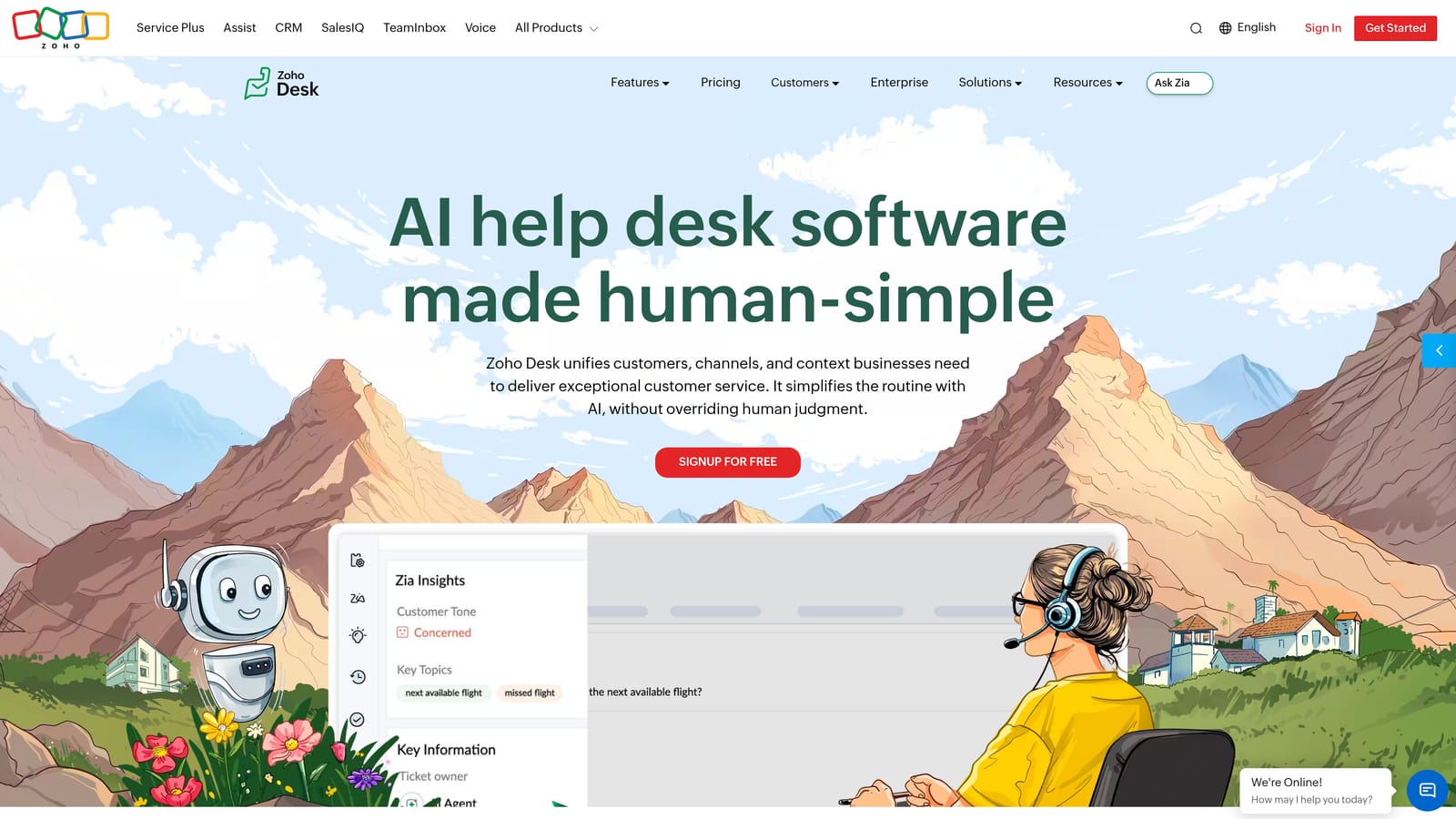
Zoho Desk is Zoho's helpdesk platform with Zia, an AI assistant offering sentiment analysis, auto-tagging, and anomaly detection natively.
Where This Tool Shines
Zia's anomaly detection is a genuinely useful capability for remote managers. When ticket volume spikes unexpectedly, Zia flags it automatically, giving distributed managers early warning of emerging issues without requiring them to monitor dashboards in real time. That kind of proactive alerting is valuable when your team isn't physically co-located.
The native integration with Zoho CRM is also a meaningful advantage for teams already in that ecosystem. Agents get full customer context from the CRM without switching tools, and the data sharing is seamless because it's all within the same platform family.
Key Features
Zia Sentiment Analysis: Reads emotional tone in incoming tickets to help agents prioritize urgent or frustrated customers.
Automatic Ticket Tagging: Categorizes and tags tickets without manual input, keeping queues organized across a distributed team.
Response Suggestions: Recommends replies to agents based on ticket content and historical resolutions.
Anomaly Detection: Proactively alerts managers when ticket volume or patterns deviate from normal, useful for remote oversight.
Native Zoho CRM Integration: Shares customer data bidirectionally with Zoho CRM for unified context without additional connectors.
Best For
Teams already using Zoho CRM or other Zoho products who want to activate AI support without introducing a separate vendor. Also strong for remote managers who value proactive anomaly alerting over reactive reporting.
Pricing
Zia features are included in the Professional plan and above, starting at approximately $23 per agent per month.
8. Kustomer
Best for: High-volume B2C and DTC teams that need a unified customer timeline with AI on top
Kustomer is a CRM-native customer service platform where AI automation operates on a unified customer timeline spanning all interactions and order history.
Where This Tool Shines
Kustomer's core differentiator is the unified timeline. Every touchpoint, purchase, interaction, and support conversation is aggregated into a single view for each customer. When AI makes routing or automation decisions, it's working from that full context rather than just the current ticket. That depth of context produces notably better automation quality.
For remote teams handling high volumes, the behavioral workflow triggers are particularly powerful. Automations can fire based on customer attributes or actions rather than just ticket content, enabling proactive support at scale.
Key Features
Unified Customer Timeline: Aggregates all interactions, orders, and history into a single customer view that informs every AI and agent action.
AI-Powered Routing: Routes tickets based on full customer context, not just ticket metadata, for more accurate assignment.
Behavioral Workflow Automation: Triggers automated actions based on customer attributes or behaviors, enabling proactive support.
Omnichannel Coverage: Manages email, chat, SMS, social, and voice from a single platform.
Suggested Next Actions: AI recommends the optimal next step for agents on complex tickets, speeding up resolution.
Best For
High-volume B2C and DTC operations where customer history depth directly affects support quality. Less suited to lean B2B SaaS teams where the CRM-native complexity may exceed what's needed.
Pricing
Plans start at approximately $89 per agent per month, positioning it toward mid-market and enterprise teams with the volume to justify the investment.
9. Gladly
Best for: Premium consumer brands where relationship continuity across agents is a competitive differentiator
Gladly is a people-centric support platform that threads all conversations by customer rather than ticket number, with AI handling routing and task automation.
Where This Tool Shines
Gladly's fundamental design choice, organizing support around people rather than tickets, has a direct benefit for remote teams. Any agent, anywhere in the world, opens a customer record and sees the complete relationship history: every channel, every interaction, every resolution. There's no risk of a remote agent missing context because it was buried in a closed ticket from three months ago.
Sidekick AI handles self-service resolution for common queries, while the AI routing and task automation keep queues moving efficiently. The result is a platform that feels less like a ticketing system and more like a relationship management tool with automation built in.
Key Features
Customer-Threaded Conversations: All interactions organized by customer rather than ticket number, giving every agent complete relationship context.
Sidekick AI: Self-service AI agent that resolves common queries before they reach the human queue.
AI-Powered Routing: Intelligent task routing based on agent skills, availability, and customer relationship history.
Single Agent View: All channels and interaction history visible in one place, eliminating context-switching for remote agents.
Task Automation: Automates repetitive tasks triggered by conversation content or customer attributes.
Best For
Premium consumer brands with complex, long-term customer relationships where continuity of context across agents is a genuine competitive advantage. The price point reflects an enterprise-tier platform.
Pricing
Enterprise pricing, typically starting above $150 per agent per month. Best suited to teams where support quality is a core brand differentiator and budget reflects that priority.
Which Tool Is Right for Your Remote Team?
The right choice depends less on feature lists and more on where your team is today and where you need to go. Here's a quick way to think through it.
For enterprise scale with compliance requirements: Zendesk AI remains the mature, proven choice. The routing depth, integration ecosystem, and security posture are hard to match at enterprise scale, even if the AI features come at an additional cost.
For budget-conscious growth teams: Freshdesk Freddy AI offers a genuinely capable multichannel AI system at accessible pricing. The free tier lets you start small and scale without a large upfront commitment.
For conversational-first SaaS with strong documentation: Intercom Fin is purpose-built for this scenario. If your team has invested in a solid help center and your customers prefer chat, Fin can deflect a meaningful share of volume with minimal configuration.
For simplicity-first small teams: Help Scout strikes the right balance between AI capability and human-feeling support. The clean interface and collision detection make it particularly easy for distributed teams to stay coordinated without a lot of process overhead.
For AI-first architecture in B2B SaaS: Halo AI is the strongest fit. The page-aware context, continuous learning, business intelligence signals in the smart inbox, and deep integration with tools like Linear, Slack, and HubSpot make it more than a support tool. It becomes an intelligence layer across your entire customer operation.
Your support team shouldn't scale linearly with your customer base. Let AI agents handle routine tickets, guide users through your product, and surface business intelligence while your team focuses on complex issues that need a human touch. See Halo in action and discover how continuous learning transforms every interaction into smarter, faster support.