9 Best AI Ticketing Systems Compared for 2026
This ai ticketing system comparison evaluates nine leading platforms for 2026, helping customer support teams identify which tools offer genuine autonomous resolution versus legacy helpdesks with bolted-on AI features. The guide assesses each system across key criteria including context awareness, integration depth, and human handoff capabilities to match teams with the right solution for their scale and needs.
 Matt PattoliFounder14 min read
Customer support teams are drowning. Ticket volumes climb, customer expectations rise, and the traditional helpdesk model, built around human agents manually triaging every request, simply wasn't designed for this scale. The good news is that AI ticketing systems have matured significantly, moving well beyond simple chatbots into platforms capable of genuine autonomous resolution.
But not all AI ticketing tools are created equal. Some are AI-native platforms built from the ground up around autonomous resolution and continuous learning. Others are legacy helpdesks that have layered AI features on top of existing infrastructure. Both approaches have merit depending on where your team is today.
When evaluating these tools, the criteria that matter most are autonomous resolution capability, context awareness, integration depth, learning loops, and how gracefully each system hands off to human agents when needed. This list covers the full spectrum, from AI-first architectures to AI-augmented helpdesks, so you can find the right fit for your team's specific situation.
1. Halo AI
Best for: B2B SaaS teams wanting autonomous, continuously learning AI support agents
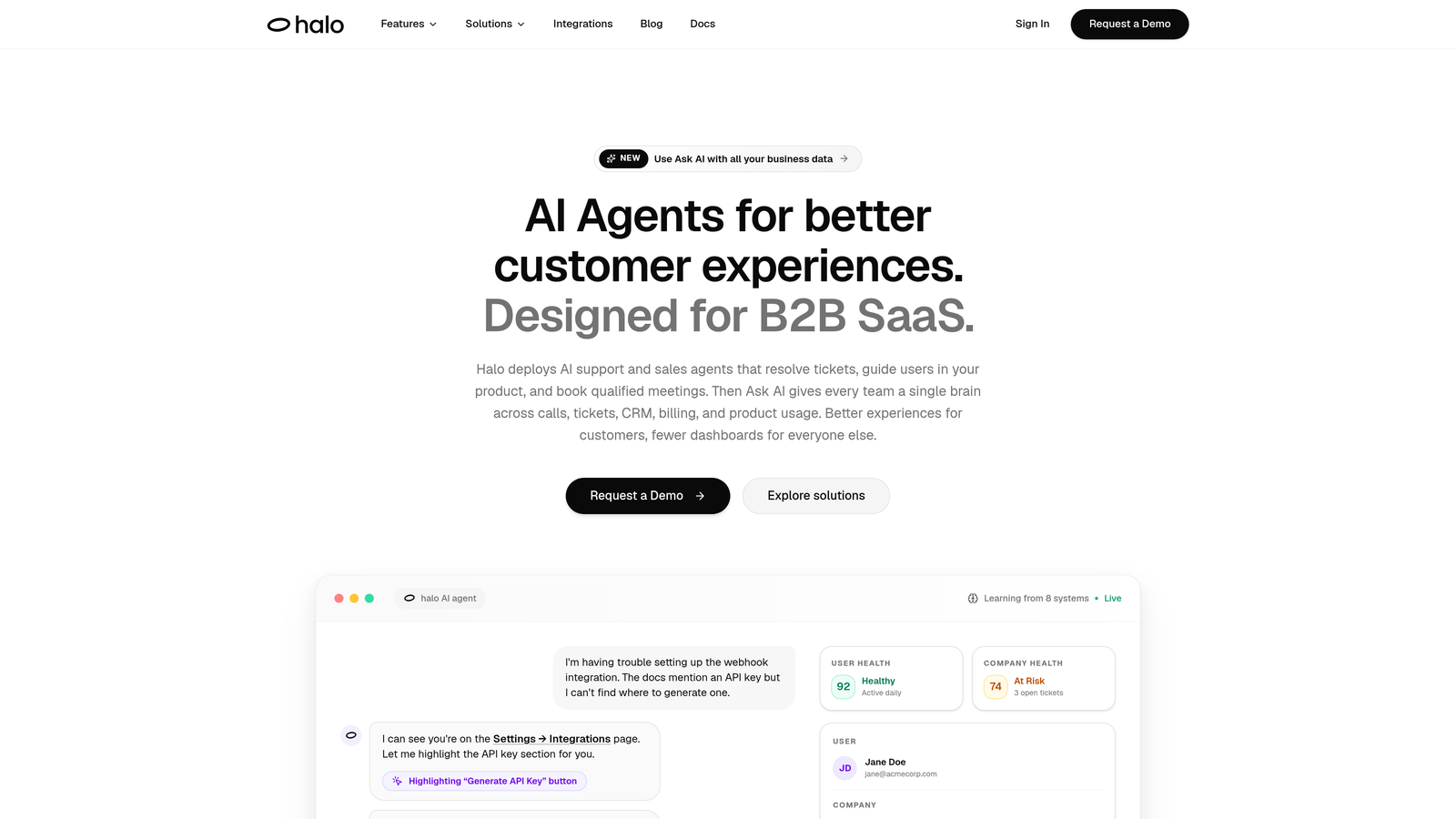
Halo AI is an AI-first customer support platform built around autonomous ticket resolution, page-aware context, and business intelligence for B2B SaaS teams.
Where This Tool Shines
What separates Halo from most tools on this list is its architecture. It wasn't built as a bolt-on to an existing helpdesk. The entire platform is designed around AI-native resolution, which means the learning loops, context awareness, and integration depth are first-class features rather than afterthoughts.
The page-aware chat widget is particularly compelling for SaaS products. The AI agent sees exactly what the user sees in your product at that moment, allowing it to provide contextual guidance rather than generic knowledge base answers. Combined with continuous learning from every interaction, the system genuinely gets smarter over time.
Key Features
Page-Aware AI Agents: The AI understands the user's current product state and page context, enabling precise, relevant resolution rather than generic responses.
Autonomous Ticket Resolution: AI agents close tickets independently with continuous learning from every resolved interaction, improving accuracy over time.
Auto Bug Ticket Creation: Automatically creates and routes bug reports to Linear and connected dev tools when issues are detected, closing the loop between support and engineering.
Smart Inbox with Business Intelligence: Goes beyond ticket counts to surface customer health signals, anomaly detection, and revenue intelligence directly from support interactions.
Live Agent Handoff: When escalation is needed, full conversation context is preserved and transferred to human agents seamlessly, with no loss of history.
Integration Stack: Connects to Linear, Slack, HubSpot, Intercom, Stripe, Zoom, PandaDoc, and Fathom, making it a connective layer across your entire business stack.
Best For
Halo is best suited to B2B SaaS companies and product teams that want AI agents doing real resolution work, not just suggesting replies to human agents. It's particularly strong for teams where support insights need to flow into product, engineering, and revenue workflows.
Pricing
Pricing is not publicly listed. Contact Halo directly or request a demo at haloagents.ai for current pricing details.
2. Zendesk AI
Best for: Large enterprise teams already invested in the Zendesk ecosystem
Zendesk AI is an AI layer built into Zendesk's enterprise helpdesk platform, adding intelligent triage, agent copilot, and conversation summarization to existing workflows.
Where This Tool Shines
If your team is already running on Zendesk, the AI features are a natural extension with minimal adoption friction. You don't have to migrate data, retrain your team on a new interface, or rebuild your existing workflows. The AI plugs into what you already have.
The agent copilot is genuinely useful for high-volume teams where agents handle similar queries repeatedly. Suggested replies and next-best-action recommendations reduce the cognitive load on agents without removing them from the loop entirely.
Key Features
Intelligent Triage and Routing: Automatically categorizes and routes incoming tickets with AI-suggested macros to speed up agent workflows.
Agent Copilot: Provides suggested replies and next-best-action recommendations to help agents respond faster and more consistently.
Conversation Summarization: Condenses long ticket threads into concise summaries, reducing the time agents spend getting up to speed on complex cases.
Generative AI for Knowledge Base: Helps teams create and expand knowledge base content using generative AI, reducing the manual effort of documentation.
Native Workflow Integration: AI features work within existing Zendesk triggers, automations, and views, minimizing disruption to established processes.
Best For
Teams already on Zendesk Suite who want to add AI capability without platform migration. Less compelling as a standalone choice if you're evaluating from scratch, since the AI is an augmentation layer rather than the core architecture.
Pricing
AI features are available on higher Suite tiers. Verify current pricing at zendesk.com/pricing.
3. Intercom Fin
Best for: Teams already using Intercom who want AI resolution within their existing messenger
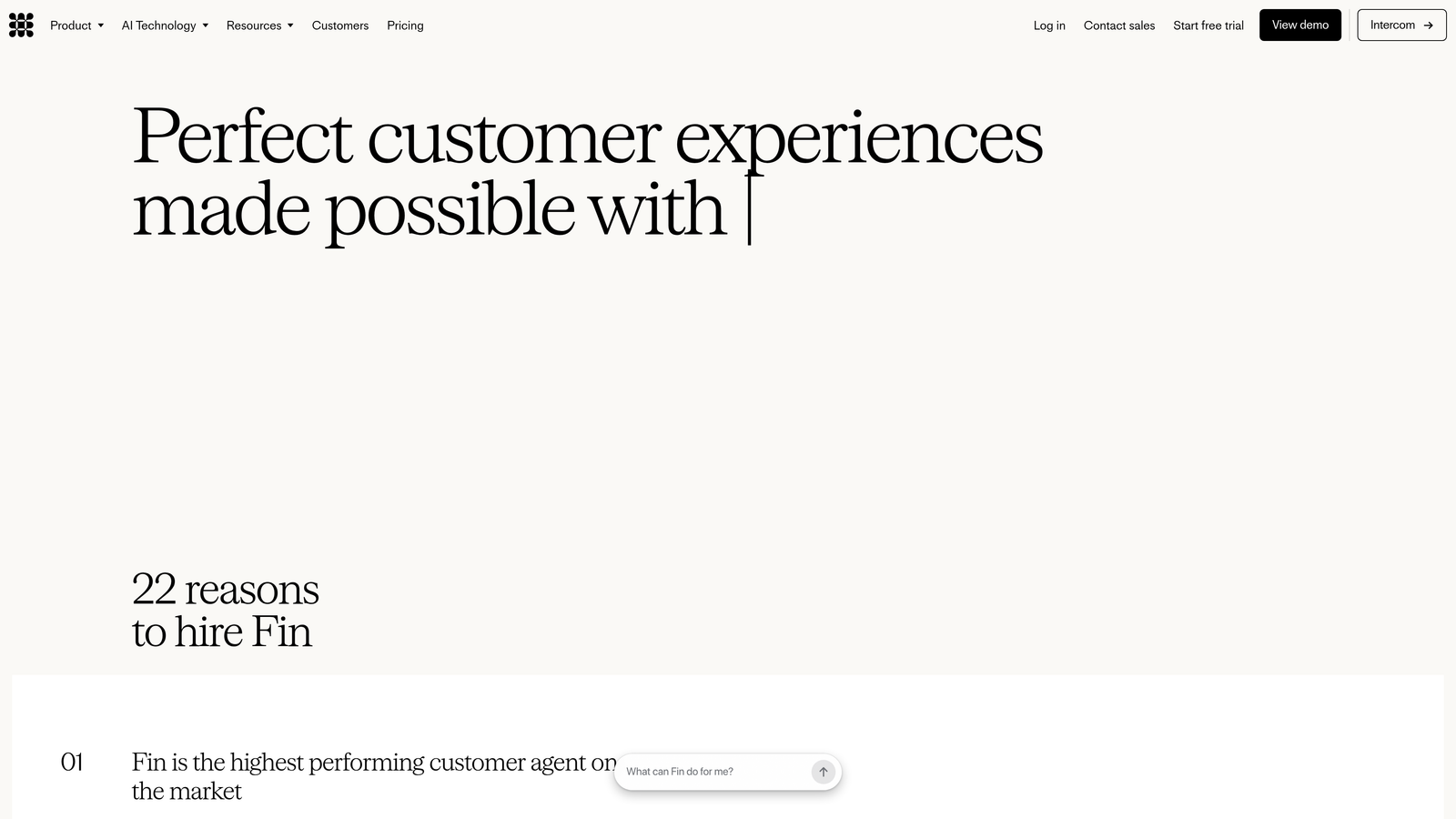
Intercom Fin is Intercom's native AI agent that resolves customer conversations using connected knowledge sources, operating directly within the Intercom messenger experience.
Where This Tool Shines
Fin has improved considerably since its initial launch and is now capable of handling multi-step conversations with clarification capability, not just simple FAQ lookups. It draws on your connected knowledge base, articles, and other content sources to construct contextually relevant answers.
The seamless handoff to human agents within Intercom is one of its strongest points. Because everything lives in the same platform, the transition from AI to human feels natural to customers and agents alike. There's no awkward context switch.
Key Features
Knowledge-Trained AI Agent: Fin learns from your existing knowledge base, help articles, and connected content without requiring complex setup or training pipelines.
Multi-Step Conversation Handling: Capable of asking clarifying questions and handling conversations that require multiple exchanges to resolve.
Seamless Human Handoff: Transfers conversations to human agents within Intercom with full context preserved, maintaining continuity for the customer.
Per-Resolution Pricing Option: An alternative pricing model based on resolved conversations rather than seat counts, which can be cost-effective for certain support volumes.
Multi-Channel Support: Works across web, mobile, and email channels within the Intercom ecosystem.
Best For
Companies already using Intercom as their primary support and messaging platform. The switching cost argument is strong here: if Intercom is already your system of record, Fin is the lowest-friction path to AI resolution.
Pricing
Fin is available on Intercom plans with a per-resolution pricing option available. Verify current details at intercom.com/pricing.
4. Freshdesk Freddy AI
Best for: SMBs wanting AI-powered support without enterprise pricing or complexity
Freshdesk Freddy AI is Freshdesk's AI suite covering agent assist, self-service automation, and analytics, positioned as an accessible AI upgrade for growing support teams.
Where This Tool Shines
Freddy AI's real advantage is accessibility. The pricing is competitive relative to enterprise alternatives, and the three-component structure (Copilot for agents, Self Service for customers, Insights for analytics) gives teams a complete AI toolkit without requiring a large implementation budget.
For SMBs that have outgrown basic helpdesks but aren't ready for enterprise-tier solutions, Freddy hits a practical middle ground. The auto-triage and categorization features alone can meaningfully reduce the manual overhead on small support teams.
Key Features
Freddy Copilot: Provides agents with AI-suggested replies and next-step recommendations to speed up response times without removing human oversight.
Freddy Self Service: Customer-facing AI bot that handles deflection for common queries, reducing inbound ticket volume before it reaches agents.
Freddy Insights: AI-powered analytics and reporting that surfaces patterns and trends in support data to inform team decisions.
Auto-Triage and Categorization: Automatically sorts and categorizes incoming tickets so agents can prioritize without manual sorting.
Accessible Pricing: Competitive pricing relative to enterprise alternatives makes AI features reachable for smaller teams and tighter budgets.
Best For
SMBs and growing teams on Freshdesk who want to add AI capability incrementally. Also a strong consideration for teams evaluating Zendesk alternatives who want similar functionality at a lower price point.
Pricing
Freddy AI features are available on Growth plans and above. Freshdesk offers a free tier for basic use. Verify current pricing at freshworks.com/freshdesk/pricing.
5. Salesforce Agentforce
Best for: Enterprise organizations running their entire business on the Salesforce platform
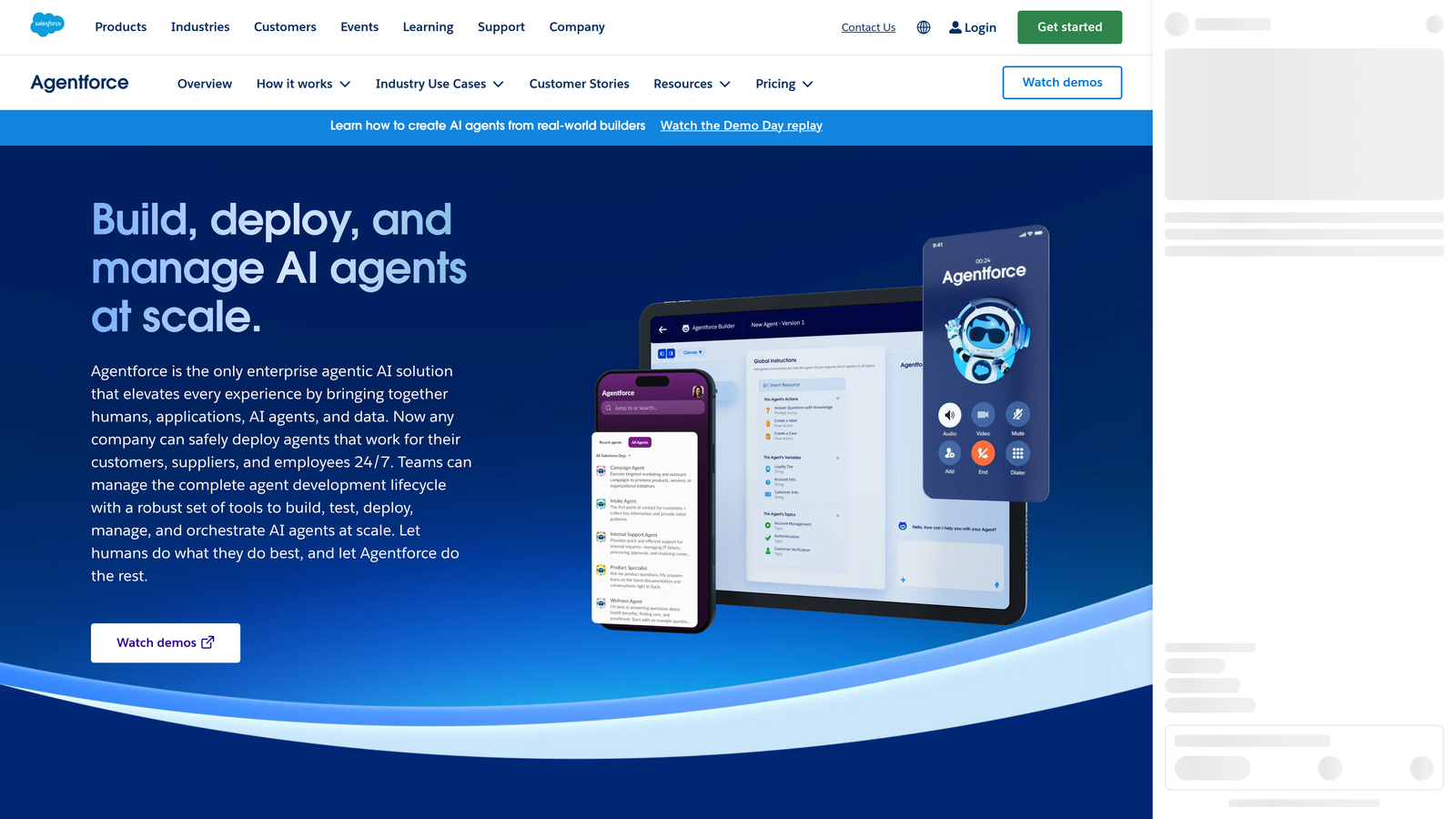
Salesforce Agentforce is Salesforce's AI agent platform integrated with Service Cloud, enabling autonomous support actions powered by full CRM data context.
Where This Tool Shines
Agentforce's defining advantage is CRM depth. When your AI agent can access a customer's complete Salesforce record, including their purchase history, open opportunities, contract status, and prior service interactions, the quality of resolution and context is genuinely superior to platforms working with support data alone.
For enterprises where support and sales data must stay unified, this integration isn't just convenient, it's architecturally important. Agentforce is built for organizations where the support team needs to see the same customer picture as the sales and success teams.
Key Features
CRM-Trained AI Agents: AI agents operate with full access to Salesforce data models and customer records, enabling highly contextualized resolution.
Deep Service Cloud Integration: Seamlessly connects CRM data with support workflows, automating actions across Salesforce objects without manual handoffs.
Autonomous Action Capability: Agents can take autonomous actions across Salesforce objects, not just suggest responses, moving toward genuine resolution rather than assisted drafting.
Einstein AI Foundation: Built on Salesforce's Einstein AI layer with LLM-powered reasoning for complex query handling.
Unified Sales and Support Data: Keeps support interactions connected to revenue data, enabling support teams to flag churn risk and expansion signals.
Best For
Large enterprises already running on Salesforce where implementation complexity and cost are acceptable in exchange for deep CRM integration. Not practical as a standalone support tool for teams outside the Salesforce ecosystem.
Pricing
Enterprise-tier pricing. Verify current details at salesforce.com/pricing.
6. Tidio Lyro
Best for: E-commerce brands and small businesses needing affordable AI support automation
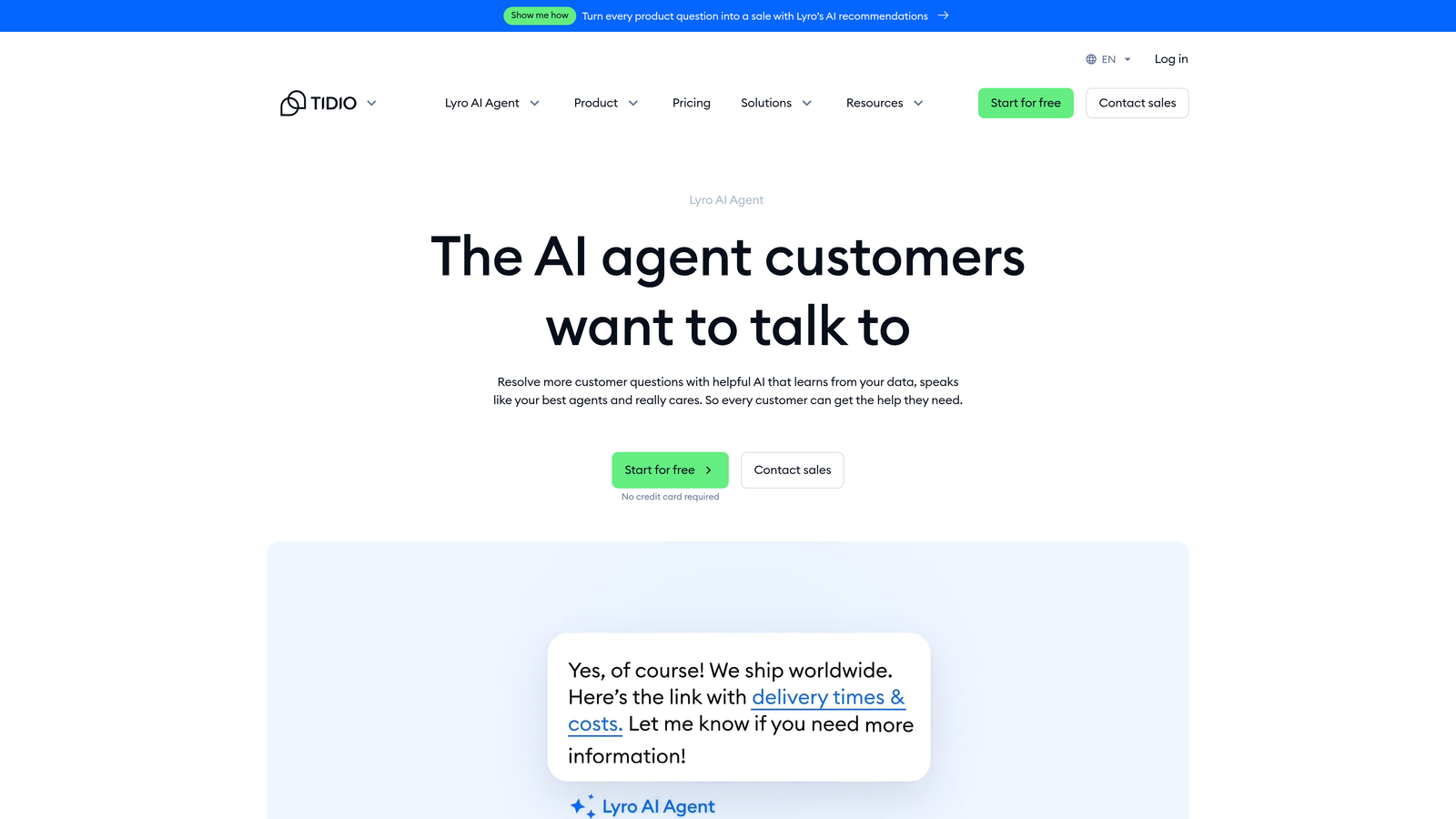
Tidio Lyro is Tidio's conversational AI agent trained on your website and help content, designed for small businesses wanting automated support without enterprise overhead.
Where This Tool Shines
Lyro's barrier to entry is genuinely low. You don't need a complex implementation project or a dedicated technical team to get it running. It trains on your existing content and starts handling repetitive queries quickly, which is exactly what small e-commerce teams need.
The Shopify integration is a practical advantage for retail brands. Order status queries, return policy questions, and product FAQs are among the highest-volume, most repetitive support queries for e-commerce teams, and Lyro handles these types of requests well.
Key Features
Content-Trained AI: Lyro trains on your website content and help documentation with no complex setup, getting operational quickly without technical configuration.
Repetitive Query Handling: Designed to deflect high-volume FAQ and order-related queries automatically, reducing the load on small support teams.
Native E-Commerce Integrations: Shopify and other e-commerce platform integrations make it a natural fit for online retail brands.
Live Chat Fallback: When Lyro can't resolve a query, it falls back to live chat smoothly, keeping the customer experience intact.
Free Plan Entry Point: A free tier makes it accessible for businesses testing AI support automation before committing to paid plans.
Best For
Small e-commerce businesses and startups that need to reduce repetitive support volume without a large budget. Less suited to complex B2B support scenarios or teams needing deep integration with product and engineering tools.
Pricing
Free plan available. Lyro is available on paid tiers with expanded resolution limits. Verify current pricing at tidio.com/pricing.
7. Help Scout
Best for: Small teams that want AI assistance while keeping humans firmly in control
Help Scout is a human-first helpdesk with AI co-pilot features that reduce repetitive work for agents while preserving human judgment at every step.
Where This Tool Shines
Help Scout's philosophy is deliberately different from autonomous AI resolution platforms. Here, AI is a productivity tool for human agents, not a replacement for them. If your team or your customers aren't ready for fully autonomous AI responses, Help Scout's approach is a comfortable middle ground.
The interface is clean and minimal, which matters more than it might seem. Overcomplicated helpdesks create their own overhead. Help Scout's simplicity is a feature, particularly for small teams where every tool needs to be picked up quickly without extensive training.
Key Features
AI Drafts: Generates reply drafts for agents to review, edit, and send, accelerating response time without removing human oversight from outgoing messages.
AI Summarize: Condenses long conversation threads into concise summaries so agents can get up to speed on complex cases without reading every message.
AI Assist: Improves the tone, clarity, and length of agent-written responses before they're sent, functioning as an inline writing assistant.
Beacon Widget: Proactive self-service widget that surfaces relevant help content before customers need to submit a ticket.
Clean Interface: Minimal, intuitive design that reduces onboarding time and doesn't overwhelm small teams with unnecessary complexity.
Best For
Small to mid-sized teams that value simplicity and human-in-the-loop AI. Particularly well-suited for companies where brand voice consistency is critical and teams want to review AI output before it reaches customers.
Pricing
Plans start at accessible rates for small teams. Verify current pricing at helpscout.com/pricing.
8. Kustomer
Best for: High-volume consumer and subscription businesses where customer history drives resolution quality
Kustomer is a CRM-native support platform where AI resolution is informed by complete customer timelines, making it particularly effective for businesses with complex, long-running customer relationships.
Where This Tool Shines
The core differentiator is the timeline model. Every support interaction in Kustomer is attached to a full customer history: previous orders, prior conversations, subscription status, and behavioral data. When AI is working from that level of context, resolution accuracy improves significantly compared to systems that only see the current ticket.
This makes Kustomer particularly strong for D2C brands and subscription businesses where repeat customers are the norm. An AI that knows this is a customer's third return request in six months can respond very differently than one treating every interaction as a first contact.
Key Features
Full Customer Timeline: Every AI resolution decision is informed by the customer's complete interaction history, not just the current conversation.
AI-Powered Routing and Triage: Automatically routes conversations to the right team or workflow based on content, customer segment, and historical context.
Omnichannel Unified View: Email, chat, SMS, and social conversations are unified in a single customer view, giving AI and agents full channel context.
Workflow Automation with AI Triggers: Automated workflows can be triggered by AI-detected signals, enabling proactive actions rather than purely reactive responses.
D2C and Subscription Optimization: Purpose-built features for consumer brands managing complex customer histories and high interaction frequency.
Best For
D2C brands, subscription businesses, and consumer companies where customer lifetime history is essential context for support resolution. Less suited to B2B SaaS teams needing product-level context and engineering integrations.
Pricing
Enterprise-focused pricing. Verify current details at kustomer.com/pricing.
9. Gladly
Best for: Premium retail and consumer brands where relationship continuity defines the customer experience
Gladly is a people-centric support platform that organizes conversations around customers rather than ticket IDs, with AI surfacing complete relationship context across every channel.
Where This Tool Shines
Gladly's fundamental premise is that ticket numbers are the wrong organizing principle for customer support. Instead of managing tickets, agents manage people. Every conversation a customer has ever had with your brand, across any channel, appears in a single continuous timeline. It's a meaningful philosophical shift that changes how agents interact with customers.
The Sidekick AI self-service layer handles resolution for straightforward queries, while the people-based model ensures that when a customer does reach a human, that agent has full relationship context immediately. Brands like Nordstrom and Crate and Barrel have publicly cited Gladly as their support platform, which speaks to its positioning in the premium retail segment.
Key Features
People-Based Model: Conversations are organized around individual customers rather than ticket IDs, creating a continuous relationship record rather than isolated cases.
Complete Cross-Channel Timeline: AI and agents see the full customer history across voice, email, chat, SMS, and social in a single unified view.
Sidekick AI: Self-service AI layer that resolves common queries autonomously before routing to human agents when needed.
Relationship Continuity: Designed specifically for brands where customers expect to be recognized and remembered across every interaction, not treated as a new ticket each time.
Omnichannel Unified View: Voice, email, chat, SMS, and social channels all feed into the same customer timeline, eliminating channel silos for agents.
Best For
Premium retail and consumer brands where relationship quality and brand experience are as important as resolution speed. The people-based model resonates most with companies that have long-term, repeat customer relationships and a strong brand identity to protect.
Pricing
Enterprise-tier pricing. Verify current details at gladly.com/pricing.
Which Tool Is Right for Your Team?
The right AI ticketing system depends almost entirely on where you are today and what you're trying to build toward. Here's a quick way to orient your decision.
If you're a B2B SaaS team wanting autonomous AI agents that learn and improve: Halo AI is the strongest fit. The page-aware context, continuous learning architecture, and business intelligence layer are built specifically for product-led companies where support insights should feed back into engineering and revenue workflows.
If you're already on Zendesk or Intercom: Zendesk AI and Intercom Fin offer the lowest-friction path to AI capability. You won't need to migrate anything, and the AI features are solid for teams that want to augment rather than replace their existing setup.
If you're an SMB watching budget closely: Freshdesk Freddy AI gives you a complete AI toolkit at pricing that won't require executive sign-off. Tidio Lyro is worth exploring if you're in e-commerce and need something running quickly on a minimal budget.
If you're an enterprise running on Salesforce: Agentforce is the logical choice. The CRM depth it provides is unmatched for organizations where support and sales data must stay unified.
If relationship continuity is your brand's defining quality: Gladly's people-based model and Kustomer's timeline architecture are both worth evaluating, depending on whether you're in premium retail or high-volume subscription commerce.
Your support team shouldn't scale linearly with your customer base. Let AI agents handle routine tickets, guide users through your product, and surface business intelligence while your team focuses on complex issues that need a human touch. See Halo in action and discover how continuous learning transforms every interaction into smarter, faster support.