9 Best AI Ticketing System Software Tools in 2026
Discover the 9 best AI ticketing system software tools in 2026, evaluated on autonomous resolution capability, integration depth, and scalability for B2B SaaS teams. This guide helps support teams move beyond manual triage to platforms that resolve tickets autonomously, detect queue patterns, and surface actionable business intelligence—whether you're replacing a legacy helpdesk or enhancing an existing stack.
 Matt PattoliFounder13 min read
If your support team is still manually triaging every ticket, routing requests by hand, and writing the same responses over and over, there's a better way. AI ticketing system software has matured significantly, moving well beyond simple auto-replies into platforms that can resolve tickets autonomously, detect patterns across your entire support queue, and surface business intelligence your team didn't know it was missing.
This list covers the best AI ticketing tools available in 2026, evaluated on autonomous resolution capability, integration depth, learning over time, and fit for B2B SaaS teams. Whether you're replacing a legacy helpdesk or layering AI onto an existing stack, there's a tool here worth your attention.
Selection criteria: native AI architecture (not a bolt-on), multi-channel support, integration ecosystem, scalability for growing teams, and transparent pricing.
1. Halo AI
Best for: B2B SaaS teams that want AI-first support with business intelligence built in
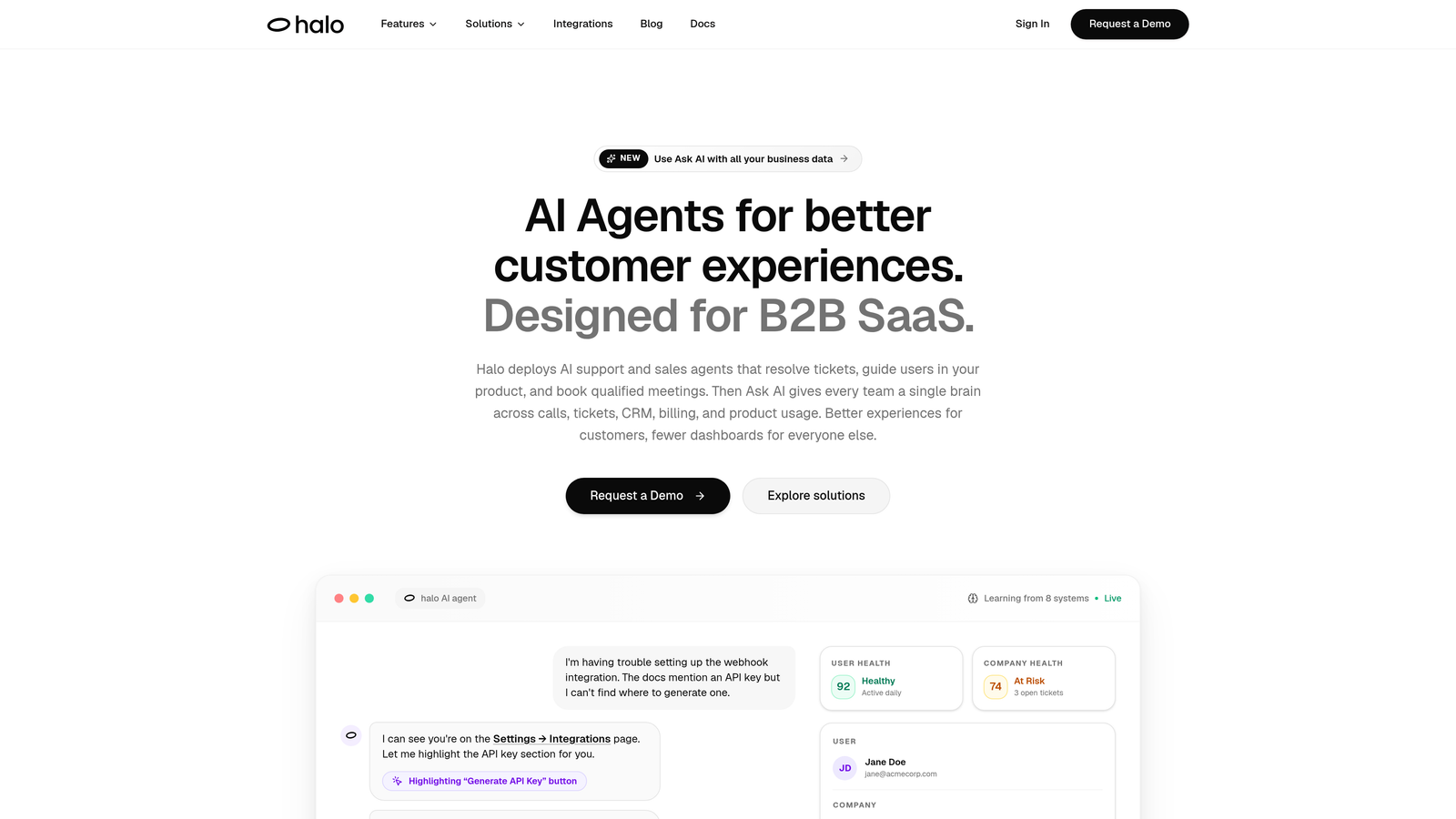
Halo AI is an AI-first customer support platform that resolves tickets autonomously, guides users through your product with page-aware context, and surfaces intelligence across your entire support operation.
Where This Tool Shines
Most AI ticketing tools are helpdesks with AI features added on top. Halo is built the other way around: AI is the foundation, and everything else extends from it. That distinction matters when it comes to how quickly the system learns, how autonomously it can act, and how much value it returns beyond ticket resolution.
The page-aware chat widget is one of Halo's most distinctive capabilities. The AI can see what page a user is on, what state they're in, and deliver contextual visual guidance in response. That's a fundamentally different experience from a generic chatbot that responds the same way regardless of where a user is in your product.
Key Features
Page-Aware Chat Widget: Sees what users see in real time and provides contextual, visual in-product guidance rather than generic responses.
Autonomous Ticket Resolution: AI agents resolve tickets end-to-end with continuous learning from every interaction, improving accuracy over time without manual retraining.
Auto Bug Ticket Creation: Detects issues automatically and files structured bug reports directly into your development workflow.
Smart Inbox with Business Intelligence: Surfaces customer health signals, revenue anomalies, and product insights — going well beyond support into operational intelligence.
Live Agent Handoff: Escalates to human agents gracefully with full conversation context preserved, so nothing gets repeated or lost.
Integration Ecosystem: Connects to Linear, Slack, HubSpot, Intercom, Stripe, Zoom, PandaDoc, and Fathom out of the box.
Best For
Halo is purpose-built for B2B SaaS companies and product-led growth teams. If you want support that doesn't just close tickets but also feeds intelligence back to your product, revenue, and customer success teams, this is the platform to evaluate first.
Pricing
Visit haloagents.ai for current pricing plans. Pricing is not published as a flat rate, so it's worth reaching out to understand fit for your team size.
2. Zendesk AI
Best for: Enterprise support teams with complex routing, compliance, and workflow requirements
Zendesk AI is the intelligent layer built into one of the world's most established helpdesk platforms, offering triage automation, AI-generated responses, and deep workflow logic for large support organizations.
Where This Tool Shines
Zendesk's scale and ecosystem depth are genuinely hard to match. With over a thousand marketplace integrations and years of enterprise deployments behind it, the platform handles complexity well: multi-brand support, granular SLA management, and compliance requirements that smaller tools simply aren't built for.
The AI capabilities have improved considerably, with intent and sentiment detection informing routing decisions and AI-generated reply suggestions reducing time spent on repetitive responses. That said, Zendesk's AI is layered onto a traditional ticketing architecture rather than built natively around it, which is worth factoring into your evaluation if autonomous resolution is a priority.
Key Features
Intelligent Triage: Detects intent and sentiment on incoming tickets to route them to the right team or trigger automated workflows.
AI-Generated Reply Suggestions: Recommends responses and macros to agents, reducing time spent drafting routine answers.
Advanced Routing and Escalation: Sophisticated logic for multi-tier support organizations with complex escalation paths.
1,000+ Integrations: Extensive marketplace covering CRM, analytics, communication, and developer tools.
SLA Management and Reporting: Comprehensive tools for tracking performance against service level agreements.
Best For
Large enterprise teams with established support operations, compliance requirements, and the resources to configure and maintain a complex platform. Less ideal for smaller teams looking for fast deployment or AI-native architecture.
Pricing
AI features are available on higher-tier plans. See zendesk.com for current pricing, as plan structures are updated regularly.
3. Freshdesk Freddy AI
Best for: Mid-market teams wanting AI assistance across agent, self-service, and analytics layers
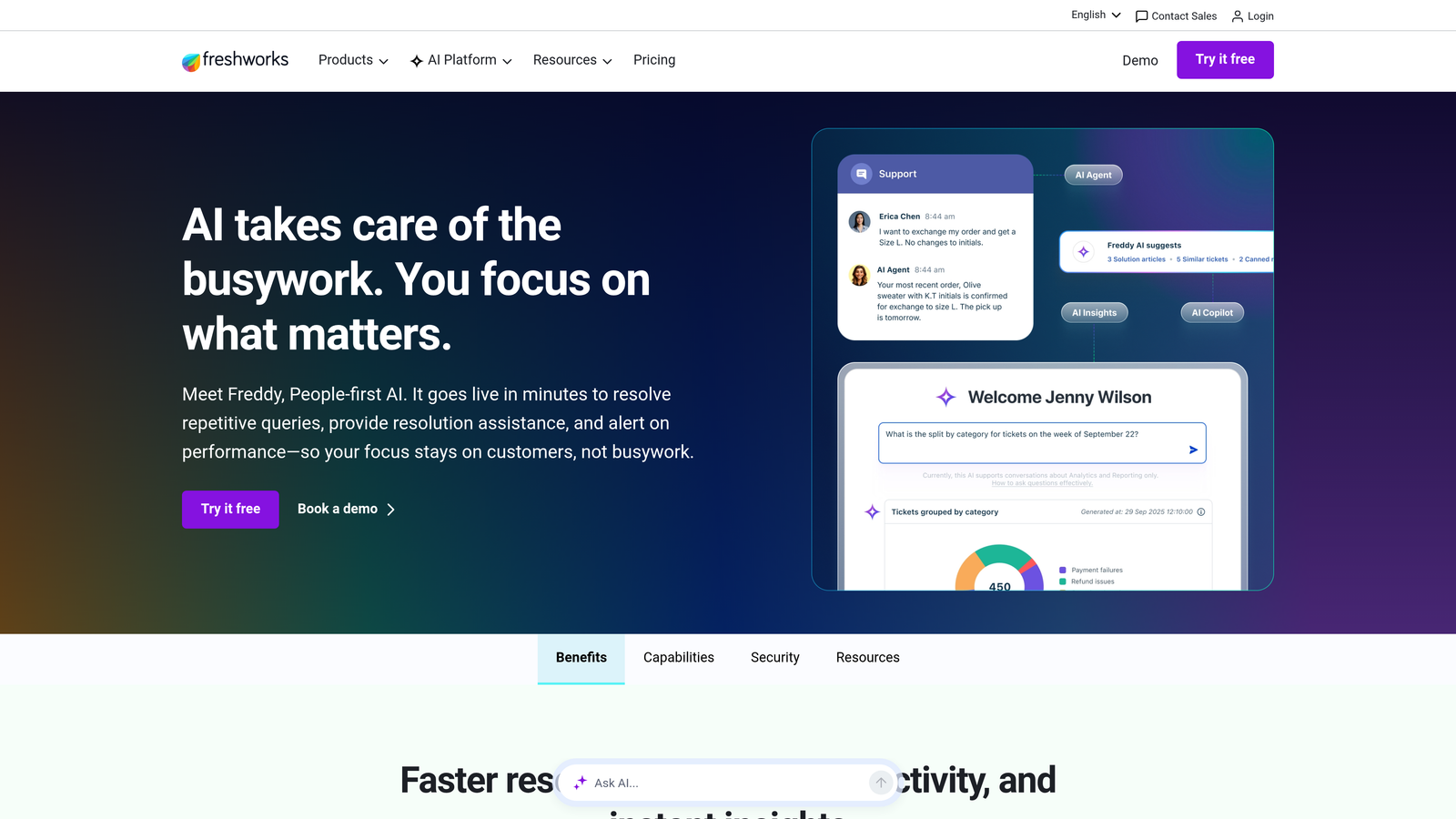
Freshdesk Freddy AI is Freshworks' intelligent assistant embedded across Freshdesk, covering agent copilot features, self-service automation, and performance analytics in a single, cost-competitive package.
Where This Tool Shines
Freddy AI is structured around three distinct roles: helping agents work faster, deflecting common queries before they reach agents, and giving managers visibility into what's happening across the queue. That layered approach means you can adopt it gradually rather than flipping everything at once.
For mid-market teams that find Zendesk's pricing hard to justify, Freshdesk often hits a better value point while still covering the core AI capabilities most support teams actually need day-to-day.
Key Features
Freddy Copilot: Assists agents with response drafting, thread summarization, and suggested next steps in real time.
Freddy Self Service: Powers automated chatbot resolution for common queries before they reach the queue.
Freddy Insights: Anomaly detection and performance analytics to help managers spot trends and capacity issues early.
Multi-Channel Support: Covers email, chat, phone, and social from a single platform.
Competitive Pricing: Positioned as a strong value alternative to enterprise-tier helpdesks for growing teams.
Best For
Mid-market support teams that want AI across the full support workflow without enterprise-level cost or implementation complexity. Works well for teams already in the Freshworks ecosystem.
Pricing
Freddy AI is available as an add-on to Freshdesk plans. See freshworks.com for current plan details and add-on pricing.
4. Intercom Fin
Best for: SaaS companies with high volumes of conversational, product-related support queries
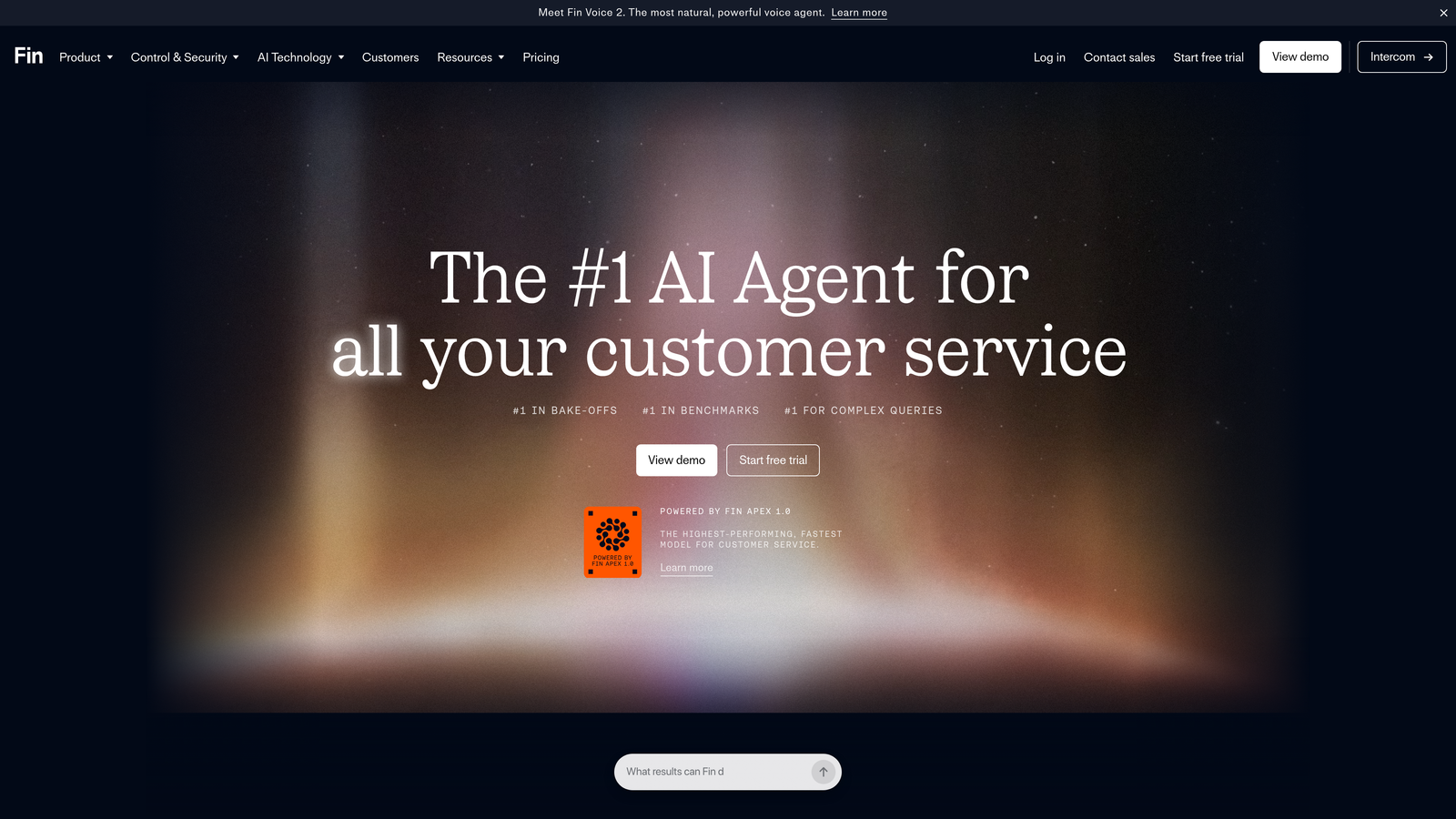
Intercom Fin is Intercom's AI agent designed to autonomously resolve inbound support conversations, with particular strength in product-related queries for software companies.
Where This Tool Shines
Fin is built to resolve conversations, not just assist with them. It connects to your knowledge base and uses large language models to generate accurate, grounded answers rather than scripted responses. For SaaS products where users frequently ask "how do I do X" questions, Fin handles a meaningful portion of inbound volume without agent involvement.
It also sits inside Intercom's broader messaging and engagement platform, which means if you're already using Intercom for onboarding, outbound messaging, or product tours, Fin integrates naturally rather than requiring a separate tool.
Key Features
Autonomous Conversation Resolution: Handles inbound queries end-to-end using LLM-powered responses grounded in your knowledge base.
Knowledge Base Integration: Connects directly to your existing content for accurate, up-to-date answers.
AI Copilot for Agents: Assists human agents on complex tickets with suggested responses and context surfacing.
Seamless Human Handoff: Routes to live agents when conversations exceed Fin's confidence or scope.
Intercom Platform Integration: Works within Intercom's full suite of messaging, onboarding, and engagement tools.
Best For
SaaS companies already using or considering Intercom as their primary customer communication platform. Strong for product-led teams with high FAQ and how-to query volume.
Pricing
Fin is priced per resolution on some plans, which can scale differently than seat-based pricing. See intercom.com for the current pricing structure.
5. Tidio Lyro
Best for: SMBs and smaller SaaS teams that need AI ticketing deployed quickly with minimal setup
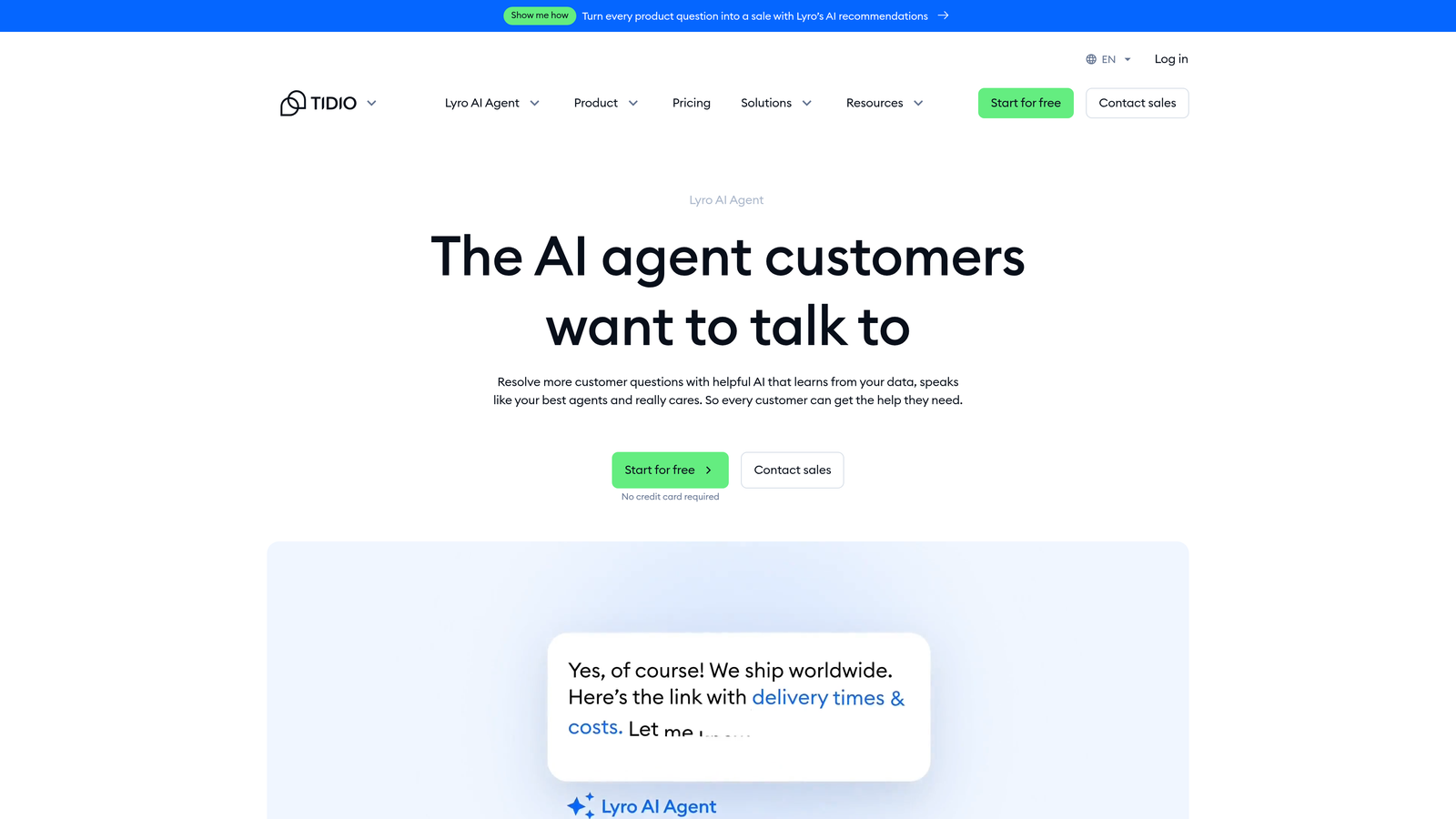
Tidio Lyro is a conversational AI agent built for fast deployment, combining live chat, ticketing, and automated resolution in a single accessible platform.
Where This Tool Shines
Lyro's main advantage is speed to value. Many AI ticketing platforms require significant configuration, training data, and integration work before they're useful. Lyro is designed to get running quickly with minimal data requirements, which makes it practical for smaller teams that don't have a dedicated support ops function.
The platform bundles live chat, ticketing, and AI into one tool, which reduces the number of systems a small team needs to manage. For companies at an earlier stage, that consolidation matters more than advanced enterprise features.
Key Features
Fast Setup: Designed to be operational quickly with minimal training data or configuration overhead.
Autonomous FAQ Handling: Resolves common questions, troubleshooting requests, and standard queries without agent involvement.
Unified Platform: Combines live chat, ticketing, and AI automation in a single interface.
Conversation Analytics: Tracks resolution rates and conversation performance to identify gaps over time.
Free Tier Available: Low-volume teams can get started without upfront cost.
Best For
Small businesses, early-stage SaaS teams, and e-commerce companies that need AI support up and running fast without enterprise-level complexity or budget.
Pricing
A free tier is available with conversation limits. Paid plans with higher volume and advanced features are listed at tidio.com.
6. Help Scout AI
Best for: Teams that prioritize relationship quality and want AI assistance without full automation
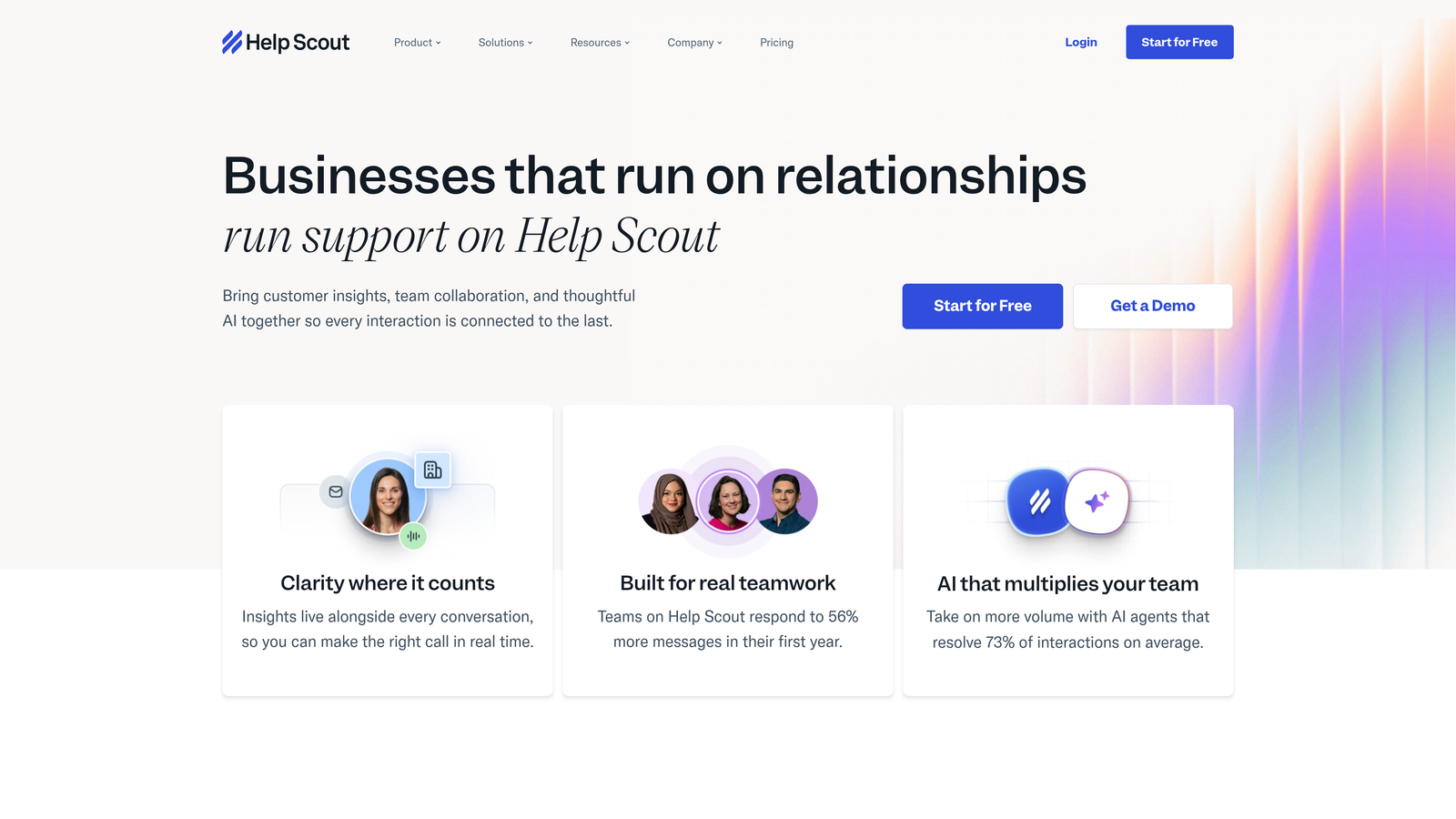
Help Scout has added AI features designed to boost agent productivity while deliberately keeping humans in control of every customer interaction.
Where This Tool Shines
Help Scout's philosophy is different from most tools on this list. Rather than maximizing autonomous resolution, it focuses on making agents faster and more effective. That's a deliberate product choice, and it resonates with teams where the quality of human interaction is a competitive differentiator rather than a cost to be minimized.
The interface is clean and distraction-free by design, and the AI features feel like natural extensions of the agent workflow rather than separate systems to manage. If your team culture values thoughtful, relationship-driven support, Help Scout fits that ethos well.
Key Features
AI Drafts: Generates full reply drafts for agents to review, edit, and send — keeping humans in the loop on every response.
AI Summarize: Condenses long conversation threads into quick context summaries so agents can get up to speed instantly.
AI Assist: Adjusts tone, translates messages, and expands brief notes into complete responses.
Shared Inbox and Collaboration: Strong team collaboration features built around a clean, focused inbox experience.
Distraction-Free Interface: Designed specifically to reduce cognitive load for agents handling high volumes.
Best For
Support teams where human relationship quality matters as much as efficiency. Particularly well-suited to companies in professional services, B2B, or any context where customers expect personalized, thoughtful responses.
Pricing
AI features are included in higher-tier plans. Current pricing is available at helpscout.com.
7. Salesforce Service Cloud Einstein
Best for: Enterprise teams already in the Salesforce ecosystem needing AI across the full customer lifecycle
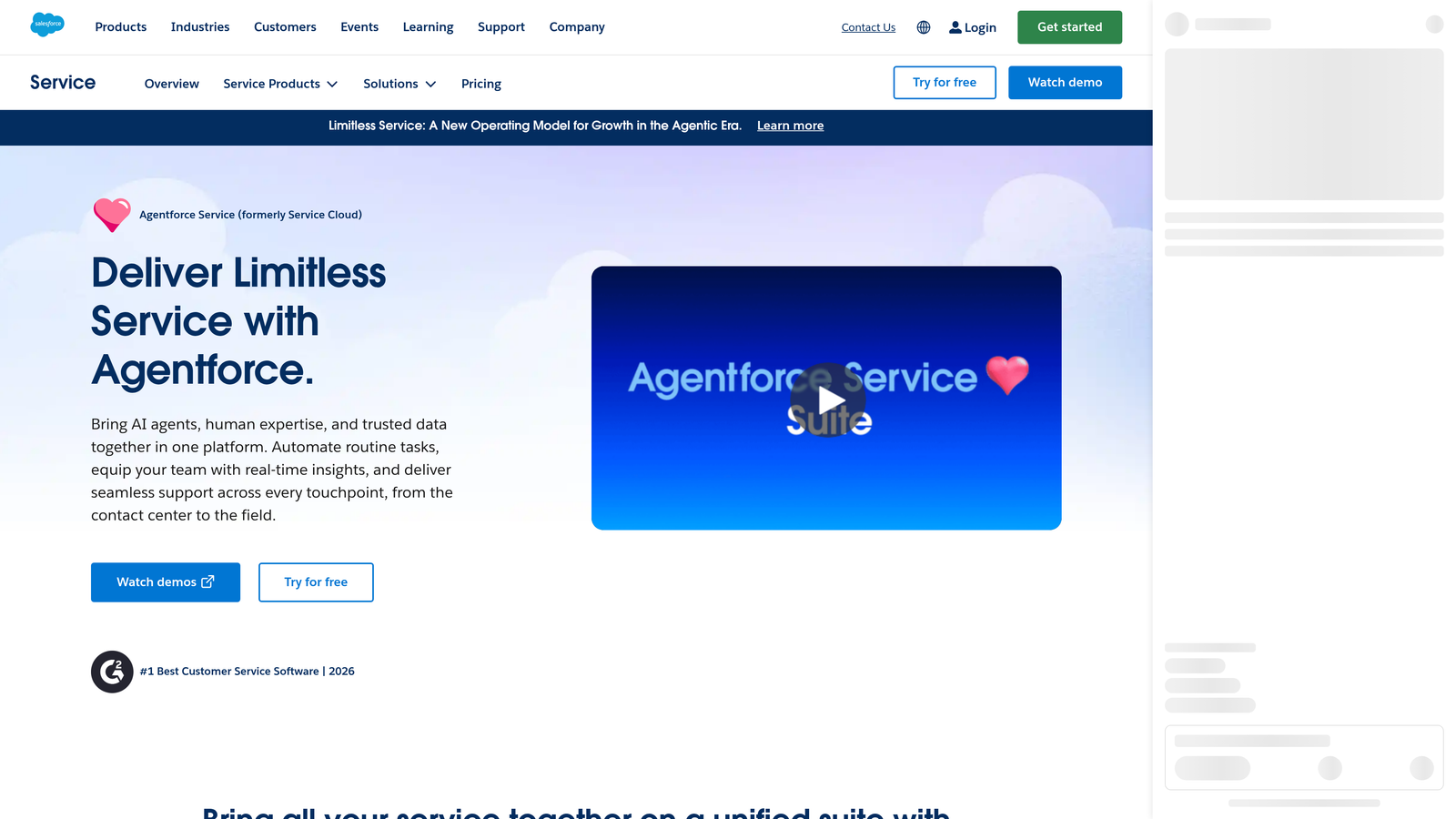
Salesforce Service Cloud Einstein brings intelligent automation to Service Cloud, using deep CRM data to personalize support and predict outcomes across every customer interaction.
Where This Tool Shines
The core advantage of Einstein is context. Because it's built on top of the Salesforce data model, it can factor in a customer's purchase history, account status, contract value, and previous interactions when generating recommendations. That level of personalization is genuinely difficult to replicate in a standalone support tool.
For enterprises where sales, service, and marketing all run on Salesforce, the unified view Einstein provides can meaningfully improve both resolution quality and agent efficiency. The tradeoff is implementation complexity and cost, which makes it harder to justify outside of established Salesforce environments.
Key Features
Case Classification and Routing: Uses CRM context to classify incoming cases and route them intelligently based on account data.
AI-Generated Reply Suggestions: Surfaces recommended responses informed by the full customer history, not just the current ticket.
Next Best Action: Recommends the optimal next step for agents based on predictive models and customer data.
Predictive CSAT and Escalation Scoring: Flags interactions at risk of poor outcomes before they escalate.
Unified Sales and Service View: Connects support context directly to account, opportunity, and contract data.
Best For
Large enterprises already operating on Salesforce where the cost and complexity of implementation is justified by the depth of CRM integration. Not practical as a standalone support tool for teams outside the Salesforce ecosystem.
Pricing
Enterprise-level pricing applies. See salesforce.com for current Service Cloud and Einstein add-on pricing.
8. Zoho Desk Zia
Best for: SMB and mid-market teams wanting AI-powered ticketing at an accessible price point
Zoho Desk includes Zia, an AI assistant that handles sentiment analysis, automatic tagging, anomaly detection, and response suggestions without the enterprise price tag.
Where This Tool Shines
Zia punches above its weight for the price. Sentiment analysis on incoming tickets helps agents prioritize before they even open a conversation. Anomaly detection surfaces unusual ticket volume spikes early, giving managers time to respond before SLAs are at risk. These are capabilities that used to require expensive enterprise platforms, now available at mid-market pricing.
If your team is already in the Zoho ecosystem using Zoho CRM, Zoho Analytics, or other Zoho products, the integration depth adds significant value with minimal additional setup.
Key Features
Sentiment Analysis: Evaluates the tone and urgency of incoming tickets to help agents prioritize their queue effectively.
Automatic Tagging and Classification: Tags and categorizes tickets without manual input, keeping the queue organized at scale.
Anomaly Detection: Alerts managers to unusual spikes in ticket volume or response times before they become crises.
Suggested Responses: Recommends replies based on how similar tickets were resolved historically.
Zoho Ecosystem Integration: Deep connectivity with Zoho CRM, Zoho Analytics, and the broader Zoho suite.
Best For
SMB and mid-market teams looking for solid AI-assisted ticketing without enterprise pricing, especially those already using other Zoho products.
Pricing
Zia is available on higher Zoho Desk tiers. Full pricing details are at zoho.com/desk.
9. Kustomer
Best for: High-volume teams where full customer context across every interaction drives better support outcomes
Kustomer is a CRM-native customer service platform that combines AI automation with a unified customer timeline, giving agents complete context on every interaction before they respond.
Where This Tool Shines
Kustomer's unified timeline is genuinely useful for high-volume operations. Every ticket, purchase, conversation, and interaction is visible in a single view, which means agents aren't piecing together context from multiple systems before they can help someone. For teams handling thousands of conversations daily, that consolidation reduces handle time and improves resolution quality.
The AI layer handles intent detection and workflow routing on top of that rich data model, which means automations can be informed by full customer history rather than just the current message. That's a meaningful advantage in environments where customer context changes the right response significantly.
Key Features
Unified Customer Timeline: Every ticket, purchase, and interaction consolidated in a single view for complete agent context.
AI Intent Detection: Identifies the purpose of incoming messages to trigger appropriate automated workflows.
AI-Suggested Responses: Recommends replies informed by full customer history and interaction patterns.
Multi-Channel Support: Covers chat, email, social, and voice from a unified platform.
Customer Journey Analytics: Robust reporting across the full customer lifecycle, not just individual tickets.
Best For
High-volume customer service operations, particularly in B2C contexts, where complete customer context across purchases and interactions is critical to resolution quality. Enterprise-focused in terms of both pricing and implementation requirements.
Pricing
Enterprise-focused pricing applies. See kustomer.com for current plan details.
Which Tool Is Right for Your Team?
The most important question to answer before choosing an AI ticketing platform isn't "which tool has the most features?" It's "is AI the foundation here, or is it a feature added on top of something older?"
That distinction shapes everything: how fast the system learns, how autonomously it can act, and how much value it returns beyond closing tickets.
For AI-first architecture with business intelligence: Halo AI is the strongest option for B2B SaaS teams that want support to feed intelligence back to product, revenue, and customer success teams, not just close tickets faster.
For enterprise scale with existing Zendesk investment: Zendesk AI offers the deepest ecosystem and most mature routing logic for large, complex support organizations.
For mid-market value: Freshdesk Freddy AI and Zoho Desk Zia both deliver capable AI assistance at price points that make sense for growing teams not yet at enterprise scale.
For SaaS companies with conversational support volume: Intercom Fin is purpose-built for the product-related query patterns that dominate SaaS support queues.
For fast deployment on a small team: Tidio Lyro gets you running quickly without significant configuration overhead or upfront cost.
For relationship-first teams: Help Scout AI keeps humans firmly in control while still reducing the manual effort that slows agents down.
Your support team shouldn't scale linearly with your customer base. Let AI agents handle routine tickets, guide users through your product, and surface business intelligence while your team focuses on complex issues that need a human touch. See Halo in action and discover how continuous learning transforms every interaction into smarter, faster support.