9 Best Automated Customer Service Platforms Compared for 2026
This automated customer service platforms comparison evaluates nine leading solutions across AI architecture, integrations, scalability, pricing, and deployment ease—helping B2B SaaS teams, SMBs, and enterprise operations distinguish between legacy helpdesk tools with bolted-on AI and purpose-built AI-native platforms to avoid costly mismatches.
 Matt PattoliFounder13 min read
Choosing an automated customer service platform has never been more complex. The market has split into two distinct camps: legacy helpdesk platforms that have bolted AI features onto existing ticket-routing infrastructure, and AI-native platforms built from the ground up with machine learning at the core. These are fundamentally different products, and picking the wrong one can mean years of workarounds.
To build this comparison, we evaluated platforms across five criteria: AI architecture quality, integration depth, scalability, pricing transparency, and ease of deployment. We focused on tools that serve B2B SaaS teams, SMBs, and enterprise support operations across different budget ranges.
One important note: Halo AI is the publisher's own product and is featured first. We've included it transparently because it's directly relevant to this comparison, but every tool here is evaluated on its own merits. If you want more context on what to look for before diving in, our guides on automated customer support and AI support platform features are good starting points.
Here are the top automated customer service platforms worth considering in 2026.
1. Halo AI
Best for: B2B SaaS teams wanting AI-native support that learns continuously and surfaces business intelligence.
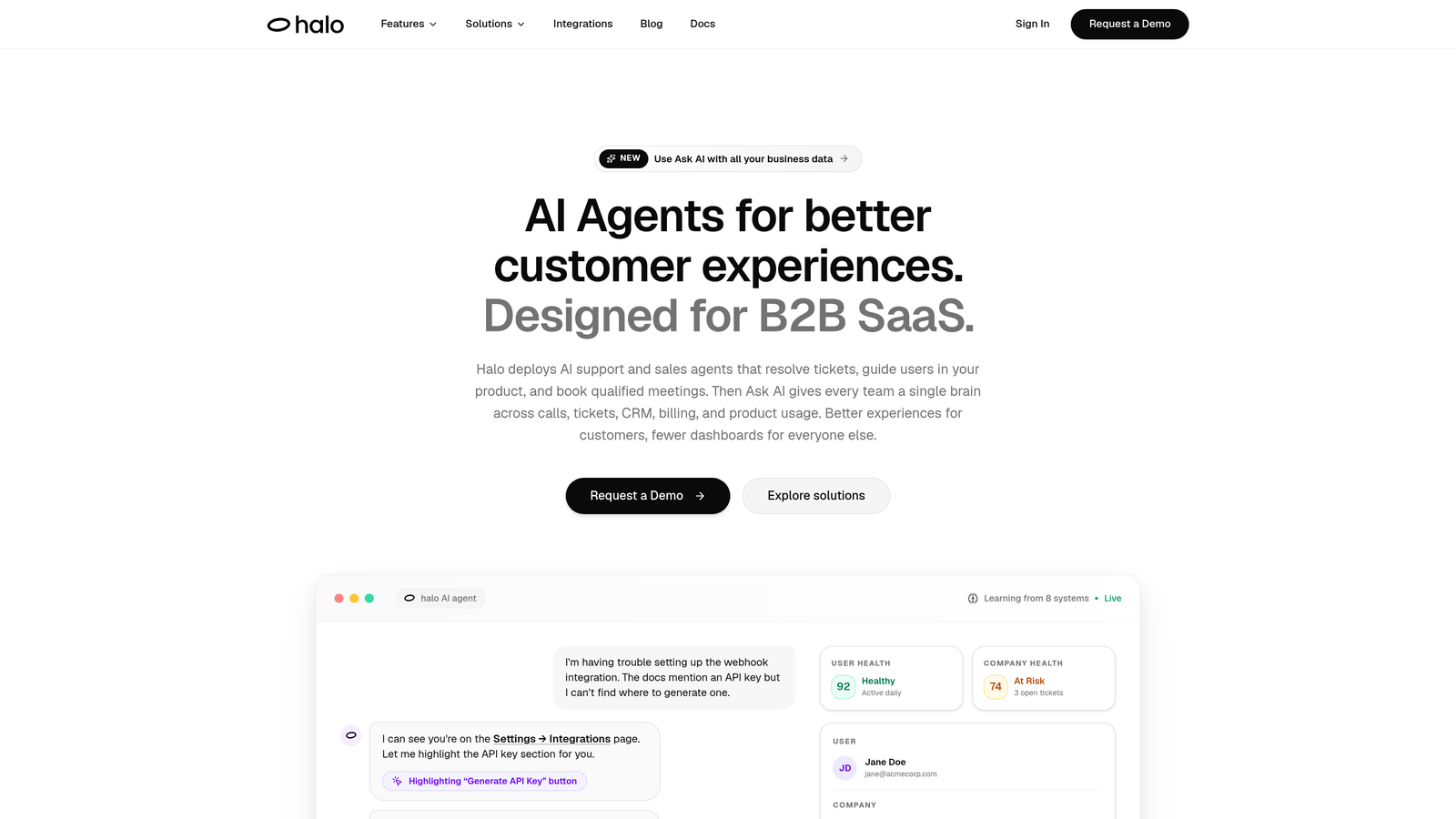
Halo AI is an AI-native customer support platform built specifically for B2B SaaS teams who need more than ticket deflection.
Where This Tool Shines
Halo's core differentiator is its page-aware context. The chat widget actually sees what the user is looking at, allowing AI agents to provide visual UI guidance rather than generic answers. That's a meaningful leap from platforms that respond to keywords without understanding where the user is in your product.
Beyond support resolution, Halo's smart inbox surfaces customer health signals, revenue intelligence, and anomaly detection. This turns your support operation into a business intelligence layer, not just a cost center. For product-led growth teams, that kind of signal is genuinely valuable.
Key Features
Page-Aware Chat Widget: Sees what users see in real time and delivers contextual visual UI guidance, not just text responses.
Autonomous AI Agents: Resolve tickets end-to-end with continuous learning from every interaction, improving accuracy over time without manual rule updates.
Smart Inbox with Business Intelligence: Surfaces customer health signals, revenue intelligence, and anomaly detection directly from support conversations.
Auto Bug Ticket Creation: Automatically generates and routes bug reports to Linear or your preferred dev tool, closing the loop between support and engineering.
Live Agent Handoff: Escalates complex issues to human agents seamlessly, with full conversation context preserved.
Broad Integration Stack: Connects to Slack, HubSpot, Intercom, Stripe, Zoom, PandaDoc, Fathom, and Linear out of the box.
Best For
B2B SaaS companies and product-led growth teams who want support that does more than close tickets. Particularly strong for teams that need deep product context, dev tool integration, and business intelligence signals from their support data.
Pricing
Visit haloagents.ai for current pricing and plan details, as tiers are updated regularly.
2. Zendesk
Best for: Large enterprise support organizations needing mature infrastructure with extensive compliance and routing capabilities.
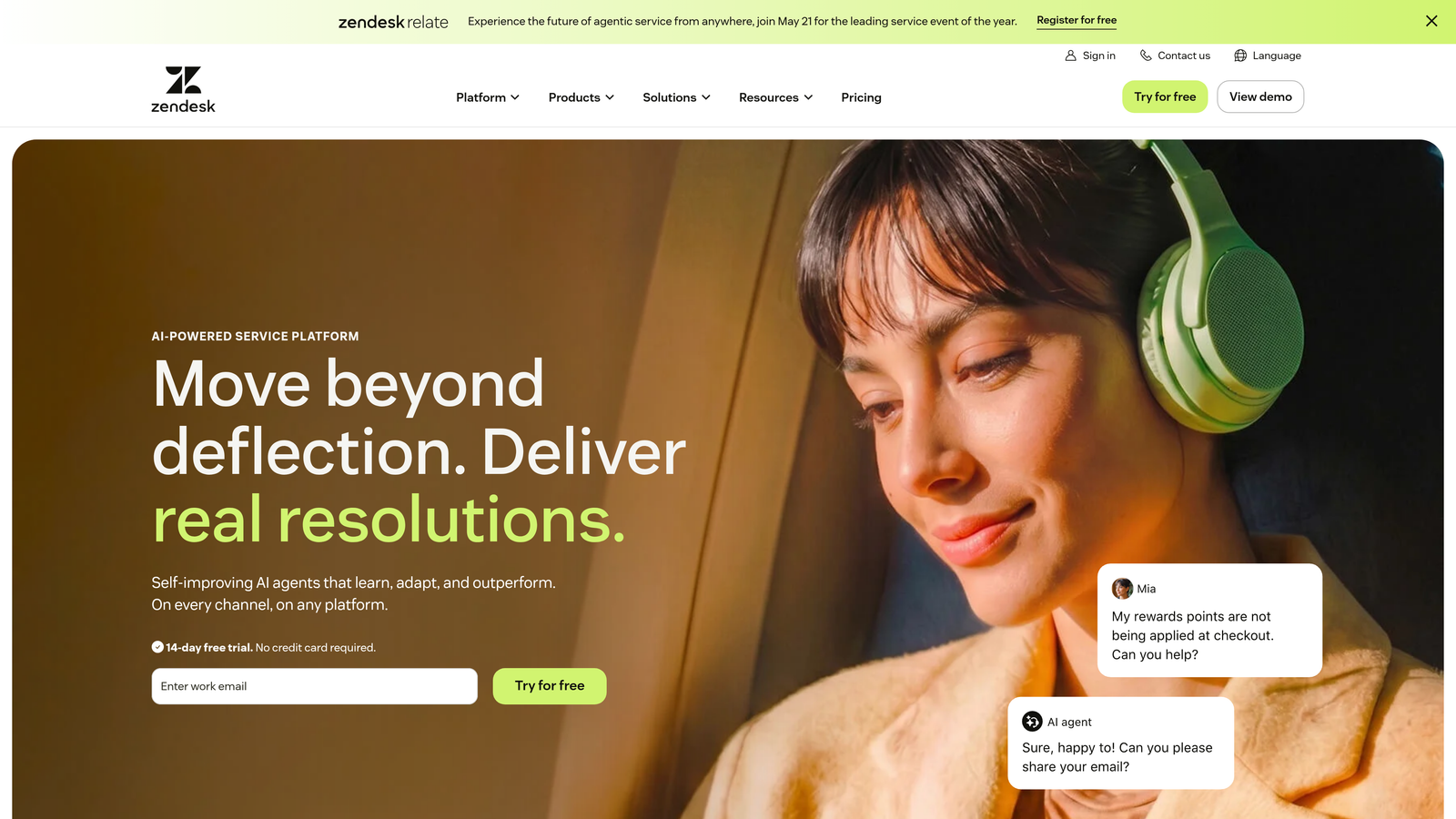
Zendesk is one of the most established helpdesk platforms, offering enterprise-grade ticket management with AI features layered onto a proven foundation.
Where This Tool Shines
Zendesk's strength is its maturity. The routing engine, SLA management, and analytics dashboards are among the most configurable in the market. For large support orgs with complex workflows, that depth of control is hard to replicate.
The Zendesk AI Copilot adds agent assistance and automation, though it functions more as an enhancement to existing workflows than a fundamentally AI-first architecture. Teams already invested in the Zendesk ecosystem will find it a natural extension rather than a replacement.
Key Features
Advanced Ticket Routing: Sophisticated SLA management and omnichannel support across email, chat, voice, and social.
Zendesk AI Copilot: Agent assistance and automation layered onto the existing helpdesk infrastructure.
1,000+ Integrations: Extensive marketplace covering CRMs, analytics tools, and productivity apps.
Robust Analytics: Customizable dashboards and reporting for support performance and team productivity.
Enterprise Compliance: Advanced security, data governance, and compliance features for regulated industries.
Best For
Large enterprise support teams with complex routing requirements, compliance needs, and existing Zendesk investments. Less ideal for teams looking for AI-native architecture or lighter-weight deployment.
Pricing
Suite plans start at approximately $55 per agent per month; enterprise pricing requires a custom quote from Zendesk's sales team.
3. Intercom
Best for: SaaS teams wanting conversational support, in-product messaging, and AI chat resolution in one messenger platform.
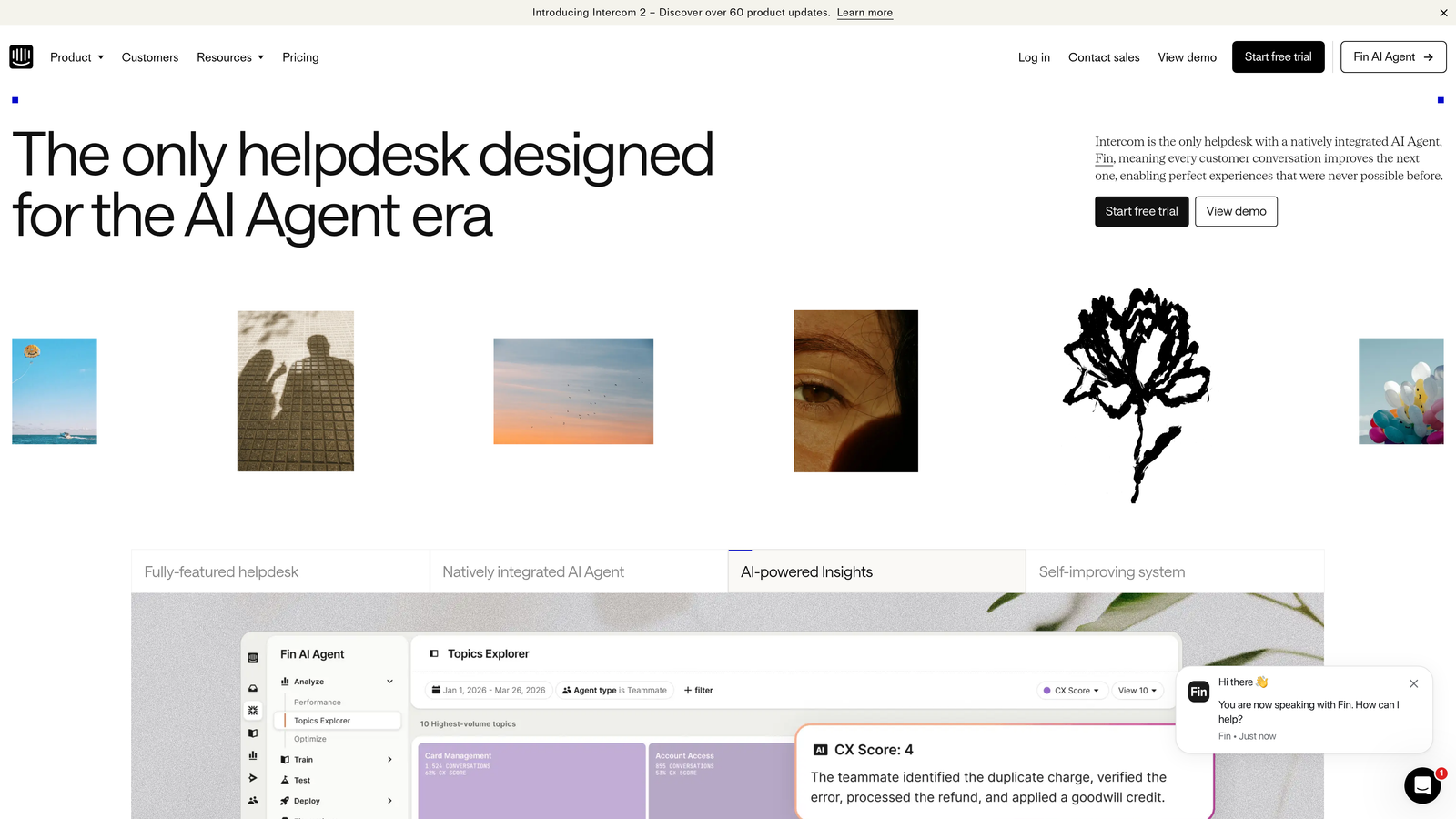
Intercom is a conversational support platform combining AI-powered chat via its Fin agent, proactive messaging, and product tours in a unified messenger experience.
Where This Tool Shines
Intercom's Fin AI agent is one of the more capable AI chatbots from a platform that started as a messaging tool. It handles autonomous chat-based resolution well, particularly for SaaS products where users are already accustomed to the Intercom messenger.
The combination of support, onboarding flows, and proactive campaigns in one platform is genuinely useful for product teams. You can manage user onboarding, support escalations, and retention messaging without switching tools.
Key Features
Fin AI Agent: Handles autonomous chat-based ticket resolution with solid performance on common SaaS support queries.
Unified Inbox: Combines support conversations, onboarding messages, and proactive campaigns in one workspace.
Product Tours: In-app messaging and guided tours for user onboarding without additional tooling.
Conversation Routing: Team inbox management with assignment rules and escalation paths.
Usage-Based Fin Pricing: Fin AI is charged per resolution on top of the base subscription, so costs scale with volume.
Best For
SaaS companies that want support and product engagement in one platform, particularly those already using Intercom for in-app messaging or onboarding. Cost can escalate at high ticket volumes due to usage-based Fin pricing.
Pricing
Base plans start at approximately $39 per seat per month; Fin AI resolutions are charged separately on a per-resolution basis.
4. Freshdesk
Best for: SMBs and growing teams wanting multi-channel coverage with a generous free tier and straightforward setup.
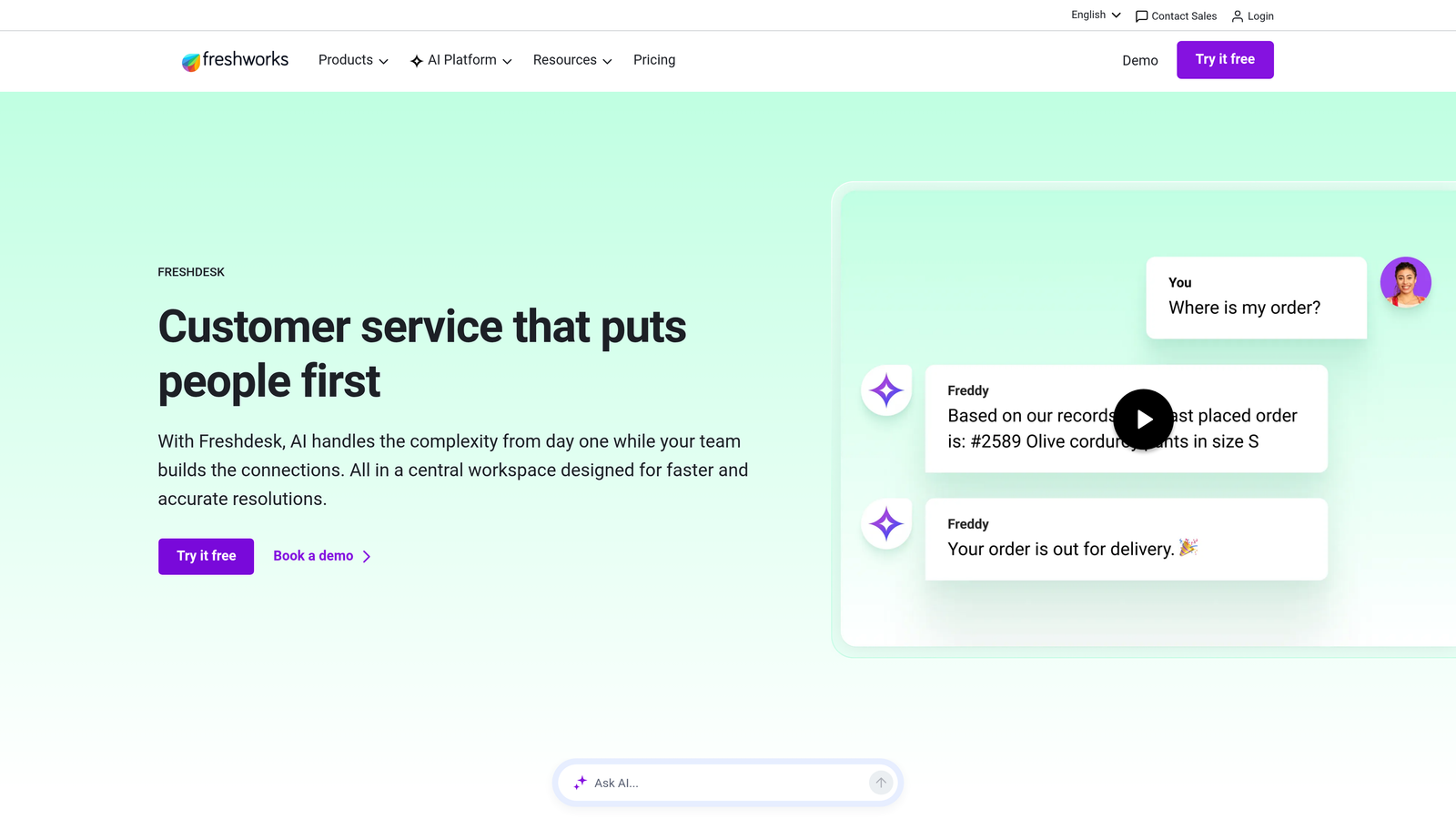
Freshdesk is a multi-channel helpdesk from Freshworks with a strong SMB following, powered by Freddy AI for automation across self-service, agent assistance, and insights.
Where This Tool Shines
Freshdesk's free tier is genuinely useful, not a stripped-down trial. Small teams can run real support operations without spending anything, which makes it a natural entry point for startups and budget-conscious teams.
The multi-channel coverage is broad: email, chat, phone, and social all funnel into one inbox. For teams that need to cover multiple contact channels without stitching together separate tools, Freshdesk handles the basics cleanly.
Key Features
Multi-Channel Support: Email, chat, phone, and social channels managed from a single unified inbox.
Freddy AI: Covers self-service automation, agent copilot assistance, and performance insights across three distinct modules.
Free Tier: Fully functional free plan for small teams, making it accessible without upfront commitment.
Collision Detection: Prevents multiple agents from working the same ticket simultaneously, reducing duplicate effort.
1,000+ Integrations: Marketplace with broad app coverage for CRMs, billing tools, and productivity software.
Best For
SMBs and mid-market teams that need solid multi-channel coverage at an accessible price point. Teams expecting enterprise-scale AI capabilities or complex B2B workflows may find Freshdesk's AI layer less sophisticated than AI-native alternatives.
Pricing
Free tier available for small teams; paid plans start at approximately $15 per agent per month, with higher tiers unlocking advanced AI and analytics features.
5. Salesforce Service Cloud
Best for: Enterprises already in the Salesforce ecosystem needing deep CRM integration and advanced compliance capabilities.
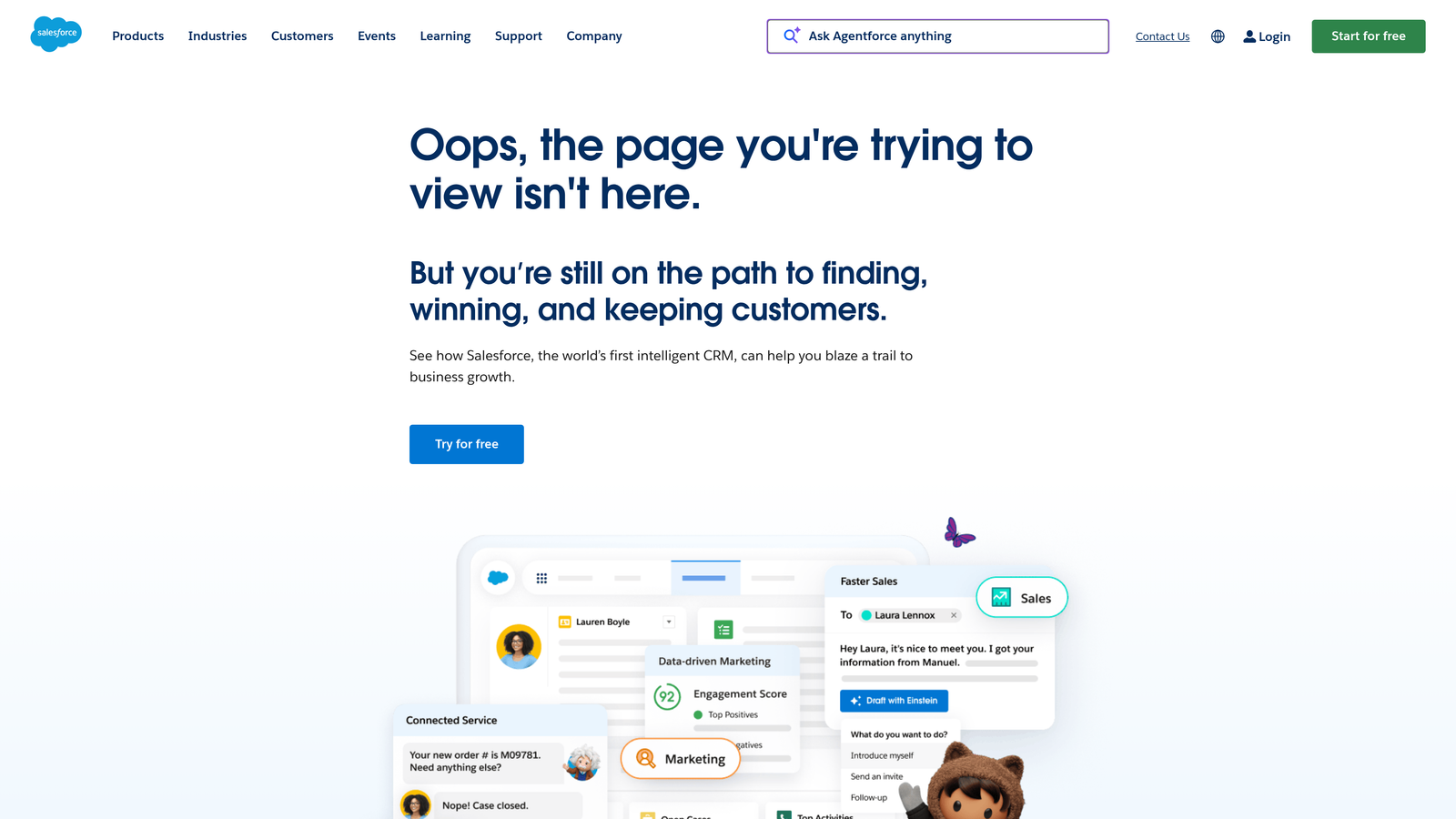
Salesforce Service Cloud is an enterprise customer service platform deeply integrated with Salesforce CRM, featuring Einstein AI for intelligent case management and omnichannel routing.
Where This Tool Shines
If your organization runs on Salesforce, Service Cloud delivers something no other platform can match: full customer context from CRM, sales history, and support in a single view. Einstein AI's case classification and next-best-action recommendations benefit significantly from that depth of data.
For regulated industries or organizations with strict governance requirements, Service Cloud's compliance and security infrastructure is among the most robust available. The tradeoff is real: implementation complexity and cost are substantial.
Key Features
Einstein AI: Case classification, next-best-action recommendations, and intelligent automation powered by Salesforce's AI layer.
Deep CRM Integration: Full customer context from the Salesforce CRM is available in every support interaction automatically.
Omnichannel Routing: Intelligent routing across voice, chat, email, and social with workload balancing.
Compliance and Governance: Advanced security, data residency, and regulatory compliance features for enterprise requirements.
Self-Service and Field Service: Customer portal capabilities and field service management for complex service operations.
Best For
Enterprises already invested in the Salesforce ecosystem where CRM-to-support data continuity is a priority. Not well-suited for teams outside the Salesforce stack, early-stage companies, or organizations without dedicated Salesforce administration resources.
Pricing
Plans typically start at approximately $75 per user per month; enterprise configurations require custom quotes and often involve significant implementation costs.
6. HubSpot Service Hub
Best for: Inbound-focused teams already using HubSpot CRM who want support tightly integrated with marketing and sales data.
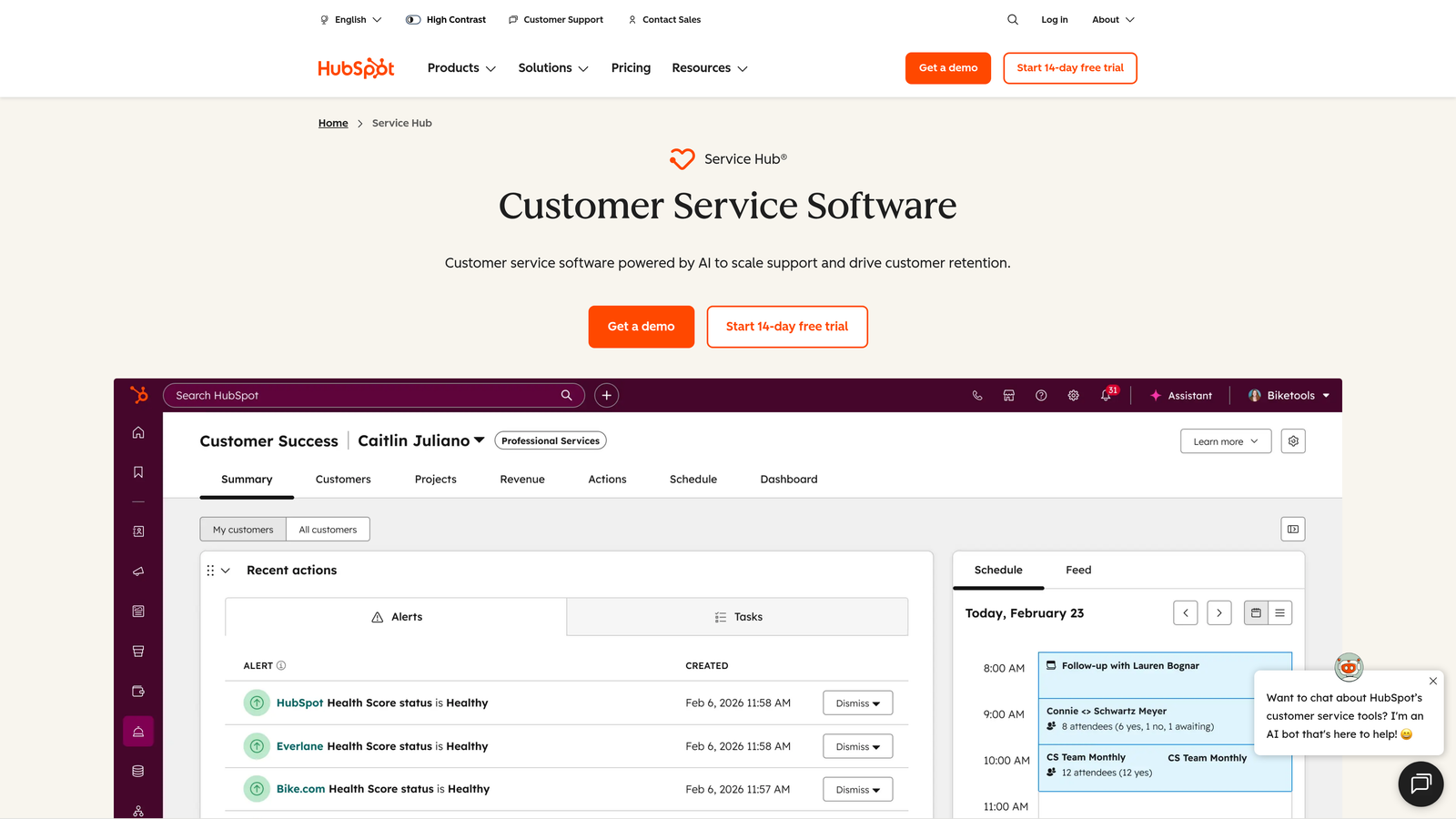
HubSpot Service Hub is customer service software built into the HubSpot CRM platform, offering ticketing, knowledge base, and customer feedback tools designed for inbound-focused teams.
Where This Tool Shines
The core value proposition is CRM continuity. Support tickets sit alongside marketing campaigns and sales deals in a single HubSpot record, giving teams a complete picture of the customer relationship without any data syncing required. For teams already running HubSpot, this is a compelling reason to stay in the ecosystem.
The knowledge base builder with SEO optimization and built-in NPS, CSAT, and CES surveys are practical additions that would otherwise require separate tools. The value compounds the more of HubSpot's suite you use.
Key Features
Native CRM Sync: Support data lives alongside marketing and sales records automatically, with no integration required.
Knowledge Base Builder: SEO-optimized self-service articles with performance tracking built in.
Customer Feedback Surveys: NPS, CSAT, and CES surveys built natively into the platform without third-party tools.
Shared Inbox and Ticket Pipelines: Team inbox management with customizable ticket stages and assignment rules.
Live Chat and Chatbot Builder: Basic automation and live chat that works best when integrated with the broader HubSpot stack.
Best For
SMB to mid-market teams already using HubSpot for marketing or sales who want support data in the same platform. Teams outside the HubSpot ecosystem will find better value and more advanced AI capabilities elsewhere.
Pricing
Free tier available; paid plans start at approximately $15 per seat per month, with more advanced features available at higher tiers.
7. Tidio
Best for: Small businesses and e-commerce stores wanting fast setup, affordable live chat, and AI chatbot automation without technical complexity.
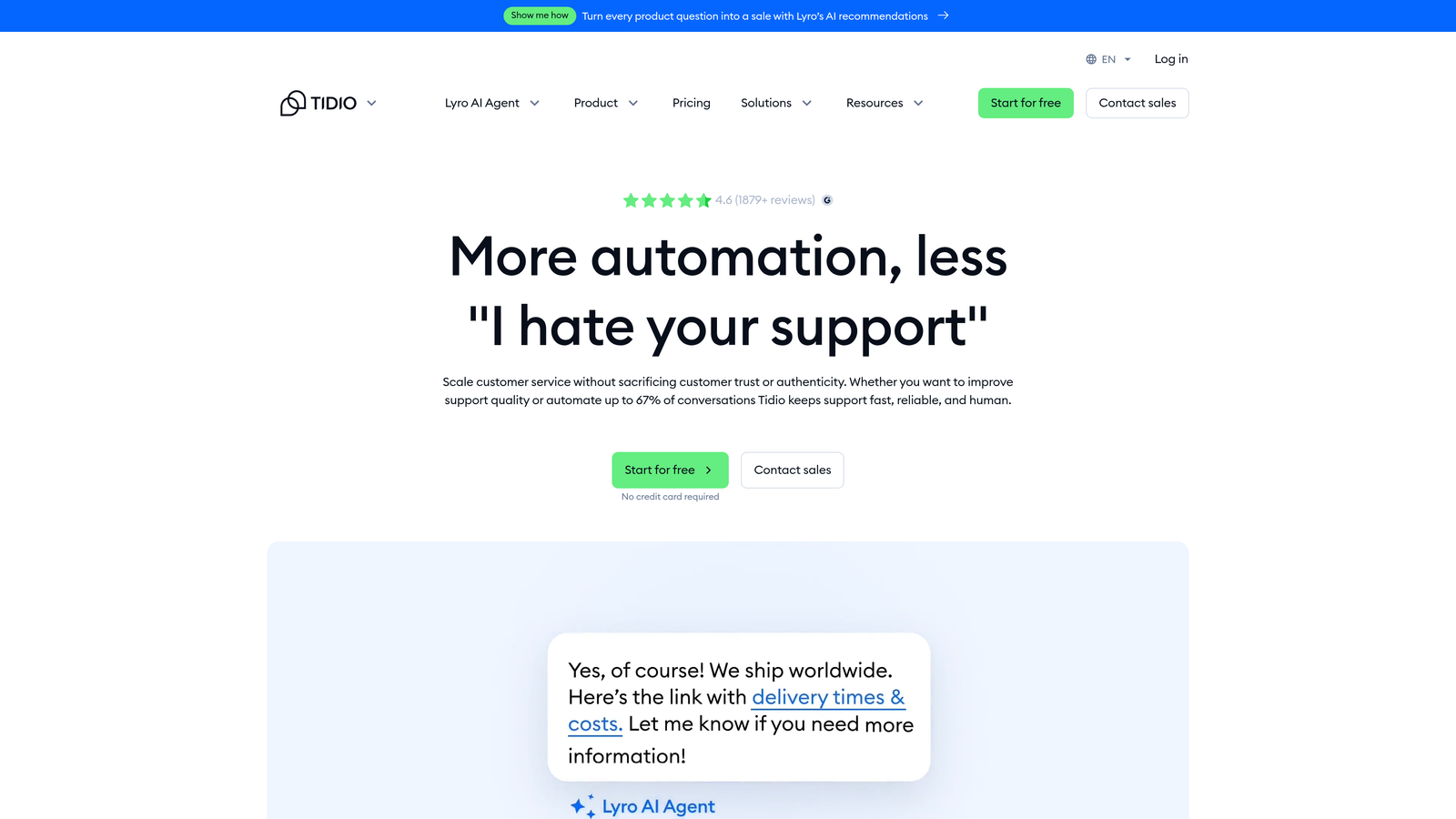
Tidio is a live chat and AI chatbot platform featuring Lyro AI, designed for small businesses and e-commerce with native Shopify, WooCommerce, and Wix integrations.
Where This Tool Shines
Tidio's setup time is genuinely fast. Small teams can go from sign-up to live chat in a matter of minutes, which matters when you don't have a dedicated IT team. The visual automation flow builder requires no coding, and Lyro AI handles common queries without manual rule configuration.
For e-commerce operators, the native Shopify and WooCommerce integrations surface order data directly in conversations, giving agents and the AI bot the context needed to answer shipping, return, and order status questions without toggling between platforms.
Key Features
Lyro AI Chatbot: Automated query resolution for common questions with a conversational AI layer that requires minimal setup.
E-Commerce Integrations: Native connections to Shopify, WooCommerce, and Wix with order data surfaced in conversations.
Visual Automation Builder: No-code flow builder for creating automated response sequences and routing rules.
Mobile App for Live Chat: Agents can respond to conversations on mobile, useful for small teams without dedicated support staff.
Free Tier: Core live chat features available at no cost, making it accessible for very small teams.
Best For
Small e-commerce businesses, solo operators, and early-stage teams that need live chat and basic AI automation quickly and affordably. Not designed for complex B2B support workflows, enterprise scale, or teams needing deep business intelligence from support data.
Pricing
Free tier available with core live chat; paid plans start at approximately $29 per month, with Lyro AI conversations available as an add-on or in higher tiers.
8. Kustomer
Best for: High-volume consumer brands needing a unified customer timeline and omnichannel support in a CRM-style interface.
Kustomer is a CRM-powered customer service platform offering a unified customer timeline view, built for high-volume consumer support operations and owned by Meta.
Where This Tool Shines
Kustomer's timeline view is its standout feature. Every interaction a customer has had across email, chat, voice, social, and SMS appears in a single chronological record. For consumer brands handling high volumes of repeat customers, this eliminates the "can you repeat your issue" frustration that erodes customer trust.
The AI-powered automation handles routing, classification, and response suggestions at scale. Meta's ownership also means deep social channel integrations, which is meaningful for brands where Instagram DMs and Facebook Messenger are primary support channels.
Key Features
Customer Timeline View: All interactions across every channel consolidated into a single chronological customer record.
AI-Powered Automation: Intelligent routing, ticket classification, and response automation for high-volume operations.
Omnichannel Inbox: Email, chat, voice, social, and SMS managed in one unified workspace.
Custom Objects: Flexible data structures for storing business-specific customer information beyond standard fields.
Social Channel Depth: Deep integration with Meta's social platforms, including Instagram and Facebook Messenger.
Best For
High-volume consumer brands, D2C retailers, and consumer apps where a complete customer history view is essential and social channels are a significant support surface. Pricing and complexity may be disproportionate for smaller teams, and Meta's ownership is worth evaluating for teams with strict data privacy requirements.
Pricing
Plans start at approximately $89 per user per month; enterprise configurations require a custom quote from the Kustomer sales team.
9. Gorgias
Best for: Shopify-first e-commerce brands wanting support directly connected to order data and revenue attribution.
Gorgias is a customer service platform purpose-built for e-commerce, with native Shopify, BigCommerce, and Magento integrations and a standout revenue-per-ticket tracking feature.
Where This Tool Shines
Gorgias connects support directly to revenue in a way most helpdesks don't attempt. Revenue-per-ticket tracking shows which support interactions are driving conversions, turning your support team into a measurable revenue function rather than a pure cost center. For e-commerce operators, that framing changes how support is resourced and valued internally.
The deep Shopify integration means order details, shipping status, refund history, and customer lifetime value appear inside every ticket automatically. Agents spend less time toggling between Shopify and a separate helpdesk, and automation rules can trigger actions directly in the store.
Key Features
Revenue-Per-Ticket Tracking: Connects support interactions to revenue outcomes, attributing conversions driven by support conversations.
Native E-Commerce Integrations: Deep Shopify, BigCommerce, and Magento connections with order data surfaced directly in tickets.
Automation Rules: Trigger actions in your store (refunds, order edits, tags) directly from the helpdesk without switching platforms.
Omnichannel Inbox: Email, live chat, social, and SMS in one workspace with e-commerce context throughout.
Volume-Based Pricing: Pricing scales with ticket volume rather than per-seat, which can be cost-effective for brands with large customer bases but lower ticket counts.
Best For
Shopify-first e-commerce brands, D2C operators, and online retailers where order context in every ticket and revenue attribution are priorities. Limited value outside e-commerce contexts and not suitable for B2B SaaS support workflows.
Pricing
Plans are priced based on ticket volume rather than per seat; published tiers are available on the Gorgias website, making cost estimation straightforward for teams with predictable support volumes.
Which Platform Is Right for Your Team?
The most important buying decision in 2026 isn't which features are on the checklist. It's whether you're choosing an AI-native platform or an AI add-on to legacy infrastructure. That architectural difference shapes how well the AI improves over time, how deeply it understands context, and whether it can surface intelligence beyond basic ticket metrics.
Here's a quick guide by use case to cut through the noise.
Enterprise teams on Salesforce or with complex compliance needs: Salesforce Service Cloud and Zendesk are the natural fits. Both offer the governance, routing depth, and ecosystem integrations large organizations require, even if their AI layers feel bolted on rather than native.
B2B SaaS and product-led growth teams: Halo AI and Intercom are the strongest options. Halo's page-aware context and business intelligence layer make it particularly well-suited for product-led teams who need support to inform product decisions, not just close tickets. Intercom is a solid choice for teams already using it for in-app messaging who want to consolidate tooling.
SMBs and budget-conscious teams: Freshdesk's free tier and straightforward multi-channel coverage make it the default starting point. Tidio is worth considering for very small teams or solo operators who prioritize speed of setup over depth of features.
E-commerce brands: Gorgias is the clear choice for Shopify-first operators who want revenue attribution and order context baked in. Kustomer suits higher-volume consumer brands where a unified customer timeline across channels is the priority.
Your support team shouldn't scale linearly with your customer base. Let AI agents handle routine tickets, guide users through your product, and surface business intelligence while your team focuses on complex issues that need a human touch. See Halo in action and discover how continuous learning transforms every interaction into smarter, faster support.