9 Best Automated Customer Service Software for B2B in 2026
B2B customer support demands more than fast chatbots — it requires account-level context, deep CRM integrations, and AI that resolves tickets rather than deflecting them. This guide ranks the 9 best automated customer service software for B2B in 2026, evaluating each tool on AI capability, integration depth, and scalability for high-stakes enterprise accounts.
 Grant CooperFounder14 min read
B2B customer support is a different animal than B2C. When a ticket comes in from an enterprise account worth six figures in ARR, the stakes are higher, the questions are more complex, and the context you need to resolve it quickly goes far beyond a name and email address. You need to know their deal stage, their account health, what they were doing in your product when the issue occurred.
That's why picking the right automated customer service software for B2B isn't just about finding the fastest chatbot. It's about finding a platform that understands account-level context, connects to your CRM and engineering stack, and can actually resolve tickets rather than just deflect them. To build this list, we evaluated tools on AI capability, integration depth with the B2B stack, account-based context, and scalability. It covers everything from AI-native support agents to traditional helpdesks with automation layers added on top. Pricing and feature depth vary significantly across the list, so we've noted what each tool does best and who it's actually built for.
If you're also weighing whether to stick with a legacy helpdesk or move to a purpose-built AI platform, our breakdown of Zendesk vs. AI support platforms is worth a read before you decide.
1. Halo AI
Best for: B2B SaaS teams that want AI-native support with deep product and stack context.
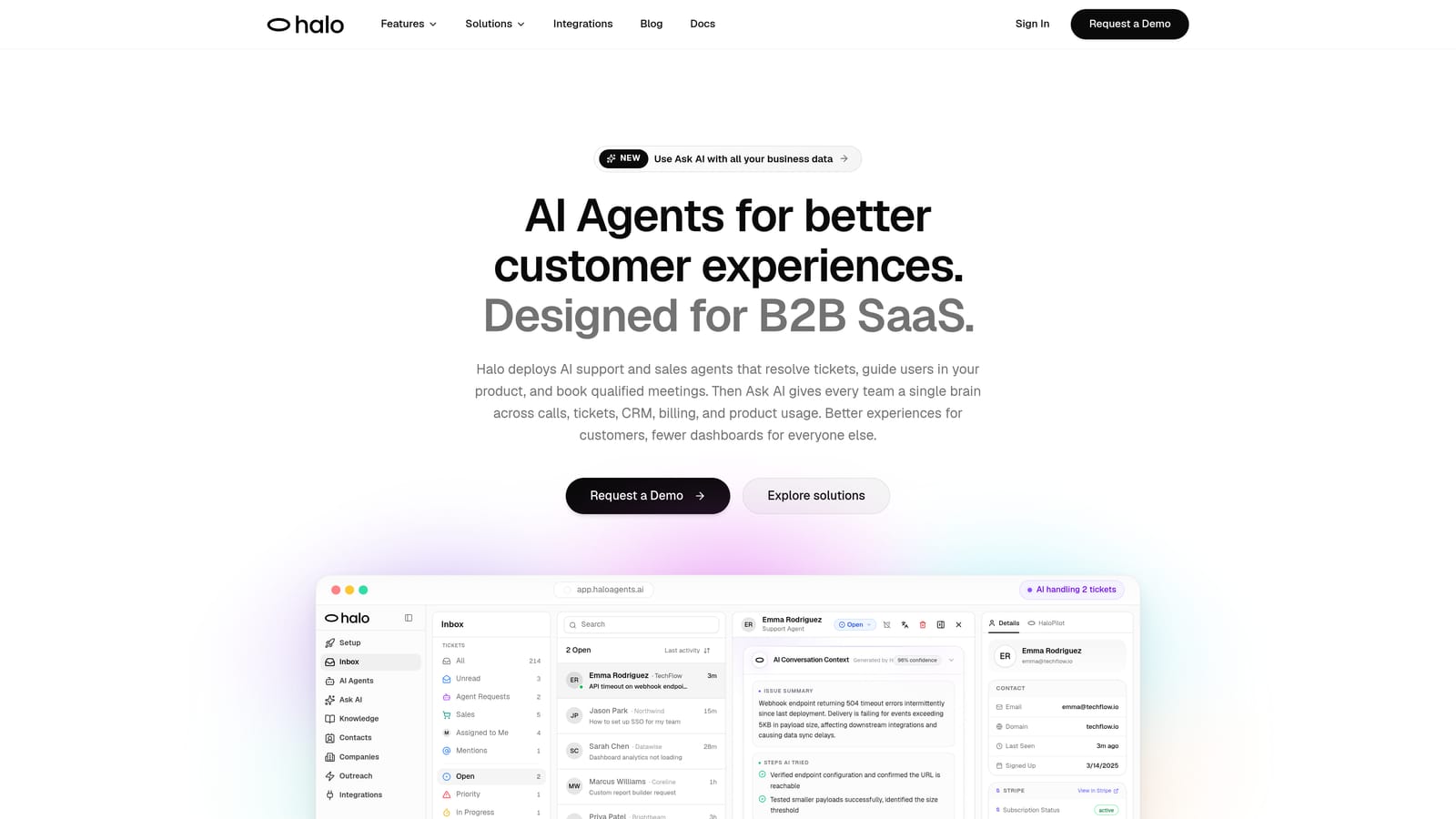
Halo AI is an AI-first customer support platform built specifically for B2B SaaS, deploying intelligent agents that resolve tickets, guide users visually through your product, and surface business intelligence from every interaction.
Where This Tool Shines
What separates Halo from most tools on this list is its architecture. It wasn't built as a helpdesk that later added AI features. It was designed from the ground up around autonomous agents that learn continuously from every resolved ticket, escalation, and user interaction. That distinction matters more than it sounds.
The page-aware chat widget is a standout capability. The agent sees exactly what the user sees on screen, which means it can provide contextual, visual guidance rather than generic answers pulled from a knowledge base. For SaaS products with complex UIs, this closes a gap that most support tools never address. Add in auto bug ticket creation routed directly to engineering via Linear, and Halo starts functioning less like a support tool and more like an intelligent operational layer across your product and team.
Key Features
Page-Aware Chat Widget: The AI agent sees what the user sees on screen, enabling contextual visual guidance tailored to their exact location in your product.
Autonomous Ticket Resolution: Resolves support tickets end-to-end with smart escalation to human agents when complexity warrants it.
Auto Bug Ticket Creation: Automatically identifies and routes product issues to engineering through a native Linear integration, eliminating manual triage.
Smart Inbox with Business Intelligence: Goes beyond ticket metrics to surface customer health signals, revenue anomaly detection, and account-level insights directly in the inbox.
Broad Integration Stack: Connects natively with Linear, Slack, HubSpot, Intercom, Stripe, Zoom, PandaDoc, and Fathom, covering the full B2B SaaS toolchain.
Continuous Learning: Improves from every interaction automatically, without requiring manual retraining or rule updates.
Best For
B2B SaaS companies that want AI agents doing real resolution work, not just routing tickets to humans. Particularly strong for product-led growth teams where in-product guidance and bug detection are as important as ticket deflection. Also well-suited for teams that want support data to feed into broader business intelligence rather than sitting in a silo.
Pricing
Contact for pricing. Halo is positioned for B2B SaaS teams and pricing is tailored to company size and usage. Reach out at haloagents.ai for details.
2. Intercom
Best for: Mid-market B2B SaaS teams wanting conversational support with strong in-app messaging.
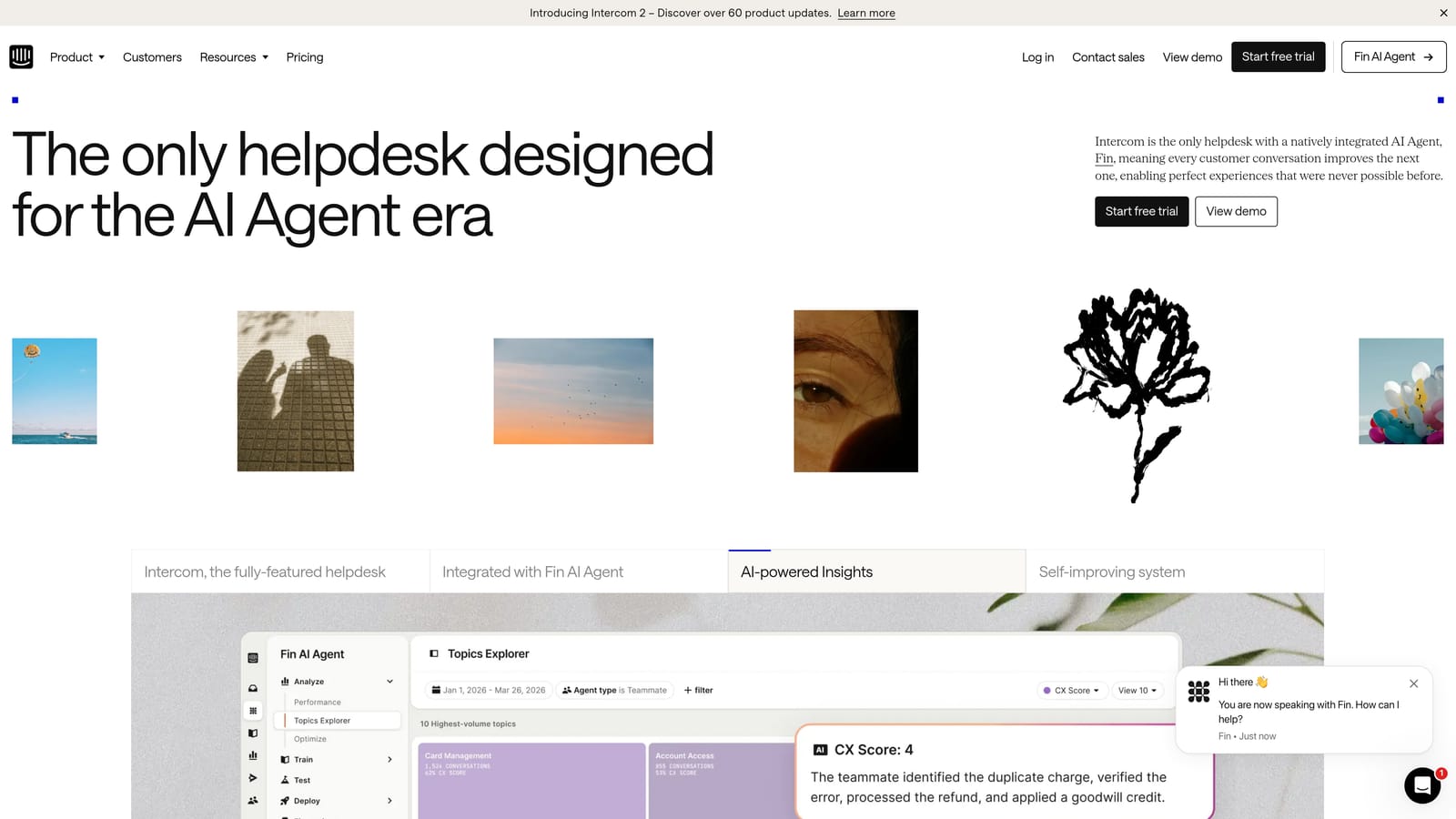
Intercom is a mature conversational support platform with a capable AI agent called Fin, strong in-app messaging tools, and a solid customer data layer built for mid-market B2B companies.
Where This Tool Shines
Intercom has been refining its messaging and support toolset for years, and Fin represents a meaningful step forward in its AI capabilities. Fin draws on your existing help content and knowledge base to resolve queries, which means the quality of your documentation directly influences how well it performs. For teams with well-maintained help centers, this can drive solid deflection rates.
Intercom also excels at proactive support: triggering in-app messages based on user behavior before a ticket is ever submitted. For B2B SaaS teams focused on reducing inbound volume rather than just resolving it faster, that proactive layer is genuinely valuable. It's worth noting that Halo AI integrates directly with Intercom, so teams already using Intercom's messaging layer can layer Halo's AI resolution capabilities on top.
Key Features
Fin AI Agent: Resolves customer queries autonomously using your help content and knowledge base articles.
In-App Messaging and Proactive Triggers: Sends contextual messages to users based on their behavior, reducing inbound support volume.
Customer Data Platform: Stores rich user and company data to personalize support interactions at scale.
Omnichannel Support: Covers chat, email, and phone support across a unified inbox.
Best For
Mid-market B2B SaaS companies that prioritize in-app messaging and proactive engagement alongside reactive support. Teams that already have a well-structured knowledge base will get the most out of Fin's AI resolution capabilities.
Pricing
Multiple pricing tiers; AI features are available on higher-tier plans. Check intercom.com for current pricing details, as Intercom has historically updated its packaging regularly.
3. Zendesk
Best for: Large enterprise B2B organizations needing mature ticketing, SLA management, and deep configurability.
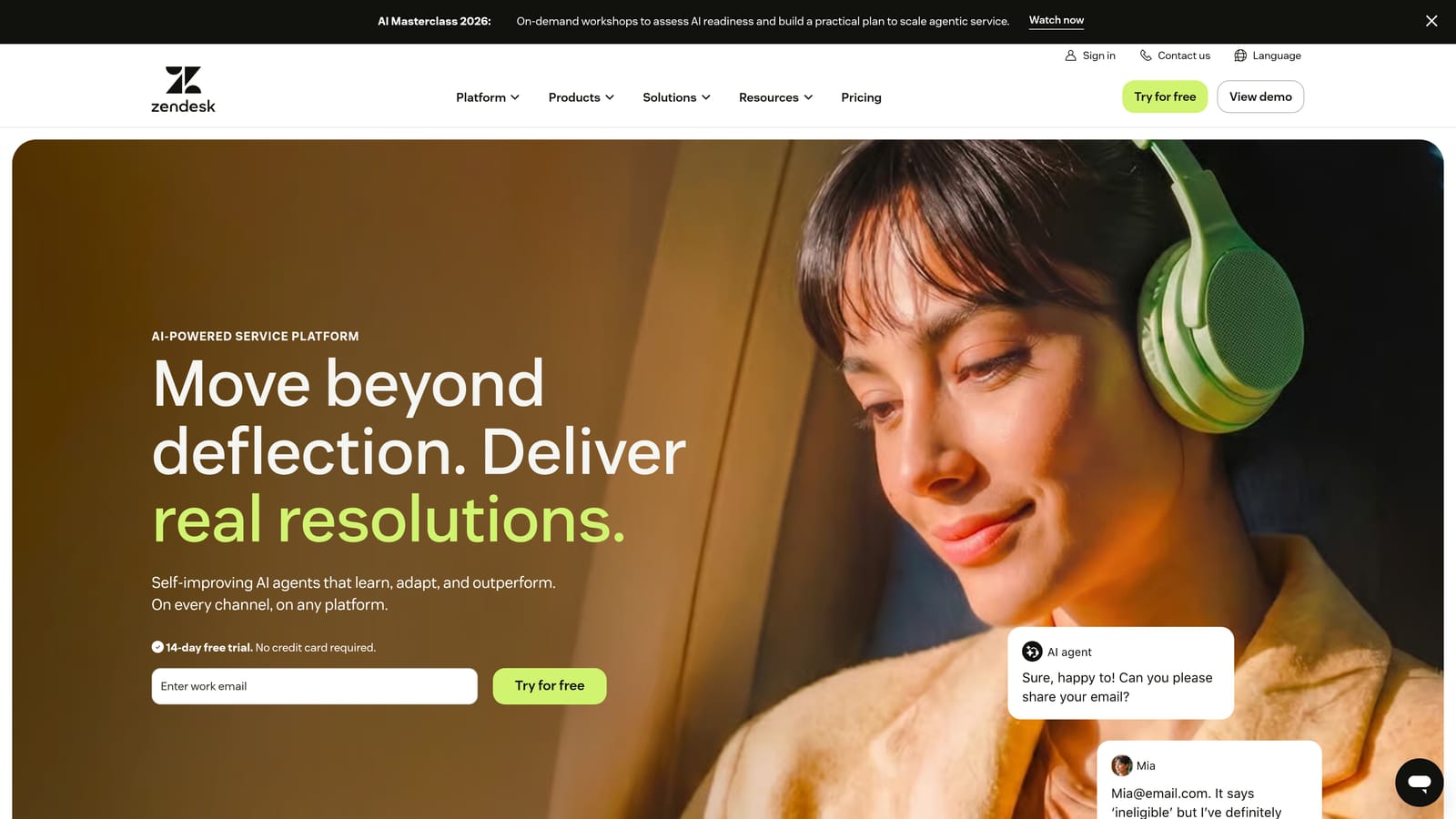
Zendesk is the industry-standard enterprise helpdesk, offering AI Agents for automated query resolution, a massive integration marketplace, and battle-tested ticketing infrastructure for complex B2B support operations.
Where This Tool Shines
Zendesk's greatest strength is its maturity. SLA management, advanced routing logic, multi-brand support, and enterprise-grade permissions have been refined over many years. For large B2B organizations with complex support hierarchies, multiple product lines, or global teams, that depth of configuration is hard to replicate elsewhere.
The AI Agents capability has improved considerably from its earlier Answer Bot days, but it's still AI layered onto a traditional helpdesk architecture rather than built natively around autonomous resolution. For teams with straightforward automation needs, that works fine. For teams wanting AI to drive the majority of resolution work, the architectural difference becomes more noticeable over time. Our comparison of Zendesk vs. AI-native platforms covers this tradeoff in detail.
Key Features
Advanced Ticketing and SLA Management: Mature routing, escalation, and SLA tracking tools built for complex enterprise support operations.
AI Agents: Automated query resolution and triage that integrates with your existing knowledge base and ticket workflows.
Extensive Integration Marketplace: Hundreds of third-party integrations covering CRM, billing, project management, and communication tools.
Enterprise Permissions and Multi-Brand Support: Granular access controls, multiple brand configurations, and multi-language support for global organizations.
Best For
Large enterprise B2B companies with complex support operations, multiple teams or brands, and existing investment in the Zendesk ecosystem. Less ideal for teams wanting AI-first resolution rather than AI-assisted ticketing.
Pricing
Suite plans start at approximately $55 per agent per month; AI features are available on higher tiers. Check zendesk.com for current pricing, as plans are updated periodically.
4. Freshdesk
Best for: Growing B2B teams that need solid automation and omnichannel support without enterprise-level pricing.
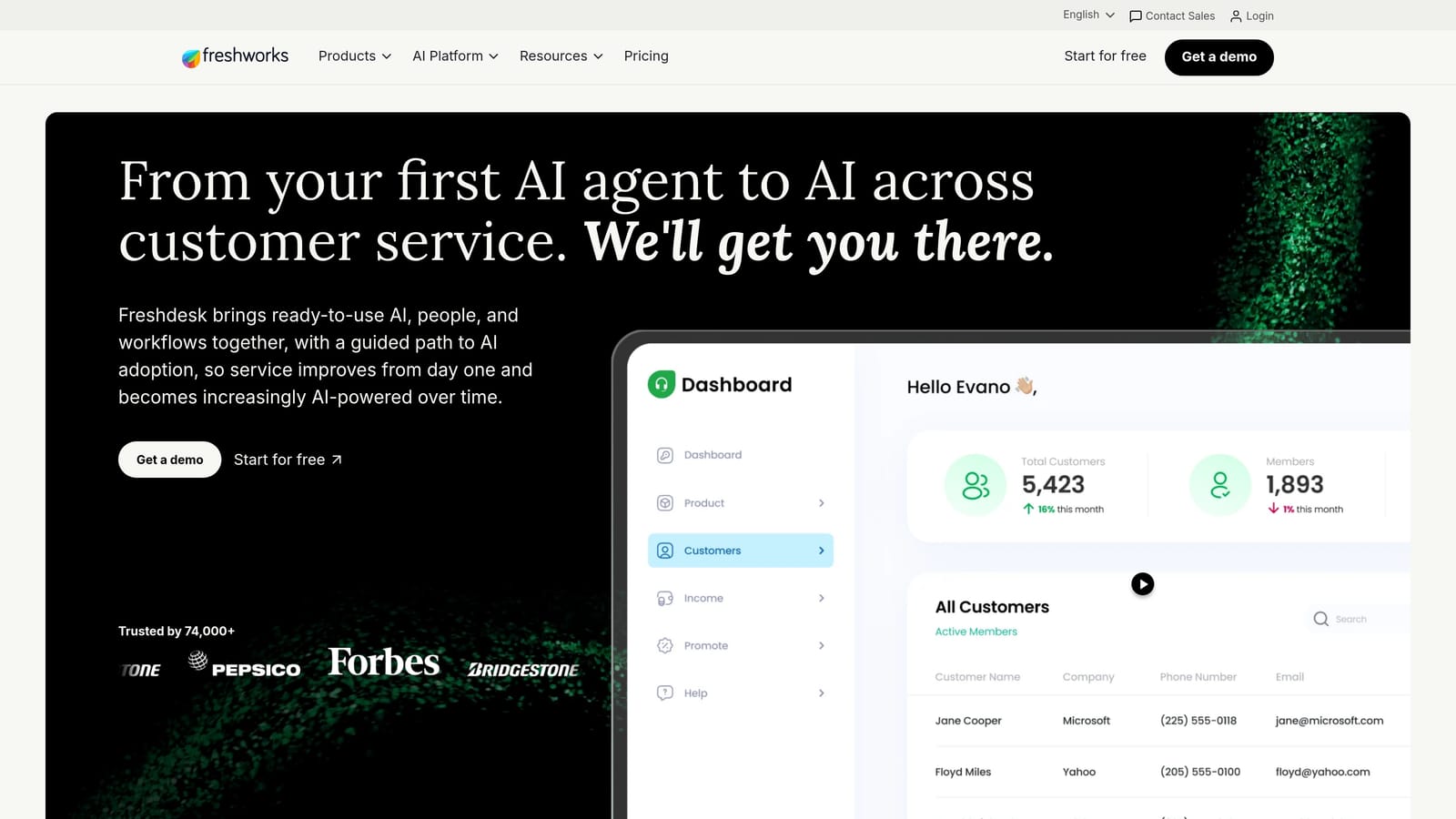
Freshdesk is a cost-effective omnichannel helpdesk from Freshworks, featuring Freddy AI for ticket automation and a generous free tier that makes it accessible for teams at various growth stages.
Where This Tool Shines
Freshdesk consistently positions itself as the accessible alternative to Zendesk, and for many mid-market B2B teams, that's exactly the right framing. Freddy AI handles ticket categorization, suggests replies to agents, and can resolve some queries autonomously, covering the automation basics without requiring a large implementation investment.
The free tier is genuinely useful for small teams, and the paid plans scale at pricing that remains competitive as headcount grows. For B2B companies that have outgrown a shared inbox but aren't ready to commit to enterprise helpdesk complexity or cost, Freshdesk hits a practical sweet spot.
Key Features
Freddy AI: Handles ticket categorization, suggests agent replies, and provides some autonomous query resolution to reduce manual workload.
Omnichannel Support: Manages email, chat, phone, and social channels from a unified inbox.
Collision Detection: Alerts agents when multiple team members are working on the same ticket simultaneously, preventing duplicated effort.
Free Tier: A genuinely usable free plan for small teams, with paid plans scaling based on agents and feature requirements.
Best For
Growing B2B teams moving beyond shared inbox management who want solid automation without enterprise pricing. Also a good fit for companies evaluating helpdesks before committing to a larger platform investment.
Pricing
Free tier available; paid plans start at approximately $15 per agent per month. Check freshworks.com for current pricing and plan details.
5. Salesforce Service Cloud
Best for: Enterprise B2B organizations already in the Salesforce ecosystem that need full account-level context in every support interaction.
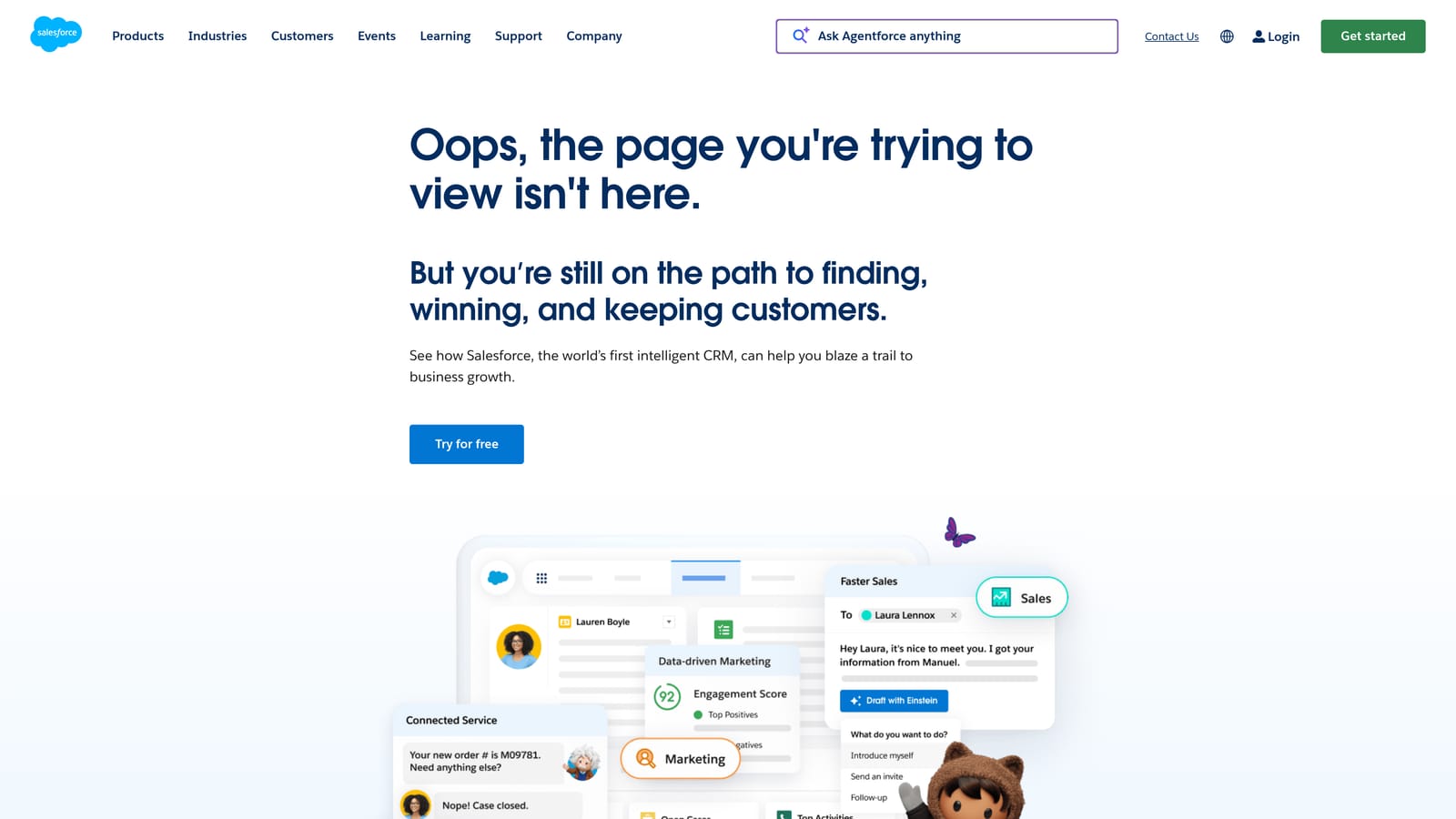
Salesforce Service Cloud is an enterprise support platform native to the Salesforce ecosystem, connecting support tickets directly to CRM data including deal stage, ARR, and account health for unmatched B2B context.
Where This Tool Shines
For B2B companies where a single support ticket can influence a renewal or expansion conversation, having your support agent see the full account picture alongside the ticket isn't a nice-to-have. It's essential. Service Cloud delivers this natively: support agents work within the same Salesforce environment as sales and account management, with full visibility into deal stage, contract value, and relationship history.
Einstein AI adds case classification, next-best-action recommendations, and knowledge suggestions on top of that context. The result is support that's genuinely account-aware. The tradeoff is implementation complexity and cost: Service Cloud requires meaningful investment to configure properly, and it's most powerful when your entire revenue team is already on Salesforce.
Key Features
Full Account Context: Support agents see deal stage, ARR, and account health data alongside every ticket, directly from Salesforce CRM.
Einstein AI: Provides case classification, next-best-action guidance, and knowledge base recommendations to speed up resolution.
Salesforce Flow Customization: Highly configurable workflows built on the Salesforce platform for complex routing and automation logic.
Native Salesforce Ecosystem Integration: Connects directly with Sales Cloud and Marketing Cloud for a unified view of the customer lifecycle.
Best For
Enterprise B2B organizations with complex, high-value customer relationships that are already running their revenue operations on Salesforce. The ROI is strongest when support is one piece of a larger Salesforce investment rather than a standalone purchase.
Pricing
Per-user enterprise pricing; check salesforce.com for current plan details. Implementation costs should be factored into total cost of ownership.
6. HubSpot Service Hub
Best for: B2B teams already on HubSpot CRM that want support data unified with marketing and sales in one platform.
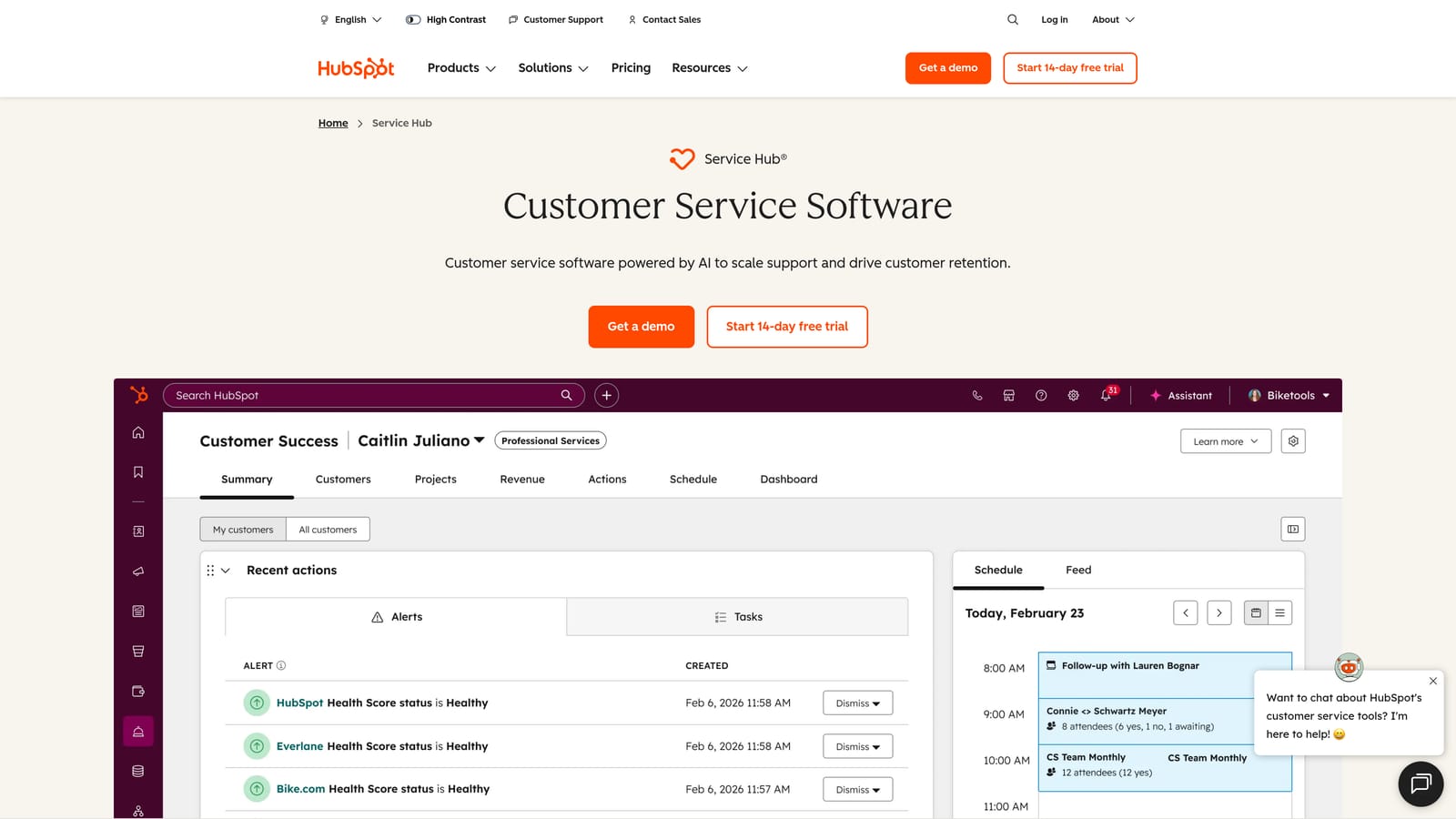
HubSpot Service Hub is a support platform built natively into the HubSpot CRM, enabling B2B teams to link tickets directly to contacts, companies, and deals while using AI-assisted features for faster resolution.
Where This Tool Shines
The core value proposition of Service Hub is unification. When a ticket comes in, it's automatically connected to the HubSpot contact and company record, giving support agents instant visibility into the customer's full journey: what content they engaged with, where they are in the sales cycle, what their account looks like. For B2B teams already using HubSpot for marketing and sales, this removes a significant data silo.
AI features including conversation summarization and reply suggestions help agents move faster without requiring a major workflow change. It's worth noting that Halo AI has a native HubSpot integration, so teams wanting more advanced AI resolution can layer Halo on top of their existing HubSpot setup rather than replacing it entirely.
Key Features
CRM-Native Ticketing: Tickets link automatically to HubSpot contacts, companies, and deals for full customer journey visibility.
AI Conversation Summarization: Automatically summarizes conversations to help agents get up to speed quickly on ongoing issues.
AI Reply Suggestions: Recommends responses based on conversation context and your knowledge base content.
Knowledge Base and Customer Portal: Built-in tools for self-service support that connect directly to your CRM data.
Best For
B2B companies already invested in the HubSpot ecosystem. As a standalone support platform, it's less compelling compared to dedicated helpdesks, but as part of a unified HubSpot setup it delivers genuine value through data continuity across the customer lifecycle.
Pricing
Free tier available with basic ticketing; paid plans start at approximately $15 per month. Automation and AI features unlock on higher tiers. Check hubspot.com for current pricing.
7. Gorgias
Best for: B2B companies with transactional or order-based support workflows, particularly those running on Shopify or e-commerce platforms.
Gorgias is a revenue-focused support automation platform with deep e-commerce integrations, built to handle high volumes of order-related queries with strong automation and revenue attribution.
Where This Tool Shines
Gorgias occupies a specific niche: support automation for e-commerce-adjacent businesses. Its Shopify integration is exceptionally deep, pulling order data, shipping status, and customer purchase history directly into the support view. For B2B companies in wholesale, distribution, or any model where a large portion of support tickets relate to orders and transactions, this context is immediately valuable.
The revenue attribution feature is also distinctive: Gorgias tracks which support interactions lead to purchases or retention, helping teams quantify the business impact of their support work. For pure SaaS B2B companies, Gorgias is likely not the right fit. But for B2B companies with a transactional component to their support, it solves real problems efficiently.
Key Features
Deep E-Commerce Integrations: Native Shopify integration pulls order data, shipping status, and purchase history into every support interaction.
Revenue Attribution: Tracks the business impact of support interactions, connecting conversations to purchases and customer retention.
Automated Order Query Responses: Handles repetitive order status and tracking queries automatically, reducing agent workload.
Macros and Rules: Configurable automation rules for high-volume, repetitive ticket types across any channel.
Best For
B2B companies in wholesale, distribution, or e-commerce with order-based support workflows. Less suited for pure SaaS B2B companies where support complexity goes beyond transactional queries.
Pricing
Volume-based pricing tied to ticket counts. Check gorgias.com for current plan details and pricing tiers.
8. Tidio
Best for: Smaller B2B teams or early-stage companies wanting quick-to-deploy AI chat without enterprise complexity or cost.
Tidio is a lightweight AI chat platform featuring Lyro, an AI agent that resolves common queries using your knowledge base, offering an accessible entry point for teams that need automation without a lengthy implementation.
Where This Tool Shines
Tidio's primary advantage is accessibility. Setup is fast, pricing is approachable, and Lyro can start resolving queries from your existing knowledge base content without significant configuration work. For early-stage B2B companies that need to offer responsive support without a dedicated support team, this gets something functional deployed quickly.
Tidio also handles hybrid use cases well: combining lead capture with support in the same chat widget, which suits companies where the line between sales and support is still blurry. The tradeoff is depth: Tidio lacks the account-level context, CRM integration depth, and business intelligence capabilities that more complex B2B support operations eventually require.
Key Features
Lyro AI Agent: Resolves common customer queries autonomously using your knowledge base content.
Simple Setup: Minimal technical overhead to deploy, making it accessible for small teams without dedicated technical resources.
Multi-Channel Support: Covers live chat, email, and Messenger from a single interface.
Lead Capture Integration: Combines support and lead generation in the same chat experience for early-stage teams.
Best For
SMBs and early-stage B2B companies that need functional support automation quickly and at accessible price points. Teams expecting to scale into complex B2B support workflows will likely outgrow it and should plan for migration.
Pricing
Free tier available; paid plans at accessible price points. Check tidio.com for current pricing details.
9. Kustomer
Best for: B2B companies managing high-value, relationship-driven accounts that need a unified omnichannel customer timeline.
Kustomer is a CRM-first omnichannel support platform that consolidates every customer interaction across all channels into a single unified timeline, designed for relationship-centric B2B support operations.
Where This Tool Shines
Kustomer's unified timeline is its defining feature. Rather than managing tickets in isolation, agents see the complete interaction history for a customer or account: every email, chat, call, and social message in chronological order. For B2B companies managing long-term, high-value accounts where relationship continuity matters, this view changes how support feels. Agents aren't starting from scratch on every interaction.
The CRM-native design means customer context is built into the support experience rather than requiring agents to tab between systems. AI automation handles routing, tagging, and response suggestions, reducing manual overhead while keeping the human relationship layer intact for complex issues.
Key Features
Unified Customer Timeline: Every interaction across all channels consolidated into a single chronological view for each customer or account.
AI Routing and Tagging: Automatically categorizes, routes, and tags incoming interactions to reduce manual triage work.
CRM-Native Customer Context: Rich customer data is embedded in every support interaction, not siloed in a separate system.
Omnichannel Coverage: Handles email, chat, SMS, social, and voice from a unified platform.
Best For
B2B companies with high-value, long-term customer relationships where interaction history and relationship continuity are critical to support quality. Particularly well-suited for account-based businesses where multiple stakeholders interact with support over time.
Pricing
Per-user enterprise pricing. Check kustomer.com for current plan details and to discuss volume-based options.
Choosing the Right Tool for Your B2B Support Stack
The right choice here depends almost entirely on where you are, what your stack looks like, and how you define "good support" for your business. Here's a quick guide to cut through the noise.
B2B SaaS team scaling fast and want AI doing real resolution work: Halo AI is built for this. The AI-native architecture, page-aware context, and continuous learning mean you're not just automating routing. You're automating resolution, with business intelligence as a byproduct.
Already deep in the Salesforce ecosystem: Salesforce Service Cloud gives you account-level context that no other platform can match natively. The implementation investment is real, but if Salesforce runs your revenue operations, it's the natural choice.
Running your CRM on HubSpot: HubSpot Service Hub keeps your marketing, sales, and support data unified without adding another platform. Pair it with Halo AI's HubSpot integration if you want stronger AI resolution on top.
Enterprise organization needing mature ticketing infrastructure: Zendesk's depth of configuration, SLA management, and integration ecosystem is hard to match for large, complex support operations.
Growing team, budget-conscious: Freshdesk offers solid automation and omnichannel coverage at pricing that doesn't require enterprise procurement approval.
B2B e-commerce or wholesale: Gorgias handles order-based support workflows better than any general-purpose helpdesk.
The broader trend worth paying attention to: AI-native platforms are increasingly outperforming traditional helpdesks with automation layers added on top. The architectural difference matters. A platform designed around autonomous agents learns differently, scales differently, and surfaces different intelligence than a ticketing system with an AI chatbot bolted to the front.
Your support team shouldn't scale linearly with your customer base. Let AI agents handle routine tickets, guide users through your product, and surface business intelligence while your team focuses on complex issues that need a human touch. See Halo in action and discover how continuous learning transforms every interaction into smarter, faster support. Or explore our customer support solutions to see how Halo fits into your existing stack.