9 Best Automated Customer Service Solutions for B2B Teams in 2026
Modern B2B teams need automated customer service solutions to deliver 24/7 support without overwhelming budgets or burning out staff. This comprehensive guide reviews nine leading platforms for 2026, evaluating their AI capabilities, integration options, and deployment ease to help you choose the right solution for handling high ticket volumes across multiple channels while maintaining quality customer experiences.
 Grant CooperFounder10 min read
Modern B2B customers expect instant, accurate support—but scaling human teams to meet 24/7 demand strains budgets and burns out staff. Automated customer service solutions bridge this gap by handling routine inquiries, routing complex issues to the right agents, and learning from every interaction.
This guide evaluates nine platforms based on AI capabilities, integration depth, ease of deployment, and value for B2B teams managing high ticket volumes across multiple channels. Here are the top automated customer service solutions for 2026.
1. Halo AI
Best for: B2B teams seeking AI-first autonomous resolution with deep business intelligence integration
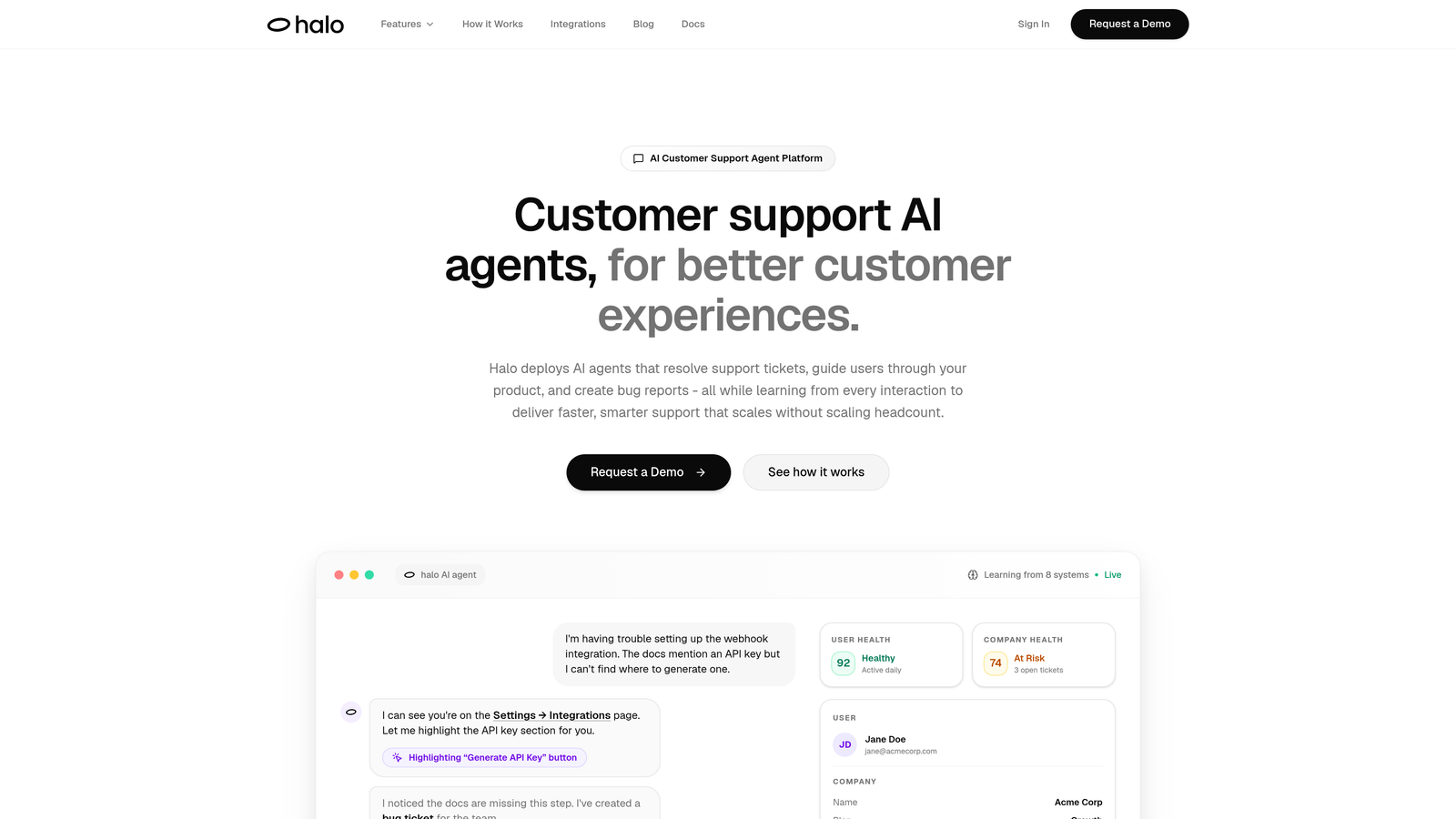
Halo AI is an AI-powered customer support platform that deploys intelligent agents to resolve tickets autonomously, guide users through products, and generate actionable business intelligence from support interactions.
Where This Tool Shines
Unlike platforms that bolt AI onto existing helpdesk systems, Halo operates with an AI-first architecture. Its page-aware chat widget sees exactly what users see on screen, enabling contextual guidance that goes beyond generic help articles.
The platform's continuous learning model means every resolved ticket improves future responses. Halo connects support data to your entire business stack, surfacing customer health signals, revenue intelligence, and anomaly detection that traditional helpdesks miss entirely.
Key Features
Page-Aware Context: Chat widget understands user location and interface state for precise visual guidance.
Autonomous Resolution: AI agents handle tickets end-to-end with intelligent escalation when human expertise is needed.
Auto Bug Creation: Automatically generates detailed bug tickets in Linear from support conversations with technical context.
Smart Inbox Analytics: Provides business intelligence beyond support metrics, including customer health scoring and revenue signals.
Deep Integrations: Native connections to Linear, Slack, HubSpot, Stripe, Intercom, Zoom, PandaDoc, and Fathom.
Best For
B2B product teams and SaaS companies who need support automation that connects to engineering workflows and provides strategic insights beyond ticket resolution. Particularly valuable for teams currently using Zendesk, Freshdesk, or Intercom who want intelligence-driven automation.
Pricing
Contact for custom pricing based on ticket volume and integration requirements. Demo available to explore autonomous resolution capabilities.
2. Intercom Fin
Best for: Existing Intercom users wanting native AI resolution without platform migration
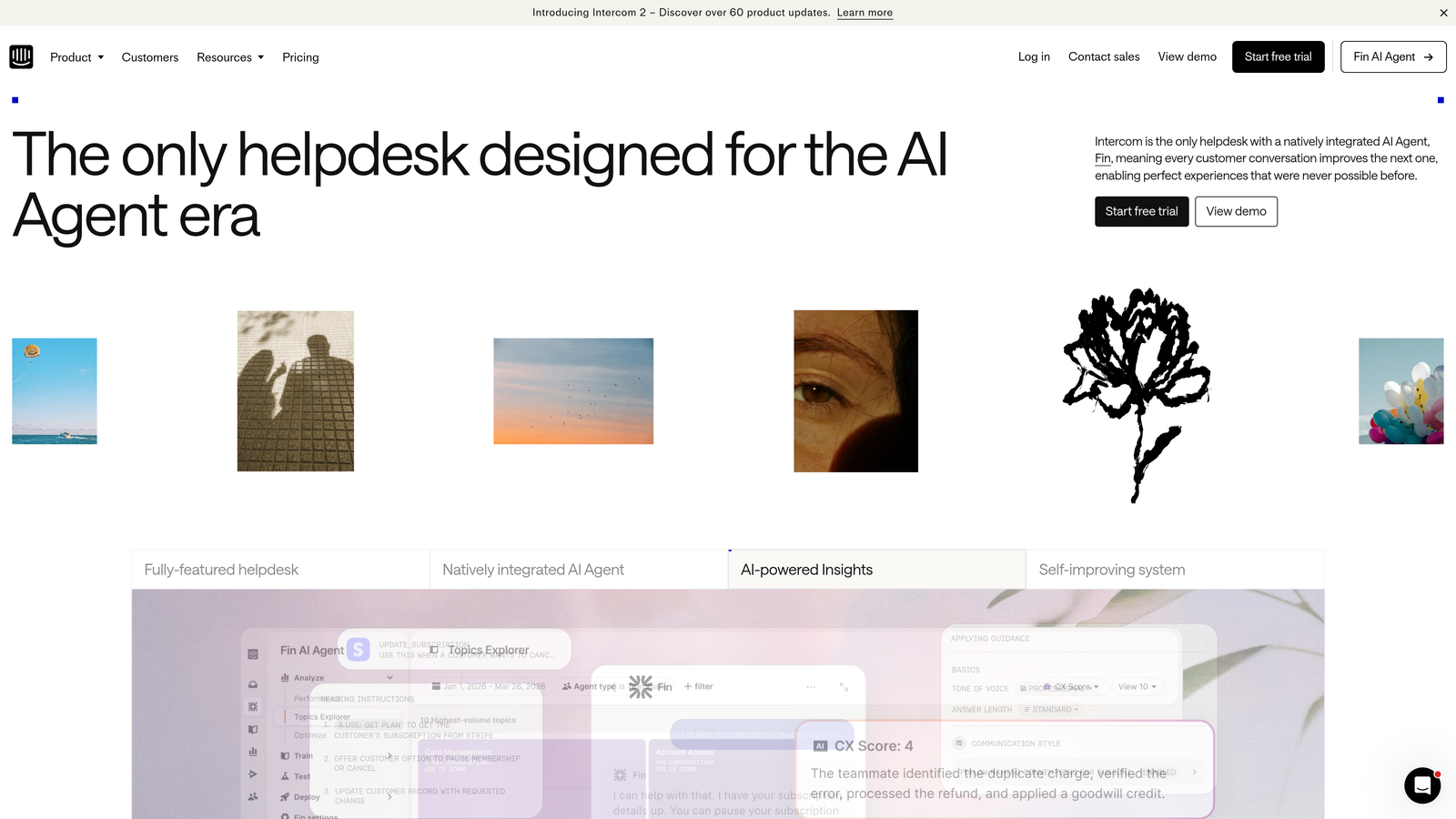
Intercom Fin is an AI-powered customer service agent built directly into Intercom's platform, designed to resolve support queries using your existing help center content.
Where This Tool Shines
Fin's biggest advantage is seamless integration with Intercom's ecosystem. If you're already using Intercom for messaging, the AI agent operates within the same inbox your human agents use, making handoffs invisible to customers.
The training process is straightforward—Fin learns from your existing help center articles and conversation history. You can customize its personality and tone to match your brand voice, and it improves as your documentation evolves.
Key Features
Help Center Training: Automatically learns from existing Intercom articles and knowledge base content.
Unified Inbox: Human agents and AI operate in the same workspace with smooth conversation transfers.
Customizable Personality: Adjust tone, formality, and response style to match brand guidelines.
Conversation Analytics: Built-in tracking for resolution rates, customer satisfaction, and escalation patterns.
Multilingual Support: Handles queries in multiple languages without separate configuration.
Best For
Companies already invested in Intercom's platform who want to add AI capabilities without switching providers. Works best for teams with comprehensive help documentation that Fin can reference.
Pricing
Starts at $0.99 per resolution. Requires active Intercom subscription, with pricing scaling based on resolution volume.
3. Zendesk AI
Best for: Enterprise teams needing AI across complex, multi-channel support operations
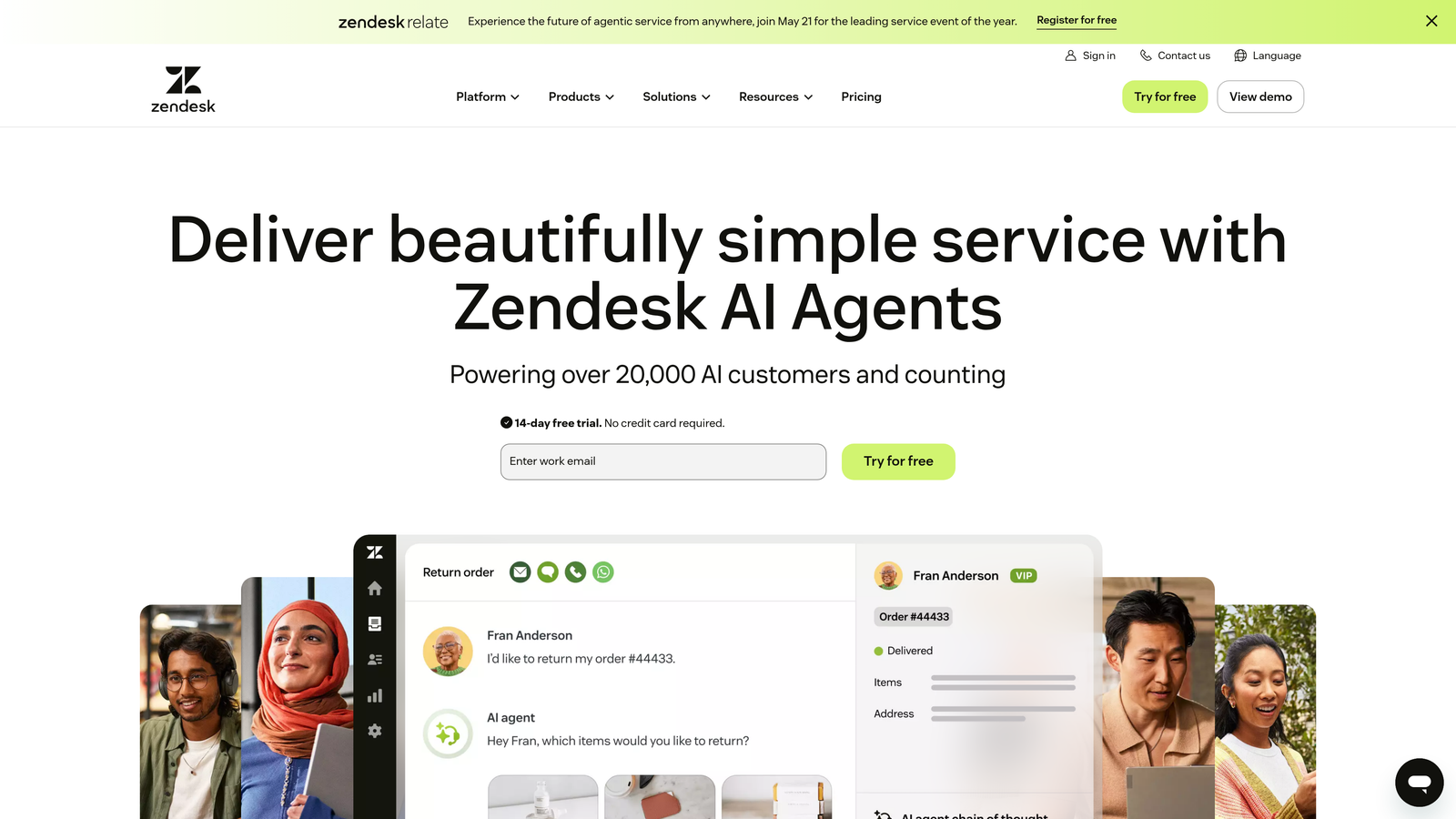
Zendesk AI embeds artificial intelligence throughout the Zendesk Suite, offering intelligent triage, agent assistance, and automated response capabilities at enterprise scale.
Where This Tool Shines
Zendesk's AI strength lies in handling massive ticket volumes across multiple channels with sophisticated routing logic. The system learns which agents excel at specific issue types and routes accordingly.
The Agent Workspace provides AI-suggested responses that improve agent productivity without full automation. Generative AI drafts replies based on ticket context and historical resolutions, letting agents edit rather than write from scratch.
Key Features
Intelligent Routing: Automatically prioritizes and assigns tickets based on content, urgency, and agent expertise.
Answer Bot: Self-service deflection tool that suggests help articles before tickets reach human agents.
AI-Suggested Responses: Provides agents with context-aware reply drafts to accelerate resolution time.
Generative Reply Drafting: Uses LLMs to compose full responses based on ticket details and knowledge base.
Sentiment Analysis: Detects customer frustration levels to escalate urgent cases appropriately.
Best For
Large enterprises with complex support operations spanning email, chat, phone, and social media. Ideal for teams already using Zendesk Suite who want to layer AI capabilities onto existing workflows.
Pricing
Available as add-on to Suite Professional and Enterprise plans. Contact Zendesk for custom pricing based on agent count and feature requirements.
4. Freshdesk Freddy AI
Best for: Mid-market teams wanting comprehensive AI features at predictable pricing
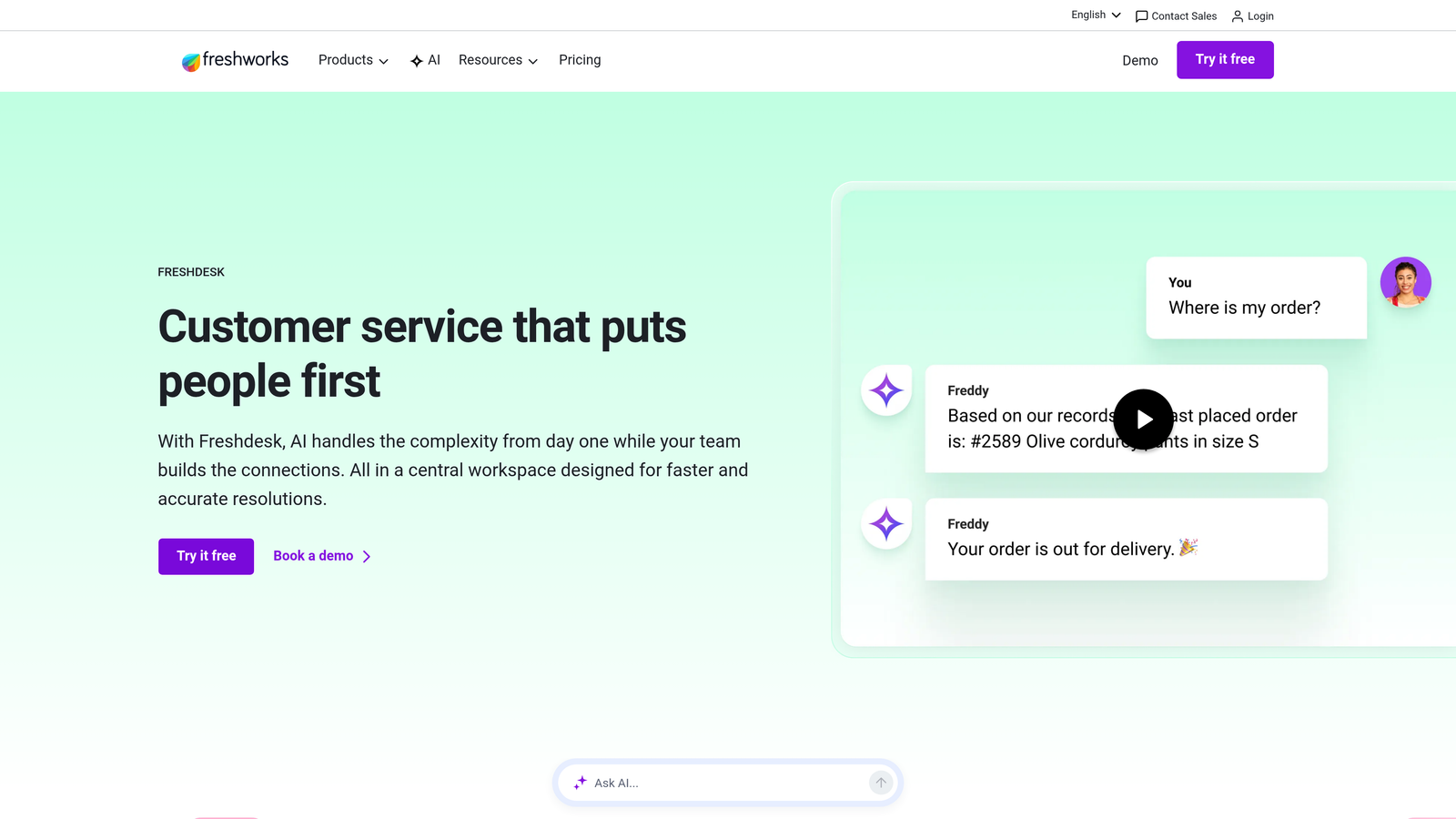
Freshdesk Freddy AI integrates AI assistance throughout Freshdesk, offering self-service automation, agent productivity tools, and predictive support capabilities.
Where This Tool Shines
Freddy balances automation with agent empowerment. Rather than forcing full autonomous resolution, it offers multiple AI modes—Freddy Self Service handles straightforward queries while Freddy Copilot assists agents with suggestions and predictions.
The ticket field prediction feature automatically categorizes and tags incoming requests, saving agents time on manual data entry. This seemingly small feature dramatically improves reporting accuracy and workflow automation downstream.
Key Features
Freddy Self Service: Automated chatbot resolves common queries without agent involvement.
Freddy Copilot: Provides agents with suggested responses, similar ticket history, and next-best-action recommendations.
Canned Response Suggestions: Recommends pre-written responses based on ticket content and category.
Auto-Categorization: Predicts ticket type, priority, and custom field values to streamline workflows.
Sentiment Detection: Identifies emotional tone to flag tickets needing special handling.
Best For
Growing B2B companies that need AI capabilities but aren't ready for enterprise-level complexity or pricing. Works well for teams with 10-100 support agents.
Pricing
Included in Freshdesk Pro and Enterprise plans. Pro starts at $49 per agent per month with annual billing.
5. Ada
Best for: High-volume teams needing rapid deployment across multiple channels
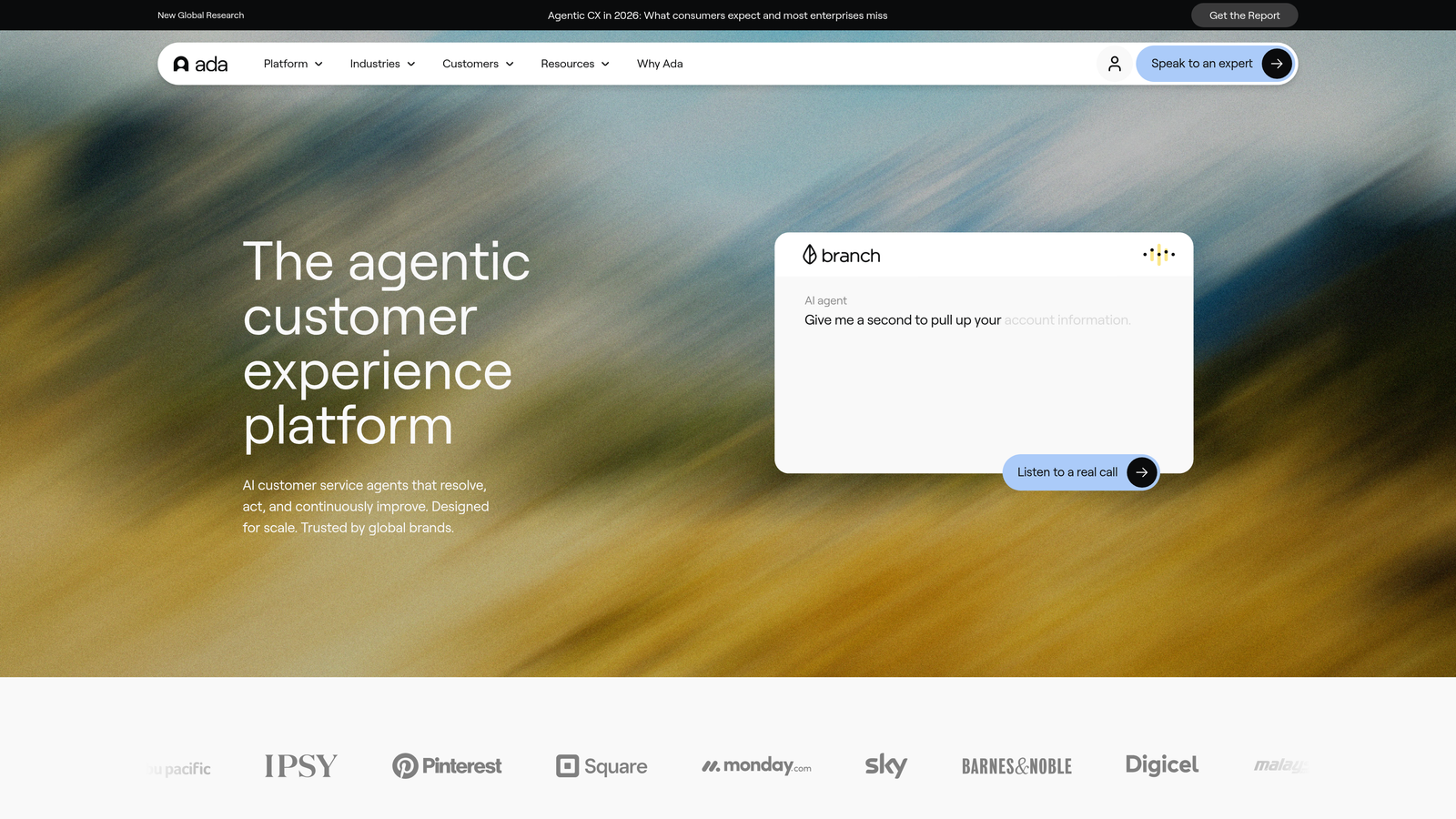
Ada is a no-code AI automation platform designed for customer service teams handling thousands of conversations monthly across web, mobile, and social channels.
Where This Tool Shines
Ada's visual automation builder lets non-technical teams create sophisticated conversation flows without writing code. You can deploy functional AI agents in days rather than months.
The multilingual capability stands out—Ada supports 50+ languages natively, automatically detecting customer language and responding appropriately. For companies serving global markets, this eliminates the need for separate bots per region.
Key Features
Visual Builder: Drag-and-drop interface for creating conversation flows, decision trees, and automation logic.
50+ Language Support: Automatic language detection with native responses in customer's preferred language.
Omnichannel Deployment: Single bot works across website, mobile app, Facebook Messenger, WhatsApp, and SMS.
Resolution-Based Pricing: Pay only for successful automated resolutions rather than per-conversation or per-agent.
Analytics Dashboard: Tracks automation rate, containment, customer satisfaction, and cost savings.
Best For
Companies with high conversation volumes who need quick deployment without developer resources. Particularly valuable for global businesses requiring multilingual support at scale.
Pricing
Custom pricing based on monthly resolution volume. Contact Ada for quote based on expected automation targets.
6. Tidio
Best for: Small and mid-sized teams wanting affordable automation with live chat
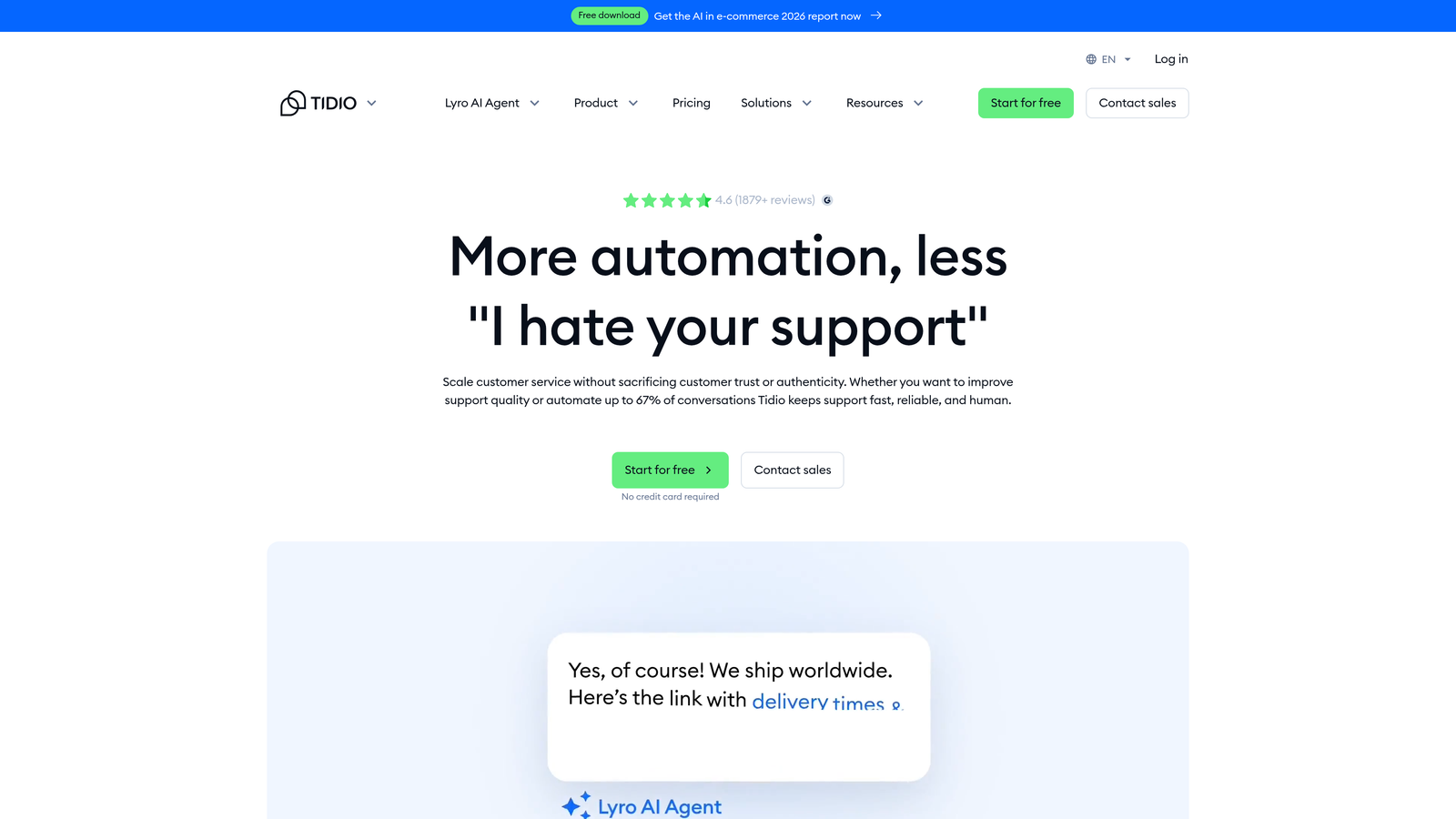
Tidio combines live chat, chatbot automation, and AI-powered responses in an accessible platform designed for teams without dedicated support engineering resources.
Where This Tool Shines
Tidio's strength is simplicity at a price point accessible to smaller teams. The visual chatbot builder includes pre-built templates for common scenarios—abandoned cart recovery, FAQ responses, lead qualification—that you can customize in minutes.
Lyro AI, Tidio's conversational automation layer, handles natural language queries without rigid decision trees. It learns from your help content and past conversations to provide relevant answers even when customers phrase questions unpredictably.
Key Features
Template Library: Pre-built chatbot flows for e-commerce, SaaS, and service businesses that deploy instantly.
Live Chat Integration: Seamless handoff from bot to human agent with full conversation history.
Lyro Conversational AI: Natural language understanding for handling variations in how customers ask questions.
Visitor Tracking: See what pages visitors view and trigger proactive chat based on behavior.
Multi-Channel: Manage conversations from website chat, email, and Facebook Messenger in one inbox.
Best For
Small businesses and startups that need both live chat and basic automation without enterprise pricing. Works well for teams of 1-10 support agents.
Pricing
Free tier available with limited features. Paid plans start at $29 per month for basic automation and scale based on conversation volume.
7. Drift
Best for: B2B teams where customer support and revenue generation intersect
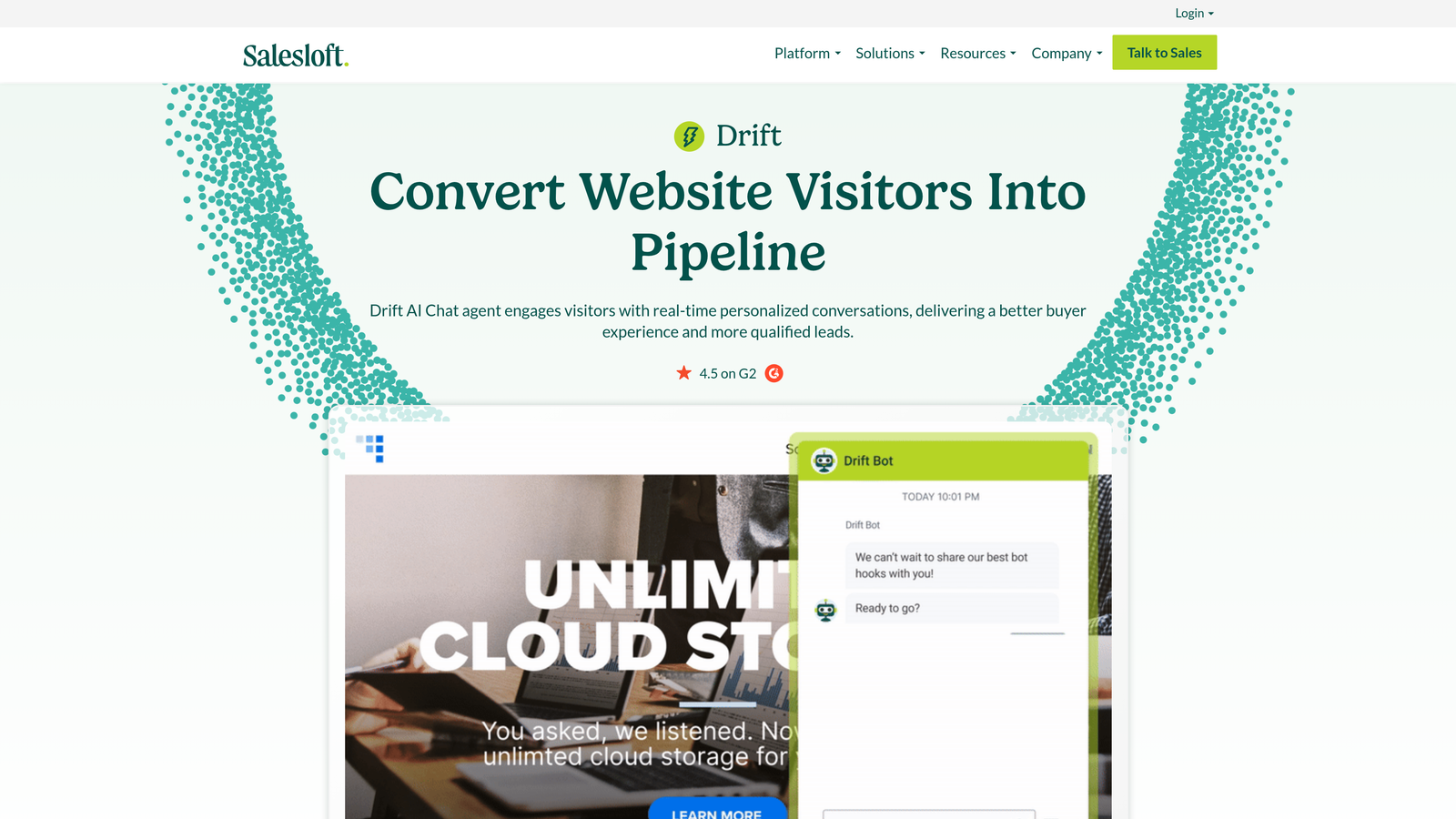
Drift is a conversational AI platform that blends customer support with sales acceleration, particularly suited for B2B companies where support conversations often reveal upsell opportunities.
Where This Tool Shines
Drift recognizes that in B2B, support and sales aren't always separate functions. The platform routes conversations based on account value, opportunity stage, and intent signals—a high-value prospect asking about features gets different handling than a basic support query.
The account-based targeting lets you customize chat experiences for different customer segments. Enterprise accounts might see immediate routing to dedicated success managers, while trial users get automated onboarding guidance.
Key Features
Revenue-Aware Routing: Routes conversations based on account value, deal stage, and customer lifecycle position.
Account-Based Personalization: Customize chat experiences and responses for different customer segments.
Meeting Scheduling: AI books meetings with sales or support teams directly from chat conversations.
CRM Integration: Deep connections to Salesforce and HubSpot for unified customer data.
Playbooks: Conditional logic for routing, qualification, and response automation based on visitor attributes.
Best For
B2B companies with high-value accounts where support conversations influence expansion revenue. Ideal for teams using Salesforce or HubSpot who want chat data flowing into CRM.
Pricing
Premium tier starts at $2,500 per month. Enterprise pricing available for advanced features and higher conversation volumes.
8. HubSpot Service Hub
Best for: Teams already using HubSpot CRM wanting unified customer data
HubSpot Service Hub integrates customer service capabilities with HubSpot's CRM, offering ticketing, knowledge base, and AI-assisted support within a unified customer platform.
Where This Tool Shines
Service Hub's killer feature is the unified customer timeline. Support agents see every marketing touchpoint, sales conversation, and previous ticket in one view. This context prevents customers from repeating information and helps agents provide personalized responses.
The chatbot builder includes AI assistance for creating conversation flows, and the knowledge base features AI-powered search that surfaces relevant articles based on semantic understanding rather than just keyword matching.
Key Features
Unified Timeline: Complete customer history across marketing, sales, and service interactions in one interface.
AI Chatbot Builder: Create automated conversation flows with AI-suggested responses and routing logic.
Smart Knowledge Base: AI-powered search helps customers and agents find relevant articles faster.
Customer Feedback Tools: Automated surveys for NPS, CSAT, and custom feedback collection.
Cross-Hub Automation: Trigger marketing or sales workflows based on support interactions.
Best For
Companies already using HubSpot for marketing or sales who want to centralize customer data across teams. Most valuable when you need support insights to inform marketing campaigns or sales outreach.
Pricing
Free tier available with basic ticketing. Professional tier starts at $450 per month for AI features and advanced automation.
9. Help Scout
Best for: Teams prioritizing human connection with AI enhancement rather than replacement
Help Scout is a human-centered help desk that uses AI to enhance agent capabilities rather than automate them away, ideal for companies where personal support is a competitive advantage.
Where This Tool Shines
Help Scout's philosophy differs from full automation platforms. AI Summarize and AI Assist help agents work faster, but the platform assumes humans remain central to customer relationships.
The Beacon widget combines self-service and live chat elegantly—customers can search the knowledge base, and if they don't find answers, they seamlessly transition to a conversation with an agent who sees their search history. This context prevents frustrating repetition.
Key Features
AI Summarize: Generates concise summaries of long conversation threads so agents quickly understand context.
AI Assist: Suggests response improvements for tone, clarity, and completeness without replacing agent voice.
Beacon Widget: Combines knowledge base search and live chat with smooth transition between self-service and human help.
Collision Detection: Prevents multiple agents from responding to the same conversation simultaneously.
Docs Knowledge Base: Clean, searchable documentation system with analytics on article performance.
Best For
Companies where personalized support is part of brand identity and competitive differentiation. Works well for teams of 5-50 agents who want AI assistance without losing human touch.
Pricing
Starts at $20 per user per month with annual billing. AI features included at all tiers.
Making the Right Choice
The automated customer service landscape has evolved beyond simple chatbots. Today's platforms offer genuine intelligence, but they differentiate along critical dimensions that matter for B2B teams.
If you need AI-first autonomous resolution with business intelligence that connects support to product and revenue, Halo AI delivers continuous learning and deep integration across your business stack. For teams already committed to specific platforms, Intercom Fin, Zendesk AI, and Freshdesk Freddy AI add strong automation to existing ecosystems.
High-volume teams needing rapid deployment should evaluate Ada's no-code builder and multilingual capabilities. Smaller teams with tighter budgets will find Tidio and Help Scout offer solid automation without enterprise complexity. If your support function intersects with sales, Drift's revenue-aware routing justifies its premium pricing.
The key question isn't whether to automate—it's how deeply you want AI integrated into your support operations. Bolt-on solutions assist agents with suggestions and deflect simple queries. AI-first platforms like Halo handle resolution end-to-end while surfacing insights that transform support from cost center to strategic intelligence source.
Your support team shouldn't scale linearly with your customer base. Let AI agents handle routine tickets, guide users through your product, and surface business intelligence while your team focuses on complex issues that need a human touch. See Halo in action and discover how continuous learning transforms every interaction into smarter, faster support.