9 Best Automated Customer Support Platforms in 2026
As support tickets outpace team capacity, automated customer support platforms offer a solution beyond basic macros—using AI agents that understand context, resolve issues independently, and continuously improve. This evaluation examines nine leading platforms based on autonomous resolution rates, integration depth with existing business tools, deployment speed, and adaptive learning capabilities to help you choose a system that scales intelligently with your customer base.
 Grant CooperFounder11 min read
Your support inbox is growing faster than your team. Every new customer means more tickets, more questions, more pressure on agents who are already stretched thin. The math is simple: traditional support scales linearly with headcount, but your customer base doesn't.
This is where automated customer support platforms come in—but not all automation is created equal. A ticketing system with basic macros isn't automation. True automation means AI agents that understand context, resolve issues independently, and get smarter with every interaction. It means platforms that connect to your entire business stack, not just email.
We evaluated platforms based on four critical factors: AI resolution capabilities (what percentage of tickets they handle autonomously), integration depth (whether they connect to your existing tools or operate in isolation), deployment complexity (time-to-value), and learning capabilities (whether the system improves or stays static). Here are the top automated customer support platforms transforming how teams scale in 2026.
1. Halo AI
Best for: B2B teams needing autonomous AI agents with deep integration and continuous learning capabilities.
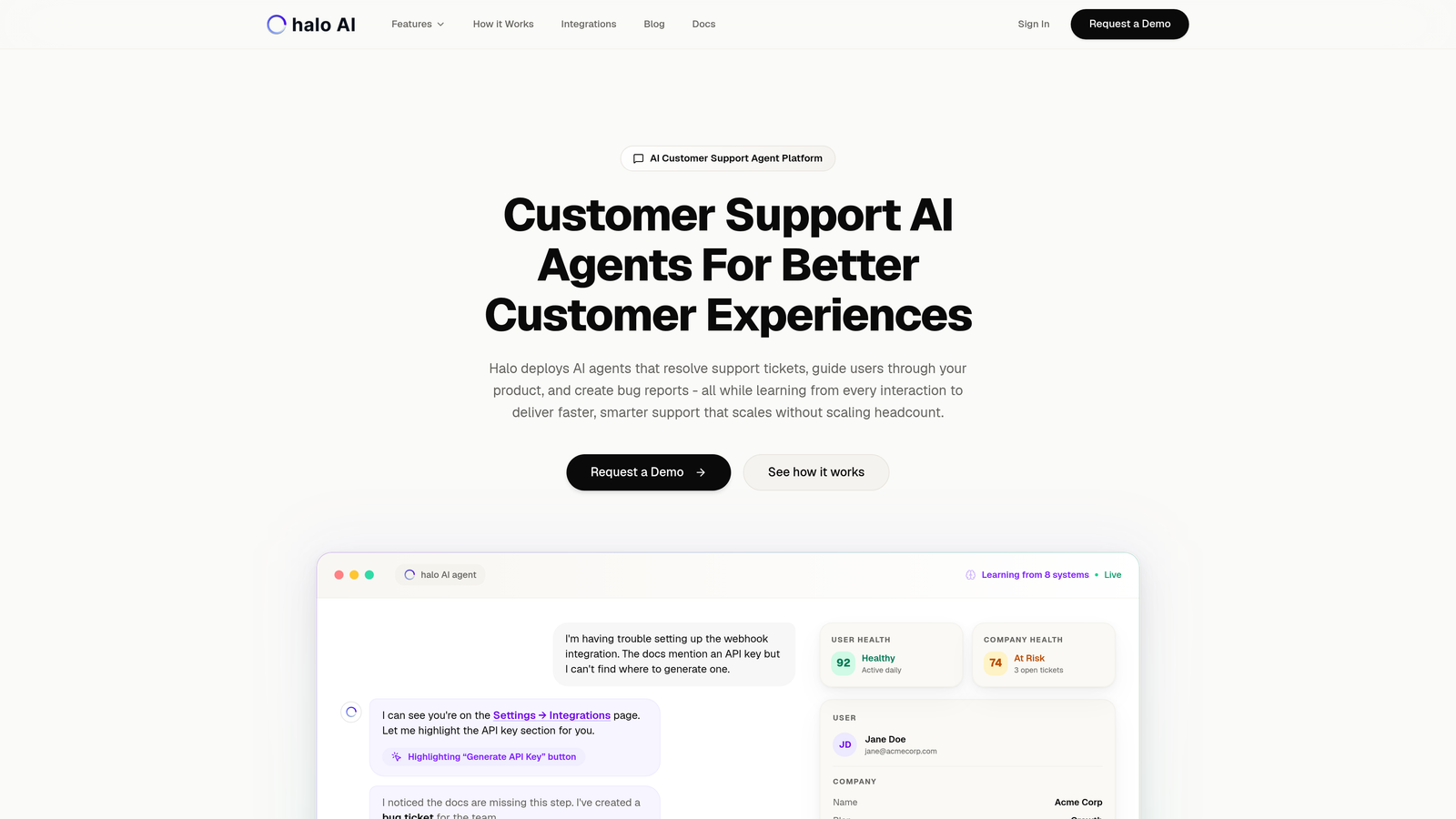
Halo AI takes an AI-first approach to customer support, deploying intelligent agents that resolve tickets autonomously while learning from every interaction.
Where This Tool Shines
Unlike platforms that bolt AI onto existing helpdesk systems, Halo is built from the ground up for autonomous operation. Its page-aware context means agents can see exactly what users see in your product, enabling visual guidance that goes beyond text-based responses.
The platform's continuous learning architecture means it doesn't just follow static decision trees—it improves resolution accuracy over time by analyzing patterns across every customer interaction. This creates a compounding effect where support gets faster and smarter without additional configuration.
Key Features
Autonomous AI Agents: Resolve tickets independently with context-aware responses that understand your product and customer history.
Page-Aware Chat Widget: Provides visual UI guidance by seeing exactly what users see, enabling precise in-product support.
Smart Inbox with Business Intelligence: Surfaces customer health signals, revenue intelligence, and anomaly detection beyond basic ticket metrics.
Auto Bug Ticket Creation: Automatically creates tickets in Linear when technical issues are detected, connecting support to product development.
Native Integrations: Connects to your entire business stack including Slack, HubSpot, Intercom, Stripe, Zoom, and PandaDoc for unified customer context.
Best For
B2B SaaS companies and product teams using helpdesk systems like Zendesk, Freshdesk, or Intercom who need to scale support without scaling headcount. Particularly valuable for teams that want AI to handle routine resolution while surfacing strategic business intelligence from support interactions.
Pricing
Contact for pricing based on resolution volume and integration requirements.
2. Intercom
Best for: Teams prioritizing conversational engagement with proactive messaging and AI-powered resolution.
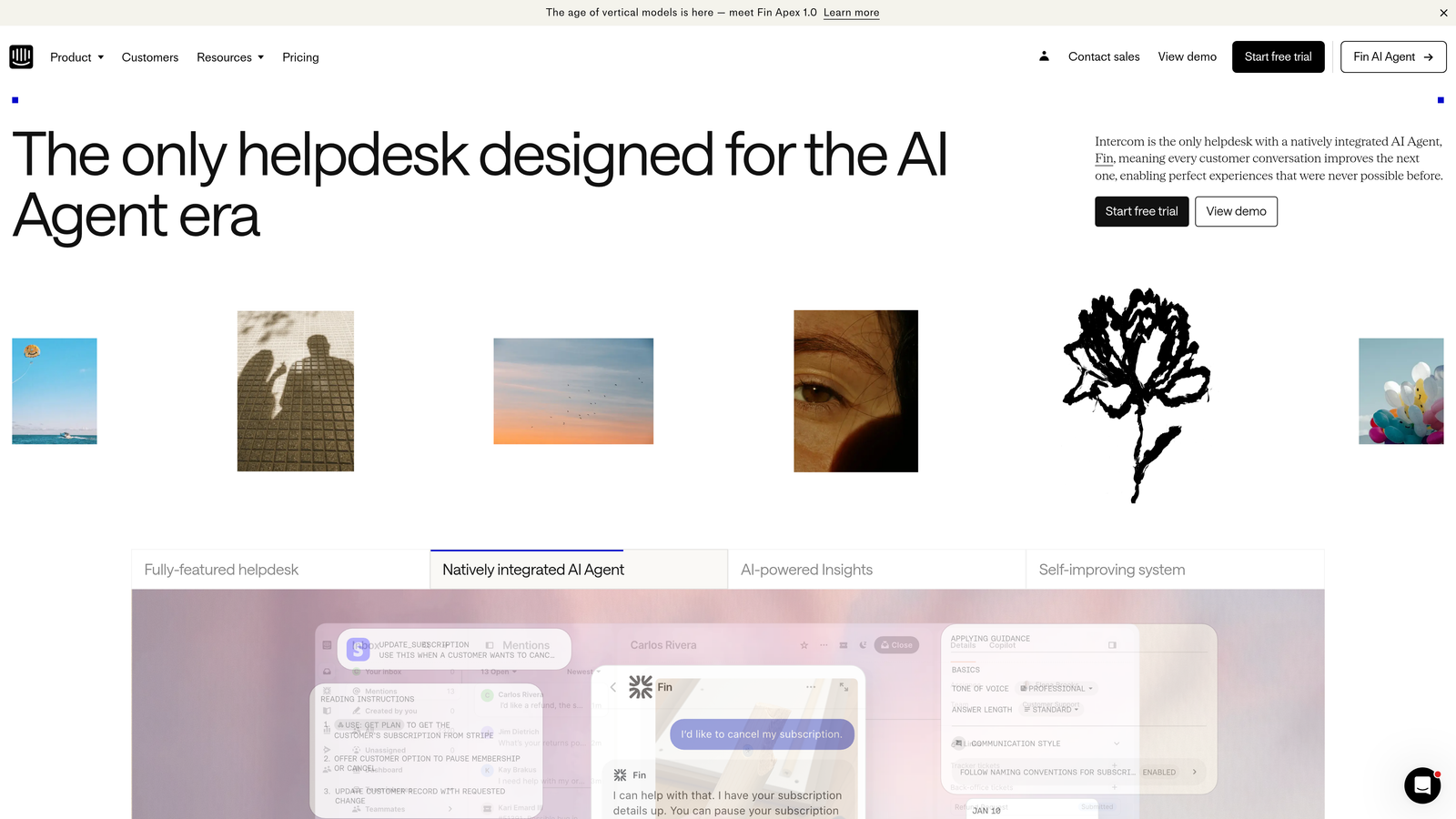
Intercom combines its Fin AI agent with a messenger-first approach to customer communication and proactive engagement.
Where This Tool Shines
Intercom's strength lies in its conversational foundation. The platform doesn't just react to support requests—it initiates conversations through proactive messaging, product tours, and targeted outreach based on customer behavior.
Fin AI handles common questions with natural language understanding, but the real value comes from how seamlessly it hands off to human agents when complexity increases. The transition feels natural rather than jarring, maintaining conversation context throughout.
Key Features
Fin AI Agent: Handles automated conversations with natural language processing and learns from your knowledge base content.
Messenger-First Engagement: Unified inbox for customer conversations across web, mobile, email, and social channels.
Proactive Messaging: Trigger targeted messages and product tours based on user behavior and customer data.
Robust API and Integrations: Connect to thousands of tools through native integrations and flexible API access.
Resolution Reports: Track AI resolution rates, conversation volumes, and customer satisfaction metrics in real-time.
Best For
Product-led growth companies that want to combine reactive support with proactive customer engagement. Ideal for teams that view their support widget as a growth channel, not just a help desk.
Pricing
Starts at $39 per seat per month for core platform. Fin AI operates on usage-based pricing calculated by resolution volume.
3. Zendesk
Best for: Enterprise teams requiring extensive customization, compliance features, and marketplace ecosystem.
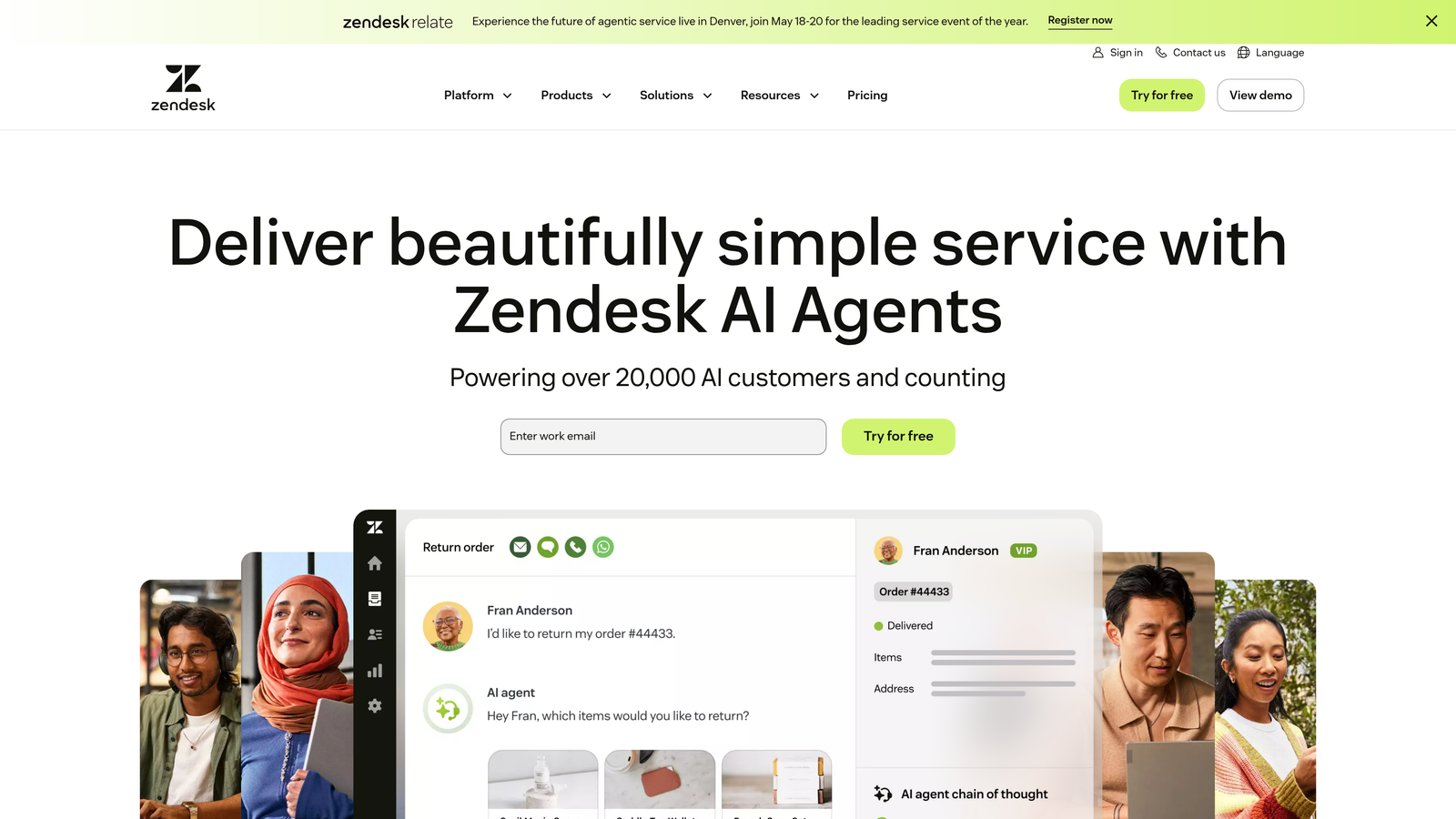
Zendesk offers enterprise-grade support infrastructure with Answer Bot for ticket deflection and a massive app marketplace for customization.
Where This Tool Shines
Zendesk's marketplace ecosystem is unmatched—over 1,200 apps and integrations mean you can customize the platform to fit virtually any workflow. For enterprise teams with complex requirements, this flexibility is invaluable.
The platform handles omnichannel support at scale, managing email, chat, phone, and social media from a unified agent workspace. Advanced workflow automation lets teams build sophisticated routing rules and escalation paths without developer resources.
Key Features
Answer Bot and Advanced AI: Deflect common questions automatically and suggest relevant articles to agents during conversations.
Extensive App Marketplace: Access over 1,200 integrations and custom apps to extend platform capabilities.
Omnichannel Support: Manage email, live chat, phone, messaging, and social media from a single workspace.
Advanced Workflow Automation: Build complex routing rules, triggers, and automations with visual builders.
Enterprise Security: HIPAA, SOC 2, and GDPR compliance with advanced security controls and audit logs.
Best For
Large enterprises with complex support operations, strict compliance requirements, and teams that need extensive customization. Best suited for organizations willing to invest in setup and configuration to achieve precise workflow automation.
Pricing
Suite Team plan starts at $55 per agent per month, with Professional and Enterprise tiers adding advanced AI and customization features.
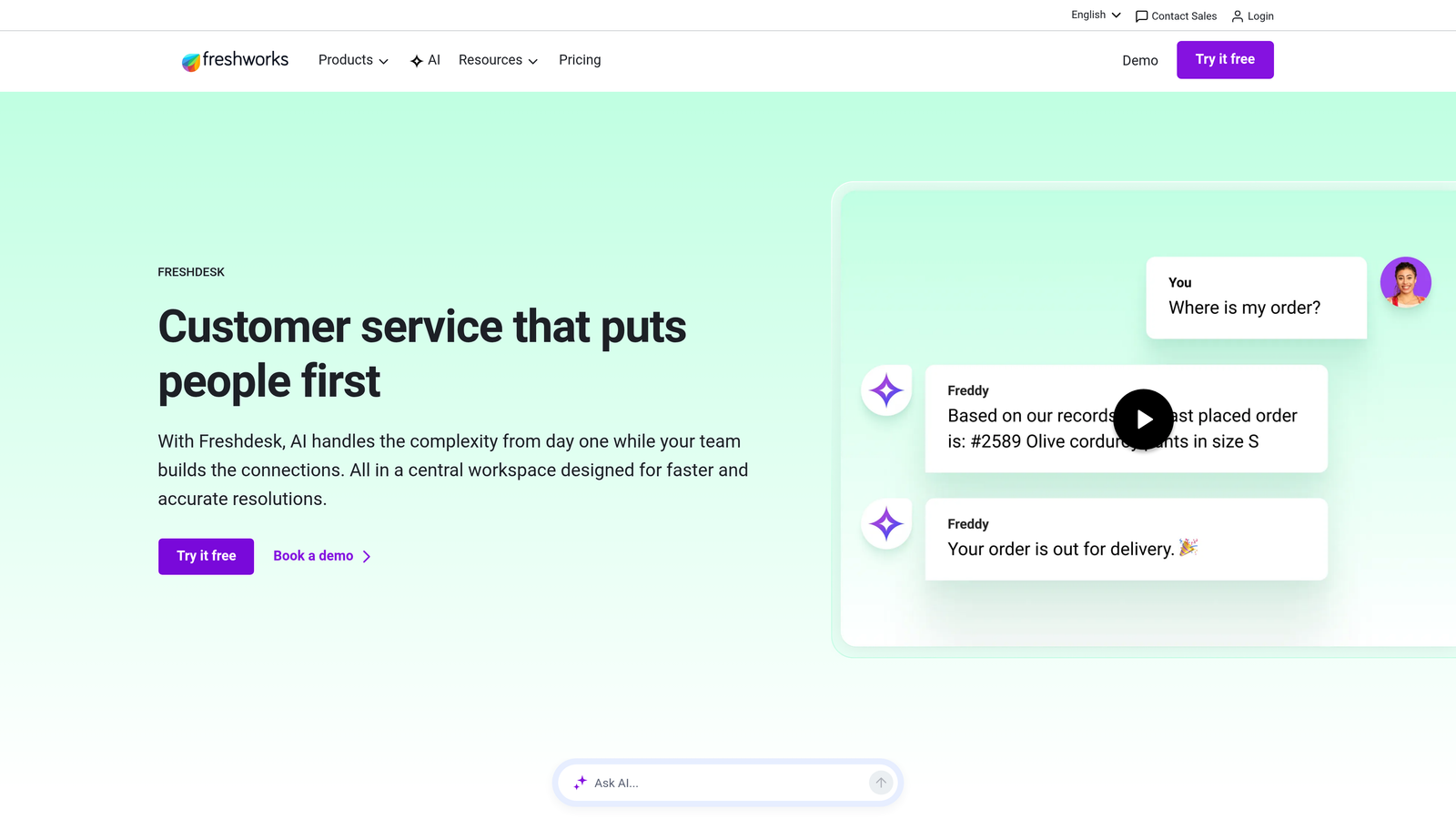
4. Freshdesk
Best for: Mid-market companies seeking competitive pricing with AI assistance and quick deployment.
Freshdesk delivers Freddy AI automation at accessible price points, making AI-powered support attainable for growing teams.
Where This Tool Shines
Freshdesk strikes a balance between capability and complexity. The platform is sophisticated enough for mid-sized teams but doesn't require months of configuration to see value. Freddy AI handles ticket classification, agent suggestions, and basic resolution without extensive training.
The scenario automation builder lets teams create workflow automations visually, making it accessible to support managers without technical backgrounds. This democratization of automation means faster time-to-value compared to enterprise platforms.
Key Features
Freddy AI: Automatically classifies tickets, suggests responses to agents, and handles common customer questions.
Scenario Automations: Build workflow automations with visual builders for routing, escalation, and task assignment.
Omnichannel Capabilities: Manage email, phone, chat, social media, and messaging from unified agent desktop.
Team Collaboration: Internal notes, parent-child ticketing, and team huddles for complex issue resolution.
Self-Service Portal: Branded knowledge base with AI-powered search and community forums.
Best For
Growing companies with 20-200 support agents who need AI capabilities without enterprise complexity or pricing. Particularly strong for teams transitioning from basic helpdesks to AI-powered automation.
Pricing
Free tier available for small teams. Paid plans start at $15 per agent per month, with AI features available on Growth tier and above.
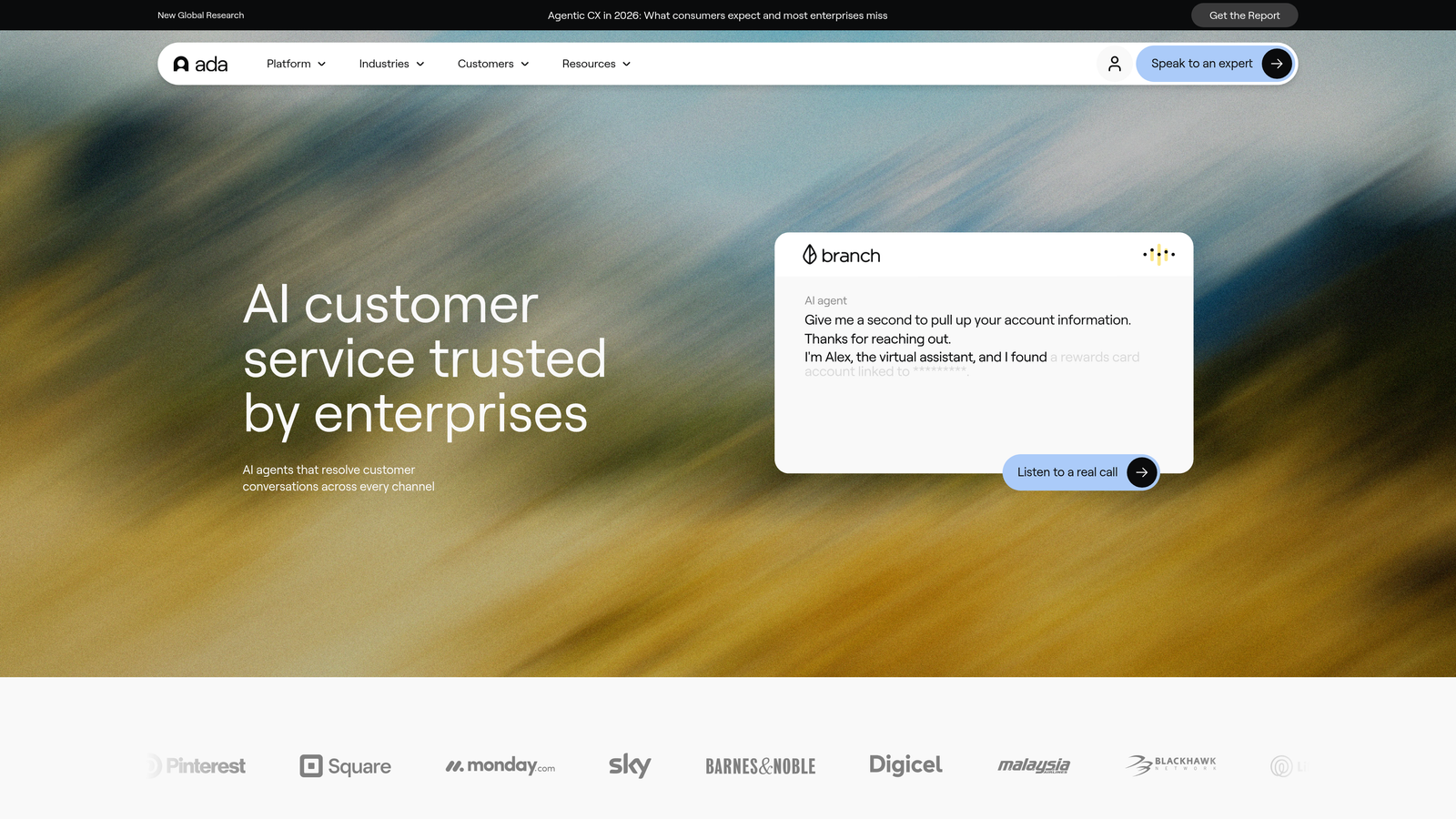
5. Ada
Best for: High-volume resolution with no-code builders and extensive multilingual support capabilities.
Ada focuses on automation-first design, enabling teams to build sophisticated conversation flows without coding.
Where This Tool Shines
Ada's no-code conversation builder makes complex automation accessible to non-technical teams. Support managers can design multi-step conversation flows, integrate with APIs, and deploy personalized experiences without developer resources.
The platform's multilingual capabilities are exceptional—supporting over 50 languages with the same conversation logic. This makes Ada particularly valuable for global companies that need consistent automation across markets without rebuilding flows for each language.
Key Features
No-Code Builder: Visual conversation designer for creating automated flows without programming knowledge.
50+ Language Support: Deploy the same conversation logic across multiple languages with automatic translation.
Generative AI: Dynamic responses that adapt to conversation context rather than following rigid scripts.
Handoff to Live Agents: Seamless escalation when automation reaches its limits, maintaining full conversation context.
Resolution Analytics: Track automation performance, conversation paths, and resolution rates by topic and channel.
Best For
Global companies with high support volumes who need multilingual automation without technical complexity. Ideal for teams that want marketing or support managers building conversation flows rather than relying on developers.
Pricing
Custom pricing based on resolution volume and feature requirements. Contact for specific quote.
6. Kustomer
Best for: Teams requiring unified customer timelines with CRM-first architecture and context-rich conversations.
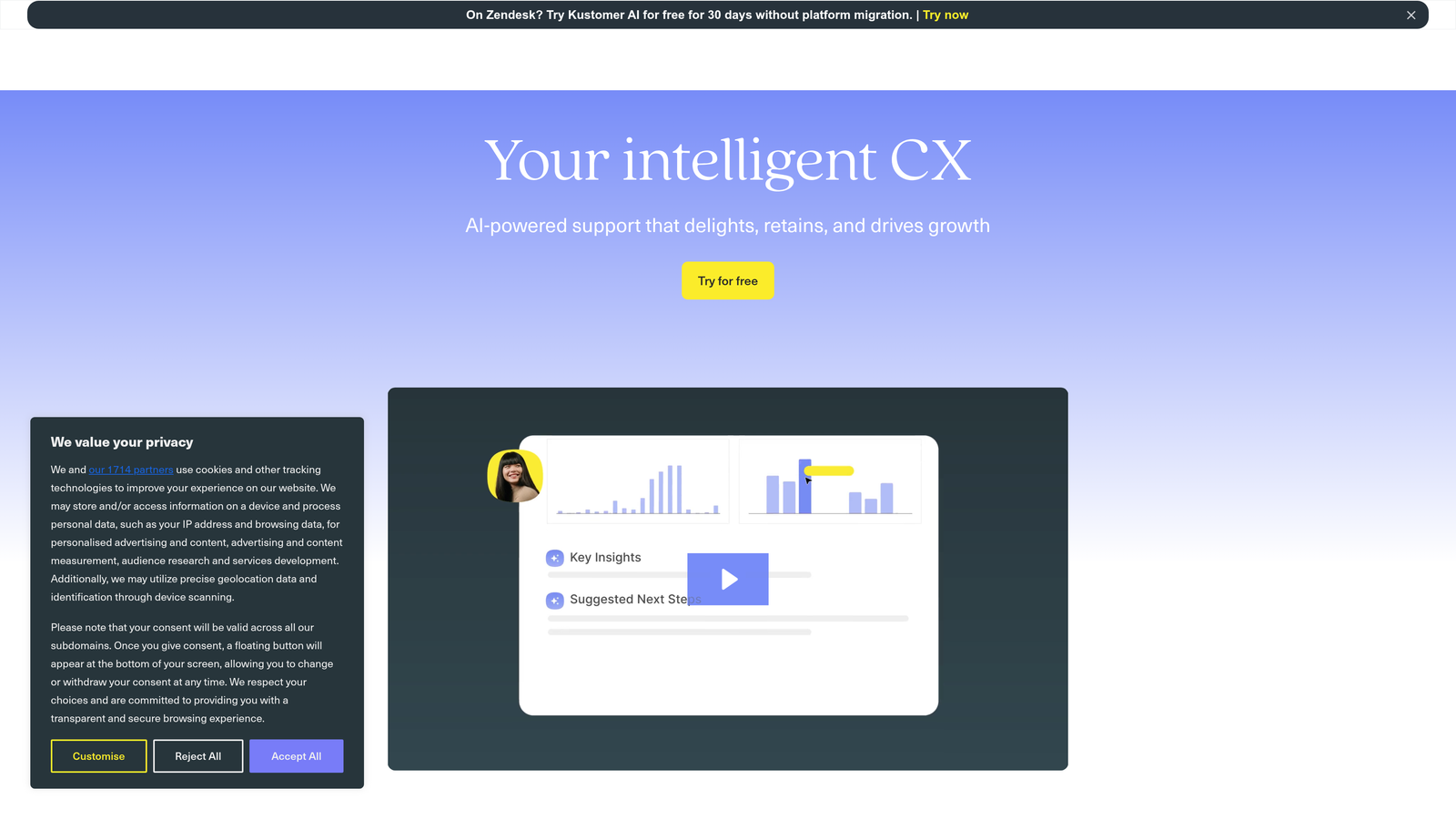
Kustomer provides CRM-first support infrastructure where every interaction adds to a unified customer timeline.
Where This Tool Shines
Kustomer's timeline view fundamentally changes how agents approach support. Instead of seeing isolated tickets, agents see the complete customer journey—purchases, previous conversations, product usage, and lifecycle stage all in one view.
This context enables more personalized support and better business decisions. AI-powered routing considers not just ticket content but customer value, sentiment, and history when assigning conversations to agents, ensuring high-value customers get appropriate attention.
Key Features
Unified Customer Timeline: Complete customer history including purchases, conversations, and product interactions in single view.
AI-Powered Routing: Intelligent assignment based on customer value, sentiment, agent expertise, and conversation complexity.
Omnichannel Management: Handle conversations across email, chat, SMS, social media, and voice from unified workspace.
Business Process Automation: Automate workflows across support and adjacent teams like sales and success.
Sentiment Analysis: Automatically detect customer frustration or satisfaction to prioritize urgent issues.
Best For
E-commerce and subscription businesses where customer lifetime value and purchase history significantly impact support strategy. Best for teams that want support data flowing into broader customer relationship management.
Pricing
Starts at $89 per user per month for Enterprise plan with core features and automation capabilities.
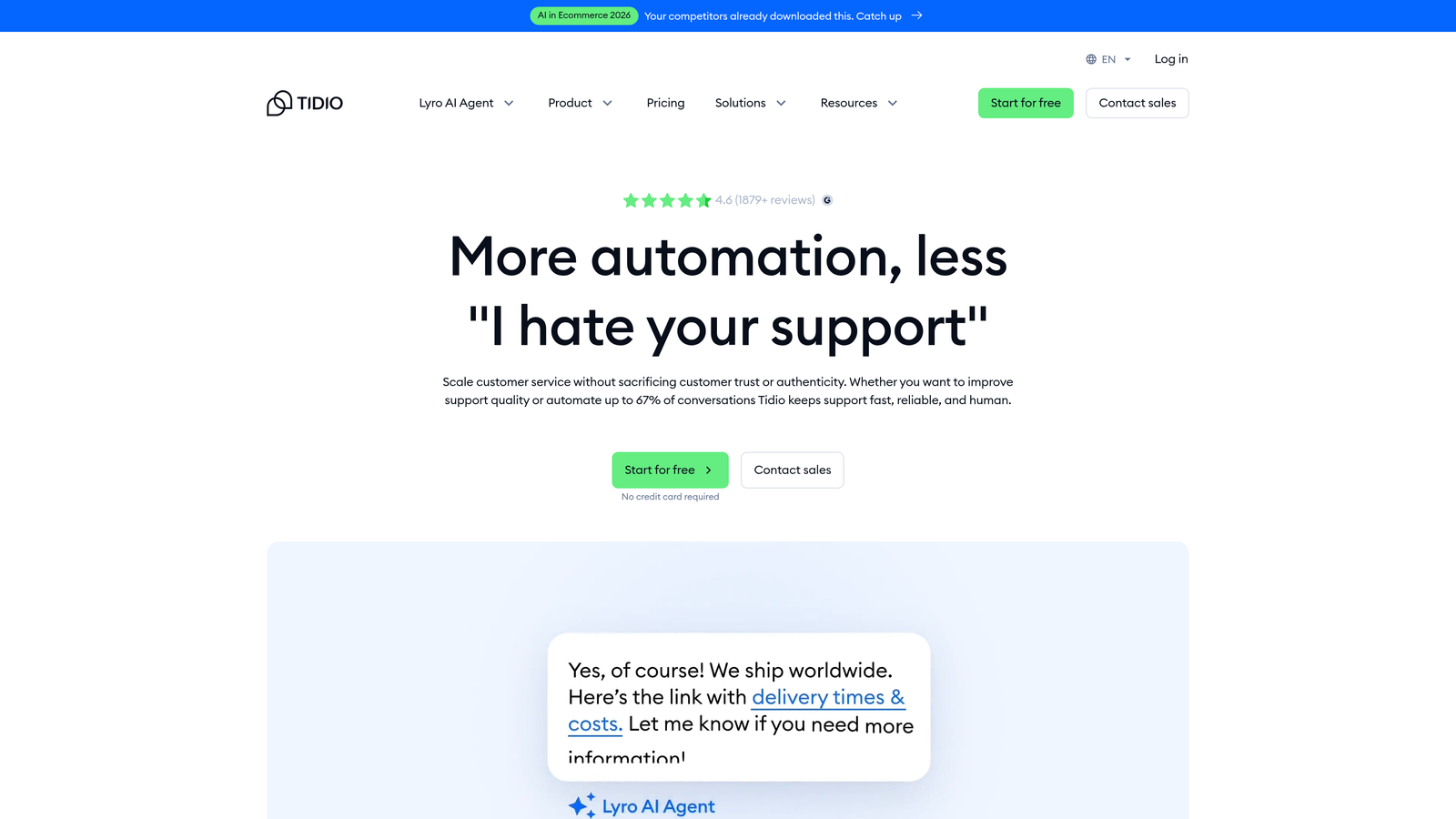
7. Tidio
Best for: Small businesses and SMBs seeking affordable AI chatbot automation with live chat.
Tidio combines Lyro AI chatbot capabilities with live chat at price points accessible to smaller teams.
Where This Tool Shines
Tidio makes AI automation accessible to businesses that can't justify enterprise pricing. Lyro AI handles common questions automatically while the visual chatbot builder lets small teams create custom conversation flows without technical expertise.
The platform's Shopify and WordPress integrations are particularly strong, making it a natural fit for e-commerce stores and content sites. Visitor tracking provides context about browsing behavior, enabling more targeted automated responses.
Key Features
Lyro AI Chatbot: Automated responses to common questions with natural language understanding trained on your content.
Live Chat with Visitor Tracking: See what pages visitors are viewing and proactively offer assistance.
Visual Chatbot Builder: Create custom conversation flows with drag-and-drop interface.
E-commerce Integrations: Native connections to Shopify, WordPress, Wix, and major e-commerce platforms.
Mobile App: Respond to chats and monitor conversations from iOS or Android devices.
Best For
Small e-commerce stores, content sites, and service businesses with limited support teams who need basic automation without enterprise costs. Ideal for teams of 1-10 people handling moderate conversation volumes.
Pricing
Free tier available with basic live chat. Lyro AI chatbot starts at $29 per month with usage limits based on conversation volume.
8. HubSpot Service Hub
Best for: HubSpot ecosystem users needing native CRM integration with support automation.
HubSpot Service Hub delivers support platform capabilities tightly integrated with HubSpot's CRM and marketing tools.
Where This Tool Shines
If you're already in the HubSpot ecosystem, Service Hub's native CRM integration is its killer feature. Customer data flows seamlessly between marketing, sales, and support without custom integrations or data syncing.
The platform treats support as part of the customer lifecycle rather than an isolated function. Conversation intelligence connects support interactions to revenue data, showing which support experiences correlate with retention and expansion.
Key Features
Native CRM Integration: Unified customer data across marketing, sales, and support with no integration required.
Ticketing and Automation: Help desk functionality with workflow automation for routing, escalation, and task creation.
AI-Powered Knowledge Base: Self-service portal with intelligent search that learns from usage patterns.
Customer Feedback Surveys: NPS, CSAT, and custom surveys with automated follow-up workflows.
Conversation Intelligence: Analytics connecting support interactions to customer lifecycle stage and revenue impact.
Best For
Companies already using HubSpot for marketing or sales who want unified customer data without building custom integrations. Particularly valuable for teams that view support as a growth function rather than cost center.
Pricing
Free tools available with basic ticketing. Professional tier starts at $90 per month for two users, with additional seats priced separately.
9. Help Scout
Best for: Teams prioritizing human-centered support with AI assistance for drafts and summarization.
Help Scout adds AI capabilities to a platform designed for personal, human-focused customer service.
Where This Tool Shines
Help Scout takes a different philosophy than fully automated platforms. Rather than replacing agents, its AI features assist them—drafting responses, summarizing long threads, and suggesting relevant help articles while keeping humans in control.
The shared inbox with collision detection prevents multiple agents from responding to the same conversation. This human-first approach appeals to teams that view personalized service as a competitive advantage but still want efficiency gains from automation.
Key Features
AI Drafts and Suggestions: Generate response drafts based on conversation context and suggest relevant help articles to agents.
Conversation Summarization: Automatically summarize long email threads so agents quickly understand context.
Shared Inbox: Collision detection prevents duplicate responses while maintaining team visibility into all conversations.
Beacon Widget: In-app help widget with knowledge base search, contact forms, and live messaging.
Customer Satisfaction Ratings: Automatic CSAT surveys after conversation resolution with trend reporting.
Best For
Small to mid-sized teams that prioritize personal customer relationships and view automation as an assistant rather than replacement. Ideal for companies where brand voice and personalized service are core differentiators.
Pricing
Starts at $20 per user per month for Standard plan. Plus tier adds AI features and advanced reporting.
Making the Right Choice
The right automated customer support platform depends on where you are and where you're going. Small teams with straightforward needs will find value in Tidio or Help Scout's simplicity. Mid-market companies balancing capability with budget often land on Freshdesk or Intercom. Enterprises requiring extensive customization and compliance typically choose Zendesk or Kustomer.
But platform selection isn't just about company size. Consider your integration requirements. If you live in HubSpot, Service Hub's native integration eliminates data headaches. If you need multilingual support at scale, Ada's language capabilities become critical. If you want AI that learns from your specific product and customer interactions rather than following generic decision trees, platforms built AI-first make more sense than those adding AI to legacy architectures.
Resolution rate matters more than feature lists. A platform that autonomously resolves 60% of tickets delivers more value than one with impressive features but only handles 20%. Ask vendors for resolution benchmarks from customers in your industry, not just generic case studies.
Integration depth separates platforms that become central to your operations from those that remain siloed tools. Can the platform connect to your CRM, product analytics, development tools, and communication systems? Does it surface business intelligence from support interactions, or just track ticket volumes? The platforms that connect to your entire business stack—like Halo's integrations with Linear, Slack, HubSpot, and Stripe—provide context that improves both resolution accuracy and strategic insights.
Your support team shouldn't scale linearly with your customer base. Let AI agents handle routine tickets, guide users through your product, and surface business intelligence while your team focuses on complex issues that need a human touch. See Halo in action and discover how continuous learning transforms every interaction into smarter, faster support.