9 Best Automated Customer Support Platforms in 2026
This guide ranks the 9 best automated customer support platforms of 2026, evaluating each on AI capability, integration depth, scalability, and real-world fit for B2B SaaS teams. Whether you're replacing a legacy helpdesk or layering automation onto an existing stack, it provides the criteria and comparisons you need to choose confidently.
 Matt PattoliFounder13 min read
The era of ticket queues and overwhelmed support teams is giving way to AI-powered platforms that resolve issues before agents even see them. But not all automated customer support platforms are built the same. Some bolt AI onto legacy helpdesk infrastructure, while others are architected from the ground up to learn, adapt, and act autonomously.
This list covers the best automated customer support platforms available in 2026, evaluated on AI capability, integration depth, scalability, and real-world usability for B2B SaaS teams. Whether you're replacing a traditional helpdesk or layering automation onto an existing stack, there's a platform here that fits your workflow.
Selection criteria: autonomous resolution capability, learning architecture, integration ecosystem, pricing transparency, and suitability for B2B product teams.
1. Halo AI
Best for: B2B SaaS teams that want AI-first support with page-aware context and business intelligence
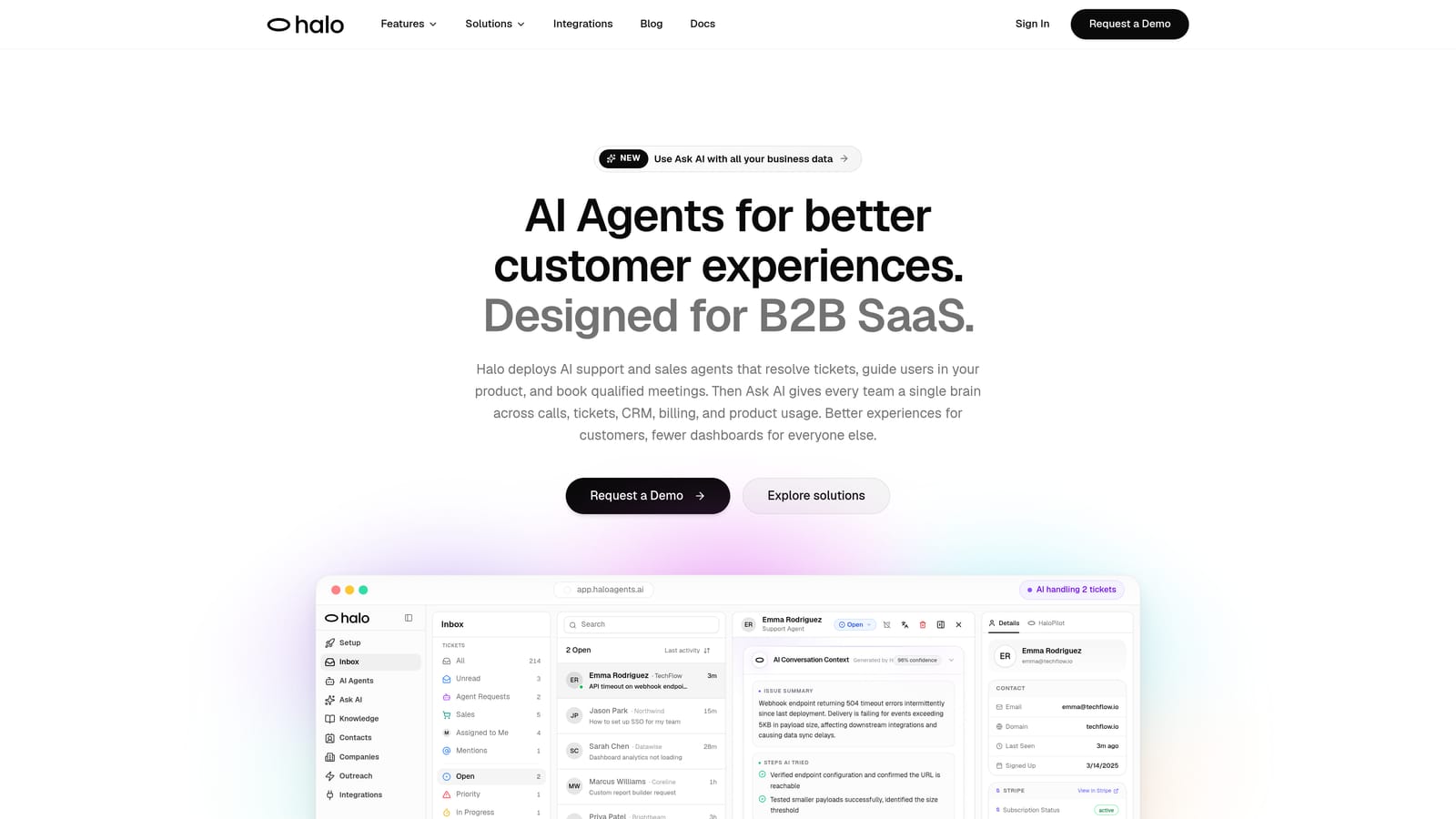
Halo AI is an AI-first customer support platform built to autonomously resolve tickets, guide users through your product, and surface business intelligence — all while learning from every interaction.
Where This Tool Shines
What separates Halo from AI-augmented helpdesks is architecture. It wasn't built as a layer on top of an existing ticketing system. The AI is the foundation, which means every feature, from ticket resolution to bug detection, is designed around autonomous action rather than agent assistance.
The page-aware chat widget is particularly distinctive. Halo's AI understands what a user is looking at inside your product when they reach out, giving it the context to provide genuinely relevant guidance rather than generic answers. Pair that with continuous learning from every resolved interaction, and the system gets meaningfully smarter over time.
Key Features
Page-Aware AI Agents: The AI understands the specific product page a user is viewing, enabling contextually accurate responses and visual UI guidance without the user having to explain their situation.
Autonomous Ticket Resolution: AI agents handle routine support tickets end-to-end, with seamless live agent handoff for complex issues that require a human touch, including full context preservation at handoff.
Auto Bug Ticket Creation: When a user reports a bug, Halo automatically creates and routes a ticket to Linear or equivalent tools, removing manual triage from the engineering workflow.
Smart Inbox with Business Intelligence: Beyond support metrics, the smart inbox surfaces customer health signals, revenue anomalies, and churn indicators, turning support data into strategic intelligence.
Deep Integration Ecosystem: Connects natively with Linear, Slack, HubSpot, Intercom, Stripe, Zoom, PandaDoc, and Fathom, bridging support with the broader business stack.
Best For
B2B SaaS product teams that want support automation built from the ground up, not retrofitted. Particularly valuable for teams that need their support layer to feed intelligence back into product, engineering, and revenue workflows rather than operating as a siloed helpdesk.
Pricing
Demo-first model; contact Halo AI for pricing. Given the enterprise-grade AI capabilities and integration depth, a discovery call is the right starting point for most teams.
2. Intercom
Best for: B2B SaaS teams wanting mature conversational support with strong in-app messaging
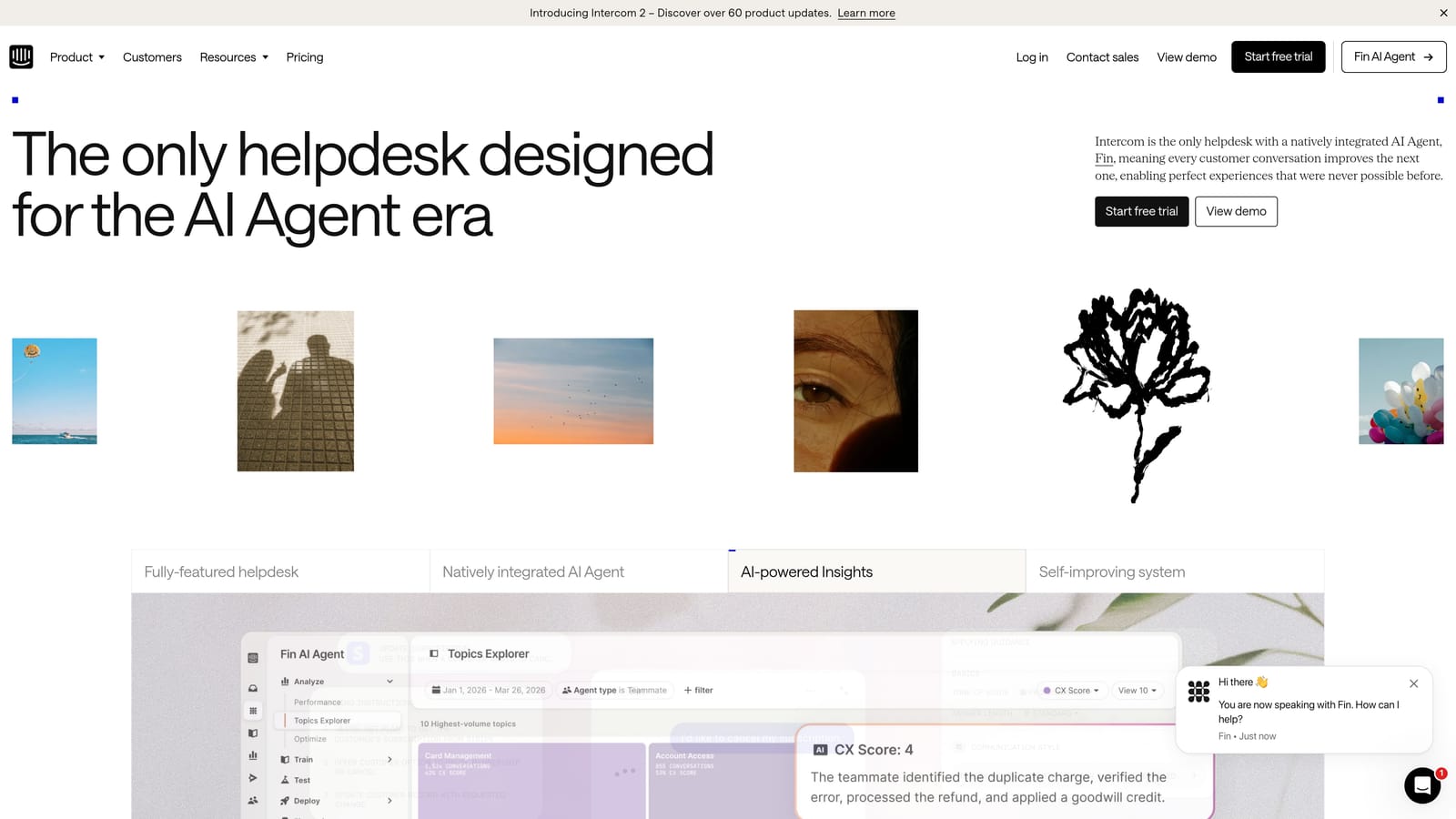
Intercom is a mature conversational support platform with a Fin AI agent for autonomous resolution, strong in-app messaging, and one of the largest integration ecosystems in the category.
Where This Tool Shines
Intercom has spent years building conversational UX that feels natural rather than robotic. Fin, their AI agent, is built on large language models and handles a meaningful portion of support volume autonomously before escalating to human agents. The product tour and proactive messaging capabilities also make it useful beyond reactive support.
For teams already invested in the Intercom ecosystem, the platform offers genuine breadth: from onboarding flows to support resolution to product announcements, all in one place.
Key Features
Fin AI Agent: Autonomous ticket resolution powered by large language models, designed to deflect routine queries and escalate complex ones.
Proactive Support and Product Tours: In-app messaging that guides users proactively, reducing inbound support volume before it starts.
Omnichannel Coverage: Handles support across email, chat, in-app, and phone in a unified inbox.
Integration Marketplace: A large ecosystem of third-party integrations spanning CRM, analytics, and engineering tools.
Conversation Analytics: Reporting on resolution rates, CSAT, and team performance across channels.
Best For
B2B SaaS companies that want a well-established platform with strong conversational UX and a large integration marketplace. Works well for teams that value proactive support and in-app engagement alongside reactive ticket resolution.
Pricing
Fin AI agent is priced per resolution; full platform plans vary. Check intercom.com for current pricing tiers.
3. Zendesk
Best for: Enterprise teams needing a proven, compliance-ready helpdesk with AI-augmented workflows
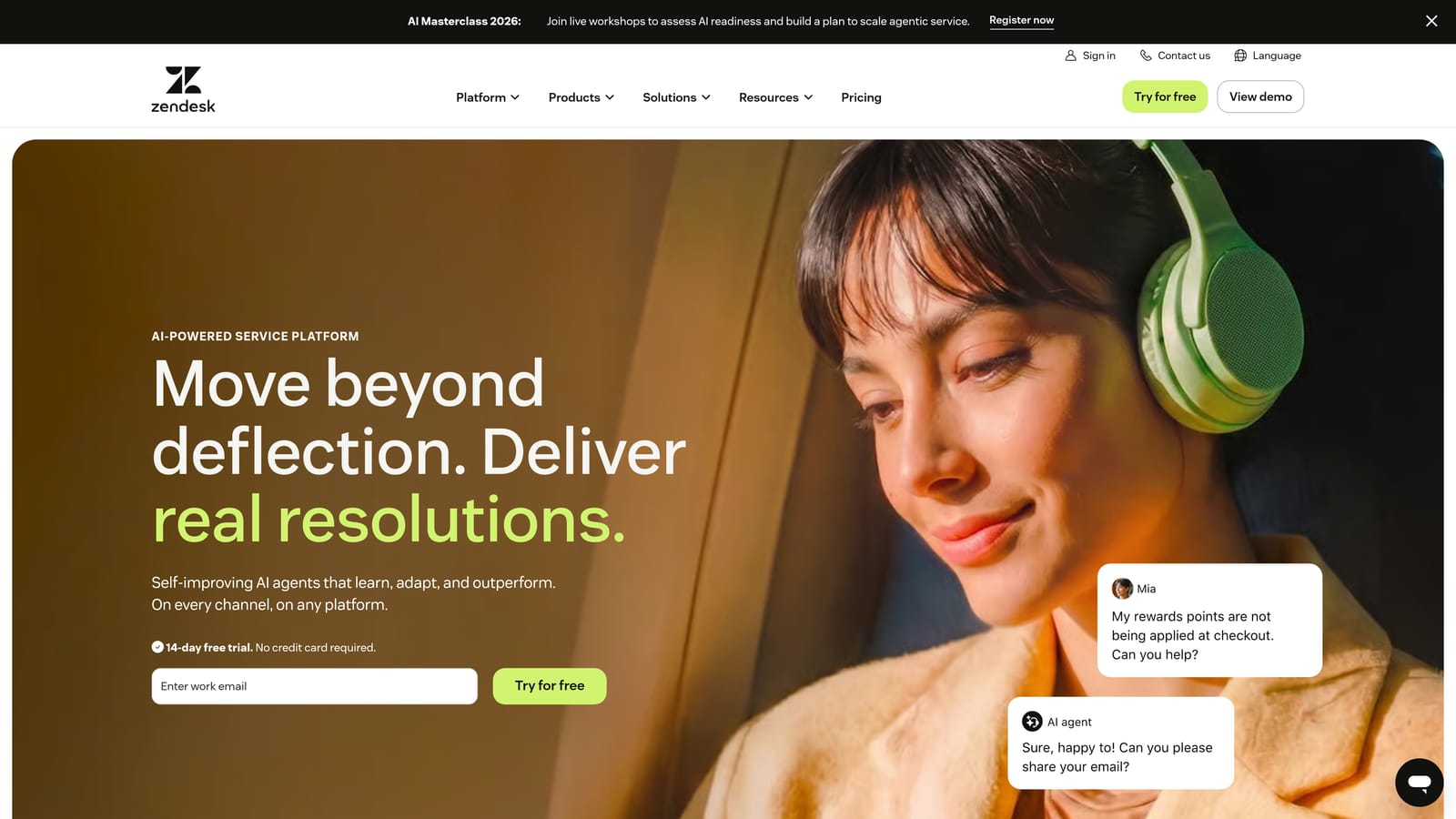
Zendesk is one of the most established helpdesk platforms globally, with AI-powered triage, an agent copilot, and an enterprise-grade ecosystem built for scale and compliance.
Where This Tool Shines
Zendesk's strength is reliability and ecosystem depth. With over 1,000 marketplace integrations, advanced reporting, and enterprise security features, it's a platform that large support organizations trust precisely because it's been battle-tested at scale. The AI features, including intelligent triage and agent copilot, layer onto that foundation to improve efficiency without requiring a rearchitecture of existing workflows.
For teams with complex compliance requirements or deeply entrenched processes, Zendesk's maturity is a genuine advantage rather than just brand recognition.
Key Features
AI-Powered Intelligent Triage: Automatically classifies and routes incoming tickets based on intent, sentiment, and content, reducing manual triage work.
Agent Copilot: Suggests responses and next-best-actions to agents in real time, improving resolution speed without removing the human from the loop.
1,000+ App Marketplace: One of the largest integration ecosystems in the support category, spanning CRM, analytics, e-commerce, and engineering tools.
Advanced Reporting Suite: Granular reporting on team performance, ticket trends, and customer satisfaction with customizable dashboards.
Enterprise Compliance and Security: SOC 2, GDPR, HIPAA-ready configurations for organizations with strict data governance requirements.
Best For
Enterprise support teams with high ticket volumes, complex compliance requirements, and existing investment in the Zendesk ecosystem. Also suits organizations that want to augment agent workflows with AI rather than pursue full automation.
Pricing
Suite plans start at a mid-range per-agent monthly price; full AI feature access typically requires higher-tier plans. Check zendesk.com for current pricing.
4. Freshdesk
Best for: SMBs and growing teams wanting accessible AI-augmented helpdesk with a free starting tier
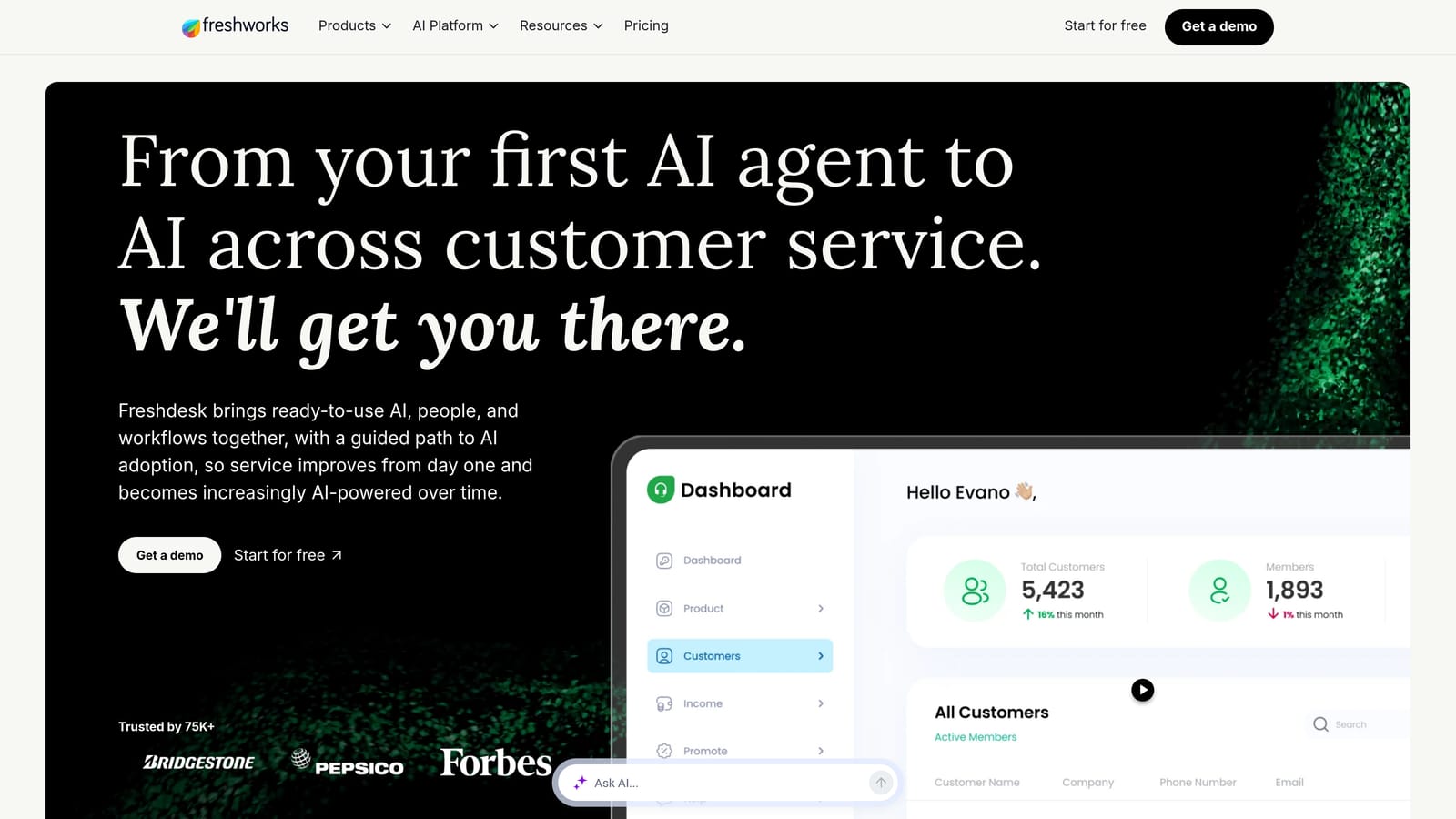
Freshdesk is an accessible helpdesk platform with Freddy AI for auto-triage, agent assist, and chatbot capabilities, well-suited for teams that need solid automation without enterprise-level complexity or cost.
Where This Tool Shines
Freshdesk's value proposition is straightforward: you get a capable, multi-channel helpdesk with AI features at a price point that's genuinely accessible for smaller teams. Freddy AI handles auto-triage, suggests replies, and powers a self-service chatbot that deflects routine queries before they reach an agent.
Being part of the broader Freshworks ecosystem is also a meaningful advantage. Teams that want CRM, chat, and ITSM under one vendor umbrella can consolidate without switching platforms as they grow.
Key Features
Freddy AI: Covers auto-triage, suggested replies, agent assist, and a self-service chatbot for deflection, all within the core platform.
Freddy Self Service: A configurable chatbot that handles common queries autonomously, reducing inbound volume for human agents.
Freshworks Ecosystem: Native integration with Freshsales (CRM), Freshchat, and Freshservice (ITSM) for teams that want a unified vendor stack.
Multi-Channel Support: Handles email, chat, phone, and social media in a single inbox.
Free Tier: A genuinely usable free plan for small teams, making it low-risk to evaluate before committing to paid plans.
Best For
SMBs, early-stage SaaS teams, and growing support organizations that want AI-augmented helpdesk capabilities without the cost or complexity of enterprise platforms. Particularly attractive for teams already using or considering other Freshworks products.
Pricing
Free tier available; paid plans scale with agents and features. Check freshdesk.com for current plan details.
5. Tidio
Best for: Small teams and e-commerce businesses wanting fast, no-code AI chat deployment
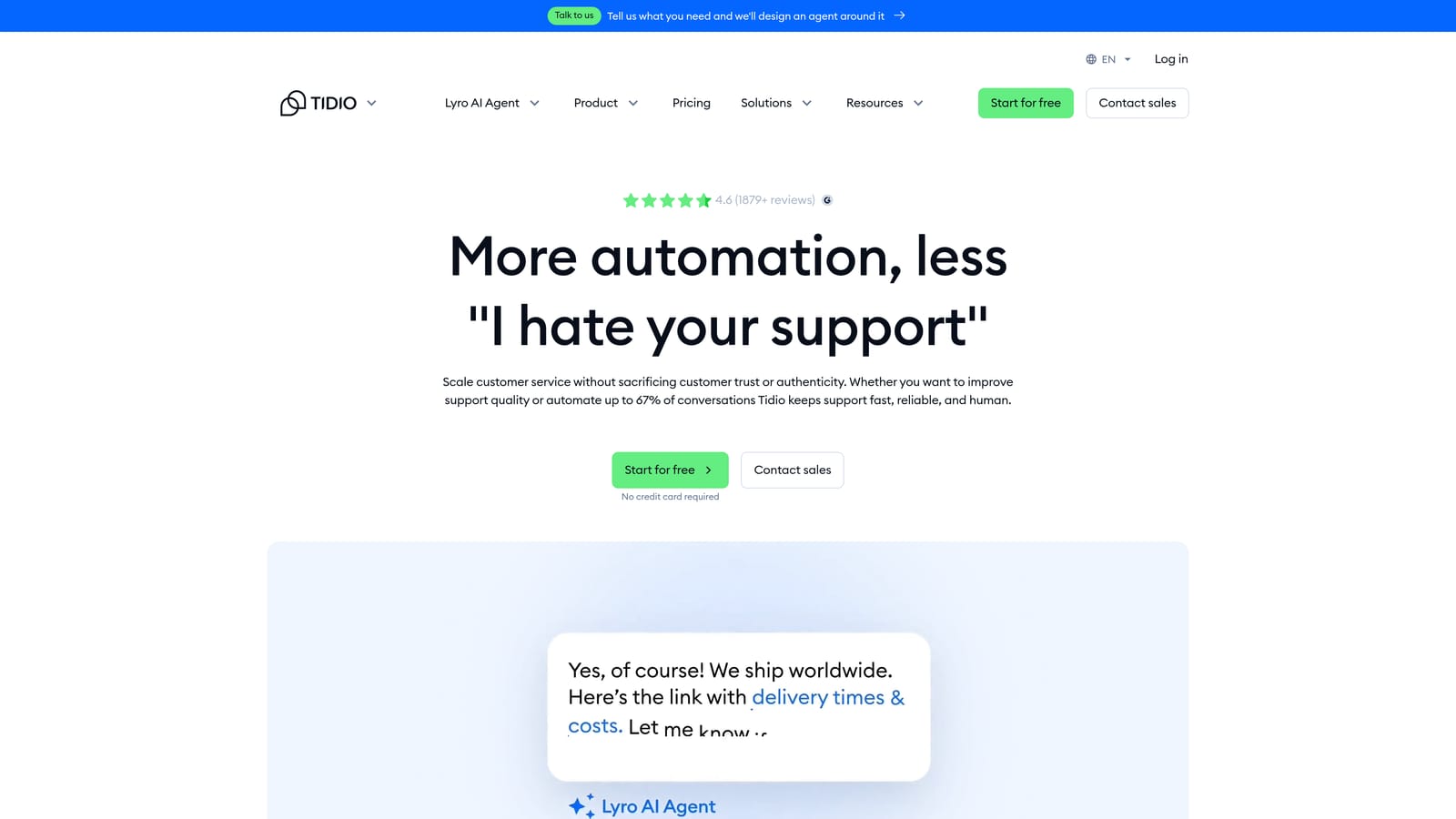
Tidio is a lightweight live chat and AI chatbot platform with Lyro AI for conversational resolution, built for fast deployment without heavy configuration or technical overhead.
Where This Tool Shines
Tidio's defining quality is speed to value. Teams can deploy Lyro AI and have a functioning conversational support layer running in hours, not weeks. The no-code setup means support leads can configure and adjust the AI without involving engineering, which matters enormously for small teams without dedicated technical resources.
Lyro handles autonomous conversational resolution for common queries, and the platform's e-commerce integrations make it particularly strong for Shopify and WooCommerce stores where support volume is high and queries are often repetitive.
Key Features
Lyro AI Chatbot: Autonomous conversational resolution for common support queries, with escalation to live agents when needed.
Live Chat and AI in One Platform: Combines human and AI support in a unified interface without requiring separate tools.
No-Code Setup: Configure and launch without engineering involvement, making it accessible for non-technical support teams.
E-Commerce Integrations: Native connections to Shopify and WooCommerce for order status, returns, and product queries.
Free Tier: A functional free plan for small teams to get started before scaling to paid features.
Best For
Small businesses, e-commerce operators, and teams that prioritize fast deployment over deep customization. Less suited for complex B2B SaaS environments requiring deep product context or business intelligence.
Pricing
Free tier available; Lyro AI included in paid plans. Check tidio.com for current pricing.
6. Drift (Salesloft)
Best for: B2B revenue teams where support and sales qualification conversations overlap
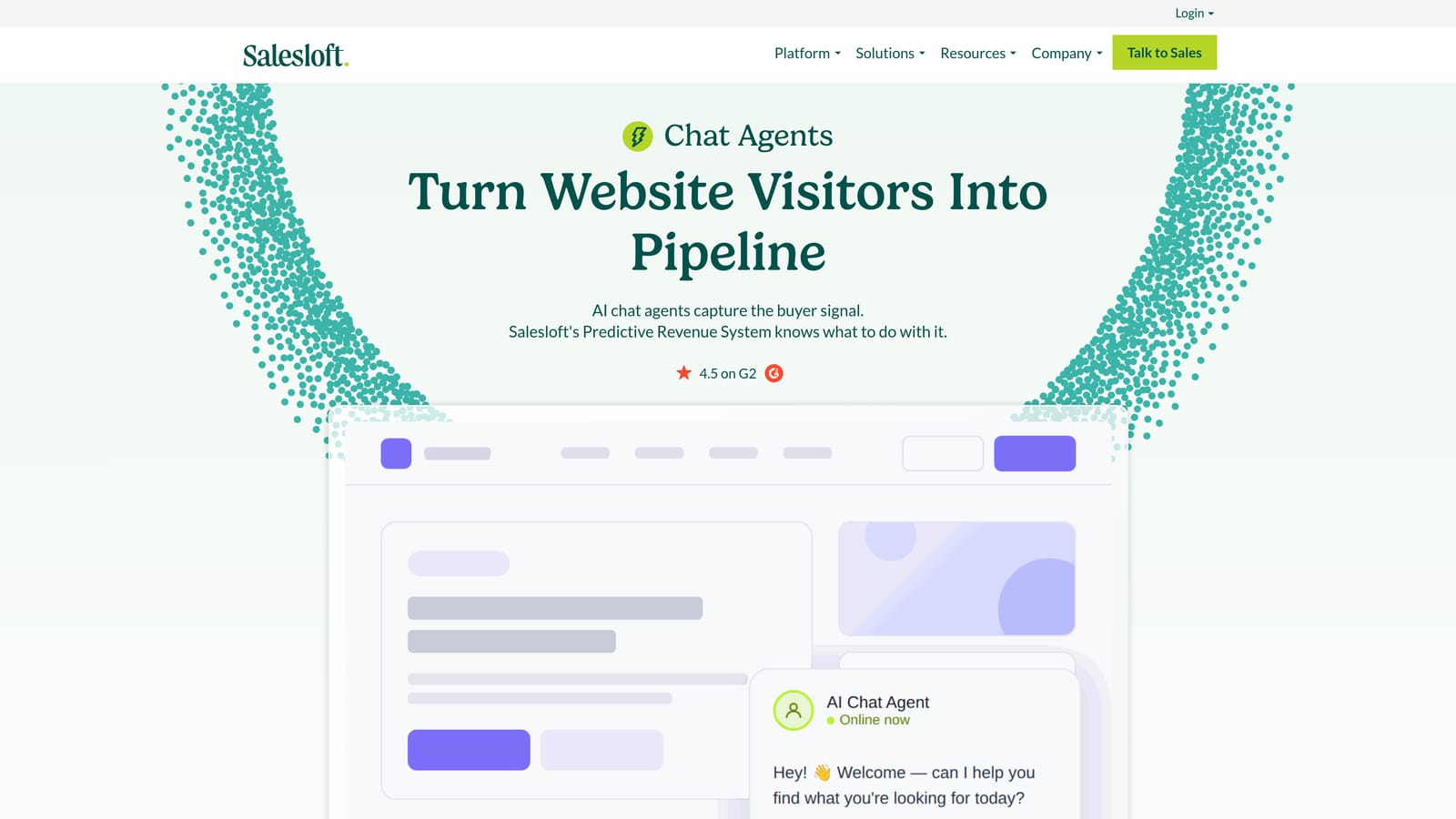
Drift, now part of Salesloft, is a conversational AI platform that blends support automation with sales qualification, making it particularly relevant for B2B teams where the line between support and revenue conversations is blurry.
Where This Tool Shines
Drift's core strength is routing intelligence. The platform can identify whether an inbound conversation is a support query or a sales opportunity and route it accordingly, in real time. For B2B companies with account-based marketing programs, this means high-value prospects get fast-tracked while support queries are handled by AI or deflected to self-service.
Following the Salesloft acquisition, Drift's integration with sales engagement workflows has deepened, making it a natural fit for revenue teams that want support and sales operating from a shared conversational layer.
Key Features
AI Routing for Support and Sales: Intelligently routes conversations to support automation or sales reps based on buyer intent and account data.
ABM and Revenue Team Integrations: Connects with account-based marketing tools and CRM platforms to surface account context in real time.
Conversational Playbooks: Configurable conversation flows for both support deflection and sales qualification scenarios.
Real-Time Buyer Intent Signals: Surfaces intent data to help revenue teams prioritize and respond to high-value conversations.
Salesloft Integration: Deep connection to Salesloft's sales engagement platform for teams that want a unified revenue and support workflow.
Best For
B2B companies with significant overlap between support and sales motions, particularly those running account-based marketing programs. Less suited for pure support use cases where revenue team alignment isn't a priority.
Pricing
Enterprise-focused pricing; contact Drift or Salesloft for current rates and packaging.
7. Zoho Desk
Best for: Teams already in the Zoho ecosystem that want CRM-native helpdesk with AI-powered insights
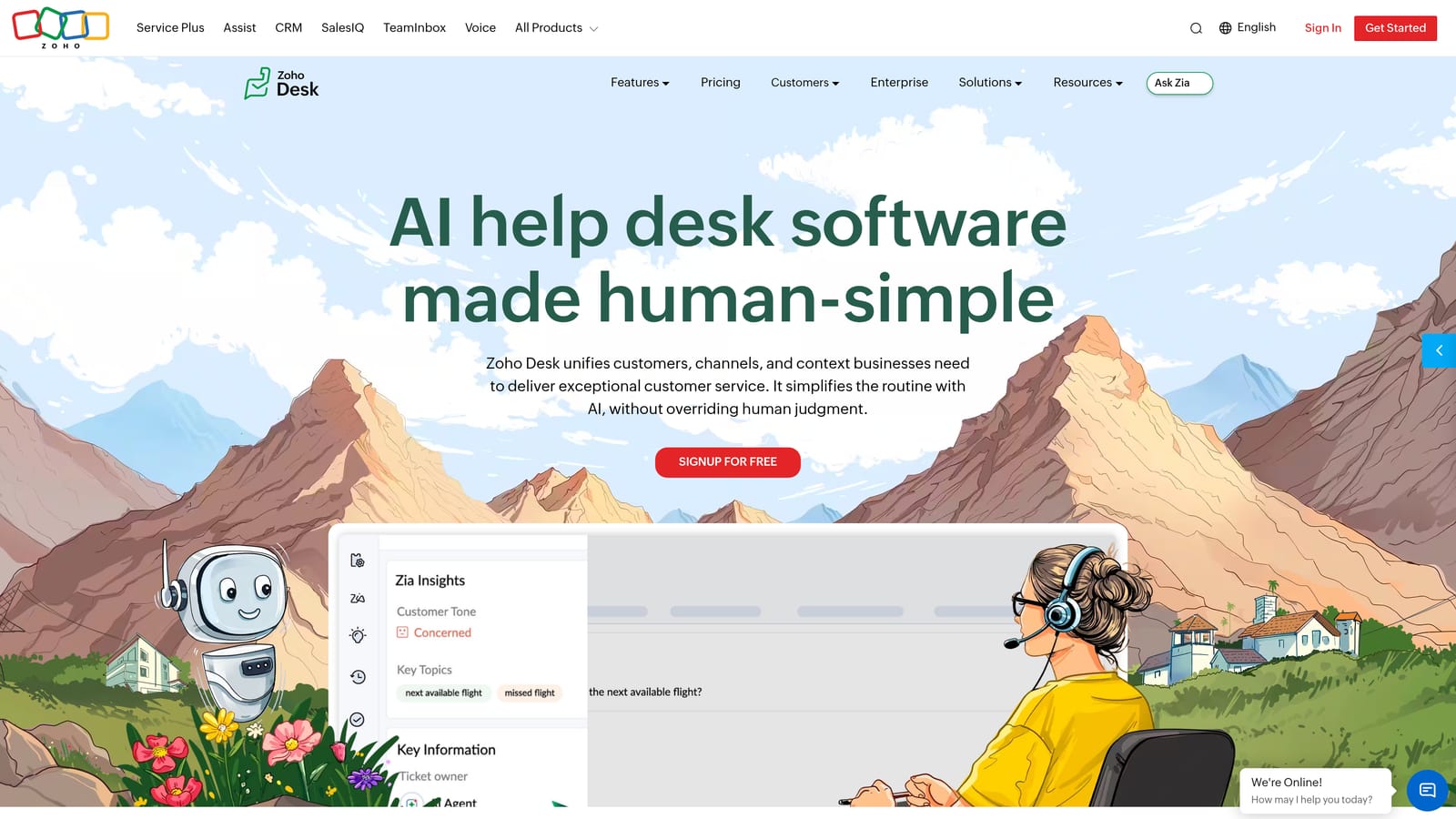
Zoho Desk is a CRM-native helpdesk with Zia AI for sentiment analysis, anomaly detection, and ticket tagging, ideal for organizations that want tight integration between support and their broader Zoho stack.
Where This Tool Shines
Zia, Zoho's AI assistant, brings a level of analytical intelligence that goes beyond basic ticket routing. Sentiment analysis on incoming tickets, anomaly alerts when support volume spikes unexpectedly, and automatic ticket tagging all help support managers stay ahead of issues rather than reacting to them. For teams already using Zoho CRM, the native data sharing between platforms creates a genuinely unified customer view.
Zoho Desk's pricing is also notably competitive, particularly for teams that bundle it with other Zoho products, making it one of the stronger value options in the mid-market segment.
Key Features
Zia AI: Covers sentiment analysis, automatic ticket tagging, anomaly detection, and response suggestions within a single AI layer.
Zoho Ecosystem Integration: Deep native connection to Zoho CRM, Zoho Analytics, Zoho SalesIQ, and the broader Zoho product suite.
Multi-Channel Support: Handles email, chat, phone, and social media with a unified agent workspace.
Blueprint Workflow Automation: Visual workflow builder for defining and automating complex support processes without code.
Competitive Pricing: Multiple tiers including a free plan, with strong value for teams already paying for other Zoho products.
Best For
SMBs to mid-market teams already using Zoho CRM or other Zoho products who want a tightly integrated helpdesk without switching vendors. Also suitable for teams that want AI-powered anomaly detection without enterprise-level spend.
Pricing
Multiple tiers with a free plan available. Check zoho.com/desk for current pricing details.
8. Help Scout
Best for: Teams that prioritize agent experience and relationship quality over full automation
Help Scout is a human-centric support platform with AI assist features that prioritize agent efficiency and the quality of customer relationships over autonomous resolution.
Where This Tool Shines
Help Scout occupies a distinct position in this list: it's not trying to automate everything. The platform's philosophy is that great support feels human, and the AI features, including AI Summarize and AI Drafts, are designed to make agents faster and more effective rather than replace them. For teams where relationship quality is a competitive differentiator, this is a meaningful distinction.
The shared inbox UX is genuinely clean and email-like, which reduces onboarding friction for support teams accustomed to email workflows. Beacon, the in-app chat widget, brings that same simplicity to product-embedded support.
Key Features
AI Summarize: Condenses long conversation threads so agents can get up to speed instantly without reading every message from the start.
AI Drafts: Suggests reply drafts based on conversation context, giving agents a strong starting point rather than a blank page.
Shared Inbox: A clean, email-like collaborative inbox that's easy for teams to adopt without significant workflow changes.
Beacon Chat Widget: In-app support widget for embedding help directly in your product, with knowledge base search and chat capabilities.
Docs Knowledge Base: Built-in knowledge base builder for creating self-service content that integrates directly with Beacon.
Best For
Teams where human connection is core to the support experience, such as professional services, high-touch SaaS, and companies with complex customer relationships. Less suited for high-volume operations where autonomous resolution rates are the primary metric.
Pricing
Per-user pricing at a mid-range price point. Check helpscout.com for current plan details.
9. Kustomer
Best for: High-volume operations needing a unified customer timeline and omnichannel automation
Kustomer is a CRM-native omnichannel support platform with a unified customer timeline, AI-powered workflows, and strong automation capabilities built for high-volume support operations.
Where This Tool Shines
Kustomer's unified customer timeline is its most distinctive feature. Every interaction a customer has had, across every channel, appears in a single chronological view. For agents handling complex, multi-touch support cases, this context eliminates the frustrating "can you repeat your issue?" moment that damages customer relationships at scale.
The CRM-native data model means customer attributes, order history, and behavioral data are available inside every support conversation, enabling AI workflows to make smarter routing and automation decisions based on real customer context rather than just ticket content.
Key Features
Unified Customer Timeline: A single chronological view of every customer interaction across all channels and touchpoints, giving agents immediate full context.
AI-Powered Workflow Automation: Intelligent routing and automation rules that leverage customer data, not just ticket metadata, for smarter decisions.
Omnichannel Coverage: Handles email, chat, phone, social media, and SMS in a single unified workspace.
CRM-Native Data Model: Customer data, including order history and behavioral attributes, is a first-class citizen in every support interaction.
Proactive Outreach: Automation for proactive customer engagement, including outreach triggered by customer data signals rather than inbound requests.
Best For
High-volume B2B and B2C support operations where full customer context across channels is essential. Particularly strong for companies with complex customer data models that need CRM and support in a unified layer rather than integrated separately.
Pricing
Enterprise-focused pricing; contact Kustomer for current rates and packaging.
Which Platform Is Right for Your Team?
The honest answer is that the right platform depends on what problem you're actually trying to solve. Not every team needs full autonomous resolution. Not every team needs enterprise compliance. But every team should be clear on whether they're buying AI that was bolted on after the fact or AI that was built in from the start.
Here's a quick orientation by use case:
AI-first architecture with business intelligence: Halo AI is the standout choice for B2B SaaS teams that want autonomous resolution, page-aware context, and support data that feeds back into product and revenue workflows.
Enterprise scale and compliance: Zendesk remains the default for large organizations with complex compliance requirements and deeply established support workflows.
Conversational maturity and in-app messaging: Intercom is the strongest option for teams that want a proven conversational layer with proactive support capabilities.
SMB budget and accessibility: Freshdesk offers the best combination of AI features and pricing for smaller teams, especially those in the Freshworks ecosystem.
CRM-native omnichannel: Kustomer wins for high-volume operations where a unified customer timeline and cross-channel context are non-negotiable.
Human-first support philosophy: Help Scout is the right call for teams where relationship quality and agent experience take precedence over automation rates.
Before you choose, audit your current stack. Where are tickets falling through? Where is your team spending time on work that AI could handle? And critically: do you need AI layered onto an existing helpdesk, or do you need a platform where AI is the architecture?
Your support team shouldn't scale linearly with your customer base. Let AI agents handle routine tickets, guide users through your product, and surface business intelligence while your team focuses on complex issues that need a human touch. See Halo in action and discover how continuous learning transforms every interaction into smarter, faster support.