9 Best Automated Helpdesk Software Solutions in 2026
This comprehensive guide examines automated helpdesk software reviews for nine leading platforms in 2026, evaluating each solution's automation capabilities, integration options, and scalability. We tested these tools based on how effectively they handle routine tickets, intelligently route complex issues, and provide agents with contextual information—helping support teams manage increasing ticket volumes without expanding headcount, whether you're a startup or enterprise organization.
 Grant CooperFounder11 min read
Ticket volumes keep climbing while support teams stay the same size—or shrink. Automated helpdesk software bridges this gap by handling routine inquiries, routing complex issues intelligently, and giving agents the context they need to resolve problems faster. But with dozens of platforms claiming AI-powered automation, finding the right fit for your team requires cutting through marketing noise.
We evaluated these solutions based on actual automation depth, integration flexibility, ease of implementation, and real-world scalability. Whether you're a growing startup drowning in repetitive tickets or an enterprise seeking smarter triage, this guide breaks down what each platform does best.
1. Halo AI
Best for: Teams seeking autonomous ticket resolution with continuous learning capabilities
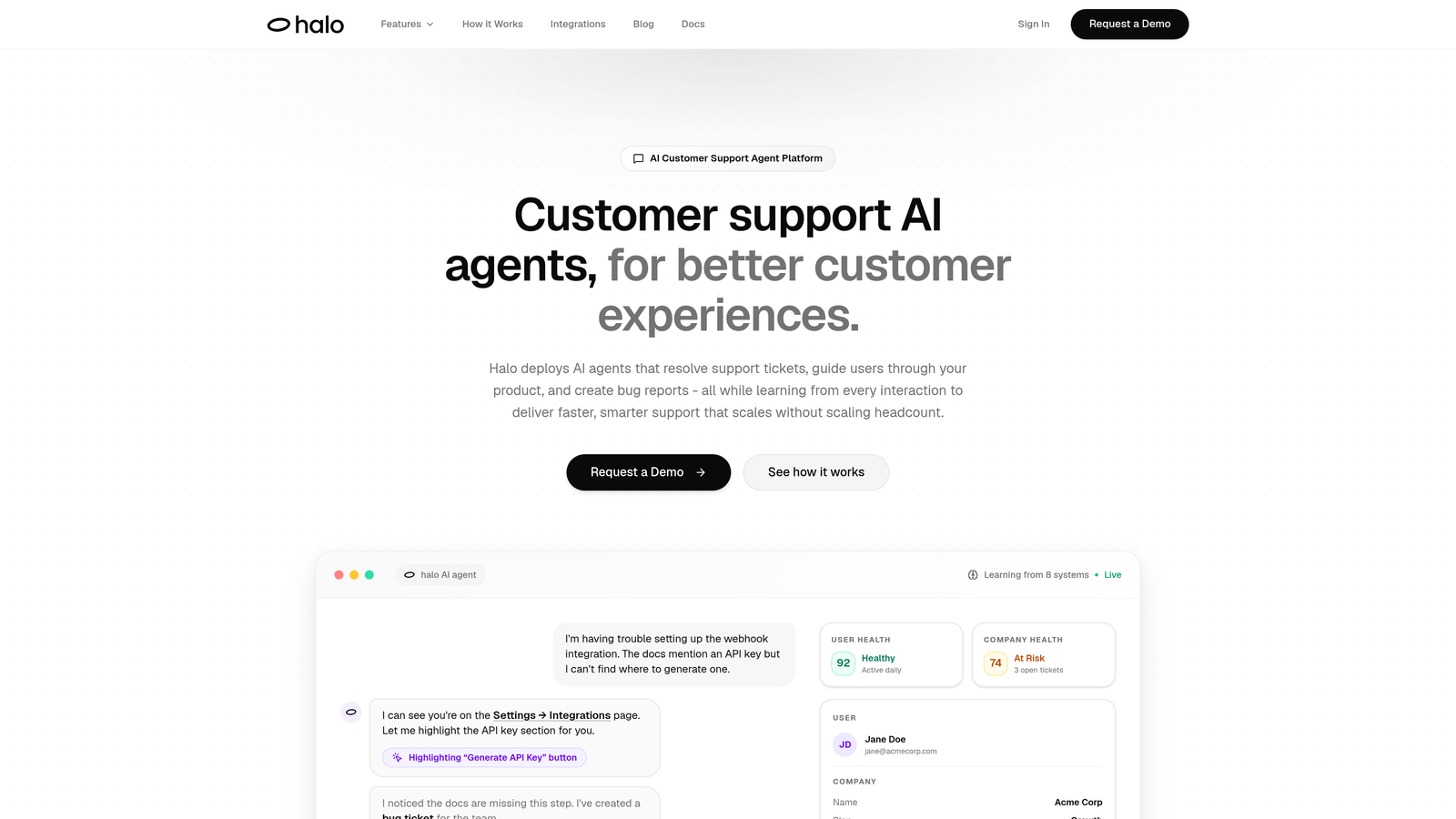
Halo AI is an AI-native helpdesk platform that deploys intelligent agents to autonomously resolve support tickets while learning from every interaction.
Where This Tool Shines
Unlike traditional helpdesks that bolt AI onto existing workflows, Halo AI builds automation into its core architecture. The platform's agents don't just route tickets—they resolve them, understanding context from what users see on screen and pulling information from your entire business stack.
The continuous learning approach means every resolved ticket makes the system smarter. Your AI agents improve their responses based on actual outcomes, not static rules you configured months ago.
Key Features
Autonomous AI Agents: Resolve tickets without human intervention by understanding intent and accessing relevant knowledge bases.
Page-Aware Chat Widget: Sees exactly what users see on screen, enabling visual guidance through product features.
Continuous Learning System: Improves response quality and accuracy from every interaction without manual retraining.
Auto Bug Ticket Creation: Automatically creates engineering tickets in Linear when detecting product issues during support conversations.
Business Intelligence Analytics: Surfaces customer health signals, revenue intelligence, and anomaly detection beyond basic support metrics.
Best For
B2B companies and product teams who need support automation that scales without adding headcount. Particularly valuable for SaaS platforms where users need both answers and in-app guidance, and where support insights should inform product development.
Pricing
Contact for pricing. The platform's focus on autonomous resolution means pricing typically reflects deflection value rather than per-seat costs.
2. Zendesk
Best for: Enterprise teams needing omnichannel support with extensive integration options
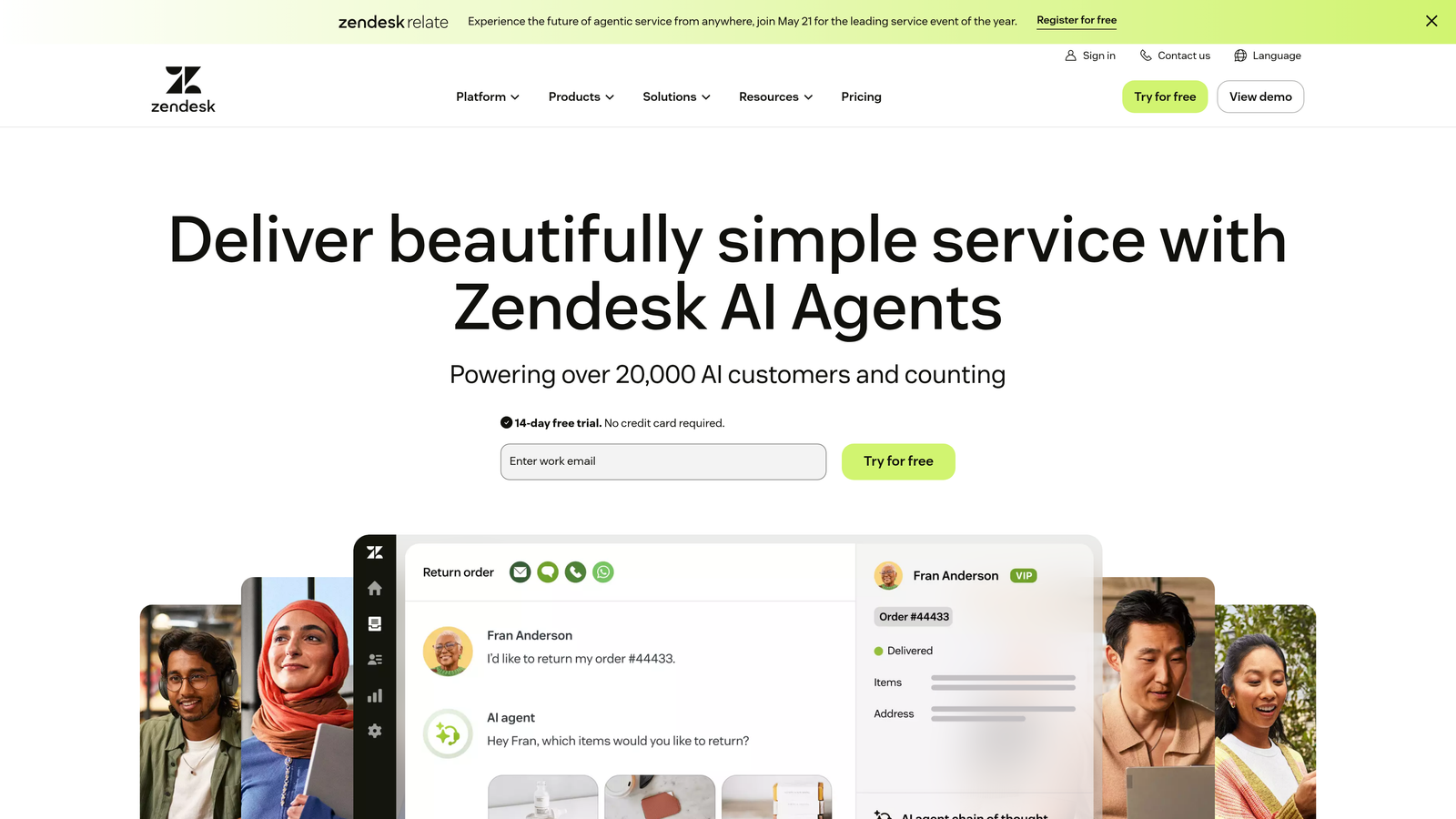
Zendesk is an enterprise-grade customer service platform with omnichannel support and extensive automation capabilities.
Where This Tool Shines
Zendesk dominates the enterprise helpdesk market for good reason. The platform handles massive ticket volumes across email, chat, phone, social media, and messaging apps without breaking a sweat. When you need a system that your entire organization can standardize on, Zendesk delivers the reliability and feature depth that IT departments demand.
The marketplace ecosystem gives you access to over 1,500 integrations, meaning Zendesk can connect to virtually any tool in your tech stack. This extensibility matters when you're managing complex workflows across departments.
Key Features
Answer Bot: Deflects routine tickets by suggesting help center articles and handling simple inquiries automatically.
Advanced Workflow Triggers: Creates sophisticated automation rules based on ticket properties, customer data, and time-based conditions.
Omnichannel Routing: Intelligently distributes conversations across email, chat, phone, and social channels to the right agents.
Integration Marketplace: Access 1,500+ pre-built integrations with CRMs, analytics tools, and business systems.
Reporting Suite: Provides comprehensive analytics on team performance, customer satisfaction, and operational efficiency.
Best For
Enterprise organizations managing high ticket volumes across multiple channels. Works well for companies with dedicated support teams, complex SLA requirements, and the need for extensive customization and reporting.
Pricing
Starts at $55/agent/month for Suite Team plan. Enterprise pricing available with advanced features and dedicated support.
3. Freshdesk
Best for: Growing teams wanting AI assistance without enterprise complexity
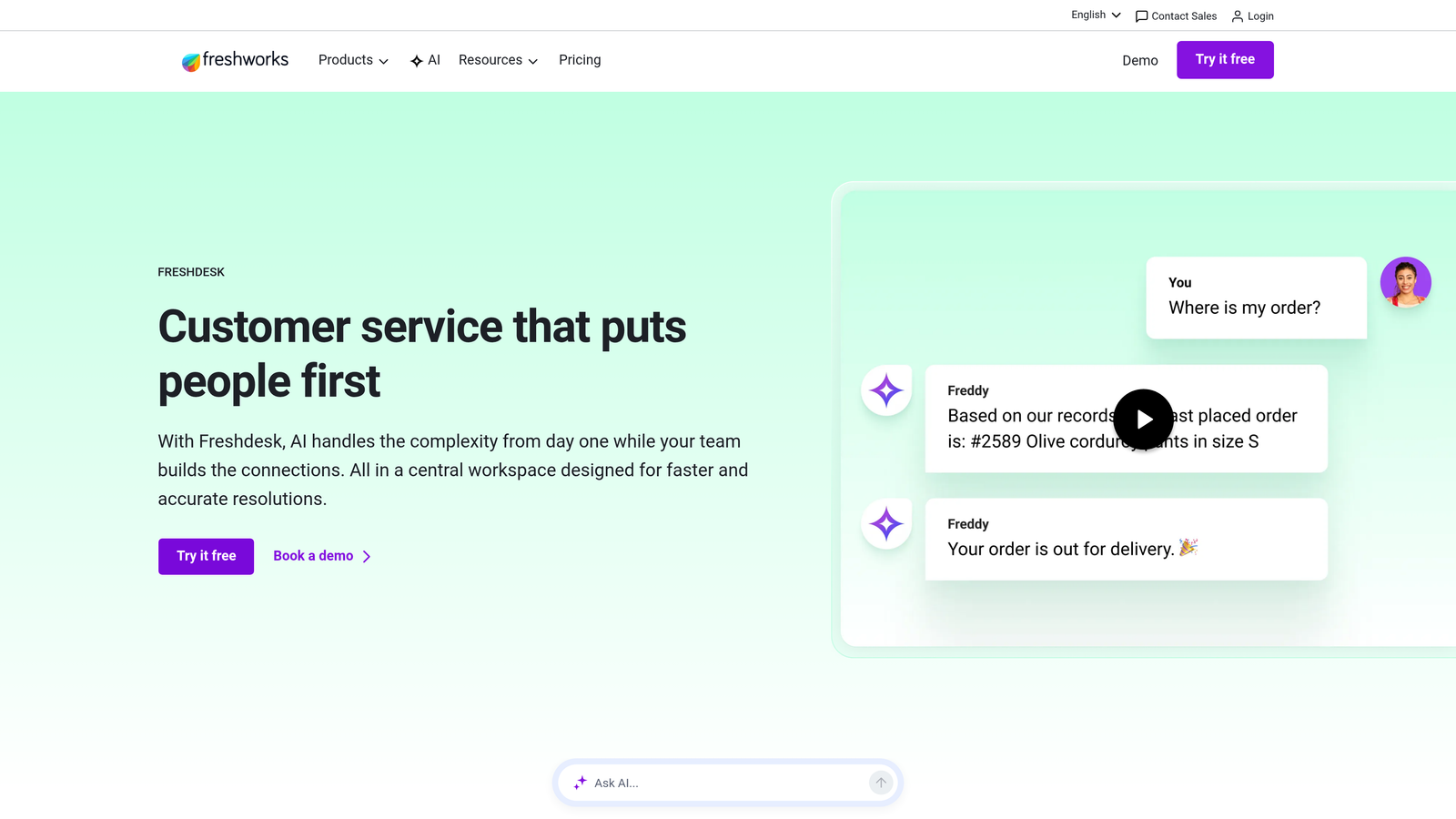
Freshdesk is a cloud-based helpdesk with Freddy AI for intelligent ticket management and automation.
Where This Tool Shines
Freshdesk strikes a balance between capability and approachability that many mid-market teams appreciate. Freddy AI handles ticket classification and suggests responses without requiring data science expertise to configure. You get enterprise-grade automation without the enterprise-grade learning curve.
The scenario automation builder lets you create complex workflows visually, making it accessible to support managers who don't code. This democratization of automation means your team can iterate on workflows without waiting for IT tickets.
Key Features
Freddy AI: Automatically classifies tickets by category and sentiment while suggesting relevant responses to agents.
Scenario Automations: Builds multi-step workflows with conditional logic through an intuitive visual interface.
Canned Responses with Placeholders: Creates dynamic templates that automatically populate customer and ticket information.
SLA Management: Tracks response and resolution times with automatic escalations when deadlines approach.
Team Collaboration: Enables shared ticket ownership with internal notes and agent collision detection.
Best For
Mid-market companies scaling their support operations who need AI assistance but don't require the full complexity of enterprise platforms. Ideal for teams transitioning from basic ticketing to sophisticated automation.
Pricing
Free tier available for up to 10 agents. Paid plans start at $15/agent/month with AI features in higher tiers.
4. Intercom
Best for: Product-led companies prioritizing conversational support and proactive messaging
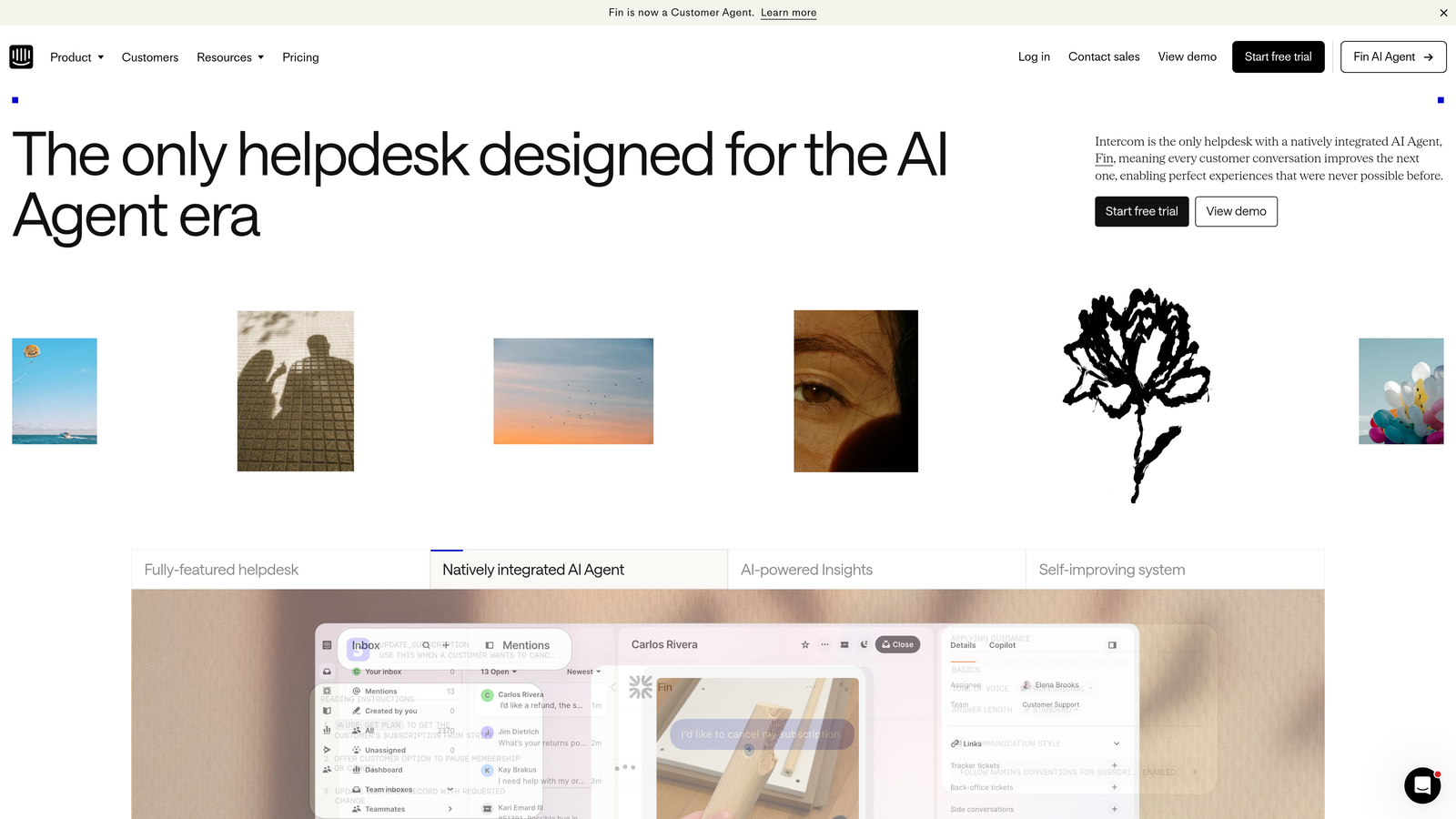
Intercom is a conversational support platform with Fin AI agent for automated customer interactions.
Where This Tool Shines
Intercom reimagined support as conversation rather than ticketing. The platform excels at proactive engagement—reaching customers at the right moment with the right message based on their behavior. This approach works particularly well for SaaS companies where preventing issues beats resolving them.
Fin, their AI agent, handles autonomous conversations with surprising sophistication. Unlike chatbots that feel robotic, Fin maintains natural dialogue while actually resolving issues rather than just collecting information for human agents.
Key Features
Fin AI Agent: Conducts autonomous conversations that resolve customer issues without human handoff for routine inquiries.
Proactive Messaging: Triggers targeted messages based on user behavior, product usage, and customer lifecycle stage.
Product Tours: Automates onboarding with in-app guides that walk users through features at optimal moments.
Custom Bot Builder: Creates specialized automation workflows through visual interface without coding requirements.
Unified Inbox: Consolidates conversations across chat, email, and messaging apps into single agent workspace.
Best For
SaaS and product-led growth companies where support blends with marketing and product education. Particularly effective for teams that want to reduce support volume through proactive engagement rather than just faster reactive responses.
Pricing
Starts at $39/seat/month for core platform. Fin AI charged separately based on resolution volume, typically adding significant cost.
5. Help Scout
Best for: Customer-centric teams valuing personal connection with smart automation assists
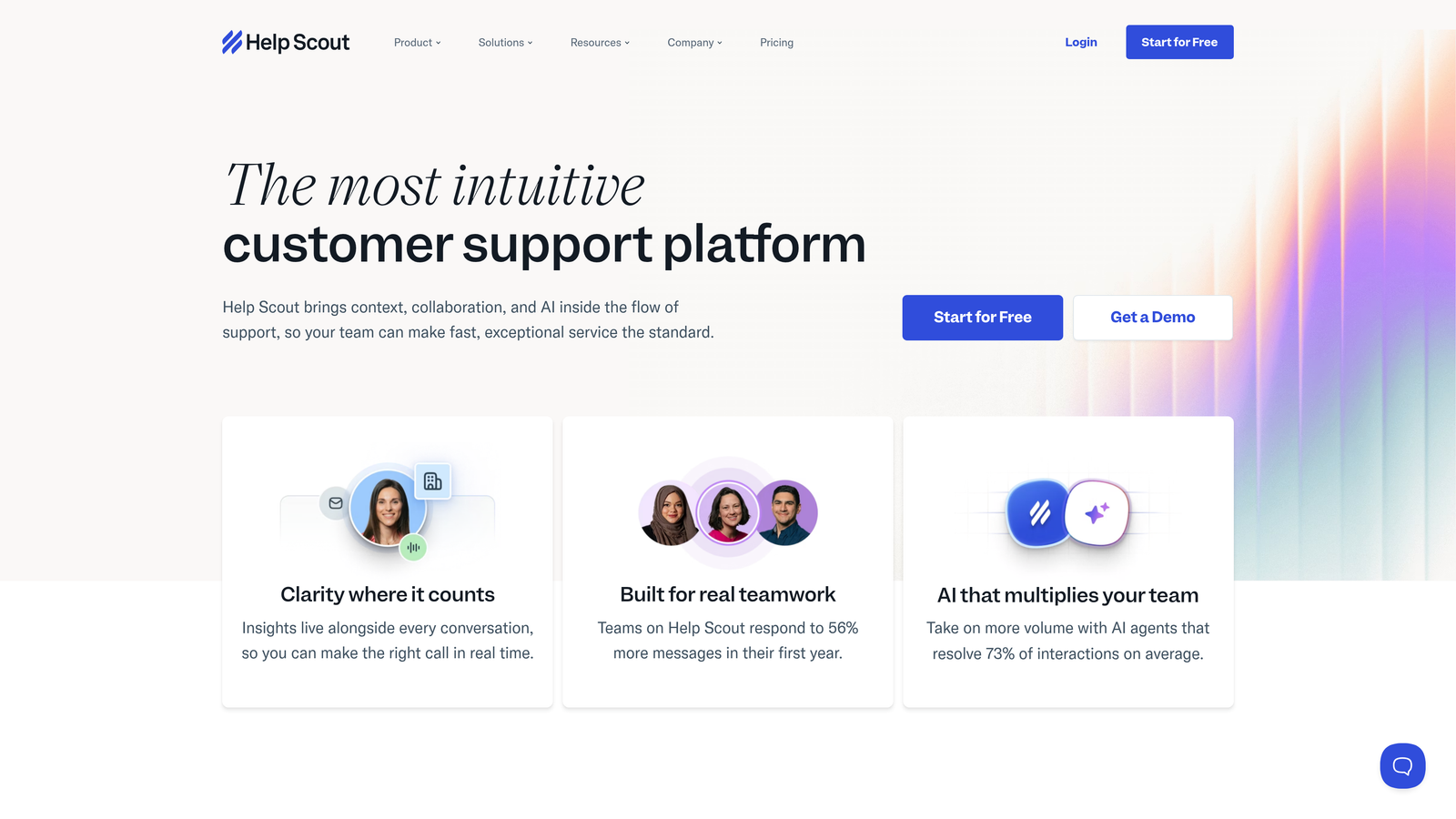
Help Scout is a customer-focused helpdesk emphasizing human connection with smart automation assists.
Where This Tool Shines
Help Scout takes a different philosophy than most helpdesks. Rather than replacing human agents, their automation focuses on making agents more effective. AI Drafts suggest responses that agents can personalize, maintaining the human touch while accelerating resolution times.
The interface feels more like email than a traditional ticketing system, which many teams find less mechanical and more aligned with relationship-focused support. This approach resonates with brands that compete on customer experience rather than just efficiency metrics.
Key Features
AI Drafts: Generates suggested responses based on conversation context that agents can edit before sending.
Workflow Automation: Automatically routes tickets, applies tags, and assigns conversations based on content and customer properties.
Beacon Widget: Embeds chat and knowledge base search directly in your product with contextual article suggestions.
Collision Detection: Prevents multiple agents from responding to the same conversation simultaneously.
Customer Profiles: Aggregates conversation history, custom properties, and notes in unified view.
Best For
Small to mid-sized teams where brand voice and personal relationships matter as much as efficiency. Works well for companies transitioning from shared email inboxes who want automation without losing the personal touch.
Pricing
Starts at $20/user/month with AI features included. No free tier, but straightforward pricing without hidden costs.
6. Zoho Desk
Best for: Teams already using Zoho ecosystem seeking native integration
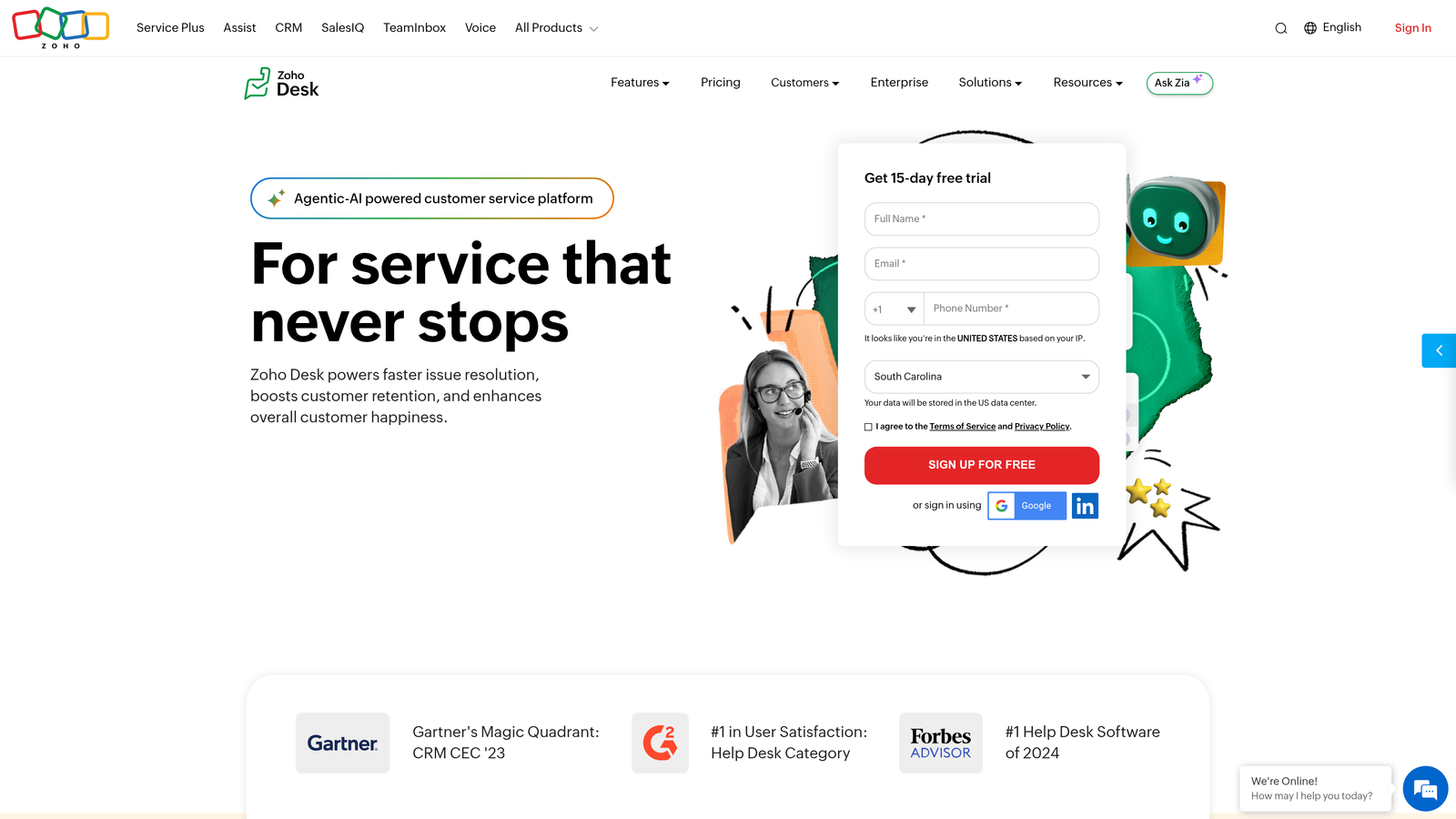
Zoho Desk is a context-aware helpdesk with Zia AI assistant, deeply integrated with Zoho ecosystem.
Where This Tool Shines
If you're already invested in Zoho's suite of business applications, Zoho Desk provides integration depth that third-party platforms can't match. Customer data flows seamlessly between CRM, marketing automation, and support without middleware or complex API configurations.
Zia AI goes beyond basic automation with sentiment analysis and anomaly detection. The system flags unusual patterns in ticket volume or response times, helping managers spot problems before they escalate into larger issues.
Key Features
Zia AI Assistant: Analyzes sentiment, detects anomalies in support metrics, and suggests relevant knowledge base articles.
Blueprint Automation: Creates guided workflows that ensure agents follow standardized processes for complex scenarios.
Native Zoho Integration: Connects directly with Zoho CRM, Analytics, Projects, and other suite applications without third-party tools.
Multi-Department Management: Handles separate departments with distinct workflows, SLAs, and knowledge bases in single instance.
Self-Service Portal: Builds customizable customer portals with community forums and knowledge base access.
Best For
Organizations using multiple Zoho applications who want unified data across sales, marketing, and support. The native integration advantage makes this compelling for Zoho-committed companies despite less name recognition than competitors.
Pricing
Free for up to 3 agents. Paid plans start at $14/agent/month, making it one of the more affordable options with robust features.
7. Gorgias
Best for: E-commerce brands needing order management automation
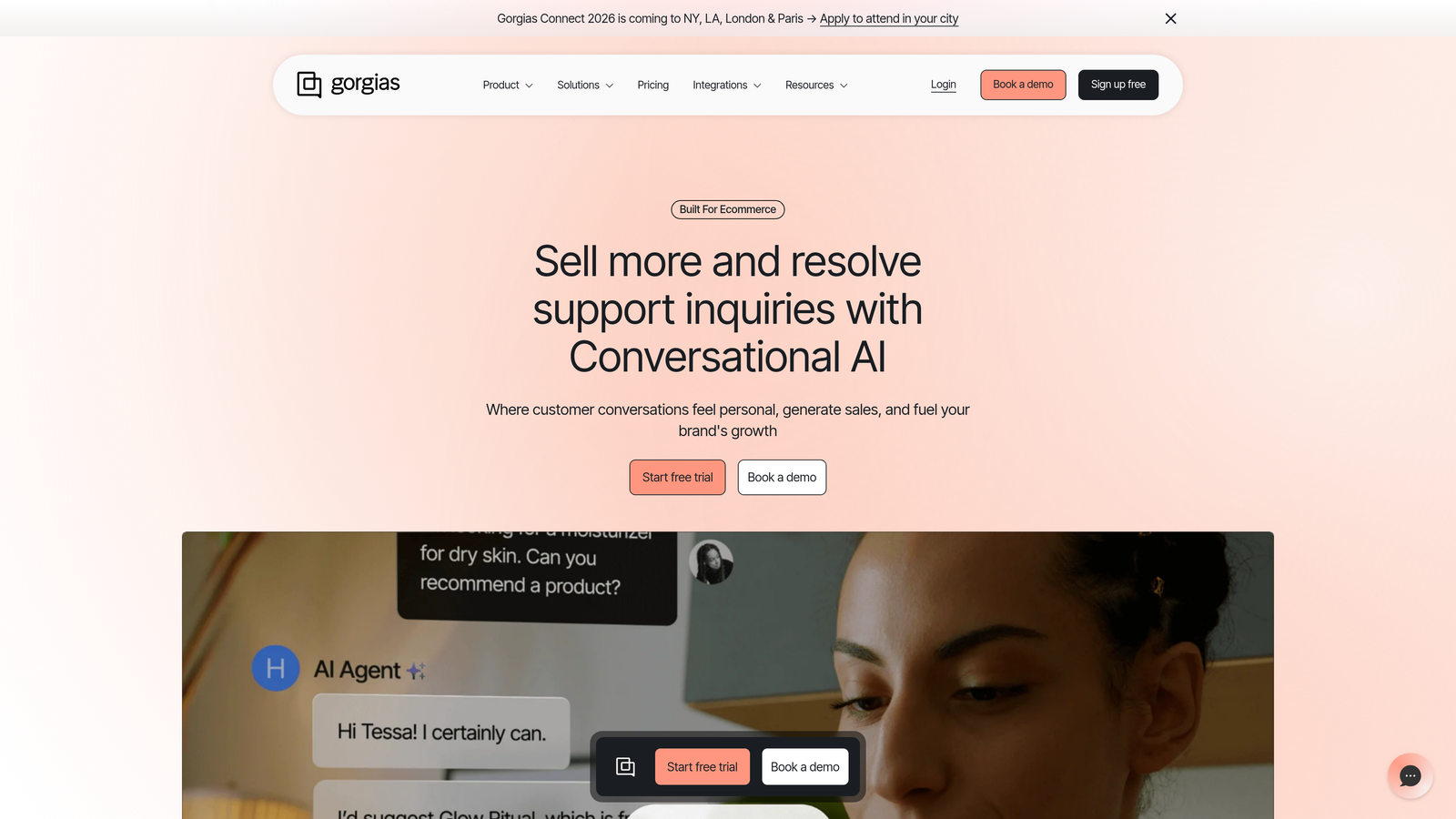
Gorgias is an e-commerce-focused helpdesk with deep Shopify integration and order management automation.
Where This Tool Shines
Gorgias built their entire platform around e-commerce support workflows, and it shows. Agents can process refunds, cancel orders, and update shipping addresses without leaving the helpdesk or opening the e-commerce admin panel. This specialization dramatically reduces resolution times for order-related inquiries.
The platform ties support interactions directly to revenue, showing which conversations led to sales and calculating the revenue impact of support quality. This connection helps justify support investments with concrete business metrics.
Key Features
One-Click Order Actions: Processes refunds, cancellations, exchanges, and shipping updates directly from ticket interface.
Revenue Attribution: Tracks sales generated through support conversations and calculates customer lifetime value impact.
Dynamic Order Macros: Creates response templates that automatically populate order details, tracking numbers, and product information.
Intent Detection: Automatically categorizes and routes tickets based on customer inquiry type using e-commerce-trained models.
Multi-Channel Support: Manages conversations from email, chat, social media, and SMS in unified interface.
Best For
E-commerce brands on Shopify, BigCommerce, or Magento handling high volumes of order-related support. The vertical focus makes this less suitable for non-retail businesses but ideal for online stores.
Pricing
Starts at $10/month for 50 tickets, scaling based on ticket volume rather than agent count. This model works well for small stores but can become expensive at scale.
8. Tidio
Best for: Small businesses wanting accessible AI chat without technical complexity
Tidio is an accessible live chat and chatbot platform with Lyro AI for small business automation.
Where This Tool Shines
Tidio removes the intimidation factor from AI-powered support automation. Lyro, their conversational AI, learns from your website content and existing help documentation without requiring training data or technical setup. You connect it to your site, point it at your knowledge base, and it starts handling common questions.
The visual chatbot builder makes creating custom flows approachable for non-technical users. Small businesses can implement sophisticated automation without hiring developers or consultants, democratizing capabilities that previously required enterprise budgets.
Key Features
Lyro AI Chatbot: Trains automatically on your website content and documentation to answer customer questions conversationally.
Visual Bot Builder: Creates custom conversation flows with templates and drag-and-drop interface requiring no coding.
Live Chat with Tracking: Monitors visitor behavior and triggers proactive chat invitations based on page views and time on site.
Multi-Channel Integration: Consolidates messages from email, Facebook Messenger, and Instagram into single inbox.
E-Commerce Plugins: Integrates with Shopify, WooCommerce, and other platforms for order lookup and cart recovery.
Best For
Small businesses and solopreneurs who need chat and basic automation without complexity or large budgets. Works well for service businesses, small online stores, and consultants seeking to capture leads and answer routine questions.
Pricing
Free tier available with basic chat. Lyro AI starts at $29/month, making advanced automation accessible to budget-conscious businesses.
9. Front
Best for: Teams managing shared email accounts with collaboration needs
Front is a collaborative inbox platform with AI-powered automation for team email management.
Where This Tool Shines
Front transforms email from individual tool into team workspace. Multiple people can manage shared addresses like support@, sales@, or info@ without the chaos of forwarding and CC chains. Internal comments let team members discuss responses privately before customers see them, maintaining professionalism while enabling collaboration.
The platform's AI tagging and routing feels less like a traditional ticketing system and more like an intelligent email client. This familiarity reduces adoption friction for teams reluctant to abandon email entirely but needing better organization and automation.
Key Features
AI Tagging and Routing: Automatically categorizes incoming messages and assigns them to appropriate team members based on content.
Shared Inbox with Comments: Enables internal discussion on customer emails without cluttering the actual email thread.
SLA Tracking: Monitors response times and highlights conversations approaching deadline with visual indicators.
CRM Integration: Surfaces customer context from Salesforce, HubSpot, and other systems directly in email interface.
Message Templates: Creates reusable responses with dynamic variables that populate customer and account information.
Best For
Teams managing support through email who need better collaboration and organization without abandoning email workflows entirely. Particularly effective for sales teams, account management, and smaller support operations not ready for full helpdesk platforms.
Pricing
Starts at $19/seat/month for core features. Higher tiers add advanced automation and analytics capabilities.
Matching the Right Tool to Your Support Reality
The helpdesk automation landscape has matured beyond simple keyword matching and canned responses. Today's platforms offer genuine natural language understanding and autonomous resolution capabilities that can handle significant portions of your support volume without human intervention.
Your choice ultimately depends on what you're optimizing for. Enterprise teams managing massive omnichannel volumes will find Zendesk's reliability and integration breadth worth the premium. E-commerce brands should seriously consider Gorgias for its order management specialization. Teams already invested in Zoho's ecosystem gain significant efficiency from native integration that third-party tools can't match.
For product-led companies where support blends with onboarding and education, Intercom's proactive messaging approach aligns well with growth strategies. Small businesses wanting to dip into AI automation without complexity or large budgets will find Tidio's accessible approach refreshing.
But here's what the market increasingly demands: automation that actually resolves issues rather than just routing them faster. The difference between deflection and resolution matters. A chatbot that collects information before handing off to humans doesn't fundamentally change your support economics. Systems that learn continuously from every interaction and improve autonomously do.
Your support team shouldn't scale linearly with your customer base. Let AI agents handle routine tickets, guide users through your product, and surface business intelligence while your team focuses on complex issues that need a human touch. See Halo in action and discover how continuous learning transforms every interaction into smarter, faster support.
The platforms that will win in 2026 aren't those with the longest feature lists. They're the ones that demonstrably reduce resolution times, deflect tickets autonomously, and provide actionable intelligence that improves both support operations and product development. Choose based on measurable outcomes rather than promised capabilities, and ensure whatever platform you select can evolve as your support needs grow more sophisticated.