9 Best Automated Onboarding Support Systems in 2026
Choosing the right automated onboarding support system can dramatically reduce churn by helping new users find value faster without overwhelming your support team. This guide evaluates the 9 best platforms in 2026 based on their ability to deliver real-time, context-aware assistance, integrate with existing tools, and minimize friction during the critical early stages of the customer lifecycle.
 Matt PattoliFounder13 min read
Onboarding is where retention is won or lost. New users who don't find value quickly tend to churn quietly, and the quality of support they receive during those first few weeks plays a significant role in whether they stick around. The problem is that onboarding is also the most support-intensive phase of the customer lifecycle, and scaling that experience manually doesn't work.
An automated onboarding support system changes that equation. Whether you need an AI agent that resolves onboarding questions without human intervention, a platform that walks users through setup step by step, or a combination of both, the right tool can dramatically reduce time-to-value for new users while keeping your support team from drowning in repetitive tickets.
The platforms below were evaluated on their ability to deliver real-time, context-aware onboarding assistance, integrate with existing tech stacks, and genuinely reduce friction for new users. Here are the top tools worth considering.
1. Halo AI
Best for: AI-native onboarding support that learns from every interaction and resolves tickets autonomously
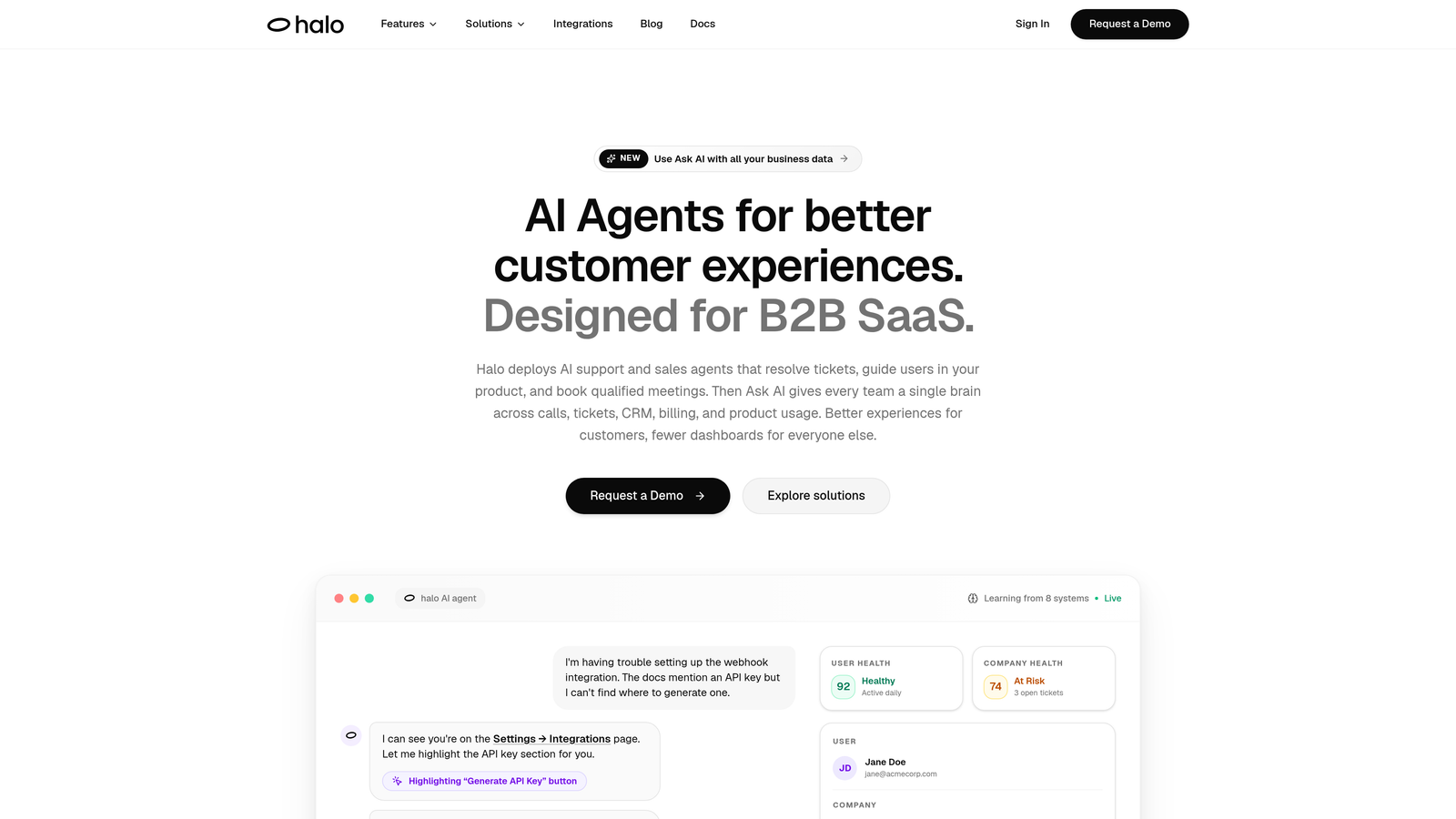
Halo AI is an AI-first customer support platform built specifically for B2B SaaS teams who want intelligent, autonomous onboarding support without bolting AI onto an existing helpdesk.
Where This Tool Shines
What sets Halo apart is its page-aware architecture. The AI agent understands what screen a user is on, what they're trying to do, and can provide visual UI guidance in context rather than pointing them to a generic knowledge base article. This is a meaningful differentiator during onboarding, when users are navigating unfamiliar interfaces and need help that's specific to where they are right now.
Halo also continuously learns from every interaction. Over time, its onboarding responses improve based on what's actually working, which means the system gets smarter as your user base grows rather than staying static.
Key Features
Page-Aware Chat Widget: The AI agent sees the user's current screen and provides contextual UI guidance during onboarding, not generic answers.
Autonomous Ticket Resolution: Handles common onboarding questions end-to-end without requiring a human agent to step in.
Continuous Learning: Every resolved interaction feeds back into the system, improving onboarding response quality over time.
Auto Bug Ticket Creation: When onboarding issues reveal product defects, Halo automatically creates bug tickets so engineering teams are looped in immediately.
Live Agent Handoff: Complex onboarding scenarios that require human judgment escalate seamlessly to a live agent without losing conversation context.
Best For
Product teams and B2B SaaS companies that want an AI-native onboarding support layer, not just automation layered onto an existing helpdesk. Particularly strong for teams integrating with tools like Linear, Slack, HubSpot, Intercom, Stripe, and Zoom who want a unified support intelligence layer.
Pricing
Contact for pricing. A free trial is available, making it accessible to evaluate before committing.
2. Intercom
Best for: All-in-one customer messaging with AI resolution and built-in onboarding series
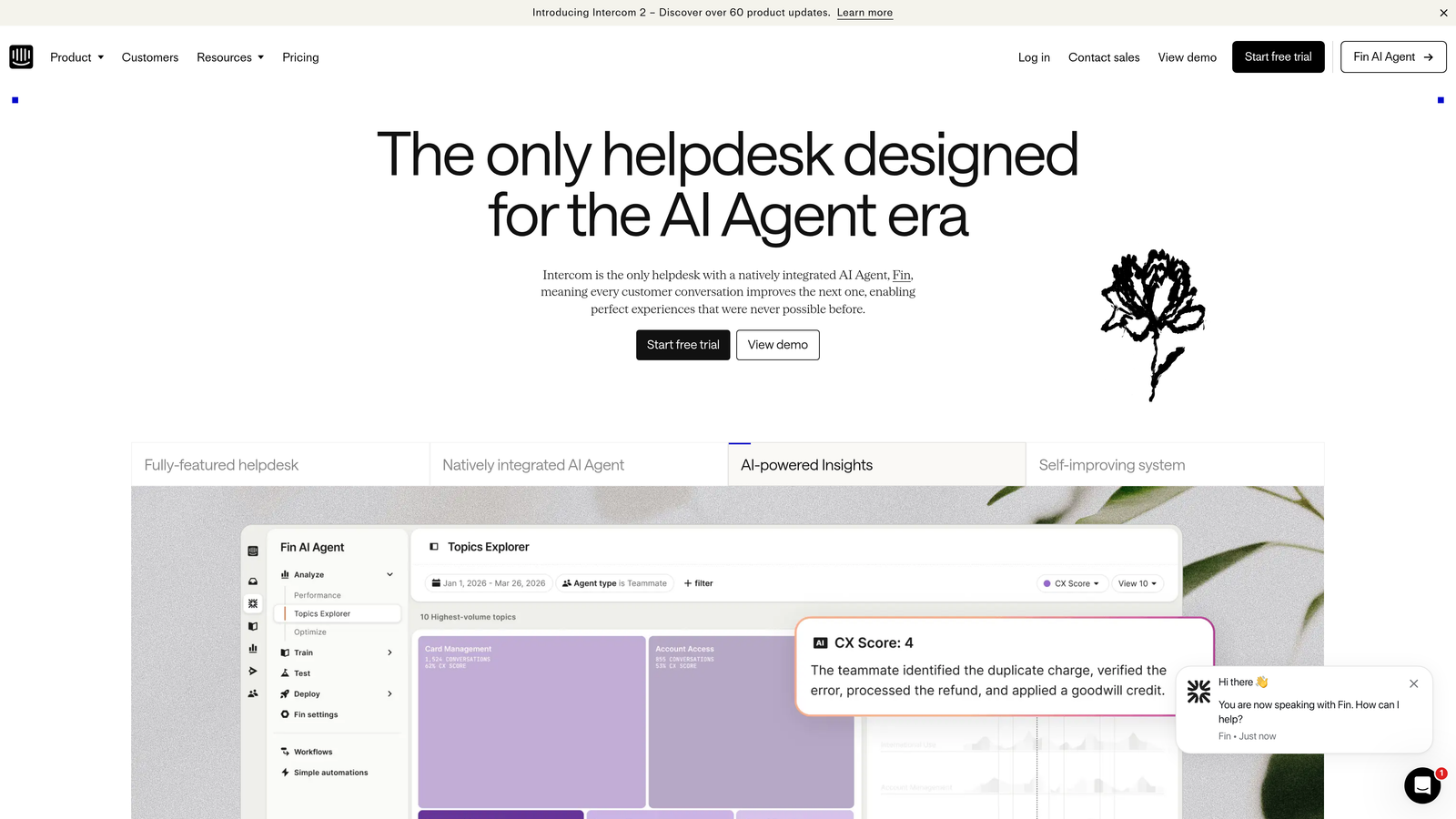
Intercom is a unified customer communications platform that combines an AI agent (Fin), product tours, and automated messaging into a single onboarding support system.
Where This Tool Shines
Intercom's strength is breadth. The Fin AI agent handles a wide range of onboarding questions autonomously, while the product tours and onboarding series builder lets teams create structured, multi-step guidance sequences. Having both in one platform means you can support users reactively through chat and proactively through guided experiences without switching tools.
The customer data platform underneath it all enables personalized onboarding messaging based on user attributes, behavior, and lifecycle stage, which helps teams deliver relevant support rather than one-size-fits-all flows.
Key Features
Fin AI Agent: Resolves onboarding questions automatically using your help content, with escalation to human agents when needed.
Product Tours and Onboarding Series: Build multi-step onboarding experiences with in-app tooltips, messages, and checklists.
Customizable Bots: Create branching logic flows for specific onboarding scenarios without writing code.
Customer Data Platform: Segment users and personalize onboarding messages based on plan, role, or behavior.
Multi-Channel Support: Deliver onboarding support across chat, email, and in-app from one inbox.
Best For
Mid-market SaaS companies that want a single platform handling both proactive onboarding guidance and reactive AI-powered support, especially teams already invested in the Intercom ecosystem.
Pricing
Starts at $39/seat/month. Fin AI resolution is priced per resolution, so costs scale with usage volume.
3. Zendesk
Best for: Enterprise-scale onboarding support with deep automation and reporting
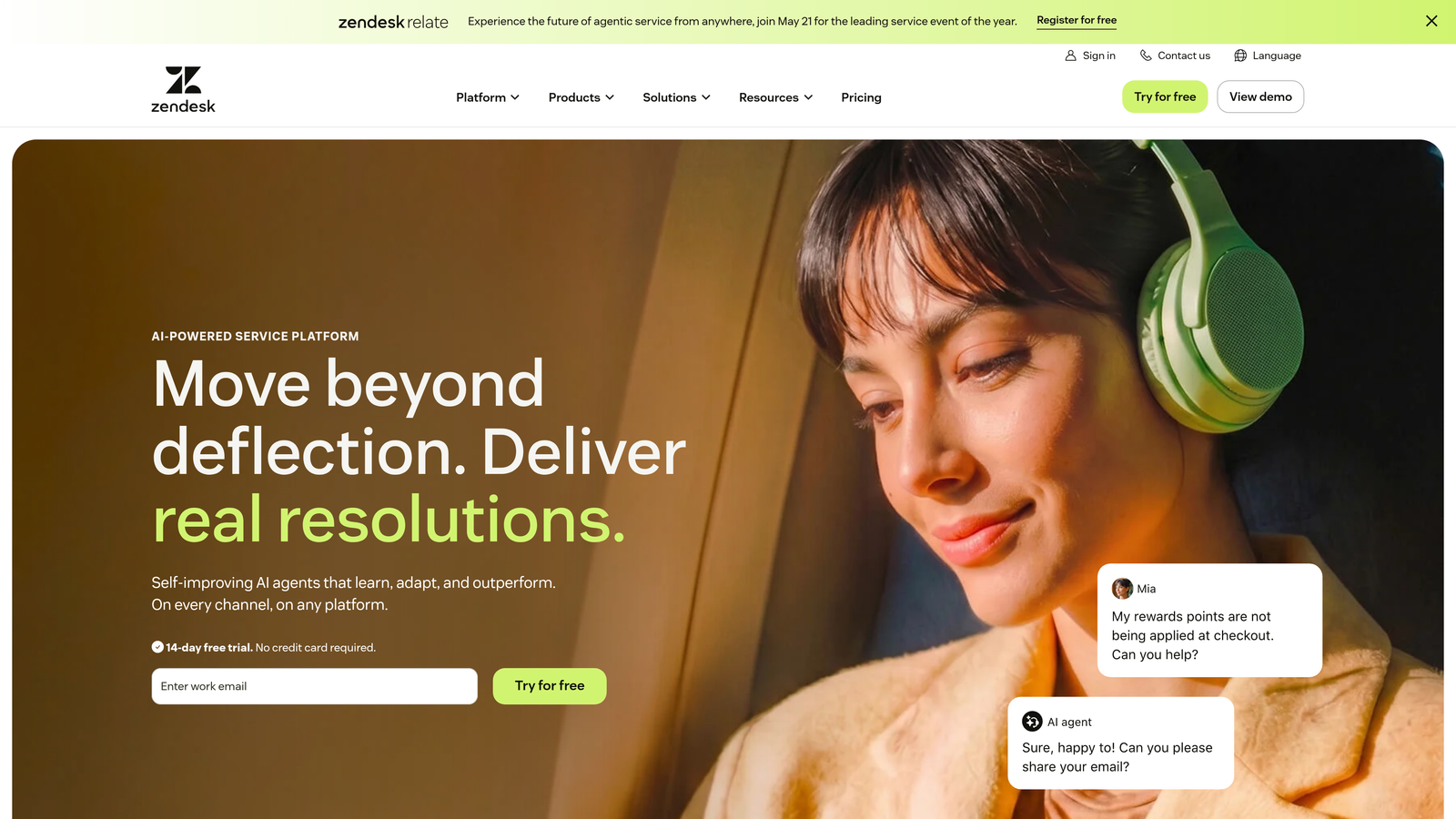
Zendesk is a mature enterprise helpdesk platform with Answer Bot, workflow automation, and a robust knowledge base for managing high-volume onboarding support operations.
Where This Tool Shines
Zendesk's power comes from its depth of automation and configurability. Teams can build sophisticated onboarding ticket workflows using triggers, macros, and routing rules that handle high support volumes without manual intervention. For organizations with complex onboarding processes across multiple products or user segments, this level of control is hard to match.
The reporting suite is also a genuine strength. Teams can track onboarding support volume, resolution times, and deflection rates with granularity, which helps identify exactly where new users are getting stuck.
Key Features
Answer Bot: Suggests relevant knowledge base articles to users asking onboarding questions before a ticket is created.
Automation Triggers and Macros: Build rule-based workflows to route, tag, and respond to onboarding tickets automatically.
Knowledge Base: Create a self-serve onboarding help center that integrates directly into the support experience.
Advanced Reporting: Track onboarding support trends, agent performance, and ticket resolution metrics in detail.
Marketplace Integrations: Connect to hundreds of third-party tools including CRMs, product analytics, and communication platforms.
Best For
Enterprise teams with high onboarding support volume, complex routing requirements, or existing Zendesk investments who need a proven, scalable infrastructure.
Pricing
Suite Team starts at $55/agent/month. AI add-ons are priced separately, which can increase total cost meaningfully at scale.
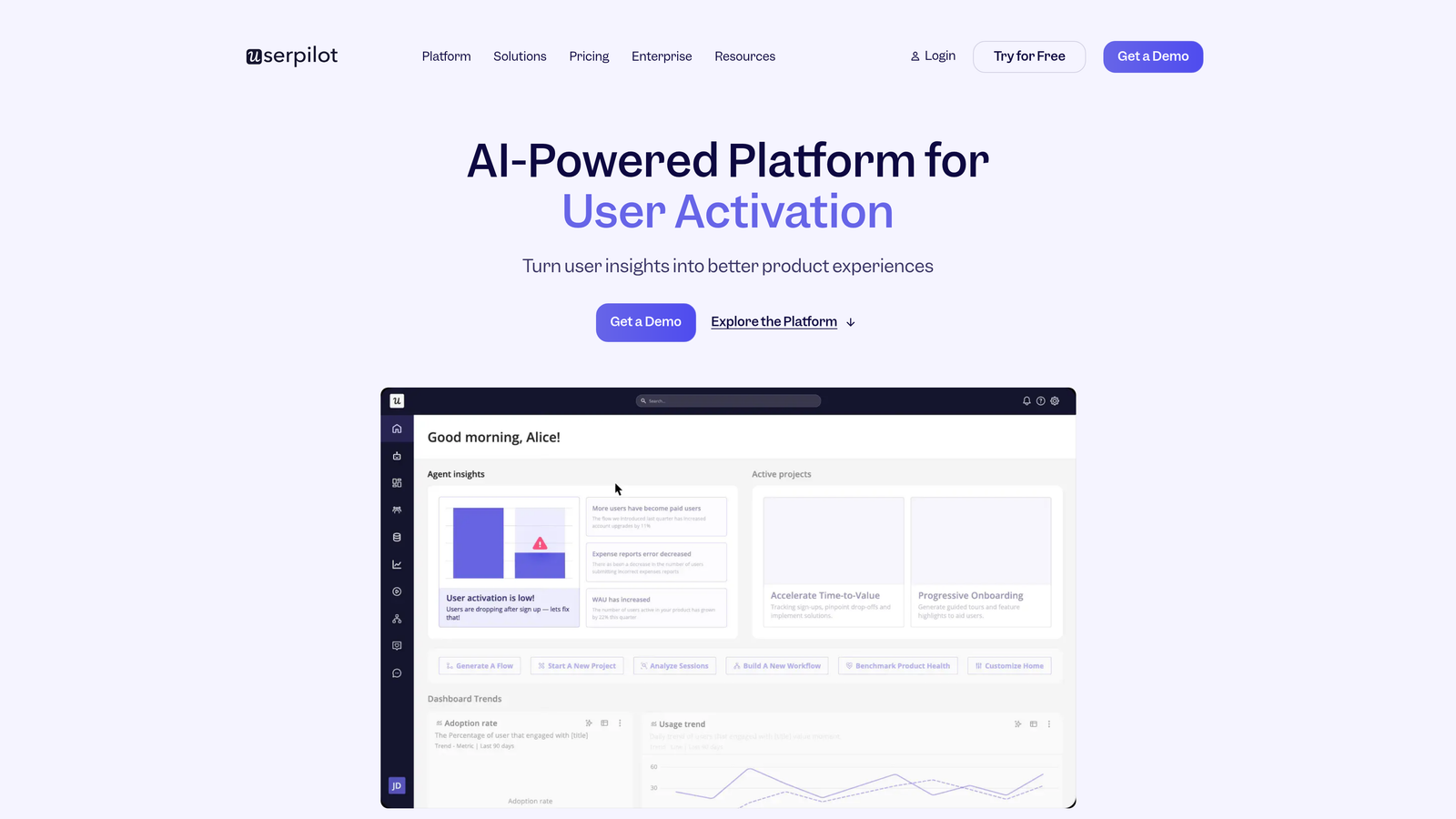
4. Userpilot
Best for: No-code, behavior-triggered in-app onboarding experiences
Userpilot is a product adoption platform that lets teams build contextual in-app onboarding flows without engineering involvement, triggered by real user behavior.
Where This Tool Shines
Userpilot's approach is proactive rather than reactive. Instead of waiting for users to submit a support ticket, it surfaces the right guidance at the moment a user appears to be stuck, based on their in-app behavior. This prevents many support interactions from happening at all, which is a powerful way to reduce onboarding friction at scale.
The no-code flow builder is genuinely accessible for non-technical teams. Product managers and customer success teams can build and iterate on onboarding experiences without waiting on engineering sprints.
Key Features
No-Code Flow Builder: Create walkthroughs, tooltips, modals, and banners for onboarding without writing code.
Behavior-Based Triggering: Surface help content when users exhibit patterns that indicate confusion or stalling.
In-App Resource Center: Embed searchable help content directly inside your product for instant self-serve support.
User Segmentation: Deliver different onboarding paths based on role, plan, or usage stage.
Product Analytics: Identify exactly where users drop off during onboarding to prioritize improvements.
Best For
Product-led growth companies and SaaS teams that want to reduce onboarding support volume by proactively guiding users through setup, particularly those without dedicated engineering resources for in-app guidance.
Pricing
Starts at $249/month for up to 2,000 monthly active users. Higher tiers available for larger user bases.
5. Freshdesk
Best for: Budget-conscious teams needing solid onboarding helpdesk automation
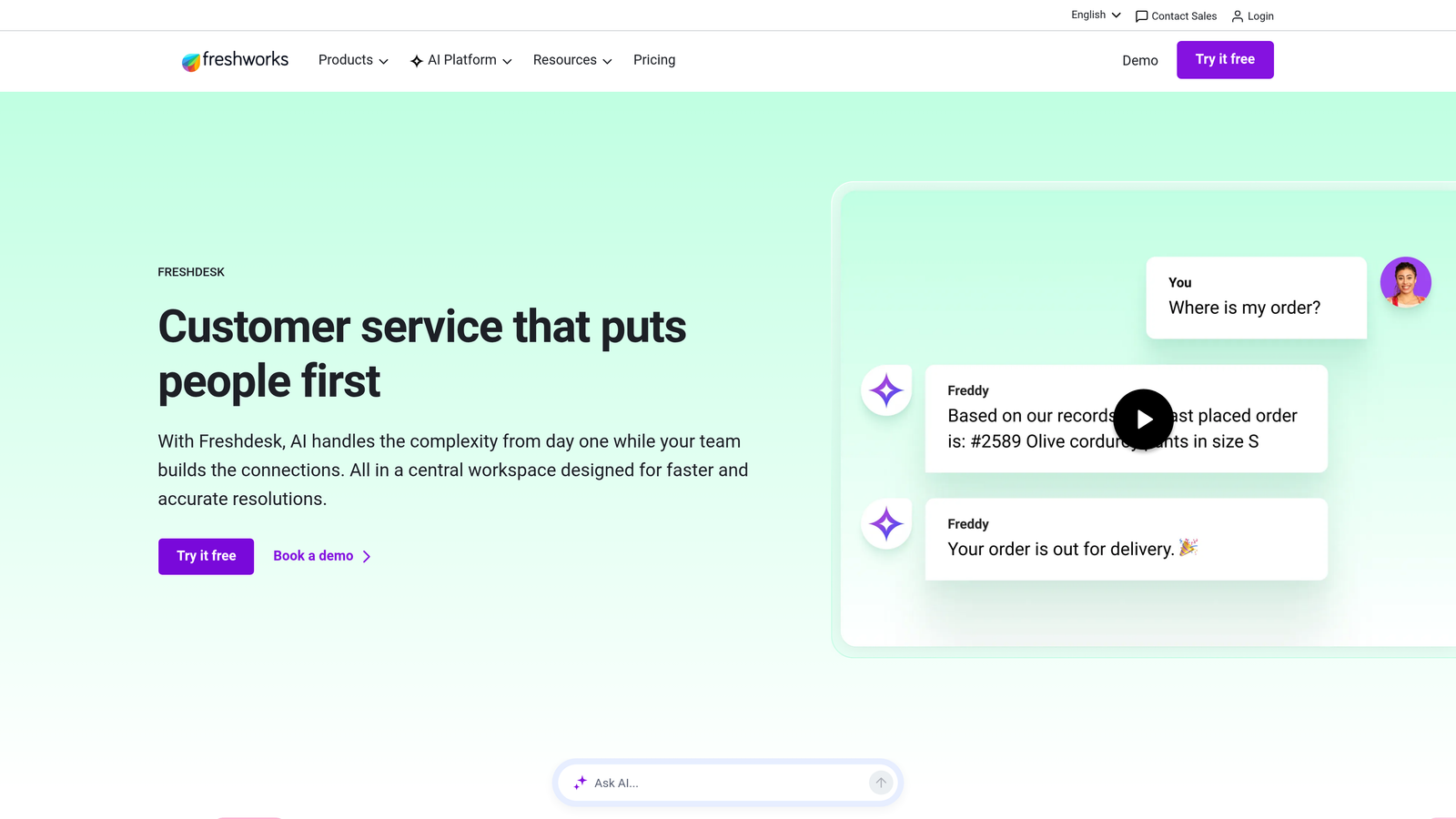
Freshdesk is an affordable helpdesk platform from Freshworks with Freddy AI, scenario automations, and a free tier that makes it accessible for smaller teams managing onboarding support.
Where This Tool Shines
Freshdesk punches above its price point. The Freddy AI copilot handles automated responses to common onboarding queries, while scenario automations let teams build rule-based workflows for routing and escalation without significant setup investment. For teams that need reliable onboarding ticket management without enterprise-level costs, it's a practical choice.
The free tier is genuinely useful for early-stage companies. Small teams can get started with automated onboarding support without a financial commitment and scale up as their user base grows.
Key Features
Freddy AI: Automates responses to common onboarding questions and suggests relevant help articles to users.
Scenario Automations: Build multi-step workflows for onboarding ticket routing, tagging, and escalation.
Canned Responses: Create reusable response templates for the most common onboarding issues your team handles.
Multi-Channel Support: Manage onboarding support across email, live chat, and phone from one platform.
Free Tier: Full access to core helpdesk features for small teams at no cost.
Best For
Startups, small SaaS teams, and growing companies that need a capable onboarding support system without a significant budget commitment. Also a good fit for teams already in the Freshworks ecosystem.
Pricing
Free plan available for unlimited agents with limited features. Growth plan starts at $15/agent/month, making it one of the most affordable options on this list.
6. Ada
Best for: Pure conversational AI handling onboarding queries across multiple channels
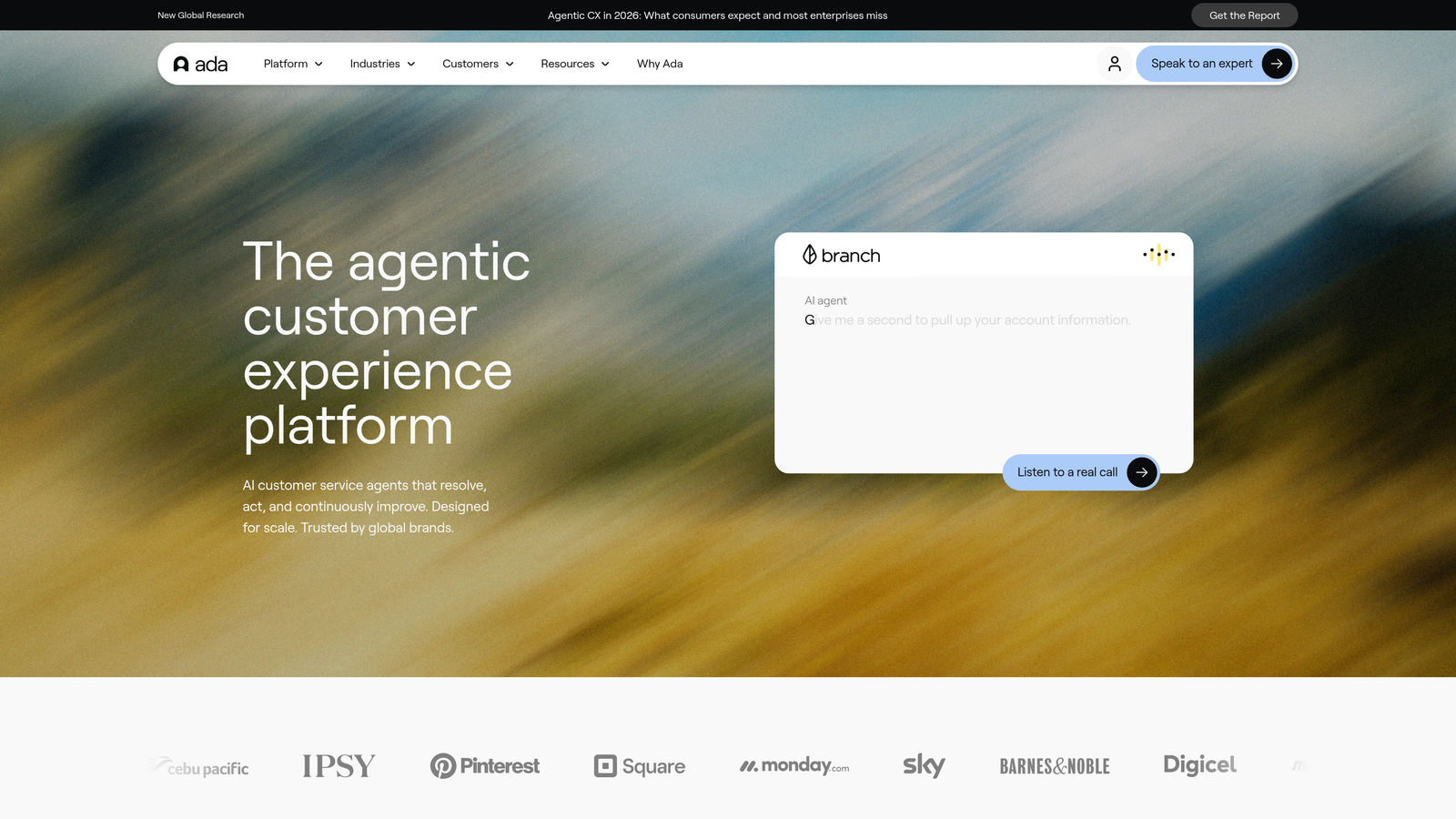
Ada is a conversational AI platform purpose-built for automated customer interactions, capable of handling onboarding questions across web, mobile, SMS, and social channels without scripted decision trees.
Where This Tool Shines
Ada's reasoning engine understands intent and context rather than relying on keyword matching or rigid decision trees. This matters during onboarding, when users phrase the same question in many different ways. The AI resolves queries by understanding what the user is actually trying to accomplish, not just pattern-matching to a FAQ.
The multi-channel deployment capability is also notable. For companies with onboarding touchpoints across multiple surfaces, Ada can deliver consistent automated support without rebuilding separate flows for each channel.
Key Features
Reasoning-Based AI Agent: Understands onboarding context and user intent without relying on scripted flows or keyword triggers.
Multi-Channel Deployment: Deploy the same AI agent across web, mobile, SMS, and social channels simultaneously.
CRM and Helpdesk Integrations: Connect to existing systems to pull customer data and log onboarding interactions.
Analytics Dashboard: Track onboarding resolution rates, escalation patterns, and common query types.
No Decision Tree Dependency: Handles novel onboarding questions without requiring manual flow updates for every new scenario.
Best For
Companies with complex, multi-channel onboarding support needs and high query volume who want AI resolution without the maintenance overhead of scripted chatbot flows.
Pricing
Custom pricing only. Contact Ada directly for a quote based on volume and deployment requirements.
7. Appcues
Best for: Visual, no-code onboarding walkthroughs with user progress tracking
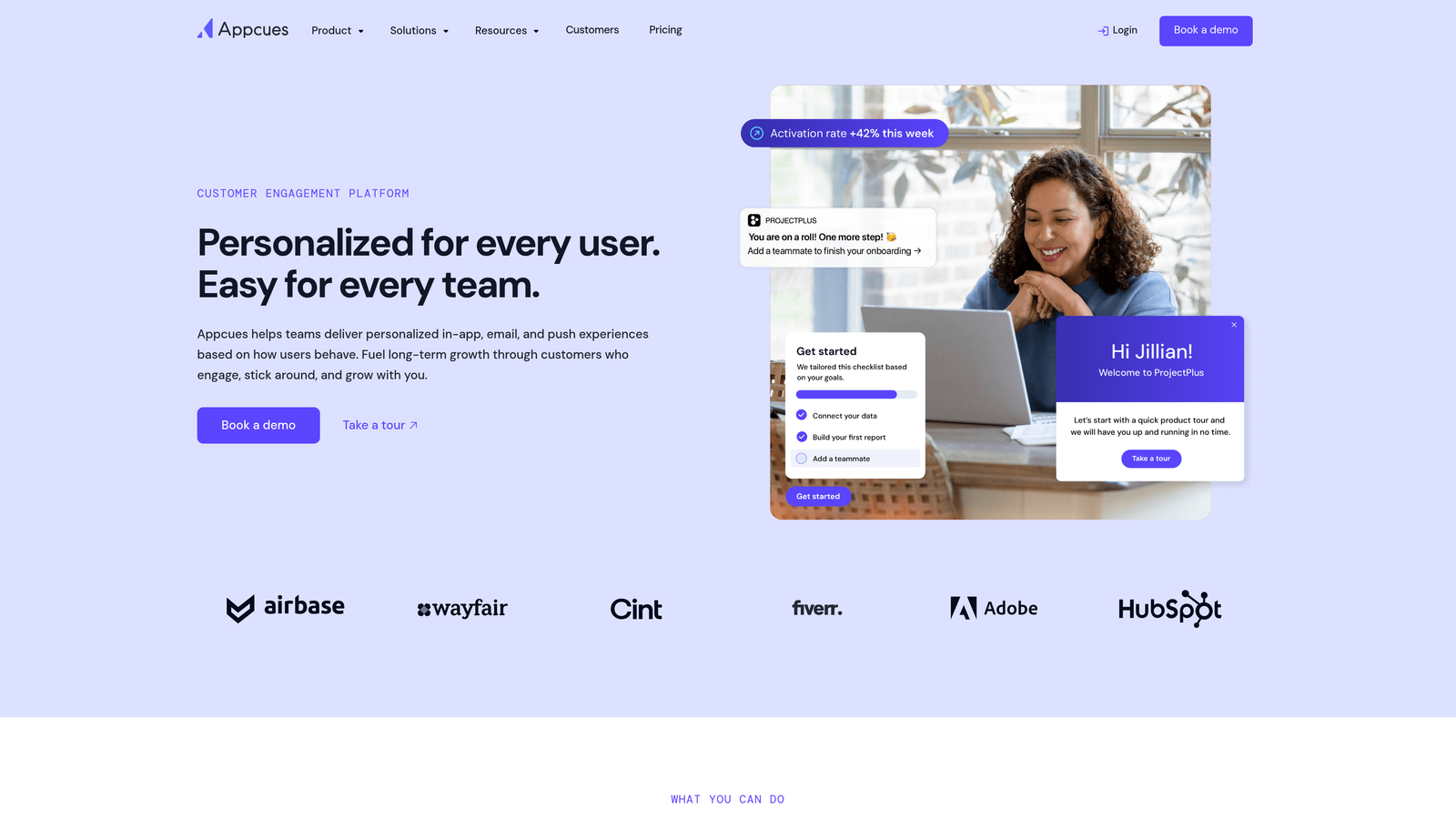
Appcues is a user onboarding platform with a WYSIWYG builder for creating checklists, tooltips, and guided walkthroughs that help new users reach key setup milestones.
Where This Tool Shines
Appcues is particularly strong for teams that want to create polished, visually guided onboarding experiences quickly. The WYSIWYG builder lets non-technical team members design and publish in-app flows without touching code, and the onboarding checklist feature gives users a clear sense of progress toward activation milestones.
The event-based targeting system ensures that guidance surfaces at the right moment rather than overwhelming users with tooltips from the start. Flows trigger based on what users have and haven't done, keeping the experience relevant throughout onboarding.
Key Features
WYSIWYG Flow Builder: Design onboarding walkthroughs, tooltips, and modals visually without writing code.
Onboarding Checklists: Give users a structured task list to track their progress through setup milestones.
Event-Based Targeting: Trigger specific onboarding guidance based on user actions and completion status.
NPS and Survey Tools: Collect feedback during onboarding to measure satisfaction and identify friction points.
Analytics and Integration: Connect to analytics platforms and support tools to close the loop between onboarding behavior and support outcomes.
Best For
Product and customer success teams at SaaS companies who want to create structured, milestone-driven onboarding experiences with minimal engineering involvement and strong visual polish.
Pricing
Essentials plan starts at $249/month. Higher tiers unlock additional features and higher MAU limits.
8. HubSpot Service Hub
Best for: CRM-integrated onboarding support with full customer lifecycle context
HubSpot Service Hub is a customer service platform that sits natively on the HubSpot CRM, enabling onboarding support workflows enriched with complete customer and deal data.
Where This Tool Shines
The CRM integration is what makes Service Hub distinctive for onboarding support. Every support interaction is connected to the full customer record, including deal history, product usage, and lifecycle stage. This means support agents and automated workflows can respond to onboarding questions with full context, not just the contents of the latest ticket.
For companies already running their go-to-market motion on HubSpot, Service Hub eliminates the data silos that typically exist between sales, success, and support during the onboarding phase.
Key Features
CRM-Connected Ticket Pipelines: Manage onboarding support tickets with full customer lifecycle data attached to every interaction.
AI-Powered Knowledge Base: Surface relevant onboarding help articles automatically based on user queries.
Customer Portal: Give new users a self-serve space to track onboarding progress and find answers independently.
Workflow Automation: Trigger onboarding support actions based on CRM milestones, such as deal close date or product activation events.
Breeze AI Copilot: Assists agents with suggested responses and context during complex onboarding support interactions.
Best For
Companies already using HubSpot CRM that want onboarding support deeply connected to sales and success data, particularly those with longer onboarding cycles where customer history matters.
Pricing
Free tools available. Starter plan at $20/seat/month; Professional at $100/seat/month with more advanced automation and reporting.
9. Pendo
Best for: Analytics-driven onboarding support informed by real product usage data
Pendo is a product experience platform that combines deep usage analytics with in-app guidance to deliver onboarding support precisely where and when users need it most.
Where This Tool Shines
Pendo's differentiator is the quality of its behavioral data. The platform tracks how users actually move through your product during onboarding, which features they use, which they skip, and where they stall. That data directly informs when and where in-app guides are triggered, making the support experience genuinely responsive to real usage patterns rather than assumptions.
Session replay adds another layer of insight, allowing teams to watch exactly how new users experience onboarding and identify friction points that might not surface in aggregate analytics.
Key Features
Product Analytics: Understand exactly where users struggle during onboarding with detailed feature adoption and drop-off data.
Behavior-Triggered In-App Guides: Surface walkthroughs and tooltips based on actual usage patterns and feature adoption gaps.
Resource Center: Embed contextual help articles and walkthroughs directly inside the product for on-demand support.
Session Replay: Watch real user onboarding sessions to identify friction that quantitative data alone might miss.
Cohort Segmentation: Tailor onboarding support and guidance for different user segments based on role, plan, or behavior.
Best For
Product teams and data-driven customer success organizations that want to ground their onboarding support strategy in real usage data, particularly those managing complex products with multiple user segments.
Pricing
Free plan available for up to 500 monthly active users. Paid plans require a custom quote based on user volume and feature requirements.
Choosing the Right Fit for Your Team
The right automated onboarding support system depends on what kind of onboarding problem you're actually solving. These tools fall into a few distinct categories, and matching the tool to your specific challenge will save you a lot of time and budget.
Best for AI-native autonomous support: Halo AI. If you want an agent that understands where users are in your product, resolves tickets without human involvement, and gets smarter over time, Halo is built specifically for that use case.
Best all-in-one messaging and support: Intercom. The combination of Fin AI, product tours, and a customer data platform in one product makes it a strong choice for teams that want reactive and proactive onboarding support from a single vendor.
Best for enterprise scale: Zendesk. Deep automation, sophisticated routing, and enterprise-grade reporting make it the go-to for high-volume onboarding support operations with complex requirements.
Best for no-code product-led onboarding: Userpilot or Appcues. Both are excellent for teams that want to reduce support volume by guiding users proactively through setup. Userpilot edges ahead on analytics; Appcues on visual polish and checklists.
Best on a budget: Freshdesk. The free tier and low per-agent pricing make it the most accessible option for early-stage teams that still need solid automation.
Best for pure conversational AI: Ada. For companies with high query volume across multiple channels who want intent-based resolution without maintaining decision tree logic, Ada is purpose-built for that problem.
Best for CRM-integrated support: HubSpot Service Hub. If your team runs on HubSpot and onboarding support needs to be connected to deal and lifecycle data, Service Hub removes the integration complexity entirely.
Best for analytics-driven guidance: Pendo. When you want onboarding support decisions grounded in real behavioral data rather than assumptions, Pendo's combination of analytics and in-app guidance is hard to beat.
The broader trend worth noting is that the market is moving toward AI agents that handle onboarding support autonomously, not just deflect users to a knowledge base. Page-aware and session-aware AI, where the agent understands the user's current context in real time, is becoming a meaningful differentiator. If that capability matters to your team, it's worth prioritizing in your evaluation.
Your support team shouldn't have to scale linearly with your customer base. Let AI agents handle routine tickets, guide users through your product, and surface business intelligence while your team focuses on complex issues that genuinely need a human touch. See Halo in action and discover how continuous learning transforms every interaction into smarter, faster support.