9 Best Automated Onboarding Support Tools in 2026
Automated onboarding support tools help SaaS companies deliver instant, contextual help to new users at critical moments—without requiring round-the-clock team availability. This guide evaluates nine leading platforms for 2026, comparing their in-app guidance, AI capabilities, and integrations to help you choose the right solution based on your product complexity and customer retention goals.
 Grant CooperFounder14 min read
New users who don't get answers fast don't stick around. Whether it's a setup question at 11pm or confusion about a feature on day three, the moment friction goes unaddressed is often the moment a customer starts evaluating alternatives. Automated onboarding support tools solve this by delivering instant, contextual help exactly when users need it, without requiring your team to be available around the clock.
But not all tools are built the same. Some focus on in-app guidance, others on ticket deflection, and a growing category combines AI agents with business intelligence to turn support interactions into retention signals. The right choice depends on your product complexity, team size, and how deeply you want support woven into the customer journey.
This list covers nine tools worth evaluating in 2026, selected for their ability to automate meaningful onboarding support, not just surface a chatbot FAQ. Each has been assessed for features, integrations, and the type of team it suits best. For a broader look at what modern AI support tools should do, see our AI support tool features guide.
1. Halo AI
Best for: AI-first ticket resolution with page-aware context and business intelligence built in.
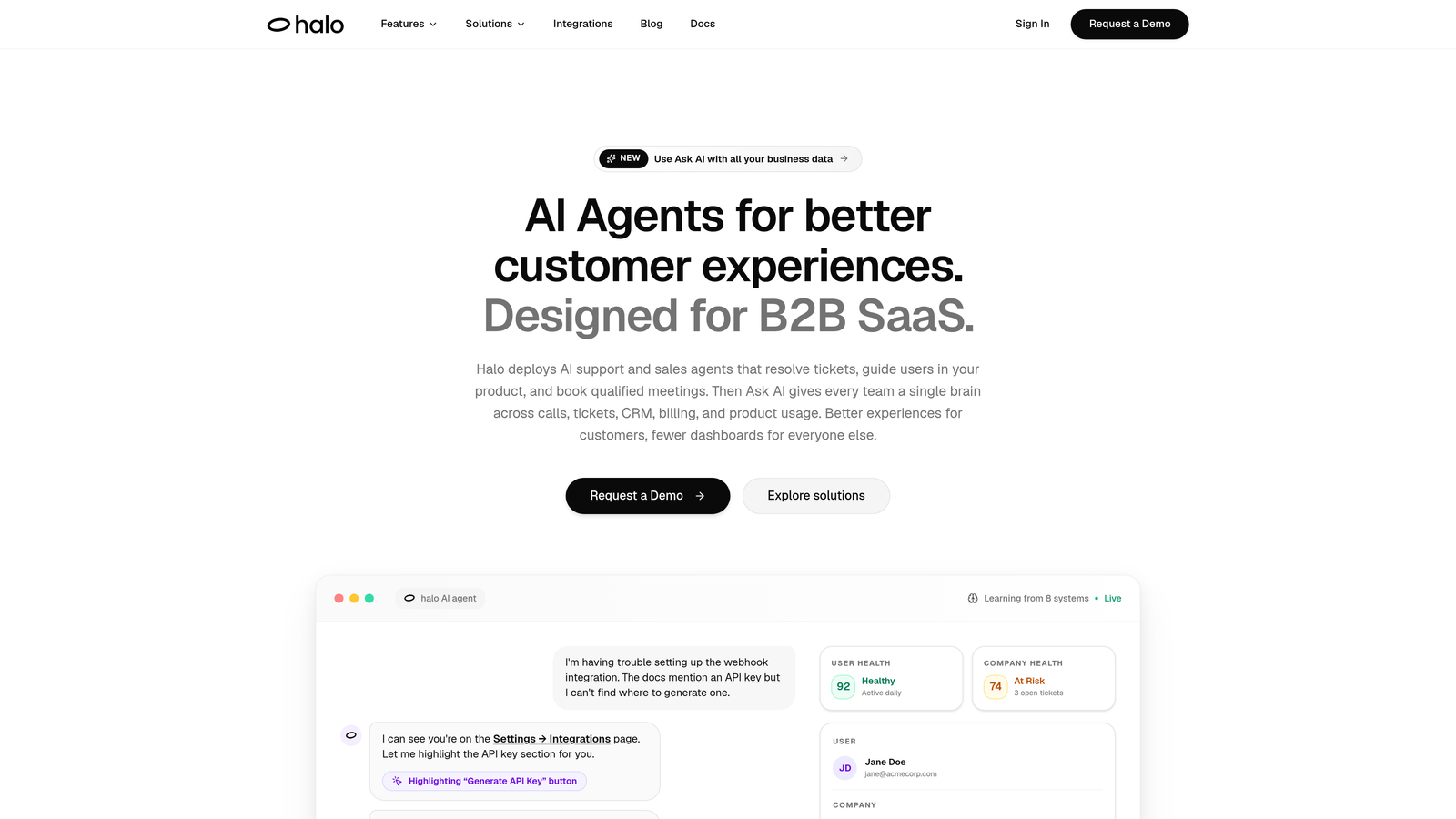
Halo AI is an AI-first customer support platform that combines intelligent ticket resolution, page-aware onboarding guidance, and business intelligence analytics in a single system.
Where This Tool Shines
Halo's standout differentiator is its page-aware chat widget. The AI agent sees exactly what the user sees on screen, which means it can deliver contextual, visual guidance rather than generic answers. For onboarding, this matters enormously: a user confused about a specific settings page gets help relevant to that exact context, not a link to a generic help article.
The other meaningful differentiator is the smart inbox layer. Rather than simply resolving tickets, Halo surfaces customer health signals and revenue anomalies from support interactions. Your support data becomes an early warning system for churn and expansion, something most tools in this space don't attempt.
Key Features
Page-Aware Chat Widget: The AI agent understands the user's current page context and delivers visual, step-by-step guidance tailored to exactly where they are in your product.
Intelligent AI Agents: Autonomous ticket resolution that learns from every interaction, improving accuracy over time without manual retraining.
Smart Inbox with Business Intelligence: Surfaces customer health signals, revenue anomalies, and churn indicators directly from support conversation data.
Auto Bug Ticket Creation: Automatically routes identified bugs to Linear or your preferred issue tracker, closing the loop between support and engineering.
Live Agent Handoff: Seamless escalation to human agents for complex issues, with full conversation context preserved.
Deep Integrations: Connects with Slack, HubSpot, Intercom, Stripe, Zoom, PandaDoc, Fathom, and more, so support data flows across your entire stack.
Best For
B2B SaaS teams that want AI agents handling onboarding tickets autonomously while also extracting business intelligence from those interactions. Particularly well-suited to product-led growth companies where onboarding friction directly impacts activation and retention metrics.
Pricing
Contact for pricing. Given the depth of integrations and BI capabilities, it's positioned for teams that treat support as a strategic function rather than a cost center.
2. Intercom
Best for: All-in-one customer messaging with a mature AI agent and guided onboarding flows.
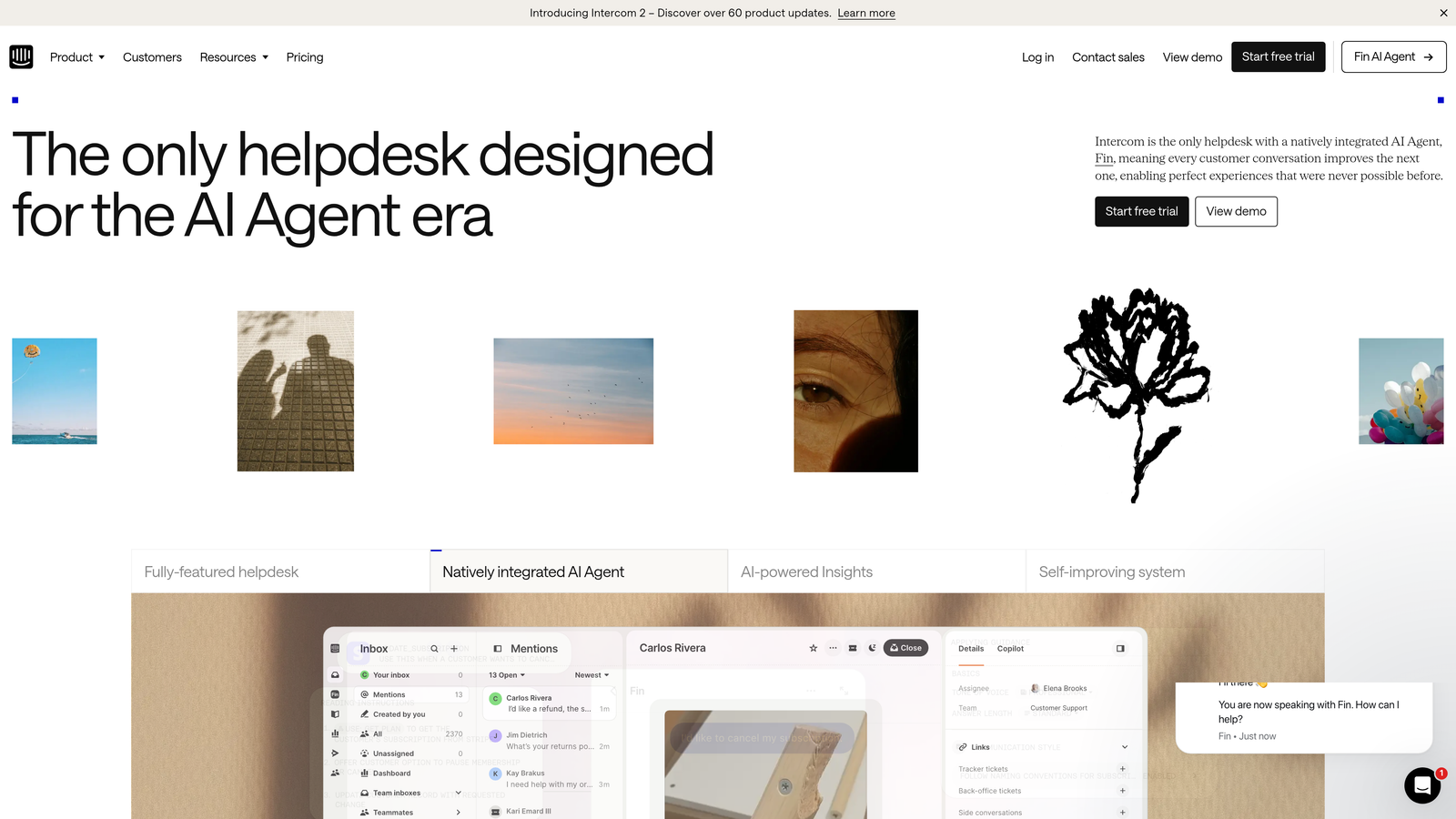
Intercom is an established customer messaging platform combining its Fin AI agent, product tours, and a shared inbox with a broad integration ecosystem.
Where This Tool Shines
Intercom's strength is its maturity. The platform has been refined over many years, and Fin AI has improved significantly as a front-line agent for resolving common onboarding queries. For teams already running customer conversations through Intercom, adding automated onboarding support is a natural extension rather than a new tool to evaluate.
The product tours feature lets you build guided onboarding sequences directly inside the messenger, which means new users encounter guidance in the same interface they use to ask questions. That continuity reduces context-switching during onboarding.
Key Features
Fin AI Agent: Handles automated ticket resolution and common onboarding queries with natural language understanding.
Product Tours: In-app guided onboarding flows and contextual messages triggered at key moments in the user journey.
Shared Inbox with AI Assist: Human agents get AI-suggested replies, reducing handle time on tickets that do require escalation.
Broad Integration Ecosystem: Connects with Salesforce, Slack, Stripe, and many others, making it easy to embed in an existing stack.
Conversation Analytics: Reporting on resolution rates, response times, and conversation volume to track onboarding support performance.
Best For
Teams already invested in the Intercom ecosystem, or those looking for a single platform to handle both customer messaging and onboarding guidance. Works well for mid-market SaaS companies with established support workflows.
Pricing
Starts at $39/seat/month. Fin AI is usage-based, so costs can scale quickly for high-volume onboarding operations. Worth modeling before committing.
3. Pendo
Best for: Behavior-triggered in-app guidance backed by deep product analytics.
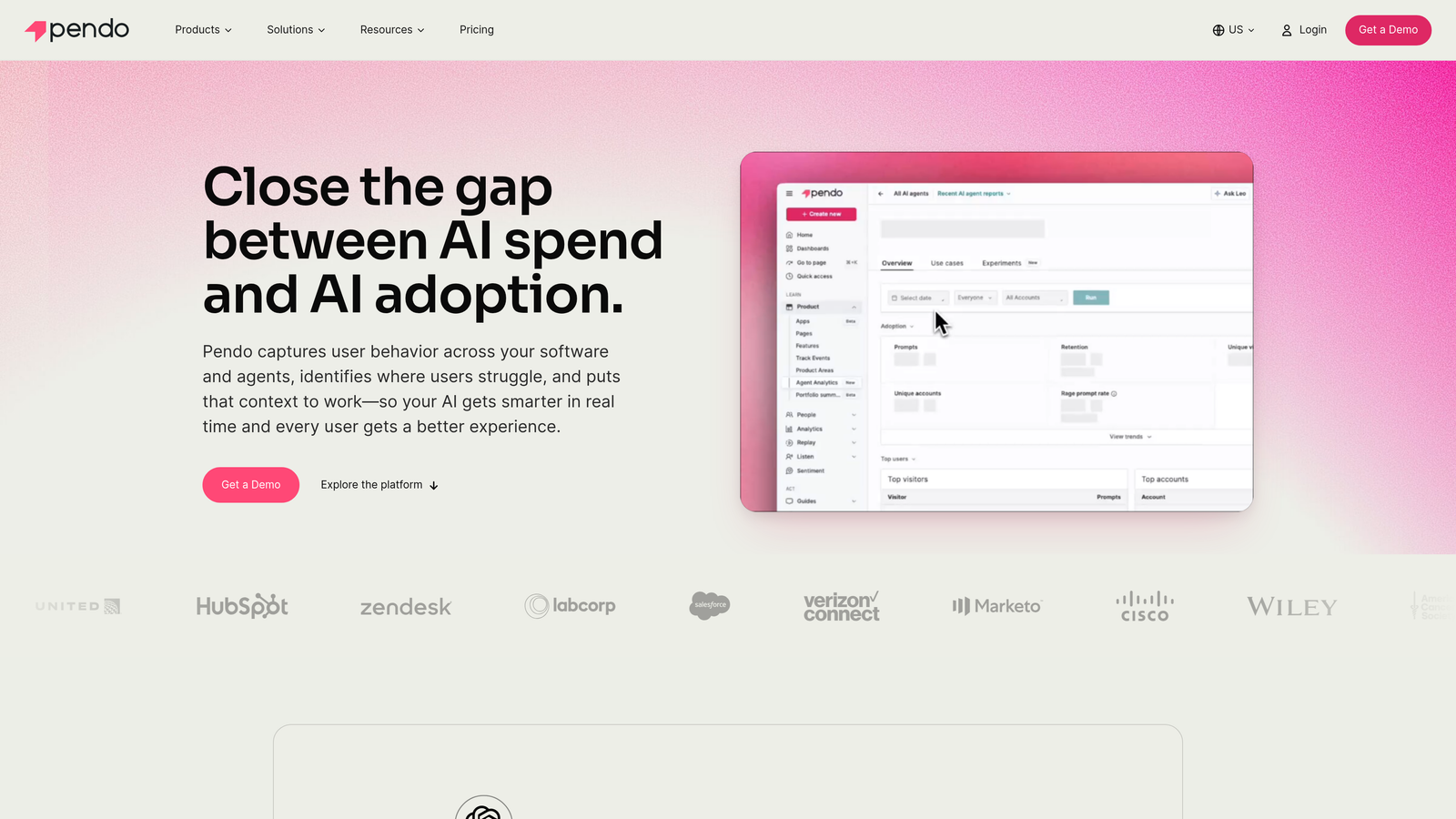
Pendo is a product analytics and in-app guidance platform that helps teams trigger contextual onboarding help based on what users actually do inside the product.
Where This Tool Shines
Pendo approaches onboarding support from the product analytics angle. Rather than waiting for a user to ask a question, it identifies where users stall or drop off and proactively surfaces guides at those moments. That behavioral foundation makes onboarding interventions feel well-timed rather than interruptive.
The analytics layer is genuinely strong. You can see which onboarding steps are causing friction, which user segments are struggling, and where guides are being dismissed rather than completed. That data is valuable for iterating on your onboarding experience over time.
Key Features
Behavior-Triggered Guides: Tooltips, walkthroughs, and modals that fire based on user actions or inaction within the product.
Product Analytics: Detailed visibility into where users drop off during onboarding, with segmentation by cohort and behavior.
NPS and In-App Feedback: Collect sentiment directly within the product to identify onboarding friction points early.
Resource Center: A self-serve content hub users can access at any point during onboarding.
Integrations: Connects with Salesforce, HubSpot, Zendesk, and Slack for cross-functional data sharing.
Best For
Product and customer success teams that want behavioral data driving their onboarding interventions. Less suited to teams primarily looking for ticket-based support automation. Best when paired with a support tool handling reactive queries.
Pricing
Contact for pricing. A free plan is available with limited features, making it accessible for initial evaluation.
4. Zendesk
Best for: High-volume enterprise support operations with AI triage and self-service at scale.
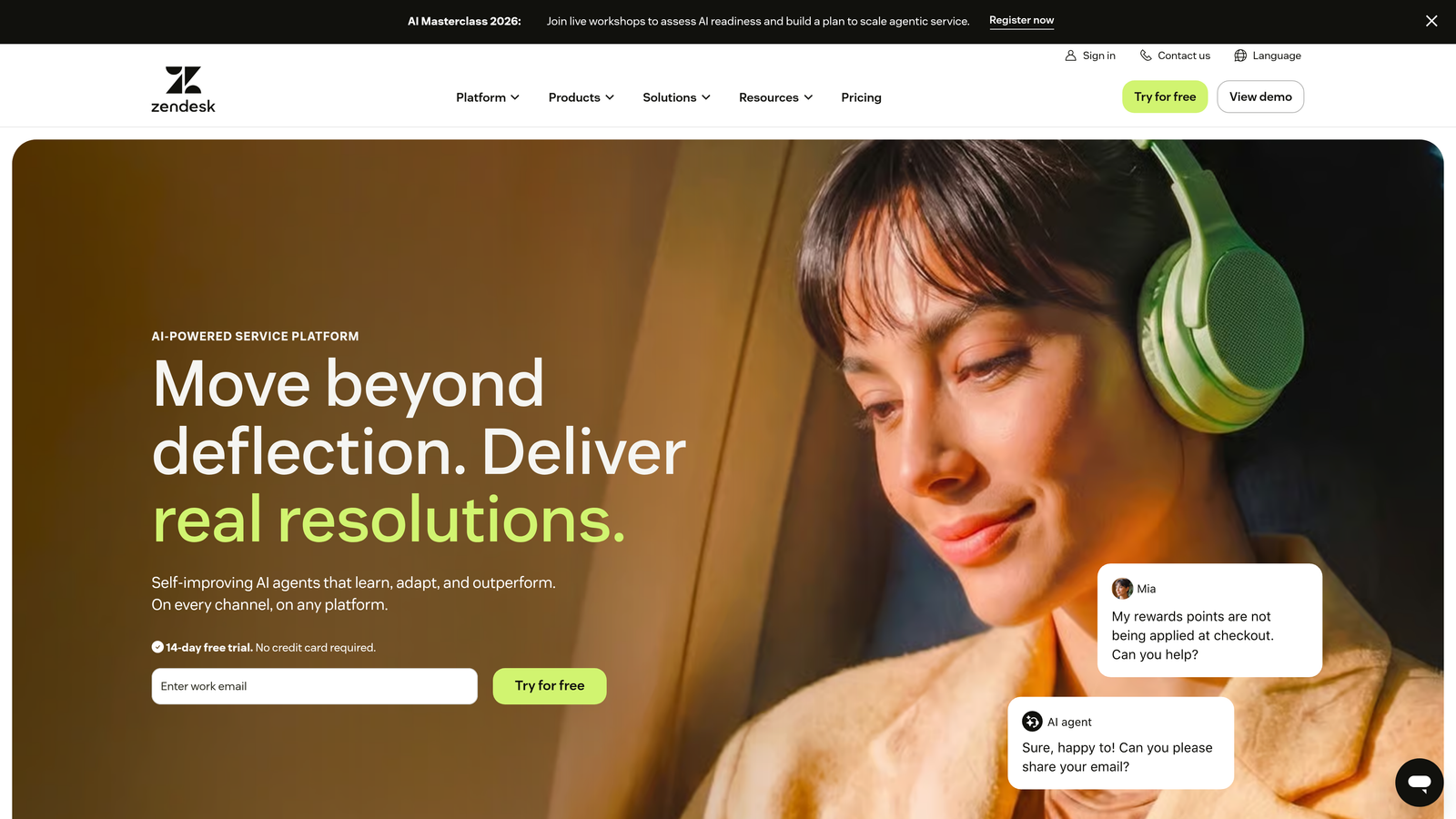
Zendesk is an enterprise-grade helpdesk platform with AI-powered ticket triage, deflection capabilities, and a self-service knowledge base built for onboarding support at scale.
Where This Tool Shines
Zendesk's core strength is handling large volumes of support tickets without losing operational control. Its AI layer handles triage, surfaces relevant help articles before a ticket is even submitted, and assists agents with contextual reply suggestions. For enterprise teams managing onboarding across thousands of new users simultaneously, that infrastructure is difficult to replicate.
The Help Center is a mature self-service layer. AI-powered article recommendations mean users searching for onboarding answers surface relevant content quickly, reducing ticket volume before it hits the queue. For teams with extensive documentation, this is a meaningful deflection mechanism.
Key Features
Zendesk AI: Ticket triage, auto-suggestions, and agent assist that reduces manual handling of repetitive onboarding queries.
Help Center: A knowledge base with AI-powered article recommendations that surfaces relevant content at the point of search.
Omnichannel Support: Handles email, chat, and messaging apps from a single platform, useful for onboarding teams managing multiple inbound channels.
Workflow Automation: Robust routing rules and SLA management for teams with complex escalation requirements.
Integration Marketplace: Extensive library of third-party integrations covering CRM, analytics, and communication tools.
Best For
Enterprise teams and larger SMBs with high onboarding ticket volume who need mature workflow automation and SLA management. Can feel heavyweight for early-stage teams; the investment pays off at scale.
Pricing
Suite plans start at $55/agent/month. Enterprise tiers with advanced AI features are priced higher; evaluate total cost based on agent count and expected volume.
5. Appcues
Best for: No-code onboarding flow creation for product and growth teams without engineering dependencies.
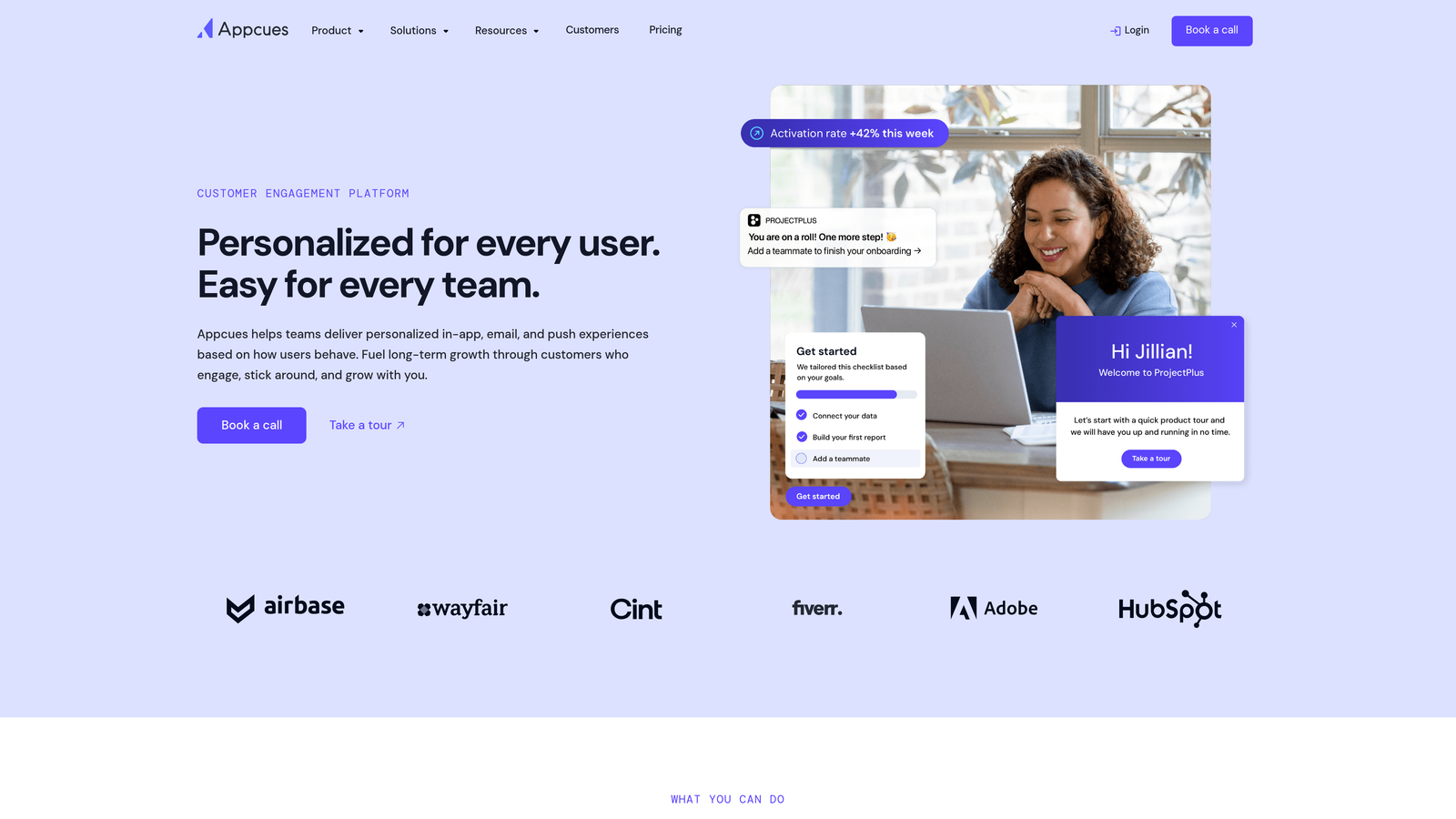
Appcues is a no-code in-app onboarding builder that lets product and growth teams create guided flows, checklists, and modals without writing a line of code.
Where This Tool Shines
The core value proposition is speed. Teams that previously needed engineering involvement to update an onboarding flow can now iterate in hours rather than weeks. That independence matters when you're running experiments on activation sequences or responding to user feedback quickly.
Appcues is particularly strong on the activation side of onboarding: getting users to their first meaningful moment of value. Checklists, modals, and tooltips guide users through key setup steps, and A/B testing lets you optimize which sequences actually drive completion.
Key Features
No-Code Visual Builder: Create onboarding tours, modals, and tooltips through a drag-and-drop interface without engineering support.
Onboarding Checklists: Guide users through activation steps with progress-tracked checklists that surface in-app.
User Segmentation: Target specific onboarding experiences to different user cohorts based on role, plan, or behavior.
A/B Testing: Test and optimize onboarding flows to improve completion rates and time-to-value.
Integrations: Connects with Segment, HubSpot, Salesforce, and Mixpanel for data-driven flow targeting.
Best For
Product and growth teams that need to move fast on activation experiments without engineering bottlenecks. Works best paired with a support tool handling reactive ticket volume, since Appcues focuses on proactive guidance rather than query resolution.
Pricing
Starts at $249/month. Higher tiers unlock advanced analytics and integrations. Worth evaluating against Userflow if budget is a constraint at early stage.
6. Freshdesk
Best for: SMBs scaling from manual support to AI-assisted ticket automation at accessible pricing.
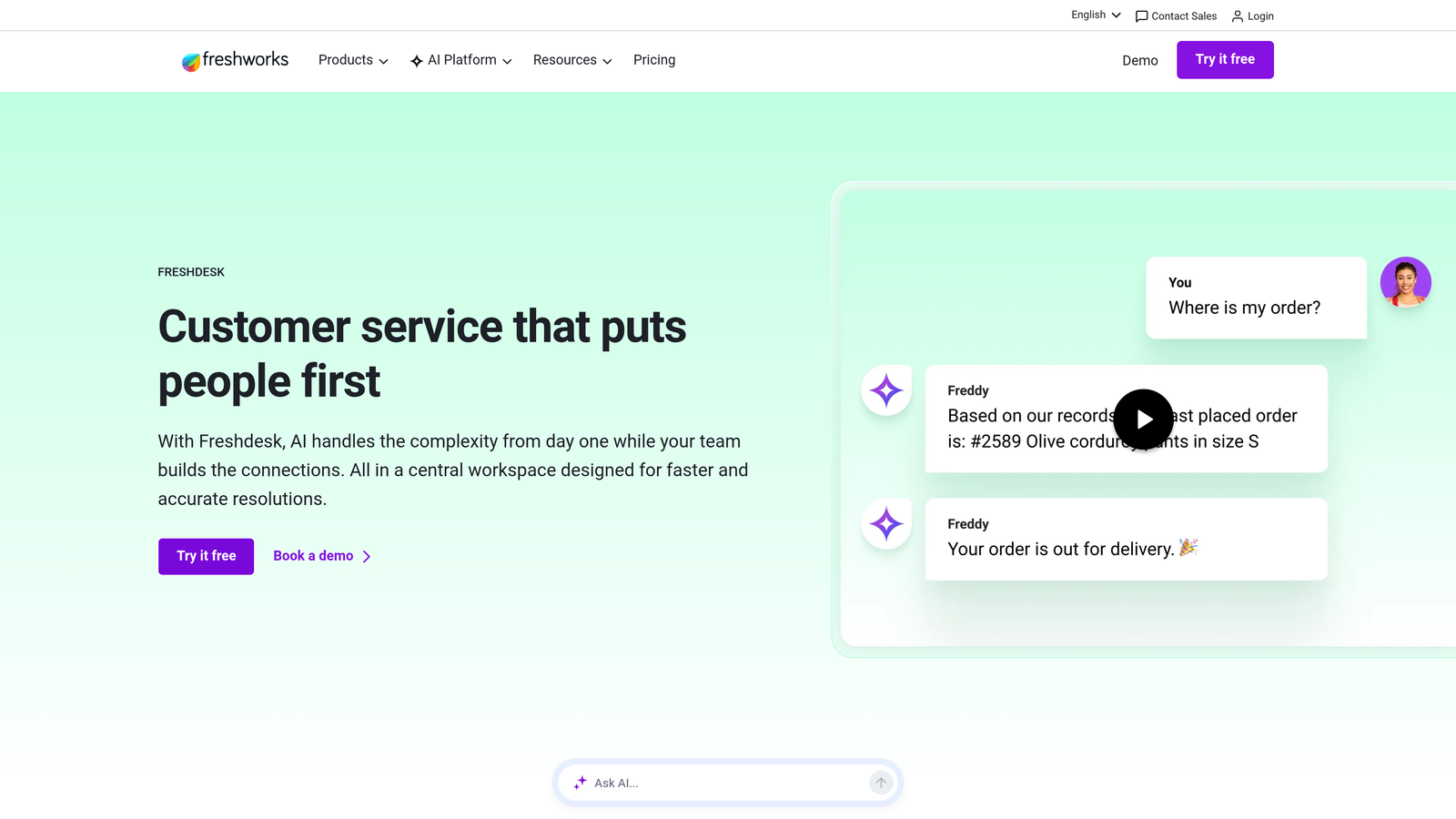
Freshdesk is Freshworks' helpdesk platform featuring Freddy AI for ticket automation, agent assist, and self-service, designed as a practical entry point for teams growing their support operations.
Where This Tool Shines
Freshdesk's appeal is the combination of capability and accessible pricing. For SMBs that have been handling onboarding support manually and are ready to introduce automation, Freddy AI provides a meaningful upgrade without the cost structure of enterprise platforms. Ticket categorization, suggested responses, and some auto-resolution are available without significant configuration overhead.
The self-service portal with AI-powered article suggestions reduces inbound volume from new users who have common setup questions. For teams with a growing knowledge base, this deflection layer can meaningfully reduce ticket load during onboarding periods.
Key Features
Freddy AI: Handles ticket categorization, suggested responses, and auto-resolution for common onboarding queries.
Self-Service Portal: AI-powered article suggestions help users find answers before submitting a ticket.
Workflow Automation: Routing and escalation rules that keep onboarding tickets moving to the right agent or queue.
Omnichannel Support: Covers email, chat, phone, and social from a unified inbox.
Agent Assist: Contextual reply suggestions that reduce handle time for human agents managing escalated onboarding issues.
Best For
SMBs and growing startups that are graduating from purely manual support and need an affordable path to AI-assisted ticket automation. A practical choice before the volume justifies an enterprise platform investment.
Pricing
Free plan available. Paid plans start at $15/agent/month, making it one of the more accessible options in this category for teams watching unit economics closely.
7. Userflow
Best for: Early-stage SaaS teams that need lightweight in-app onboarding implemented quickly.
Userflow is a lightweight in-app onboarding platform with a visual flow builder, resource center, and NPS collection, designed for fast implementation without heavy overhead.
Where This Tool Shines
Userflow occupies a practical middle ground: more capable than building onboarding flows from scratch, less complex than platforms like Pendo. For early-stage teams that need solid onboarding flows live quickly, it delivers without requiring weeks of setup or a dedicated implementation project.
The developer experience is notably clean. The SDK is well-documented, event tracking is straightforward, and the visual builder lets non-technical team members manage flows after the initial integration. That division of labor works well for small teams where engineers can't own onboarding iteration.
Key Features
Visual Flow Builder: Create onboarding tours and checklists through an intuitive visual interface without heavy engineering involvement.
In-App Resource Center: A self-serve help content hub that users can access at any point during onboarding without leaving the product.
NPS and CSAT Surveys: Collect sentiment data in-context to identify where onboarding is working and where it's falling short.
Developer-Friendly SDK: Clean implementation with event tracking that integrates well with existing data pipelines.
Integrations: Connects with Segment, HubSpot, and Amplitude for behavioral data alignment.
Best For
Early-stage SaaS companies that need in-app onboarding flows running quickly without over-investing in tooling. Good value for teams that don't yet need the analytics depth of Pendo or the A/B testing sophistication of Chameleon.
Pricing
Starts at $240/month. Startup pricing is available, making it a realistic option for pre-Series A teams building out their onboarding stack.
8. Chameleon
Best for: Teams optimizing onboarding by user cohort with advanced segmentation and A/B testing.
Chameleon is an in-app experience platform built for teams that want to test and refine onboarding flows with precision, using advanced segmentation and experimentation capabilities.
Where This Tool Shines
Where Appcues and Userflow prioritize speed of implementation, Chameleon prioritizes depth of optimization. Its segmentation capabilities let you deliver meaningfully different onboarding experiences to different user cohorts, and its A/B testing infrastructure gives you the data to know which version actually performs better.
The microsurvey feature is worth highlighting specifically for onboarding use cases. Collecting in-context feedback at specific moments in the onboarding flow surfaces friction signals that aggregate metrics often miss. Teams that treat onboarding as an ongoing experiment rather than a one-time build will find Chameleon's toolset well-matched to that mindset.
Key Features
Customizable Onboarding Tours: Highly flexible tours, launchers, and tooltips with extensive visual customization options.
Advanced User Segmentation: Target onboarding experiences to specific cohorts based on behavior, plan, role, or custom attributes.
A/B Testing: Run controlled experiments across onboarding flows to identify what drives completion and activation.
Microsurveys: Collect in-context feedback at specific onboarding moments to surface friction that usage data alone won't reveal.
Best For
Growth-focused product teams at companies with enough user volume to run meaningful A/B tests. Best suited to teams that have already validated their basic onboarding flow and are now optimizing it by segment.
Pricing
Starts at $279/month. Higher tiers unlock A/B testing and advanced analytics. Evaluate whether your current user volume justifies the experimentation investment before committing.
9. Stonly
Best for: Teams replacing static help articles with interactive, decision-tree troubleshooting paths.
Stonly is an interactive knowledge base and guide builder that delivers personalized troubleshooting paths through branching decision trees, replacing one-size-fits-all help documentation.
Where This Tool Shines
The core insight behind Stonly is that most help articles fail because they're written for everyone and therefore optimized for no one. A new user troubleshooting a setup issue has a different context than an advanced user hitting an edge case. Stonly's branching format lets users navigate to the path relevant to their specific situation, which improves resolution rates without adding ticket volume.
The flexibility of deployment is another practical strength. Stonly guides can embed in-app, inside chat widgets, or as a standalone help center, which means you can meet users wherever they look for help during onboarding without rebuilding content for each surface.
Key Features
Interactive Branching Guides: Decision-tree format that personalizes troubleshooting paths based on each user's specific situation and answers.
Flexible Deployment: Embeds in-app, in chat widgets, or as a standalone help center, adapting to your existing support surfaces.
AI-Powered Guide Creation: Generates interactive guides from existing documentation, reducing the manual effort of migrating a knowledge base.
Usage Analytics: Tracks which guides are used, where users drop off, and which paths lead to resolution versus ticket submission.
Integrations: Connects with Zendesk, Intercom, Freshdesk, and HubSpot to complement existing support workflows.
Best For
Support and customer success teams with complex products where troubleshooting paths vary significantly by user type or configuration. Works well as a complement to a ticketing system rather than a standalone solution.
Pricing
Contact for pricing. A free trial is available, which makes initial evaluation low-friction before committing to a plan.
Matching the Right Tool to Your Onboarding Reality
Before picking a tool, audit where your onboarding actually breaks down. Are users submitting repetitive "how do I" tickets that an AI agent could resolve autonomously? Are they silently dropping off without ever asking for help? Or are they completing setup but failing to reach their first moment of value? The answer shapes which category of tool you actually need.
Here's a quick map by use case:
AI-first ticket resolution with business intelligence: Halo AI. If you want support interactions to surface churn signals and revenue anomalies alongside resolving tickets, this is the only tool in this list built with that layer from the ground up.
All-in-one messaging with a mature ecosystem: Intercom. Strong choice for teams already running customer conversations on the platform who want to extend into automated onboarding without adding a new tool.
In-app product guidance driven by behavior: Pendo for analytics-first teams, Appcues for teams that need to move fast without engineering. Both focus on proactive guidance rather than reactive support.
Enterprise helpdesk automation at scale: Zendesk. The right choice when ticket volume is high and workflow complexity demands mature SLA management and routing infrastructure.
SMB-friendly AI ticketing: Freshdesk. Accessible pricing and solid Freddy AI capabilities make it the practical entry point for teams scaling beyond manual support.
Lightweight startup onboarding: Userflow. Fast to implement, developer-friendly, and priced for teams that don't yet need enterprise depth.
Segmentation-driven onboarding optimization: Chameleon. Built for teams running experiments on onboarding cohorts with enough volume to generate meaningful test data.
Interactive knowledge base and self-serve troubleshooting: Stonly. Best when your users need personalized troubleshooting paths rather than static documentation.
The tools that deliver the most value in 2026 aren't just deflecting tickets. They're learning from every interaction, surfacing signals about which users are struggling before they churn, and feeding that intelligence back into your product and revenue teams. That's the standard worth holding your onboarding support stack to.
Your support team shouldn't scale linearly with your customer base. Let AI agents handle routine tickets, guide users through your product, and surface business intelligence while your team focuses on complex issues that need a human touch. See Halo in action and discover how continuous learning transforms every interaction into smarter, faster support. You can also explore how to evaluate the financial case for tools like these in our AI support tool features guide.