9 Best Automated Product Support Tools in 2026
Product teams struggling with repetitive support tickets can now leverage automated product support tools to handle routine inquiries instantly, guide users through interfaces, and escalate complex issues to human agents. These platforms reduce response times from hours to seconds while freeing teams to focus on product development, with the best solutions offering advanced AI capabilities, seamless integrations, and proven resolution rates that eliminate the need for additional support headcount.
 Grant CooperFounder11 min read
Product teams are drowning in repetitive support tickets while customers wait hours for answers to simple questions. Automated product support tools solve this by handling routine inquiries, guiding users through your interface, and escalating complex issues to humans—all without adding headcount. The right tool reduces response times from hours to seconds while freeing your team to focus on product improvements instead of answering the same questions repeatedly.
We evaluated dozens of platforms based on AI capabilities, integration depth, ease of setup, and real-world resolution rates to bring you this curated list of the most effective automated product support tools available today.
1. Halo AI
Best for: Product teams wanting AI agents that learn continuously and understand user context
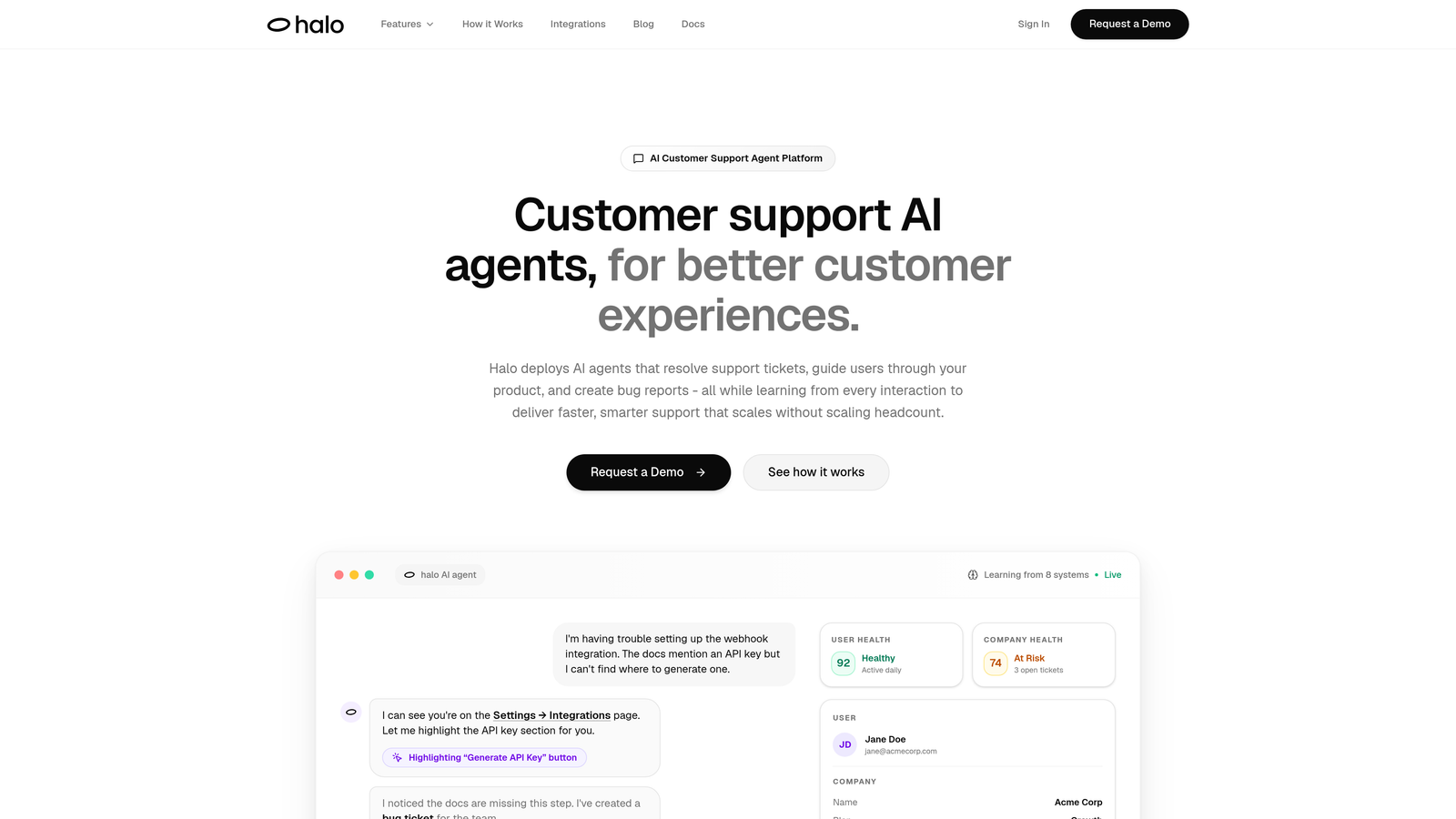
Halo AI is an AI-native customer support platform that sees what your users see and gets smarter with every interaction.
Where This Tool Shines
Unlike traditional helpdesk tools with AI bolted on, Halo was built AI-first. Its page-aware chat widget understands exactly where users are in your product, allowing it to provide visual guidance that references specific UI elements they're looking at.
The platform's continuous learning architecture means every resolved ticket makes the AI smarter. It doesn't just answer questions—it creates bug tickets automatically, surfaces customer health signals, and provides business intelligence that helps product teams make better decisions.
Key Features
Page-Aware Context: The AI sees your product interface in real-time, enabling it to guide users through specific workflows with visual references.
Auto Bug Ticket Creation: Support conversations automatically generate detailed bug reports in Linear when issues are detected.
Business Intelligence: Surface customer health signals, revenue intelligence, and anomaly detection beyond basic support metrics.
Deep Integrations: Connects to your entire business stack including Linear, Slack, HubSpot, Intercom, Stripe, Zoom, and PandaDoc.
Smart Escalation: Autonomous operation with intelligent handoff to human agents when complexity requires human judgment.
Best For
B2B SaaS companies and product teams who want AI that operates autonomously rather than just assisting human agents. Particularly valuable if you're using modern tools like Linear, Slack, and Intercom and want everything connected.
Pricing
Contact for pricing. Enterprise-focused with custom implementations based on support volume and integration requirements.
2. Intercom Fin
Best for: Companies already using Intercom who want GPT-powered automation without switching platforms
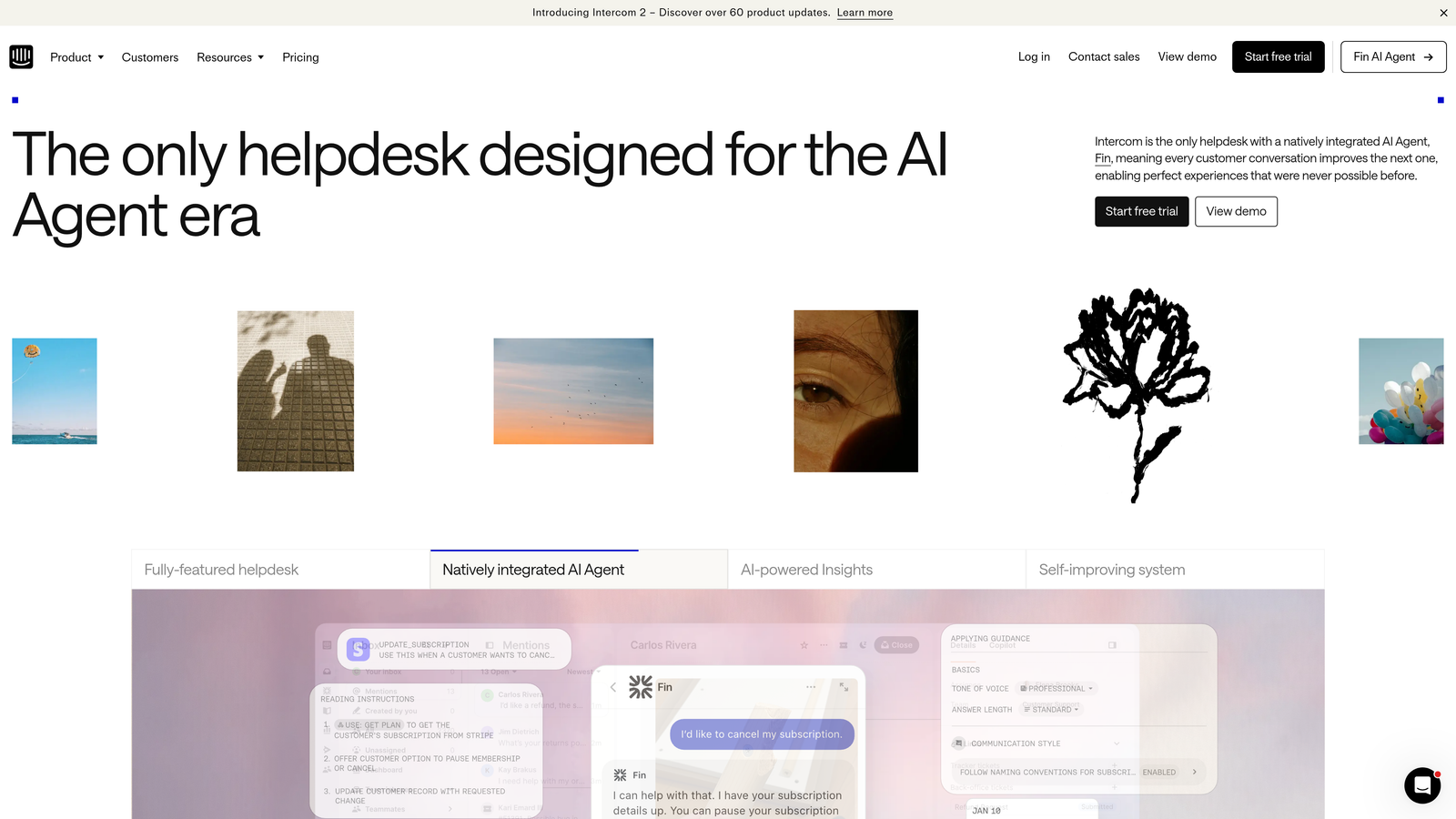
Intercom Fin is a GPT-powered AI agent that integrates directly into Intercom's customer messaging platform.
Where This Tool Shines
Fin excels at learning from your existing help center content and immediately putting it to work. If you've invested time building comprehensive documentation, Fin can reference it accurately in customer conversations without hallucinating answers.
The seamless handoff between AI and human agents feels natural. When Fin encounters a question it can't confidently answer, it passes the conversation to your team with full context, so customers never feel like they're starting over.
Key Features
Help Center Learning: Automatically learns from your knowledge base articles and provides accurate, sourced answers to customer questions.
Resolution Tracking: Measures how many conversations are fully resolved by AI versus requiring human intervention.
Conversation Summarization: Generates concise summaries of long conversation threads for agents who need to jump in.
Multilingual Support: Handles customer inquiries in over 40 languages using GPT's language capabilities.
Custom Answers: Train Fin on specific responses for common questions unique to your product or industry.
Best For
Mid-market to enterprise companies already invested in the Intercom ecosystem who want to layer AI on top of their existing workflows without migrating platforms.
Pricing
Starts at $0.99 per resolution, making costs scale directly with usage. This can be cost-effective for lower volumes but expensive at scale.
3. Zendesk AI
Best for: Enterprise teams with complex support operations needing intelligent routing and triage
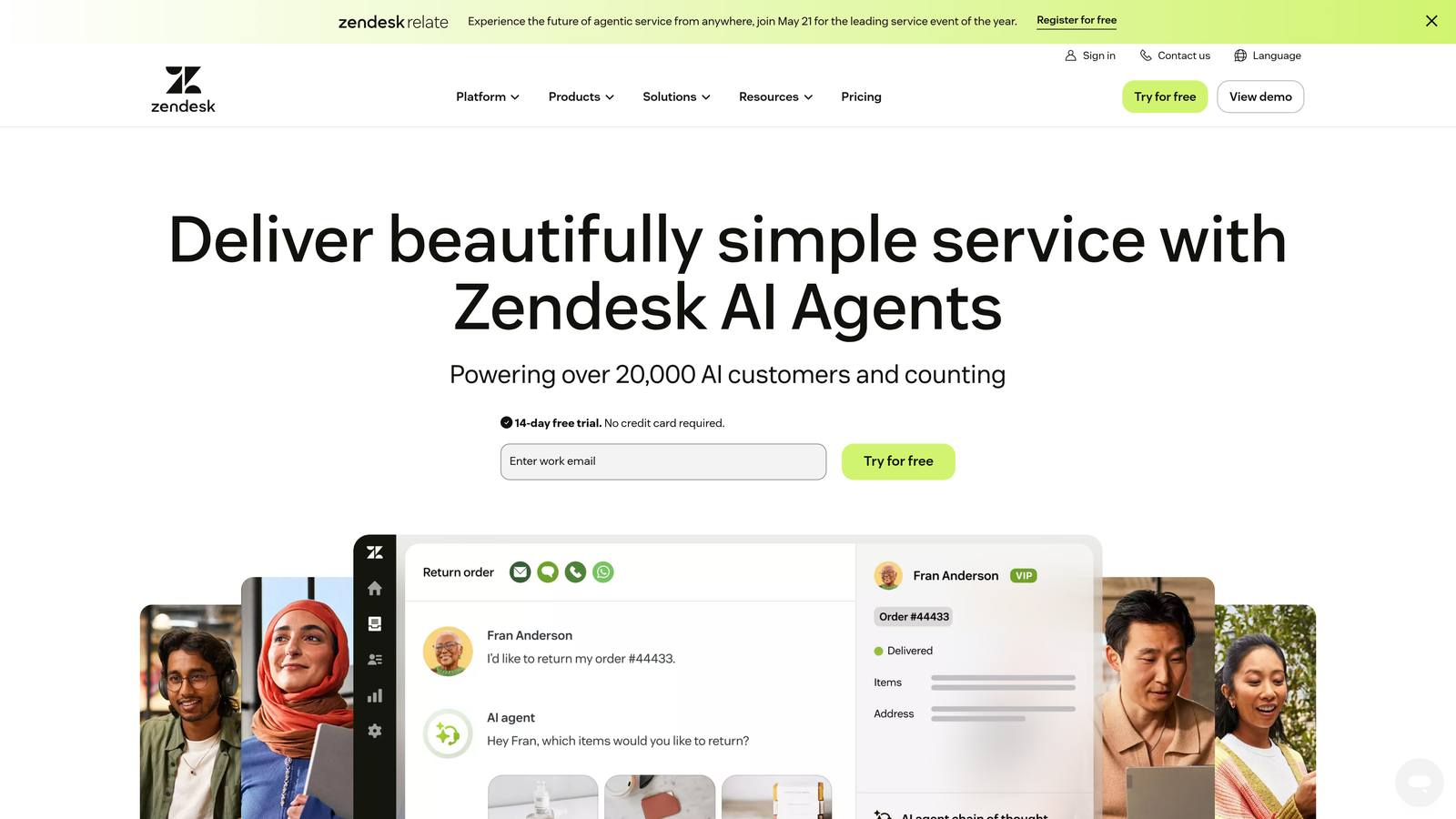
Zendesk AI is an enterprise-grade AI layer that adds intent detection and intelligent automation to Zendesk's support suite.
Where This Tool Shines
Zendesk AI's pre-trained intent models understand industry-specific language patterns right out of the box. If you're in e-commerce, SaaS, or financial services, the AI recognizes common customer intents without extensive training.
The intelligent triage system routes tickets to the right team or agent based on content analysis, reducing the manual sorting that typically bogs down support managers. Advanced analytics show exactly where AI is saving time and where human expertise adds the most value.
Key Features
Intent Detection: Pre-trained models recognize customer intent across common industries, improving routing accuracy from day one.
Agent Assist: Suggests responses to agents based on ticket content and historical resolution patterns.
Smart Routing: Automatically assigns tickets to the most qualified agent or team based on content, priority, and workload.
Macro Suggestions: Recommends relevant saved responses and macros to speed up agent workflows.
Advanced Analytics: Detailed reporting on AI performance, resolution rates, and time savings across your support organization.
Best For
Large enterprises with existing Zendesk deployments and complex support hierarchies requiring sophisticated routing and agent assistance rather than fully autonomous AI.
Pricing
Available as an add-on to Zendesk Suite plans. Contact Zendesk for enterprise pricing based on agent count and feature requirements.
4. Freshdesk Freddy AI
Best for: Growing teams seeking comprehensive automation at a predictable per-agent price point
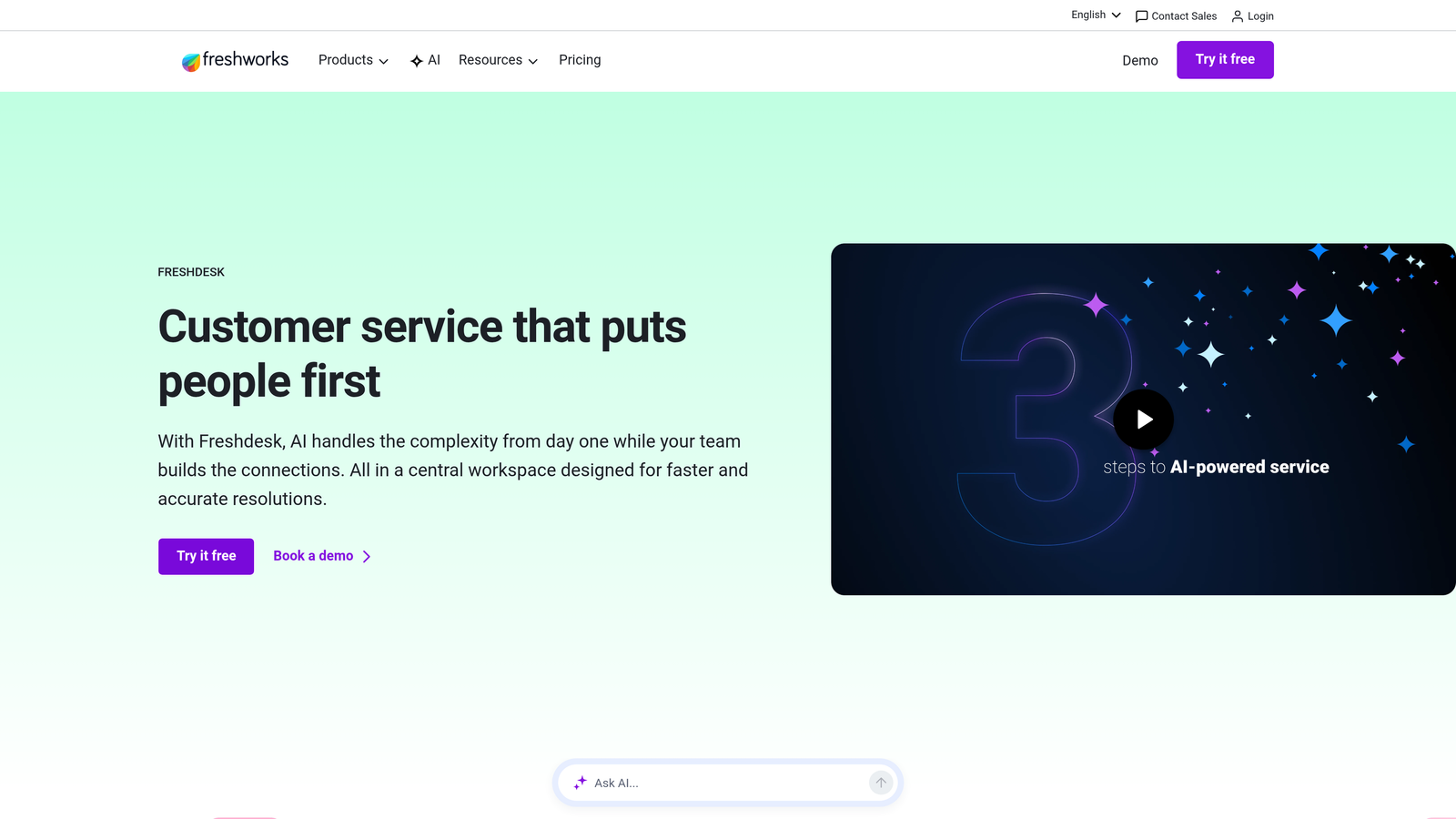
Freshdesk Freddy AI is an AI-powered automation suite built into Freshworks' customer service platform.
Where This Tool Shines
Freddy AI delivers solid automation capabilities at a price point that makes sense for mid-market teams. The conversational AI chatbot handles common questions while the workflow automation builder lets you create custom routing rules without coding.
Auto-triage intelligently categorizes and assigns tickets based on content, reducing the manual work of sorting incoming requests. The canned response suggestions learn from your team's best answers, helping newer agents respond with the quality of your most experienced support staff.
Key Features
Conversational Chatbot: AI-powered bot that handles routine questions and escalates complex issues to human agents.
Auto-Triage: Automatically categorizes, prioritizes, and assigns incoming tickets based on content analysis.
Response Suggestions: Recommends canned responses and knowledge base articles relevant to each ticket.
Workflow Automation: Visual builder for creating custom automation rules without technical expertise.
Sentiment Analysis: Detects customer frustration levels to prioritize urgent issues requiring immediate attention.
Best For
Mid-market companies with 10-50 support agents who want comprehensive AI features without enterprise-level complexity or pricing. Particularly good for teams new to AI automation.
Pricing
Included in the Pro plan at $49 per agent per month, making it one of the most transparent and predictable pricing models for AI-powered support.
5. Ada
Best for: Non-technical teams needing powerful chatbots without writing code or managing complex configurations
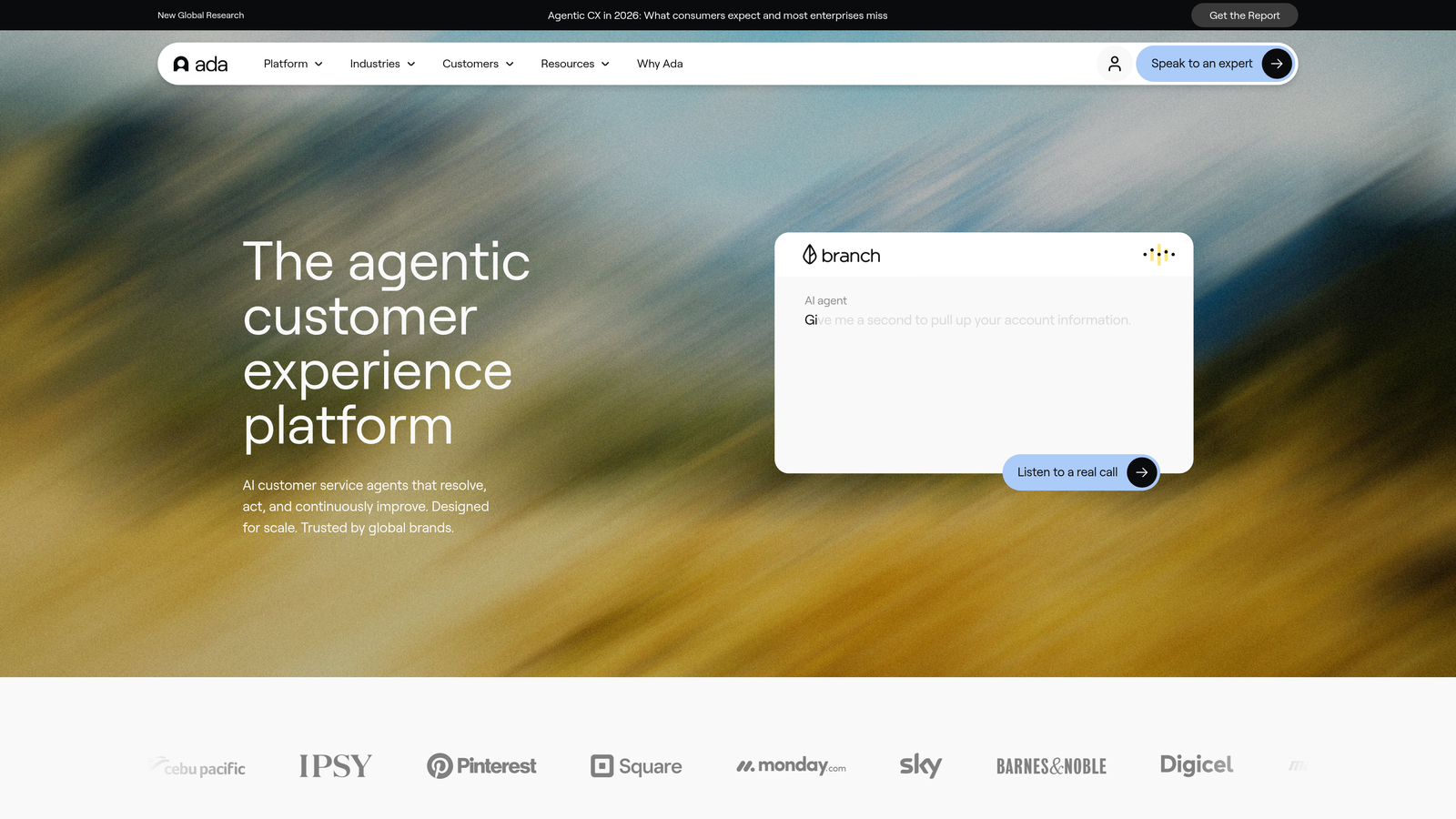
Ada is a no-code AI chatbot platform designed for automated customer service at enterprise scale.
Where This Tool Shines
Ada's visual bot builder makes it possible for support managers to create sophisticated conversation flows without involving engineering teams. The drag-and-drop interface lets you map out customer journeys, add conditional logic, and connect to backend systems.
Support for over 50 languages makes Ada particularly valuable for global companies serving diverse markets. The generative AI responses can adapt to different cultural contexts while maintaining brand voice consistency across all interactions.
Key Features
No-Code Builder: Visual interface for creating complex conversation flows without programming knowledge.
50+ Languages: Native support for multilingual conversations with automatic language detection.
Deep Integrations: Pre-built connectors for major CRM, e-commerce, and support platforms to access customer data during conversations.
Generative AI Responses: GPT-powered answers that adapt to context while staying on-brand.
A/B Testing: Test different conversation flows to optimize resolution rates and customer satisfaction.
Best For
Enterprise companies serving global markets who need multilingual support and want to empower non-technical teams to build and iterate on automation without constant developer involvement.
Pricing
Contact for pricing. Enterprise-focused with custom quotes based on conversation volume, languages, and integration requirements.
6. Forethought
Best for: Support teams focused on reducing handle time while maintaining high-quality human interactions
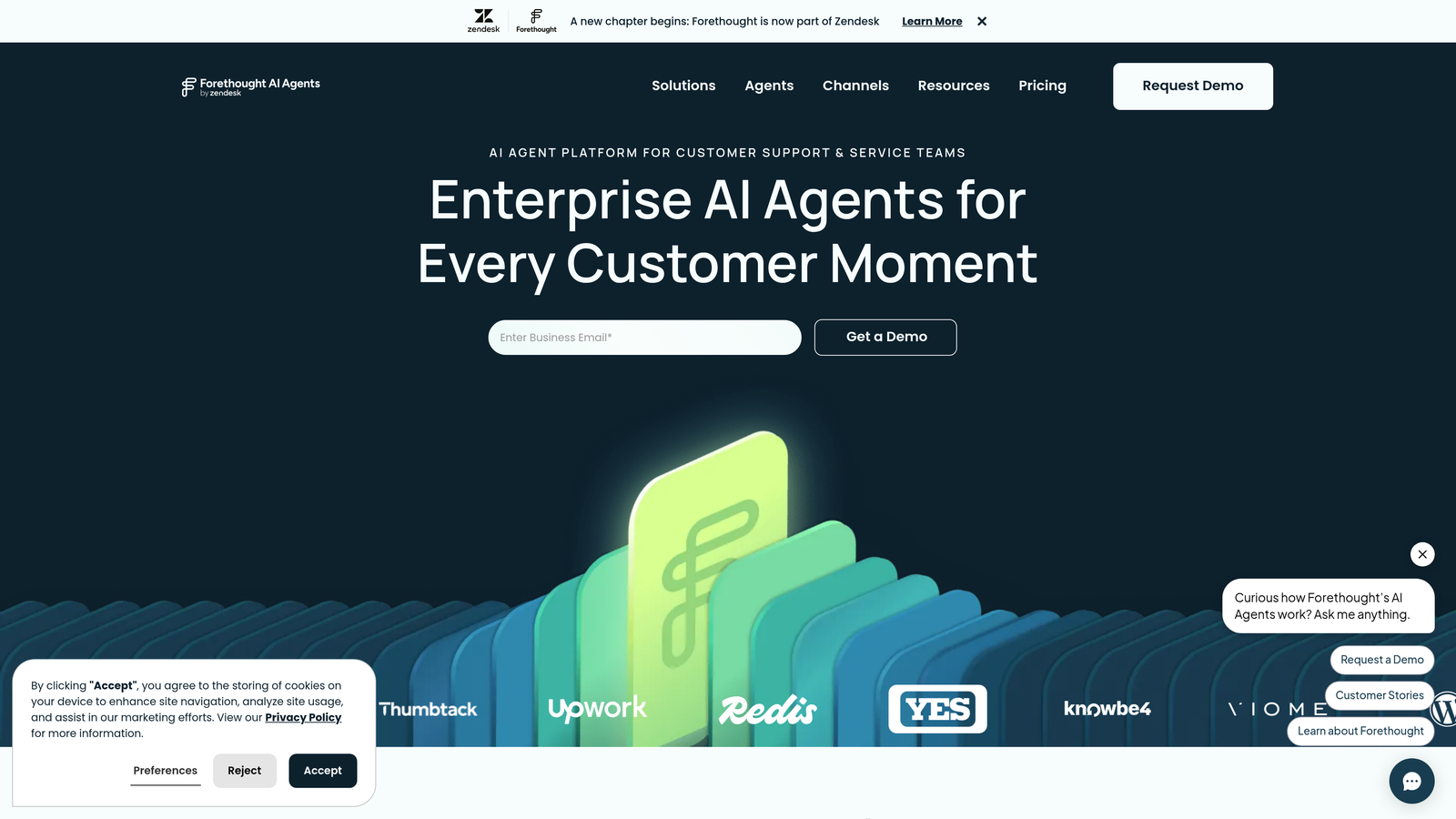
Forethought is an AI platform that specializes in ticket triage, intelligent routing, and agent assist capabilities.
Where This Tool Shines
Forethought's predictive routing learns from your best agents' resolution patterns to automatically assign tickets to the person most likely to solve them quickly. This reduces back-and-forth transfers and gets customers to the right expert faster.
The Assist mode helps agents draft responses by analyzing ticket content and suggesting relevant information from your knowledge base. This speeds up response times without replacing human judgment, making it ideal for teams that want AI augmentation rather than full automation.
Key Features
Predictive Routing: Machine learning models assign tickets to the optimal agent based on historical resolution data and current workload.
AI Triage: Automatically categorizes and prioritizes incoming tickets by analyzing content, urgency, and customer context.
Assist Mode: Provides agents with response suggestions and relevant knowledge base articles while they work.
Handle Time Analytics: Detailed metrics showing how AI reduces average resolution time across different ticket types.
Workflow Learning: The AI continuously improves by observing how your best agents handle complex issues.
Best For
Teams with experienced support agents who want AI to help them work faster rather than replace them entirely. Best suited for companies prioritizing quality over full automation.
Pricing
Contact for pricing. Typically structured around ticket volume and number of agents using the platform.
7. Tidio
Best for: Small businesses and startups needing affordable AI chat without enterprise complexity
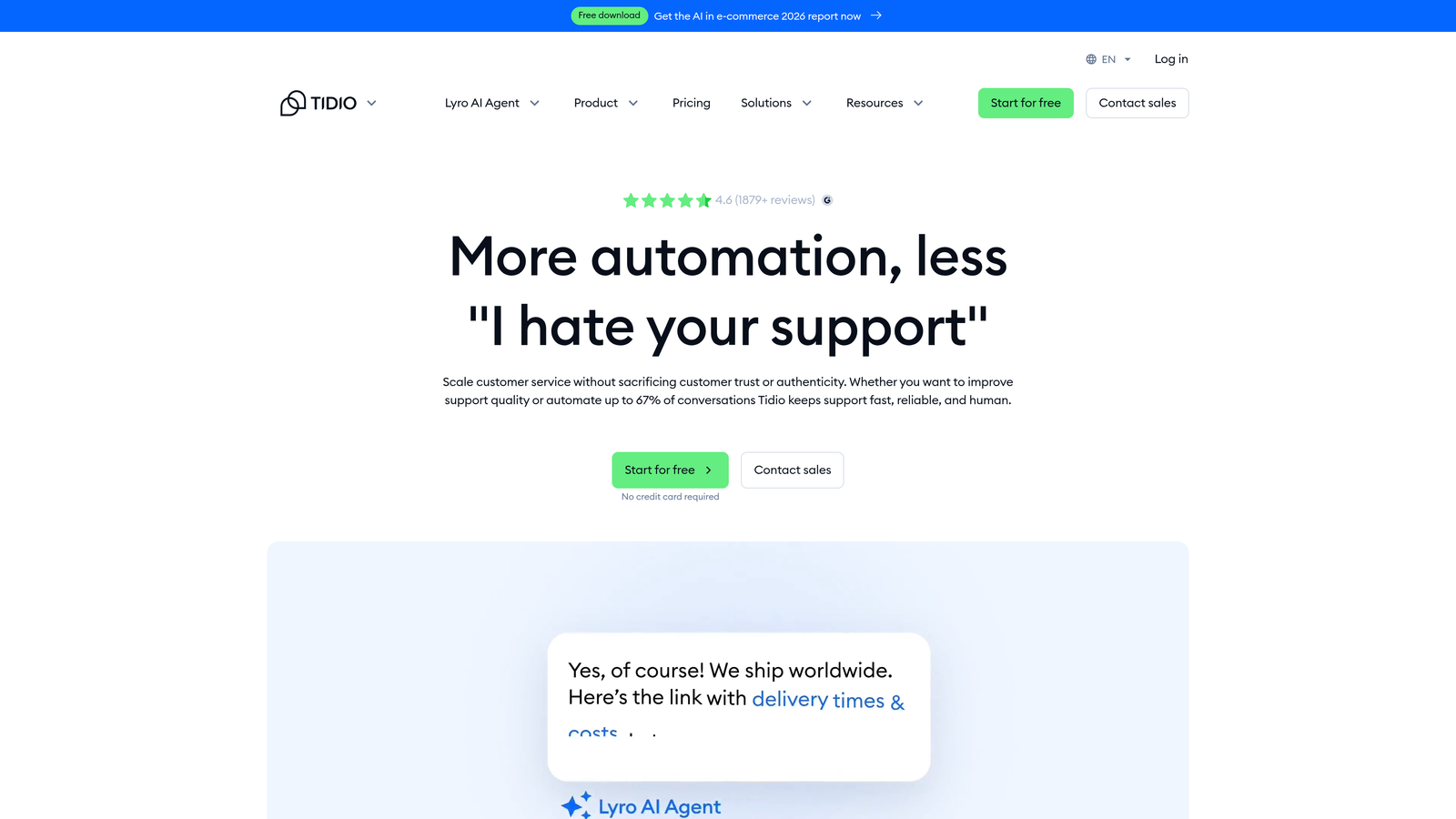
Tidio is a live chat and AI chatbot platform featuring Lyro AI for small to mid-sized businesses.
Where This Tool Shines
Tidio's Lyro AI provides surprisingly capable conversational automation at a price point accessible to small teams. The visual chatbot builder lets you create custom flows for common scenarios like order tracking, appointment booking, or product recommendations.
The seamless integration with Shopify and WordPress makes it particularly valuable for e-commerce and content-driven businesses. You can deploy a functional AI chat widget on your site in under an hour without technical expertise.
Key Features
Lyro AI Agent: Conversational AI that handles routine questions and escalates complex issues to human agents.
Live Chat Handoff: Smooth transition from bot to human agent with full conversation context preserved.
Visual Bot Builder: Drag-and-drop interface for creating custom conversation flows and triggers.
E-commerce Integrations: Native connections to Shopify, WooCommerce, and other platforms for order and inventory data.
Mobile Apps: Respond to chats from iOS and Android apps, keeping your team connected on the go.
Best For
Small to mid-sized e-commerce businesses, content sites, and service providers who need basic AI automation without the cost or complexity of enterprise platforms.
Pricing
Free tier available with basic features. Lyro AI starts at $29 per month, making it one of the most affordable AI chat options for small businesses.
8. Help Scout
Best for: Customer-centric teams wanting AI assistance without losing the personal touch
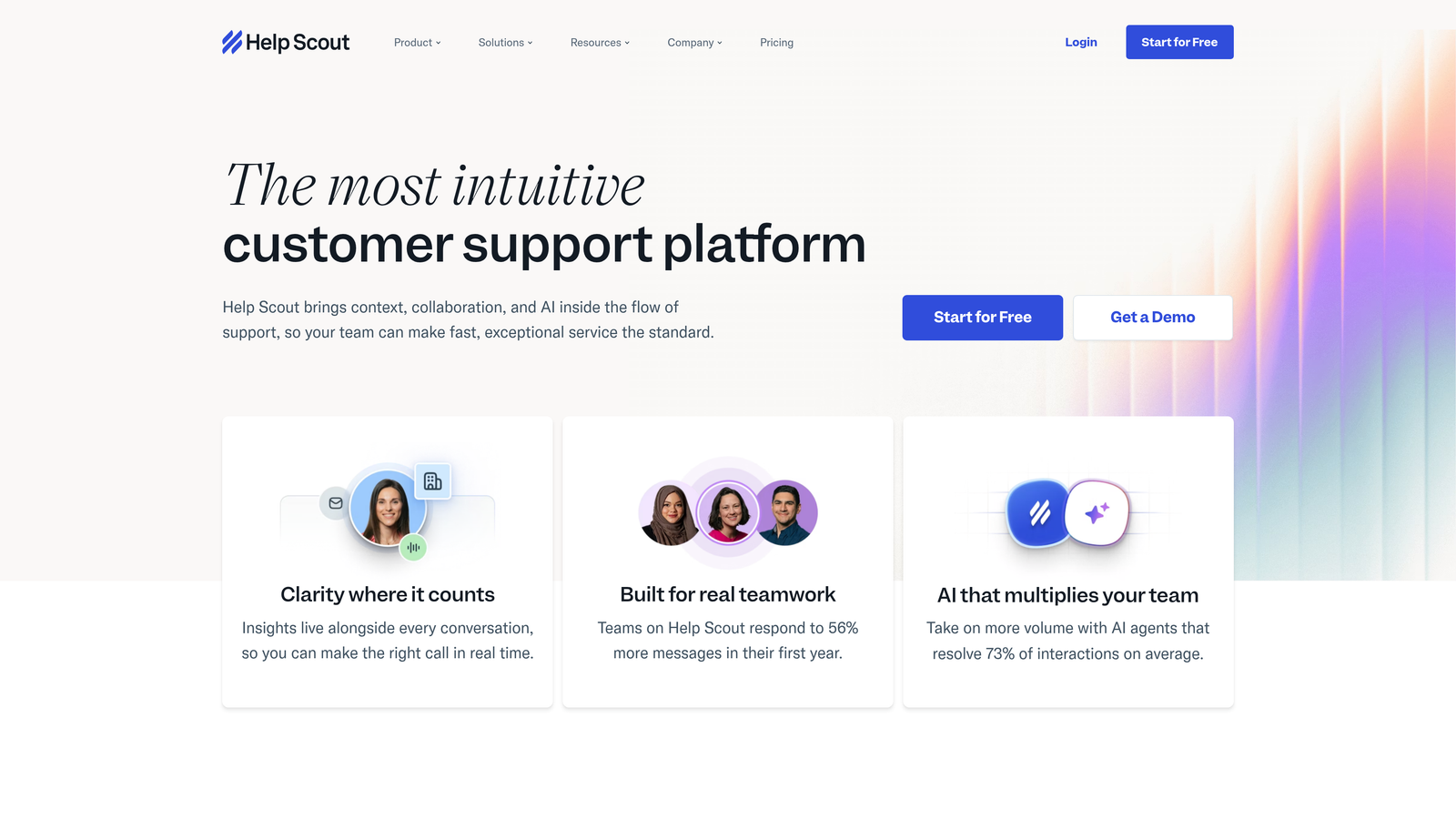
Help Scout is a shared inbox platform with AI assist features designed for human-centric support teams.
Where This Tool Shines
Help Scout's AI drafts feature helps agents respond faster by generating initial response drafts based on ticket content. Unlike fully autonomous AI, this keeps humans in control while reducing the time spent writing from scratch.
The Beacon chat widget combines self-service knowledge base search with the option to contact support, reducing ticket volume by helping customers find answers themselves. Collision detection prevents multiple agents from working on the same ticket simultaneously, a surprisingly common problem in busy support queues.
Key Features
AI Drafts: Generate initial response drafts that agents can edit and personalize before sending.
Beacon Widget: Embedded help widget that searches your knowledge base before offering contact options.
Docs Knowledge Base: SEO-friendly help center that feeds both customer self-service and AI responses.
Collision Detection: Alerts agents when someone else is viewing or responding to the same conversation.
Customer Properties: Enrich conversations with CRM data and custom fields for personalized context.
Best For
Teams that prioritize personal customer relationships and want AI to assist agents rather than replace them. Ideal for companies where brand voice and empathy matter more than pure efficiency.
Pricing
Starts at $20 per user per month, with AI features included in standard plans rather than requiring expensive add-ons.
9. Kustomer
Best for: Omnichannel teams needing unified customer context across email, chat, voice, and social
Kustomer is an omnichannel CRM platform with AI-powered automation and unified customer timelines.
Where This Tool Shines
Kustomer's unified customer timeline shows every interaction across all channels in a single view. When a customer emails after chatting yesterday and calling last week, agents see the complete history without switching between systems.
The AI sentiment analysis detects frustration or satisfaction in real-time, allowing managers to prioritize at-risk customers and celebrate positive interactions. Workflow automation handles routine tasks like status updates and follow-ups, letting agents focus on complex problem-solving.
Key Features
Unified Timeline: Complete customer interaction history across email, chat, voice, SMS, and social media in one interface.
AI Sentiment Analysis: Real-time detection of customer emotion to prioritize urgent or at-risk conversations.
Workflow Automation: Build custom automations for routing, status updates, and follow-up tasks without coding.
Native Voice Support: Built-in phone system with call recording, IVR, and voice-to-text transcription.
Business Intelligence: Custom reporting and dashboards showing trends across channels, teams, and customer segments.
Best For
Mid-market to enterprise companies handling support across multiple channels who need complete customer context regardless of how customers reach out. Particularly valuable for retail and subscription businesses.
Pricing
Starts at $89 per user per month for the Enterprise plan, which includes core AI and automation features.
Making the Right Choice
The automated product support landscape offers solutions for every team size and automation philosophy. If you want AI that truly understands product context and learns continuously, Halo AI delivers page-aware intelligence that goes beyond traditional chatbots. Enterprises already invested in Intercom or Zendesk can enhance their existing platforms with Fin or Zendesk AI rather than migrating.
Budget-conscious mid-market teams will find comprehensive features at predictable prices with Freshdesk Freddy AI, while small businesses can start with Tidio's accessible entry point. Teams prioritizing no-code setup should explore Ada, which empowers non-technical users to build sophisticated automation. For support organizations that want AI to assist rather than replace human agents, Help Scout and Forethought focus on augmentation over autonomy.
The critical decision isn't just which tool offers the most features—it's how much autonomy you want AI to have. Fully autonomous platforms like Halo AI and Ada handle conversations end-to-end, while agent-assist tools like Forethought and Help Scout keep humans in control. Consider your current helpdesk investment, team size, technical resources, and whether you're optimizing for maximum automation or maintaining the personal touch.
Most platforms offer free trials or demos. Test two or three with real support scenarios from your queue. Pay attention to setup time, accuracy on your specific product questions, and how naturally the AI handles edge cases. The best tool is the one that fits your workflow rather than forcing you to adapt to its limitations.
Your support team shouldn't scale linearly with your customer base. Let AI agents handle routine tickets, guide users through your product, and surface business intelligence while your team focuses on complex issues that need a human touch. See Halo in action and discover how continuous learning transforms every interaction into smarter, faster support.