9 Best Automated Support Tools for Ecommerce Platforms in 2026
Ecommerce teams face a relentless support burden that hiring alone can't solve — automated support for ecommerce platforms handles repetitive, high-volume tickets so agents can focus on complex issues. This guide evaluates the 9 best AI-powered tools in 2026 across capability, integrations, and scalability for both DTC and B2B operations.
 Matt PattoliFounder12 min read
Ecommerce teams face a relentless support burden: order status questions, return requests, shipping delays, and product inquiries that spike every time a promotion runs. Hiring more agents to keep up isn't scalable, and customers expect instant answers at 2am, not a 24-hour email queue.
Automated support tools solve this by handling the repetitive, high-volume work so your team can focus on complex issues that actually need a human. But not all automation is created equal. Some tools bolt a chatbot onto an existing helpdesk. Others are built AI-first, learning from every interaction to get smarter over time.
This list covers the best automated support tools for ecommerce platforms in 2026, evaluated on AI capability, ecommerce integrations, ease of deployment, and the ability to scale without adding headcount. Whether you're running a mid-market DTC brand or a B2B ecommerce operation, there's a tool here that fits your stack.
1. Halo AI
Best for: Ecommerce teams that need AI-first ticket resolution connected to their full business stack.
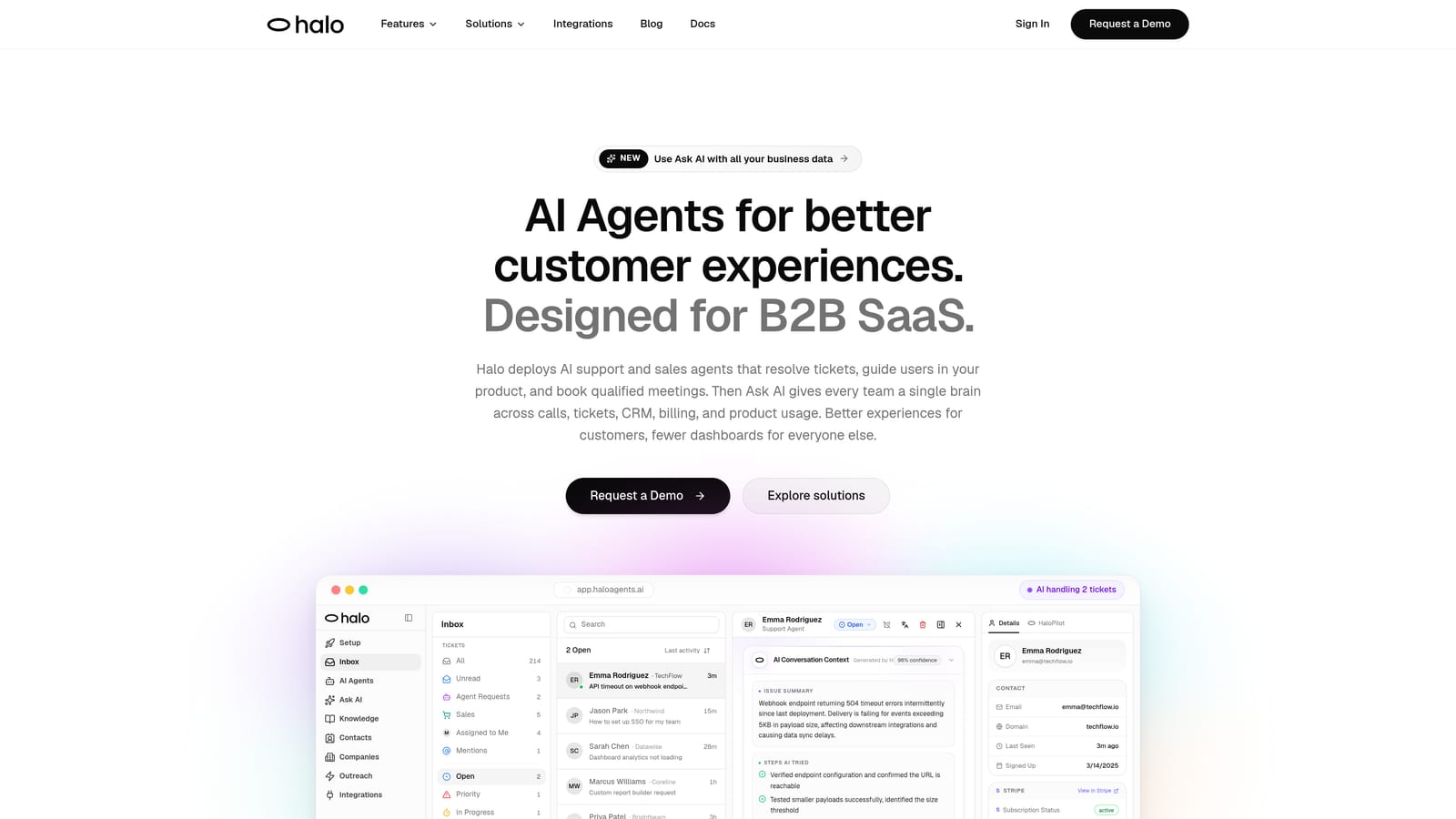
Halo AI is an AI-first customer support platform where intelligent agents resolve tickets, guide users through products with page-aware context, and surface business intelligence — all without scaling headcount.
Where This Tool Shines
What separates Halo from most support tools is the architecture. It isn't a chatbot bolted onto a helpdesk — it's built AI-first from the ground up, with agents that continuously learn from every interaction. That means resolution quality improves over time rather than staying static.
The page-aware chat widget is particularly relevant for ecommerce. It sees what the user sees in real time, enabling visual UI guidance rather than generic instructions. When a customer is confused about a checkout step or a return form, Halo can walk them through it contextually, not generically.
Key Features
Intelligent AI Agents: Autonomously resolve support tickets end-to-end, handling common ecommerce queries without requiring agent involvement.
Page-Aware Chat Widget: Detects the user's current page and provides contextual, visual guidance — useful for product pages, checkout flows, and account management.
Smart Inbox with Business Intelligence: Goes beyond ticket management to surface customer health signals, revenue intelligence, and anomaly detection — turning support data into operational insight.
Auto Bug Ticket Creation: Automatically routes technical issues to engineering via Linear integration, removing manual triage from the support workflow.
Live Agent Handoff: Complex or sensitive issues escalate seamlessly to human agents with full conversation context preserved.
Broad Integration Suite: Connects with Stripe, HubSpot, Slack, Intercom, Zoom, PandaDoc, Fathom, and Linear — making it a genuine hub in your business stack, not a siloed support tool.
Best For
Ecommerce teams that want more than ticket deflection. Halo is a strong fit for scaling DTC brands and B2B ecommerce operations that need support automation integrated with their CRM, billing, and engineering workflows. If you're already using Stripe and HubSpot, the native connections add immediate value beyond the support layer.
Pricing
Pricing is not publicly listed. Contact the Halo team directly at haloagents.ai for a tailored quote based on your support volume and stack.
2. Gorgias
Best for: Shopify-first ecommerce brands that want order data inside every support conversation.
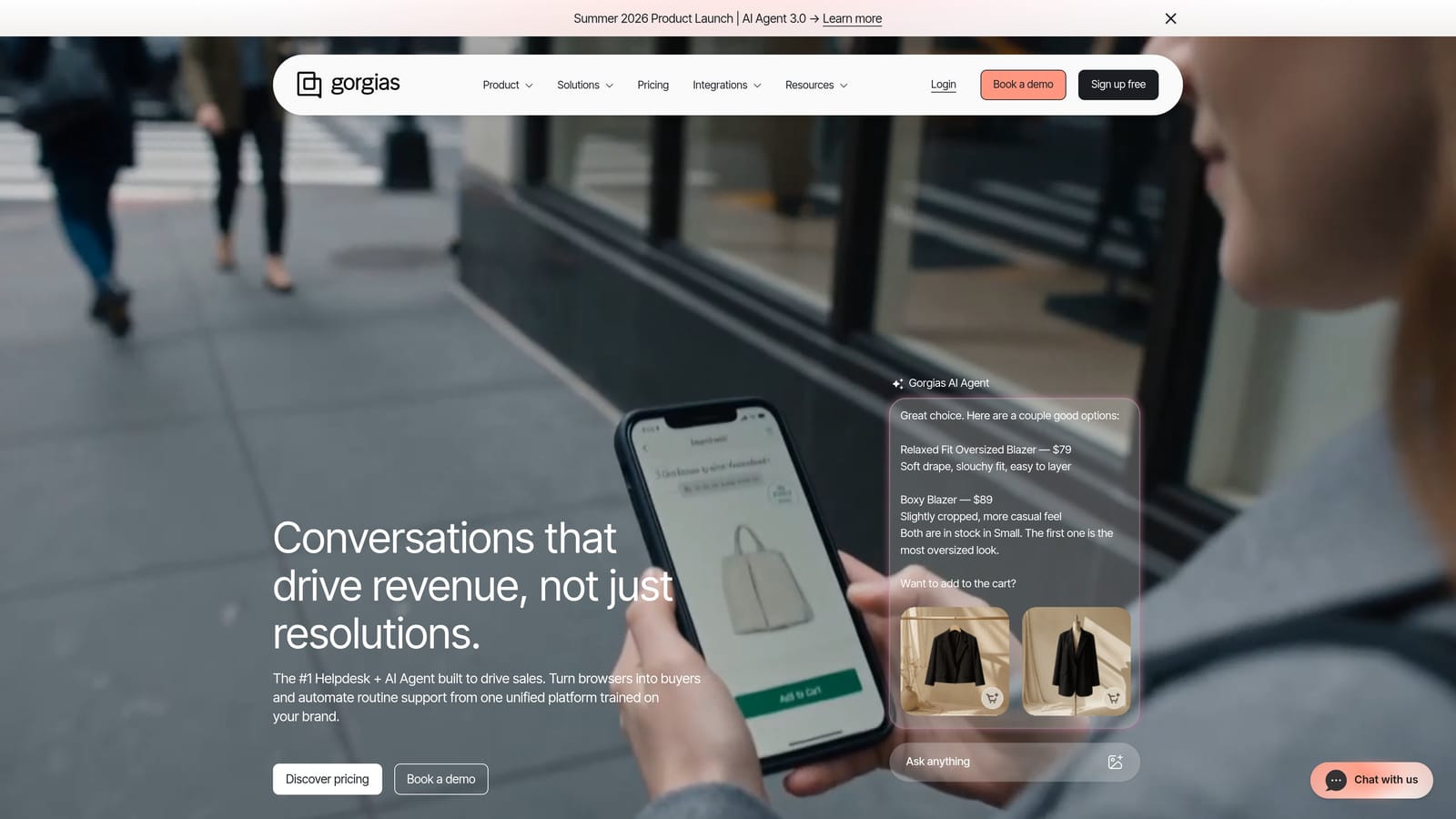
Gorgias is an ecommerce-native helpdesk purpose-built for Shopify brands, pulling order data directly into support conversations for fast, context-rich responses.
Where This Tool Shines
Gorgias was designed with ecommerce in mind from day one. Agents see order status, shipping details, and purchase history directly inside the ticket — no tab-switching, no copy-pasting from Shopify. For high-volume DTC brands, this alone significantly reduces average handle time.
The automation layer handles the repetitive stuff: order status replies, return confirmations, and shipping delay notifications can all be triggered without agent involvement. Their AI agent extends this further, resolving common queries autonomously across channels.
Key Features
Deep Shopify Integration: Order data, shipping status, and customer history surface directly inside the support interface for BigCommerce and Magento as well.
Automation Rules and Macros: Pre-built and custom automation handles high-volume repetitive queries without manual agent work.
AI Agent: Handles common ecommerce questions autonomously, reducing inbound ticket volume during peak periods.
Omnichannel Coverage: Email, live chat, SMS, and social DMs managed from a unified inbox.
Revenue Statistics: Ties support interactions to revenue metrics, helping teams understand the business impact of their support operations.
Best For
DTC brands running on Shopify or BigCommerce with significant support volume. Gorgias is particularly strong for teams where order-related queries make up the majority of inbound tickets and where agent efficiency is the primary optimization goal.
Pricing
Tiered by ticket volume with starter plans available. Check gorgias.com for current pricing details.
3. Tidio
Best for: SMB ecommerce merchants who want accessible AI automation without enterprise complexity or cost.
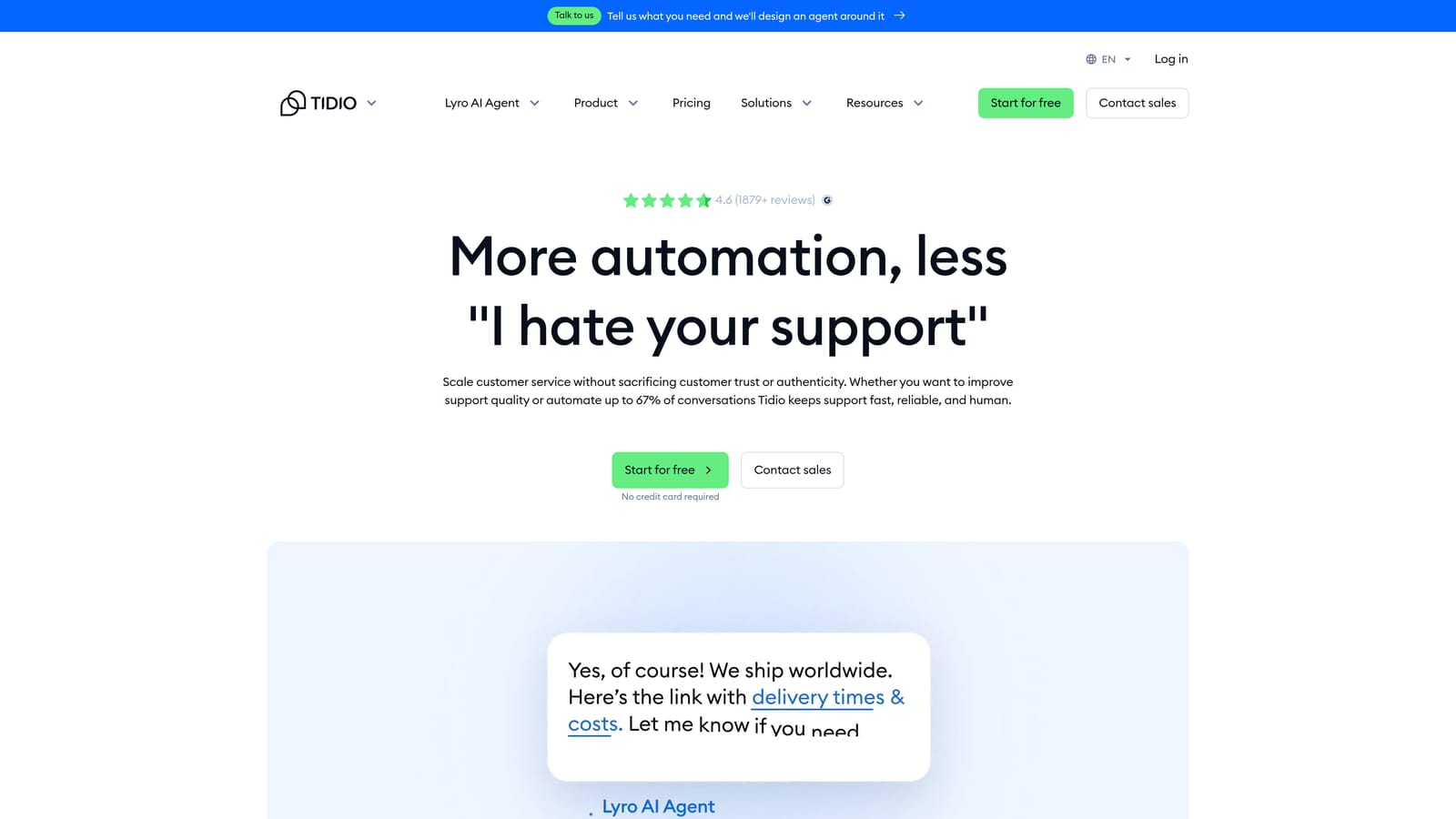
Tidio is a live chat and AI chatbot platform with Lyro AI, designed for smaller ecommerce merchants who want meaningful automation at an accessible price point.
Where This Tool Shines
Tidio lowers the barrier to entry for ecommerce automation. The free tier and straightforward setup make it one of the fastest tools to deploy, and the Lyro AI layer handles FAQ-style queries autonomously without requiring extensive training or configuration.
For merchants on Shopify, WooCommerce, or Wix who are handling support manually today, Tidio represents a practical first step into automation. It won't match the depth of enterprise platforms, but it delivers real deflection without a long implementation timeline.
Key Features
Lyro AI Chatbot: Handles common customer questions autonomously, resolving FAQ-style queries without agent involvement.
Native Ecommerce Integrations: Direct connections to Shopify, WooCommerce, Wix, and BigCommerce.
Live Chat with Agent Takeover: Agents can step into any AI conversation in real time when a query needs a human touch.
Multi-Channel Support: Covers email and Messenger alongside live chat for broader coverage.
Free Tier: Available for getting started without upfront commitment.
Best For
Small to mid-sized ecommerce merchants who are just beginning to automate support. Tidio is ideal if your current setup is a shared inbox or basic chat and you want to add AI resolution without a lengthy procurement process.
Pricing
Free tier available; paid plans scale with usage. Check tidio.com for current pricing details.
4. Freshdesk
Best for: Ecommerce teams that need mature workflow management with AI assist layered on top.
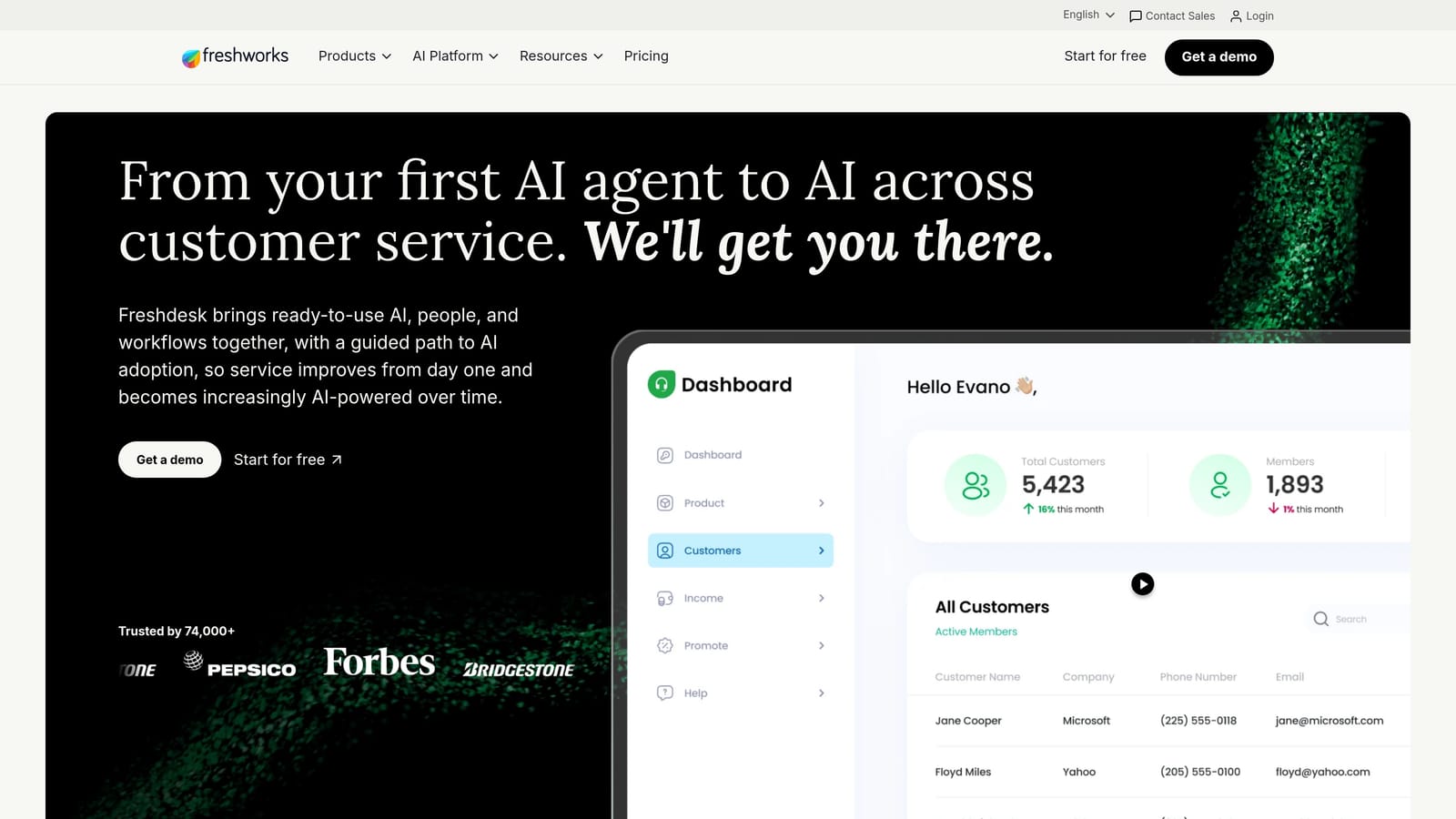
Freshdesk is a mature omnichannel helpdesk with Freddy AI, giving ecommerce teams automation, agent assist, and strong workflow management at scale.
Where This Tool Shines
Freshdesk's strength is operational reliability. It's a well-established platform with robust SLA management, ticket routing, and reporting — the kind of infrastructure that larger support teams depend on. Freddy AI adds automation and agent assist on top of this solid foundation.
For ecommerce teams that have already outgrown basic tools and need structured workflows alongside AI features, Freshdesk offers a practical balance. The free tier for up to 10 agents also makes it accessible for teams that want to evaluate before committing.
Key Features
Freddy AI: Provides suggested replies, ticket summarization, and agent assist to speed up response times without full automation.
Omnichannel Ticketing: Manages email, chat, phone, and social interactions from a single platform.
Automation Workflows and SLA Management: Handles ticket routing, escalation rules, and service level tracking for structured support operations.
Ecommerce Integrations: Available through the Freshdesk marketplace for connecting storefront and order data.
Free Plan: Supports up to 10 agents, making it accessible for smaller teams to get started.
Best For
Mid-market ecommerce teams that need proven helpdesk infrastructure with AI features added progressively. Also a good fit for operations that rely heavily on SLA compliance and structured escalation paths.
Pricing
Free tier available for up to 10 agents; paid plans are per agent per month. Check freshdesk.com for current pricing details.
5. Intercom
Best for: Product-led ecommerce brands that want end-to-end AI resolution grounded in their knowledge base.
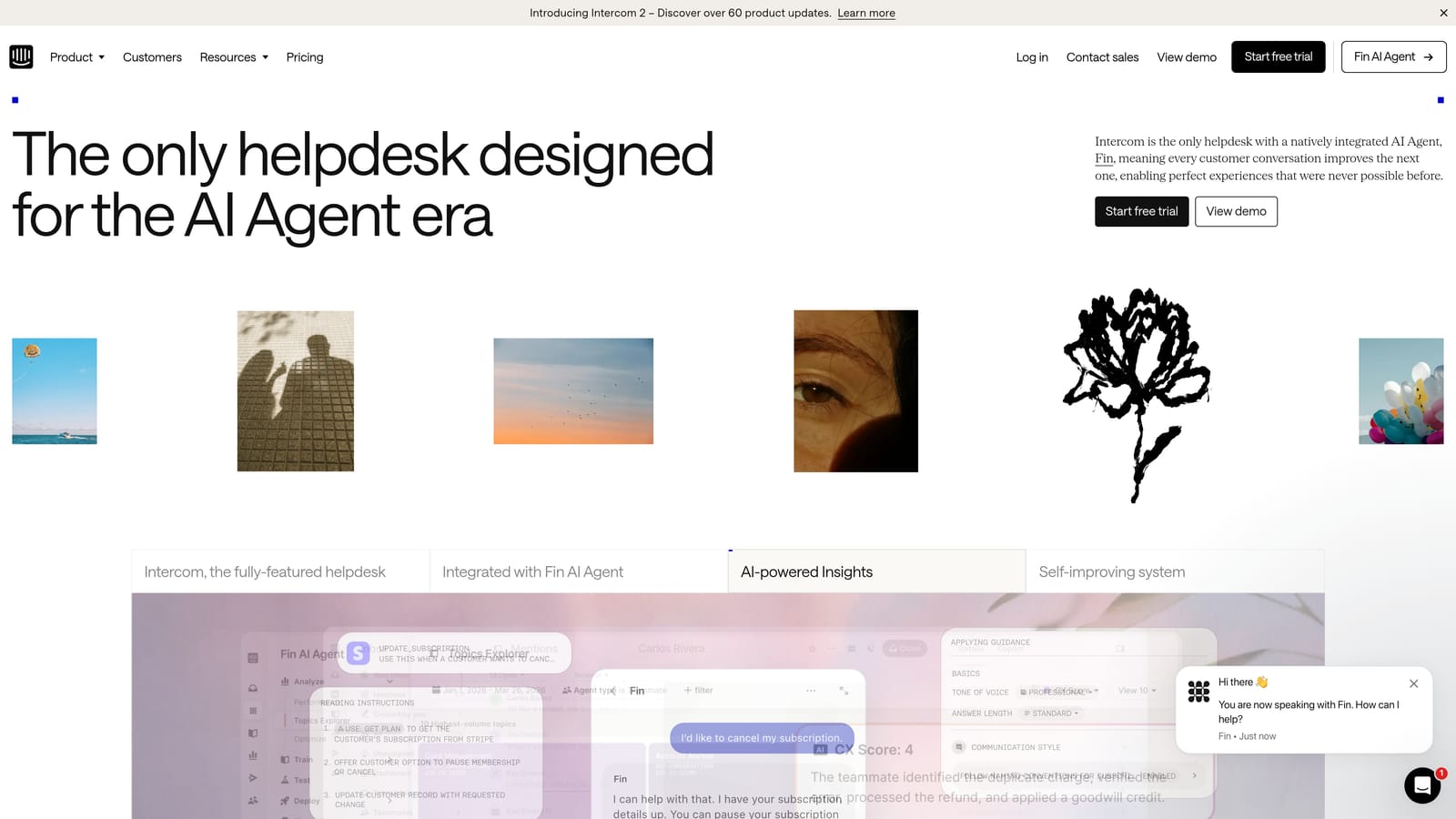
Intercom is a customer messaging platform with Fin AI agent, designed to resolve support conversations end-to-end using your existing knowledge base.
Where This Tool Shines
Fin is Intercom's flagship AI agent, and it's built for autonomous resolution rather than just drafting suggestions. It reads your knowledge base and answers customer questions directly, closing conversations without agent involvement when the answer exists in your content.
Intercom's product-led heritage also shows in features like proactive messaging and product tours, which are valuable for ecommerce brands with a digital product or app component. If you're selling software, subscriptions, or anything with an onboarding flow, Intercom's engagement layer adds real value beyond reactive support.
Key Features
Fin AI Agent: Resolves support conversations autonomously end-to-end, grounded in your knowledge base for accurate, on-brand answers.
Knowledge Base Integration: Fin's answers are drawn directly from your existing help content, reducing hallucination risk.
Omnichannel Messaging: Covers in-app, email, chat, and WhatsApp from a single platform.
Proactive Messaging and Product Tours: Engages customers before they need support, reducing inbound volume.
Usage-Based Pricing for Fin: You pay for resolutions, aligning cost with actual AI value delivered.
Best For
Ecommerce brands with a strong digital or SaaS component, or those with a well-developed knowledge base ready to power AI resolution. Intercom works best when your help content is already comprehensive.
Pricing
Usage-based component for Fin resolutions; seat-based plans also available. Check intercom.com for current pricing details.
6. Zendesk
Best for: Large ecommerce operations that need enterprise-grade customization, deep reporting, and a broad app ecosystem.
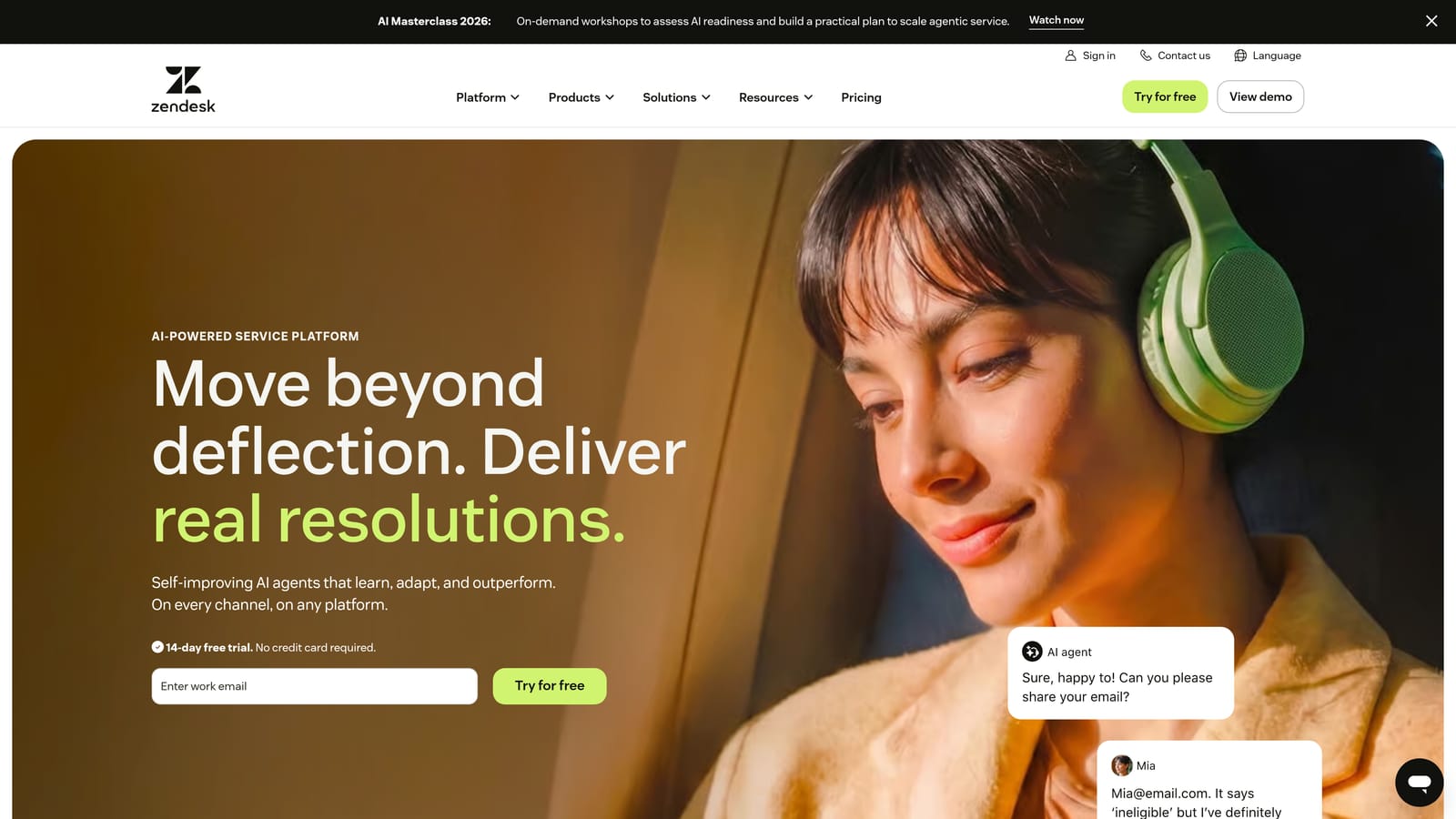
Zendesk is an enterprise-grade support platform with Zendesk AI, offering deep customization, a large app marketplace, and robust reporting for large ecommerce operations.
Where This Tool Shines
Zendesk's scale and flexibility are its defining strengths. The app marketplace includes hundreds of ecommerce integrations, and the platform's reporting capabilities give large support operations the visibility they need to manage complex teams and workflows.
Zendesk AI adds intelligent triage, suggested replies, and an agent copilot to the platform's existing strengths. For enterprise ecommerce teams with dedicated support operations and technical resources to manage configuration, Zendesk remains a go-to choice.
Key Features
Zendesk AI: Handles intelligent triage, suggested replies, and provides an agent copilot for faster, more accurate responses.
Extensive App Marketplace: Hundreds of integrations including ecommerce-specific connections for order data and storefront platforms.
Advanced Reporting and Analytics: Deep visibility into support performance, team productivity, and customer satisfaction metrics.
Omnichannel Coverage: Email, chat, voice, and social managed from a unified platform.
Highly Customizable Workflows: Ticket routing, escalation logic, and automation rules configurable to complex operational requirements.
Best For
Enterprise ecommerce operations with large support teams, complex routing requirements, and the technical resources to configure and maintain a sophisticated platform. Less suited for lean teams that need fast time-to-value.
Pricing
Suite plans starting at mid-range per agent per month. Check zendesk.com for current pricing details.
7. Re:amaze
Best for: Multi-brand or multi-storefront ecommerce operations that need centralized support management.
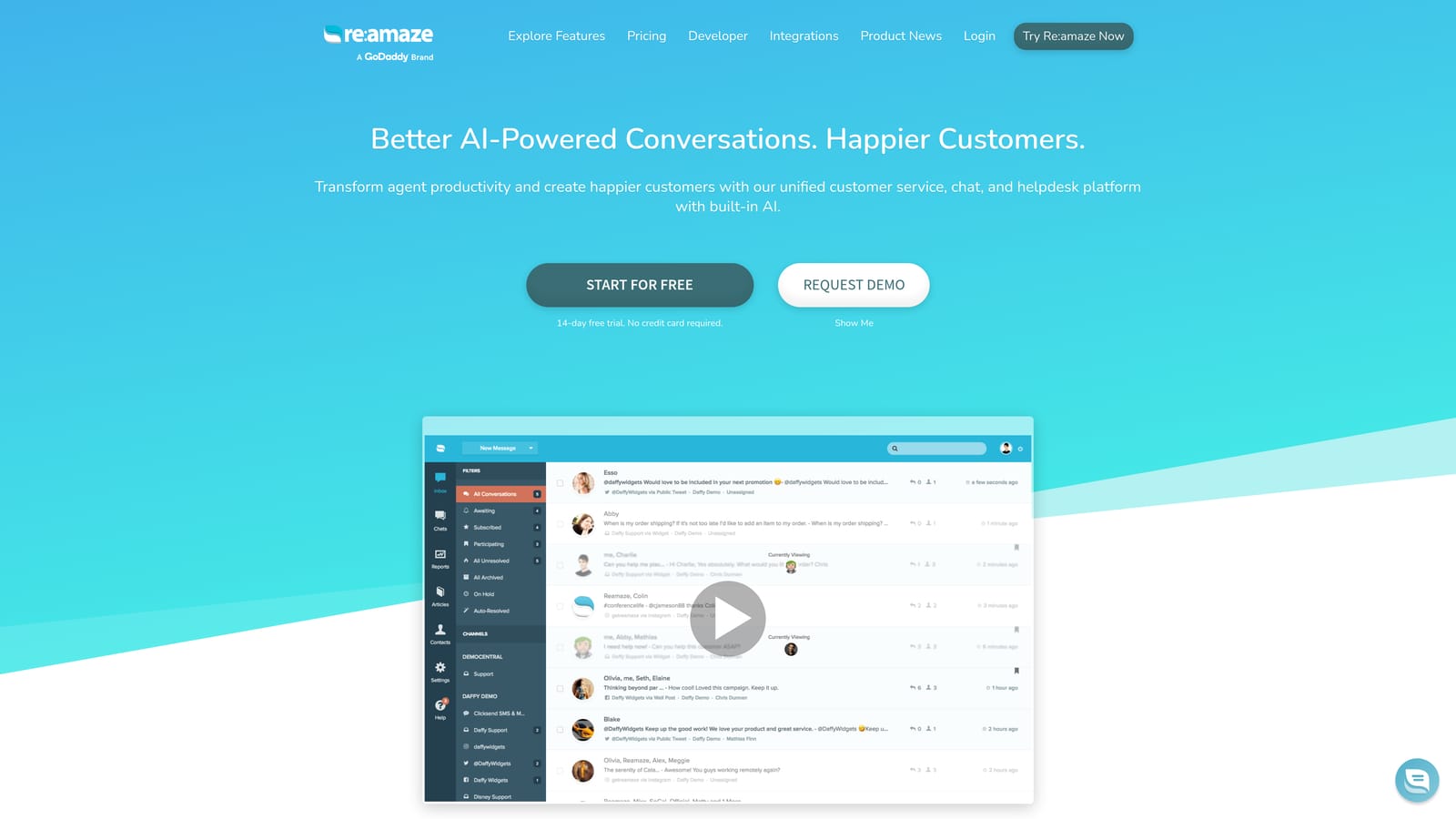
Re:amaze is an ecommerce-built helpdesk with native multi-store support, letting brands manage customer conversations across multiple storefronts from a single dashboard.
Where This Tool Shines
Re:amaze was built specifically for ecommerce, and it shows in the depth of its native integrations. Shopify, BigCommerce, WooCommerce, and Magento all connect natively, pulling order and customer data into the support interface without custom development.
The multi-brand management capability is where Re:amaze genuinely differentiates itself. If you're operating several storefronts or managing support for multiple brands, the ability to handle all of them from one dashboard without context-switching is a meaningful operational advantage.
Key Features
Multi-Brand and Multi-Store Management: Manage conversations across multiple storefronts and brands from a single unified interface.
Native Ecommerce Integrations: Direct connections to Shopify, BigCommerce, WooCommerce, and Magento with order data in-context.
Chatbot Builder and FAQ Widget: Build automated responses for common queries without requiring engineering resources.
Omnichannel Support: Live chat, email, and social channels covered from one platform.
Cues (Proactive Messaging): Trigger proactive outreach based on customer behavior to engage before issues arise.
Best For
Ecommerce operators managing multiple brands or storefronts who need centralized visibility without platform sprawl. Also a strong fit for agencies managing support for multiple merchant clients.
Pricing
Per-staff-member monthly pricing. Check reamaze.com for current pricing details.
8. Richpanel
Best for: Ecommerce brands that want to deflect tickets proactively through customer self-service before they reach an agent.
Richpanel is an ecommerce support platform with a self-service portal that lets customers manage orders, returns, and shipping without ever opening a ticket.
Where This Tool Shines
Richpanel's approach to ticket reduction is different from most tools on this list. Rather than automating the response to an inbound ticket, it prevents the ticket from being created in the first place. Customers can check order status, initiate returns, and resolve common issues through a self-service portal without any agent involvement.
For ecommerce brands where order management queries dominate the inbound queue, this deflection-first model can meaningfully reduce support volume before automation even enters the picture.
Key Features
Customer Self-Service Portal: Enables customers to manage orders, initiate returns, and track shipments independently — without creating a ticket.
Proactive Ticket Deflection: Surfaces self-service options before customers reach the contact form, reducing inbound volume at the source.
Ecommerce Integrations: Native connections with Shopify, Magento, and WooCommerce for order data access.
AI-Assisted Agent Responses: Helps agents respond faster and more accurately when tickets do come through.
Unified Inbox: Consolidates all support channels into a single view for agent efficiency.
Best For
Ecommerce brands with high order-related query volume who want to reduce ticket creation before automating responses. Works well alongside other tools in a layered support stack.
Pricing
Tiered plans available. Check richpanel.com for current pricing details.
9. Help Scout
Best for: Ecommerce brands where support tone and quality are a core part of the customer experience.
Help Scout is a human-centered support platform with AI assist features that help agents respond faster and more accurately, without sacrificing the personal quality that makes support a brand differentiator.
Where This Tool Shines
Help Scout takes a deliberately different approach to AI: rather than prioritizing full automation, it focuses on making human agents better. The AI Summarize, Assist, and Answer features reduce the cognitive load on agents without removing them from the conversation entirely.
For brands where the support experience is part of the product — think premium DTC brands, subscription businesses, or any company where customer relationships are long-term — Help Scout's emphasis on quality over deflection rate resonates strongly.
Key Features
AI Summarize, Assist, and Answer: Three distinct AI features that help agents understand context faster, draft better replies, and surface relevant answers from the knowledge base.
Shared Inbox and Docs: Combines team inbox management and knowledge base in a single platform, keeping support and content aligned.
Beacon Widget: In-app and on-site chat widget for proactive and reactive customer engagement.
Customer Data Sidebar: Surfaces full conversation history and customer context alongside every ticket.
Clean, Minimal Interface: Designed for agent experience — less clutter, faster navigation, better focus.
Best For
Ecommerce brands where support quality is a genuine brand differentiator and full automation isn't the goal. Also well-suited for teams that want strong knowledge base tooling alongside their inbox management.
Pricing
Per-user monthly pricing. Check helpscout.com for current pricing details.
Which Tool Is Right for Your Ecommerce Stack?
The right automated support tool depends less on feature checklists and more on where you are as a business and what your customers are actually asking about.
For DTC Shopify brands with high order query volume: Gorgias is purpose-built for this use case. The native Shopify integration and automation rules deliver fast time-to-value for teams where order-related tickets dominate the queue. Richpanel is worth considering alongside it if you want to deflect tickets before they're created.
For enterprise ecommerce operations: Zendesk and Freshdesk both offer the infrastructure, reporting depth, and customization that large teams require. Zendesk edges ahead for highly complex routing requirements; Freshdesk is often faster to configure.
For multi-storefront or multi-brand operations: Re:amaze is the standout choice. The multi-brand dashboard management is a genuine operational advantage that most other platforms don't match natively.
For teams that want AI-first resolution connected to the full business stack: Halo AI is built for this. The combination of intelligent agents that continuously learn, page-aware context, business intelligence from the smart inbox, and integrations across Stripe, HubSpot, Linear, and Slack makes it more than a support tool — it becomes a hub for customer intelligence across your operation.
Your support team shouldn't scale linearly with your customer base. Let AI agents handle routine tickets, guide users through your product, and surface business intelligence while your team focuses on complex issues that need a human touch. See Halo in action and discover how continuous learning transforms every interaction into smarter, faster support.