9 Best Automated Support Tools for Marketplace Platforms in 2026
Automated support for marketplace platforms demands more than generic helpdesk automation — it requires context-aware routing, multi-user-type workflows, and seamless human handoffs across buyers, sellers, vendors, and admins. This guide reviews the 9 best tools in 2026 built specifically to handle that complexity across B2B, gig economy, and multi-vendor e-commerce environments.
 Grant CooperFounder14 min read
Marketplace platforms face a support challenge that most helpdesk tools weren't designed to solve. You're not managing a single customer type with a predictable set of questions. You're simultaneously serving buyers chasing order updates, sellers disputing payouts, vendors navigating onboarding, and admins managing everything in between. Each group has different urgency levels, different workflows, and different expectations of what "fast support" actually means.
Generic automation falls short here. Routing a seller payout dispute to the same queue as a buyer's shipping question wastes everyone's time. The tools worth evaluating in 2026 are the ones that understand context, integrate with your commerce and payment stack, route intelligently across user types, and hand off to human agents without losing the thread of the conversation.
Whether you're running a B2B supplier marketplace, a gig economy platform, or a multi-vendor e-commerce environment, here are the top automated support tools built to handle that complexity.
1. Halo AI
Best for: B2B and multi-sided marketplace platforms that want AI-native autonomous resolution, not just ticket deflection.
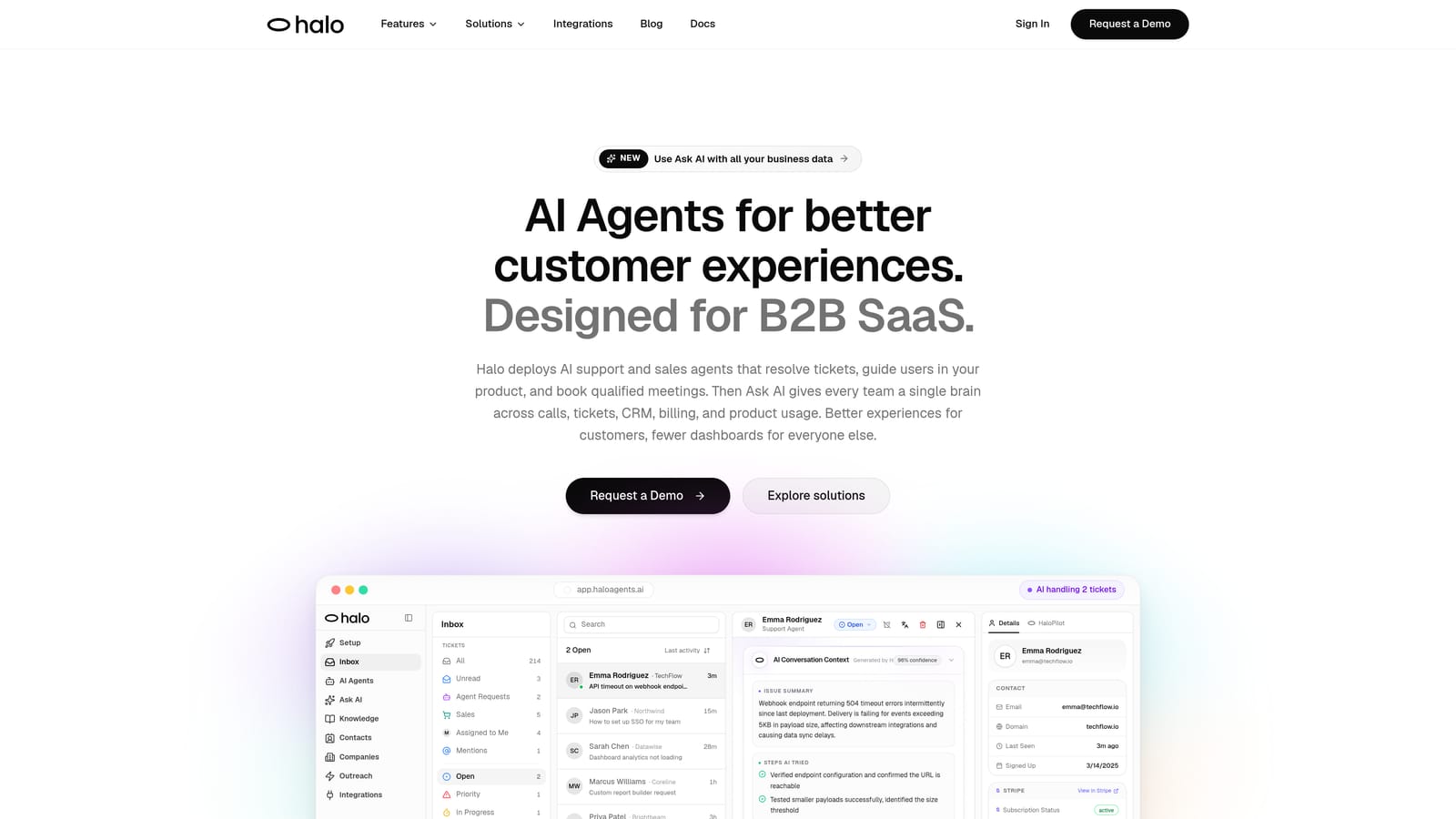
Halo AI is an AI-first customer support platform that deploys intelligent agents to resolve tickets, guide users through your product with page-aware context, and generate bug reports automatically while learning from every interaction.
Where This Tool Shines
What separates Halo from helpdesks that have bolted AI on as an afterthought is the architecture. It was built AI-first, which means the intelligence isn't a layer sitting on top of a legacy ticketing system. It's the foundation. The page-aware chat widget is a good example: the AI agent can actually see what the user is looking at and provide visual UI guidance in context, which is particularly valuable for marketplaces with complex seller dashboards or multi-step buyer flows.
The smart inbox adds a dimension most support tools don't touch. Beyond resolving tickets, it surfaces customer health signals, revenue anomalies, and business intelligence that your team can act on. For marketplace operators, that means your support function stops being purely reactive and starts generating insights about platform health.
Key Features
Page-Aware Chat Widget: The AI sees what the user sees and delivers visual UI guidance in context, reducing confusion for both buyers and sellers navigating complex marketplace flows.
Smart Inbox with Business Intelligence: Surfaces customer health signals, anomalies, and revenue intelligence beyond standard support metrics.
Auto Bug Ticket Creation: Automatically generates and routes bug reports to Linear or your engineering stack when support interactions reveal product issues.
Live Agent Handoff: Escalates complex issues to human agents with full conversation context preserved, so nothing gets repeated.
Continuous Learning: Every resolved interaction feeds back into the model, so the AI gets measurably smarter over time rather than staying static.
Integration Depth: Connects natively with Stripe, HubSpot, Slack, Intercom, Zoom, PandaDoc, Fathom, and Linear, covering the full stack most marketplace teams already use.
Best For
B2B marketplace platforms, SaaS-enabled commerce platforms, and product teams that want autonomous resolution rather than glorified FAQ automation. Particularly strong for teams managing multi-sided user bases where context and routing intelligence matter more than raw ticket volume handling.
Pricing
Contact for pricing. A demo is available at haloagents.ai to see the platform in action before committing.
2. Zendesk
Best for: Large marketplace operations with high ticket volumes and complex, multi-channel routing requirements.
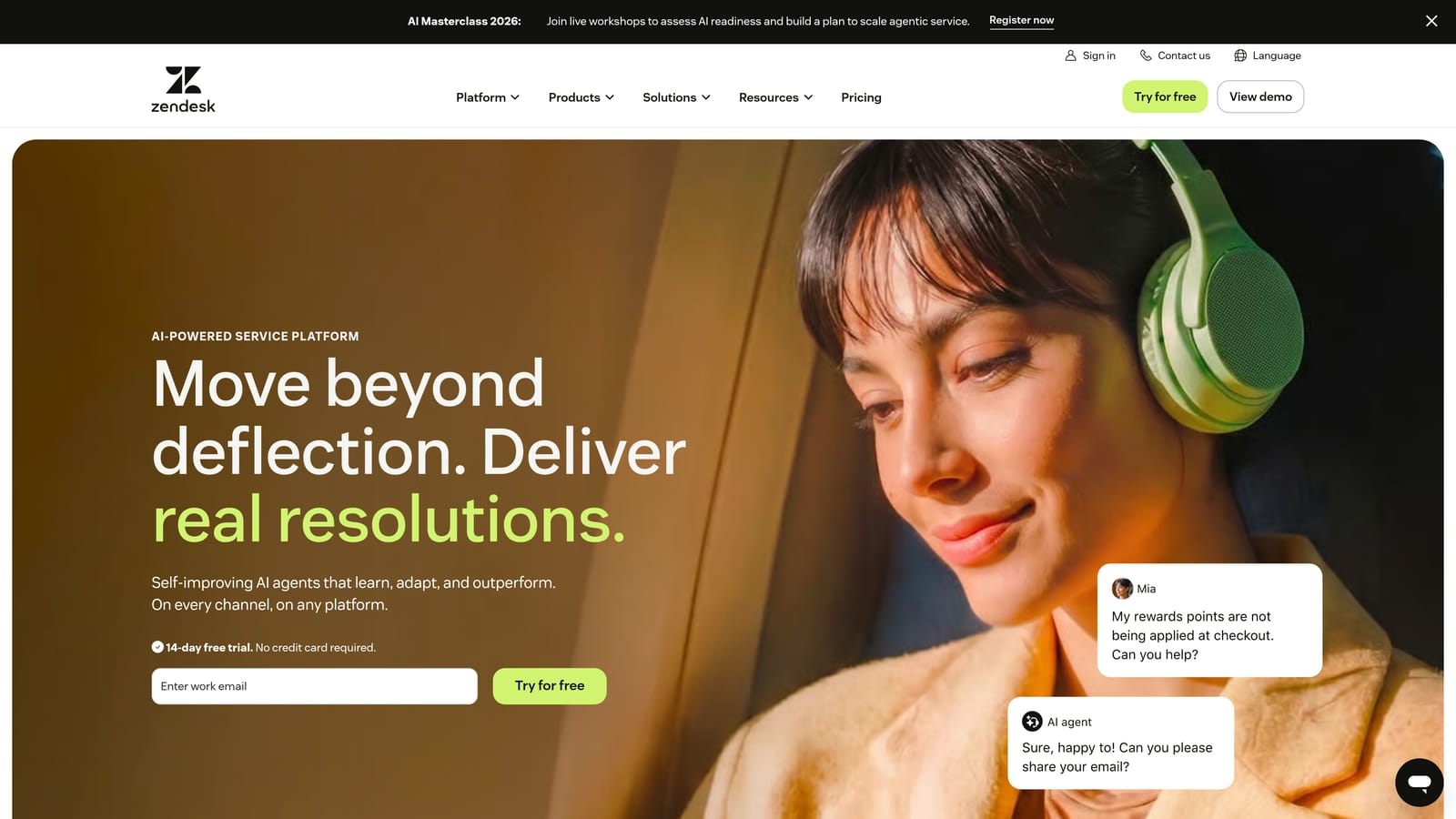
Zendesk is an enterprise helpdesk platform with AI-powered triage, routing, and resolution capabilities built for complex, high-volume support operations.
Where This Tool Shines
Zendesk's strength in marketplace environments comes from its customizability. You can build highly specific ticket workflows that account for different user types, priority tiers, and escalation paths. For a marketplace with distinct buyer and seller support queues, that kind of configurability is genuinely useful rather than just a checkbox feature.
The app marketplace is extensive, which means if you need to connect Zendesk to a commerce platform, payment processor, or internal tool, there's likely an integration already available. Zendesk AI (which incorporates intelligent triage and AI-assisted responses) has matured significantly and handles a meaningful portion of routine ticket resolution for teams that invest in configuring it properly.
Key Features
Intelligent Triage and Routing: Zendesk AI classifies and routes incoming tickets based on intent, sentiment, and user type.
Customizable Ticket Workflows: Highly flexible workflow builder supports multi-sided marketplace operations with distinct queues and SLA rules.
Large Integration Marketplace: Hundreds of third-party integrations covering commerce, payments, CRM, and communication tools.
Omnichannel Support: Unified coverage across email, chat, voice, and social media channels.
Reporting and Analytics: Robust dashboards for tracking resolution times, agent performance, and ticket trends across user segments.
Best For
Enterprise marketplace platforms with large support teams, complex routing requirements, and the internal resources to configure and maintain a sophisticated helpdesk environment. Less ideal for smaller teams that need fast time-to-value without heavy setup.
Pricing
Suite Team starts at approximately $55 per agent per month. Enterprise plans are available with custom pricing and typically represent a significant step up in cost.
3. Intercom
Best for: Marketplaces where real-time in-app engagement and proactive messaging are as important as reactive ticket resolution.
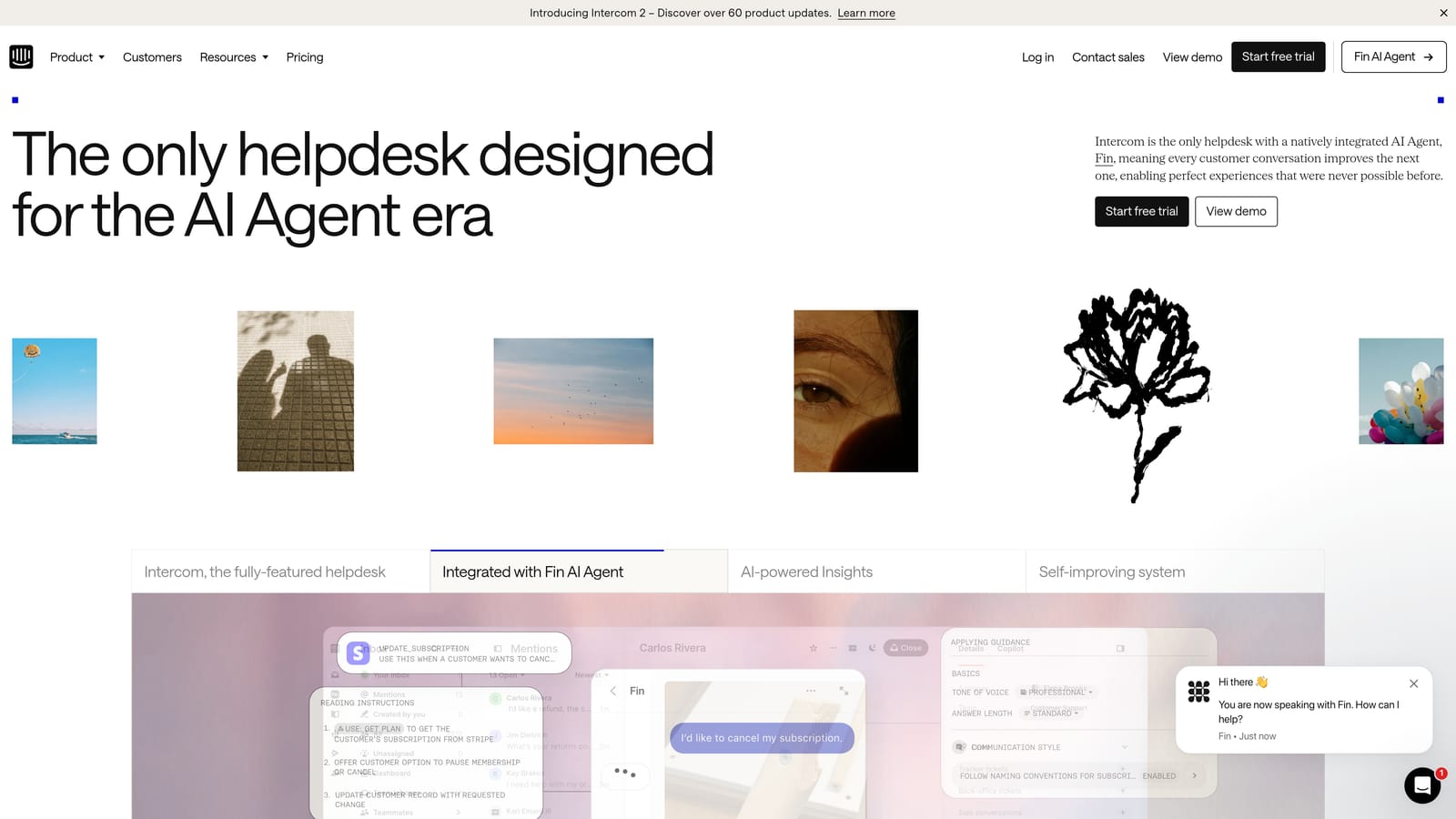
Intercom is a conversational support platform with a Fin AI agent for automated resolution and proactive in-app messaging across the customer journey.
Where This Tool Shines
Intercom's Fin AI agent handles a solid range of routine queries autonomously, but where the platform really differentiates itself is in proactive engagement. For marketplace platforms, this matters during critical moments: seller onboarding, first transaction completion, dispute initiation. Intercom lets you trigger targeted messages at exactly those moments rather than waiting for users to open a ticket.
The product tours feature is worth highlighting for marketplaces with complex seller or vendor dashboards. Automated onboarding flows reduce support volume before it starts, which is a smarter approach than resolving the same onboarding questions repeatedly.
Key Features
Fin AI Agent: Handles autonomous ticket resolution using your help content as its knowledge base.
In-App Messaging: Proactive messaging to buyers and sellers triggered by behavior, lifecycle stage, or transaction events.
Product Tours: Guided onboarding flows that reduce support volume for new users and sellers.
Shared Inbox with AI Drafts: AI-assisted response drafting to help agents reply faster and more consistently.
CRM and Commerce Integrations: Connects with HubSpot, Salesforce, Stripe, and other tools commonly used in marketplace stacks.
Best For
Growth-stage marketplace platforms where reducing onboarding friction and proactively engaging users at key transaction moments is a strategic priority alongside reactive support.
Pricing
Starts at approximately $39 per seat per month. Fin AI resolution is charged per resolution rather than per seat, so costs scale with usage volume.
4. Freshdesk
Best for: Growing marketplace teams that need solid omnichannel automation at a competitive price point.
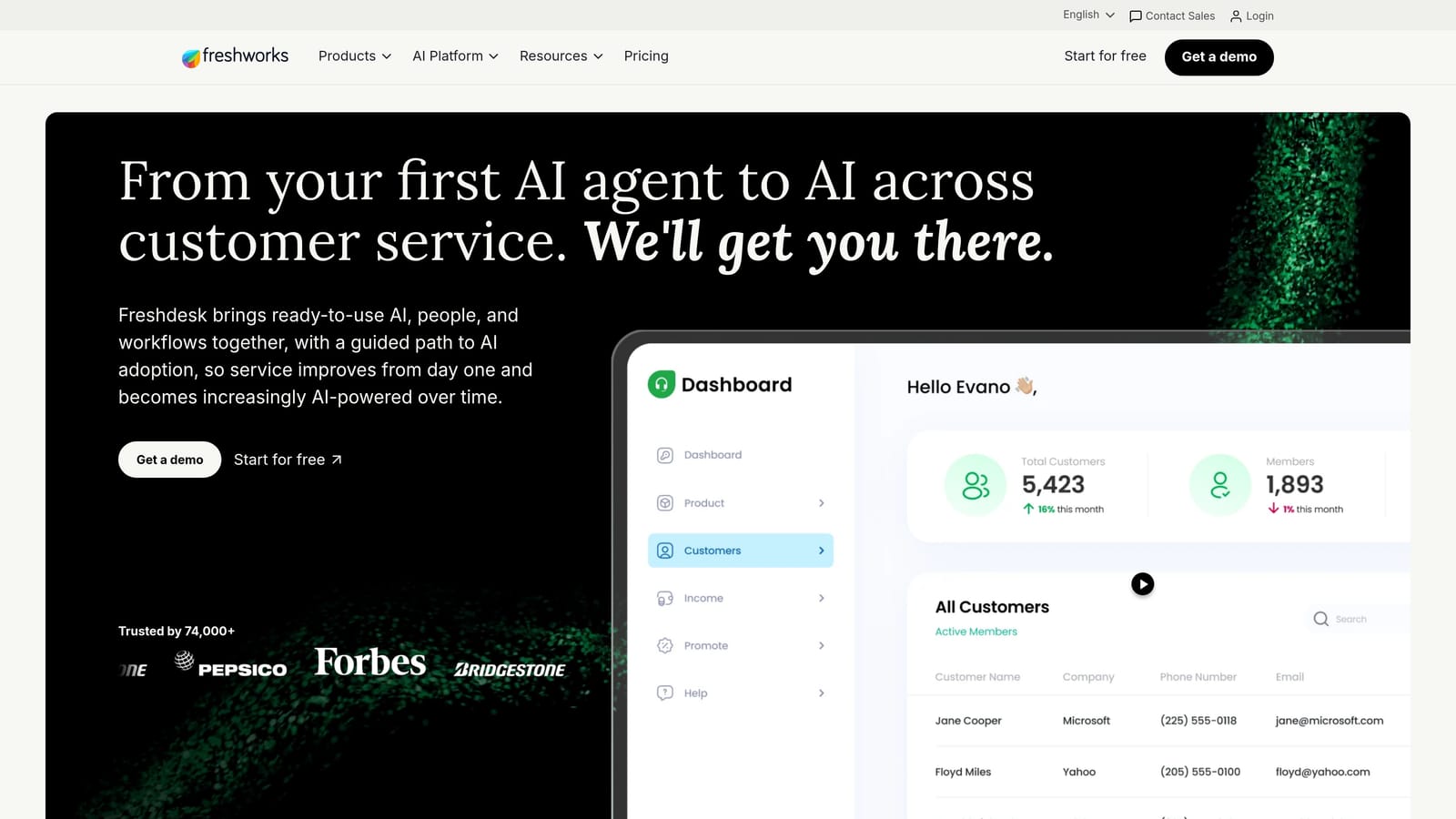
Freshdesk is a mid-market helpdesk with Freddy AI for omnichannel support automation, well-suited to growing marketplace teams managing multiple channels simultaneously.
Where This Tool Shines
Freshdesk hits a practical middle ground that many marketplace operators need: more capability than a basic live chat tool, without the enterprise complexity and cost of Zendesk. Freddy AI handles auto-triage, suggested replies, and basic resolution well enough to meaningfully reduce agent workload without requiring a dedicated operations team to configure it.
The collision detection feature is particularly useful in marketplace support environments where multiple agents might be working the same account. It prevents duplicate responses to sellers or buyers, which is a small thing that creates a surprisingly large impression on user trust.
Key Features
Freddy AI: Handles auto-triage, suggested replies, and resolution for common query types across channels.
Omnichannel Coverage: Unified support across email, chat, phone, and social media from a single interface.
Collision Detection: Prevents multiple agents from simultaneously responding to the same ticket.
Automation Rules and SLA Management: Configurable workflows for routing, escalation, and SLA tracking across buyer and seller queues.
Competitive Pricing: Significantly more affordable than enterprise alternatives, with a free tier for early-stage teams.
Best For
Mid-market and growth-stage marketplace platforms that need reliable omnichannel automation without enterprise-level investment. Strong fit for teams that are outgrowing basic tools but not yet ready for Zendesk-scale complexity.
Pricing
Free plan available for small teams. Paid plans start at approximately $15 per agent per month, scaling with features and team size.
5. Gorgias
Best for: Product-based and e-commerce marketplaces with Shopify at the core of their commerce stack.
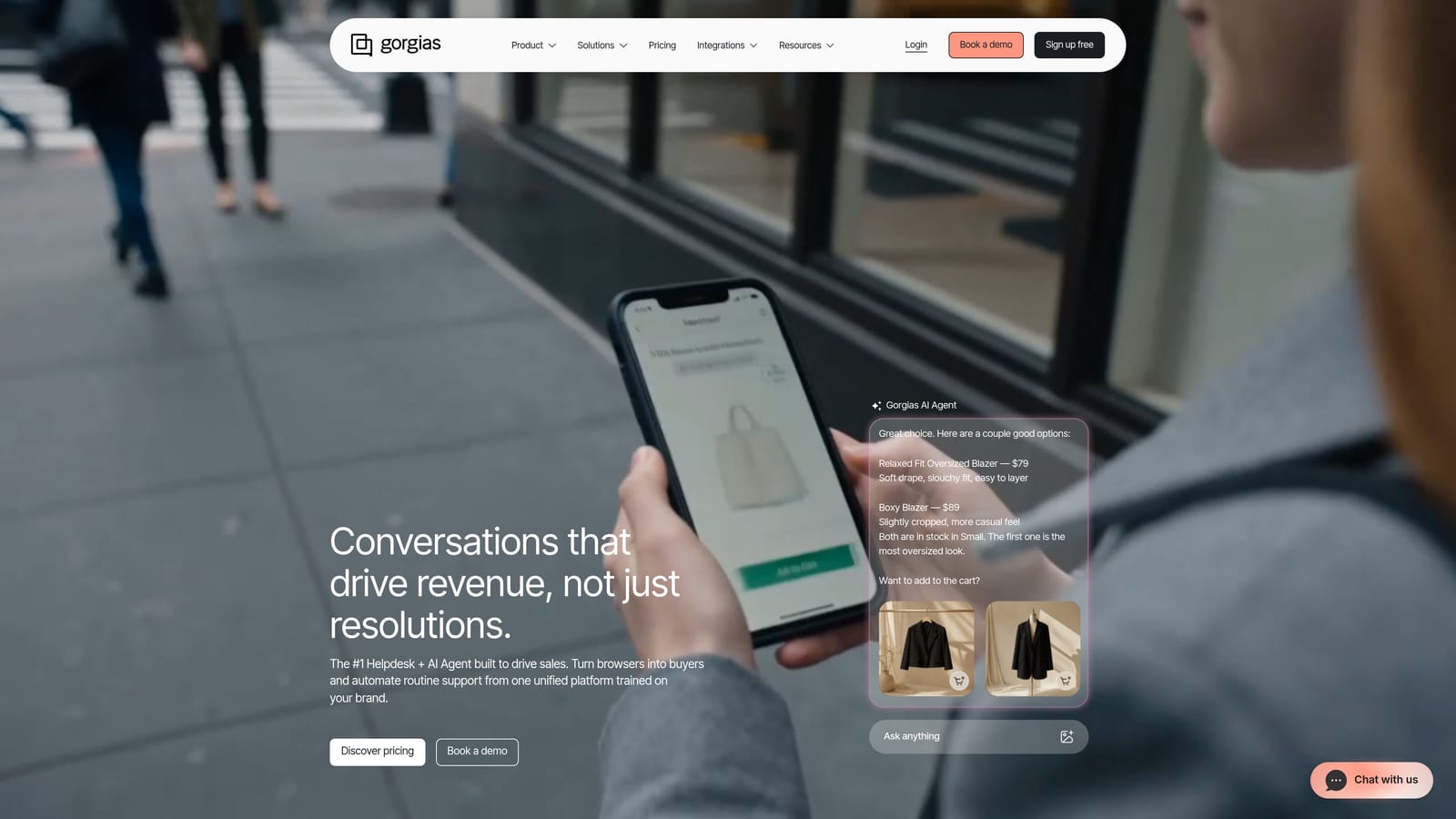
Gorgias is an e-commerce-focused support platform with deep Shopify integration that surfaces order data directly in support tickets for fast, informed resolution.
Where This Tool Shines
If your marketplace runs on Shopify (or WooCommerce, or BigCommerce), Gorgias is purpose-built for your environment in a way that general helpdesks simply aren't. Order information, return status, and customer purchase history surface directly in the ticket view, which eliminates the back-and-forth of agents switching between systems to answer basic buyer questions.
The revenue attribution feature is a differentiator worth noting: Gorgias tracks which support interactions lead to purchases or prevent returns, giving marketplace operators a clearer picture of support's actual impact on revenue rather than just cost.
Key Features
Native E-Commerce Integrations: Deep connections with Shopify, WooCommerce, and BigCommerce surface order data directly in tickets.
Order and Return Automation: Pre-built automation rules handle common order status, return, and refund queries without agent involvement.
Macros: Templated responses for consistent, fast handling of repetitive ticket types.
Revenue Attribution: Tracks the revenue impact of support interactions to quantify support's contribution to the business.
Multi-Store Support: Manages support across multiple storefronts from a single platform, useful for multi-vendor marketplace operators.
Best For
Product-based marketplaces and multi-vendor e-commerce platforms where order management, returns, and shipping queries make up the bulk of support volume. Less suited to B2B, service, or gig economy marketplace models.
Pricing
Starter plans begin at approximately $10 per month. Pricing scales with ticket volume rather than agent seats, which can be cost-effective or expensive depending on your transaction volume.
6. Tidio
Best for: Smaller marketplace platforms that need fast deployment and accessible pricing without sacrificing conversational AI capability.
Tidio is a live chat and AI chatbot platform featuring Lyro AI for conversational resolution, designed for fast deployment at an accessible price point.
Where This Tool Shines
Tidio's appeal is speed and accessibility. The platform can typically be live within hours, which matters for marketplace operators who need to move quickly without a lengthy implementation cycle. Lyro AI handles conversational resolution for common queries, and the visual chatbot builder lets non-technical teams customize flows without developer involvement.
It's worth being clear-eyed about where Tidio sits in the market: it's not an enterprise-grade platform. But for smaller marketplaces or those in early growth stages, it covers the essentials well and at a price point that makes the ROI calculation straightforward.
Key Features
Lyro AI: Conversational AI chatbot that handles automated resolution using your support content as its knowledge base.
Live Chat with Agent Takeover: Seamless handoff from AI to human agents when conversations require a personal touch.
Visual Chatbot Builder: Drag-and-drop flow builder for creating custom conversation paths without coding.
Email and Messenger Integration: Extends coverage beyond live chat to email and social messaging channels.
Fast Deployment: Minimal setup time means teams can be live and handling conversations quickly.
Best For
Early-stage or smaller marketplace platforms that need functional live chat and AI automation without the budget or timeline for an enterprise implementation. Also useful as a stopgap while evaluating more comprehensive platforms.
Pricing
Free plan available with limited features. Lyro AI starts at approximately $29 per month, making it one of the more accessible options on this list.
7. Help Scout
Best for: Marketplace teams that prioritize support quality and brand consistency over high-volume automation.
Help Scout is a shared inbox and knowledge base platform focused on human-feeling support, with AI Drafts to help agents respond faster and more consistently.
Where This Tool Shines
Help Scout's philosophy is different from most tools on this list: rather than maximizing automation, it focuses on making human agents more effective. The AI Drafts feature generates response suggestions that agents review and send, keeping a human in the loop while reducing the cognitive load of composing replies from scratch. For marketplace platforms where brand voice and trust are central to the user experience, this approach has real merit.
The Docs knowledge base integrates tightly with the support inbox, so agents can surface relevant articles during conversations and customers can self-serve before reaching a human. The Beacon widget brings this self-service capability directly into your product interface.
Key Features
AI Drafts: AI-generated response suggestions that agents review and send, maintaining quality while reducing response time.
Docs Knowledge Base: Tightly integrated self-service knowledge base that reduces inbound ticket volume for common questions.
Shared Inbox with Collision Detection: Clean team inbox that prevents duplicate responses and keeps conversations organized.
Customer Profiles: Consolidated conversation history gives agents context before they start typing.
Beacon Widget: In-app help widget that surfaces relevant docs and enables chat directly within your marketplace interface.
Best For
Marketplace platforms where trust, tone, and brand consistency in support interactions are as important as resolution speed. Particularly well-suited to teams that prefer agent-assisted AI over fully autonomous resolution.
Pricing
Standard plan starts at approximately $22 per user per month. Pricing is straightforward with no per-resolution charges.
8. Kustomer
Best for: High-volume marketplaces with complex customer histories that need a full CRM timeline alongside support automation.
Kustomer is a CRM-native support platform that gives agents a complete customer timeline view, with AI automation layered on rich historical interaction data.
Where This Tool Shines
Kustomer's defining characteristic is the customer timeline: a single view of every interaction a buyer or seller has had across every channel, consolidated in one place. For marketplace platforms where a seller might have contacted support via email, chat, and phone over several months about related issues, this eliminates the frustrating experience of re-explaining context to every new agent.
The AI automation layer is built on top of this rich data, which means routing decisions and suggested responses are informed by actual customer history rather than just the current ticket in isolation. That context-awareness is particularly valuable in marketplace environments where repeat interactions around payments, disputes, or account issues are common.
Key Features
Full Customer Timeline: Every interaction across all channels consolidated in a single, chronological view for each customer.
AI-Powered Routing and Responses: Routing and suggested responses informed by historical customer data, not just current ticket content.
Workflow Automation: Conditional logic workflows for complex escalation paths and multi-step resolution processes.
Deep CRM Integration: Native CRM functionality means customer data and support history live in the same system.
Best For
High-volume marketplace platforms with complex, multi-channel customer histories where agent context is a significant driver of resolution quality. The pricing reflects its enterprise positioning, so it's best suited to teams where that investment is justified by scale.
Pricing
Enterprise tier starts at approximately $89 per user per month. Custom pricing is available for larger deployments.
9. Capacity
Best for: Marketplaces with policy-heavy or FAQ-driven support content that benefits from a centralized AI knowledge base serving both customers and agents.
Capacity is an AI-powered support automation platform built around a central knowledge base that simultaneously serves end users and assists human agents with complex escalations.
Where This Tool Shines
Capacity takes a knowledge-first approach: the central AI knowledge base is the core of the platform, and everything else radiates from it. For marketplace platforms with extensive policy documentation, seller guidelines, buyer protection terms, or compliance-related content, this architecture means the AI can draw on a comprehensive, maintained source of truth rather than scraping inconsistent help articles.
The dual-use nature of the knowledge base is genuinely useful. The same content that deflects customer tickets also powers the agent assist mode, so human agents handling complex escalations get AI-surfaced suggestions from the same knowledge base rather than searching documentation manually.
Key Features
AI Knowledge Base: Central knowledge base that serves both customer-facing deflection and internal agent assist simultaneously.
Automated Ticket Deflection: Helpdesk with AI-driven deflection for common queries before they reach a human agent.
Conversational AI: Handles policy-heavy and FAQ-driven support conversations with context from the knowledge base.
Agent Assist Mode: Surfaces relevant knowledge base content to human agents during complex escalations.
CRM and Communication Integrations: Connects with major CRM and communication platforms to fit into existing team workflows.
Best For
Marketplace platforms with substantial policy and compliance documentation where consistent, accurate information delivery across both customer and agent touchpoints is a priority. Also strong for teams that want to reduce agent time spent searching for answers during complex escalations.
Pricing
Contact for pricing. Custom plans are structured based on usage and team size rather than a standard per-seat model.
Choosing the Right Tool for Your Marketplace
The right choice depends heavily on what kind of marketplace you're running and where your biggest support pain points actually live.
For B2B and multi-sided marketplace platforms where context-awareness, business intelligence, and autonomous resolution matter most, Halo AI is the strongest option. Its AI-native architecture, page-aware guidance, and continuous learning model are built for the complexity of multi-user-type environments rather than adapted from a single-vendor helpdesk model.
For product-based and e-commerce marketplaces running on Shopify or similar platforms, Gorgias is purpose-built and hard to beat on integration depth. For larger e-commerce operations that need enterprise-grade routing and reporting, Zendesk or Kustomer add the scale and customizability required.
For gig economy and service marketplaces where real-time engagement and proactive messaging drive user retention, Intercom's combination of Fin AI and behavioral triggers is particularly well-suited. Freshdesk is a strong alternative for teams that need solid omnichannel coverage at a more accessible price point.
Three questions worth answering before you commit to any platform: First, how many distinct user types does your marketplace serve, and does the tool route and contextualize differently for each? Second, how deep does the integration go with your payment, commerce, and CRM stack? Third, is the AI genuinely autonomous or does it require significant manual configuration to deliver meaningful deflection?
Your support team shouldn't scale linearly with your customer base. Let AI agents handle routine tickets, guide users through your product, and surface business intelligence while your team focuses on complex issues that need a human touch. See Halo in action and discover how continuous learning transforms every interaction into smarter, faster support.