9 Best Tools for Automated Support for Mobile Apps in 2026
This guide evaluates the 9 best tools for automated support for mobile apps in 2026, helping product and support teams identify platforms that handle high-volume queries, intelligent escalation, and contextual in-app help. From AI-powered ticket resolution to chatbots and self-service knowledge bases, the roundup covers mobile-first solutions suited to different team sizes and use cases.
 Matt PattoliFounder13 min read
Mobile app users expect instant, always-on support, and they're not shy about uninstalling when they don't get it. Whether it's an in-app crash, a billing question, or a feature they can't find, users want answers in seconds, not hours. For product teams and support leaders, that means building automated support systems that can handle high volumes of repetitive queries, intelligently escalate complex issues, and deliver contextual help right inside the app experience.
The tooling landscape is crowded, and not every platform is built with mobile-first workflows in mind. We evaluated dozens of solutions and narrowed the field to standout tools that offer genuine automated support capabilities for mobile apps, from AI-powered ticket resolution to in-app messaging, chatbots, and self-service knowledge bases. Here's what made the cut.
1. Halo AI
Best for: B2B and SaaS teams that want AI-native support agents with deep product and business context.
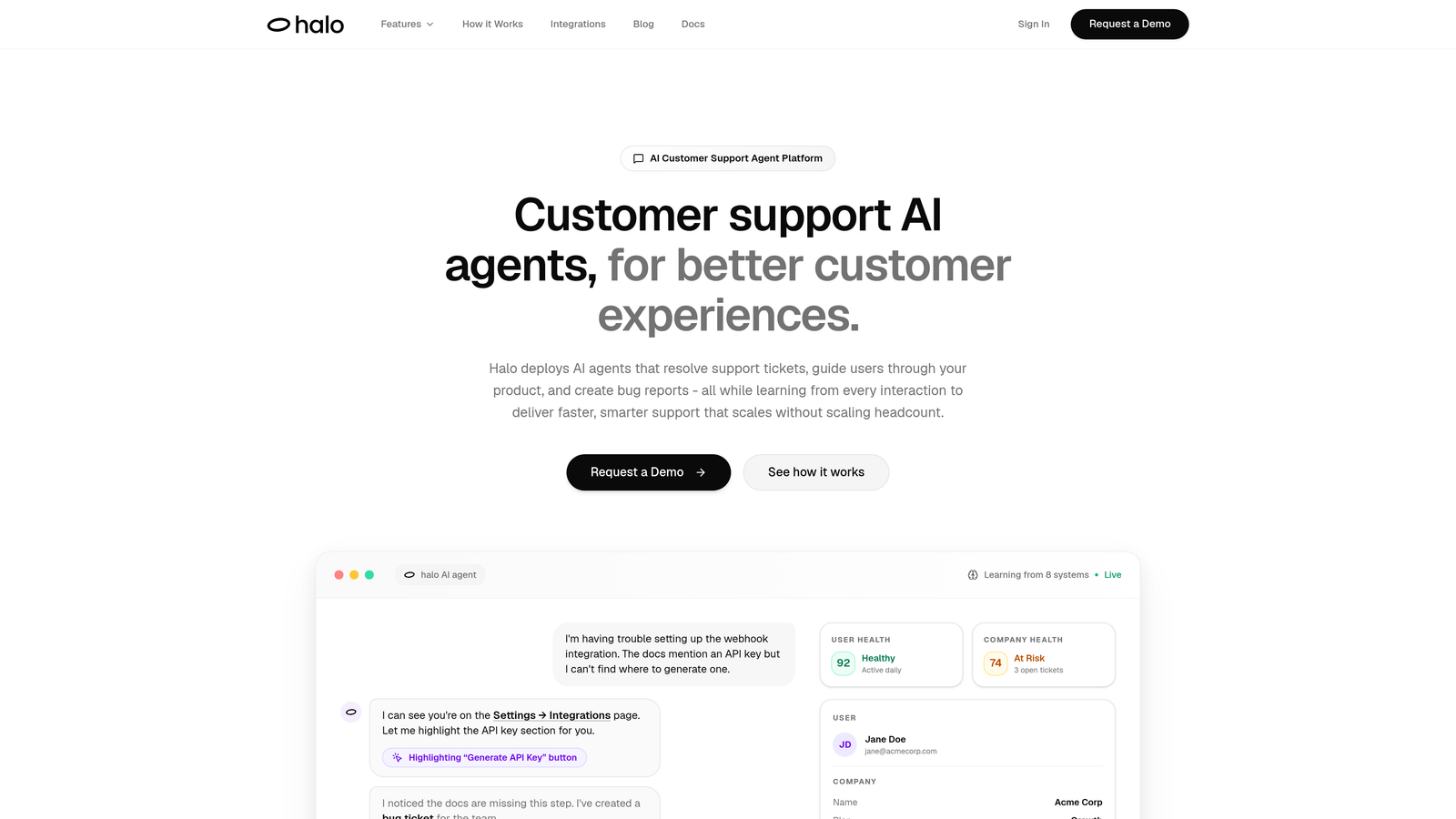
Halo AI is an AI-native customer support platform that deploys intelligent agents to resolve tickets, guide users visually, and learn from every interaction.
Where This Tool Shines
What sets Halo apart from most support tools is the architecture. It's not a chatbot bolted onto a helpdesk, it's an AI-first system designed around autonomous resolution. The agents continuously learn from past interactions, which means the system gets smarter with every ticket it handles rather than staying static until someone manually updates a knowledge base.
The page-aware chat widget is particularly compelling for mobile and web app teams. The AI understands what screen a user is currently on, what they're trying to do, and can provide step-by-step visual UI guidance in context. That kind of situational awareness is rare in the support tooling space and meaningfully reduces the "I don't understand your instructions" frustration users hit with generic chatbots.
Key Features
AI Agents with Continuous Learning: Autonomous ticket resolution that improves over time as the system learns from every interaction and outcome.
Page-Aware Chat Widget: The AI sees what the user sees and delivers contextual, visual guidance based on their current location in the product.
Smart Inbox with Business Intelligence: Goes beyond ticketing to surface customer health signals, revenue intelligence, and anomaly detection directly in the support workflow.
Automatic Bug Ticket Creation: Detects and routes bug reports to engineering tools like Linear without requiring manual triage from the support team.
Live Agent Handoff: Escalates complex issues to human agents with full conversation context preserved, so nothing gets repeated.
Best For
Product-led SaaS companies and B2B teams that need support automation to do more than deflect tickets. Particularly strong for teams using Zendesk, Intercom, or Freshdesk who want an AI layer that connects to their broader business stack including Linear, Slack, HubSpot, Stripe, and Zoom.
Pricing
Contact for pricing; a demo is available directly through the Halo AI website. Custom plans are structured around team size and integration needs.
2. Intercom
Best for: Growth-stage SaaS companies wanting a unified messenger, AI agent, and in-app engagement platform.
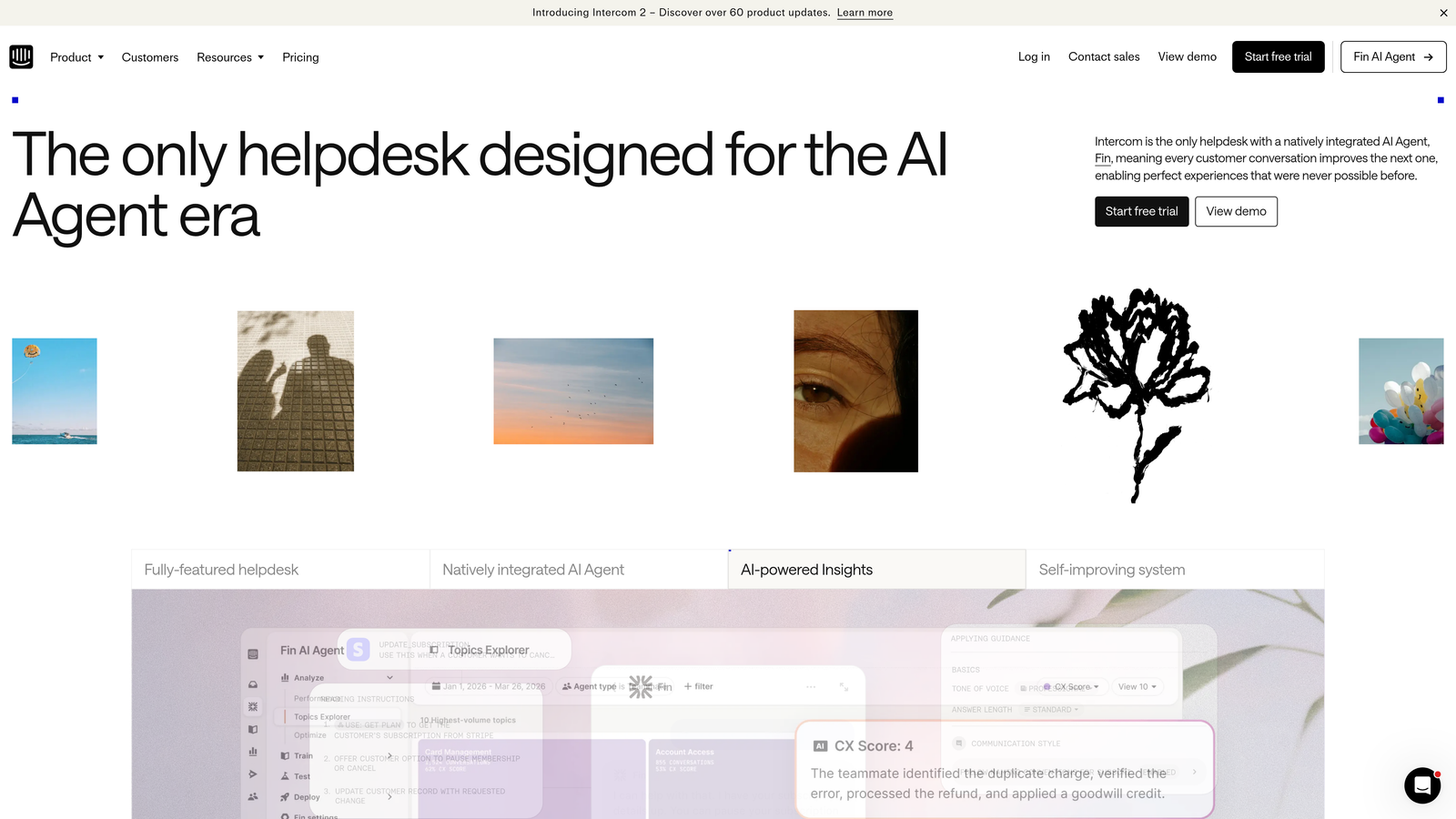
Intercom is a customer messaging platform combining an AI support agent, mobile SDK, and workflow automation in one ecosystem.
Where This Tool Shines
Intercom's Fin AI agent has matured significantly and can now resolve a meaningful share of support queries autonomously by drawing on your existing knowledge base content. For mobile apps, the native iOS and Android messenger SDK makes it straightforward to embed a branded support experience directly inside your app without building from scratch.
The product tours and tooltips add an onboarding and guidance layer that goes beyond reactive support, helping users succeed before they ever need to open a ticket. That proactive approach is well-suited for apps with complex feature sets or frequent releases.
Key Features
Fin AI Agent: Handles autonomous ticket resolution using your knowledge base, with escalation to human agents when needed.
Mobile Messenger SDK: Native iOS and Android SDK with customizable UI for embedding support directly in your app.
Product Tours and Tooltips: In-app user guidance for onboarding and feature adoption, reducing support volume proactively.
Workflow Builder: Visual automation for routing, tagging, and triggering responses based on user behavior or ticket attributes.
Omnichannel Support: Unified inbox across chat, email, and social channels for teams managing multiple contact points.
Best For
SaaS teams that want a single platform handling both support and in-app engagement. Strong fit for companies already invested in the Intercom ecosystem or those wanting Fin AI without switching their primary helpdesk.
Pricing
Starts at $39/seat/month. Fin AI usage is billed separately on a per-resolution basis, so costs scale with volume.
3. Zendesk
Best for: Enterprise teams needing robust compliance controls, deep integrations, and a proven omnichannel helpdesk.
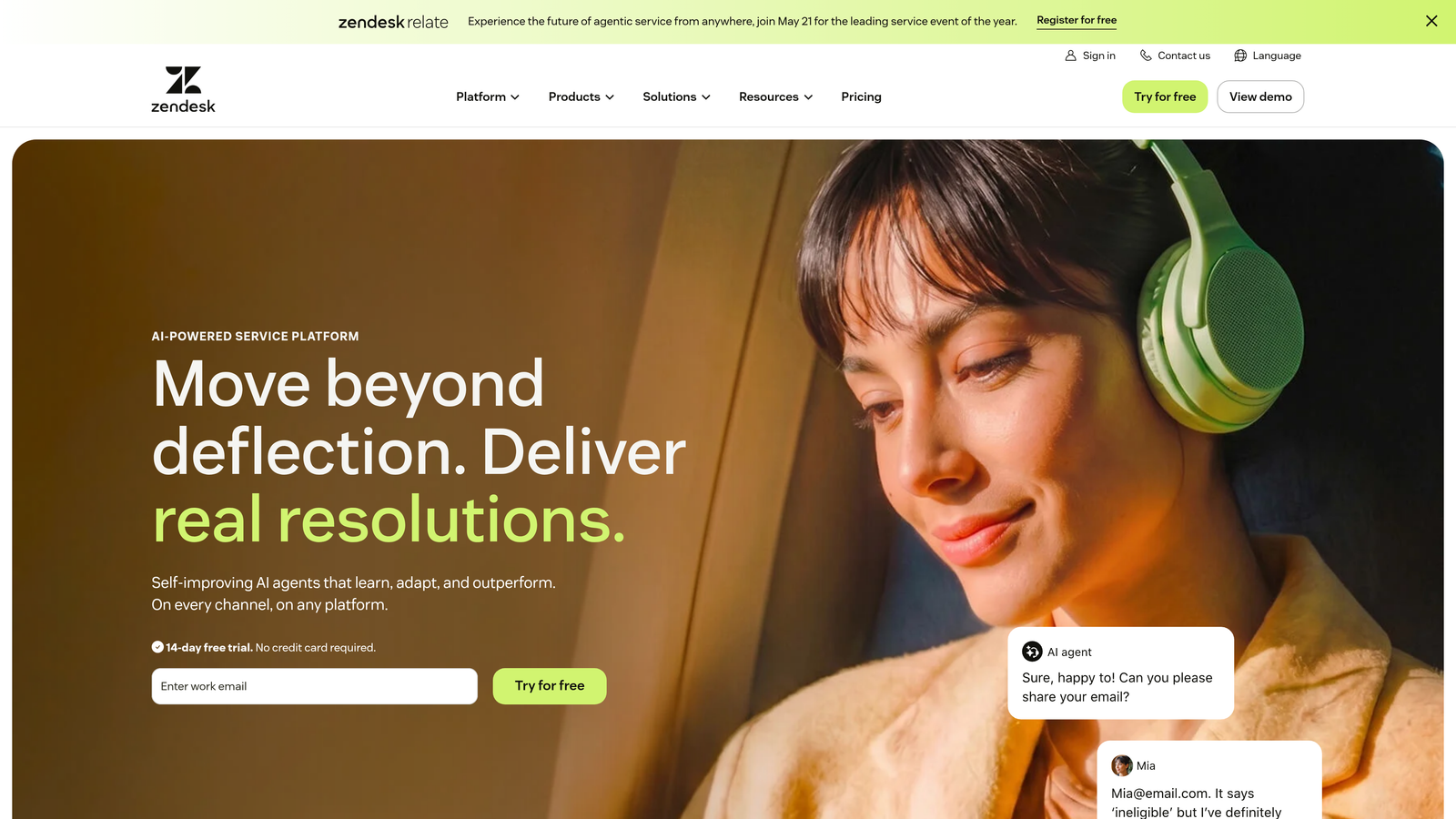
Zendesk is an enterprise-grade helpdesk platform with a mobile SDK, AI-powered Answer Bot, and one of the largest integration ecosystems in the category.
Where This Tool Shines
Zendesk's strength is its depth. For enterprises managing high support volumes across multiple channels, the advanced routing logic, SLA management, and compliance tooling are genuinely difficult to replicate elsewhere. The mobile SDK lets teams embed native support experiences in iOS and Android apps without compromising the underlying ticket management infrastructure.
The generative AI features added in recent years have meaningfully improved deflection rates, with Answer Bot handling common queries before they reach an agent. That said, Zendesk's AI capabilities are still catching up to more AI-native platforms, and the platform can feel heavyweight for smaller teams.
Key Features
Mobile SDK: Embeds native support UI in iOS and Android apps, connecting directly to the Zendesk ticketing backend.
Answer Bot and Generative AI: Automated ticket deflection using knowledge base content, with generative AI for suggested replies and article recommendations.
Advanced Routing and SLAs: Enterprise-grade controls for ticket routing, priority management, and compliance requirements.
1,500+ Marketplace Integrations: Connects to virtually every major business tool, from CRMs to analytics platforms and engineering tools.
Unified Agent Workspace: Single workspace for managing chat, email, phone, and social interactions.
Best For
Enterprise organizations with complex support operations, strict compliance requirements, or large existing Zendesk deployments. Less ideal for early-stage teams who may find the platform over-engineered for their needs.
Pricing
Support Team plans start at $19/agent/month. Suite plans, which include omnichannel capabilities and AI features, start at $55/agent/month.
4. Freshdesk
Best for: Mid-market teams wanting solid AI-assisted helpdesk capabilities at a competitive price point.
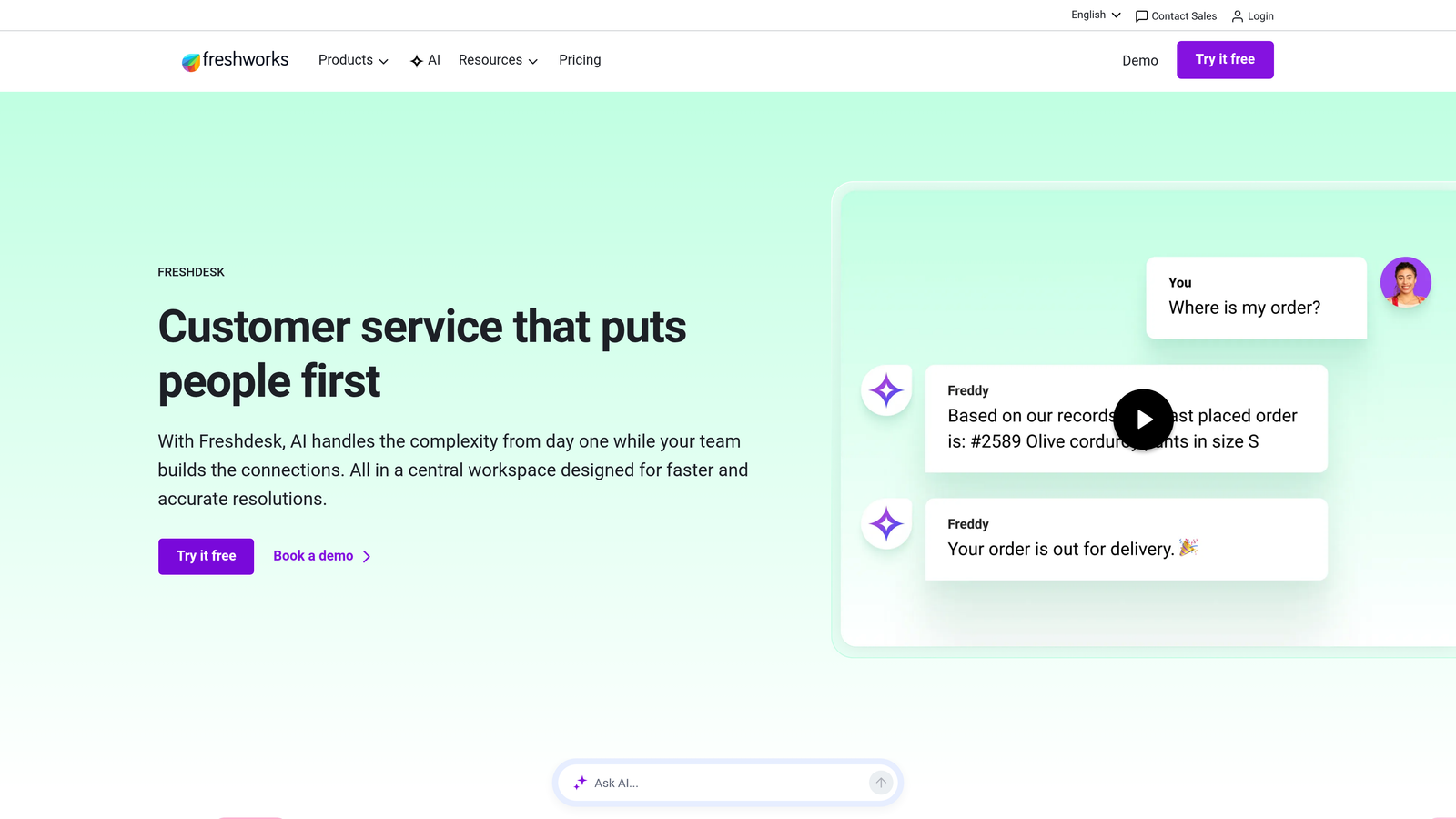
Freshdesk is a mid-market helpdesk platform with Freddy AI for automated triage and resolution, a mobile chat SDK, and a free tier for smaller teams.
Where This Tool Shines
Freshdesk hits a practical sweet spot for growing teams: capable AI features, a functional mobile SDK, and pricing that doesn't require a procurement conversation. Freddy AI handles ticket classification and prioritization automatically, which reduces the manual overhead that tends to slow support teams down as volume scales.
The built-in knowledge base with AI-powered article suggestions means the self-service layer is included out of the box rather than being an expensive add-on. For teams managing support across email, chat, and phone in addition to mobile, the multichannel ticketing keeps everything centralized.
Key Features
Freddy AI: Automated ticket classification, prioritization, and suggested responses to reduce agent workload.
Mobile SDK: In-app chat and support for iOS and Android, connecting to the Freshdesk ticketing system.
AI-Powered Knowledge Base: Built-in self-service articles with AI-driven suggestions surfaced to users before they submit a ticket.
Multichannel Ticketing: Unified inbox for email, chat, phone, and social support channels.
Free Tier: Functional free plan for small teams, making it accessible for startups before they commit to paid plans.
Best For
Growing mid-market teams and startups that need a capable, affordable helpdesk with mobile support. A strong alternative to Zendesk for teams that don't need enterprise-level complexity.
Pricing
Free plan available for unlimited agents with basic features. Paid plans start at $15/agent/month, scaling up with advanced AI and analytics capabilities.
5. Ada
Best for: High-volume, multilingual support operations that need autonomous AI resolution across web and mobile.
Ada is an AI-first customer service automation platform purpose-built for large-scale, multilingual support across web and mobile channels.
Where This Tool Shines
Ada's core proposition is autonomous resolution at scale. The AI agent draws on your existing knowledge sources to answer queries without human involvement, and the no-code conversation builder means non-technical teams can design and iterate on flows without waiting on engineering. For global apps with users across multiple languages, the out-of-the-box multilingual support is a significant advantage.
Ada integrates with major CRMs and helpdesks, so when a query does require human escalation, the handoff includes full context. The platform is particularly well-regarded in industries with high query volumes and repetitive inquiry patterns, such as fintech, e-commerce, and consumer apps.
Key Features
Autonomous AI Agent: Resolves customer queries independently using connected knowledge sources, without requiring rule-based scripting.
No-Code Bot Builder: Drag-and-drop conversation design for non-technical teams to build and update support flows.
Mobile Web and In-App Deployment: Flexible deployment options for both mobile web applications and native app environments.
Multilingual Support: Handles queries in 50+ languages out of the box, without separate configuration per language.
CRM and Helpdesk Integrations: Connects to major platforms for seamless context transfer during agent handoff.
Best For
Enterprise and mid-market teams with high support volumes, global user bases, or multilingual requirements. Strong fit for consumer apps where self-service resolution rates directly impact support costs.
Pricing
Custom pricing based on usage and team size. Contact Ada directly for a quote tailored to your volume and requirements.
6. Helpshift
Best for: Mobile-first teams, especially gaming studios and high-volume consumer apps that need SDK-native in-app support.
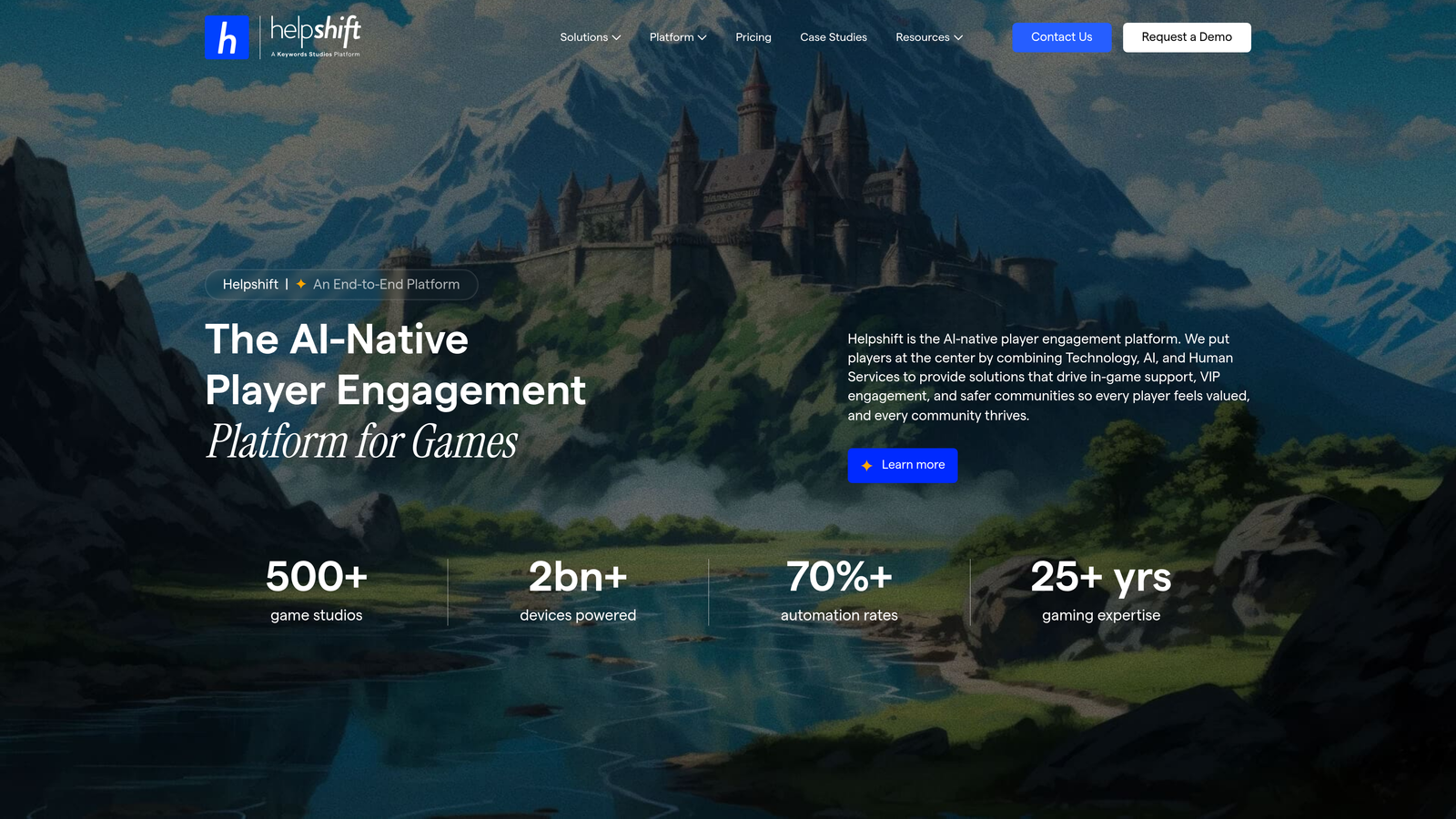
Helpshift is a mobile-first customer support platform built specifically for in-app experiences, with an SDK-first architecture that reflects genuine mobile-native design thinking.
Where This Tool Shines
Unlike platforms that added mobile SDKs as an afterthought, Helpshift was designed from the ground up for the constraints and expectations of mobile app support. That means the in-app FAQ, knowledge base, and chat experience are optimized for small screens, short sessions, and users who don't want to leave the app to get help.
The AI-powered chatbot includes intent detection tuned for common mobile support patterns, and push notification integration means support follow-ups reach users even after they've closed the app. This is particularly valuable for gaming apps and consumer apps where re-engagement matters.
Key Features
SDK-First Architecture: Built exclusively for mobile app support, with deep iOS and Android integration rather than a web-first design adapted for mobile.
In-App FAQ and Knowledge Base: Smart search surfacing relevant articles without users leaving the app experience.
AI Chatbot with Intent Detection: Identifies common mobile support issues and routes or resolves them automatically.
Push Notification Integration: Delivers support follow-ups and updates via push, keeping users informed after sessions end.
Rich Media Support: Users can share screenshots and video within chat conversations, reducing the back-and-forth to diagnose issues.
Best For
Gaming studios, consumer app teams, and any organization where the support experience must live entirely within the native app. Less suited for B2B SaaS teams that also need web-based or email-heavy support workflows.
Pricing
Custom pricing based on monthly active users. Contact Helpshift for a quote scaled to your app's user volume.
7. Drift (Salesloft)
Best for: B2B mobile web applications where support and sales conversations happen in the same channel.
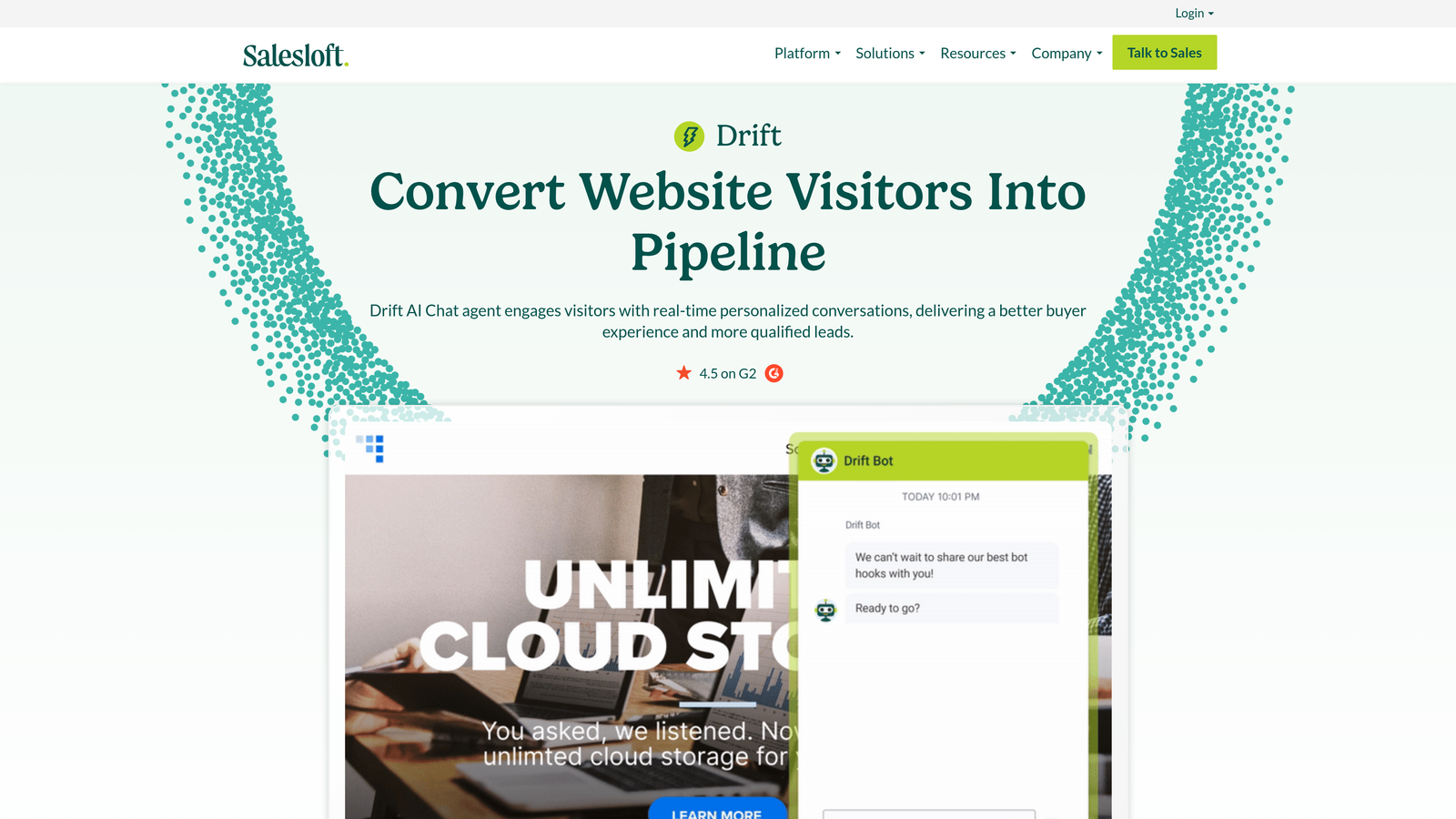
Drift is a conversational AI platform that blends support automation with sales workflows, now part of the Salesloft platform.
Where This Tool Shines
Drift occupies a specific niche: B2B web applications where the line between a support query and a sales conversation is blurry. The AI chatbots handle support deflection while simultaneously qualifying leads, and the handoff workflows ensure that high-intent visitors reach a sales rep rather than a support queue. For mobile-responsive web apps, this dual-purpose approach can meaningfully reduce operational overhead.
The integration depth with Salesforce and HubSpot is strong, and conversational analytics give teams visibility into what questions are being asked most frequently, which informs both support content and product decisions.
Key Features
AI-Powered Chatbots: Handles support deflection and lead qualification simultaneously within the same conversation flow.
Mobile-Responsive Chat Widget: Works across mobile web apps and progressive web applications without native SDK requirements.
Support-to-Sales Handoff: Routes high-intent conversations to sales reps with full context, preventing leads from falling into support queues.
CRM Integrations: Deep connections to Salesforce, HubSpot, and other major CRM platforms for data continuity.
Conversational Analytics: Reporting on conversation volume, topics, and outcomes to inform content and routing strategy.
Best For
B2B SaaS teams using mobile web or progressive web apps where support and revenue conversations overlap. Less suited for native mobile app teams needing an iOS or Android SDK.
Pricing
Custom pricing through Salesloft. Contact the Salesloft team directly for package details and volume-based pricing.
8. Tidio
Best for: Small teams and startups needing fast-deploy automated support without a large budget or technical overhead.
Tidio is an affordable live chat and AI chatbot platform featuring Lyro AI, designed for quick deployment and ease of use.
Where This Tool Shines
Tidio's appeal is accessibility. The Lyro AI chatbot learns from your existing help content and starts answering questions automatically without extensive configuration. For small teams that don't have dedicated support engineers or large implementation budgets, that low barrier to entry is genuinely valuable.
The visual chatbot builder with pre-built templates means non-technical team members can create and adjust automated flows without writing code. Real-time visitor monitoring adds a proactive dimension, letting agents initiate conversations with users who appear stuck before they submit a ticket or abandon the app.
Key Features
Lyro AI Chatbot: Learns from your help content to automatically answer customer questions without manual rule-building.
Mobile-Responsive Chat Widget: Works on mobile web and PWAs with straightforward installation and no native SDK required.
Visual Chatbot Builder: Pre-built templates and drag-and-drop design for creating automated flows without technical expertise.
Live Chat with Visitor Monitoring: Real-time visibility into active users with the ability to proactively initiate support conversations.
Platform Integrations: Connects to Shopify, WordPress, and other popular e-commerce and CMS platforms.
Best For
Startups, small e-commerce teams, and early-stage apps that need functional automated support quickly and affordably. Teams building native iOS or Android apps will need to evaluate whether a mobile-responsive widget meets their in-app experience requirements.
Pricing
Free plan available with basic features. Paid plans start at $29/month, making it one of the more accessible options in this list for budget-conscious teams.
9. Sendbird
Best for: Engineering teams that need full control over a custom-built in-app support experience with AI automation layered on top.
Sendbird is a chat API and SDK platform with an AI chatbot integration layer, enabling teams to build fully custom in-app support experiences from the ground up.
Where This Tool Shines
Sendbird is the right choice when off-the-shelf UI doesn't fit your brand or product requirements. The SDK supports iOS, Android, React Native, and Flutter, giving engineering teams the building blocks for a deeply integrated, fully branded support experience. That flexibility comes with a tradeoff: implementation requires meaningful engineering investment compared to plug-and-play options.
The AI chatbot layer sits on top of the messaging infrastructure, so teams can automate responses to common queries while retaining full control over the conversation design. Offline messaging and push notification delivery are handled natively, which is important for apps where users frequently switch contexts mid-session.
Key Features
Multi-Platform Chat SDK: Native SDKs for iOS, Android, React Native, and Flutter for cross-platform support coverage.
AI Chatbot Integration Layer: Automated in-app support responses built on top of the messaging infrastructure.
Customizable UI Components: Fully brandable interface components for teams that need the support experience to match their product design system.
Offline Messaging and Push Notifications: Reliable message delivery even when users are not actively in the app.
Moderation and Analytics: Conversation moderation tools and analytics for monitoring support quality and volume.
Best For
Engineering-led teams at companies where customization and brand consistency are non-negotiable. Strong fit for apps with large user bases that need a scalable messaging infrastructure rather than a hosted support widget.
Pricing
Free developer plan available for testing and prototyping. Production plans start at $399/month, reflecting the platform's enterprise-grade infrastructure.
Choosing the Right Automated Support Tool for Your Mobile App
The right tool depends heavily on what you're actually building and who's doing the building. Here's a quick way to think through the decision.
If you're running a native iOS or Android app and need the support experience embedded inside the product, prioritize tools with genuine SDK support. Helpshift, Sendbird, Intercom, Zendesk, and Freshdesk all offer native mobile SDKs. Sendbird gives you the most customization; Helpshift gives you the most mobile-native out-of-the-box experience. Intercom and Zendesk are solid choices if you're also managing web-based support alongside mobile.
If you're running a mobile web app or PWA, the native SDK question matters less. Tidio, Drift, and Ada all work well in mobile-responsive web environments and can be deployed without native app integration.
For teams that want AI agents that genuinely resolve tickets rather than just deflecting to articles, the strongest options are Halo AI, Intercom (Fin), and Ada. All three use LLM-powered agents that can handle complex queries autonomously rather than falling back on keyword matching or static decision trees.
For B2B SaaS teams that need support automation to connect to their broader product and business stack, including engineering tools, CRMs, and analytics, Halo AI's integration depth and business intelligence layer stand out. The ability to surface customer health signals and automatically create bug tickets in Linear is the kind of capability that turns support data into product intelligence.
Your support team shouldn't scale linearly with your customer base. Let AI agents handle routine tickets, guide users through your product, and surface business intelligence while your team focuses on complex issues that need a human touch. See Halo in action and discover how continuous learning transforms every interaction into smarter, faster support.