9 Best Automated Support Tools for SaaS Companies in 2026
SaaS companies need automated support for SaaS companies to deliver instant, 24/7 customer assistance without constantly expanding their support teams. This comprehensive guide reviews nine leading automated support platforms specifically built for SaaS environments, evaluating their AI capabilities, integration options, and scalability to help startups and enterprise companies find the right solution for handling routine inquiries, guiding users, and intelligently escalating complex issues.
 Grant CooperFounder11 min read
SaaS companies face a unique support challenge: users expect instant, knowledgeable help around the clock, but scaling human support teams alongside rapid growth quickly becomes unsustainable. Automated support tools solve this by handling routine inquiries, guiding users through product features, and intelligently escalating complex issues—all without proportionally increasing headcount.
This guide evaluates leading automated support solutions specifically designed for SaaS environments, considering factors like AI sophistication, integration capabilities, scalability, and value for growing teams. Whether you're a startup handling your first thousand users or an established platform managing enterprise accounts, you'll find options that match your support automation needs.
1. Halo AI
Best for: Product teams needing AI-native support that learns continuously and connects to development workflows.
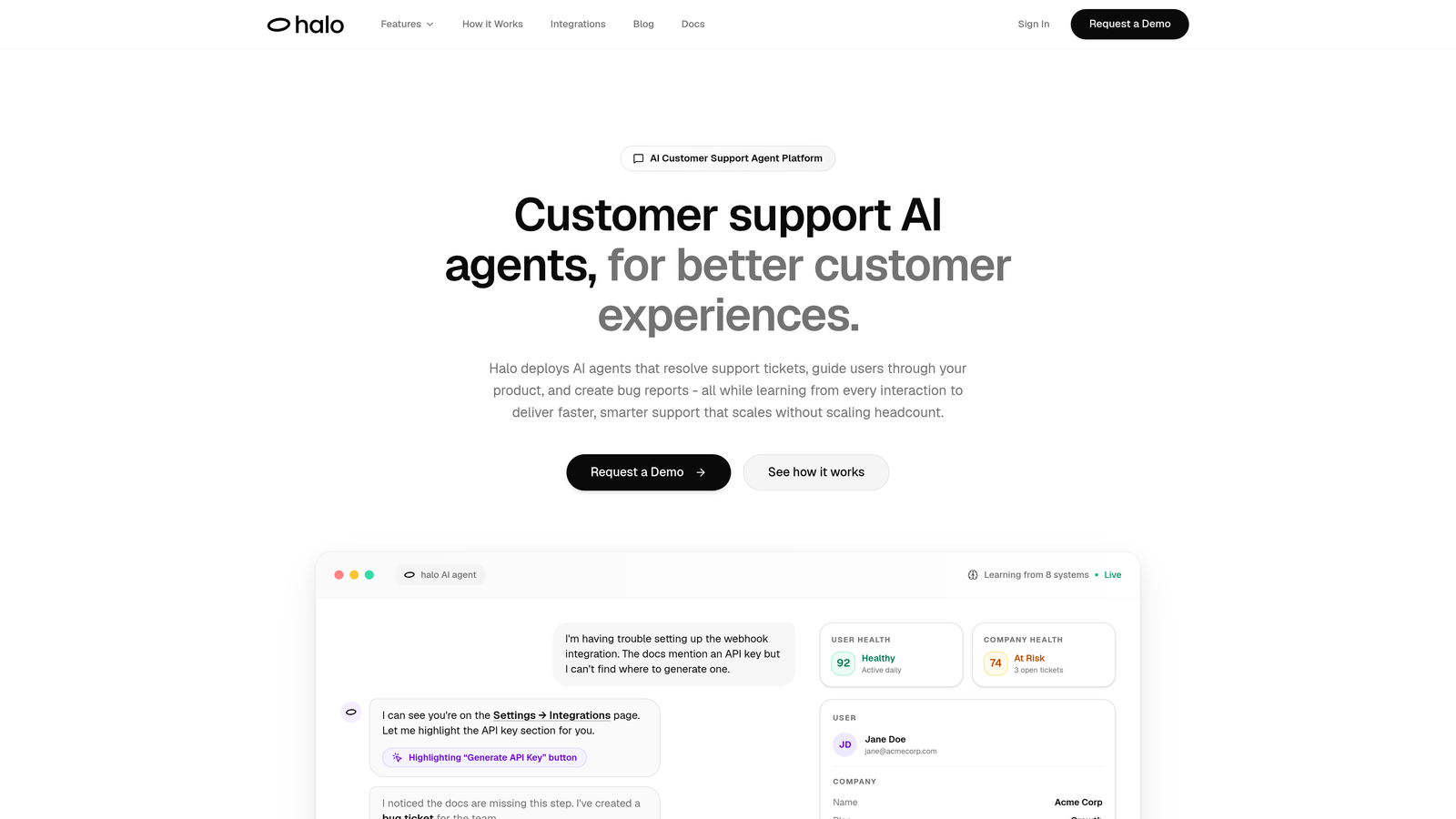
Halo AI is an AI-native customer support platform built specifically for SaaS companies, featuring intelligent agents that resolve tickets, provide contextual product guidance, and automatically create bug reports.
Where This Tool Shines
Unlike traditional helpdesks with AI bolted on, Halo was architected from the ground up for autonomous support. Its page-aware technology sees exactly what users see in your product, enabling the AI to provide contextual guidance that references specific UI elements and workflows.
The platform's continuous learning capability means every resolved ticket makes the system smarter. This approach transforms support from a cost center into an intelligence engine that surfaces product friction points, identifies feature gaps, and detects customer health signals across your entire user base.
Key Features
Page-Aware Chat Widget: Understands user context by seeing their current screen, enabling precise visual guidance through product features.
Automatic Bug Ticket Creation: Identifies technical issues during support interactions and creates detailed tickets in Linear or your development tools.
Smart Inbox with Business Intelligence: Surfaces revenue signals, churn risks, and product anomalies from support conversation patterns.
Continuous Learning Architecture: Improves resolution accuracy with every interaction, building institutional knowledge without manual training.
Native Stack Integrations: Connects to Slack, HubSpot, Intercom, Stripe, Zoom, and PandaDoc for complete business context.
Best For
SaaS product teams who need support automation that integrates with development workflows and provides intelligence beyond ticket resolution. Particularly valuable for companies where support interactions reveal product improvement opportunities and customer success signals.
Pricing
Contact for pricing; scales with usage and team size. Designed for companies prioritizing AI-first architecture over legacy helpdesk migration.
2. Intercom
Best for: Companies wanting unified messaging for support, engagement, and marketing in one platform.
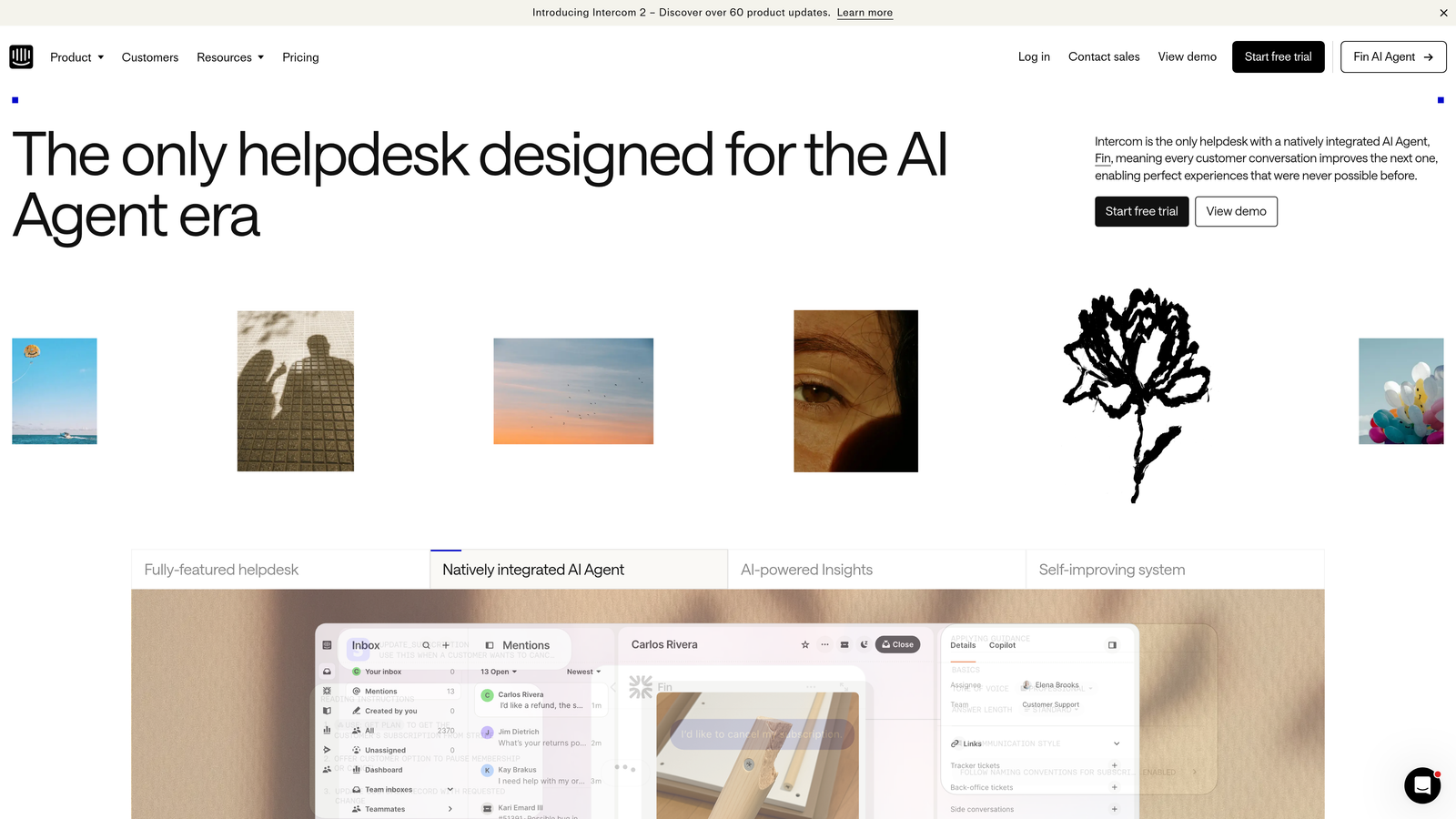
Intercom is an established customer messaging platform with Fin AI agent for automated conversations, combining support capabilities with engagement and marketing tools.
Where This Tool Shines
Intercom excels at blending support automation with proactive customer engagement. The platform treats every conversation as an opportunity—whether that's resolving a technical issue, onboarding a new user, or qualifying a sales lead.
Fin AI leverages GPT technology to provide natural language responses pulled from your knowledge base and previous conversations. The visual bot builder makes it accessible for non-technical teams to create sophisticated conversation flows without coding.
Key Features
Fin AI Agent: GPT-powered conversational AI that answers questions using your knowledge base with natural language understanding.
Product Tours: Automated onboarding sequences that guide users through features based on behavior triggers.
Conversation Routing: Intelligent assignment rules that direct inquiries to the right team based on topic, priority, or customer attributes.
Custom Bot Builder: Visual workflow designer for creating automated conversation paths without technical expertise.
App Marketplace: Extensive third-party integrations extending functionality across your tech stack.
Best For
SaaS companies that view support as part of a broader customer communication strategy, particularly those wanting to combine reactive support with proactive engagement and in-app messaging.
Pricing
Starts at $74/month for basic features; Fin AI charged separately per resolution. Total costs scale with conversation volume and feature requirements.
3. Zendesk
Best for: Enterprise SaaS operations requiring extensive customization, compliance certifications, and multi-brand support.
Zendesk is an enterprise-grade support platform with Answer Bot AI, offering robust workflow automation and customization options for large-scale operations.
Where This Tool Shines
Zendesk delivers the infrastructure enterprise SaaS companies need for complex support operations. Its strength lies in handling high ticket volumes across multiple channels, brands, and global teams while maintaining security standards required by regulated industries.
The platform's extensive API and customization capabilities mean technical teams can mold it to exact specifications. Advanced workflow triggers enable sophisticated automation beyond simple chatbot responses—routing tickets based on sentiment analysis, SLA urgency, or customer lifetime value.
Key Features
Answer Bot: AI that suggests knowledge base articles and can resolve simple tickets without human intervention.
Advanced Workflow Automation: Trigger-based actions that route, escalate, and manage tickets based on complex business rules.
Multi-Brand Support: Manage separate help centers, branding, and workflows for different products under one infrastructure.
Extensive API Access: Deep customization options for integrating with proprietary systems and building custom functionality.
Enterprise Compliance: SOC 2, HIPAA, GDPR certifications meeting security requirements for regulated industries.
Best For
Established SaaS companies with enterprise clients, complex support requirements, or regulatory compliance needs. Best suited for organizations with technical resources to leverage customization capabilities.
Pricing
Suite Team starts at $55/agent/month; Enterprise pricing varies based on volume and features. Implementation and customization often require additional investment.
4. Freshdesk
Best for: Mid-market SaaS teams seeking strong value and scalability without enterprise complexity.
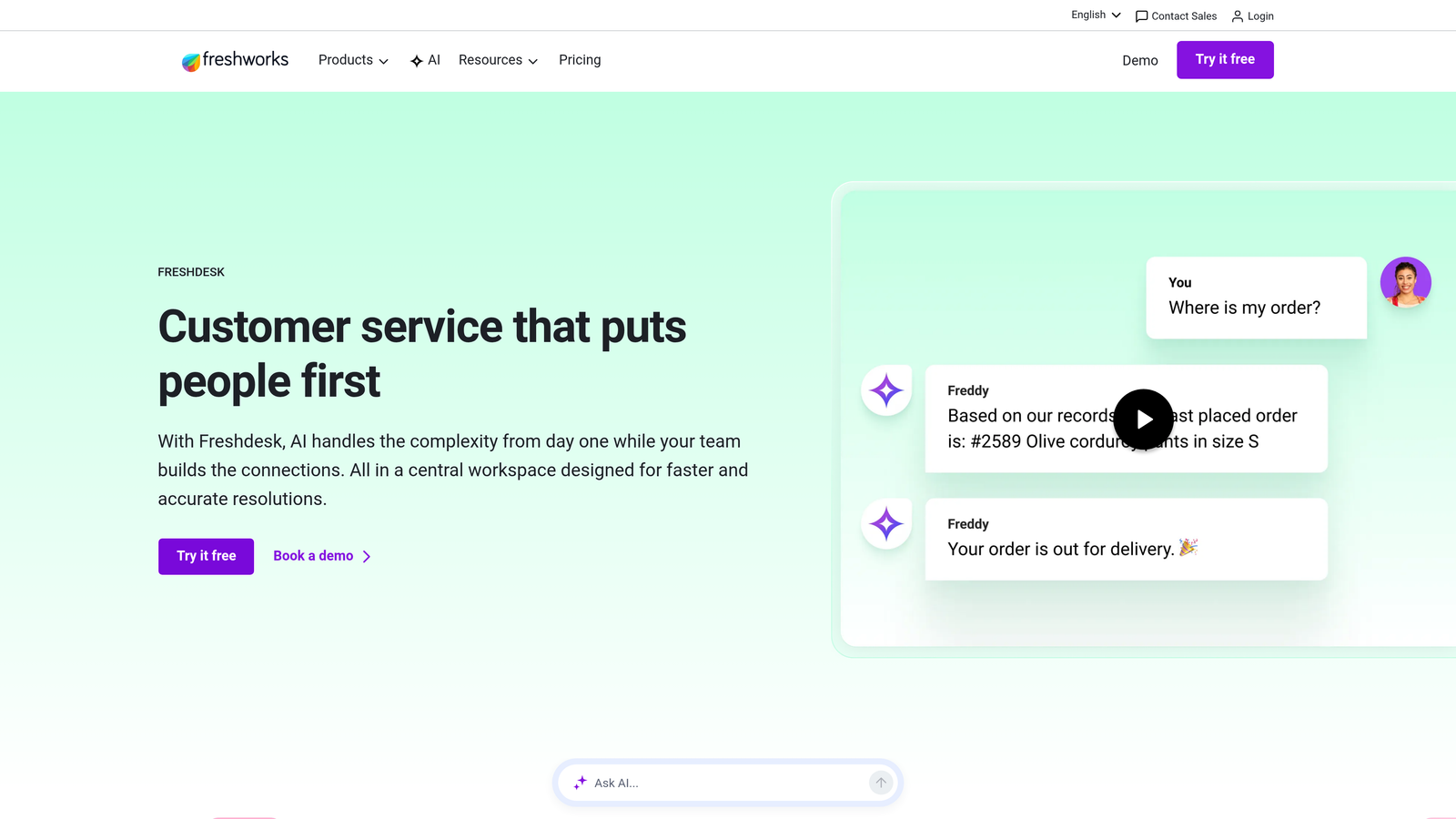
Freshdesk is a mid-market helpdesk solution with Freddy AI for ticket automation, offering practical features at competitive pricing for growing teams.
Where This Tool Shines
Freshdesk hits the sweet spot between functionality and affordability for SaaS companies in growth mode. Freddy AI handles ticket categorization, suggests responses to agents, and identifies patterns that inform support strategy—all at price points that don't require enterprise budgets.
The platform's marketplace provides over 1,000 integrations, giving growing companies flexibility to connect their expanding tech stack. SLA management features ensure accountability as support operations mature from scrappy startup to structured organization.
Key Features
Freddy AI: Automated ticket categorization, agent response suggestions, and pattern detection for workflow optimization.
Automated Assignment: Intelligent routing rules that distribute tickets based on agent expertise, workload, and availability.
Self-Service Portal: Branded knowledge base with search functionality reducing ticket volume through user self-resolution.
SLA Management: Configurable service level agreements with escalation triggers and performance tracking.
Integration Marketplace: Over 1,000 pre-built connectors to popular SaaS tools and business applications.
Best For
Growing SaaS companies that need professional support infrastructure without enterprise pricing, particularly teams expanding from 10-100 support agents.
Pricing
Free tier available for basic needs; Growth plan starts at $15/agent/month. Transparent pricing scales predictably with team size.
5. Help Scout
Best for: SaaS companies prioritizing personal customer relationships while enhancing agent productivity with AI.
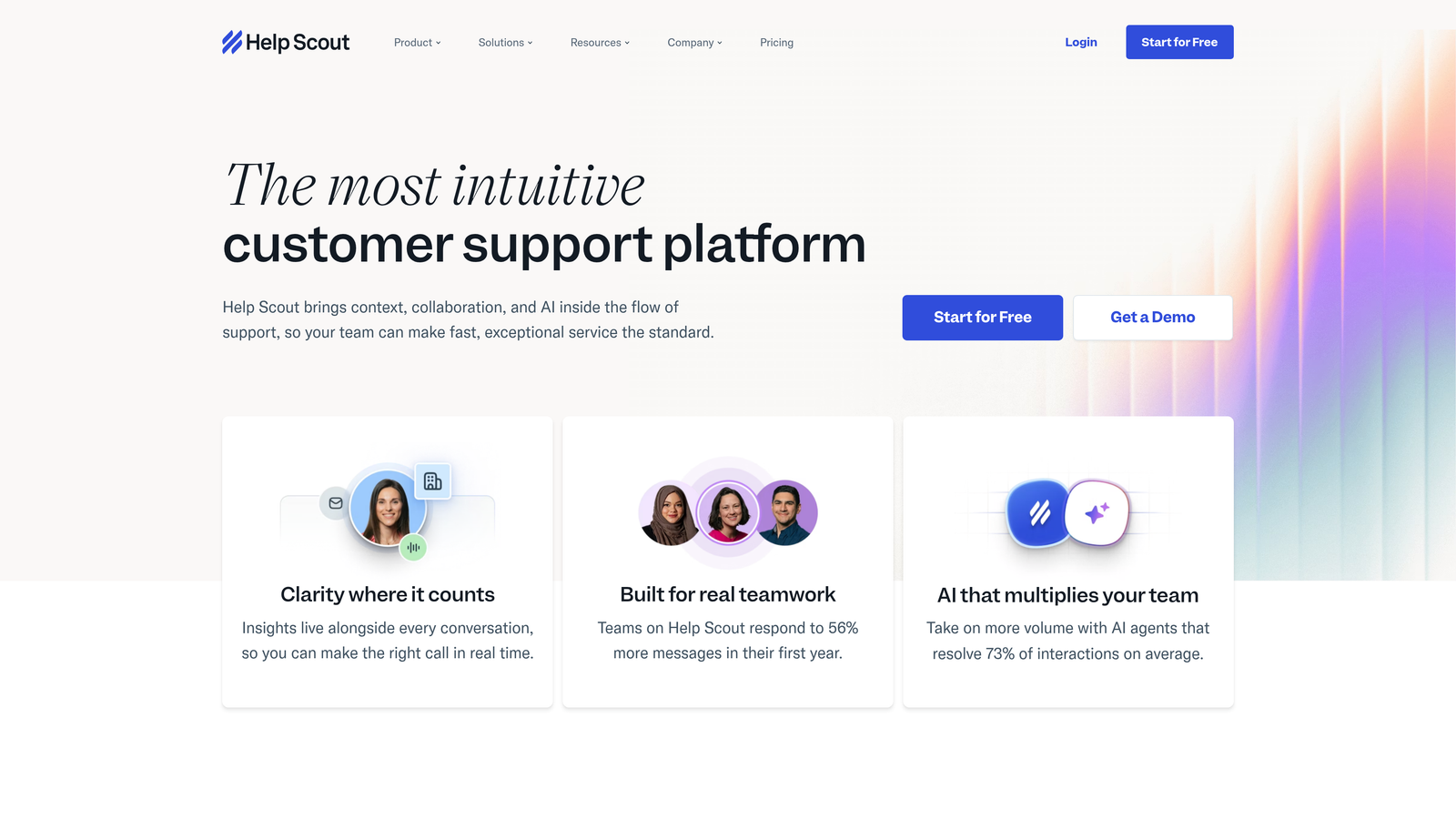
Help Scout is a human-centered support platform with AI Assist features that boost efficiency while maintaining relationship-focused interactions.
Where This Tool Shines
Help Scout takes a different philosophical approach—AI should enhance human agents, not replace them. AI Assist helps agents draft responses faster and summarize conversation history, but the platform design keeps human judgment central to customer interactions.
The Beacon widget provides contextual help based on what page users are viewing, surfacing relevant knowledge base articles before they need to contact support. This proactive approach reduces ticket volume while feeling helpful rather than obstructive.
Key Features
AI Assist: Helps agents draft responses and summarize long conversation threads for faster, more informed replies.
Beacon Widget: Context-aware help widget that suggests relevant articles based on user location in your product.
Docs Knowledge Base: Searchable documentation with AI-powered search improving article discovery.
Collision Detection: Prevents multiple agents from responding to the same conversation simultaneously.
Customer Satisfaction Surveys: Built-in feedback collection measuring support quality at the conversation level.
Best For
SaaS companies where customer relationships drive retention and expansion, particularly B2B products where support interactions build long-term partnerships rather than just resolve issues.
Pricing
Standard plan starts at $20/user/month with straightforward pricing. No hidden fees for AI features or conversation volume.
6. Drift
Best for: SaaS companies where support conversations frequently uncover expansion and upsell opportunities.
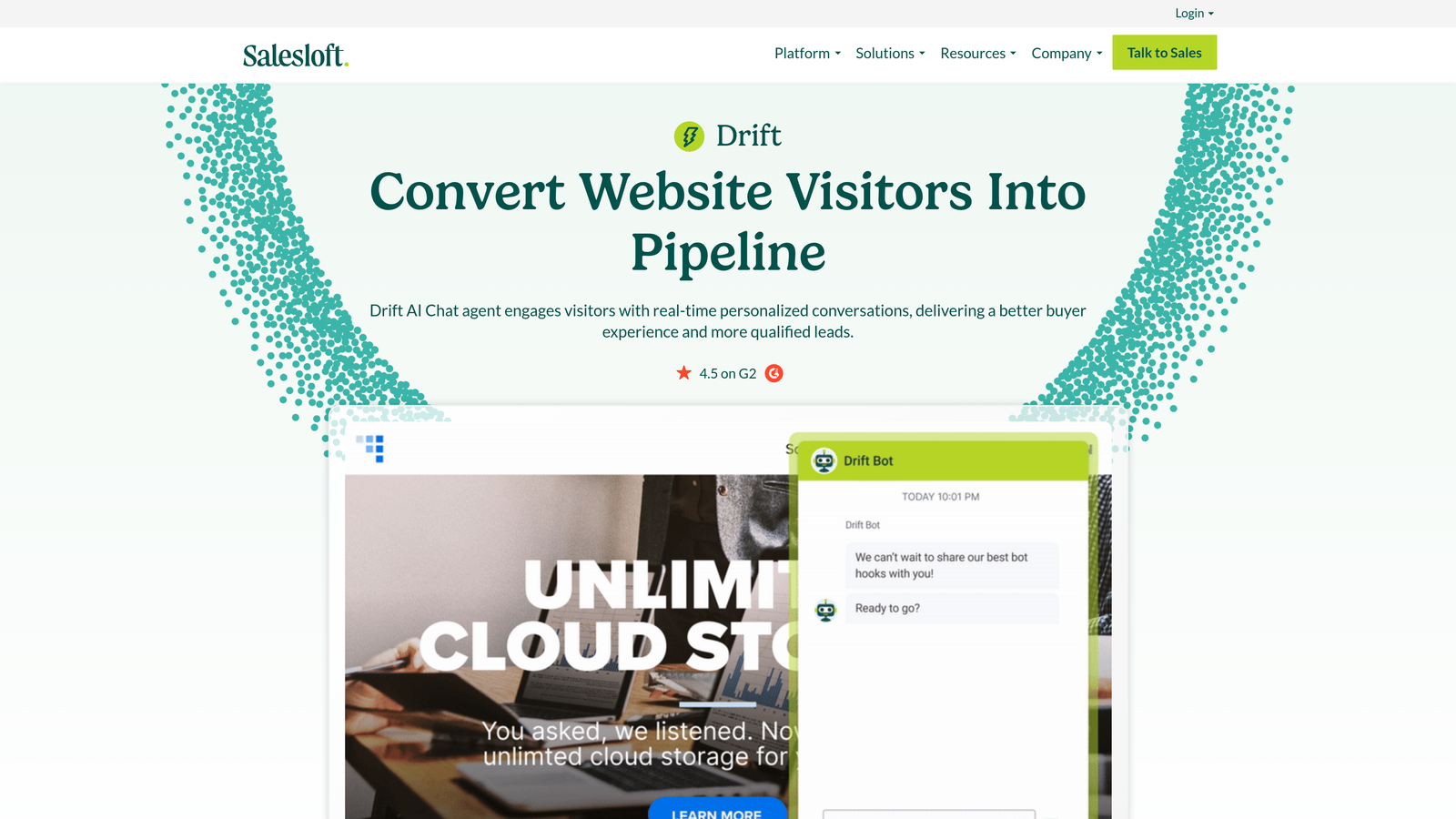
Drift is a conversational AI platform blending support automation with sales qualification, ideal when support interactions drive revenue.
Where This Tool Shines
Drift recognizes that in SaaS, the line between support and sales often blurs. A user asking about advanced features might be signaling upgrade intent. Someone inquiring about team functionality could be preparing for expansion. Drift's AI identifies these revenue signals and routes conversations accordingly.
The platform's account-based targeting means high-value customers receive different conversation experiences than free trial users. This tiered approach aligns support investment with customer value while maintaining quality across all segments.
Key Features
AI Chatbots with Qualification: Conversational flows that identify sales opportunities during support interactions.
Revenue Intelligence: Analytics connecting support conversations to pipeline and revenue outcomes.
Meeting Scheduling: Automated calendar integration for routing qualified conversations to sales or success teams.
Account-Based Targeting: Different conversation experiences based on customer tier, industry, or account value.
Video Messaging: Asynchronous video responses for complex issues requiring visual explanation.
Best For
B2B SaaS companies with sales-assisted models where support teams play a role in expansion revenue, particularly products with tiered pricing and upsell opportunities.
Pricing
Premium plan starts at $2,500/month, reflecting the platform's positioning as a revenue tool rather than cost-saving support solution.
7. Ada
Best for: Global SaaS companies needing multilingual automation at enterprise scale.
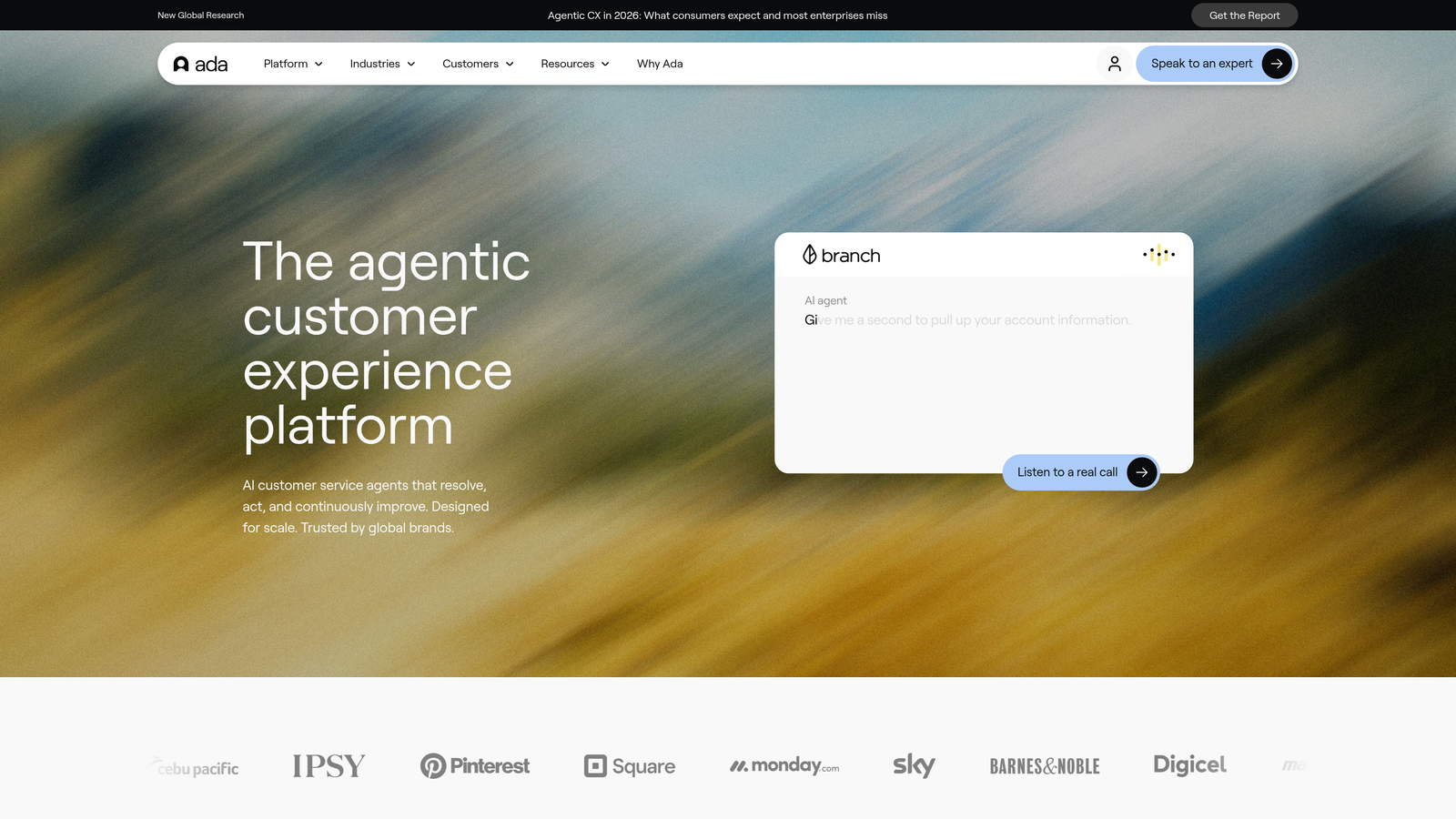
Ada is an enterprise automation platform specializing in high-volume, multilingual support with no-code bot building capabilities.
Where This Tool Shines
Ada solves the complexity of supporting global user bases across dozens of languages. Its generative AI operates within brand guardrails you define, ensuring consistent messaging across markets while adapting to cultural nuances.
The no-code builder empowers support teams to create and modify automation without engineering resources. This independence accelerates iteration as teams test conversation flows, refine responses, and optimize resolution rates based on real usage data.
Key Features
No-Code Automation Builder: Visual interface for creating sophisticated conversation flows without programming knowledge.
50+ Language Support: Native multilingual capabilities handling global customer bases from a single platform.
Generative AI with Guardrails: AI-generated responses constrained by brand voice guidelines and approved messaging frameworks.
Proactive Messaging: Automated outreach based on user behavior, subscription events, or product milestones.
Deep Backend Integrations: Connects to CRMs, billing systems, and proprietary databases for personalized automation.
Best For
Enterprise SaaS companies serving international markets, particularly those with high support volume across multiple languages and regions.
Pricing
Custom enterprise pricing based on conversation volume, languages supported, and integration complexity. Designed for companies handling millions of annual interactions.
8. Tidio
Best for: Early-stage SaaS companies needing quick setup and affordable automation.
Tidio is an accessible automation platform with Lyro AI chatbot, offering fast implementation and budget-friendly pricing for startups.
Where This Tool Shines
Tidio removes barriers to entry for SaaS companies just beginning their automation journey. The platform can be deployed in minutes rather than weeks, with Lyro AI providing conversational responses without extensive training or configuration.
The visual chatbot builder uses simple if-then logic that non-technical founders can grasp immediately. This accessibility means early-stage teams can implement meaningful automation without hiring support specialists or consultants.
Key Features
Lyro AI: Conversational AI that provides natural language responses using your knowledge base and website content.
Visual Flow Builder: Drag-and-drop interface for creating chatbot conversation paths based on user inputs.
Live Chat with Tracking: Real-time visitor monitoring showing what pages users view before contacting support.
Email Marketing Integration: Combines support conversations with email campaigns in a unified platform.
E-commerce Plugins: Pre-built integrations for Shopify and WordPress simplifying setup for common platforms.
Best For
Bootstrap SaaS startups and small teams needing functional automation quickly without significant upfront investment or technical implementation.
Pricing
Free tier available for basic live chat; Lyro AI starts at $39/month. Transparent pricing with no per-agent fees at entry levels.
9. Kustomer
Best for: Subscription SaaS with complex customer histories requiring deep timeline context.
Kustomer is a customer service CRM with AI-powered intelligence, providing unified customer timelines for subscription-based products.
Where This Tool Shines
Kustomer treats support as relationship management rather than ticket resolution. The unified timeline view shows every customer interaction—support conversations, billing events, product usage, sales calls—in chronological context. This holistic perspective proves invaluable for subscription SaaS where understanding customer journey impacts churn prevention.
The platform's custom object modeling means you can structure data around your specific business logic. Subscription tiers, usage metrics, feature flags, or custom attributes all become first-class data informing automated workflows and agent responses.
Key Features
Unified Customer Timeline: Chronological view combining support, billing, usage, and interaction data in one interface.
AI Sentiment Analysis: Automated detection of customer frustration, satisfaction, or urgency guiding prioritization.
Proactive Outreach Automation: Triggered messaging based on subscription events, usage patterns, or customer health scores.
Custom Object Modeling: Flexible data structure adapting to your specific business logic and customer attributes.
Omnichannel Management: Unified handling of conversations across chat, email, social media, and voice channels.
Best For
Subscription-based SaaS companies where customer lifetime value depends on understanding complex histories and preventing churn through informed support interactions.
Pricing
Enterprise plan starts at $89/user/month, reflecting the platform's positioning as a comprehensive CRM rather than basic helpdesk.
Finding Your Automation Match
The right automated support tool depends on where you are and where you're heading. Early-stage teams often prioritize quick setup and affordable entry points—Tidio or Freshdesk deliver immediate value without overwhelming complexity. Growing companies balancing scalability with budget constraints find strong options in Help Scout or Freshdesk's mid-tier plans.
If your support team integrates tightly with product development, tools that connect support insights to development workflows create compounding value. Halo's automatic bug ticket creation and page-aware context exemplify this approach, transforming support from reactive firefighting into proactive product intelligence.
Enterprise operations with global reach, compliance requirements, or multi-brand complexity need the infrastructure depth of Zendesk, Ada, or Kustomer. These platforms handle the organizational complexity that comes with scale—multiple teams, intricate workflows, and extensive customization requirements.
For SaaS companies where support conversations drive revenue, Drift's sales-aware automation or Intercom's unified messaging platform align support investment with business outcomes. The distinction matters: are you optimizing for cost reduction or revenue expansion?
Your support team shouldn't scale linearly with your customer base. Let AI agents handle routine tickets, guide users through your product, and surface business intelligence while your team focuses on complex issues that need a human touch. See Halo in action and discover how continuous learning transforms every interaction into smarter, faster support.