9 Best Automated Support Tools for Tech Companies in 2026
Tech companies need automated support that delivers instant, technically accurate answers without pulling engineers away from product development. This guide evaluates the nine best automated support tools for tech companies in 2026, comparing platforms on technical depth, integration capabilities, and scalability to help you choose the right solution for handling routine inquiries, intelligent ticket routing, and continuous learning from customer interactions.
 Grant CooperFounder12 min read
Tech companies face a unique support challenge: users expect instant, technically accurate answers while your engineering team needs to stay focused on building product. Manual ticket handling drains resources, creates bottlenecks during product launches, and frustrates customers who just want to get back to work.
Automated support tools solve this by handling routine inquiries, routing complex issues intelligently, and learning from every interaction. This guide covers the top platforms built specifically for tech company workflows—from AI agents that understand your product context to automation engines that integrate with your existing stack.
We evaluated each tool on technical depth, integration capabilities, scalability, and value for engineering-focused organizations. Here are the platforms transforming how tech companies deliver support.
1. Halo AI
Best for: Tech companies wanting AI-native support that learns continuously and integrates with developer workflows
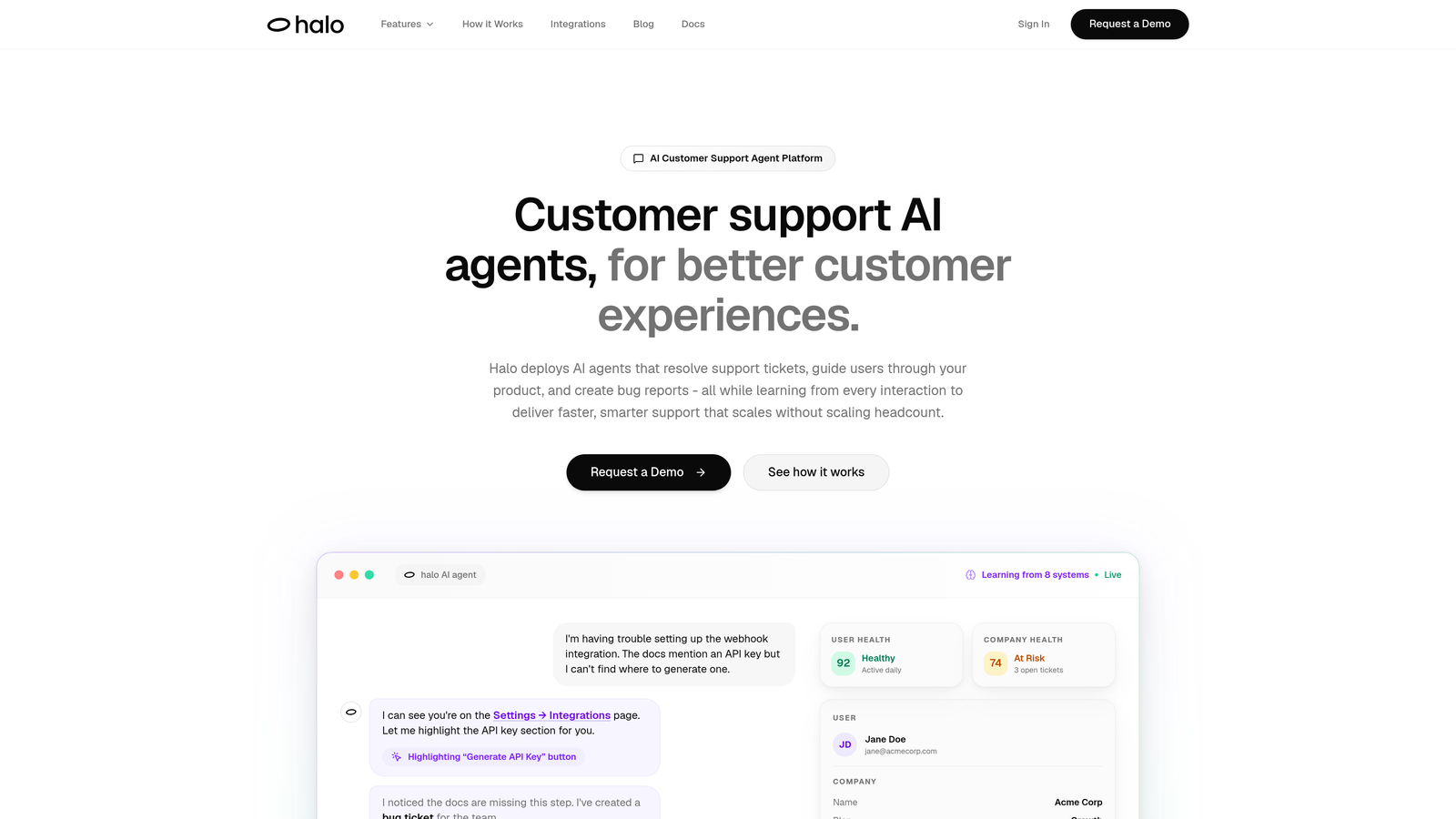
Halo AI is an AI-native customer support platform designed specifically for tech companies that need intelligent automation without sacrificing technical accuracy.
Where This Tool Shines
Unlike traditional helpdesks with AI bolted on, Halo was built AI-first. Its agents don't just follow scripts—they understand context, learn from every interaction, and actually resolve tickets autonomously rather than just routing them.
The page-aware chat widget is a game-changer for product support. It sees what users see in your application, enabling visual guidance that traditional chatbots can't provide. When users get stuck on a specific screen, Halo's agents can reference the exact UI elements they're looking at.
Key Features
AI Agents for Autonomous Resolution: Handles common technical inquiries, API questions, and troubleshooting without human intervention, learning to improve with each ticket.
Page-Aware Context: Chat widget understands user location within your product, enabling precise visual guidance and contextual help that reduces back-and-forth.
Smart Inbox with Business Intelligence: Goes beyond ticket metrics to surface customer health signals, revenue intelligence, and anomaly detection across your support data.
Auto Bug Ticket Creation: Identifies genuine bugs during support interactions and automatically creates detailed tickets in Linear with reproduction steps and context.
Deep Stack Integration: Connects to Linear, Slack, HubSpot, Intercom, Stripe, Zoom, and your entire business stack for operational intelligence.
Best For
B2B tech companies and product teams who need support automation that understands technical terminology, integrates tightly with engineering workflows, and provides business intelligence beyond basic ticket metrics. Particularly valuable for teams using Linear for bug tracking or those prioritizing continuous improvement.
Pricing
Contact for custom pricing based on your support volume and integration requirements. Offers product demonstrations to evaluate fit.
2. Intercom
Best for: Product-led companies prioritizing in-app engagement and customer messaging alongside support automation
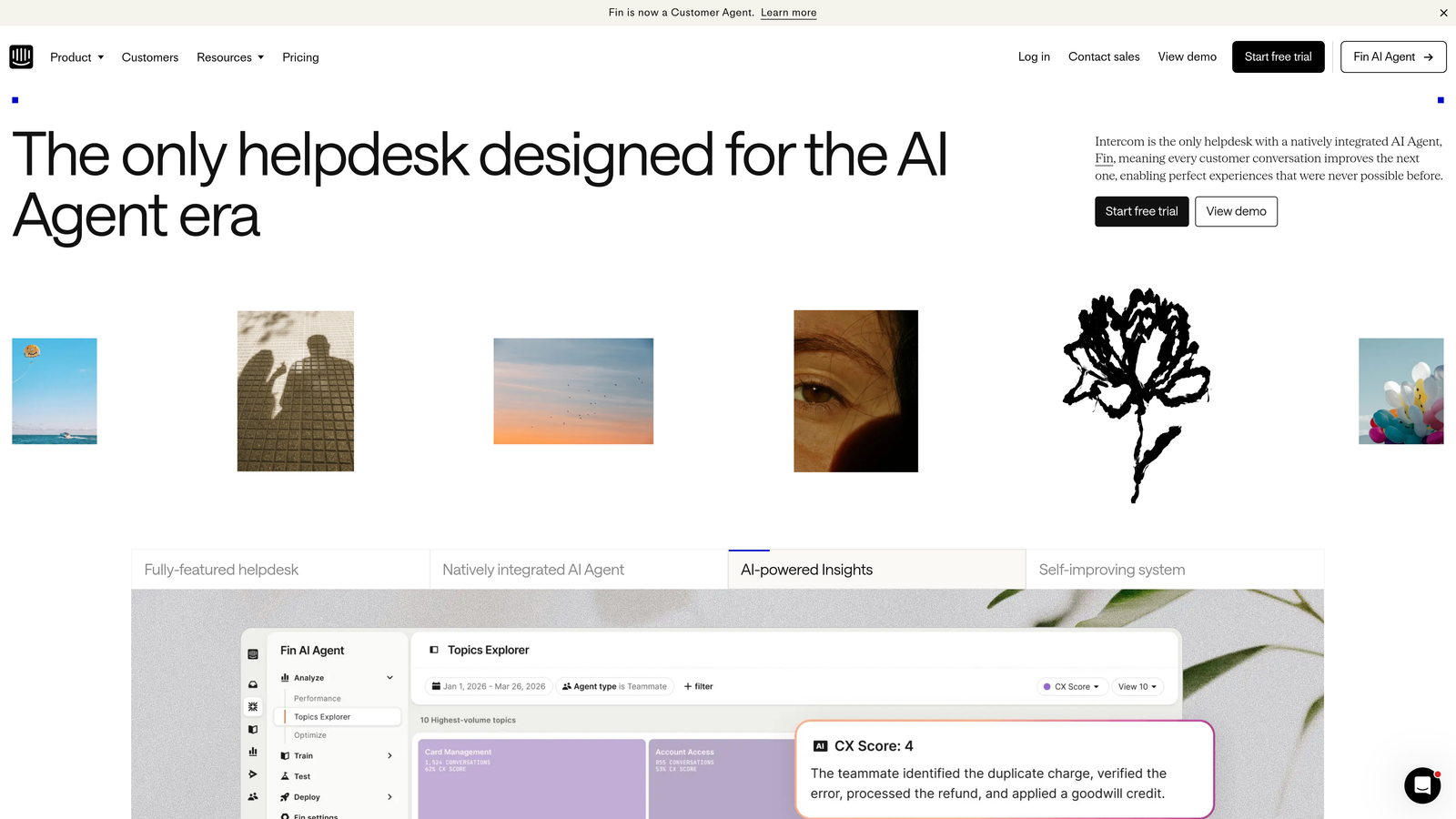
Intercom is a customer messaging platform with Fin AI agent capabilities and strong in-app engagement tools for product-focused teams.
Where This Tool Shines
Intercom excels at blending support with product engagement. The platform doesn't just handle tickets—it enables proactive outreach, product tours, and targeted messaging based on user behavior.
Fin AI has evolved into a capable automated agent that can be trained on your specific knowledge base. The resolution reporting gives clear visibility into what Fin handles autonomously versus what requires human escalation.
Key Features
Fin AI Agent: Autonomous AI agent trained on your documentation and help center content, handling routine inquiries with natural language understanding.
In-App Messaging and Tours: Proactive product tours and targeted messages triggered by user behavior, reducing support volume through better onboarding.
Customizable Bot Workflows: Visual workflow builder for creating automated conversation paths that qualify issues before routing to humans.
Resolution Reports: Detailed analytics showing what Fin resolves independently, handoff rates, and deflection metrics to measure AI effectiveness.
Help Center Integration: Seamlessly connects to your knowledge base, suggesting relevant articles before escalating to live support.
Best For
Product-led SaaS companies that want to combine support automation with user engagement and onboarding. Works particularly well for teams already using Intercom for marketing or sales who want unified customer communication.
Pricing
Platform starts at $74/month for basic features. Fin AI is priced separately per resolution, which can add significant cost at scale but ensures you only pay for successful automations.
3. Zendesk
Best for: Enterprise tech companies needing mature AI features, extensive integrations, and robust SLA management
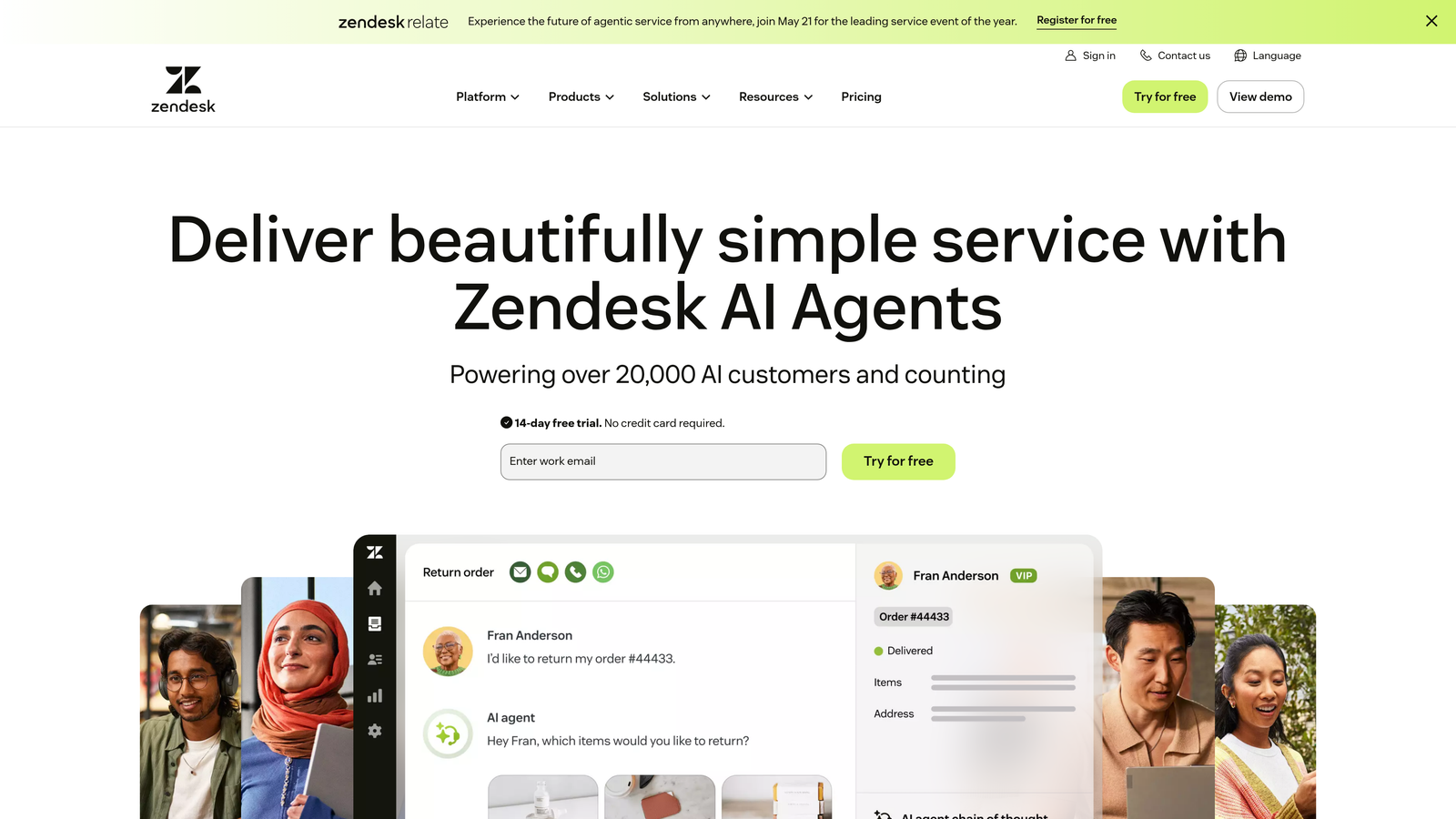
Zendesk is an enterprise-grade helpdesk platform with comprehensive AI capabilities and one of the largest integration ecosystems in the support industry.
Where This Tool Shines
Zendesk's strength lies in its maturity and breadth. With over 1,500 marketplace integrations, it connects to virtually any tool in your tech stack. The platform handles complex enterprise requirements like advanced SLA management and multi-brand support.
Answer Bot uses machine learning to suggest relevant help articles and can resolve simple tickets automatically. While not as sophisticated as newer AI-native platforms, it's proven and reliable for high-volume operations.
Key Features
Answer Bot with Machine Learning: Analyzes ticket content and suggests or automatically sends relevant knowledge base articles, learning from agent feedback over time.
Advanced Routing and SLA Management: Sophisticated rules for ticket assignment, priority escalation, and SLA tracking across multiple service tiers.
Extensive Marketplace: Over 1,500 pre-built integrations covering everything from CRMs to dev tools, plus robust API for custom connections.
Multi-Channel Support: Unified inbox for email, chat, social media, phone, and messaging apps with consistent context across channels.
Custom Analytics: Powerful reporting engine with custom dashboards, scheduled reports, and data export for deeper analysis.
Best For
Enterprise tech companies with complex support operations, multiple product lines, or strict compliance requirements. Best suited for organizations that need proven reliability and comprehensive vendor ecosystem over cutting-edge AI.
Pricing
Suite Team plan starts at $55/agent/month. Enterprise features and AI capabilities require higher tiers, with costs scaling significantly for large teams.
4. Freshdesk
Best for: Growing tech startups needing scalable automation and AI features at competitive pricing
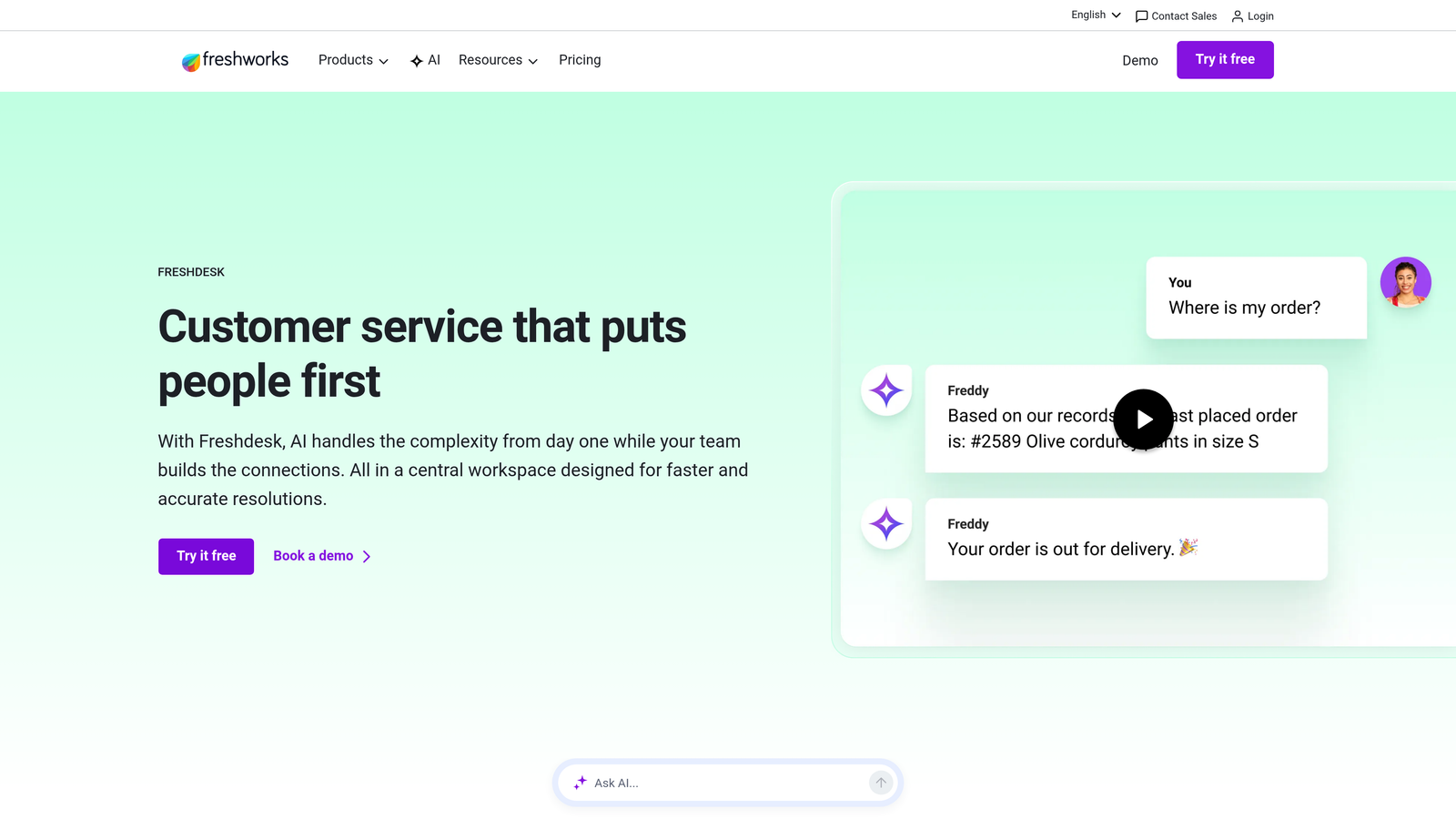
Freshdesk is a scalable helpdesk solution with Freddy AI automation and attractive pricing for teams transitioning from basic support tools.
Where This Tool Shines
Freshdesk delivers surprisingly robust AI and automation capabilities at price points that work for scaling startups. Freddy AI handles ticket categorization, priority assignment, and agent suggestions without the premium pricing of enterprise platforms.
The scenario automation engine lets you build sophisticated workflows that trigger based on ticket properties, customer data, or time-based rules. This workflow flexibility rivals more expensive platforms.
Key Features
Freddy AI: Automatically categorizes tickets, suggests responses to agents, and predicts customer satisfaction risk based on conversation patterns.
Scenario Automations: Workflow builder for creating conditional automations triggered by ticket updates, customer properties, or time-based events.
Integrated Knowledge Base: Built-in help center with SEO optimization, multi-language support, and analytics on article effectiveness.
Team Collaboration: Internal notes, ticket sharing, and parent-child ticket linking for coordinating on complex technical issues.
Marketplace Integrations: Growing ecosystem of integrations with developer tools, CRMs, and business applications.
Best For
Budget-conscious tech startups and scale-ups that need enterprise-grade automation without enterprise pricing. Particularly valuable for teams outgrowing basic tools but not ready for Zendesk-level investment.
Pricing
Free tier available for small teams. Paid plans start at $15/agent/month, with AI features included in mid-tier plans rather than sold separately.
5. Help Scout
Best for: Developer-focused teams valuing simplicity, clean design, and strong documentation integration
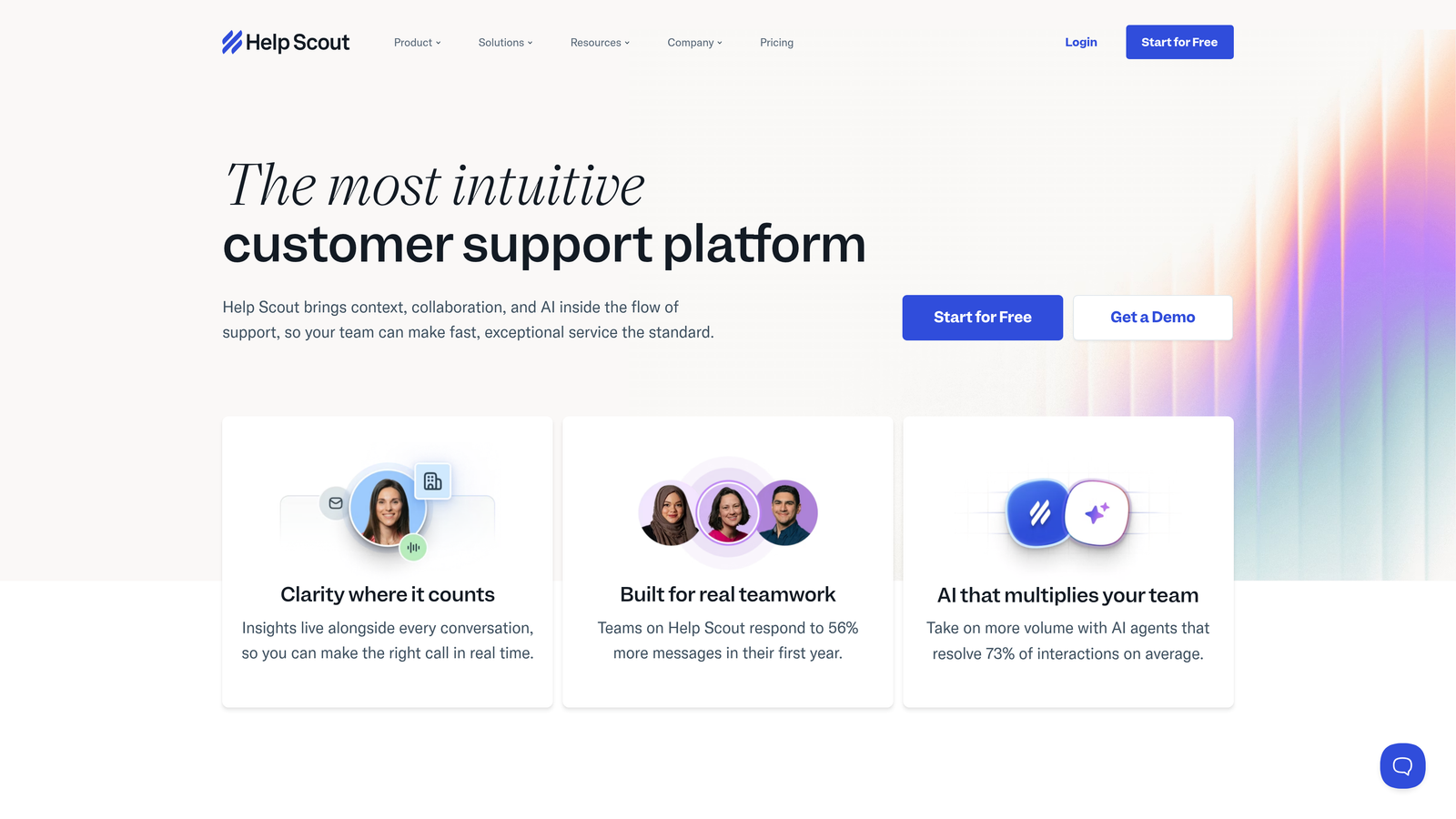
Help Scout is a minimal helpdesk platform designed for teams that prioritize user experience and seamless knowledge base integration over feature complexity.
Where This Tool Shines
Help Scout strips away the complexity that bogs down many support platforms. The interface feels more like email than traditional helpdesk software, reducing onboarding time and keeping agents focused on conversations rather than navigating features.
The Docs knowledge base with Beacon widget creates a seamless self-service experience. Beacon intelligently surfaces relevant articles as users browse your site or product, reducing ticket volume through proactive help.
Key Features
Shared Inbox with Collision Detection: Clean email-like interface where multiple agents can collaborate without accidentally duplicating responses.
Docs and Beacon Widget: Integrated knowledge base with embeddable widget that suggests relevant articles based on page context and user behavior.
AI Drafts and Summarization: AI-powered features that draft responses based on conversation context and summarize long ticket threads for quick agent review.
Customer Profiles: Automatic consolidation of customer history, properties, and conversation context without manual CRM data entry.
API-First Architecture: Developer-friendly API for custom integrations and workflow automation beyond the standard feature set.
Best For
Developer-focused teams and technical product companies that value clean interfaces and strong documentation over feature bloat. Works particularly well for teams with technical users who prefer self-service when possible.
Pricing
Starts at $20/user/month with AI features included. Pricing scales linearly without complex tier structures or per-resolution charges.
6. Front
Best for: Teams sharing support responsibilities across multiple departments with AI-powered triage
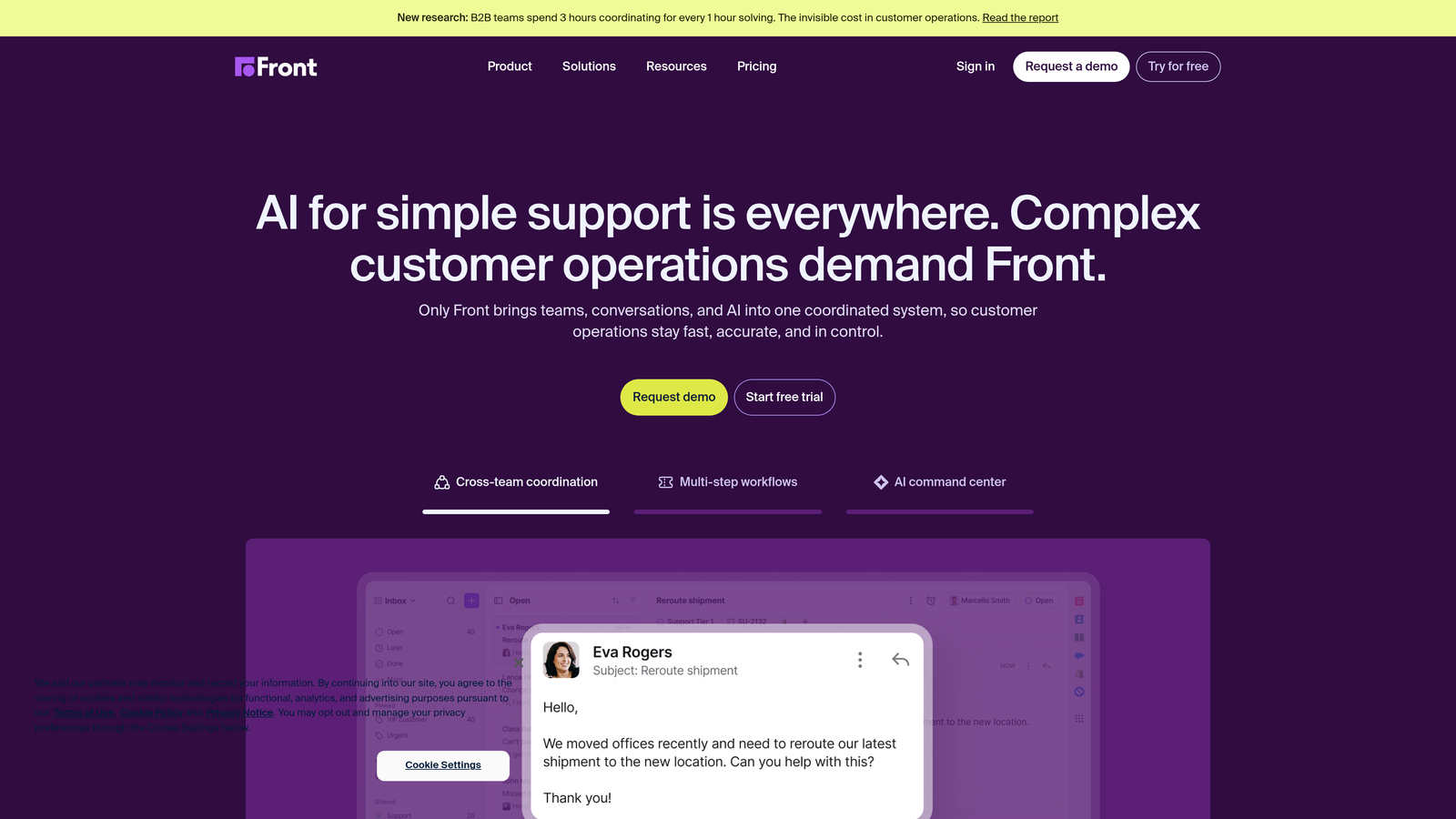
Front is a collaborative inbox platform that excels when support isn't handled by a dedicated team but shared across product, engineering, and success functions.
Where This Tool Shines
Front recognizes that in many tech companies, support isn't isolated to a support team. Engineers answer technical questions, product managers handle feature requests, and success teams manage strategic accounts. Front's shared inbox model makes this cross-functional approach work.
The AI triage automatically tags and routes incoming messages based on content, urgency, and required expertise. Internal comments let team members collaborate on responses without cluttering the customer-facing thread.
Key Features
Shared Inbox with Internal Comments: Team members collaborate on responses with internal notes and @mentions without exposing internal discussion to customers.
AI Triage and Auto-Tagging: Automatically categorizes incoming messages, assigns priority levels, and routes to appropriate team members based on content analysis.
Multi-Channel Consolidation: Unifies email, social media messages, SMS, and chat into single threaded conversations per customer.
Team Analytics: Visibility into workload distribution, response times by team member, and collaboration patterns to balance support responsibilities.
CRM and Tool Integrations: Connects to Salesforce, HubSpot, and developer tools to surface customer context without switching platforms.
Best For
Tech companies where support is distributed across multiple teams rather than centralized. Particularly valuable for early-stage companies where everyone handles customer questions or organizations with specialized technical support tiers.
Pricing
Starts at $19/seat/month for basic features. AI capabilities and advanced automation require higher-tier plans around $49/seat/month.
7. Ada
Best for: High-volume technical support operations focused on maximum ticket deflection
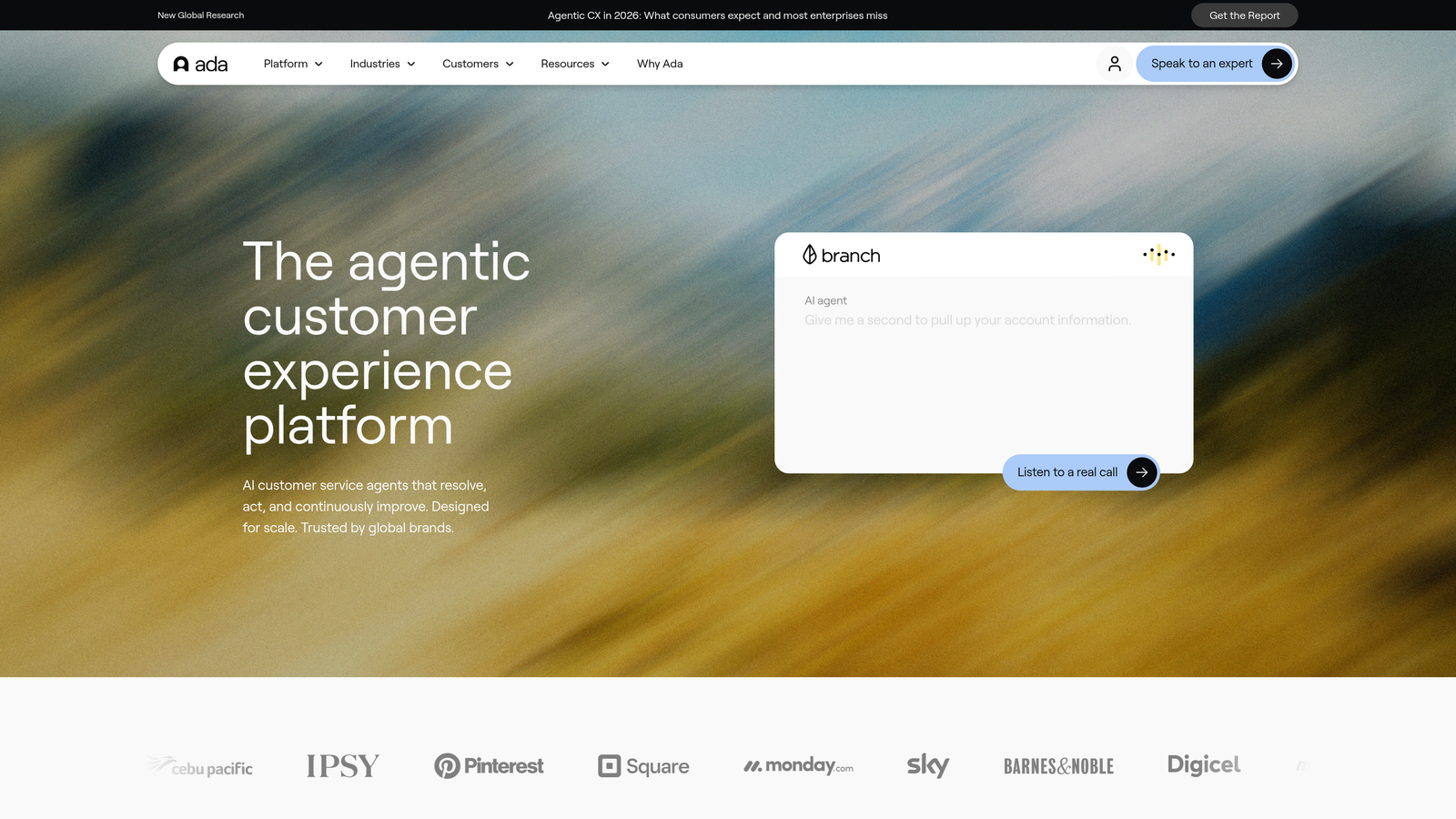
Ada is an AI-first automation platform designed specifically for deflecting high volumes of repetitive inquiries through intelligent self-service.
Where This Tool Shines
Ada's entire focus is automated resolution at scale. The no-code bot builder lets non-technical team members create sophisticated conversation flows that handle complex multi-step troubleshooting without developer involvement.
The platform excels at deflection rate optimization. Detailed analytics show exactly where users drop off in automated flows, enabling continuous refinement of conversation paths to maximize resolution without human handoff.
Key Features
No-Code AI Agent Builder: Visual interface for creating conversation flows, decision trees, and conditional logic without writing code or requiring developer resources.
Automated Resolution with Handoff: Handles complete resolution autonomously when possible, seamlessly transferring to human agents with full context when needed.
Deflection Rate Analytics: Detailed metrics on automation effectiveness, conversation drop-off points, and opportunities to improve self-service resolution.
Multi-Language Support: Built-in translation capabilities for serving global technical user bases without maintaining separate knowledge bases.
Enterprise Security Compliance: SOC 2 Type II, GDPR, and HIPAA compliance for regulated industries with strict data handling requirements.
Best For
Tech companies with high support volumes where reducing ticket load is a primary goal. Works best when you have well-documented processes and clear troubleshooting paths that can be automated.
Pricing
Custom pricing based on resolution volume and feature requirements. Typically structured around successful automated resolutions rather than per-seat licensing.
8. Kustomer
Best for: Tech companies needing unified customer timeline visibility and AI-powered sentiment analysis
Kustomer is a CRM-style support platform that organizes all customer interactions into a unified timeline with AI-powered insights into customer sentiment and intent.
Where This Tool Shines
Kustomer approaches support from a customer-centric rather than ticket-centric perspective. Instead of viewing isolated tickets, agents see a complete customer timeline including support history, product usage, billing events, and custom business data.
The AI sentiment and intent detection analyzes conversation tone and underlying customer needs in real-time. This helps agents understand not just what customers are asking, but why they're frustrated or at risk of churning.
Key Features
Unified Customer Timeline: Single view consolidating all customer touchpoints, support interactions, product events, and business data chronologically.
AI Sentiment and Intent Detection: Real-time analysis of conversation tone, urgency, and underlying customer needs to prioritize responses and flag at-risk accounts.
Omnichannel Conversation History: Threaded conversations that span email, chat, social media, and phone without fragmenting into separate tickets.
Business Process Automation: Workflow engine that triggers actions across your business stack based on support interactions and customer behavior.
Custom Objects and Data Modeling: Flexibility to model your specific business data structure and surface relevant context in support conversations.
Best For
B2B tech companies where understanding customer health and journey context is as important as resolving individual issues. Particularly valuable for teams managing strategic accounts or complex customer relationships.
Pricing
Starts at $89/user/month for core features. Enterprise capabilities and advanced AI require higher-tier plans with custom pricing.
9. Drift
Best for: Tech companies needing tight alignment between support and sales with revenue-focused automation
Drift is a conversational AI platform that bridges support and sales, routing conversations based on revenue potential and buyer intent.
Where This Tool Shines
Drift recognizes that not all conversations are support issues—many are sales opportunities. The platform's conversational AI qualifies visitors, routes high-intent prospects to sales, and handles support inquiries differently based on account value.
Meeting scheduling automation eliminates the back-and-forth of coordinating demos or technical deep-dives. When a conversation requires live interaction, Drift automatically books time with the right team member based on availability and expertise.
Key Features
Conversational AI with Sales Routing: Intelligent qualification that routes high-value prospects to sales while directing support inquiries to appropriate resources based on account tier.
Meeting Scheduling Automation: Automated calendar coordination that books demos, technical consultations, or escalation calls without manual scheduling.
Account-Based Targeting: Personalized conversation experiences based on company, industry, and account value to prioritize strategic prospects.
Revenue Intelligence Reporting: Analytics connecting conversations to pipeline generation, deal velocity, and revenue attribution.
Video and Voice Capabilities: Embedded video chat and voice calling for technical demonstrations or complex issue resolution requiring screen sharing.
Best For
Product-led growth companies where website visitors could be either support users or sales prospects. Works particularly well when support and sales teams need to collaborate on account strategy.
Pricing
Custom pricing based on conversation volume and feature requirements. Premium tier typically starts around $2,500/month, positioning it as an enterprise investment.
Making the Right Choice
The right automated support tool depends on your specific technical environment and operational priorities. Choose Halo AI if you want AI-native support that learns from every interaction and integrates deeply with your developer stack. The continuous learning and page-aware context make it particularly valuable for product-focused tech companies.
Intercom suits product-led companies prioritizing in-app engagement alongside support. Zendesk remains the choice for enterprise complexity and proven reliability. For budget-conscious scaling startups, Freshdesk delivers strong automation at competitive pricing without sacrificing essential features.
Help Scout appeals to developer-focused teams valuing simplicity and clean interfaces. Front works best when multiple team members share support responsibilities across departments. Ada excels at high-volume deflection when reducing ticket load is your primary goal.
Kustomer provides the deepest customer journey visibility for teams managing strategic accounts. Drift makes sense when support and sales need tight alignment and revenue attribution matters as much as resolution metrics.
Your support team shouldn't scale linearly with your customer base. Let AI agents handle routine tickets, guide users through your product, and surface business intelligence while your team focuses on complex issues that need a human touch. See Halo in action and discover how continuous learning transforms every interaction into smarter, faster support.
Start with free trials of the top contenders that match your primary use case. Most platforms offer 14-30 day trials that let you test with real tickets and evaluate how well they integrate with your existing workflows.