9 Best Automated Support Platforms by Cost in 2026
This comprehensive comparison examines nine automated support platform cost structures for 2026, helping businesses understand total ownership expenses beyond base pricing. The guide analyzes actual pricing models, setup fees, integration costs, and scaling expenses across platforms serving startups handling 500 monthly tickets to enterprises processing 50,000+, revealing how automated support platform costs can range from hundreds to tens of thousands of dollars annually.
 Matt PattoliFounder11 min read
Finding the right automated support platform isn't just about features—it's about finding the pricing model that aligns with your support volume, team size, and growth trajectory. Whether you're a startup handling 500 tickets monthly or an enterprise processing 50,000, the cost difference between platforms can range from a few hundred dollars to tens of thousands annually.
This guide breaks down nine leading automated support platforms by their actual pricing structures, helping you understand not just the sticker price but the total cost of ownership including setup, integrations, and scaling costs.
1. Halo AI
Best for: Teams wanting AI-first support automation without per-resolution or per-seat pricing complexity
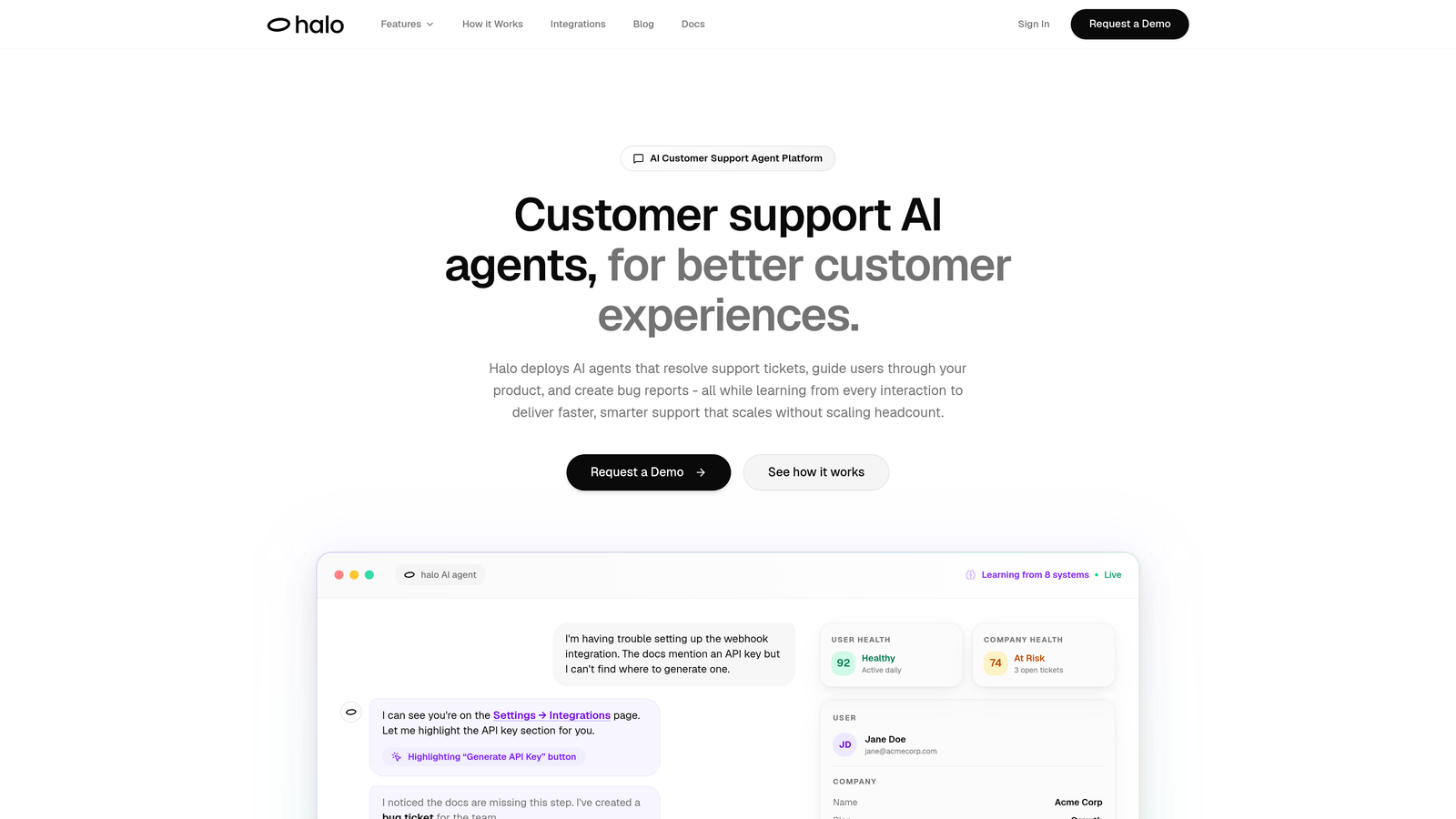
Halo AI is an AI-first customer support platform where intelligent agents resolve tickets, provide page-aware guidance, and learn continuously from every interaction.
Where This Tool Shines
Unlike platforms that bolt AI onto existing helpdesk infrastructure, Halo AI builds everything around autonomous agents from the ground up. This architectural difference matters when you're evaluating cost because you're not paying separately for AI capabilities, integrations, or intelligence features.
The platform's page-aware context means agents see exactly what your users see, enabling visual guidance that reduces back-and-forth resolution time. Every interaction feeds the learning system, making responses progressively smarter without manual training.
Key Features
Intelligent AI Agents: Autonomous agents that resolve tickets end-to-end with continuous learning from every customer interaction.
Page-Aware Chat Widget: Visual UI guidance that sees what users see, enabling contextual support without screenshots or descriptions.
Smart Inbox with Business Intelligence: Analytics that surface customer health signals, revenue intelligence, and anomaly detection beyond basic support metrics.
Auto Bug Ticket Creation: Automatically generates engineering tickets with full context when product issues are identified.
Multi-System Integrations: Native connections to Linear, Slack, HubSpot, Intercom, Stripe, Zoom, PandaDoc, and Fathom without additional integration costs.
Best For
B2B SaaS companies and product teams that want support automation to scale without scaling headcount. Particularly valuable if you're currently using systems like Zendesk, Freshdesk, or Intercom and want AI capabilities that go beyond scripted responses.
Pricing
Custom pricing based on your support volume and needs. AI capabilities, integrations, and business intelligence are included in the base platform rather than charged as separate add-ons.
2. Intercom
Best for: Product-led companies wanting unified messaging with AI automation capabilities
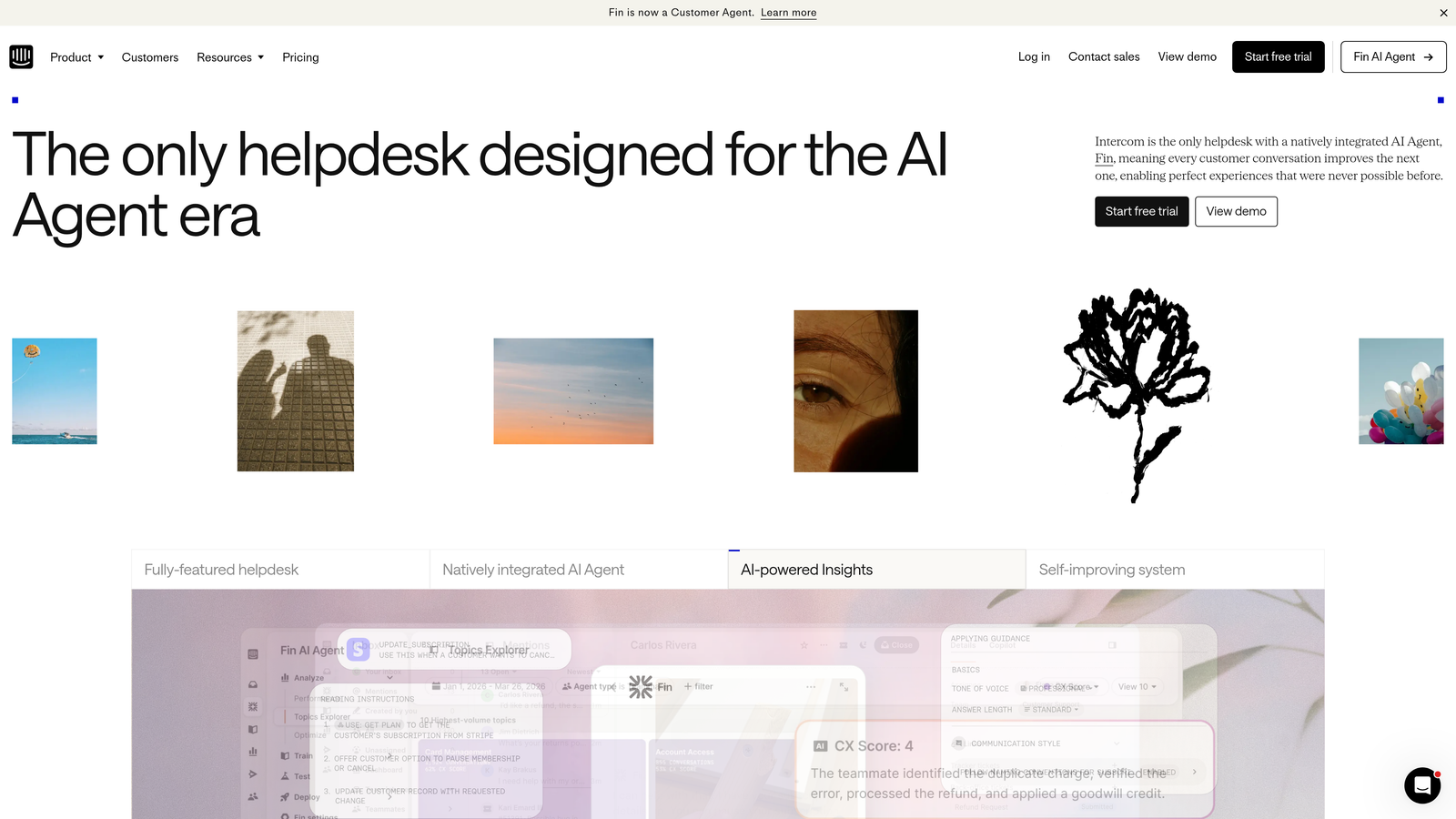
Intercom is a unified customer messaging platform with Fin AI agent for automated resolutions across chat, email, and help center.
Where This Tool Shines
Intercom excels at proactive customer engagement, letting you message users based on their behavior in your product. The Messenger interface feels native to modern SaaS applications, and customers often don't realize they're switching between automated and human responses.
Fin AI handles common questions with natural language understanding, though you'll pay per resolution on top of your base subscription. The product tour and onboarding features justify the cost if you're looking to combine support with user activation.
Key Features
Fin AI Agent: Natural language AI that resolves customer questions using your help center content and custom answers.
Unified Inbox: Single interface for managing conversations across all channels with team collaboration tools.
Product Tours: In-app guidance and onboarding flows to reduce support volume through self-service.
Help Center: Knowledge base that integrates with Fin AI for automated resolution sourcing.
Proactive Messaging: Behavior-triggered messages to engage users before they need to ask for help.
Best For
Mid-market to enterprise SaaS companies that want to combine customer support with product marketing and user onboarding in a single platform.
Pricing
Starts at $39 per seat per month for the Essential plan. Fin AI is charged separately per resolution, which can add significant cost at scale. Custom enterprise pricing available.
3. Zendesk
Best for: Enterprise teams needing comprehensive omnichannel support with extensive customization
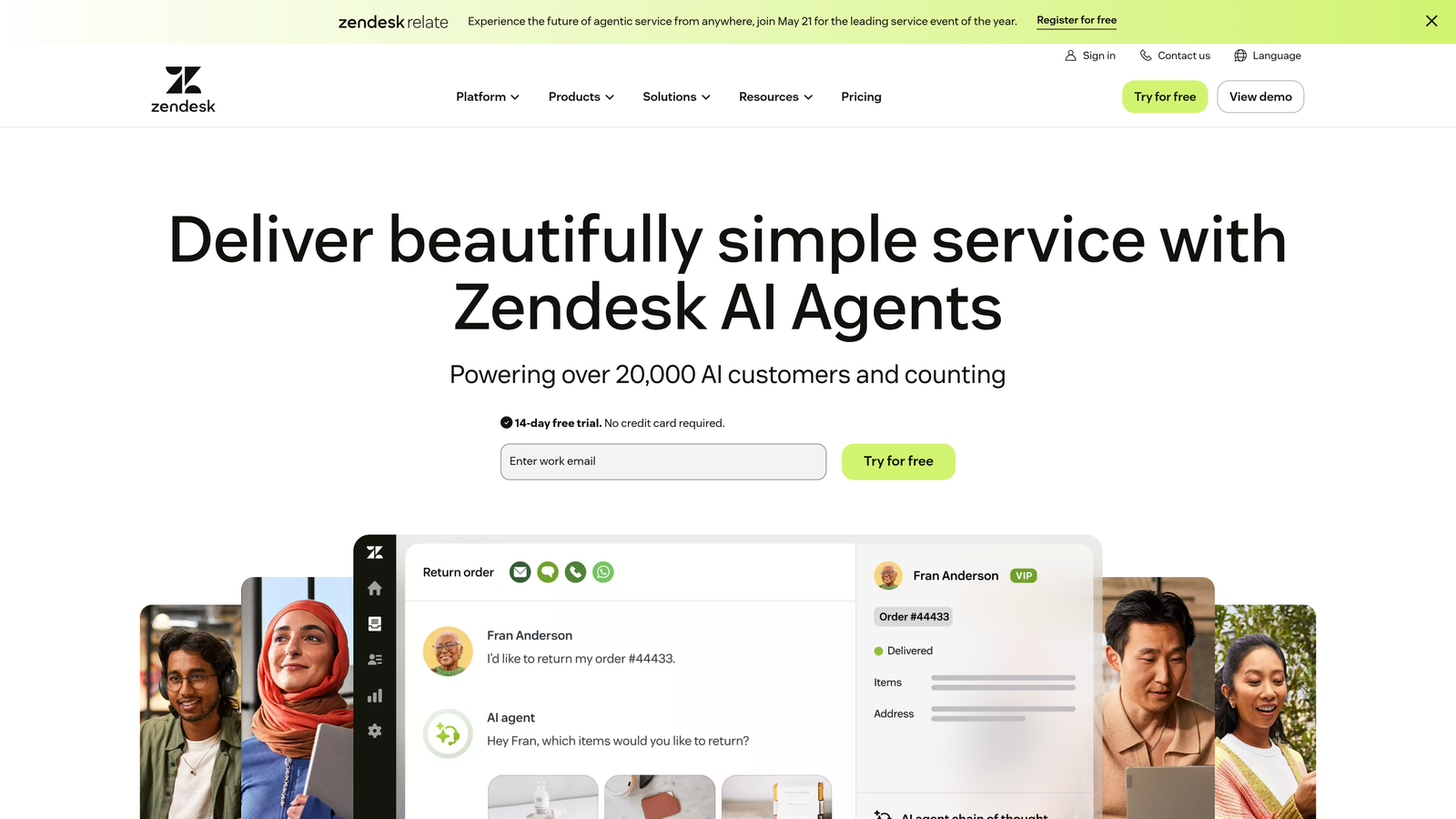
Zendesk is an enterprise-grade customer service platform with comprehensive ticketing, workflow automation, and AI add-ons for large support operations.
Where This Tool Shines
Zendesk's strength lies in its maturity and extensibility. The marketplace offers thousands of integrations, and the platform handles complex routing, SLA management, and multi-brand support that enterprises require.
The downside of this flexibility? Cost complexity. You'll pay for the base Suite, then additional fees for Advanced AI, premium integrations, and enterprise features. Budget for implementation costs too, as Zendesk's power comes with a learning curve.
Key Features
Omnichannel Ticketing: Unified system for email, chat, phone, social media, and messaging apps with consistent workflows.
Advanced AI Add-On: Intelligent triage, intent detection, and automated responses available as a separate purchase.
Extensive Marketplace: Thousands of pre-built integrations and apps to extend platform functionality.
Custom Workflows: Sophisticated automation rules and triggers for complex support processes.
Enterprise Reporting: Comprehensive analytics and dashboards for tracking team performance and customer satisfaction.
Best For
Large enterprises with complex support needs, multiple brands, or regulatory requirements that demand extensive customization and audit trails.
Pricing
Suite Team starts at $55 per agent per month. Advanced AI capabilities require additional licensing. Enterprise plans with premium features require custom quotes, and total cost typically exceeds $100 per agent monthly when including necessary add-ons.
4. Freshdesk
Best for: Growing teams wanting enterprise features at SMB-friendly pricing
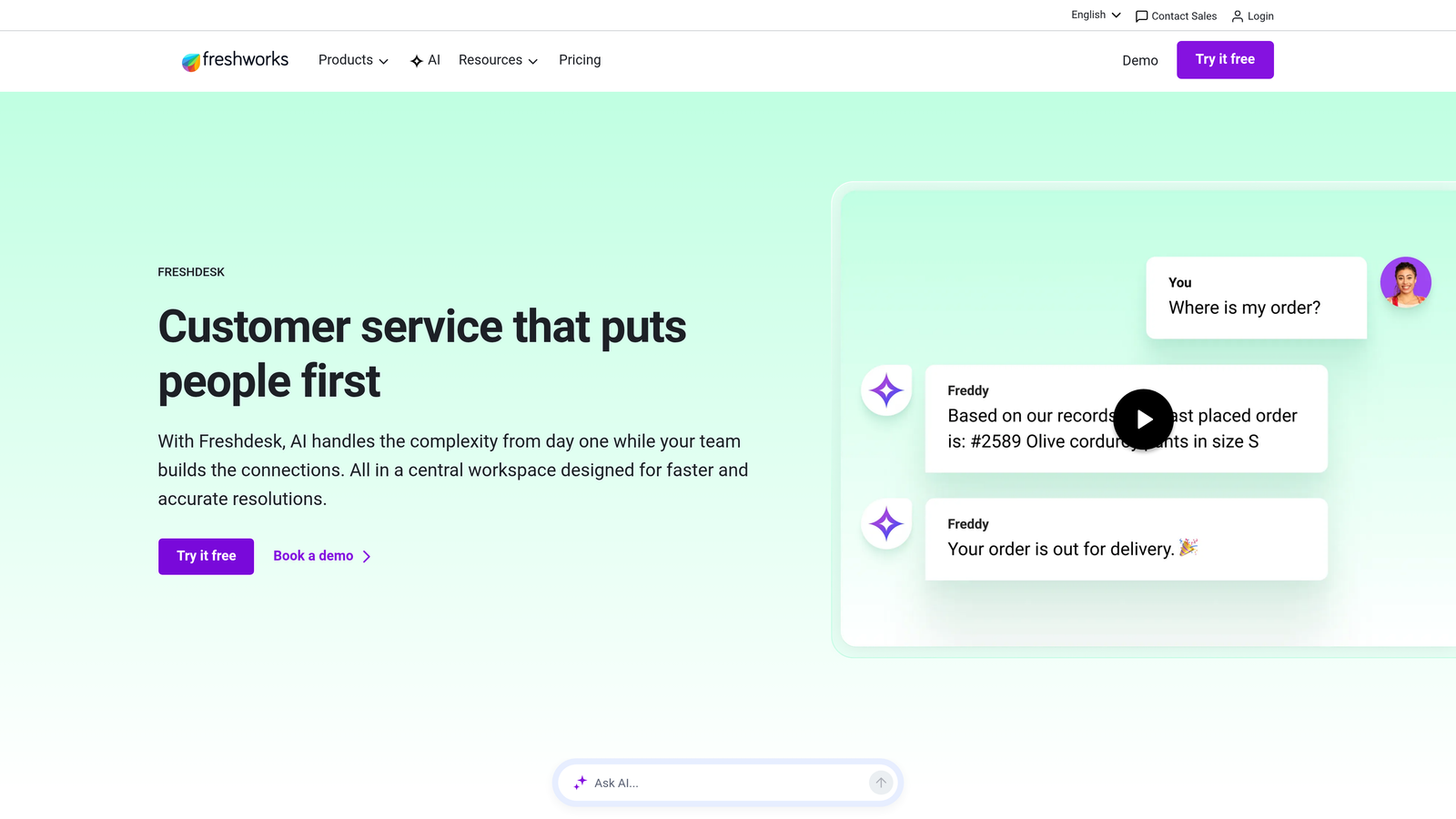
Freshdesk is an affordable helpdesk solution with Freddy AI capabilities designed for teams that need solid fundamentals without enterprise pricing.
Where This Tool Shines
Freshdesk's value proposition is straightforward: you get multichannel ticketing, team collaboration, and AI assistance at a fraction of Zendesk's cost. The free tier supports up to 10 agents, making it genuinely accessible for startups testing automated support.
Freddy AI handles ticket categorization, agent assistance, and basic chatbot functions. It's not as sophisticated as dedicated AI-first platforms, but it covers the essentials without requiring a separate AI budget line item.
Key Features
Free Tier Available: Full helpdesk functionality for up to 10 agents with basic features and email support.
Freddy AI Assistant: AI-powered ticket assignment, suggested responses, and chatbot capabilities included in paid plans.
Team Collaboration: Parent-child ticketing, shared ownership, and internal notes for complex issue resolution.
SLA Management: Business hours, escalations, and SLA tracking to maintain service level commitments.
Multichannel Support: Email, phone, chat, social media, and messaging apps in a unified interface.
Best For
Small to mid-sized businesses that need reliable ticketing with AI assistance but can't justify enterprise platform costs. Particularly valuable during rapid growth phases.
Pricing
Free tier available for up to 10 agents. Growth plan starts at $15 per agent per month, with Pro at $49 and Enterprise at $79 per agent monthly. Freddy AI features are included in Growth and above.
5. Help Scout
Best for: Customer-focused teams prioritizing simplicity and human-centered support experiences
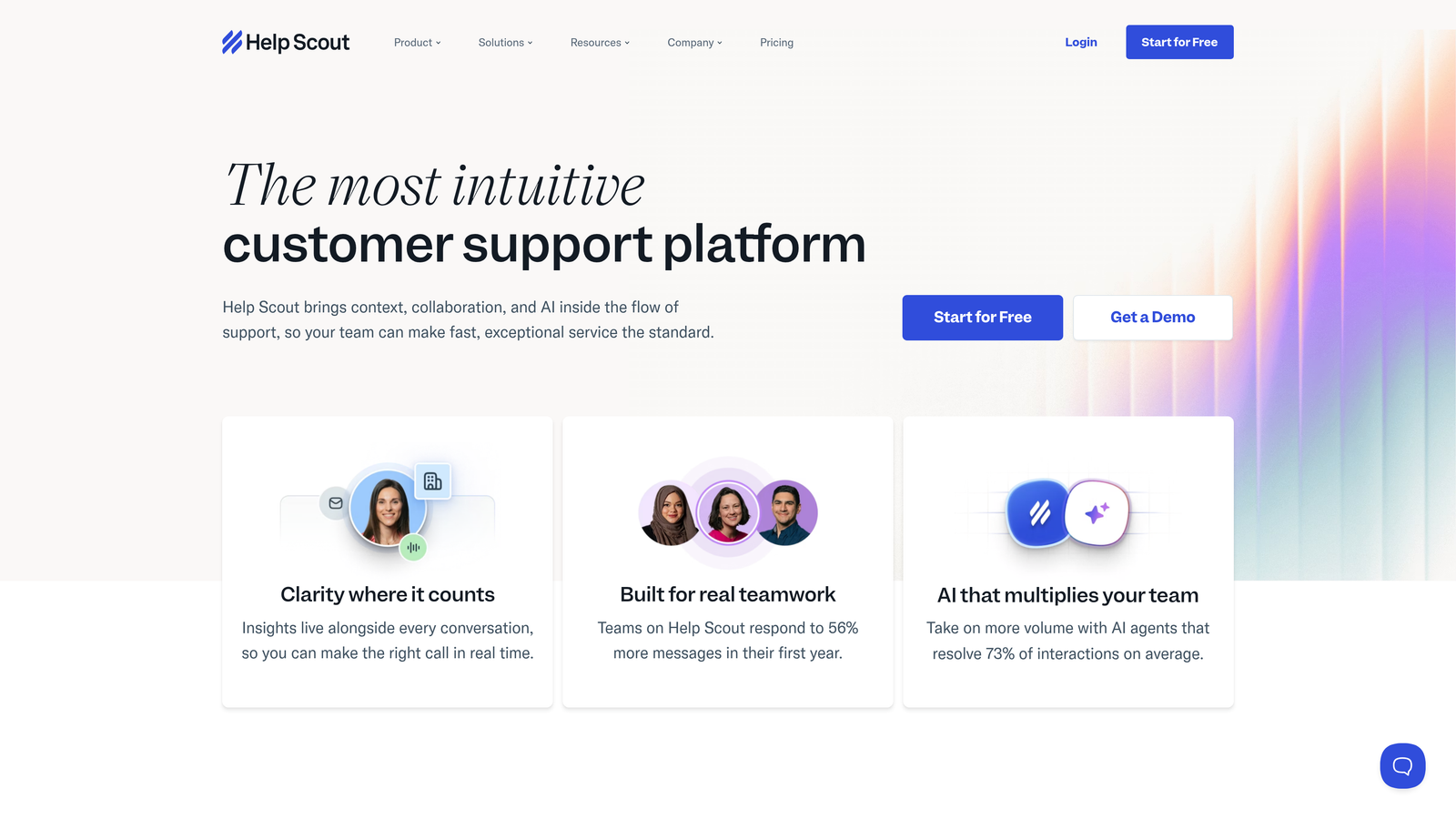
Help Scout is a help desk platform that emphasizes personal customer relationships with AI features that enhance rather than replace human support.
Where This Tool Shines
Help Scout deliberately avoids the complexity trap. The interface feels like email, which means minimal training time for new team members. The Beacon chat widget integrates knowledge base articles directly into the conversation flow, reducing ticket volume through smart self-service.
AI summarization helps agents catch up on long conversation threads quickly, but Help Scout doesn't push autonomous AI agents. If your brand identity centers on personal, human support, this philosophy alignment matters more than aggressive automation.
Key Features
Shared Inbox: Email-like interface that makes collaboration feel natural without complex ticket systems.
Knowledge Base: Integrated help center with article suggestions based on customer questions.
Beacon Chat Widget: Embedded support widget that surfaces relevant articles before creating tickets.
AI Summarization: Automatic conversation summaries to help agents understand context quickly.
Customer Profiles: Detailed customer context including conversation history and custom properties.
Best For
Small to medium businesses that view customer support as a brand differentiator and want technology that supports rather than replaces human connection.
Pricing
Standard plan starts at $20 per user per month with core features. Plus plan at $40 per user monthly adds advanced reporting and custom fields. No free tier, but pricing remains straightforward without hidden AI surcharges.
6. Tidio
Best for: E-commerce businesses and small teams wanting affordable chatbot automation
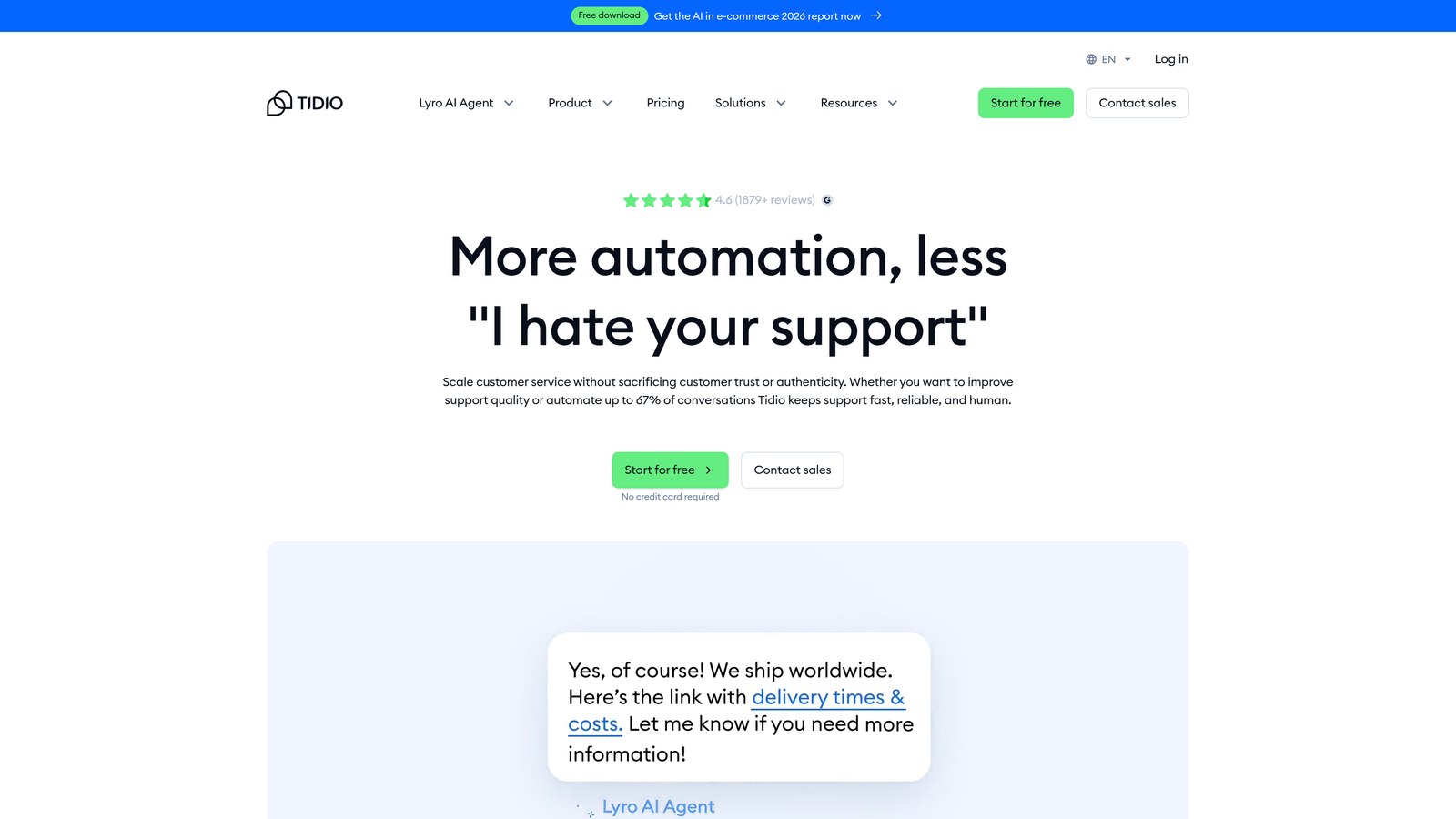
Tidio is a chatbot-first platform with Lyro AI designed specifically for e-commerce stores and small businesses needing quick setup.
Where This Tool Shines
Tidio's visual chatbot builder lets you create automated conversation flows without coding, which matters when you're a small team without dedicated developers. The Shopify integration is particularly tight, letting chatbots access order information and provide tracking updates automatically.
Lyro AI handles natural language conversations for common questions, and the pricing model based on conversation volume rather than agent seats can be cost-effective if you're primarily automating rather than staffing a large support team.
Key Features
Lyro AI Chatbot: Conversational AI trained on your content that handles common questions without scripted flows.
Visual Chatbot Builder: Drag-and-drop interface for creating custom automation without coding.
Live Chat: Real-time messaging with typing insights and visitor tracking.
Shopify Integration: Deep e-commerce integration for order lookups, shipping updates, and product recommendations.
Email Marketing: Basic email campaigns and automated messages to re-engage customers.
Best For
E-commerce stores, particularly Shopify merchants, that want to automate order-related questions and product inquiries without investing in enterprise platforms.
Pricing
Free tier available with basic live chat. Lyro AI starts at $29 per month for 50 conversations, scaling up based on volume. Tidio+ at $329 monthly includes unlimited conversations and advanced features.
7. Zoho Desk
Best for: Teams already using Zoho products wanting integrated support at competitive prices
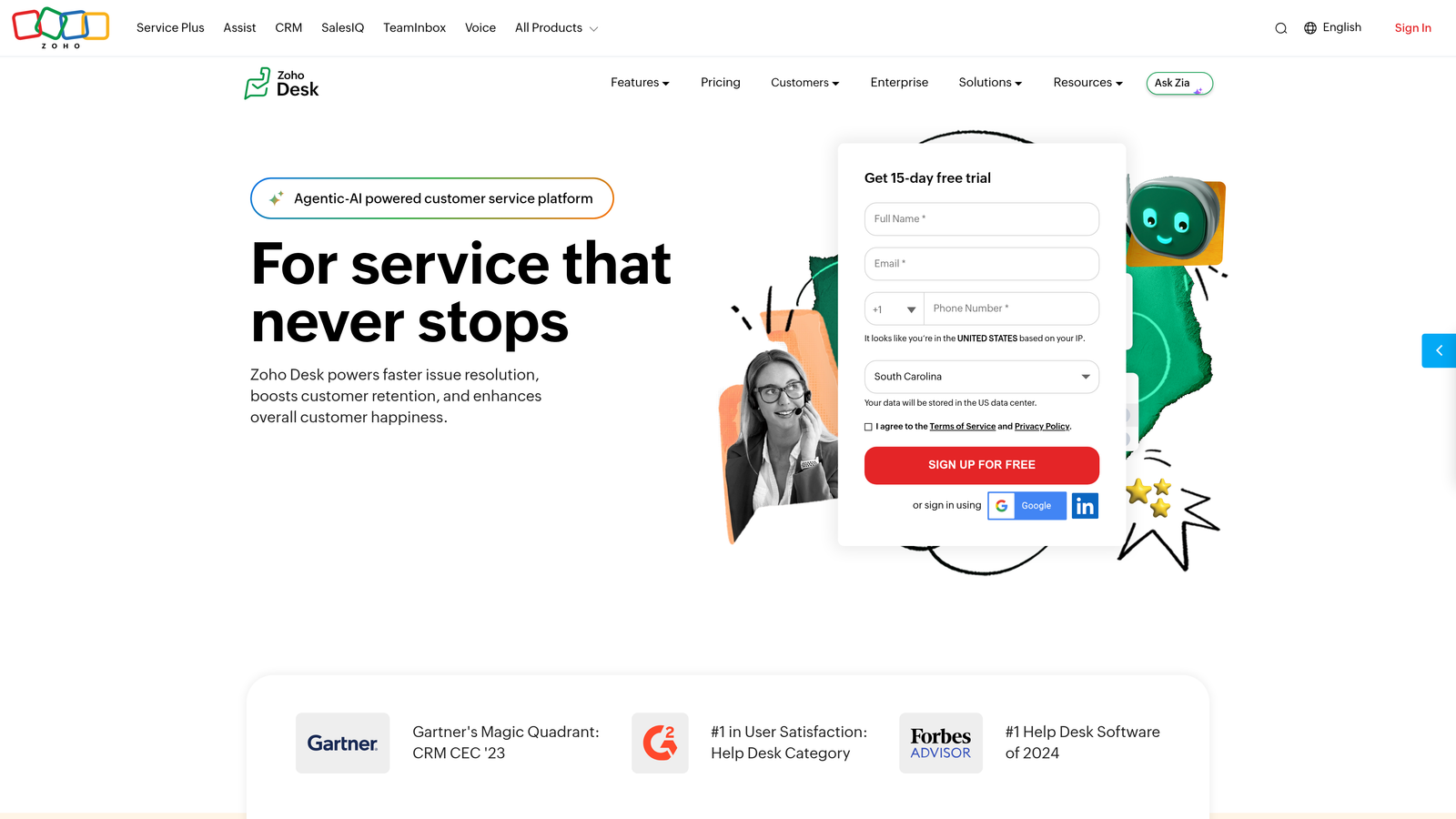
Zoho Desk is a cost-effective helpdesk with Zia AI assistant, ideal for companies invested in the Zoho ecosystem.
Where This Tool Shines
Zoho Desk's real value emerges when you're using other Zoho products. The native integration with Zoho CRM, Analytics, and other suite applications creates a unified customer view without integration headaches or additional costs.
Zia AI provides sentiment analysis, ticket tagging, and response suggestions. Blueprint automation lets you design complex workflows visually. The pricing remains aggressive even as you scale, making it attractive for cost-conscious teams that need enterprise features.
Key Features
Zia AI Assistant: AI-powered sentiment analysis, automatic tagging, and suggested responses to improve agent efficiency.
Zoho Ecosystem Integration: Seamless connection with Zoho CRM, Analytics, and other Zoho suite products.
Blueprint Automation: Visual workflow designer for creating complex automated processes.
Multi-Brand Help Center: Separate branded portals for different products or customer segments.
Custom Modules: Extensibility to add custom objects and fields matching your business needs.
Best For
Small to mid-sized businesses already using Zoho products, or teams looking for enterprise helpdesk features at SMB pricing without vendor lock-in concerns.
Pricing
Free tier for up to 3 agents with basic features. Standard plan starts at $14 per agent per month, Professional at $23, and Enterprise at $40 per agent monthly. Zia AI features included in Professional and above.
8. Gorgias
Best for: E-commerce brands needing support tightly integrated with order management
Gorgias is an e-commerce focused helpdesk with deep Shopify integration and ticket-based pricing that scales with support volume.
Where This Tool Shines
Gorgias treats e-commerce support as fundamentally different from general helpdesk needs. Support agents see order details, shipping status, and customer purchase history directly in the ticket interface, eliminating constant tab-switching to your e-commerce admin.
The ticket-based pricing model can be more cost-effective than per-seat pricing if you have seasonal volume fluctuations. During holiday rushes, you pay for the increased tickets rather than hiring temporary agents you'll need to license year-round.
Key Features
Shopify Deep Integration: Order management, refunds, and customer data accessible directly within support tickets.
Order Management in Tickets: Process refunds, update shipping, and modify orders without leaving the helpdesk interface.
Macros and Rules: Automated responses and actions for common e-commerce scenarios like order status inquiries.
Revenue Tracking: Attribution of support interactions to revenue impact and customer lifetime value.
Social Media Support: Unified inbox for Instagram, Facebook, and other social channels where e-commerce happens.
Best For
E-commerce brands, particularly those on Shopify, that handle high volumes of order-related inquiries and want support tooling purpose-built for online retail.
Pricing
Starter plan at $10 per month for 50 tickets, then scales by ticket volume. Basic at $60 for 300 tickets, Pro at $360 for 2,000 tickets, and Advanced at $900 for 5,000 tickets. Volume overages charged per ticket.
9. Kustomer
Best for: Enterprise brands with high conversation volumes needing CRM-level customer intelligence
Kustomer is a conversation-based CRM platform designed for high-volume enterprise support with sophisticated customer timeline views.
Where This Tool Shines
Kustomer organizes everything around customer timelines rather than individual tickets, which fundamentally changes how agents approach support. They see the complete customer journey, previous conversations, purchases, and interactions across all channels in a chronological view.
The conversation-based pricing model charges per conversation rather than per seat or ticket, which can benefit enterprises with many agents handling relatively fewer conversations each. Custom objects let you model your specific business data within the platform.
Key Features
Conversation-Based Pricing: Licensing model based on conversation volume rather than agent seats or individual tickets.
Customer Timeline View: Chronological display of all customer interactions, purchases, and touchpoints across channels.
AI-Powered Routing: Intelligent assignment based on agent skills, customer value, and conversation complexity.
Omnichannel Support: Unified interface for email, chat, social media, SMS, and phone conversations.
Custom Objects: Extensible data model to represent your specific business entities and relationships.
Best For
Enterprise brands with high support volumes that need CRM-level customer intelligence and can invest in platform customization and implementation.
Pricing
Enterprise pricing only, requiring custom quotes based on conversation volume and feature requirements. Implementation and onboarding costs are significant. Expect annual contracts with pricing in the enterprise tier.
Matching Your Budget to Your Support Reality
The cost of automated support platforms varies dramatically based on your pricing model preference. Per-seat pricing works if you have a stable team size but can become expensive as you scale. Per-resolution or per-conversation models make sense when volume fluctuates seasonally, but watch for usage overages that can spike your bill unexpectedly.
The hidden costs matter as much as the sticker price. Implementation fees, integration development, training time, and the cost of features locked behind higher tiers all impact your total investment. Platforms that include AI capabilities in base pricing provide more predictable budgeting than those charging separately for automation features.
Think about your growth trajectory when evaluating cost. A platform that's affordable at 1,000 tickets monthly might become prohibitively expensive at 10,000. Conversely, enterprise platforms with high minimums might offer better per-unit economics at scale even if they're overkill for your current volume.
Your support team shouldn't scale linearly with your customer base. Let AI agents handle routine tickets, guide users through your product, and surface business intelligence while your team focuses on complex issues that need a human touch. See Halo in action and discover how continuous learning transforms every interaction into smarter, faster support.
The right platform matches your current budget while supporting your future growth. Start by calculating your cost per ticket or conversation across different pricing models, factor in the value of included features versus paid add-ons, and remember that the cheapest option today might become the most expensive as you scale.