9 Best Automated Support Platforms for B2B Companies in 2026
B2B support teams need more than a basic chatbot — they need an automated support platform for B2B that handles complex troubleshooting, integrates deeply with existing tools, and resolves issues without losing context on handoff. This guide ranks the 9 best platforms of 2026 based on AI capability, integration depth, and real-world performance in product-led and sales-led SaaS environments.
 Matt PattoliFounder14 min read
B2B support teams face a challenge that generic chatbot platforms weren't built to solve. Your customers are technical, high-value, and expect accurate answers fast — not a deflection loop that sends them back to a help article they've already read. The right automated support platform resolves issues intelligently, connects to your business stack, and gives your team insights that go beyond ticket counts.
This guide covers the best automated support platforms built for B2B use cases. Each tool was selected based on AI capability, integration depth, and how well it handles the complexity of product-led or sales-led SaaS environments. These aren't simple FAQ bots — they handle multi-step troubleshooting, connect to your existing tools, and hand off to human agents without losing context.
1. Halo AI
Best for: B2B SaaS teams that want true autonomous resolution, not just ticket deflection
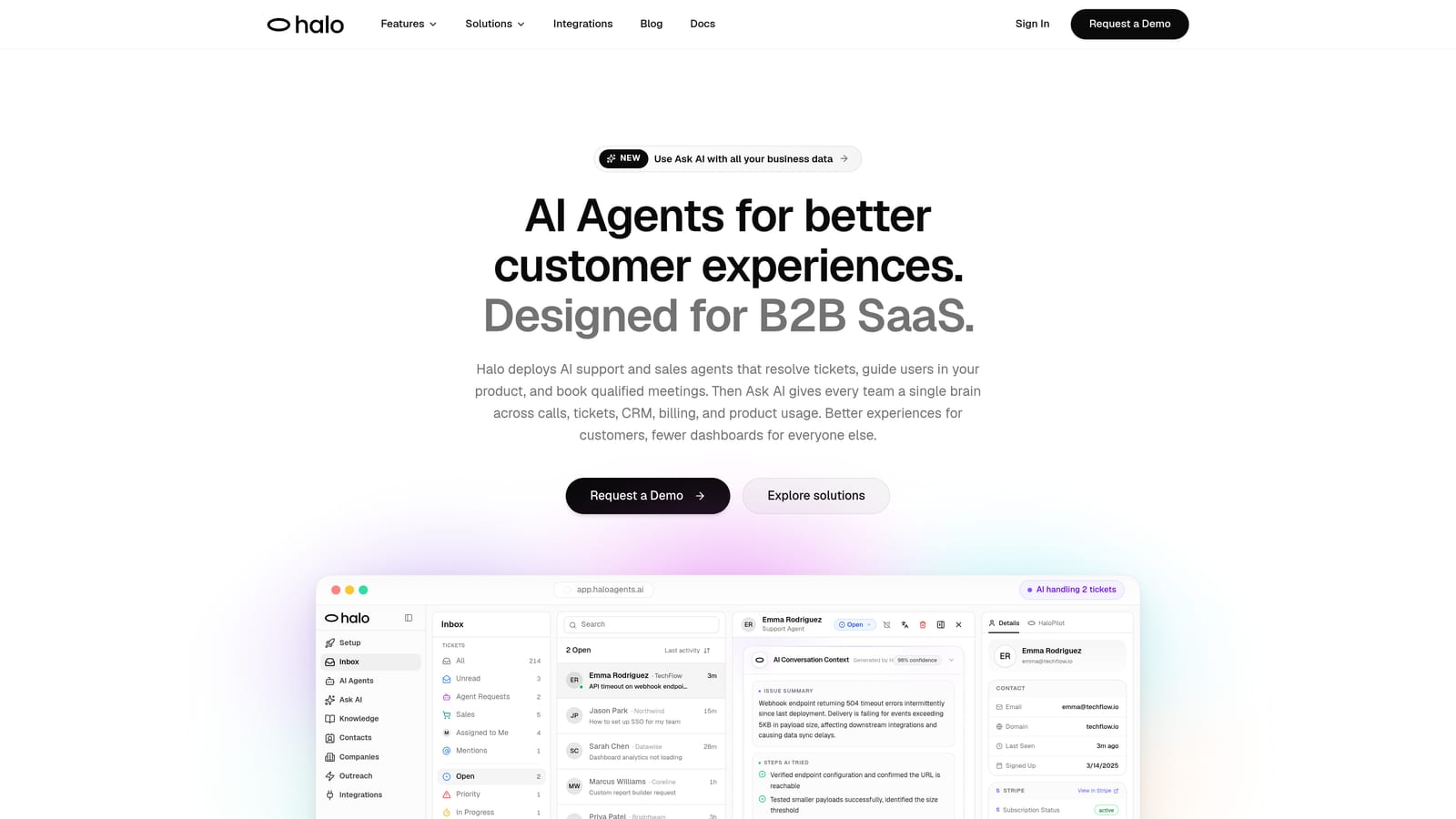
Halo AI is an AI-first customer support platform built specifically for B2B SaaS teams who need more than a chatbot layered on top of an existing helpdesk.
Where This Tool Shines
Most support automation tools are bolt-ons. Halo is built AI-first from the ground up, which means the intelligence isn't a feature added to a ticketing system — it's the foundation everything else runs on. The platform deploys autonomous AI agents that resolve tickets, guide users through your product with page-aware context, and continuously learn from every interaction to get smarter over time.
What separates Halo from the pack is its page-aware context engine. The AI can see what a user sees on screen, which means it can provide step-by-step visual guidance instead of generic instructions. Combined with a smart inbox that surfaces customer health signals, anomaly detection, and revenue intelligence, Halo gives support teams business insights that most platforms don't even attempt to surface.
Key Features
Page-Aware AI Agents: The AI sees what users see on screen, enabling in-context visual guidance rather than generic help article links.
Auto Bug Ticket Creation: Automatically generates and routes bug reports directly to Linear or your preferred issue tracker, eliminating manual handoffs between support and engineering.
Smart Inbox with Business Intelligence: Goes beyond support metrics to surface customer health signals, anomaly detection, and revenue insights from support interactions.
Broad Integration Stack: Connects natively with Linear, Slack, HubSpot, Intercom, Stripe, Zoom, PandaDoc, and Fathom — covering your entire business stack, not just the support layer.
Live Agent Handoff: Escalates complex issues to human agents with full conversation context preserved, so customers never have to repeat themselves.
Continuous Learning: Every resolved interaction feeds back into the AI, improving resolution accuracy over time without manual retraining.
Best For
Halo is the right choice for B2B SaaS companies that want genuine autonomous resolution rather than simple deflection. It's particularly well-suited to product-led growth teams where support and product feedback loops matter, and to lean support teams that need to scale without adding headcount.
Pricing
Contact for pricing — a demo is available at haloagents.ai. Given the enterprise-grade feature set, pricing is tailored to team size and use case.
2. Intercom
Best for: Teams already embedded in the Intercom ecosystem who want AI-powered autonomous query handling
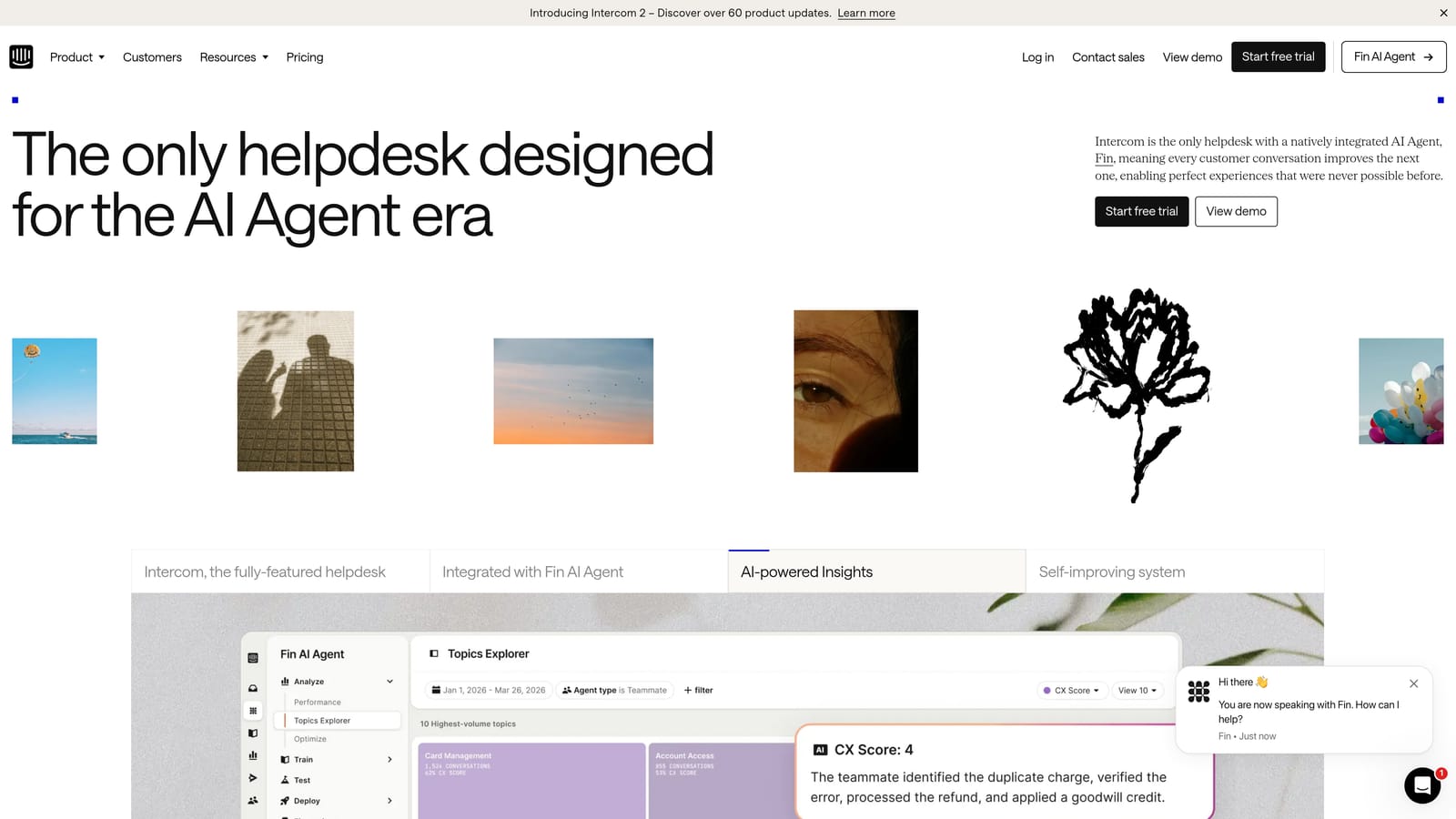
Intercom is a widely adopted customer messaging platform with Fin, its GPT-powered AI agent designed to handle support queries autonomously within the Intercom messenger experience.
Where This Tool Shines
Intercom's Fin AI agent can handle a meaningful portion of inbound queries autonomously by drawing on your existing help content. For teams already running their support through Intercom's messenger, adding Fin is a natural upgrade rather than a platform migration. The unified inbox combining chat, email, and in-app messaging makes it easy for agents to manage context across channels.
The tradeoff worth noting: Intercom's pricing has increased significantly in recent years, and Fin's per-resolution billing model can become costly at scale. Teams should model their expected resolution volume carefully before committing.
Key Features
Fin AI Agent: GPT-powered autonomous query resolution using your existing help center content as its knowledge base.
Unified Inbox: Combines chat, email, and in-app messaging into a single workspace for support agents.
Product Tours and Outbound Messaging: Enables proactive support through in-app guides and targeted outbound messages.
AI Conversation Summarization: Automatically summarizes long conversations so agents can get up to speed quickly when handling escalations.
Extensive Integration Library: Connects with a broad range of CRM, SaaS, and productivity tools.
Best For
B2B teams that are already deeply embedded in the Intercom ecosystem and want to add AI-powered resolution without switching platforms. Less ideal for teams evaluating platforms fresh, where the total cost of ownership warrants comparison against newer AI-native alternatives.
Pricing
Starts at approximately $39/seat/month; Fin AI usage is billed per resolution. Check intercom.com for current rates, as pricing has changed frequently.
3. Zendesk
Best for: Large support organizations that need enterprise-grade ticketing infrastructure with AI layered on top
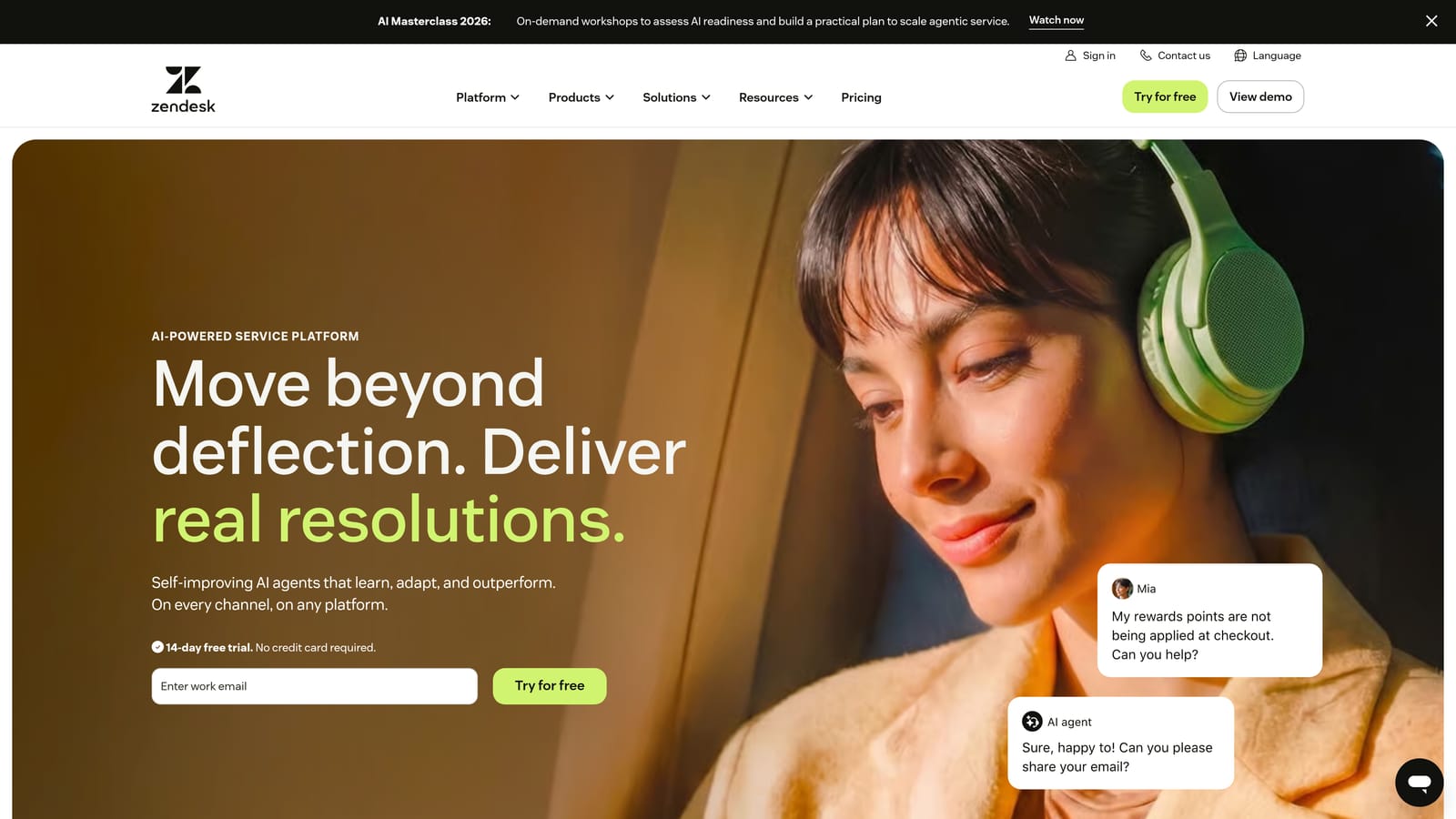
Zendesk is the industry-standard enterprise helpdesk platform, now with Zendesk AI added on top of its mature ticketing and omnichannel infrastructure.
Where This Tool Shines
Zendesk's strength is its maturity. The ticketing infrastructure, SLA management, and omnichannel capabilities have been refined over years of enterprise deployment. For large support organizations managing high ticket volumes across multiple channels, that stability and depth is genuinely valuable. The Zendesk marketplace also offers hundreds of integrations, making it relatively straightforward to connect to most existing tech stacks.
Where Zendesk can feel heavy is for smaller or leaner B2B teams. The platform is built for scale, and that can translate to complexity and cost that isn't justified for companies with smaller support footprints. The AI features, while improving, are layered onto a legacy architecture rather than built AI-first.
Key Features
Zendesk AI: Handles intelligent triage, ticket routing, and automated responses built on top of the core helpdesk.
Omnichannel Ticketing: Manages email, chat, phone, and social media interactions from a single platform.
Extensive Marketplace: Hundreds of pre-built integrations covering CRM, ecommerce, billing, and productivity tools.
Advanced Reporting and SLA Management: Detailed analytics and configurable SLA tracking suited to enterprise support operations.
Enterprise Security and Compliance: Robust controls for organizations with strict data governance requirements.
Best For
Large B2B support teams with complex, multi-channel operations and the resources to configure and maintain an enterprise helpdesk. Less suited to lean startup teams that need fast deployment and AI-first resolution out of the box.
Pricing
Suite plans start at approximately $55/agent/month. Check zendesk.com for current pricing across tiers.
4. Freshdesk
Best for: SMB and mid-market B2B teams that need solid omnichannel support with accessible pricing
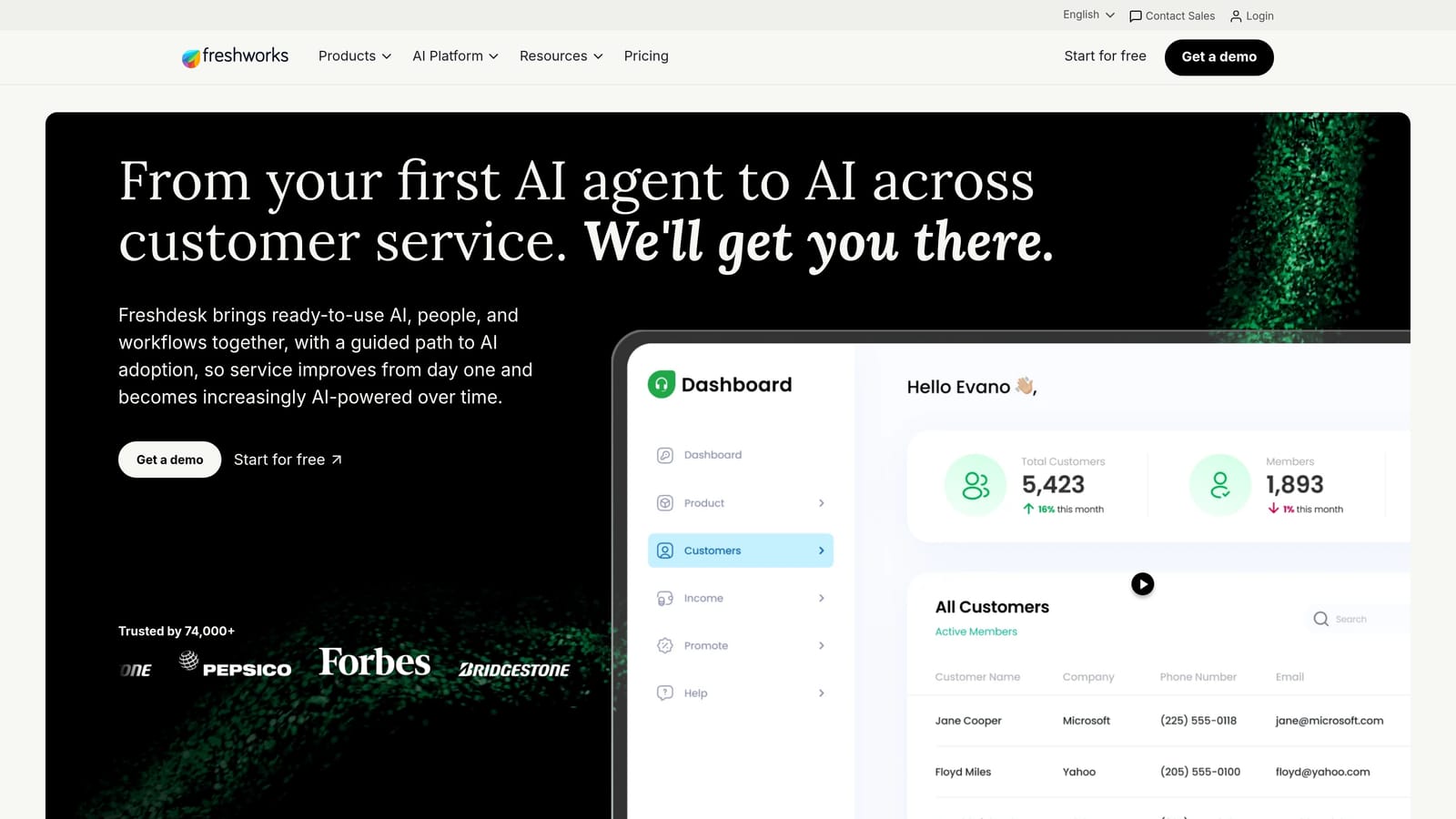
Freshdesk is a helpdesk platform by Freshworks offering Freddy AI for automated triage, agent assist, and response suggestions at a price point that's competitive for growing teams.
Where This Tool Shines
Freshdesk hits a practical sweet spot for mid-market B2B teams that need more than a basic inbox but aren't ready for the complexity and cost of enterprise platforms. Freddy AI covers the core automation needs: auto-triage, suggested responses, and agent assist features that meaningfully speed up resolution times without requiring extensive configuration.
The free tier and low entry-level pricing make Freshdesk accessible for teams testing automation for the first time. Collision detection is a practical feature that prevents two agents from working the same ticket simultaneously — a small detail that matters a lot in busy support queues.
Key Features
Freddy AI: Covers auto-triage, suggested responses, and agent assist to speed up resolution without replacing agents entirely.
Omnichannel Support: Handles email, chat, phone, and social from a unified platform.
Collision Detection: Prevents duplicate agent responses by alerting teams when multiple agents are viewing the same ticket.
Automation Workflows: Configurable rules for ticket routing, escalation, and assignment.
Free Tier: Available for small teams getting started with helpdesk software.
Best For
SMB and mid-market B2B teams that want solid helpdesk fundamentals with AI-assist features at a competitive price. Teams that need deep AI-native autonomous resolution may find Freshdesk's AI capabilities less advanced than newer platforms.
Pricing
Free plan available; paid plans start at approximately $15/agent/month. Check freshworks.com for current rates.
5. Salesforce Service Cloud
Best for: Enterprise B2B teams where Salesforce is already the system of record for customer data
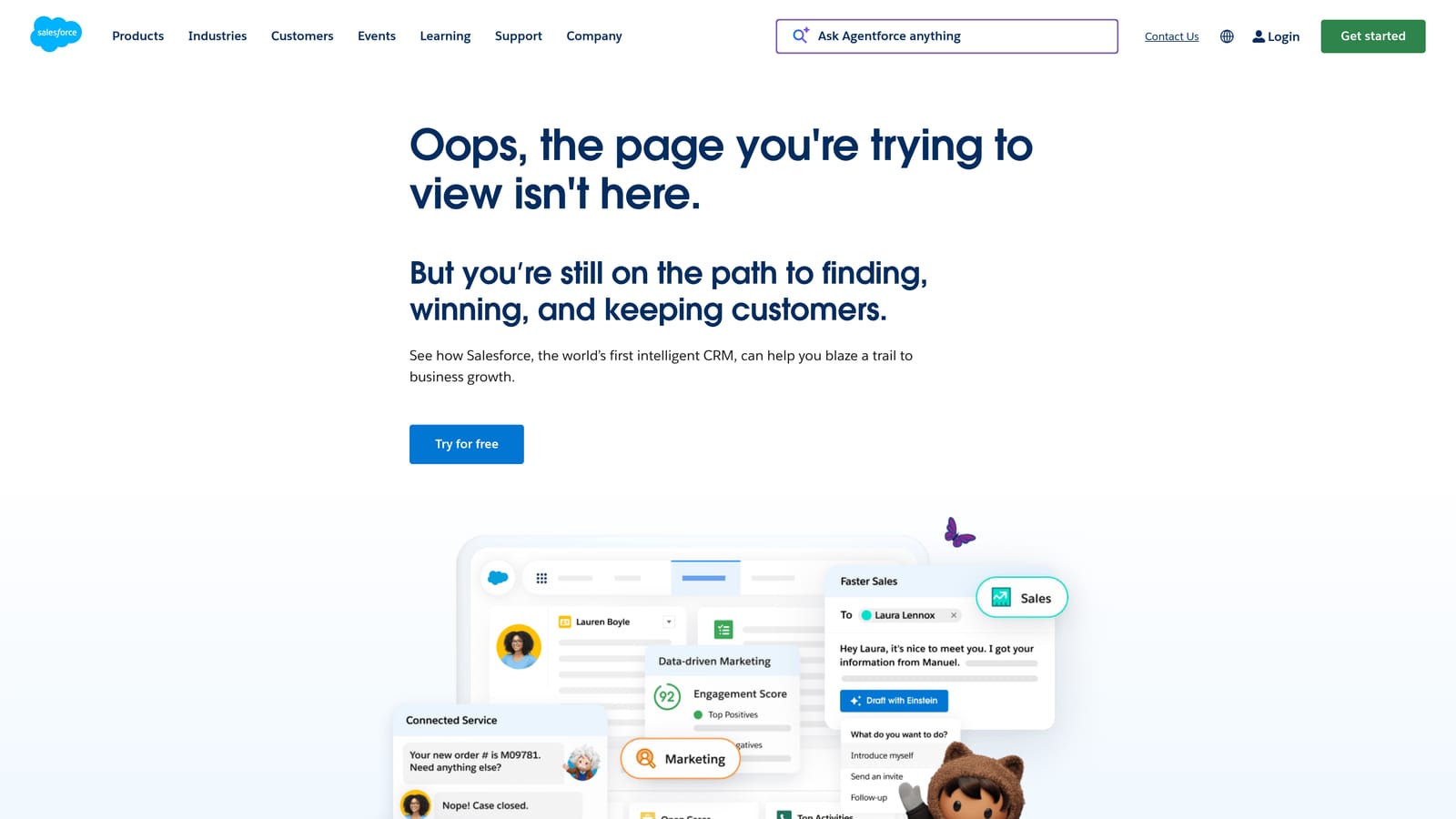
Salesforce Service Cloud is enterprise support automation built natively into the Salesforce ecosystem, with Einstein AI and Agentforce providing automation deeply enriched by CRM data.
Where This Tool Shines
When Salesforce is already your system of record, Service Cloud's native access to customer, contract, and opportunity data is a genuine competitive advantage. Every support interaction is enriched with full CRM context — account health, contract status, renewal dates, open opportunities — which means agents and AI alike can respond with far more relevance than a standalone helpdesk allows.
Agentforce, launched in 2024, brings autonomous AI case resolution into the Service Cloud with that same CRM context powering its decisions. The tradeoff is complexity and cost: Service Cloud is a significant investment in both licensing and implementation, and it's difficult to justify outside of organizations where Salesforce is already deeply embedded.
Key Features
Agentforce AI: Autonomous case resolution powered by full CRM context, including customer history, contracts, and account data.
Native Salesforce Data Access: Every support interaction has direct access to customer, contract, and opportunity records without integration overhead.
Omnichannel Routing: Routes interactions across voice, chat, email, and messaging based on configurable business rules.
Einstein AI: Provides case classification and next-best-action recommendations to assist human agents.
Unified Customer View: Deep integration with Sales Cloud creates a single view of the customer across sales and support.
Best For
Enterprise B2B organizations where Salesforce is the central system of record and the investment in a fully integrated support layer is justified. Cost and implementation complexity make it a poor fit for teams not already in the Salesforce ecosystem.
Pricing
Starts at approximately $25/user/month for the Starter tier; enterprise plans are significantly higher. Check salesforce.com for current pricing.
6. Drift (Salesloft)
Best for: B2B companies where support and sales conversations overlap significantly
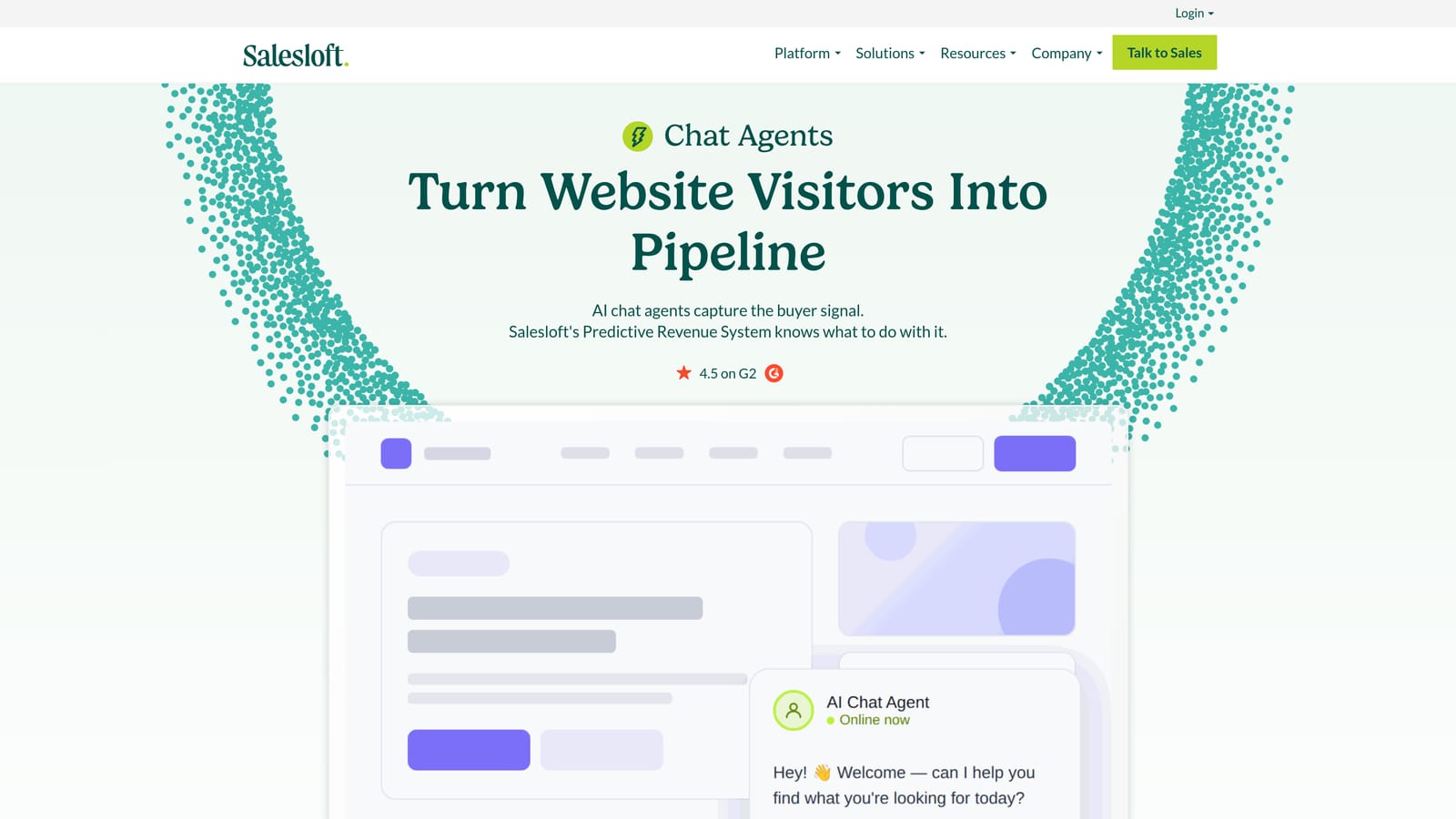
Drift, now part of Salesloft, is a conversational AI platform designed for B2B companies where the line between support and sales is intentionally blurred.
Where This Tool Shines
Drift's positioning is distinct from pure support platforms: it's built for revenue-generating conversations, not just ticket resolution. For B2B companies where inbound support queries often turn into upsell opportunities, renewal conversations, or sales-adjacent interactions, Drift's AI is designed to qualify, route, and assist in ways that a traditional helpdesk isn't.
The account-based targeting capability lets you personalize chat experiences by visitor segment, which is genuinely useful for companies with complex customer hierarchies or distinct customer tiers. That said, if your primary goal is deep support ticket resolution rather than pipeline-adjacent conversations, Drift may not be the right fit.
Key Features
AI-Powered Chatbot: Qualifies and routes inbound conversations based on visitor context and intent signals.
Revenue-Focused Conversation Intelligence: Built-in logic for identifying and escalating revenue-relevant interactions.
Meeting Scheduling Automation: Enables customers to book meetings directly from chat, useful for sales-adjacent support queries.
Account-Based Targeting: Personalizes chat experiences based on visitor company, tier, or segment.
CRM Integration: Connects with Salesloft, Salesforce, and HubSpot to sync conversation data with sales records.
Best For
B2B companies where support and sales functions overlap, particularly those with account-based sales motions. Less suited to teams that need deep technical support resolution or high-volume ticket management.
Pricing
Premium plan pricing available on request. Check drift.com for current rates.
7. Help Scout
Best for: B2B teams that want automation without losing the personal, relationship-driven feel of their support
Help Scout is a human-centered support platform with AI features focused on agent productivity rather than full autonomous resolution.
Where This Tool Shines
Help Scout's design philosophy is intentionally different from platforms chasing full automation. The AI features here — Summarize, Assist, and Drafts — are built to make human agents faster and more effective, not to replace them. For B2B companies where support relationships are a meaningful part of customer retention, that philosophy translates into a product that feels thoughtful rather than robotic.
The Beacon widget enables proactive in-app messaging and chat, while the Docs knowledge base with AI-powered search gives customers a solid self-service option before they reach an agent. Customer profiles with full conversation history and company data give agents context that makes every interaction feel personalized.
Key Features
AI Summarize, Assist, and Drafts: Agent productivity tools that speed up responses without replacing the human voice in support interactions.
Shared Inbox with Collision Detection: Prevents duplicate responses and keeps team communication organized with private notes.
Docs Knowledge Base: AI-powered search helps customers find answers independently before contacting support.
Customer Profiles: Conversation history and company data surfaced in every interaction for contextual, personalized support.
Beacon Widget: Proactive in-app messaging and chat for reaching customers at the right moment in their product journey.
Best For
B2B teams — particularly in professional services or high-touch SaaS — where maintaining a personal support relationship is a competitive differentiator. Teams that need high-volume autonomous resolution should look at more AI-native platforms.
Pricing
Starts at approximately $20/user/month. Check helpscout.com for current pricing.
8. Kustomer
Best for: B2B teams with complex, data-rich customer relationships that need full historical context in every interaction
Kustomer is a CRM-native support platform that enriches every customer interaction with full historical context, combining strong automation capabilities with a complete view of the customer relationship.
Where This Tool Shines
Kustomer's CRM-native architecture is its defining characteristic. Every conversation is displayed alongside the full customer timeline — previous interactions, purchase history, account data, and custom attributes — which means agents and automated workflows both operate with significantly more context than a standard helpdesk provides. For B2B teams managing complex, long-term customer relationships, that context makes a real difference in resolution quality.
The business rules engine is notably flexible, allowing teams to build sophisticated automation logic that goes beyond simple routing rules. This makes Kustomer well-suited to teams with non-standard workflows or complex escalation paths.
Key Features
CRM-Native Architecture: Full customer timeline displayed in every conversation, combining support history with account and relationship data.
AI-Powered Chatbots and Workflow Routing: Automated handling and intelligent routing based on customer data and conversation context.
Omnichannel Support: Manages email, chat, SMS, and social interactions from a unified platform.
Business Rules Engine: Flexible automation logic for complex routing, escalation, and workflow requirements.
SaaS and Data Source Integrations: Connects with a range of SaaS tools and data sources to enrich the customer timeline.
Best For
B2B teams with complex, data-rich customer relationships where historical context is critical to resolution quality. The higher per-user pricing reflects the CRM-depth of the platform, making it best justified for teams where that context genuinely drives better outcomes.
Pricing
Starts at approximately $89/user/month. Check kustomer.com for current pricing.
9. Tidio
Best for: Early-stage B2B startups that need affordable support automation deployed quickly
Tidio is an accessible AI chat platform with Lyro AI chatbot, designed for startups and early-stage teams that need something live fast without complex setup or enterprise pricing.
Where This Tool Shines
Tidio's biggest advantage is speed and accessibility. The platform can be deployed in under an hour, and Lyro AI handles automated query responses using your existing FAQ content without requiring a technical implementation project. For early-stage B2B startups where the alternative is no automation at all, Tidio provides genuine value at a price point that doesn't require a budget conversation.
The visual chatbot flow builder lets non-technical team members create custom automation paths without writing code. That said, Tidio's depth is limited for complex B2B use cases — multi-step technical troubleshooting, deep CRM integration, or business intelligence features are not where this platform plays.
Key Features
Lyro AI Chatbot: Automated query handling using your FAQ and help content, with quick agent takeover when the AI reaches its limits.
Visual Flow Builder: Drag-and-drop chatbot path creation accessible to non-technical team members.
Live Chat with Agent Takeover: Seamless handoff from AI to human agent when conversations require a personal touch.
Email and Messenger Integration: Extends chat automation to email and Facebook Messenger alongside the live chat widget.
Fast Deployment: Deployable in under an hour with minimal technical setup required.
Best For
Early-stage B2B startups that need support automation live quickly and affordably. Teams that have scaled beyond basic FAQ deflection and need deeper AI resolution, CRM integration, or business intelligence should consider more capable platforms as they grow.
Pricing
Free plan available; Lyro AI plans start at approximately $29/month. Check tidio.com for current pricing.
Which Platform Is Right for Your Team?
The best automated support platform for your B2B team depends on three things: where you are in your growth stage, what your existing tech stack looks like, and whether your goal is ticket deflection or genuine autonomous resolution.
For early-stage startups that need something live quickly, Tidio gets you there fast without breaking the budget. For SMB and mid-market teams looking for solid helpdesk fundamentals with AI-assist features, Freshdesk offers the best combination of capability and price. For enterprise organizations already running on Salesforce, Service Cloud with Agentforce delivers unmatched CRM-native context. For teams where support and sales conversations overlap, Drift is purpose-built for that intersection.
If you want to maintain the personal feel of relationship-driven B2B support while giving agents productivity tools, Help Scout is the right philosophy. If full customer timeline context is the priority, Kustomer brings CRM depth to every interaction. For teams already embedded in Intercom or Zendesk, upgrading those platforms with their AI layers is a natural path.
But if you're evaluating platforms fresh and your goal is true autonomous resolution — not just deflection — Halo AI is built for exactly that. The AI-first architecture, page-aware context engine, auto bug ticket creation, and business intelligence layer make it a genuinely different kind of platform, not a chatbot bolted onto a helpdesk.
Your support team shouldn't scale linearly with your customer base. Let AI agents handle routine tickets, guide users through your product, and surface business intelligence while your team focuses on complex issues that need a human touch. See Halo in action and discover how continuous learning transforms every interaction into smarter, faster support.