9 Best Automated Support Platforms You Can Trial for Free in 2026
Selecting the right automated support platform trial can save teams from costly long-term commitments by validating AI accuracy, integration compatibility, and real deflection rates before signing. This guide reviews nine platforms offering meaningful free trials or freemium tiers with genuine AI-driven automation, helping support teams make informed decisions based on actual performance data rather than polished demos.
 Grant CooperFounder14 min read
Choosing an automated support platform is one of those decisions that looks straightforward until you're three months in and realizing the AI that dazzled in a polished demo is struggling with your actual ticket data. That's exactly why trial access matters so much. A genuine trial lets your team validate AI resolution accuracy, test integration fit with your existing stack, and measure real deflection rates before signing a contract.
The good news: many of the best platforms now offer free trials or freemium tiers. The catch is that trial quality varies dramatically. Some give you full AI capabilities for two weeks. Others hide the intelligent automation behind an enterprise plan and offer nothing more than a "book a demo" button. For this list, we prioritized platforms with meaningful trial access, genuine AI-driven automation (not just rule-based routing), solid integration depth, and transparent pricing.
If you're still exploring the broader landscape, our guides on automated customer support and AI helpdesk software are worth reading alongside this list.
1. Halo AI
Best for: B2B SaaS teams wanting AI-first support that learns continuously and surfaces business intelligence.
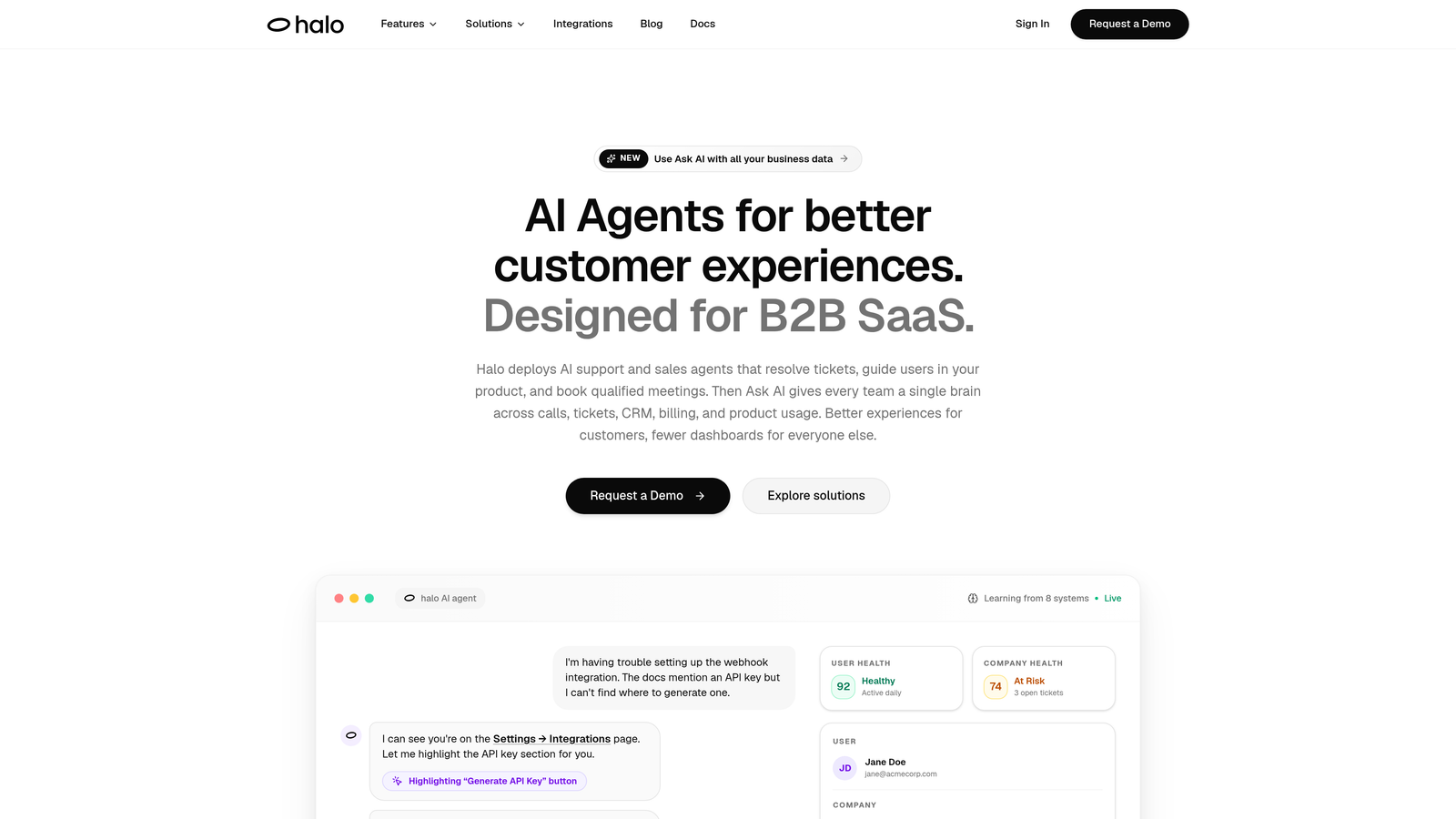
Halo AI is an AI-first support platform with autonomous agents that resolve tickets, guide users through your product, and turn support interactions into business intelligence.
Where This Tool Shines
Most support platforms were built as helpdesks first and had AI bolted on later. Halo was designed the other way around. The AI is the architecture, not a feature layer. That distinction matters because it means the system gets smarter with every interaction rather than just routing tickets faster.
The standout capability is page-aware context. Halo's chat widget can see what a user is looking at in your product, which allows it to provide guidance that's genuinely relevant to where someone is stuck, not just a generic FAQ response. For SaaS teams, that kind of contextual precision is the difference between deflection and resolution.
Key Features
Page-Aware Chat Widget: The widget sees what the user sees in-product, enabling contextual guidance that's tied to the user's current screen rather than their text description of the problem.
Continuous Learning AI: Every resolved interaction improves the model, so resolution accuracy compounds over time rather than plateauing after initial training.
Smart Inbox with Business Intelligence: The inbox surfaces customer health signals, revenue intelligence, and anomaly detection, turning support data into insights your product and success teams can act on.
Auto Bug Ticket Creation and Live Agent Handoff: When the AI detects a product issue, it creates a bug ticket automatically. When a situation exceeds AI scope, it hands off to a human agent with full context preserved.
Deep Integration Stack: Connects with Linear, Slack, HubSpot, Intercom, Stripe, Zoom, PandaDoc, and Fathom, so support intelligence flows across your entire business stack.
Best For
B2B SaaS companies and product teams that want more than ticket deflection. Halo is particularly well-suited for teams using multiple tools across their stack who need support intelligence to flow into product development, customer success, and revenue workflows.
Pricing
Free trial available. Contact Halo for plan details. Given the AI-first architecture and integration depth, it's worth having a direct conversation about the right configuration for your team size and ticket volume.
2. Intercom Fin
Best for: Teams already using Intercom who want AI resolution without switching platforms.
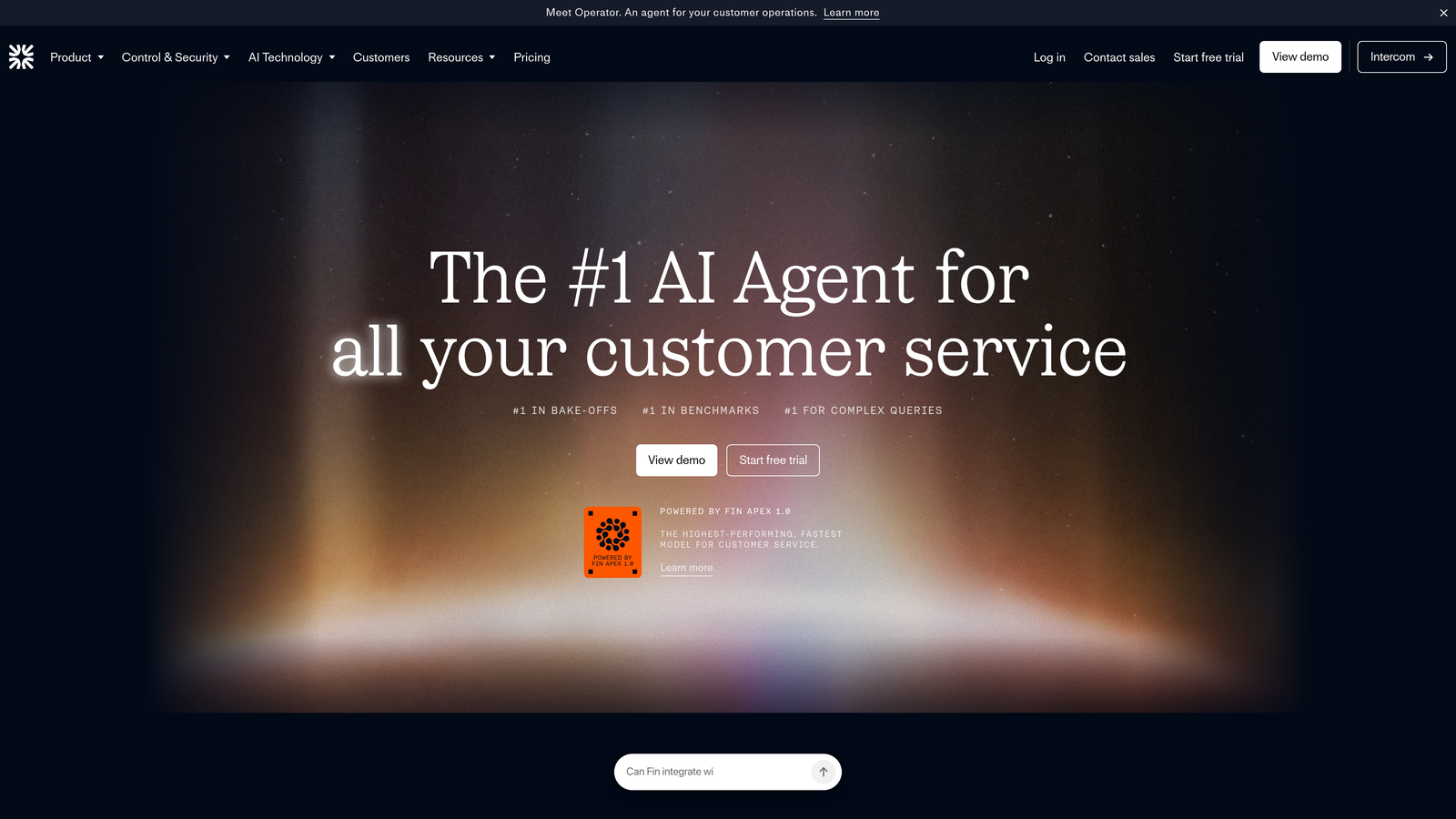
Intercom Fin is Intercom's native AI agent that resolves customer questions using your existing help center content and conversation history.
Where This Tool Shines
If your team already lives in Intercom, Fin is the path of least resistance to AI-powered resolution. Because it's native to the platform, setup is minimal and the AI has immediate access to your existing help center articles, past conversations, and inbox workflows. There's no data migration or connector configuration to worry about.
Fin's per-resolution pricing model is also worth noting. Rather than paying per seat regardless of AI usage, you pay for outcomes. For high-volume teams with predictable ticket categories, this can make cost forecasting more straightforward.
Key Features
Native Intercom Integration: Works directly within Intercom Messenger and Inbox with no third-party configuration required.
Multi-Source Knowledge: Answers are sourced from your help center, past conversations, and any custom content you define, giving Fin broad context for resolution.
Tone and Behavior Controls: Customize how Fin communicates to match your brand voice and set boundaries on what it will and won't handle autonomously.
Human Handoff Workflows: Built-in escalation paths ensure complex or sensitive issues reach a human agent with conversation context intact.
Best For
Existing Intercom customers who want to activate AI resolution quickly without platform migration. Less suited for teams not already invested in the Intercom ecosystem, where the per-resolution cost model may be harder to evaluate without baseline data.
Pricing
Per-resolution pricing for Fin; 14-day free trial available on Intercom plans. Check Intercom's pricing page for current resolution rates and plan inclusions.
3. Zendesk AI Agents
Best for: Enterprise support teams with large Zendesk deployments looking to automate at scale.
Zendesk AI Agents are autonomous agents built into the Zendesk Suite that resolve customer issues using your existing knowledge base, macros, and workflow triggers.
Where This Tool Shines
Zendesk's AI agents benefit from years of pre-training on a massive dataset of real support interactions, which means they arrive with a baseline understanding of common support patterns that many newer platforms lack. For teams with large, established Zendesk environments, the AI can tap into existing knowledge base articles, macros, and automation rules without requiring a rebuild.
The outcome-based pricing model is a notable shift from traditional per-seat SaaS. Paying per automated resolution aligns vendor incentives with actual performance, which is a meaningful structural difference from platforms that charge regardless of whether the AI does anything useful.
Key Features
Outcome-Based Pricing: You pay per automated resolution rather than per seat, aligning cost directly with AI performance.
Existing Knowledge Leverage: AI agents use your current Zendesk knowledge base, macros, and triggers without requiring content migration or reformatting.
Pre-Trained Foundation: Trained on a broad dataset of support interactions, reducing the cold-start problem common with newer AI platforms.
Omnichannel Coverage: Works across email, chat, messaging, and social channels within the Zendesk environment.
Best For
Mid-to-enterprise teams with established Zendesk deployments and significant ticket volume. The outcome-based model rewards teams with high deflection potential. Smaller teams or those not already on Zendesk may find the platform investment harder to justify.
Pricing
AI agents are included in Zendesk Suite plans with outcome-based pricing for resolutions. A free trial is available. Pricing details vary by plan tier and resolution volume.
4. Freshdesk Freddy AI
Best for: Growing teams on a budget that want AI-assisted support without enterprise-level spend.
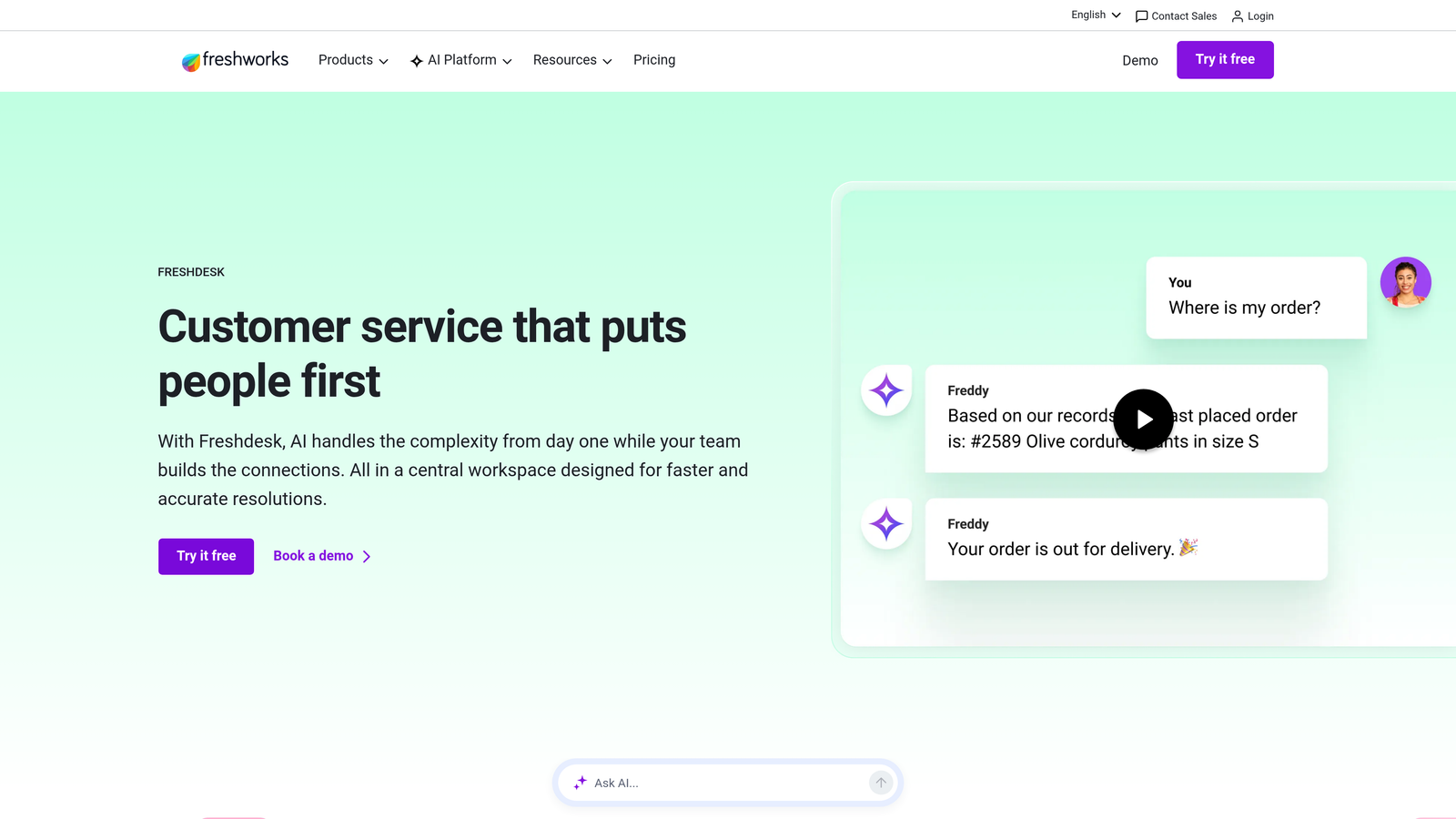
Freshdesk Freddy AI is Freshworks' AI assistant embedded within Freshdesk, handling ticket triage, agent assist, and self-service chatbot functions.
Where This Tool Shines
Freddy AI's biggest advantage is accessibility. The Freshdesk free plan is genuinely usable, and Freddy capabilities are bundled into paid tiers at price points that are competitive with the broader market. For teams that need to demonstrate ROI before unlocking larger budgets, this makes meaningful experimentation possible without a significant upfront commitment.
The agent assist layer is particularly practical. Rather than replacing agents entirely, Freddy surfaces suggested responses and canned actions in real time, which can meaningfully reduce handle time even when full autonomous resolution isn't appropriate for the ticket type.
Key Features
AI Ticket Classification and Routing: Freddy automatically categorizes and assigns incoming tickets based on content, reducing manual triage work.
Freddy Self Service Chatbot: Handles common queries autonomously before they reach an agent queue.
Agent Assist: Surfaces suggested responses and canned actions to agents in real time, speeding up resolution without full automation.
Competitive Bundling: AI capabilities are included in paid plans rather than sold as a separate add-on at a premium tier.
Best For
Small to mid-sized teams that want AI-augmented support at an approachable price point. Also a strong fit for teams new to AI support tooling who want to build familiarity before committing to a more complex platform.
Pricing
Free plan available with limited features. Paid plans start from $15 per agent per month. A 14-day free trial is available on paid tiers.
5. Ada
Best for: High-volume consumer or enterprise brands needing multilingual AI automation at scale.
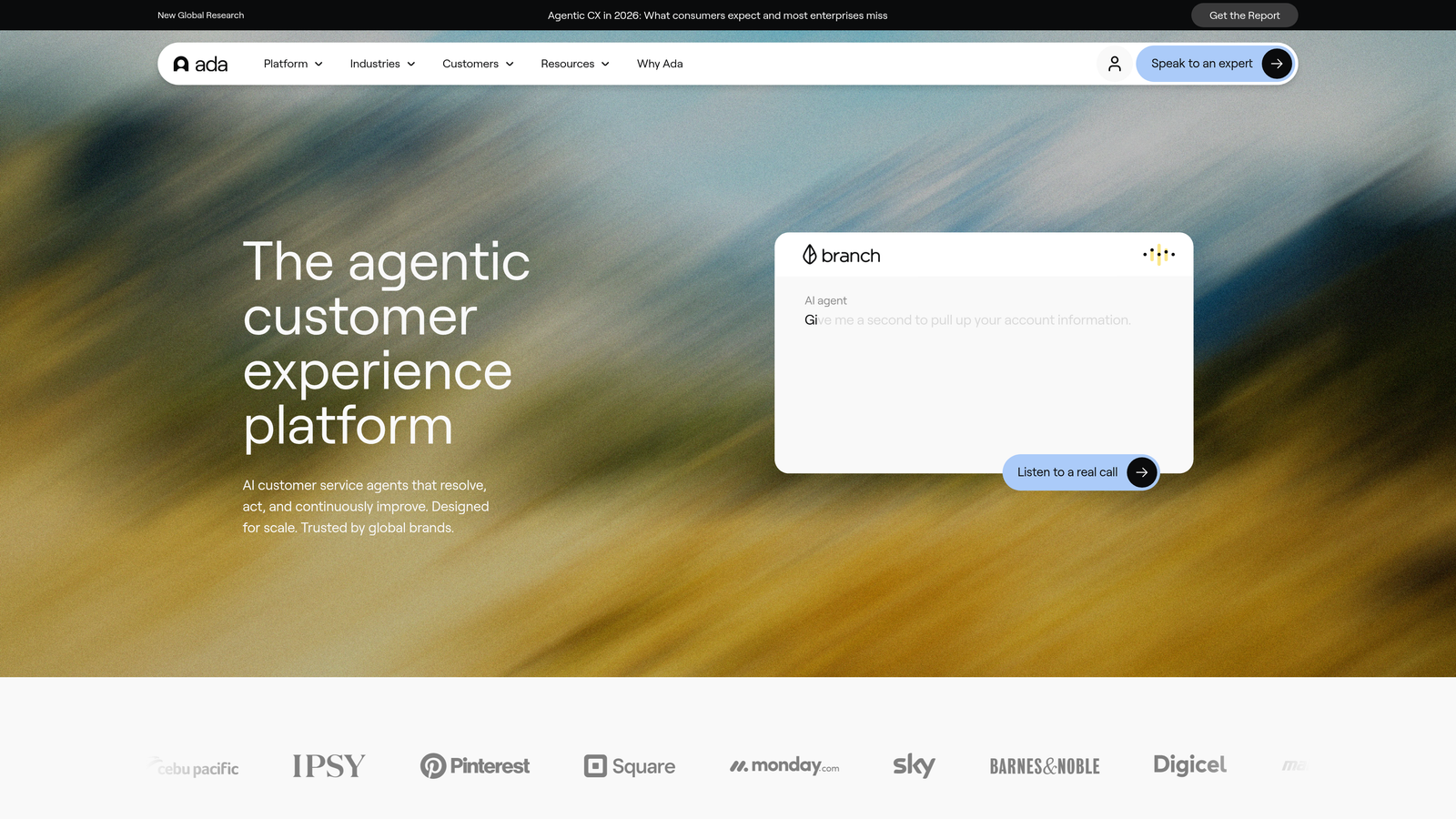
Ada is an AI-first customer service automation platform built for brands handling large interaction volumes, with strong multilingual capabilities and no-code configuration.
Where This Tool Shines
Ada is built for scale. Its AI reasoning engine is designed to handle multi-step resolutions, not just single-turn FAQ responses, which matters when your customers are working through account issues, order changes, or troubleshooting flows that require several back-and-forth exchanges. The platform handles this complexity without requiring a human to step in at every decision point.
The multilingual support is genuinely broad. For brands operating across multiple regions or languages, building and maintaining separate bot flows for each language is a significant operational burden. Ada's out-of-the-box language support reduces that overhead considerably.
Key Features
AI Reasoning Engine: Handles complex, multi-step resolutions rather than simple one-turn FAQ matching.
50+ Language Support: Multilingual capability is built in, not a separate configuration layer, making it practical for global operations.
No-Code Bot Builder: Drag-and-drop workflow configuration means non-technical teams can build and iterate on automation without engineering involvement.
CRM and Helpdesk Integrations: Connects with Zendesk, Salesforce, and other major CRMs for contextual resolution.
Best For
Enterprise and high-volume consumer brands, particularly those with multilingual support requirements or complex resolution flows. Less suited for small teams where the custom pricing model and implementation investment may not be proportionate.
Pricing
Custom pricing. A demo and guided trial are available on request. Expect a consultative sales process given the enterprise focus.
6. Tidio
Best for: Small businesses and e-commerce stores that need fast, lightweight AI chat without heavy setup.
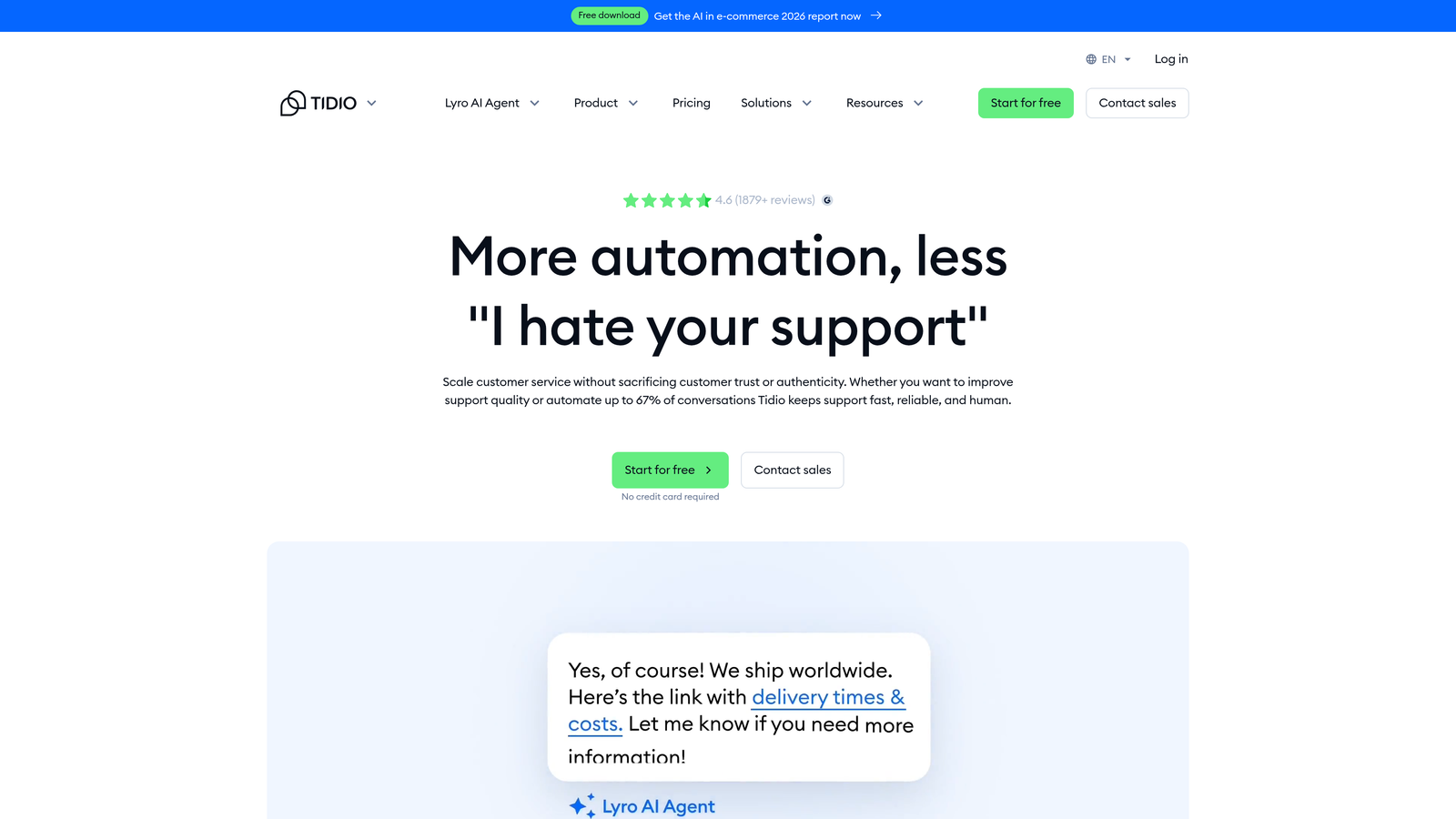
Tidio is a lightweight AI chatbot and live chat platform designed for small businesses and e-commerce, with a genuinely usable free tier.
Where This Tool Shines
Tidio's core strength is simplicity. Setup is fast, the interface is intuitive, and the free plan includes enough functionality to actually test whether AI chat adds value for your business before spending anything. For e-commerce teams that need to handle common questions about orders, shipping, and returns, Tidio's Lyro AI chatbot can handle a meaningful volume of those interactions without human intervention.
The platform's native integrations with Shopify, WordPress, and Wix make it particularly accessible for businesses built on those platforms. There's no complex API work required to get a working chatbot in front of customers.
Key Features
Generous Free Plan: Live chat and basic chatbot flows are available at no cost, making it one of the more accessible entry points in the market.
Lyro AI Chatbot: Handles FAQ resolution autonomously, learning from your help content to answer common questions without agent involvement.
Fast Setup: Most teams can have a working chat widget live in under five minutes.
E-Commerce Platform Integrations: Native connections with Shopify, WordPress, and Wix reduce technical friction for small business deployments.
Best For
Small businesses, e-commerce stores, and solo operators who need AI chat without enterprise complexity or budget. Not the right fit for B2B SaaS teams with complex support workflows or integration requirements.
Pricing
Free plan available. Paid plans start from $29 per month. A 7-day free trial is available on premium tiers.
7. HubSpot Service Hub
Best for: Teams already using HubSpot CRM who want support and customer data unified in one platform.
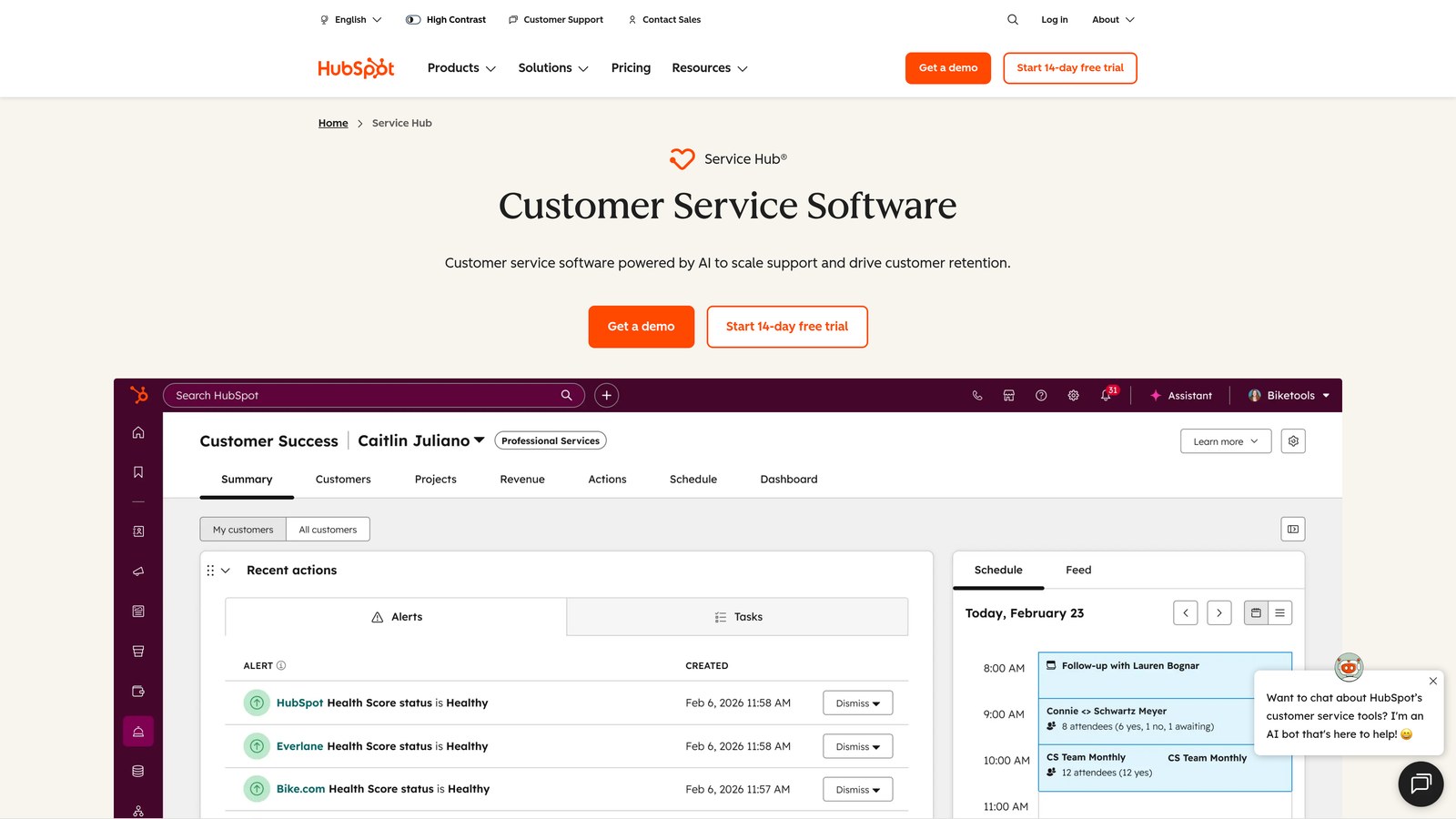
HubSpot Service Hub is HubSpot's customer service platform with AI-powered chatbots, ticketing, and a knowledge base, all connected to HubSpot CRM data.
Where This Tool Shines
The CRM-native context is what sets Service Hub apart from standalone support tools. When a customer contacts support, agents can immediately see the full customer journey: what they purchased, how they've engaged with marketing, their lifecycle stage, and their previous support history. That context changes the quality of every interaction, and it's available without any integration work for teams already on HubSpot.
The free tier is also meaningfully functional. Basic ticketing, live chat, and a shared inbox are available at no cost, which makes Service Hub one of the more accessible platforms for teams that want to start simple and scale up.
Key Features
CRM-Native Context: Support agents see the complete customer journey from marketing through to support, without switching tools or pulling data manually.
AI Chatbot Builder: Builds automated conversation flows connected to your HubSpot knowledge base for self-service resolution.
Shared Inbox with Automated Routing: Centralizes support conversations with rule-based routing to the right team or agent.
Functional Free Tier: Basic ticketing and live chat are available without a paid plan, making it practical to test before committing.
Best For
Teams already using HubSpot for marketing or sales who want to extend that investment into support. The CRM integration value is strongest for businesses where customer relationships span multiple touchpoints. Teams not on HubSpot may find the platform less compelling compared to dedicated support tools.
Pricing
Free tools available. Starter plans from $20 per seat per month. A 14-day trial is available on Professional and Enterprise tiers.
8. Drift (by Salesloft)
Best for: Revenue-focused teams that need AI to bridge customer support and sales conversations.
Drift is a conversational AI platform that routes high-intent queries to revenue teams while automating common support requests, sitting at the intersection of support and sales.
Where This Tool Shines
Drift occupies a distinct position in this list because it's not purely a support tool. Its intent detection capability can identify when a support conversation is actually a buying signal, and route that conversation to a sales rep rather than a support agent. For B2B companies where support and sales overlap frequently, this routing intelligence can turn support interactions into pipeline.
The conversational landing pages and playbook features also give marketing and sales teams tools that go beyond traditional support use cases, which makes Drift more of a revenue platform that handles support than a support platform with revenue features.
Key Features
Intent Detection: AI identifies whether an incoming conversation is a support request or a sales opportunity and routes accordingly.
Conversational Playbooks: Pre-built conversation flows for different visitor segments, use cases, and stages of the customer journey.
CRM Integrations: Connects with Salesforce, HubSpot, and other major CRMs to sync conversation data with existing revenue workflows.
Revenue Intelligence from Support: Surfaces insights from support conversations that are relevant to sales and customer success teams.
Best For
B2B companies where the line between support and sales is blurry, particularly those with inbound-heavy models where chat conversations frequently turn into opportunities. Less suited for teams that need deep support-specific features like complex ticket workflows or agent assist.
Pricing
Custom pricing. A demo and trial are available on request. Pricing is typically structured around team size and conversation volume.
9. Forethought
Best for: Teams that want AI-powered triage and resolution without migrating away from their existing helpdesk.
Forethought is an AI support layer that sits on top of existing helpdesks like Zendesk and Salesforce, providing intelligent triage, autonomous resolution, and agent assist without requiring platform migration.
Where This Tool Shines
Forethought addresses one of the most common blockers to AI adoption: the fear of ripping out an existing helpdesk that the team knows well. Because Forethought operates as an overlay, teams can add AI capabilities to their current environment without disrupting established workflows, agent training, or historical data. This is a meaningful practical advantage for teams with significant helpdesk investments.
The triage layer is particularly strong. Forethought classifies and routes tickets instantly based on content, intent, and urgency, which reduces the manual triage burden that often slows down support teams during high-volume periods.
Key Features
Overlay Architecture: Works on top of existing helpdesks like Zendesk and Salesforce, preserving current workflows and data without requiring migration.
AI Triage: Classifies and routes tickets instantly based on content and intent, reducing manual sorting at the top of the queue.
Solve AI: Autonomously resolves common issues using your existing knowledge base and past ticket data.
Agent Assist: Surfaces real-time knowledge suggestions to agents while they're working a ticket, reducing resolution time and improving consistency.
Best For
Mid-to-enterprise teams with established Zendesk or Salesforce deployments who want AI capabilities without a platform switch. Also strong for organizations where change management is a constraint and a non-disruptive AI layer is more realistic than a full migration.
Pricing
Custom pricing. A pilot program is available for qualified teams. Expect a consultative evaluation process given the enterprise positioning.
Which Platform Is Right for Your Team?
The right choice depends heavily on where you are in your support maturity and what you're actually trying to solve. Here's a quick way to think through it.
If you're a B2B SaaS team that wants AI to do more than deflect tickets, including surfacing product bugs, customer health signals, and revenue intelligence, Halo AI is worth exploring first. The page-aware context and continuous learning architecture are genuinely differentiated for product-led companies where support and product feedback are deeply intertwined.
For teams already invested in a major helpdesk, the calculus is different. Intercom Fin and Zendesk AI Agents are the natural first moves for their respective ecosystems. Forethought is the smarter option if you want AI capabilities without committing to a platform change. Freshdesk Freddy AI is the most accessible entry point for teams watching budget carefully.
If multilingual scale is your primary challenge, Ada is the specialist. If you're a small e-commerce business that needs something live in minutes, Tidio is hard to beat on simplicity and cost. If support and sales overlap significantly in your business, Drift's intent routing is worth a serious look. And if your CRM is HubSpot, Service Hub's native context makes it a natural extension of what you're already using.
One piece of advice that applies across all of these: trial with your real ticket data. Synthetic scenarios and demo environments are designed to look good. The platforms that hold up under actual production conditions, with your actual customers and your actual edge cases, are the ones worth paying for.
Your support team shouldn't have to scale linearly with your customer base. AI agents can handle routine tickets, guide users through your product, and surface business intelligence while your team focuses on complex issues that genuinely need a human touch. See Halo in action and discover how continuous learning transforms every interaction into smarter, faster support.