9 Best Automated Support Software Tools Compared for 2026
This automated support software comparison evaluates nine leading platforms across AI capability, integrations, deployment ease, business intelligence, and pricing to help B2B teams find the right fit. Whether you're scaling beyond your current helpdesk or building a support stack from scratch, this guide identifies what each tool does best so you can make a high-impact decision that improves CSAT scores and reduces agent burnout.
 Grant CooperFounder13 min read
Choosing the right automated support software is one of the highest-leverage decisions a B2B team can make. The difference between a tool that deflects tickets intelligently and one that just frustrates customers shows up fast: in CSAT scores, agent burnout, and churn. But with dozens of platforms claiming to "automate support," the comparison gets complicated quickly.
Do you need a bolt-on AI layer for your existing helpdesk? A standalone AI-first platform? Something built for enterprise scale or one that fits a lean team? This guide cuts through the noise. We've evaluated nine automated support platforms across five dimensions: AI capability, integration depth, ease of deployment, business intelligence, and pricing transparency.
Whether you're migrating off Zendesk, scaling past what Intercom can handle, or building your support stack from scratch, here's a clear picture of what each tool does best — and where it falls short.
1. Halo AI
Best for: B2B SaaS and product-led growth teams wanting AI-native support without a legacy helpdesk
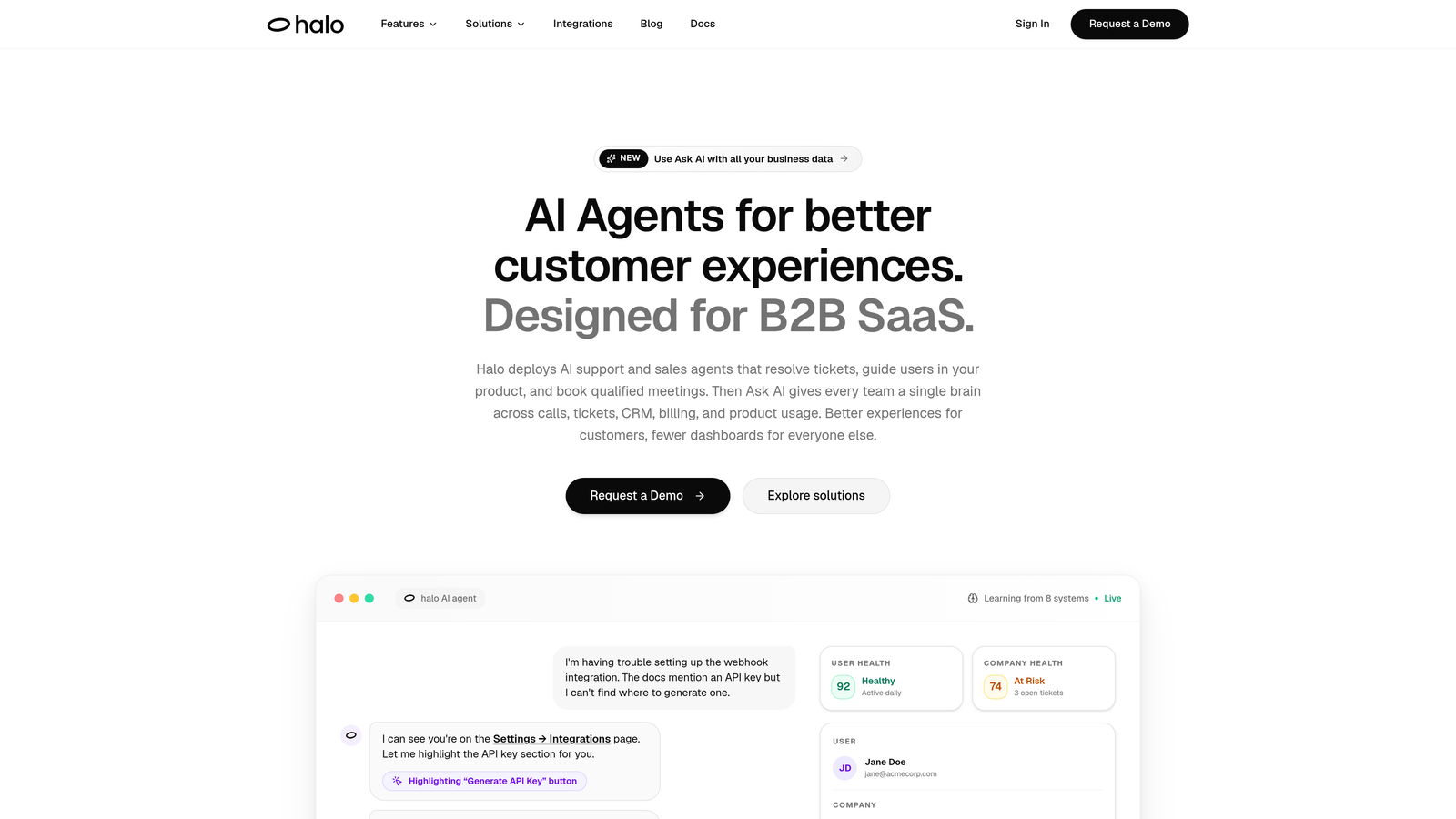
Halo AI is an AI-first customer support platform that deploys intelligent agents to resolve tickets, guide users through your product with page-aware context, and surface business intelligence across your entire stack.
Where This Tool Shines
What separates Halo from most tools on this list is its architecture. Rather than adding AI features on top of a traditional helpdesk, Halo was built from the ground up around AI agents. That distinction matters: the AI isn't a layer you bolt on, it's the foundation everything else runs on.
The page-aware chat widget is a standout capability. The AI understands where a user is inside your product and can provide visual UI guidance in context, rather than pointing them to a generic help article. Combine that with continuous learning from every resolved ticket, and the system gets meaningfully smarter over time.
Key Features
Autonomous AI Agents: Resolve support tickets end-to-end without agent intervention, learning from each interaction to improve future responses.
Page-Aware Chat Widget: Understands the user's current location in your product and delivers contextual, visual guidance rather than generic answers.
Smart Inbox with Business Intelligence: Surfaces customer health signals, anomaly detection, and revenue intelligence beyond standard support metrics.
Auto Bug Ticket Creation: Automatically creates and routes bug reports to Linear when issues are detected, closing the loop between support and engineering.
Live Agent Handoff: Gracefully escalates complex or sensitive issues to human agents with full context preserved.
Deep Integrations: Connects to Slack, HubSpot, Stripe, Zoom, PandaDoc, Fathom, Intercom, and Linear out of the box.
Best For
Halo is best suited for B2B SaaS companies and product-led growth teams that want AI to handle the full support lifecycle, not just suggest articles. If your team is tired of stitching together a helpdesk, a chatbot, and a BI tool separately, Halo's unified architecture is worth a close look.
Pricing
Pricing is not listed publicly. Visit haloagents.ai for current plans and to request a demo.
2. Zendesk
Best for: Large enterprises needing a proven omnichannel helpdesk with extensive integrations
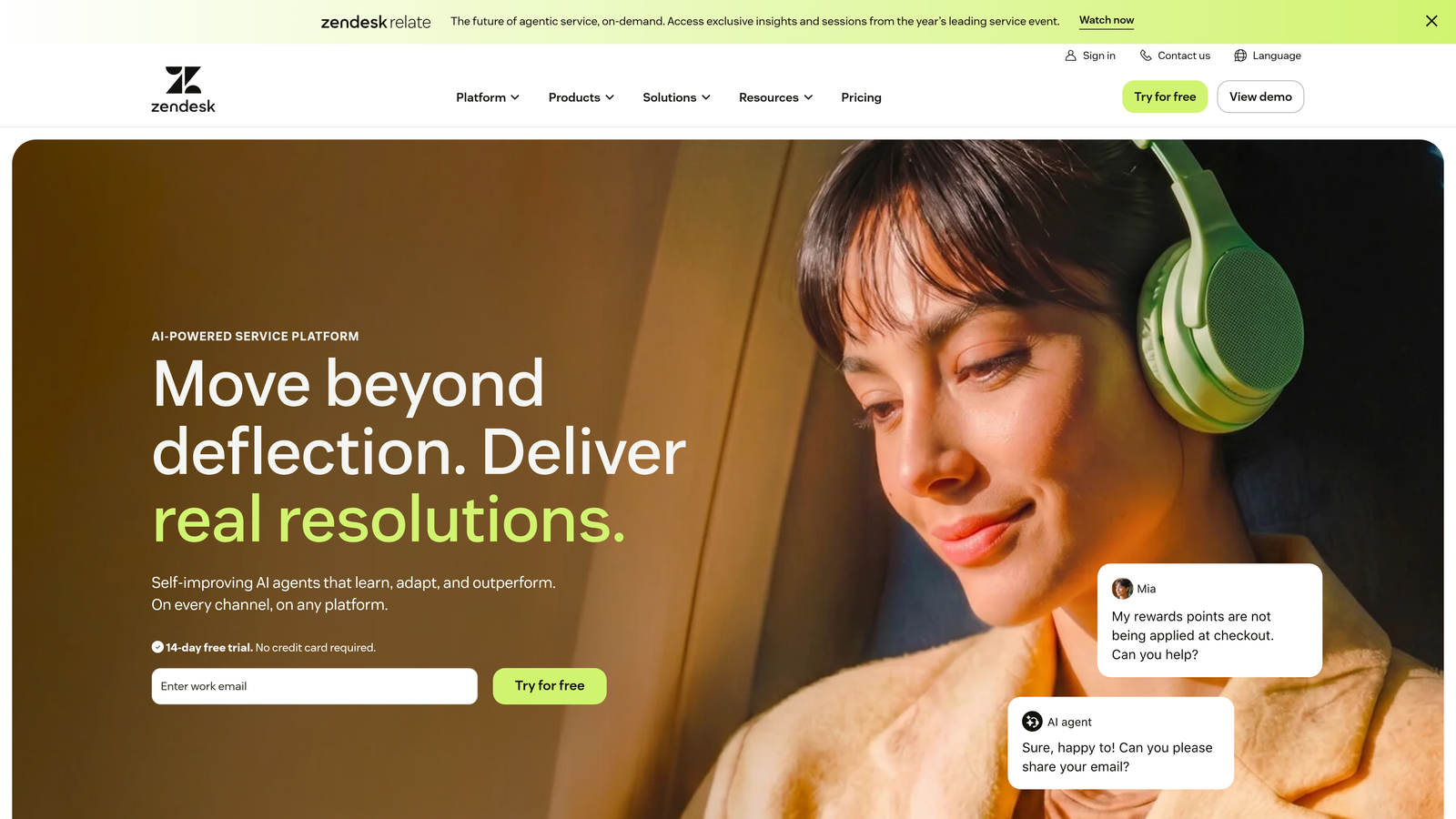
Zendesk is a mature, enterprise-grade helpdesk platform with AI automation layered on top of a comprehensive omnichannel support suite.
Where This Tool Shines
Zendesk's depth is hard to argue with. After years of development and acquisitions, it covers virtually every support channel and workflow a large enterprise might need. The app marketplace alone, with over 1,000 integrations, means it can slot into almost any existing tech stack.
The AI capabilities, powered by OpenAI, handle intelligent triage, macro suggestions, and agent copilot features. They're genuinely useful, though it's worth noting they feel additive rather than foundational. The AI enhances the existing helpdesk workflow rather than reimagining it.
Key Features
Zendesk AI Triage: Automatically classifies and routes incoming tickets based on intent, sentiment, and priority.
Agent Copilot: Suggests macros, draft replies, and next actions to speed up agent responses.
Omnichannel Support: Manages email, chat, voice, social media, and messaging from a single interface.
1,000+ App Marketplace: Extensive pre-built integrations covering CRM, billing, analytics, and developer tools.
Advanced Reporting and SLA Management: Granular reporting dashboards with SLA tracking and compliance monitoring.
Best For
Zendesk is best for enterprise teams with complex workflows, high ticket volumes across multiple channels, and the resources to configure and maintain a sophisticated platform. It's less well-suited for lean teams who want to move fast without heavy implementation overhead.
Pricing
Suite Team starts around $55 per agent per month billed annually. Verify current pricing at zendesk.com, as plans change frequently.
3. Intercom
Best for: Teams wanting to blend support, onboarding, and sales engagement in one platform
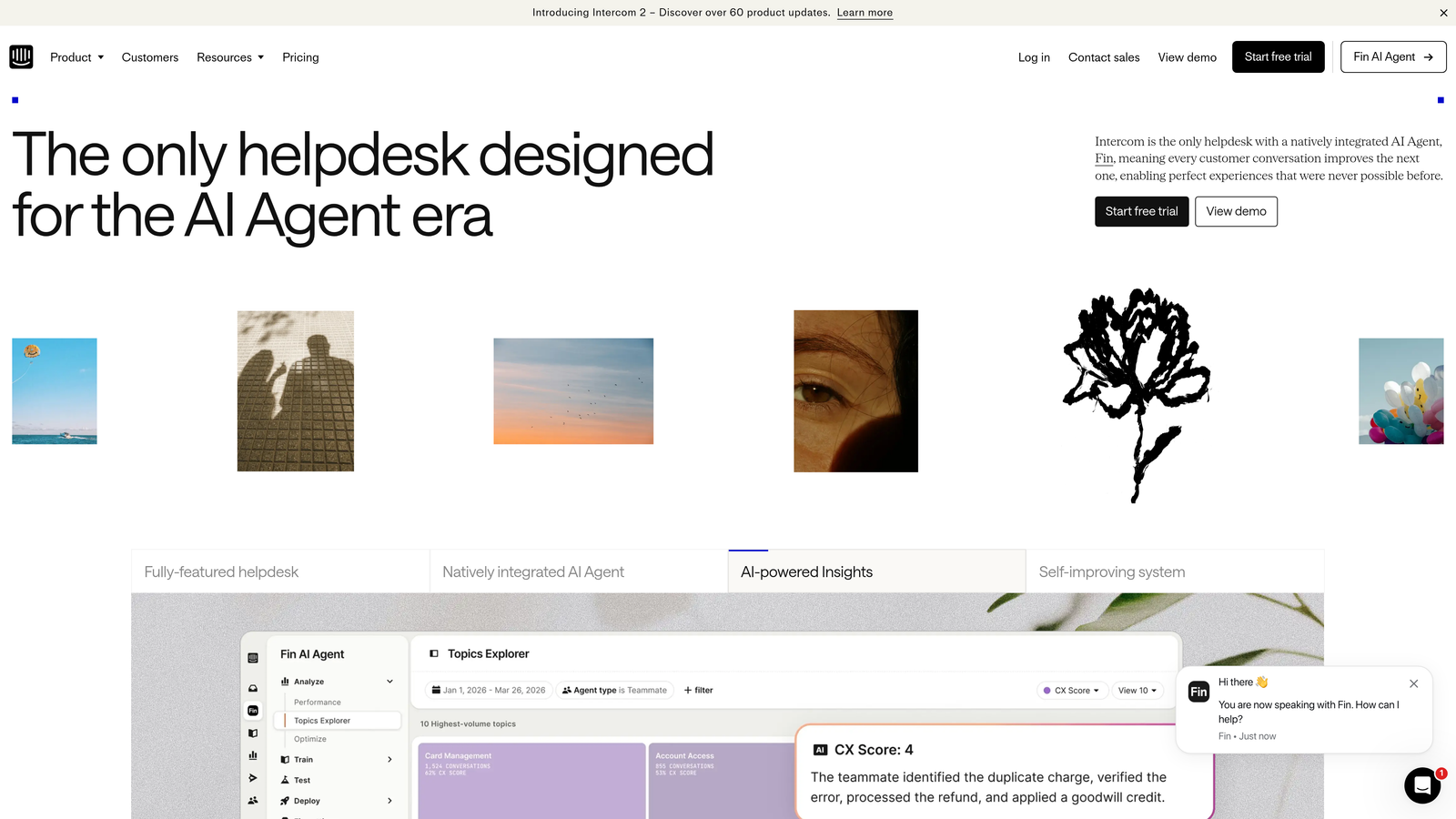
Intercom is a conversational support platform combining the Fin AI agent for ticket resolution with in-app messaging, product tours, and customer lifecycle campaigns.
Where This Tool Shines
Intercom's Fin AI agent is one of the more capable AI support products in the market. It draws on your knowledge base to resolve queries autonomously and handles a meaningful portion of incoming questions without agent involvement. The platform's strength is in how it blends support with broader customer engagement: onboarding sequences, product tours, and proactive messaging all live in the same tool.
The developer community around Intercom is strong, and the API is extensive. If your team has engineering resources, Intercom can be customized significantly. The trade-off is pricing complexity: the seat-plus-usage model can make costs harder to predict as you scale.
Key Features
Fin AI Agent: Resolves support queries automatically using your knowledge base, with fallback to human agents for complex issues.
In-App Messaging and Product Tours: Delivers onboarding sequences and feature announcements directly inside your product.
Shared Inbox: Collaborative inbox for team-based ticket management and escalation.
Extensive API and Developer Tools: Deep customization options for teams with engineering capacity.
Blended Support and Sales: Combines support automation with lead capture and customer lifecycle campaigns.
Best For
Intercom suits product teams and growth-focused SaaS companies that want support, onboarding, and customer engagement under one roof. Teams that need pure support automation without the broader engagement layer may find they're paying for features they don't use.
Pricing
Pricing combines seat-based and usage-based components. Check intercom.com for current plans, as the structure has evolved considerably.
4. Freshdesk
Best for: SMB and mid-market teams wanting accessible multi-channel support with built-in AI
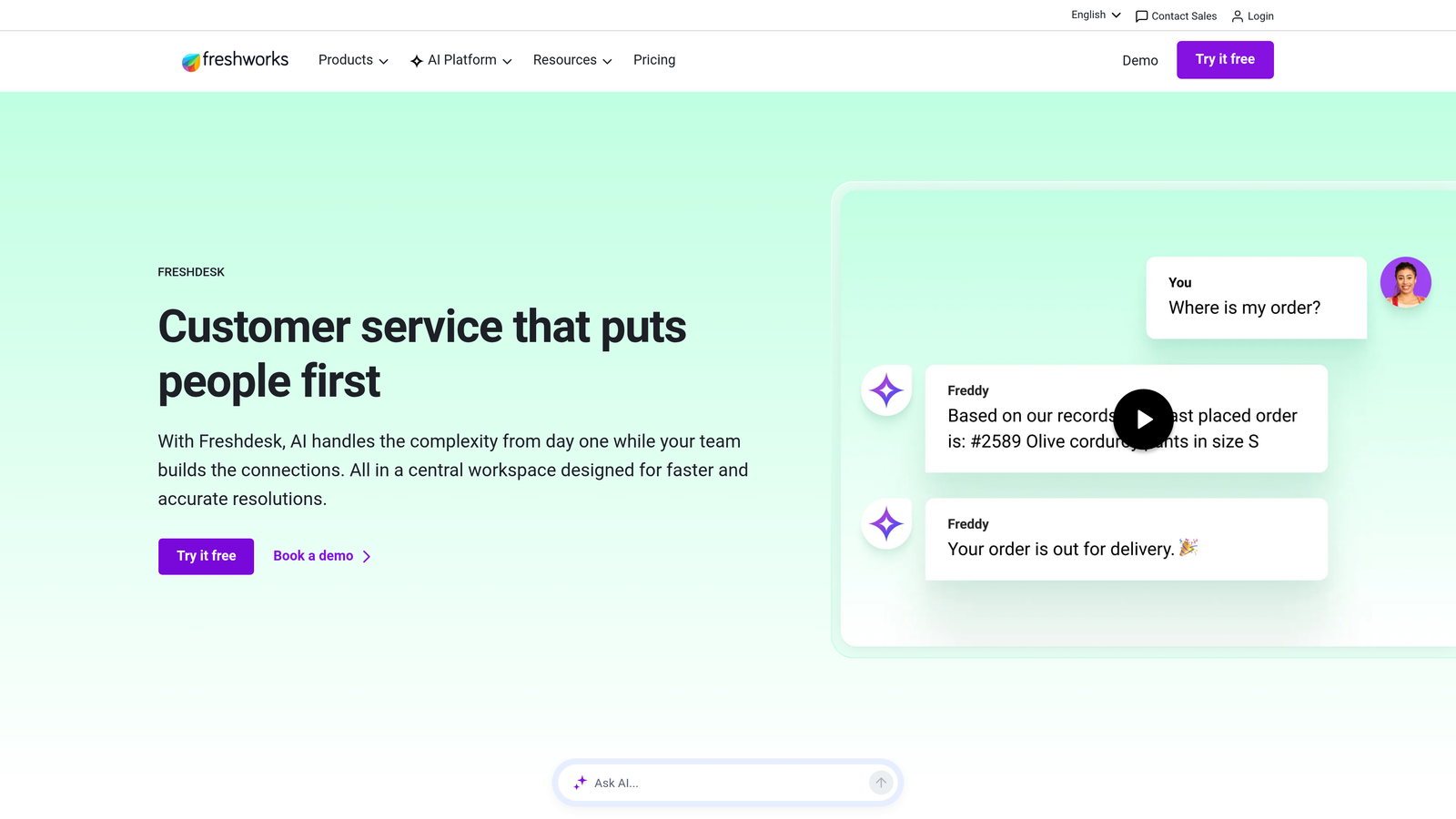
Freshdesk is a multi-channel helpdesk platform with Freddy AI built in, offering accessible pricing for teams managing email, chat, and phone support.
Where This Tool Shines
Freshdesk's value proposition is straightforward: a capable, multi-channel helpdesk at a price point that doesn't require enterprise budget approval. The Freddy AI suite covers three distinct use cases: self-service automation, agent assistance, and analytics, which gives teams a layered approach to AI adoption without needing to integrate separate tools.
The free plan is genuinely useful for small teams, and the Growth plan pricing makes it one of the more accessible options on this list. For teams within the Freshworks ecosystem, the native integrations with Freshsales and Freshservice add additional value.
Key Features
Freddy Self Service: AI-powered chatbot that deflects tickets by answering common questions before they reach an agent.
Freddy Copilot: Provides agents with suggested replies, ticket summaries, and next-step recommendations.
Freddy Insights: AI-driven analytics that surfaces trends, bottlenecks, and performance signals across your support operation.
Multi-Channel Coverage: Handles email, chat, phone, social, and WhatsApp from a unified interface.
Free Plan: Available for small teams with core helpdesk functionality included at no cost.
Best For
Freshdesk is well-matched for SMB and mid-market teams that need multi-channel support without Zendesk's price tag or complexity. It's a natural fit if you're already using other Freshworks products.
Pricing
Free plan available; Growth plan starts around $15 per agent per month. Verify current tiers at freshdesk.com.
5. Tidio
Best for: E-commerce brands and SMBs wanting fast-to-deploy chat automation without technical complexity
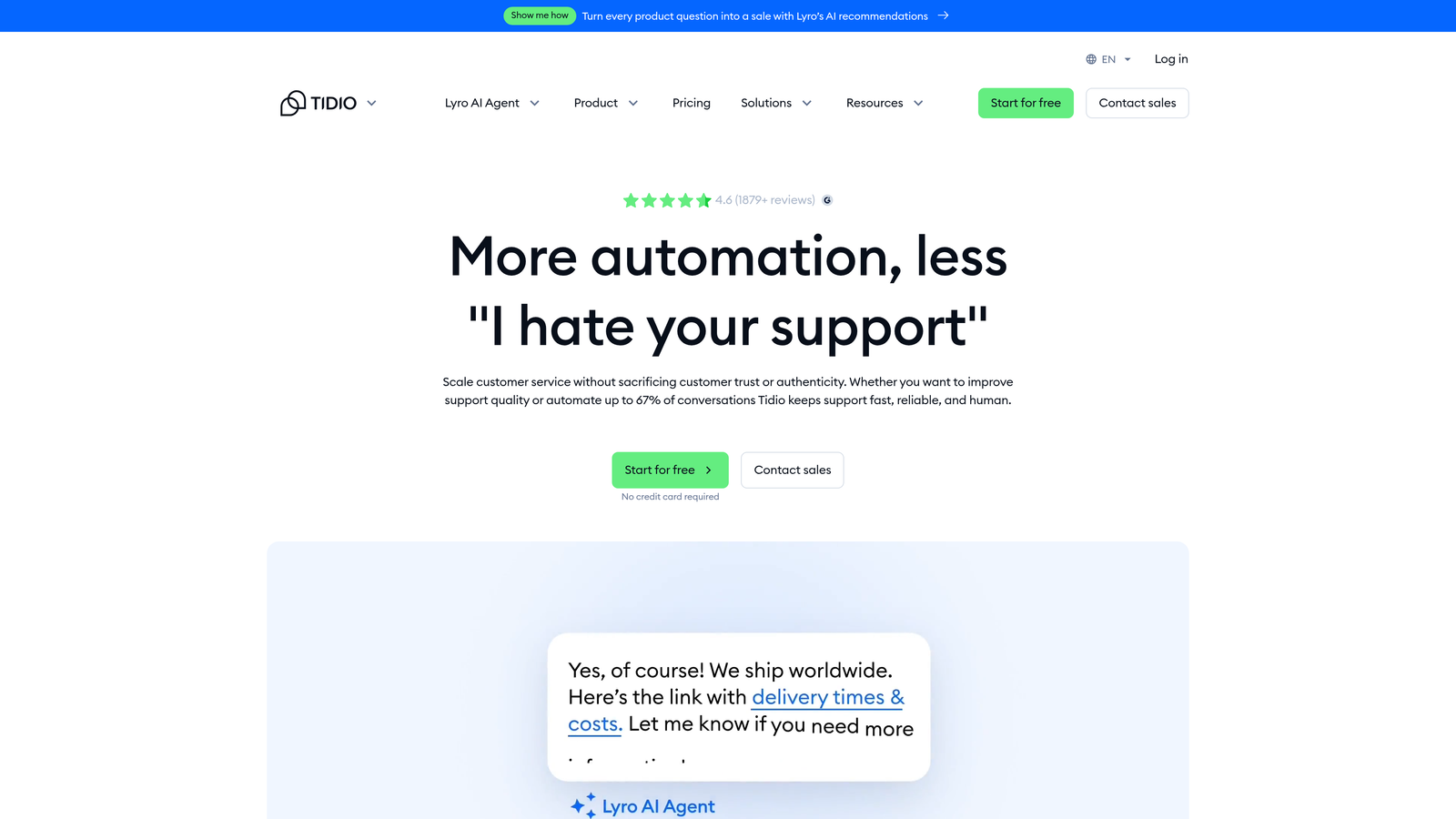
Tidio is a live chat and AI chatbot platform featuring the Lyro AI agent, built for businesses that want automation running quickly without a lengthy implementation.
Where This Tool Shines
Speed of deployment is Tidio's headline advantage. Teams frequently report going from sign-up to live chat in under an hour, which is genuinely rare in this category. The Lyro AI chatbot handles automated conversations using your existing content, and the native integrations with Shopify, WooCommerce, and WordPress make it a natural fit for e-commerce storefronts.
For teams that don't need deep B2B workflow automation, Tidio's simplicity is a feature, not a limitation. The conversation-volume-based pricing also makes it easier to predict costs as you grow.
Key Features
Lyro AI Chatbot: Handles automated customer conversations using your knowledge content, with handoff to live agents when needed.
Native E-Commerce Integrations: Pre-built connections to Shopify, WooCommerce, and WordPress for fast setup.
Live Chat with Agent Handoff: Smooth transition from AI to human agents when conversations require a personal touch.
Email and Social Channel Support: Manages conversations across multiple channels from one inbox.
Fast Deployment: Typically live within hours, with minimal technical setup required.
Best For
Tidio is an excellent fit for e-commerce brands and small businesses that want chat automation running fast. It's less suited for complex B2B support workflows that require deep integrations, multi-step routing logic, or business intelligence capabilities.
Pricing
Free plan available; paid plans scale by conversation volume. See current tiers at tidio.com.
6. Gorgias
Best for: E-commerce brands on Shopify managing high volumes of order-related support queries
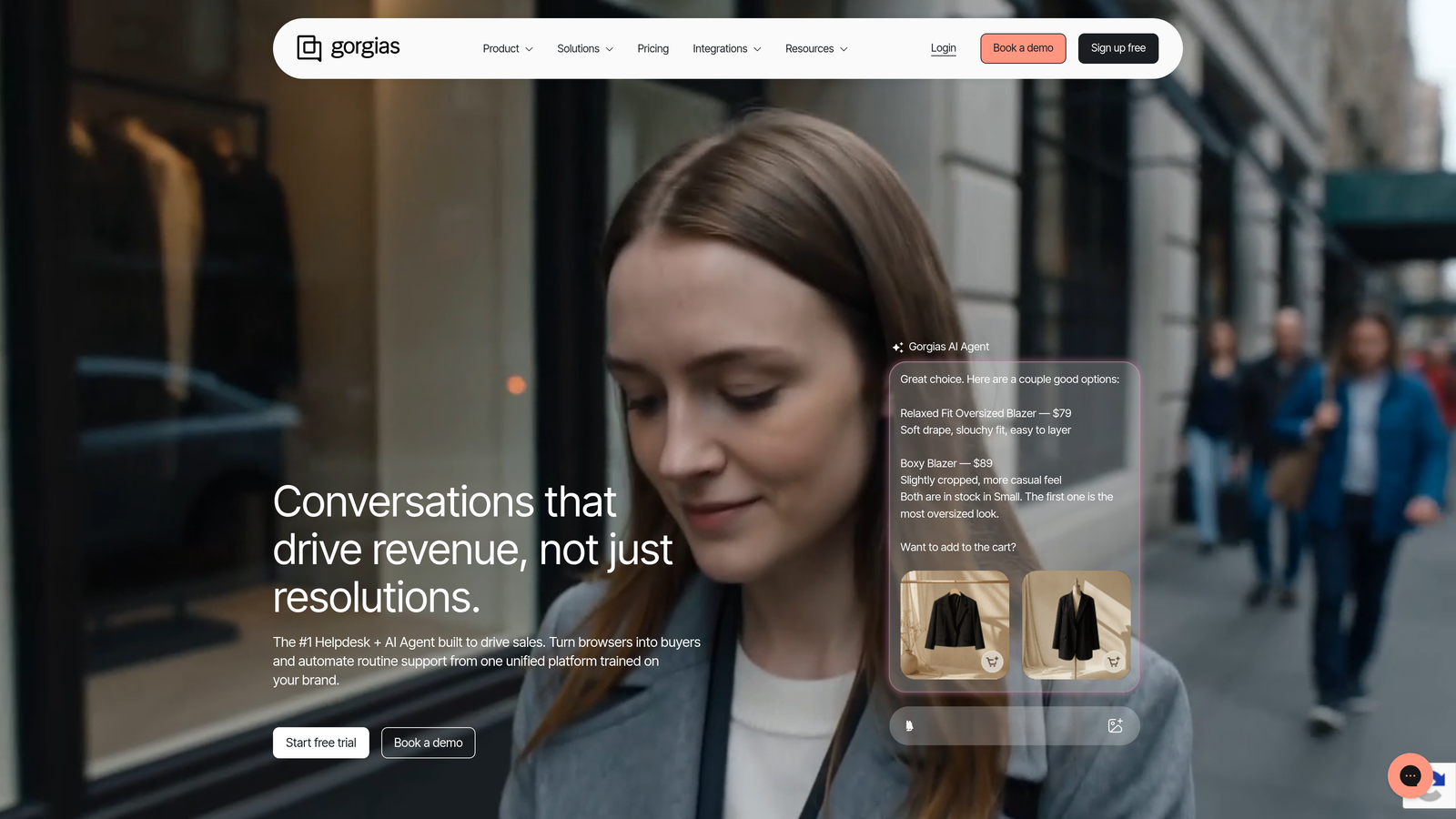
Gorgias is an e-commerce-focused support platform with deep Shopify integration, revenue attribution per ticket, and AI automation for common order-related queries.
Where This Tool Shines
Gorgias does one thing better than almost anyone: e-commerce support on Shopify. Order data, shipping status, and return history surface automatically inside every ticket, so agents never have to switch tabs to look up customer context. That alone saves meaningful time at scale.
The revenue-per-ticket attribution feature is genuinely differentiated. It connects support interactions to downstream revenue, making it easier to justify support investment to leadership. For high-volume DTC brands, this framing of support as a revenue driver rather than a cost center is compelling.
Key Features
Deep Shopify Integration: Pulls order data, shipping information, and return status directly into every support ticket automatically.
Revenue-Per-Ticket Attribution: Tracks the revenue impact of each support interaction to measure support's business contribution.
AI Automation for E-Commerce Queries: Handles order status, tracking, and return requests without agent involvement.
Multi-Channel Coverage: Manages email, chat, social, and SMS from a single interface.
Volume-Based Pricing: Costs scale with ticket volume rather than seat count, which suits high-volume operations.
Best For
Gorgias is built for e-commerce, specifically Shopify-first brands with high order support volume. B2B SaaS teams or companies not on Shopify will find limited value here, as most of the differentiation is tied to e-commerce-specific workflows.
Pricing
Pricing is based on ticket volume rather than seats. Check current tiers at gorgias.com.
7. Drift (Salesloft)
Best for: B2B revenue teams wanting AI chat that handles lead qualification and support simultaneously
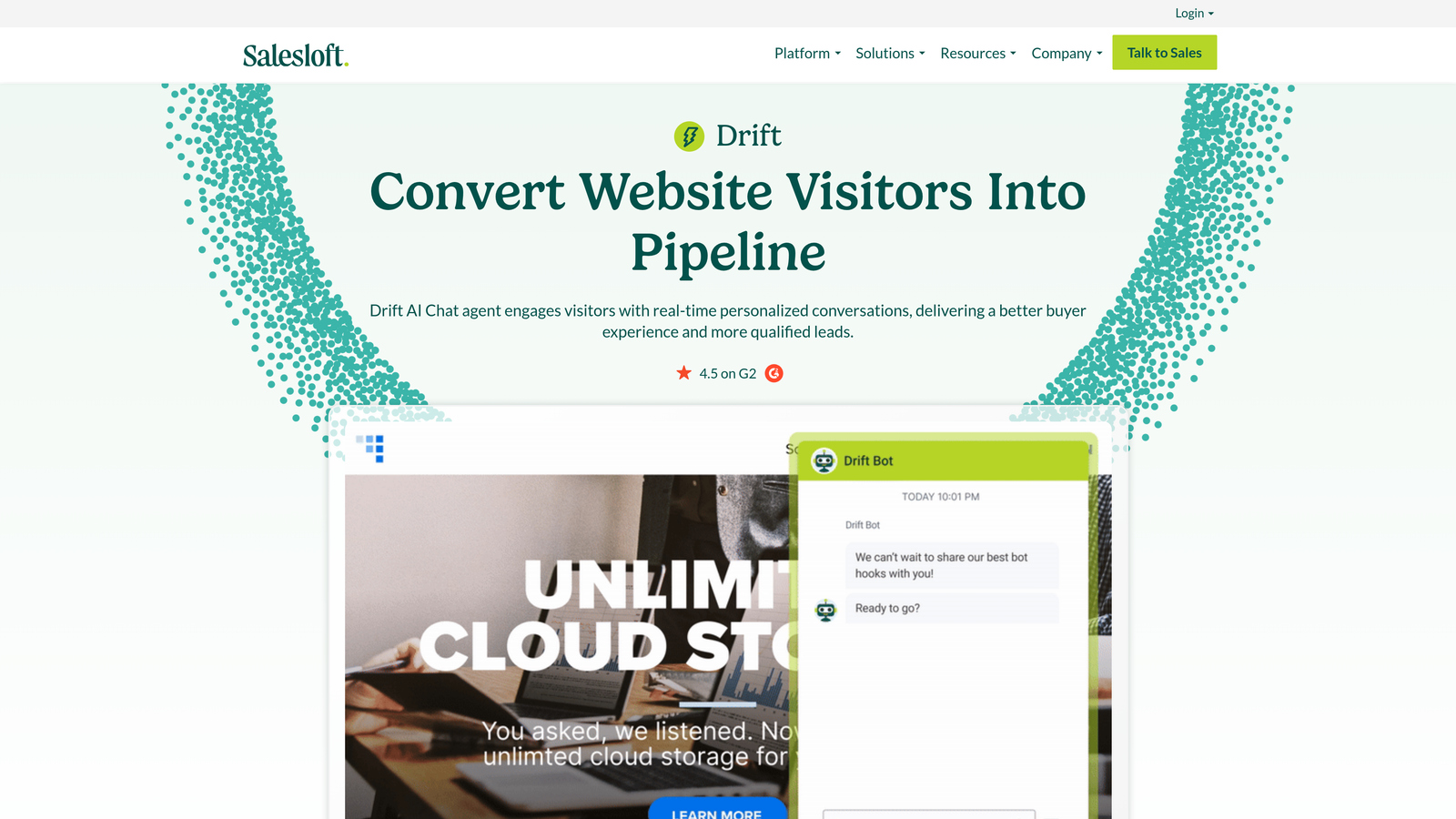
Drift, now part of Salesloft, is a conversational platform combining AI chat for lead qualification, meeting booking, and customer support in a single interface.
Where This Tool Shines
Drift's original strength was conversational marketing: using AI chat on B2B websites to qualify leads, book meetings, and engage buyers in real time. That capability remains strong. The integration with Salesloft's broader sales engagement platform means revenue teams can connect website conversations directly to sales sequences and account-based outreach.
For teams where the line between support and sales is intentionally blurred, Drift offers a unified surface. The buyer intent signals and account-based targeting features are genuinely useful for enterprise sales motions. However, if your primary goal is pure support automation, Drift's product direction has shifted toward revenue teams, which means support functionality is not the core focus.
Key Features
AI-Powered Chat: Qualifies leads and answers support queries simultaneously from a single chat interface.
Buyer Intent Signals: Identifies high-intent website visitors and triggers targeted engagement based on behavior.
Meeting Booking Automation: Books sales meetings directly from chat, integrated with sales team calendars.
Account-Based Targeting: Personalizes chat experiences based on the visitor's company and account status.
Salesloft Integration: Connects directly to Salesloft's sales engagement platform for unified revenue workflows.
Best For
Drift suits B2B companies where sales and support overlap, particularly enterprise teams using Salesloft. Teams looking for a dedicated support automation platform will likely find the product's current direction less aligned with their needs.
Pricing
Enterprise-focused with pricing not publicly listed. Contact drift.com for current rates.
8. Help Scout
Best for: Teams where support quality and relationship tone matter as much as ticket throughput
Help Scout is a human-first support platform with an inbox-style UX, AI-powered drafts and summaries, and a Beacon widget designed for teams that prioritize relationship quality over pure automation.
Where This Tool Shines
Help Scout's interface is deliberately calm. It looks and feels like email, not a ticket system, and that design choice shapes the entire support experience. Agents work in a clean inbox rather than a queue of numbered tickets, which tends to produce more thoughtful, personal responses.
The AI features are practical without being overwhelming: AI Drafts suggest reply language, AI Summarize gives agents instant context on long threads, and the Beacon widget handles in-app help without requiring a separate tool. For teams where tone and trust are core to their brand, Help Scout's approach is genuinely different from the efficiency-first alternatives.
Key Features
AI Drafts: Generates suggested reply drafts for agents, reducing time spent on routine responses.
AI Summarize: Produces instant summaries of long ticket threads so agents get context fast.
Beacon Widget: In-app help widget for proactive assistance, live chat, and knowledge base access.
Docs Knowledge Base: Built-in knowledge base included with all plans, no separate subscription needed.
Email-Style Inbox UX: Clean, clutter-free interface without ticket numbers or queue-style workflows.
Best For
Help Scout is ideal for customer-centric teams in SaaS, professional services, or any business where the quality of support communication directly affects retention and brand perception. It's less suited for high-volume operations that need aggressive automation and complex routing logic.
Pricing
Standard plan starts around $22 per user per month. Verify current pricing at helpscout.com.
9. Kustomer
Best for: High-volume consumer brands that need a CRM-native support platform with a unified customer timeline
Kustomer, owned by Meta, is a CRM-native support platform built around a customer timeline view rather than isolated tickets, with AI automation across email, chat, SMS, social, and voice.
Where This Tool Shines
Kustomer's core insight is that support tickets don't exist in isolation. Every interaction sits within the context of a customer's full history, and the platform surfaces that history in a single timeline view. For high-volume consumer brands managing thousands of customers across multiple channels, this context-first model can meaningfully improve resolution quality.
The AI automation layer handles routing, classification, and response generation across all channels. The CRM-native architecture means customer data and support history are unified from the start, rather than synced from a separate system. One consideration worth noting: Kustomer was acquired by Meta, and some buyers factor long-term product direction uncertainty into their evaluation.
Key Features
Customer Timeline Model: Displays every interaction, purchase, and support event in a single chronological view per customer.
AI Automation Across Channels: Handles email, chat, SMS, social, and voice with AI-driven routing and response suggestions.
CRM-Native Architecture: Customer data and support history unified in one system without requiring external CRM sync.
Workflow Automation: Configurable routing and escalation rules for complex support operations.
High-Volume Design: Built to handle the scale and complexity of consumer brands and subscription businesses.
Best For
Kustomer is well-suited for consumer brands, subscription businesses, and high-volume operations where understanding the full customer relationship is essential to resolving issues well. B2B SaaS teams or smaller organizations may find the platform's complexity and enterprise pricing exceed their needs.
Pricing
Enterprise pricing, not publicly listed in detail. Contact kustomer.com for current rates.
Which Tool Is Right for Your Team?
The right automated support software depends almost entirely on where you are and where you're going. Here's a quick-reference breakdown by use case.
Building an AI-native support stack for B2B SaaS: Halo AI is the strongest fit. The page-aware context, continuous learning, and business intelligence capabilities are purpose-built for product-led teams that want AI to do real work, not just suggest articles.
Enterprise with complex omnichannel requirements: Zendesk or Kustomer, depending on whether you prioritize channel breadth or customer timeline context. Both require meaningful implementation investment.
Blending support with onboarding and lifecycle engagement: Intercom's Fin AI and product tour capabilities make it a strong choice, particularly if your team already uses it for in-app messaging.
SMB or mid-market on a budget: Freshdesk's accessible pricing and Freddy AI suite offer solid value without enterprise overhead. Tidio is worth considering if deployment speed is the priority.
E-commerce on Shopify: Gorgias is the clear category leader. The deep Shopify integration and revenue attribution are difficult to replicate with general-purpose tools.
Support quality over automation volume: Help Scout's human-first design and clean UX make it the right choice for teams where tone and relationship depth drive retention.
One broader pattern worth noting: the gap between AI-native platforms and legacy helpdesks with AI layers added on is widening. Tools built from the ground up around AI agents tend to improve faster, integrate more naturally, and deliver better ticket resolution quality over time.
Your support team shouldn't scale linearly with your customer base. Let AI agents handle routine tickets, guide users through your product, and surface business intelligence while your team focuses on complex issues that need a human touch. See Halo in action and discover how continuous learning transforms every interaction into smarter, faster support.