9 Best Automated Support Software Solutions by Cost in 2026
This guide breaks down automated support software cost across 9 leading platforms, helping teams understand true total cost of ownership—including setup, integrations, and AI add-on fees—so they can choose a solution that scales affordably from startup to enterprise without overpaying for unused features.
 Grant CooperFounder14 min read
Automated support software can transform how your team handles tickets, but the cost landscape is genuinely confusing. Pricing models range from free tiers for small teams to enterprise contracts that run well into five figures per month, and the wrong choice can leave you either overpaying for capabilities you never use or underinvesting in automation that would have paid for itself many times over.
The real challenge isn't finding a tool with a low sticker price. It's understanding total cost of ownership: setup time, integration complexity, AI add-on fees, and how pricing scales as your ticket volume grows. A platform that looks affordable at 500 tickets per month can become surprisingly expensive at 5,000.
To help you make a smarter decision, we evaluated these platforms on transparent pricing, cost-to-value ratio, pricing scalability, and realistic total cost of ownership. Whether you're a lean startup looking for a free tier or a scaling SaaS company ready to invest in AI-first automation, there's an option here that fits. You might also find it useful to explore how chatbot ROI and automated customer support can frame the business case before committing to a platform.
1. Halo AI
Best for: B2B SaaS teams that want AI-first support automation without paying for legacy helpdesk infrastructure plus AI add-ons separately.
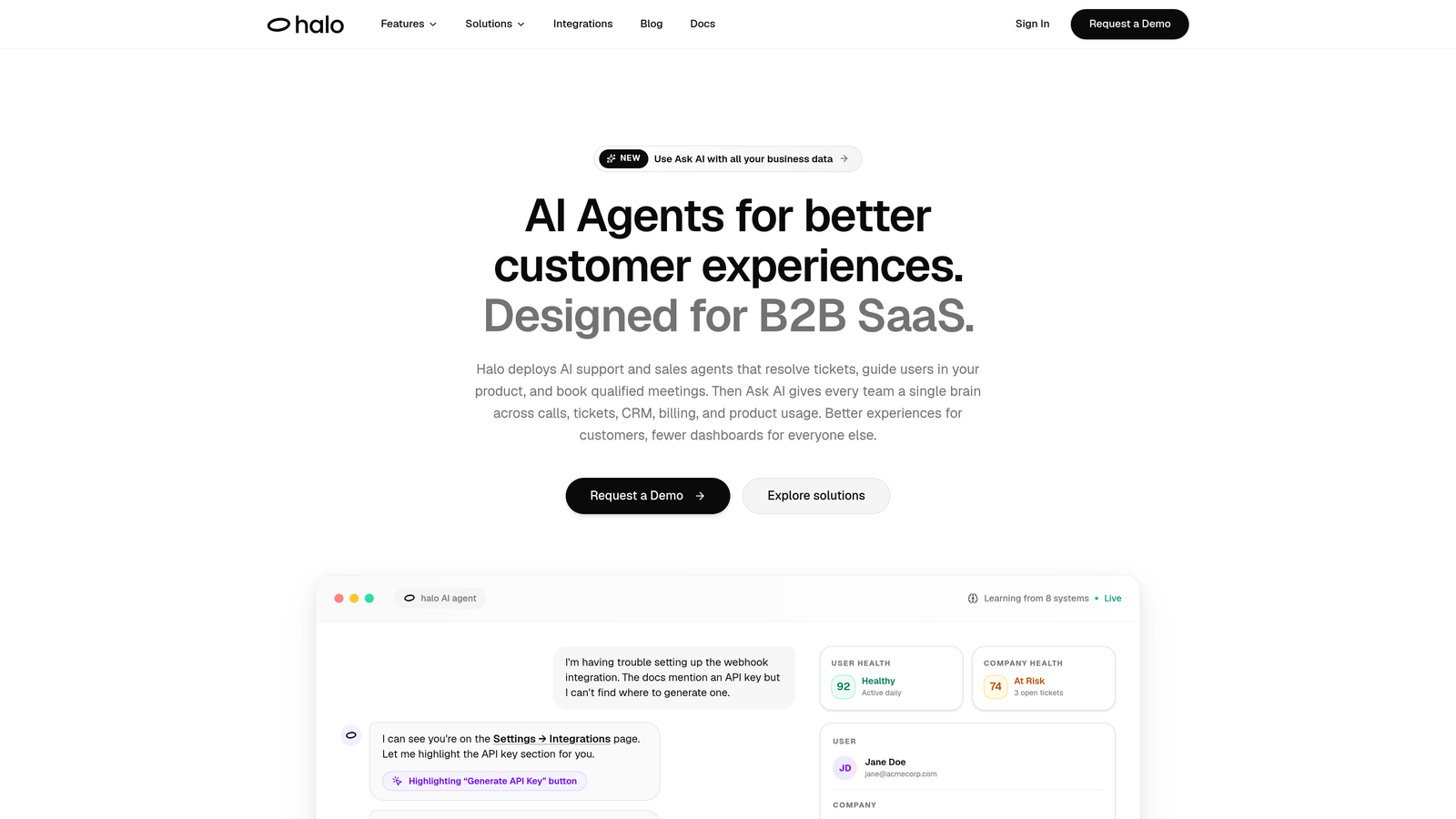
Halo AI is an AI-native customer support platform where intelligent agents autonomously resolve tickets, guide users visually through your product, and surface business intelligence from every interaction.
Where This Tool Shines
Most support platforms were built as helpdesks first, with AI layered on afterward. Halo was designed the other way around. The AI agents aren't a feature you activate; they're the core of how the platform operates. That architectural difference matters when it comes to cost, because you're not paying a base helpdesk fee plus a separate AI add-on fee to get intelligent automation.
The page-aware chat widget is a particularly distinctive capability. Rather than offering generic responses, the AI can see what a user is looking at in real time and provide contextual visual guidance. For SaaS products with complex UIs, this can deflect a significant volume of "how do I do X?" tickets without any human involvement.
Key Features
Autonomous ticket resolution: AI agents handle support tickets end-to-end, learning continuously from every interaction to improve accuracy over time.
Page-aware chat widget: The AI sees what users see, enabling visual UI guidance and contextual answers based on where a user is in your product.
Smart inbox with business intelligence: Goes beyond ticket management to surface customer health signals, revenue intelligence, and anomaly detection from support data.
Auto bug ticket creation and live agent handoff: Automatically generates bug reports and escalates complex issues to human agents when needed, keeping workflows clean.
Native integrations: Connects directly with Linear, Slack, HubSpot, Intercom, Stripe, Zoom, PandaDoc, and Fathom, so your support data flows into your existing business stack.
Best For
Product teams and B2B SaaS companies that want to scale support without scaling headcount. Particularly well-suited for teams already using a modern tool stack (Linear, HubSpot, Slack) who want their support layer to connect intelligently across all of it, rather than sitting in a silo.
Pricing
Contact for pricing. Because AI is built into the core architecture rather than sold as an add-on, there are no separate AI feature fees on top of a base plan.
2. Zendesk
Best for: Mid-to-large support teams that need a proven, deeply customizable helpdesk with broad integration support.
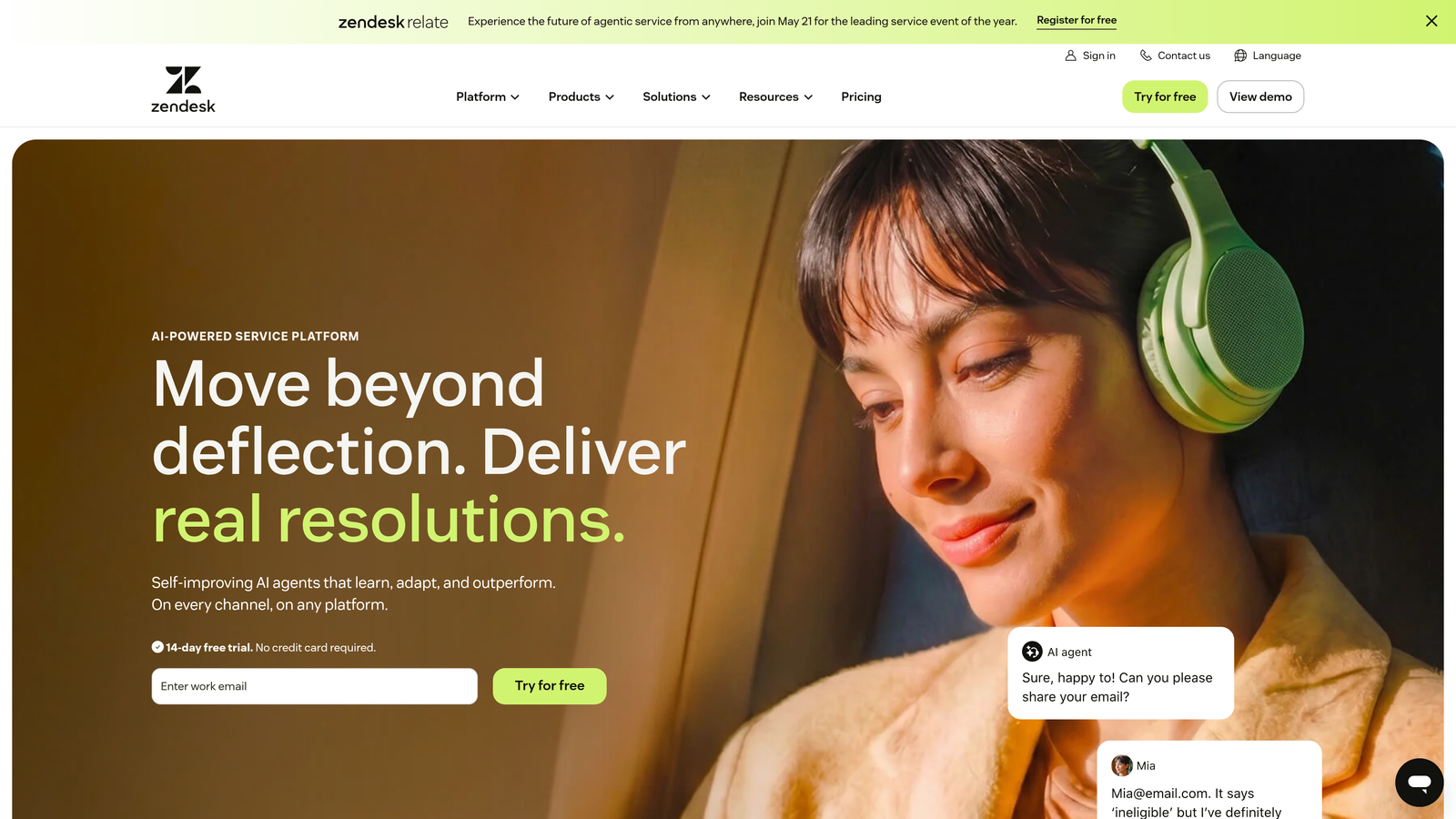
Zendesk is one of the most established names in customer support, offering a comprehensive platform that spans ticketing, live chat, voice, and a knowledge base.
Where This Tool Shines
Zendesk's strength is its maturity. The platform has been refined over many years, and that shows in its workflow depth, reporting capabilities, and the sheer breadth of its app marketplace. If you have a complex, multi-channel support operation with specific integration requirements, Zendesk almost certainly has a solution for it.
The trade-off is cost complexity. AI capabilities are not bundled into base plans; the Advanced AI add-on, which includes AI agents, intelligent triage, and an agent copilot, requires Suite Professional or above and comes at an additional per-agent cost. For teams that need AI automation, this can push the total monthly bill significantly higher than the base plan pricing suggests.
Key Features
Comprehensive ticketing and knowledge base: Full-featured helpdesk covering email, chat, voice, and social in a unified interface.
Advanced AI add-on: Includes AI agents for automated resolution, intelligent triage, and an agent copilot for response suggestions.
1,500+ app marketplace integrations: One of the largest third-party integration ecosystems in the industry.
Robust analytics: Deep reporting across channels, SLAs, and agent performance.
Best For
Established support teams with 10+ agents, complex workflows, and the budget to invest in a premium platform. Less cost-effective for small teams or those who primarily need AI automation rather than full helpdesk infrastructure.
Pricing
Support Team starts at $19/agent/month. Advanced AI is an additional cost on Suite Professional ($115/agent/month) and above. Total cost of ownership rises quickly at scale.
3. Intercom
Best for: Product-led SaaS companies that want conversational support with outcome-based AI pricing.
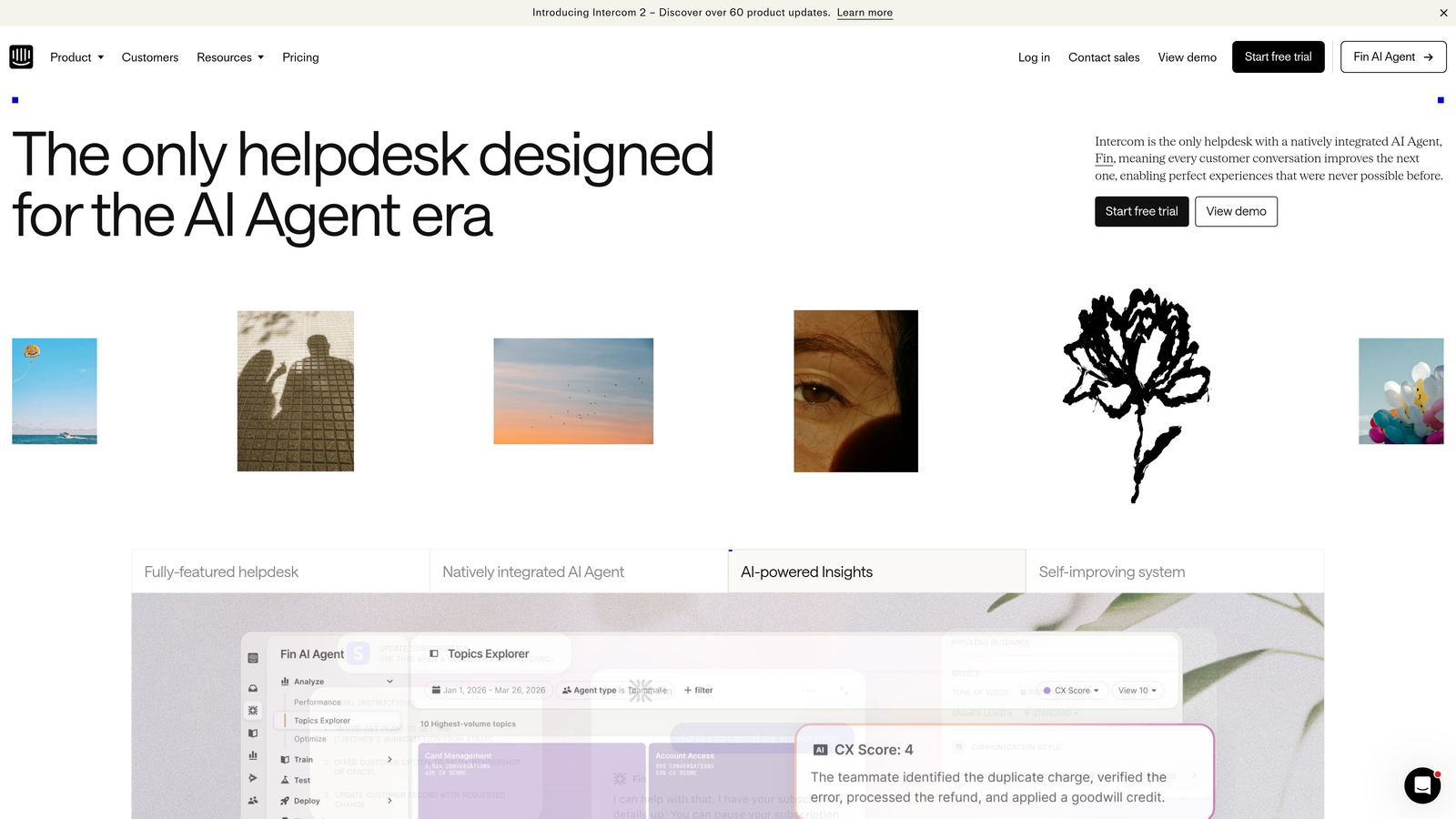
Intercom is a conversational support platform best known for its in-app messaging and, more recently, its Fin AI agent with a per-resolution pricing model.
Where This Tool Shines
Intercom pioneered the per-resolution pricing model with Fin, which means you pay based on what the AI actually accomplishes rather than a flat per-agent fee. For teams with high automation rates, this can be very cost-effective. For teams where the AI resolves a lower percentage of tickets, costs can add up quickly and become harder to predict.
Beyond Fin, Intercom's in-app messaging, product tours, and proactive support tools make it a strong choice for SaaS companies that want to blend support with onboarding and user engagement. It's not just a support tool; it's a customer communication platform.
Key Features
Fin AI agent: Conversational AI that resolves support queries autonomously, billed per successful resolution.
In-app messaging and product tours: Proactive communication tools for onboarding, announcements, and guided experiences.
Shared inbox with AI assistance: AI-powered conversation summaries and response suggestions for human agents.
Custom bots and workflow automation: Visual builder for creating automated conversation flows and routing logic.
Best For
SaaS companies with a strong product-led growth motion, where support and onboarding overlap. Teams comfortable with variable, resolution-based AI costs rather than predictable flat fees.
Pricing
Essential plan starts at $29/seat/month. Fin AI resolutions are billed at $0.99 per resolution on top of the base plan, making total cost highly dependent on AI deflection rates.
4. Freshdesk
Best for: Budget-conscious teams and growing companies that need a capable helpdesk without a large upfront investment.
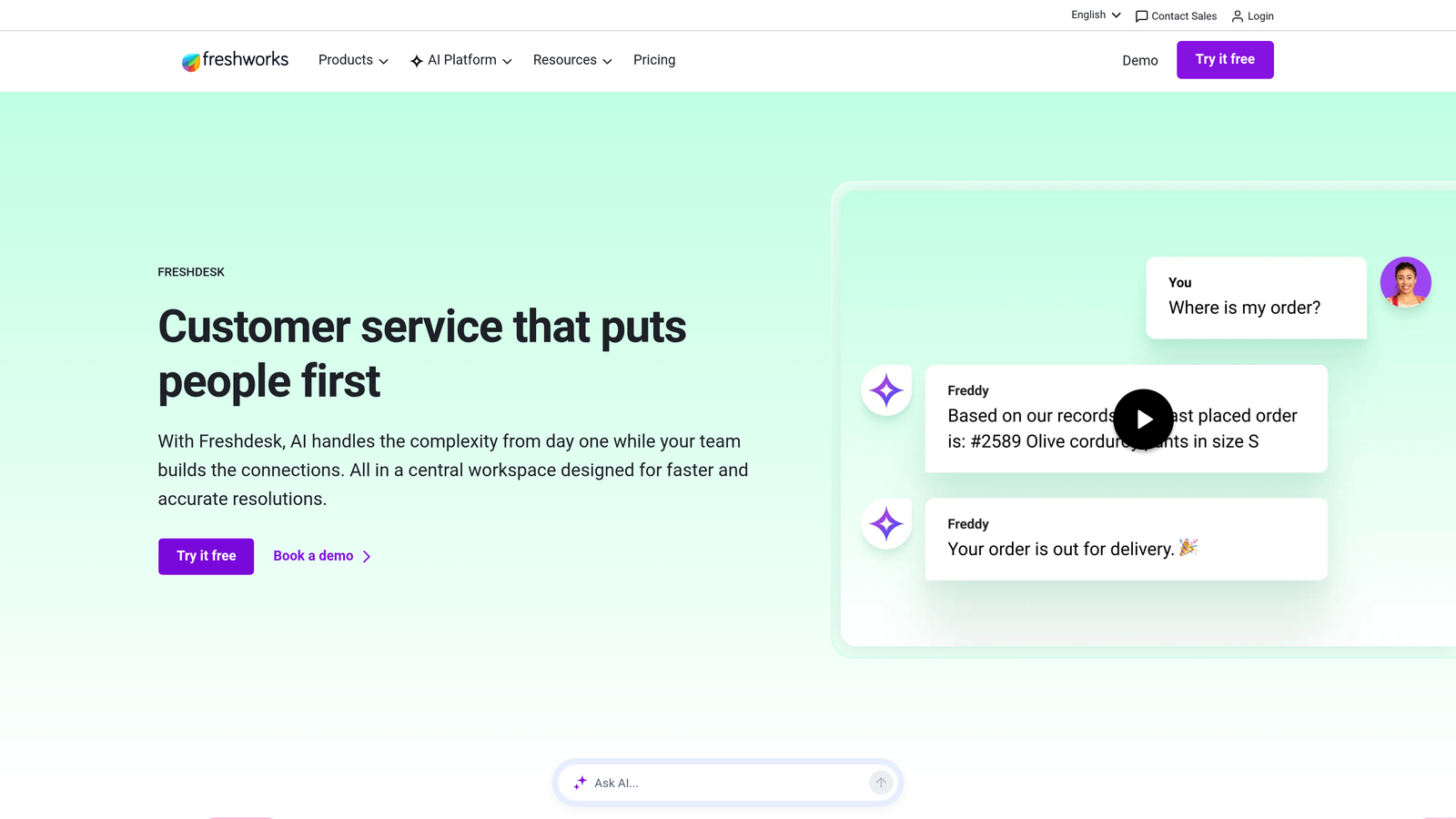
Freshdesk is a helpdesk platform from Freshworks that offers one of the most generous free tiers in the market, with AI capabilities (Freddy AI) unlocked on higher-tier paid plans.
Where This Tool Shines
Freshdesk's pricing structure is genuinely accessible. The free plan supports up to two agents with basic ticketing, making it a real starting point for very small teams rather than a stripped-down trial. As teams grow, the paid tiers scale reasonably, and the omnichannel capabilities (email, chat, phone, social) are included without requiring separate product purchases.
Freddy AI adds meaningful automation at the Pro tier and above, covering auto-triage, suggested responses, and a chatbot. The catch is that the most capable AI features require the Pro plan, which represents a meaningful jump in per-agent cost from the Growth tier.
Key Features
Generous free plan: Up to 2 agents with basic ticketing, email support, and knowledge base at no cost.
Freddy AI: Auto-triage, suggested responses, and chatbot capabilities available on Pro and above.
Omnichannel support: Unified inbox for email, chat, phone, and social media without separate product purchases.
Automations and SLA management: Workflow rules, canned responses, and service level agreement tracking across all plans.
Best For
Small to mid-sized teams looking for a cost-effective entry point into helpdesk software, with a clear upgrade path as needs grow. Also suits teams already in the Freshworks ecosystem (Freshsales, Freshservice).
Pricing
Free plan available. Growth plan starts at $15/agent/month. Freddy AI features require Pro at $49/agent/month. AI automation is not available on the lowest paid tier.
5. Tidio
Best for: Small businesses and e-commerce brands that need affordable chatbot automation without enterprise complexity.
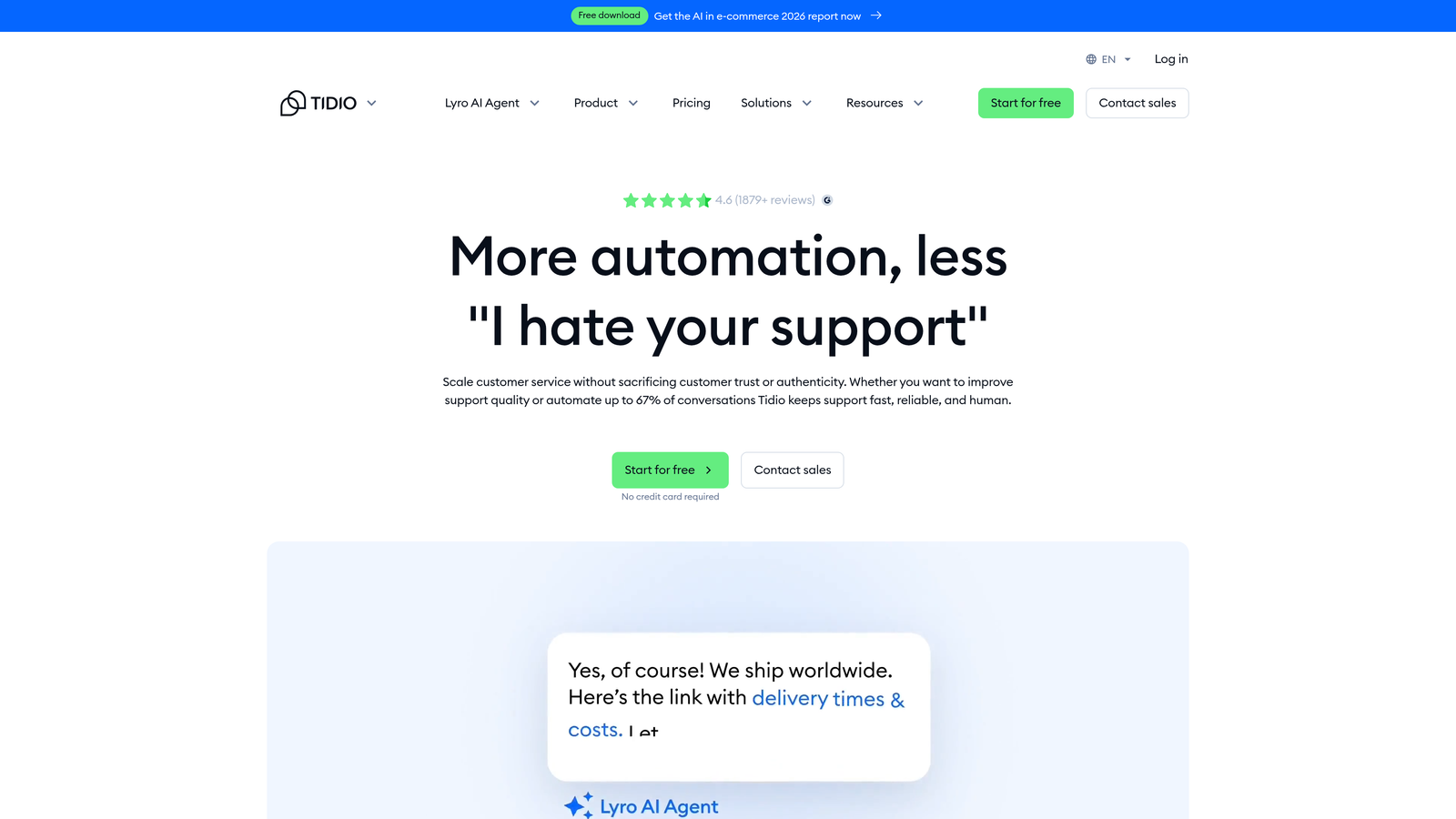
Tidio is a live chat and chatbot platform with Lyro AI for conversational automation, built with small business budgets and e-commerce workflows in mind.
Where This Tool Shines
Tidio keeps things simple and accessible. The visual chatbot builder with pre-built templates means non-technical users can set up automation flows without developer help. The integrations with Shopify, WordPress, and Wix make it a natural fit for e-commerce brands that want to automate common customer questions without a complex implementation.
Lyro AI is Tidio's conversational AI layer, trained on your content to handle customer queries automatically. The conversation-based billing model for Lyro means costs scale with usage, which can be predictable for businesses with consistent traffic but variable for those with seasonal spikes.
Key Features
Visual chatbot builder: Drag-and-drop interface with pre-built templates for common support and sales scenarios.
Lyro AI: Conversational AI trained on your knowledge base, billed per conversation.
Live chat with visitor tracking: Real-time visitor monitoring with canned responses and operator assignment.
E-commerce integrations: Native connections with Shopify, WordPress, and Wix for order and product context.
Best For
Small businesses, e-commerce stores, and solopreneurs who want chatbot automation without a large monthly commitment or technical implementation effort. Not designed for complex B2B support workflows.
Pricing
Free plan available. Paid plans start at $29/month. Lyro AI conversations are billed separately, starting around $0.50-$0.70 per conversation. Verify current rates on Tidio's pricing page.
6. HubSpot Service Hub
Best for: Teams already in the HubSpot ecosystem who want support automation connected to CRM, marketing, and sales data.
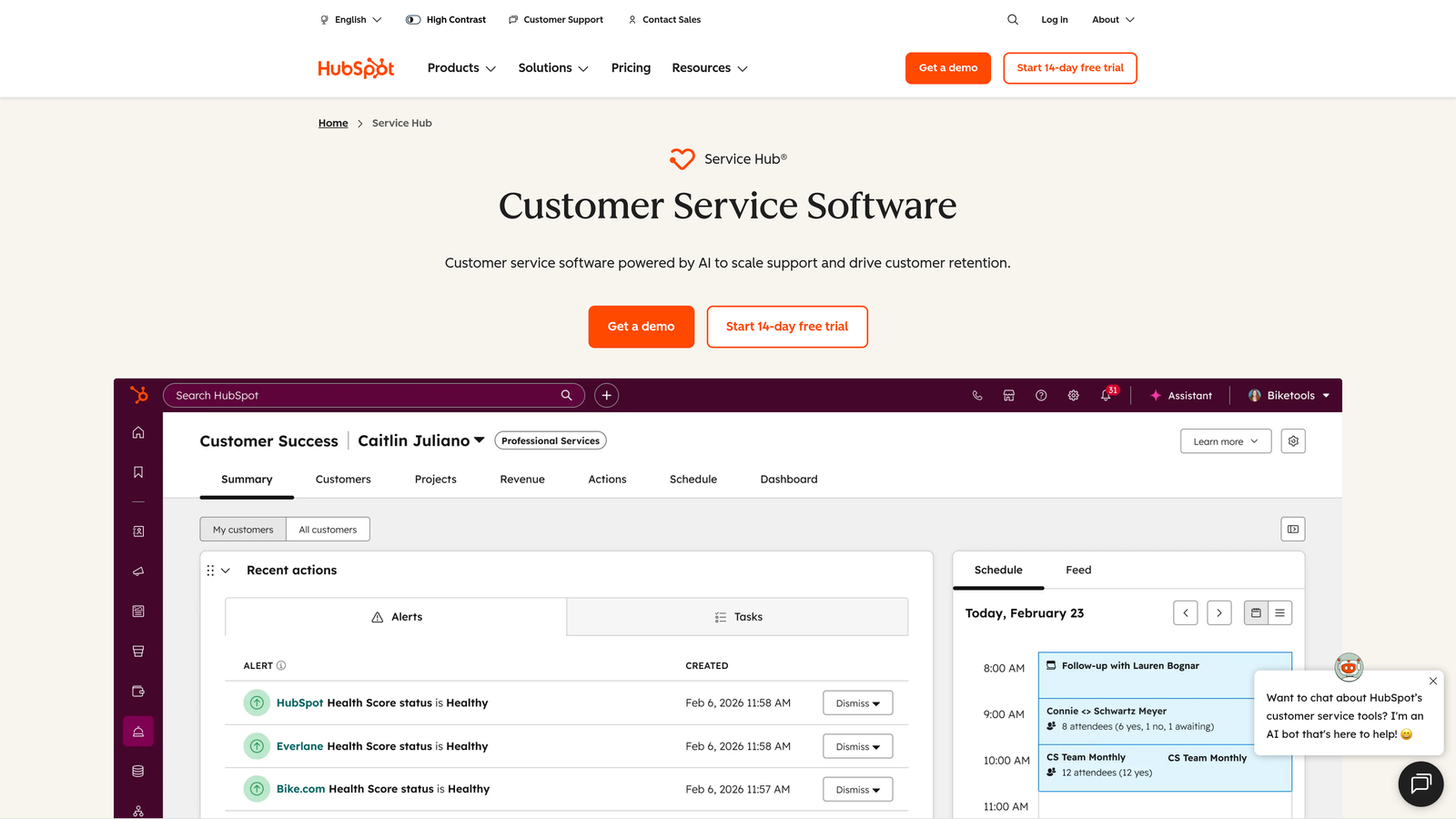
HubSpot Service Hub is a support platform built natively on HubSpot's CRM, giving support agents full customer journey context without switching between systems.
Where This Tool Shines
The core value proposition of Service Hub is context. Because it lives inside HubSpot's CRM, support agents can see a customer's full history: marketing interactions, sales conversations, previous tickets, and deal status. For B2B companies where support touches revenue-critical accounts, this visibility is genuinely valuable and hard to replicate with a standalone helpdesk.
Breeze AI adds ticket routing, response suggestions, and knowledge base automation. However, meaningful automation features require the Professional tier, which is priced per seat at a level that makes it one of the more expensive options on this list for teams with many agents.
Key Features
Unified CRM context: Full customer journey visibility across marketing, sales, and service without separate data integrations.
Breeze AI: Ticket routing, response suggestions, and knowledge base generation built into the platform.
Customer portal and feedback surveys: Self-service portal and CSAT/NPS tools included in paid tiers.
Cross-functional automation: Workflow automation that can trigger actions in marketing and sales, not just support.
Best For
B2B companies already using HubSpot for CRM and marketing who want a single platform rather than a best-of-breed stack. Less compelling as a standalone support tool if you're not already in the HubSpot ecosystem.
Pricing
Free tools available with limited functionality. Service Hub Professional starts at $90/seat/month. Automation features require the Professional tier, making it a significant investment for larger teams.
7. Zoho Desk
Best for: Cost-sensitive teams that want feature-rich helpdesk capabilities and AI at some of the lowest per-agent prices available.
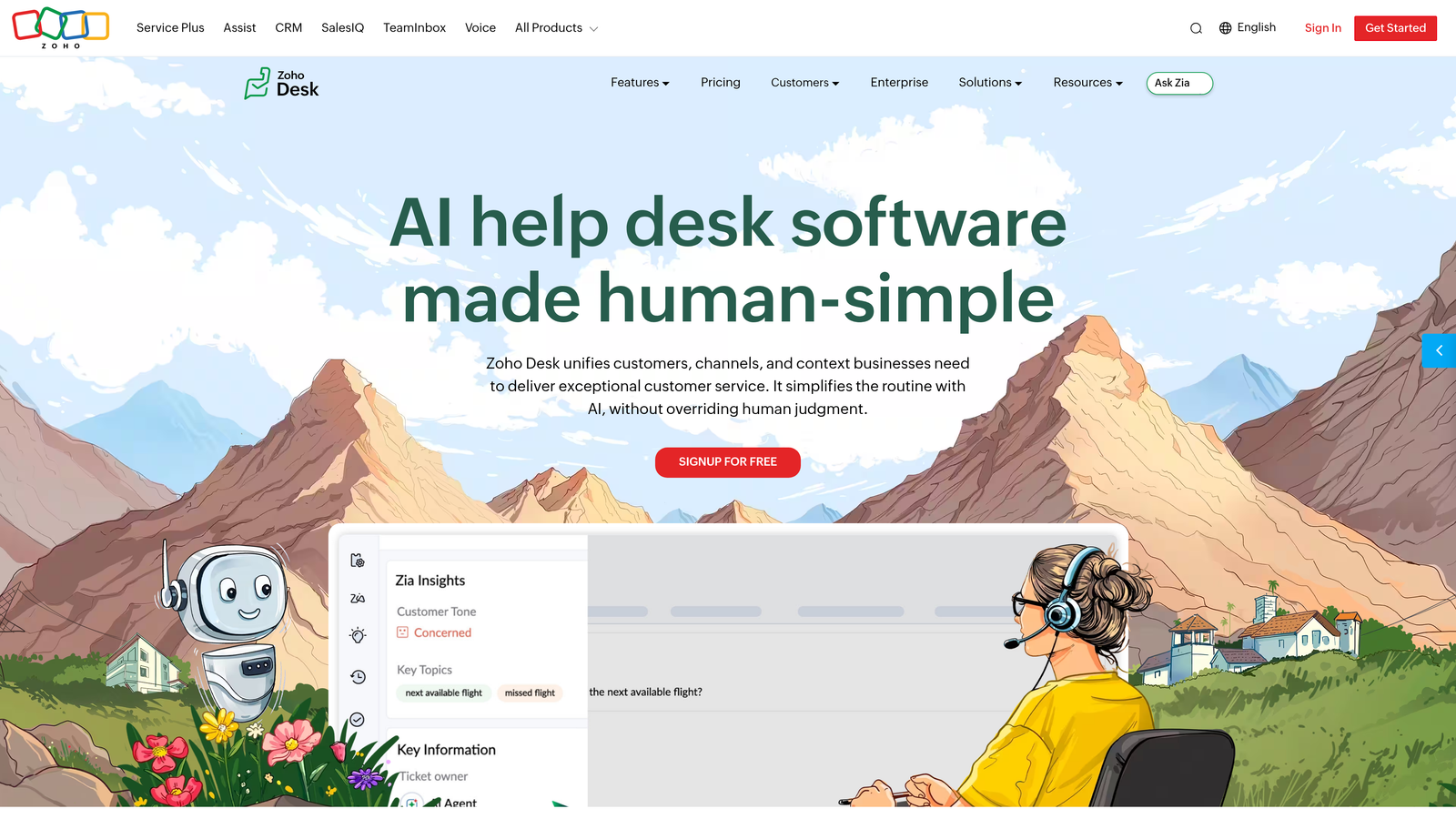
Zoho Desk is a multi-channel helpdesk with Zia AI assistant, offering competitive pricing that consistently undercuts most major alternatives on a per-agent basis.
Where This Tool Shines
On a pure cost-per-agent basis, Zoho Desk is hard to beat. The free plan supports up to three agents, and paid tiers start at $7/agent/month, which is notably lower than comparable tiers from Zendesk, Freshdesk, or HubSpot. For teams with tight budgets and a growing agent count, this pricing structure can represent meaningful savings at scale.
Zia AI provides sentiment analysis, auto-tagging, and response suggestions, but it's only available on the Professional plan and above. The deep integration with the broader Zoho ecosystem (CRM, Analytics, Projects) is a strong advantage for teams already using Zoho products, though it adds less value for teams on other platforms.
Key Features
Zia AI assistant: Sentiment analysis, auto-tagging, anomaly detection, and response suggestions for agents.
Multi-channel ticketing: Email, chat, phone, social, and web form support with SLA management and workflow automation.
Free plan for 3 agents: More generous than most competitors at the free tier.
Zoho ecosystem integration: Native connections with Zoho CRM, Zoho Analytics, and other Zoho products.
Best For
Budget-conscious teams, small businesses, and companies already using Zoho CRM or other Zoho products. A strong value choice when per-agent cost is a primary decision factor.
Pricing
Free plan for up to 3 agents. Express plan starts at $7/agent/month. Zia AI requires Professional at $23/agent/month. Among the most competitive pricing in this comparison.
8. Ada
Best for: High-volume enterprise operations that want AI automation at scale with resolution-based pricing tied to outcomes.
Ada is an enterprise AI automation platform purpose-built for large-scale support operations, focused on automated resolution rather than traditional helpdesk workflows.
Where This Tool Shines
Ada is not a helpdesk. It's an AI automation layer designed to sit in front of your support operation and resolve as many conversations as possible before they reach a human agent. This distinction matters: Ada is for organizations that have already decided automation is a strategic priority and are looking for a dedicated platform to drive it at scale.
The resolution-based pricing model means Ada's costs are theoretically tied to value delivered. When the AI resolves a conversation, you pay for that outcome. This aligns incentives well for high-volume operations, but the custom enterprise pricing structure makes it difficult to evaluate cost without going through a sales process.
Key Features
AI-powered automation platform: Purpose-built for automated conversation resolution, not traditional ticket management.
Multi-language support: Handles customer conversations across chat, email, and voice in multiple languages.
Resolution-based pricing: Costs tied to automated outcomes rather than flat per-agent fees.
Advanced automation analytics: Detailed reporting on automation rates, deflection, and cost savings from AI resolution.
Best For
Enterprise companies handling 10,000+ monthly conversations who want to maximize AI deflection rates and are comfortable with a custom pricing negotiation. Not practical for small or mid-sized teams due to pricing structure and implementation complexity.
Pricing
Custom enterprise pricing, not publicly listed. Best suited for high-volume operations where the economics of resolution-based pricing work in the customer's favor. Requires a sales conversation to evaluate.
9. Help Scout
Best for: Growing teams that want AI features included at every pricing tier and a per-contact model that rewards adding more users.
Help Scout is a human-centered support platform with a distinctive per-contact pricing model and AI features built into every plan rather than reserved for premium tiers.
Where This Tool Shines
Help Scout's pricing model is genuinely different from most competitors. Instead of charging per agent or per seat, it charges based on the number of contacts in your system, with unlimited users on all plans. For teams with many agents but a manageable customer contact count, this can be significantly more cost-effective than per-seat alternatives.
The inclusion of AI Drafts, AI Summarize, and AI Assist across all plans is also notable. You're not locked out of AI features on the entry-level tier. The platform leans toward simplicity and a clean user experience, which makes it fast to onboard but means it lacks some of the deep workflow customization that larger platforms offer.
Key Features
AI Drafts, Summarize, and Assist: Core AI features included in every plan, not restricted to premium tiers.
Per-contact pricing with unlimited users: Pricing scales with customer volume, not headcount, making it cost-effective for large teams.
Shared inbox with collision detection: Clean, intuitive shared inbox with real-time collision detection and saved replies.
Beacon widget: Embeddable help widget for in-product support, knowledge base access, and chat.
Best For
Teams with multiple support agents where per-seat pricing from competitors becomes expensive. Also well-suited for companies that prioritize a clean, simple interface and want AI assistance included without a premium tier requirement.
Pricing
Standard plan starts at $50/month for 100 contacts, with unlimited users. All AI features included at every pricing tier. Pricing scales with contact volume rather than agent count.
Picking the Right Platform for Your Budget
The right automated support software isn't the cheapest option or the most feature-rich one. It's the platform whose pricing model aligns with how your support operation actually works and scales with you as it grows.
If you're optimizing for raw per-agent cost, Zoho Desk is the clear value leader, with capable AI features at pricing that undercuts most competitors. For teams that want a generous free tier to start, Freshdesk and Zoho Desk both offer meaningful functionality at no cost. If you're already embedded in HubSpot, Service Hub earns its premium through CRM context that standalone helpdesks can't replicate.
For SaaS companies that want support automation to do more than route tickets, the conversation shifts. Intercom excels when support and product engagement overlap. Help Scout wins on simplicity and inclusive AI pricing. And for enterprise scale, Ada offers dedicated AI automation at a level most platforms can't match.
But if you're building a modern SaaS support operation and want AI at the core rather than bolted on, Halo AI is worth a close look. The AI-first architecture means you're not paying for legacy helpdesk infrastructure and then paying again for AI capabilities on top of it. The page-aware guidance, continuous learning, and business intelligence layer go well beyond ticket deflection, turning your support operation into a source of customer insight rather than just a cost center.
Your support team shouldn't scale linearly with your customer base. Let AI agents handle routine tickets, guide users through your product, and surface business intelligence while your team focuses on complex issues that need a human touch. See Halo in action and discover how continuous learning transforms every interaction into smarter, faster support.