9 Best Automated Support Software with Free Trials in 2026
Discover the 9 best automated support software free trial options available in 2026, carefully selected for genuine trial access, real AI-powered automation capabilities, and suitability for SaaS and B2B teams. This guide helps you cut through the noise and identify which platforms are worth testing before you commit.
 Matt PattoliFounder13 min read
If you're evaluating automated customer support software, a free trial is the smartest way to test before you commit. But with dozens of platforms promising AI-powered resolution, intelligent routing, and seamless integrations, knowing which ones are actually worth your time and your team's time is the real challenge.
This list cuts through the noise. We've selected nine automated support platforms that offer genuine free trials (not just demos), covering a range of use cases from AI-first ticket resolution to traditional helpdesk automation. Whether you're a lean SaaS team drowning in repetitive tickets or a scaling B2B company looking to replace a legacy helpdesk, there's an option here for you.
Selection criteria: meaningful trial access (not just a 15-minute demo), genuine automation capabilities beyond simple macros, and suitability for B2B and SaaS teams. Tools are ranked by overall capability and fit for product-led companies.
1. Halo AI
Best for: Product-led B2B SaaS teams that want AI-first ticket resolution with business intelligence built in.
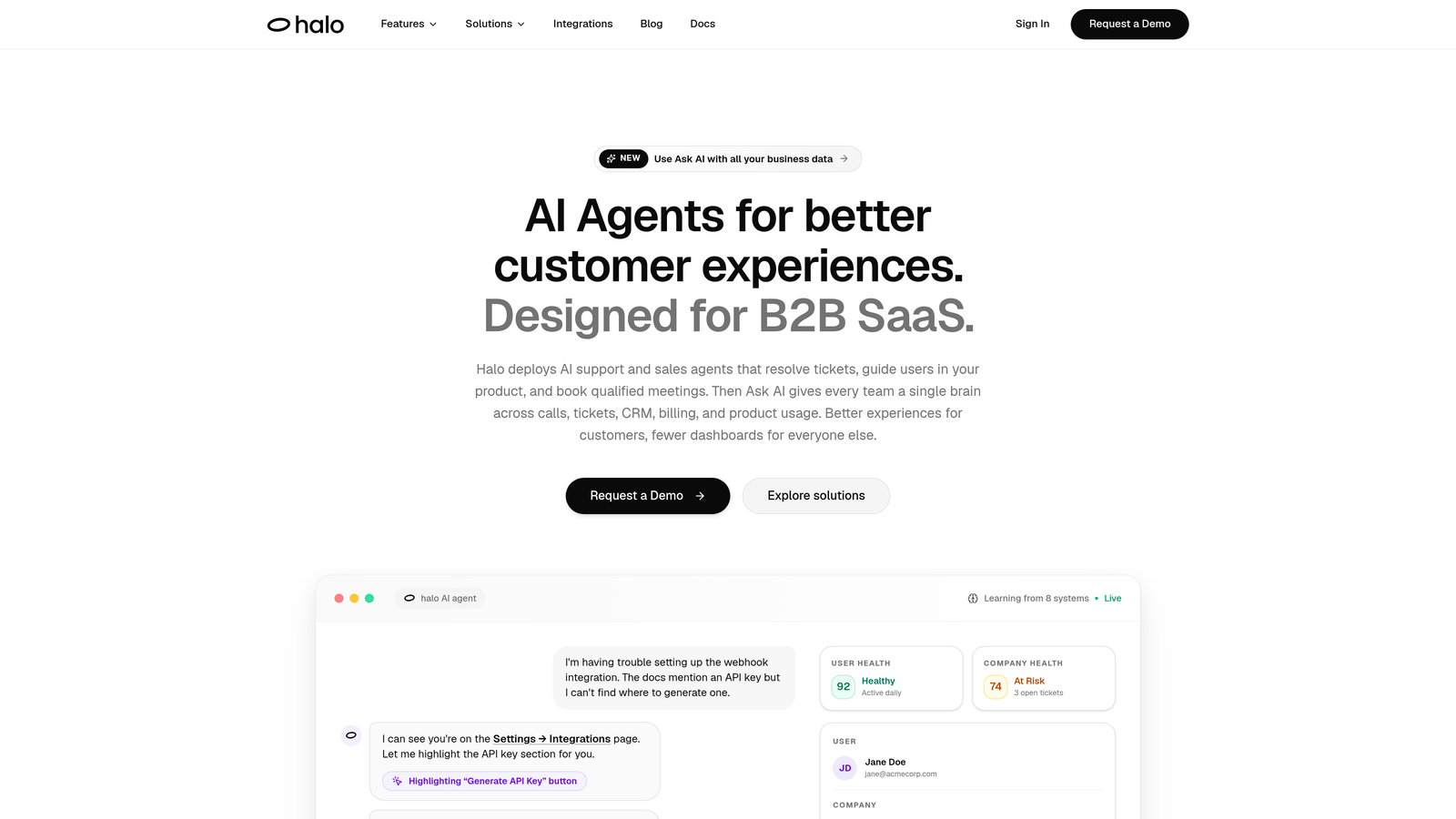
Halo AI is an AI-native customer support platform built from the ground up for B2B SaaS teams, not a traditional helpdesk with AI bolted on afterward.
Where This Tool Shines
Halo's most distinctive capability is its page-aware context: the AI agent can actually see what a user is looking at within your product and deliver visual, contextual guidance rather than generic help center links. For SaaS teams where "how do I do X in your product" is a top ticket category, this changes the deflection equation significantly.
The business intelligence layer is equally notable. Beyond resolving tickets, Halo's smart inbox surfaces customer health signals, revenue anomalies, and early churn indicators from support interactions. That's the kind of signal that typically requires a dedicated CS ops function to surface manually.
Key Features
Page-Aware AI Agent: Sees the user's current context within your product and delivers targeted visual guidance rather than generic documentation links.
Autonomous Ticket Resolution: AI agents handle resolution end-to-end, with intelligent handoff to human agents for complex or sensitive issues.
Auto Bug Ticket Creation: Automatically identifies and routes bug reports directly to Linear, Jira, or your existing engineering workflow without manual triage.
Smart Inbox with Business Intelligence: Surfaces customer health signals, revenue anomalies, and churn indicators directly from support conversation data.
Deep Stack Integrations: Connects with Slack, HubSpot, Intercom, Stripe, Zoom, PandaDoc, and Fathom so support context flows across your entire business stack.
Best For
Halo AI is the strongest fit for product-led SaaS companies that want support automation and business intelligence in a single platform. If your team is spending significant time on in-product "how to" questions, repetitive ticket triage, or manually escalating bugs to engineering, this platform addresses all three simultaneously. It's less suited for e-commerce or high-volume transactional support environments.
Pricing
Free trial available at haloagents.ai. Contact the team for plan pricing. Trial terms are clearly outlined on the website.
2. Intercom
Best for: Teams already invested in the Intercom ecosystem who want a mature AI agent layer on top of a proven messenger platform.
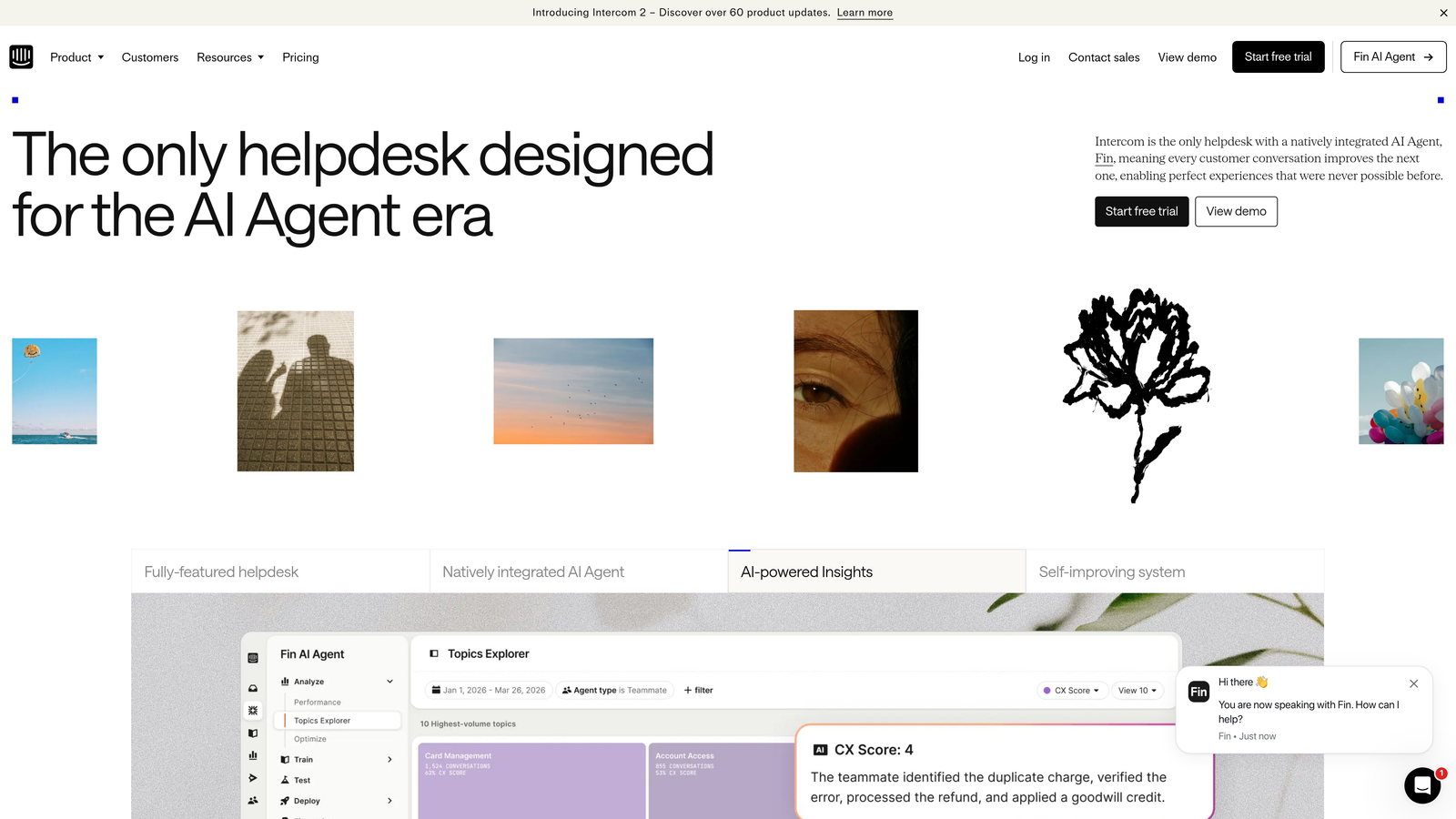
Intercom is a conversational support platform with Fin, its AI agent, layered on top of a rich messenger and CRM foundation.
Where This Tool Shines
Fin is genuinely capable at resolving queries using your existing help center content, making it a strong choice for teams that have already invested in documentation. The onboarding curve is relatively low if you're already using Intercom for messaging or product tours.
The behavioral context Intercom holds on each customer, pulled from its CRM layer, means automated responses can be personalized in ways that feel less robotic than typical helpdesk automation. That said, the platform's pricing can escalate quickly as conversation volume grows.
Key Features
Fin AI Agent: Resolves queries autonomously using your help center content, with configurable escalation paths to human agents.
Omnichannel Inbox: Covers chat, email, and social channels in a unified agent workspace.
Customer Data Platform: Behavioral context informs personalized automated responses and routing logic.
Workflows Builder: Visual automation builder for routing, escalation, and follow-up sequences.
App Marketplace: Extensive third-party integrations and a well-documented API for custom workflows.
Best For
Teams already running Intercom for product messaging or onboarding who want to extend into AI-powered support without migrating to a new platform. Also a strong fit for B2B teams that prioritize personalization at scale.
Pricing
14-day free trial available. Paid plans start at approximately $39 per seat per month; verify current pricing on the Intercom website as plans and tiers change regularly.
3. Zendesk
Best for: High-volume enterprise support operations that need structured ticketing, SLA management, and AI assistance at scale.
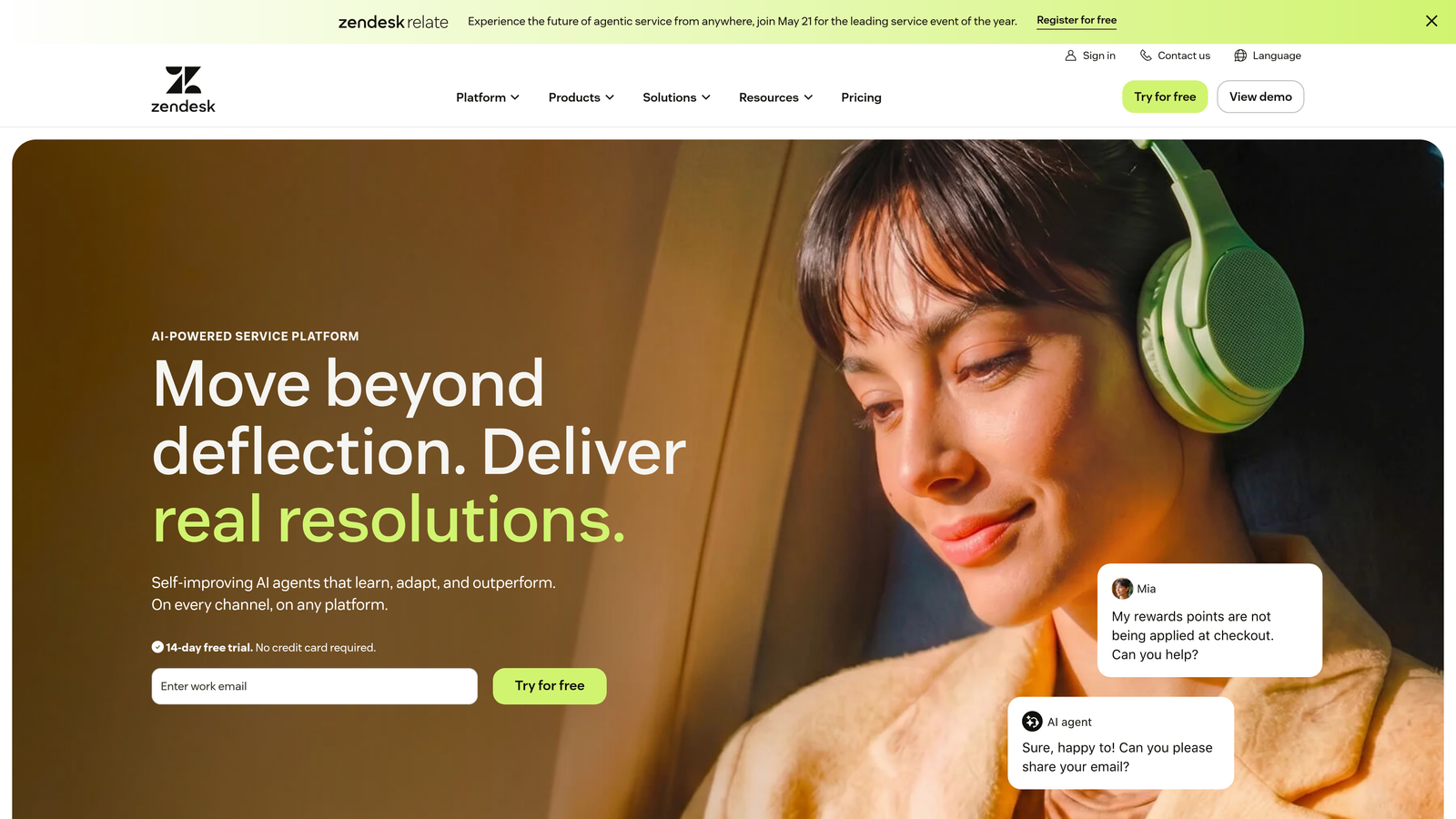
Zendesk is the market-leading enterprise helpdesk, now with AI capabilities embedded across ticketing, triage, and agent assistance.
Where This Tool Shines
Zendesk's depth in structured support operations is hard to match. SLA management, advanced reporting, and workforce management tools are mature and well-documented. For organizations with large support teams and complex escalation hierarchies, that infrastructure matters.
The AI additions, including intelligent triage and AI agents for first-response resolution, are meaningful improvements. The honest caveat is that these features are layered onto a rule-based architecture that predates the current AI era, which can create some friction between legacy workflows and newer capabilities.
Key Features
AI-Powered Triage: Automatically classifies and routes incoming tickets based on intent, sentiment, and priority signals.
Zendesk AI Agents: Handles automated first-response resolution for common queries before escalating to human agents.
SLA Management: Comprehensive SLA tracking, breach alerting, and reporting for structured support operations.
Marketplace Integrations: Over 1,500 integrations available through the Zendesk marketplace.
Workforce Management and QA: Advanced tools for scheduling, quality assurance, and performance analytics.
Best For
Established companies with large support teams, complex escalation workflows, and a need for enterprise-grade reporting and compliance. Less ideal for early-stage SaaS teams that want lightweight, AI-first automation without inheriting legacy helpdesk complexity.
Pricing
14-day free trial across Suite plans. Suite plans start at approximately $55 per agent per month; confirm current pricing on the Zendesk website before evaluating.
4. Freshdesk
Best for: Budget-conscious teams that want genuine AI automation without committing to enterprise pricing from day one.
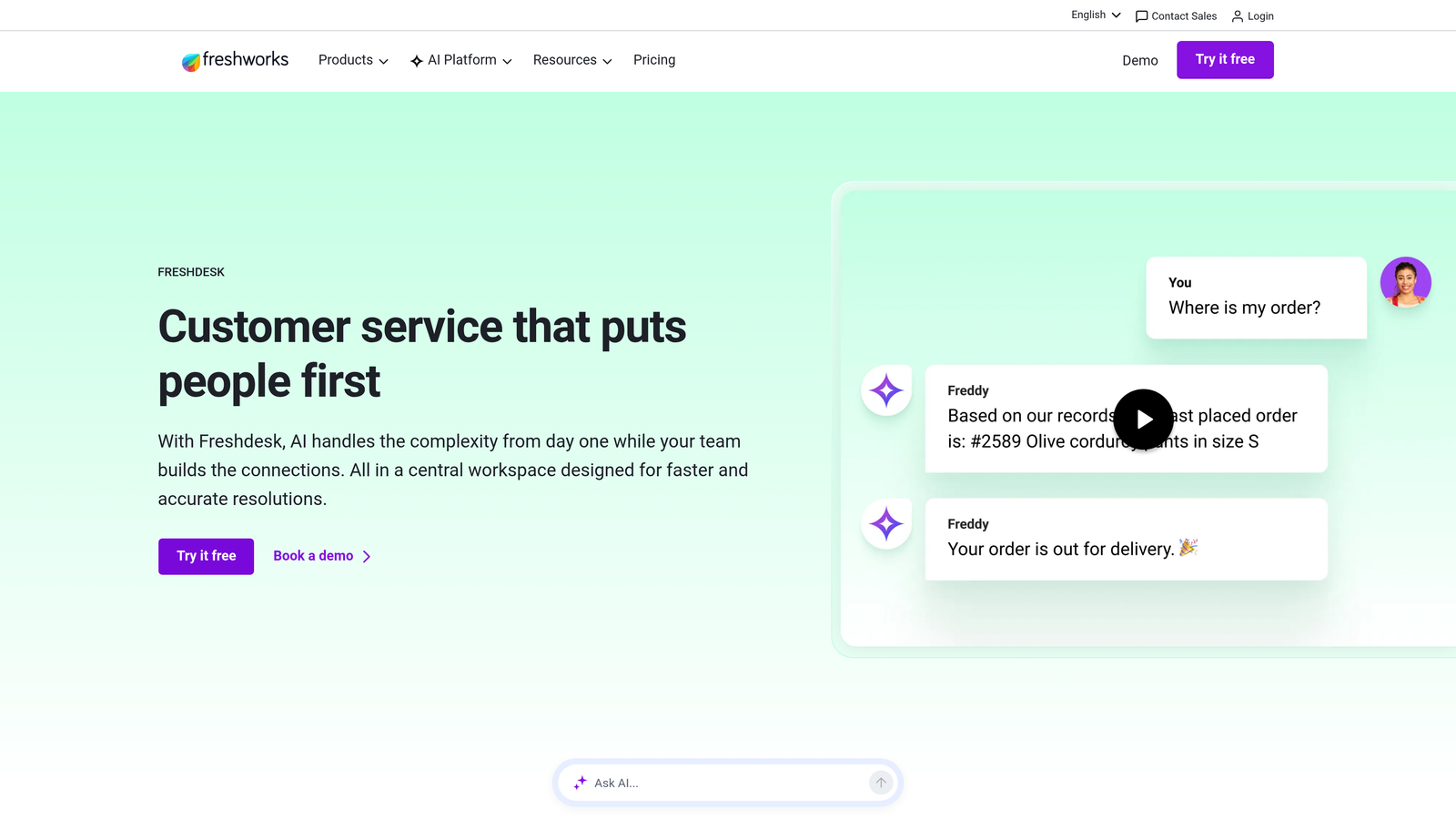
Freshdesk is a full-featured helpdesk from Freshworks with Freddy AI handling triage, suggested replies, and CSAT prediction across its plan tiers.
Where This Tool Shines
Freshdesk's standout advantage is its free plan: up to 10 agents with core ticketing features, which is genuinely useful for small teams that need to get organized before they can justify a paid automation budget. The 21-day trial of paid tiers gives you enough time to meaningfully test Freddy AI's capabilities.
Freddy AI covers the essentials well: auto-triage, suggested responses, and sentiment detection. It's not the most sophisticated AI implementation on this list, but for teams transitioning from manual processes, it's a practical starting point with a low barrier to entry.
Key Features
Freddy AI: Handles auto-triage, suggested agent responses, sentiment detection, and CSAT prediction across supported plan tiers.
Free Plan: Supports up to 10 agents with core ticketing, making it genuinely accessible for small teams.
Omnichannel Support: Email, chat, phone, and social channels unified in a single inbox.
Collision Detection: Prevents duplicate agent responses by showing when another agent is already working on a ticket.
Integration Marketplace: Over 1,000 integrations available, with strong coverage of common SaaS tools.
Best For
SMBs, early-stage startups, and budget-conscious teams that need a capable helpdesk with AI assistance without enterprise pricing. Also a practical choice for teams evaluating helpdesk software for the first time.
Pricing
Free plan available for up to 10 agents. 21-day trial of paid tiers. Growth plan starts at approximately $15 per agent per month; verify current pricing on the Freshdesk website.
5. Help Scout
Best for: Customer-centric teams that want automation to reduce agent effort without making support feel robotic or transactional.
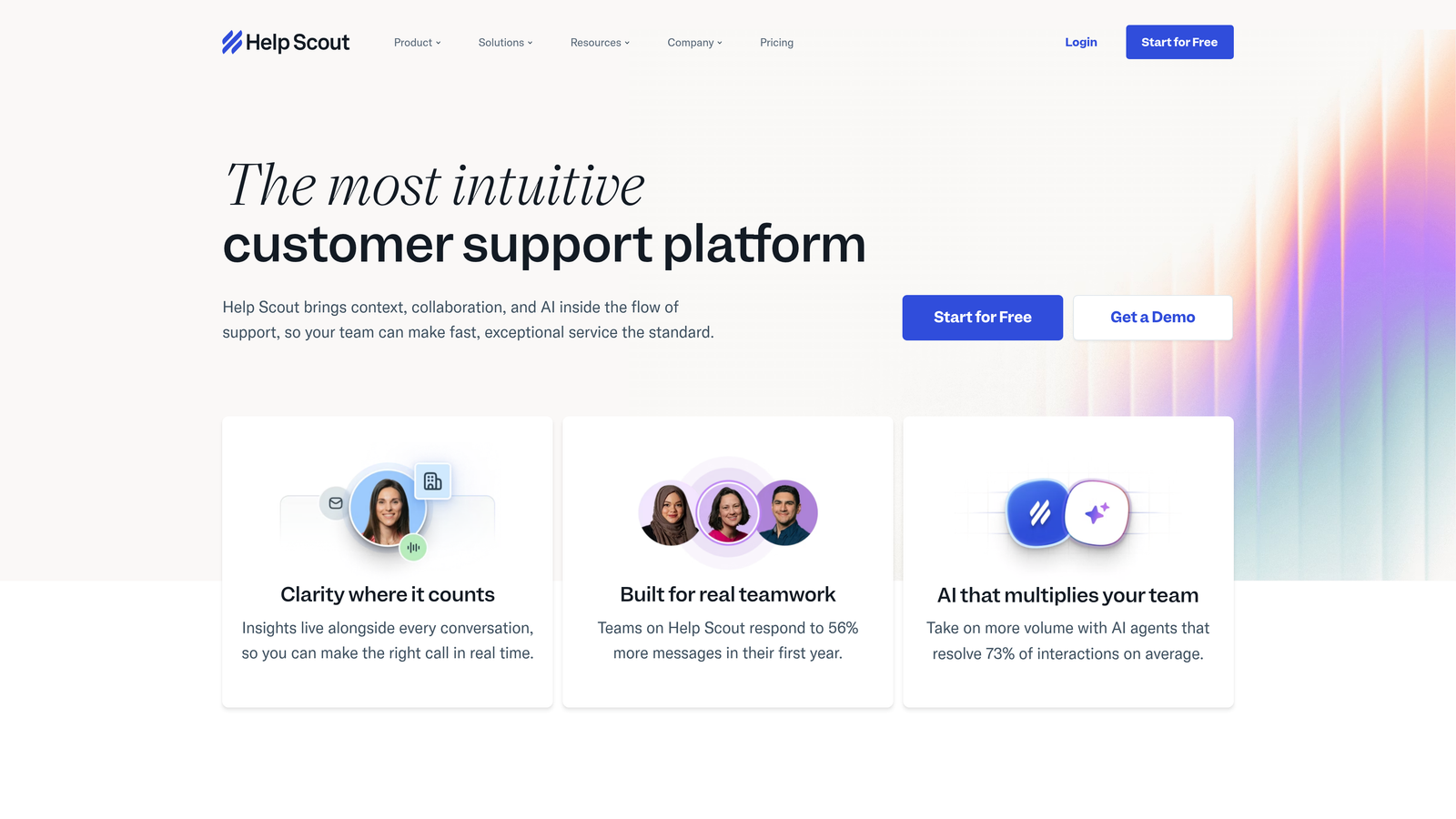
Help Scout is a customer-first support platform designed to feel human even when automation is doing the heavy lifting.
Where This Tool Shines
Help Scout's design philosophy is distinct from most tools on this list: it deliberately avoids ticket numbers and transactional UI patterns to preserve the feel of a genuine conversation. AI features like Summarize and AI Drafts reduce agent effort without pushing the experience toward a cold, automated tone.
For teams where brand voice and relationship quality are as important as resolution speed, this balance is genuinely valuable. The Docs knowledge base with AI-powered search also reduces inbound volume without requiring a complex bot setup.
Key Features
AI Drafts: Generates suggested replies based on conversation history and your knowledge base, which agents can edit and send.
AI Summarize: Condenses long conversation threads so agents can get context quickly without reading every message.
Docs Knowledge Base: Built-in knowledge base with AI-powered search to deflect common questions before they reach the inbox.
No-Ticket-Number Interface: Customer-facing design that preserves the feel of email conversation rather than a support queue.
Beacon Widget: In-app help widget for proactive, contextual help delivery within your product or website.
Best For
Teams in SaaS, professional services, or any relationship-driven business where maintaining a human, conversational tone is a priority alongside efficiency. Less suited for high-volume transactional support that needs aggressive automation.
Pricing
15-day free trial. Plans start at approximately $22 per user per month; verify current pricing on the Help Scout website.
6. Tidio
Best for: SMBs and early-stage teams that need automation running quickly with minimal setup complexity.
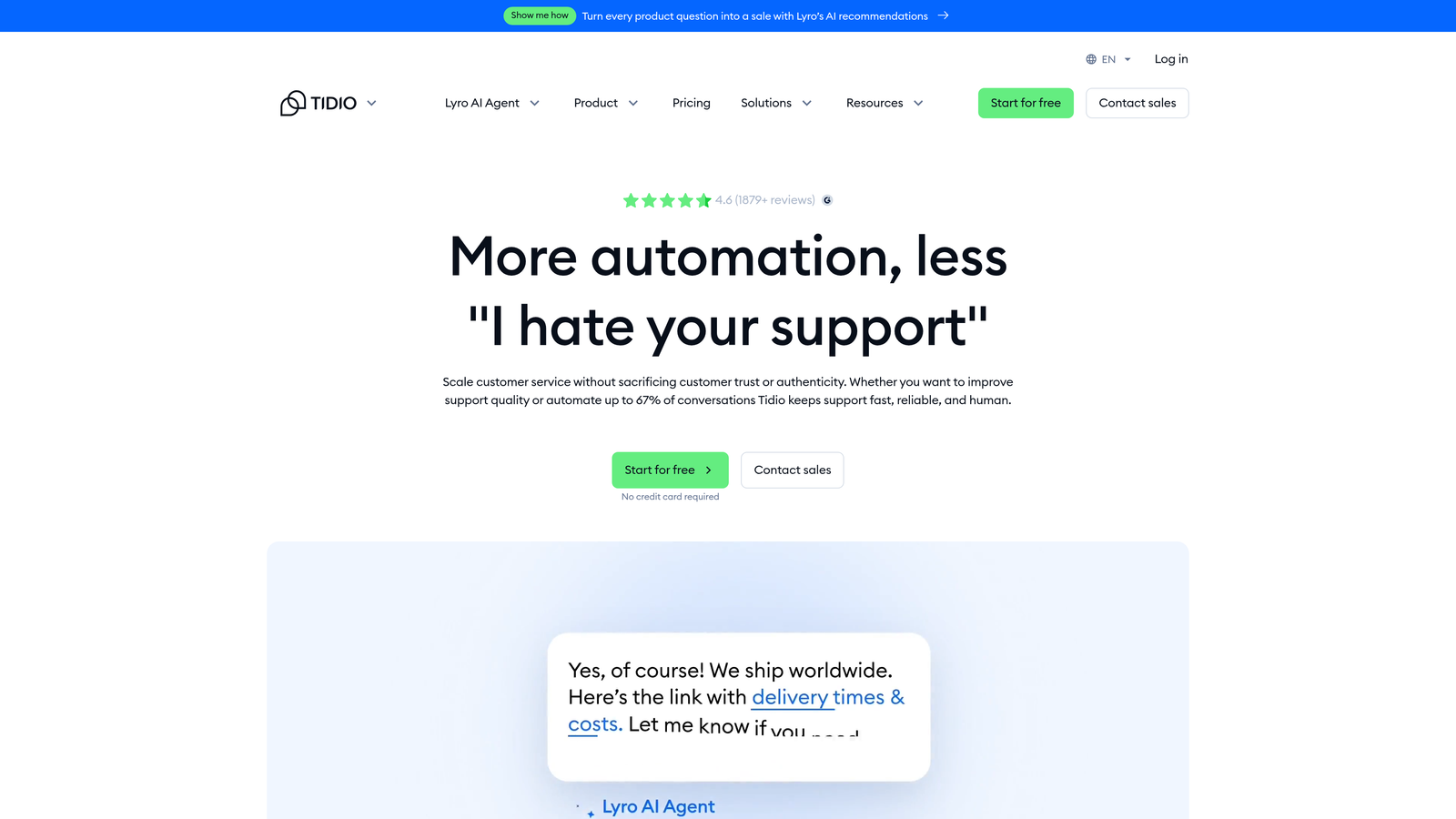
Tidio is a lightweight chat and automation platform with Lyro, its AI chatbot, built for fast deployment and accessible pricing.
Where This Tool Shines
Tidio's strength is speed to value. If you need a chatbot and basic automation live within a day or two, Tidio delivers that without requiring a dedicated implementation project. The visual flow builder is intuitive enough for non-technical team members to configure without engineering support.
Lyro, Tidio's AI chatbot, handles common FAQ-style queries reasonably well. The free tier includes a limited number of Lyro conversations, which is enough to validate the concept before committing to a paid plan. The platform skews toward e-commerce and SMB use cases, so B2B SaaS teams with complex integration needs may find it limiting.
Key Features
Lyro AI Chatbot: Handles autonomous resolution of FAQ and common queries using your support content.
Visual Flow Builder: Drag-and-drop automation builder for custom chatbot sequences without coding.
Free Plan: Includes limited Lyro AI conversations, making it accessible for teams testing automation for the first time.
Live Chat with Agent Takeover: Agents can take over any automated conversation in real time when escalation is needed.
E-Commerce Integrations: Native integrations with Shopify, WordPress, and major e-commerce platforms.
Best For
Early-stage startups, SMBs, and e-commerce teams that need fast deployment, simple automation, and accessible pricing. Teams with complex B2B support workflows or deep integration requirements will likely outgrow it quickly.
Pricing
Free plan available with limited Lyro AI conversations. Lyro AI paid tiers start at approximately $29 per month; verify current pricing and conversation limits on the Tidio website.
7. Zoho Desk
Best for: Teams already running on Zoho CRM or Zoho One who want native two-way sync between support and customer data.
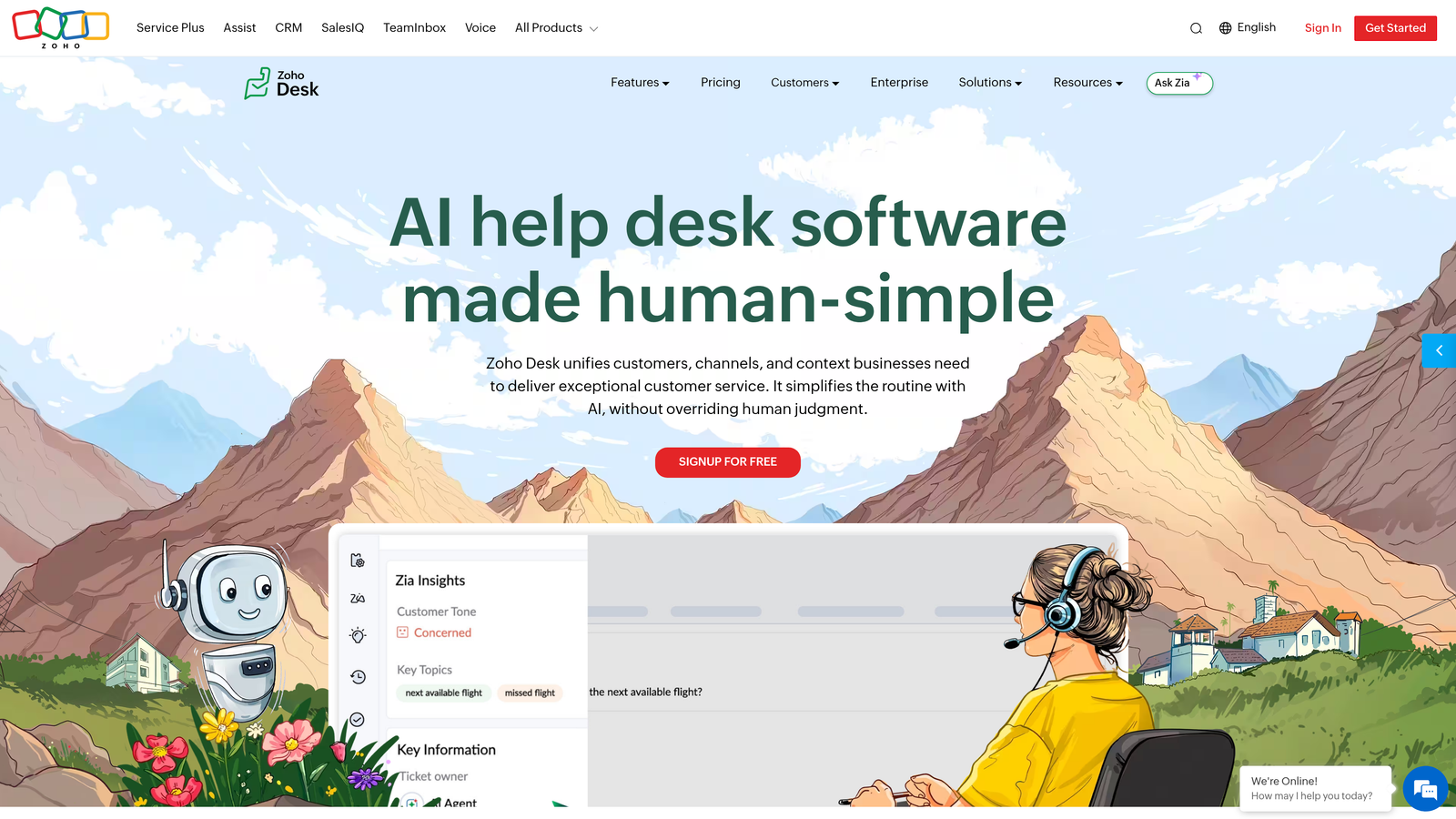
Zoho Desk is a helpdesk platform with Zia, Zoho's AI engine, providing sentiment analysis, anomaly detection, and auto-tagging across its plan tiers.
Where This Tool Shines
If your organization runs on the Zoho stack, Zoho Desk's native two-way sync with Zoho CRM is a meaningful advantage. Support agents get full customer context without switching tools, and CRM records are updated automatically from support interactions.
Zia's anomaly detection is a genuinely useful feature that flags unusual spikes in ticket volume before they become a crisis. For support managers monitoring team performance, that early warning capability saves real time. Blueprint workflow automation also stands out for teams that need structured, process-driven support flows rather than freeform routing.
Key Features
Zia AI: Handles sentiment analysis, automatic ticket tagging, and agent response suggestions across supported tiers.
Anomaly Detection: Flags unusual spikes in ticket volume or response time, enabling proactive management.
Blueprint Automation: Structured workflow builder for process-driven support operations with defined stages and transitions.
Zoho CRM Sync: Native two-way sync with Zoho CRM for full customer context within the support interface.
Multi-Brand and Multi-Department Support: Manage multiple brands or departments within a single Zoho Desk instance.
Best For
Organizations already invested in the Zoho ecosystem, particularly those using Zoho CRM, Zoho Analytics, or Zoho One. Also a practical choice for teams that need structured, process-driven workflows rather than flexible, AI-first automation.
Pricing
15-day free trial. Plans start at approximately $14 per agent per month; confirm current pricing and feature availability by tier on the Zoho Desk website.
8. Kustomer
Best for: Teams managing complex, multi-touchpoint customer relationships where full customer timeline context is essential for quality support.
Kustomer is a CRM-native support platform where AI automation is informed by the full customer timeline, not just the current ticket.
Where This Tool Shines
Kustomer's core differentiator is the unified customer timeline: every support interaction, purchase, behavioral signal, and previous conversation is visible in a single view. For teams handling complex, high-value customer relationships where context is everything, this eliminates a significant amount of agent research time.
AI-powered intent detection and automated routing work more effectively when they have access to this depth of customer data. Proactive outreach automation, triggered by customer signals, is another capability that sets Kustomer apart from traditional helpdesks focused purely on inbound resolution.
Key Features
Unified Customer Timeline: Combines support history, purchase data, and behavioral signals in a single agent view.
AI Intent Detection: Automatically identifies customer intent and routes conversations to the appropriate team or automation flow.
Proactive Outreach Automation: Triggers automated outreach based on customer signals, enabling proactive rather than purely reactive support.
Omnichannel Conversation View: Manages all channels within a single conversation thread per customer, not per ticket.
Robust API: Well-documented API for custom integrations and workflow automation beyond native capabilities.
Best For
B2B and B2C teams handling complex, multi-touchpoint customer relationships where historical context significantly affects support quality. Enterprise pricing makes it less accessible for early-stage teams; verify current trial availability directly with Kustomer.
Pricing
Free trial or demo available; enterprise pricing applies, so contact Kustomer directly for a quote. Verify current trial structure on the Kustomer website before evaluating.
9. Gorgias
Best for: E-commerce brands on Shopify, Magento, or BigCommerce that need AI to take direct order actions from within the support interface.
Gorgias is a support platform built specifically for e-commerce, with deep integrations that allow AI to perform order actions without leaving the inbox.
Where This Tool Shines
Gorgias solves a specific and real problem for e-commerce support teams: the constant context-switching between a helpdesk and an order management system. With direct Shopify, Magento, and BigCommerce integrations, agents and AI can look up orders, process refunds, and cancel subscriptions from within the support interface itself.
The revenue statistics feature, which links support interactions to conversion impact, is a useful tool for teams making the business case for support investment. If your support operation is primarily e-commerce-focused, Gorgias is purpose-built in ways that general helpdesks simply aren't. If you're a B2B SaaS team, it's probably not the right fit.
Key Features
E-Commerce Platform Integration: Direct integration with Shopify, Magento, and BigCommerce for order lookup and actions (refunds, cancellations) from within the inbox.
AI Auto-Responder: Handles common order status, shipping, and return queries automatically without agent involvement.
Revenue Statistics: Links support interactions to conversion and revenue impact for business case reporting.
Macros and Rules: High-volume automation for repetitive ticket types, reducing manual handling at scale.
Social and SMS Channels: Manages social media and SMS support alongside email and chat in a unified inbox.
Best For
E-commerce brands with significant order-related support volume, particularly those on Shopify. The platform's deep e-commerce specialization is its greatest strength and its clearest limitation: it's built for one use case and does it very well.
Pricing
7-day free trial. Plans start at approximately $10 per month for 50 tickets; verify current pricing and ticket volume tiers on the Gorgias website.
Which Tool Is Right for Your Team?
The best automated support platform is the one that fits your actual use case, not the one with the longest feature list. Here's a quick map to help you orient your evaluation.
AI-first SaaS teams: Start with Halo AI. The page-aware context, autonomous resolution, and business intelligence layer are purpose-built for product-led companies that want support to do more than close tickets.
Enterprise ticketing operations: Zendesk remains the benchmark for structured, high-volume support with mature SLA management and workforce tools. The AI additions are meaningful, though the legacy architecture is worth factoring into your evaluation.
Budget-conscious SMBs: Freshdesk's free plan and 21-day trial give you the most runway to evaluate without financial commitment. Freddy AI covers the automation essentials at a price point that scales with your growth.
E-commerce brands: Gorgias is the clear choice if Shopify, Magento, or BigCommerce is your commerce backbone. No general helpdesk matches its depth of e-commerce integration.
Zoho ecosystem teams: Zoho Desk's native CRM sync and Zia AI make it the obvious choice if you're already running on Zoho One. Switching costs elsewhere are hard to justify when the native integration is this tight.
Use your trial period deliberately. Know before you start what "good" looks like for your team: a deflection rate target, an integration test with your existing stack, or a specific ticket category you want the AI to handle autonomously. Structured trials yield far better decisions than exploratory ones.
Your support team shouldn't scale linearly with your customer base. See Halo in action and discover how continuous learning transforms every interaction into smarter, faster support.