9 Best Automated Support Solutions by Cost in 2026
This guide evaluates the 9 best automated support solutions by automated support solution cost in 2026, comparing pricing models, capabilities, and total value across tools ranging from basic chatbot deflection to fully autonomous AI agents—helping teams identify which platform delivers the strongest ROI at their current scale and as ticket volume grows.
 Grant CooperFounder12 min read
Customer support automation isn't a single product category anymore. It's a spectrum that runs from simple chatbot deflection to fully autonomous AI agents that resolve tickets end-to-end, learn from every interaction, and surface business intelligence your team never had before. And the pricing models are just as varied as the technology.
The challenge isn't finding an automated support tool. It's figuring out which one delivers the best value at your current scale, and which will still make sense when your ticket volume doubles. Here are the top automated support solutions evaluated by cost, capability, and total value delivered.
1. Halo AI
Best for: B2B SaaS teams that want AI-native support automation with deep product and business context.
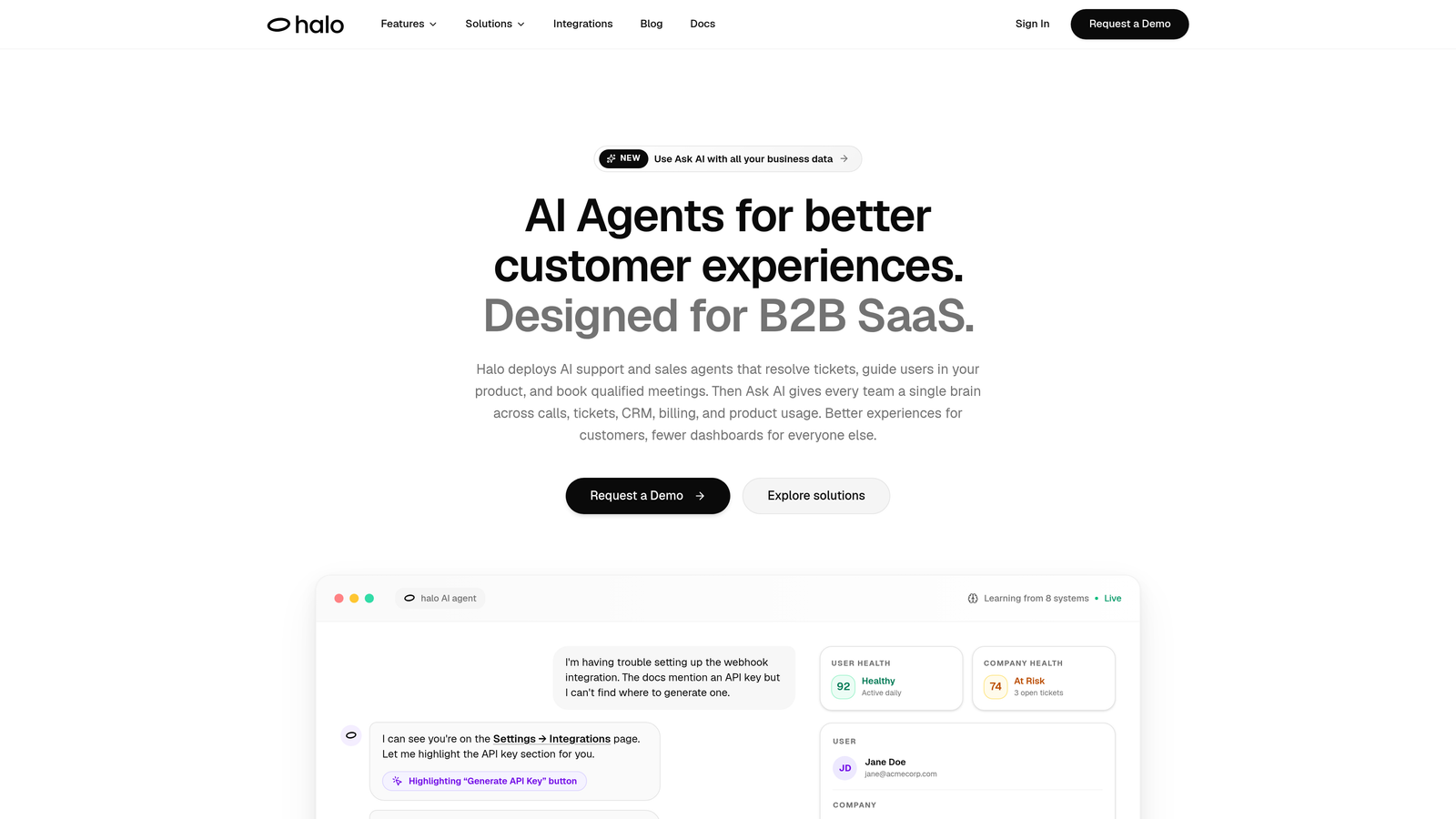
Halo AI is an AI-native customer support platform that deploys autonomous agents to resolve tickets, guide users with page-aware context, and generate business intelligence across your entire support operation.
Where This Tool Shines
Most support tools automate the surface layer: routing, templated replies, basic FAQ deflection. Halo is built differently. Its AI agents operate end-to-end, resolving tickets autonomously while continuously learning from every interaction. That means automation rates improve over time rather than plateauing after initial setup.
The page-aware chat widget is a standout differentiator. It sees what your user sees, allowing it to deliver contextual, visual guidance rather than generic help center links. Pair that with a smart inbox that surfaces customer health signals and anomaly detection, and you're getting business intelligence alongside support automation.
Key Features
Autonomous AI Agents: Resolve tickets end-to-end with continuous learning that improves resolution rates over time.
Page-Aware Chat Widget: Understands the user's current product context to deliver precise, visual guidance rather than generic answers.
Smart Inbox with Business Intelligence: Surfaces customer health signals, revenue intelligence, and anomaly detection beyond standard support metrics.
Auto Bug Ticket Creation: Automatically generates bug reports and routes them to engineering tools like Linear without agent intervention.
Deep Integrations: Connects natively with Linear, Slack, HubSpot, Intercom, Stripe, Zoom, PandaDoc, and Fathom for a unified business stack.
Best For
B2B SaaS companies and product teams looking to replace reactive, headcount-heavy support with an AI-first architecture. Particularly strong for teams that need support automation to connect with their broader business stack, not just their helpdesk.
Pricing
Custom pricing based on usage. Contact Halo directly for a quote tailored to your ticket volume and integration requirements.
2. Intercom Fin
Best for: Teams already on Intercom that want outcome-based AI pricing tied to actual resolutions.
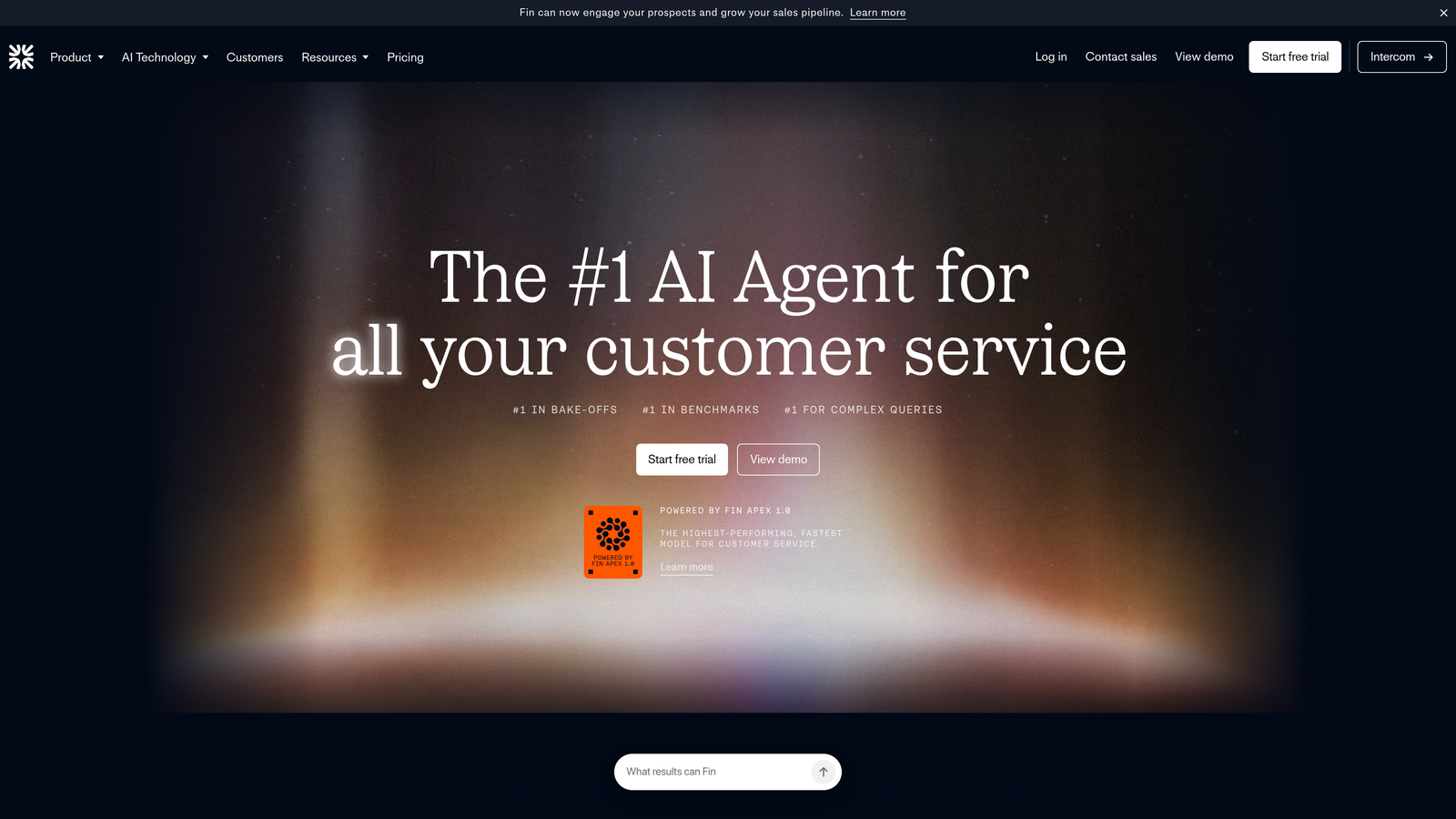
Intercom Fin is Intercom's AI agent that resolves customer questions using your existing help content, charging per successful resolution rather than per seat.
Where This Tool Shines
Fin's per-resolution pricing model is genuinely interesting from a cost perspective. Rather than paying a flat monthly fee regardless of how much the AI actually does, you pay when Fin successfully resolves a conversation. For teams with high automation potential, this model can deliver strong cost-per-ticket economics.
The trade-off is that Fin lives within the Intercom ecosystem. If you're already paying for Intercom's messenger and inbox, adding Fin is a natural extension. If you're not on Intercom, you're looking at layered costs: the base Intercom plan plus per-resolution fees.
Key Features
Per-Resolution Pricing: Pay only when Fin actually resolves a conversation, aligning cost directly with value delivered.
Multi-Source Knowledge: Pulls answers from your help center, past conversations, and custom data sources for comprehensive coverage.
Native Intercom Integration: Works directly within the Intercom messenger and inbox with no additional configuration layer.
Customizable Behavior: Adjustable tone, behavior rules, and handoff triggers to match your brand and escalation preferences.
Best For
Companies already invested in the Intercom ecosystem who want to layer AI resolution on top of their existing setup without switching platforms. The per-resolution model suits teams confident in their help content quality.
Pricing
Starts at $0.99 per resolution on top of an existing Intercom plan. Verify current pricing directly on Intercom's site, as rates are subject to change.
3. Zendesk AI
Best for: Large enterprises with complex support operations already running on Zendesk infrastructure.
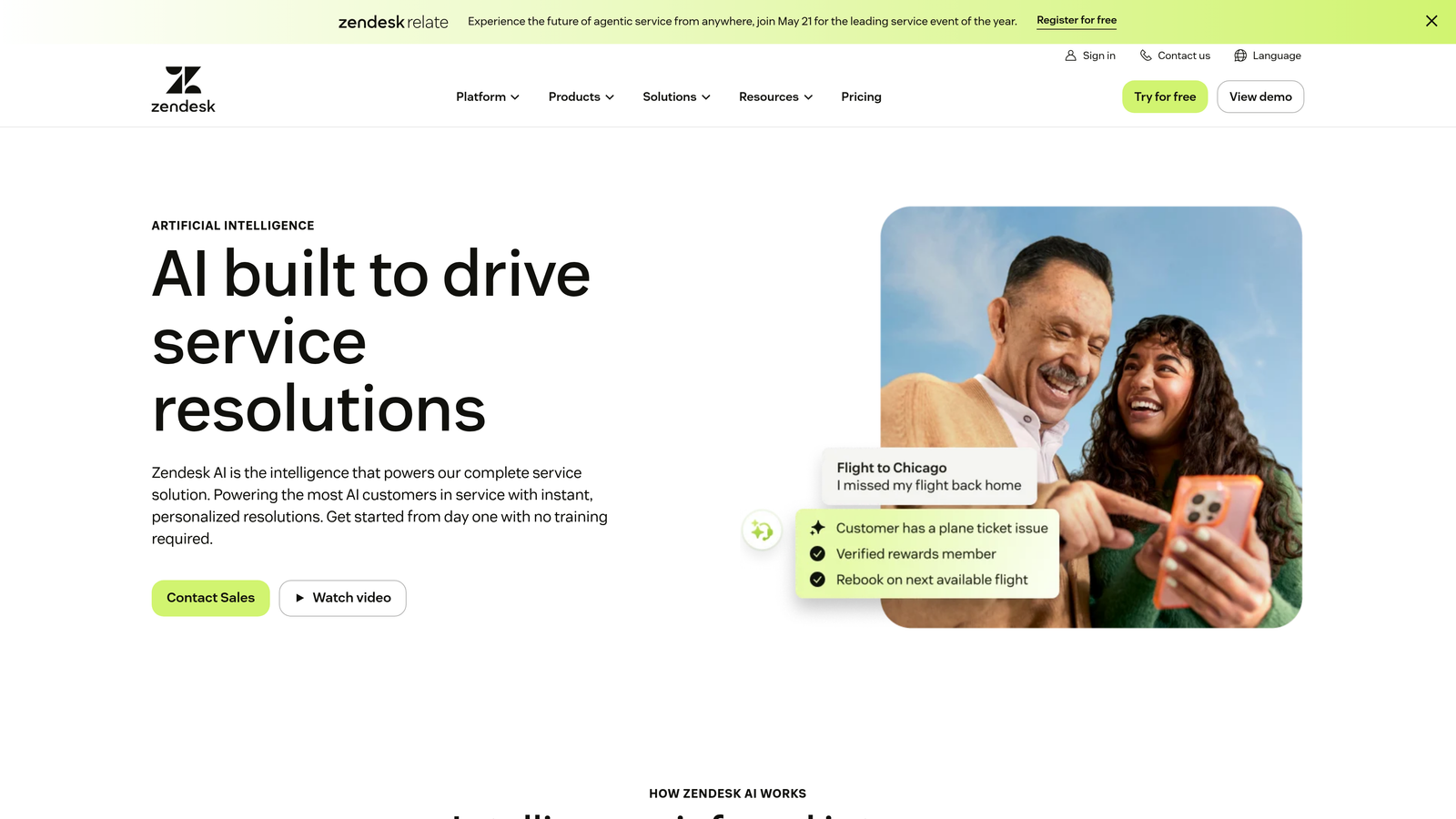
Zendesk AI is enterprise-grade automation layered onto the Zendesk helpdesk ecosystem, covering AI agents, intelligent triage, and agent-assist tools across the full support workflow.
Where This Tool Shines
Zendesk's strength is breadth and enterprise reliability. If your team is already managing thousands of tickets per month inside Zendesk, the AI add-on layer slots in without a platform migration. Intelligent triage, auto-classification, and agent-assist features can meaningfully reduce handle time even when full resolution isn't automated.
The challenge is cost structure. Zendesk AI is an add-on to already substantial base plan pricing. For teams evaluating total cost of ownership, the math can get complex quickly as you add agents, channels, and AI features.
Key Features
AI Agents: Automated resolution across email, chat, and messaging channels within the Zendesk environment.
Intelligent Triage: Auto-classifies ticket intent, language, and sentiment to improve routing accuracy.
Agent Assist: Surfaces suggested replies and relevant knowledge articles to speed up human agent responses.
SLA and Routing Management: Deep configuration options for SLA compliance, routing rules, and performance reporting.
Best For
Enterprise support teams with established Zendesk deployments who want to incrementally add AI capabilities without migrating their entire support stack.
Pricing
Base Suite plans start around $55/agent/month, with AI features available as add-ons. Full AI pricing varies by configuration. Verify current rates on Zendesk's site.
4. Freshdesk Freddy AI
Best for: Mid-market teams that want accessible AI automation at a competitive price point with a free entry tier.
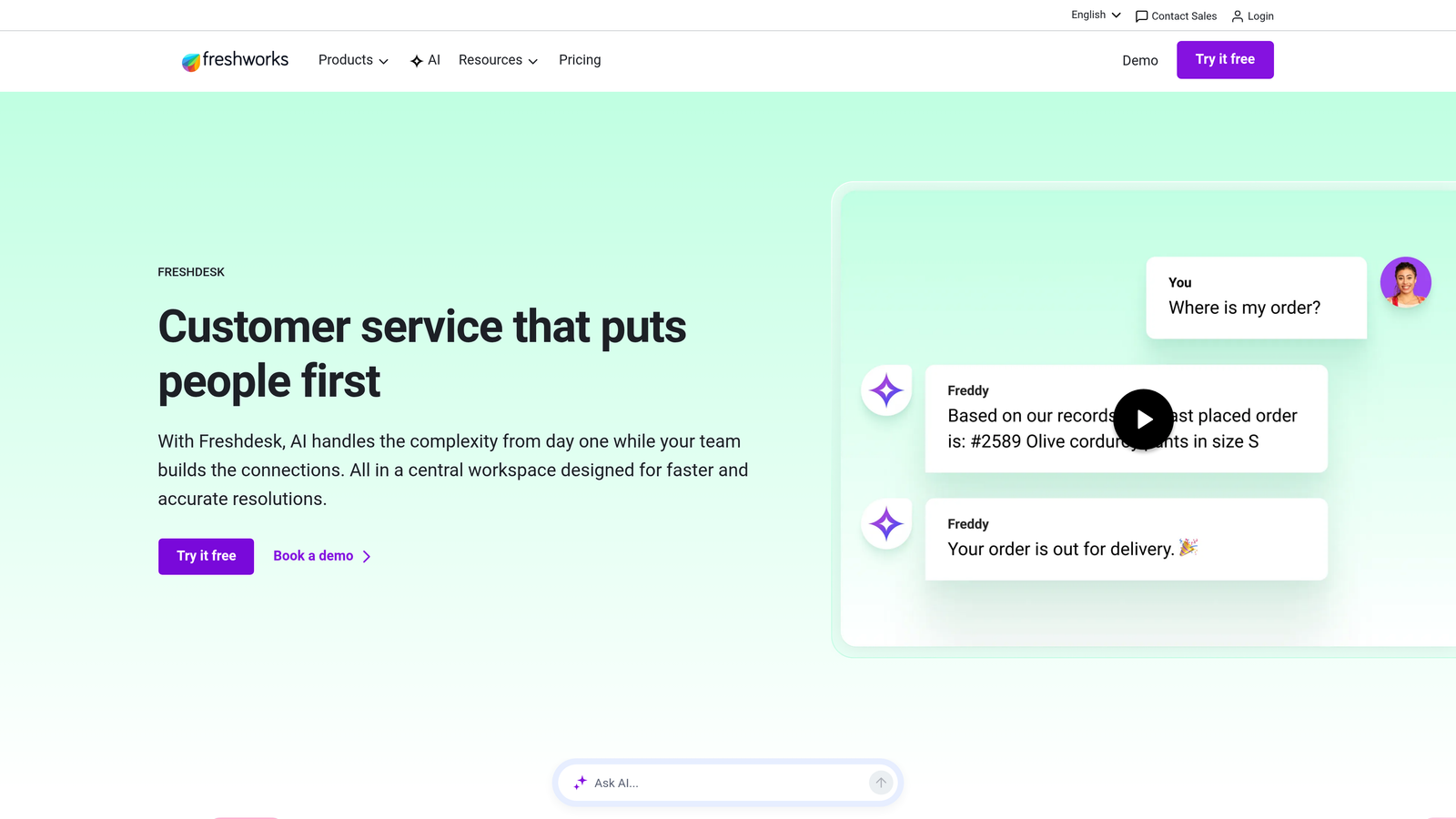
Freshdesk Freddy AI is Freshworks' AI layer for Freshdesk, offering chatbot automation, agent assist, and AI-powered insights designed for the mid-market.
Where This Tool Shines
Freshdesk's biggest advantage in cost discussions is accessibility. The free plan gives smaller teams a real starting point for ticketing and basic automation before committing to paid tiers. Freddy AI then layers on top as you scale, making it a natural progression rather than a rip-and-replace decision.
For omnichannel teams managing email, chat, phone, and social in one place, Freshdesk's coverage is competitive at its price point. The AI capabilities are more add-on than native, but the value-per-dollar is solid for teams not yet ready for enterprise AI platforms.
Key Features
Freddy AI Chatbots: Automated self-service resolution for common questions across chat and messaging channels.
Agent Assist: Suggested responses and canned actions to accelerate human agent workflows.
Free Tier: Functional free plan with basic ticketing and automation for teams starting out.
Omnichannel Coverage: Unified support across email, chat, phone, and social media channels.
Best For
Growing mid-market teams that want a cost-effective path from basic helpdesk to AI-assisted support without jumping straight to enterprise pricing.
Pricing
Free plan available. Paid plans start around $15/agent/month, with AI features included in higher-tier plans. Confirm current pricing on Freshdesk's site.
5. Ada
Best for: High-volume enterprise brands needing multilingual, omnichannel AI automation at global scale.
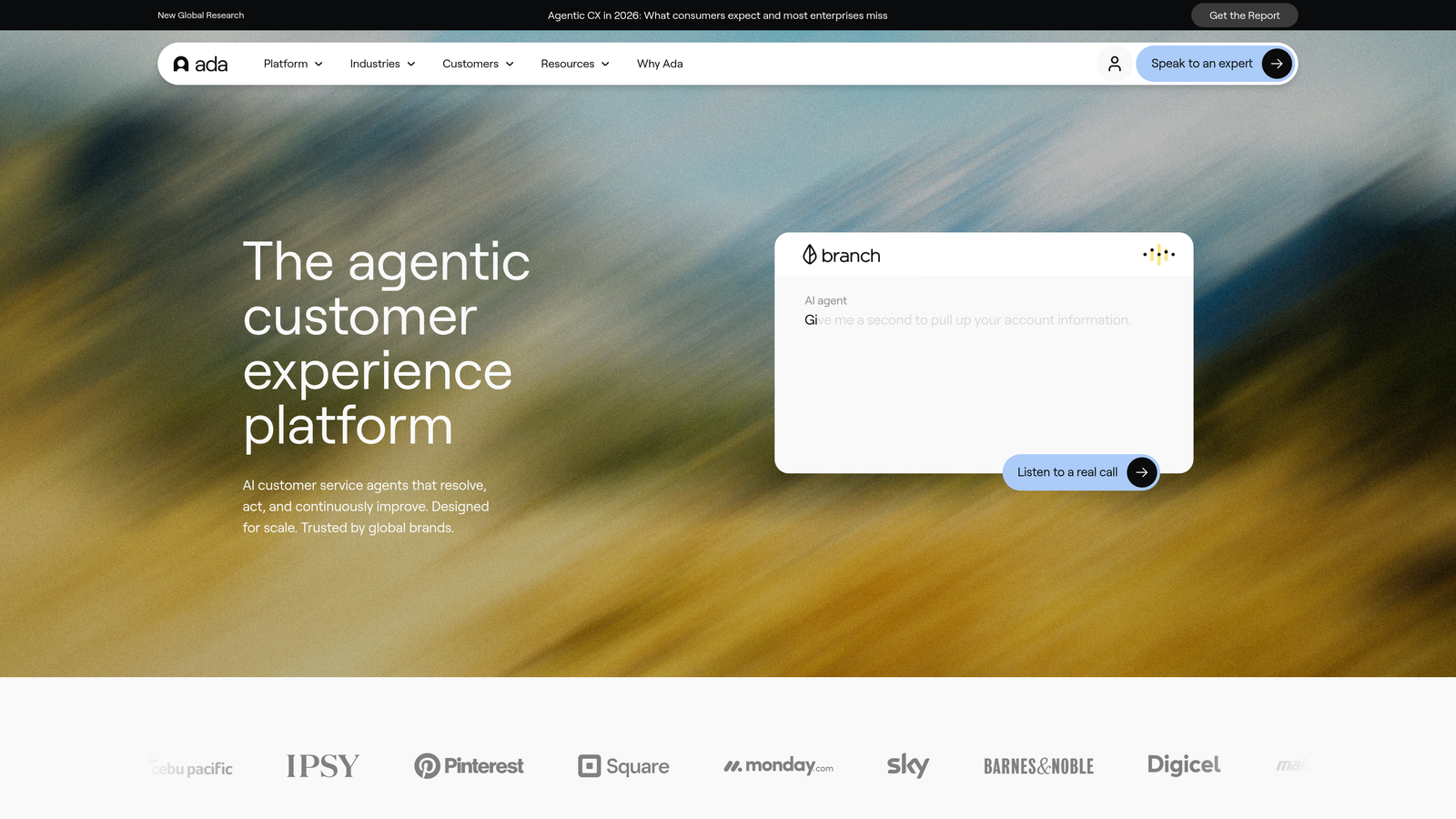
Ada is an AI-powered customer service automation platform purpose-built for high-volume brands, with strong multilingual and omnichannel capabilities across web, mobile, and social.
Where This Tool Shines
Ada is built for scale from the ground up. Its strength is high automated resolution rates in environments where ticket volume is large and query types are diverse. The no-code platform means support and operations teams can build and iterate on AI conversations without engineering involvement, which reduces implementation overhead.
The multilingual capability is a genuine differentiator for global brands. Supporting 50+ languages natively means you're not building separate automation workflows per region, which has real cost implications for international support operations.
Key Features
High-Volume AI Resolution: Designed for strong automated resolution rates across large-scale support operations.
50+ Language Support: Native multilingual automation without requiring separate regional configurations.
Omnichannel Deployment: Consistent AI experience across web, mobile, social, and SMS channels.
No-Code Builder: Operations and support teams can manage AI conversations without engineering resources.
Best For
Enterprise brands with high ticket volumes and global customer bases where multilingual automation and consistent omnichannel experience are non-negotiable requirements.
Pricing
Custom enterprise pricing. Contact Ada directly for a quote based on your volume and channel requirements.
6. Tidio
Best for: Small businesses and e-commerce teams that want affordable chatbot automation with a usable free plan.
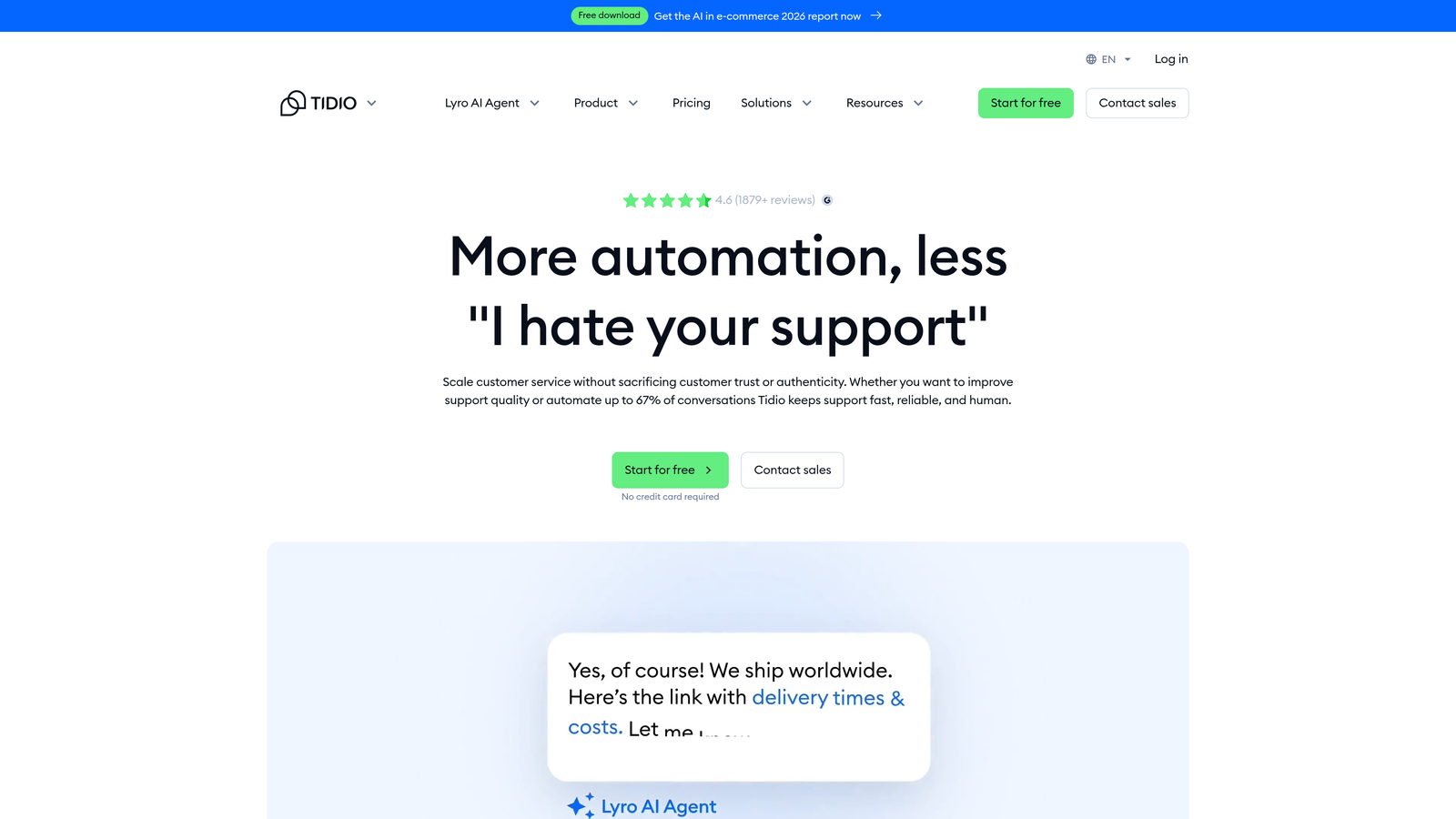
Tidio is an affordable live chat and chatbot platform aimed at small businesses and e-commerce, featuring a visual chatbot builder and a genuinely functional free tier.
Where This Tool Shines
In the small business and e-commerce segment, Tidio punches above its price point. The visual drag-and-drop chatbot builder lowers the barrier to automation significantly, and the pre-built templates mean you can deploy basic FAQ deflection and lead capture workflows without starting from scratch.
Lyro, Tidio's AI chatbot, handles automated FAQ resolution and is accessible even on lower-tier plans. For teams not ready for enterprise AI investment, Tidio offers a practical entry point into support automation with clear upgrade paths as needs grow.
Key Features
Visual Chatbot Builder: Drag-and-drop interface with pre-built templates for fast deployment without technical skills.
Lyro AI Chatbot: Automated FAQ resolution using your existing help content for common customer questions.
Live Chat with Visitor Tracking: Real-time monitoring and visitor tracking alongside automated workflows.
E-Commerce Integrations: Native connections with Shopify, WordPress, and other popular e-commerce platforms.
Best For
Small businesses, e-commerce stores, and early-stage teams that need affordable automation with minimal setup complexity and a free plan to get started.
Pricing
Free plan available. Paid plans start around $29/month. Verify current plan details on Tidio's site.
7. HubSpot Service Hub
Best for: Teams already in the HubSpot ecosystem that want support automation unified with CRM data.
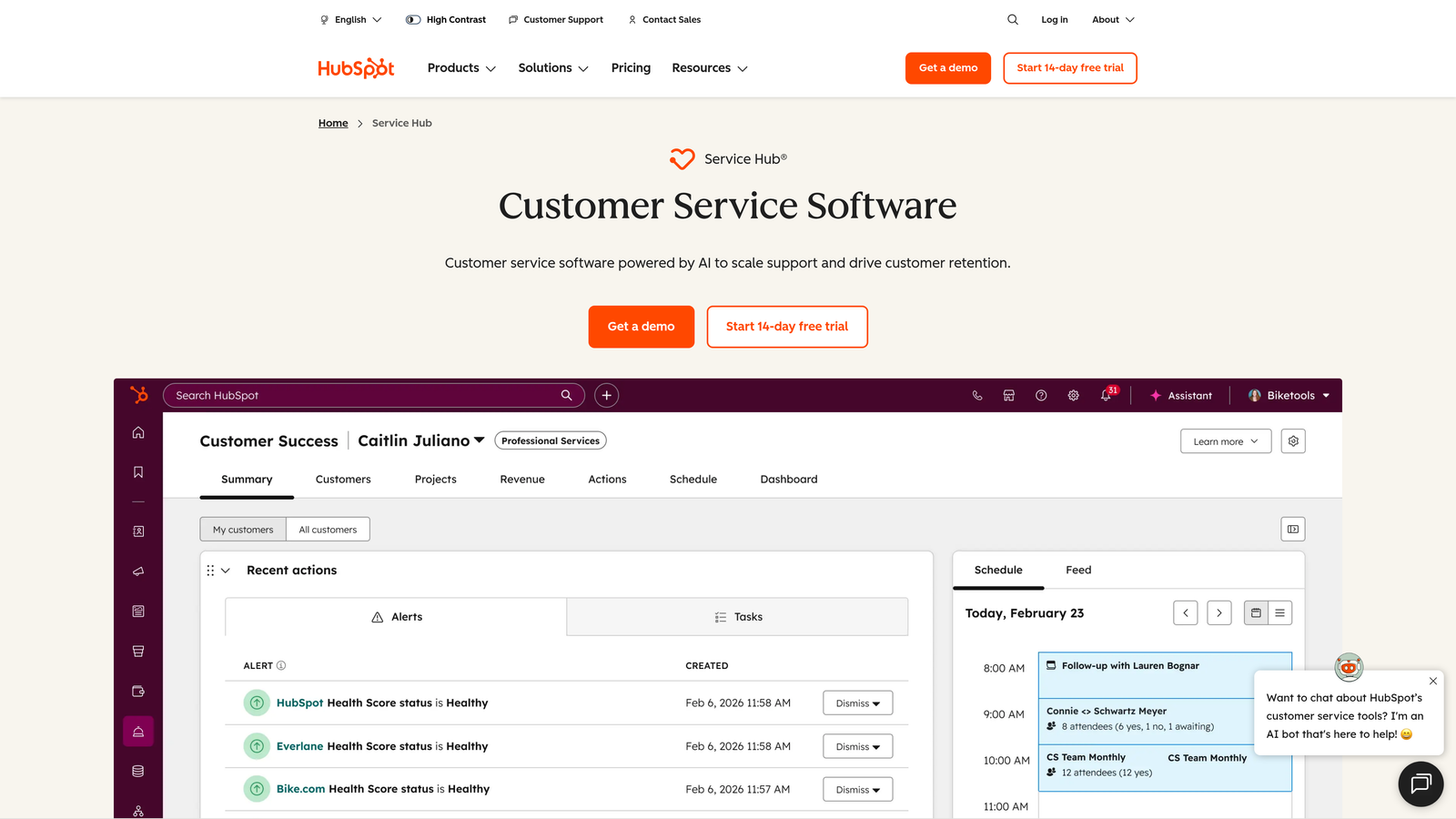
HubSpot Service Hub is HubSpot's service platform combining ticketing, knowledge base, and AI-powered automation with tight CRM integration for unified customer context.
Where This Tool Shines
The core value proposition here is CRM-unified support. When your ticketing system shares a data layer with your sales and marketing tools, support agents have full customer context without toggling between platforms. For teams that have invested in HubSpot across their go-to-market stack, Service Hub is a natural extension rather than a standalone purchase.
Breeze, HubSpot's AI chatbot, handles automated customer interactions within this unified context. The knowledge base with AI-assisted article suggestions also reduces the content maintenance burden that often slows down self-service programs.
Key Features
CRM-Unified Ticketing: Automation workflows powered by full HubSpot CRM data for complete customer context.
Breeze AI Chatbot: Automated customer interactions with access to CRM-level customer history and data.
AI-Assisted Knowledge Base: Article suggestions and content recommendations to improve self-service coverage.
Customer Feedback and Reporting: Built-in CSAT surveys and performance dashboards without additional tooling.
Best For
Companies running HubSpot for sales and marketing who want to extend that investment into support without introducing a separate helpdesk platform.
Pricing
Free tools available. Starter at $20/month per seat. Professional at $100/month per seat. Confirm current pricing on HubSpot's site.
8. Help Scout
Best for: Teams that want clean, human-centered support tooling with AI as an agent assistant rather than a replacement.
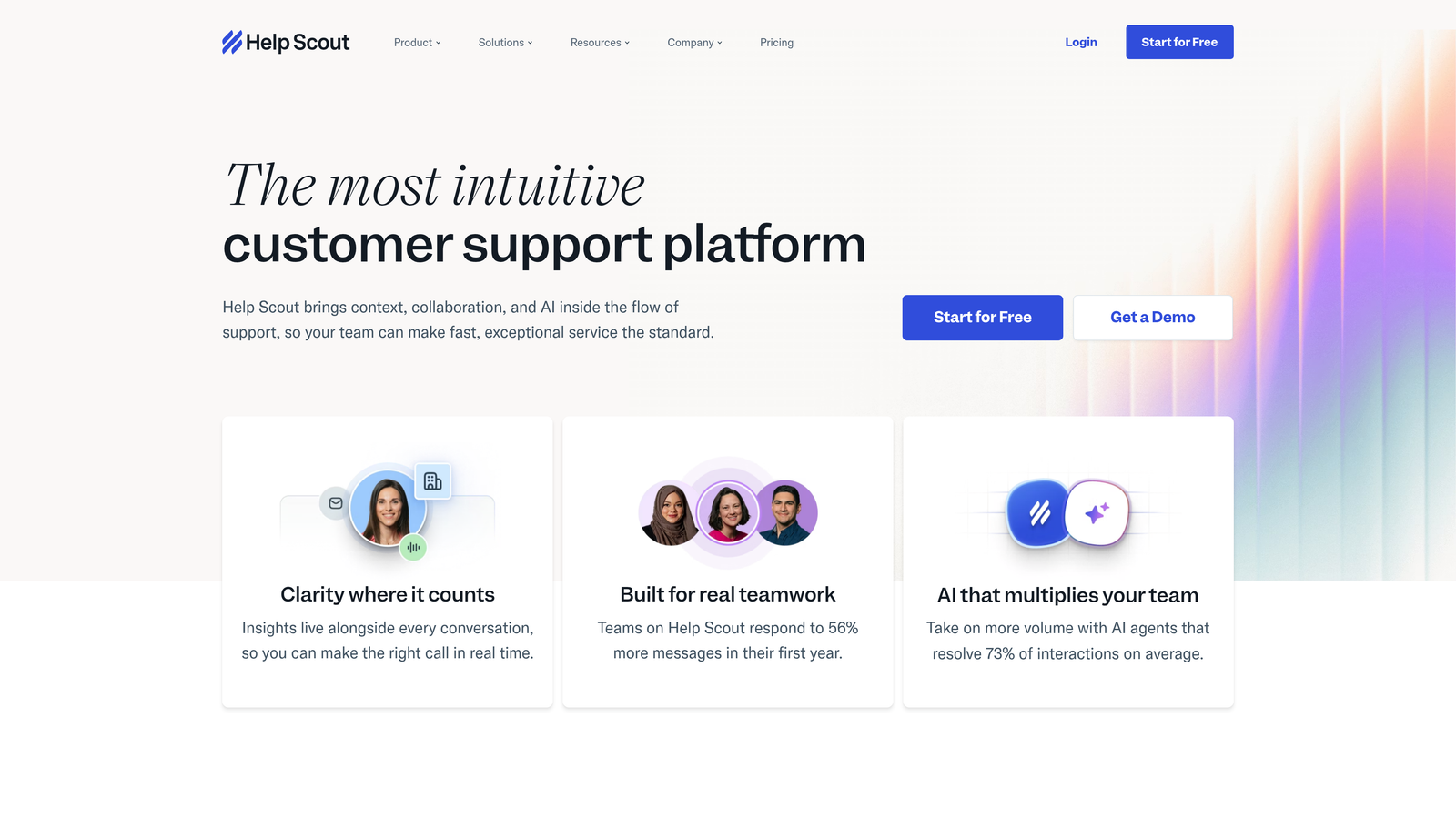
Help Scout is a human-centered helpdesk with AI features designed to augment support agents, known for its clean interface and fast onboarding.
Where This Tool Shines
Help Scout takes a deliberately different philosophy from AI-first platforms. Rather than maximizing autonomous resolution, it focuses on making human agents faster and more effective through AI-assisted drafts, conversation summaries, and smart inbox tooling. For teams where relationship quality matters more than deflection rate, this approach resonates.
The Beacon widget is worth highlighting: it embeds help docs and contact options directly in your product with minimal setup. The overall experience is intentionally simple, which means onboarding is fast and adoption rates tend to be high.
Key Features
AI Reply Drafts and Summaries: AI-generated response drafts and conversation summaries to reduce agent handle time.
Shared Inbox with Collision Detection: Prevents duplicate responses with real-time collision detection and internal notes.
Beacon Widget: Embedded help docs and contact options surfaced directly within your product or website.
Simple, Fast Onboarding: Opinionated design that reduces configuration overhead and accelerates team adoption.
Best For
Small to mid-sized teams that prioritize agent experience and relationship quality, and want AI as a productivity tool rather than a replacement for human-led support.
Pricing
Starts at $25/user/month on the Standard plan. Verify current pricing on Help Scout's site.
9. Forethought
Best for: Enterprise teams focused on reducing support costs through intelligent triage, routing, and workflow automation.
Forethought is an enterprise AI platform built around intelligent ticket triage, routing, and agent assist to reduce support costs through smarter workflow automation.
Where This Tool Shines
Forethought's focus is on the operational efficiency layer of enterprise support. Rather than leading with a customer-facing chatbot, it concentrates on what happens after a ticket arrives: classifying intent, predicting complexity, routing to the right team, and surfacing relevant knowledge to the agent handling it. For large teams where misrouting and slow resolution drive significant cost, this focus area delivers measurable value.
The analytics dashboard for measuring automation ROI and deflection rates is a genuine strength for teams that need to justify AI investment internally. Having clear cost-per-ticket and deflection metrics makes the business case easier to sustain over time.
Key Features
AI Ticket Triage and Intent Classification: Automatically categorizes incoming tickets by intent and complexity for accurate routing.
Intelligent Routing: Directs tickets to the right agent or team based on predicted complexity and expertise match.
Real-Time Agent Assist: Surfaces relevant knowledge suggestions to agents during live conversations.
Automation ROI Dashboard: Tracks deflection rates and cost-per-ticket metrics to quantify AI investment returns.
Best For
Enterprise support operations with large agent teams where triage accuracy, routing efficiency, and measurable cost reduction are the primary drivers of AI adoption.
Pricing
Custom enterprise pricing. Contact Forethought directly for a quote based on your team size and ticket volume.
Choosing the Right Solution for Your Budget and Scale
The most important shift in evaluating automated support costs is moving from monthly subscription price to cost-per-resolved-ticket. A tool that costs $15/agent/month but requires a human to touch most tickets will often be more expensive at scale than a higher-priced AI-native platform that resolves the majority of volume autonomously.
Here's a practical framework for matching tool to situation:
If you're a small business or e-commerce team on a tight budget: Tidio's free plan or Freshdesk's entry tier gives you real automation without significant upfront investment. Start there and upgrade as volume grows.
If you're already committed to a platform ecosystem: Intercom Fin, Zendesk AI, or HubSpot Service Hub are the natural paths. The integration value often outweighs switching to a standalone AI tool, especially if migration costs are factored in.
If you want human-first support with AI assistance: Help Scout is the cleanest option. It won't maximize deflection, but it will make your agents meaningfully faster without disrupting your support culture.
If you're an enterprise team with global volume and multilingual requirements: Ada and Forethought are purpose-built for that environment. Both require custom pricing conversations, but the ROI case is strongest at high ticket volumes.
If you want AI-native architecture that learns and improves over time: Halo AI is built for exactly this. The combination of autonomous agents, page-aware context, and business intelligence means you're not just automating support, you're building a system that gets smarter with every interaction and connects to your entire business stack.
Your support team shouldn't scale linearly with your customer base. The right automated support solution lets AI agents handle routine tickets, guide users through your product, and surface business intelligence while your team focuses on complex issues that genuinely need a human touch. See Halo in action and discover how continuous learning transforms every interaction into smarter, faster support.