9 Best Automated Support Solutions for B2B Teams in 2026
Finding accurate automated support solution quotes shouldn't require scheduling a dozen vendor demos — this guide compiles nine of the best B2B customer support platforms with transparent pricing, honest capability assessments, and clear guidance on which tool fits your team's size, budget, and technical needs.
 Matt PattoliFounder13 min read
Getting accurate pricing for automated support solutions is one of the more frustrating parts of the buying process. Most vendors hide their numbers behind "contact sales" forms, leaving you to schedule demos just to find out whether a tool fits your budget.
This guide cuts through that friction. We've compiled nine of the best automated customer support platforms, with transparent pricing information, honest capability breakdowns, and clear guidance on who each tool is actually built for. Whether you're a lean SaaS startup looking to deflect tickets without hiring, or an enterprise team trying to modernize a legacy helpdesk stack, you'll find a relevant option here.
We evaluated each platform on AI capability, integration depth, pricing transparency, and fit for B2B product teams. Let's get into it.
1. Halo AI
Best for: B2B SaaS teams that want AI-first support with deep product and business context.
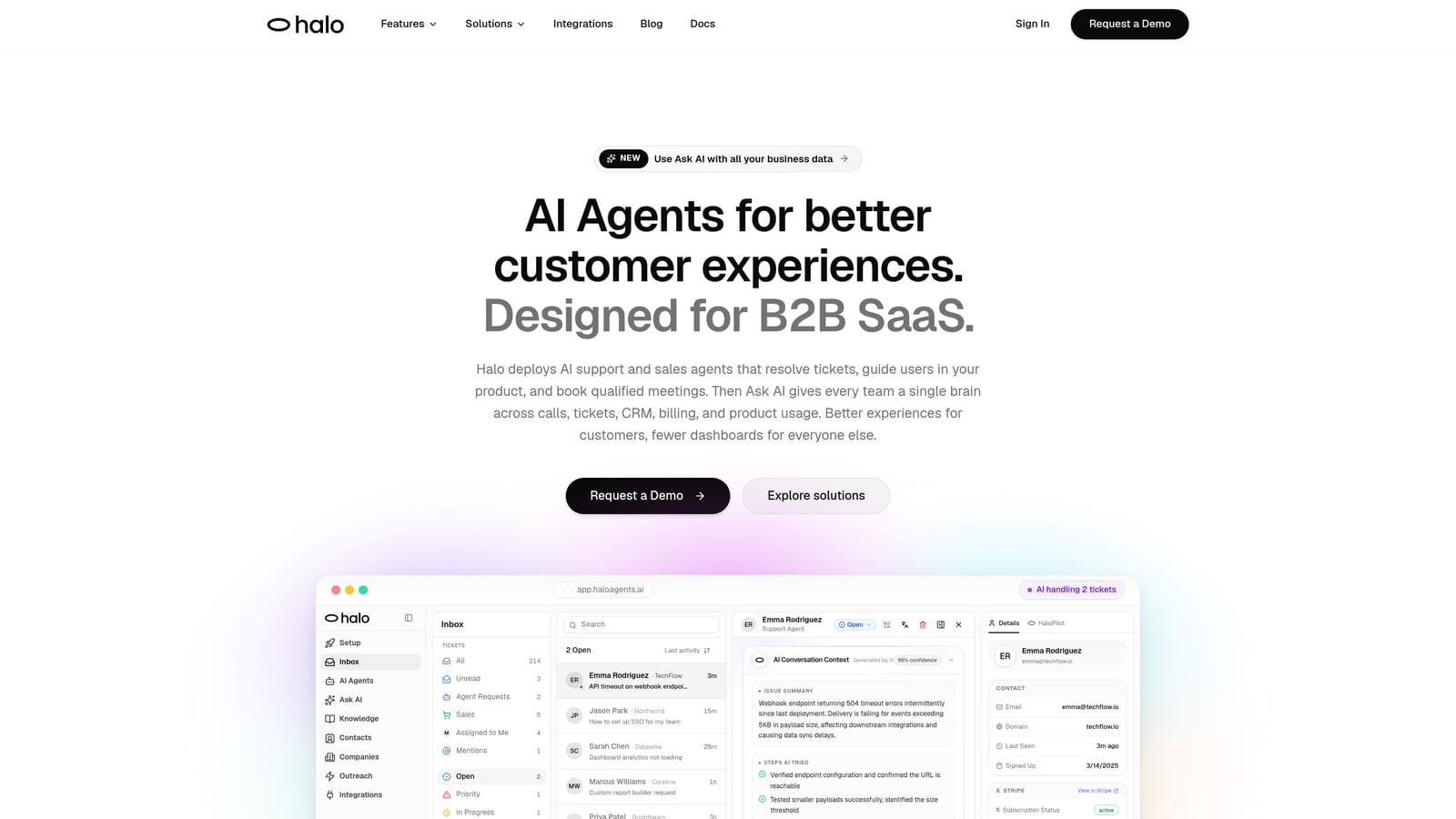
Halo AI is an AI-first customer support platform that deploys intelligent agents to resolve tickets, guide users through your product with page-aware context, and surface business intelligence — all while learning from every interaction.
Where This Tool Shines
What sets Halo apart from most tools on this list is its architecture. Rather than layering AI onto a human-agent workflow, Halo is built AI-first from the ground up. The agents don't just respond to text; they understand the page a user is on, what they're looking at, and can provide visual UI guidance in context. That's a meaningful difference when your users are confused mid-workflow rather than just asking a general FAQ.
The business intelligence layer is also genuinely distinctive. Most support tools tell you about ticket volume and CSAT. Halo's smart inbox surfaces customer health signals, revenue anomalies, and churn indicators — turning your support queue into a source of strategic insight rather than just a cost center to manage.
Key Features
Page-Aware AI Agents: Agents see what your users see, enabling in-context visual UI guidance rather than generic text responses.
Continuous Learning: Every resolved interaction improves the model, so accuracy compounds over time rather than staying static.
Smart Inbox with Business Intelligence: Surfaces customer health signals, revenue anomalies, and churn indicators directly from support conversations.
Auto Bug Ticket Creation: Automatically generates and routes bug reports to Linear or your existing engineering workflow without agent involvement.
Live Agent Handoff: Escalates to human agents with full conversation context preserved, so nothing gets lost in the transfer.
Deep Integrations: Connects with Linear, Slack, HubSpot, Intercom, Stripe, Zoom, PandaDoc, and Fathom — covering the full B2B stack.
Best For
B2B SaaS companies and product-led growth teams that want more than ticket deflection. If you need your support layer to connect to your CRM, engineering workflow, and revenue data simultaneously, Halo is built for that use case. Particularly strong for teams scaling support without scaling headcount.
Pricing
Contact for pricing. A demo is available at haloagents.ai/demo.
2. Intercom
Best for: Teams wanting a mature omnichannel platform with a capable AI agent out of the box.
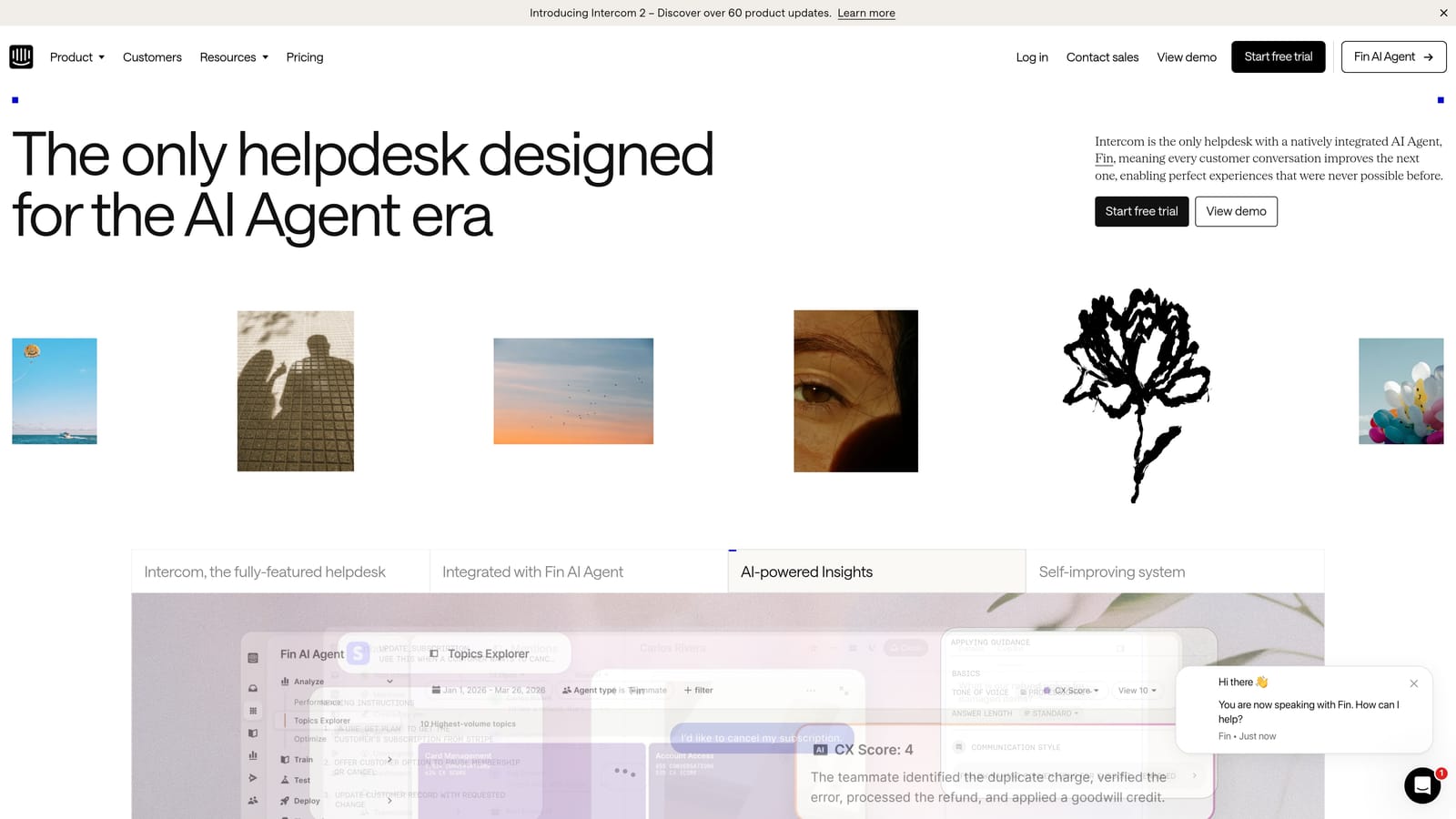
Intercom is a mature customer messaging platform featuring Fin, its GPT-4-powered AI agent, designed to handle a significant share of inbound conversations autonomously.
Where This Tool Shines
Intercom has spent years building one of the most polished support experiences in the market, and Fin benefits from that foundation. It can draw on your existing help content to answer questions without requiring a separate knowledge base rebuild. The omnichannel inbox is genuinely well-executed, consolidating chat, email, and social into a single view without feeling cluttered.
The workflow builder is a standout for teams with complex routing logic. If you need to handle different conversation types differently based on customer tier, topic, or intent, Intercom gives you the tools to build that without engineering support.
Key Features
Fin AI Agent: Autonomous ticket resolution using your existing help content, with GPT-4 powering responses.
Omnichannel Inbox: Chat, email, and social conversations consolidated with intelligent routing across channels.
Workflow Builder: Visual automation builder for complex routing sequences and escalation logic.
App Marketplace: Hundreds of integrations available, covering most common B2B tools.
Reporting and CSAT: Built-in analytics with customer satisfaction tracking and conversation metrics.
Best For
Mid-market SaaS and tech companies that want a proven platform with strong AI capabilities and don't want to stitch together multiple tools. Teams already using Intercom for sales or marketing messaging will find the support expansion natural.
Pricing
Essential plan starts at approximately $39/seat/month. Fin AI resolution is priced per-resolution on top of the base plan. Enterprise pricing available on request.
3. Zendesk
Best for: Enterprise teams with complex ticketing workflows and compliance requirements.
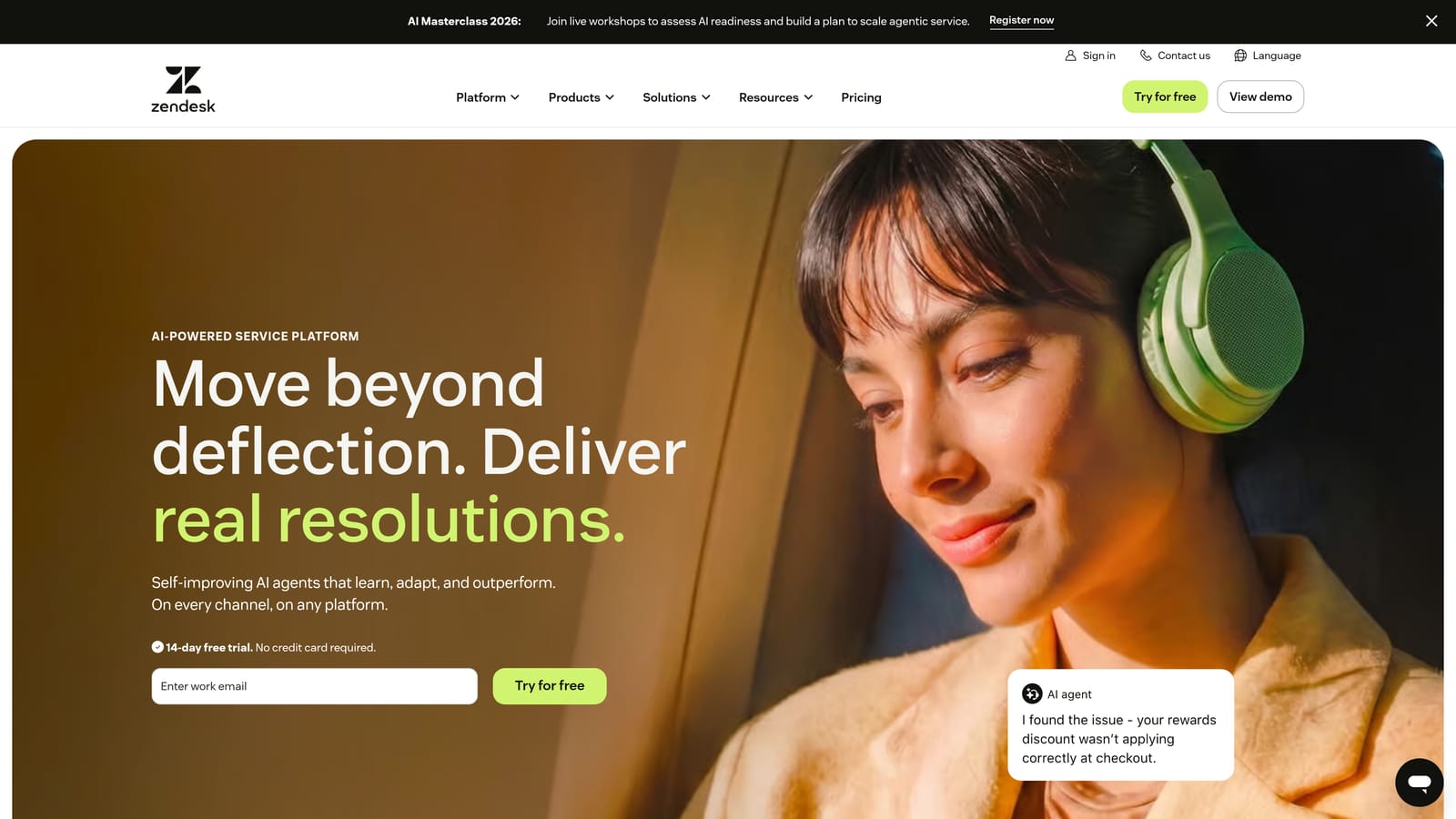
Zendesk is the category-defining enterprise helpdesk, now with AI Copilot and automated resolution capabilities layered onto its established ticketing infrastructure.
Where This Tool Shines
Zendesk's core strength is its depth. SLA management, advanced routing rules, custom dashboards, and enterprise-grade compliance certifications make it the default choice for large support organizations with strict operational requirements. If your team has dozens of agents across multiple regions and product lines, Zendesk's infrastructure handles that complexity well.
The AI Copilot adds genuine value for agent productivity: suggested replies, ticket summaries, and next-best-action recommendations reduce handle time without requiring a full AI-autonomous deployment. That's a reasonable middle ground for teams not ready to hand conversations entirely to AI.
Key Features
AI Copilot: Suggested replies, ticket summaries, and next-best-action guidance for human agents.
Zendesk Bots: Automated deflection layer that handles common queries before tickets reach the queue.
Advanced Routing and SLA Management: Sophisticated escalation rules and service level tracking built for enterprise operations.
Reporting Suite: Extensive custom dashboards and analytics across all support channels.
App Marketplace: Large ecosystem of integrations with enterprise compliance certifications.
Best For
Enterprise support teams with high ticket volumes, complex routing requirements, and compliance needs. Less ideal for small teams or companies prioritizing AI-first autonomous resolution over agent-assist functionality.
Pricing
Suite Team starts at approximately $55/agent/month. Suite Professional and Enterprise tiers scale significantly. AI add-ons may carry additional per-seat or usage-based costs.
4. Freshdesk
Best for: Growing teams that want AI-assisted support at an accessible price point.
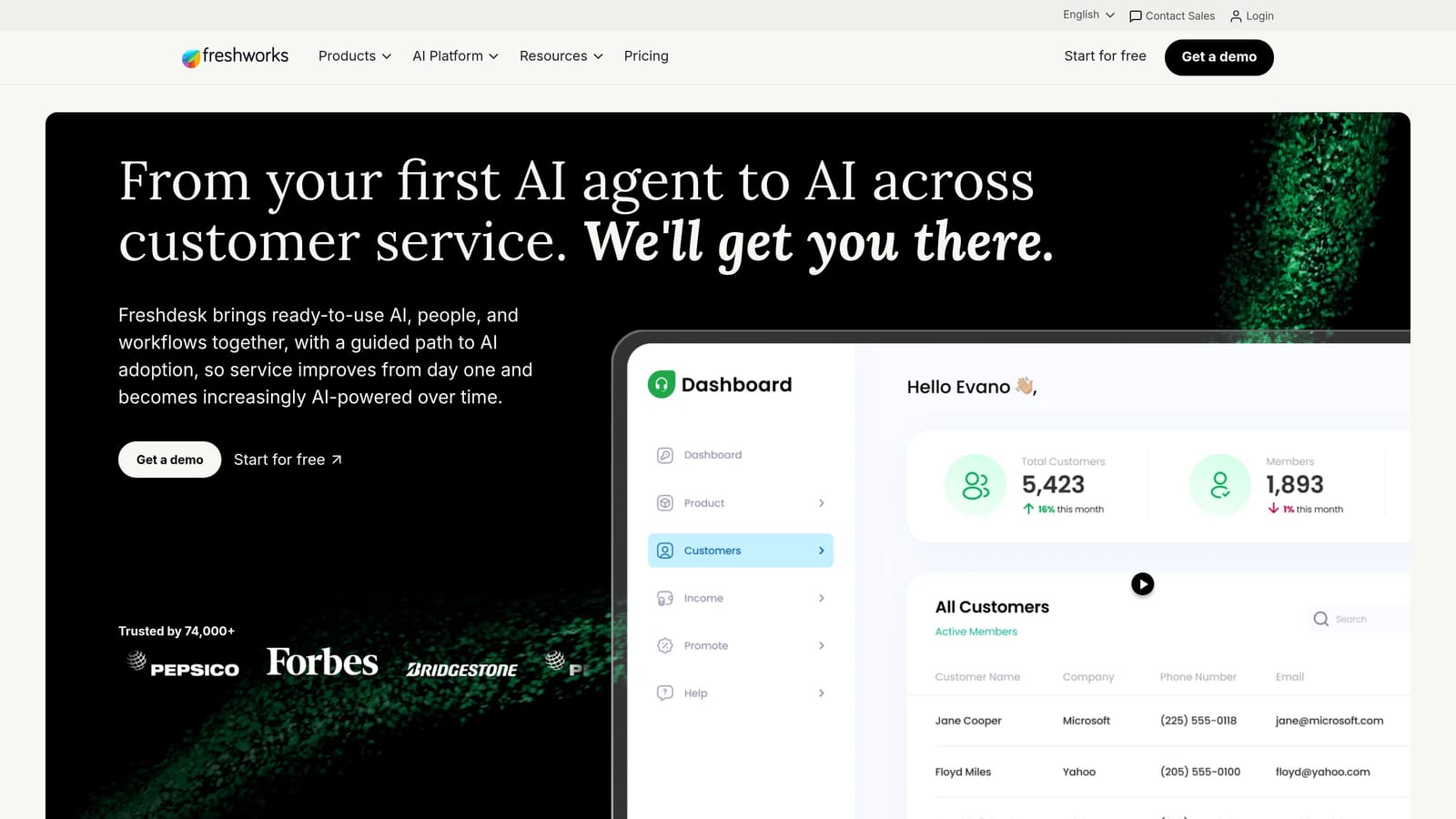
Freshdesk is Freshworks' helpdesk platform with Freddy AI embedded across ticketing, self-service, and agent productivity features.
Where This Tool Shines
Freshdesk's value proposition is straightforward: you get a solid helpdesk with AI capabilities at a price point that doesn't require a CFO sign-off. The free plan makes it genuinely accessible for early-stage teams, and the Growth tier adds enough automation to handle meaningful ticket volume without manual overhead.
The built-in telephony via Freshcaller integration is a practical advantage for teams that still handle support calls. Most platforms in this space treat voice as an afterthought or a separate product entirely. Freshdesk's tighter integration reduces the friction of managing multiple vendors.
Key Features
Freddy AI Copilot: Agent suggestions, ticket summarization, and productivity assistance on higher tiers.
Freddy Self Service: Automated chatbot for deflecting common queries before they reach the agent queue.
Built-in Telephony: Native Freshcaller integration for teams managing voice support alongside digital channels.
Collision Detection: Prevents multiple agents from working the same ticket simultaneously.
Free Plan: Available for small teams with limited features — a genuine entry point, not a stripped demo.
Best For
Small to mid-sized teams looking for a cost-effective entry into AI-assisted support. Also a good fit for companies already using other Freshworks products like Freshsales or Freshservice, where the shared ecosystem adds value.
Pricing
Free plan available. Growth plan starts at approximately $15/agent/month. Pro and Enterprise tiers scale up. Freddy AI features are available on higher-tier plans.
5. Drift (Salesloft)
Best for: B2B teams where support conversations frequently have pipeline and revenue implications.
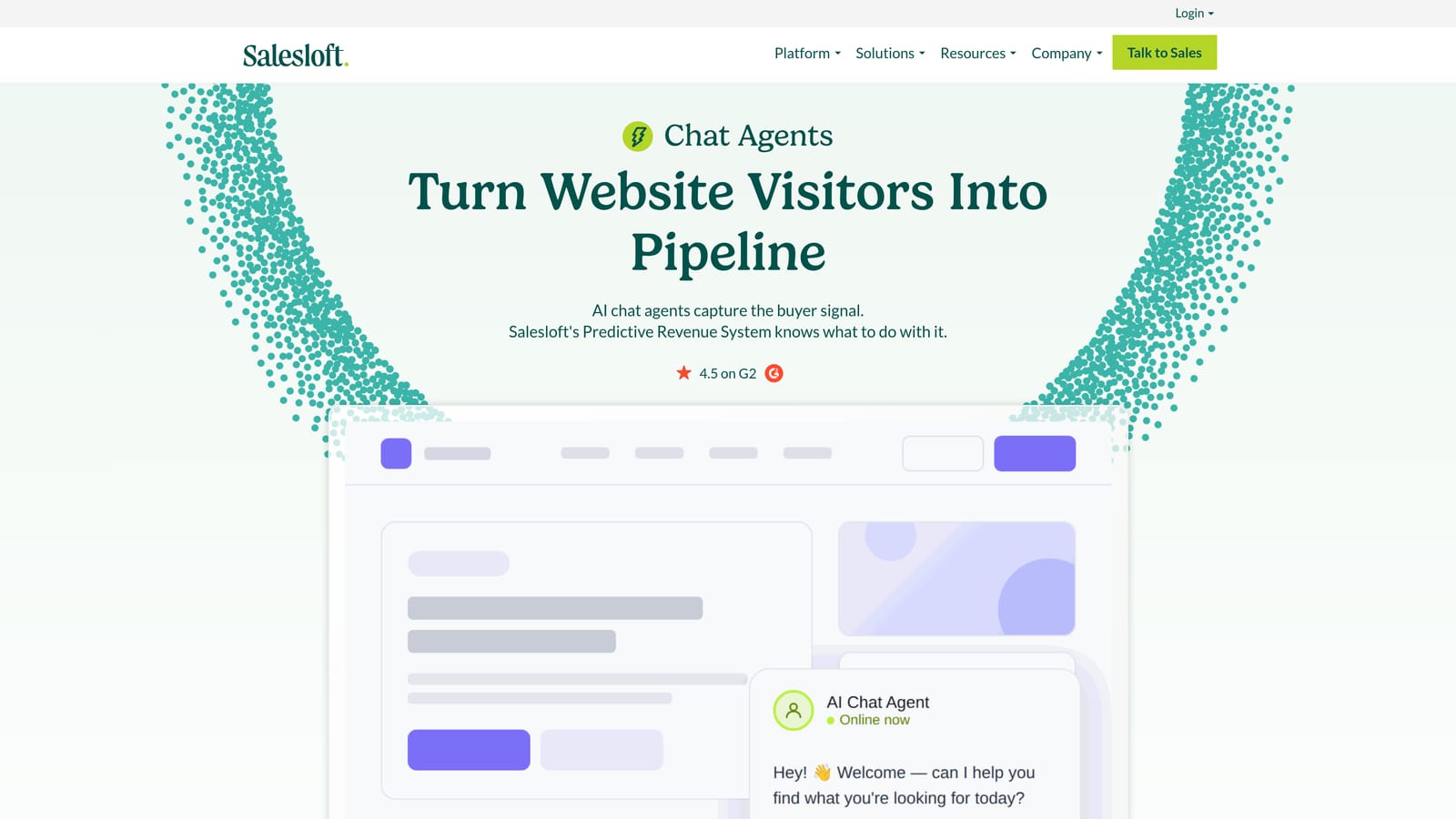
Drift is a conversational marketing and support platform now part of Salesloft, designed for B2B teams where the line between support and sales is often blurry.
Where This Tool Shines
Drift's differentiation is its revenue awareness. Where most support tools treat every conversation as a cost to minimize, Drift is built to recognize when a support conversation is also a sales opportunity. Intent detection can route high-value visitors directly to sales reps in real time, making it useful for teams managing both inbound support and pipeline generation from the same chat interface.
The account-based targeting capability is particularly relevant for enterprise B2B teams. You can personalize conversations based on the visitor's company, segment, or deal stage — something most pure-play support tools don't offer at all.
Key Features
AI Chatbot with Intent Detection: Routes conversations to support or sales based on detected intent, reducing misrouted interactions.
Real-Time Rep Notifications: Alerts sales reps when high-intent visitors are active, enabling live engagement at the right moment.
Account-Based Targeting: Personalizes chat experiences based on company identity and segment data.
Meeting Scheduling: Built directly into chat flows, removing friction from booking demos or calls.
CRM Integrations: Native connections to Salesforce, HubSpot, and Salesloft workflows.
Best For
B2B companies with a strong sales motion where support conversations often reveal buying intent. Less suited for teams that need deep ticket management or complex escalation workflows.
Pricing
Pricing is not publicly listed. Contact sales for a quote. Historically positioned as a mid-market to enterprise product.
6. Help Scout
Best for: Small teams that want clean, simple support tooling with light AI assistance.
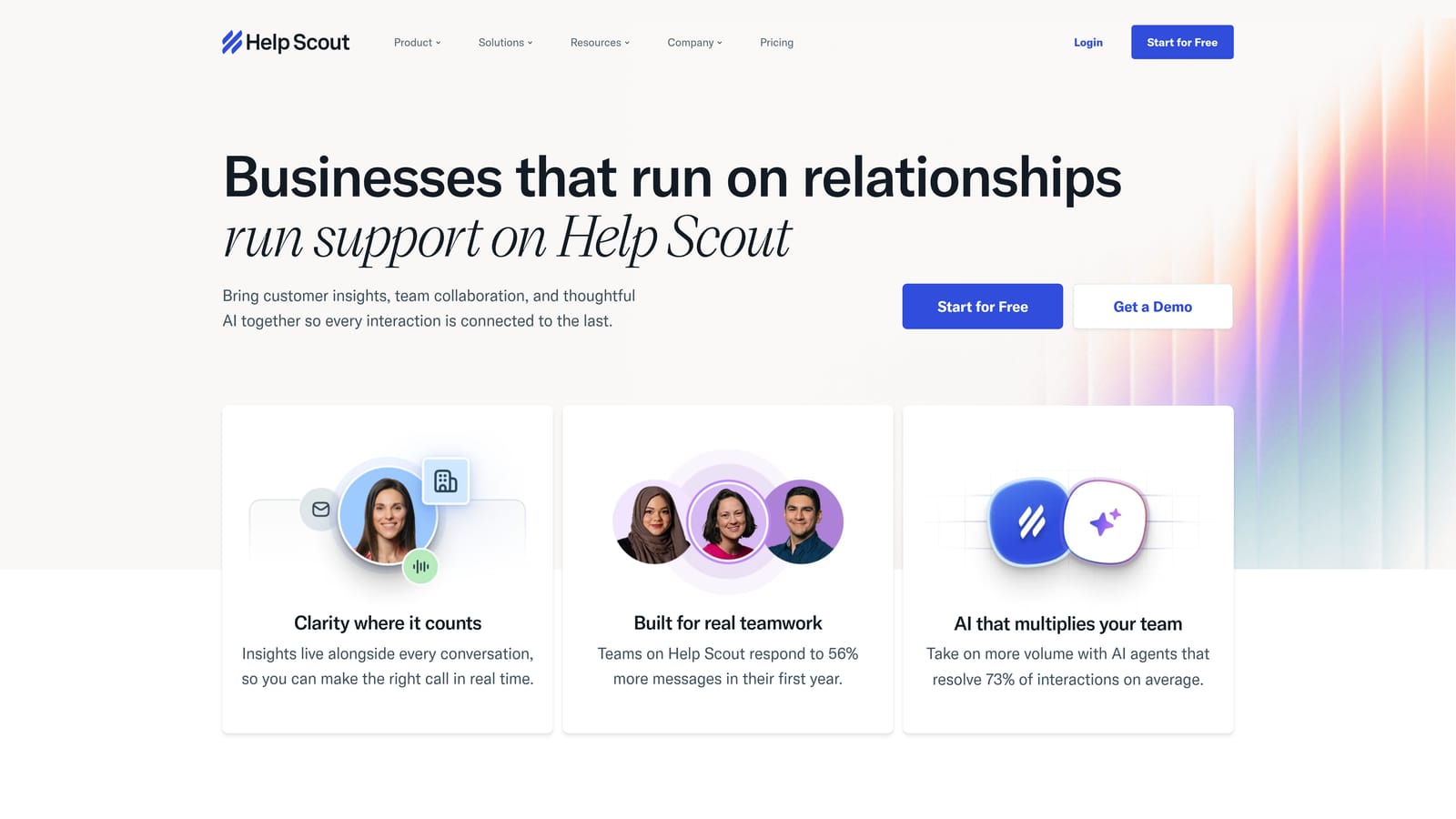
Help Scout is a human-first support platform with AI Summarize and Assist features, built for teams that value simplicity and fast onboarding over feature depth.
Where This Tool Shines
Help Scout earns its reputation by doing fewer things exceptionally well. The shared inbox is clean and intuitive, onboarding is fast, and the team collaboration features — collision detection, private notes, saved replies — cover the essentials without overwhelming new users. For teams burned by overly complex helpdesks, that simplicity is genuinely valuable.
The AI features are practical rather than flashy. AI Summarize gives agents instant context when picking up a conversation mid-thread, and AI Assist helps draft replies and adjust tone. Neither is groundbreaking, but both reduce the small frictions that slow down agent productivity at scale.
Key Features
AI Summarize: Instant conversation summaries so agents get context immediately when picking up a ticket.
AI Assist: Draft reply suggestions and tone adjustment to speed up agent response time.
Docs Knowledge Base: Built-in documentation tool with search, reducing repetitive inbound queries.
Beacon Widget: In-app help widget for proactive messaging and self-service content delivery.
Shared Inbox: Collision detection and private notes keep team collaboration organized without confusion.
Best For
Small to mid-sized teams prioritizing ease of use and fast setup. Particularly well suited for companies that want a clean, well-designed experience without investing in a complex implementation.
Pricing
Standard plan starts at approximately $22/user/month. Plus and Pro tiers available. Free trial offered.
7. Tidio
Best for: SMBs and early-stage teams wanting AI chat automation with minimal setup time.
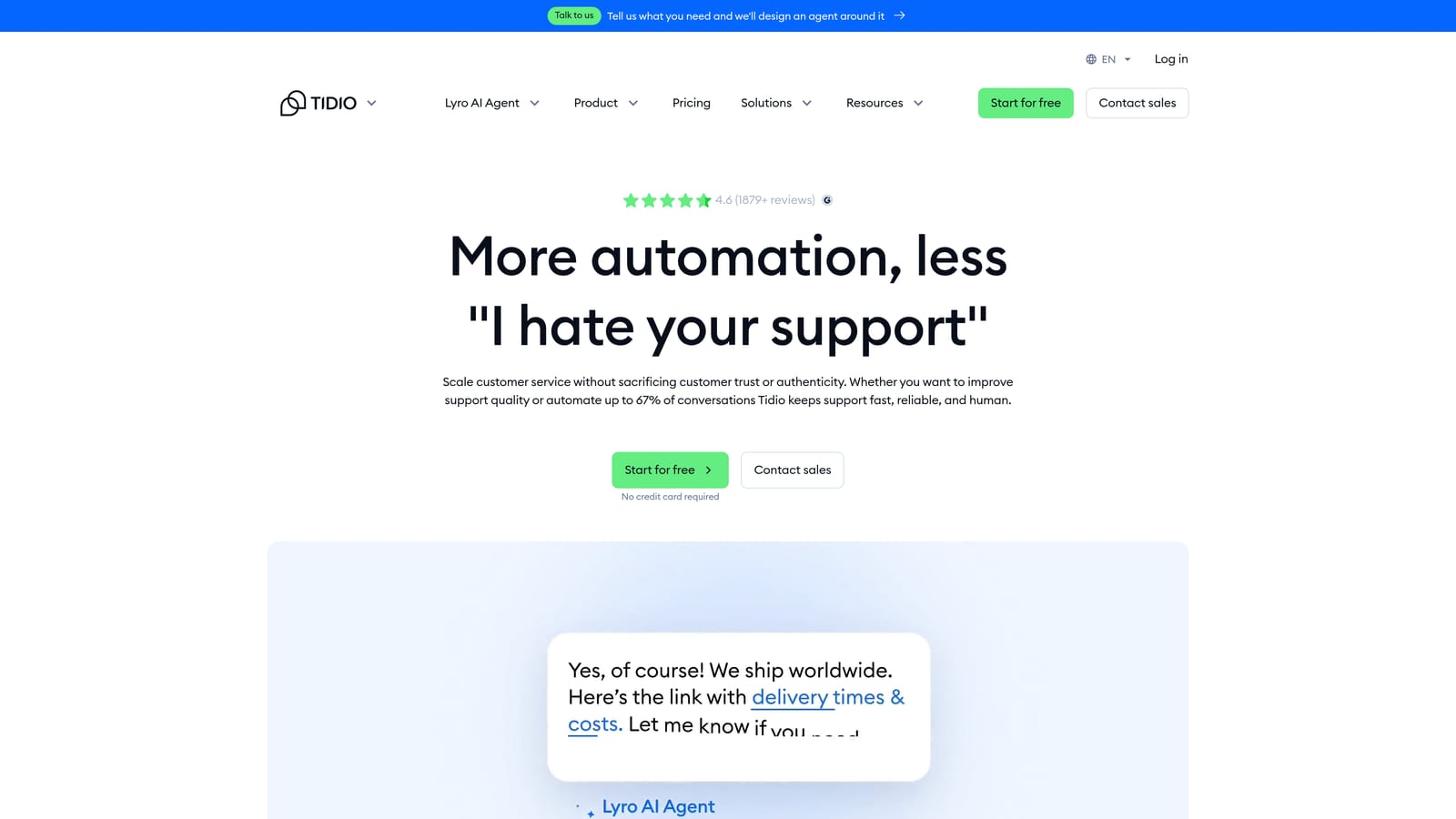
Tidio is an accessible live chat and AI chatbot platform featuring Lyro, a conversational AI designed to handle common support queries with minimal configuration required.
Where This Tool Shines
Tidio's appeal is speed to value. Lyro can be deployed and handling real conversations quickly, without requiring a large content library or lengthy training process. For teams that have been handling support through email or basic chat and want to automate the most repetitive queries, Tidio offers a low-friction path to meaningful deflection.
The no-code visual chatbot builder is genuinely accessible for non-technical users. You can build branching conversation flows, set up FAQ automation, and configure routing rules without writing a line of code — which matters a lot for small teams without dedicated engineering resources.
Key Features
Lyro AI Chatbot: Conversational AI for automated FAQ handling and common support query resolution.
Visual Flow Builder: No-code chatbot builder for creating branching conversation sequences.
Live Chat with Mobile App: Agents can manage conversations on mobile, useful for small teams without dedicated support staff.
E-commerce Integrations: Native connections to Shopify, WordPress, and WooCommerce for product-based support.
Free Plan: Available with limited conversations — a real starting point for testing the platform.
Best For
SMBs and early-stage startups that need quick AI chat deployment without significant setup investment. Also a natural fit for e-commerce businesses on Shopify or WooCommerce looking for affordable automation.
Pricing
Free plan available. Starter plan from approximately $29/month. Lyro AI conversations are priced separately or bundled on higher tiers.
8. Kustomer
Best for: High-volume consumer support operations that need a unified customer timeline across every channel.
Kustomer is a CRM-native support platform that gives agents a complete customer timeline across all channels and touchpoints, built for operations where context is everything.
Where This Tool Shines
Kustomer's defining feature is its CRM-first architecture. Rather than treating each support conversation in isolation, every interaction is attached to a complete customer record that spans email, chat, SMS, social, and voice. For high-volume operations where agents handle thousands of contacts, that unified view reduces handle time and eliminates the frustrating "can you repeat your order number" experience.
KustomerIQ adds AI-powered deflection, intelligent routing, and sentiment analysis on top of that foundation. The combination of rich customer data and AI-driven prioritization makes it particularly effective for teams where personalization at scale is a genuine operational requirement.
Key Features
Unified Customer Timeline: Complete interaction history across all channels consolidated into a single customer record.
KustomerIQ: AI-powered deflection, routing, and sentiment analysis built into the platform.
Omnichannel Coverage: Email, chat, SMS, social, and voice support from a single interface.
Workflow Automation: Automated task handling for repetitive processes, reducing manual agent workload.
Deep CRM Integration: Personalized support responses informed by full customer data, not just the current conversation.
Best For
Mid-market and enterprise teams managing high-volume consumer support across multiple channels, where customer context and personalization are critical to service quality.
Pricing
Enterprise pricing. Contact sales for a quote. Historically positioned at the higher end of the market.
9. Gorgias
Best for: E-commerce brands on Shopify or BigCommerce with high volumes of order-related tickets.
Gorgias is a support platform purpose-built for e-commerce, with native Shopify and BigCommerce integrations that enable AI to automate order-related tickets without agent involvement.
Where This Tool Shines
If your support queue is dominated by "where is my order," return requests, and shipping inquiries, Gorgias was built for exactly that. The one-click Shopify integration pulls live order data directly into every ticket, so agents and AI alike have full context without switching tabs or querying external systems. That alone eliminates a significant source of handle time for e-commerce teams.
The revenue statistics feature is a thoughtful addition that most support tools ignore entirely. Gorgias tracks how support interactions influence conversion, giving teams a data-backed argument for investing in support quality rather than just minimizing cost.
Key Features
Shopify and BigCommerce Integration: One-click setup with live order data surfaced in every ticket automatically.
WISMO Automation: Handles "where is my order" and return queries without agent involvement.
Revenue Statistics: Tracks support's contribution to conversion and revenue, not just cost and volume.
Macros and Rules: High-speed automation for repetitive ticket types common in e-commerce operations.
Omnichannel Coverage: Email, chat, social DMs, and SMS managed from a single inbox.
Best For
E-commerce brands, particularly those on Shopify or BigCommerce, with high ticket volumes driven by order status and fulfillment queries. Less suitable for B2B SaaS teams or companies with complex, multi-step support workflows.
Pricing
Starter plan from approximately $10/month with limited tickets. Pricing scales by ticket volume rather than per seat, which benefits teams with large agent counts but moderate inquiry volumes.
Which Tool Is Right for Your Team?
The right choice depends heavily on where you sit in the market and what you actually need your support layer to do.
If you're a B2B SaaS team that wants AI to handle tickets autonomously, connect to your full business stack, and surface revenue intelligence in the process, Halo AI is the strongest fit. It's built AI-first rather than AI-added, which shows in the depth of context-awareness and the quality of integrations with tools like Linear, Stripe, and HubSpot.
For teams that want a mature, proven platform with strong AI capabilities and a large ecosystem, Intercom is the most capable out-of-the-box option. Zendesk makes sense if enterprise compliance, deep routing logic, and an established vendor relationship matter more than cutting-edge AI autonomy.
Freshdesk and Help Scout serve teams prioritizing affordability and simplicity respectively. Tidio is the fastest path to AI chat automation for SMBs with limited setup resources. Drift earns its place specifically for B2B teams where support conversations and pipeline generation overlap. Kustomer suits high-volume consumer operations where unified customer context is a genuine operational need. And Gorgias is the clear choice for e-commerce brands living inside Shopify.
Your support team shouldn't scale linearly with your customer base. Let AI agents handle routine tickets, guide users through your product, and surface business intelligence while your team focuses on complex issues that need a human touch. See Halo in action and discover how continuous learning transforms every interaction into smarter, faster support.