9 Best Automated Support Systems for Small Teams in 2026
Small support teams face rising customer expectations with flat headcount — the right automated support system for small teams can close that gap. This guide ranks 9 top platforms evaluated on AI quality, ease of setup, integration depth, and the ability to scale smarter without scaling staff.
 Grant CooperFounder13 min read
Small support teams face a familiar paradox: customer expectations keep rising while headcount stays flat. You need to respond faster, resolve more tickets, and still carve out time for the genuinely complex issues that require a human touch. Automated support systems exist to close that gap, but not all of them are built with lean teams in mind. Some require dedicated admins to configure, others lock advanced features behind enterprise pricing, and many simply bolt AI onto an outdated helpdesk without meaningful intelligence.
This list cuts through the noise. We evaluated tools based on ease of setup, AI quality, integration depth, and how well they scale without scaling headcount. Whether you're a 3-person startup or a 30-person SaaS team, these platforms can help you deliver faster, smarter support without burning out your agents. Here are the top automated support systems for small teams in 2026.
1. Halo AI
Best for: B2B SaaS teams that want AI-native support with business intelligence built in
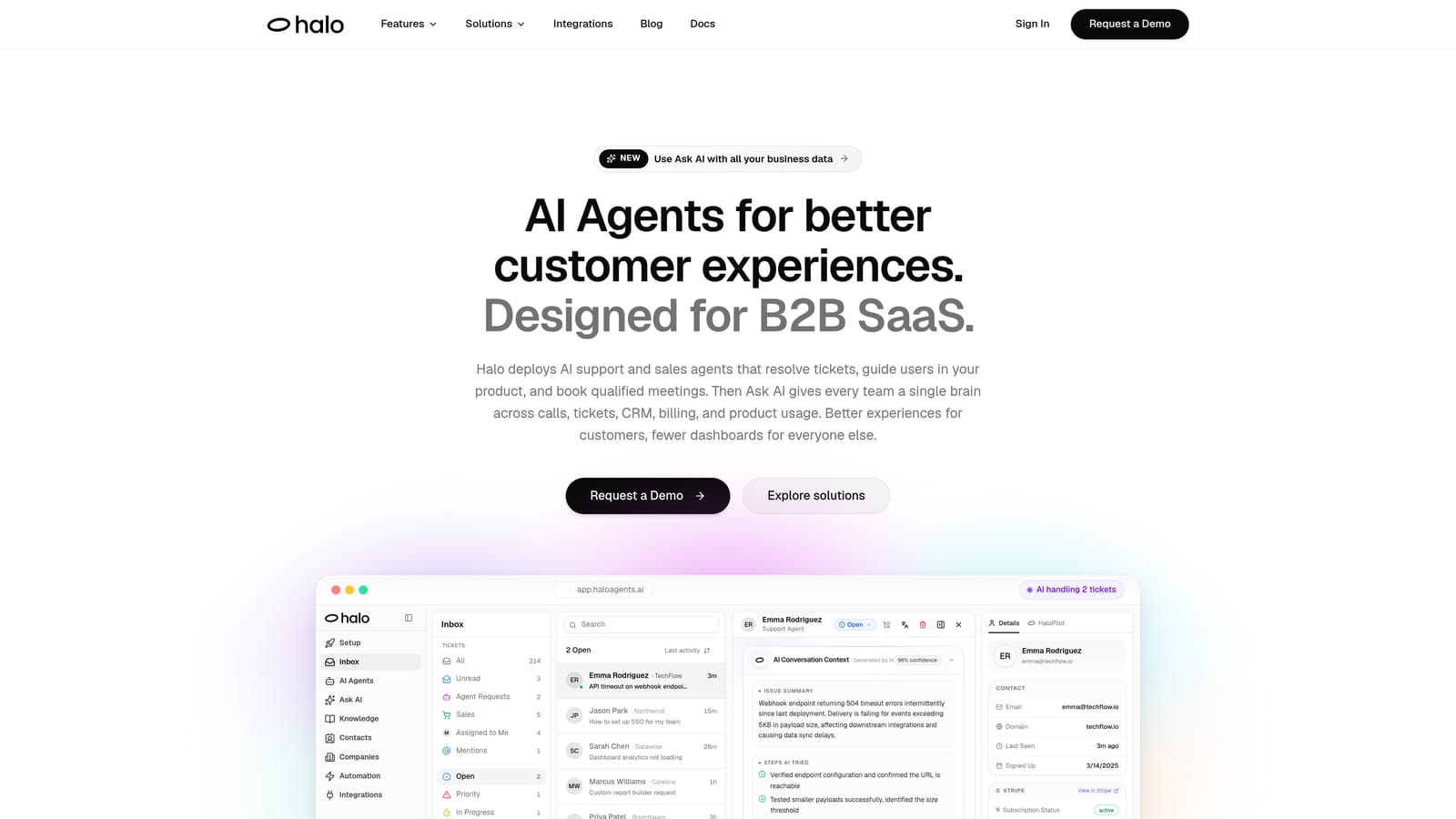
Halo AI is an AI-native customer support platform that deploys intelligent agents to resolve tickets, guide users through your product, and surface business intelligence signals while learning from every interaction.
Where This Tool Shines
What separates Halo from most tools on this list is its page-aware context. The AI doesn't just read the conversation — it sees the exact page and UI state the user is on, which means it can provide guidance that's actually relevant to what the customer is looking at right now. That's a meaningful leap beyond keyword-matching chatbots.
For SaaS product teams, the auto bug ticket creation feature is a genuine standout. When a user reports an issue, Halo can automatically generate a structured bug report and route it directly to Linear or your project management tool, cutting out the manual triage step that typically eats into agent time.
Key Features
Page-Aware AI Agents: The AI sees the exact page and UI state the user is on, enabling contextually accurate guidance rather than generic responses.
Continuous Learning: Every resolved ticket improves future deflection accuracy, so the system gets smarter the more you use it.
Auto Bug Ticket Creation: Automatically generates structured bug reports and routes them to Linear or your preferred project management tool.
Smart Inbox with Business Intelligence: Surfaces customer health signals, revenue anomalies, and churn indicators directly inside the support workflow.
Deep Integrations: Connects with Slack, HubSpot, Intercom, Stripe, Zoom, PandaDoc, and Fathom for a unified view of every customer.
Live Agent Handoff: Escalates complex issues to human agents with full conversation context preserved, so nothing gets lost in the transfer.
Best For
Halo is purpose-built for B2B SaaS teams that want more than ticket deflection. If your support team is also expected to surface product insights, flag at-risk accounts, and feed bugs back to engineering, Halo handles all of that in one platform. It's especially well-suited for teams that are tired of stitching together separate tools for support, CRM signals, and project management.
Pricing
Contact for pricing. Halo is designed for B2B SaaS teams and offers tailored plans based on team size and usage. Reach out directly at haloagents.ai for a demo.
2. Intercom
Best for: Teams already invested in Intercom's messaging ecosystem who want AI layered on top
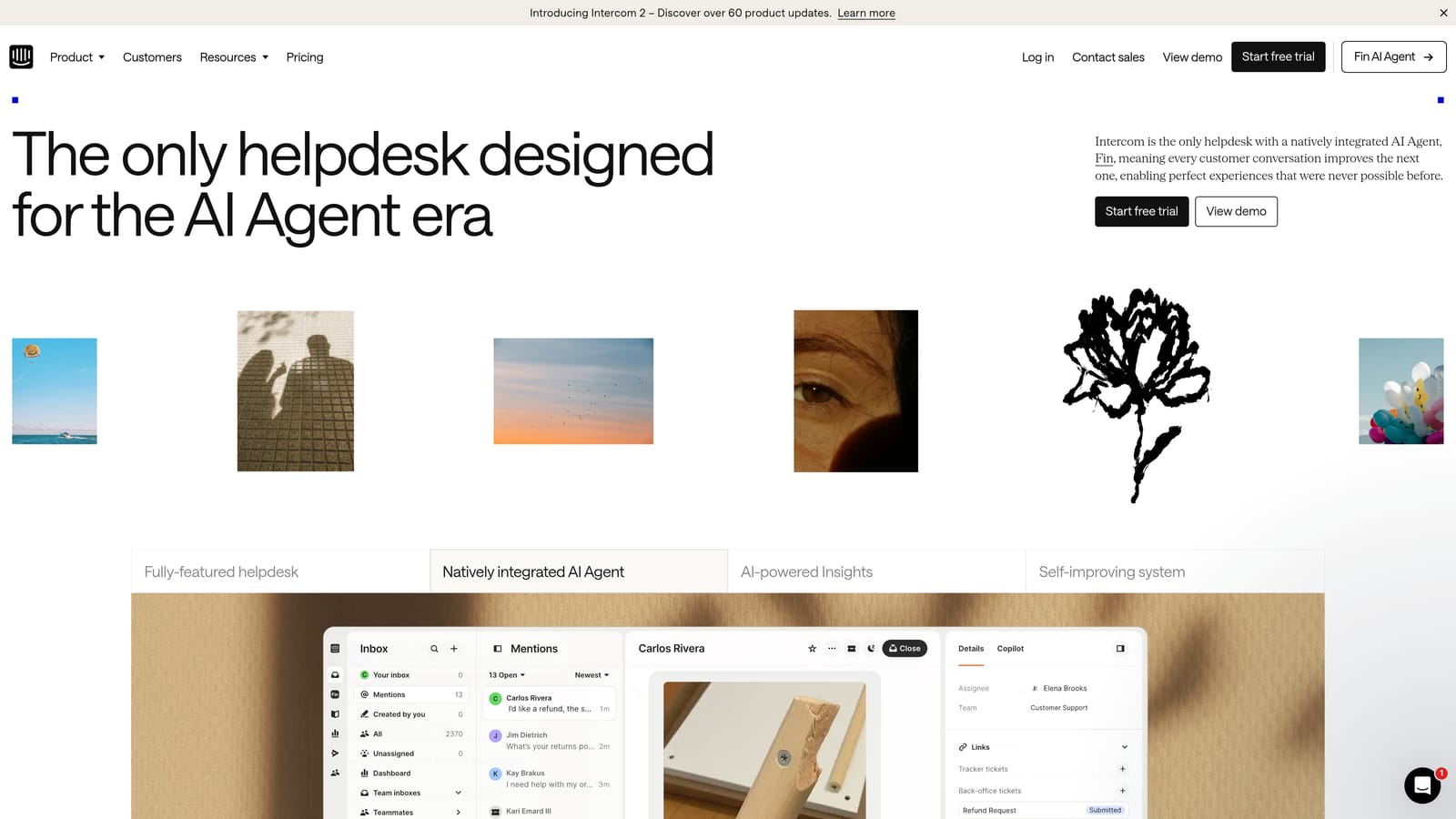
Intercom is a mature customer messaging platform with Fin, its AI agent, built on top of a robust live chat and helpdesk foundation.
Where This Tool Shines
Intercom's biggest strength is its heritage. It has spent years building out a comprehensive messaging platform, and Fin benefits from that foundation. Fin can autonomously resolve tickets by drawing on your existing help content, and it handles handoffs to human agents cleanly when it reaches the edge of its knowledge.
The proactive messaging and product tours are genuinely useful for small teams looking to reduce support volume at the source. If you can guide users to the answer before they even open a ticket, you've already won.
Key Features
Fin AI Agent: Autonomously resolves tickets using your help center content and conversation history.
Shared Inbox: Includes assignment rules, SLA tracking, and tagging to keep small teams organized across channels.
Proactive Messaging and Product Tours: Reduces inbound volume by guiding users through features before issues arise.
Extensive Integration Marketplace: Connects with hundreds of tools across CRM, billing, analytics, and project management.
Best For
Teams already using Intercom for live chat or in-app messaging will find the transition to Fin AI natural. It's also a strong choice for product-led growth companies that want to combine support automation with onboarding flows in a single platform.
Pricing
Starts around $39 per seat per month. Fin AI usage is billed separately per resolution, so costs can scale quickly for high-volume teams. Worth modeling out before committing.
3. Freshdesk
Best for: Small teams transitioning from email-only support who need a structured helpdesk with a free starting point
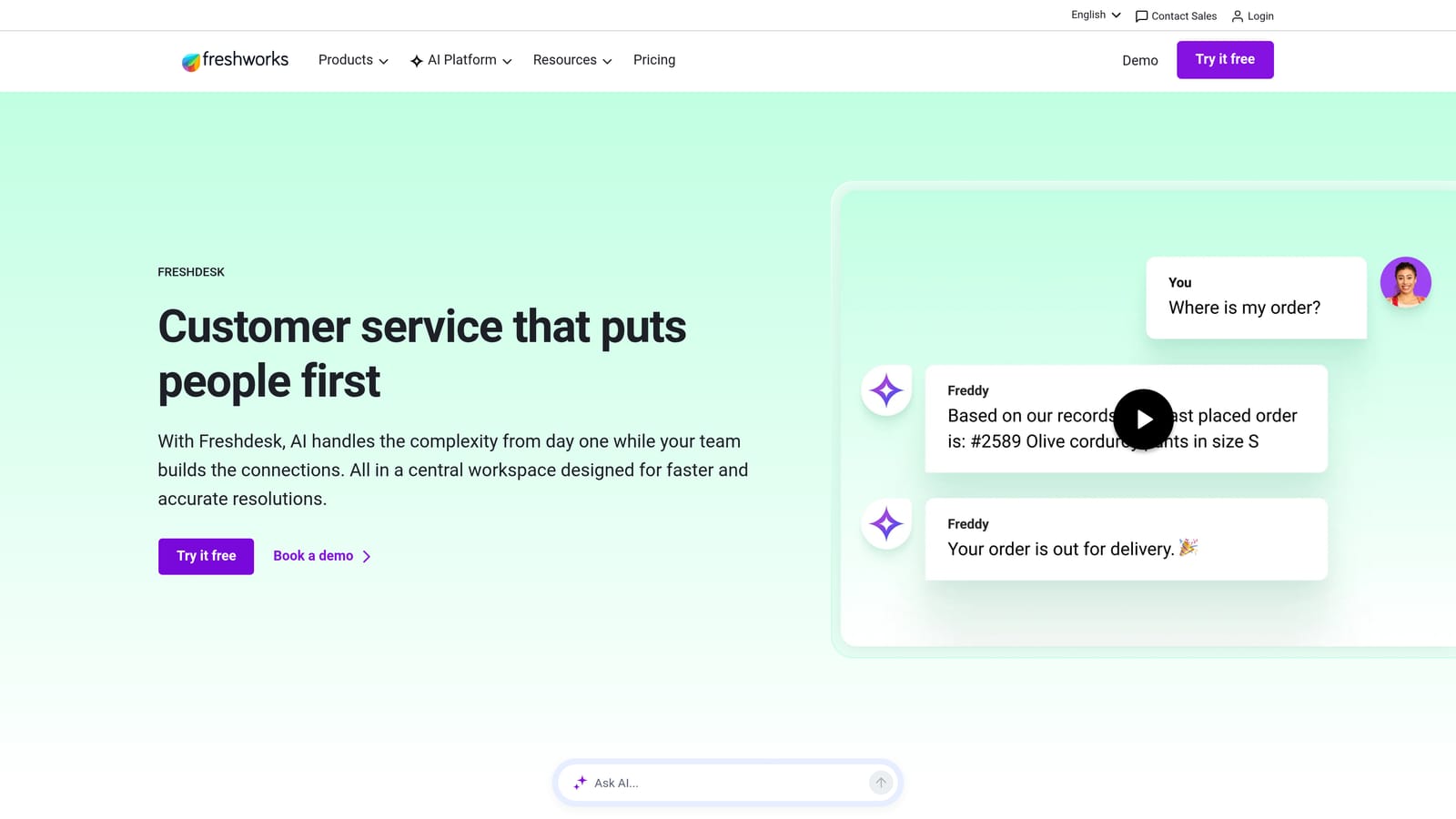
Freshdesk is a widely used helpdesk platform from Freshworks with Freddy AI handling ticket automation, suggested replies, and basic deflection.
Where This Tool Shines
Freshdesk's free plan is genuinely usable — not just a stripped-down demo. For teams that are just moving off shared Gmail inboxes, it provides ticket management, basic automation, and a collaborative inbox without any upfront cost.
Freddy AI adds real value at higher tiers: ticket categorization and priority assignment happen automatically, and suggested replies help agents respond faster without starting from scratch on every ticket.
Key Features
Freddy AI: Handles ticket categorization, priority assignment, and reply suggestions to speed up agent workflows.
Freddy Self Service: A chatbot that deflects common queries before they reach your team.
Automation Rules: Covers routing, escalation, and SLA management without requiring engineering involvement.
Free Plan: Supports up to 10 agents with core helpdesk features — a genuine entry point for early-stage teams.
Best For
Small teams that are new to structured support tooling and want a low-risk way to get started. Freshdesk is also a natural fit for teams already using other Freshworks products like Freshsales or Freshservice.
Pricing
Free plan available for up to 10 agents. Paid plans start at $15 per agent per month, with Freddy AI features available on higher tiers.
4. Zendesk
Best for: Growing teams that need enterprise-grade infrastructure and a large integration ecosystem
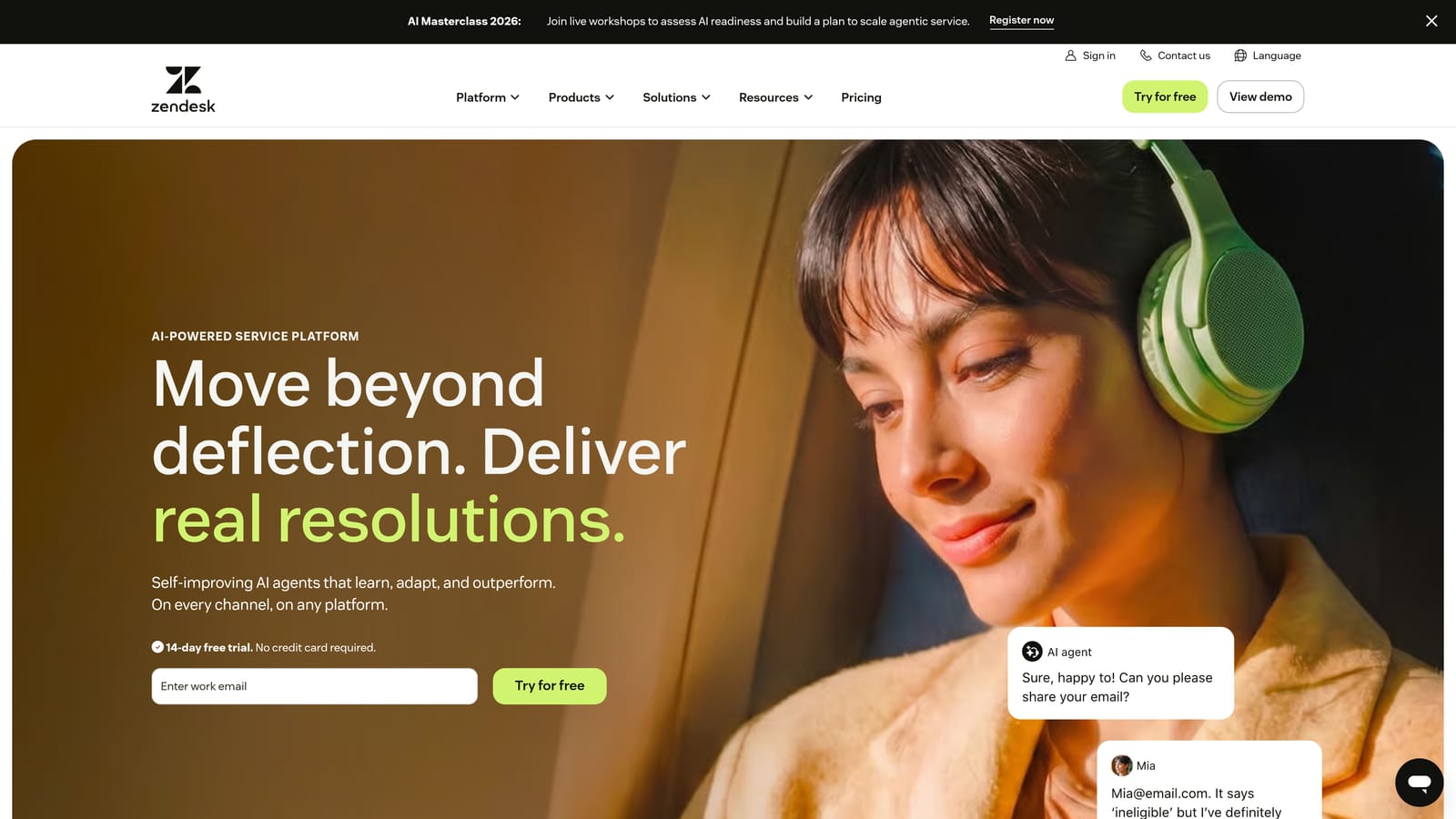
Zendesk is the industry-standard helpdesk platform with AI-powered triage, macro suggestions, and one of the largest support app ecosystems available.
Where This Tool Shines
Zendesk's depth is hard to match. Its AI-powered triage and intent detection have improved significantly in recent years, and the macro suggestion engine helps agents handle repetitive ticket types without burning mental energy on each one.
The app marketplace is a genuine asset. With over 1,000 integrations, you can connect Zendesk to almost any tool in your stack. For teams that anticipate significant growth, the platform scales without requiring a migration to a new tool.
Key Features
AI-Powered Triage: Automatically detects ticket intent and routes issues to the right team or queue.
Macro and Workflow Suggestions: Recommends relevant macros based on ticket content to speed up resolution.
App Marketplace: Over 1,000 integrations covering CRM, billing, analytics, ecommerce, and more.
Advanced Reporting and SLA Management: Provides granular visibility into team performance and response time compliance.
Best For
Teams that are scaling quickly and need a platform that can grow with them. Zendesk can feel heavyweight for very small teams, but if you're expecting to double headcount in the next 12 months, the infrastructure investment pays off.
Pricing
Starts at $19 per agent per month on the Suite Team plan. AI features are available on higher tiers, so budget accordingly if autonomous resolution is a priority.
5. Help Scout
Best for: Teams that want automation without losing the personal, human feel of their support
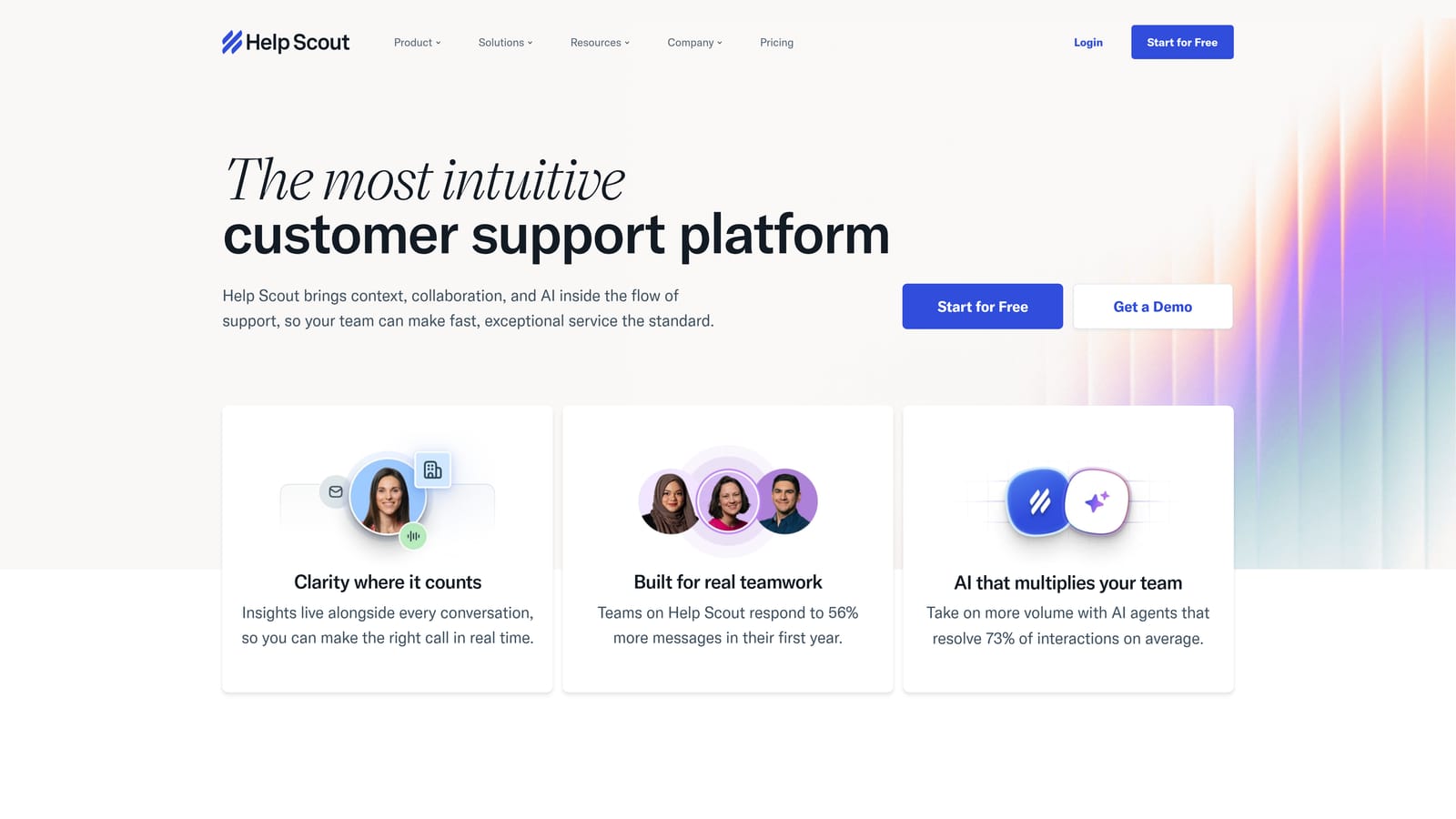
Help Scout is a support platform designed to feel like email rather than a traditional helpdesk, with AI drafts and automation that keeps interactions personal.
Where This Tool Shines
Help Scout's philosophy is refreshingly different from most tools on this list. It deliberately avoids the ticket-number, queue-management aesthetic of traditional helpdesks in favor of something that feels more like a well-organized inbox. For teams that care deeply about the customer experience feeling human, that matters.
The AI Drafts feature is practical rather than flashy: it suggests replies based on conversation context and past responses, giving agents a strong starting point without taking over the conversation entirely.
Key Features
AI Drafts: Suggests contextually relevant replies based on the conversation and historical responses, reducing time-to-reply without removing the human touch.
Beacon Widget: Delivers in-app help and proactive messaging to reduce inbound volume at the source.
Shared Inbox: Includes collision detection and private notes so agents don't duplicate effort or contradict each other.
Workflows: Automates tagging, routing, and follow-ups based on conversation conditions.
Best For
Customer-centric teams in SaaS, professional services, or any industry where the tone and warmth of support communication matters as much as speed. Help Scout is a particularly good fit for teams that have tried traditional helpdesks and found them too transactional.
Pricing
Starts at $50 per month for up to 3 users. Additional seats are priced per user, making it predictable to budget for small teams.
6. Tidio
Best for: SMBs and e-commerce teams that want an accessible AI chatbot without technical setup overhead
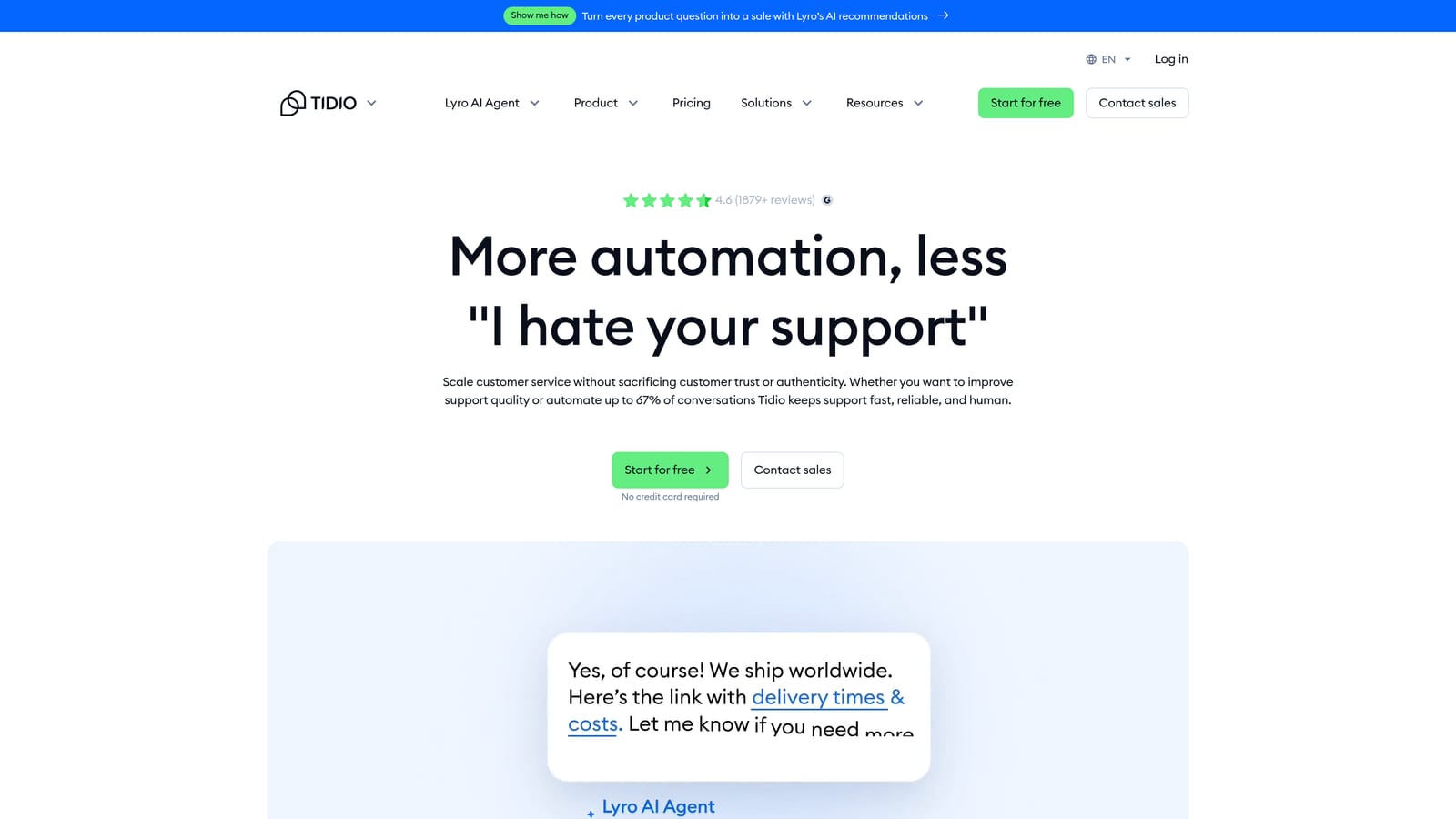
Tidio is an accessible live chat and AI chatbot platform popular with SMBs and e-commerce teams, featuring a visual flow builder and the Lyro AI agent.
Where This Tool Shines
Tidio's visual flow builder is one of its strongest selling points for non-technical teams. You can build out chatbot flows without writing a single line of code, which means your support lead can configure automation without pulling in a developer.
Lyro, Tidio's conversational AI agent, goes beyond simple keyword matching. It handles context-aware deflection and can manage multi-turn conversations, which makes it more effective than basic FAQ bots for handling nuanced customer questions.
Key Features
Lyro AI Chatbot: Handles conversational, context-aware deflection with multi-turn dialogue support.
Visual Flow Builder: Drag-and-drop chatbot builder that requires no coding to configure or modify.
Live Chat with Mobile App: Allows agents to respond on the go, useful for small teams without dedicated support shifts.
E-Commerce Integrations: Native connections with Shopify, WordPress, and other major e-commerce platforms.
Best For
Small e-commerce businesses, DTC brands, and SMBs that need a chatbot-first support setup without the complexity or cost of enterprise platforms. Tidio is also a practical choice for teams where the person setting up the tool is not a developer.
Pricing
Free plan available with core live chat features. Lyro AI starts at $29 per month, making it one of the more affordable AI chatbot options on this list.
7. Crisp
Best for: Early-stage startups that need a practical first support setup at minimal cost
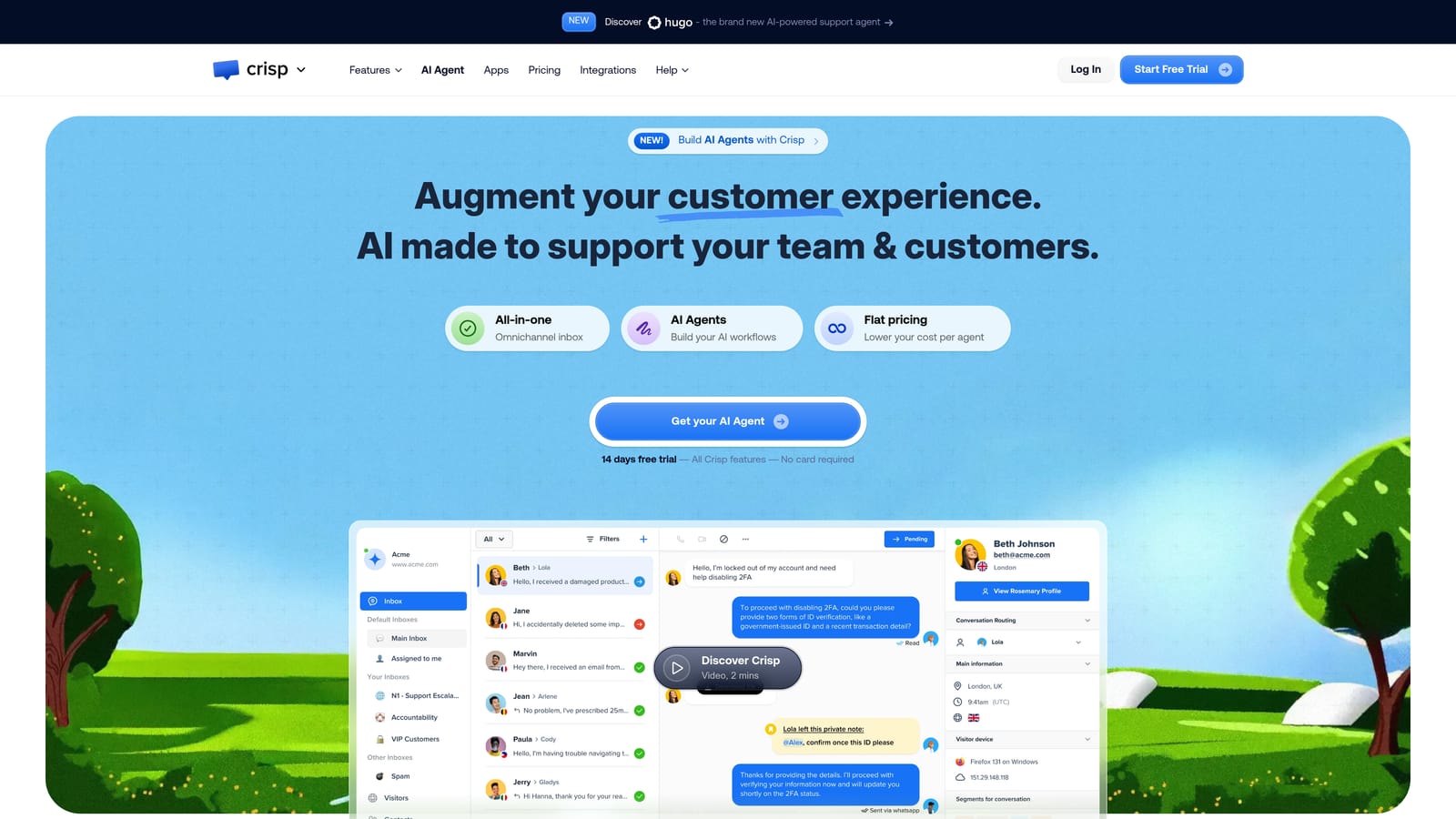
Crisp is a budget-friendly shared inbox and chatbot platform with a generous free tier, combining live chat, chatbot, and basic CRM in one workspace.
Where This Tool Shines
Crisp is the rare platform where the free plan is genuinely useful for getting a startup's support operation off the ground. Two agents, live chat, a shared inbox, and basic chatbot functionality — all without paying anything. For founders handling support themselves in the early days, that's a meaningful starting point.
The MagicReply AI feature helps agents respond faster by suggesting replies based on conversation context, and the chatbot builder covers FAQ automation without requiring technical configuration.
Key Features
All-in-One Free Plan: Shared inbox, live chat, chatbot, and basic CRM functionality for up to 2 agents at no cost.
Chatbot Builder: Automates FAQ responses and lead capture flows without coding.
MagicReply AI: Suggests contextually relevant replies to help agents respond more quickly.
Basic CRM: Stores customer data and conversation history in one place, reducing context-switching.
Best For
Early-stage startups and bootstrapped teams that need a functional support setup without a budget. Crisp works well as a starting point, though teams with more complex automation needs may eventually outgrow its capabilities.
Pricing
Free plan available for up to 2 agents. Paid plans start at $25 per month per workspace, which is competitive for small teams that need more seats or advanced features.
8. Gorgias
Best for: E-commerce teams, particularly those running on Shopify, who need order-aware support automation
Gorgias is a helpdesk built specifically for e-commerce teams, with deep Shopify integration that surfaces order data, tracking information, and customer history directly inside tickets.
Where This Tool Shines
Gorgias solves a problem that generic helpdesks handle awkwardly: e-commerce support agents spend a significant portion of their time answering questions about orders, shipping, and returns. Gorgias pulls that data directly into the ticket interface, so agents never have to toggle between Shopify and their helpdesk to answer a basic "where is my order" question.
The AI agent takes this further by autonomously resolving a meaningful portion of order status, return, and FAQ inquiries without human involvement, which is where small e-commerce teams tend to see the most immediate time savings.
Key Features
Native E-Commerce Integrations: Deep connections with Shopify, WooCommerce, and BigCommerce surface order data directly in the ticket view.
Order-Aware Macros: Automation rules that reference order data, customer history, and purchase context for accurate, personalized responses.
AI Agent: Autonomously resolves order status inquiries, return requests, and common FAQs without agent involvement.
Revenue Statistics: Shows the direct impact of support interactions on sales, connecting support performance to business outcomes.
Best For
E-commerce brands, DTC companies, and Shopify merchants of any size. Gorgias is less suited to SaaS teams or service businesses without a transactional order component.
Pricing
Starts at $10 per month on the Starter plan. Pricing scales by ticket volume rather than seat count, which can work in favor of small teams with moderate support loads.
9. Zoho Desk
Best for: SMBs already using Zoho CRM or other Zoho products who want an affordable, integrated helpdesk
Zoho Desk is an affordable helpdesk platform with Zia AI built in, offering sentiment analysis, ticket tagging, and anomaly detection alongside deep integration with the broader Zoho suite.
Where This Tool Shines
Zoho Desk's value proposition is strongest when you're already in the Zoho ecosystem. The integration with Zoho CRM is particularly tight: agents can see full customer records, deal history, and account context without leaving the ticket view. For SMBs using Zoho as their business operating system, Desk is the natural support layer.
Zia AI adds capabilities that go slightly beyond what you'd expect at this price point. Sentiment analysis on incoming tickets helps teams prioritize emotionally charged conversations before they escalate, and anomaly detection flags unusual spikes in ticket volume that might indicate a product issue.
Key Features
Zia AI: Provides sentiment analysis, automatic ticket tagging, and anomaly detection to help teams prioritize and respond intelligently.
Answer Bot: Deflects common queries via chat and email using your knowledge base content.
Zoho Suite Integration: Deep connections with Zoho CRM, Analytics, and other Zoho products for a unified customer view.
Workflow Automation: Handles routing, escalation, and SLA enforcement with rule-based automation that non-technical users can configure.
Best For
SMBs and growing businesses already using Zoho CRM, Zoho Analytics, or other Zoho products. Zoho Desk also works well as a standalone helpdesk for budget-conscious teams that need solid AI features without enterprise pricing.
Pricing
Free plan available for up to 3 agents. Paid plans start at $14 per agent per month, making it one of the most affordable options on this list with meaningful AI capabilities included.
Which Tool Is Right for Your Team?
The right automated support system depends less on features and more on where your team is today and where you're headed. Here's a quick way to think through it.
If you're a B2B SaaS team that wants AI-native support with business intelligence: Halo AI is the standout choice. The page-aware context, continuous learning, and built-in signals for customer health and churn make it the only platform on this list that treats support as a source of business intelligence, not just a cost center to reduce.
If you're an e-commerce brand on Shopify: Gorgias is purpose-built for you. The order-aware automation and revenue statistics make it the clear category leader for transactional support.
If you're an early-stage startup with a limited budget: Start with Crisp or Freshdesk. Both offer genuinely useful free plans that let you build a support operation before you're ready to invest in a more sophisticated platform.
If you're already in the Intercom or Zoho ecosystem: Lean into what you have. Intercom's Fin AI and Zoho Desk's Zia are both capable enough that switching costs rarely justify a migration unless you have specific gaps they can't fill.
If your team values the human feel of support above all else: Help Scout is in a category of its own for teams that want automation without losing warmth.
Your support team shouldn't scale linearly with your customer base. Let AI agents handle routine tickets, guide users through your product, and surface business intelligence while your team focuses on complex issues that need a human touch. See Halo in action and discover how continuous learning transforms every interaction into smarter, faster support.