9 Best Automated Support Tools for SaaS in 2026
Discover the 9 best automated support tools for SaaS in 2026, evaluated on AI depth, ticket resolution capability, and SaaS-specific integrations. This guide helps growing SaaS teams move beyond basic deflection to find solutions that genuinely resolve issues, surface product insights, and scale support operations without proportionally increasing headcount.
 Matt PattoliFounder14 min read
SaaS support teams face a familiar tension: your user base grows, ticket volume climbs, and customer expectations for instant, accurate answers keep rising. Hiring more agents isn't a sustainable answer. The right automated support tool resolves that tension by handling routine tickets intelligently, surfacing product insights, and scaling without adding headcount.
But not all automation is created equal. Some tools deflect tickets to a knowledge base and call it "AI." Others genuinely resolve issues, learn from every interaction, and integrate deeply with the tools your team already uses. The difference matters enormously when you're evaluating what to build your support infrastructure on.
This guide covers the top automated support tools purpose-built or well-suited for SaaS teams. The selection criteria: depth of AI automation, SaaS-specific integrations, ticket resolution capability, analytics quality, and ease of deployment. Whether you're replacing a legacy helpdesk or layering automation onto an existing stack, here's a clear-eyed look at what each tool actually does well and who it's best for.
1. Halo AI
Best for: SaaS teams that want AI-first autonomous resolution, not just ticket routing or agent assist.
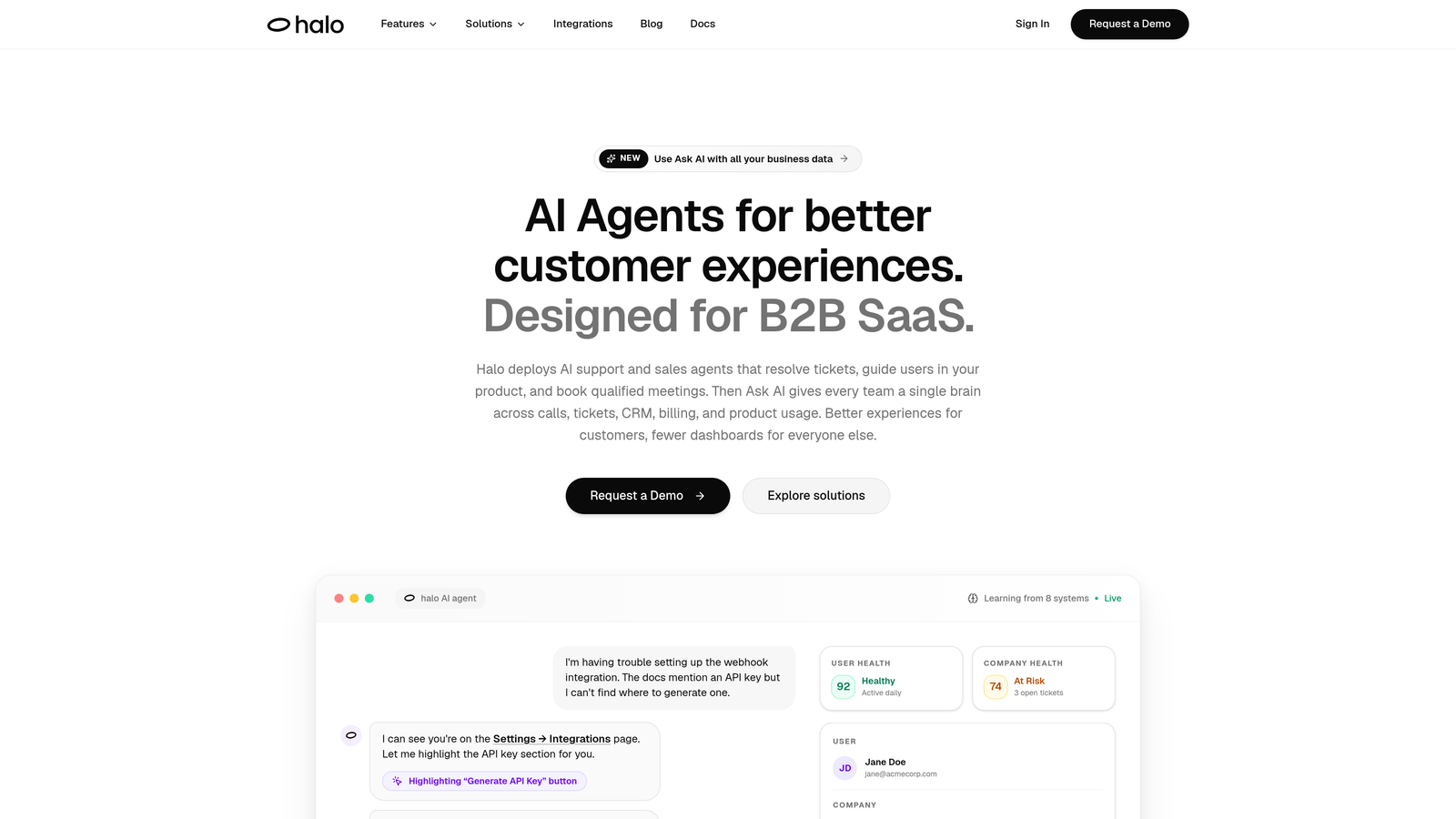
Halo AI is an AI-native customer support platform that deploys intelligent agents to resolve tickets, guide users through your product, and surface business intelligence across your entire support operation.
Where This Tool Shines
Most support tools treat AI as a layer on top of existing helpdesk infrastructure. Halo is built the other way around: AI is the foundation, not a feature. Its agents don't just suggest replies or categorize tickets. They resolve them autonomously, continuously learning from every interaction to get smarter over time.
The page-aware chat widget is a genuine differentiator. Halo can see what your user sees, providing visual UI guidance that's contextually relevant to the exact page they're on. That means fewer "how do I find X" tickets ever reaching your team in the first place.
Key Features
Autonomous Ticket Resolution: AI agents resolve tickets end-to-end without human involvement, going well beyond routing or deflection.
Page-Aware Chat Widget: Understands the user's current context within your product and delivers visual UI guidance relevant to that specific screen.
Smart Inbox with Business Intelligence: Surfaces customer health signals, revenue intelligence, and anomaly detection, turning your support inbox into a source of product and business insight.
Auto Bug Ticket Creation: Automatically generates bug reports and routes them directly to Linear or your issue tracker, closing the loop between support and engineering without manual effort.
Live Agent Handoff: Escalates complex issues to human agents with full conversation context preserved, so nothing gets lost in the handoff.
Deep Integrations: Connects with Slack, HubSpot, Intercom, Stripe, Zoom, PandaDoc, Fathom, and Linear, so Halo works within your existing business stack rather than alongside it.
Best For
SaaS product teams and B2B companies looking to replace a legacy helpdesk with an AI-first platform, or those who want support automation that goes beyond ticket management to deliver actual business intelligence. Particularly strong for teams already using tools like Linear, HubSpot, or Slack where deep integration adds compounding value.
Pricing
Contact for pricing. Visit haloagents.ai for current details and to explore a demo.
2. Intercom
Best for: SaaS teams wanting mature in-app messaging, onboarding flows, and AI-powered support in one platform.
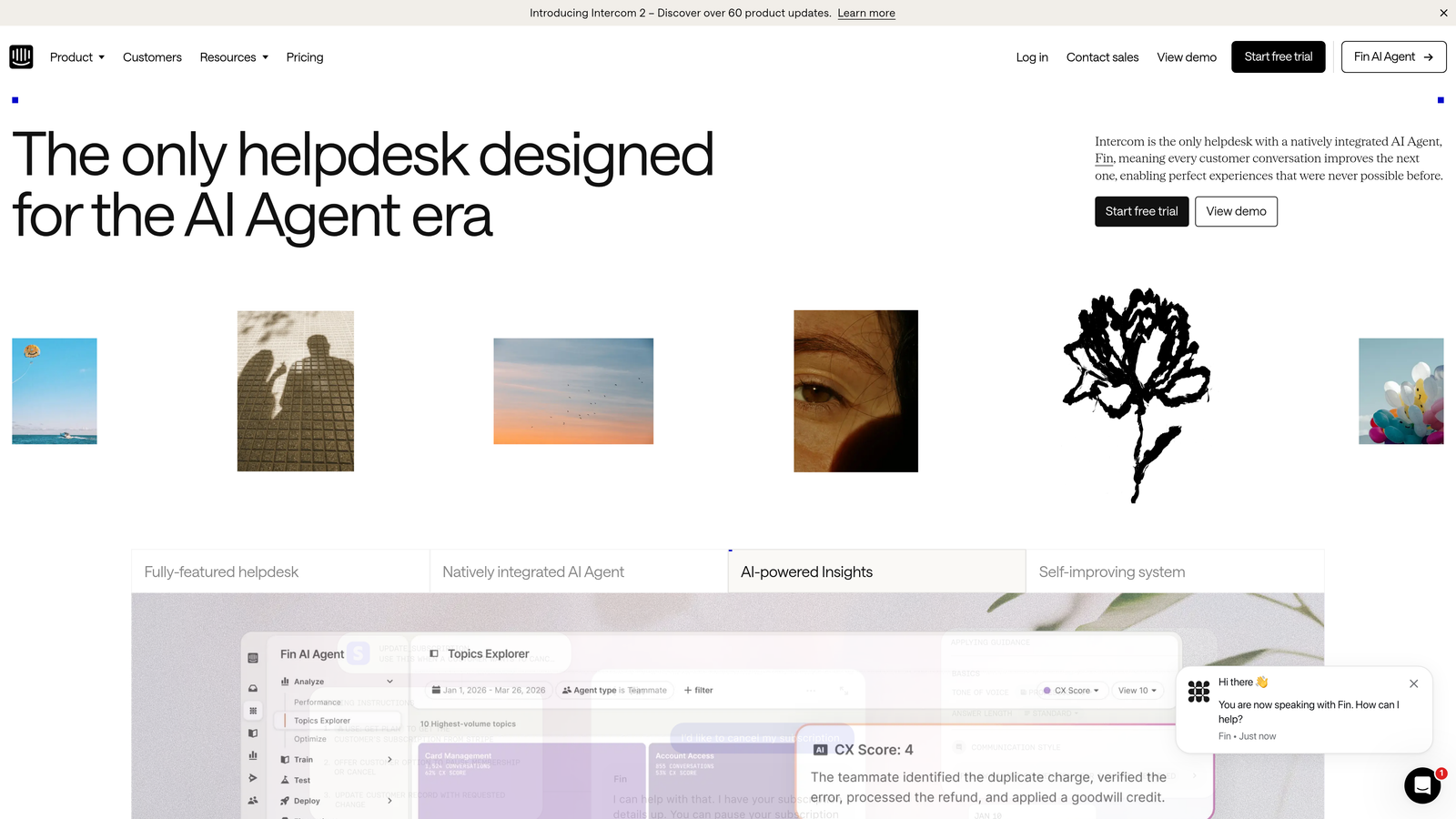
Intercom is a customer communications platform with a well-developed AI agent called Fin, designed for in-app messaging, self-service, and support automation across the customer lifecycle.
Where This Tool Shines
Intercom's strength is the breadth of what it covers. From onboarding product tours to proactive messaging to AI-powered ticket resolution, it's built to support the entire customer journey within a single platform. Fin, its AI agent, draws on your existing help content to resolve queries autonomously and has matured significantly since its initial launch.
For SaaS teams that want support and customer engagement tightly unified, Intercom reduces the need for multiple point solutions. The tradeoff is that pricing can scale steeply, particularly as Fin resolution volume grows.
Key Features
Fin AI Agent: Autonomously resolves support queries by drawing on your help center content, with fallback to human agents when needed.
In-App Messenger: Supports product tours, onboarding checklists, and proactive messages alongside reactive support conversations.
Omnichannel Inbox: Covers chat, email, and social channels in a unified workspace for support agents.
Reporting and CSAT: Built-in measurement tools for tracking resolution rates, satisfaction scores, and team performance.
App Marketplace: Extensive integrations with SaaS tools across CRM, product analytics, and engineering workflows.
Best For
Mid-market to enterprise SaaS teams that want a unified platform for support, onboarding, and customer engagement without stitching together multiple tools. Also strong for teams where proactive messaging and product tours are as important as reactive support.
Pricing
Essential plan starts at $39/seat/month; Fin AI usage is billed separately per resolution. Costs can increase significantly at scale, so model your expected resolution volume before committing.
3. Zendesk
Best for: Enterprise SaaS teams needing omnichannel support, advanced SLA management, and a large integration ecosystem.
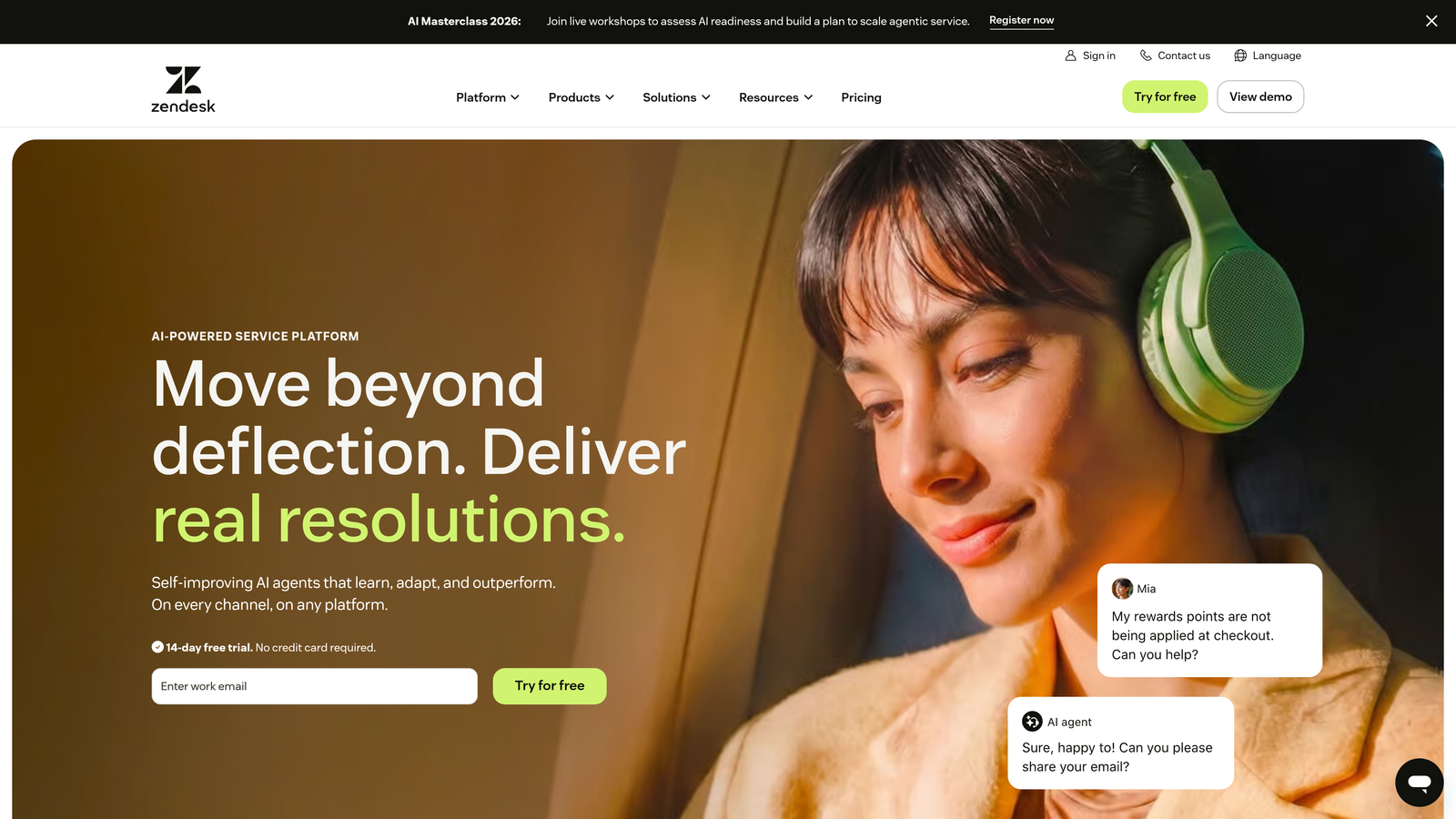
Zendesk is an enterprise-grade omnichannel helpdesk platform with AI-powered triage, routing, and generative AI features layered across ticketing, messaging, and self-service.
Where This Tool Shines
Zendesk's depth is hard to match for enterprise-scale operations. Its AI features handle triage and routing at volume, while generative AI tools assist agents with summarization, suggested replies, and ticket drafting. The integration marketplace, spanning over a thousand apps, means it connects to virtually any tool in your stack.
The honest caveat: Zendesk is complex to set up and administer, and its AI capabilities are additive rather than foundational. For smaller SaaS teams, the overhead can outweigh the benefits. It's at its best when you have dedicated support operations staff to configure and maintain it.
Key Features
AI Triage and Routing: Automatically detects intent, sentiment, and priority to route tickets to the right agent or queue without manual rules.
Generative AI for Agents: Provides ticket summarization, suggested replies, and tone adjustment to speed up agent response times.
Omnichannel Coverage: Handles email, chat, voice, social, and API-based interactions in a single platform.
Integration Marketplace: Over 1,000 app integrations covering CRM, analytics, DevOps, and more.
Advanced Analytics and SLA Management: Enterprise-grade reporting with customizable dashboards and SLA tracking built in.
Best For
Enterprise SaaS companies with high ticket volumes, complex routing needs, and dedicated support operations teams. Less ideal for early-stage or lean teams where setup complexity becomes a bottleneck.
Pricing
Suite plans start at $55/agent/month; AI add-ons are priced separately. Enterprise tiers add significant cost. Check Zendesk's pricing page for current structure.
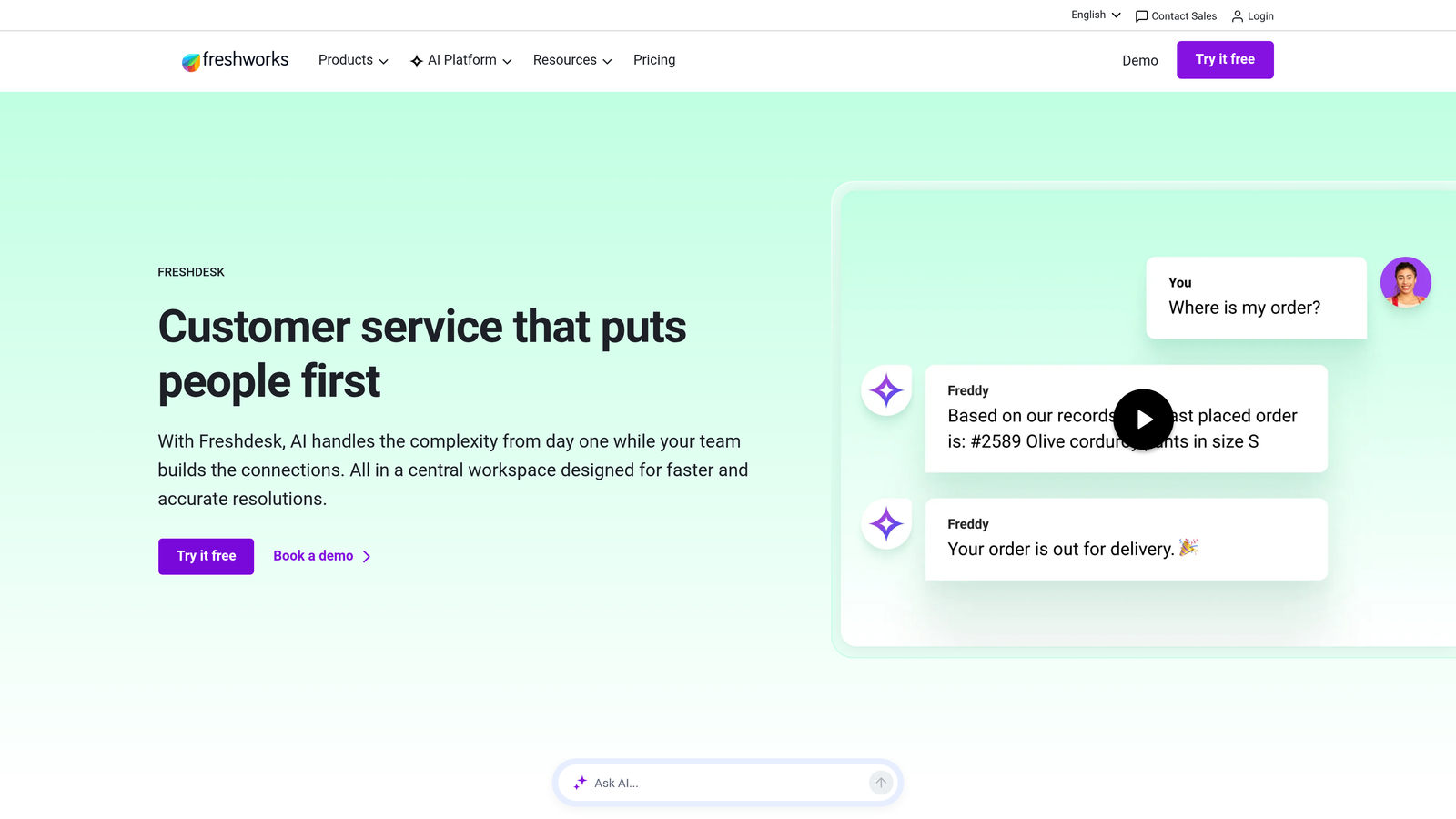
4. Freshdesk
Best for: Growing SaaS teams that want solid AI-assisted helpdesk functionality at accessible per-seat pricing.
Freshdesk is a mid-market helpdesk platform from Freshworks with Freddy AI built in for ticket automation, agent assistance, and self-service deflection.
Where This Tool Shines
Freshdesk hits a practical sweet spot for SaaS teams that have outgrown basic shared inboxes but aren't ready for the complexity and cost of Zendesk. Freddy AI covers the core automation needs: auto-triage, agent assist, and self-service suggestions, without requiring significant configuration work to get running.
The native Freshsales CRM integration is genuinely useful. Having customer context surface directly in the ticket view reduces the back-and-forth agents typically do to understand who they're dealing with and what their history looks like.
Key Features
Freddy AI Copilot: Provides agents with ticket summarization, suggested replies, and tone adjustment to accelerate response quality and speed.
Freddy Self Service: AI-powered deflection through chat and email that draws on your knowledge base to answer common questions before they reach an agent.
Auto-Triage: Automatically categorizes and prioritizes incoming tickets without manual rule-building.
Collision Detection: Prevents two agents from working on the same ticket simultaneously, reducing duplicate effort and confused customers.
Freshsales CRM Integration: Surfaces customer data and deal context directly within the helpdesk for richer agent interactions.
Best For
Growing SaaS companies in the 10-200 person range that want capable AI-assisted helpdesk features without enterprise-level pricing or setup complexity. Also a natural fit for teams already using other Freshworks products.
Pricing
Free tier available for small teams; paid plans start from $15/agent/month. Freddy AI features are available as an add-on. One of the more accessible pricing structures in this category.
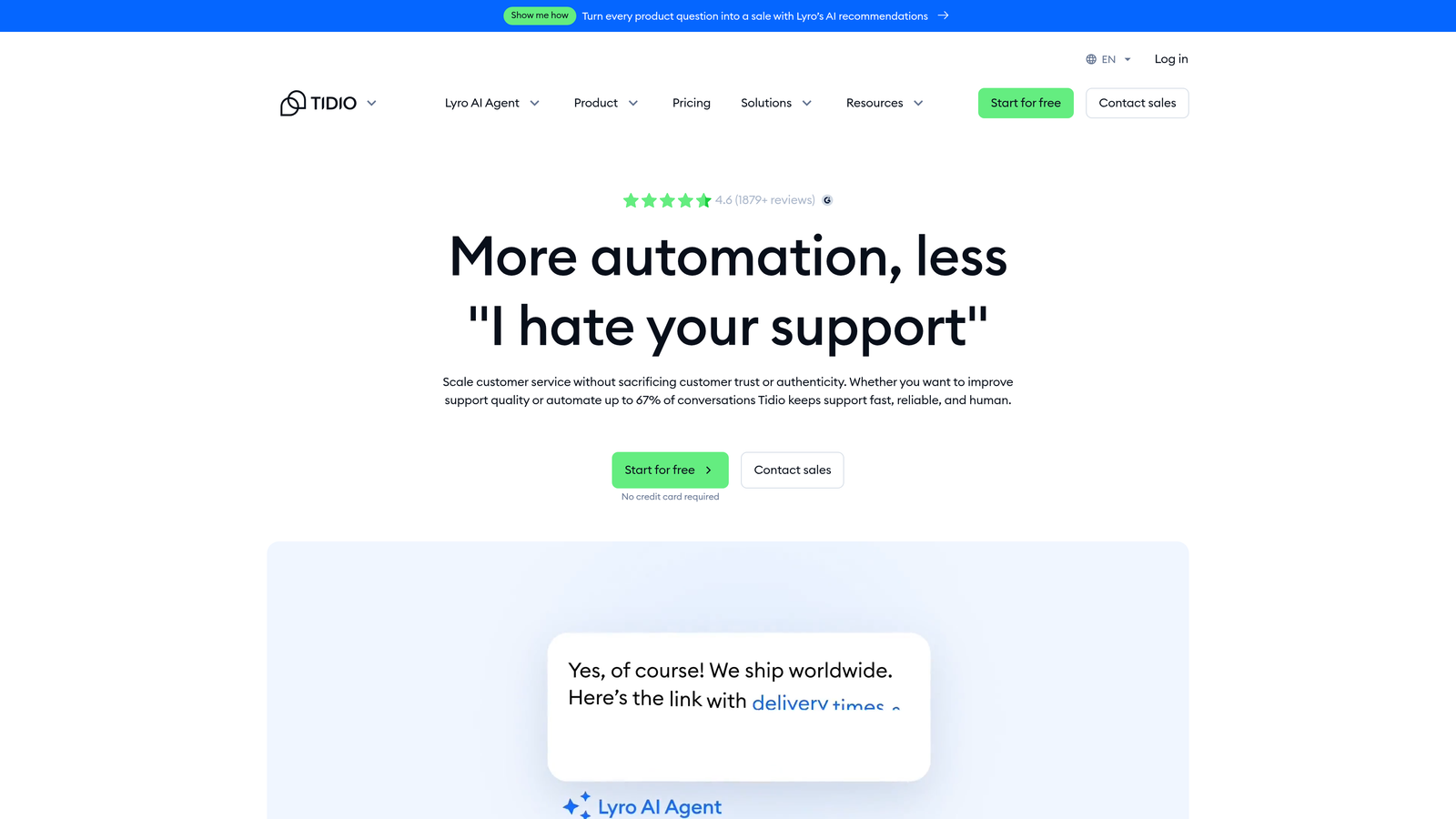
5. Tidio
Best for: Early-stage SaaS or SMB teams that want fast deployment and an accessible entry point into AI-powered support.
Tidio is a live chat and AI chatbot platform with Lyro AI handling common support queries autonomously, designed for quick setup and immediate time-to-value.
Where This Tool Shines
Tidio's core advantage is speed. You can go from sign-up to a functioning AI chatbot handling real queries in a matter of hours, not weeks. Lyro AI trains on your existing help content and handles common questions without requiring complex configuration or dedicated implementation resources.
For teams at the earliest stages of support automation, Tidio removes the friction that often delays getting started. The visual chatbot flow builder also makes it easy to customize conversation paths without writing code, which matters when your team doesn't have dedicated technical resources for tooling.
Key Features
Lyro AI Chatbot: Trains on your help content and handles common support queries autonomously with minimal setup time.
Live Chat Fallback: Seamlessly routes conversations to human agents when Lyro reaches the limits of what it can resolve.
Visual Flow Builder: Drag-and-drop chatbot builder for creating custom conversation paths without code.
Multi-Channel Support: Integrates with email and Facebook Messenger alongside website chat, covering the channels most SMB and early SaaS teams need.
Free Tier: A genuinely usable free plan for teams just starting their automation journey.
Best For
Early-stage SaaS companies, SMBs, or teams testing support automation for the first time. Less suited for high-volume enterprise environments where deeper integrations and advanced analytics become necessary.
Pricing
Free plan available; Lyro AI starts from $29/month. Paid plans scale with conversation volume. A low-risk entry point for teams with limited budget.
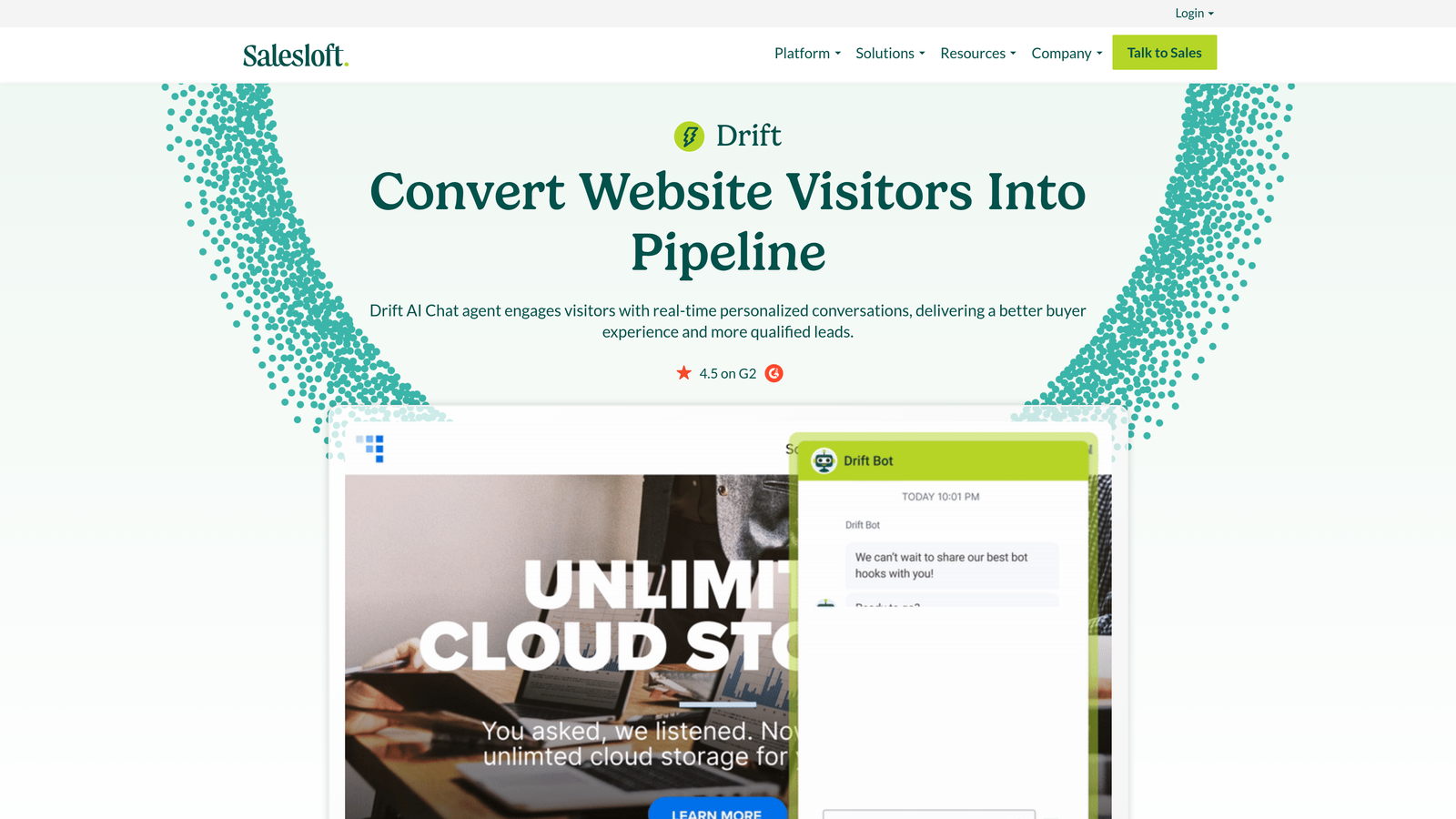
6. Drift (Salesloft)
Best for: B2B SaaS teams where support and sales pipeline qualification overlap and handoffs between teams need to be seamless.
Drift, now part of Salesloft, is a conversational AI platform that blends support automation with sales pipeline qualification, making it a strong fit for revenue-focused SaaS organizations.
Where This Tool Shines
Drift sits at an interesting intersection: it's not a pure-play support tool, but for B2B SaaS teams running product-led growth or sales-assisted motions, that's actually a strength. Its AI can simultaneously qualify a visitor, answer a support question, and route the conversation to the right team, all within a single chat interaction.
The Salesloft integration makes it particularly compelling for organizations where the line between support and sales is intentionally blurry. Conversations that start as support queries can surface revenue opportunities without requiring a manual handoff process.
Key Features
AI-Powered Chatbots: Qualify, route, and support website visitors simultaneously based on their intent and behavior.
Revenue-Focused Conversation Intelligence: Ties conversation data to CRM records for pipeline visibility and revenue attribution.
Meeting Scheduling: Allows prospects and customers to book meetings directly within chat flows, removing friction from the sales process.
Playbooks: Automated conversation segmentation that distinguishes support queries from sales opportunities and routes them accordingly.
Salesloft Integration: Native handoff to sales team workflows within the Salesloft platform for unified revenue operations.
Best For
B2B SaaS companies with active sales motions where support, marketing, and sales conversations frequently overlap. Less ideal for teams that need pure-play support automation with deep helpdesk functionality.
Pricing
Premium and Enterprise tiers available. Contact Drift or Salesloft directly for current pricing, as it varies based on usage and team size.
7. Zoho Desk
Best for: SaaS teams already in the Zoho ecosystem that want CRM-connected support with built-in AI and competitive pricing.
Zoho Desk is a context-aware helpdesk platform with Zia AI built in, offering sentiment analysis, auto-tagging, and native CRM integration for customer-aware support.
Where This Tool Shines
Zoho Desk's biggest differentiator is the depth of CRM context it surfaces within every ticket. When your support agent opens an interaction, they see the customer's full history, deal stage, and health signals from Zoho CRM without switching tools or hunting for context. For teams where customer tier and account value should influence how support is prioritized, this matters.
Zia, Zoho's AI layer, handles sentiment detection and anomaly alerting in ways that go slightly beyond basic auto-triage. Flagging unusual ticket patterns or detecting frustration in a conversation before an agent responds adds a layer of proactive intelligence that many helpdesks lack.
Key Features
Zia AI: Provides sentiment detection, automatic ticket tagging, reply suggestions, and anomaly alerts across your support queue.
Native Zoho CRM Integration: Surfaces complete customer context, including deal history and account data, directly within the ticket view.
Blueprint Workflow Automation: Standardizes support processes with structured workflows that guide agents through consistent resolution steps.
Guided Conversations: A bot builder for creating self-service deflection flows that handle common queries before they reach an agent.
Competitive Pricing: Substantially lower per-seat cost than Zendesk or Intercom for comparable helpdesk functionality.
Best For
SaaS teams already using Zoho CRM or other Zoho products, and those looking for solid helpdesk functionality with AI features at a price point that doesn't require enterprise budget approval.
Pricing
Plans range from $7/agent/month (Standard) to $40/agent/month (Enterprise). One of the most accessible pricing structures in this comparison.
8. Help Scout
Best for: SaaS brands where relationship quality and personalized communication are a deliberate competitive differentiator.
Help Scout is a human-centric support platform that uses AI to assist agents rather than replace them, prioritizing communication quality and team collaboration.
Where This Tool Shines
Help Scout takes a deliberately different philosophical stance from AI-first platforms. Rather than maximizing autonomous resolution, it focuses on making human agents faster and better. AI Summarize and AI Drafts reduce the cognitive load on agents without removing the human judgment that some support interactions genuinely require.
For SaaS companies where support is a relationship-building function rather than a cost center to minimize, Help Scout's approach resonates. The Beacon help widget elegantly combines proactive messaging, knowledge base search, and live chat in a single embeddable component that doesn't feel like a generic chatbot.
Key Features
AI Summarize: Instantly condenses long conversation threads so agents can get up to speed without reading every message from the beginning.
AI Drafts: Suggests reply drafts that agents can review, edit, and send, maintaining human voice while reducing writing time.
Beacon Help Widget: Combines knowledge base search, proactive messages, and chat into a single embeddable widget with a polished user experience.
Shared Inbox with Collision Detection: Prevents duplicate agent responses with real-time visibility into who is working on which conversation.
Docs Knowledge Base: Built-in knowledge base that integrates directly with Beacon for seamless self-service deflection.
Best For
SaaS companies in segments where customer relationships drive retention and referrals, such as professional services, high-touch B2B, or consumer SaaS with strong community dynamics. Teams that want AI assistance without fully autonomous resolution.
Pricing
Plans start at $22/user/month (Standard). AI features are included in paid plans rather than priced as separate add-ons, which simplifies cost modeling.
9. Kustomer
Best for: High-volume SaaS or tech-enabled service teams with complex customer data needs and omnichannel support requirements.
Kustomer is a CRM-native customer service platform that unifies the full customer timeline with AI-powered automation, built around the customer as the primary object rather than the ticket.
Where This Tool Shines
Most helpdesks are fundamentally ticket-centric. Kustomer inverts that model: the customer record is the primary object, and every interaction, across every channel, is organized around it. For SaaS teams dealing with customers who interact across email, chat, voice, and SMS over long customer lifecycles, this makes a meaningful difference in agent context and resolution quality.
The AI-powered workflow automation handles routing, tagging, and resolution suggestions at scale, while the unified timeline eliminates the context-switching that slows agents down when a customer's history spans multiple channels and interactions.
Key Features
Unified Customer Timeline: Aggregates all interactions across every channel into a single chronological view organized around the customer, not the ticket.
AI-Powered Workflow Automation: Handles routing, tagging, and resolution suggestions automatically based on customer data and interaction history.
Omnichannel Support: Email, chat, voice, SMS, and social channels all managed within a single unified workspace.
CRM-Native Data Model: Customer attributes, purchase history, and behavioral data are first-class objects that drive automation and agent context.
Proactive Outreach: Bulk messaging and proactive communication capabilities for reaching customer segments before issues escalate.
Best For
High-volume SaaS companies and tech-enabled service businesses with complex customer data, long customer lifecycles, and omnichannel support needs. Less suited for early-stage teams where the implementation investment may outweigh the benefits.
Pricing
Enterprise pricing. Contact Kustomer directly for current rates, as pricing is customized based on volume and feature requirements.
Which Tool Is Right for Your SaaS Team?
The right choice depends on one fundamental question: do you want to automate on top of an existing helpdesk, or replace it entirely with an AI-native platform? That single decision narrows the field considerably.
If autonomous resolution is your primary goal, and you want AI that learns continuously rather than just routing tickets more efficiently, Halo AI is the clearest choice. Its page-aware context, smart inbox business intelligence, and deep integrations with tools like Linear, HubSpot, and Slack make it genuinely differentiated from helpdesk-plus-AI approaches.
For teams with different priorities, here's a quick orientation by use case:
Enterprise helpdesk at scale: Zendesk remains the most mature option for complex, high-volume operations with dedicated support ops teams.
Mid-market value: Freshdesk delivers capable AI-assisted helpdesk functionality at a price point that growing SaaS teams can justify without enterprise budget.
Fast deployment for early-stage teams: Tidio gets you from zero to functioning AI support in hours, not weeks.
Sales and support blended: Drift is the natural fit for B2B SaaS where pipeline qualification and support conversations overlap.
CRM-native context: Kustomer and Zoho Desk both shine when customer data depth drives support quality, with Zoho offering better pricing for teams in its ecosystem.
Human-feel with AI assistance: Help Scout is the right call when relationship quality is a deliberate differentiator and you want AI to assist agents, not replace them.
Unified messenger and onboarding: Intercom covers the widest surface area for teams that want support, onboarding, and proactive engagement in a single platform.
Your support team shouldn't scale linearly with your customer base. Let AI agents handle routine tickets, guide users through your product, and surface business intelligence while your team focuses on complex issues that need a human touch. See Halo in action and discover how continuous learning transforms every interaction into smarter, faster support.