9 Best Automated Support Tools for Startups in 2026
Discover the 9 best automated support tools for startups in 2026, carefully selected based on startup-friendly pricing, setup ease, and scalability. This guide helps small support teams handle high ticket volumes efficiently without expanding headcount, covering AI agents, helpdesk platforms, live chat, knowledge bases, and analytics solutions suited for startups managing anywhere from 50 to 5,000 weekly tickets.
 Matt PattoliFounder13 min read
When you're a startup, your support team is usually one or two people wearing five hats. Tickets pile up, response times slip, and customers notice. Automated support tools change that equation, letting small teams punch well above their weight without burning out or bloating headcount.
But not all automation is created equal. Some tools bolt AI onto a legacy helpdesk. Others are built AI-first from the ground up. Some are priced for enterprises with no startup-friendly tier in sight. This list cuts through the noise.
We've selected nine tools that genuinely serve startups, covering AI agents, helpdesk platforms, live chat, knowledge bases, and intelligent analytics. Whether you're handling 50 tickets a week or 5,000, there's a fit here. Selection criteria: startup-friendly pricing, ease of setup, automation depth, integration flexibility, and the ability to scale as you grow.
1. Halo AI
Best for: B2B SaaS startups that want AI-first support with business intelligence built in
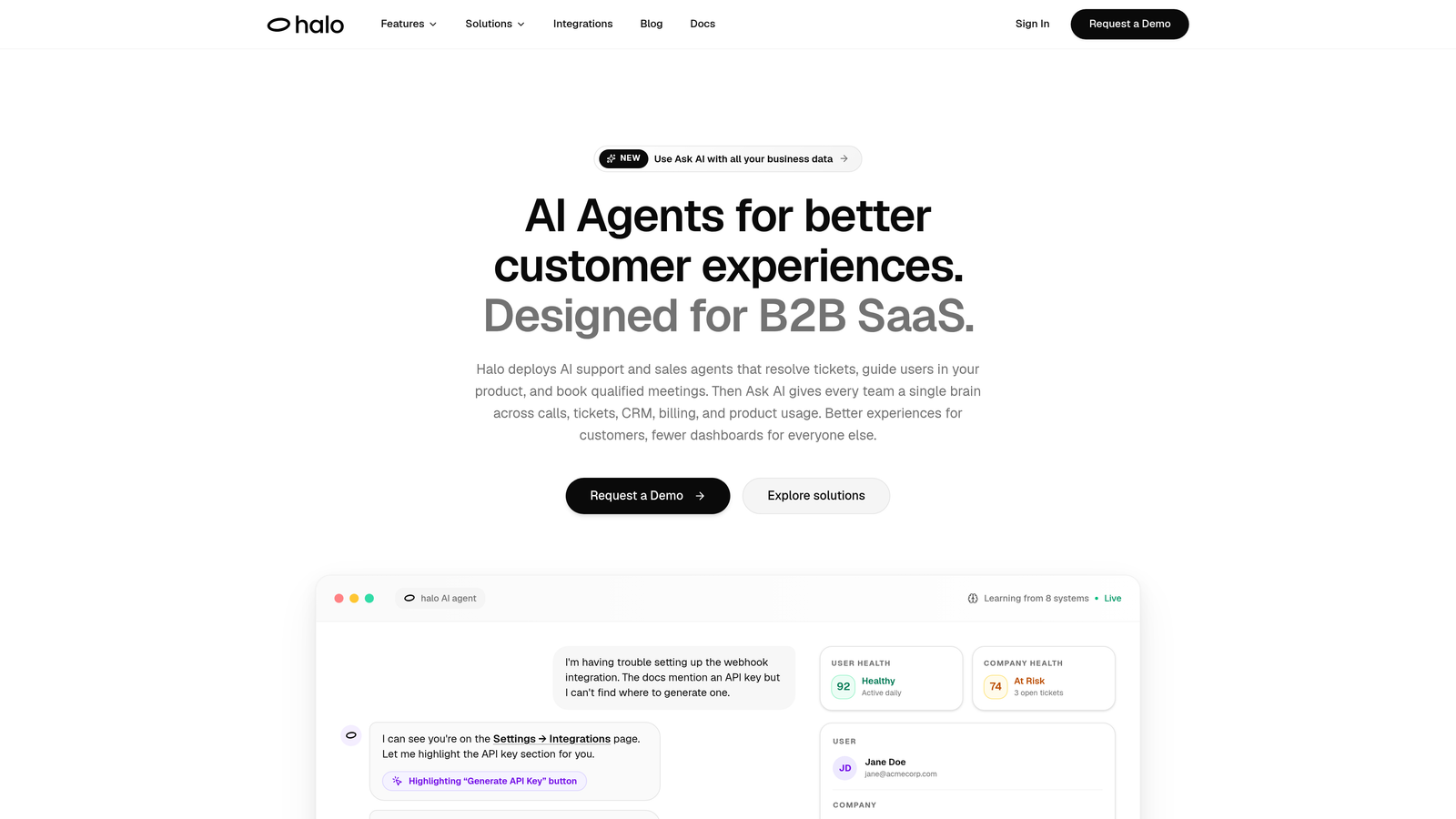
Halo AI is an AI-first customer support platform that deploys intelligent agents to resolve tickets, guide users, and surface product insights.
Where This Tool Shines
Most support tools add AI as an afterthought, layering a chatbot on top of a traditional helpdesk. Halo is architected differently. The intelligence is the foundation, not a feature. Every interaction feeds back into the system, making the agents smarter over time rather than staying static.
What genuinely sets Halo apart is the page-aware context engine. The chat widget sees exactly what the user sees, allowing it to provide visual UI guidance specific to where someone is in your product. That's a meaningful leap beyond generic FAQ deflection, and it's the kind of capability that reduces "how do I do X?" tickets at the root.
Key Features
Intelligent AI Agents: Resolve support tickets autonomously and continuously improve from every resolved interaction.
Page-Aware Chat Widget: Understands the user's current context in your product and delivers visual, step-by-step UI guidance in real time.
Smart Inbox with Business Intelligence: Surfaces customer health signals, revenue anomaly detection, and product usage patterns beyond standard support metrics.
Auto Bug Ticket Creation: Automatically generates and routes bug reports directly to Linear or connected project management tools, closing the loop between support and engineering.
Live Agent Handoff: Escalates seamlessly to a human for complex issues, with full conversation context preserved.
Deep Integrations: Connects with Linear, Slack, HubSpot, Intercom, Stripe, Zoom, PandaDoc, and Fathom out of the box.
Best For
B2B SaaS teams that want support automation to do more than deflect tickets. If you want your support layer to generate product intelligence, flag churn signals, and connect to your engineering and revenue stack, Halo is built for exactly that use case.
Pricing
Contact for pricing. Visit haloagents.ai for current plans and to book a demo.
2. Intercom
Best for: PLG startups that need live chat, onboarding automation, and AI resolution in one platform
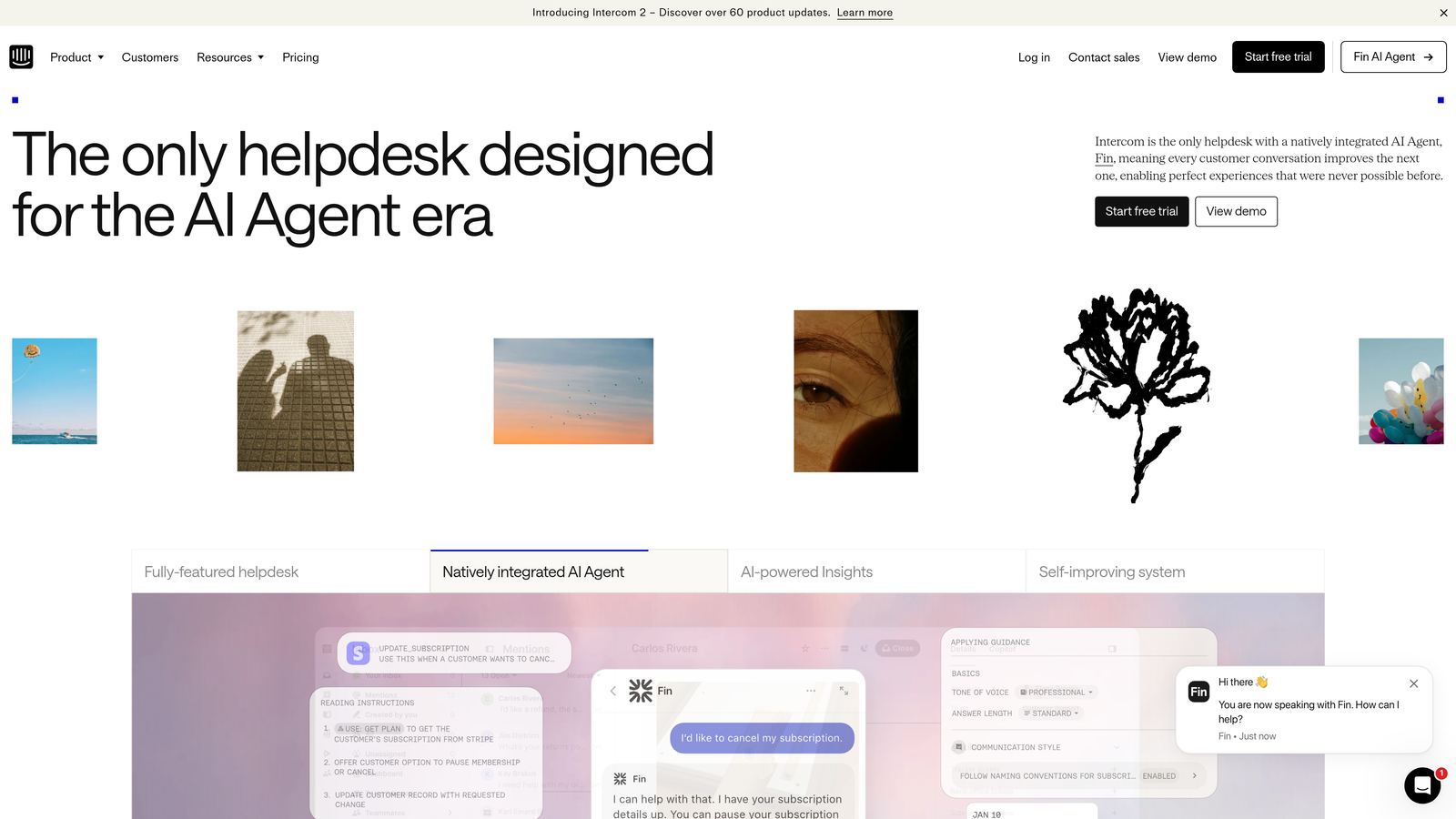
Intercom is a customer communications platform combining live chat, helpdesk, and the Fin AI agent in a single suite.
Where This Tool Shines
Intercom's Fin AI agent is one of the most capable autonomous resolution tools in the market. Built on large language models, it handles multi-step queries with a conversational fluency that feels genuinely helpful rather than robotic. For PLG startups with high inbound chat volume, the deflection potential is significant.
Beyond support, Intercom's product tours and in-app messaging tooling make it a strong choice for teams running activation and onboarding workflows alongside support. You get a lot of surface area from a single platform, though pricing can escalate quickly as seat count and usage grow.
Key Features
Fin AI Agent: LLM-powered autonomous agent capable of resolving complex inbound queries without human involvement.
Product Tours and In-App Messaging: Drive onboarding and feature adoption with targeted in-product messages.
Shared Inbox: Conversation routing, assignment rules, and team collaboration built into a single inbox.
Extensive Integrations: Well-documented API and a broad app marketplace for connecting your existing stack.
Reporting and CSAT: Built-in analytics and customer satisfaction tracking across all channels.
Best For
Product-led growth startups with significant chat volume and a need for onboarding automation alongside support. Teams that want a single platform for both customer success and support workflows will find Intercom's breadth valuable.
Pricing
Starts at approximately $39/month; pricing scales with seat count and usage. Verify current plans at intercom.com.
3. Freshdesk
Best for: Early-stage startups moving off shared Gmail inboxes who need structured helpdesk with AI assistance
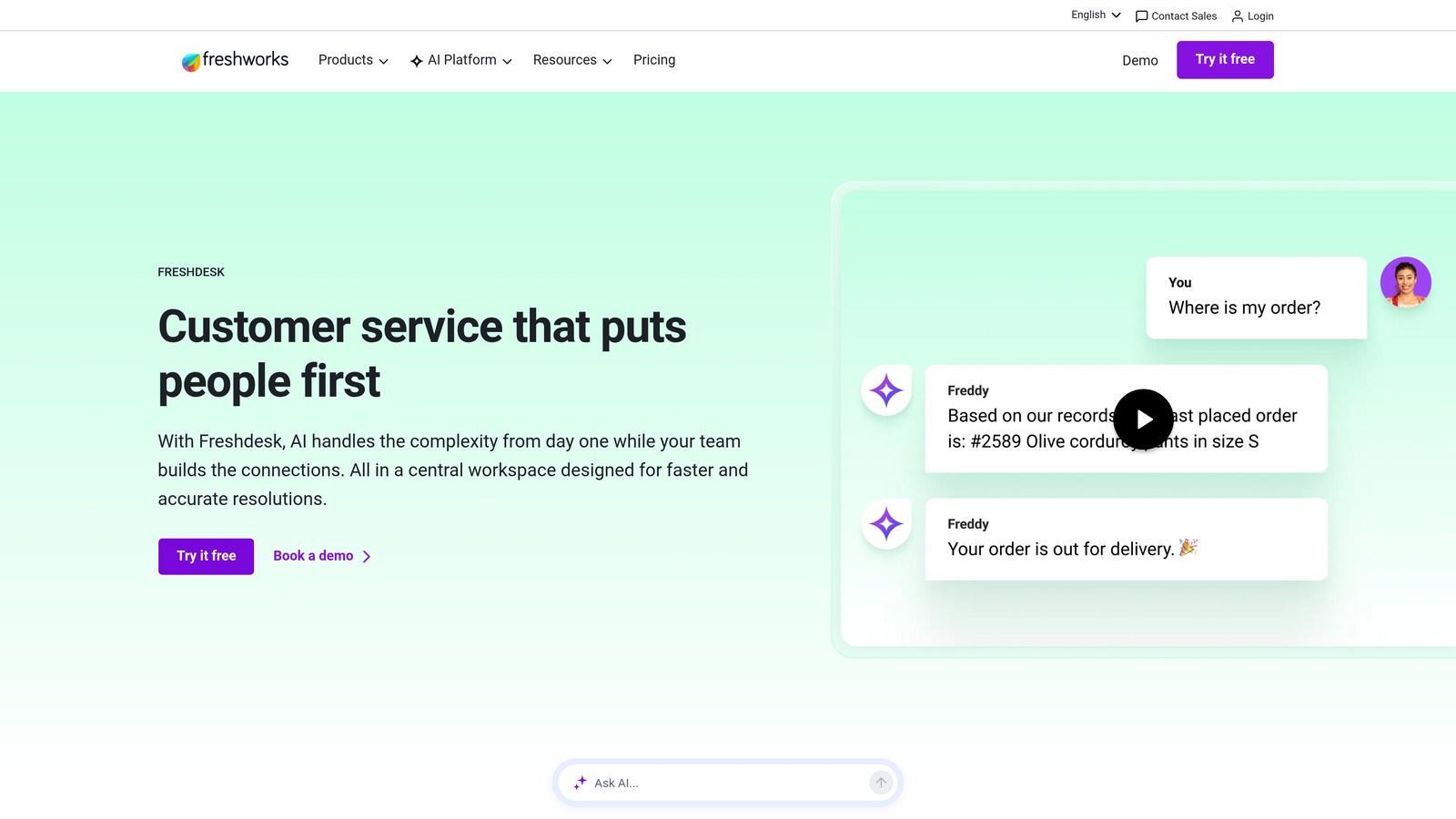
Freshdesk is a cloud-based helpdesk platform from Freshworks with Freddy AI built in for ticket triage, agent assistance, and automated responses.
Where This Tool Shines
Freshdesk's free tier is genuinely useful, not a stripped-down teaser. For startups making their first move from a shared inbox to a real helpdesk, it provides email ticketing, basic automation, and multi-agent access without a credit card. That accessibility makes it a natural first helpdesk for many founding teams.
Freddy AI handles the practical automation work: categorizing tickets, assigning priority, and suggesting replies based on historical patterns. It won't match the autonomous resolution depth of more AI-native platforms, but it meaningfully reduces the manual triage burden on small teams.
Key Features
Freddy AI: Handles ticket categorization, priority assignment, and suggested replies to accelerate agent workflows.
Free Tier: Core helpdesk features including email ticketing and ticket management at no cost.
Multi-Channel Support: Consolidates email, chat, phone, and social into a single platform.
Automation Rules: Configure routing, escalation, and SLA management without engineering involvement.
Marketplace Integrations: Over 1,000 integrations covering CRM, project management, and communication tools.
Best For
Budget-conscious early-stage startups that need a structured helpdesk without upfront cost. Also a solid fit for teams handling multi-channel support across email, chat, and social from a single platform.
Pricing
Free tier available; paid plans start at approximately $15/agent/month. Verify current plans at freshdesk.com.
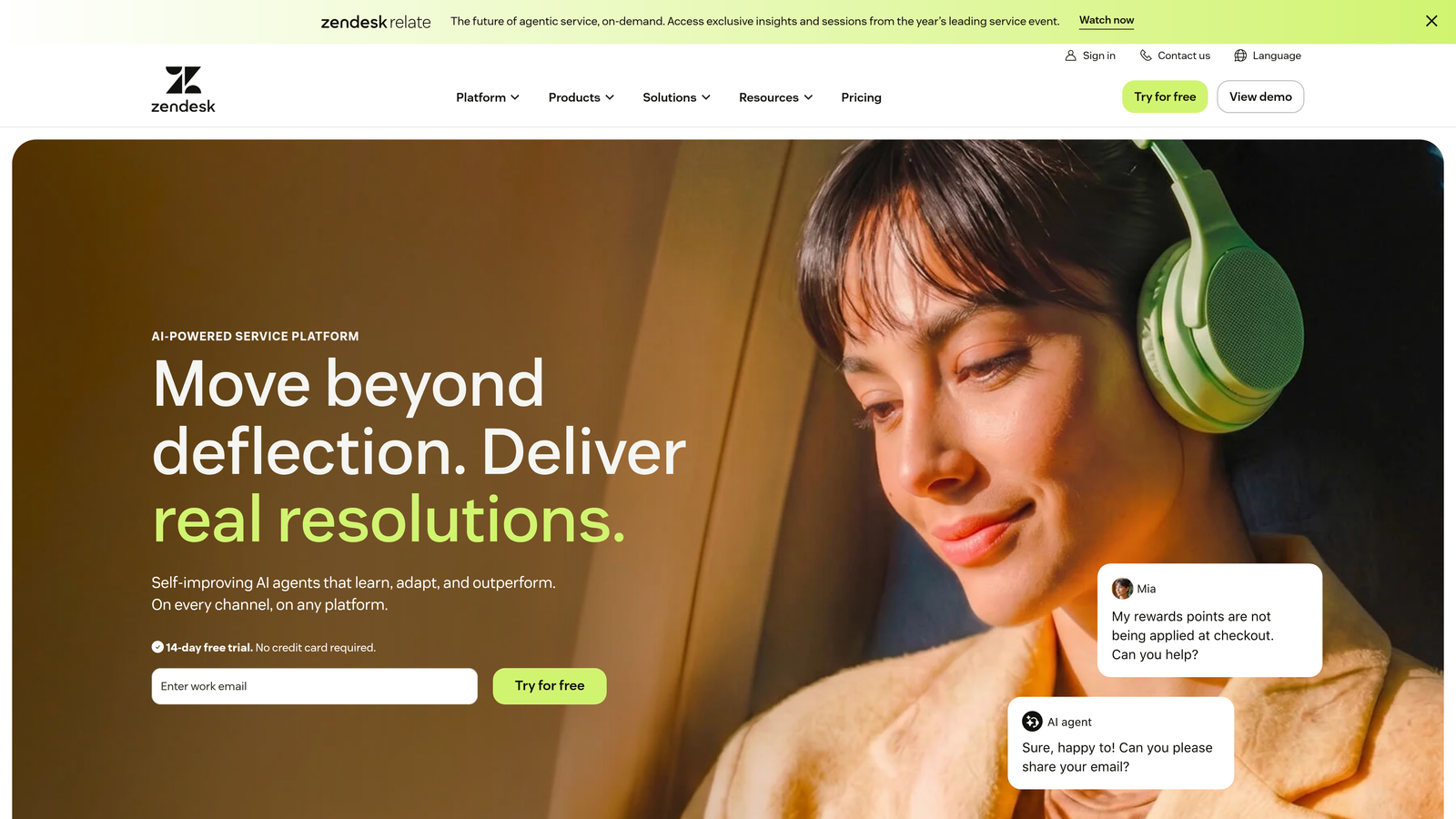
4. Zendesk
Best for: Startups that need enterprise-grade compliance, the largest app ecosystem, and a platform they won't outgrow
Zendesk is the industry-standard helpdesk platform for scaling support operations, with AI-powered triage, bot building, and an expansive app ecosystem.
Where This Tool Shines
Zendesk's app marketplace is the largest in the support category, with over 1,500 integrations. If your stack is unusual or you have niche integration requirements, Zendesk almost certainly has a connector for it. That breadth makes it a safe long-term bet for startups planning to scale into complex operations.
The AI features, including intelligent triage, auto-tagging, and the Answer Bot, are solid for deflecting common queries before they reach agents. Worth noting: the most capable AI features live on higher pricing tiers, so early-stage teams on entry-level plans may not access the full automation depth.
Key Features
AI-Powered Triage: Automatic ticket tagging, categorization, and intelligent routing based on content and intent.
Answer Bot: Deflects common queries by surfacing relevant help center articles before a ticket is created.
App Marketplace: 1,500+ integrations covering virtually every tool in the modern SaaS stack.
Advanced Analytics: Comprehensive reporting suite for tracking volume, resolution times, and team performance.
Enterprise Compliance: HIPAA and SOC 2 certifications for startups in regulated industries.
Best For
Startups in regulated industries or those with complex compliance requirements. Also ideal for teams that want to implement enterprise-grade support infrastructure from day one and avoid a painful migration later.
Pricing
Starts at approximately $19/agent/month; advanced AI features on higher tiers. Verify current plans at zendesk.com.
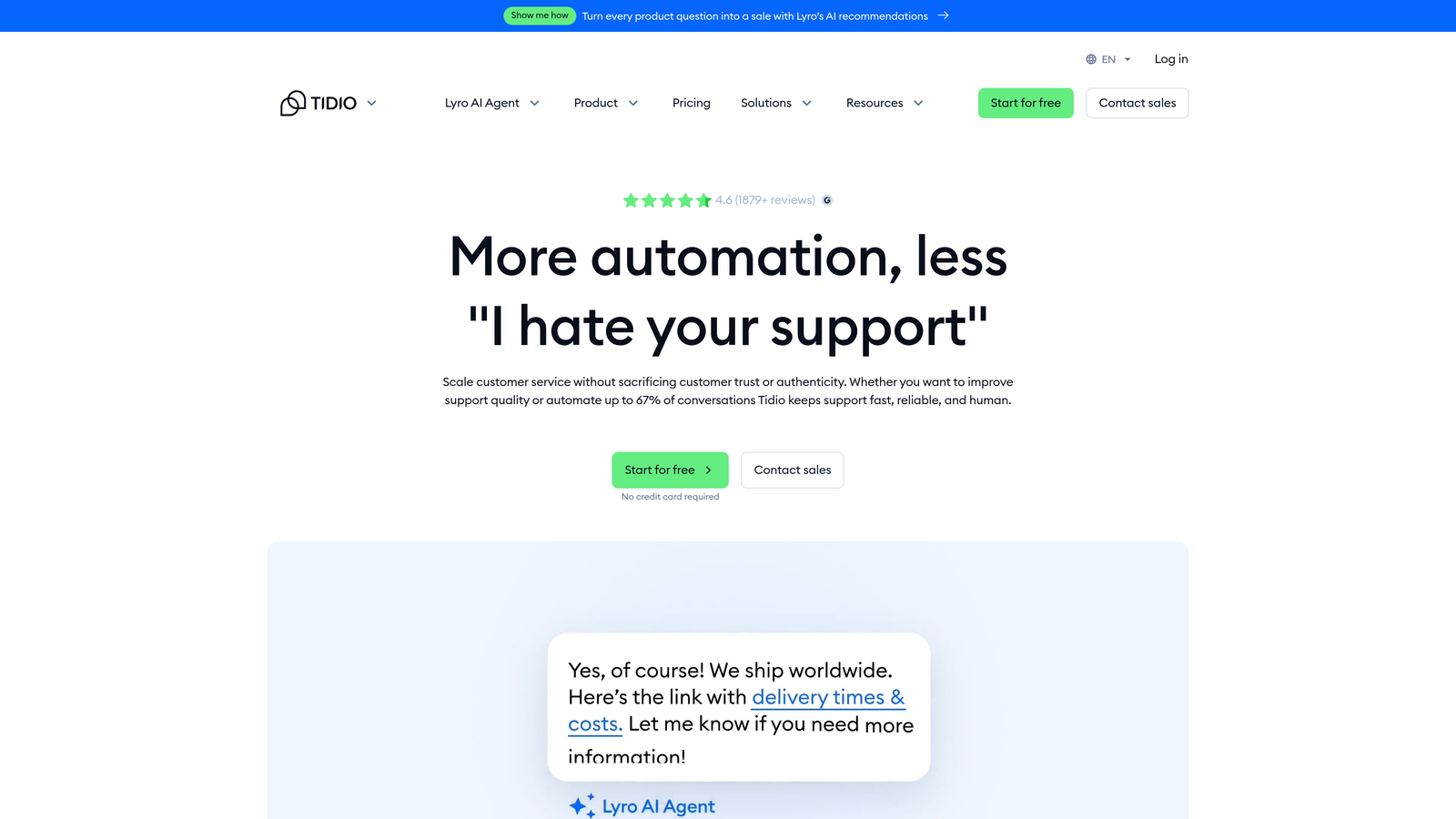
5. Tidio
Best for: SMB and e-commerce startups that want fast AI chatbot deployment with a functional free plan
Tidio is a live chat and AI chatbot platform featuring the Lyro AI agent for conversational automation and a free plan that works well for lean startup teams.
Where This Tool Shines
Tidio's setup speed is genuinely impressive. You can go from signup to a deployed chatbot handling live visitor queries in under an hour. For founders who need AI coverage fast without a lengthy implementation, that matters. The visual chatbot builder with pre-built templates removes the need for technical resources entirely.
Lyro, Tidio's conversational AI agent, handles common queries with reasonable accuracy and a natural conversational tone. It's best suited for straightforward deflection use cases rather than complex multi-step B2B support workflows, but for the right startup profile it delivers strong value relative to its price point.
Key Features
Lyro AI Chatbot: Conversational AI agent for handling common queries autonomously across live chat.
Visual Chatbot Builder: Drag-and-drop builder with pre-built templates for quick deployment without code.
Live Chat with Visitor Tracking: See who's on your site and trigger proactive messages based on behavior.
Email and Messenger Integration: Consolidate multiple channels into a single inbox.
Shopify and WordPress Integrations: Native connectors for the most common e-commerce and CMS platforms.
Best For
E-commerce startups and SMBs that need quick AI chatbot deployment without technical complexity. Less suited for B2B SaaS teams handling nuanced, multi-step product support workflows.
Pricing
Free tier available; Lyro AI starts at approximately $29/month. Verify current plans at tidio.com.
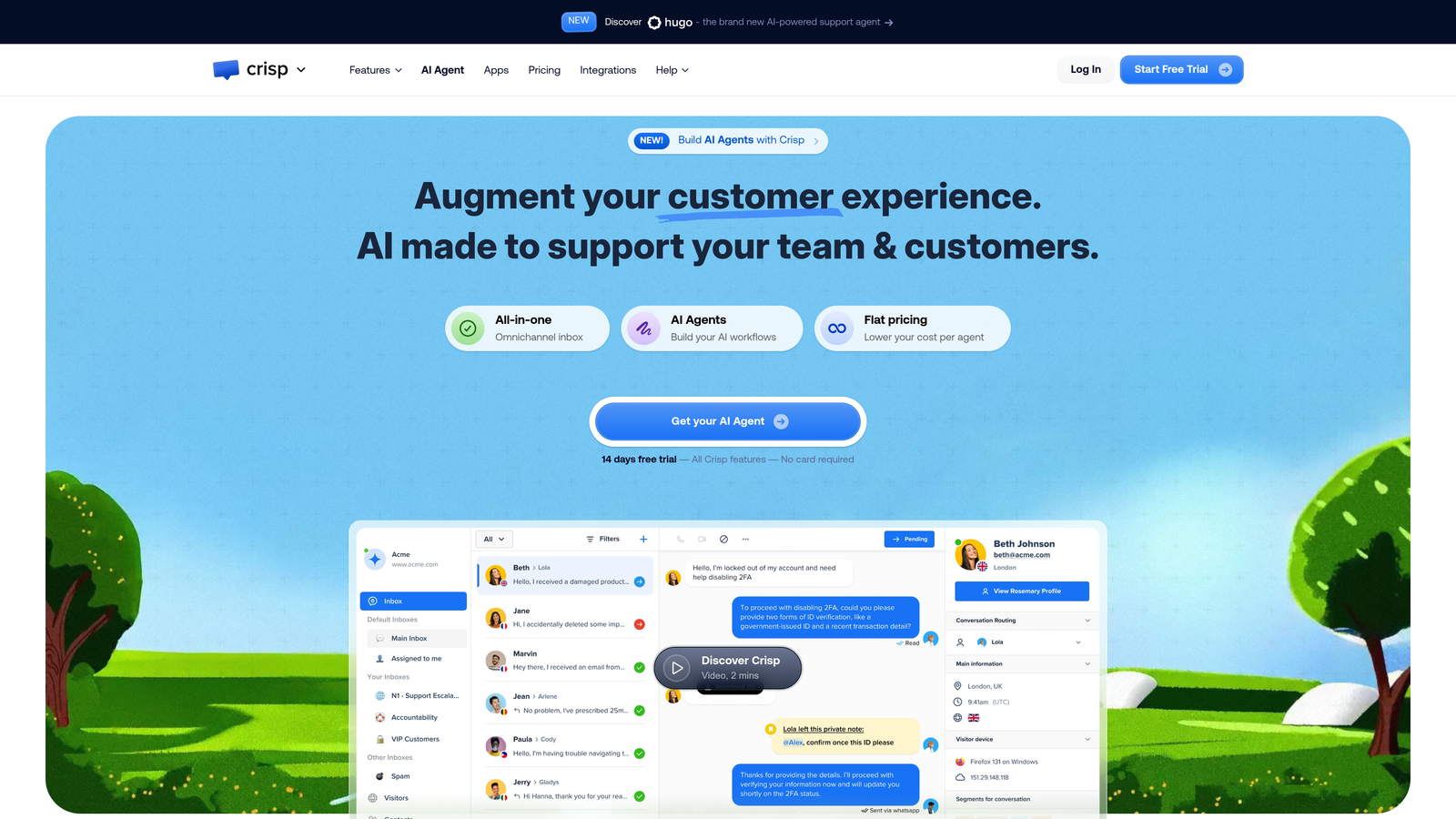
6. Crisp
Best for: Bootstrapped startups and indie founders who need multi-channel support at minimal cost
Crisp is a multi-channel shared inbox and live chat platform with a generous free tier, basic bot builder, and support for email, chat, WhatsApp, and social.
Where This Tool Shines
Crisp's free tier is one of the most generous in the category. Two agents, live chat, a shared inbox, and basic CRM features at zero cost. For bootstrapped founders or pre-revenue startups that need to look professional on the support front without spending anything, it's hard to beat.
The multi-channel breadth is also notable. Email, live chat, WhatsApp, Messenger, and Instagram all feed into a single inbox. For consumer-facing startups with audiences spread across channels, that consolidation reduces the chaos of managing separate tools for each platform.
Key Features
Multi-Channel Shared Inbox: Connects email, live chat, WhatsApp, Messenger, and Instagram in one place.
Basic Chatbot Builder: Simple FAQ automation for deflecting common questions without agent involvement.
Built-In CRM: Contact and conversation history without needing a separate CRM tool.
Co-Browsing: Visual support sessions where agents can see and interact with what the customer sees.
Free Tier for Two Agents: Full core feature access at no cost for small founding teams.
Best For
Bootstrapped startups and indie founders who need multi-channel support coverage without a budget. The AI capabilities are less sophisticated than AI-native platforms, but the value-to-cost ratio at early stages is excellent.
Pricing
Free tier available; Pro starts at approximately $25/month per workspace. Verify current plans at crisp.chat.
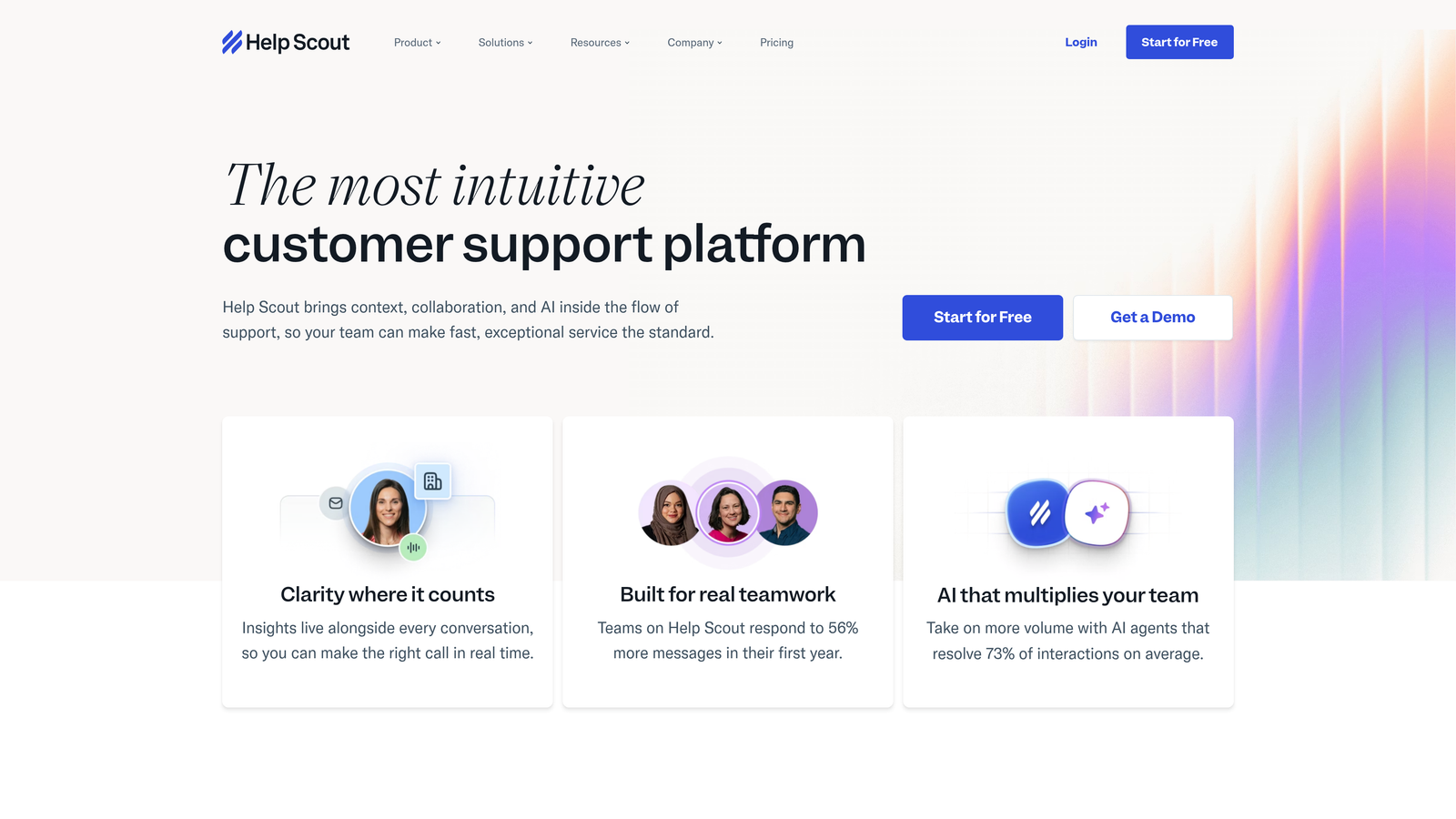
7. Help Scout
Best for: Startups where tone, warmth, and high-touch customer relationships are core to the brand
Help Scout is an email-first support platform that prioritizes human-feeling customer relationships, with AI features designed to make agents faster rather than replace them.
Where This Tool Shines
Help Scout takes a deliberately different philosophy from most AI-forward tools. Rather than maximizing autonomous resolution, its AI features (Summarize, Assist, and Drafts) are built to amplify human agents. The result is support that moves faster but still sounds like a person, which matters enormously for brands where relationship quality is a competitive differentiator.
The AI Summarize feature is particularly practical for small teams. Instead of reading through a long email thread to get context, an agent gets an instant summary and can jump straight to crafting a response. That kind of time compression adds up significantly across a high-volume inbox.
Key Features
AI Summarize: Instant thread summaries that give agents full context without reading entire conversation histories.
AI Assist and AI Drafts: Accelerate response writing with AI-generated draft replies that agents review and send.
Collision Detection: Prevents two agents from responding to the same ticket simultaneously.
Beacon Widget: In-app help center and live chat widget for product-embedded support.
Docs Knowledge Base: Built-in knowledge base builder included with the platform, no separate tool required.
Best For
Startups with high-touch customer relationships where tone and warmth are non-negotiable. Also a strong fit for teams that want AI to accelerate agents rather than replace them entirely.
Pricing
Starts at approximately $22/user/month. Verify current plans at helpscout.com.
8. Chatbase
Best for: Technical founders who want rapid AI chatbot deployment trained on their own documentation
Chatbase is a no-code AI chatbot builder that lets you train a custom GPT-powered agent on your own documentation, website content, or knowledge base and deploy it in minutes.
Where This Tool Shines
Chatbase occupies a specific and useful niche: fast, documentation-trained AI deflection without a full platform implementation. You point it at your help docs, your website, or a set of PDFs, and within minutes you have a chatbot that can answer product questions with reasonable accuracy. For startups that have good documentation but no AI coverage yet, it's an extremely low-friction starting point.
It's worth framing Chatbase correctly: it's a deflection layer, not a full helpdesk. There's no ticket management, no inbox, no SLA tracking. But if your goal is to reduce the volume of repetitive questions hitting your team while you build out a more complete support stack, it delivers that quickly and affordably.
Key Features
Custom Training Sources: Train on PDFs, URLs, Notion pages, or plain text with no coding required.
Embeddable Chat Widget: Deploy a trained chatbot on your website or docs in minutes.
Customizable AI Persona: Configure the bot's name, tone, and response style to match your brand.
Lead Capture: Collect contact information from chat interactions for follow-up.
API Access: Connect to custom workflows and integrations for teams with technical resources.
Best For
Startups that want AI chatbot coverage quickly without committing to a full platform. Particularly useful for technical founders who have solid documentation and want to put it to work deflecting common questions immediately.
Pricing
Free tier available; paid plans start at approximately $19/month. Verify current plans at chatbase.co.
9. Gorgias
Best for: E-commerce startups on Shopify that want AI to autonomously resolve order-related tickets
Gorgias is a helpdesk and automation platform purpose-built for e-commerce brands, with deep Shopify integration that allows AI to autonomously resolve order-related tickets without human involvement.
Where This Tool Shines
Gorgias does something most general-purpose helpdesks can't: it pulls live order data directly into every support ticket. When a customer asks "where is my order?", the AI already has the tracking information, the order status, and the customer's purchase history. That context enables genuine autonomous resolution, not just a canned response pointing to a help article.
For DTC and e-commerce startups where order tracking, returns, and cancellations represent the majority of support volume, Gorgias can handle a substantial portion of that workload without agent involvement. The revenue statistics feature, which tracks support's impact on conversion, also makes it easier to demonstrate support's business value to stakeholders.
Key Features
Deep E-Commerce Integrations: Native Shopify, WooCommerce, and BigCommerce connectors with order data surfaced in every ticket.
Autonomous Order Resolution: AI handles order tracking, return requests, and cancellations without agent involvement.
Multi-Channel Inbox: Consolidates email, chat, social, and SMS into a single workspace.
Revenue Statistics: Tracks how support interactions influence conversion and revenue outcomes.
Macros and Rules: High-volume automation for repetitive ticket types beyond order management.
Best For
E-commerce and DTC startups, particularly those on Shopify, where order-related queries dominate support volume. Not relevant for B2B SaaS teams, but the best-in-class option for its target use case.
Pricing
Starts at approximately $10/month on ticket-based pricing. Verify current plans at gorgias.com.
Which Tool Is Right for Your Startup?
The right automated support tool depends on your stage, your stack, and the nature of your support volume. Here's a quick guide to cut through the decision.
AI-first B2B SaaS: Halo AI. If you want support automation that learns, connects to your engineering and revenue stack, and surfaces business intelligence beyond ticket metrics, it's the only tool on this list built specifically for that outcome.
PLG startup with heavy chat volume: Intercom. The Fin AI agent plus product tour tooling makes it a natural fit for product-led teams that need onboarding and support in a single platform.
Budget-conscious early stage: Freshdesk or Crisp. Both offer genuinely useful free tiers that let you build proper support infrastructure before you're ready to invest in a paid platform.
High-touch human support: Help Scout. When your brand voice and relationship quality matter as much as speed, Help Scout's agent-amplifying AI approach is the right philosophy.
E-commerce on Shopify: Gorgias. Nothing else comes close for order-centric support automation in a DTC context.
Fast no-code AI deployment: Chatbase. If you have good docs and want AI coverage today, it's the lowest-friction path to a deployed chatbot.
Enterprise-ready from day one: Zendesk. For startups in regulated industries or those that know they'll need enterprise compliance features as they scale, Zendesk's infrastructure is worth the investment.
The common thread across the best tools on this list: automation that makes support faster and better, not just cheaper. The goal isn't to replace good support with a bot. It's to let your team focus on the complex, high-value interactions that actually need a human while AI handles the rest.
Your support team shouldn't scale linearly with your customer base. See Halo in action and discover how continuous learning transforms every interaction into smarter, faster support.