9 Best Automated Technical Support Solutions in 2026
Automated technical support solutions help product teams resolve customer issues instantly while reducing ticket volumes and support costs. This guide reviews the top 9 platforms that autonomously handle routine troubleshooting, intelligently route complex cases, provide 24/7 coverage, and integrate with your existing product stack—selected based on resolution capabilities, technical depth, and proven results for B2B teams.
 Matt PattoliFounder13 min read
Technical support teams face a relentless challenge: ticket volumes grow while customer expectations for instant, accurate resolutions climb higher. The traditional model of scaling headcount proportionally with customer growth creates unsustainable cost structures and still leaves gaps in 24/7 coverage.
Automated technical support solutions bridge this gap by handling routine troubleshooting autonomously, routing complex issues to the right specialists, and providing round-the-clock coverage without exponentially expanding your team. The best platforms don't just deflect tickets with canned responses—they actually resolve technical problems, learn from every interaction, and integrate deeply with your product stack to understand context.
This guide evaluates top platforms that excel at automating technical support workflows for B2B product teams. We selected these tools based on their autonomous resolution capabilities, technical depth, integration ecosystems, and continuous learning mechanisms.
1. Halo AI
Best for: B2B product teams needing AI-first support that resolves tickets autonomously while learning continuously
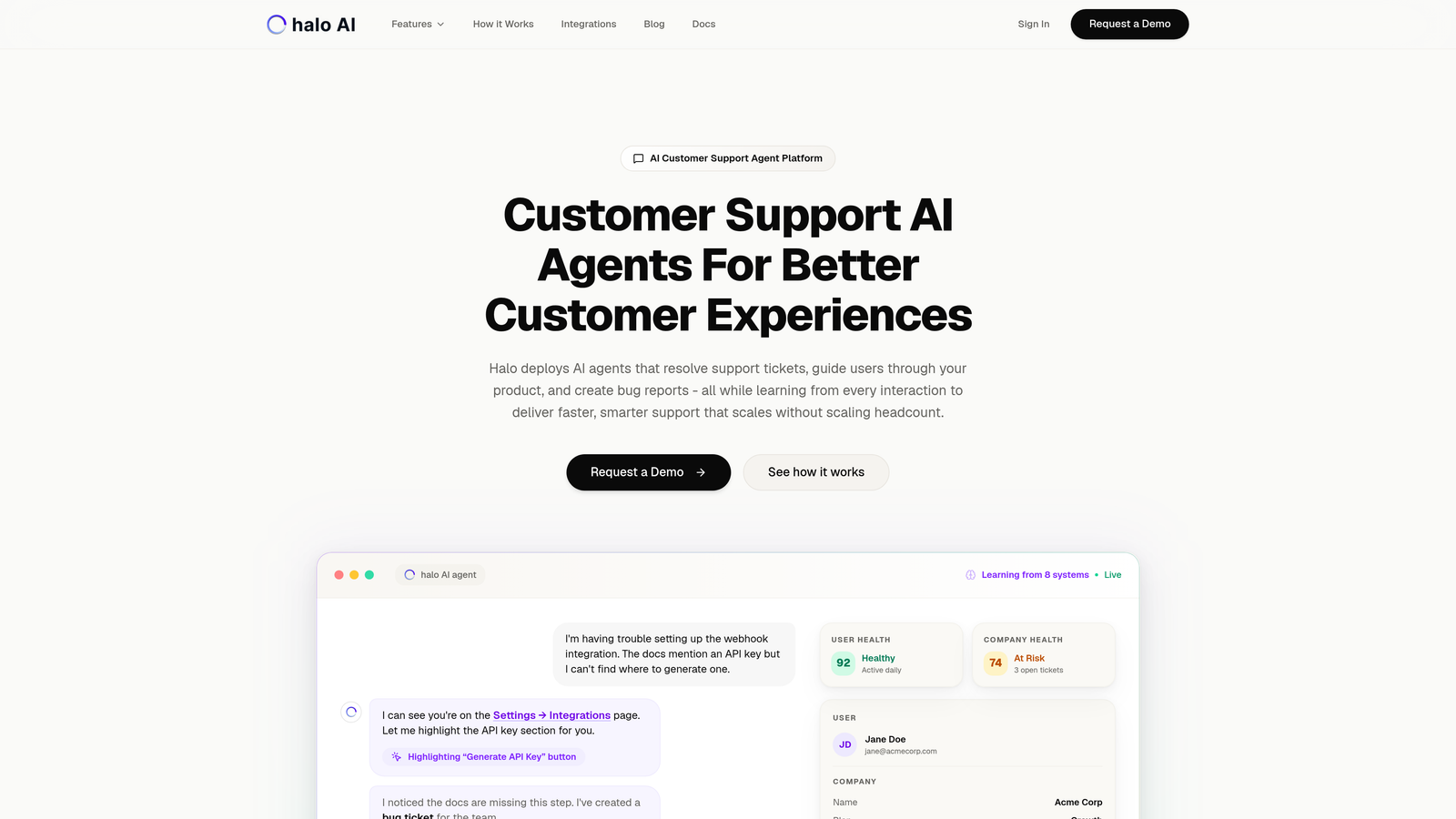
Halo AI is an AI-native customer support platform built from the ground up for autonomous operation rather than bolting AI onto traditional helpdesk architecture.
Where This Tool Shines
Unlike platforms that added AI features to existing helpdesk systems, Halo's architecture treats AI agents as the primary support mechanism. The platform's page-aware context means AI agents can see exactly what users see in your product, enabling precise visual guidance rather than generic troubleshooting steps.
The continuous learning mechanism sets Halo apart—every resolved ticket, escalation, and interaction feeds back into the system's intelligence. This creates a support operation that becomes more effective over time without manual rule updates or conversation flow tweaking.
Key Features
Autonomous AI Agents: Resolve tickets end-to-end without human intervention, handling everything from password resets to complex technical troubleshooting based on your product documentation and past resolutions.
Page-Aware Context: AI agents see the exact UI state and page content users are viewing, enabling specific guidance like "click the Settings icon in the top right corner" rather than vague instructions.
Auto Bug Ticket Creation: Automatically generates detailed bug reports in Linear or your project management tool when issues require engineering attention, capturing reproduction steps and technical context.
Smart Inbox with Business Intelligence: Goes beyond support metrics to surface customer health signals, revenue intelligence, and anomaly detection across your entire business stack.
Multi-System Integrations: Connects natively to Linear, Slack, HubSpot, Intercom, Stripe, Zoom, PandaDoc, and Fathom to provide context and take actions across your entire workflow.
Best For
B2B SaaS companies and product teams seeking autonomous support that scales without proportionally increasing headcount. Particularly valuable for teams using helpdesk systems like Zendesk, Freshdesk, or Intercom who want AI-first capabilities rather than AI add-ons.
Pricing
Contact for pricing based on your support volume and integration requirements.
2. Zendesk AI
Best for: Enterprise teams already invested in Zendesk infrastructure seeking advanced AI capabilities
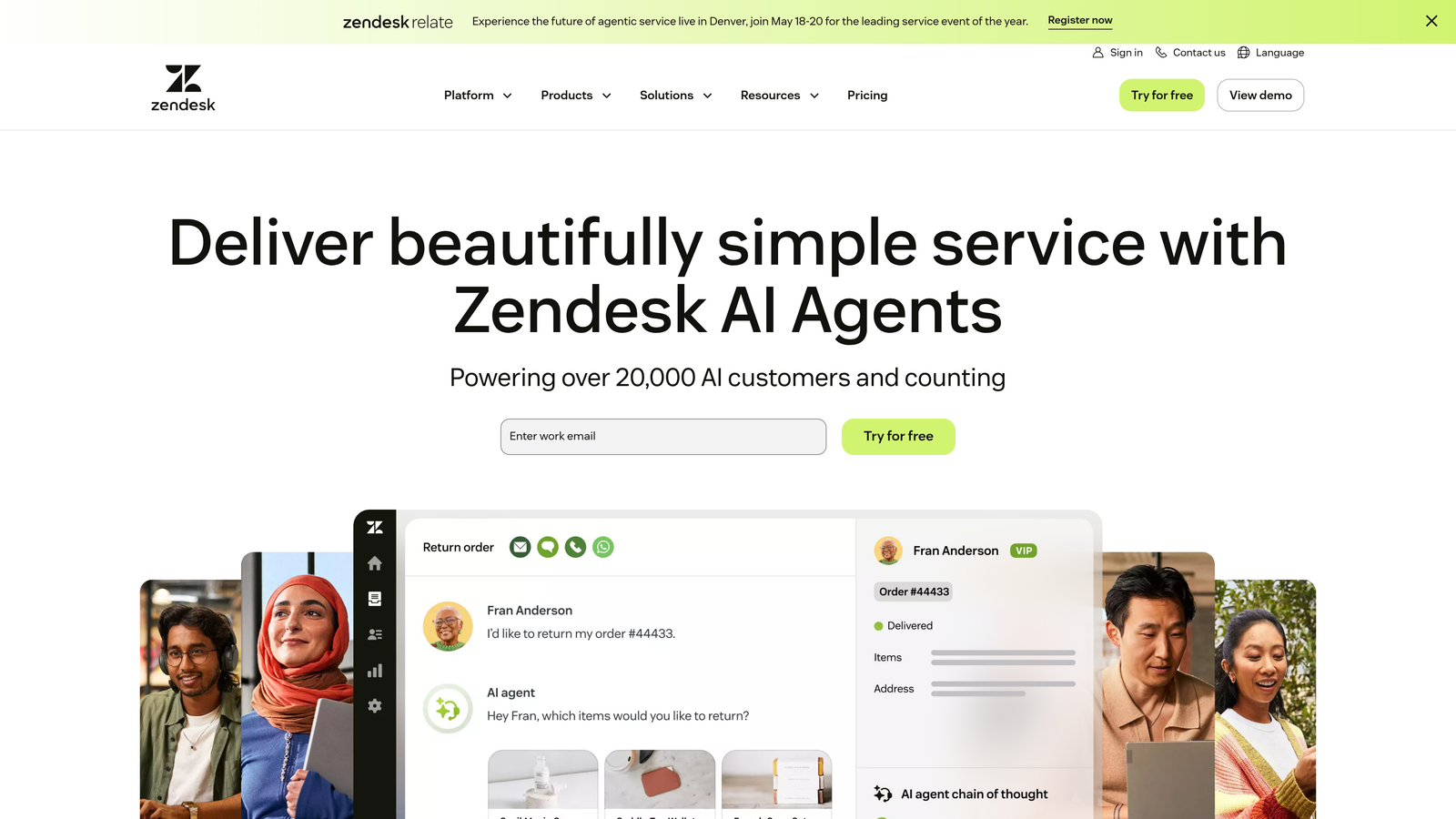
Zendesk AI layers sophisticated AI capabilities onto the established Zendesk helpdesk platform that many enterprises already use.
Where This Tool Shines
For organizations with significant Zendesk infrastructure investment, the AI add-on provides advanced automation without platform migration. The intent detection engine analyzes customer messages to understand underlying issues beyond keyword matching, enabling more accurate automated responses.
The platform's strength lies in augmenting human agents rather than replacing them entirely. AI-suggested macros and response recommendations help agents work faster while maintaining the human touch that complex enterprise support often requires.
Key Features
Advanced Intent Detection: Bots analyze conversation context and customer history to understand the real problem behind initial messages, improving first-response accuracy.
Intelligent Ticket Routing: AI-powered assignment based on agent expertise, workload, and ticket complexity ensures the right specialist handles each issue.
Suggested Macros: Real-time response recommendations for agents based on ticket content and resolution patterns, accelerating response times while maintaining quality.
Performance Analytics: Deep reporting on AI effectiveness, resolution rates, and areas where automation improves or needs refinement.
Conversation Flow Builder: Visual tools for creating multi-step bot interactions without coding, though setup requires more initial configuration than newer AI-native platforms.
Best For
Enterprises already using Zendesk Suite who want to enhance their existing infrastructure with AI rather than migrate to a new platform. Best suited for teams with dedicated support operations staff who can configure and optimize bot flows.
Pricing
AI add-on starts at $50 per agent per month on top of existing Zendesk Suite plans, which begin at $55 per agent monthly.
3. Intercom Fin
Best for: Companies prioritizing conversational AI with deep knowledge base integration and seamless human handoff
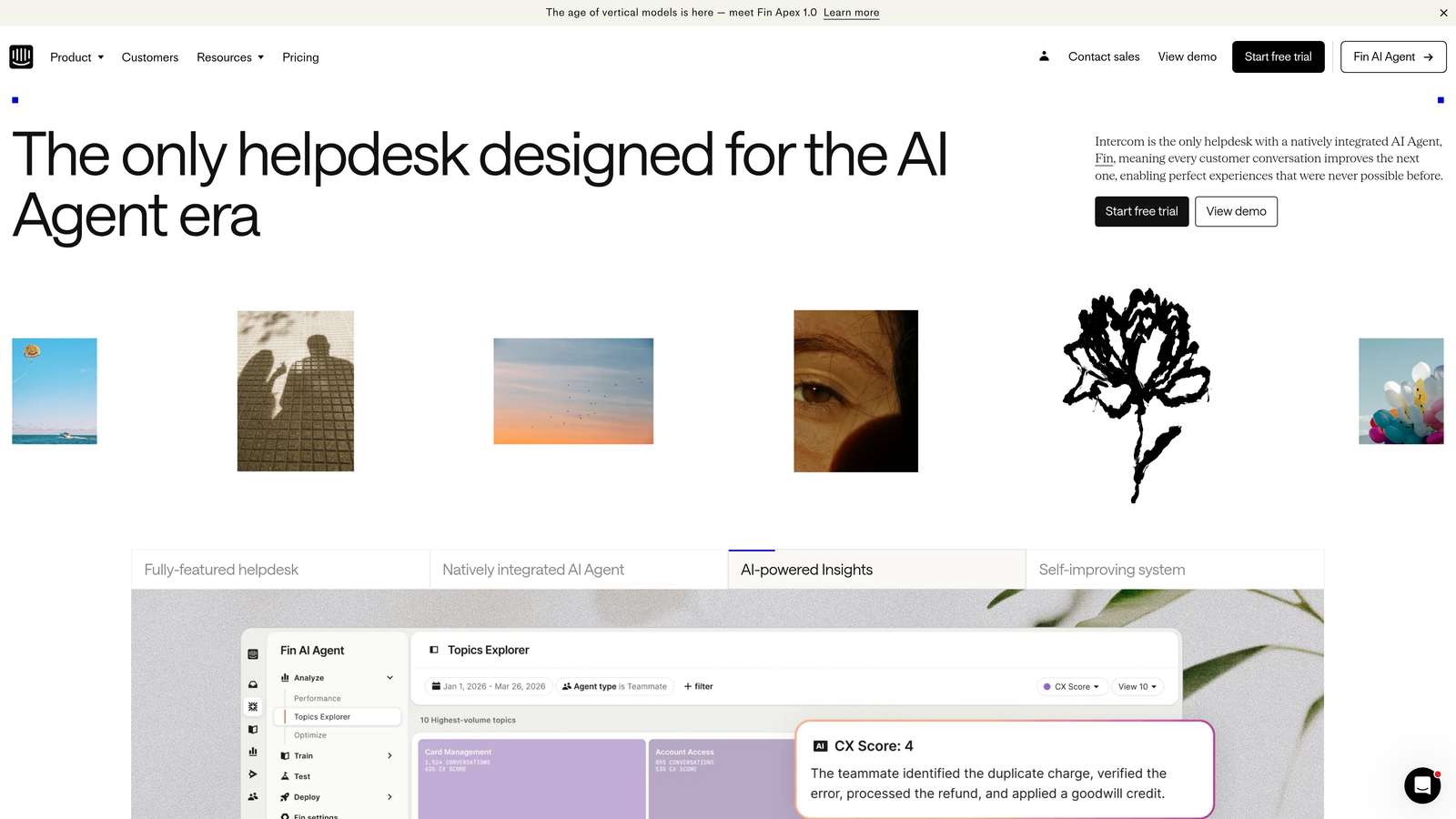
Intercom Fin is a GPT-powered AI agent designed specifically for conversational support with sophisticated natural language understanding.
Where This Tool Shines
Fin excels at conversational support that feels natural rather than robotic. The AI draws from your help center, custom data sources, and previous conversations to provide contextually relevant answers in a conversational style that matches your brand voice.
The handoff mechanism to human agents preserves full conversation context, eliminating the frustrating "let me repeat everything I just told the bot" experience. When Fin escalates, your team sees the complete interaction history and customer context immediately.
Key Features
Knowledge Base Integration: AI automatically indexes your help center content and custom documentation, using it to answer questions without manual conversation flow creation.
Contextual Handoff: Seamless transition to human agents with complete conversation history, customer data, and Fin's assessment of the issue complexity.
Product Tours Integration: Combines support automation with onboarding flows, using the same conversational interface for both troubleshooting and feature education.
Customizable AI Personality: Adjust response style, tone, and formality to match your brand voice, from casual and friendly to formal and technical.
Multi-Channel Support: Consistent AI assistance across web chat, mobile apps, and messaging platforms without rebuilding conversation logic for each channel.
Best For
Product-led growth companies using Intercom for customer communication who want to layer AI on top of their existing messaging infrastructure. Particularly effective for teams with robust help centers that AI can leverage immediately.
Pricing
Fin charges $0.99 per resolution on top of Intercom subscription plans, which start at $74 per month for the Starter plan.
4. Freshdesk Freddy AI
Best for: Mid-market teams seeking AI-powered triage and agent assistance within an accessible helpdesk platform
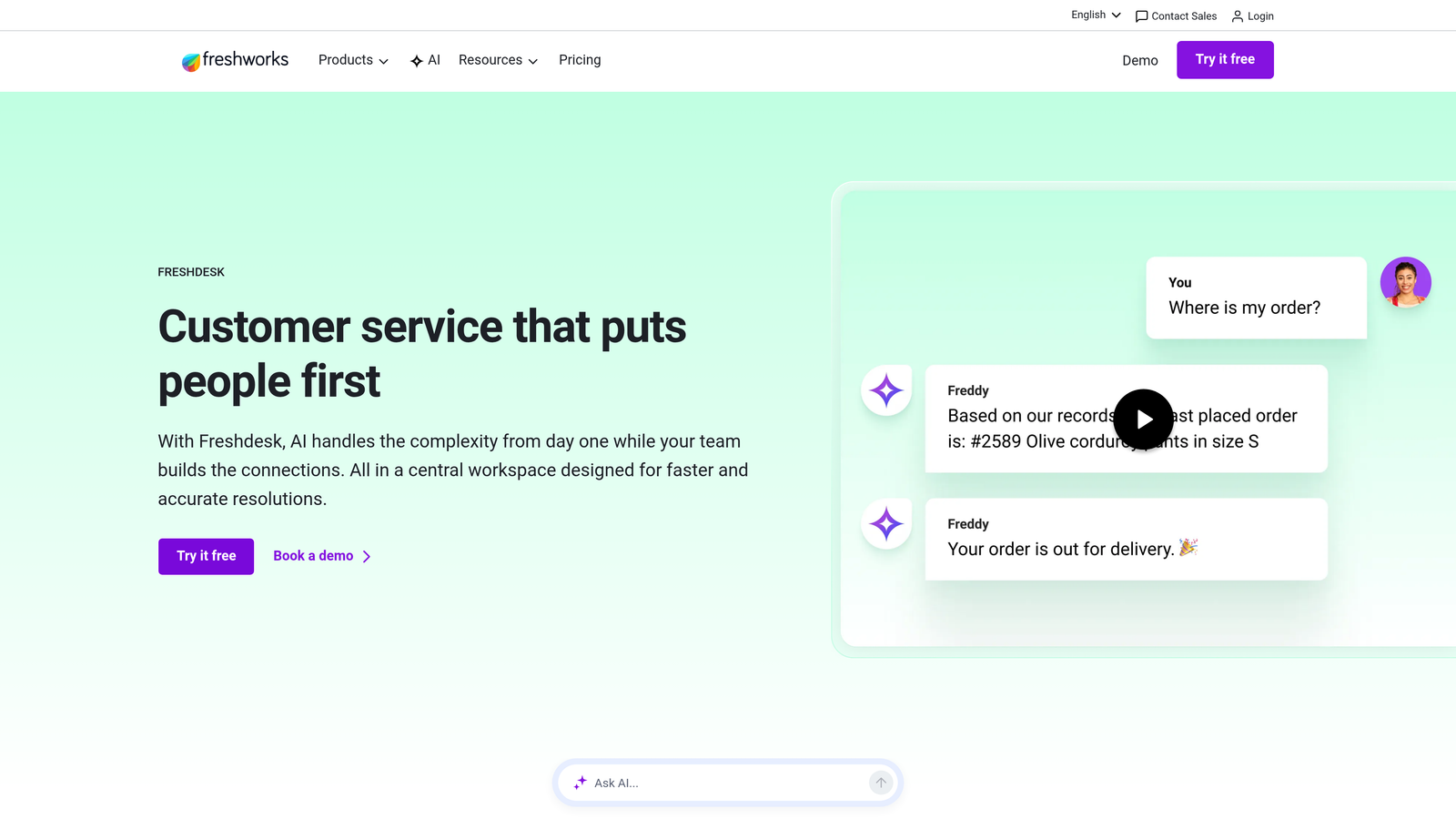
Freshdesk Freddy AI provides automatic ticket classification, routing, and self-service capabilities built directly into the Freshdesk platform.
Where This Tool Shines
Freddy AI focuses on practical automation that delivers immediate efficiency gains without extensive configuration. The automatic ticket classification analyzes incoming requests and assigns categories, priorities, and routing rules based on content analysis rather than manual tagging.
The sentiment analysis capability helps support teams identify frustrated customers who need immediate attention, preventing escalations before they happen. This proactive approach to priority management improves customer satisfaction metrics alongside efficiency.
Key Features
Automatic Classification: AI analyzes ticket content to assign categories, priorities, and initial routing without agents manually triaging every request.
AI-Suggested Responses: Recommends relevant reply templates and knowledge base articles to agents based on ticket content, reducing research time and improving consistency.
Multi-Channel Self-Service Bots: Deploy automated assistance across email, chat, and messaging channels from a single configuration, maintaining consistent support quality.
Sentiment Detection: Automatically identifies frustrated or angry customers and escalates their tickets for priority handling, preventing negative experiences from worsening.
Predictive Support Fields: AI suggests values for custom fields based on ticket content, streamlining data entry and improving reporting accuracy.
Best For
Growing companies that need intelligent automation without enterprise complexity or pricing. Ideal for teams transitioning from basic helpdesk tools who want AI capabilities included in their subscription rather than expensive add-ons.
Pricing
Freddy AI features are included in the Pro plan at $49 per agent per month, with no additional per-resolution charges.
5. Ada
Best for: High-volume consumer-facing support requiring multilingual automation without coding expertise
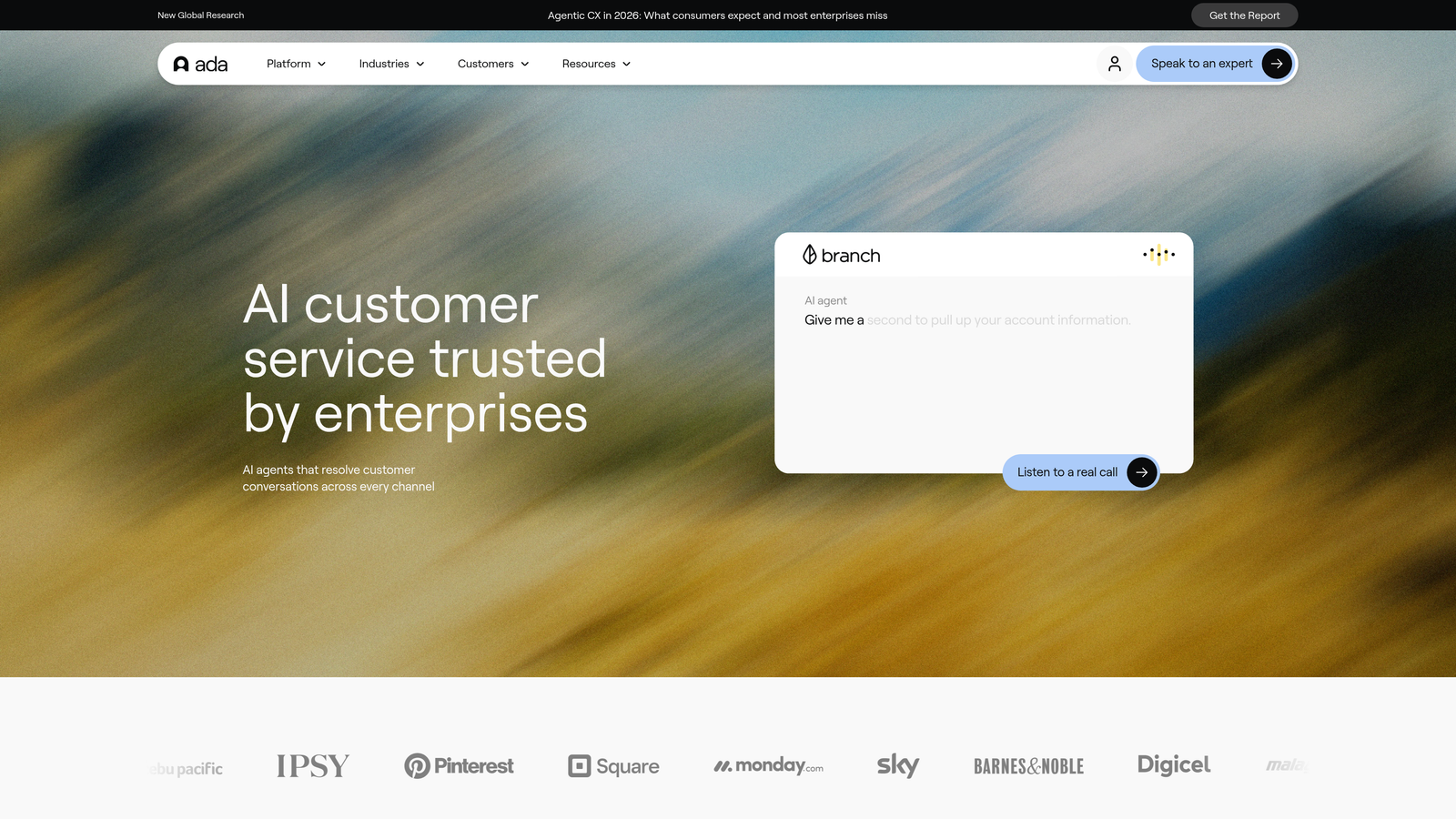
Ada is a no-code AI automation platform built specifically for companies handling massive support volumes across multiple languages and channels.
Where This Tool Shines
Ada's visual automation builder enables non-technical teams to create sophisticated support workflows without developer resources. The drag-and-drop interface makes it accessible to support managers who understand customer needs but lack coding skills.
The out-of-the-box support for 50+ languages sets Ada apart for global operations. Rather than building separate bots for each market, teams create workflows once and deploy them internationally with automatic translation and localization.
Key Features
No-Code Visual Builder: Create complex automation workflows through drag-and-drop interfaces without writing code or managing conversation trees manually.
50+ Language Support: Deploy automated support globally with built-in translation and localization, maintaining consistent quality across markets without separate development.
Proactive Messaging: Trigger automated outreach based on customer behavior, subscription status, or product usage patterns to prevent issues before customers contact support.
Personalization Engine: Customize responses based on customer segment, purchase history, and interaction patterns for more relevant assistance.
Enterprise Security: SOC 2 Type II compliance, GDPR readiness, and enterprise-grade data protection for companies with strict security requirements.
Best For
Consumer-facing companies with high support volumes across multiple markets. Particularly valuable for e-commerce, subscription services, and financial technology companies serving global customer bases.
Pricing
Custom pricing based on monthly conversation volume and feature requirements. Enterprise plans include dedicated success management and advanced analytics.
6. Forethought
Best for: Teams prioritizing intelligent routing and predictive triage over conversational AI
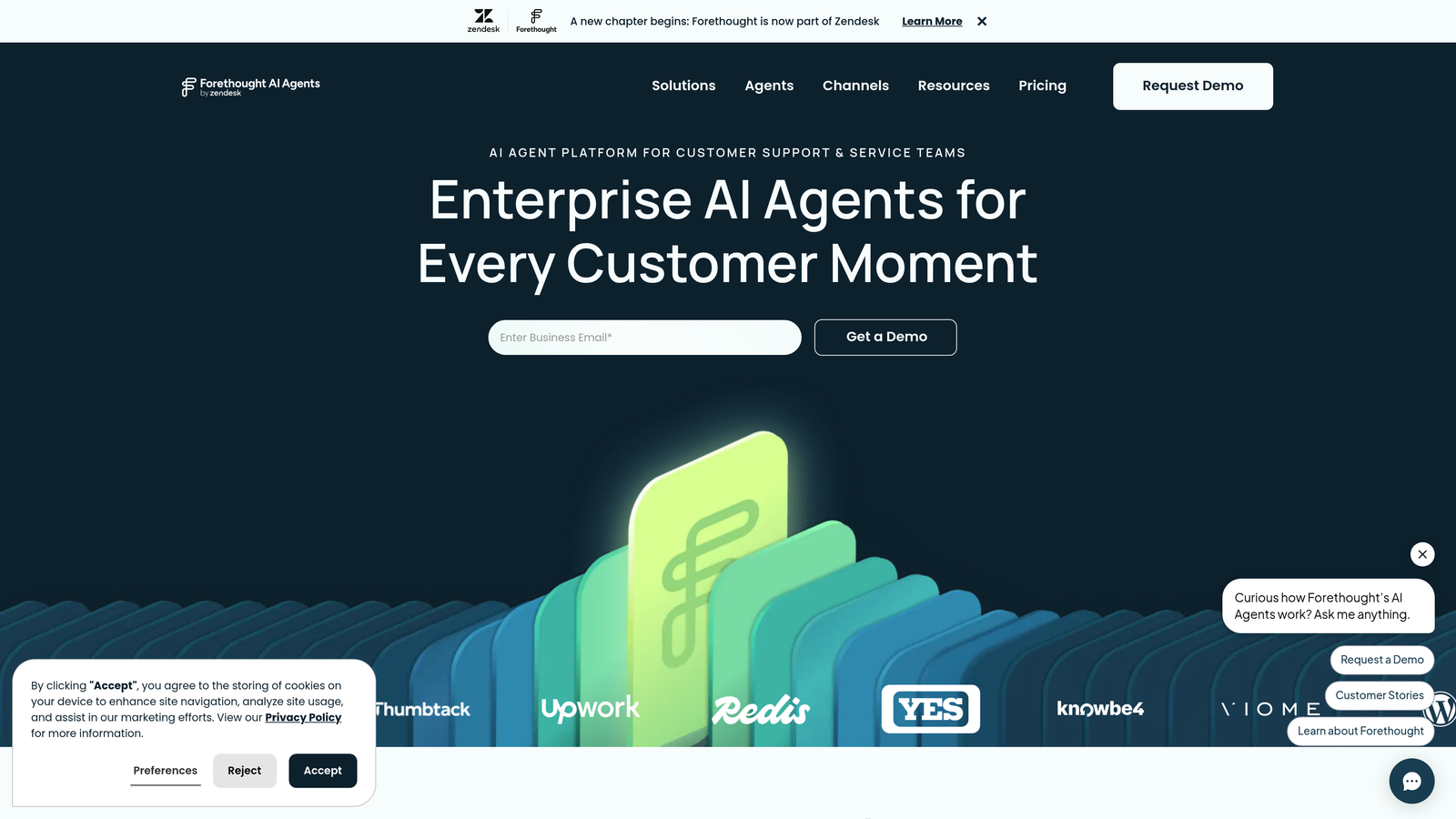
Forethought focuses on predictive ticket routing and workflow automation that ensures the right expert handles each technical issue from the start.
Where This Tool Shines
Forethought's predictive routing analyzes ticket complexity, technical requirements, and agent expertise to make intelligent assignment decisions. This prevents the common problem of simple tickets reaching senior engineers while complex issues get stuck with junior agents who must escalate anyway.
The platform's strength lies in understanding when automation should step back. Rather than forcing AI to handle every interaction, Forethought identifies which tickets benefit from immediate human attention and routes them accordingly, improving both efficiency and customer satisfaction.
Key Features
Predictive Routing: AI analyzes ticket content, customer history, and agent expertise to assign requests to the specialist most likely to resolve them quickly.
Intelligent Triage: Automatically prioritizes urgent technical issues based on customer impact, business value, and issue severity rather than simple first-in-first-out queuing.
Workflow Automation: Streamlines repetitive processes like status updates, follow-up scheduling, and cross-team handoffs without manual intervention.
Performance Analytics: Provides recommendations for improving routing rules, identifying bottlenecks, and optimizing team structure based on actual resolution patterns.
Agent Assist: Surfaces relevant knowledge base articles, past resolutions, and suggested responses to agents in real-time as they work on tickets.
Best For
Technical support teams with specialized expertise across different product areas or technology stacks. Most valuable when routing complexity creates inefficiency and customers frequently get passed between agents.
Pricing
Custom pricing based on monthly ticket volume and integration requirements. Implementation includes workflow optimization consulting.
7. Kustomer IQ
Best for: Companies needing unified customer timelines with AI automation across support and CRM functions
Kustomer IQ provides AI-enhanced customer relationship management with intelligent automation built around a unified customer timeline.
Where This Tool Shines
Kustomer's unified timeline consolidates every customer interaction—support tickets, purchases, product usage, marketing touches—into a single view. This comprehensive context enables AI to make smarter decisions about routing, prioritization, and response recommendations based on the complete customer relationship.
The platform excels for companies where support context depends heavily on purchase history, subscription status, and previous interactions across departments. AI leverages this rich data to provide more relevant assistance than platforms with limited customer context.
Key Features
Unified Customer Timeline: Consolidates support interactions, purchases, product usage, and marketing touches into a single chronological view accessible to AI and agents.
AI Conversation Classification: Automatically categorizes interactions by intent, sentiment, and required action without manual tagging or rules configuration.
Intelligent Routing: Routes requests based on complete customer history including past issues, purchase value, and relationship tenure rather than just current ticket content.
Deep CRM Integration: Native connections to e-commerce platforms, payment processors, and marketing tools provide context beyond traditional helpdesk data.
Custom Object Support: Track unique business entities like subscriptions, orders, or accounts with custom fields and relationships that AI can reference.
Best For
E-commerce and subscription businesses where support quality depends on understanding customer purchase history, subscription status, and lifetime value. Best suited for companies treating support as part of customer success rather than a cost center.
Pricing
Enterprise plan with IQ features starts at $89 per user per month, with implementation and integration support included.
8. Tidio
Best for: Small teams seeking quick automation wins without technical complexity or enterprise budgets
Tidio provides accessible AI chatbot capabilities with a visual builder designed for teams that need automation without developer resources.
Where This Tool Shines
Tidio's visual chatbot builder enables non-technical teams to create automated support flows in hours rather than weeks. The drag-and-drop interface removes the coding barrier that prevents many small teams from implementing automation.
Lyro AI, Tidio's conversational engine, handles common questions using your website content and help documentation without requiring extensive training or conversation flow mapping. This quick implementation path makes automation accessible to teams without dedicated support operations staff.
Key Features
Visual Chatbot Builder: Create automated conversation flows through drag-and-drop interfaces without coding knowledge or technical expertise.
Lyro AI: Conversational AI that learns from your website content and help articles to answer questions naturally without manual flow creation.
Live Chat Integration: Seamlessly blend automated responses with human agent chat, with AI suggesting replies to agents for faster resolution.
Quick Implementation: Get automation running within hours using pre-built templates for common support scenarios like order tracking, FAQ deflection, and appointment booking.
Multi-Platform Support: Deploy the same chatbot across website, Facebook Messenger, and Instagram without rebuilding conversation logic for each channel.
Best For
Small to medium businesses and startups that need basic automation quickly without significant budget or technical resources. Particularly effective for e-commerce stores and service businesses with straightforward support needs.
Pricing
Lyro AI starts at $39 per month for 50 conversations, with additional conversations charged at $0.50 each. Live chat features available on free plan.
9. Help Scout AI
Best for: Teams prioritizing human-feeling support while automating draft creation and context summarization
Help Scout AI provides AI features designed to enhance agent productivity while maintaining the personal touch that defines quality support.
Where This Tool Shines
Help Scout's AI philosophy centers on augmenting human agents rather than replacing them. The AI draft generation creates initial responses that agents review and personalize before sending, maintaining authentic communication while accelerating response times.
The conversation summarization feature helps agents quickly understand long ticket threads without reading every message. This context compression is particularly valuable when tickets get reassigned or require manager review, saving time without losing important details.
Key Features
AI Draft Generation: Creates initial response drafts based on ticket content and knowledge base articles, which agents review, edit, and personalize before sending.
Conversation Summarization: Automatically summarizes long ticket threads into key points, helping agents understand context quickly when picking up reassigned tickets.
Beacon Chat Widget: Provides AI-powered article suggestions and automated answers through an embedded help widget that feels native to your product.
Clean Interface: Focused design that prioritizes agent productivity without overwhelming users with complex automation configuration or analytics dashboards.
Knowledge Base Integration: AI draws from your help center to suggest relevant articles and generate accurate draft responses without manual conversation flow mapping.
Best For
Companies that view support as a competitive differentiator and want to maintain personal customer relationships while improving efficiency. Best suited for teams with strong writing cultures who value authentic communication.
Pricing
AI features included in Plus plan at $40 per user per month, with no additional per-resolution charges or usage limits.
Making the Right Choice
The automated technical support landscape has evolved beyond simple chatbots deflecting tickets with canned responses. Today's solutions actually resolve technical problems, learn from every interaction, and integrate deeply with your product ecosystem.
For B2B product teams seeking autonomous resolution that improves continuously, Halo AI's AI-first architecture and page-aware context provide the technical depth required for complex support scenarios. Teams already invested in Zendesk or Intercom infrastructure can layer advanced AI capabilities onto their existing platforms, though this approach typically requires more configuration than AI-native solutions.
Mid-market teams prioritizing quick wins without enterprise complexity will find value in Freshdesk Freddy AI or Tidio, both offering practical automation at accessible price points. Companies handling high volumes across global markets should evaluate Ada's multilingual capabilities, while organizations where routing complexity creates inefficiency benefit from Forethought's predictive assignment.
The key differentiator isn't whether a platform has AI—they all do now. What matters is whether that AI can actually solve your customers' technical problems, learn from resolutions to improve over time, and integrate with your product stack to understand context beyond generic troubleshooting.
Your support team shouldn't scale linearly with your customer base. Let AI agents handle routine tickets, guide users through your product, and surface business intelligence while your team focuses on complex issues that need a human touch. See Halo in action and discover how continuous learning transforms every interaction into smarter, faster support.