9 Best Autonomous Customer Support Platforms in 2026
This guide evaluates the 9 best autonomous customer support platforms in 2026, comparing solutions that go beyond basic chatbots to fully resolve customer issues end-to-end without human intervention. Each platform is assessed across autonomy depth, integration breadth, learning capabilities, and scalability to help businesses—from AI-first startups to global enterprises—find the right fit for replacing outdated ticketing and manual routing workflows.
 Grant CooperFounder12 min read
Customer support has crossed a threshold. The old model of ticketing queues, manual routing, and bot-driven FAQ deflection is giving way to something fundamentally different: platforms that can actually resolve issues end-to-end, without a human ever touching the ticket.
The term "autonomous" gets thrown around loosely, so let's be precise. A truly autonomous customer support platform doesn't just suggest answers to agents. It understands the query, takes action in connected systems, communicates the resolution to the customer, and escalates intelligently when the situation genuinely requires a human. That's the bar worth measuring against.
The platforms below were selected based on five criteria: autonomy depth (can it actually resolve, or just deflect?), integration breadth, continuous learning capabilities, scalability across channels and languages, and pricing transparency. Whether you're an AI-first startup or a global enterprise running on Zendesk, there's a platform here worth your attention.
1. Halo AI
Best for: B2B SaaS teams wanting an AI-first support platform with deep business intelligence built in.
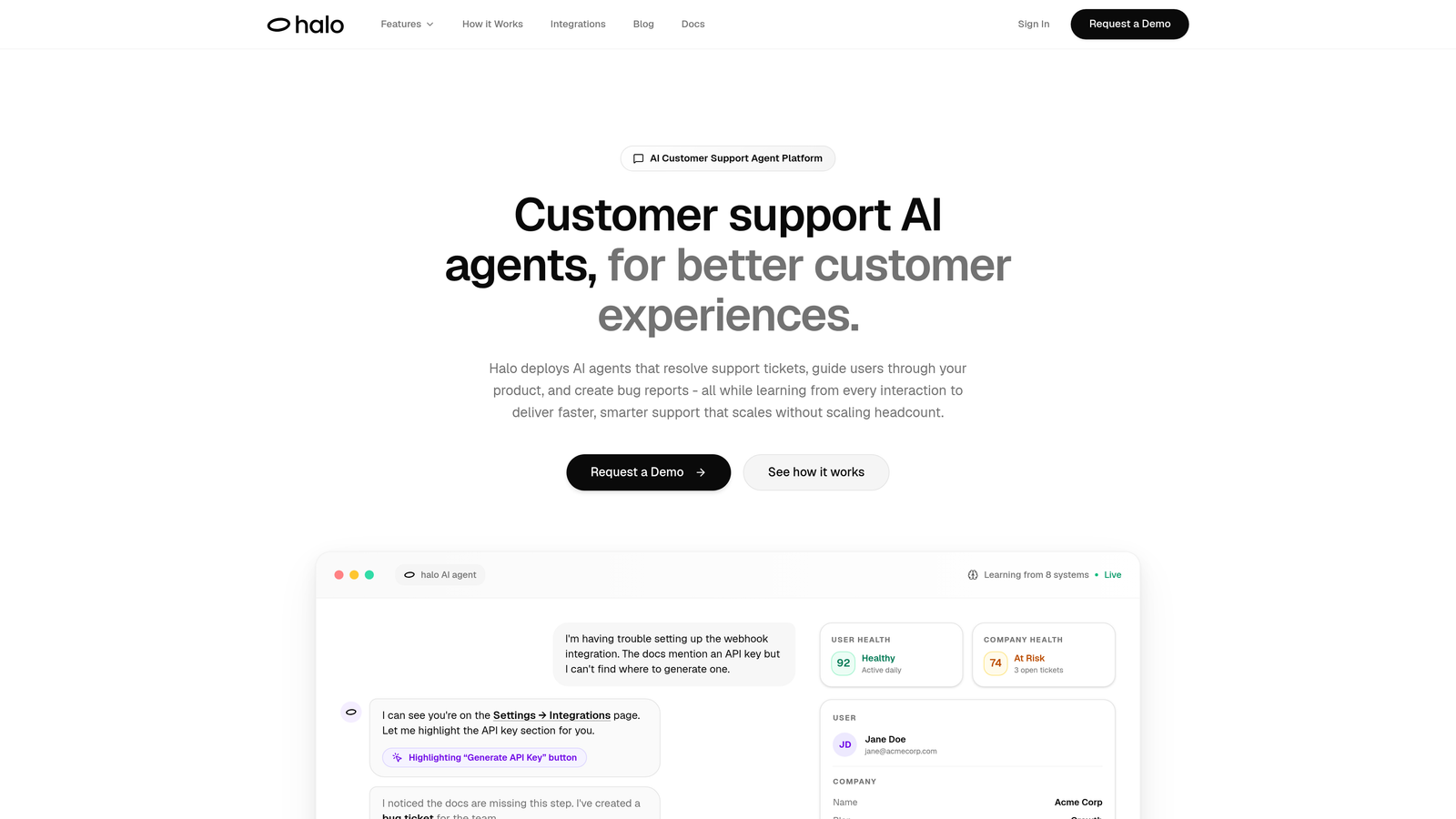
Halo AI is an AI-first autonomous support platform that deploys intelligent agents to resolve tickets, guide users with page-aware context, create bug reports, and surface business intelligence across every interaction.
Where This Tool Shines
Most AI support tools are retrofitted onto existing helpdesks. Halo was built from scratch around the idea that AI agents should be the primary responders, not a layer of automation bolted onto a human workflow. That architectural difference matters: the system is designed to own the resolution process, not assist with it.
What sets Halo apart is the combination of page-aware context and business intelligence. The platform doesn't just see the ticket. It sees what the user sees on their screen, which means guidance is visual and specific rather than generic. And because every interaction feeds a smart inbox with health signals and revenue intelligence, support stops being a cost center and starts generating insight.
Key Features
Page-Aware Chat Widget: Understands which page or product screen a user is on and delivers contextual visual UI guidance, not just text answers.
Autonomous Bug Ticket Creation: Automatically generates and routes bug reports to Linear and engineering workflows without requiring agent intervention.
Smart Inbox with Business Intelligence: Surfaces customer health signals, revenue intelligence, and anomaly detection from support conversations in real time.
Continuous Learning: Every resolved interaction improves the model, meaning the platform gets progressively smarter without manual retraining.
Deep Integration Stack: Connects natively with Slack, HubSpot, Intercom, Stripe, Zoom, PandaDoc, and more, enabling real action across your entire business stack.
Best For
B2B SaaS companies and product teams that want more than ticket deflection. If you need an AI layer that connects support to your engineering, sales, and customer success workflows while continuously improving, Halo is built for that use case specifically.
Pricing
Contact for pricing; a demo is available directly through the website at haloagents.ai.
2. Ada
Best for: Enterprise teams needing no-code AI agent deployment across multiple digital channels.
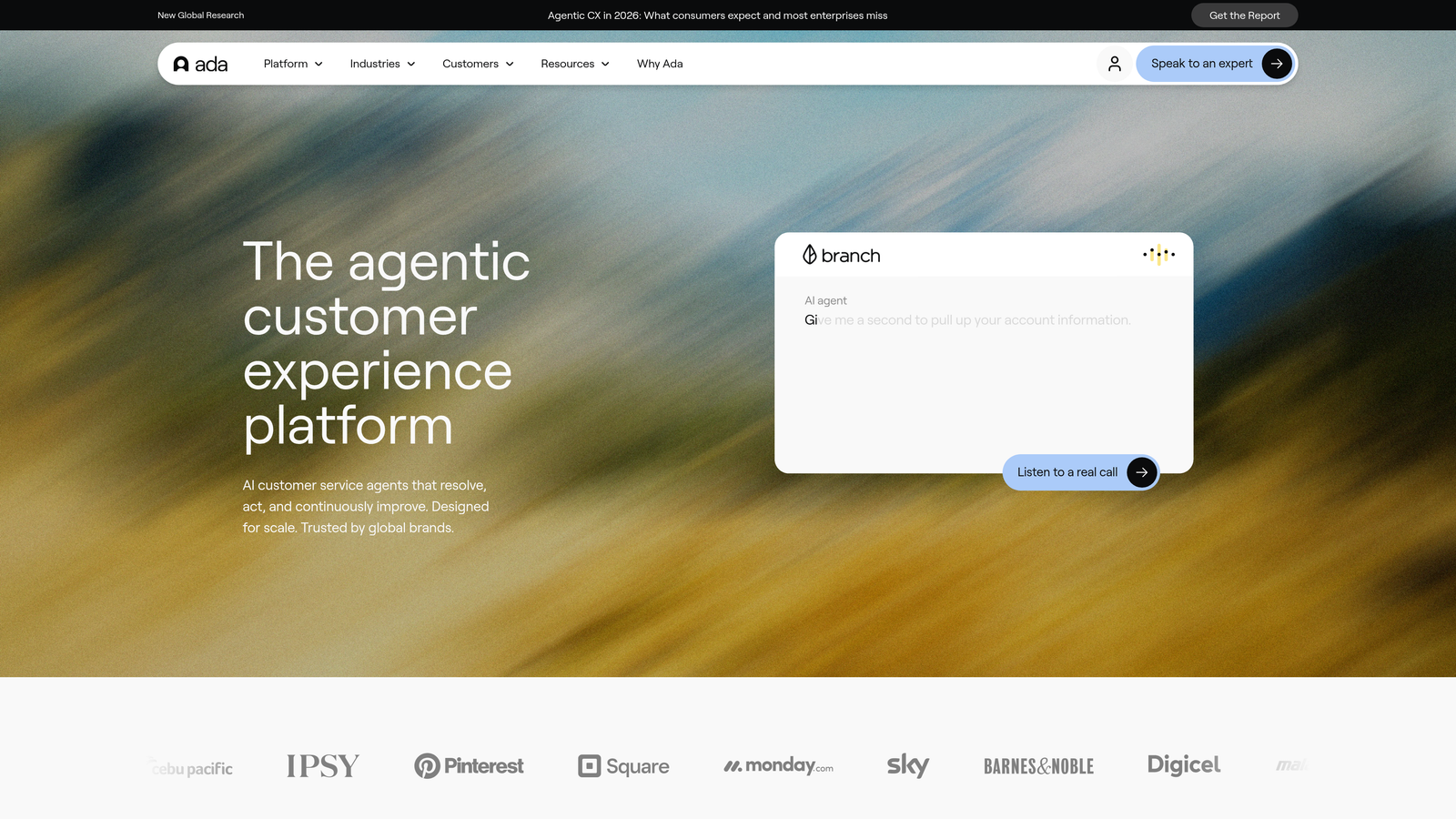
Ada is an enterprise-grade AI agent platform that uses reasoning-based AI to autonomously resolve complex, multi-step customer queries across digital channels without requiring engineering resources.
Where This Tool Shines
Ada's reasoning engine is designed for complexity. Rather than pattern-matching against a knowledge base, it works through multi-step problems, which makes it effective for support scenarios that involve several conditions or decision points before reaching a resolution.
The no-code build environment is genuinely accessible. Non-technical teams can deploy and iterate on AI agents without developer involvement, which shortens the time from setup to autonomous resolution significantly.
Key Features
Reasoning-Based AI Engine: Handles multi-step, conditional queries that go beyond simple FAQ retrieval.
No-Code Agent Builder: Build, deploy, and update AI agents without writing a single line of code.
Omnichannel Reach: Operates across web, mobile, social platforms, and SMS from a single deployment.
Action-Oriented Integrations: Connects with CRMs and commerce platforms to take real actions, not just provide answers.
Enterprise Security: Meets enterprise-grade compliance and security certification requirements.
Best For
Large enterprises with diverse digital channels and non-technical teams who need to deploy and manage AI agents independently. Particularly strong for companies with complex, multi-condition support workflows.
Pricing
Custom enterprise pricing; contact the Ada sales team for a quote tailored to your volume and use case.
3. Forethought
Best for: Teams already on Zendesk or Salesforce wanting to add generative AI resolution without switching platforms.
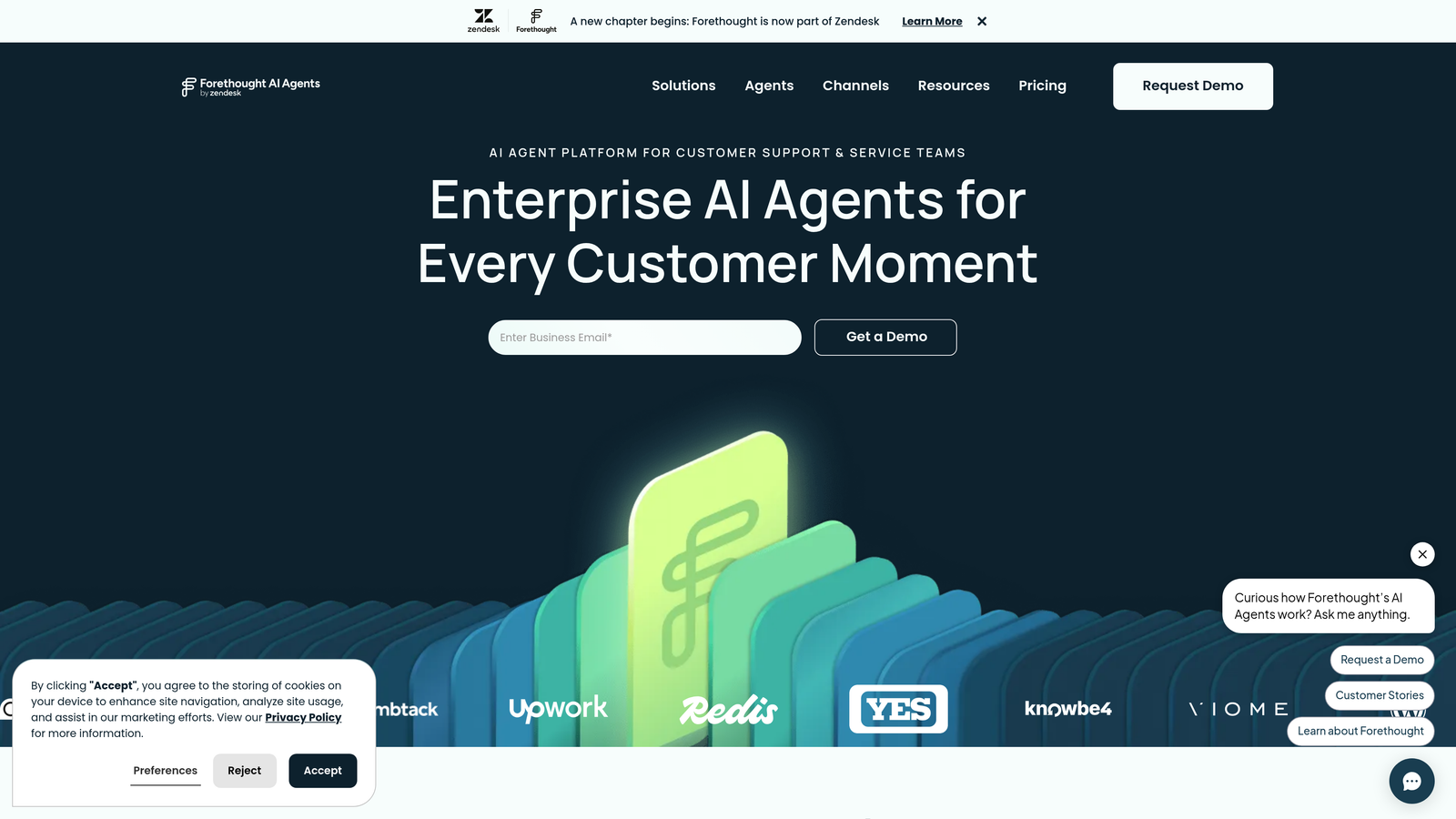
Forethought is an AI support layer that sits on top of existing helpdesks, using generative AI to triage, predict, and autonomously resolve support tickets without replacing your current tooling.
Where This Tool Shines
Forethought's positioning as an overlay rather than a replacement is a genuine strategic advantage for teams with significant investment in platforms like Zendesk or Salesforce. You get generative AI resolution capabilities without a rip-and-replace migration.
The knowledge gap detection feature is particularly useful. It identifies where your help center content is falling short, giving content and support teams actionable direction on what to build or update to improve autonomous resolution rates over time.
Key Features
SupportGPT: Generative AI engine purpose-built for customer support ticket resolution at scale.
Solve AI: Handles autonomous resolution for high-frequency, common query types without human involvement.
Intelligent Triage: Routes tickets automatically based on detected intent, sentiment, and urgency.
Helpdesk Overlay: Integrates directly with Zendesk, Salesforce, and other major platforms without replacing them.
Knowledge Gap Detection: Flags missing or weak content in your help center that's limiting autonomous resolution rates.
Best For
Support teams committed to Zendesk or Salesforce ecosystems that want to add AI-powered autonomous resolution as an enhancement layer rather than a platform switch.
Pricing
Custom pricing based on ticket volume; a free pilot is available to evaluate fit before committing.
4. Intercom Fin
Best for: Existing Intercom users wanting native AI resolution with zero migration overhead.
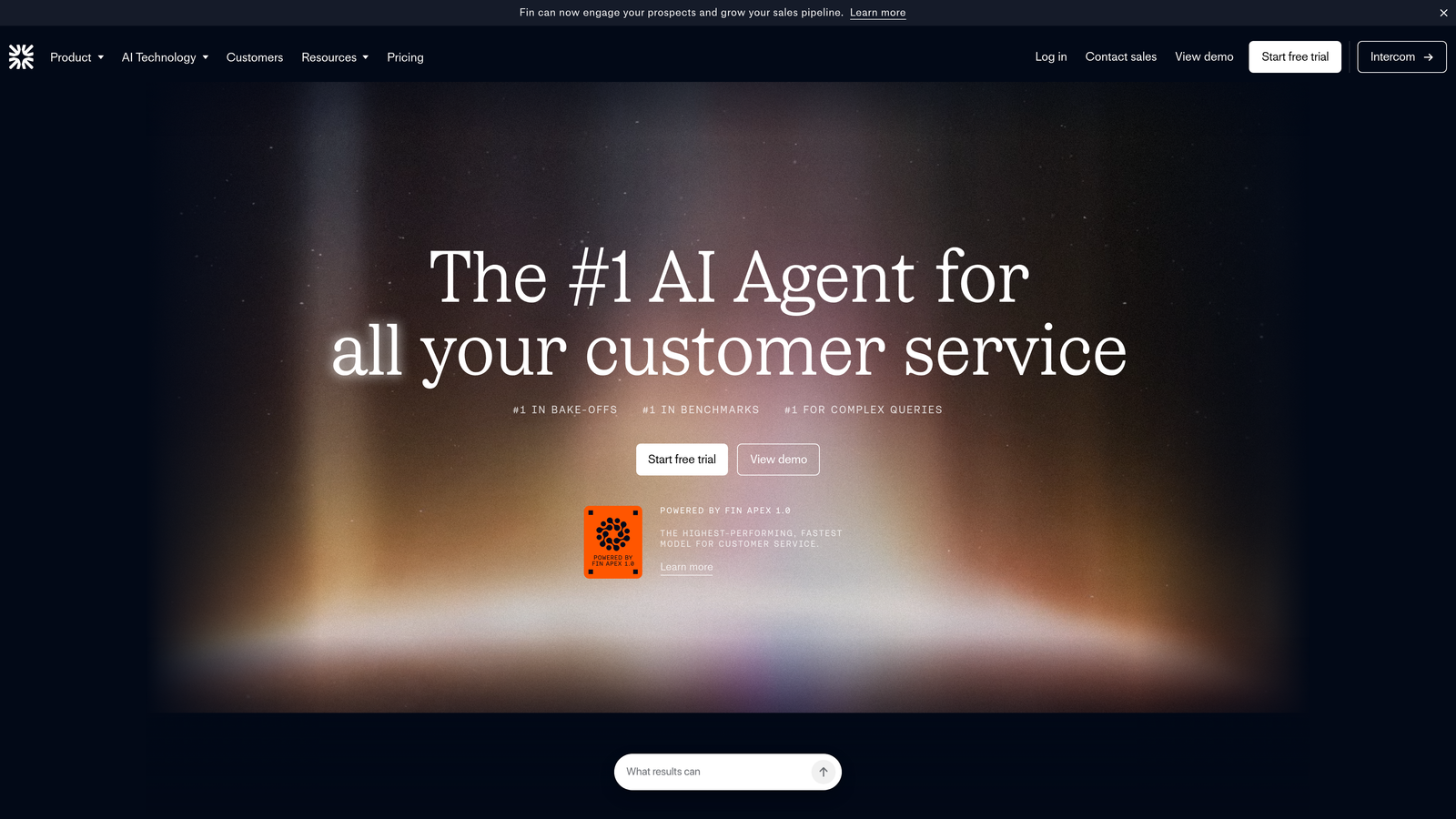
Intercom Fin is Intercom's native AI agent that resolves customer conversations autonomously using the company's existing knowledge base, with seamless handoff to human agents when needed.
Where This Tool Shines
Fin's biggest advantage is frictionless deployment for Intercom customers. Because it's native to the platform, it draws directly from your existing help center, inbox, and messenger setup. There's no data migration, no new integration work, and no separate vendor relationship to manage.
The cited-source resolution model builds customer trust. When Fin answers a question, it references the specific help article it drew from, which reduces the "I don't know if this is right" friction that plagues many AI support responses.
Key Features
Native Intercom Integration: Works directly within the Intercom messenger, inbox, and help center without additional setup.
Cited-Source Responses: References the specific knowledge base article behind each answer, increasing customer confidence.
Customizable Brand Voice: Adjustable tone and behavior settings to match your company's communication style.
Resolution Reporting: Built-in analytics on AI resolution rates and performance metrics.
Contextual Human Handoff: Escalates to live agents with full conversation history preserved.
Best For
Companies already running Intercom as their primary support and messaging platform. The value proposition is strongest when you can avoid the overhead of a separate AI tool entirely.
Pricing
Priced at $0.99 per resolution; also included within certain Intercom plans depending on tier.
5. Zendesk AI Agents
Best for: Zendesk-native teams wanting pre-trained autonomous resolution without manual bot configuration.
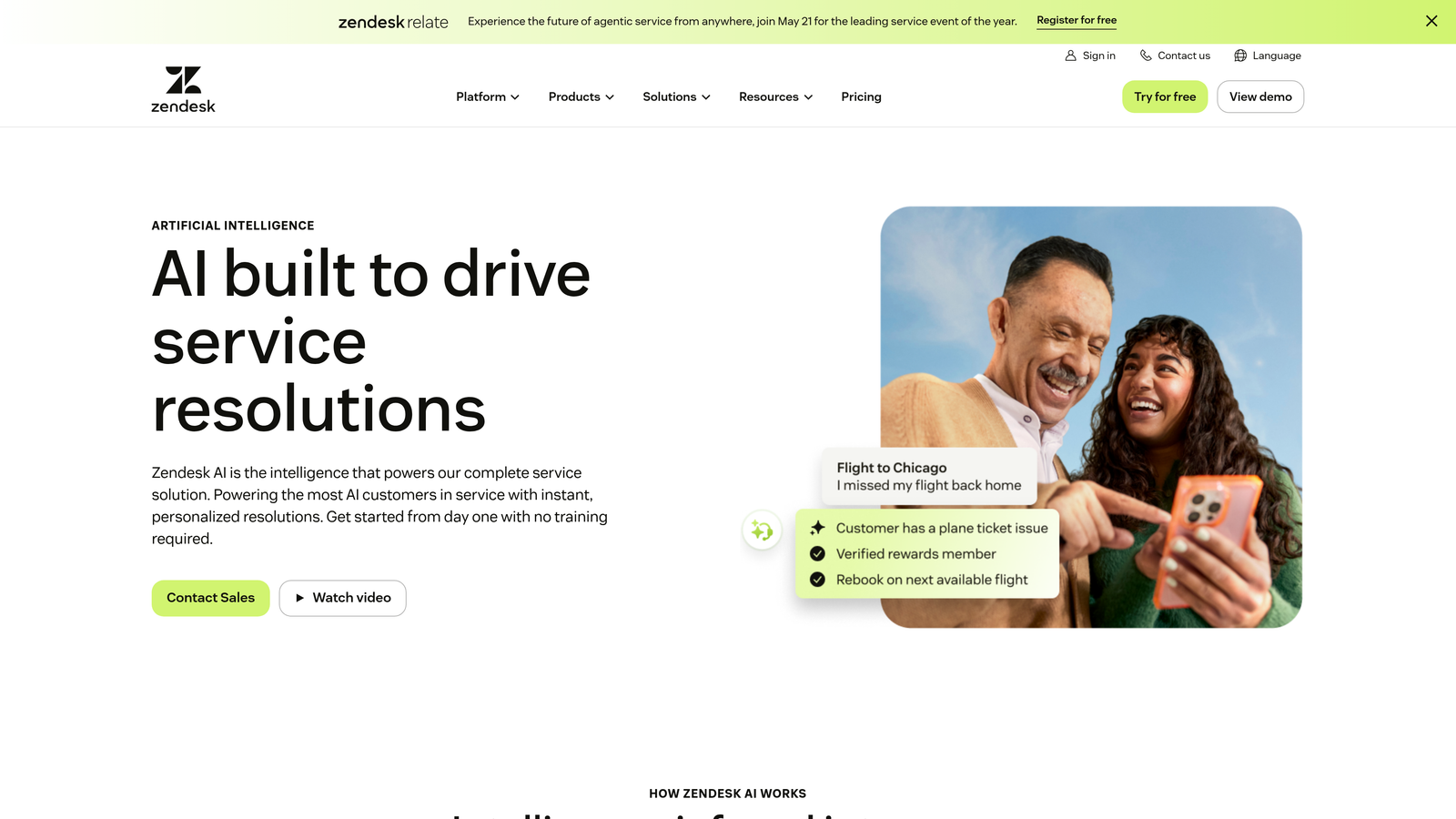
Zendesk AI Agents are built-in autonomous AI agents within the Zendesk ecosystem, pre-trained on billions of real customer interactions to resolve tickets without requiring manual intent mapping or decision trees.
Where This Tool Shines
The pre-training advantage is real. Because Zendesk AI Agents are trained on an enormous corpus of actual customer service interactions, they arrive with contextual understanding that purpose-built bots typically take months of manual training to develop. For Zendesk customers, this dramatically compresses time-to-value.
The automatic intent, language, and sentiment detection during triage means tickets are understood and routed accurately before any human reviews them, which improves both resolution speed and the quality of escalations that do reach agents.
Key Features
Pre-Trained Model: Trained on billions of real customer service interactions for immediate contextual understanding.
No Manual Intent Training: Resolves autonomously without requiring decision trees or manual intent configuration.
Zendesk Suite Integration: Works natively across Zendesk Support, Guide, and Chat.
Intelligent Triage: Automatically detects intent, language, and sentiment for accurate routing.
Generative AI Replies: Produces responses grounded in help center content with generative AI quality.
Best For
Organizations with existing Zendesk deployments that want to activate autonomous resolution without introducing a new vendor or migration project.
Pricing
Included in Zendesk Suite plans; advanced AI capabilities are available as an add-on tier for teams needing deeper automation.
6. Decagon
Best for: Enterprises needing AI agents that take real backend actions, not just answer questions.
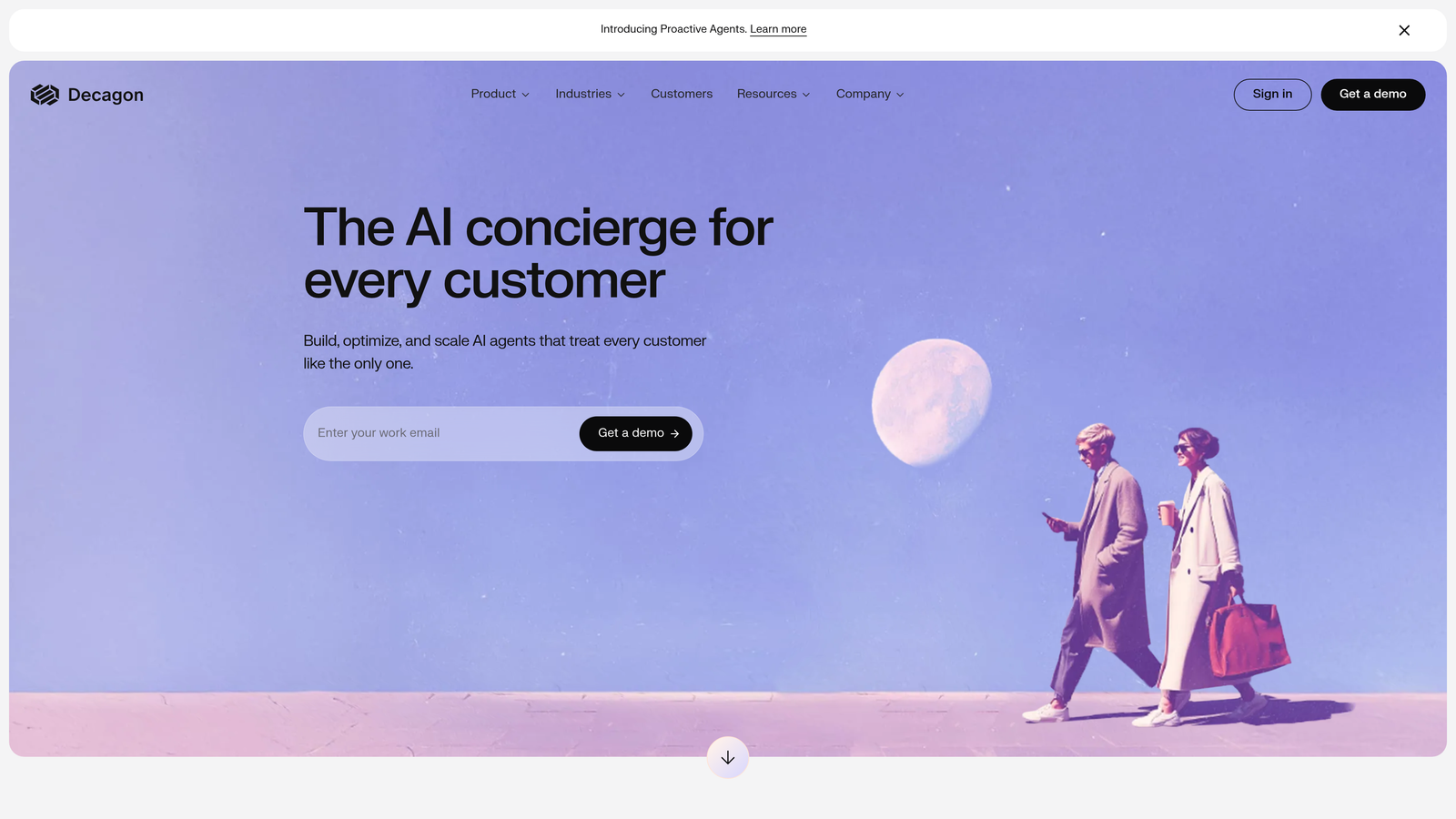
Decagon is an enterprise generative AI platform that builds custom AI agents capable of executing real workflows, processing refunds, updating accounts, and resolving complex support scenarios autonomously.
Where This Tool Shines
Decagon sits firmly in the "action-oriented" tier of autonomous support. The distinction matters: many platforms can answer a customer's question about a refund. Decagon can actually process the refund. That difference in capability represents a fundamentally different level of automation depth.
The custom agent building model means each deployment is trained on the company's specific policies, knowledge, and workflows. This produces more accurate, on-brand resolutions compared to generic AI agents that need significant post-deployment tuning.
Key Features
Action-Oriented Agents: Executes real workflows including refunds, account updates, and subscription changes.
Custom Knowledge Training: Built on company-specific policies, documentation, and process knowledge.
Deep API Integrations: Connects to backend systems to take meaningful action, not just retrieve information.
Human-in-the-Loop Escalation: Transfers complex cases with full context preserved for seamless agent pickup.
Analytics Dashboard: Tracks resolution rates and CSAT scores with granular reporting.
Best For
Enterprise support teams where the value of automation is tied to taking actions in backend systems, not just deflecting tickets. Strong fit for e-commerce, fintech, and subscription businesses with high refund and account-change volumes.
Pricing
Custom enterprise pricing; contact the Decagon sales team for a scoped quote.
7. Cognigy
Best for: Enterprises requiring autonomous support across both voice and digital channels in a single platform.
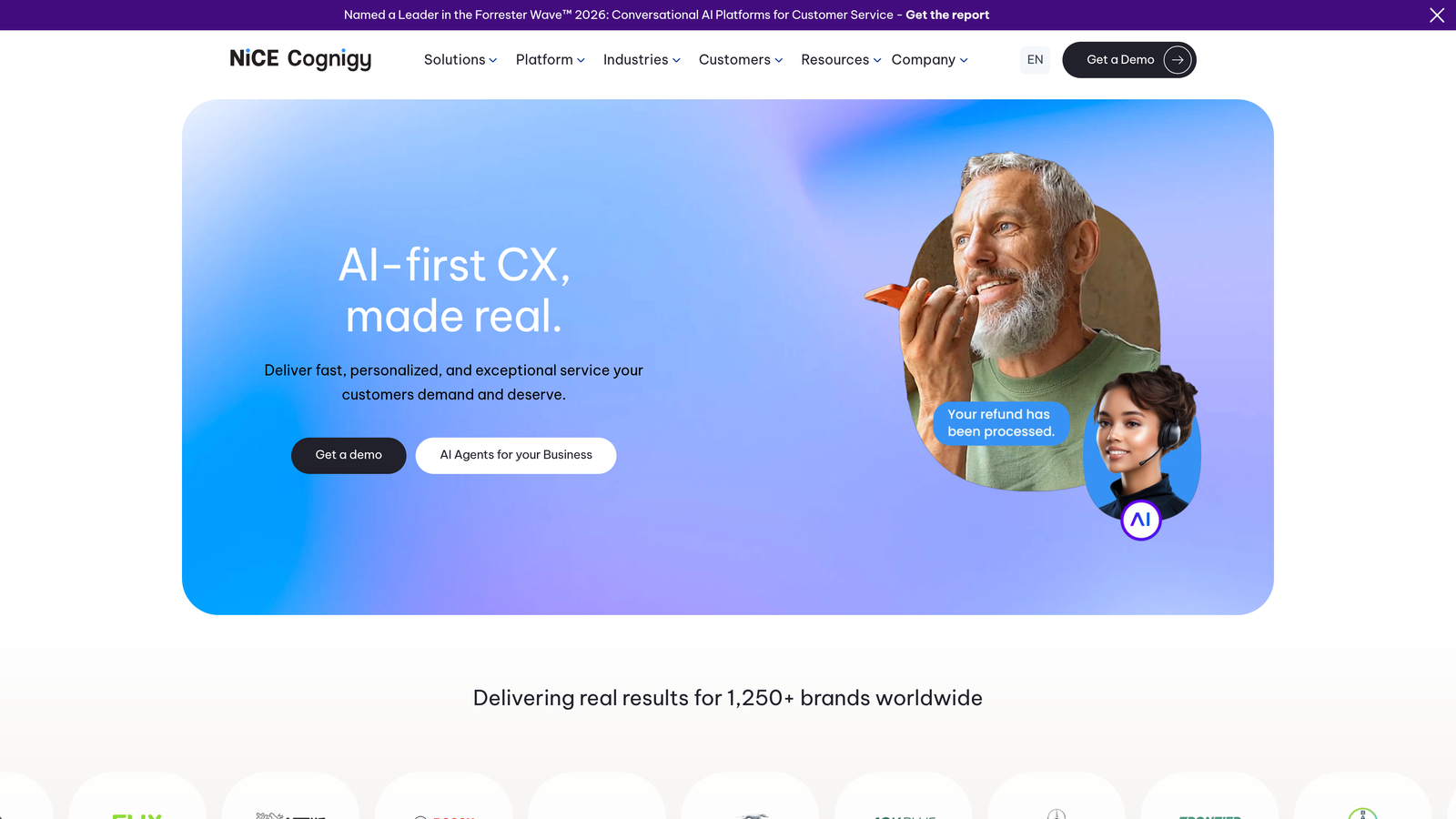
Cognigy is an enterprise conversational AI platform combining voice and digital channel automation with agentic AI orchestration for omnichannel autonomous support at scale.
Where This Tool Shines
Cognigy's voice AI capability is a genuine differentiator in a market that often focuses exclusively on chat and messaging. For enterprises with high inbound phone volumes, the ability to deploy autonomous voice agents alongside digital chat agents from a single platform removes significant operational complexity.
The agentic AI architecture supports multi-step reasoning and task execution, which means Cognigy agents can work through complex, branching support scenarios rather than falling back to human escalation at the first sign of complexity.
Key Features
Voice AI Agents: Deploys autonomous agents for phone-based support alongside digital channels.
Omnichannel Orchestration: Manages voice, chat, email, and messaging from a unified platform.
Agentic AI Reasoning: Supports multi-step task execution for complex support workflows.
Enterprise System Integrations: Connects with SAP, Salesforce, ServiceNow, and other enterprise platforms.
Low-Code Flow Builder: Enables custom conversation design without deep technical resources.
Best For
Large enterprises with significant phone support volume alongside digital channels, particularly those running SAP, Salesforce, or ServiceNow who need deep native integrations.
Pricing
Custom enterprise pricing; a free trial is available for teams wanting to evaluate the platform before committing.
8. Ultimate (now part of Zendesk)
Best for: Global enterprises needing autonomous resolution across 100+ languages without translation infrastructure.
Ultimate is a multilingual autonomous support platform purpose-built for global enterprises, now integrated into the Zendesk ecosystem with advanced language understanding across more than 100 languages.
Where This Tool Shines
Language coverage at this scale is genuinely rare. Most AI support platforms handle English well and treat other languages as secondary. Ultimate was built with multilingual understanding at its core, which means resolution quality in German, Japanese, or Portuguese isn't degraded compared to English.
The Zendesk acquisition brings tighter ecosystem integration for existing Zendesk customers, making Ultimate an attractive option for global support teams already invested in that platform who need enterprise-grade multilingual capability.
Key Features
100+ Language Support: Autonomous resolution across more than 100 languages without relying on translation layers.
Pre-Built Integrations: Connects with major CRM and helpdesk platforms out of the box.
Generative AI Dialogue: Custom conversation flows enhanced with generative AI response quality.
Multilingual Analytics: Reports on automation rates segmented by language and region.
Zendesk Ecosystem Integration: Deeper platform integration following acquisition for Zendesk customers.
Best For
Multinational enterprises with support operations spanning multiple languages and regions, especially those already in the Zendesk ecosystem who need robust multilingual autonomous resolution.
Pricing
Available through Zendesk for existing customers; custom pricing applies for standalone deployments. Contact sales for specifics.
9. Freshdesk Freddy AI
Best for: SMBs and growing teams wanting accessible AI-powered resolution within the Freshworks ecosystem.
Freshdesk Freddy AI is Freshworks' AI-powered support agent built into Freshdesk, offering autonomous ticket resolution, smart routing, and AI-assisted agent tools at a price point accessible to smaller teams.
Where This Tool Shines
Freddy AI's strongest card is accessibility. Where most enterprise-grade autonomous platforms require custom pricing conversations and lengthy onboarding, Freddy is available on transparent subscription tiers that smaller teams can evaluate and adopt without a procurement process.
The combination of auto-resolution for common queries and Freddy Copilot for agent-assist creates a layered automation approach. Teams can start with copilot features to build confidence in AI-generated responses before enabling fully autonomous resolution, which reduces the adoption risk for teams new to AI support tools.
Key Features
AI Auto-Resolution: Handles common, repeating support queries autonomously without agent involvement.
Smart Ticket Routing: Routes based on agent skill, current workload, and detected intent for optimal assignment.
Freddy Copilot: Provides human agents with AI-suggested responses and next-best-action recommendations.
Freshworks Ecosystem Integration: Connects tightly with Freshworks CRM and ITSM products for a unified view.
Accessible Pricing Tiers: AI features available at SMB-friendly price points without enterprise contract requirements.
Best For
SMBs and mid-market teams already using Freshdesk or the broader Freshworks suite who want to add autonomous resolution capabilities without moving to a more complex, enterprise-only platform.
Pricing
AI features included in the Pro plan at $49 per agent per month; advanced AI capabilities available in the Enterprise tier.
Choosing the Right Autonomous Support Platform
The nine platforms above cover a wide spectrum, from AI-first architectures built around autonomous agents to AI layers that enhance existing helpdesk investments. The right choice depends heavily on where you are and where you're trying to go.
Here's a practical way to think through the decision:
If you're building AI-first from the ground up: Halo AI and Ada are purpose-built for this. Halo brings the added advantage of page-aware context and business intelligence that turns support into a strategic signal layer, not just a resolution engine.
If you're invested in Zendesk: You have three credible options. Zendesk AI Agents for native, low-friction activation. Forethought for a more sophisticated generative AI overlay. Ultimate for multilingual enterprise requirements.
If backend action-taking is the priority: Decagon is the standout. If your support value lies in processing refunds, updating accounts, and executing workflows rather than answering questions, Decagon's architecture is built for that.
If voice is a significant channel: Cognigy is the only platform here with genuine enterprise-grade voice AI alongside digital channels.
If budget accessibility matters: Freshdesk Freddy AI offers the most transparent, SMB-friendly entry point into autonomous resolution.
The broader shift happening across all these platforms is worth naming: autonomous support is no longer about deflection rates. The metric that matters is resolution quality, the percentage of issues fully resolved without human involvement and without the customer needing to follow up. That's the number worth optimizing for.
Your support team shouldn't scale linearly with your customer base. AI agents should handle routine tickets, guide users through your product, and surface business intelligence while your team focuses on the complex issues that genuinely need a human touch. See Halo in action and discover how continuous learning transforms every interaction into smarter, faster support.