9 Best Autonomous Customer Support Systems in 2026
Autonomous customer support systems use AI agents to resolve customer issues independently, learning from interactions and escalating only when human judgment is required. We evaluated the top platforms in 2026 based on resolution accuracy, learning capabilities, integration depth, and scalability to help you choose a system that reduces ticket volume while handling complex workflows effectively.
 Matt PattoliFounder10 min read
Your support team is drowning in tickets while customers wait hours for simple answers. Autonomous customer support systems change this equation entirely—AI agents that resolve issues independently, learn from every interaction, and escalate only when human judgment is genuinely needed.
But not all autonomous systems deliver equal results. Some excel at ticket deflection while struggling with complex workflows. Others integrate beautifully with your stack but lack the intelligence to handle nuanced requests.
We evaluated the leading platforms based on resolution accuracy, learning capabilities, integration depth, and real-world scalability. Here are the top autonomous customer support systems worth your attention in 2026.
1. Halo AI
Best for: B2B SaaS teams wanting AI that understands your product and learns continuously
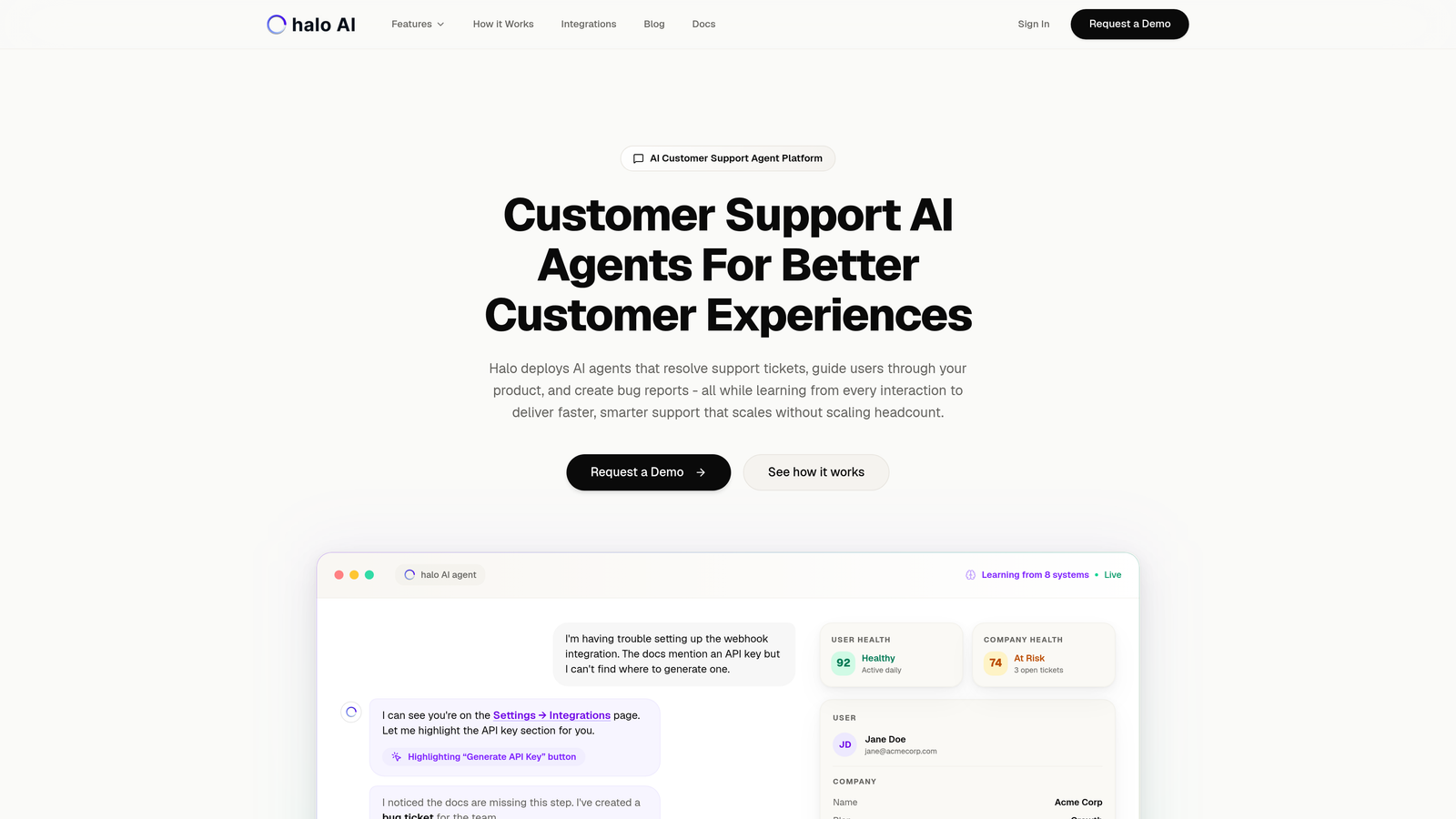
Halo AI is an AI-first customer support platform built from the ground up for autonomous resolution, not retrofitted onto legacy helpdesk architecture.
Where This Tool Shines
The page-aware capability sets Halo apart from competitors. The AI agent sees exactly what your customer sees in your product, allowing it to provide contextual guidance that generic chatbots simply can't match. When a user struggles with a specific feature, Halo understands the visual interface they're navigating.
The continuous learning architecture means every resolved ticket makes the system smarter. Unlike platforms that require manual knowledge base updates, Halo automatically improves its resolution patterns from real customer interactions.
Key Features
Page-Aware Chat Widget: AI agents that see your product interface and provide visual guidance based on what users are actually viewing.
Continuous Learning Engine: System intelligence improves automatically from every customer interaction without manual intervention.
Auto Bug Ticket Creation: Automatically generates Linear tickets when issues require engineering attention, complete with reproduction context.
Business Intelligence Layer: Surfaces customer health signals, revenue intelligence, and anomaly detection beyond basic support metrics.
Intelligent Live Agent Handoff: Knows when to escalate complex issues to humans with full conversation context transferred seamlessly.
Best For
B2B SaaS companies that need AI understanding product complexity, not just answering FAQ questions. Particularly valuable for teams using Linear, Slack, HubSpot, Intercom, Stripe, or similar business tools that benefit from deep integration.
Pricing
Contact for custom pricing based on ticket volume and integration requirements.
2. Intercom Fin
Best for: Teams already using Intercom who want native AI without platform migration
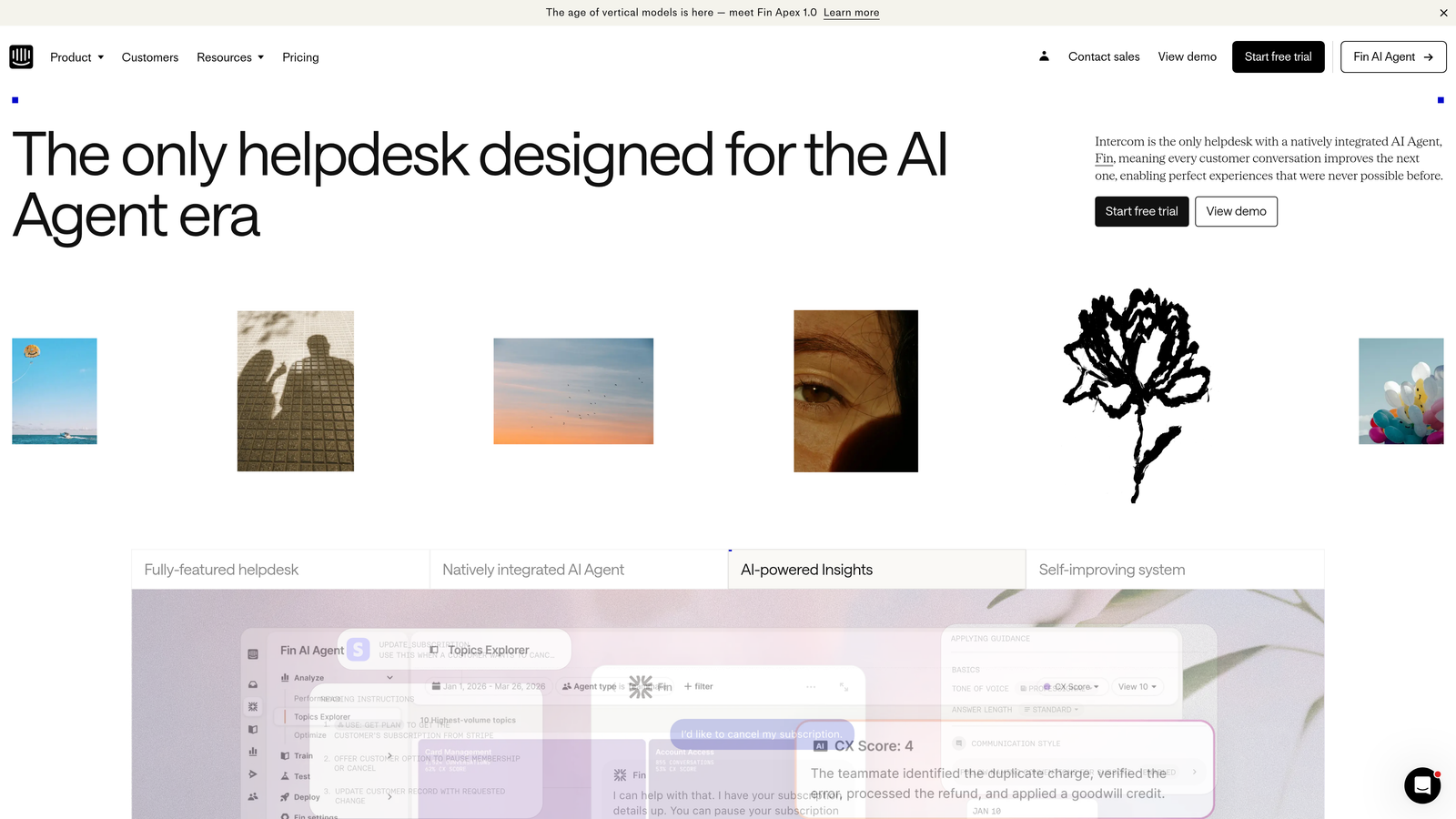
Intercom Fin is an AI agent built on GPT-4 that resolves support questions using your existing help content and conversation history.
Where This Tool Shines
If you're already invested in the Intercom ecosystem, Fin offers the smoothest path to autonomous support. The native integration means zero migration friction and immediate access to your existing knowledge base, past conversations, and customer data.
The GPT-4 foundation delivers genuinely conversational responses that feel natural rather than robotic. Multi-language support handles global customer bases without requiring separate bot configurations for each language.
Key Features
GPT-4 Powered Conversations: Natural language understanding that handles complex questions beyond simple keyword matching.
Help Center Learning: Automatically learns from your documentation and past support conversations to improve accuracy.
Seamless Human Handoff: Transfers conversations to live agents with full context when AI reaches its limits.
Multi-Language Support: Handles customer queries in dozens of languages without separate configuration.
Resolution Analytics: Tracks which questions AI resolves successfully and where human intervention is needed.
Best For
Companies already using Intercom for messaging who want to add AI capabilities without switching platforms. Works well for businesses with strong help center documentation.
Pricing
Starts at $0.99 per resolution, making costs directly tied to actual AI performance rather than seat-based licensing.
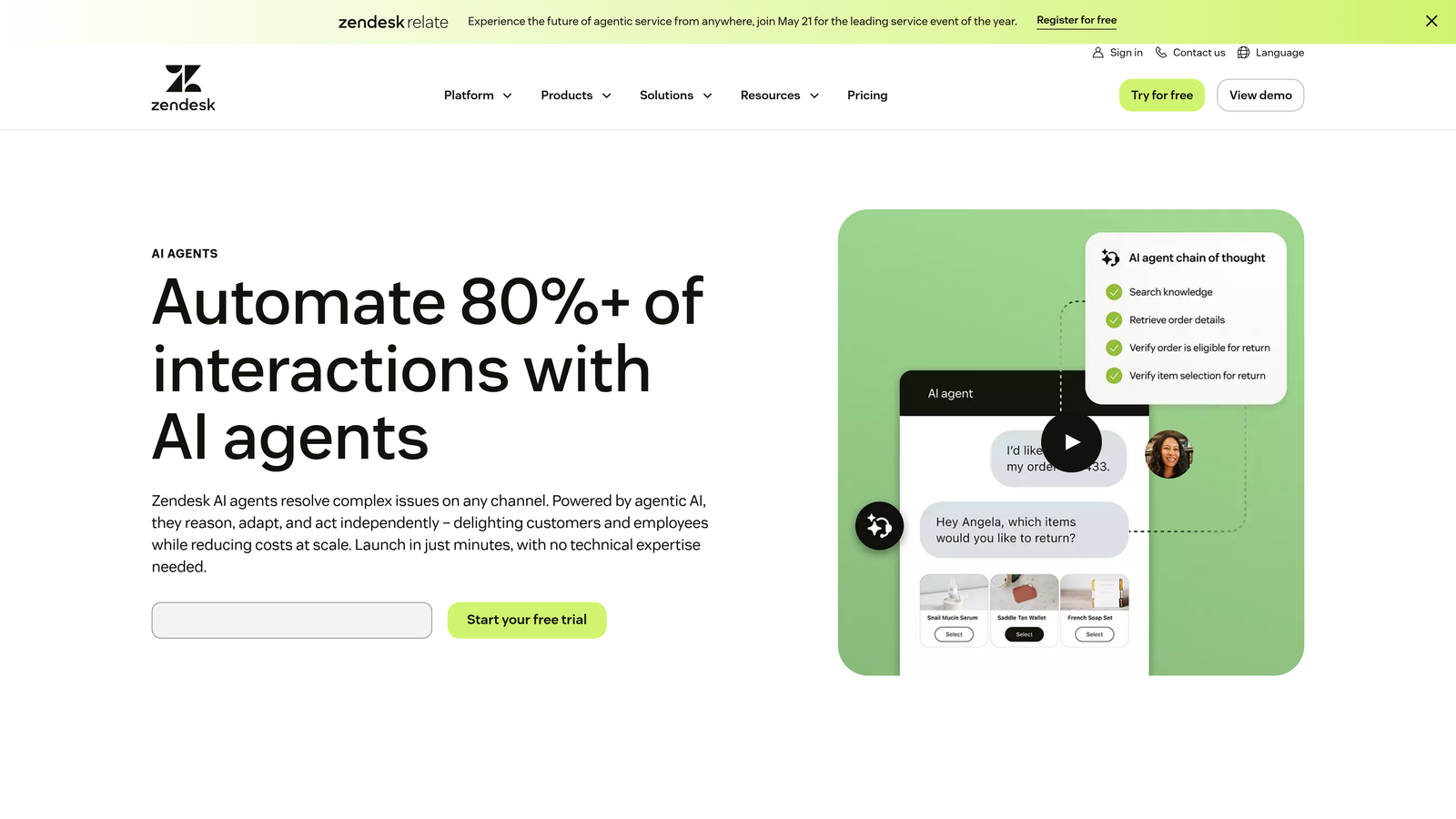
3. Zendesk AI Agents
Best for: Enterprise teams with complex Zendesk implementations needing native AI integration
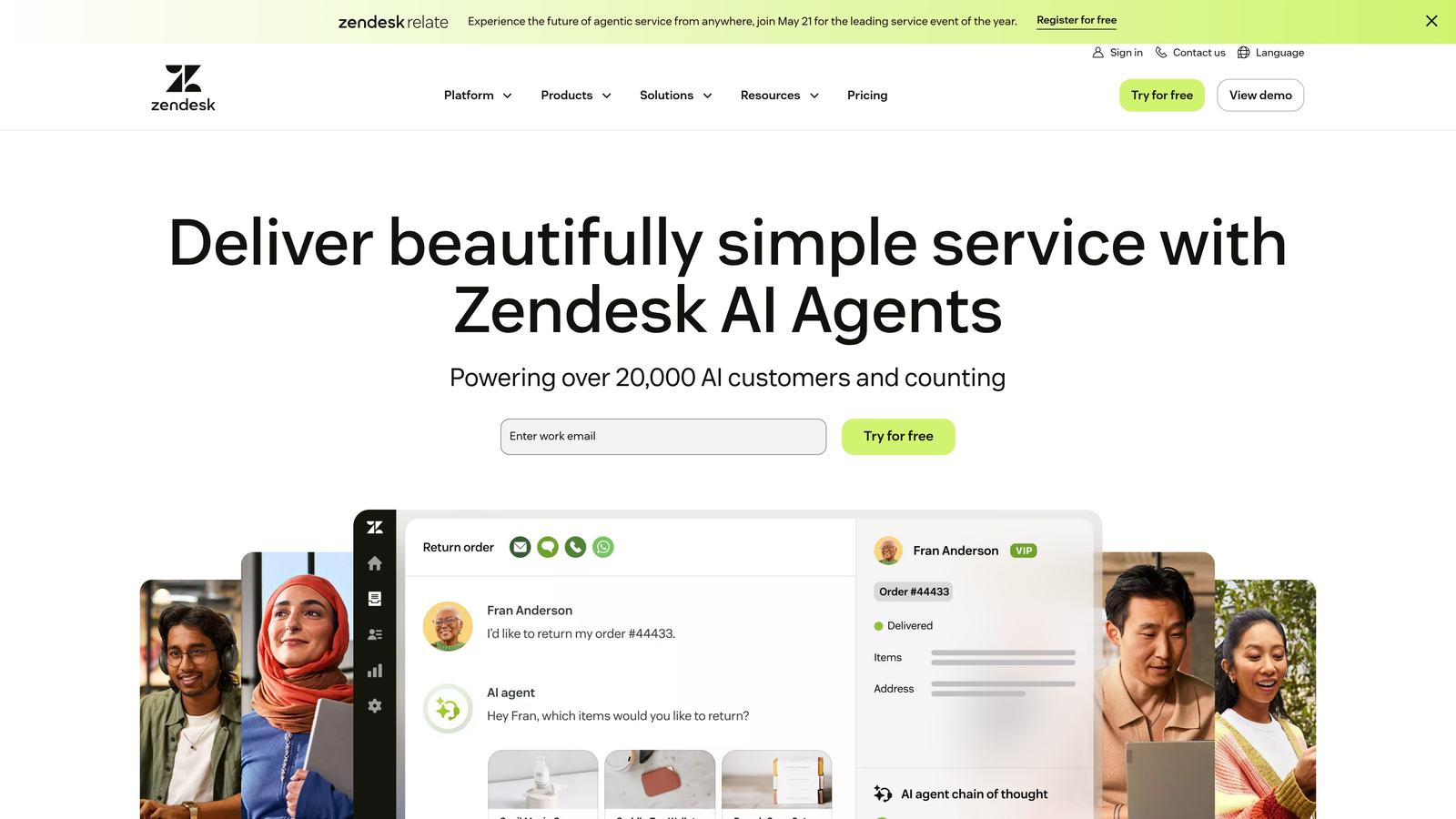
Zendesk AI Agents brings enterprise-grade AI capabilities directly into the Zendesk ecosystem with advanced intent detection and routing.
Where This Tool Shines
The native Zendesk integration means AI agents access your entire ticket history, macros, and workflow automations without complex middleware. For organizations with years of Zendesk data, this historical context delivers immediate value.
Intent detection goes beyond keyword matching to understand what customers actually need. The system routes tickets intelligently based on genuine issue complexity, not just surface-level categorization.
Key Features
Native Zendesk Integration: Direct access to all Zendesk data, workflows, and historical ticket information without third-party connectors.
Intent Detection and Smart Routing: Understands customer needs and routes tickets to appropriate AI workflows or human specialists.
Generative AI Responses: Creates contextual answers rather than selecting from pre-written templates.
Agent Copilot Features: Assists human agents with suggested responses and next-best-action recommendations.
Workflow Automation: Triggers actions across Zendesk based on AI-detected patterns and customer signals.
Best For
Large enterprises with established Zendesk deployments who need AI without platform migration. Particularly valuable for teams with complex ticket routing requirements.
Pricing
Included in Suite plans with basic features. Advanced AI capabilities available as add-on starting at enterprise tier pricing.
4. Ada
Best for: High-volume consumer brands needing scalable automation across multiple channels
Ada is an AI-powered customer service automation platform built specifically for consumer brands handling massive ticket volumes.
Where This Tool Shines
The no-code automation builder lets non-technical teams create sophisticated conversation flows without engineering resources. Marketing and support teams can deploy new automation workflows in hours, not weeks.
Support for 50+ languages makes Ada particularly valuable for global consumer brands. The platform handles language detection automatically and maintains conversation context across language switches.
Key Features
No-Code Automation Builder: Visual interface for creating conversation flows without programming knowledge required.
50+ Language Support: Native multilingual capabilities with automatic language detection and context preservation.
Proactive Campaign Messaging: Initiates conversations based on customer behavior patterns to prevent issues before they occur.
Voice and Messaging Channels: Handles phone, SMS, web chat, and social messaging from a single platform.
Brand Customization: Extensive options for matching AI personality to brand voice and tone guidelines.
Best For
Consumer-facing brands in retail, travel, finance, and telecommunications with high ticket volumes and global customer bases requiring multilingual support.
Pricing
Custom pricing based on monthly resolution volume. Enterprise contracts typically structured around guaranteed resolution counts.
5. Freshdesk Freddy AI
Best for: Small to mid-size teams using Freshdesk who want affordable AI capabilities
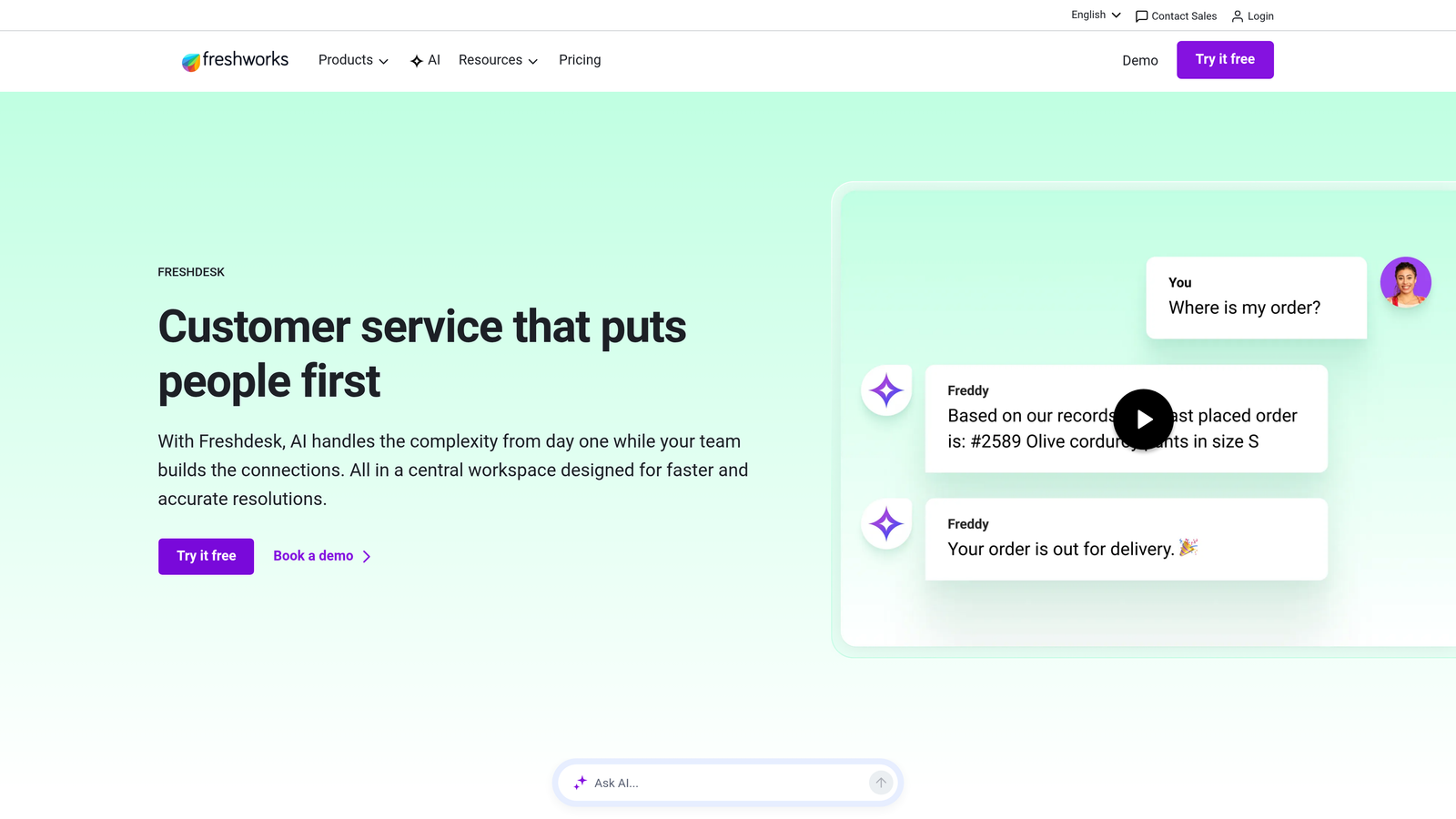
Freshdesk Freddy AI integrates AI assistance directly into Freshdesk for automated ticket handling and agent productivity improvements.
Where This Tool Shines
The auto-triage capability sorts incoming tickets by urgency, category, and required expertise without manual rules configuration. This saves hours of agent time on ticket organization and ensures critical issues get immediate attention.
Agent assist features provide response drafts based on ticket content and historical resolutions. New support team members get up to speed faster with AI-suggested responses that match your brand voice.
Key Features
Auto-Triage and Categorization: Automatically sorts tickets by priority, department, and complexity using AI pattern recognition.
Canned Response Suggestions: Recommends pre-written responses based on ticket content to speed up agent replies.
Thank You Detector: Identifies when customers are simply expressing gratitude so agents don't waste time on non-actionable tickets.
Agent Assist with Response Drafts: Generates contextual response suggestions to help agents reply faster and more consistently.
Sentiment Analysis: Detects frustrated customers automatically for priority escalation to senior agents.
Best For
Growing companies already using Freshdesk who want to add AI capabilities without switching platforms. Good fit for teams with 5-50 support agents.
Pricing
Included in Pro plan at $49 per agent per month. Enterprise plan required for advanced AI features and customization.
6. Kustomer IQ
Best for: Teams wanting CRM-native AI that uses complete customer context for personalization
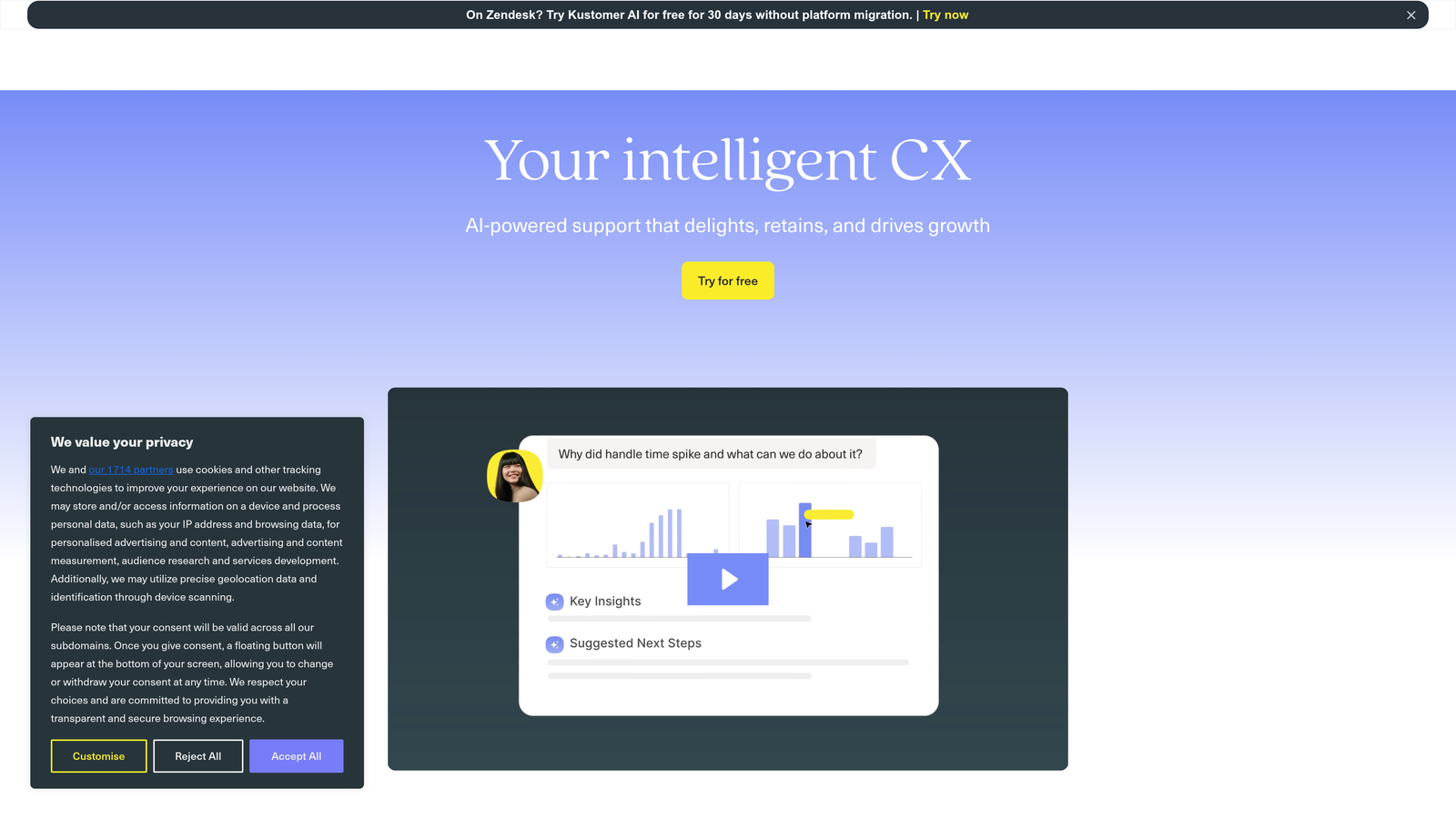
Kustomer IQ delivers AI-powered support built into a customer service CRM platform with unified timeline visibility.
Where This Tool Shines
The unified customer timeline gives AI agents access to purchase history, previous interactions, subscription status, and product usage patterns. This context awareness enables personalized responses that generic chatbots can't provide.
Proactive service triggers identify at-risk customers based on behavior patterns and automatically initiate helpful conversations before frustration leads to churn. The system detects cancellation signals and intervenes with targeted retention offers.
Key Features
Unified Customer Timeline: AI agents see complete customer history including purchases, interactions, and product usage in one view.
Sentiment and Intent Detection: Analyzes emotional tone and underlying needs to route conversations appropriately.
Conversational AI Bots: Handles common requests autonomously while maintaining brand voice consistency.
Proactive Service Triggers: Identifies at-risk customers and initiates helpful conversations before issues escalate.
Omnichannel Conversation Management: Maintains context across email, chat, SMS, and social channels in unified threads.
Best For
E-commerce and subscription businesses where customer lifetime value and retention matter more than simple ticket deflection. Teams wanting CRM and support in one platform.
Pricing
Enterprise plan starts at $89 per user per month with AI capabilities included. Custom pricing for high-volume deployments.
7. Forethought Solve
Best for: Teams focused on intelligent ticket routing and automated resolution workflows
Forethought Solve specializes in predictive ticket routing and knowledge retrieval automation to maximize resolution efficiency.
Where This Tool Shines
Predictive ticket routing analyzes incoming requests and assigns them to the agent or AI workflow most likely to resolve them quickly. The system learns from resolution patterns to continuously improve routing accuracy.
Knowledge retrieval automation surfaces relevant documentation and past resolutions instantly when agents need context. This reduces time spent searching for answers and improves response consistency across the team.
Key Features
Predictive Ticket Routing: Uses machine learning to assign tickets to optimal resolution paths based on content and historical patterns.
Knowledge Retrieval Automation: Automatically surfaces relevant help articles and past resolutions when agents open tickets.
Agent Assist with Suggested Responses: Provides contextual response recommendations to speed up agent replies.
Analytics and Insights Dashboard: Tracks resolution patterns, agent performance, and automation opportunities.
Self-Service Deflection: Intercepts common questions with automated answers before tickets reach the queue.
Best For
Mid-size to enterprise teams with complex ticket categorization needs and large knowledge bases. Particularly valuable for companies with specialized support tiers.
Pricing
Custom pricing based on monthly ticket volume and number of agent seats. Implementation and training typically included in enterprise contracts.
8. Ultimate.ai
Best for: Global companies needing multilingual virtual agents across 60+ languages
Ultimate.ai provides multilingual virtual agent capabilities for companies serving international customer bases.
Where This Tool Shines
Native support for 60+ languages eliminates the need for separate bot configurations per market. The platform handles language nuances, cultural context, and regional variations automatically rather than relying on basic translation.
The no-code dialogue builder lets regional teams customize conversation flows for their specific markets without engineering involvement. Local support managers can adapt AI responses to match regional expectations and compliance requirements.
Key Features
60+ Native Languages: Handles multilingual conversations with cultural context awareness beyond simple translation.
No-Code Dialogue Builder: Visual interface for creating and customizing conversation flows without programming.
Deep CRM and Helpdesk Integrations: Connects with Salesforce, Zendesk, Freshdesk, and major platforms for unified data access.
Analytics and Conversation Insights: Tracks resolution rates, customer satisfaction, and automation opportunities by language and region.
Continuous Learning: Improves language understanding and response accuracy from actual customer conversations.
Best For
International companies serving customers across multiple countries and languages. Particularly valuable for European businesses with diverse language requirements.
Pricing
Custom enterprise pricing based on language coverage, resolution volume, and integration requirements. Regional pricing available for specific markets.
9. Cognigy.AI
Best for: Enterprise contact centers needing voice and chat automation with compliance
Cognigy.AI delivers enterprise conversational AI for both voice and chat channels with extensive security and compliance features.
Where This Tool Shines
Voice bot capabilities handle phone support automation with natural language understanding that goes beyond rigid IVR menus. Customers can speak naturally rather than navigating numbered options.
Enterprise security and compliance features make Cognigy suitable for regulated industries like healthcare, finance, and government. The platform meets GDPR, HIPAA, and SOC 2 requirements out of the box.
Key Features
Voice and Chat Bot Capabilities: Handles both phone and digital channels from a single conversational AI platform.
Low-Code Conversation Design: Visual builder for creating conversation flows with minimal technical expertise required.
Enterprise Security and Compliance: GDPR, HIPAA, and SOC 2 compliant with on-premise deployment options available.
Contact Center Integrations: Native connections to Genesys, Five9, NICE, and major contact center platforms.
Advanced Analytics: Conversation intelligence, sentiment tracking, and intent analysis across voice and chat interactions.
Best For
Large enterprises with existing contact center infrastructure in regulated industries. Companies needing on-premise deployment for data sovereignty.
Pricing
Custom enterprise pricing based on conversation volume, deployment model, and compliance requirements. Professional services for implementation typically included.
Making the Right Choice
Choosing the right autonomous customer support system depends on your specific context and requirements.
For B2B SaaS teams wanting AI that truly understands your product and learns continuously, Halo AI delivers page-aware intelligence that competitors can't match. The continuous learning architecture means your support gets smarter with every interaction, not just better documented.
If you're already invested in Intercom or Zendesk, their native AI solutions minimize migration friction and leverage your existing data immediately. The integration depth matters more than feature checklists when you have years of customer history in these platforms.
High-volume consumer brands should evaluate Ada's scalability and no-code flexibility, while global teams need Ultimate.ai's multilingual depth. Contact centers with voice requirements belong with Cognigy's enterprise-grade voice capabilities.
Start by auditing your current ticket volume, resolution complexity, and integration requirements. Map out which tools in your business stack need AI access. Identify whether your primary need is ticket deflection, agent productivity, or customer intelligence.
Request demos from your top two or three choices and test them with real customer conversations, not sanitized examples. The best autonomous system isn't the one with the most features—it's the one that resolves your customers' specific issues without human intervention.
Your support team shouldn't scale linearly with your customer base. Let AI agents handle routine tickets, guide users through your product, and surface business intelligence while your team focuses on complex issues that need a human touch. See Halo in action and discover how continuous learning transforms every interaction into smarter, faster support.