9 Best B2B Support Automation Platforms in 2026
Discover the 9 best B2B support automation platforms in 2026, evaluated for their ability to reduce ticket volume, accelerate resolution times, and handle complex technical workflows—helping lean support teams scale efficiently without sacrificing customer experience.
 Matt PattoliFounder14 min read
B2B support teams face a challenge that consumer-facing teams rarely encounter: your customers are technical, they have high expectations, and ticket volume compounds faster than you can hire. Traditional helpdesks were built to route and track work, not resolve it. They're good at creating queues; they're not great at shrinking them.
That's where B2B support automation platforms come in. These tools use AI to handle repetitive tickets, guide users through complex workflows, escalate intelligently, and surface business intelligence that goes well beyond support metrics. Whether you're running a lean team at a fast-growing SaaS company or managing high-volume operations across multiple products, the right platform can meaningfully reduce resolution time while improving the customer experience.
This list covers nine platforms worth evaluating in 2026: from AI-first agents built for autonomous resolution, to established helpdesk players adding serious automation layers. We've focused on tools built for B2B use cases, with real integrations, scalable pricing, and genuine automation depth.
1. Halo AI
Best for: AI-first SaaS teams that want autonomous ticket resolution and business intelligence from support data.
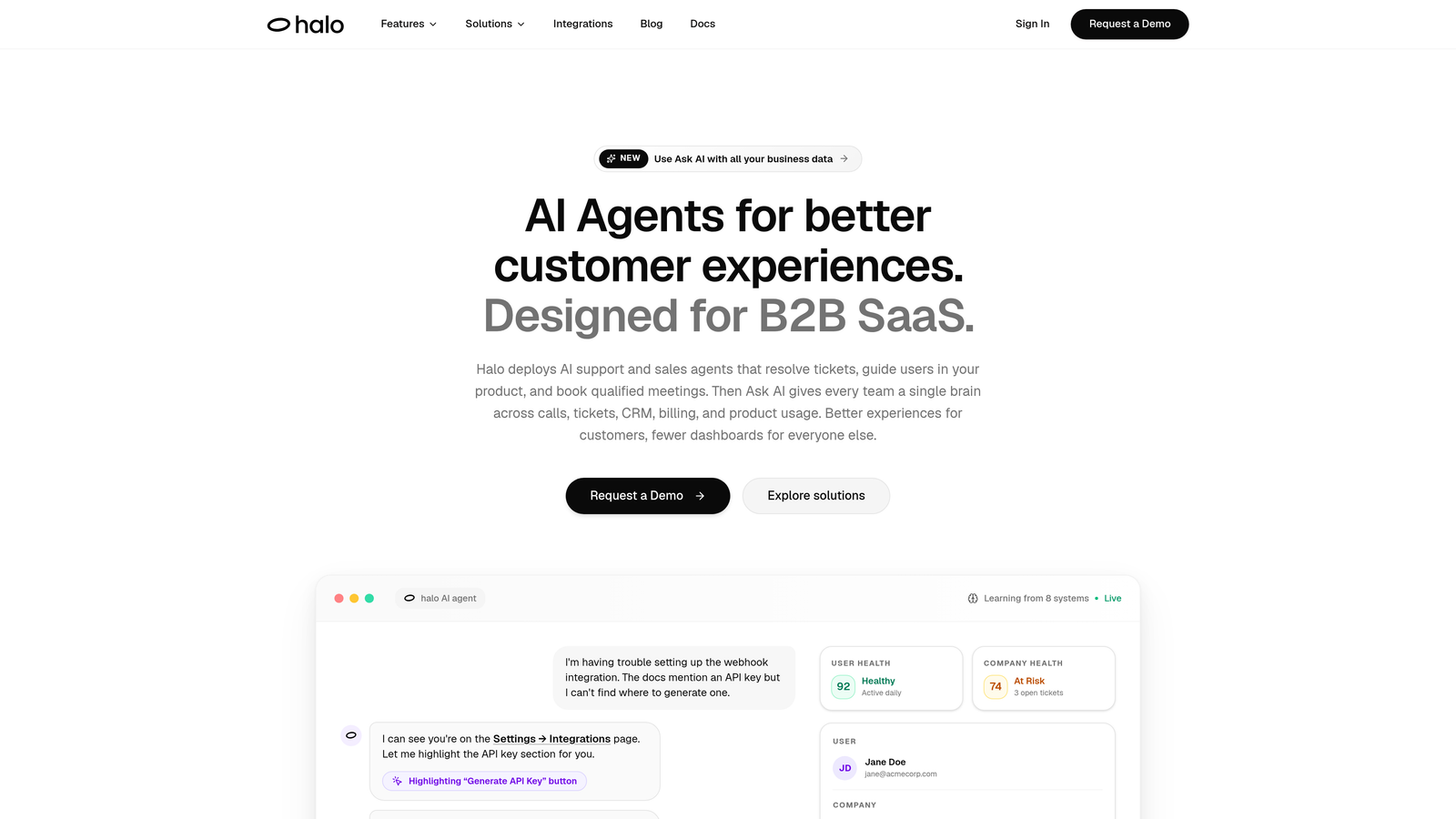
Halo AI is an AI-native B2B support automation platform that deploys intelligent agents to resolve tickets, guide users through products, and surface revenue and churn signals from every interaction.
Where This Tool Shines
Most support tools were built as helpdesks first and had AI bolted on later. Halo was built the other way around. Its AI agents aren't just classifying or routing tickets; they're resolving them autonomously, with full context about where the user is in your product and what they're trying to do.
What genuinely sets Halo apart is the business intelligence layer. While other platforms stop at CSAT scores and resolution times, Halo's smart inbox surfaces customer health signals, revenue anomalies, and churn indicators as a natural byproduct of support interactions. Your support team becomes a source of strategic insight, not just a cost center.
Key Features
Intelligent AI Agents: Resolve support tickets autonomously, handling repetitive queries without agent involvement while learning from every interaction.
Page-Aware Chat Widget: Sees exactly what users see in your product, providing visual UI guidance and context-aware answers based on their current location in the app.
Smart Inbox with Business Intelligence: Goes beyond ticket management to surface customer health signals, revenue risk indicators, and product friction patterns.
Auto Bug Ticket Creation: Automatically generates and routes bug reports to Linear or your preferred issue tracker, closing the loop between support and engineering.
Live Agent Handoff: Seamlessly escalates complex issues to human agents with full conversation context intact.
Deep Integrations: Connects with Linear, Slack, HubSpot, Intercom, Stripe, Zoom, PandaDoc, and Fathom for a genuinely unified workflow.
Best For
SaaS companies and B2B product teams that want AI to do more than triage tickets. Particularly strong for teams that are being asked to contribute to retention and revenue conversations, not just handle support volume.
Pricing
Contact Halo AI for pricing. The platform is positioned for B2B SaaS companies and product teams at scale.
2. Intercom
Best for: Mid-market SaaS teams wanting a mature all-in-one messaging and AI resolution platform.
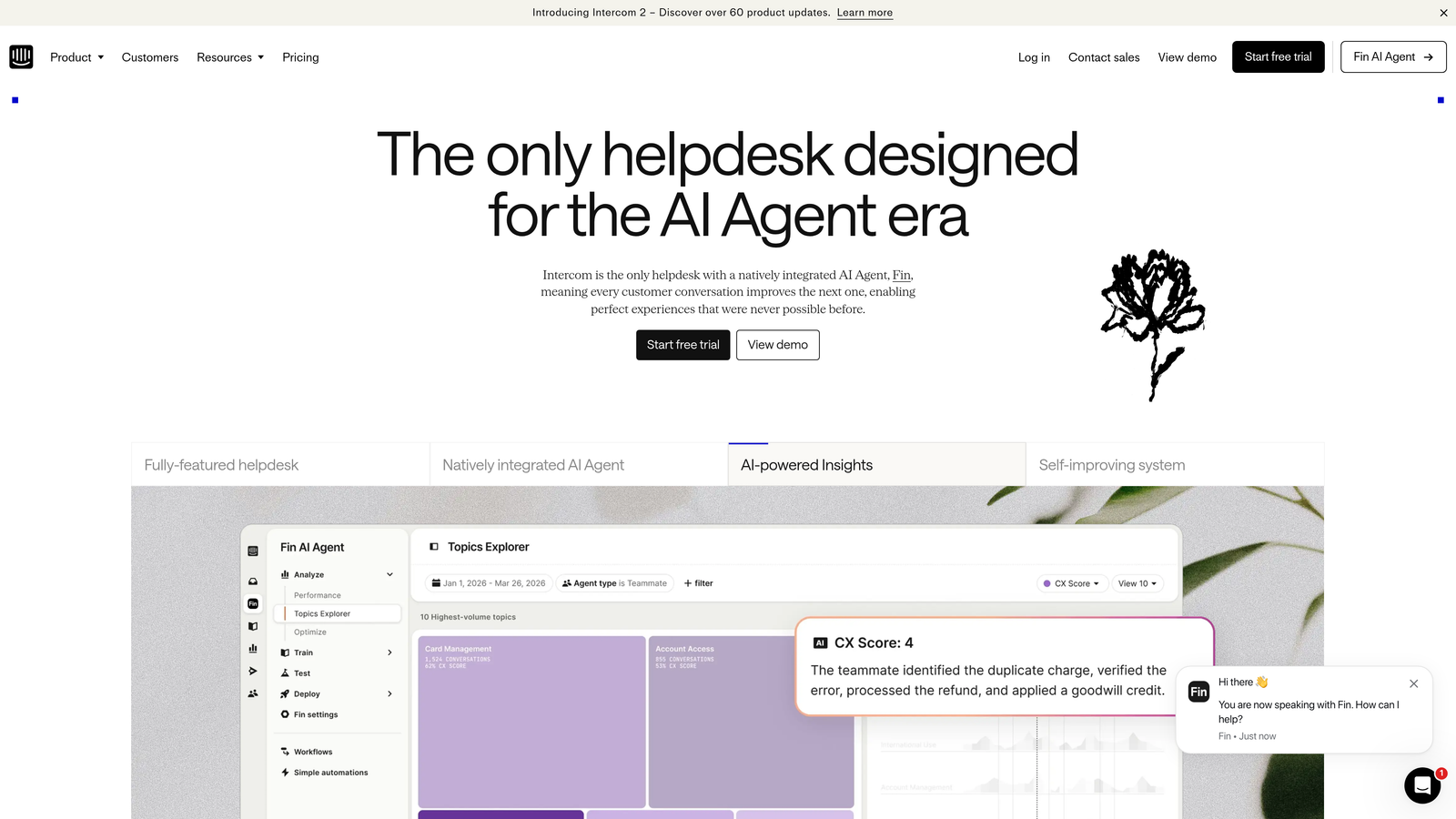
Intercom is one of the most established customer messaging platforms, combining a robust omnichannel inbox with its Fin AI agent for autonomous ticket resolution.
Where This Tool Shines
Intercom's strength is its maturity. The platform has been refined over many years, and it shows in the reliability of its inbox, the quality of its routing logic, and the depth of its conversation analytics. Fin AI, built on top of this foundation, can autonomously resolve a meaningful portion of repetitive support queries without agent involvement.
The combination of proactive messaging, in-app tours, and reactive support in a single platform makes Intercom particularly effective for SaaS teams that want to handle both onboarding and ongoing support from one place.
Key Features
Fin AI Agent: Handles repetitive queries autonomously using your knowledge base and conversation history as its foundation.
Omnichannel Inbox: Consolidates chat, email, and social conversations with smart routing and assignment rules.
Proactive Messaging and Tours: Reaches users in-product with targeted messages and guided walkthroughs to reduce inbound support volume.
AI-Assisted Knowledge Base: Surfaces relevant articles during conversations and assists agents with content suggestions.
Conversation Analytics: Detailed reporting on resolution rates, CSAT scores, and team performance.
Best For
Mid-market SaaS companies that want a proven, full-featured platform combining live chat, AI resolution, and customer messaging. Teams that need reliable omnichannel support without building custom integrations.
Pricing
Starts at approximately $39 per seat per month. Fin AI is priced per resolution, so costs scale with usage. Verify current pricing on the Intercom website.
3. Zendesk
Best for: Enterprise teams needing deep SLA management, complex routing, and multi-channel support at scale.
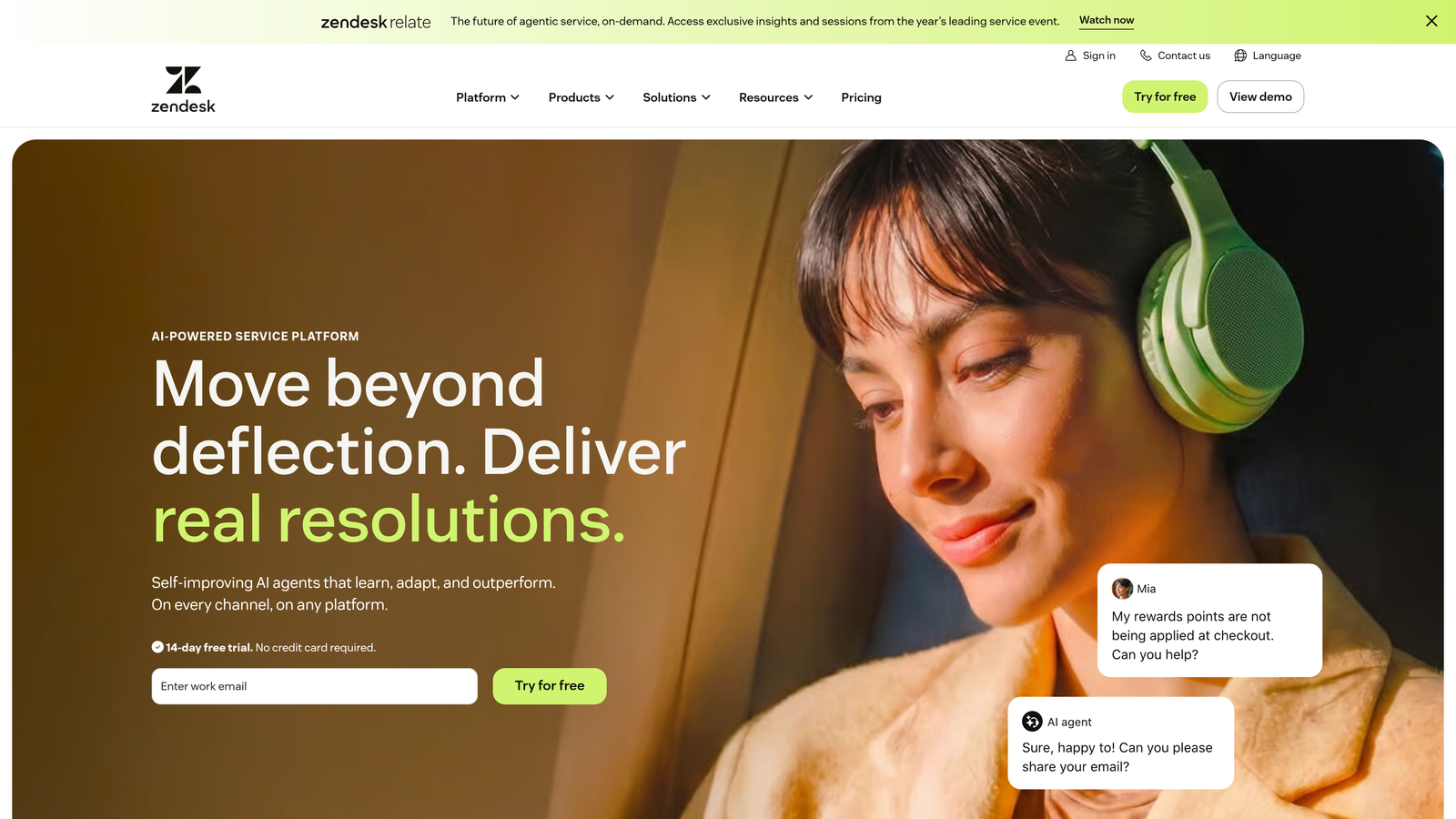
Zendesk is the industry-standard enterprise ticketing platform, now with AI triage, automated routing, and AI-powered agent assistance built into its Suite plans.
Where This Tool Shines
Zendesk's depth is unmatched for enterprise-scale operations. If you need granular SLA management, complex multi-tier routing, and the ability to support customers across every conceivable channel simultaneously, Zendesk was built for exactly that. Its AI capabilities, expanded through an OpenAI partnership, now include intelligent triage, suggested replies, and next-step recommendations that meaningfully reduce agent handling time.
The marketplace of third-party integrations is extensive. For larger teams running complex support operations, Zendesk's reporting and analytics capabilities provide the operational visibility needed to manage performance at scale.
Key Features
AI Triage and Classification: Automatically categorizes, prioritizes, and routes incoming tickets based on content and context.
AI-Suggested Replies: Recommends responses and next steps to agents in real time, reducing handling time on common queries.
SLA Management: Robust service level agreement tracking with escalation rules and compliance reporting.
Multi-Channel Support: Handles email, chat, voice, social, and API-based support from a unified interface.
Extensive Integration Marketplace: Connects with hundreds of third-party tools across CRM, billing, analytics, and project management.
Best For
Enterprise support teams managing high ticket volumes across multiple channels. Organizations that need sophisticated SLA management, compliance reporting, and the flexibility of a large integration ecosystem.
Pricing
Suite plans start at approximately $55 per agent per month. Enterprise tiers are significantly higher. Always verify current pricing on the Zendesk website before budgeting.
4. Freshdesk
Best for: Cost-conscious teams wanting omnichannel automation with a capable AI layer at accessible pricing.
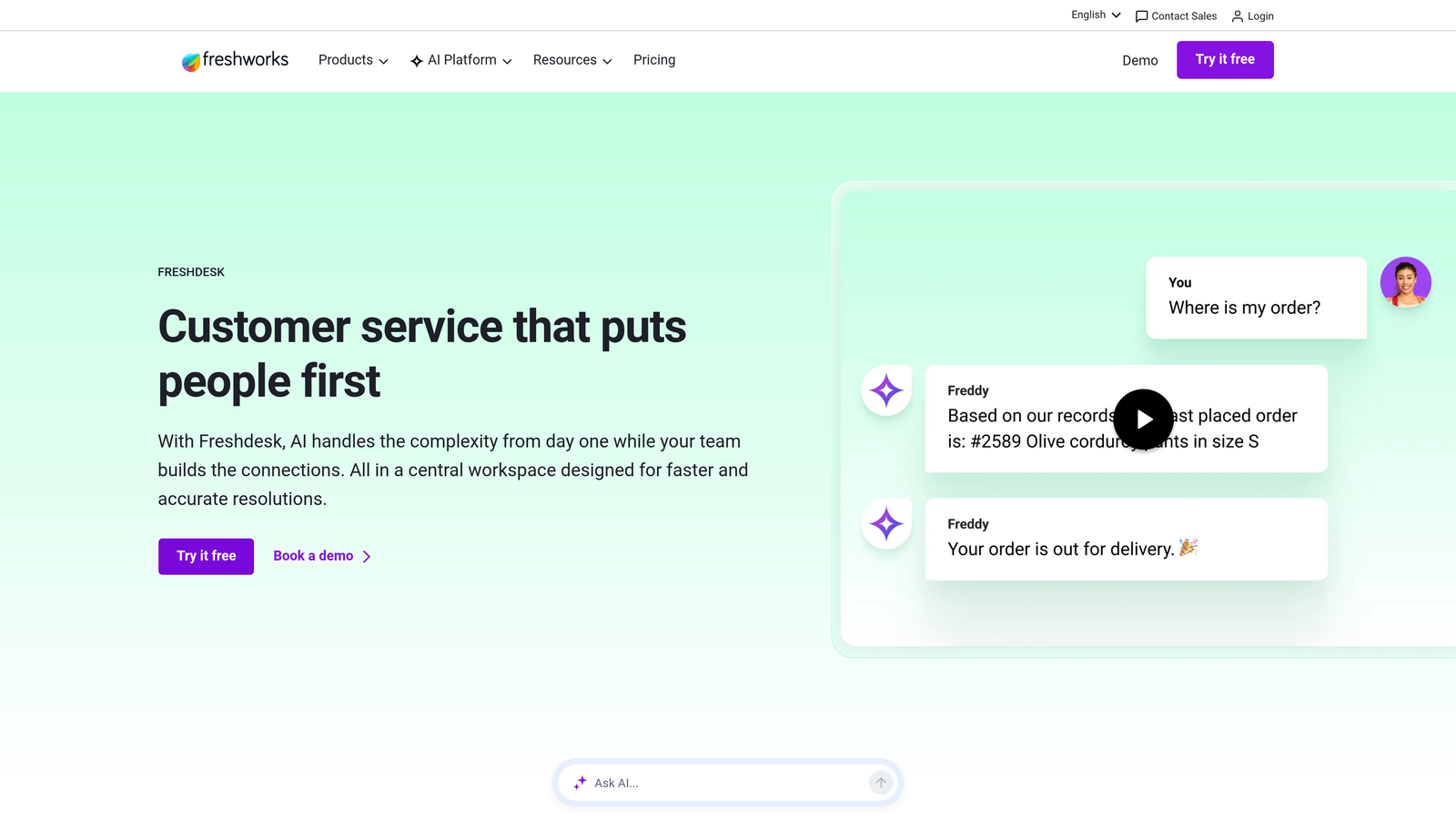
Freshdesk is a feature-rich helpdesk platform from Freshworks with Freddy AI built in, offering omnichannel automation at a more accessible price point than many enterprise alternatives.
Where This Tool Shines
Freshdesk positions itself as the practical alternative to Zendesk: comparable features, lower price, and a free tier that lets small teams get started without a budget commitment. Freddy AI handles intent detection, auto-triage, and suggested responses, making it a genuinely useful automation layer rather than a marketing checkbox.
Collision detection is a small but valuable feature that prevents two agents from working on the same ticket simultaneously, which becomes a real problem as teams grow. For teams managing support across email, chat, phone, and social, Freshdesk's omnichannel capabilities hold up well at its price point.
Key Features
Freddy AI: Handles intent detection, auto-triage, and suggested responses, with some autonomous resolution capability for common queries.
Omnichannel Support: Manages email, chat, phone, and social interactions from a unified inbox.
Collision Detection: Alerts agents when another team member is already working on a ticket to prevent duplicate effort.
Automation Rules: Configurable rules for ticket assignment, escalation, and status updates based on conditions.
Free Tier: A functional free plan that allows small teams to start without upfront cost.
Best For
Small to mid-sized B2B teams looking for a full-featured helpdesk with solid AI capabilities at a price point that doesn't require enterprise budget approval. Good Zendesk alternative for cost-conscious buyers.
Pricing
Free tier available for basic use. Paid plans start at approximately $15 per agent per month. Verify current pricing on the Freshdesk website.
5. Salesforce Service Cloud
Best for: Enterprise teams already running Salesforce CRM who need support deeply integrated with sales and account data.
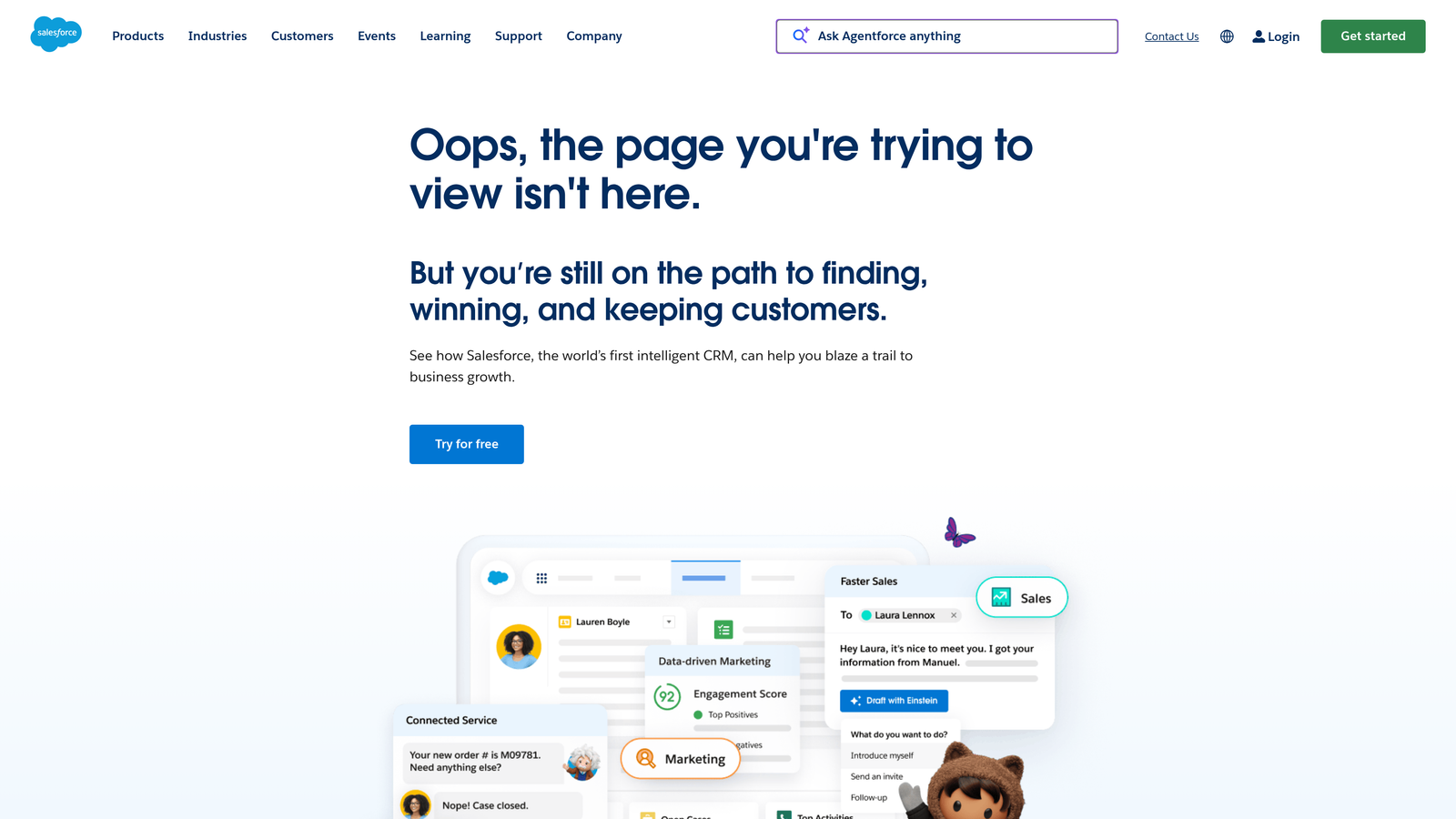
Salesforce Service Cloud is an enterprise-grade support automation platform deeply integrated with Salesforce CRM, using Einstein AI for case classification, routing, and agent recommendations.
Where This Tool Shines
If your organization runs on Salesforce, Service Cloud is the natural support platform. The integration between support cases and CRM data means every ticket arrives with full context: the customer's account history, open deals, contract value, and relationship health. That context changes how your team handles high-value accounts and informs escalation decisions in ways that standalone helpdesks simply can't replicate.
Einstein AI adds intelligent case classification, routing, and next-best-action recommendations on top of this foundation. For enterprise teams managing complex customer relationships, the combination of full CRM context and AI-assisted workflows is genuinely powerful.
Key Features
Einstein AI: Provides case classification, automated routing, and next-best-action recommendations to guide agent responses.
Full CRM Context: Every support ticket surfaces the customer's deal history, account value, and relationship data from Sales Cloud.
Omni-Channel Routing: Distributes work across all support channels based on agent capacity, skills, and case priority.
Self-Service Portal: Customer-facing portal for case submission, knowledge base access, and status tracking.
Cross-Platform Reporting: Unified analytics spanning sales and support data for executive-level visibility.
Best For
Large enterprises with existing Salesforce infrastructure. Not recommended for teams outside the Salesforce ecosystem due to implementation complexity and cost.
Pricing
Starter plans from approximately $25 per user per month; enterprise tiers are significantly higher. Implementation costs should be factored into total cost of ownership.
6. HubSpot Service Hub
Best for: Teams running HubSpot CRM who want support, marketing, and sales data unified in one platform.
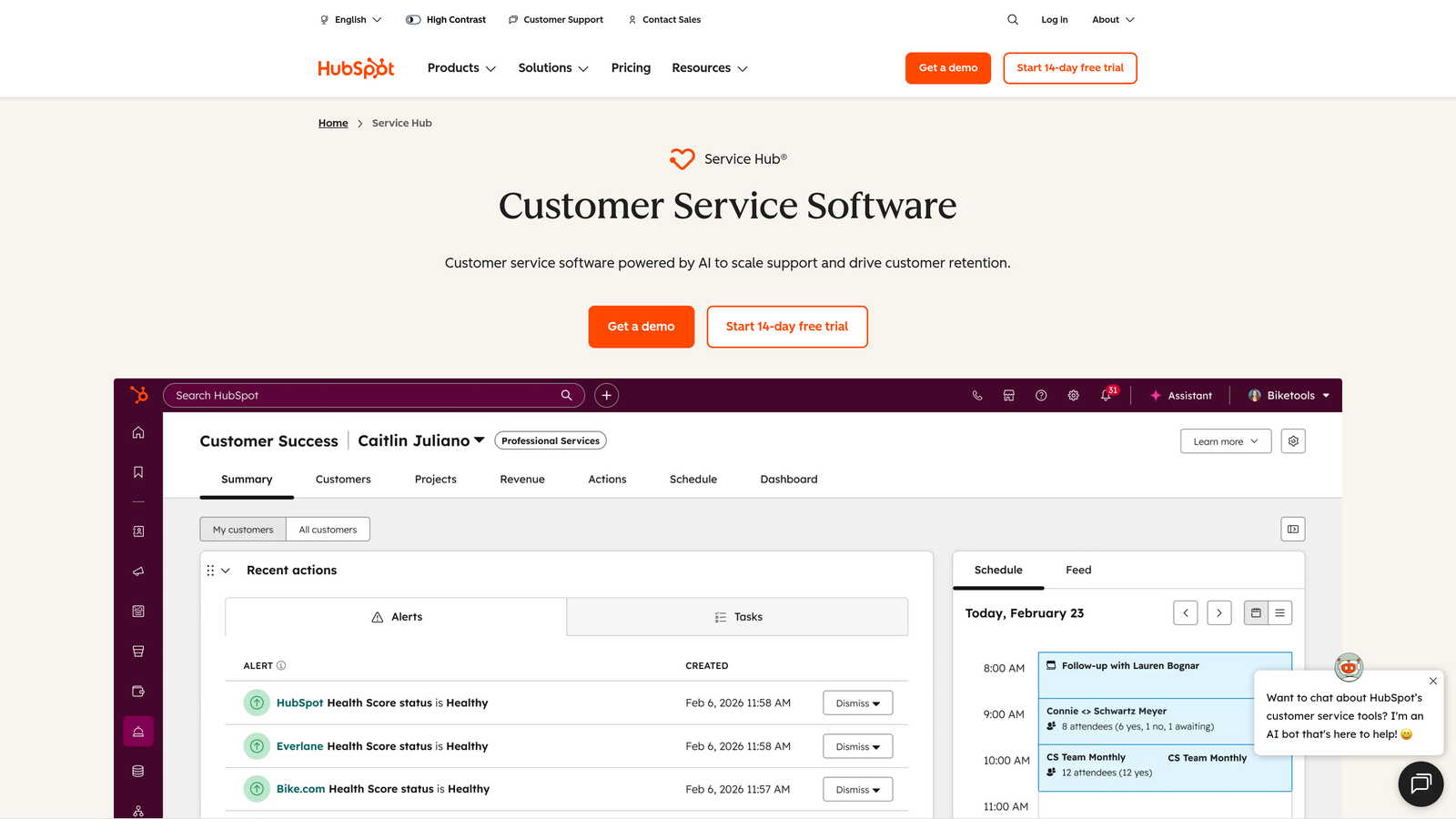
HubSpot Service Hub is a support automation platform natively connected to HubSpot CRM, enabling ticket management, live chat, and automation workflows with full marketing and sales context.
Where This Tool Shines
Service Hub's core strength is the unified data model. Because tickets, contacts, deals, and marketing interactions all live in the same HubSpot database, support agents have immediate context about a customer's relationship with your company without switching tools. A customer who just downgraded their plan, or a prospect who's been in active deal conversations, gets handled with that context visible.
The AI features are still maturing compared to purpose-built AI platforms, but for teams already invested in HubSpot, the workflow automation, CSAT surveys, and knowledge base capabilities represent strong value without adding another vendor to manage.
Key Features
CRM-Connected Tickets: Every support ticket is linked directly to the customer's contact and deal records in HubSpot CRM.
Chatbot Builder: Visual chatbot flow builder connected to HubSpot workflows for automated triage and routing.
AI-Assisted Knowledge Base: Content suggestions and article recommendations powered by AI to help agents and customers find answers faster.
CSAT and Feedback Surveys: Built-in customer satisfaction surveys with results tied to contact records.
Unified Reporting: Cross-functional dashboards spanning marketing, sales, and support data in a single view.
Best For
B2B companies already using HubSpot as their CRM who want to extend the same data model into support. Teams that prioritize unified customer context over deep AI autonomy.
Pricing
Free tier available with basic features. Starter plans from approximately $15 per seat per month. Verify current pricing on the HubSpot website.
7. Drift (Salesloft)
Best for: B2B teams where website visitors are a mix of prospects and customers, and support overlaps with sales qualification.
Drift, now part of Salesloft, is a conversational AI platform positioned at the intersection of B2B sales and support, using AI to qualify, route, and assist visitors and customers across the buyer journey.
Where This Tool Shines
Drift occupies a unique space in this list: it's not purely a support tool, and that's actually its value proposition for certain B2B teams. When your website visitors might be existing customers with support questions or new prospects evaluating your product, Drift's conversational AI can handle both flows intelligently, routing to support or sales based on context.
The AI-powered playbooks allow teams to create different conversation flows for different visitor segments, which is more sophisticated than a simple chatbot. For companies where revenue and support genuinely overlap, that flexibility is worth considering.
Key Features
Conversational AI: Handles qualification, routing, and support queries through intelligent conversation flows.
AI-Powered Playbooks: Segment-specific conversation flows that adapt based on visitor identity and behavior.
Real-Time Notifications: Alerts sales and support teams when high-value visitors or customers are active on the site.
CRM Integrations: Deep integration with Salesforce, Marketo, and major CRM and marketing automation tools.
Meeting Scheduling and Live Handoff: Allows visitors to book meetings or connect with a live agent directly from the conversation.
Best For
B2B companies with significant website traffic from both prospects and customers, where support and sales qualification happen in the same channel. Less suitable as a standalone deep-ticket-resolution platform.
Pricing
Custom pricing through Salesloft. Contact the sales team for current plans and packaging.
8. Kustomer
Best for: High-touch B2B teams that need a unified customer timeline and context-rich automation for complex relationships.
Kustomer is a CRM-native omnichannel support platform with a unified customer timeline view, enabling context-rich automation for high-touch B2B relationships.
Where This Tool Shines
Kustomer's defining feature is its customer timeline: a single view that aggregates every interaction a customer has had across every channel, from the first email to the most recent chat, ordered chronologically. For B2B teams managing complex, multi-stakeholder accounts, this context dramatically changes how agents handle incoming issues.
The CRM-style customer profiles mean agents aren't just resolving tickets in isolation; they're working with a complete picture of the relationship. AI-powered routing and response suggestions layer on top of this context, making automation more accurate because it has more to work with.
Key Features
Unified Customer Timeline: Aggregates all interactions across channels into a single chronological view per customer.
AI-Powered Routing: Routes incoming conversations based on customer attributes, history, and agent skills.
Omnichannel Support: Handles email, chat, voice, SMS, and social from a unified interface.
Workflow Automation: Conditional logic-based automation for ticket handling, escalation, and follow-up.
CRM-Style Customer Profiles: Full interaction history and customer attributes available in every support conversation.
Best For
B2B teams managing high-touch customer relationships where context and history are critical to resolution quality. Note that Meta's ownership of Kustomer has been a consideration for some enterprise buyers; evaluate accordingly.
Pricing
Starts at approximately $89 per user per month. Verify current pricing on the Kustomer website before budgeting.
9. Tidio
Best for: Smaller B2B teams or early-stage companies beginning to invest in support automation without enterprise complexity.
Tidio is an accessible live chat and AI chatbot platform with Lyro AI for autonomous query resolution, designed for teams that need automation without enterprise overhead.
Where This Tool Shines
Tidio's value proposition is simplicity and speed. You can have a functional AI chatbot handling common support queries live on your site in a matter of hours, not weeks. Lyro AI handles a meaningful portion of repetitive questions autonomously, with a clean handoff to live agents when conversations require human judgment.
For smaller B2B teams that need to look and operate more professionally than their headcount allows, Tidio punches above its weight. It's not built for enterprise-scale complexity, but that's not the point. If you're early in your support automation journey and need something that works without a lengthy implementation project, Tidio is worth a look.
Key Features
Lyro AI Chatbot: Autonomously handles common support queries using your existing knowledge base as its foundation.
Live Chat with Agent Handoff: Clean escalation from AI to human agent when conversations require it.
Visual Flow Builder: Drag-and-drop chatbot flow builder for creating custom automation without coding.
Email and Messenger Integration: Extends beyond website chat to handle email and social messaging channels.
Quick Setup: No significant technical implementation required; deployable without engineering resources.
Best For
Small to mid-sized B2B teams, early-stage SaaS companies, or organizations just beginning to invest in support automation. Not the right fit for enterprise teams with complex routing, SLA requirements, or multi-product support operations.
Pricing
Free tier available with basic functionality. Paid plans start at approximately $29 per month. Verify current pricing on the Tidio website.
Which Platform Is Right for Your Team?
The right B2B support automation platform depends on three things: where your team is today, where you want AI to take you, and how deeply the tool integrates with the rest of your stack.
Here's a quick way to think about it by use case:
AI-first SaaS teams: Halo AI is the standout choice for teams that want autonomous resolution, page-aware guidance, and business intelligence beyond support metrics. It's built for this use case from the ground up.
Enterprise with Salesforce: Salesforce Service Cloud is the natural fit. The CRM context it provides in every ticket is a genuine competitive advantage for complex account management.
Mid-market all-in-one: Intercom and Zendesk both serve this space well. Intercom leans more conversational and proactive; Zendesk leans more operational and process-heavy. Your preference depends on how you think about support.
HubSpot-native stack: HubSpot Service Hub is the obvious choice if you're already running HubSpot. The unified data model across marketing, sales, and support is genuinely valuable.
Budget-conscious teams: Freshdesk and Tidio offer strong value at accessible price points. Freshdesk for teams that need more operational depth; Tidio for teams that need something working quickly.
Revenue and support overlap: Drift is worth evaluating if your website is where both prospects and customers arrive for conversations. It's a different kind of tool, but it fills a real gap for certain B2B go-to-market motions.
Whichever platform you evaluate, pay close attention to integration depth, the actual level of AI autonomy (resolution vs. suggestion vs. routing), and whether the platform can contribute business intelligence beyond ticket counts and CSAT scores. Those three dimensions separate the tools that transform support operations from those that simply digitize them.
Your support team shouldn't scale linearly with your customer base. Let AI agents handle routine tickets, guide users through your product, and surface business intelligence while your team focuses on complex issues that need a human touch. See Halo in action and discover how continuous learning transforms every interaction into smarter, faster support.