9 Best AI Agents for Customer Service in 2026
This guide ranks the 9 best AI agents for customer service in 2026, evaluating each platform on autonomy, integration depth, escalation quality, and real-world usability for B2B teams. Whether you run a lean startup or a scaling SaaS operation, it cuts through vendor hype to surface the solutions that genuinely resolve tickets and improve support outcomes.
 Matt PattoliFounder13 min read
Customer support teams are under more pressure than ever. Ticket volumes keep climbing, customer expectations keep rising, and headcount freezes make scaling the old way impossible. The good news: AI agents have moved well beyond experimental chatbots into production-ready systems that resolve tickets autonomously, guide users through complex product workflows, and escalate intelligently when a human is genuinely needed.
But not all AI agents are built the same. Many legacy helpdesk vendors have bolted AI onto existing infrastructure. A newer generation of platforms is built AI-first from the ground up. The difference matters more than vendors will admit.
This list covers the top AI agents for customer service in 2026, evaluated on autonomy, integration depth, learning capability, escalation quality, and real-world usability for B2B teams. Whether you're running a lean startup support operation or scaling a mid-market SaaS product, there's a solution here worth considering.
1. Halo AI
Best for: B2B SaaS teams that want an AI-first support platform with business intelligence built in
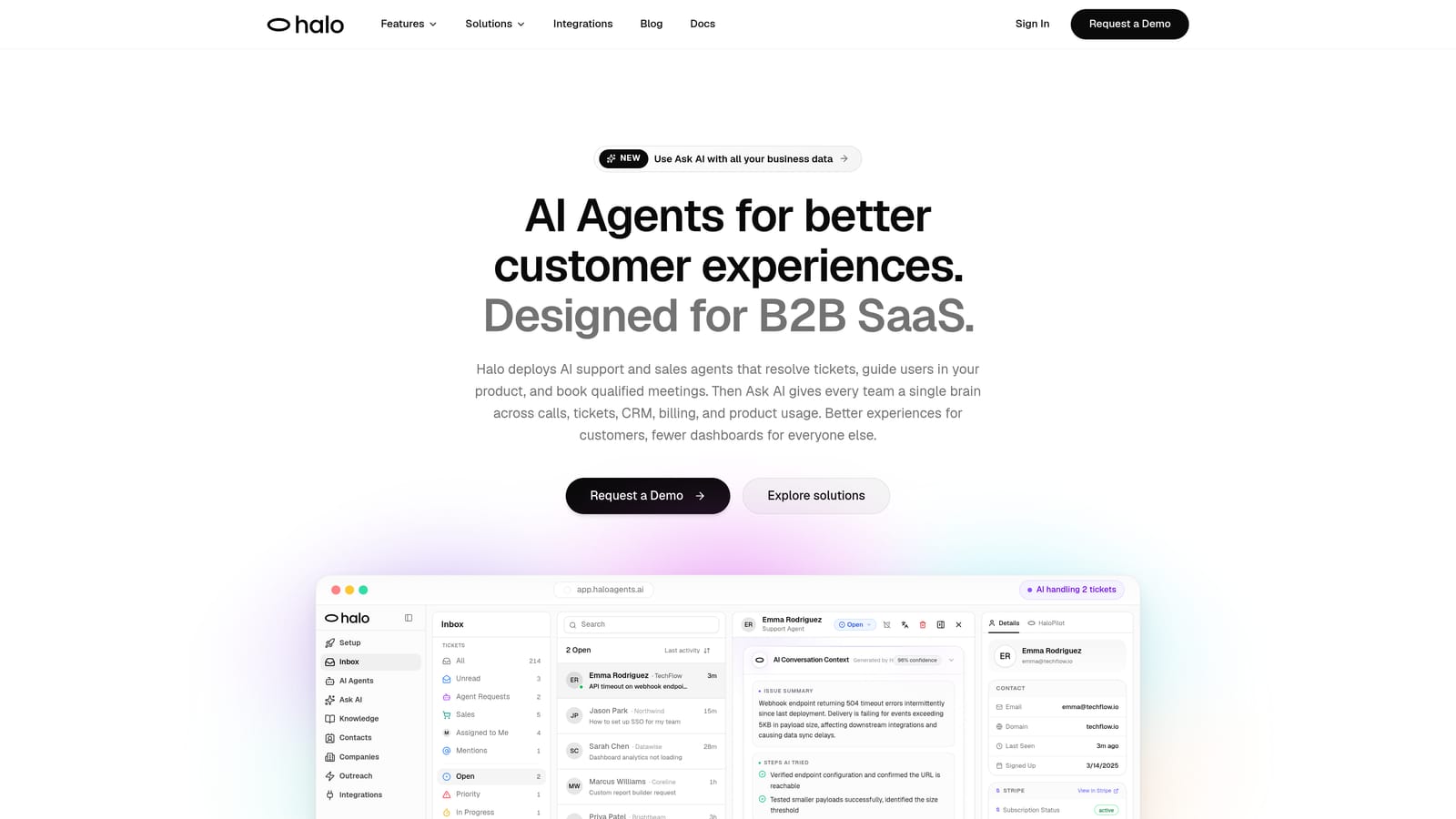
Halo AI is an AI-native customer support platform designed from the ground up for B2B SaaS teams.
Where This Tool Shines
Most AI support tools answer questions. Halo does that, but it also sees what your users see. The page-aware chat widget understands which page a user is on and delivers contextually relevant guidance rather than generic FAQ responses. That's a meaningful difference when your product has dozens of features and your users are stuck mid-workflow.
What sets Halo further apart is its business intelligence layer. The smart inbox doesn't just manage tickets; it surfaces customer health signals, revenue flags, and anomaly detection. Your support data stops being a cost center and starts informing your broader business operations. Every resolved interaction feeds back into the system, making the AI progressively smarter over time rather than static.
Key Features
Page-Aware Chat Widget: The AI understands which page the user is on and provides contextually relevant guidance, not just keyword-matched answers.
Continuous Learning: Improves from every resolved ticket automatically, building on interaction history rather than relying on static rule sets.
Smart Inbox with Business Intelligence: Surfaces customer health signals, revenue flags, and anomaly detection alongside standard support metrics.
Auto Bug Ticket Creation: Automatically generates bug reports connected to Linear, so engineering triage happens without manual handoff.
Live Agent Handoff: Escalates to human agents with full conversation context preserved, so customers never have to repeat themselves.
Deep Integrations: Connects to Linear, Slack, HubSpot, Intercom, Stripe, Zoom, PandaDoc, and Fathom out of the box.
Best For
Lean to mid-sized B2B SaaS teams that want more than ticket deflection. Halo is particularly strong for product-led growth companies where users need in-product guidance and support teams need visibility into customer health, not just resolution rates.
Pricing
Check haloagents.ai for current pricing details. Pricing is not published here to ensure you get the most accurate information directly from the source.
2. Intercom Fin
Best for: Teams already using Intercom who want to add AI resolution without switching platforms
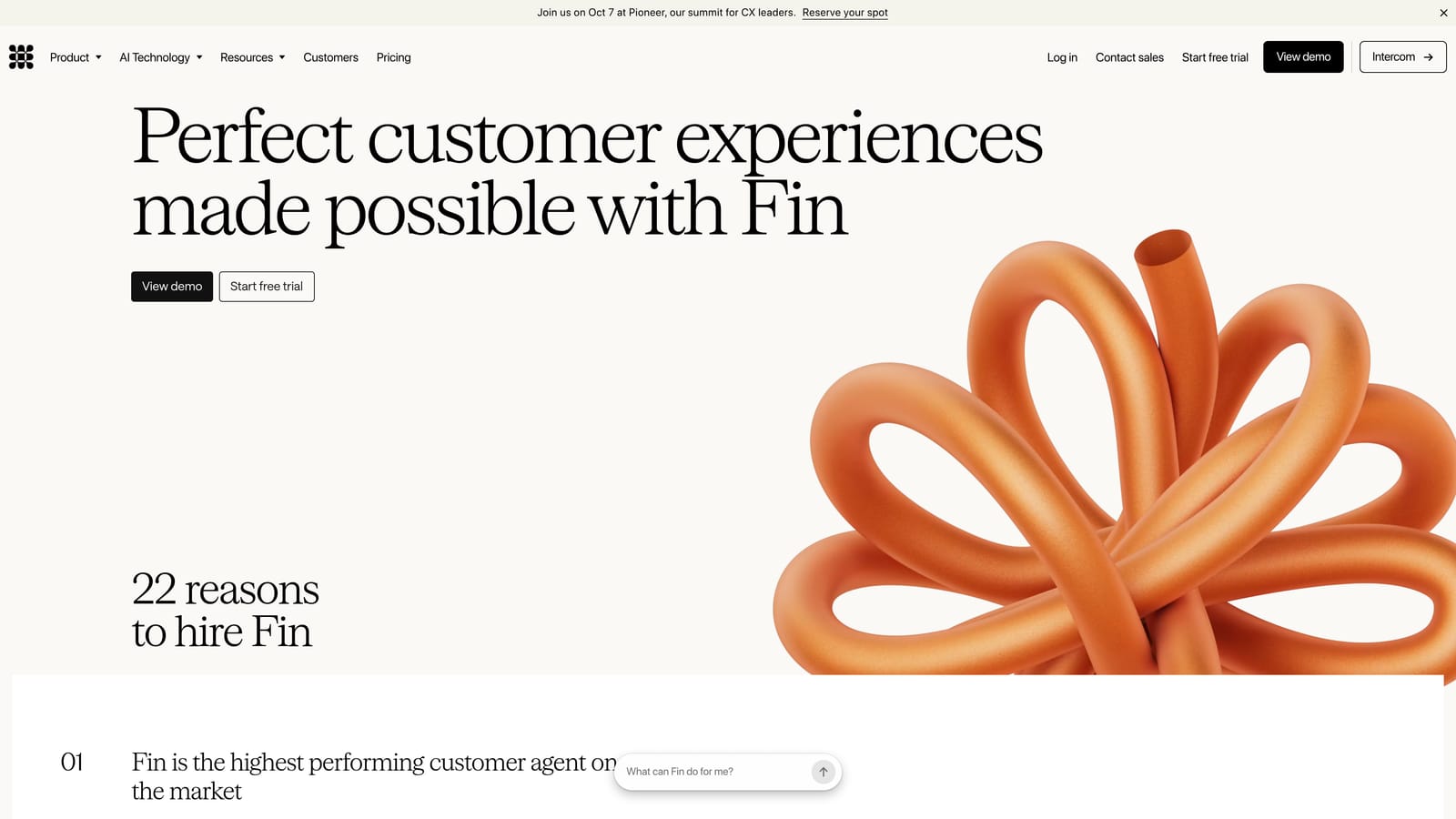
Intercom Fin is Intercom's LLM-powered AI agent that resolves customer queries autonomously within the familiar Intercom messenger experience.
Where This Tool Shines
If your team is already living inside Intercom, Fin is the most frictionless path to AI-powered resolution. There's no new platform to learn, no migration to manage, and no disruption to existing workflows. Fin reads from your help center articles and custom knowledge sources, then answers questions in the same messenger your customers already use.
The handoff experience is notably smooth. When Fin can't resolve an issue, it escalates to a human agent within the same Intercom interface, preserving conversation context. The usage-based pricing model is worth understanding carefully: you pay per resolution rather than per seat, which can be cost-effective at lower volumes but worth monitoring as ticket volume scales.
Key Features
Native Intercom Integration: Works directly within Intercom's messenger with no additional platform setup required.
Knowledge Source Flexibility: Answers from help center articles, custom knowledge bases, and multiple content sources.
Seamless Human Handoff: Escalates within the same Intercom interface, keeping the customer experience consistent.
Multilingual Support: Handles queries across multiple languages for teams serving global customers.
Usage-Based Pricing: Charges per resolution rather than flat seat cost, aligning cost with actual AI usage.
Best For
Teams already invested in Intercom's ecosystem who want AI resolution without platform migration. Less suitable for teams looking for AI-first architecture or business intelligence beyond ticket resolution.
Pricing
Usage-based pricing (per resolution) on top of an Intercom base plan. Verify current rates at intercom.com.
3. Zendesk AI Agents
Best for: Large enterprises with complex Zendesk configurations and multi-channel support requirements
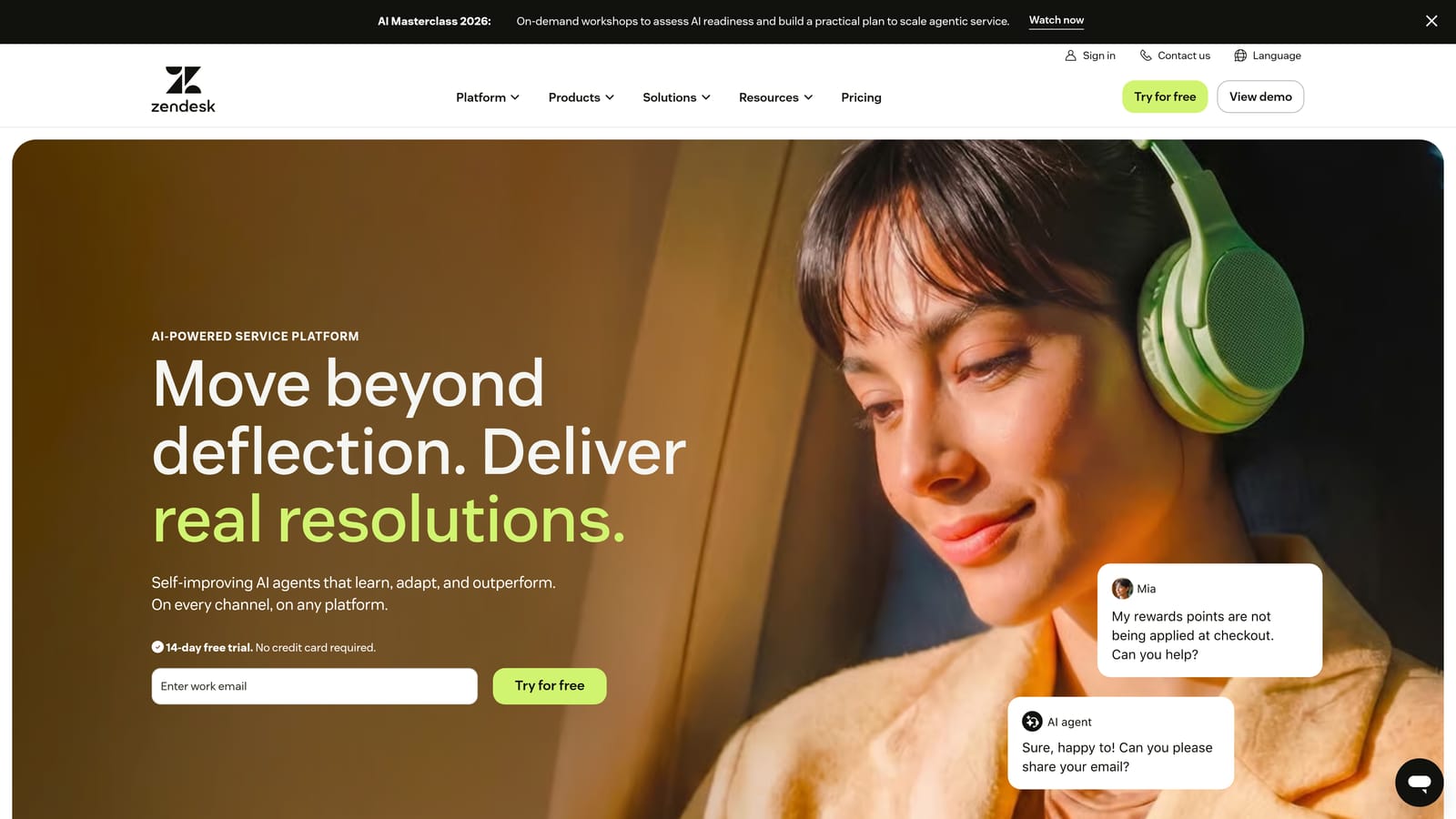
Zendesk AI Agents is Zendesk's expanded AI layer built into its enterprise ticketing platform, offering automated resolution, triage, and agent-assist capabilities.
Where This Tool Shines
Zendesk's AI agents benefit from being embedded in one of the most mature ticketing infrastructures in the market. If your organization has spent years building out Zendesk workflows, macros, and SLA configurations, the AI layer can extend that investment rather than replace it. Auto-routing, AI triage, and suggested replies for human agents are all available within the existing Zendesk environment.
Enterprise compliance is a genuine strength here. Audit trails, SLA enforcement, and enterprise-grade security controls are baked in. For organizations in regulated industries where governance matters as much as resolution speed, that's not a small thing.
Key Features
Deep Ticketing Integration: Fully embedded in Zendesk's mature workflow and routing infrastructure.
AI Triage and Auto-Routing: Automatically categorizes, prioritizes, and routes tickets based on content and context.
Agent Assist: Surfaces suggested replies and relevant articles for human agents handling complex issues.
Multi-Channel Coverage: Supports email, chat, messaging, and voice within a single platform.
Enterprise Compliance: SLAs, audit trails, and compliance controls for regulated industries.
Best For
Large enterprises already running Zendesk as their system of record. Less well-suited to lean SaaS teams looking for an AI-first platform or those without existing Zendesk infrastructure.
Pricing
AI features are available on higher-tier Zendesk plans. Verify current pricing at zendesk.com.
4. Freshdesk Freddy AI
Best for: SMBs and mid-market teams on Freshdesk who want AI without platform migration
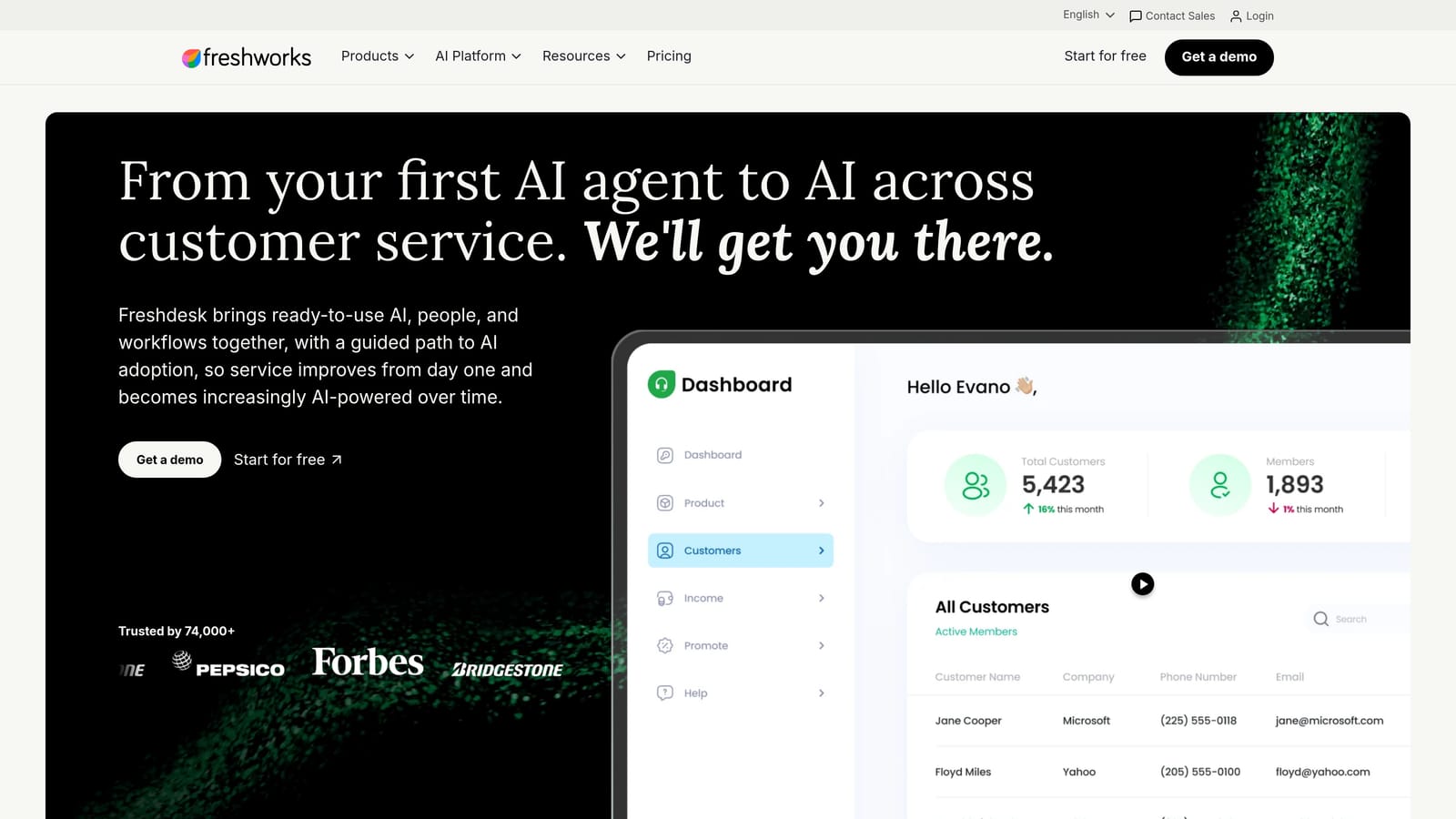
Freshdesk Freddy AI is Freshworks' AI suite embedded across the Freshdesk helpdesk platform, covering self-service deflection, agent assistance, and analytics.
Where This Tool Shines
Freddy AI is structured as three distinct layers that work together: Freddy Self Service handles deflection before tickets are created, Freddy Copilot assists human agents in drafting responses and summarizing tickets, and Freddy Insights delivers AI-powered analytics and reporting. For Freshdesk users, this means AI capabilities across the full support lifecycle without migrating to a new platform.
The Copilot feature is particularly useful for teams where human agents handle complex issues. Rather than replacing agents, it makes them faster by suggesting next actions, drafting responses, and surfacing relevant ticket history automatically.
Key Features
Freddy Self Service: Deflection bot that resolves common queries before they reach human agents.
Freddy Copilot: Helps agents draft responses, summarize tickets, and identify next best actions in real time.
Freddy Insights: AI-powered analytics layer for reporting on support trends and team performance.
No Migration Required: Works within existing Freshdesk setups, preserving current workflows and data.
SMB to Mid-Market Scaling: Designed for Freshdesk's core customer base rather than enterprise-only deployments.
Best For
Teams already running Freshdesk who want to layer in AI capabilities incrementally. Not the right fit for teams evaluating a new platform from scratch or those needing deep business intelligence from support data.
Pricing
Varies by Freshdesk plan tier. Verify current pricing at freshworks.com.
5. Salesforce Agentforce
Best for: Enterprise organizations with Salesforce as their system of record and complex multi-step support workflows
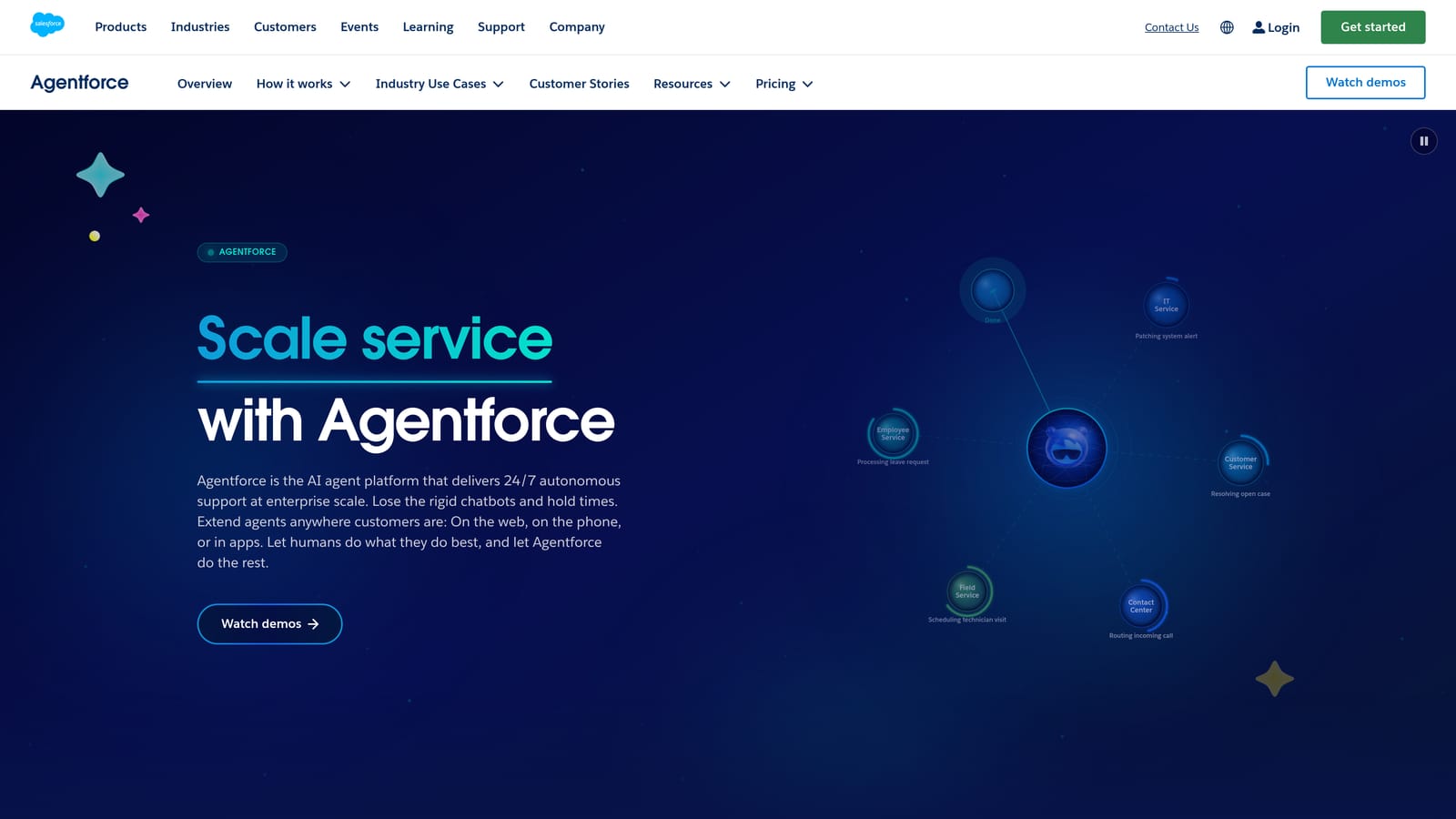
Salesforce Agentforce is Salesforce's autonomous AI agent platform that leverages deep CRM data to deliver personalized, action-taking customer service at enterprise scale.
Where This Tool Shines
The core advantage of Agentforce is access to Salesforce's CRM data. When an AI agent can see a customer's full purchase history, open cases, contract status, and account health in real time, it can resolve issues that a generic chatbot simply cannot. Agentforce goes further: it can take actions within Salesforce workflows, not just answer questions. That's a meaningful distinction for enterprise support teams handling complex, multi-step scenarios.
Governance and compliance controls are enterprise-grade, which matters for organizations in financial services, healthcare, or other regulated sectors where AI actions need to be auditable.
Key Features
Deep CRM Integration: AI agents have real-time access to Salesforce customer data, history, and account context.
Action-Taking Capability: Can execute actions within Salesforce workflows, not just surface information.
Enterprise Scale: Built for large, complex deployments with Salesforce as the central system of record.
Multi-Step Scenario Support: Handles complex, branching support interactions that require multiple data sources.
Governance Controls: Strong compliance and audit capabilities for regulated industries.
Best For
Enterprise organizations where Salesforce CRM is already central to operations. Significant overkill for smaller teams and not practical without existing Salesforce infrastructure.
Pricing
Enterprise pricing. Verify current rates at salesforce.com.
6. Forethought
Best for: Teams that want to reduce ticket volume before issues reach human agents, without replacing their existing helpdesk
Forethought is an AI platform that sits on top of existing helpdesks to handle triage, deflection, routing, and agent assist, with a focus on resolving queries before they become tickets.
Where This Tool Shines
Forethought's positioning is deliberately upstream of the ticket. Rather than managing tickets after they're created, it tries to prevent them from being created in the first place through intelligent deflection. For teams with high volumes of repetitive queries, this can meaningfully reduce the workload reaching human agents without requiring a full platform change.
The sentiment analysis and priority routing capabilities help human agents focus on issues that actually need their attention. Combined with real-time agent assist, Forethought works as a layer of intelligence over whatever helpdesk you're already running, whether that's Zendesk, Salesforce, or Freshdesk.
Key Features
Pre-Resolution Deflection: Resolves queries before they become tickets, reducing overall ticket volume.
Sentiment Analysis: Detects customer sentiment to prioritize urgent or at-risk interactions.
Intelligent Routing: Routes tickets to the right agent or team based on content, priority, and context.
Agent Assist: Surfaces relevant articles and suggested responses to human agents in real time.
Helpdesk Agnostic: Works alongside Zendesk, Salesforce, and Freshdesk rather than replacing them.
Best For
Teams with high repetitive ticket volume who want to reduce load without migrating platforms. Works well as a complementary layer rather than a standalone support solution.
Pricing
Verify current pricing at forethought.ai.
7. Tidio Lyro
Best for: Small businesses and e-commerce teams needing fast, affordable AI support with minimal setup
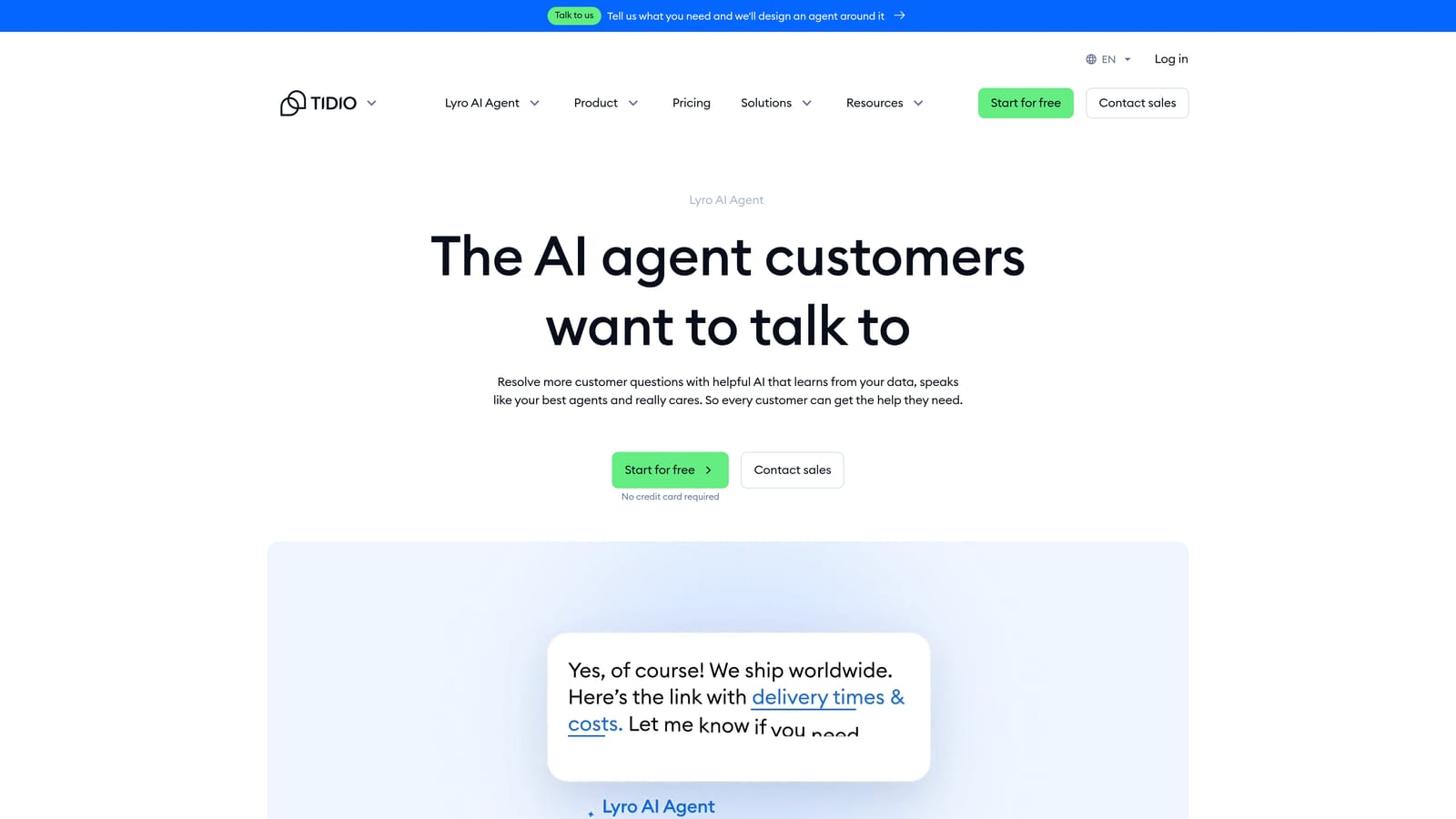
Tidio Lyro is a conversational AI agent built for small businesses and e-commerce, offering fast deployment and accessible pricing for teams handling high volumes of repetitive queries.
Where This Tool Shines
Lyro's biggest advantage is speed to value. Teams can be live in hours without technical resources, making it one of the most accessible entry points into AI-powered support on this list. For e-commerce teams fielding constant questions about order status, shipping, and basic troubleshooting, Lyro handles the repetitive load effectively so human agents can focus on exceptions.
The free tier makes it genuinely low-risk for small teams testing AI support for the first time. The tradeoff is that Lyro isn't designed for complex B2B SaaS scenarios. It excels at high-volume, low-complexity queries rather than nuanced product guidance or multi-step technical support.
Key Features
Fast Setup: Can be deployed in hours without engineering resources or technical configuration.
Repetitive Query Handling: Effectively manages FAQs, order status inquiries, and basic troubleshooting at scale.
Free Tier Available: Low-risk entry point for small teams evaluating AI support for the first time.
Live Chat Fallback: Escalates to human agents when the AI cannot resolve an issue.
E-Commerce Integrations: Native integrations with Shopify, WooCommerce, and other e-commerce platforms.
Best For
Small businesses, e-commerce brands, and teams with straightforward, high-volume support needs. Not suited for complex B2B SaaS support or teams that need deep business intelligence from their support data.
Pricing
Free tier available; paid plans start at affordable rates. Verify current pricing at tidio.com.
8. Ada
Best for: Enterprise teams needing no-code AI agent customization with strong multilingual support
Ada is a no-code AI agent builder designed for enterprise customer service teams, offering deep customization and multilingual capability without requiring engineering resources.
Where This Tool Shines
Ada's core value proposition is putting AI agent configuration in the hands of customer service teams rather than engineering. Non-technical teams can build complex, branching conversation flows, customize responses, and adjust behavior without writing a line of code. For enterprise teams where engineering bandwidth is scarce, that autonomy is genuinely valuable.
Multilingual support is a standout differentiator. For global organizations supporting customers across multiple languages and regions, Ada handles that complexity without requiring separate configurations for each language. AI coaching tools allow teams to review and improve resolution quality over time.
Key Features
No-Code Conversation Builder: Fully customizable conversation flows built and managed by non-technical teams.
Multilingual Support: Handles multiple languages natively, a genuine differentiator for global enterprise deployments.
Helpdesk and CRM Integrations: Connects with Zendesk, Salesforce, and major CRM platforms.
AI Agent Coaching: Tools for reviewing and improving resolution quality over time.
Complex Flow Handling: Manages branching, multi-step conversation scenarios without requiring code.
Best For
Enterprise customer service teams with global operations and multilingual support requirements. Particularly strong for organizations where non-technical teams need control over AI agent behavior without engineering dependency.
Pricing
Enterprise pricing. Verify current rates at ada.cx.
9. Kustomer
Best for: High-volume consumer brands needing omnichannel support with a unified CRM-native customer view
Kustomer is a CRM-native customer service platform owned by Meta, with AI built into a unified customer timeline for high-volume, omnichannel consumer support operations.
Where This Tool Shines
Kustomer's differentiator is the unified customer timeline. Every interaction across email, chat, social, SMS, and voice is consolidated into a single CRM view, and AI features operate with that full context available. For high-volume consumer brands managing customers across many channels simultaneously, this prevents the fragmented experience that comes from siloed support tools.
AI-powered auto-routing, suggested replies, and workflow automation are built into this CRM-native environment rather than layered on top of a separate ticketing system. For D2C brands, retail operations, and subscription businesses handling large volumes of consumer queries, that integrated approach reduces the operational complexity of running multi-channel support.
Key Features
Unified Customer Timeline: All channels consolidated into a single CRM view, giving AI full customer context.
AI Auto-Routing and Suggested Replies: Intelligent routing and response suggestions powered by customer history and context.
Omnichannel Coverage: Email, chat, social, SMS, and voice managed within one platform.
Workflow Automation: Automates repetitive support workflows based on customer data and interaction patterns.
CRM-Native Design: Customer context is always available to AI without requiring separate CRM integrations.
Best For
High-volume consumer brands in D2C, retail, and subscription businesses that need omnichannel support with AI built into a unified customer record. Less suited to B2B SaaS teams that need product-aware AI or deep business intelligence from support data.
Pricing
Verify current pricing at kustomer.com.
Which AI Agent Is Right for Your Team?
The honest answer is that the best AI agent depends on where you're starting from and what you need the AI to actually do.
For lean B2B SaaS teams that want an AI-first platform with business intelligence built in, Halo AI is the standout choice. The page-aware context, continuous learning, and smart inbox that surfaces revenue signals make it genuinely different from tools that only deflect tickets.
For teams already on Intercom or Zendesk who want to add AI resolution without migrating platforms, Fin and Zendesk AI Agents are the natural next steps. They extend existing investments rather than replace them.
Freshdesk Freddy AI suits SMBs already on that platform. Salesforce Agentforce wins for CRM-heavy enterprises where Salesforce is the system of record. Forethought excels at deflection-first strategies layered over existing helpdesks. Tidio Lyro is the budget-friendly pick for small teams and e-commerce operations. Ada is the go-to for no-code, multilingual enterprise deployments. Kustomer fits high-volume consumer brands managing omnichannel support.
Here's the thing most vendor comparisons miss: the right AI agent isn't just about resolution rates. It's about how well the system learns from every interaction, how deeply it integrates with your existing stack, and whether it makes your whole team smarter over time, not just faster at closing tickets.
Your support team shouldn't have to scale linearly with your customer base. Let AI agents handle routine tickets, guide users through your product, and surface business intelligence while your team focuses on complex issues that genuinely need a human touch. See Halo in action and discover how continuous learning transforms every interaction into smarter, faster support.