11 Best AI Customer Support Software for 2026
Discover the best AI customer support software for 2026 that helps teams handle rising ticket volumes while delivering faster, personalized responses. This comprehensive guide evaluates top platforms based on automation capabilities, integration options, and learning intelligence to help startups and enterprises find the perfect solution for their support workflow.
 Matt PattoliFounder12 min read
Customer support teams face an impossible equation: ticket volumes keep climbing while customers expect faster, more personalized responses. AI customer support software has emerged as the solution, automating routine inquiries while freeing human agents for complex issues.
But with dozens of options flooding the market, choosing the right platform matters.
This guide evaluates leading AI customer support solutions based on automation capabilities, integration flexibility, learning intelligence, and real-world performance. Whether you're scaling a startup or optimizing enterprise operations, you'll find a tool that fits your support workflow.
1. Halo AI
Best for: B2B SaaS teams needing intelligent automation that continuously learns from every interaction
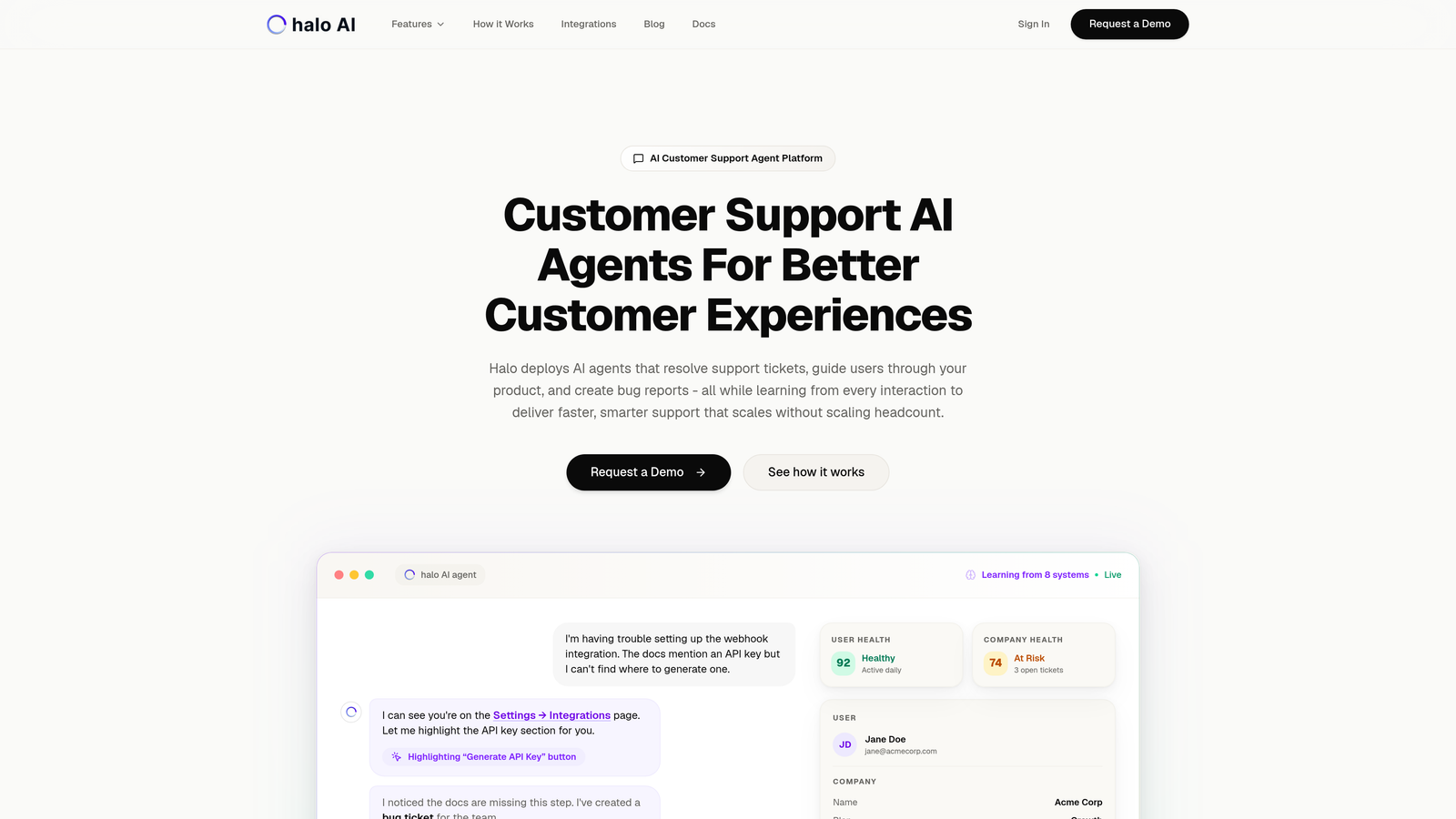
Halo AI is an AI-first customer support platform that deploys intelligent agents to resolve tickets, guide users through your product, and create bug reports autonomously.
Where This Tool Shines
Unlike traditional helpdesks with AI bolted on, Halo was built from the ground up for AI-powered support. Its page-aware chat widget sees exactly what users see in your product, enabling contextual guidance that goes beyond generic responses.
The platform's continuous learning architecture means every interaction makes the system smarter. It connects to your entire business stack—Linear for bug tracking, Slack for team communication, HubSpot for CRM, Stripe for payment context—creating a unified intelligence layer across your operations.
Key Features
Page-Aware Context: The chat widget understands exactly which page users are viewing, enabling precise visual guidance through your product interface.
Autonomous Ticket Resolution: AI agents handle routine inquiries independently, escalating to humans only when complexity requires it.
Auto Bug Ticket Creation: Automatically generates detailed bug reports in Linear from support conversations, complete with context and reproduction steps.
Business Intelligence Analytics: Surfaces customer health signals, revenue intelligence, and anomaly detection beyond basic support metrics.
Native Integrations: Connects seamlessly with Linear, Slack, HubSpot, Intercom, Stripe, Zoom, PandaDoc, and Fathom.
Best For
B2B companies and product teams using helpdesk systems like Zendesk, Freshdesk, or Intercom who want to move beyond basic chatbots to truly intelligent automation. Particularly valuable for teams that need support to connect with product development and business operations.
Pricing
Contact for pricing. Custom packages based on ticket volume and integration requirements.
2. Intercom Fin
Best for: Companies already using Intercom who want GPT-4 powered automation within their existing workflow
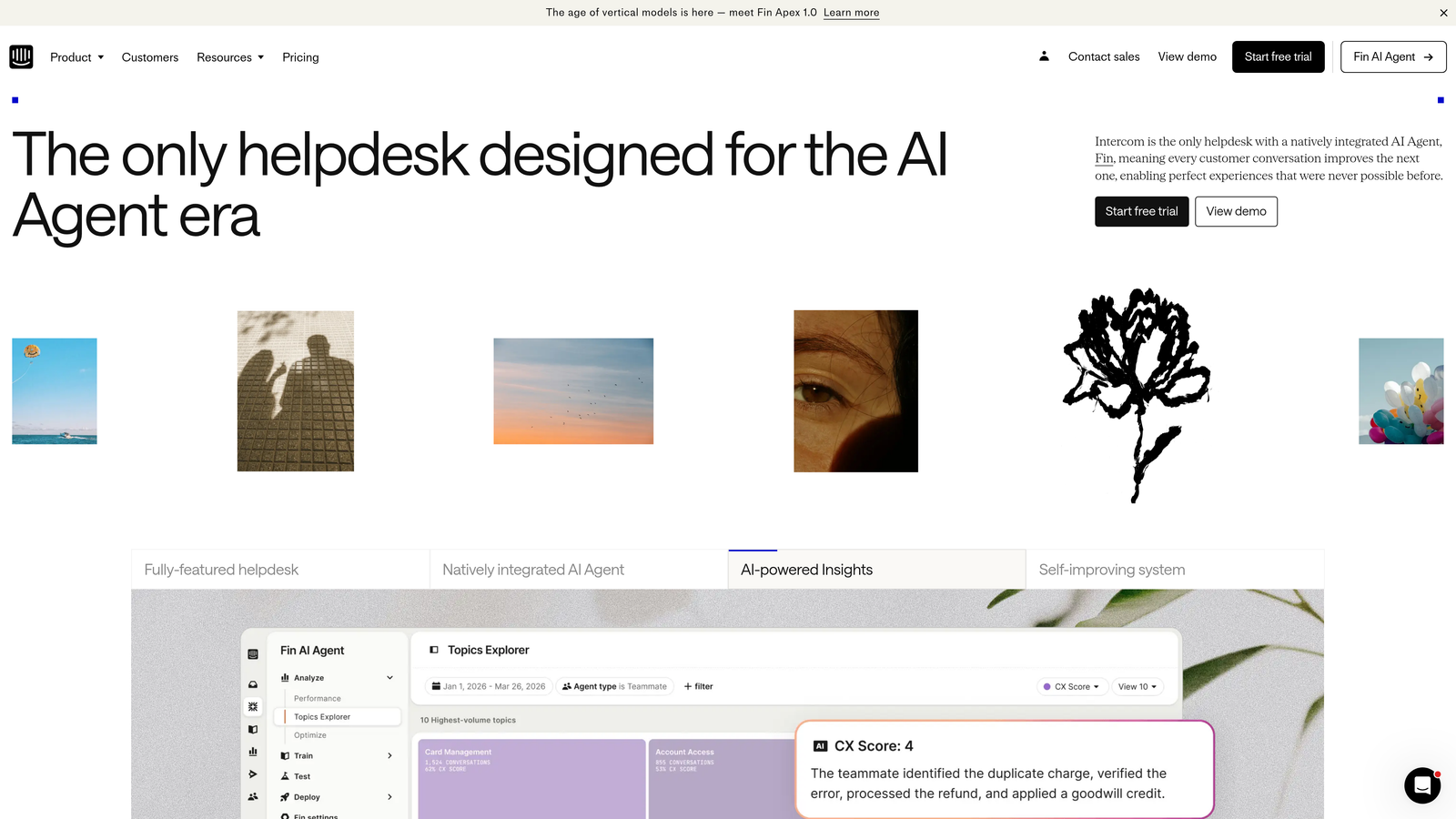
Intercom Fin is a GPT-4 powered AI agent that resolves customer questions using your help center content and previous conversations.
Where This Tool Shines
Fin integrates natively into the Intercom platform, making it the natural choice for existing Intercom customers. The AI learns from your knowledge base and conversation history, delivering answers that feel consistent with your brand voice.
The seamless handoff to human agents means customers never feel stuck with a bot. When Fin can't resolve an issue, it transfers the conversation with full context to your support team.
Key Features
GPT-4 Conversational Responses: Leverages advanced language models to understand complex queries and generate natural responses.
Knowledge Base Learning: Automatically pulls answers from your help center and previous support conversations.
Smart Escalation: Recognizes when human intervention is needed and transfers conversations with complete context.
Multi-Language Support: Handles customer inquiries in dozens of languages without separate configuration.
Analytics Dashboard: Tracks resolution rates, customer satisfaction, and cost savings from automation.
Best For
Companies already invested in the Intercom ecosystem who want to add AI capabilities without switching platforms. Works well for teams with robust help centers that can serve as the AI's knowledge foundation.
Pricing
From $0.99 per resolution. Pay-per-use model means costs scale with actual automation value.
3. Zendesk AI
Best for: Enterprise organizations with existing Zendesk infrastructure seeking advanced AI capabilities
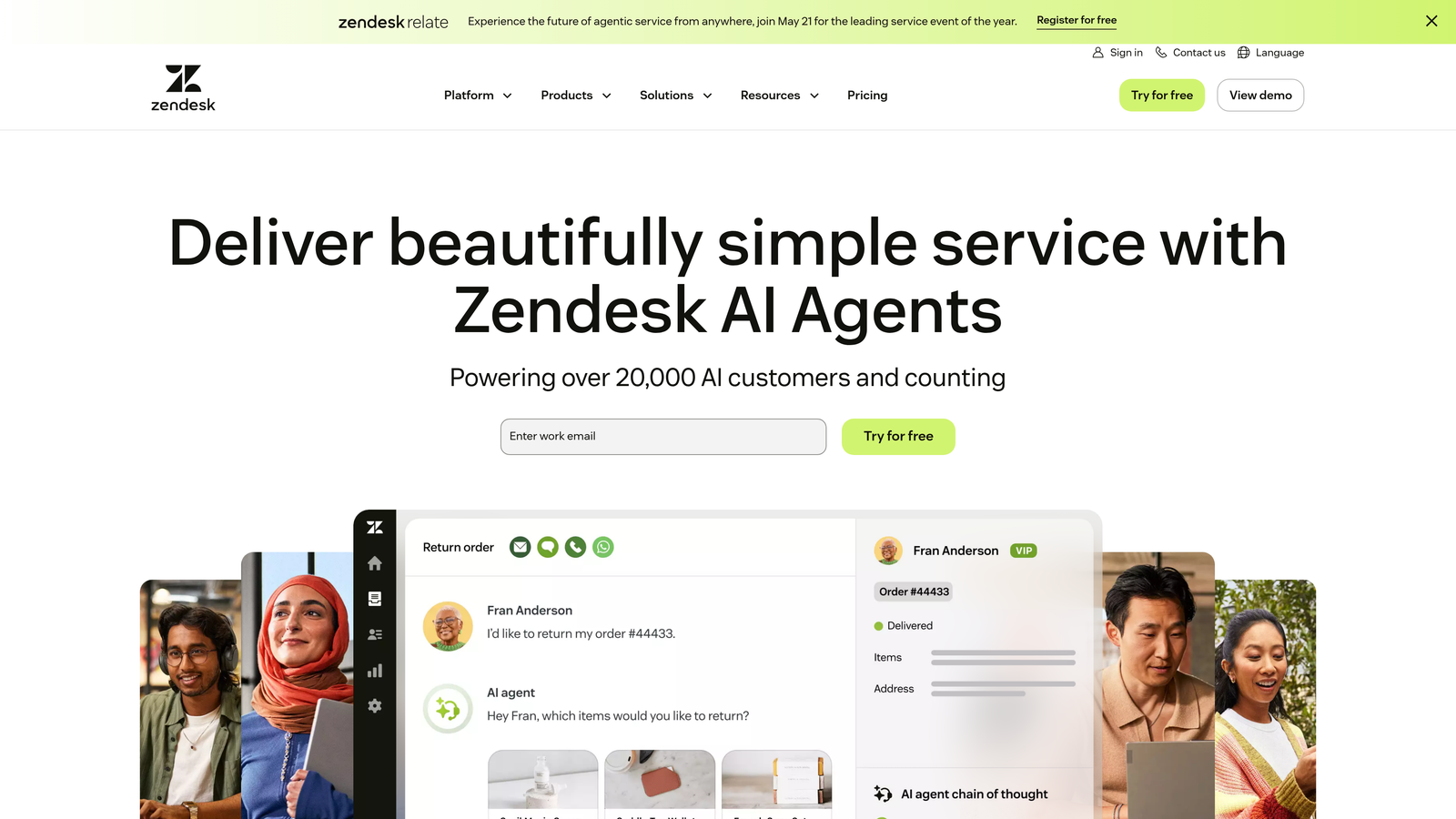
Zendesk AI layers intelligent triage, agent assistance, and generative AI responses into the Zendesk Suite.
Where This Tool Shines
Zendesk AI excels at enterprise-scale operations with complex routing needs. The intelligent triage system analyzes ticket content, sentiment, and urgency to prioritize and route tickets before human agents even see them.
For teams already using Zendesk, the AI features integrate seamlessly into familiar workflows. Agents receive AI-generated response suggestions within the same interface they already know, reducing training time and adoption friction.
Key Features
Intelligent Routing: Automatically categorizes and assigns tickets to the right team based on content analysis and historical patterns.
Sentiment Analysis: Detects customer emotion and urgency to prioritize tickets that need immediate attention.
Generative Response Suggestions: Provides AI-drafted responses that agents can review, edit, and send with one click.
Macro Recommendations: Suggests relevant saved responses based on ticket content and context.
Advanced Reporting: Tracks AI performance metrics, resolution times, and customer satisfaction trends.
Best For
Large enterprises with established Zendesk deployments, particularly those handling high ticket volumes across multiple departments and regions. Ideal for organizations prioritizing agent productivity over full automation.
Pricing
AI add-on from $50 per agent per month, in addition to base Zendesk subscription costs.
4. Freshdesk Freddy AI
Best for: Growing companies wanting affordable AI features with omnichannel support
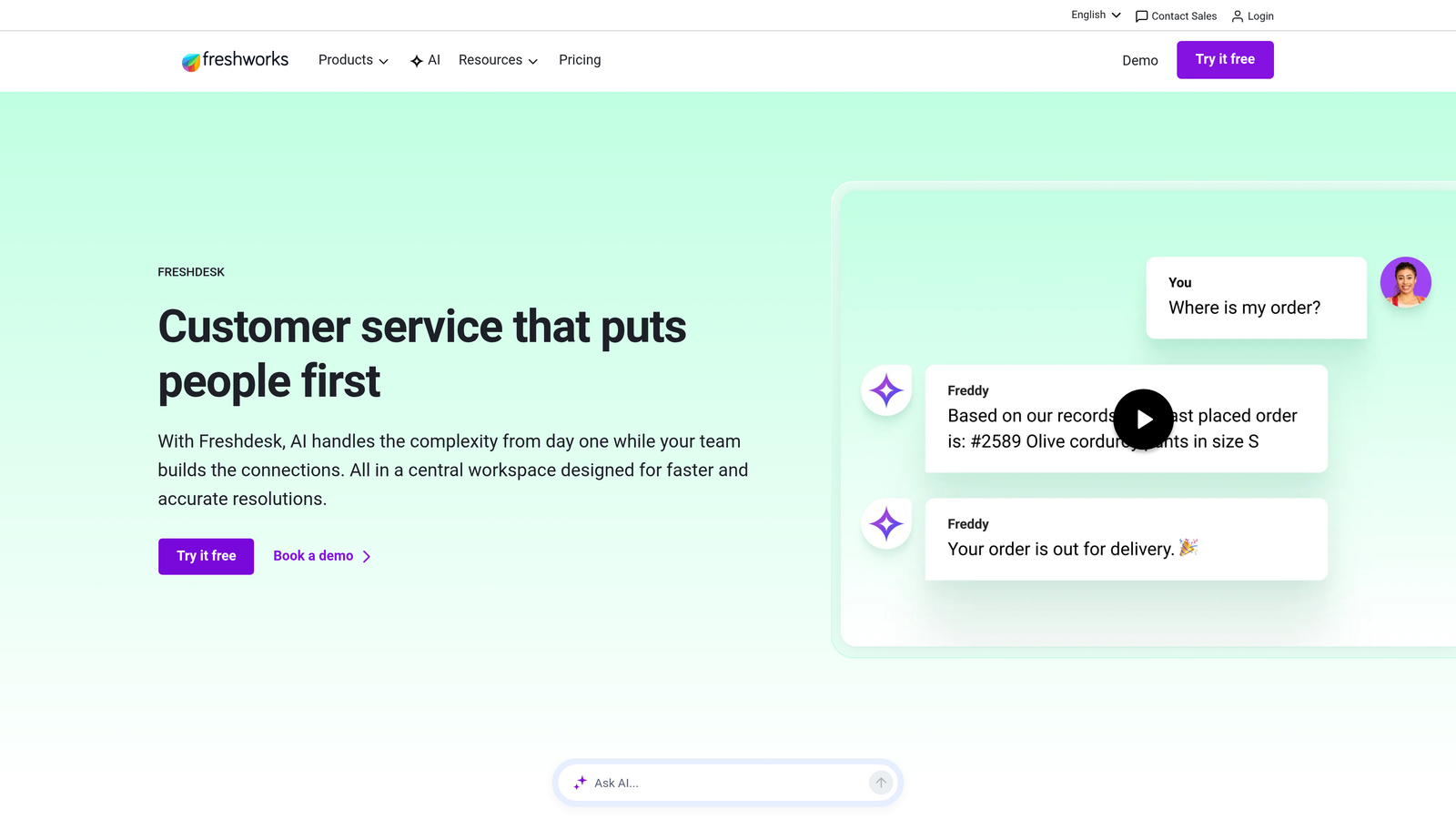
Freshdesk Freddy AI automates ticket categorization, suggests agent responses, and powers self-service chatbots across multiple channels.
Where This Tool Shines
Freddy AI brings enterprise-level automation to mid-market pricing. The auto-triage feature categorizes and tags incoming tickets across email, chat, social media, and phone, eliminating manual sorting work.
The platform's omnichannel approach means customers get consistent AI assistance whether they reach out via Facebook Messenger, WhatsApp, or traditional email. This unified experience becomes increasingly valuable as customer communication fragments across platforms.
Key Features
Auto-Triage: Automatically categorizes, prioritizes, and tags incoming tickets based on content analysis.
AI Chatbot Builder: No-code interface for creating conversational flows that handle common inquiries.
Agent Assist: Suggests relevant knowledge base articles and canned responses while agents work tickets.
Omnichannel Support: Manages conversations across email, chat, social media, and phone in one interface.
Response Recommendations: Analyzes ticket content to suggest pre-written responses that match the context.
Best For
Mid-sized companies managing support across multiple channels who need AI capabilities without enterprise price tags. Particularly effective for teams transitioning from purely manual support to AI-assisted workflows.
Pricing
From $15 per agent per month. AI features available in Growth and Enterprise tiers.
5. Ada
Best for: High-volume operations prioritizing full automation over AI-assisted human support
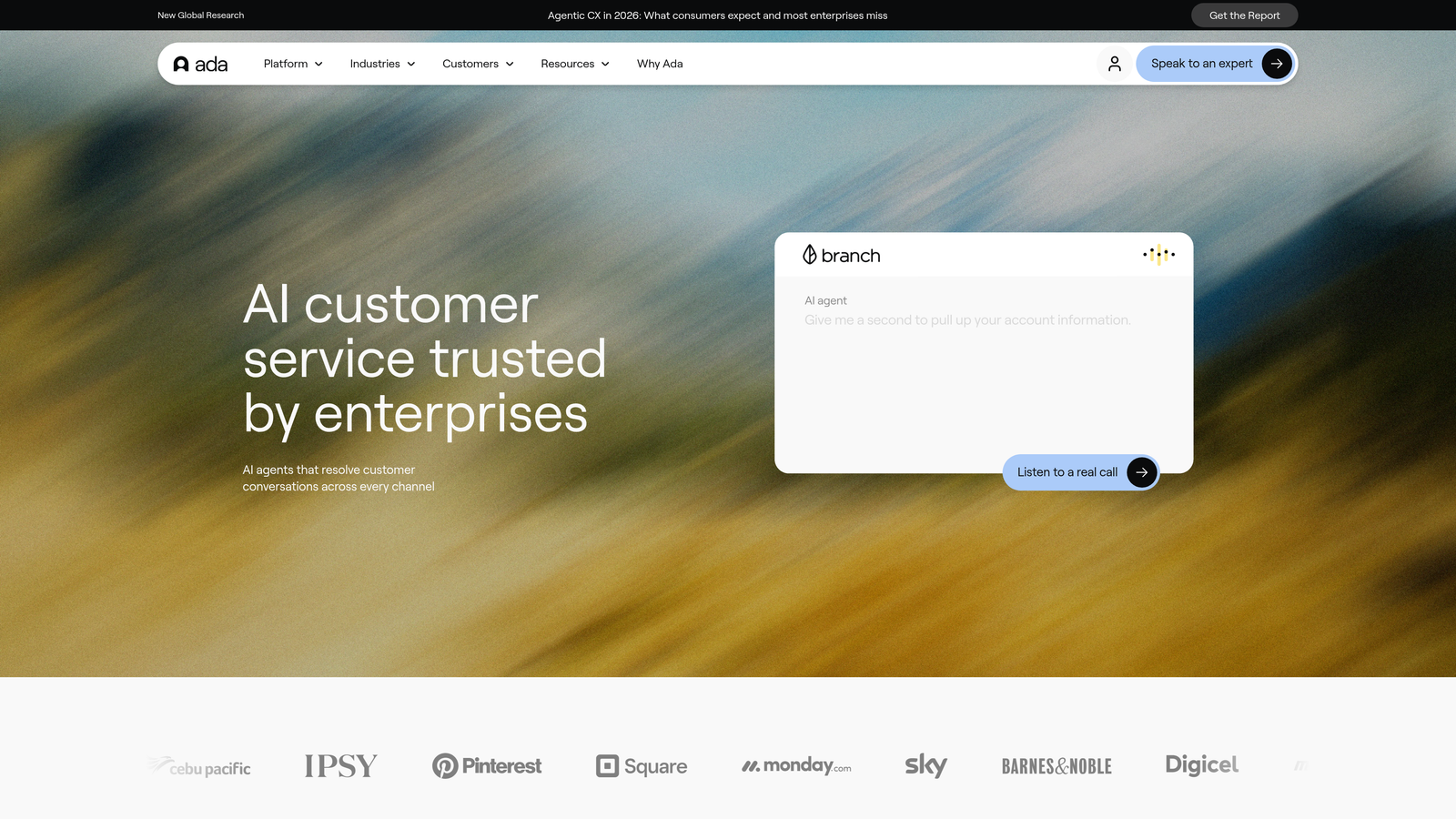
Ada is an AI-powered automation platform focused on resolving customer inquiries without human intervention.
Where This Tool Shines
Ada's reasoning engine handles complex multi-step queries that typically stump basic chatbots. The platform can execute actions like processing refunds, updating account information, or checking order status—not just answer questions.
With support for over 50 languages, Ada works for global operations without requiring separate configurations per region. The no-code conversation builder means non-technical team members can create and modify automation flows.
Key Features
No-Code Builder: Visual interface for designing conversation flows without programming knowledge.
50+ Language Support: Handles customer inquiries in dozens of languages with consistent quality.
Automated Actions: Executes tasks like refunds, account updates, and order modifications autonomously.
Reasoning Engine: Processes complex queries requiring multiple steps or conditional logic.
Enterprise Security: SOC 2 Type II compliance and data residency options for regulated industries.
Best For
Companies handling thousands of repetitive inquiries monthly who want to maximize automation rates. E-commerce businesses and subscription services with predictable support patterns see particularly strong results.
Pricing
Custom pricing based on resolution volume and feature requirements. Contact for quote.
6. Tidio
Best for: Small businesses and e-commerce stores needing affordable AI chat without enterprise complexity
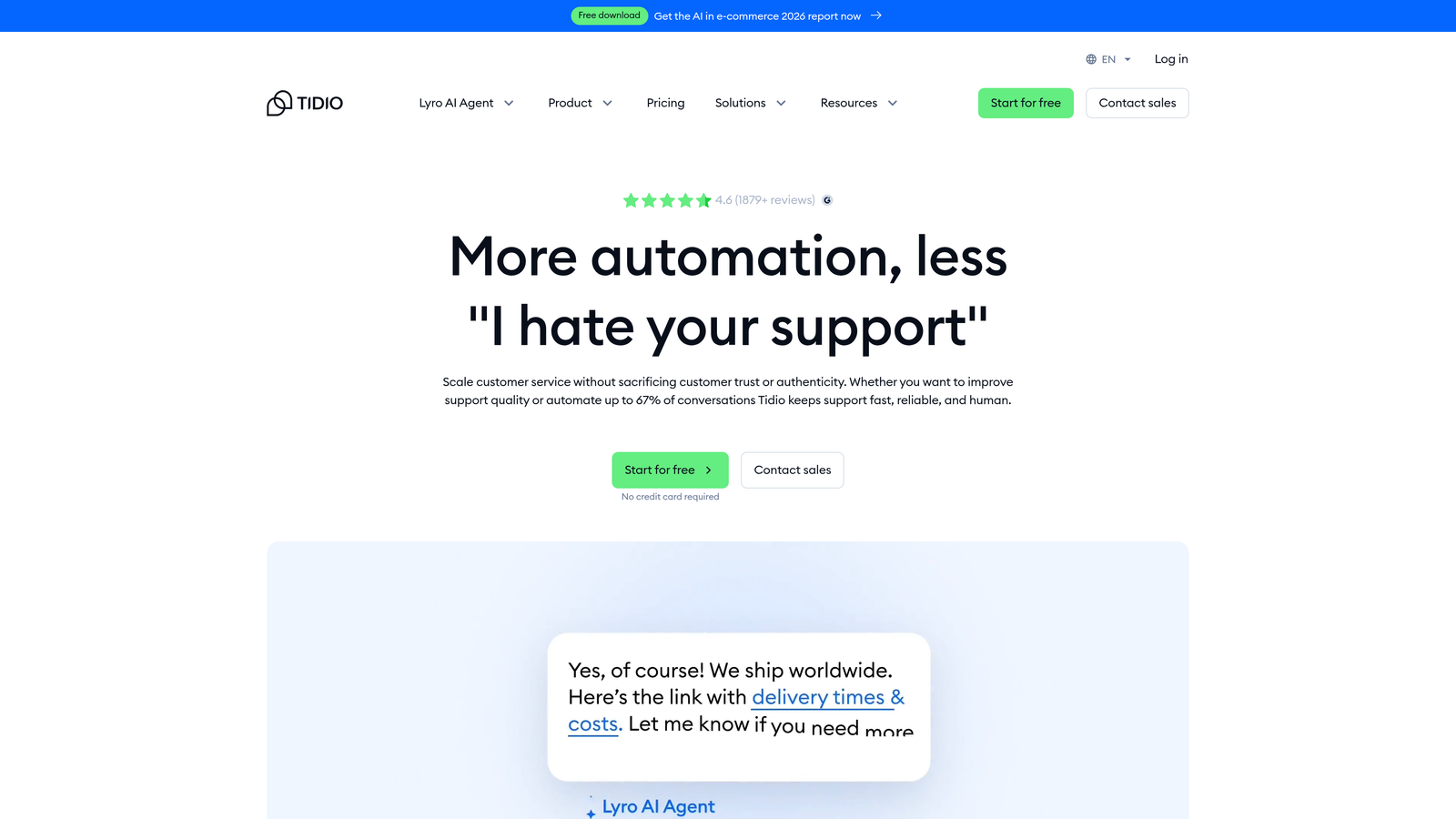
Tidio combines live chat with Lyro AI chatbot capabilities designed specifically for small business budgets.
Where This Tool Shines
Tidio removes the barrier to entry for AI customer support. Small businesses can start with the free plan and add Lyro AI when ready, making it financially accessible for companies just beginning to scale.
The platform's e-commerce integrations with Shopify, WooCommerce, and other platforms mean the AI understands order status, inventory, and customer purchase history. This context enables more helpful responses than generic chatbots.
Key Features
Lyro AI Chatbot: Pre-trained conversational AI that handles common customer questions instantly.
Visual Chatbot Builder: Drag-and-drop interface for creating custom conversation flows.
Live Chat with AI Assist: Human agents can take over conversations with full context when needed.
E-Commerce Integrations: Connects with Shopify, WooCommerce, and major e-commerce platforms for order context.
Visitor Tracking: Shows which pages visitors are viewing for proactive chat engagement.
Best For
E-commerce stores, small SaaS companies, and service businesses with limited support budgets. Perfect for teams transitioning from email-only support to real-time chat.
Pricing
Free plan available with basic chat features. Lyro AI from $29 per month for automated responses.
7. Kustomer
Best for: Companies wanting CRM-native support with unified customer timeline views
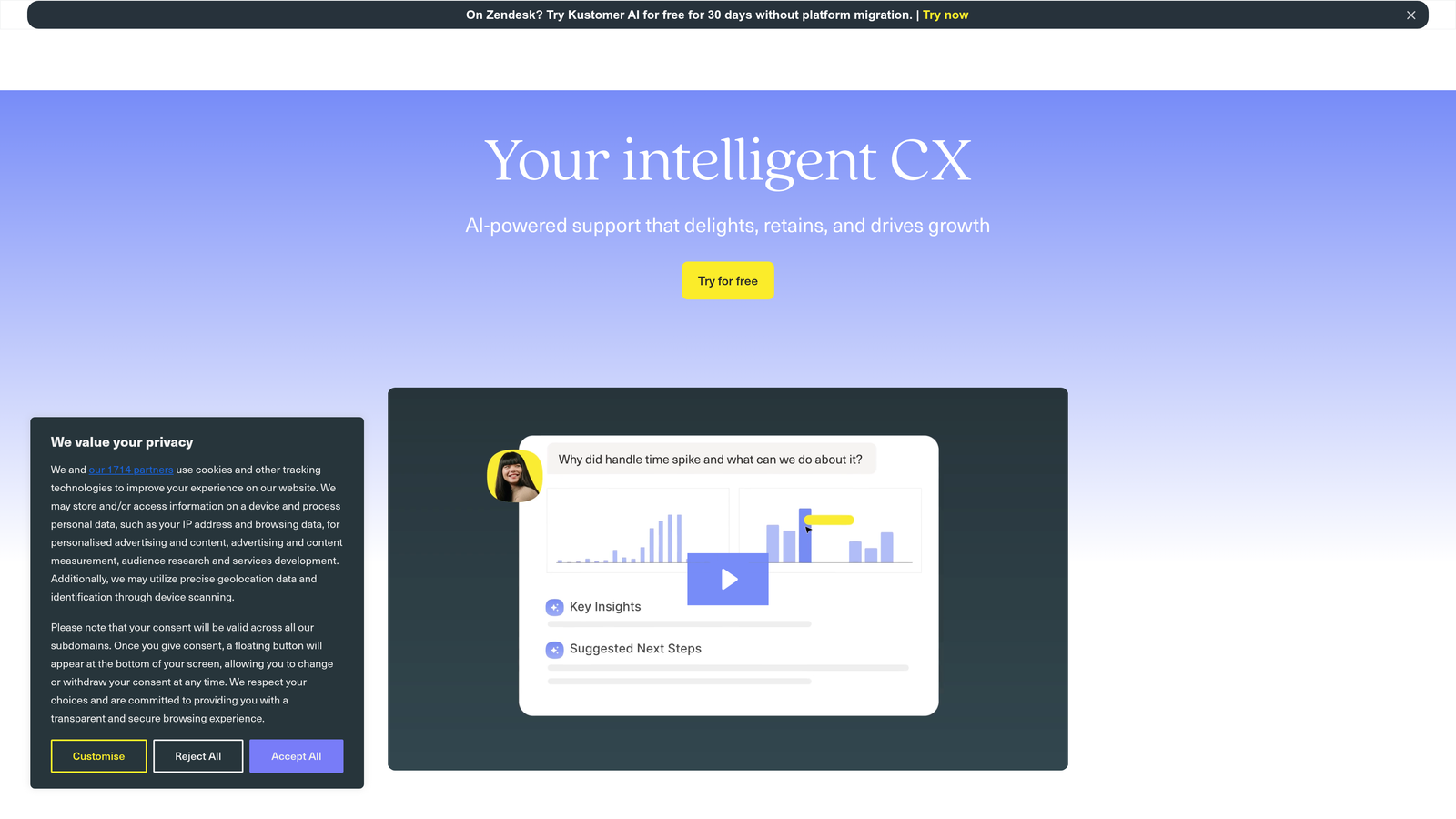
Kustomer is a customer service platform built on CRM architecture, with AI capabilities for conversation classification and intelligent routing.
Where This Tool Shines
Kustomer's unified timeline shows every customer interaction across channels in chronological order. Agents see purchase history, previous support tickets, and current conversations in one view, eliminating the need to switch between systems.
The AI-powered classification automatically categorizes conversations by topic, sentiment, and urgency before agents see them. This pre-work means agents spend time solving problems instead of organizing tickets.
Key Features
Unified Customer Timeline: Chronological view of all customer interactions across email, chat, phone, and social media.
AI Conversation Classification: Automatically tags and categorizes incoming messages by topic and intent.
Intelligent Routing: Assigns conversations to the right agent based on context, skills, and workload.
Proactive Outreach: Triggers automated messages based on customer behavior patterns.
Deep CRM Integration: Native connection to customer data without requiring separate integration tools.
Best For
B2C companies with complex customer journeys spanning multiple touchpoints. Retail, subscription services, and financial services companies benefit from the unified customer view.
Pricing
From $89 per user per month. Enterprise plans with advanced AI features priced on request.
8. HubSpot Service Hub
Best for: Companies already using HubSpot CRM who want integrated support automation
HubSpot Service Hub provides customer service software with AI chatbot capabilities, fully integrated with the HubSpot ecosystem.
Where This Tool Shines
Service Hub's power comes from its connection to the broader HubSpot platform. Support agents see complete customer context—marketing interactions, sales conversations, and previous support tickets—without leaving the interface.
The AI chatbot syncs with your knowledge base automatically, meaning updates to help articles instantly improve bot responses. This tight integration reduces maintenance work and keeps automated responses current.
Key Features
AI Chatbot: Conversational bot that pulls answers from your knowledge base and previous interactions.
Ticket Automation: Workflow builder for routing, prioritizing, and escalating tickets based on custom rules.
Customer Feedback Surveys: Automated CSAT and NPS surveys with response tracking and analysis.
Full CRM Integration: Access to complete customer data from marketing, sales, and service interactions.
Reporting Dashboard: Analytics on ticket volume, resolution times, customer satisfaction, and agent performance.
Best For
Companies using HubSpot for marketing and sales who want to extend the platform into customer service. Works well for B2B companies prioritizing unified customer data over specialized support features.
Pricing
Free tools available with basic features. Professional tier from $450 per month for advanced automation.
9. Drift
Best for: B2B revenue teams combining sales and support in conversational experiences
Drift is a conversational AI platform that blends buyer engagement with customer support automation.
Where This Tool Shines
Drift recognizes that for B2B companies, the line between sales and support conversations often blurs. A product question from a prospect requires different handling than the same question from a customer. The platform routes conversations based on account context and buyer stage.
Real-time visitor intelligence shows which companies are browsing your site, what they're viewing, and their engagement history. This context enables proactive outreach that feels helpful rather than intrusive.
Key Features
Conversational AI: Engages website visitors with context-aware chat based on their account and browsing behavior.
Visitor Intelligence: Identifies companies browsing your site and surfaces relevant account information.
Meeting Scheduling: Automates calendar booking for sales and support calls directly within chat.
Revenue Team Alignment: Routes conversations to sales or support based on account status and intent signals.
Account-Based Targeting: Customizes chat experiences for specific companies or segments.
Best For
B2B SaaS companies where support and sales teams collaborate closely. Particularly effective for account-based strategies where high-value accounts receive personalized attention.
Pricing
Custom pricing based on company size and feature requirements. Contact for quote.
10. Forethought
Best for: Enterprise operations needing predictive routing and generative AI at scale
Forethought is an enterprise AI platform featuring SupportGPT for generative responses and machine learning-powered ticket routing.
Where This Tool Shines
Forethought's predictive routing goes beyond keyword matching. The platform analyzes ticket content, customer history, and agent expertise to predict which agent will resolve each ticket fastest. This reduces reassignments and improves first-contact resolution.
SupportGPT generates contextual responses that agents can review and send, dramatically reducing handle time for complex inquiries. The AI learns from agent edits to improve future suggestions.
Key Features
SupportGPT: Generative AI that drafts complete responses based on ticket content and knowledge base.
Predictive Routing: Machine learning assigns tickets to the agent most likely to resolve them quickly.
Automated Tagging: Categorizes and prioritizes tickets based on content analysis and urgency detection.
Agent Assist: Surfaces relevant knowledge articles and similar past tickets while agents work.
SOC 2 Compliance: Enterprise security certifications for regulated industries.
Best For
Large enterprises handling tens of thousands of tickets monthly with specialized agent teams. Financial services, healthcare, and SaaS companies with complex support operations see strong ROI.
Pricing
Custom enterprise pricing based on ticket volume and deployment requirements. Contact for quote.
11. Help Scout
Best for: Teams prioritizing human-first support with AI assistance rather than full automation
Help Scout is a customer support platform with AI features for drafting responses, summarizing conversations, and workflow automation.
Where This Tool Shines
Help Scout's philosophy centers on AI augmenting human agents rather than replacing them. The AI drafts feature helps agents respond faster while maintaining personal touch. Agents review, personalize, and send AI-generated responses rather than letting bots handle conversations autonomously.
Conversation summarization proves particularly valuable for complex tickets. When agents inherit lengthy email threads, the AI provides instant context without requiring them to read dozens of messages.
Key Features
AI Drafts: Generates response suggestions that agents can edit and personalize before sending.
Conversation Summarization: Condenses long email threads into key points for quick context.
Beacon Chat Widget: Embedded help widget with knowledge base search and contact options.
Shared Inbox: Team collaboration on customer emails with assignment, notes, and status tracking.
Knowledge Base with AI Search: Self-service help center with intelligent article recommendations.
Best For
Small to mid-sized teams that value personal customer relationships but need efficiency gains. Companies in consulting, professional services, and premium products where human touch matters.
Pricing
From $22 per user per month. AI features included in Standard and Plus plans.
Making the Right Choice
The right AI customer support software depends on where you are and where you're headed.
If you're a B2B SaaS team wanting AI that learns continuously and connects your support to product development, Halo AI delivers page-aware intelligence that evolves with every interaction. For enterprises already running Zendesk, the AI add-on integrates seamlessly without platform migration. Small businesses needing affordable entry should explore Tidio's free plan with optional AI upgrades.
Consider your integration ecosystem carefully. Teams using HubSpot for marketing and sales gain unified customer data by staying within Service Hub. Companies prioritizing full automation over agent assistance should evaluate Ada or Forethought for high-volume resolution capabilities.
The distinction between AI-first platforms and traditional helpdesks with AI features matters more than most buyers realize. AI-first architectures like Halo were designed for intelligent automation from day one, while bolt-on solutions adapt existing systems. This architectural difference affects learning speed, integration depth, and long-term scalability.
Your support team shouldn't scale linearly with your customer base. Let AI agents handle routine tickets, guide users through your product, and surface business intelligence while your team focuses on complex issues that need a human touch. See Halo in action and discover how continuous learning transforms every interaction into smarter, faster support.