9 Best AI Support Platforms for Scaling Customer Service in 2026
The best AI support platforms in 2026 go beyond basic chatbots to deliver continuous learning, deep tech stack integration, and autonomous ticket resolution. This evaluation compares nine leading platforms based on resolution rates, deployment speed, integration capabilities, and pricing to help businesses scale customer service efficiently without proportionally increasing headcount as ticket volumes grow.
 Grant CooperFounder10 min read
Your support team is drowning in tickets. You're hiring faster than ever, but response times keep climbing and customer satisfaction is slipping. Sound familiar? The old model of scaling support linearly with customer growth simply doesn't work anymore.
The best AI support platforms don't just automate responses—they learn from every interaction, integrate deeply with your entire business stack, and handle complex resolution workflows autonomously. The difference between a basic chatbot and a true AI support platform comes down to three things: continuous learning capabilities, integration depth across your tech stack, and genuine autonomous resolution rather than just deflection.
We evaluated these platforms based on ticket resolution rates, deployment speed, integration ecosystems, and pricing transparency. Here are the top AI support platforms transforming customer service in 2026.
1. Halo AI
Best for: Companies seeking AI-first architecture with continuous learning and deep business intelligence
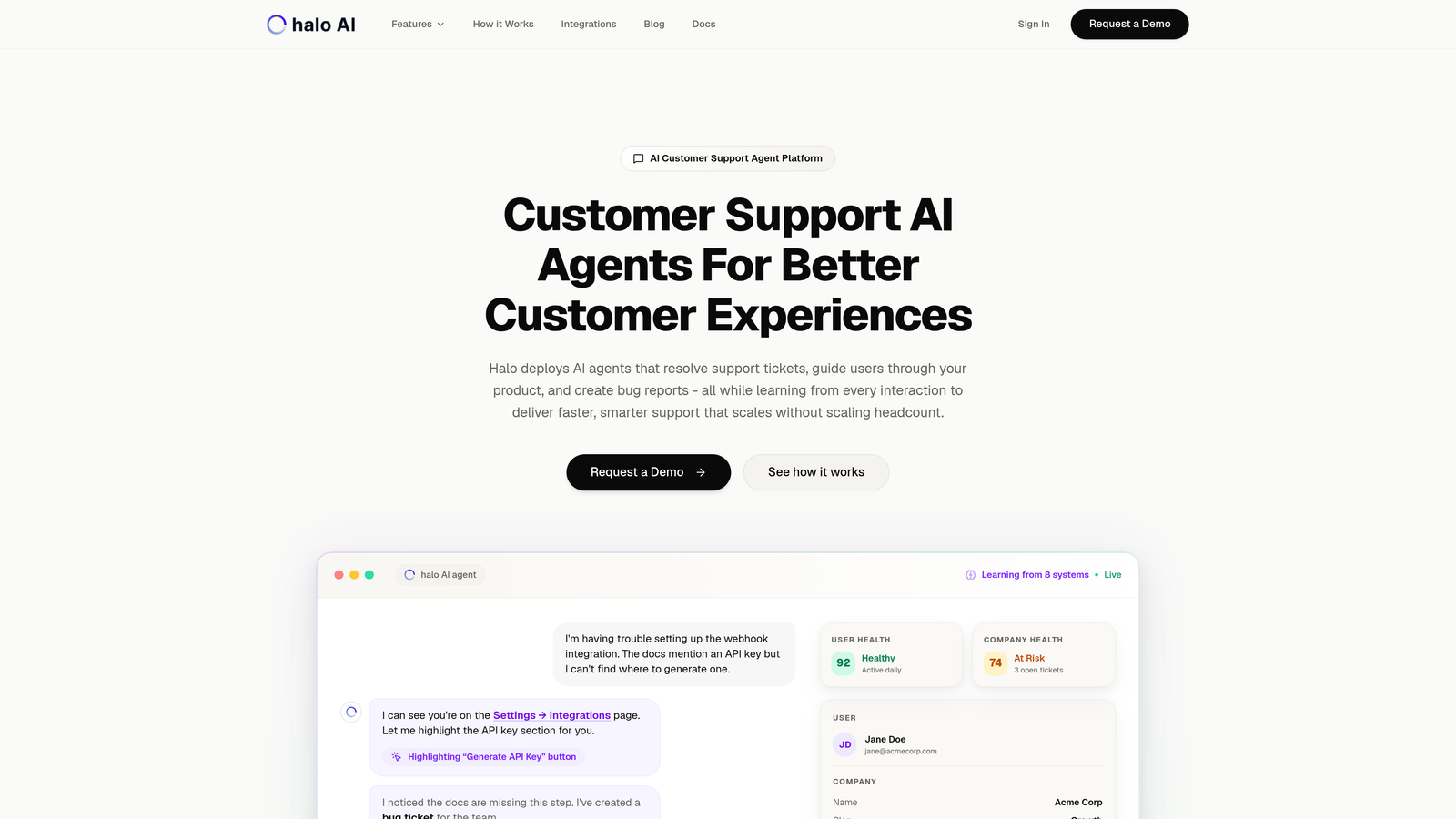
Halo AI is an AI-native customer support platform where intelligent agents resolve tickets, guide users through your product with page-aware context, and continuously improve from every interaction.
Where This Tool Shines
Unlike platforms that bolt AI onto existing helpdesk systems, Halo was built AI-first from the ground up. The platform sees what your users see through page-aware context, meaning it can provide visual UI guidance rather than generic text responses.
What sets Halo apart is its continuous learning architecture. Every resolved ticket, every user interaction, every piece of feedback trains the system to get smarter. It's not using static knowledge bases—it's actively learning your product, your customers, and your business patterns.
Key Features
Page-Aware Chat Widget: Provides visual UI guidance based on exactly what the user is viewing, not just generic help articles.
Continuous Learning System: Every interaction trains the AI to deliver faster, more accurate support over time.
Auto Bug Ticket Creation: Automatically creates detailed bug reports in Linear when issues are detected, with full context.
Business Intelligence Layer: Surfaces customer health signals, revenue intelligence, and anomaly detection beyond basic support metrics.
Smart Escalation: Seamlessly hands off complex issues to human agents with complete conversation context.
Best For
B2B SaaS companies and product teams that need support to scale without proportionally scaling headcount. Particularly strong for teams already using modern stacks like Linear, Slack, HubSpot, Intercom, and Stripe who want deep integration across their entire business ecosystem.
Pricing
Contact for pricing based on your specific needs and integration requirements.
2. Intercom Fin
Best for: Teams already using Intercom who want native AI capabilities without switching platforms
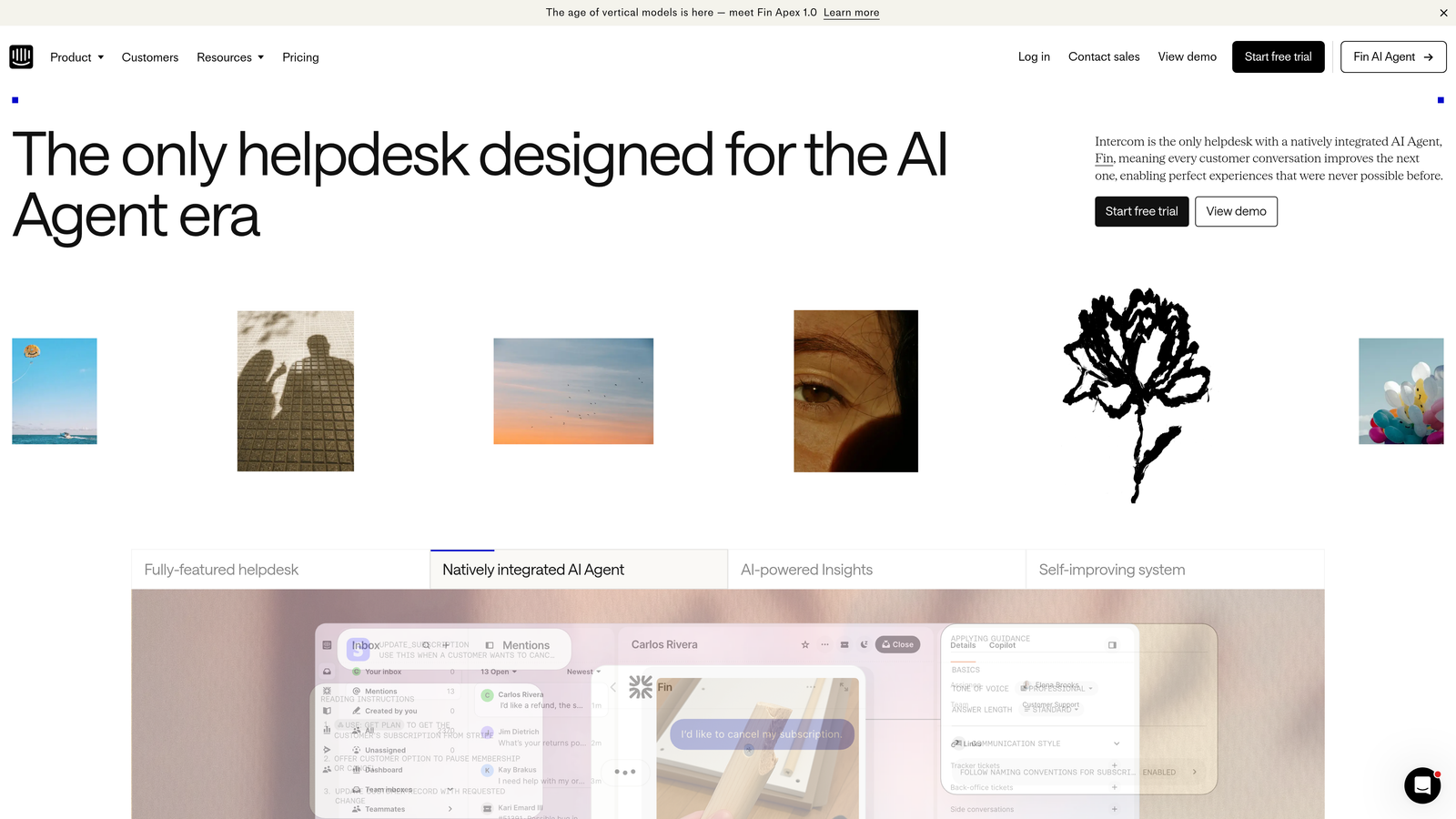
Intercom Fin is an AI-powered support agent built directly into Intercom's customer messaging platform, trained on your existing help center content.
Where This Tool Shines
If you're already invested in the Intercom ecosystem, Fin offers the smoothest path to AI support. It trains on your existing knowledge base and conversation history, meaning you're not starting from scratch.
The human handoff is genuinely seamless. When Fin encounters something it can't handle, it passes the conversation to your team with full context—no awkward "let me connect you to a human" moments that frustrate customers.
Key Features
Knowledge Base Training: Automatically learns from your existing help center articles and documentation.
Context-Aware Handoff: Transfers conversations to human agents with complete history and customer data.
Conversation Learning: Improves responses based on how your team handles similar questions.
Product Tours Integration: Can trigger guided product tours when appropriate for user education.
Multi-Language Support: Handles conversations in 43 languages using the same knowledge base.
Best For
Companies already using Intercom for customer messaging who want to add AI capabilities without platform migration. Works well for mid-market to enterprise teams with established help centers.
Pricing
Usage-based pricing starting at $0.99 per resolution, which can be more cost-effective than per-seat pricing for high-volume support operations.
3. Zendesk AI
Best for: Enterprise teams needing comprehensive AI layered onto proven ticketing infrastructure
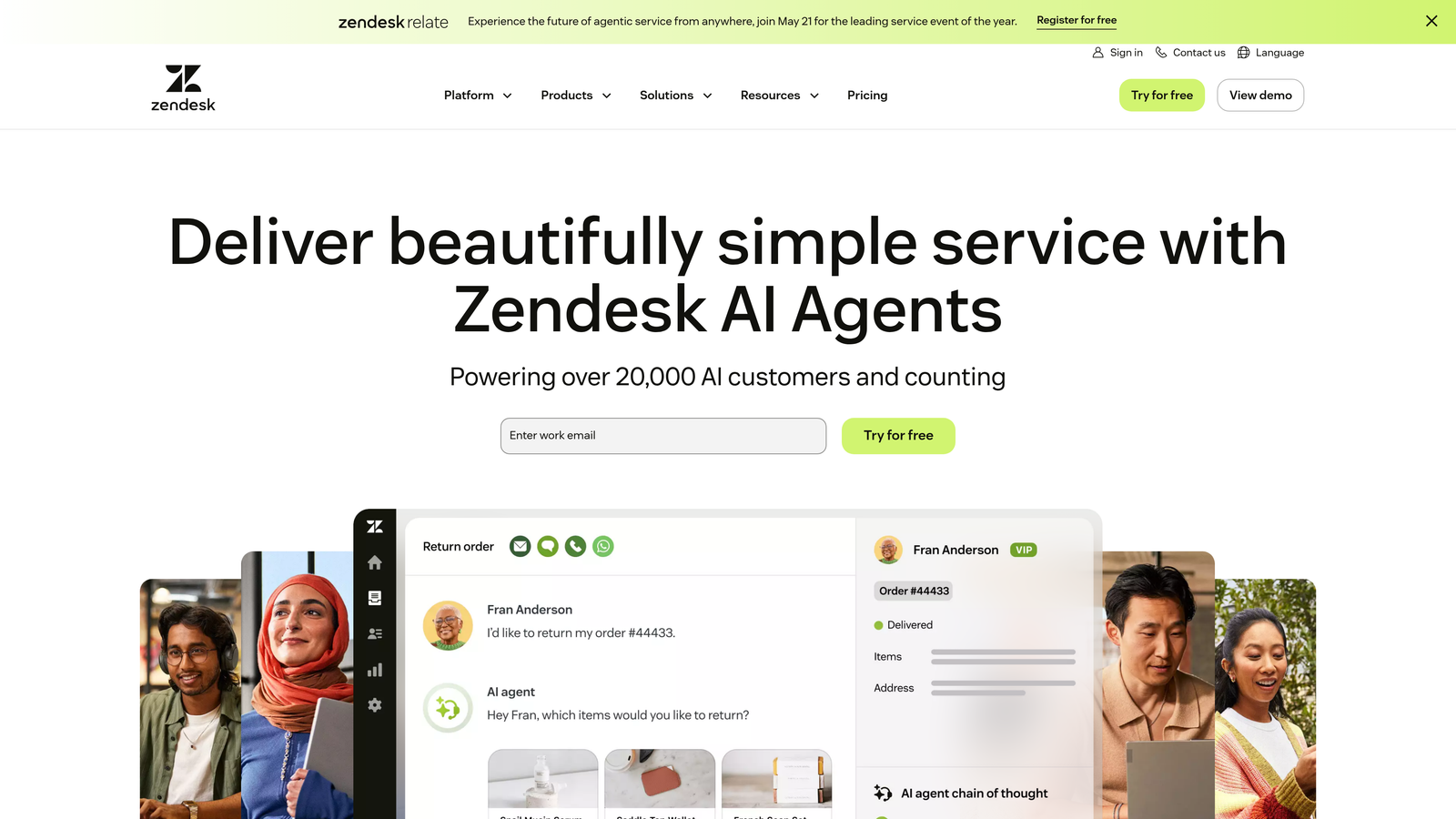
Zendesk AI brings enterprise-grade artificial intelligence capabilities to Zendesk's comprehensive customer service platform.
Where This Tool Shines
Zendesk's AI isn't just about customer-facing automation. The agent assist features genuinely help your support team work faster by suggesting responses based on similar historical tickets and customer context.
The advanced analytics go beyond basic metrics. You get insights into why certain ticket types take longer, which knowledge base articles are most effective, and where your support process has bottlenecks that AI could address.
Key Features
Intent Detection: Automatically identifies ticket intent and routes to the right team or agent.
Agent Assist: Suggests responses and relevant knowledge base articles while agents work tickets.
Generative AI: Creates and updates knowledge base articles based on resolved ticket patterns.
Advanced Analytics: Provides detailed reporting on AI performance, deflection rates, and support efficiency.
Workflow Automation: Builds complex routing and escalation rules based on AI-detected patterns.
Best For
Large enterprises with complex support operations who need the reliability and scalability of Zendesk combined with modern AI capabilities. Ideal for teams with established Zendesk implementations.
Pricing
AI capabilities are an add-on to existing Zendesk plans, starting at $50 per agent per month on top of your base subscription.
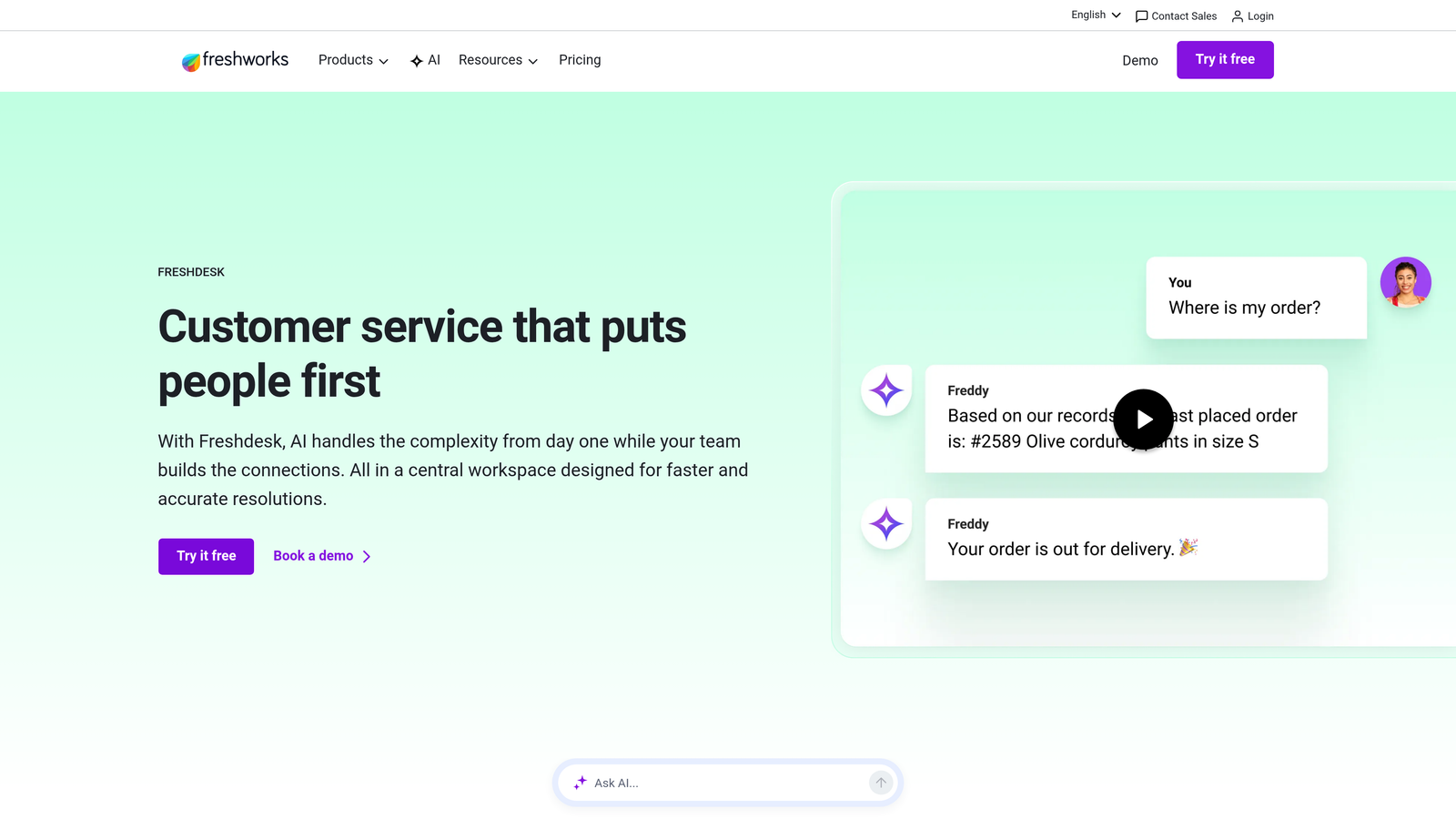
4. Freshdesk Freddy AI
Best for: Mid-market teams seeking affordable AI automation with omnichannel support
Freshdesk Freddy AI integrates AI assistance into Freshdesk's customer support suite at mid-market friendly pricing.
Where This Tool Shines
Freddy AI makes enterprise-level AI capabilities accessible to mid-market teams. The auto-triage feature alone saves hours of manual ticket sorting, and the suggested responses help newer agents handle tickets with the knowledge of your most experienced team members.
The omnichannel coverage is genuinely comprehensive. Whether customers reach out via email, chat, phone, or social media, Freddy maintains context and provides consistent AI assistance across all channels.
Key Features
Auto-Triage: Automatically categorizes and prioritizes incoming tickets based on content and urgency.
Suggested Responses: Provides agents with AI-generated response suggestions based on ticket content and history.
Omnichannel AI: Maintains AI assistance across email, chat, phone, and social media channels.
Sentiment Analysis: Detects customer frustration and escalates tickets before situations deteriorate.
Affordable Tiers: Includes AI capabilities in standard pricing without expensive add-ons.
Best For
Growing companies that need professional AI support capabilities without enterprise pricing. Works well for teams handling 100-1000 tickets per week across multiple channels.
Pricing
Freddy AI is included in the Pro plan at $49 per agent per month, making it one of the most affordable options for comprehensive AI support.
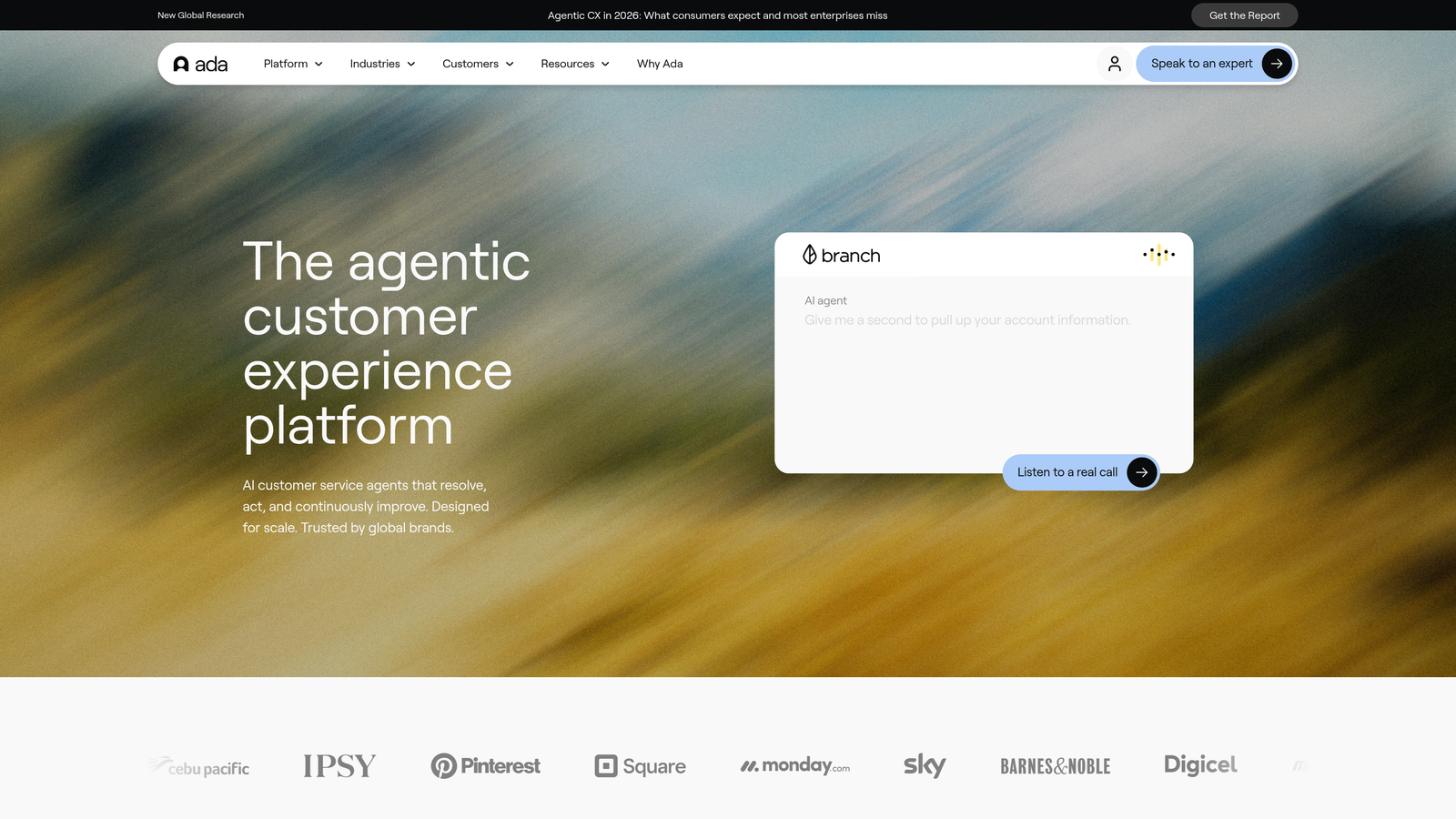
5. Ada
Best for: High-volume consumer support operations needing multilingual automation
Ada specializes in AI-powered customer service automation for consumer-facing brands handling massive support volumes.
Where This Tool Shines
Ada excels at handling the repetitive, high-volume questions that bury consumer support teams. The no-code automation builder means your support team can create and modify conversation flows without engineering resources.
The 50+ language support isn't just translation—it's native conversation handling in each language. This makes Ada particularly valuable for global consumer brands that need consistent support quality across markets.
Key Features
No-Code Builder: Create and modify automation flows without technical resources or developer involvement.
Multilingual Support: Handle conversations natively in over 50 languages using the same automation logic.
Proactive Messaging: Trigger automated support based on user behavior and journey stage.
E-commerce Specialization: Pre-built integrations and flows for order tracking, returns, and common retail queries.
Fintech Features: Compliance-aware automation for financial services and payment-related support.
Best For
Consumer-facing brands in e-commerce, fintech, and travel handling thousands of support inquiries daily. Particularly strong for companies with international customer bases requiring multilingual support.
Pricing
Custom pricing based on conversation volume and feature requirements. Typically structured around monthly conversation limits rather than per-seat pricing.
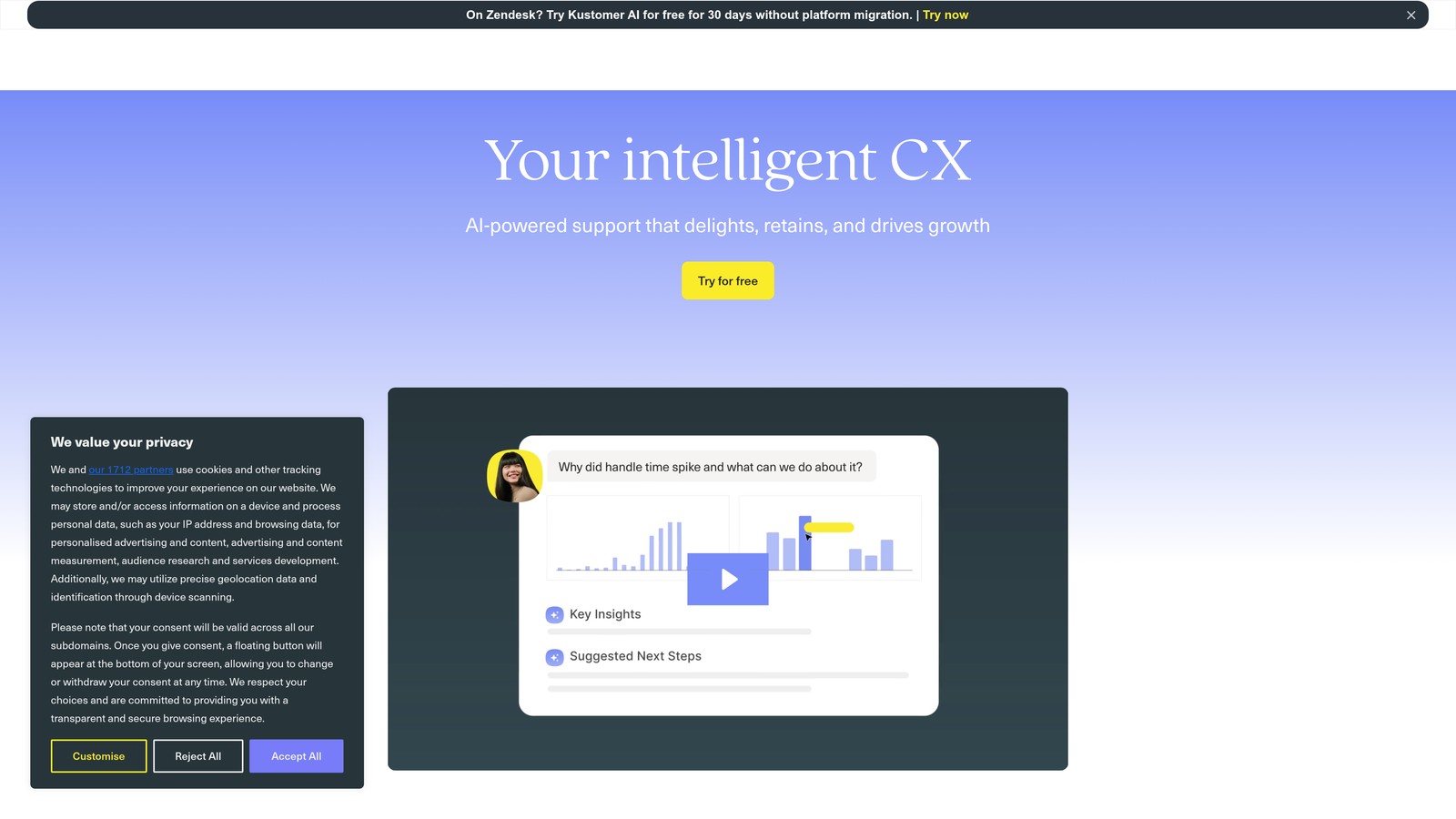
6. Kustomer
Best for: Teams wanting CRM-first customer service with unified customer timelines
Kustomer combines CRM capabilities with customer service automation, providing a unified view of every customer interaction.
Where This Tool Shines
Kustomer's unified customer timeline changes how agents work. Instead of seeing isolated tickets, agents see the complete customer journey—purchases, previous support interactions, product usage, and more—all in one view.
The AI classification and routing go beyond simple keyword matching. The system understands customer context, purchase history, and lifetime value to route tickets appropriately and suggest personalized responses.
Key Features
Unified Customer Timeline: View complete customer history including purchases, support, and product usage in one interface.
AI Classification: Automatically categorize and route tickets based on customer context and conversation content.
Omnichannel Management: Handle email, chat, SMS, and social media from a single conversation thread.
CRM Integration: Native connections to Salesforce, HubSpot, and other CRM platforms for data synchronization.
Custom Objects: Build custom data structures to track industry-specific information alongside support conversations.
Best For
Companies that view support as part of the broader customer relationship rather than isolated ticket resolution. Works well for subscription businesses and high-touch B2C companies.
Pricing
Plans start at $89 per user per month, with enterprise pricing available for larger teams requiring advanced customization.
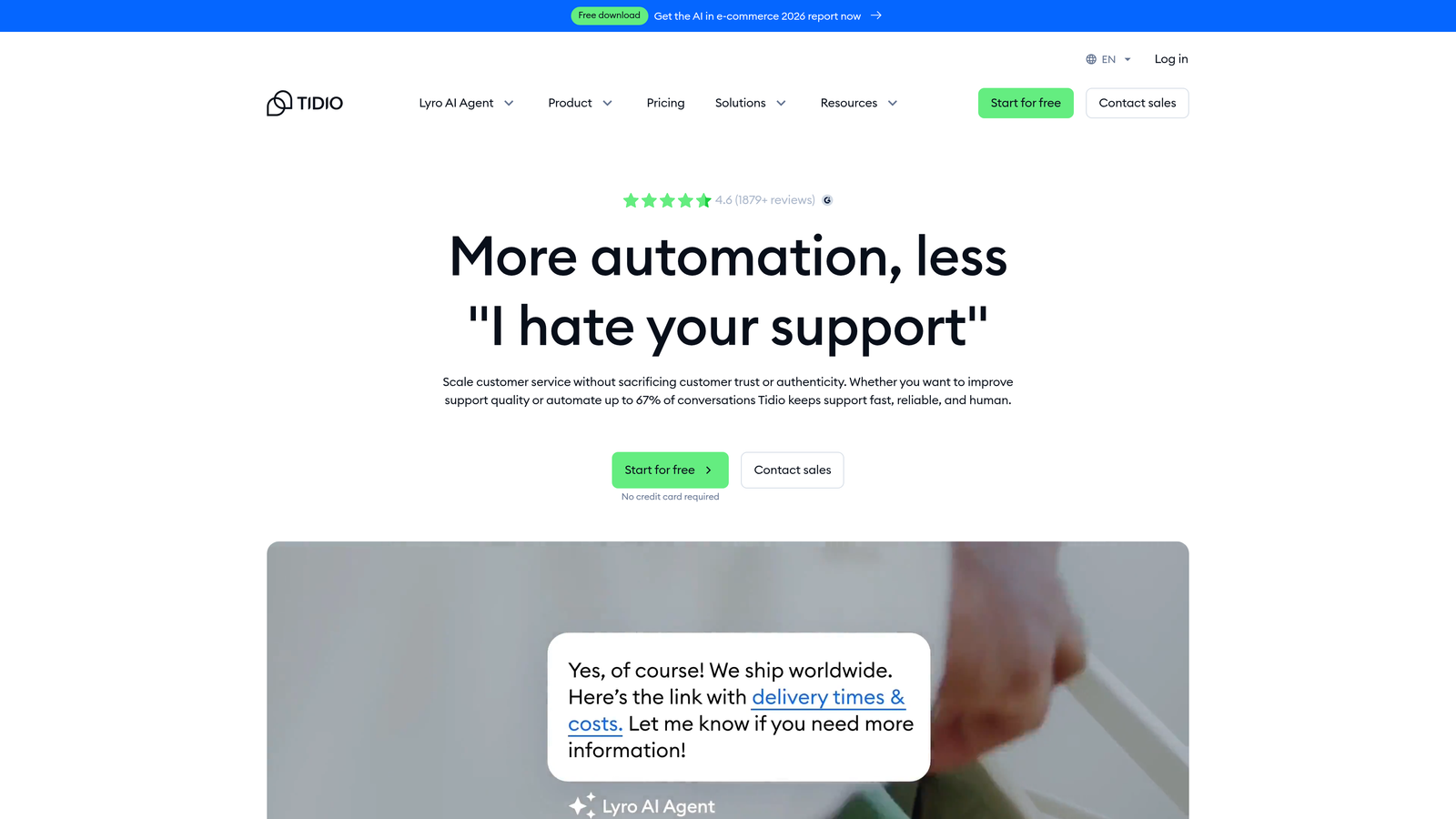
7. Tidio
Best for: Small businesses and startups needing affordable live chat with AI capabilities
Tidio offers live chat and chatbot functionality with AI features at small business-friendly pricing.
Where This Tool Shines
Tidio's visual chatbot builder makes automation accessible to non-technical teams. You can create conversation flows by dragging and connecting blocks—no coding required.
The free tier is genuinely useful, not just a trial. Small businesses can handle basic live chat and simple automation without paying anything, then upgrade as they grow and need more sophisticated features.
Key Features
Visual Chatbot Builder: Create automation flows using drag-and-drop interface without technical skills.
AI Response Suggestions: Get AI-powered response recommendations during live chat conversations.
Visitor Tracking: See who's on your site and their browsing behavior to provide proactive support.
Email Integration: Manage both chat and email support from the same interface.
Free Tier: Includes basic live chat and simple chatbot for up to 50 conversations per month.
Best For
Small businesses, startups, and solo entrepreneurs who need professional chat support without enterprise pricing. Ideal for e-commerce stores and service businesses with straightforward support needs.
Pricing
Free tier available for basic use. Paid plans start at $29 per month for expanded features and conversation limits.
8. Drift
Best for: B2B companies aligning sales and support through conversational AI
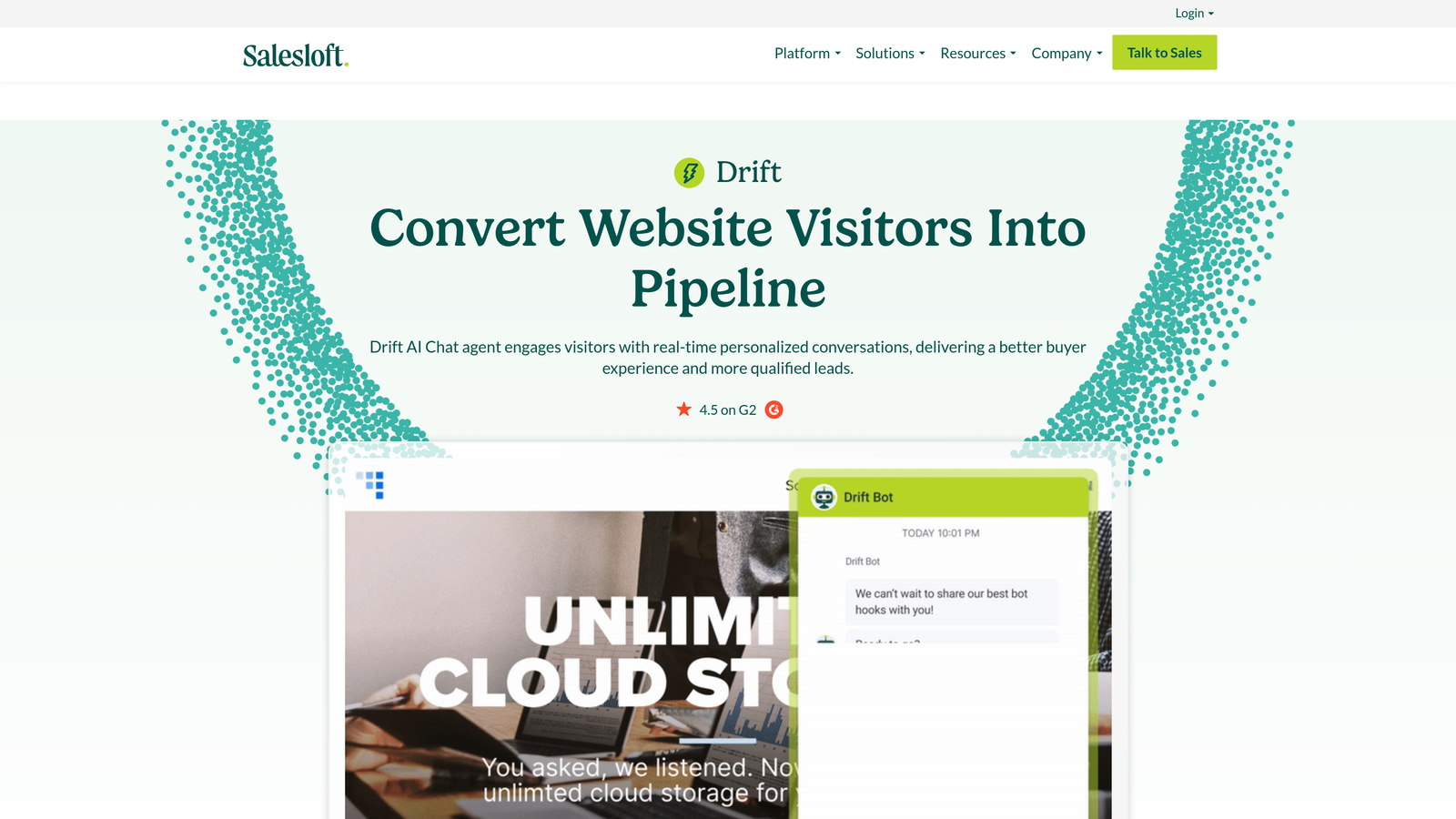
Drift focuses on conversational AI for B2B revenue acceleration, blending sales and support functions.
Where This Tool Shines
Drift treats every conversation as a potential revenue opportunity. The buyer intent signals help your team identify which support conversations are actually sales opportunities in disguise.
The meeting scheduling automation eliminates the back-and-forth of calendar coordination. When a conversation needs to escalate to a call, Drift automatically finds available times and books meetings with the right team member.
Key Features
Buyer Intent Signals: Identify which support conversations indicate purchase intent or expansion opportunities.
Meeting Scheduling: Automatically book meetings with sales or support team members based on availability and routing rules.
ABM Integration: Connect with account-based marketing tools to prioritize high-value accounts in support queues.
Revenue Intelligence: Track how support interactions influence pipeline and revenue metrics.
Playbooks: Create conversation flows that adapt based on visitor company, role, and behavior.
Best For
B2B companies where support and sales functions overlap, particularly in product-led growth models where support conversations often lead to upsells and expansions.
Pricing
Custom enterprise pricing based on company size and feature requirements. Positioned as a revenue tool rather than a cost center.
9. Help Scout
Best for: Service-focused teams prioritizing human connection with AI assistance
Best for: Service-focused teams wanting AI to enhance rather than replace human support
Help Scout provides a human-centric help desk with AI features that assist agents rather than replace them.
Where This Tool Shines
Help Scout's philosophy is that AI should make human agents better, not replace them. The AI drafts and summaries save time on routine responses while keeping the human touch that builds customer relationships.
The interface is refreshingly clean compared to feature-bloated alternatives. Agents can focus on the conversation rather than navigating complex software, which leads to faster response times and better customer experiences.
Key Features
AI Drafts: Generate response drafts that agents can personalize before sending, saving time without losing authenticity.
Conversation Summaries: Automatically summarize long conversation threads so agents can quickly understand context.
Shared Inbox: Collaborate on customer conversations with notes, assignments, and @mentions for team members.
Knowledge Base Integration: Seamlessly reference and insert help articles into responses.
Clean Agent Interface: Distraction-free design that keeps agents focused on customer conversations.
Best For
Companies that view support as a relationship-building function rather than a cost to minimize. Works well for service-oriented businesses where brand voice and personal touch matter.
Pricing
Plans start at $20 per user per month, making it accessible for small to mid-sized teams focused on quality over automation volume.
Making the Right Choice
The right AI support platform depends on where you are and where you're going. If you want AI-first architecture that learns continuously and integrates across your entire business stack, Halo AI delivers that vision. For teams already committed to specific helpdesk ecosystems, Intercom Fin and Zendesk AI add powerful AI layers without platform migration.
Budget-conscious teams should look at Tidio for basic needs or Freshdesk for more comprehensive features at mid-market pricing. High-volume consumer operations handling thousands of repetitive queries benefit from Ada's multilingual automation. And if your support function blurs into sales and revenue, Drift's conversational AI approach aligns both functions.
The critical evaluation point isn't features—it's integration depth and autonomy preference. Do you want AI that operates independently and learns from every interaction, or AI that assists human agents? Do you need a platform that connects to your entire tech stack, or one that works within your existing helpdesk?
Your support team shouldn't scale linearly with your customer base. Let AI agents handle routine tickets, guide users through your product, and surface business intelligence while your team focuses on complex issues that need a human touch. See Halo in action and discover how continuous learning transforms every interaction into smarter, faster support.