9 Best AI Support Solutions for B2B Teams in 2026
Discover the best AI support solutions for B2B teams in 2026, with nine platforms evaluated across six key criteria including autonomous ticket resolution, learning capability, and CRM integrations. This guide breaks down AI-first platforms, enhanced helpdesks, and chat-based tools to help scaling SaaS companies choose the right solution for handling growing ticket volumes without expanding headcount.
 Grant CooperFounder13 min read
B2B support teams are hitting a wall. Ticket volumes grow with every new customer, but hiring more agents isn't a sustainable answer. The shift from traditional helpdesks to AI-native support isn't just a trend — it's a structural change in how modern SaaS companies think about customer experience at scale.
The tools in this list were evaluated on six criteria: autonomy (can the AI resolve tickets end-to-end?), learning capability (does it improve over time?), context-awareness (does it understand where the user is in their journey?), integrations (does it connect to your broader stack?), human handoff quality, and whether it surfaces business intelligence beyond basic support metrics.
The category now spans three distinct approaches: AI-first platforms built ground-up for autonomous resolution, AI-enhanced helpdesks that layer intelligence onto established infrastructure, and chat-first tools that started in live chat and added AI resolution capabilities. Whether you're evaluating AI support agents for the first time or reconsidering your current stack, understanding these distinctions matters. This list covers the strongest options across all three categories to help you find the right fit for your team.
1. Halo AI
Best for: B2B SaaS teams wanting autonomous, context-aware AI support with business intelligence built in.
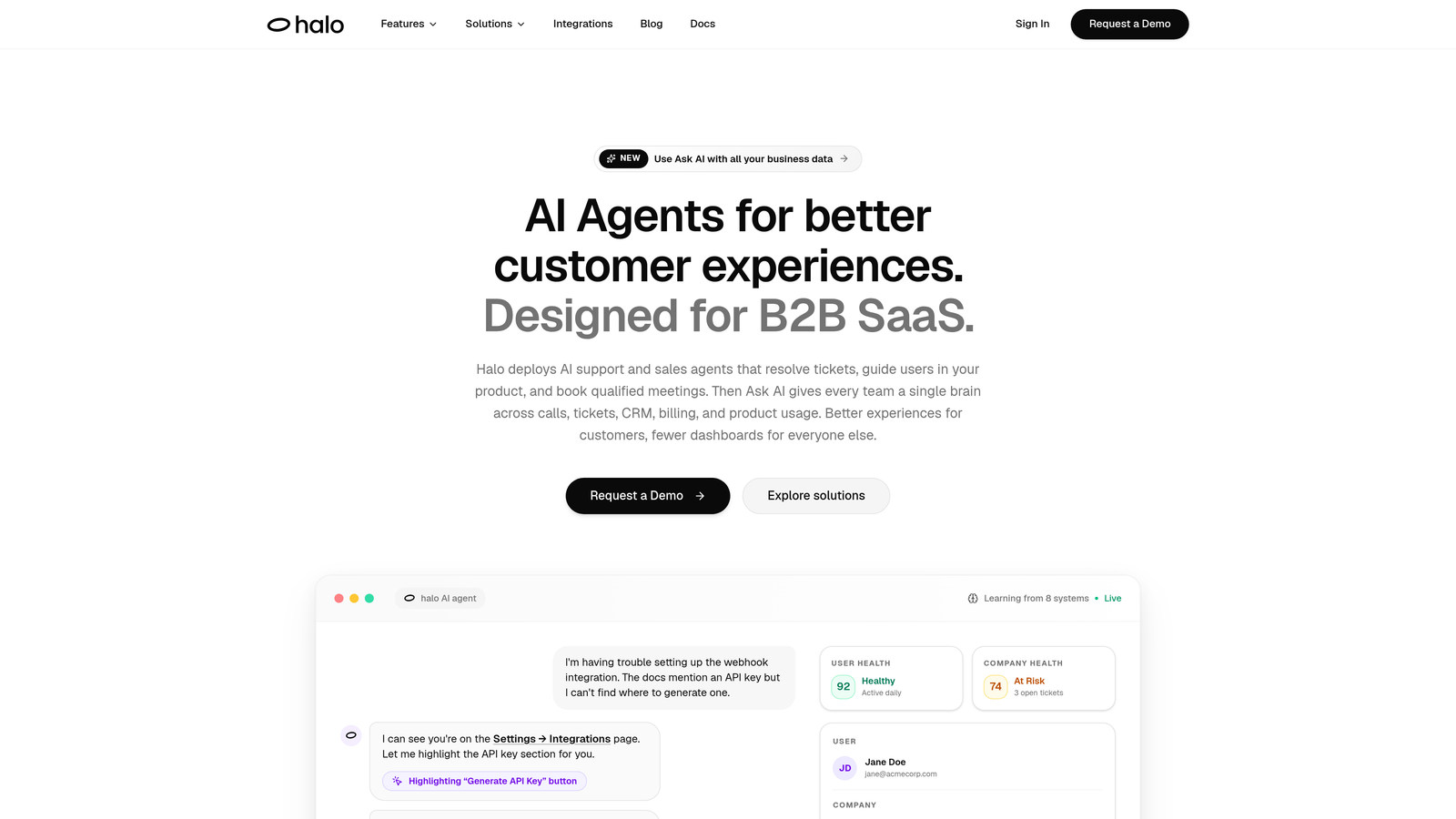
Halo AI is an AI-first customer support platform built specifically for B2B SaaS product teams — not a traditional helpdesk with AI bolted on.
Where This Tool Shines
What separates Halo from most tools on this list is page-aware context. The AI agent actually sees what the user sees in your product UI, which means it can guide users through specific workflows visually rather than relying on generic knowledge base answers. That's a meaningful difference when your product is complex and your users need hands-on guidance, not just documentation links.
Beyond ticket resolution, Halo's smart inbox surfaces business intelligence that most support tools completely ignore: customer health signals, revenue anomalies, and sentiment trends. Your support data stops being a cost center metric and starts feeding into broader product and revenue decisions.
Key Features
Page-Aware AI Chat Widget: The AI sees your product UI in context, enabling visual guidance through specific workflows rather than generic responses.
Autonomous Ticket Resolution: AI agents resolve tickets end-to-end with continuous learning from every past interaction, getting smarter over time.
Auto Bug Ticket Creation: Automatically identifies and routes bug reports to Linear or your project management tool without manual triage.
Smart Inbox with Business Intelligence: Surfaces customer health signals, revenue anomalies, and sentiment trends directly from support interactions.
Live Agent Handoff: Escalates to human agents with full conversation context preserved — no repeating, no lost history.
Broad Integration Stack: Connects with Slack, HubSpot, Intercom, Stripe, Zoom, PandaDoc, and Fathom out of the box.
Best For
B2B SaaS companies that want AI-first architecture rather than an AI add-on, particularly product teams dealing with complex user journeys where context matters. Also strong for teams that want support data to feed into product and revenue intelligence, not just deflection metrics.
Pricing
Contact Halo AI for current pricing details. Visit haloagents.ai for more information.
2. Intercom (Fin AI Agent)
Best for: Teams already on Intercom who want AI resolution without migrating platforms.
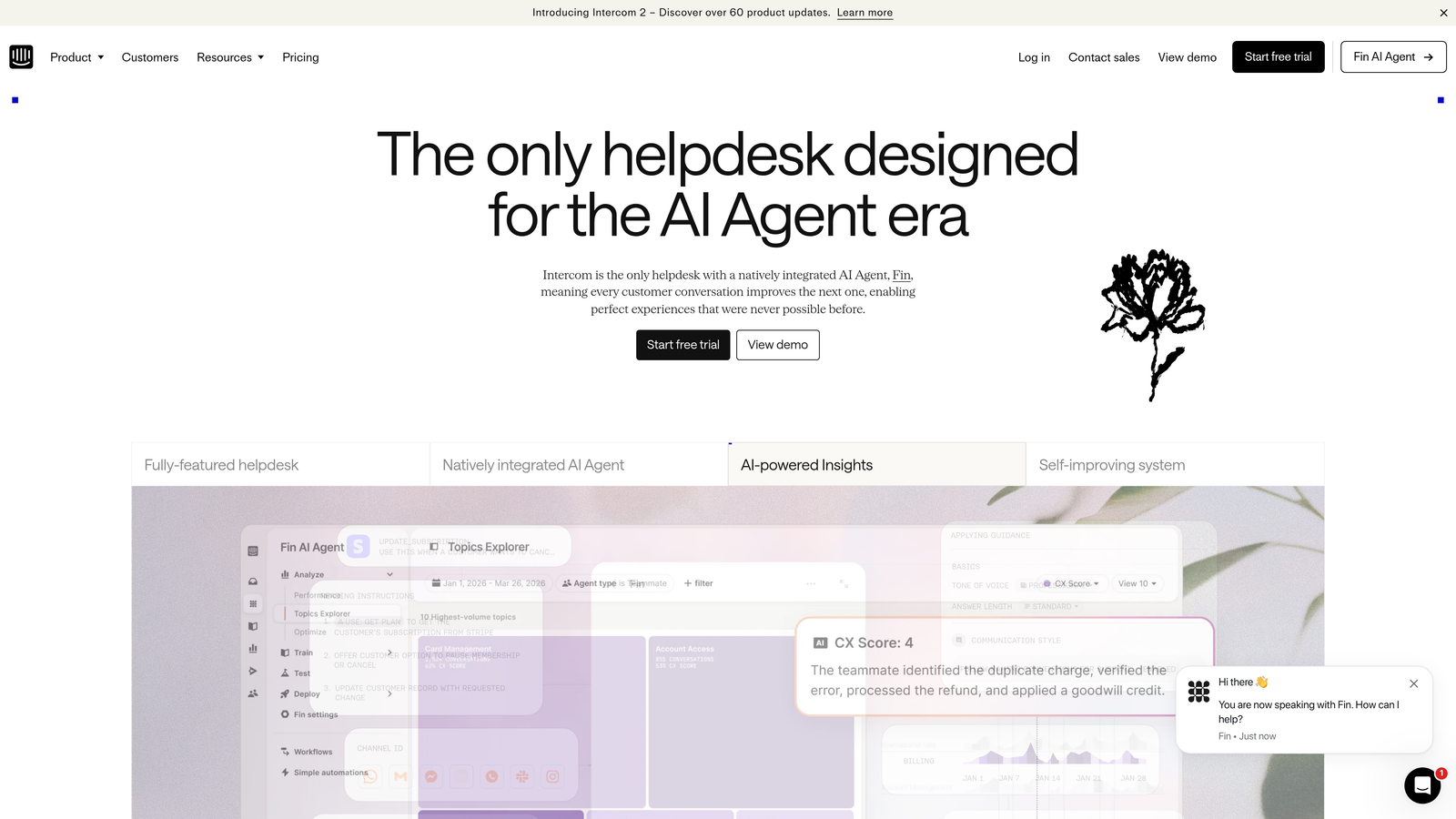
Intercom's Fin is a native AI agent that resolves customer queries by drawing directly on your existing Intercom knowledge base and articles.
Where This Tool Shines
Fin's biggest advantage is zero-friction adoption for existing Intercom customers. There's no separate training pipeline or knowledge migration — Fin works with what you've already built. The resolution quality is generally strong for teams with well-maintained help content, and the handoff experience within the same Intercom thread is seamless.
The resolution-based pricing model is worth understanding before you commit. You pay per resolved conversation, which aligns costs with value in theory, but can create unpredictable billing at higher volumes. It's worth modeling your expected resolution volume carefully against your current support costs.
Key Features
Native Intercom Integration: Operates within your existing Intercom environment, no separate platform or data migration required.
Resolution-Based Pricing: Charges per resolved conversation rather than per seat, which can be cost-effective at lower volumes.
Knowledge Base Utilization: Draws on existing help articles without requiring retraining or separate AI configuration.
Seamless Human Handoff: Escalates within the same Intercom thread, preserving full context for the receiving agent.
Multilingual Support: Handles queries in multiple languages out of the box.
Best For
Companies already invested in the Intercom platform with a solid knowledge base in place. Less compelling as a standalone choice if you're not already on Intercom, since the value is heavily tied to the existing ecosystem.
Pricing
Resolution-based pricing model. Visit Intercom's pricing page for current rates.
3. Zendesk AI
Best for: Large enterprise support organizations that need AI embedded across a mature, full-featured helpdesk.
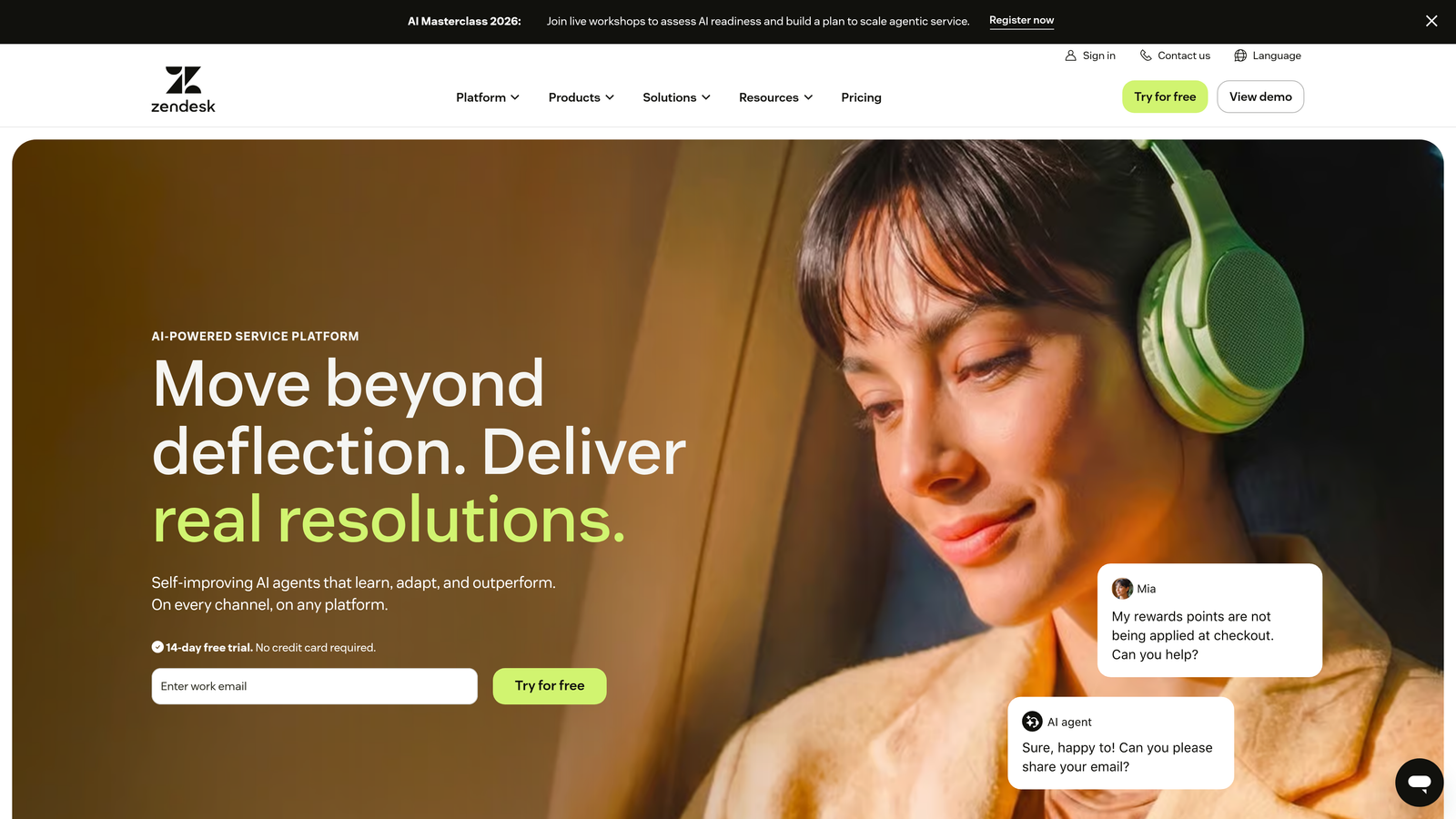
Zendesk embeds AI across its Suite product, from intelligent triage and intent detection to AI-generated agent replies and automated workflows.
Where This Tool Shines
Zendesk's core strength is depth. The platform has been the enterprise helpdesk standard for years, and its AI layer sits on top of that maturity: sophisticated routing, intent and sentiment detection, and generative reply drafts that actually reflect your brand's tone when configured properly. For large support orgs with complex workflows, the AI enhancements feel native rather than bolted on.
The analytics and reporting capabilities are genuinely enterprise-grade. Teams managing SLAs across multiple product lines and regions will find Zendesk's reporting infrastructure hard to match elsewhere on this list.
Key Features
AI-Powered Triage: Intent, sentiment, and language detection on every incoming ticket for smarter routing and prioritization.
Generative Reply Drafts: AI generates suggested replies for human agents to review and send, reducing handle time.
Automated Workflow Routing: AI classification triggers routing rules and workflow automations without manual configuration.
Advanced Analytics: Built-in reporting across ticket volume, resolution rates, agent performance, and SLA compliance.
Enterprise Security and Compliance: Robust compliance features for regulated industries and enterprise procurement requirements.
Best For
Large support organizations already on or evaluating Zendesk Suite, particularly those with complex routing needs, SLA requirements, and enterprise compliance considerations. Less suited for smaller teams who don't need the full platform's weight.
Pricing
AI features are included in select Suite plans or available as add-ons. Visit Zendesk's pricing page for current tier details.
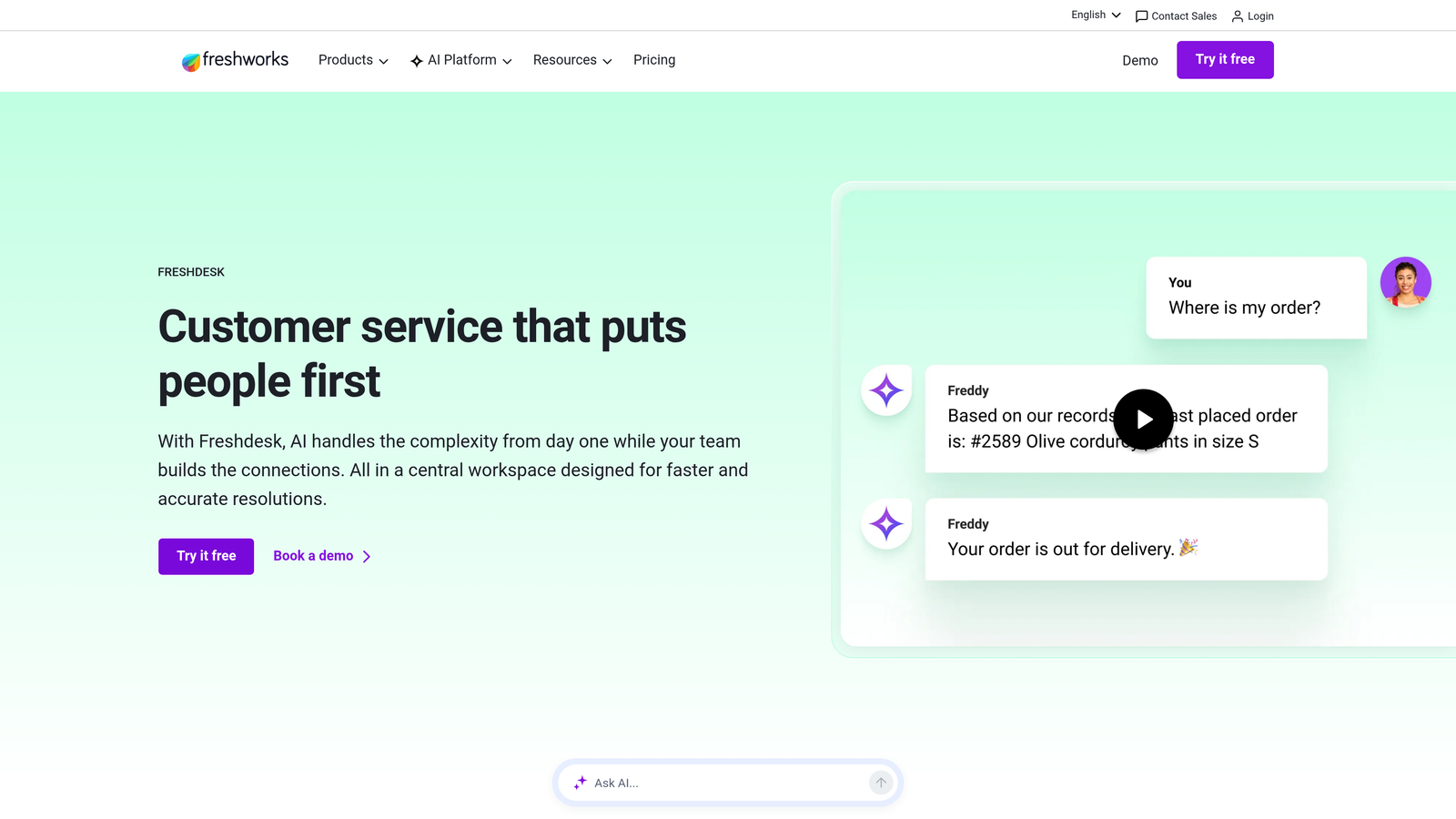
4. Freshdesk (Freddy AI)
Best for: SMB and mid-market teams that want AI-assisted and autonomous support at an accessible price point.
Freshdesk's Freddy AI spans the full Freshworks product suite, offering both AI-assisted agent support and autonomous self-service resolution.
Where This Tool Shines
Freddy AI is actually two distinct capabilities worth understanding separately. Freddy Copilot assists human agents with reply drafts, conversation summaries, and suggestions — reducing handle time without removing the human from the loop. Freddy Self Service is the autonomous layer, handling end-user queries without agent involvement.
The cross-suite AI is a genuine differentiator for teams already using Freshworks products. If your team spans Freshdesk for support, Freshsales for CRM, and Freshservice for IT, Freddy creates a unified AI layer across all three. The pricing is generally more accessible than Zendesk, making it a realistic option for growing teams not yet at enterprise scale.
Key Features
Freddy Copilot: AI-generated drafts, conversation summaries, and suggestions to help human agents respond faster and more accurately.
Freddy Self Service: Autonomous AI resolution for end-user queries without agent intervention.
Cross-Suite AI: Freddy spans Freshdesk, Freshsales, and Freshservice for a unified AI layer across your Freshworks stack.
No-Code Bot Builder: Customize conversation flows without engineering resources.
Omnichannel Coverage: Handles email, chat, phone, and social from a single platform.
Best For
SMB and mid-market B2B teams, especially those already using other Freshworks products. A strong Zendesk alternative for teams that need solid AI features without enterprise-level pricing.
Pricing
Freddy AI is available on Growth plans and above. Visit Freshdesk's pricing page for current rates.
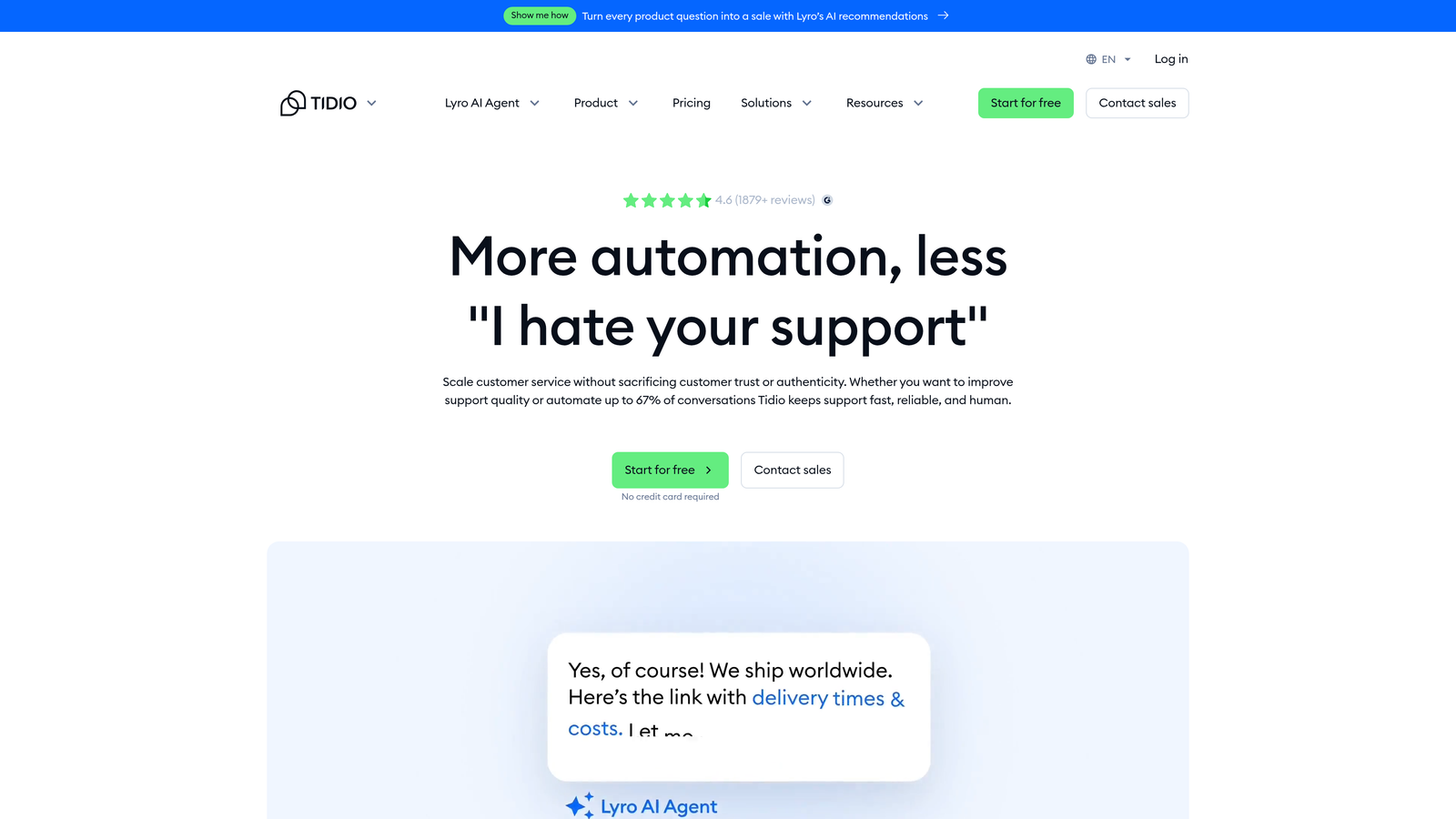
5. Tidio (Lyro AI)
Best for: Small teams and e-commerce brands that need fast AI setup with an affordable entry point.
Tidio is a live chat and AI support platform with Lyro, its conversational AI agent built to handle common queries automatically with minimal configuration.
Where This Tool Shines
Tidio's standout quality is speed of deployment. Lyro is designed to be live in minutes, not days, with no-code setup and an interface that doesn't require a dedicated implementation team. For smaller teams that need AI support quickly without a complex onboarding process, that matters.
The e-commerce integration depth — Shopify, WooCommerce, and similar platforms — makes Tidio particularly well-suited for product-led e-commerce brands. It's worth noting that Lyro conversation limits apply on lower pricing tiers, so high-volume teams should review current tier limits carefully before committing.
Key Features
Lyro AI Agent: Autonomous resolution of FAQs and common support queries without agent involvement.
No-Code Setup: Deploy and configure without engineering resources — live in minutes.
Live Chat Fallback: Smooth handoff to human agents when Lyro reaches its limits or the query requires escalation.
E-Commerce Integrations: Native connections with Shopify, WooCommerce, and other e-commerce platforms.
Free Tier Available: Entry-level access with a free plan, making it accessible for very small teams.
Best For
Small businesses, e-commerce brands, and teams with straightforward support use cases that need fast deployment and predictable, affordable pricing. Less suited for complex B2B SaaS environments with nuanced product support needs.
Pricing
Free plan available; Lyro AI on paid plans starting from approximately $29/month. Verify current pricing at Tidio's website.
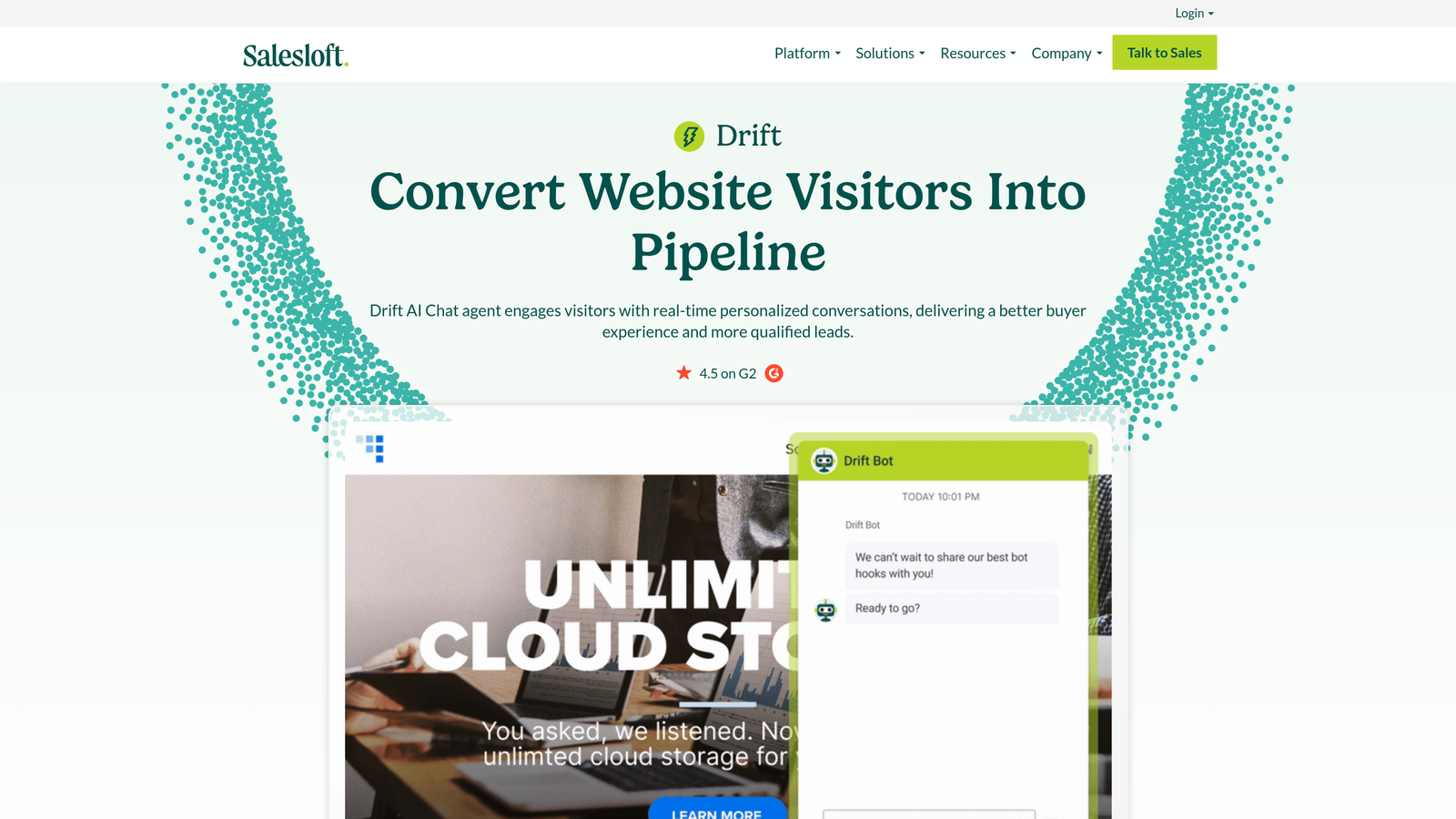
6. Drift (by Salesloft)
Best for: Sales-led B2B teams that need conversational AI spanning both pipeline generation and support queries.
Drift, now part of Salesloft, blends conversational AI with revenue-focused workflows — qualifying leads, booking meetings, and handling support queries within a single platform.
Where This Tool Shines
Drift occupies a genuinely different category from the other tools here. Its AI is oriented around revenue conversations, not just deflection. That means the same platform that routes a support query can also qualify a high-intent visitor and book a sales meeting. For sales-led B2B companies where the line between support and sales is blurry, that unification has real value.
The Salesloft acquisition in 2024 has deepened the revenue platform integration, making Drift increasingly compelling for teams already in the Salesloft ecosystem. Pure-play support teams may find the revenue focus adds unnecessary complexity for their use case.
Key Features
Revenue-Oriented Conversational AI: AI designed around pipeline generation and qualification, not just support deflection.
AI Lead Qualification and Meeting Booking: Qualifies visitors and schedules meetings directly within the chat interface.
Conversation Playbooks: Route conversations to the right team (sales vs. support) based on intent signals.
Salesloft Integration: Deep connection with Salesloft's broader revenue platform for sales-led organizations.
High-Intent Visitor Alerts: Real-time notifications when high-value prospects engage with your site.
Best For
Sales-led B2B companies where support and revenue conversations overlap, particularly teams already using Salesloft. Not the right fit for teams that need pure-play support AI without the revenue layer.
Pricing
Enterprise-oriented pricing. Contact Drift or Salesloft directly for current rates at drift.com.
7. Help Scout
Best for: Teams that want AI efficiency gains while keeping humans at the center of customer interactions.
Help Scout takes a deliberately human-first approach to AI, with features designed to make agents faster rather than replace them.
Where This Tool Shines
Help Scout's philosophy is refreshingly honest: not every support team wants to fully automate customer interactions, and that's a legitimate position. Its AI features — Summarize, Drafts, and AI Answers — are built to reduce the cognitive load on agents without removing them from the conversation. Summarize condenses long threads instantly; Drafts generates reply suggestions; AI Answers surfaces relevant knowledge base content proactively.
The shared inbox UX is genuinely well-designed, and team collaboration features are strong. For customer-experience-focused teams where relationship quality matters as much as resolution speed, Help Scout strikes a thoughtful balance.
Key Features
AI Summarize: Instantly condenses long conversation threads so agents get up to speed without reading every message.
AI Drafts: Generates context-aware reply suggestions for agents to review, edit, and send.
AI Answers: Proactively surfaces relevant knowledge base articles within the agent interface.
Shared Inbox UI: Clean, well-designed team inbox with strong collaboration and assignment features.
Docs Knowledge Base: Built-in knowledge base included across all plans, no separate tool required.
Best For
Teams that value human-led customer relationships and want AI as an efficiency layer, not a replacement. Particularly well-suited for companies where customer experience quality is a competitive differentiator.
Pricing
Plans start from approximately $20/user/month. Visit Help Scout's pricing page for current rates.
8. Kustomer
Best for: Enterprise teams that need AI operating with deep customer history and cross-channel context.
Kustomer is a CRM-native support platform where AI operates with full customer history, order data, and interaction timeline before generating any response.
Where This Tool Shines
Kustomer's CRM-native architecture is the core differentiator. Most support AI operates on the current conversation; Kustomer's AI sees everything — past interactions, order history, customer value, previous resolutions — before it responds. That context depth enables significantly more relevant automated responses for complex support scenarios where generic answers would fail.
The omnichannel timeline view consolidates email, chat, social, and voice into a single customer thread, giving both AI and human agents complete visibility. For enterprise teams handling high-value customers with complex histories, that unified view is a meaningful operational advantage.
Key Features
CRM-Native Architecture: AI accesses full customer history, order data, and interaction timeline before responding to any query.
AI-Powered Routing: Routes conversations based on customer value, issue type, and historical context.
Omnichannel Timeline: Unified view of email, chat, social, and voice interactions in a single customer thread.
AI-Triggered Workflow Automation: Automated actions triggered by AI classification of conversation intent and urgency.
Enterprise Reporting and SLA Management: Advanced analytics and SLA tracking for complex support operations.
Best For
Enterprise support teams handling high-value customers where context depth matters for resolution quality. Strong for e-commerce, subscription businesses, and any company where customer history significantly affects how support should be handled.
Pricing
Enterprise-oriented pricing. Contact Kustomer directly at kustomer.com for current rates.
9. Forethought
Best for: Enterprise teams that want AI capabilities without migrating away from their existing helpdesk.
Forethought is an AI layer that sits on top of existing helpdesks — Zendesk, Salesforce Service Cloud, and others — delivering autonomous resolution and intelligent triage without requiring a platform migration.
Where This Tool Shines
Forethought solves a real organizational problem: large enterprises often can't migrate their helpdesk, but they still want AI benefits. Forethought's overlay approach means you get Solve (autonomous ticket deflection and resolution) and Triage (AI-powered routing and prioritization) on top of whatever platform your team is already using. No migration, no retraining, no change management for your agents.
The deflection analytics are particularly strong, giving teams clear visibility into what's being resolved autonomously versus what's escalating and why. For enterprises focused on measurable ROI from AI investment, that reporting clarity is genuinely useful.
Key Features
Solve: Autonomous AI agent for ticket deflection and end-to-end resolution without human intervention.
Triage: AI-powered routing and prioritization on incoming tickets based on intent, sentiment, and urgency.
Helpdesk Overlay: Works on top of Zendesk, Salesforce Service Cloud, and other major platforms without migration.
Sentiment and Intent Detection: Identifies urgent or high-risk conversations for priority routing.
Deflection Analytics Dashboard: Tracks AI resolution rates, escalation patterns, and performance metrics clearly.
Best For
Enterprise teams committed to their existing helpdesk infrastructure who want to add AI resolution and triage capabilities without a platform change. Also strong for organizations evaluating AI ROI before committing to a full platform migration.
Pricing
Enterprise-focused pricing. Contact Forethought at forethought.ai for current rates.
Which Tool Is Right for Your Team?
The right choice depends less on which tool has the most features and more on where your team is today and where you're trying to go.
AI-first autonomous support: Halo AI is the strongest option here, particularly for B2B SaaS teams that need page-aware context, continuous learning, and business intelligence beyond deflection metrics.
Enterprise helpdesk AI: Zendesk AI for teams already on Zendesk Suite; Forethought for teams on other enterprise helpdesks who want AI without migrating.
Existing Intercom users: Fin AI Agent is the natural choice — minimal friction, no migration, works with your existing knowledge base.
SMB and mid-market budgets: Freshdesk Freddy AI offers strong capability at accessible pricing; Tidio is the fastest path to deployment for very small teams or e-commerce brands.
Sales and support blend: Drift is purpose-built for revenue-focused B2B teams where lead qualification and support overlap.
Human-augmentation focus: Help Scout for teams that want AI efficiency without full automation.
CRM-rich support context: Kustomer for enterprises where customer history depth is essential to resolution quality.
Your support team shouldn't scale linearly with your customer base. Let AI agents handle routine tickets, guide users through your product, and surface business intelligence while your team focuses on complex issues that need a human touch. See Halo in action and discover how continuous learning transforms every interaction into smarter, faster support.