9 Best AI Support Tools for SaaS in 2026
When your SaaS customer base grows faster than your support team can scale, the best AI support tools for SaaS become essential for maintaining quality service without expanding headcount. This guide evaluates nine leading platforms based on their autonomous resolution capabilities, SaaS-specific features like product context awareness, integration ecosystems, and ability to learn from every customer interaction—helping you choose between AI-native solutions and traditional helpdesks with added AI features.
 Grant CooperFounder12 min read
Your SaaS customer base just doubled. Your support tickets tripled. Your headcount budget? Frozen. This is the reality for most SaaS companies in 2026—growth that outpaces traditional support models. The answer isn't hiring more agents. It's deploying AI that actually understands your product, learns from every interaction, and resolves issues autonomously.
But not all AI support tools are created equal. Some are AI-native platforms built from the ground up with intelligent automation at their core. Others are established helpdesks with AI features bolted on. The difference matters—especially when you're choosing a system that will handle thousands of customer interactions.
We evaluated these tools based on five critical criteria: AI capabilities that go beyond canned responses, SaaS-specific features like product context awareness, integration ecosystems that connect to your development and revenue stack, pricing transparency, and continuous learning abilities that improve over time. What follows are the nine best AI support tools for SaaS companies in 2026, ranging from cutting-edge AI-first platforms to proven helpdesks enhanced with intelligent automation.
1. Halo AI
Best for: SaaS teams ready for AI-native support with continuous learning and deep product context
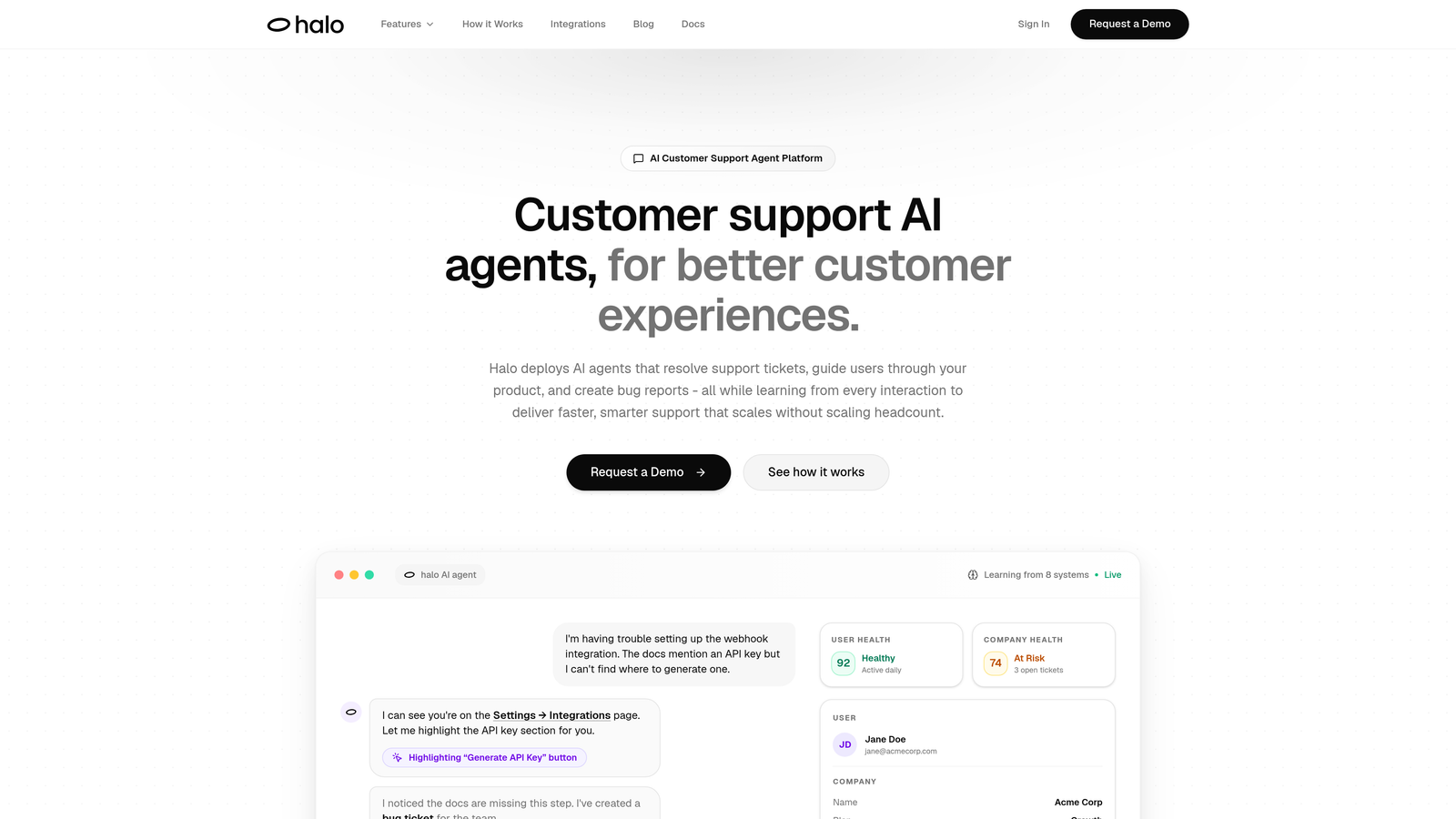
Halo AI represents the AI-first approach to customer support—not a chatbot added to an existing helpdesk, but a platform where AI agents are the primary resolution engine.
Where This Tool Shines
The standout capability is page-aware context. Halo's AI agents see what your users see, understanding exactly where they are in your product when they ask for help. This eliminates the frustrating back-and-forth of traditional support where agents ask "what page are you on?" twenty messages into a conversation.
The platform's continuous learning architecture means every resolved ticket makes the system smarter. Unlike static AI models that require manual retraining, Halo learns from successful resolutions and applies that knowledge immediately to future interactions.
Key Features
Page-Aware Chat Widget: AI agents understand visual context and can guide users through your product interface with precision.
Auto Bug Ticket Creation: Technical issues automatically generate detailed bug reports in Linear with reproduction steps and context.
Business Intelligence Analytics: Surface customer health signals, revenue intelligence, and anomaly detection beyond basic support metrics.
Continuous Learning Engine: Every interaction trains the AI, creating a system that becomes more effective over time without manual intervention.
Smart Escalation: Live agent handoff for complex issues that need human judgment, with full conversation context transferred seamlessly.
Best For
B2B SaaS companies using tools like Linear, Slack, HubSpot, Stripe, and Intercom who want AI that connects across their entire business stack. Particularly valuable for product teams tired of AI that suggests answers without understanding product context.
Pricing
Contact for pricing. The investment scales with your support volume and integration requirements.
2. Intercom Fin
Best for: Teams already using Intercom who want GPT-4 powered automation within their existing workflow
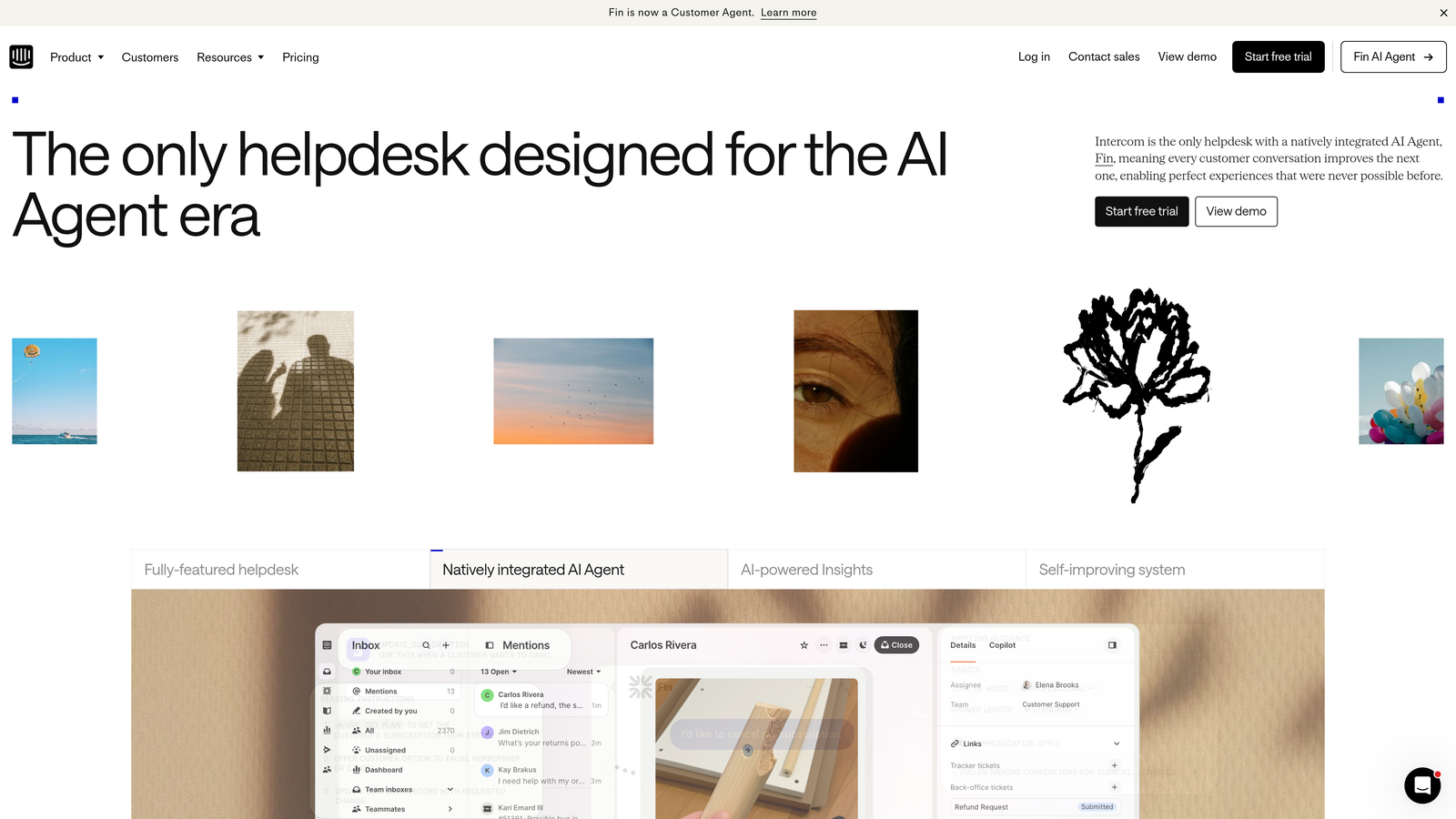
Intercom Fin is a GPT-4 powered AI agent built directly into Intercom's customer messaging platform.
Where This Tool Shines
If you're already invested in the Intercom ecosystem, Fin offers the smoothest path to AI-powered support. It learns from your existing help center content and previous conversations, which means you're not starting from zero. The integration is native—no third-party connectors or middleware required.
The GPT-4 foundation gives Fin strong natural language understanding. It handles conversational nuance well and can maintain context across longer exchanges, something earlier chatbot generations struggled with.
Key Features
GPT-4 Powered Conversations: Advanced language model handles complex queries with human-like comprehension and responses.
Help Center Learning: Automatically trains on your knowledge base articles and updates as content changes.
Seamless Human Handoff: Transfers conversations to live agents with full context when AI reaches its limits.
Product Tours Integration: Can trigger interactive product walkthroughs based on user questions and behavior.
Performance Analytics: Track resolution rates, customer satisfaction, and cost per conversation in Intercom's reporting dashboard.
Best For
SaaS companies already using Intercom for customer messaging who want to add AI capabilities without changing platforms. Works best when you have a comprehensive help center for Fin to learn from.
Pricing
$0.99 per resolution, which can add up quickly at scale but offers predictable per-use pricing.
3. Zendesk AI
Best for: Enterprise SaaS teams needing AI capabilities across a comprehensive support suite
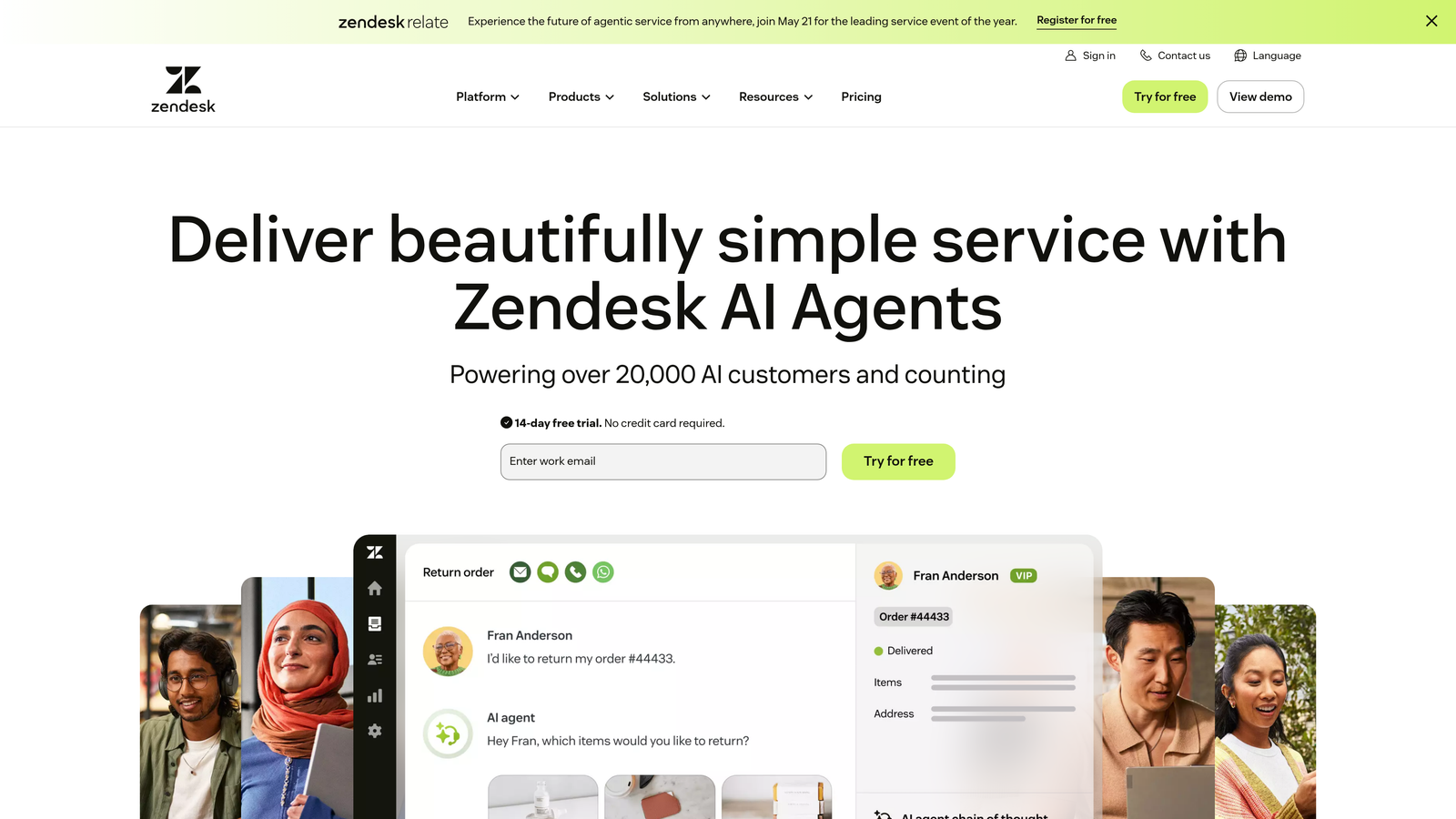
Zendesk AI layers intelligent automation onto Zendesk's established enterprise support platform.
Where This Tool Shines
Zendesk's AI capabilities excel at the enterprise scale. Intent detection automatically routes tickets to the right team based on content analysis, not just keywords. This matters when you're handling thousands of tickets across multiple product lines and support tiers.
The AI-powered agent assistance features help human agents work faster by suggesting knowledge base articles, drafting responses, and surfacing relevant past conversations. It's less about replacing agents and more about making them significantly more efficient.
Key Features
Intent Detection and Routing: Analyzes ticket content to automatically assign conversations to the appropriate team or specialist.
AI-Powered Agent Assistance: Suggests responses and relevant articles to human agents in real-time during conversations.
Sentiment Analysis: Detects customer frustration or satisfaction to prioritize urgent issues and identify at-risk accounts.
Knowledge Base Suggestions: Recommends help articles to customers before they submit tickets, deflecting simple queries.
Macro Recommendations: Learns which canned responses work best for different ticket types and suggests them to agents.
Best For
Enterprise SaaS companies with complex support operations, multiple product lines, and large support teams. Best suited for organizations already invested in the Zendesk ecosystem.
Pricing
Advanced AI add-on starts at $50 per agent per month, on top of base Zendesk subscription costs.
4. Freshdesk Freddy AI
Best for: Mid-market SaaS companies wanting AI automation at a more accessible price point
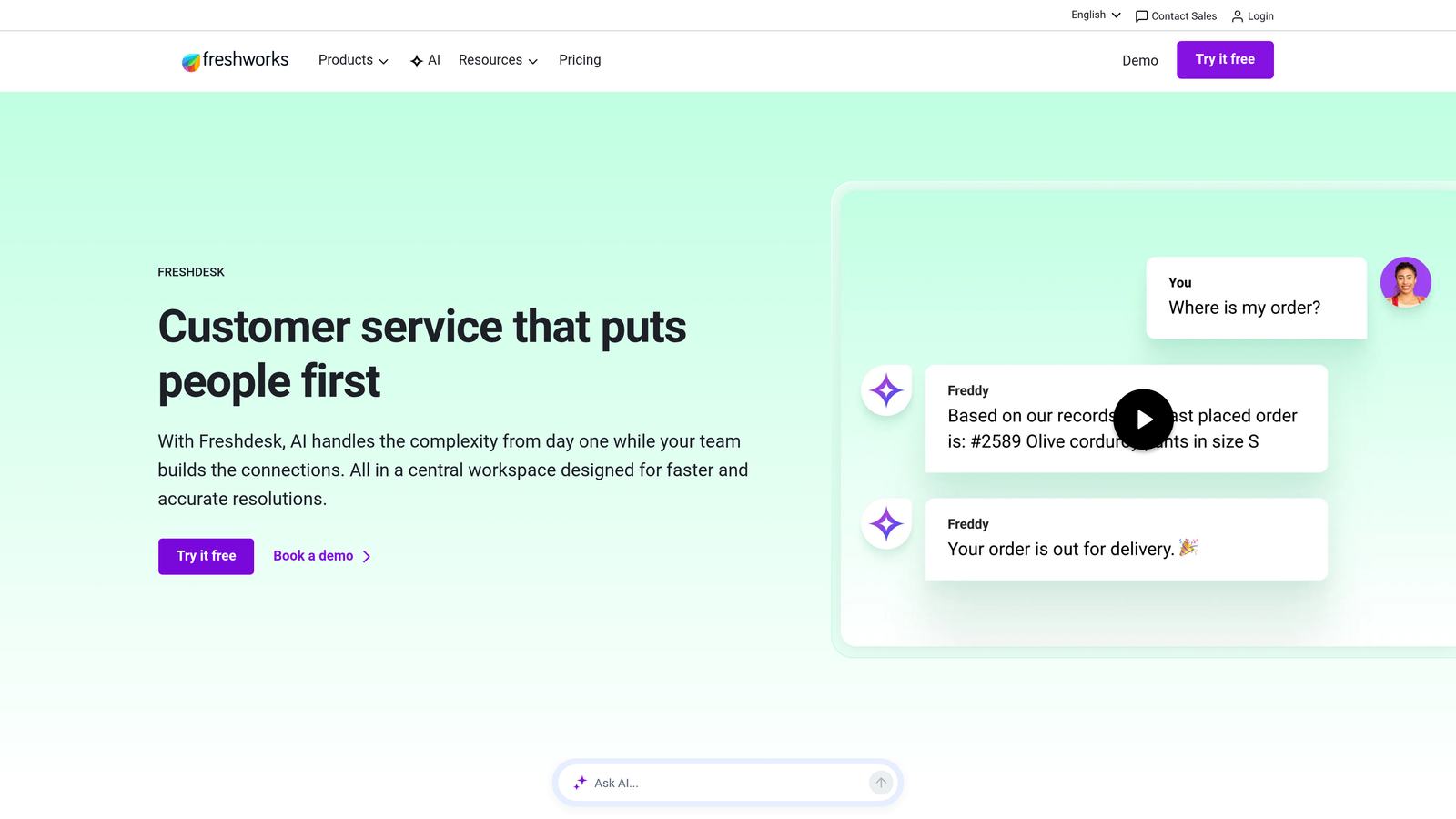
Freshdesk Freddy AI is the AI assistant built into Freshdesk, offering auto-triage, response suggestions, and analytics.
Where This Tool Shines
Freddy AI delivers solid AI capabilities without the enterprise price tag. The auto-triage feature is particularly valuable for small to mid-sized support teams—it categorizes incoming tickets, assigns priority levels, and routes them to the right agent automatically. This eliminates the manual sorting work that bogs down growing teams.
The suggested response drafts help maintain consistency across your support team. Freddy analyzes similar past tickets and recommends responses, which is especially useful for onboarding new support agents who haven't memorized every product detail yet.
Key Features
Auto-Triage Incoming Tickets: Automatically categorizes, prioritizes, and routes new support requests based on content analysis.
Suggested Response Drafts: Generates response recommendations based on ticket content and similar past conversations.
Canned Response Recommendations: Learns which templates work best for different scenarios and suggests them to agents.
Performance Analytics: Tracks agent productivity, resolution times, and AI accuracy to identify improvement opportunities.
Sentiment Detection: Flags tickets from frustrated customers for priority handling and manager review.
Best For
Growing SaaS companies with support teams of 5-50 agents who need AI automation but aren't ready for enterprise-level investment. Works well for teams transitioning from basic helpdesk to AI-assisted support.
Pricing
Included in Pro plan starting at $49 per agent per month, making it one of the more affordable AI support options.
5. Ada
Best for: Global SaaS companies handling high-volume support in multiple languages
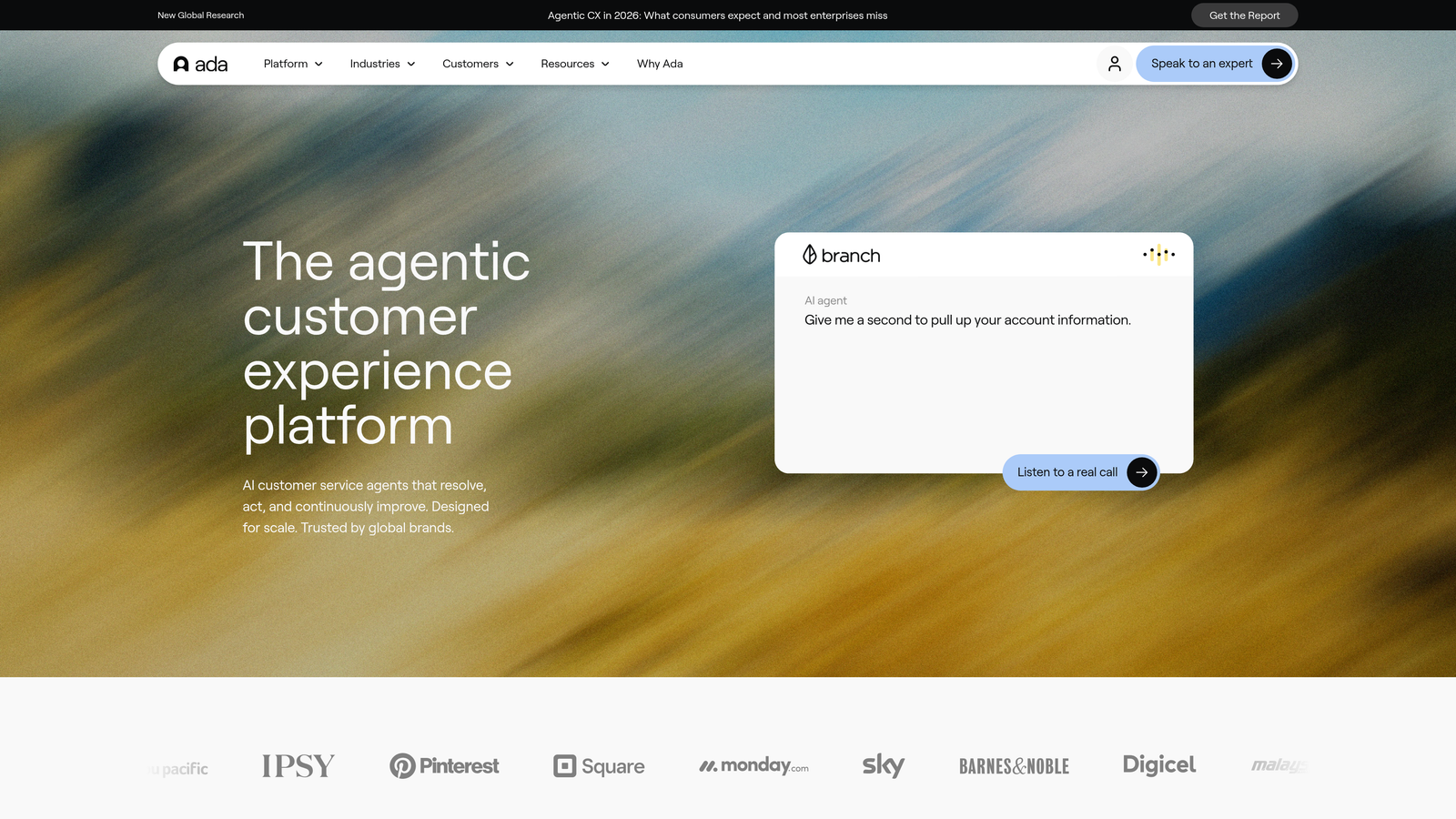
Ada is an AI-first customer service automation platform focused on multilingual support at scale.
Where This Tool Shines
Ada's reasoning engine handles complex, multi-step queries better than simple decision-tree chatbots. When a customer asks something like "I need to upgrade my plan but I'm on a legacy pricing tier—what happens to my data during migration?" Ada can work through the logic rather than just matching keywords to canned responses.
The multilingual capabilities are genuinely impressive. Ada supports over 50 languages with conversation quality that doesn't degrade significantly across languages. For SaaS companies with global customer bases, this eliminates the need to maintain separate support systems for different regions.
Key Features
No-Code Conversation Builder: Design complex conversation flows without developer resources using visual interface.
50+ Language Support: Handle customer conversations in dozens of languages with consistent quality and context retention.
Proactive Messaging: Trigger contextual messages based on user behavior, product events, or account status changes.
Reasoning Engine: Process multi-step logic and conditional scenarios rather than simple keyword matching.
API and Integration Framework: Connect to CRM, billing, product analytics, and custom internal systems.
Best For
SaaS companies with international customer bases handling thousands of support conversations monthly. Particularly valuable when you need consistent support quality across multiple languages and time zones.
Pricing
Custom pricing based on resolution volume and feature requirements. Expect enterprise-level investment for enterprise-level capabilities.
6. Tidio
Best for: Startups and early-stage SaaS companies with limited budgets
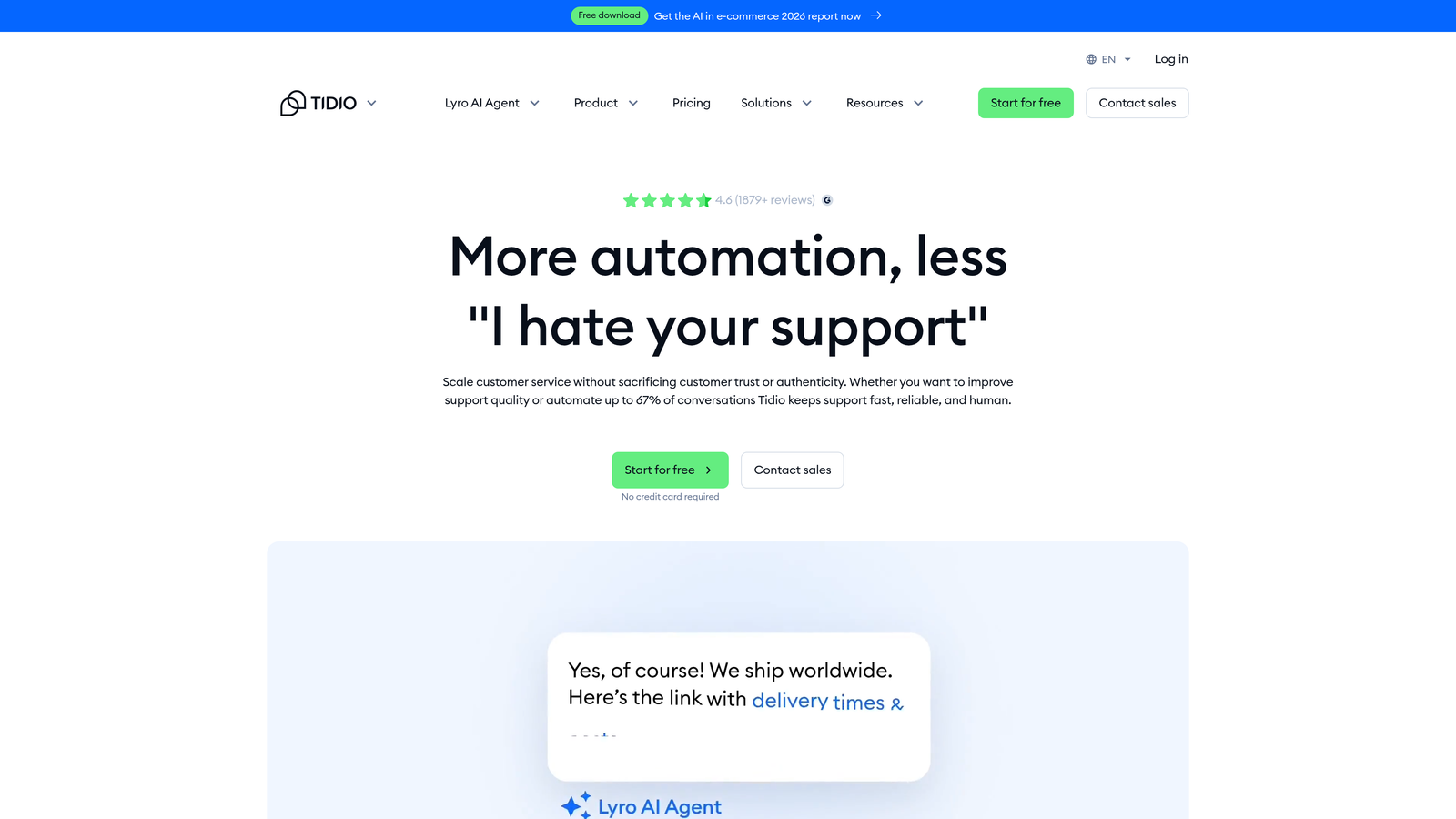
Tidio offers an affordable AI chatbot solution with Lyro AI, designed for smaller teams.
Where This Tool Shines
Tidio's value proposition is simple: get AI-powered support running in under an hour without breaking the bank. The Lyro AI conversational bot handles common questions surprisingly well for the price point. It won't match enterprise solutions in sophistication, but for startups fielding repetitive questions about pricing, features, and basic troubleshooting, it gets the job done.
The visual chatbot builder makes it easy to create custom flows without coding. You can set up different conversation paths for trial users versus paying customers, or route technical questions differently than billing inquiries.
Key Features
Lyro AI Conversational Bot: AI-powered chatbot that learns from your content and handles common support queries autonomously.
Visual Chatbot Builder: Drag-and-drop interface for creating custom conversation flows and decision trees.
Live Chat Integration: Seamless handoff from bot to human agent when conversations need personal attention.
Shopify and WordPress Plugins: Pre-built integrations for common SaaS and e-commerce platforms.
Mobile Apps: Respond to chats from iOS or Android when you're away from your desk.
Best For
Bootstrapped startups, solo founders, and early-stage SaaS companies with limited support volume who need basic AI capabilities without enterprise pricing.
Pricing
Free tier available with basic features. Lyro AI starts at $29 per month, making it accessible for tight budgets.
7. Help Scout
Best for: SaaS teams prioritizing human-centered support with AI as an assistant, not replacement
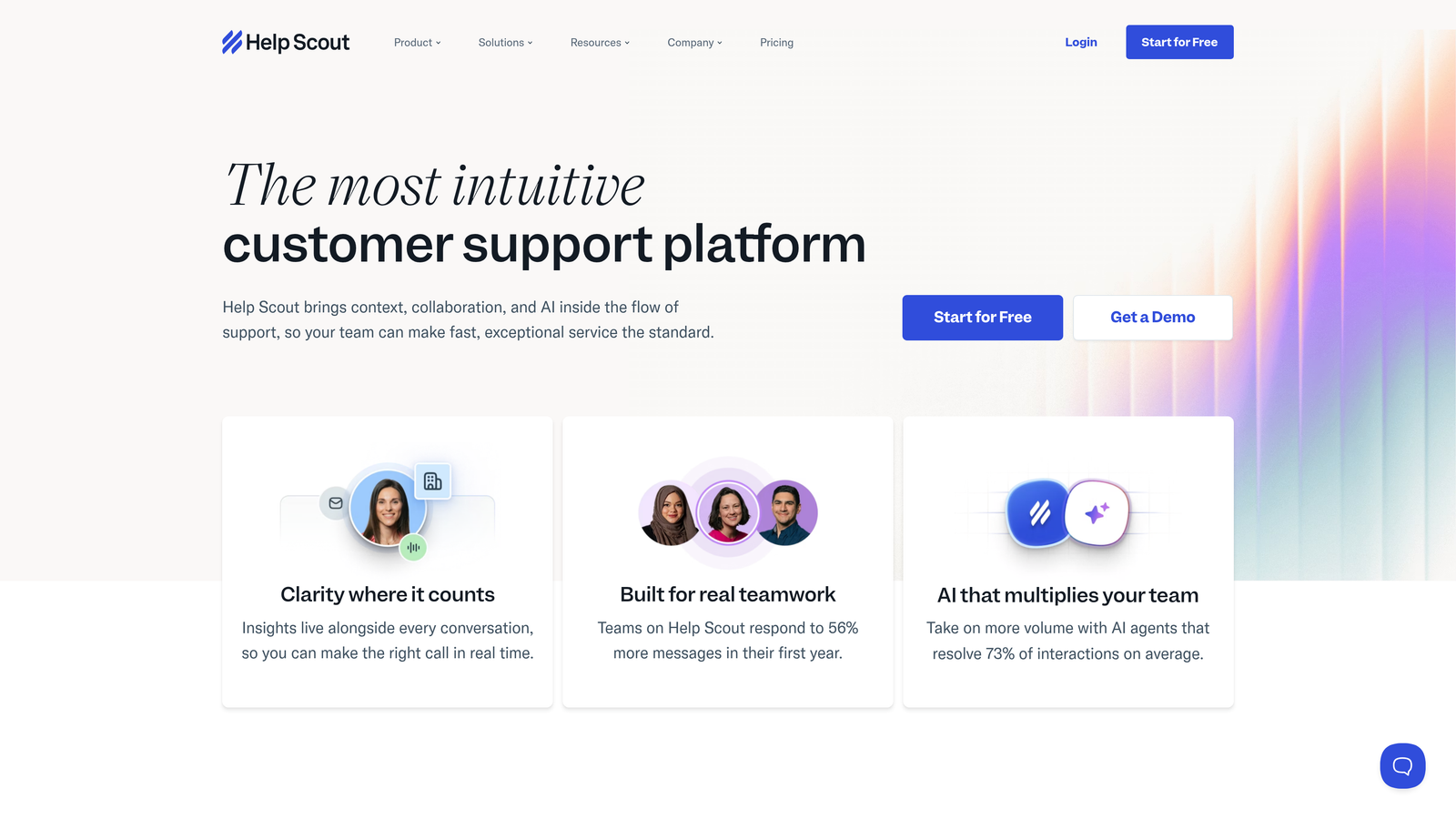
Help Scout takes a different philosophical approach—AI drafts and summarizes to make human agents more effective.
Where This Tool Shines
Help Scout's AI features are designed to enhance human agents, not replace them. The AI draft responses feature analyzes incoming messages and generates suggested replies that agents can edit and send. This speeds up response times while maintaining the personal touch that many SaaS customers value.
Conversation summarization is particularly useful for complex, multi-message threads. When an agent picks up a conversation that's been going on for days, the AI summary provides instant context without requiring them to read through dozens of messages.
Key Features
AI Draft Responses: Generate suggested replies based on message content and past similar conversations.
Conversation Summarization: Automatically create concise summaries of long email threads for quick context.
Collision Detection: Prevent multiple agents from responding to the same conversation simultaneously.
Beacon Widget: Embeddable help widget with AI-powered article suggestions based on user context.
Docs Integration: Connect knowledge base to AI suggestions so answers stay current as documentation updates.
Best For
SaaS companies with strong customer relationships who want to maintain personal support while improving agent efficiency. Works well for teams handling complex customer issues that need human judgment.
Pricing
Plans start at $20 per user per month. AI features are included in the Plus plan, which runs higher but bundles additional capabilities.
8. Kustomer
Best for: SaaS companies needing CRM-powered support with AI automation for complex customer journeys
Kustomer combines CRM functionality with AI-powered support automation.
Where This Tool Shines
Kustomer's unified customer timeline is genuinely useful. Instead of seeing conversations as isolated tickets, you get a complete view of every interaction, purchase, product usage event, and support request in chronological order. This context helps AI routing make smarter decisions about priority and assignment.
The sentiment-based prioritization goes beyond simple keyword detection. Kustomer analyzes conversation tone, customer history, and account value to automatically escalate issues that need immediate attention. A frustrated enterprise customer gets different treatment than a free trial user asking a basic question.
Key Features
Unified Customer Timeline: Complete interaction history across all channels and touchpoints in one chronological view.
AI-Powered Routing: Intelligent assignment based on agent skills, workload, customer value, and conversation complexity.
Sentiment-Based Prioritization: Automatically escalate conversations from frustrated or high-value customers.
Omnichannel Support: Handle email, chat, social media, SMS, and phone in a single interface with consistent AI assistance.
Custom Object Integration: Connect to your product data, billing system, and custom databases for full context.
Best For
Mid-market to enterprise SaaS companies with complex customer journeys spanning multiple products and touchpoints. Most valuable when you need deep integration with your existing business systems.
Pricing
Plans start at $89 per user per month, positioning it in the enterprise segment with pricing to match the feature depth.
9. ChatBot by LiveChat
Best for: SaaS and e-commerce companies wanting visual bot building with strong templates
ChatBot by LiveChat offers a drag-and-drop AI chatbot builder with pre-built SaaS templates.
Where This Tool Shines
The visual bot builder makes it easy to create sophisticated conversation flows without developer resources. You can map out different paths for different user scenarios—trial users get onboarding help, paying customers get technical support, enterprise prospects get routed to sales.
The pre-built SaaS templates give you a head start. Instead of building conversation flows from scratch, you can start with proven templates for common SaaS scenarios like feature explanations, billing questions, and troubleshooting, then customize them to your product.
Key Features
Drag-and-Drop Bot Builder: Visual interface for creating complex conversation flows without coding.
Pre-Built SaaS Templates: Ready-made conversation flows for common SaaS support scenarios.
LiveChat Integration: Seamless handoff to human agents with full conversation context when bot reaches limits.
API Connections: Integrate with CRM, helpdesk, analytics, and custom internal systems.
Testing and Analytics: Preview conversation flows before deployment and track performance metrics.
Best For
SaaS companies that want control over conversation design without requiring developer resources. Works well for teams that need to iterate quickly on support flows as products evolve.
Pricing
Plans start at $52 per month for unlimited chats, offering predictable costs regardless of conversation volume.
Making the Right Choice
The best AI support tool for your SaaS company depends on where you are and where you're heading. If you're ready for AI-native architecture that learns continuously and understands product context, Halo AI delivers intelligence that goes beyond bolt-on chatbots. For teams already invested in specific ecosystems, Intercom Fin and Zendesk AI offer strong AI capabilities within familiar platforms.
Budget-conscious startups will find solid value in Tidio and Freshdesk, which deliver core AI automation without enterprise pricing. Ada and Kustomer excel at enterprise scale, handling complex customer journeys and global operations. Help Scout maintains the human touch while using AI to enhance agent efficiency.
The fundamental question isn't whether to adopt AI support—it's whether you want AI as an add-on feature or as the foundation of your support system. Traditional helpdesks with AI capabilities bolted on can improve efficiency. AI-native platforms built from the ground up with intelligent automation at their core can transform how support scales with your business.
Your support team shouldn't scale linearly with your customer base. Let AI agents handle routine tickets, guide users through your product, and surface business intelligence while your team focuses on complex issues that need a human touch. See Halo in action and discover how continuous learning transforms every interaction into smarter, faster support.