9 Best AI Tools for Customer Service in 2026
Discover the best AI tools for customer service in 2026, covering nine platforms evaluated on autonomous ticket resolution, integration depth, and deployment ease—helping B2B SaaS teams scale support operations without proportionally increasing headcount. From AI-first solutions with built-in business intelligence to seamless human handoff capabilities, this guide identifies the right fit whether you're running a lean Zendesk operation or rebuilding your entire support stack.
 Matt PattoliFounder13 min read
AI customer service tools have moved well beyond basic chatbots. Today's platforms resolve tickets autonomously, surface business intelligence, guide users through products in real time, and hand off seamlessly to human agents when complexity demands it. For B2B SaaS teams managing growing support queues without proportionally growing headcount, picking the right tool is a strategic decision, not just a software purchase.
This list covers the best AI tools for customer service in 2026, evaluated on autonomous resolution capability, integration depth, ease of deployment, and value for product-led and B2B SaaS teams. Whether you're running a lean support operation on Zendesk, scaling past your first 100 enterprise customers, or rebuilding your support stack from scratch, there's a fit here for you.
1. Halo AI
Best for: B2B SaaS teams that want AI-first autonomous support with business intelligence built in
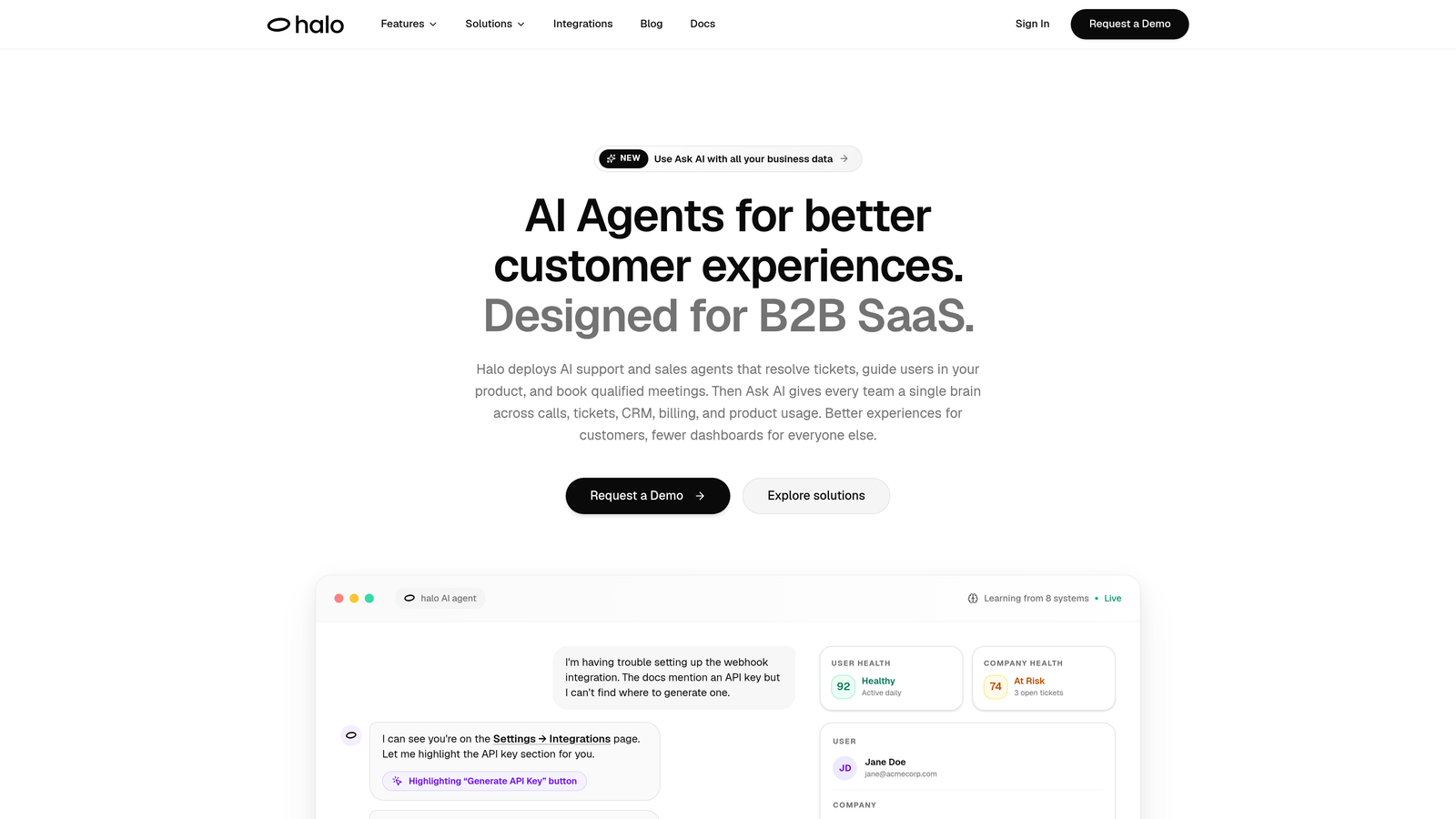
Halo AI is an AI-first customer support platform that resolves tickets, guides users through your product with page-aware context, and surfaces revenue and product signals from every support interaction.
Where This Tool Shines
Most support tools stop at support metrics. Halo goes further by treating every customer interaction as a source of business intelligence. Its smart inbox doesn't just show you open tickets; it surfaces customer health signals, revenue anomalies, and product usage patterns that would otherwise get buried in your queue.
The page-aware chat widget is genuinely differentiated. Halo sees what the user sees on screen and provides visual UI guidance in context, rather than sending users to a generic help article and hoping they find the right section. Combined with autonomous ticket resolution and live agent handoff for complex issues, it covers the full support lifecycle without requiring a patchwork of separate tools.
Key Features
Page-Aware Chat Widget: Understands the user's current screen context and delivers visual, in-product guidance rather than generic answers.
Autonomous Ticket Resolution: AI agents resolve routine tickets end-to-end, with intelligent handoff to live agents when issues require human judgment.
Auto Bug Ticket Creation: Automatically generates bug reports in Linear directly from support interactions, closing the loop between support and engineering.
Smart Inbox with Business Intelligence: Surfaces customer health signals, revenue anomalies, and product usage patterns alongside standard support metrics.
Deep Integration Stack: Connects to Slack, HubSpot, Intercom, Stripe, Zoom, PandaDoc, and Fathom, making it a genuine hub rather than a silo.
Best For
Halo is purpose-built for B2B SaaS companies that want AI to do more than deflect tickets. It's particularly strong for product-led growth teams, companies scaling past their first enterprise tier, and support leaders who want to connect support data to revenue and product outcomes without stitching together multiple tools.
Pricing
Contact Halo AI directly for pricing. The platform targets mid-market and enterprise SaaS teams, so expect a conversation around your ticket volume and integration requirements.
2. Intercom (Fin AI Agent)
Best for: Teams already on Intercom who want AI resolution without adding a new platform
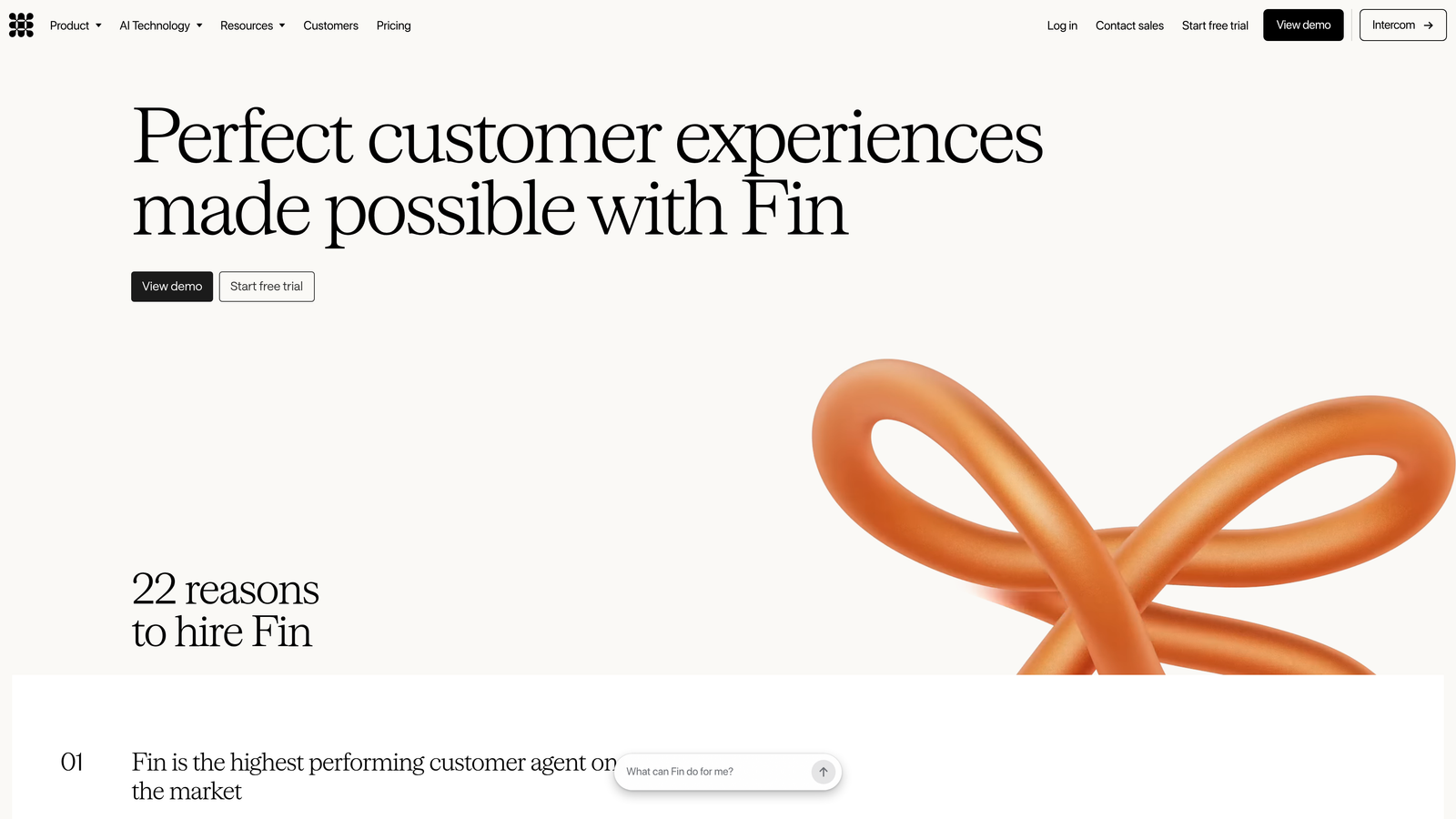
Intercom Fin is Intercom's native AI agent, using large language models to resolve customer queries directly within the Intercom messenger using your existing knowledge base and content.
Where This Tool Shines
Fin's biggest advantage is zero switching cost for Intercom customers. It plugs directly into the messenger your team already uses, draws from your existing help articles and PDFs, and starts resolving queries without a lengthy implementation project. For teams with a well-maintained knowledge base, Fin can handle a meaningful volume of incoming questions with minimal setup.
The consumption-based pricing model is worth understanding before you commit. You pay per successful resolution rather than a flat seat fee, which can be economical at moderate volumes but warrants careful modeling as your ticket count grows.
Key Features
Multi-Source Knowledge: Answers questions from help articles, PDFs, and custom content sources you configure.
Contextual Handoff: Passes conversations to human agents with full context when Fin can't resolve an issue.
Multilingual Support: Handles queries in multiple languages without requiring separate configurations.
Native Intercom Integration: No separate integration layer required; works within your existing Intercom setup.
Consumption Pricing: Charged per successful resolution, which aligns cost with actual value delivered.
Best For
Intercom Fin is the right choice if your team is already running on Intercom and you want to add AI resolution without evaluating a new platform. It's less compelling as a standalone purchase if you're not already in the Intercom ecosystem.
Pricing
Charged per resolution on top of your existing Intercom plan. Pricing varies based on resolution volume; contact Intercom for current rates.
3. Zendesk AI
Best for: Large enterprises deeply invested in the Zendesk Suite
Zendesk AI adds intelligent triage, intent detection, agent copilot, and generative AI capabilities natively across Zendesk Support and Suite platforms.
Where This Tool Shines
Zendesk's AI layer is tightly embedded in workflows that enterprise support teams have spent years building. Intent detection, sentiment analysis, and language classification happen automatically at the point of ticket creation, meaning agents see context before they open a conversation. The AI Copilot feature drafts replies and summarizes long threads, reducing the cognitive load on agents handling complex queues.
Zendesk's 2023 acquisition of Ultimate.ai strengthened its autonomous resolution capabilities, and those improvements have continued to mature. For organizations where replacing Zendesk isn't on the table, the AI suite is a reasonable way to extract more from existing infrastructure.
Key Features
Intelligent Triage: Automatically detects intent, sentiment, and language at ticket creation for faster routing.
AI Copilot: Drafts agent replies and summarizes tickets to reduce handle time.
Autonomous Resolution: Bot-based resolution capabilities built on Zendesk's native infrastructure and Ultimate.ai technology.
Workforce Management and QA: AI-powered quality scoring and workforce planning tools built into the suite.
Full Suite Integration: All AI features work within the existing Zendesk environment without external integrations.
Best For
Enterprise support organizations that are already committed to Zendesk and want to add AI capability without migrating platforms. Teams evaluating Zendesk from scratch should weigh the total cost of the suite against AI-first alternatives.
Pricing
AI features are available on Suite Growth plans and above. The AI Copilot is a paid add-on. Contact Zendesk for current pricing on advanced AI tiers.
4. Freshdesk Freddy AI
Best for: Teams running on the Freshworks ecosystem who want AI across support and service
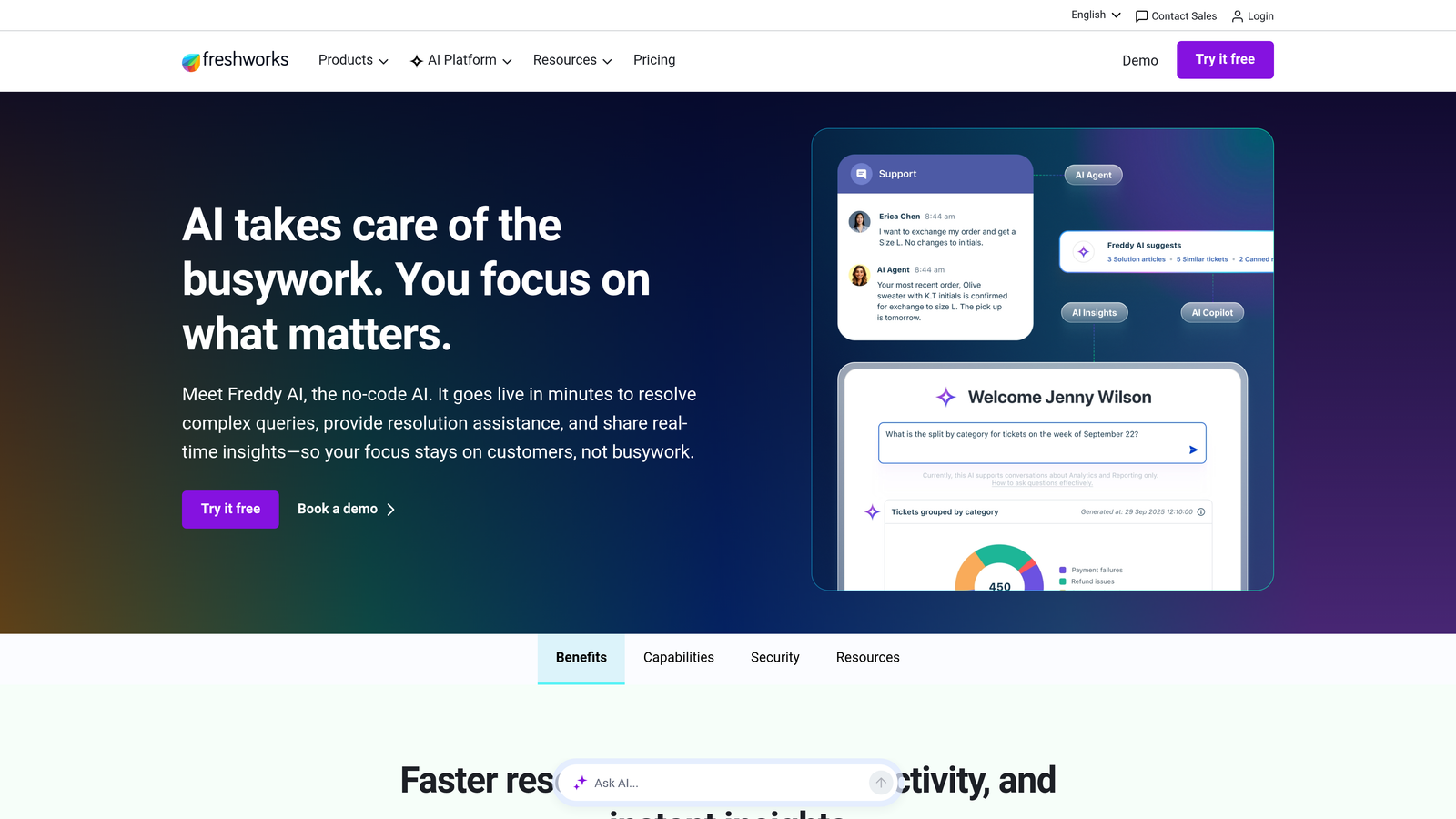
Freshdesk Freddy AI spans self-service chatbots, agent assist, and analytics across Freshdesk and Freshservice, making it a natural fit for teams already in the Freshworks ecosystem.
Where This Tool Shines
Freddy's strength is breadth within the Freshworks stack. Rather than a single AI feature, it covers three distinct use cases: Freddy Self Service handles chatbot-based deflection, Freddy Copilot assists agents with reply drafting and ticket summarization, and Freddy Insights generates analytics and trend detection across your support data. If your team uses multiple Freshworks products, Freddy ties them together intelligently.
The no-code bot builder is worth highlighting for teams without dedicated technical resources. Building and adjusting conversation flows doesn't require engineering support, which matters for lean support teams that need to iterate quickly on deflection logic.
Key Features
Freddy Self Service: AI chatbot for deflecting common queries before they reach the agent queue.
Freddy Copilot: Drafts replies, summarizes tickets, and suggests next steps for agents mid-conversation.
Freddy Insights: AI-generated analytics and trend detection across your support operation.
Cross-Platform Coverage: Works across Freshdesk, Freshservice, and Freshsales within a single Freshworks account.
No-Code Bot Builder: Visual builder for custom conversation flows without engineering involvement.
Best For
Teams already using Freshdesk or Freshservice who want to add AI without switching platforms. Less compelling for teams outside the Freshworks ecosystem, where the integration advantages disappear.
Pricing
Base Freshdesk plans start from approximately $15 per agent per month. Freddy Copilot is available as a paid add-on on most plans. Check Freshworks directly for current tier pricing.
5. Tidio
Best for: E-commerce businesses and small teams that need fast deployment at low cost
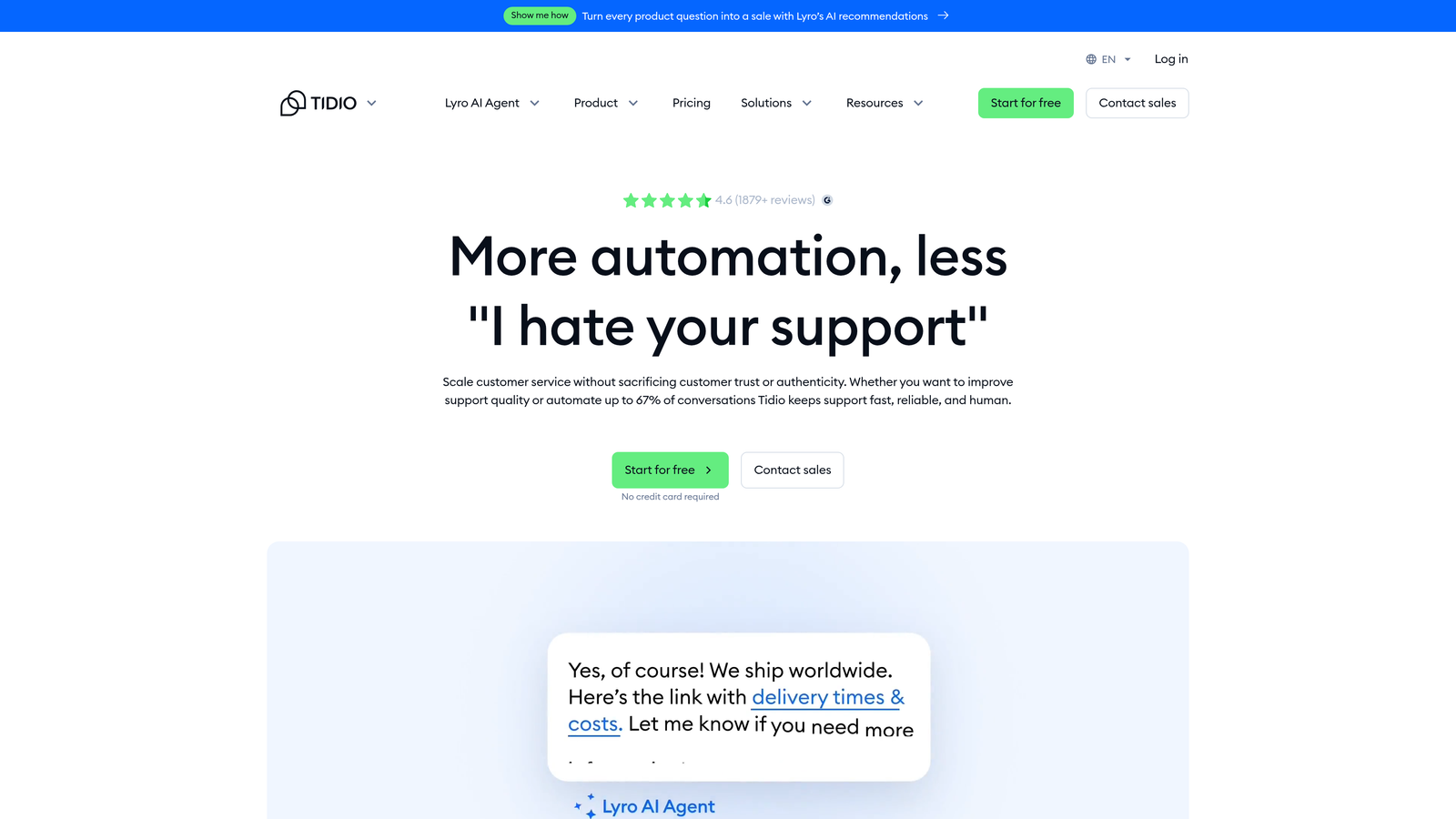
Tidio is a live chat and AI chatbot platform built for smaller teams and e-commerce businesses, offering fast deployment, affordable pricing, and strong integrations with Shopify and WooCommerce.
Where This Tool Shines
Tidio's Lyro AI chatbot, built on Claude, is one of the fastest tools to get live in this list. For e-commerce teams dealing with high volumes of transactional queries, such as order status, returns, and shipping questions, Lyro handles these conversations without agent involvement and escalates when it can't resolve.
The free tier makes Tidio accessible for teams just starting to explore AI-assisted support. It's not designed for complex B2B SaaS workflows or nuanced product support, but for its target audience, that's not the point. If you're running a Shopify store or a small consumer-facing product, Tidio gets you most of the way there quickly and cheaply.
Key Features
Lyro AI Chatbot: Conversational AI powered by Claude for autonomous resolution of common queries.
E-Commerce Integrations: Native connections to Shopify, WooCommerce, and Wix for order and product data context.
Live Chat Fallback: Smooth agent takeover when Lyro reaches its resolution limits.
Visual Flow Builder: Drag-and-drop automation builder for custom conversation sequences.
Free Tier: Available for low-volume teams testing AI-assisted support for the first time.
Best For
E-commerce businesses, small consumer-facing teams, and anyone who needs affordable AI chat support without a complex implementation. Not the right fit for B2B SaaS companies with complex product support needs.
Pricing
Free tier available for low-volume usage. Lyro AI starts from approximately $29 per month. Verify current pricing on the Tidio website, as plans are updated regularly.
6. Forethought
Best for: Enterprise teams that want AI triage and routing layered onto an existing helpdesk
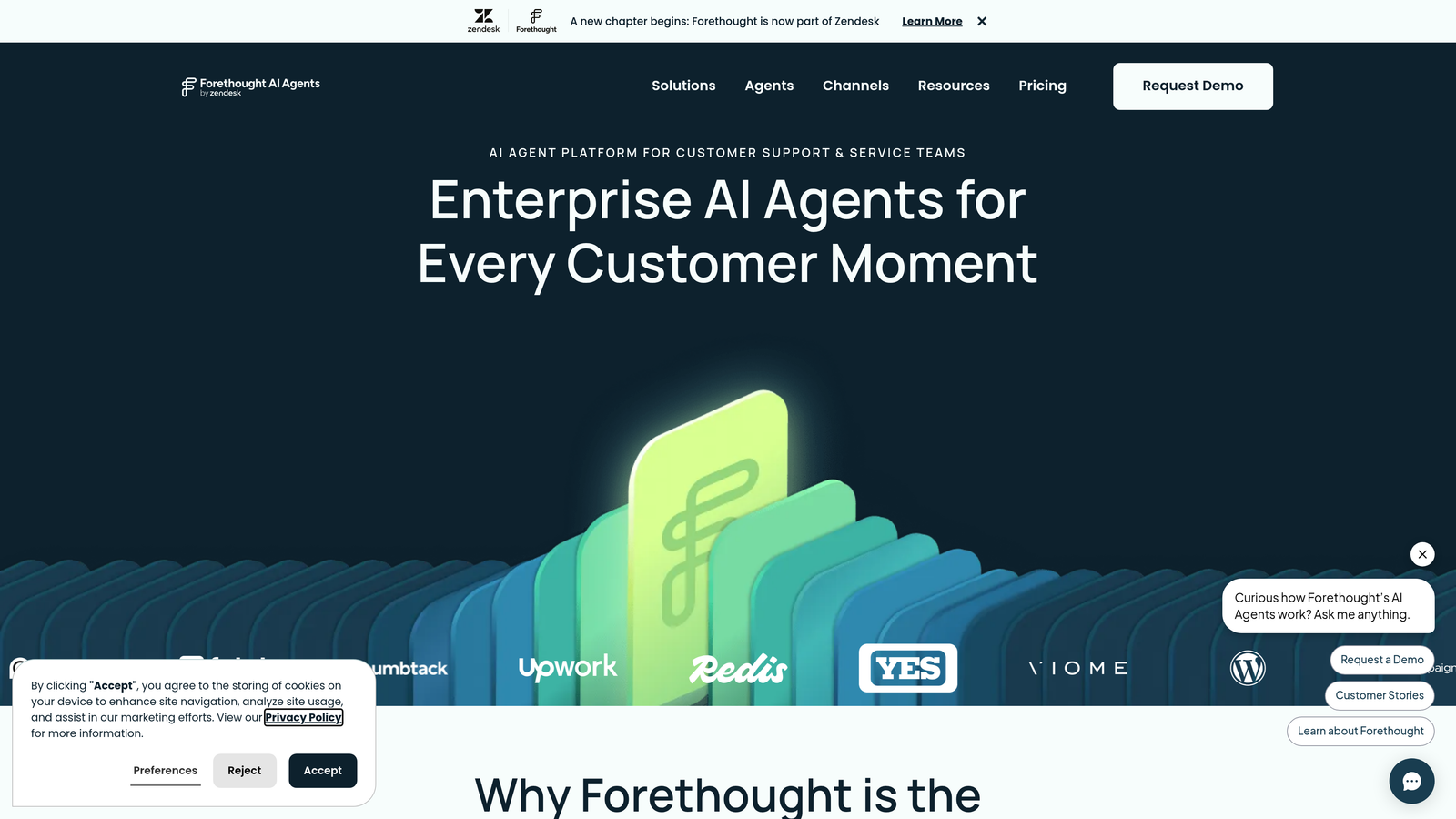
Forethought focuses on triage, routing, and ticket deflection, layering its Agatha AI onto existing helpdesks like Zendesk, Salesforce Service Cloud, and Freshdesk without requiring a platform switch.
Where This Tool Shines
Forethought's core value proposition is that you don't have to replace your helpdesk to get meaningful AI capability. Agatha AI classifies intent, routes tickets intelligently, and surfaces relevant knowledge for agents mid-ticket, all sitting on top of whatever platform your team already uses. For enterprises with significant helpdesk infrastructure they're not ready to abandon, this is a practical path to AI-assisted support.
The workflow builder allows support operations teams to automate complex routing and escalation logic without code. Enterprise-grade security and compliance controls make it viable for organizations in regulated industries where data handling requirements are strict.
Key Features
AI Triage and Intent Classification: Classifies incoming tickets by intent and routes them appropriately across multiple helpdesk platforms.
Agatha Assist: Surfaces relevant knowledge articles and suggested responses for agents while they're working a ticket.
Workflow Builder: No-code automation for complex routing, escalation, and deflection logic.
Deflection-First Self Service: Handles customer queries before they reach the agent queue, with fallback to human agents.
Enterprise Security: Compliance controls and security features suited to regulated enterprise environments.
Best For
Enterprise support organizations on Zendesk, Salesforce Service Cloud, or Freshdesk that want AI capability without a platform migration. Less accessible for smaller teams given the enterprise pricing model.
Pricing
Enterprise pricing with custom quotes. Contact Forethought directly for current rates based on your ticket volume and integration requirements.
7. Kustomer
Best for: Consumer brands with complex order and interaction histories that need unified customer context
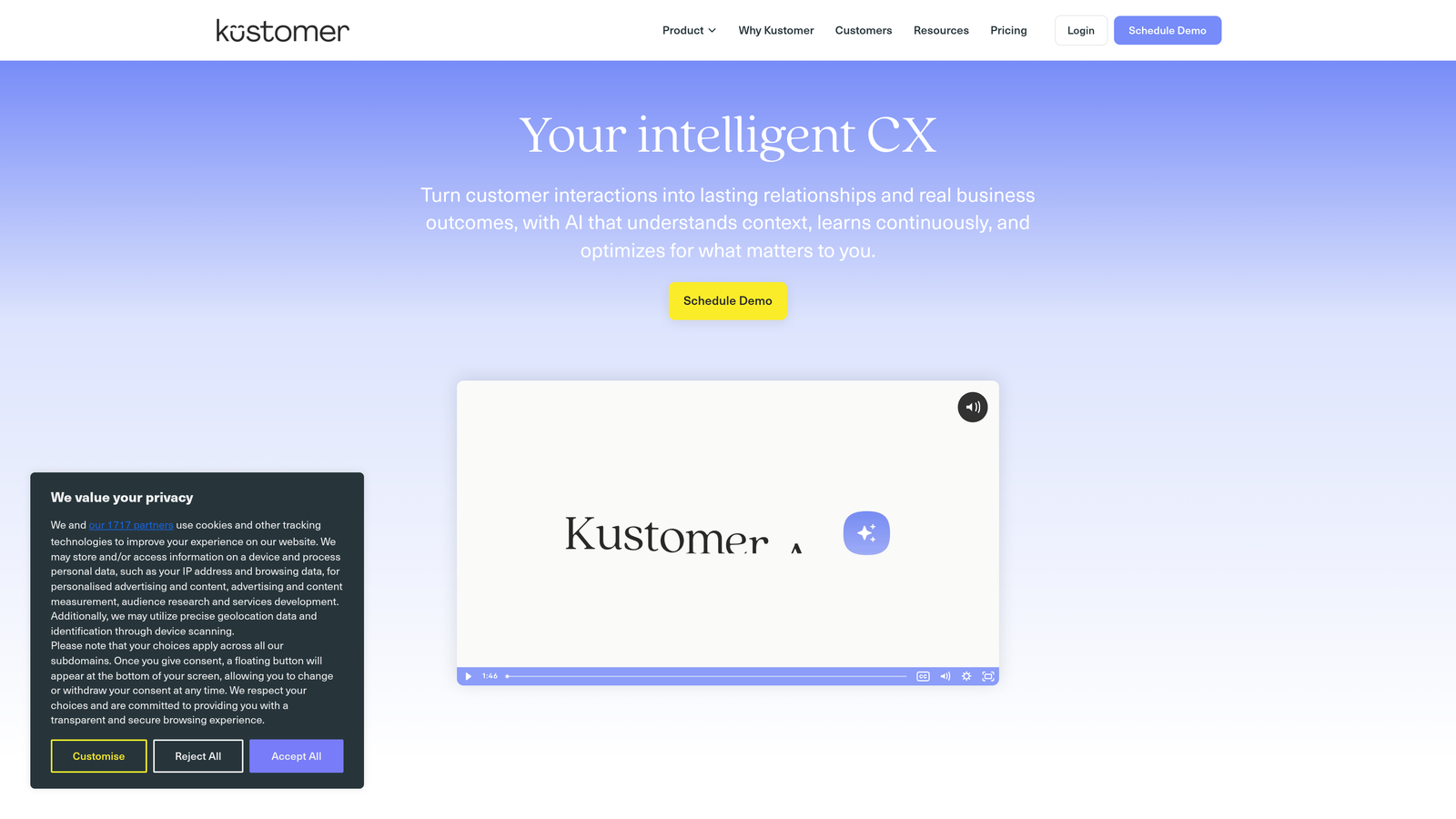
Kustomer (owned by Meta) combines a CRM-style unified customer timeline with AI automation, giving support agents full purchase, conversation, and interaction history in a single view.
Where This Tool Shines
Kustomer's differentiator is the unified timeline. Rather than pulling up a ticket in isolation, agents see the full customer story: every past conversation, every order, every interaction, all in one place. AI automation then operates on top of that rich context, enabling smarter routing and more relevant auto-responses than tools working with limited customer data.
This approach is particularly powerful for consumer brands where a customer's purchase history, return behavior, and lifetime value are directly relevant to how a support interaction should be handled. For pure B2B SaaS support use cases, the CRM-heavy model may be more infrastructure than you need.
Key Features
Unified Customer Timeline: Combines orders, conversations, and custom data objects into a single agent view.
AI-Powered Routing: Routes and auto-responds based on full customer context rather than just the current ticket.
Proactive Support Workflows: Triggers support actions based on customer behavior signals before issues escalate.
Omnichannel Inbox: Handles email, chat, SMS, social, and voice in one unified workspace.
E-Commerce and CRM Integrations: Deep connections to order management and CRM systems for context-rich support.
Best For
Consumer brands, retail, and e-commerce companies where customer history and order data are central to support interactions. B2B SaaS teams may find the platform more complex than their workflows require.
Pricing
Enterprise pricing with custom quotes. Contact Kustomer directly for current rates.
8. Drift (Salesloft)
Best for: B2B teams where inbound support conversations overlap with sales pipeline qualification
Drift, now part of Salesloft, is a conversational AI platform that bridges support and sales, useful for B2B companies where the line between support chat and pipeline qualification is blurry.
Where This Tool Shines
Since Salesloft's acquisition of Drift, the conversational AI now sits within a broader revenue intelligence platform. The result is a tool that's less about ticket resolution and more about managing inbound conversations that might be support requests, sales inquiries, or both at the same time. If your sales and support teams share an inbound chat channel, Drift's routing and qualification playbooks can prevent warm leads from getting lost in a support queue.
For teams where support is purely support, Drift is probably not the right primary tool. But for B2B companies in growth mode where every inbound conversation has potential revenue implications, the integration with Salesloft cadences and CRM systems adds genuine value.
Key Features
AI-Powered Qualification: Chatbot qualifies and routes inbound conversations based on intent and visitor signals.
Meeting Scheduling: Books meetings with the right rep directly within the chat flow.
CRM and Cadence Integration: Connects to Salesforce, HubSpot, and Salesloft cadences for revenue team alignment.
Segment-Based Playbooks: Different conversation flows for different visitor types, intent signals, and account tiers.
Revenue Intelligence Reporting: Analytics across chat interactions with pipeline and revenue attribution.
Best For
B2B companies where support and sales share inbound traffic and pipeline qualification is a priority alongside issue resolution. Not designed as a primary ticket resolution tool for dedicated support teams.
Pricing
Enterprise pricing post-acquisition. Contact Salesloft for current Drift pricing and packaging.
9. Help Scout
Best for: Smaller teams that want AI assistance without losing a personal, human support tone
Help Scout takes a human-first approach to AI, using AI Summarize and AI Assist to help agents work faster without replacing the personal, relationship-driven tone that smaller teams value.
Where This Tool Shines
Help Scout's philosophy is refreshingly honest: AI should make agents better, not replace them. AI Summarize condenses long email threads into a quick brief so agents can get up to speed without reading every message. AI Assist drafts replies, adjusts tone, and expands bullet points into full responses. The result is faster agent work without the robotic feel that full automation can introduce.
For teams that have built their brand on personal, thoughtful support, Help Scout's approach is a natural fit. It's not built for high-volume autonomous resolution, and it doesn't try to be. The clean interface and fast onboarding also make it one of the easier platforms to get a new support team up and running on quickly.
Key Features
AI Summarize: Condenses long email threads into a quick brief for agents picking up mid-conversation.
AI Assist: Drafts replies, adjusts tone, and expands bullet points into complete responses.
Shared Inbox: Collaborative inbox with collision detection and internal notes to prevent duplicate responses.
Beacon Widget: In-app help widget for self-service and chat without requiring a full platform integration.
Clean, Minimal UI: Fast onboarding and low learning curve for new support team members.
Best For
Small to mid-sized teams that prioritize a personal support experience and want AI to assist agents rather than replace them. Not suited for organizations with high-volume queues that need autonomous resolution at scale.
Pricing
Plans start from approximately $22 per user per month. AI features are available on higher-tier plans. Check Help Scout's website for current pricing.
Which Tool Is Right for Your Team?
The most important distinction in this list isn't between individual tools. It's between two architectural approaches: AI-first platforms built from the ground up for autonomous resolution, and AI-augmented platforms that add intelligence to existing helpdesk infrastructure.
If you're already deeply invested in Zendesk, Freshdesk, or Intercom, the AI layers built into those platforms are the lowest-friction path to improvement. Zendesk AI and Freshdesk Freddy work within your existing workflows, while Intercom Fin activates with minimal setup if your knowledge base is in good shape. Forethought is worth evaluating if you want more sophisticated triage and routing without replacing your helpdesk entirely.
For e-commerce and consumer-facing teams, Tidio offers fast deployment and affordable pricing. Kustomer is the stronger choice if unified customer history is central to how your support team operates. Help Scout is the natural home for smaller teams that want AI assistance without automation overreach. And Drift makes sense specifically when support and sales share inbound conversations.
For B2B SaaS teams building a support operation that needs to scale intelligently, Halo AI stands apart. The combination of page-aware context, autonomous ticket resolution, auto bug reporting to Linear, and business intelligence signals from support data addresses problems that most tools on this list weren't designed to solve. It's not just about resolving tickets faster; it's about turning your support operation into a source of product and revenue intelligence.
Your support team shouldn't scale linearly with your customer base. Let AI agents handle routine tickets, guide users through your product, and surface business intelligence while your team focuses on complex issues that need a human touch. See Halo in action and discover how continuous learning transforms every interaction into smarter, faster support.