10 Best AI Tools for Support Teams in 2026
Discover the best AI tools for support teams in 2026, with expert evaluations of top platforms based on AI resolution quality, deployment ease, integration depth, and real-world B2B suitability. From fully autonomous agents to workflow automation solutions, this guide helps support leaders identify the right tools to handle rising ticket volumes and deliver faster, high-quality customer resolutions without scaling headcount.
 Grant CooperFounder14 min read
Support teams are under more pressure than ever. Ticket volumes are climbing, customers expect near-instant responses, and hiring at scale isn't always feasible. AI tools have become essential for teams that want to resolve issues faster without sacrificing quality.
But the landscape is crowded, and not every tool fits every team. Some excel at full autonomous resolution, others at agent assistance, and others at workflow automation. We evaluated dozens of platforms to find the ones that genuinely move the needle for support teams in 2026. Our selection criteria: AI resolution quality, ease of deployment, integration depth, pricing transparency, and real-world suitability for B2B support operations.
Here are the top tools worth your attention this year.
1. Halo AI
Best for: B2B teams wanting fully autonomous AI agents with deep product and business context
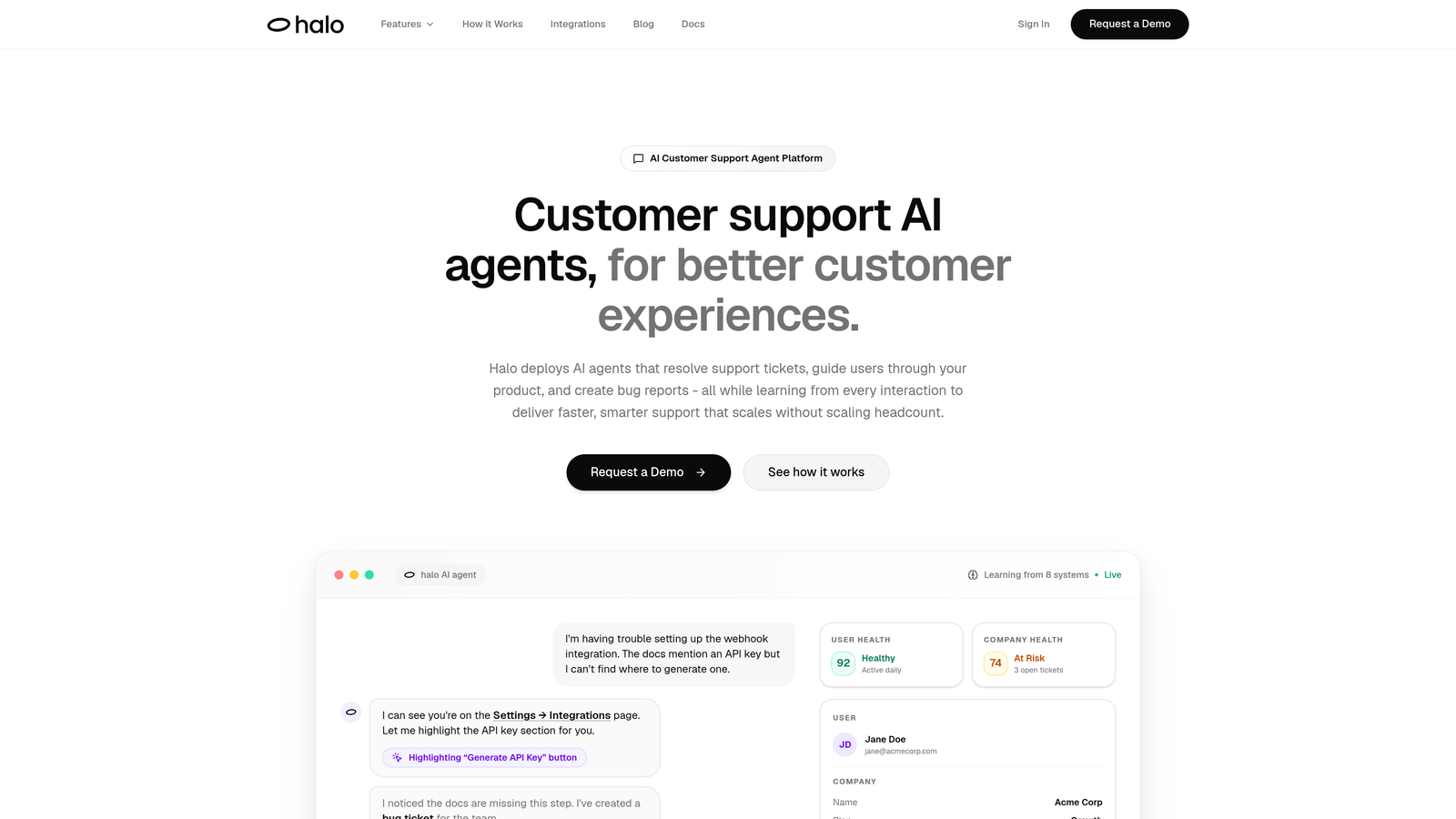
Halo AI is an AI-first customer support platform that deploys autonomous agents to resolve tickets, guide users through your product with page-aware context, and surface business intelligence from every interaction.
Where This Tool Shines
What separates Halo from most AI support tools is its architecture. It wasn't built as an add-on to an existing helpdesk. It was designed from the ground up to operate autonomously, which means it handles ticket resolution end-to-end rather than just suggesting what a human should do next.
The page-aware chat widget is a particularly notable differentiator. The AI can see what the user is currently looking at inside your product, which allows it to deliver visual, in-context guidance rather than generic help center links. Combined with continuous learning from every resolved interaction, the system gets meaningfully smarter over time without requiring manual retraining.
Key Features
Autonomous Ticket Resolution: AI agents handle support tickets end-to-end, from understanding intent to delivering a resolution, without requiring human intervention on routine issues.
Page-Aware Chat Widget: The AI sees what users see inside your product, enabling precise visual guidance that's contextually relevant to where someone is stuck.
Smart Inbox with Business Intelligence: The inbox surfaces customer health signals, anomaly detection, and revenue intelligence alongside standard support metrics, turning support data into strategic insight.
Auto Bug Ticket Creation: When users report product issues, Halo automatically generates structured bug tickets and routes them directly to Linear or Slack, closing the loop between support and engineering.
Live Agent Handoff: Complex issues escalate to human agents with full conversation context preserved, so customers never have to repeat themselves.
Best For
B2B SaaS companies and product teams that want AI-first autonomous support rather than AI-assisted human support. Particularly well-suited for teams already using Intercom, HubSpot, Linear, Slack, Stripe, or Zoom who want those systems connected to their support layer.
Pricing
Contact for pricing. A demo is available at haloagents.ai/demo.
2. Intercom Fin
Best for: Teams already on Intercom who want a native AI agent with minimal setup
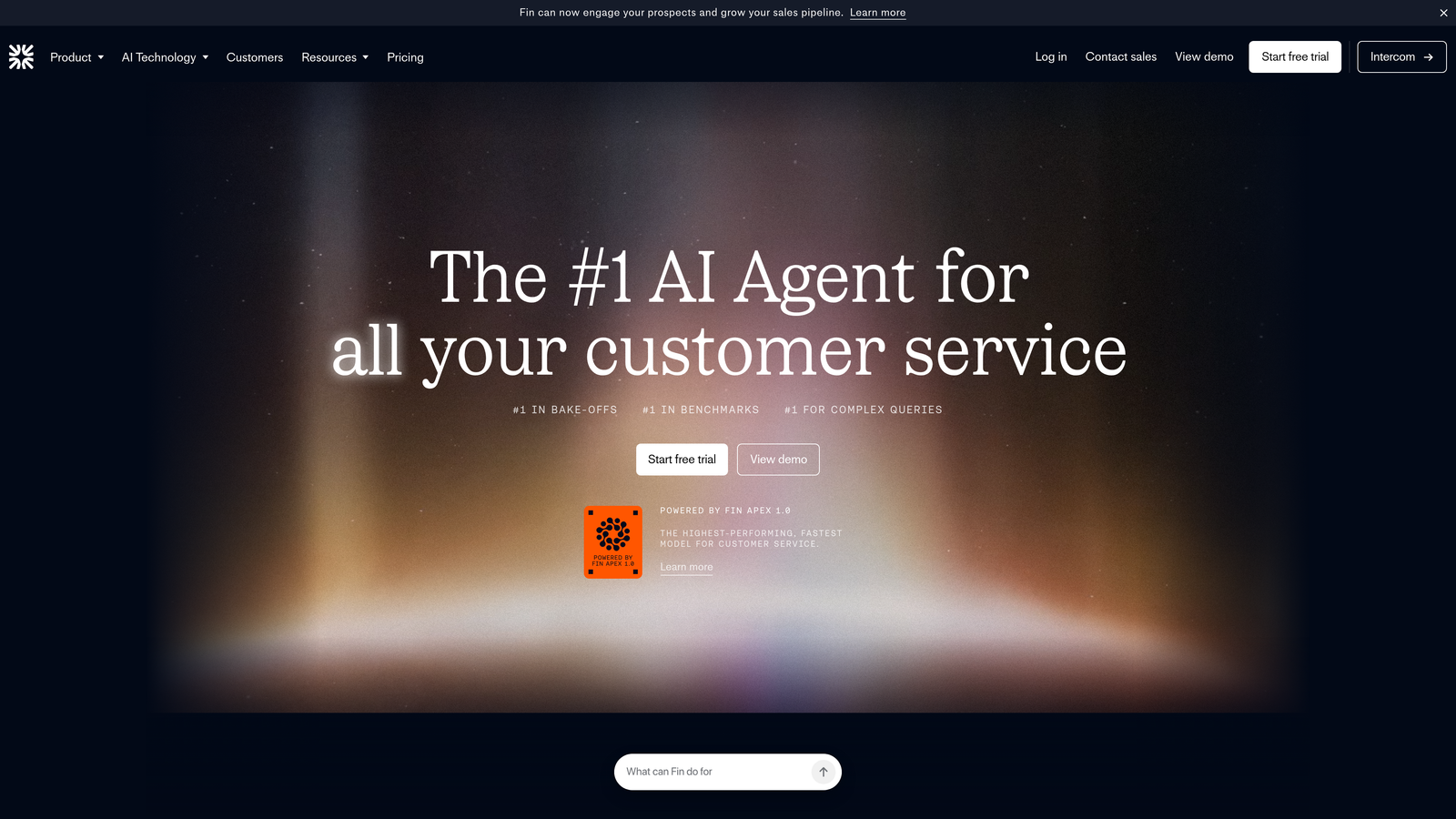
Intercom Fin is Intercom's native AI agent that uses GPT-powered reasoning to resolve customer questions directly from your help center and conversation history.
Where This Tool Shines
Fin's biggest advantage is how tightly it integrates with the Intercom ecosystem. If your team is already using Intercom's messenger, inbox, and workflows, Fin slots in without any significant configuration overhead. It draws on your existing help center content and historical conversations to generate answers, which means the quality of its responses improves as your knowledge base matures.
The usage-based pricing model is also worth noting. You only pay per resolved conversation, which aligns costs with actual outcomes rather than seat counts or flat monthly fees.
Key Features
Help Center Training: Fin is trained on your help center articles, past conversations, and custom data sources you define.
Native Intercom Integration: Works directly within Intercom's messenger, inbox, and automation workflows without third-party connectors.
Multilingual Support: Automatically detects customer language and responds accordingly across supported languages.
Custom Answer Controls: Define how Fin handles specific topics, set tone-of-voice preferences, and restrict certain response types.
Per-Resolution Pricing: Pay only when Fin successfully resolves a conversation, not for every interaction it touches.
Best For
Teams already invested in the Intercom platform who want to activate AI resolution without switching tools or managing a separate vendor relationship.
Pricing
Starting at $0.99 per resolved conversation. Requires an active Intercom subscription.
3. Zendesk AI
Best for: Enterprise support teams running high-volume, omnichannel operations on Zendesk Suite
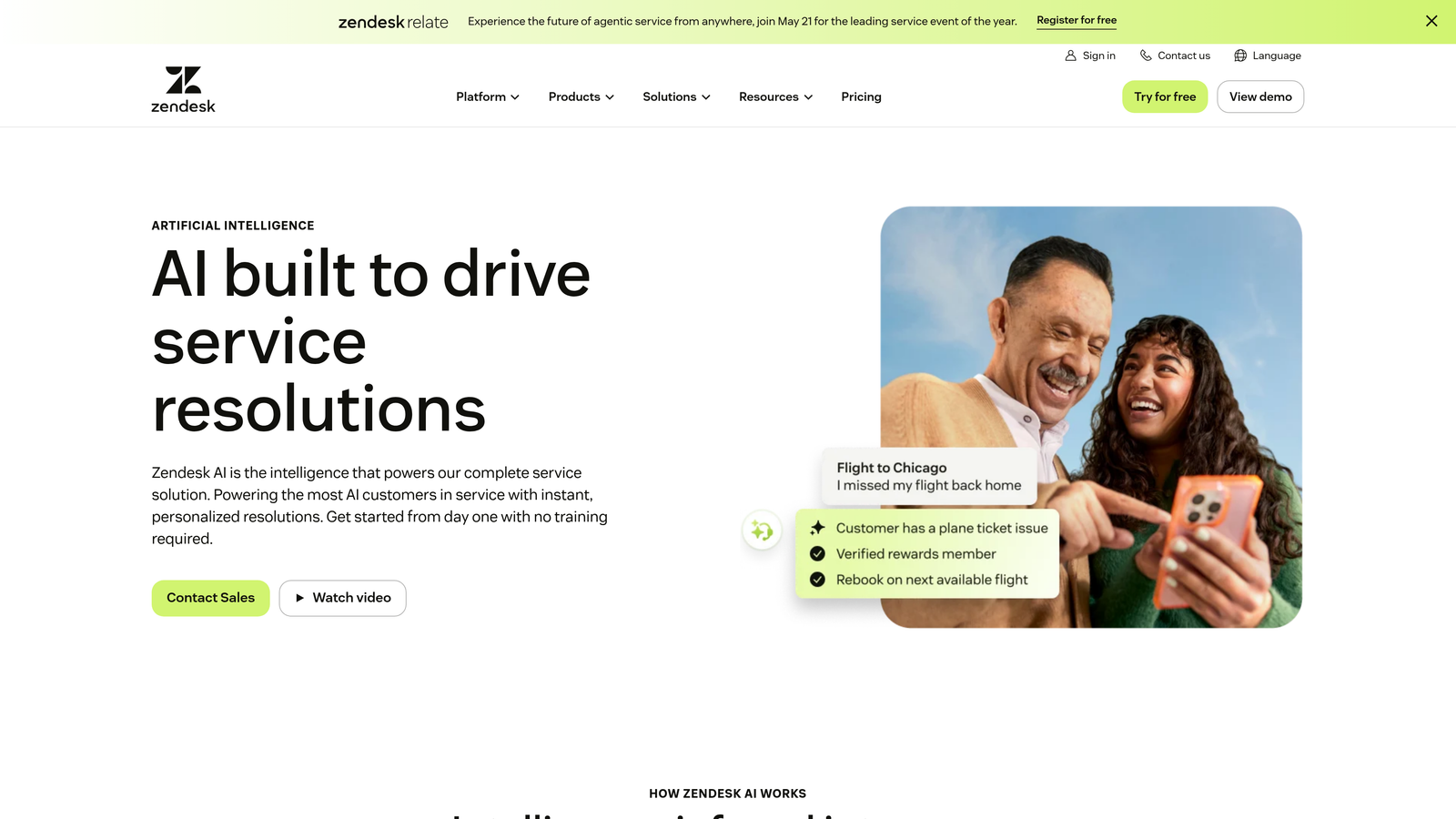
Zendesk AI is an enterprise-grade AI layer built into Zendesk Suite, offering intent detection, generative replies, agent copilot capabilities, and automated workflows across all channels.
Where This Tool Shines
Zendesk AI benefits from years of training data across a massive customer base, which means its pre-built intent models arrive with a level of accuracy that purpose-built tools often take months to develop. For large teams handling diverse ticket types, this out-of-the-box quality is a significant time saver.
The agent copilot functionality is particularly strong. Rather than replacing agents, it augments them with suggested replies, next-best-action recommendations, and automatic ticket summarization, which is useful for teams that need AI assistance without fully autonomous resolution.
Key Features
Pre-Trained Intent Models: Ready-to-use models for common support scenarios that don't require extensive configuration to perform well.
Agent Copilot: Surfaces suggested replies and next-best-action recommendations to agents in real time during live conversations.
Generative AI for Knowledge Base: Automatically drafts knowledge base articles and summarizes tickets to reduce manual documentation work.
Intelligent Triage: Automatically assigns priority, detects language, and reads sentiment to route tickets to the right queue or agent.
Omnichannel Coverage: AI capabilities extend across email, chat, phone, and social channels within a single platform.
Best For
Enterprise teams already on Zendesk Suite who want to layer AI across their existing workflows without migrating to a new platform.
Pricing
AI features are included in Zendesk Suite plans. An Advanced AI add-on is available at additional cost; contact Zendesk for current pricing.
4. Ada
Best for: Mid-market and enterprise teams needing autonomous resolution of complex, multi-step inquiries
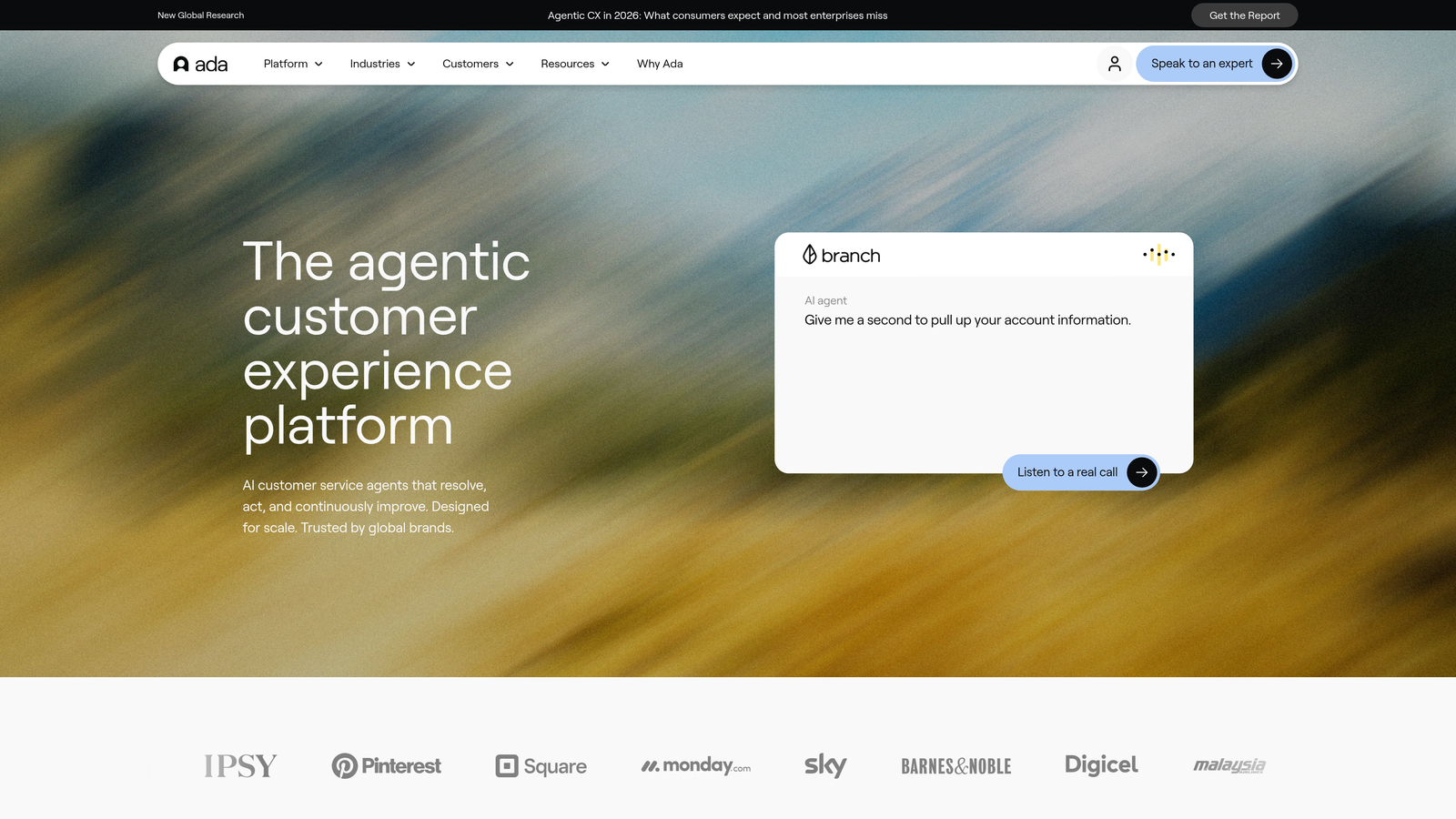
Ada is an AI-powered customer service automation platform with a reasoning engine designed to resolve complex, multi-step inquiries without human intervention.
Where This Tool Shines
Ada's reasoning engine is built for situations that go beyond simple FAQ deflection. It can handle inquiries that require pulling information from multiple sources, executing actions within connected systems, and making logical decisions across several steps before delivering a resolution. This makes it genuinely useful for support teams dealing with nuanced requests, not just high-volume simple ones.
The no-code bot builder also lowers the barrier for non-technical teams to create and iterate on conversation flows without depending on engineering resources.
Key Features
Multi-Step Reasoning Engine: Handles complex inquiries autonomously by reasoning through multiple steps and data sources before responding.
No-Code Bot Builder: Build and customize conversation flows without writing code, making iteration faster for support operations teams.
CRM and Helpdesk Integrations: Connects with Salesforce, Zendesk, and other major platforms to pull customer context into resolutions.
Multilingual Support: Handles conversations across 50+ languages with automatic language detection.
Resolution Analytics: Dashboard tracking resolution rates, containment metrics, and escalation patterns to measure AI performance.
Best For
Mid-market and enterprise teams with complex support workflows where simple chatbot deflection isn't sufficient and multi-step autonomous resolution is the goal.
Pricing
Custom pricing based on resolution volume. Contact Ada directly for a quote.
5. Freshdesk Freddy AI
Best for: Growing teams on Freshdesk who want native AI without a separate AI platform budget
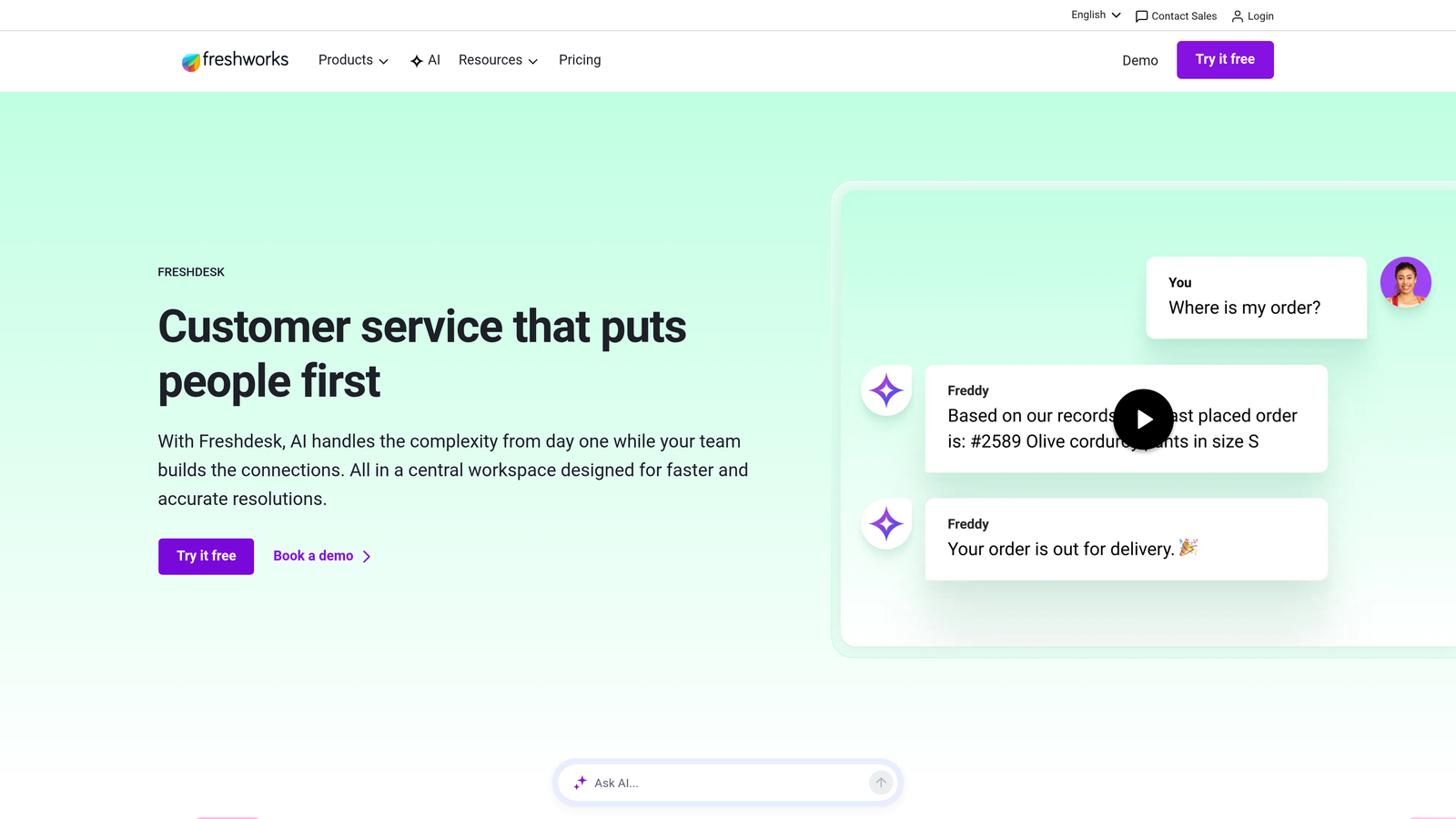
Freshdesk Freddy AI is Freshworks' AI engine embedded across Freshdesk, providing auto-triage, bot-powered responses, and agent assist features at accessible price points.
Where This Tool Shines
Freddy AI's strongest selling point is accessibility. AI capabilities are built directly into Freshdesk plans rather than sold as a separate product, which means teams can activate intelligent triage, chatbot responses, and agent assist without navigating a separate procurement process or integration project.
The thank-you detector is a small but practical feature that prevents resolved tickets from being accidentally reopened when customers send a polite closing message, a common source of false positives in ticket queues.
Key Features
Auto-Triage: Automatically categorizes incoming tickets and assigns priority based on content and historical patterns.
AI Chatbot Builder: Pre-built templates and a visual builder for deploying customer-facing bots without custom development.
Agent Assist: Surfaces suggested responses and canned reply recommendations to agents during active conversations.
Thank You Detector: Identifies closing messages from customers to prevent resolved tickets from being incorrectly reopened.
Native Freshdesk Integration: No separate product or integration required; AI features activate within existing Freshdesk plans.
Best For
Teams already using Freshdesk who want to activate AI capabilities quickly without additional vendor relationships or significant budget increases.
Pricing
AI features are available on the Pro plan at $49 per agent per month and above.
6. Tidio
Best for: Small teams and e-commerce businesses needing affordable AI chat automation
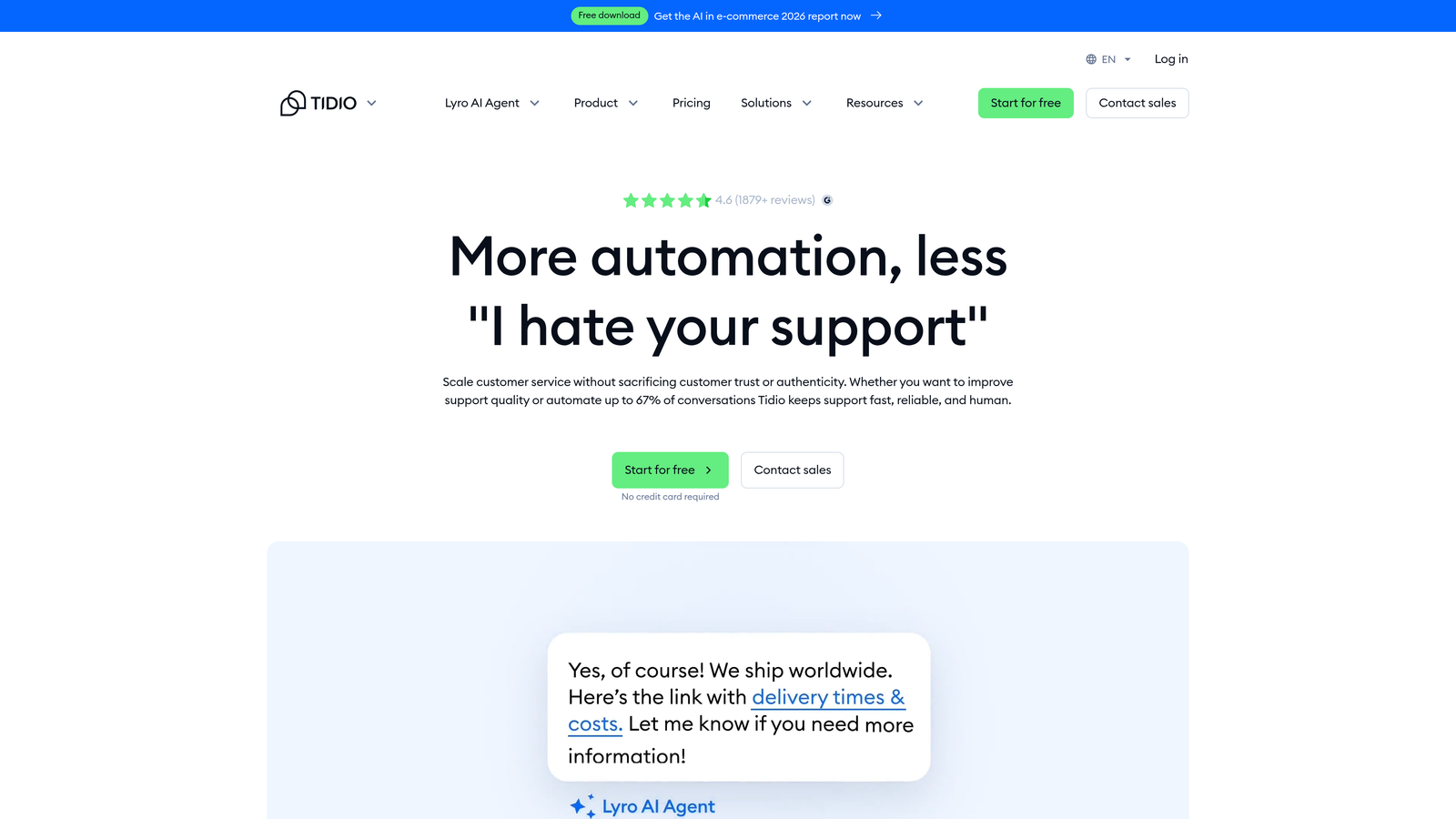
Tidio is a conversational AI platform combining live chat, chatbots, and the Lyro AI assistant for small teams that need fast, affordable customer support automation.
Where This Tool Shines
Tidio punches above its weight for smaller teams and e-commerce operations. The Lyro AI assistant learns directly from your FAQ content and knowledge base, which means you don't need a large historical dataset or technical setup to get it performing well. The combined live chat and AI bot in a single widget also simplifies the customer experience significantly.
For teams running on Shopify or WordPress, the native integrations make deployment straightforward, and the free plan lowers the barrier to getting started without a budget commitment.
Key Features
Lyro AI Assistant: Learns from your FAQ and knowledge base content to handle common questions autonomously.
Combined Chat and Bot Widget: Live chat and AI bot operate within a single customer-facing widget for a seamless experience.
Visual Flow Builder: Drag-and-drop interface for building chatbot conversation flows without coding.
E-Commerce Integrations: Native connections with Shopify, WordPress, and other major e-commerce platforms.
Human Handoff: Escalates to live agents with full conversation context when the AI reaches its limits.
Best For
Small support teams, e-commerce businesses, and startups that need affordable AI chat automation without enterprise-level complexity or pricing.
Pricing
Free plan available. Lyro AI starts at $39 per month for 50 conversations.
7. Forethought
Best for: Enterprise teams wanting modular AI products across triage, resolution, and agent assist
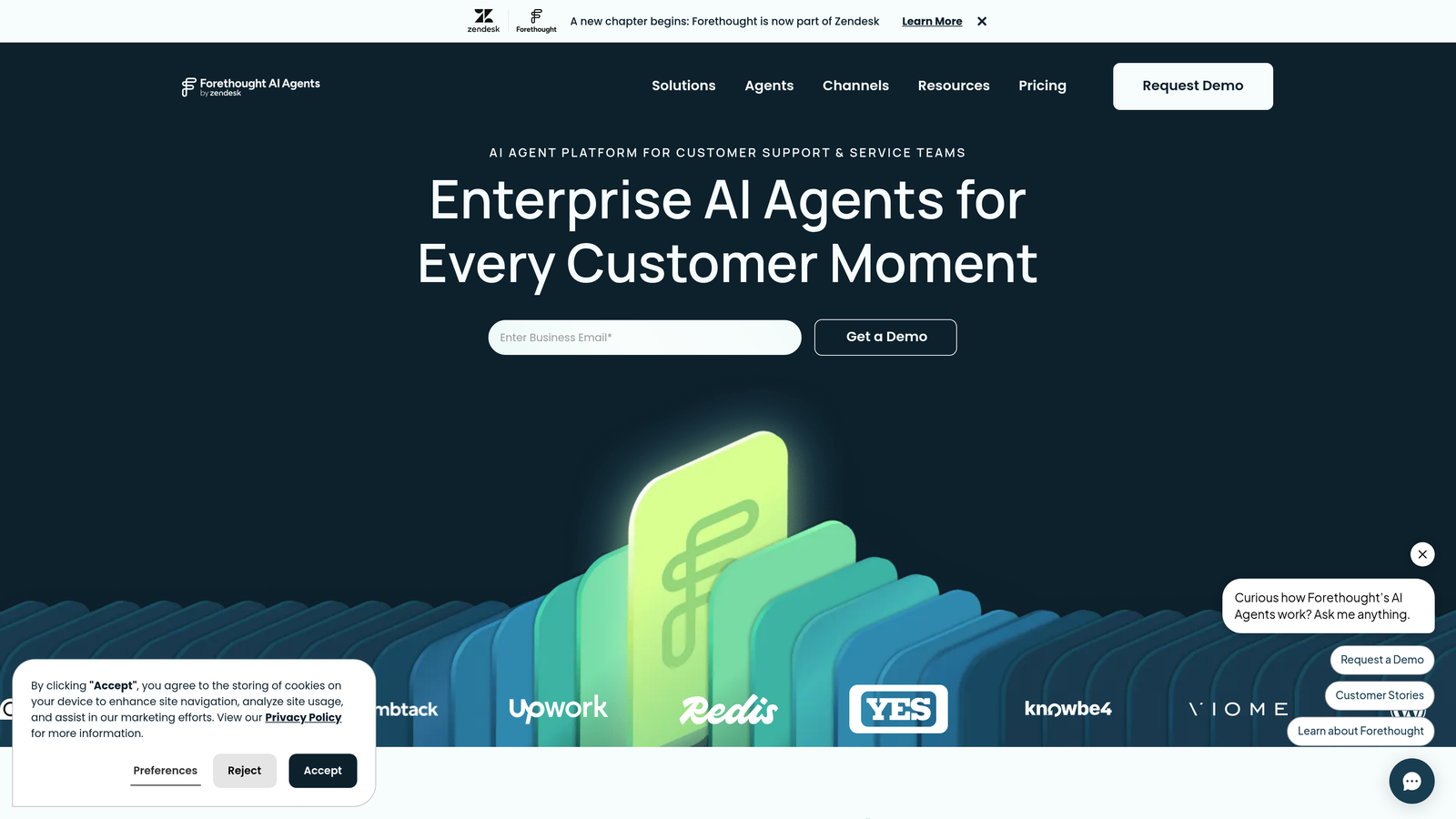
Forethought is an enterprise AI platform for customer support featuring SupportGPT for generative answers, plus dedicated products for ticket triage, agent assist, and self-service resolution.
Where This Tool Shines
Forethought's modular product structure is a genuine differentiator for larger teams. Rather than a single AI layer, it offers distinct products for different parts of the support workflow: Solve for customer-facing resolution, Triage for intelligent routing, and Assist for real-time agent knowledge surfacing. Teams can adopt the modules that address their specific bottlenecks.
SupportGPT adds generative, context-aware response capability on top of this structure, giving the platform both the precision of purpose-built support AI and the flexibility of large language model reasoning.
Key Features
SupportGPT: Generates context-aware ticket responses drawing on your knowledge base and conversation history.
Solve: Customer-facing AI product for autonomous self-service resolution before tickets reach agents.
Triage: Intelligent routing engine that classifies tickets by intent and sentiment to direct them to the right queue.
Assist: Real-time knowledge surfacing for agents during active conversations, reducing time spent searching for answers.
Enterprise Integrations: Connects with Zendesk, Salesforce, ServiceNow, and other enterprise platforms.
Best For
Enterprise support operations that need modular AI capabilities they can deploy selectively across different stages of the support workflow.
Pricing
Custom enterprise pricing. Contact Forethought directly for a quote.
8. Kustomer
Best for: Teams that need a unified CRM and support platform with AI layered on top
Kustomer is a CRM-centric customer service platform with AI-powered classification, sentiment analysis, and a unified customer timeline for context-rich support interactions.
Where This Tool Shines
Kustomer's core strength is the unified customer timeline. Every interaction, purchase, support conversation, and data point associated with a customer is aggregated into a single view, which gives agents the context they need to handle complex issues without switching between tools. The AI layer builds on this foundation by classifying conversations and surfacing suggested actions based on full customer history, not just the current ticket.
For teams where support and CRM functions are closely intertwined, this approach reduces friction and improves the quality of both AI-assisted and human-handled interactions.
Key Features
Unified Customer Timeline: Aggregates all customer interactions, transactions, and data into a single chronological view for agents.
AI Classification and Sentiment Detection: Automatically classifies conversations and reads sentiment to inform routing and response recommendations.
Suggested Actions: AI surfaces recommended next steps and response options based on conversation context and customer history.
Built-In CRM: Customer data objects and custom attributes are native to the platform, not bolted on via integration.
Omnichannel Inbox: Unified inbox spanning email, chat, social media, and SMS.
Best For
Support teams that need CRM capabilities deeply integrated with their support platform, particularly in B2C or high-touch B2B environments where customer history significantly shapes every interaction.
Pricing
Enterprise plan starts at $89 per user per month.
9. Assembled
Best for: Support operations teams optimizing staffing, forecasting, and workforce management
Assembled is an AI-powered workforce management platform for support teams, offering intelligent scheduling, demand forecasting, and real-time staffing optimization.
Where This Tool Shines
Assembled occupies a different category from the other tools on this list. It doesn't resolve tickets or assist agents with replies. Instead, it solves the operational challenge of making sure the right number of agents are available at the right times. For teams where staffing mismatches are causing SLA breaches or agent burnout, this kind of AI-driven workforce management can have a significant impact on support quality.
The real-time queue monitoring and staffing adjustment recommendations are particularly useful for managers who need to make fast decisions during unexpected volume spikes without relying on manual spreadsheet analysis.
Key Features
AI Demand Forecasting: Predicts ticket volume patterns to inform scheduling decisions before demand arrives.
Automated Scheduling: Generates schedules optimized for coverage requirements and agent availability preferences.
Real-Time Queue Monitoring: Tracks live queue status and surfaces staffing adjustment recommendations as conditions change.
Helpdesk Integrations: Connects with Zendesk, Salesforce, Intercom, and Kustomer to pull volume and performance data.
SLA Tracking Dashboards: Performance analytics and SLA monitoring to identify gaps and trends over time.
Best For
Support operations managers and team leads at mid-market and enterprise companies where workforce planning is a recurring operational challenge, particularly teams running 24/7 or multi-region support.
Pricing
Custom pricing based on team size. Contact Assembled directly for a quote.
10. Help Scout
Best for: Teams that prioritize human-feeling support with AI assistance layered on top
Help Scout is a human-first customer support platform with AI features layered on top, including AI drafts, conversation summarization, and smart suggestions, for teams that prioritize personal interactions.
Where This Tool Shines
Help Scout's philosophy is that great support feels human, and its AI features are designed to enhance that rather than replace it. AI Drafts generate full reply suggestions that agents can review, edit, and send, which maintains quality control while reducing the time agents spend writing from scratch. This is a meaningfully different approach from fully autonomous resolution tools.
The clean, collaborative inbox design also makes Help Scout one of the more pleasant tools for agents to work in day-to-day, which matters for teams where agent experience and retention are priorities.
Key Features
AI Drafts: Generates complete reply suggestions based on conversation context for agents to review and send.
AI Summarize: Creates quick summaries of long conversation threads so agents can get up to speed without reading every message.
AI Assist: Adjusts grammar, tone, and translation within replies to maintain consistent communication quality.
Collaborative Shared Inbox: Clean inbox design built for team workflows, with assignments, notes, and collision detection.
Docs Knowledge Base: Built-in knowledge base with AI-powered article recommendations surfaced during conversations.
Best For
Small to mid-sized teams that value human-feeling customer interactions and want AI to assist agents rather than operate autonomously. Particularly well-suited for companies where support quality and tone are central to the brand experience.
Pricing
Standard plan at $25 per user per month. AI features are included on the Plus plan at $50 per user per month.
Which Tool Is Right for Your Team?
The right AI support tool depends heavily on where your team is today and what problem you're actually trying to solve. Here's a practical breakdown to help you narrow it down.
If you're a startup or small team: Tidio offers the lowest barrier to entry with a free tier and affordable AI chat automation. Help Scout is a strong choice if you want a clean, human-first inbox with AI assistance at a predictable per-seat cost.
If you're mid-market and growing: Freshdesk Freddy AI is worth considering if you're already on Freshdesk and want to activate AI without additional budget. Ada is the better choice if you need autonomous resolution of genuinely complex inquiries. Halo AI is the strongest option if you want AI-first architecture that connects to your entire business stack and surfaces intelligence beyond ticket resolution.
If you're enterprise-scale: Zendesk AI and Forethought both serve large teams well, with Zendesk offering deep native integration and Forethought offering modular flexibility. Kustomer is worth evaluating if CRM and support need to live in the same platform. Assembled rounds out an enterprise stack if workforce management and staffing optimization are operational pain points.
If autonomous resolution is the primary goal: Halo AI, Ada, Intercom Fin, and Forethought's Solve product are the strongest contenders in this category. The distinction is architecture: Halo AI is built AI-first with page-aware context and business intelligence baked in, while the others layer AI onto existing helpdesk or CRM foundations.
One principle worth keeping in mind as you evaluate: the tools that deliver the most value over time are the ones that learn from every interaction. A system that gets smarter with each resolved ticket compounds its impact in a way that static rule-based tools simply can't match.
Your support team shouldn't scale linearly with your customer base. Let AI agents handle routine tickets, guide users through your product, and surface business intelligence while your team focuses on complex issues that need a human touch. See Halo in action and discover how continuous learning transforms every interaction into smarter, faster support.